EP3810177B1 - Peptides cycliques pour l'inhibition de la pcsk9 - Google Patents
Peptides cycliques pour l'inhibition de la pcsk9 Download PDFInfo
- Publication number
- EP3810177B1 EP3810177B1 EP19823341.3A EP19823341A EP3810177B1 EP 3810177 B1 EP3810177 B1 EP 3810177B1 EP 19823341 A EP19823341 A EP 19823341A EP 3810177 B1 EP3810177 B1 EP 3810177B1
- Authority
- EP
- European Patent Office
- Prior art keywords
- compound
- amino acid
- pharmaceutically acceptable
- subject
- group
- Prior art date
- Legal status (The legal status is an assumption and is not a legal conclusion. Google has not performed a legal analysis and makes no representation as to the accuracy of the status listed.)
- Active
Links
Classifications
-
- A—HUMAN NECESSITIES
- A61—MEDICAL OR VETERINARY SCIENCE; HYGIENE
- A61K—PREPARATIONS FOR MEDICAL, DENTAL OR TOILETRY PURPOSES
- A61K31/00—Medicinal preparations containing organic active ingredients
- A61K31/33—Heterocyclic compounds
- A61K31/395—Heterocyclic compounds having nitrogen as a ring hetero atom, e.g. guanethidine or rifamycins
- A61K31/40—Heterocyclic compounds having nitrogen as a ring hetero atom, e.g. guanethidine or rifamycins having five-membered rings with one nitrogen as the only ring hetero atom, e.g. sulpiride, succinimide, tolmetin, buflomedil
- A61K31/403—Heterocyclic compounds having nitrogen as a ring hetero atom, e.g. guanethidine or rifamycins having five-membered rings with one nitrogen as the only ring hetero atom, e.g. sulpiride, succinimide, tolmetin, buflomedil condensed with carbocyclic rings, e.g. carbazole
- A61K31/404—Indoles, e.g. pindolol
- A61K31/405—Indole-alkanecarboxylic acids; Derivatives thereof, e.g. tryptophan, indomethacin
-
- A—HUMAN NECESSITIES
- A61—MEDICAL OR VETERINARY SCIENCE; HYGIENE
- A61P—SPECIFIC THERAPEUTIC ACTIVITY OF CHEMICAL COMPOUNDS OR MEDICINAL PREPARATIONS
- A61P3/00—Drugs for disorders of the metabolism
- A61P3/06—Antihyperlipidemics
-
- C—CHEMISTRY; METALLURGY
- C07—ORGANIC CHEMISTRY
- C07K—PEPTIDES
- C07K7/00—Peptides having 5 to 20 amino acids in a fully defined sequence; Derivatives thereof
- C07K7/02—Linear peptides containing at least one abnormal peptide link
-
- A—HUMAN NECESSITIES
- A61—MEDICAL OR VETERINARY SCIENCE; HYGIENE
- A61K—PREPARATIONS FOR MEDICAL, DENTAL OR TOILETRY PURPOSES
- A61K38/00—Medicinal preparations containing peptides
Definitions
- Hypercholesterolemia is characterized by the presence of high levels of low-density lipoprotein (LDL) cholesterol in the blood, which can lead to the development of atherosclerosis and associated ischemic cardiovascular disease (e.g., myocardial infarction and stroke) ( Lambert et al., J. Lipid Res. 53:2515-2524, 2012 ). More than 34 million American adults have hypercholesterolemia ( NIH Genetics Home Reference Website, 2014 ). Proprotein convertase subtilisin/kexin type 9 (PCSK9) has been proposed as a target for treatment of hypercholesterolemia.
- LDL low-density lipoprotein
- WO 2016/119067 discloses compositions comprising an isolated or purified therapeutically effective human proprotein convertase subtilisin/kexin type 9 (hPCSK9) polypeptide derived from the hPCSK9 catalytic domain, and their use in methods of treating hypercholesterolemia.
- hPCSK9 human proprotein convertase subtilisin/kexin type 9
- PCSK9 is a proprotein convertase belonging to the proteinase K subfamily of the secretory subtilase family.
- PCSK9 binds to the epidermal growth factor-like-repeat A (EGF-A) domain of the low-density lipoprotein receptor (LDLR) and directs LDLR to lysosomes, where it is degraded.
- EGF-A epidermal growth factor-like-repeat A
- LDLR low-density lipoprotein receptor
- Inhibition of PCSK9 leads to increased LDLRs at the cell surface, resulting in increased removal of LDL from the extracellular fluid. Therefore, the inhibition of PCSK9 results in lower LDL cholesterol concentrations in the blood.
- cyclic polypeptides useful for the inhibition of PCSK9 in a subject in need thereof are provided herein.
- a cyclic polypeptide compound selected from compound 121, 122, 123, 124, 125, 126, 127, 128, 129, 130, or 131.
- a pharmaceutical composition comprising one of the compounds of Formula (I) or compounds 001-131, together with a pharmaceutically acceptable carrier.
- LDL low density lipoprotein
- a compound or the pharmaceutical composition according to the invention for use in a method of treating hypercholesterolemia in a subject in need thereof.
- a compound or the pharmaceutical composition according to the invention for use in is a method of treating a disease that shows comorbidity with hypercholesterolemia in a subject in need thereof
- the disease that shows comorbidity can be one or more of nephrotic syndrome, kidney failure, coronary artery disease, atherosclerosis, stroke, peripheral vascular disease, diabetes, and high blood pressure.
- Also provided herein is an in vitro method of inhibiting PCSK9 activity in a cell comprising contacting the cell with one or more cyclic polypeptide compounds of Formula (I) or compounds 001-131, or a pharmaceutical composition comprising one or more of cyclic polypeptide compounds of Formula (I) or compounds 001-131.
- cyclic polypeptide compounds and pharmaceutical compositions comprising such compounds, that are useful for the inhibition of PCSK9.
- the compounds are useful in inhibiting the interaction between human PCSK9 and the EGF-A domain of human LDLR in subject.
- These compounds and pharmaceutical compositions are also useful for the treatment of hypercholesterolemia, as well as diseases that show comorbidity with hypercholesterolemia.
- the articles “a” and “an” refer to one or to more than one (i.e., to at least one) of the grammatical object of the article.
- an element means one element or more than one element.
- use of the term “including” as well as other forms, such as “include,” “includes,” and “included,” is not limiting.
- cyclic polypeptide compounds means polypeptide chains in which the amino termini and carboxyl termini; amino termini and side chain; carboxyl termini and side chain; or side chain and side chain, are linked with a covalent bond that generates the ring.
- the term "disease that has comorbidity with hypercholesterolemia” means a disease in which elevated cholesterol levels (e.g., elevated LDL cholesterol levels) (e.g., as compared to a reference level) are associated with an elevated risk of developing the disease and/or an elevated risk of poor prognosis of the disease (e.g., increased risk of severe disease, increased risk of death, and/or an increased risk of cardiovascular event (such as stroke, myocardial infarction, or heart disease)) (e.g., as compared to a subject not having an elevated LDL cholesterol level, e.g., as compared to a reference level).
- elevated cholesterol levels e.g., elevated LDL cholesterol levels
- an elevated risk of poor prognosis of the disease e.g., increased risk of severe disease, increased risk of death, and/or an increased risk of cardiovascular event (such as stroke, myocardial infarction, or heart disease)
- cardiovascular event such as stroke, myocardial infarction, or heart disease
- treatment is defined as the application or administration of a therapeutic agent, i.e., a compound of the invention (alone or in combination with another pharmaceutical agent), to a patient, or application or administration of a therapeutic agent to an isolated tissue or cell line from a patient (e.g., for diagnosis or ex vivo applications), who has hypercholesterolemia, or related diseases, a symptom of hypercholesterolemia, or related diseases, or the potential to develop hypercholesterolemia, or related diseases, with the purpose to cure, heal, alleviate, relieve, alter, remedy, ameliorate, improve or affect the hypercholesterolemia, or related diseases, the symptoms of hypercholesterolemia, or related diseases, or the potential to develop hypercholesterolemia, or related diseases.
- Such treatments may be specifically tailored or modified, based on knowledge obtained from the field of pharmacogenomics.
- to "treat” includes systemic amelioration of the symptoms associated with the pathology and/or a delay in onset of symptoms. Clinical and sub-clinical evidence of “treatment” will vary with the pathology, the individual and the treatment.
- the term “prevent” or “preventing” comprises the prevention of at least one symptom associated with or caused by the state, disease or disorder being prevented.
- the term “prevent” or “prevention” also means no disorder or disease development if none had occurred, or no further disorder or disease development if there had already been development of the disorder or disease. Also considered is the ability of one to prevent some or all of the symptoms associated with the disorder or disease.
- inhibitor means to decrease an activity, such as the activity of PCSK9 or the activity of a molecule that binds PCSK9.
- the term "patient,” “individual,” or “subject” refers to a human or a non-human mammal.
- Non-human mammals include, for example, livestock and pets, such as ovine, bovine, porcine, canine, feline and marine mammals.
- the patient, subject, or individual is human.
- the terms "effective amount,” “pharmaceutically effective amount,” and “therapeutically effective amount” refer to a nontoxic but sufficient amount of an agent to provide the desired biological result. That result may be reduction or alleviation of the signs, symptoms, or causes of a disease, or any other desired alteration of a biological system.
- An appropriate therapeutic amount in any individual case can be determined by one of ordinary skill in the art using routine experimentation.
- the term "pharmaceutically acceptable” refers to a material, such as a carrier or diluent, which does not abrogate the biological activity or properties of the compound, and is relatively non-toxic, i.e., the material may be administered to an individual without causing undesirable biological effects or interacting in a deleterious manner with any of the components of the composition in which it is contained.
- composition refers to a mixture of at least one compound useful within the invention with a pharmaceutically acceptable carrier.
- the pharmaceutical composition facilitates administration of the compound to a patient or subject. Multiple techniques of administering a compound exist in the art including, but not limited to, intravenous, oral, aerosol, parenteral, ophthalmic, pulmonary, and topical administration.
- the term "pharmaceutically acceptable carrier” means a pharmaceutically acceptable material, composition or carrier, such as a liquid or solid filler, stabilizer, dispersing agent, suspending agent, diluent, excipient, thickening agent, solvent or encapsulating material, involved in carrying or transporting a compound useful within the invention within or to the patient such that it may perform its intended function.
- a pharmaceutically acceptable material, composition or carrier such as a liquid or solid filler, stabilizer, dispersing agent, suspending agent, diluent, excipient, thickening agent, solvent or encapsulating material, involved in carrying or transporting a compound useful within the invention within or to the patient such that it may perform its intended function.
- Such constructs are carried or transported from one organ, or portion of the body, to another organ, or portion of the body.
- Each carrier must be “acceptable” in the sense of being compatible with the other ingredients of the formulation, including the compound useful within the invention, and not injurious to the patient.
- materials that may serve as pharmaceutically acceptable carriers include: sugars, such as lactose, glucose and sucrose; starches, such as corn starch and potato starch; cellulose, and its derivatives, such as sodium carboxymethyl cellulose, ethyl cellulose and cellulose acetate; powdered tragacanth; malt; gelatin; talc; excipients, such as cocoa butter and suppository waxes; oils, such as peanut oil, cottonseed oil, safflower oil, sesame oil, olive oil, corn oil and soybean oil; glycols, such as propylene glycol; polyols, such as glycerin, sorbitol, mannitol and polyethylene glycol; esters, such as ethyl oleate and ethyl laurate; agar; buffering agents, such as magnesium hydroxide and aluminum hydroxide; surface active agents; alginic acid; pyrogen-free water; isotonic saline
- pharmaceutically acceptable carrier also includes any and all coatings, antibacterial and antifungal agents, and absorption delaying agents, and the like that are compatible with the activity of the compound useful within the invention, and are physiologically acceptable to the patient. Supplementary active compounds may also be incorporated into the compositions.
- the "pharmaceutically acceptable carrier” may further include a pharmaceutically acceptable salt of the compound useful within the invention.
- Other additional ingredients that may be included in the pharmaceutical compositions used in the practice of the invention are known in the art and described, for example in Remington's Pharmaceutical Sciences (Genaro, Ed., Mack Publishing Co., 1985, Easton, PA ).
- a “pharmaceutically acceptable salt” is intended to mean a salt of a free acid or base of the compounds provided herein that is non-toxic, biologically tolerable, or otherwise biologically suitable for administration to the subject. It should possess the desired pharmacological activity of the parent compound. See, generally, G.S. Paulekuhn, et al., "Trends in Active Pharmaceutical Ingredient Salt Selection based on Analysis of the Orange Book Database", J. Med. Chem., 2007, 50:6665-72 , S.M.
- Examples of pharmaceutically acceptable salts are those that are pharmacologically effective and suitable for contact with the tissues of patients without undue toxicity, irritation, or allergic response.
- the compounds provided herein may possess a sufficiently acidic group, a sufficiently basic group, or both types of functional groups, and accordingly react with a number of inorganic or organic bases, and inorganic and organic acids, to form a pharmaceutically acceptable salt.
- unnatural amino acids used in this invention have the following amino acid code and structure:
- the compounds of the invention are useful for treating or preventing hypercholesterolemia.
- the compounds of the invention are useful for treating or preventing diseases that show comorbidity with hypercholesterolemia.
- cyclic peptides having the structure of Formula (I): or a pharmaceutically acceptable salt thereof; wherein:
- the compound of Formula (I), or a pharmaceutically acceptable salt thereof is selected from the following compounds of Table 1 below: 002 029 030 031 032 033 034 035 036 037 038 039 040 041 047 048 050 051 052 053 054 057 058 061 062 063 064 065 066 068 069 070 071 081 082 083 084 085 086 087 088 089 091 092 093 094 095 103 117
- the compounds of the invention are selected from the following compounds of Table 2 below: 001 003 004 005 006 007 008 009 010 011 012 013 014 015 016 017 018 019 020 021 022 023 024 025 026 027 028 042 043 044 045 046 049 055 056 059 060 067 072 073 074 075 076 077 078 079 080 090 096 097 098 099 100 101 102 104 105 106 107 108 109 110 111 112 113 114 115 116 118 119 120
- optically active forms is achieved in any suitable manner, including by way of non-limiting example, by resolution of the racemic form with recrystallization techniques, synthesis from optically-active starting materials, chiral synthesis, or chromatographic separation using a chiral stationary phase.
- a mixture of one or more isomer is utilized as the compound of the invention described herein.
- compounds described herein contain one or more chiral centers. These compounds are prepared by any means, including stereoselective synthesis, enantioselective synthesis or separation of a mixture of enantiomers or diastereomers. Resolution of compounds and isomers thereof is achieved by any means including, by way of non-limiting example, chemical processes, enzymatic processes, fractional crystallization, distillation, and chromatography.
- any open valency appearing on a carbon, oxygen, or nitrogen atom in any structure described herein indicates the presence of a hydrogen atom.
- a chiral center exists in a structure, but no specific stereochemistry is shown for that center, both enantiomers, separately or as a mixture, are encompassed by that structure.
- the methods for the determination of stereochemistry and the separation of stereoisomers are well-known in the art.
- the compounds of the invention may exist as tautomers. All tautomers are included within the scope of the compounds presented herein.
- Compounds described herein also include isotopically-labeled compounds wherein one or more atoms is replaced by an atom having the same atomic number, but an atomic mass or mass number different from the atomic mass or mass number usually found in nature.
- isotopes suitable for inclusion in the compounds described herein include and are not limited to 2 H, 3 H, 11 C, 13 C, 14 C, 36 Cl, 18 F, 123 I, 125 I, 13 N, 15 N, 15 O, 17 O, 18 O, 32 P, and 35 S.
- Isotopically-labeled compounds are useful in drug or substrate tissue distribution studies. In another embodiment, substitution with heavier isotopes such as deuterium affords greater metabolic stability (for example, increased in vivo half-life or reduced dosage requirements).
- substitution with positron emitting isotopes is useful in Positron Emission Topography (PET) studies for examining substrate receptor occupancy.
- Isotopically-labeled compounds are prepared by any suitable method or by processes using an appropriate isotopically-labeled reagent in place of the non-labeled reagent otherwise employed.
- the compounds described herein are labeled by other means, including, but not limited to, the use of chromophores or fluorescent moieties, bioluminescent labels, or chemiluminescent labels.
- the cyclic polypeptide compounds provided herein can inhibit interaction between PCSK9 (e.g., human PCSK9) and LDLR (e.g., human LDLR) at an IC 50 of less than 50 ⁇ M, less than 45 ⁇ M, less than 40 ⁇ M, less than 35 ⁇ M, less than 30 ⁇ M, less than 25 ⁇ M, less than 20 ⁇ M, less than 15 ⁇ M, less than 10 ⁇ M, less than 9 ⁇ M, less than 8 ⁇ M, less than 7 ⁇ M, less than 6 ⁇ M, less than 5 ⁇ M, less than 4 ⁇ M, less than 3 ⁇ M, less than 2 ⁇ M, less than 1 ⁇ M, less than 900 nM, less than 800 nM, less than 700 nM, less than 600 nM, or less than 500 nM (e.g., as determined using the assay described in the Examples).
- PCSK9 e.g., human PCSK9
- LDLR e.g.,
- the IC 50 could be as low as 10 nM, 25 nM, 50 nM, or 100 nM (e.g., as determined using the assay described in the Examples). Additional methods for determining the IC 50 of any of the compounds for inhibiting the interaction between PCSK9 (e.g., human PCSK9) and LDLR (e.g., human LDLR) are known in the art.
- PCSK9 e.g., human PCSK9
- LDLR e.g., human LDLR
- compositions for use in accordance with a method disclosed herein thus may be formulated in conventional manner using one or more pharmaceutically acceptable carriers including excipients and auxiliaries that facilitate processing of the compound into preparations that can be used pharmaceutically. Proper formulation is dependent upon the route of administration chosen.
- the administration of the pharmaceutical composition is selected from the group consisting of oral, intravenous, intramuscular, intraperitoneal, subcutaneous, transdermal, and intravitreal.
- the pharmaceutical composition comprises at least one of compounds of Formula (I) or compounds 001-131 and a pharmaceutically acceptable carrier.
- a pharmaceutical composition as disclosed herein comprises at least one compound of the invention.
- Such a pharmaceutical composition may be manufactured in a manner that is itself known, e.g., by means of conventional mixing, dissolving, granulating, levigating, emulsifying, encapsulating, entrapping or lyophilizing processes.
- the agents disclosed herein may be formulated in aqueous solutions, for instance in physiologically compatible buffers such as Hanks's solution, Ringer's solution, or physiological saline buffer.
- physiologically compatible buffers such as Hanks's solution, Ringer's solution, or physiological saline buffer.
- penetrants appropriate to the barrier to be permeated are used in the formulation. Such penetrants are generally known in the art.
- the compound can be formulated readily by combining the compound with pharmaceutically acceptable carriers well known in the art.
- Such carriers enable the compounds of the invention to be formulated as a tablet, pills, capsule, liquid, gel, syrup, slurry or suspension, for oral ingestion by a subject to be treated.
- Solid dosage forms can be prepared with coatings and shells, such as enteric coatings and others well-known in the art. They can contain pacifying agents and can be of such composition that they release the active compound or compounds in a certain part of the intestinal tract in a delayed manner. Examples of embedded compositions that can be used are polymeric substances and waxes.
- the active compounds also can be in microencapsulated form, if appropriate, with one or more of the above-mentioned excipients.
- a pharmaceutical composition of a compound of the invention can be encapsulated by a pharmaceutical grade capsule in a dry powdered form.
- Compound formulations include controlled duodenal release formulations, time release formulations, osmotic-controlled release delivery systems, microemulsions, microspheres, liposomes, nanoparticles, patches, pumps, drug depots, and the like.
- solid oral dosage forms such as powders, softgels, gelcaps, capsules, pills, and tablets.
- the peptide is formulated as a sterile aqueous solution. In one embodiment, the peptide is formulated in a non-lipid formulation. In another embodiment, the peptide is formulated in a cationic or non-cationic lipid formulation. In either embodiment, the sterile aqueous solution may contain additional active or inactive components. Inactive components (“excipients”) can include , but are not limited to, physiologically compatible salts, sugars, bulking agents, surfactants, or buffers.
- references to methods of treatment in the subsequent paragraphs of this description are to be interpreted as references to the compounds, pharmaceutical compositions and medicaments of the present invention for use in a method for treatment of the human (or animal) body by therapy.
- LDL low density lipoprotein
- the subject has hypercholesterolemia.
- Some subjects of the embodiment can be diagnosed as having a disease that shows comorbidity with hypercholesterolemia, such as nephrotic syndrome, kidney failure, coronary artery disease, atherosclerosis, stroke, peripheral vascular disease, diabetes, and high blood pressure.
- the compound inhibits the interaction between human PCSK9 and epidermal growth factor-like repeat A (EGF-A) domain of human low density lipoprotein (LDLR) in a subject.
- EGF-A epidermal growth factor-like repeat A domain of human low density lipoprotein
- the compound inhibits the interaction between human PCSK9 and epidermal growth factor-like repeat A (EGF-A) domain of human low density lipoprotein (LDLR) in a cell.
- EGF-A epidermal growth factor-like repeat A domain of human low density lipoprotein
- Also provided herein is a method of treating hypercholesterolemia in a subject in need thereof comprising administering to the subject a therapeutically effective amount of a compound of the invention.
- Hypercholesterolemia is a disease characterized by the presence of elevated levels of cholesterol (total cholesterol and/or LDL levels) in a sample obtained from a subject (e.g., as compared to a reference level that is a preselected threshold level).
- the subject can also have a decreased level of high density lipoprotein (HDL) cholesterol as compared to a reference level, e.g., a preselected threshold level.
- Hypercholesterolemia is typically diagnosed by a medical professional by determining a cholesterol level(s) in a subject.
- a preselected threshold level of total cholesterol can be, e.g., 180 mg/dL, 185 mg/dL, 190 mg/dL, 195 mg/dL, 200 mg/dL, 205 mg/dL, 210 mg/dL, 215 mg/dL, 220 mg/dL, 225 mg/dL, 230 mg/dL, 235 mg/dL, 240 mg/dL, 245 mg/dL, 250 mg/dL, 255 mg/dL, or 260 mg/dL.
- a preselected threshold level of LDL cholesterol can be, e.g., 125 mg/dL, 130 mg/dL, 135 mg/dL, 140 mg/dL, 145 mg/dL, 150 mg/dL, 155 mg/dL, 160 mg/dL, 165 mg/dL, 170 mg/dL, 175 mg/dL, 180 mg/dL, 185 mg/dL, 190 mg/dL, 195 mg/dL, 200 mg/dL, 205 mg/mL, 210 mg/dL, 215 mg/dL, 220 mg/dL, 225 mg/dL, or 230 mg/dL.
- a preselected threshold level of HDL cholesterol can be, e.g., 60 mg/dL, 58 mg/dL, 56 mg/dL, 54 mg/dL, 52 mg/dL, 50 mg/dL, 48 mg/dL, 46 mg/dL, 44 mg/dL, 42 mg/dL, 40 mg/dL, 38 mg/dL, 36 mg/dL, 34 mg/dL, 32 mg/dL, 30 mg/dL, 28 mg/dL, 26 mg/dL, or 24 mg/dL.
- the preselected threshold level of LDL cholesterol can be, e.g., 60 mg/dL, 65 mg/dL, 70 mg/dL, 75 mg/dL, 80 mg/dL, 85 mg/dL, 90 mg/dL, 95 mg/dL, or 100 mg/dL.
- the preselected threshold level of LDL can be, e.g., 90 mg/dL, 95 mg/dL, 100 mg/dL, 105 mg/dL, 110 mg/dL, 115 mg/dL, 120 mg/dL, 125 mg/dL, 130 mg/dL, 135 mg/dL, 140 mg/dL, 145 mg/dL, or 150 mg/dL.
- the preselected threshold level of LDL cholesterol can be, e.g., 115 mg/dL, 120 mg/dL, 125 mg/L, 130 mg/dL, 135 mg/dL, 140 mg/L, 145 mg/dL, or 150 mg/dL.
- Risk factors of coronary disease include, but are not limited to, family history, smoking behavior, high blood pressure, diabetes, obesity, physical inactivity, and high stress.
- the subject can be a subject having, diagnosed, or identified as having hypercholesterolemia, that is, for example, caused by diet and/or a genetic mutation (e.g., familial hypercholesterolemia) (e.g., any of the genetic mutations described herein or known in the art to result in an increased LDL cholesterol level).
- a genetic mutation e.g., familial hypercholesterolemia
- the subject can be a subject having, diagnosed, or identified as having a disease showing comorbidity with hypercholesterolemia.
- diseases showing comorbidity with hypercholesterolemia include hypertension, heart disease, arthritis, diabetes, coronary artery disease, stroke, breast cancer, and myocardial infarction.
- a method of treating a disease that shows comorbidity with hypercholesterolemia such as nephrotic syndrome, kidney failure, coronary artery disease, atherosclerosis, stroke, peripheral vascular disease, diabetes, and high blood pressure, in a subject in need thereof comprising administering to the subject a therapeutically effective amount of a compound of the invention.
- hypertension can be diagnosed in a subject by measuring the subject's blood pressure at one or more time points.
- Heart disease can be diagnosed in a subject, e.g., using blood tests, chest X-rays, electrocardiogram, echocardiography, an exercise stress test, radionuclide ventriculography, multiple-gated acquisition scanning, or cardiac catheterization.
- Diabetes type I or type II
- Arthritis can be diagnosed in a subject, e.g., by physical examination for pain, stiffness, swelling, redness, and decreased range of motion in one or more joints, laboratory tests, X-rays, computerized tomography, magnetic resonance imaging, ultrasound, or athroscopy.
- Coronary artery disease can be diagnosed in a subject, e.g., by electrocardiogram, echocardiogram, stress test, cardiac catheterization, angiogram, heart scan (e.g., using computerized tomography), or magnetic resonance angiography.
- Stroke can be diagnosed, e.g., by examination, blood tests, computerized tomography, magnetic resonance imaging, carotid ultrasound, cerebral angiogram, or echocardiogram.
- Breast cancer can be diagnosed, e.g., by breast examination, mammogram, breast ultrasound, biopsy, or magnetic resonance imaging.
- Myocardial infarction is diagnosed, e.g., by electrocardiogram, blood tests, chest X-ray, echocardiogram, coronary catheterization, exercise stress test, cardiac computerized tomography, or magnetic resonance imaging.
- Provided are methods of treating a disease showing comorbidity with hypercholesterolemia where the methods include administering to a subject in need thereof (e.g., a subject having hypercholesterolemia) a cyclic polypeptide compound or a pharmaceutical composition provided herein. The administration reduces the risk as compared to the risk of developing such a disease in a subject having similar cholesterol levels but administered a different treatment or administered no treatment.
- Also provided are methods of delaying the onset or delaying the worsening of a disease showing comorbidity with hypercholesterolemia where the methods include administering to a subject in need thereof (e.g., a subject having hypercholesterolemia and optionally, one or more risk factors of developing a disease showing comorbidity with hypercholesterolemia, or a subject having, diagnosed as having, or identified as having a disease showing comorbidity with hypercholesterolemia) a compound or a pharmaceutical composition provided herein (e.g., as compared to a subject having the same disease showing co-morbidity with hypercholesterolemia but administered a different treatment or administered no treatment).
- a subject in need thereof e.g., a subject having hypercholesterolemia and optionally, one or more risk factors of developing a disease showing comorbidity with hypercholesterolemia, or a subject having, diagnosed as having, or identified as having a disease showing comorbidity with hypercholesterolemia
- Also provided are methods of reducing LDL cholesterol level in a subject in need thereof that include administering to the subject a therapeutically effective amount of any of the compounds or pharmaceutical compositions described herein (the reducing being as compared to, for example, a level in a control subject or a baseline level in the subject prior to treatment with any of the compounds or any of the pharmaceutical compositions provided herein).
- Successful reduction in a LDL cholesterol level in a subject can be determined by a health professional (e.g., a nurse, a physician, or a physician's as sistant).
- successful treatment can result in at least a 2%, at least a 3%, at least a 4%, at least a 5%, at least a 6%, at least a 7%, at least a 8%, at least a 9%, at least a 10%, at least a 11%, at least a 12%, at least a 13%, at least a 14%, at least a 15%, at least a 16%, at least a 17%, at least a 18%, at least a 19%, at least a 20%, at least a 21%, at least a 22%, at least a 23%, at least a 24%, at least a 25%, at least a 26%, at least a 27%, at least a 28%, at least a 29%, or at least a 30% reduction in a subject's LDL cholesterol level (e.g., as compared to a control subject or as compared to a LDL cholesterol level in the subject prior to the administration of any of the compounds or
- the reduction in a subject's LDL level can be as high as 40%, 45%, 50%, 55%, 60%, or 65% (e.g., as compared to a control subject or as compared to a LDL cholesterol level in the subject prior to the administration of any of the compounds or any of the pharmaceutical compositions provided herein).
- the methods can further provide for a reduction in the total cholesterol level of a subject, e.g., a reduction of at least 2%, at least 3%, at least 4%, at least 5%, at least 6%, at least 7%, at least 8%, at least 9%, at least 10%, at least 11%, at least 12%, at least 13%, at least 14%, or at least 15% (e.g., as compared to a control subject or compared to a total cholesterol level in the subject prior to the administration of any of the compounds or any of the pharmaceutical compositions provided herein).
- a reduction in the total cholesterol level of a subject e.g., a reduction of at least 2%, at least 3%, at least 4%, at least 5%, at least 6%, at least 7%, at least 8%, at least 9%, at least 10%, at least 11%, at least 12%, at least 13%, at least 14%, or at least 15% (e.g., as compared to a control subject or compared to
- the reduction in a subject's total cholesterol level can be as high as 40%, 45%, 50%, 55%, 60%, or 65% (e.g., as compared to a control subject or compared to a total cholesterol level in the subject prior to the administration of any of the compounds or any of the pharmaceutical compositions provided herein).
- kits for determining the levels of LDL cholesterol and total cholesterol are well known in the art.
- kits for determining the levels of LDL cholesterol and total cholesterol are commercially available from Abeam (Cambridge, MA), Sigma Aldrich (St. Louis, MO), Cell Biolabs, Inc. (San Diego, CA), Genway Biotech (San Diego, CA), Biolabo (Lawrenceville, Georgia), BioAssay Systems (Hayward, CA), Medibena (Vienna, Austria), and Abnova (Taipei, Taiwan).
- the subject in these methods can, e.g., be a subject having, diagnosed as having, or identified as having hypercholesterolemia (e.g., familial hypercholesterolemia) or a subject identified or previously identified as having an increased risk of developing hypercholesterolemia.
- the subject in these methods can be, e.g., a subject having, diagnosed as having, or identified as having a disease showing comorbidity with hypercholesterolemia (e.g., any of the examples of diseases showing comorbidity with hypercholesterolemia described herein or known in the art).
- Also provided are methods of reducing the risk of developing a disease showing comorbidity with hypercholesterolemia that include administering to a subject in need thereof a compound or a pharmaceutical composition provided herein.
- the subject in these methods can be a subject having, diagnosed as having, or identified as having hypercholesterolemia or identified or previously identified as having an increased risk of developing hypercholesterolemia.
- the subject can be identified or previously identified as having an increased risk of developing a disease showing comorbidity with hypercholesterolemia (e.g., a subject having one or more risk factors for developing a disease showing comorbidity with hypercholesterolemia or having one or more risk factors for developing hypercholesterolemia).
- the subject may already be receiving or have received a treatment for hypercholesterolemia (e.g., a statin, niacin, bile-acid resins, fibrates, and cholesterol adsorption inhibitors).
- a treatment for hypercholesterolemia e.g., a statin, niacin, bile-acid resins, fibrates, and cholesterol adsorption inhibitors.
- the prior treatment for hypercholesterolemia resulted in no significant reduction in LDL cholesterol level in the subject in need thereof (e.g., any of the subjects descried herein), and/or insufficient reduction in the LDL cholesterol level in the subject (e.g., any of the subjects described herein) (i.e., not sufficient to reduce LDL cholesterol level to below a reference level that is a preselected threshold level).
- the subject is administered a dose of between 1 mg to 400 mg of any of the compounds or any of the pharmaceutical compositions (e.g., between 1 mg and 300 mg, between 1 mg and 250 mg, between 1 mg and 200 mg, between 1 mg and 150 mg, between 1 mg and 100 mg, between 1 mg and 80 mg, between 1 mg and 70 mg, between 1 mg and 60 mg, between 1 mg and 50 mg, between 1 mg and 40 mg, between 1 mg and 30 mg, between 1 mg and 20 mg, between 1 mg and 10 mg, between 20 mg and 120 mg, between 30 mg and 90 mg, or between 40 mg and 80 mg).
- any of the compounds or any of the pharmaceutical compositions e.g., between 1 mg and 300 mg, between 1 mg and 250 mg, between 1 mg and 200 mg, between 1 mg and 150 mg, between 1 mg and 100 mg, between 1 mg and 80 mg, between 1 mg and 70 mg, between 1 mg and 60 mg, between 1 mg and 50 mg, between 1 mg and 40 mg, between 1 mg and 30 mg, between 1 mg and 20 mg, between 1 mg and 10 mg
- the subject is administered a dose of the compound or pharmaceutical composition described herein of about 0.1 mg/kg to about 4.0 mg/kg (e.g., between about 0.1 mg/kg and about 3.5 mg/kg, between about 0.1 mg/kg and about 3.0 mg/kg, between about 0.1 mg/kg and about 2.5 mg/kg, between about 0.1 mg/kg and about 2.0 mg/kg, between about 0.1 mg/kg and about 1.5 mg/kg, between about 0.5 mg/kg and about 1.5 mg/kg, or between about 0.7 mg/kg and about 1.3 mg/kg).
- a dose of the compound or pharmaceutical composition described herein of about 0.1 mg/kg to about 4.0 mg/kg (e.g., between about 0.1 mg/kg and about 3.5 mg/kg, between about 0.1 mg/kg and about 3.0 mg/kg, between about 0.1 mg/kg and about 2.5 mg/kg, between about 0.1 mg/kg and about 2.0 mg/kg, between about 0.1 mg/kg and about 1.5 mg/kg, between about 0.5 mg/kg and about 1.5
- the contacting takes place in vitro (e.g., in a cell culture).
- LDLR can be present in the plasma membrane of a mammalian cell (e.g., a hepatocyte, an epithelial cell, or an endothelial cell), and oriented in the plasma membrane such that LDLR can interact with PCSK9 present in an extracellular medium (e.g., culture medium).
- a mammalian cell e.g., a hepatocyte, an epithelial cell, or an endothelial cell
- PCSK9 present in an extracellular medium (e.g., culture medium).
- Non-limiting methods for detecting the interaction (or amount of interaction) between PCSK9 and LDLR are described herein.
- LDLR can be attached to a solid substrate (e.g., a plate, film, or a bead) (e.g., in such a way that allows LDLR to interact with PCSK9) and contacted with PCSK9 in the presence or absence of any of the compounds or pharmaceutical compositions described herein, and the amount of PCSK9 bound to the LDLR in the presence of the compound or pharmaceutical composition can be compared to the amount bound in a control assay that does not include the compound or pharmaceutical composition.
- Detecting the amount of PCSK9 bound to LDLR in the presence or absence of the compound or pharmaceutical composition can be performed by immunoprecipitation and immunoblotting, surface plasmon resonance, or time-resolved fluorescence energy transfer (TR-FRET).
- TR-FRET time-resolved fluorescence energy transfer
- an inhibition of the interaction between PCSK9 and LDLR can be measured as an increase in the K D value and/or a decrease in K A value for the interaction between PCSK9 (e.g., human PCSK9) and LDLR (e.g., human LDLR) (e.g., the EGF-A domain of LDLR) in the presence of any of the compounds or pharmaceutical compositions provided herein (e.g., as compared to levels of interaction in the absence of the compound or pharmaceutical composition).
- PCSK9 e.g., human PCSK9
- LDLR e.g., human LDLR
- EGF-A domain of LDLR EGF-A domain of LDLR
- the interaction between PCSK9 and LDLR can be indirectly detected when the interaction between PCSK9 and LDLR occurs in vitro.
- interaction between PCSK9 and LDLR where the LDLR is expressed in the plasma membrane of a hepatocyte, can be indirectly detected by determining the amount of LDLR remaining in the hepatocyte it has been contacted with PCSK9 in the presence or absence of any the compounds or pharmaceutical compositions provided herein (where a higher level of LDLR in the hepatocyte after incubation in the presence of the compound or pharmaceutical composition as compared to the level of LDLR in the hepatocyte after incubation in the absence of the compound or pharmaceutical composition indicates that the interaction between LDLR and PCSK9 has been inhibited).
- the amount of inhibition of the interaction between LDLR and PCSK9 in vivo can also be indirectly determined by measuring the level of LDL cholesterol in a subject administered the compound or pharmaceutical composition as compared to a control level of LDL (e.g., a level of LDL cholesterol in the same subject prior to treatment with the compound or pharmaceutical composition).
- a decreased level of LDL cholesterol in the subject after treatment indicates that the compound or pharmaceutical composition administered to the subject inhibited the interaction between PCSK9 and LDLR in the subject.
- the administration is selected from the group consisting of oral, intravenous, intramuscular, intraperitoneal, subcutaneous, transdermal, and intravitreal.
- a method of treating hypercholesterolemia in a subject in need thereof comprising administering to the subject at least one of compounds of Formula (I) or compounds 001-131or a pharmaceutically composition comprising at least one of compounds of Formula (I) or compounds 001-131.
- the peptides were synthesized using Fmoc-protected amino acids on a solid-phase Rink Amide MBHA (NovaBiochem, ⁇ 0.5 meq/g, 100-200 mesh) or AM (NovaBiochem, ⁇ 0.73 meq/g, 100-200 mesh) or 2-aminoethanethiol-2-chlorotrityl resin (AnaSpec, ⁇ 0.9 meq/g, 200-400 mesh) with a CEM Liberty Blue automated microwave peptide synthesizer. Peptides were typically synthesized on a 0.1 mmol scale.
- Typical reaction conditions were as follows: Deprotection Conditions: 20% piperidine (v/v) in DMF (2 ⁇ 2 min at 75 °C); Residue Coupling Conditions: 5 eq (relative to resin) of activated amino acid (2.5 mL of a 0.2 M amino acid stock solution in DMF) was delivered to the resin, followed by 5 eq of DIC activator (1 mL of a 0.5 M solution in DMF), and 5 eq of Oxyma Pure (0.5 mL of a 1 M solution in DMF) and allowed to react for 5 min at 75 °C. The resultant product was used directly in the next step.
- the reaction was allowed to proceed at 45 °C for two hours and then the catalyst was filtered off.
- the resin was then re-subjected to the metathesis conditions by adding an additional 5 mL of freshly- prepared catalyst solution (16 mg Grubb's generation I catalyst in 5 mL of degassed anhydrous 1,2-dichloroethane).
- the reaction was allowed to proceed for 2 hours at 45 °C.
- the resin-bound peptide was then washed with dichloromethane (5X10 mL).
- the reaction can be monitored for completion by removing a few beads, cleaving the peptide (95% TFA / 2.5% H20 / 2.5% triisopropylsilane) and analyzing by LCMS.
- the resin from Step 2 was transferred to either a 50 mL polypropylene centrifuge tube or a 10 mL fritted syringe.
- the peptides were cleaved from their solid support using trifluoroacetic acid / triisopropylsilane / DL-dithiothreitol / water (92.5 / 2.5 / 2.5 (w/v) / 2.5) mixture.
- ⁇ 10 mL cleavage solution was used for 0.1 mmol scale of resin.
- the suspended resin was rocked in cleavage solution for 3 hours at room temperature.
- the filtrate was collected in 50 mL polypropylene centrifuge tubes and precipitated with chilled diethyl ether ( ⁇ 50 mL per ⁇ 5 mL cleavage filtrate).
- the precipitated crude peptide was collected by centrifugation.
- the white pellet was then subsequently suspended in chilled diethyl ether and collected by centrifugation two additional times. The resulting solid was air-dried to afford the crude peptide.
- the peptides were synthesized using Fmoc-protected amino acids on a solid-phase Rink Amide MBHA (NovaBiochem, ⁇ 0.5 meq/g, 100-200 mesh) or AM (NovaBiochem, ⁇ 0.73 meq/g, 100-200 mesh) or 2-Aminoethanethiol-2-chlorotrityl resin (AnaSpec, ⁇ 0.9 meq/g, 200-400 mesh) with a CEM Liberty Blue automated microwave peptide synthesizer. Peptides were typically synthesized on a 0.1 mmol scale.
- Typical reaction conditions were as follows: Deprotection Conditions: 20% piperidine (v/v) in DMF (2 X 2 min at 75 °C); Residue Coupling Conditions: 5 eq (relative to resin) of activated amino acid (2.5 mL of a 0.2 M amino acid stock solution in DMF) was delivered to the resin, followed by 5 eq of DIC activator (1 mL of a 0.5 M solution in DMF), and 5 eq of Oxyma Pure (0.5 mL of a 1 M solution in DMF) and allowed to react for 5 min at 75 °C. The resultant product was used directly in the next step.
- the resin from Step 1 was transferred to either a 50 mL polypropylene centrifuge tube or a 10 mL fritted syringe.
- the peptides were cleaved from their solid support using trifluoroacetic acid / triisopropylsilane / DL-dithiothreitol / water (92.5 / 2.5 / 2.5 (w/v) / 2.5) mixture.
- -10 mL cleavage solution was used for 0.1 mmol scale of resin.
- the suspended resin was rocked in cleavage solution for 3 hours at room temperature.
- the filtrate was collected in 50 mL polypropylene centrifuge tubes and precipitated with chilled diethyl ether ( ⁇ 50 mL per ⁇ 5 mL cleavage filtrate).
- the precipitated crude peptide was collected by centrifugation.
- the white pellet was then subsequently suspended in chilled diethyl ether and collected by centrifugation two additional times. The resulting solid was air-dried to afford the crude peptide.
- the solid crude peptide ( ⁇ 0.1 mmol) was dissolved in 4 mL of a DMSO:H 2 O (3:1) solution in a 50 mL polypropylene centrifuge tube equipped with stirbar.
- the reaction was monitored for complete conversion by LCMS analysis of the crude reaction.
- the desired product was purified directly from the crude reaction mixture by C18 reverse phase chromatography.
- the peptides were synthesized using Fmoc-protected amino acids on a solid-phase Rink Amide MBHA (NovaBiochem, ⁇ 0.5 meq/g, 100-200 mesh) or AM (NovaBiochem, ⁇ 0.73 meq/g, 100-200 mesh) or 2-Aminoethanethiol-2-chlorotrityl resin (AnaSpec, ⁇ 0.9 meq/g, 200-400 mesh) with a CEM Liberty Blue automated microwave peptide synthesizer. Peptides were typically synthesized on a 0.1 mmol scale.
- Typical reaction conditions were as follows: Deprotection Conditions: 20% piperidine (v/v) in DMF (2 X 2 min at 75 °C); Residue Coupling Conditions: 5 eq (relative to resin) of activated amino acid (2.5 mL of a 0.2 M amino acid stock solution in DMF) was delivered to the resin, followed by 5 eq of DIC activator (1 mL of a 0.5 M solution in DMF), and 5 eq of Oxyma Pure (0.5 mL of a 1 M solution in DMF) and allowed to react for 5 min at 75 °C. The resultant product was used directly in the next step.
- the resin from Step 1 was transferred to either a 50 mL polypropylene centrifuge tube or a 10 mL fritted syringe.
- the peptides were cleaved from their solid support using trifluoroacetic acid / triisopropylsilane / DL-dithiothreitol / water (92.5 / 2.5 / 2.5 (w/v) / 2.5) mixture.
- -10 mL cleavage solution was used for 0.1 mmol scale of resin.
- the suspended resin was rocked in cleavage solution for 3 hours at room temperature.
- the filtrate was collected in 50 mL polypropylene centrifuge tubes and precipitated with chilled diethyl ether ( ⁇ 50 mL per ⁇ 5 mL cleavage filtrate).
- the precipitated crude peptide was collected by centrifugation.
- the white pellet was then subsequently suspended in chilled diethyl ether and collected by centrifugation two additional times. The resulting solid was air-dried to afford the crude peptide.
- the resulting crude peptide was suspended in diethyl ether ( ⁇ 40 mL), pelleted by centrifugation, and the diethyl ether layer was decanted off. This was repeated two additional times to remove residual unreacted linker. The resulting precipitated peptide was then air dried overnight to afford the solid crude peptide, which was used in subsequent steps without further purification.
- the solid crude peptide ( ⁇ 0.1 mmol) was dissolved in 4 mL of a DMSO:H 2 O (3:1) solution in a 50 mL polypropylene centrifuge tube equipped with stirbar.
- the reaction was monitored for complete conversion by LCMS analysis of the crude reaction.
- the desired product was purified directly from the crude reaction mixture by C18 reverse phase chromatography.
- the peptides were synthesized using Fmoc-protected amino acids on a solid-phase Rink Amide MBHA (NovaBiochem, ⁇ 0.5 meq/g, 100-200 mesh) or AM (NovaBiochem, ⁇ 0.73 meq/g, 100-200 mesh) or 2-Aminoethanethiol-2-chlorotrityl resin (AnaSpec, ⁇ 0.9 meq/g, 200-400 mesh) with a CEM Liberty Blue automated microwave peptide synthesizer. Peptides were typically synthesized on a 0.1 mmol scale.
- Typical reaction conditions were as follows: Deprotection Conditions: 20% piperidine (v/v) in DMF (2 X 2 min at 75 °C); Residue Coupling Conditions: 5 eq (relative to resin) of activated amino acid (2.5 mL of a 0.2 M amino acid stock solution in DMF) was delivered to the resin, followed by 5 eq of DIC activator (1 mL of a 0.5 M solution in DMF), and 5 eq of Oxyma Pure (0.5 mL of a 1 M solution in DMF) and allowed to react for 5 min at 75 °C. The resultant product was used directly in the next step.
- the resin from Step 1 was transferred to either a 50 mL polypropylene centrifuge tube or a 10 mL fritted syringe.
- the peptides were cleaved from their solid support using trifluoroacetic acid / triisopropylsilane / DL-dithiothreitol / water (92.5 / 2.5 / 2.5 (w/v) / 2.5) mixture.
- -10 mL cleavage solution was used for 0.1 mmol scale of resin.
- the suspended resin was rocked in cleavage solution for 3 hours at room temperature.
- the filtrate was collected in 50 mL polypropylene centrifuge tubes and precipitated with chilled diethyl ether ( ⁇ 50 mL per ⁇ 5 mL cleavage filtrate).
- the precipitated crude peptide was collected by centrifugation.
- the white pellet was then subsequently suspended in chilled diethyl ether and collected by centrifugation two additional times. The resulting solid was air-dried to afford the crude peptide.
- Table 4 shows the synthetic procedure that was used to synthesize the compounds disclosed herein. TABLE 4 Compound Synthetic Procedure 001 E 002 E 003 E 004 E 005 E 006 E 007 E 008 E 009 E 010 E 011 E 012 E 013 E 014 E 015 E 016 E 017 E 018 E 019 E 020 E 021 E 022 E 023 E 024 E 025 E 026 E 027 E 028 E 029 E 030 E 031 E 032 E 033 E 034 E 035 E 036 E 037 E 038 E 039 E 040 E 041 E 042 E 043 E 044 E 045 E 046 E 047 E 048 E 049 E 050 E 051 E 052 E 053 E 054 E 055 E 056 E 057 E 058 E 059 E 060 E 061 E 062 E 063 E 064 E 065 E 066 E 067 E 068 E 069 E 07
- a set of cyclic polypeptides were identified to inhibit the interaction between human PCSK9 and human LDLR.
- Each polypeptide has an N-terminal amino acid or moiety and a C-terminal amino acid or moiety that is linked by a covalent bond to the other.
- TR-FRET time-resolved fluorescence resonance energy
- Table 5 shows IC 50 values obtained by the assay for a group of select compounds.
- A represents 1 nM ⁇ IC 50 ⁇ 100 nM
- B represents 100 nM ⁇ IC 50 ⁇ 1000 nM
- C represents 1000 nM ⁇ IC 50 ⁇ 12,100 nM
- D represents 21,000 nM ⁇ IC 50 ⁇ 50,000 nM.
- a solution containing 1 nM biotinylated PCSK9 + 2.5 nM Lance Streptavidin Europium (Strep-Eu) was made in 50 mM HEPES pH 7.4, 0.15 M NaCl, 5 mM CaCl2, 0.01% BSA, and 0.01% Surfactant P20.
- a separate solution containing 40 nM of the AlexaFluor tagged cyclic peptide was made in the same buffer system.
- the peptide was synthesized on a 0.250 mmol scale on CEM Liberty Blue, Microwave synthesizer using Fmoc/tBu chemistry on PS Rink-Amide MBHA resin, 0.32 mmol g -1 .
- the assembly was performed using single-couplings using 4eq of Fmoc protected amino acid 0.2M in DMF, 4eq of 0.5M HATU in DMF, 4eq of 2M DIPEA (double coupling for Tyr). Fmoc deprotection cycles were performed using 20% (V/V) piperidine in DMF.
- Step C Synthesis of Compound Reagent A: Intermediate Compound Int-B (15mg) was dissolved in 0.2ml of dry DMSO. Then 15mg of ALEXAFLUOR 647NHS Ester (A37566, Life technology) dissolved in 1.5ml of dry DMSO was added. 20uL of dry DIPEA was added. The reaction was left under stirring at room temperature for 12 hours under Nitrogen atmosphere in the dark.
- Table 6 shows IC 50 values obtained by the assay for a group of select compounds.
- A represents 1 nM ⁇ IC 50 ⁇ 100 nM
- B represents 100 nM ⁇ IC 50 ⁇ 1000 nM
- C represents 1000 nM ⁇ IC 50 ⁇ 12,100 nM
- D represents 21,000 nM ⁇ IC 50 ⁇ 50,000 nM.
- AF AlexaFluor647
- a separate solution containing 1920 nM of the AlexaFluor tagged cyclic peptide was made in the same buffer system.
- Reagent B was prepared by the following procedure.
- the peptide was synthesized on a 0.250 mmol scale on CEM Liberty Blue, Microwave synthesizer using Fmoc/tBu chemistry on PS Rink-Amide MBHA resin, 0.32 mmol g -1 .
- the assembly was performed using single-couplings using 4eq of Fmoc protected amino acid 0.2M in DMF, 4eq of 1M Oxyme in DMF, 4eq of 0.5M N,N -diisopropylcarbodiimide (DIC) (double coupling for Y01).
- Fmoc deprotection cycles were performed using 20% (V/V) piperidine in DMF.
- Table 7 shows IC 50 values obtained by the assay for a group of select compounds.
- A represents 1nM ⁇ IC 50 ⁇ 100 nM
- B represents 100 nM ⁇ IC 50 ⁇ 500 nM
- C represents 500 nM ⁇ IC 50 ⁇ 5000 nM.
Landscapes
- Chemical & Material Sciences (AREA)
- Health & Medical Sciences (AREA)
- Organic Chemistry (AREA)
- General Health & Medical Sciences (AREA)
- Life Sciences & Earth Sciences (AREA)
- Medicinal Chemistry (AREA)
- Biochemistry (AREA)
- Biophysics (AREA)
- Proteomics, Peptides & Aminoacids (AREA)
- Molecular Biology (AREA)
- Genetics & Genomics (AREA)
- Pharmacology & Pharmacy (AREA)
- Public Health (AREA)
- Veterinary Medicine (AREA)
- Animal Behavior & Ethology (AREA)
- Engineering & Computer Science (AREA)
- Bioinformatics & Cheminformatics (AREA)
- Diabetes (AREA)
- Chemical Kinetics & Catalysis (AREA)
- Hematology (AREA)
- Nuclear Medicine, Radiotherapy & Molecular Imaging (AREA)
- Obesity (AREA)
- General Chemical & Material Sciences (AREA)
- Epidemiology (AREA)
- Medicines That Contain Protein Lipid Enzymes And Other Medicines (AREA)
- Peptides Or Proteins (AREA)
- Pharmaceuticals Containing Other Organic And Inorganic Compounds (AREA)
Claims (15)
- Composé choisi parmi :un polypeptide cyclique de formule (I) :
 ou sel pharmaceutiquement acceptable correspondant ;A1 étant H ou une amine protégée par acyle ;R1 étant choisi dans le groupe constitué par les chaînes latérales d'acides aminés de ALA, GLY, ACB, ACPE, APC, LYS, NVA, PRO, et TBG ;R2 étant choisi dans le groupe constitué par les chaînes latérales d'acides aminés de ALA et GLY ;R3 étant choisi dans le groupe constitué par les chaînes latérales d'acides aminés de 4SFPRO, AIB, AZE, 4RFPRO, DHPRO, 4DFPRO, PIP, PRO, HSE, SISQ, et RISQ ;R4 étant choisi dans le groupe constitué par les chaînes latérales d'acides aminés de ALA, HIS, GLY, et PRO ;R5 étant choisi dans le groupe constitué par les chaînes latérales d'acides aminés de TYR, 4CF, 4FF, MFF, CNPP, 2NA, 1NA, F3MF, PHE, PRO, et OMY ;A2 étant absent ou
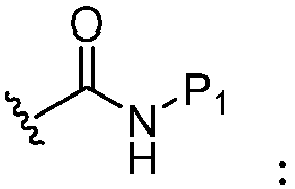 P1 étant choisi dans le groupe constitué par H et acétyle ;chaque résidu d'acide aminé étant éventuellement un acide aminé N-méthylé ;chaque résidu d'acide aminé pouvant être la configuration d'énantiomère R ou S ; ouun composé de polypeptide cyclique : 002, 029, 030, 031, 032, 033, 034, 035, 036, 037, 038, 039, 040, 041, 047, 048, 050, 051, 052, 053, 054, 057, 058, 061, 062, 063, 064, 065, 066, 068, 069, 070, 071, 081, 082, 083, 084, 085, 086, 087, 088, 089, 091, 092, 093, 094, 095, 103, 117,001, 004, 005, 006, 007, 008, 009, 010, 011, 012, 013, 014, 015, 016, 017, 018, 019, 020, 021, 022, 023, 024, 025, 026, 027, 028, 042, 043, 044, 045, 046, 049, 055, 056, 059, 060, 067, 072, 073, 074, 075, 076, 077, 078, 079, 080, 090, 096, 097, 098, 099, 100, 101, 102, 104, 105, 106, 108, 109, 110, 112, 113, 114, 115, 116, 118, 119, 120, 121, 122, 123, 124, 125, 126, 127, 128, 129, 130, ou 131, les formules desdits composés étant représentées dans les tableaux 1, 2 et/ou 3, ou sel pharmaceutiquement acceptable correspondant.
 - Composé selon la revendication 1, le composé étant un polypeptide cyclique de formule (I) :
 ou sel pharmaceutiquement acceptable correspondant ;A1 étant H ou une amine protégée par acyle ;R1 étant choisi dans le groupe constitué par les chaînes latérales d'acides aminés de ALA, GLY, ACB, ACPE, APC, LYS, NVA, PRO, et TBG ;R2 étant choisi dans le groupe constitué par les chaînes latérales d'acides aminés de ALA et GLY ;R3 étant choisi dans le groupe constitué par les chaînes latérales d'acides aminés de 4SFPRO, AIB, AZE, 4RFPRO, DHPRO, 4DFPRO, PIP, PRO, HSE, SISQ, et RISQ ;R4 étant choisi dans le groupe constitué par les chaînes latérales d'acides aminés de ALA, HIS, GLY, et PRO ;R5 étant choisi dans le groupe constitué par les chaînes latérales d'acides aminés de TYR, 4CF, 4FF, MFF, CNPP, 2NA, 1NA, F3MF, PHE, PRO, et OMY ;A2 étant absent ou
 P1 étant choisi dans le groupe constitué par H et acétyle ;chaque résidu d'acide aminé étant éventuellement un acide aminé N-méthylé ;chaque résidu d'acide aminé pouvant être la configuration d'énantiomère R ou S.
 - Composé selon la revendication 2, le composé étant choisi parmi : 003, 107, et 111, ou sel pharmaceutiquement acceptable correspondant.
- Composé selon la revendication 1, le composé étant choisi parmi :
002, 029, 030, 031, 032, 033, 034, 035, 036, 037, 038, 039, 040, 041, 047, 048, 050, 051, 052, 053, 054, 057, 058, 061, 062, 063, 064, 065, 066, 068, 069, 070, 071, 081, 082, 083, 084, 085, 086, 087, 088, 089, 091, 092, 093, 094, 095, 103, ou 117, ou sel pharmaceutiquement acceptable correspondant ; éventuellement le composé étant choisi parmi : 002, 040, 041, 050, 051, 062, 063, ou 089, ou sel pharmaceutiquement acceptable correspondant. - Composé selon la revendication 1, le composé étant un composé de polypeptide cyclique : 001, 004, 005, 006, 007, 008, 009, 010, 011, 012, 013, 014, 015, 016, 017, 018, 019, 020, 021, 022, 023, 024, 025, 026, 027, 028, 042, 043, 044, 045, 046, 049, 055, 056, 059, 060, 067, 072, 073, 074, 075, 076, 077, 078, 079, 080, 090, 096, 097, 098, 099, 100, 101, 102, 104, 105, 106, 108, 109, 110, 112, 113, 114, 115, 116, 118, 119, ou 120, ou sel pharmaceutiquement acceptable correspondant.
- Composé selon la revendication 5, le composé étant choisi parmi : 011, 012, 013, 014, 015, 016, 024, 025, 026, 045, 101, ou 102, ou sel pharmaceutiquement acceptable correspondant ; éventuellement le composé étant choisi parmi : 101 ou 102, ou sel pharmaceutiquement acceptable correspondant.
- Composé selon la revendication 1, le composé étant un composé de polypeptide cyclique : 121, 122, 123, 124, 125, 126, 127, 128, 129, 130, ou 131, ou sel pharmaceutiquement acceptable correspondant.
- Composé selon la revendication 7, le composé étant choisi parmi : 126 ou 127, ou sel pharmaceutiquement acceptable correspondant.
- Composition pharmaceutique comprenant un composé de polypeptide cyclique selon l'une quelconque des revendications 1 à 8 et un support pharmaceutiquement acceptable.
- Composé selon l'une quelconque des revendications 1 à 8 ou composition pharmaceutique selon la revendication 9 pour une utilisation dans un procédé de réduction du taux de cholestérol à faible densité de lipoprotéines (LDL) chez un sujet.
- Composé ou composition pharmaceutique pour une utilisation selon la revendication 10, le sujet étant atteint d'hypercholestérolémie ; éventuellement le composé de polypeptide cyclique inhibant l'interaction entre PCSK9 humaine et le domaine de répétition du facteur de croissance épidermique (EGF-A) de la lipoprotéine humaine de faible densité (LDLR).
- Composé selon l'une quelconque des revendications 1 à 8 ou composition pharmaceutique selon la revendication 9 pour une utilisation dans un procédé de traitement de l'hypercholestérolémie chez un sujet.
- Composé ou composition pharmaceutique pour une utilisation selon la revendication 12, le sujet souffrant en outre d'une maladie qui présente une comorbidité avec l'hypercholestérolémie ; éventuellement la maladie qui présente une comorbidité avec l'hypercholestérolémie étant choisie dans le groupe constitué par un syndrome néphrotique, une insuffisance rénale, une maladie coronarienne, l'athérosclérose, un accident vasculaire cérébral, une maladie vasculaire périphérique, le diabète et une pression sanguine élevée.
- Procédé in vitro d'inhibition de l'activité de PCSK9 dans une cellule comprenant la mise en contact de la cellule avec le composé de polypeptide cyclique selon les revendications 1 à 8, ou la composition pharmaceutique selon la revendication 9.
- Composé ou composition pharmaceutique pour une utilisation selon l'une quelconque des revendications 10 à 13, le composé où la composition pharmaceutique étant administrée par voie orale, intraveineuse, intramusculaire, intrapéritonéale, sous-cutanée, transdermique ou intravitréenne.
Applications Claiming Priority (2)
| Application Number | Priority Date | Filing Date | Title |
|---|---|---|---|
| US201862688037P | 2018-06-21 | 2018-06-21 | |
| PCT/US2019/038221 WO2019246387A1 (fr) | 2018-06-21 | 2019-06-20 | Peptides cycliques pour l'inhibition de la pcsk9 |
Publications (3)
| Publication Number | Publication Date |
|---|---|
| EP3810177A1 EP3810177A1 (fr) | 2021-04-28 |
| EP3810177A4 EP3810177A4 (fr) | 2022-05-11 |
| EP3810177B1 true EP3810177B1 (fr) | 2024-12-04 |
Family
ID=68984286
Family Applications (1)
| Application Number | Title | Priority Date | Filing Date |
|---|---|---|---|
| EP19823341.3A Active EP3810177B1 (fr) | 2018-06-21 | 2019-06-20 | Peptides cycliques pour l'inhibition de la pcsk9 |
Country Status (4)
| Country | Link |
|---|---|
| US (1) | US11814445B2 (fr) |
| EP (1) | EP3810177B1 (fr) |
| ES (1) | ES3015132T3 (fr) |
| WO (1) | WO2019246387A1 (fr) |
Families Citing this family (11)
| Publication number | Priority date | Publication date | Assignee | Title |
|---|---|---|---|---|
| US11530244B2 (en) | 2018-06-21 | 2022-12-20 | Merck Sharp & Dohme Llc | Cyclic polypeptides for PCSK9 inhibition |
| US11505575B2 (en) | 2018-06-21 | 2022-11-22 | Merck Sharp & Dohme Llc | Cyclic polypeptides for PCSK9 inhibition |
| WO2019246352A1 (fr) | 2018-06-21 | 2019-12-26 | Merck Sharp & Dohme Corp. | Composés bicycliques antagonistes de pcsk9 |
| WO2019246386A1 (fr) | 2018-06-21 | 2019-12-26 | Ra Pharmaceuticals Inc. | Polypeptides cycliques pour l'inhibition de la pcsk9 |
| IL321719A (en) | 2018-06-21 | 2025-08-01 | Merck Sharp ַ& Dohme Llc | Pcsk9 antagonist compounds |
| EP3810177B1 (fr) | 2018-06-21 | 2024-12-04 | Ra Pharmaceuticals, Inc. | Peptides cycliques pour l'inhibition de la pcsk9 |
| WO2021041770A1 (fr) | 2019-08-30 | 2021-03-04 | Merck Sharp & Dohme Corp. | Composés antagonistes du pcsk9 |
| US12577259B2 (en) | 2019-12-20 | 2026-03-17 | Merck Sharp & Dohme Llc | PCSK9 antagonist compounds |
| US11932705B2 (en) | 2020-12-18 | 2024-03-19 | Merck Sharp & Dohme Llc | Cyclic polypeptides for PCSK9 inhibition |
| WO2024225703A1 (fr) * | 2023-04-26 | 2024-10-31 | 서울대학교산학협력단 | Nouveau composé à base de peptide cyclique circularisé par l'intermédiaire de liaisons c-n, son procédé de production et son utilisation |
| EP4727552A2 (fr) * | 2023-06-15 | 2026-04-22 | Merck Sharp & Dohme LLC | Composés antagonistes de pcsk9 perméables passifs |
Family Cites Families (29)
| Publication number | Priority date | Publication date | Assignee | Title |
|---|---|---|---|---|
| US4393046A (en) | 1981-01-30 | 1983-07-12 | Merck & Co., Inc. | Combination of thiopeptin and other related sulfur-containing cyclic polypeptide antibiotics with rumen-active diimides to improve ruminant feed efficiency |
| US5104869A (en) | 1989-10-11 | 1992-04-14 | American Cyanamid Company | Renin inhibitors |
| WO2008057459A2 (fr) | 2006-11-07 | 2008-05-15 | Merck & Co., Inc. | Antagonistes de pcsk9 |
| WO2009042053A2 (fr) | 2007-09-21 | 2009-04-02 | Merck & Co., Inc. | Agonistes du récepteur de la neuromédine u et leurs utilisations |
| US7928189B2 (en) | 2008-05-05 | 2011-04-19 | Ottawa Health Research Institute | PCSK9 polypeptide fragment |
| UY32690A (es) | 2009-06-08 | 2011-01-31 | Astrazeneca Ab | Péptidos específicos para receptores de melanocortina |
| WO2011037791A1 (fr) | 2009-09-25 | 2011-03-31 | Merck Sharp & Dohme Corp. | Antagonistes de pcsk9 |
| CA2813049A1 (fr) | 2010-09-23 | 2012-03-29 | The Trustees Of The University Of Pennsylvania | Compstatine modifiee ayant des proprietes de stabilite et de liaison ameliorees |
| KR101510975B1 (ko) | 2010-12-28 | 2015-04-10 | 카딜라 핼쓰캐어 리미티드 | 이상지질혈증의 치료에 적절한 헤테로시클릭 화합물 |
| WO2012131504A1 (fr) | 2011-03-02 | 2012-10-04 | Pfizer Inc. | Vaccin à base de pcsk9 |
| KR20140041747A (ko) | 2011-06-20 | 2014-04-04 | 제넨테크, 인크. | Pcsk9-결합 폴리펩티드 및 사용 방법 |
| KR20150000461A (ko) | 2011-10-27 | 2015-01-02 | 메사추세츠 인스티튜트 오브 테크놀로지 | 약물 캡슐화 마이크로스피어를 형성할 수 있는, n-말단 상에 관능화된 아미노산 유도체 |
| US9534018B2 (en) | 2012-03-13 | 2017-01-03 | Tensive Controls Inc. | Melanocortin analogs having enhanced activity and transport |
| EP2850095B1 (fr) | 2012-05-17 | 2019-10-09 | RA Pharmaceuticals, Inc. | Inhibiteurs peptidiques et peptidomimétiques |
| SG11201505856TA (en) | 2013-03-14 | 2015-08-28 | Daiichi Sankyo Co Ltd | Novel binding proteins for pcsk9 |
| JP2016512825A (ja) | 2013-03-15 | 2016-05-09 | シファ・バイオメディカル・コーポレイションShifa Biomedical Corporation | 抗プロタンパク質転換酵素サブチリシン/ケキシン9型(抗pcsk9)化合物および心血管疾患の治療および/または予防におけるその使用方法 |
| HUE045646T2 (hu) * | 2014-06-12 | 2020-01-28 | Ra Pharmaceuticals Inc | Komplement aktivitás modulálása |
| US10557129B2 (en) * | 2015-01-30 | 2020-02-11 | Pronasci Inc. | Peptides derived from human PCSK9 catalytic domain and uses thereof for promoting LDL-R activity |
| EP3442991A4 (fr) | 2016-04-15 | 2019-11-20 | RA Pharmaceuticals, Inc. | Peptides de liaison à ras et méthodes d'utilisation |
| CA3026823A1 (fr) * | 2016-06-24 | 2017-12-28 | F. Hoffmann-La Roche Ag | Compositions et methodes de traitement de maladie cardiovasculaire |
| US10577357B2 (en) | 2016-09-19 | 2020-03-03 | The Texas A&M University System | Inhibitors of LDLR-PCSK9 protein-protein interaction and methods of their use |
| US11530244B2 (en) * | 2018-06-21 | 2022-12-20 | Merck Sharp & Dohme Llc | Cyclic polypeptides for PCSK9 inhibition |
| WO2019246352A1 (fr) | 2018-06-21 | 2019-12-26 | Merck Sharp & Dohme Corp. | Composés bicycliques antagonistes de pcsk9 |
| US11505575B2 (en) | 2018-06-21 | 2022-11-22 | Merck Sharp & Dohme Llc | Cyclic polypeptides for PCSK9 inhibition |
| WO2019246386A1 (fr) | 2018-06-21 | 2019-12-26 | Ra Pharmaceuticals Inc. | Polypeptides cycliques pour l'inhibition de la pcsk9 |
| EP3810177B1 (fr) | 2018-06-21 | 2024-12-04 | Ra Pharmaceuticals, Inc. | Peptides cycliques pour l'inhibition de la pcsk9 |
| IL321719A (en) | 2018-06-21 | 2025-08-01 | Merck Sharp ַ& Dohme Llc | Pcsk9 antagonist compounds |
| WO2021041770A1 (fr) | 2019-08-30 | 2021-03-04 | Merck Sharp & Dohme Corp. | Composés antagonistes du pcsk9 |
| US12577259B2 (en) | 2019-12-20 | 2026-03-17 | Merck Sharp & Dohme Llc | PCSK9 antagonist compounds |
-
2019
- 2019-06-20 EP EP19823341.3A patent/EP3810177B1/fr active Active
- 2019-06-20 ES ES19823341T patent/ES3015132T3/es active Active
- 2019-06-20 WO PCT/US2019/038221 patent/WO2019246387A1/fr not_active Ceased
- 2019-06-20 US US17/253,774 patent/US11814445B2/en active Active
Also Published As
| Publication number | Publication date |
|---|---|
| ES3015132T3 (en) | 2025-04-29 |
| EP3810177A1 (fr) | 2021-04-28 |
| US20220089640A1 (en) | 2022-03-24 |
| US11814445B2 (en) | 2023-11-14 |
| EP3810177A4 (fr) | 2022-05-11 |
| WO2019246387A1 (fr) | 2019-12-26 |
| WO2019246387A8 (fr) | 2021-01-07 |
Similar Documents
| Publication | Publication Date | Title |
|---|---|---|
| US12012468B2 (en) | Cyclic polypeptides for PCSK9 inhibition | |
| EP3810176B1 (fr) | Polypeptides cycliques pour l'inhibition de la pcsk9 | |
| US11814445B2 (en) | Cyclic polypeptides for PCSK9 inhibition | |
| US11505575B2 (en) | Cyclic polypeptides for PCSK9 inhibition | |
| EP1633384B1 (fr) | Analogues stables de glp-1 | |
| US9239332B2 (en) | Akt-specific capture agents, compositions, and methods of using and making | |
| CN106573031A (zh) | 双末端聚乙二醇化整合素‑结合肽及其使用方法 | |
| US20240165245A1 (en) | Multivalent peptoid oligomers, pharmaceutical compositions and methods of using same | |
| CA3032775A1 (fr) | Peptide cible de tumeur maligne | |
| EP2383336A1 (fr) | Peptide capable de se lier à une immunoglobuline | |
| TW202543589A (zh) | 丹磺醯胺修飾的psma靶向化合物及其製備方法和應用 | |
| CA2515033C (fr) | Peptide clk et peptide slk | |
| WO2022134395A1 (fr) | Nouvel analogue de peptide mimétique bh3 inhibant l'activité de ptp1b et son utilisation | |
| JP2009507844A (ja) | 安定化glp−1類似体 | |
| US11932705B2 (en) | Cyclic polypeptides for PCSK9 inhibition | |
| CA2520372A1 (fr) | Peptides stq | |
| US20120270771A1 (en) | Apolipoprotein a-1 mimic peptides, and therapeutic agent for treating hyperlipidemia and diseases related to hyperlipidemia comprising same | |
| TW202344264A (zh) | Tsp1抑制劑 | |
| JP2014513923A (ja) | Edn3様ペプチドおよびその使用 | |
| KR20250171362A (ko) | 펩티드 티로신-티로신 유사체 및 그 용도 | |
| CN120267795A (zh) | 一种抑制新型冠状病毒的多肽-小分子缀合物 | |
| CN121971661A (zh) | 一种放射性药物及其应用 | |
| CN121971641A (zh) | 靶向肝星状细胞的偶联物及其制备方法和应用 | |
| CN121270660A (zh) | D肽靶向肿瘤pd-l1的放射性诊疗药物及其标记前体、制备方法和应用 | |
| HK1088840B (en) | Stable analogs of glp-1 |
Legal Events
| Date | Code | Title | Description |
|---|---|---|---|
| STAA | Information on the status of an ep patent application or granted ep patent |
Free format text: STATUS: THE INTERNATIONAL PUBLICATION HAS BEEN MADE |
|
| PUAI | Public reference made under article 153(3) epc to a published international application that has entered the european phase |
Free format text: ORIGINAL CODE: 0009012 |
|
| STAA | Information on the status of an ep patent application or granted ep patent |
Free format text: STATUS: REQUEST FOR EXAMINATION WAS MADE |
|
| 17P | Request for examination filed |
Effective date: 20201230 |
|
| AK | Designated contracting states |
Kind code of ref document: A1 Designated state(s): AL AT BE BG CH CY CZ DE DK EE ES FI FR GB GR HR HU IE IS IT LI LT LU LV MC MK MT NL NO PL PT RO RS SE SI SK SM TR |
|
| AX | Request for extension of the european patent |
Extension state: BA ME |
|
| RIN1 | Information on inventor provided before grant (corrected) |
Inventor name: RICARDO, ALONSO Inventor name: BOYER, NICOLAS, CEDRIC Inventor name: STRINGER, JOSEPH, R. Inventor name: LAPLACA, DEREK, M. Inventor name: JETTE, KELLI Inventor name: SUN, YILI |
|
| DAV | Request for validation of the european patent (deleted) | ||
| DAX | Request for extension of the european patent (deleted) | ||
| A4 | Supplementary search report drawn up and despatched |
Effective date: 20220413 |
|
| RIC1 | Information provided on ipc code assigned before grant |
Ipc: A61K 38/00 20060101ALN20220407BHEP Ipc: A61P 3/06 20060101ALI20220407BHEP Ipc: A61K 31/405 20060101ALI20220407BHEP Ipc: C07K 7/02 20060101AFI20220407BHEP |
|
| RAP3 | Party data changed (applicant data changed or rights of an application transferred) |
Owner name: RA PHARMACEUTICALS, INC. |
|
| REG | Reference to a national code |
Ref country code: DE Ref legal event code: R079 Free format text: PREVIOUS MAIN CLASS: A61K0038120000 Ipc: C07K0007020000 Ref country code: DE Ref legal event code: R079 Ref document number: 602019063083 Country of ref document: DE Free format text: PREVIOUS MAIN CLASS: A61K0038120000 Ipc: C07K0007020000 |
|
| GRAP | Despatch of communication of intention to grant a patent |
Free format text: ORIGINAL CODE: EPIDOSNIGR1 |
|
| STAA | Information on the status of an ep patent application or granted ep patent |
Free format text: STATUS: GRANT OF PATENT IS INTENDED |
|
| RIC1 | Information provided on ipc code assigned before grant |
Ipc: A61K 38/00 20060101ALN20240603BHEP Ipc: A61P 3/06 20060101ALI20240603BHEP Ipc: A61K 31/405 20060101ALI20240603BHEP Ipc: C07K 7/02 20060101AFI20240603BHEP |
|
| RIC1 | Information provided on ipc code assigned before grant |
Ipc: A61K 38/00 20060101ALN20240613BHEP Ipc: A61P 3/06 20060101ALI20240613BHEP Ipc: A61K 31/405 20060101ALI20240613BHEP Ipc: C07K 7/02 20060101AFI20240613BHEP |
|
| INTG | Intention to grant announced |
Effective date: 20240703 |
|
| GRAS | Grant fee paid |
Free format text: ORIGINAL CODE: EPIDOSNIGR3 |
|
| GRAA | (expected) grant |
Free format text: ORIGINAL CODE: 0009210 |
|
| STAA | Information on the status of an ep patent application or granted ep patent |
Free format text: STATUS: THE PATENT HAS BEEN GRANTED |
|
| AK | Designated contracting states |
Kind code of ref document: B1 Designated state(s): AL AT BE BG CH CY CZ DE DK EE ES FI FR GB GR HR HU IE IS IT LI LT LU LV MC MK MT NL NO PL PT RO RS SE SI SK SM TR |
|
| REG | Reference to a national code |
Ref country code: CH Ref legal event code: EP |
|
| REG | Reference to a national code |
Ref country code: DE Ref legal event code: R096 Ref document number: 602019063083 Country of ref document: DE |
|
| REG | Reference to a national code |
Ref country code: IE Ref legal event code: FG4D |
|
| REG | Reference to a national code |
Ref country code: LT Ref legal event code: MG9D |
|
| RAP2 | Party data changed (patent owner data changed or rights of a patent transferred) |
Owner name: UCB HOLDINGS, INC. |
|
| REG | Reference to a national code |
Ref country code: NL Ref legal event code: MP Effective date: 20241204 |
|
| PG25 | Lapsed in a contracting state [announced via postgrant information from national office to epo] |
Ref country code: HR Free format text: LAPSE BECAUSE OF FAILURE TO SUBMIT A TRANSLATION OF THE DESCRIPTION OR TO PAY THE FEE WITHIN THE PRESCRIBED TIME-LIMIT Effective date: 20241204 |
|
| PG25 | Lapsed in a contracting state [announced via postgrant information from national office to epo] |
Ref country code: FI Free format text: LAPSE BECAUSE OF FAILURE TO SUBMIT A TRANSLATION OF THE DESCRIPTION OR TO PAY THE FEE WITHIN THE PRESCRIBED TIME-LIMIT Effective date: 20241204 |
|
| PG25 | Lapsed in a contracting state [announced via postgrant information from national office to epo] |
Ref country code: BG Free format text: LAPSE BECAUSE OF FAILURE TO SUBMIT A TRANSLATION OF THE DESCRIPTION OR TO PAY THE FEE WITHIN THE PRESCRIBED TIME-LIMIT Effective date: 20241204 |
|
| PG25 | Lapsed in a contracting state [announced via postgrant information from national office to epo] |
Ref country code: NO Free format text: LAPSE BECAUSE OF FAILURE TO SUBMIT A TRANSLATION OF THE DESCRIPTION OR TO PAY THE FEE WITHIN THE PRESCRIBED TIME-LIMIT Effective date: 20250304 |
|
| PG25 | Lapsed in a contracting state [announced via postgrant information from national office to epo] |
Ref country code: GR Free format text: LAPSE BECAUSE OF FAILURE TO SUBMIT A TRANSLATION OF THE DESCRIPTION OR TO PAY THE FEE WITHIN THE PRESCRIBED TIME-LIMIT Effective date: 20250305 Ref country code: LV Free format text: LAPSE BECAUSE OF FAILURE TO SUBMIT A TRANSLATION OF THE DESCRIPTION OR TO PAY THE FEE WITHIN THE PRESCRIBED TIME-LIMIT Effective date: 20241204 |
|
| REG | Reference to a national code |
Ref country code: DE Ref legal event code: R081 Ref document number: 602019063083 Country of ref document: DE Owner name: UCB HOLDINGS, INC., SMYRNA, US Free format text: FORMER OWNER: RA PHARMACEUTICALS, INC., CAMBRIDGE, MA, US |
|
| PG25 | Lapsed in a contracting state [announced via postgrant information from national office to epo] |
Ref country code: RS Free format text: LAPSE BECAUSE OF FAILURE TO SUBMIT A TRANSLATION OF THE DESCRIPTION OR TO PAY THE FEE WITHIN THE PRESCRIBED TIME-LIMIT Effective date: 20250304 |
|
| REG | Reference to a national code |
Ref country code: ES Ref legal event code: FG2A Ref document number: 3015132 Country of ref document: ES Kind code of ref document: T3 Effective date: 20250429 |
|
| PG25 | Lapsed in a contracting state [announced via postgrant information from national office to epo] |
Ref country code: NL Free format text: LAPSE BECAUSE OF FAILURE TO SUBMIT A TRANSLATION OF THE DESCRIPTION OR TO PAY THE FEE WITHIN THE PRESCRIBED TIME-LIMIT Effective date: 20241204 |
|
| REG | Reference to a national code |
Ref country code: AT Ref legal event code: MK05 Ref document number: 1748079 Country of ref document: AT Kind code of ref document: T Effective date: 20241204 |
|
| REG | Reference to a national code |
Ref country code: GB Ref legal event code: 732E Free format text: REGISTERED BETWEEN 20250424 AND 20250430 |
|
| PG25 | Lapsed in a contracting state [announced via postgrant information from national office to epo] |
Ref country code: SM Free format text: LAPSE BECAUSE OF FAILURE TO SUBMIT A TRANSLATION OF THE DESCRIPTION OR TO PAY THE FEE WITHIN THE PRESCRIBED TIME-LIMIT Effective date: 20241204 |
|
| PG25 | Lapsed in a contracting state [announced via postgrant information from national office to epo] |
Ref country code: PL Free format text: LAPSE BECAUSE OF FAILURE TO SUBMIT A TRANSLATION OF THE DESCRIPTION OR TO PAY THE FEE WITHIN THE PRESCRIBED TIME-LIMIT Effective date: 20241204 |
|
| PGFP | Annual fee paid to national office [announced via postgrant information from national office to epo] |
Ref country code: DE Payment date: 20250604 Year of fee payment: 7 |
|
| PGFP | Annual fee paid to national office [announced via postgrant information from national office to epo] |
Ref country code: GB Payment date: 20250529 Year of fee payment: 7 |
|
| PG25 | Lapsed in a contracting state [announced via postgrant information from national office to epo] |
Ref country code: IS Free format text: LAPSE BECAUSE OF FAILURE TO SUBMIT A TRANSLATION OF THE DESCRIPTION OR TO PAY THE FEE WITHIN THE PRESCRIBED TIME-LIMIT Effective date: 20250404 |
|
| PGFP | Annual fee paid to national office [announced via postgrant information from national office to epo] |
Ref country code: BE Payment date: 20250619 Year of fee payment: 7 |
|
| PG25 | Lapsed in a contracting state [announced via postgrant information from national office to epo] |
Ref country code: PT Free format text: LAPSE BECAUSE OF FAILURE TO SUBMIT A TRANSLATION OF THE DESCRIPTION OR TO PAY THE FEE WITHIN THE PRESCRIBED TIME-LIMIT Effective date: 20250404 |
|
| PG25 | Lapsed in a contracting state [announced via postgrant information from national office to epo] |
Ref country code: EE Free format text: LAPSE BECAUSE OF FAILURE TO SUBMIT A TRANSLATION OF THE DESCRIPTION OR TO PAY THE FEE WITHIN THE PRESCRIBED TIME-LIMIT Effective date: 20241204 |
|
| PGFP | Annual fee paid to national office [announced via postgrant information from national office to epo] |
Ref country code: FR Payment date: 20250610 Year of fee payment: 7 |
|
| PG25 | Lapsed in a contracting state [announced via postgrant information from national office to epo] |
Ref country code: RO Free format text: LAPSE BECAUSE OF FAILURE TO SUBMIT A TRANSLATION OF THE DESCRIPTION OR TO PAY THE FEE WITHIN THE PRESCRIBED TIME-LIMIT Effective date: 20241204 Ref country code: AT Free format text: LAPSE BECAUSE OF FAILURE TO SUBMIT A TRANSLATION OF THE DESCRIPTION OR TO PAY THE FEE WITHIN THE PRESCRIBED TIME-LIMIT Effective date: 20241204 |
|
| PG25 | Lapsed in a contracting state [announced via postgrant information from national office to epo] |
Ref country code: SK Free format text: LAPSE BECAUSE OF FAILURE TO SUBMIT A TRANSLATION OF THE DESCRIPTION OR TO PAY THE FEE WITHIN THE PRESCRIBED TIME-LIMIT Effective date: 20241204 |
|
| PG25 | Lapsed in a contracting state [announced via postgrant information from national office to epo] |
Ref country code: CZ Free format text: LAPSE BECAUSE OF FAILURE TO SUBMIT A TRANSLATION OF THE DESCRIPTION OR TO PAY THE FEE WITHIN THE PRESCRIBED TIME-LIMIT Effective date: 20241204 |
|
| REG | Reference to a national code |
Ref country code: BE Ref legal event code: PD Owner name: UCB HOLDINGS, INC.; US Free format text: DETAILS ASSIGNMENT: CHANGE OF OWNER(S), ASSIGNMENT; FORMER OWNER NAME: RA PHARMACEUTICALS, INC. Effective date: 20250626 |
|
| REG | Reference to a national code |
Ref country code: DE Ref legal event code: R097 Ref document number: 602019063083 Country of ref document: DE |
|
| PG25 | Lapsed in a contracting state [announced via postgrant information from national office to epo] |
Ref country code: SE Free format text: LAPSE BECAUSE OF FAILURE TO SUBMIT A TRANSLATION OF THE DESCRIPTION OR TO PAY THE FEE WITHIN THE PRESCRIBED TIME-LIMIT Effective date: 20241204 |
|
| PGFP | Annual fee paid to national office [announced via postgrant information from national office to epo] |
Ref country code: ES Payment date: 20250703 Year of fee payment: 7 |
|
| PG25 | Lapsed in a contracting state [announced via postgrant information from national office to epo] |
Ref country code: DK Free format text: LAPSE BECAUSE OF FAILURE TO SUBMIT A TRANSLATION OF THE DESCRIPTION OR TO PAY THE FEE WITHIN THE PRESCRIBED TIME-LIMIT Effective date: 20241204 |
|
| PLBE | No opposition filed within time limit |
Free format text: ORIGINAL CODE: 0009261 |
|
| STAA | Information on the status of an ep patent application or granted ep patent |
Free format text: STATUS: NO OPPOSITION FILED WITHIN TIME LIMIT |
|
| PGFP | Annual fee paid to national office [announced via postgrant information from national office to epo] |
Ref country code: IT Payment date: 20250623 Year of fee payment: 7 |
|
| PGFP | Annual fee paid to national office [announced via postgrant information from national office to epo] |
Ref country code: CH Payment date: 20250701 Year of fee payment: 7 |
|
| 26N | No opposition filed |
Effective date: 20250905 |
|
| PG25 | Lapsed in a contracting state [announced via postgrant information from national office to epo] |
Ref country code: MC Free format text: LAPSE BECAUSE OF FAILURE TO SUBMIT A TRANSLATION OF THE DESCRIPTION OR TO PAY THE FEE WITHIN THE PRESCRIBED TIME-LIMIT Effective date: 20241204 |
|
| PG25 | Lapsed in a contracting state [announced via postgrant information from national office to epo] |
Ref country code: LU Free format text: LAPSE BECAUSE OF NON-PAYMENT OF DUE FEES Effective date: 20250620 |
|
| PG25 | Lapsed in a contracting state [announced via postgrant information from national office to epo] |
Ref country code: IE Free format text: LAPSE BECAUSE OF NON-PAYMENT OF DUE FEES Effective date: 20250620 |