EP3811255B1 - Verfahren und vorrichtung zur authentifizierung biometrischer informationen - Google Patents
Verfahren und vorrichtung zur authentifizierung biometrischer informationen Download PDFInfo
- Publication number
- EP3811255B1 EP3811255B1 EP19851198.2A EP19851198A EP3811255B1 EP 3811255 B1 EP3811255 B1 EP 3811255B1 EP 19851198 A EP19851198 A EP 19851198A EP 3811255 B1 EP3811255 B1 EP 3811255B1
- Authority
- EP
- European Patent Office
- Prior art keywords
- biometric
- information
- server
- terminal
- user
- Prior art date
- Legal status (The legal status is an assumption and is not a legal conclusion. Google has not performed a legal analysis and makes no representation as to the accuracy of the status listed.)
- Active
Links
Images






Classifications
-
- G—PHYSICS
- G06—COMPUTING OR CALCULATING; COUNTING
- G06F—ELECTRIC DIGITAL DATA PROCESSING
- G06F21/00—Security arrangements for protecting computers, components thereof, programs or data against unauthorised activity
- G06F21/30—Authentication, i.e. establishing the identity or authorisation of security principals
- G06F21/31—User authentication
- G06F21/32—User authentication using biometric data, e.g. fingerprints, iris scans or voiceprints
-
- H—ELECTRICITY
- H04—ELECTRIC COMMUNICATION TECHNIQUE
- H04L—TRANSMISSION OF DIGITAL INFORMATION, e.g. TELEGRAPHIC COMMUNICATION
- H04L9/00—Cryptographic mechanisms or cryptographic arrangements for secret or secure communications; Network security protocols
- H04L9/32—Cryptographic mechanisms or cryptographic arrangements for secret or secure communications; Network security protocols including means for verifying the identity or authority of a user of the system or for message authentication, e.g. authorization, entity authentication, data integrity or data verification, non-repudiation, key authentication or verification of credentials
- H04L9/3226—Cryptographic mechanisms or cryptographic arrangements for secret or secure communications; Network security protocols including means for verifying the identity or authority of a user of the system or for message authentication, e.g. authorization, entity authentication, data integrity or data verification, non-repudiation, key authentication or verification of credentials using a predetermined code, e.g. password, passphrase or PIN
- H04L9/3231—Biological data, e.g. fingerprint, voice or retina
-
- G—PHYSICS
- G06—COMPUTING OR CALCULATING; COUNTING
- G06F—ELECTRIC DIGITAL DATA PROCESSING
- G06F21/00—Security arrangements for protecting computers, components thereof, programs or data against unauthorised activity
- G06F21/60—Protecting data
- G06F21/602—Providing cryptographic facilities or services
-
- G—PHYSICS
- G06—COMPUTING OR CALCULATING; COUNTING
- G06F—ELECTRIC DIGITAL DATA PROCESSING
- G06F21/00—Security arrangements for protecting computers, components thereof, programs or data against unauthorised activity
- G06F21/60—Protecting data
- G06F21/62—Protecting access to data via a platform, e.g. using keys or access control rules
- G06F21/6218—Protecting access to data via a platform, e.g. using keys or access control rules to a system of files or objects, e.g. local or distributed file system or database
- G06F21/6245—Protecting personal data, e.g. for financial or medical purposes
- G06F21/6254—Protecting personal data, e.g. for financial or medical purposes by anonymising data, e.g. decorrelating personal data from the owner's identification
-
- G—PHYSICS
- G06—COMPUTING OR CALCULATING; COUNTING
- G06V—IMAGE OR VIDEO RECOGNITION OR UNDERSTANDING
- G06V40/00—Recognition of biometric, human-related or animal-related patterns in image or video data
- G06V40/10—Human or animal bodies, e.g. vehicle occupants or pedestrians; Body parts, e.g. hands
-
- H—ELECTRICITY
- H04—ELECTRIC COMMUNICATION TECHNIQUE
- H04L—TRANSMISSION OF DIGITAL INFORMATION, e.g. TELEGRAPHIC COMMUNICATION
- H04L63/00—Network architectures or network communication protocols for network security
- H04L63/12—Applying verification of the received information
-
- H—ELECTRICITY
- H04—ELECTRIC COMMUNICATION TECHNIQUE
- H04L—TRANSMISSION OF DIGITAL INFORMATION, e.g. TELEGRAPHIC COMMUNICATION
- H04L9/00—Cryptographic mechanisms or cryptographic arrangements for secret or secure communications; Network security protocols
- H04L9/32—Cryptographic mechanisms or cryptographic arrangements for secret or secure communications; Network security protocols including means for verifying the identity or authority of a user of the system or for message authentication, e.g. authorization, entity authentication, data integrity or data verification, non-repudiation, key authentication or verification of credentials
- H04L9/3263—Cryptographic mechanisms or cryptographic arrangements for secret or secure communications; Network security protocols including means for verifying the identity or authority of a user of the system or for message authentication, e.g. authorization, entity authentication, data integrity or data verification, non-repudiation, key authentication or verification of credentials involving certificates, e.g. public key certificate [PKC] or attribute certificate [AC]; Public key infrastructure [PKI] arrangements
-
- H—ELECTRICITY
- H04—ELECTRIC COMMUNICATION TECHNIQUE
- H04L—TRANSMISSION OF DIGITAL INFORMATION, e.g. TELEGRAPHIC COMMUNICATION
- H04L9/00—Cryptographic mechanisms or cryptographic arrangements for secret or secure communications; Network security protocols
- H04L9/32—Cryptographic mechanisms or cryptographic arrangements for secret or secure communications; Network security protocols including means for verifying the identity or authority of a user of the system or for message authentication, e.g. authorization, entity authentication, data integrity or data verification, non-repudiation, key authentication or verification of credentials
- H04L9/3271—Cryptographic mechanisms or cryptographic arrangements for secret or secure communications; Network security protocols including means for verifying the identity or authority of a user of the system or for message authentication, e.g. authorization, entity authentication, data integrity or data verification, non-repudiation, key authentication or verification of credentials using challenge-response
-
- G—PHYSICS
- G06—COMPUTING OR CALCULATING; COUNTING
- G06F—ELECTRIC DIGITAL DATA PROCESSING
- G06F21/00—Security arrangements for protecting computers, components thereof, programs or data against unauthorised activity
- G06F21/30—Authentication, i.e. establishing the identity or authorisation of security principals
- G06F21/31—User authentication
- G06F21/33—User authentication using certificates
-
- G—PHYSICS
- G06—COMPUTING OR CALCULATING; COUNTING
- G06V—IMAGE OR VIDEO RECOGNITION OR UNDERSTANDING
- G06V40/00—Recognition of biometric, human-related or animal-related patterns in image or video data
- G06V40/10—Human or animal bodies, e.g. vehicle occupants or pedestrians; Body parts, e.g. hands
- G06V40/12—Fingerprints or palmprints
-
- G—PHYSICS
- G06—COMPUTING OR CALCULATING; COUNTING
- G06V—IMAGE OR VIDEO RECOGNITION OR UNDERSTANDING
- G06V40/00—Recognition of biometric, human-related or animal-related patterns in image or video data
- G06V40/10—Human or animal bodies, e.g. vehicle occupants or pedestrians; Body parts, e.g. hands
- G06V40/14—Vascular patterns
-
- G—PHYSICS
- G06—COMPUTING OR CALCULATING; COUNTING
- G06V—IMAGE OR VIDEO RECOGNITION OR UNDERSTANDING
- G06V40/00—Recognition of biometric, human-related or animal-related patterns in image or video data
- G06V40/10—Human or animal bodies, e.g. vehicle occupants or pedestrians; Body parts, e.g. hands
- G06V40/15—Biometric patterns based on physiological signals, e.g. heartbeat, blood flow
-
- G—PHYSICS
- G06—COMPUTING OR CALCULATING; COUNTING
- G06V—IMAGE OR VIDEO RECOGNITION OR UNDERSTANDING
- G06V40/00—Recognition of biometric, human-related or animal-related patterns in image or video data
- G06V40/10—Human or animal bodies, e.g. vehicle occupants or pedestrians; Body parts, e.g. hands
- G06V40/16—Human faces, e.g. facial parts, sketches or expressions
-
- G—PHYSICS
- G06—COMPUTING OR CALCULATING; COUNTING
- G06V—IMAGE OR VIDEO RECOGNITION OR UNDERSTANDING
- G06V40/00—Recognition of biometric, human-related or animal-related patterns in image or video data
- G06V40/10—Human or animal bodies, e.g. vehicle occupants or pedestrians; Body parts, e.g. hands
- G06V40/18—Eye characteristics, e.g. of the iris
-
- H—ELECTRICITY
- H04—ELECTRIC COMMUNICATION TECHNIQUE
- H04L—TRANSMISSION OF DIGITAL INFORMATION, e.g. TELEGRAPHIC COMMUNICATION
- H04L2209/00—Additional information or applications relating to cryptographic mechanisms or cryptographic arrangements for secret or secure communication H04L9/00
- H04L2209/42—Anonymization, e.g. involving pseudonyms
Definitions
- the disclosure relates to registration of biometric information and an apparatus and method of providing a service of authenticating biometric information, based on the registration of the biometric information.
- Registering a terminal with a server is disclosed e.g. in WO 2016/128906 A1 , US 2018/191695 A1 and US 2015/0143497 A1 .
- Biometrics is an authentication method that involves extracting an individual's unique biometric features such as a fingerprint, a voice, a face, an iris, and blood vessels that are different for each individual and converting them into processible information. As the need for security becomes more important, biometric technologies have been widely used to authenticate users requesting access to an indoor area.
- Biometric technologies employ various methods using parts of a human body, such as face recognition, fingerprint recognition, iris recognition, blood vessel recognition, etc. Unlike keys or passwords, an individual's characteristics such as a face shape, voice, a fingerprint, and an eyeball cannot be stolen or duplicated for use by another person. Furthermore, due to their low risk of change or loss, these characteristics are widely used in security applications.
- An apparatus and method capable of effectively providing a user authentication service using biometric information are required.
- An apparatus and method capable of effectively providing a user authentication service using biometric information are provided.
- an apparatus and method capable of effectively providing a user authentication service using biometric information.
- a method, performed by a terminal, of registering biometric information includes: transmitting a registration request and biometric capability information of the terminal to a server; receiving biometric capability information of the server from the server; acquiring a user's biometric information based on the biometric capability information of the server; acquiring a pseudonymous identifier (PI) and auxiliary data (AD) based on the user's biometric information; and transmitting the PI and the AD to the server.
- PI pseudonymous identifier
- AD auxiliary data
- FIGS. 1 through 16 discussed below, and the various embodiments used to describe the principles of the present disclosure in this patent document are by way of illustration only and should not be construed in any way to limit the scope of the disclosure. Those skilled in the art will understand that the principles of the present disclosure may be implemented in any suitably arranged system or device.
- a second element or component may be termed a first element or component.
- the term “and/or” includes any and all combinations of one or more of the associated listed items.
- the terminology used herein is for the purpose of describing embodiments of the disclosure only and is not intended to limit the embodiments of the disclosure.
- singular forms are intended to include the plural forms as well, unless the context clearly indicates otherwise.
- the terms "comprises” and/or “includes” when used in this specification specify the presence of stated features, integers, steps, operations, elements, components, or combinations thereof, but do not preclude the presence or addition of one or more other features, integers, steps, operations, elements, components, or combinations thereof.
- the expression "at least one of a, b or c" indicates only a, only b, only c, both a and b, both a and c, both b and c, all of a, b, and c, or variations thereof.
- FIG. 1 illustrates a block diagram of a configuration of a biometric information authentication system 1000 according to an embodiment of the disclosure.
- the biometric information authentication system 1000 includes a terminal 1100 and an authentication server 1200.
- the terminal 1100 may acquire biometric information from a user.
- the biometric information refers to information containing biometric characteristics that are time invariant and unique for each user.
- biometric information may be information about at least one of a face shape, an iris, a retina, veins, a fingerprint, or Deoxyribonucleic Acid (DNA).
- Biometric information may also be referred to as bioinformation.
- the terminal 1100 may determine whether the user is an authorized user, based on the biometric information.
- the terminal 1100 may perform a biometric information registration procedure for registering information generated based on the user's biometric information and a biometric information authentication procedure.
- the biometric information authentication procedure involves comparing the registered information with information acquired when authentication is requested and determining whether the user is an authorized user.
- the terminal 1100 may transmit a part of the information generated based on the user's biometric information to the authentication server 1200 and request registration from the authentication server 1200. Furthermore, when authentication is requested by the user, the terminal 1100 may transmit a part of the information generated based on the user's biometric information to the authentication server 1200 and receive a result of the authentication from the authentication server 1200. According to an embodiment of the disclosure, when authentication is requested by the user, the terminal 1100 may request transmission of additional information from the authentication server 1200, generate information based on the user's biometric information and the additional information received from the authentication server 1200, and transmit a part of the generated information to the authentication server 1200. The additional information received from the authentication server 1200 may include information registered during the biometric information registration procedure.
- the terminal 1100 and the authentication server 1200 may transmit or receive information generated based on user's biometric information by using various types of security techniques.
- the authentication server 1200 may include a server for exchanging data with the terminal 1100 and a bioserver, which is separate from the server, for performing operations of processing and storing biometric information.
- this is merely an example, and a configuration of a server according to the disclosure is not limited thereto.
- the terminal 1100 may obtain a template based on the biometric information acquired from the user.
- a template refers to feature information obtained by performing algorithmic processing based on biometric information to analyze and extract biometric characteristics in the biometric information and may include a user's unique biometric information.
- the template may include a pseudonymous identifier (hereinafter, referred to as a 'PI') and auxiliary data (hereinafter, referred to as 'AD').
- the terminal 1100 may prevent the risk of leakage of the biometric information by using a template instead of directly using the user's biometric information for registration and authentication of the biometric information.
- the terminal 1100 transmits biometric capability information of the terminal 1100 to the authentication server 1200 while requesting registration of the user's biometric information from the authentication server 1200.
- the biometric capability information refers to information about a biometric technology supported by the terminal 1100.
- Biometric technology may refer to technology that extracts unique biometric information of the user via an automated device to create a template.
- the biometric technology may also be referred to as bio authentication technology.
- biometric capability information may include items of biometric information (e.g., each user's face shape, iris, retina, veins, fingerprint, DNA, etc.) that may be acquired by the terminal 1100 and information about an algorithm performed to obtain a template based on the biometric information.
- the terminal 1100 receives biometric capability information of the authentication server 1200 from the authentication server 1200.
- the biometric capability information of the authentication server 1200 refer to information about a biometric technology supported by the terminal 1100 among a plurality of biometric technologies supported by the authentication server 1200.
- the terminal 1100 may acquire user's biometric information based on the biometric capability information of the authentication server 1200 and obtain a template based on the acquired biometric information.
- the terminal 1100 may transmit at least some of the obtained templates to the authentication server 1200 to register information generated based on the user's biometric information or authenticate the user.
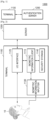
- FIG. 2 illustrates a block diagram illustrating a detailed configuration of a biometric information authentication system according to an embodiment of the disclosure.
- the biometric information authentication system includes a terminal 1100 and a server 1200.
- the terminal 1100 includes a biometric information client 1110, an input/output (I/O) interface 1120, a biometric information inputter 1130, and a security storage 1140.
- I/O input/output
- the biometric information client 1110 performs operations of processing biometric information.
- the biometric information client 1110 may obtain a template based on biometric information acquired via the biometric information inputter 1130 and control the security storage 1140 to store the template.
- the biometric information client 1110 is located in a security area of the terminal 1100 to block access from outside.
- the biometric information client 1110 may include a hardware security module (HSM).
- HSM is a dedicated crypto processor equipped with a key management system that ensures both hardware and cryptographic security.
- the HSM may use chips certified as being physically secure. In other words, the HSM may prevent an unauthorized access to information stored in a chip in terms of hardware and software.
- the I/O interface 1120 may receive an input from a user 10 or provide a processing result to the user 10 via interactions with the user 10. Furthermore, the I/O interface 1120 may transmit or receive information while communicating with the server 1200. According to an embodiment of the disclosure, the I/O interface 1120 may be a web browser or a native application in a mobile operating system (OS).
- OS mobile operating system
- the biometric information inputter 1130 acquires biometric information from the user 10.
- the biometric information inputter 1130 may include a sensor for acquiring biometric information. Biometric information that can be acquired by the biometric information inputter 1130 may vary depending on biometric capability information of the terminal 1100.
- the security storage 1140 stores, based on control by the biometric information client 1110, information requiring security such as biometric information or a security key as will be described below.
- the security storage 1140 may include a trusted execution environment (TEE) or a secure element (SE).
- TEE trusted execution environment
- SE secure element
- the security storage 1140 is not an essential component of the terminal 1100 according to the disclosure, or may not be used when a security key is not stored in the terminal 1100.
- FIGS. 3A and 3B respectively illustrate a method of registering information generated based on biometric information and a method of authenticating a user based on the registered information.
- FIG. 3A illustrates a flowchart of a biometric information registration method according to an embodiment of the disclosure.
- a terminal may obtain a template based on biometric information and store the obtained template.
- the terminal acquires a user's biometric information (S311).
- the user's biometric information may vary based on biometric capability information of the terminal.
- the terminal may obtain a PI and AD based on the acquired biometric information (S321).
- the terminal may extract feature values from the acquired biometric information by using a feature extractor.
- the terminal may obtain a PI and AD constituting a renewable biometric reference (RBR) by using a PI encoder (PIE), wherein the RBR is a biometric information authentication reference that is renewable from feature values.
- RBR renewable biometric reference
- PIE PI encoder
- a PI is a renewable individual's identifier.
- a PI is obtained based on biometric information as a hash value containing information acquired based on a feature value extracted from the biometric information.
- the PI does not contain information used to reconstruct the biometric information, it is possible to prevent leakage of the user's biometric information even when the PI is leaked outside.
- AD is diversification data that allows creation of multiple PIs and for example, may contain a random number or a generated key. In other words, AD helps to generate multiple PIs from the same biometric characteristic.
- the terminal may delete biometric information and an extracted feature value.
- the terminal stores the obtained PI and AD (S331).
- the PI and AD obtained based on the user's biometric information may be used as a reference for authenticating a user when the user subsequently requests authentication.
- FIG. 3B illustrates a flowchart of a biometric information authentication method according to an embodiment of the disclosure.
- the terminal acquires a user's biometric information (S312).
- the user's biometric information may vary based on biometric capability information of the terminal.
- the terminal may request the user to select, based on biometric capability information, biometric information to be used for authentication from among pieces of supported biometric information and acquire the selected biometric information via a biometric information inputter.
- the terminal may obtain a recognized PI (hereinafter, referred to as 'PI*') based on the biometric information and stored AD by using a PI recorder (PIR) (S322).
- PI* is a PI obtained at the time of authentication to perform user authentication, i.e., to verify the true identity of the user.
- PI* is generated based on biometric information and AD pre-acquired together with a PI.
- the terminal performs a biometric authentication procedure based on a result of comparison between the PI* and the stored PI (S332).
- the terminal may compare PI* with PI by using a PI comparator (PIC) and provide an authentication result based on a comparison result.
- PIC PI comparator
- FIG. 4 illustrates a flowchart of a biometric information registration method according to an embodiment of the disclosure.
- a terminal may transmit obtained PI and AD to a server.
- the terminal may transmit biometric capability information of the terminal to the server while requesting the server to register information related to a user's biometric information (S410).
- the terminal may receive biometric capability information of the server (S420).
- the biometric capability information of the server may be information related to a biometric technology supported by the terminal.
- the biometric technology may be selected from among a plurality of biometric technologies supported by the server based on the biometric capability information transmitted from the terminal to the server.
- the terminal may acquire the user's biometric information based on the biometric capability information of the server (S430).
- the terminal may acquire the biometric information from the user via a biometric information inputter.
- the terminal may request the user to select, based on the biometric capability information of the server, biometric information to be used for authentication from among pieces of supported biometric information and acquire the selected biometric information via the biometric information inputter.
- the terminal obtains a PI and corresponding AD based on the acquired user's biometric information (S440).
- the PI and AD may be determined in various ways based on an algorithm used by the terminal to obtain them.
- the terminal may obtain the PI and AD via a biometric information client.
- the terminal transmits the obtained PI and AD to the server (S450).
- the server may complete a biometric information registration procedure by storing the PI and AD received from the terminal.
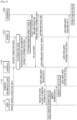
- FIG. 5 illustrates a flow diagram for explaining a biometric information registration method according to an embodiment of the disclosure.
- FIG. 5 is a flow diagram for explaining operations of a biometric information authentication system including a terminal and a server in the biometric information registration method according to the embodiment of the disclosure described with reference to FIG. 4 .
- a user 10 may request a service connection from an I/O interface 1120 of a terminal (S501).
- the user's request for the service connection may be made by executing an application or a web browser.
- the I/O interface 1120 may request a connection from a server 1210 (S502).
- the connection request may be made using a HyperText Transfer Protocol (HTTP) protocol.
- HTTP HyperText Transfer Protocol
- a transport layer security (TLS) channel may be created as a secure communication channel between the I/O interface 1120 and the server 1210 (S503).
- the I/O interface 1120 may transmit to the server 1210 biometric capability information of the terminal and a registration request requiring the transmission of a user BioEnroll request (S504).
- the registration request may include an ID for identifying the user 10.
- the server 1210 determines a biometric capability of the server 1210 S505).
- the server 1210 may select, based on the biometric capability information transmitted from the terminal to the server 1210, information related to a biometric technology supported by the terminal from among a plurality of biometric technologies supported by the server 1210.
- the server 1210 may acquire biometric capability information of the server 1210 based on the selected information.
- the server 1210 transmits a FAIL signal to the I/O interface 1120 and terminates the registration procedure (S506).
- the server 1210 may transmit a user's ID to a bioserver 1220 while requesting the bioserver 1220 to create a user BioEnroll request (S507). According to an embodiment of the disclosure, the server 1210 may transmit biometric capability information of the server 1210 to the bioserver 1220 or autonomously manage the biometric capability information without transmitting the same.
- the bioserver 1220 may transmit the user BioEnroll request to the server 1210 (S508).
- the server 1210 may transmit the user BioEnroll request to the I/O interface 1120 (S509).
- the user BioEnroll request transmitted by the server 1210 may include the biometric capability information of the server acquired in operation S505.
- the I/O interface 1120 may transmit the user BioEnroll request to the biometric information client 1110 (S510).
- the biometric information client 1110 requests the user 10 to select biometric technology and input biometric information with respect to the selected biometric technology (S511).
- the biometric information client 1110 allows the user to select his or her desired biometric technology (S512) and acquire biometric information based on the selected biometric technology (S513).
- the biometric information client 1110 may generate a PI and corresponding AD based on the acquired biometric information (S514).
- the biometric information client 1110 may select an algorithm to be used to generate the PI and AD based on the biometric technology selected by the user 10 in operation S512.
- the biometric information client 1110 transmits a user BioEnroll response to the I/O interface 1120 (S515).
- the user BioEnroll response may include the PI and AD generated in operation S514.
- the user BioEnroll response including the PI and AD is transmitted to the bioserver 1220 through the server 1210 (S516 and S517).
- the bioserver 1220 may store the received PI and AD (S518).
- the bioserver 1220 may store the received PI and AD in association with the user's ID.
- the biometric information authentication system may create a database for biometric information authentication in the bioserver 1220 by using a user's personal terminal instead of a dedicated terminal.
- FIG. 6 illustrates a flowchart of a biometric information authentication method according to an embodiment of the disclosure.
- a terminal may transmit an obtained PI* to a server.
- the terminal may transmit biometric capability information of the terminal to the server while requesting the server to authenticate a user by using information related to the user's biometric information (S610).
- the terminal may receive biometric capability information of the server and AD from the server (S620).
- the biometric capability information of the server may be information related to a biometric technology supported by the terminal.
- the biometric technology may be selected from among biometric technologies related to user information stored by the server based on the biometric capability information transmitted from the terminal to the server.
- AD may be registered according to a biometric information registration procedure and be acquired based on a selected biometric technology.
- the server may select a biometric technology suitable for authentication and a user's AD corresponding thereto and provide the selected biometric technology and user's AD to the terminal.
- the terminal may acquire the user's biometric information based on the biometric capability information of the server (S630).
- the terminal may acquire biometric information from the user via the biometric information inputter.
- the terminal may request the user to select, based on the biometric capability information of the server, biometric information to be used for authentication from among pieces of supported biometric information and acquire the selected biometric information via the biometric information inputter
- the terminal obtains a PI* based on the acquired biometric information and the AD transmitted by the server (S640). According to an embodiment of the disclosure, the terminal may obtain a PI* via a biometric information client.
- the terminal transmits the obtained PI* to the server (S650).
- the server may then compare the PI* received from the terminal with a PI stored during registration to return an authentication result to the terminal.
- FIG. 7 illustrates a flow diagram for explaining a biometric information authentication method according to an embodiment of the disclosure.
- FIG. 7 is a flowchart for explaining operations of a biometric information authentication system including a terminal and a server in the biometric information authentication method according to the embodiment of the disclosure described with reference to FIG. 6 .
- a user 10 may request a service connection from an I/O interface 1120 of a terminal (S701).
- the user's request for the service connection may be made by executing an application or a web browser.
- the I/O interface 1120 may request a connection from a server 1210 (S702).
- the connection request may be made using an HTTP protocol.
- a TLS channel may be created as a secure communication channel between the I/O interface 1120 and the server 1210 (S703).
- the I/O interface 1120 may transmit to the server 1210 biometric capability information and an authentication request requiring the transmission of a user BioAuth Request)(S704).
- the authentication request may include an ID for identifying the user 10 who requests authentication.
- the server 1210 determines its biometric capability (S705).
- the server 1210 may select, based on the biometric capability information transmitted from the terminal to the server 1210, information related to a biometric technology supported by the terminal from among a plurality of biometric technologies that are supported by the server 1210 and correspond to registered information of the user 10.
- the server 1210 may acquire biometric capability information of the server 1210 based on the selected information.
- the server 1210 may acquire a biometric technology suitable for authentication.
- the server 1210 may transmit biometric capability information based on a plurality of biometric technologies to a bioserver 1220 (S707) and receive from the bioserver 1220 information for selecting a biometric technology suitable for registered information about the user 10 and AD corresponding to the selected biometric technology.
- the server 1210 transmits a FAIL signal to the I/O interface 1120 and terminates the authentication procedure (S706).
- the server 1210 may transmit a user's ID to the bioserver 1220 while requesting the bioserver 1220 to create a user BioAuth request (S707).
- the server 1210 may transmit biometric capability information to the bioserver 1220 or autonomously manage the biometric capability information without transmitting the same.
- the bioserver 1220 may transmit the user BioAuth request to the server 1210 (S708).
- the user BioAuth request may include at least one AD corresponding to a biometric technology selected based on the biometric capability information of the server 1210.
- the server 1210 may transmit the user BioAuth request to the I/O interface 1120 (S709).
- the user BioAuth request transmitted by the server 1210 may include the biometric capability information of the server acquired in operation S705.
- the I/O interface 1120 may transmit the user BioAuth request to the biometric information client 1110 (S710).
- the biometric information client 1110 requests the user 10 to select biometric technology and input biometric information with respect to the selected biometric technology (S711).
- the biometric information client 1110 may allow the user 10 to select his or her desired biometric technology (S712) and acquire biometric information based on the selected biometric technology (S713).
- the biometric information client 1110 may generate a PI* based on the acquired biometric information and the AD received from the server 1210 (S714).
- the biometric information client 1110 may select an algorithm to be used to generate the PI* based on the biometric technology selected by the user 10 in operation S712.
- the biometric information client 1110 transmits a user BioAuth response to the I/O interface 1120 (S715).
- the user BioAuth response may include the PI* generated in operation S714.
- the user BioAuth response including the PI* is transmitted to the bioserver 1220 through the server 1210 (S716 and S717).
- the bioserver 1220 may compare the received PI* with a registered PI to determine a result of user authentication (S718).
- the bioserver 1220 may transmit information about the authentication result to the terminal through the server 1210 (S719 and S720).
- FIG. 8 illustrates a flowchart of a biometric information registration method according to an embodiment of the disclosure.
- a terminal may securely transmit acquired PI and AD to a server by using public key and certificate authentication.
- the terminal may transmit biometric capability information of the terminal to the server while requesting the server to register information related to a user's biometric information (S810).
- the terminal may receive biometric capability information of the server, a server's public key certificate, and challenge information (S820).
- the biometric capability information of the server may be information related to a biometric technology supported by the terminal.
- the biometric technology may be selected from among a plurality of biometric technologies supported by the server based on the biometric capability information transmitted from the terminal to the server.
- the server's public key certificate may be a certificate for a server's private key, which is issued by the certification authority (CA).
- the challenge information may be information generated and stored by the server to verify the reliability and integrity of information transmitted by the terminal.
- the terminal may acquire a user's biometric information based on the biometric capability information of the server (S830).
- the terminal may acquire biometric information from the user via a biometric information inputter.
- the terminal may request the user to select, based on the biometric capability information of the server, biometric information to be used for authentication from among pieces of supported biometric information and acquire the selected biometric information via the biometric information inputter.
- the terminal obtains a PI and corresponding AD based on the acquired user's biometric information (S840).
- the PI and the AD may be determined in various ways based on an algorithm used by the terminal to obtain them.
- the terminal may obtain the PI and AD via a biometric information client.
- the terminal may encrypt the obtained PI and AD and the challenge information received from the server by using a public key acquired based on the server's public key certificate (S850).
- the terminal may obtain a server's public key from the server's public key certificate received from the server by using a certificate issued by the CA.
- the terminal may encrypt the PI and AD and the challenge information received from the server, based on the obtained server's public key.
- the terminal transmits the encrypted PI, AD, and challenge information to the server (S860).
- the server may decrypt with its private key the encrypted PI, AD, and challenge information received from the terminal.
- the server may verify the reliability and integrity of the received information by using the challenge information and when the verification is successful, store the PI and AD to complete the biometric information registration procedure.
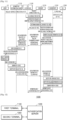
- FIG. 9 illustrates a flow diagram for explaining a biometric information registration method according to an embodiment of the disclosure.
- FIG. 9 is a flow diagram for explaining operations of a biometric information authentication system including a terminal and a server in the biometric information registration method according to the embodiment of the disclosure described with reference to FIG. 8 .
- a user 10 may request a service connection from an I/O interface 1120 of a terminal (S901).
- the user's request for the service connection may be made by executing an application or a web browser.
- the I/O interface 1120 may request a connection from a server 1210 (S902).
- the connection request may be made using an HTTP protocol.
- a TLS channel may be created as a secure communication channel between the I/O interface 1120 and the server 1210 (S903).
- the I/O interface 1120 may transmit to the server 1210 biometric capability information and an enrollment request requiring the transmission of a user BioEnroll request (S904).
- the authentication request may include an ID for identifying the user 10 who requests authentication.
- the server 1210 determines its biometric capability (S905).
- the server 1210 may select, based on the biometric capability information transmitted from the terminal to the server 1210, information related to a biometric technology supported by the terminal from among a plurality of biometric technologies that are supported by the server 1210 and correspond to registered information of the user 10.
- the server 1210 may acquire biometric capability information of the server 1210 based on the selected information.
- the server 1210 transmits a FAIL signal to the I/O interface 1120 and terminates the authentication procedure (S906).
- the server 1210 may transmit a user's ID to a bioserver 1220 while requesting the bioserver 1220 to create a user BioEnroll request (S907). According to an embodiment of the disclosure, the server 1210 may transmit biometric capability information to the bioserver 1220 or autonomously manage the biometric capability information without transmitting the same.
- the bioserver 1220 may generate challenge information CH (S908).
- the challenge information CH may be information generated by the server 1210 to verify the reliability and integrity of information transmitted by the terminal.
- the bioserver 1220 may generate its public key pair consisting of a private key S_SK and a public key S_PK for data transmission and reception.
- the bioserver 1220 may transmit the public key S_PK to a CA 1230 (S909).
- the CA 1230 may provide the bioserver 1220 with a public key certificate including the public key S_PK of the bioserver 1220 encrypted with a private key of the CA 1230 (S910).
- the bioserver 1220 transmits a user BioEnroll request to the server 1210 (S911).
- the user BioEnroll request may include information, which is obtained by encrypting the challenge information CH generated in operation S908 and the biometric capability information with the private key S_SK of the bioserver 1220, and the public key certificate issued by the CA 1230.
- the server 1210 transmits the user BioEnroll request to the I/O interface 1120 (S912).
- the I/O interface 1120 transmits the user BioEnroll request to the biometric information client 1110 (S913).
- the biometric information client 1110 may verify the public key certificate of the bioserver 1220 contained in the user BioEnroll request (S914).
- the biometric information client 1110 may hold a certificate including a CA's public key and issued by the CA 1230.
- the biometric information client 1110 may verify and acquire the public key S_PK of the bioserver 1220 from the public key certificate of the bioserver 1220 by using the CA's certificate.
- the biometric information client 1110 may decrypt the encrypted challenge information CH and biometric capability information by using the public key S_PK of the bioserver 1220.
- the biometric information client 1110 requests the user 10 to select biometric technology and input biometric information with respect to the selected biometric technology (S915).
- the biometric information client 1110 may allow the user 10 to select his or her desired biometric technology (S916) and acquire biometric information based on the selected biometric technology (S917).
- the biometric information client 1110 may obtain a PI and corresponding AD based on the acquired biometric information (S918).
- the biometric information client 1110 may select an algorithm to be used to generate the PI and AD based on the biometric technology selected by the user 10 in operation S916.
- the biometric information client 1110 may encrypt the obtained PI and AD and the challenge information CH transmitted from the server 1210 by using the public key S_PK of the bioserver 1220 acquired based on the public key certificate (S919).
- the biometric information client 1110 transmits a user BioEnroll response to the I/O interface 1120 (S920).
- the user BioEnroll response may include the PI, AD, and challenge information CH encrypted in operation S919.
- the user BioEnroll response including the encrypted PI, AD, and challenge information CH are transmitted to the bioserver 1220 through the server 1210 (S921 and S922).
- the bioserver 1220 decrypts the encrypted PI, AD, and challenge information CH with its private key S_SK (S923).
- the bioserver 1220 verifies the reliability and integrity of received information by using the challenge information CH acquired in operation S923 (S924). According to an embodiment of the disclosure, the bioserver 1220 may verify the integrity of received information by comparing the challenge information CH acquired in operation S923 with stored challenge information. According to an embodiment of the disclosure, challenge information stored by the bioserver 1220 may vary over a predetermined time period. The bioserver 1220 may compare the challenge information CH acquired in operation S923 with the stored challenge information and determine, when they do not match each other, that the user enrollment response has expired.
- the bioserver 1220 may store the received PI and AD (S925).
- the bioserver 1220 may store the received PI and AD in association with a user's ID.
- a biometric information authentication system may create a database for biometric information authentication in the bioserver 1220 by using a user's personal terminal instead of a dedicated terminal while ensuring security of information between the terminal and the server 1210.
- FIG. 10 illustrates a flowchart of a biometric information authentication method according to an embodiment of the disclosure.
- a terminal may securely receive AD and transmit PI* to a server by using public key and certificate authentication.
- the terminal may transmit biometric capability information of the terminal to the server while requesting registration of information related to a user's biometric information from the server (S1010).
- the terminal may receive from the server biometric capability information of the server, a server's public key certificate, AD, and challenge information (S1020).
- the biometric capability information of the server may be information related to a biometric technology supported by the terminal.
- the biometric technology may be selected from among a plurality of biometric technologies related to information stored by the server with respect to the user based on the biometric capability information transmitted from the terminal to the server.
- AD may be registered according to a biometric information registration procedure and be acquired based on a selected biometric technology.
- the server may select a biometric technology suitable for authentication and a user's AD corresponding thereto and provide the selected biometric technology and user's AD to the terminal.
- the server's public key certificate may be a certificate for a server's private key, which is issued by CA.
- the challenge information may be information generated and stored by the server to verify the reliability and integrity of information transmitted by the terminal.
- the terminal may acquire a user's biometric information based on the biometric capability information of the server (S1030).
- the terminal may acquire biometric information from the user via a biometric information inputter.
- the terminal may request the user to select, based on the biometric capability information of the server, biometric information to be used for authentication from among pieces of supported biometric information and acquire the selected biometric information via the biometric information inputter.
- the terminal obtains a PI* based on the acquired user's biometric information and the AD received from the server (S1040). According to an embodiment of the disclosure, the terminal may obtain a PI* via a biometric information client.
- the terminal may encrypt the obtained PI* and the challenge information received from the server by using a public key acquired based on the server's public key certificate (S1050).
- the terminal may obtain a server's public key from the server's public key certificate received from the server by using a certificate issued by the CA.
- the terminal may encrypt the PI* and the challenge information received from the server by using the acquired server's public key.
- the terminal transmits the encrypted PI* and challenge information to the server (S1060).
- the server may decrypt with its private key the encrypted PI* and challenge information received from the terminal.
- the server may verify the reliability and integrity of the received information by using the challenge information and, when the verification is successful, compare the received PI* with a PI stored during registration to return an authentication result to the terminal.
- FIG. 11 illustrates a flowchart of a biometric information authentication method according to an embodiment of the disclosure.
- FIG. 11 is a flow diagram for explaining operations of a biometric information authentication system including a terminal and a server in the biometric information authentication method according to the embodiment of the disclosure described with reference to FIG. 10 .
- a user 10 may request a service connection from an I/O interface 1120 of a terminal (S1101).
- the user's request for the service connection may be made by executing an application or a web browser.
- the I/O interface 1120 may request a connection from a server 1210 (S1102).
- the connection request may be made using an HTTP protocol.
- a TLS channel may be created as a secure communication channel between the I/O interface 1120 and the server 1210 (S1103).
- the I/O interface 1120 may transmit to the server 1210 biometric capability information and an authentication request requiring the transmission of a user BioAuth request (S1104).
- the authentication request may include an ID for identifying the user 10 who requests authentication.
- the server 1210 determines its biometric capability (S1105).
- the server 1210 may select, based on the biometric capability information transmitted from the terminal to the server 1210, information related to a biometric technology supported by the terminal from among a plurality of biometric technologies that are supported by the server 1210 and correspond to registered information of the user 10.
- the server 1210 may acquire biometric capability information of the server 1210 based on the selected information.
- the server 1210 may acquire a biometric technology suitable for authentication.
- the server 1210 may transmit biometric capability information that is based on a plurality of biometric technologies to a bioserver 1220 and receive from the bioserver 1220 information for selecting a biometric technology suitable for the registered information of the user 10 and AD corresponding to the selected biometric technology.
- the server 1210 transmits a FAIL signal to the I/O interface 1120 and terminates the authentication procedure (S1106).
- the server 1210 may transmit a user's ID to the bioserver 1220 while requesting the bioserver 1220 to create a user BioAuth request (S1107). According to an embodiment of the disclosure, the server 1210 may transmit biometric capability information to the bioserver 1220 or autonomously manage the biometric capability information without transmitting the same.
- the bioserver 1220 may generate challenge information CH (S1108).
- the challenge information CH may be information generated by the server 1210 to verify the reliability and integrity of information transmitted by the terminal.
- the bioserver 1220 may generate its public key pair consisting of a private key S_SK and a public key S_PK for data transmission and reception.
- the bioserver 1220 may transmit the public key S_PK to a CA 1230 (S1109).
- the CA 1230 may provide the bioserver 1220 with a public key certificate including the public key S_PK of the bioserver 1220 encrypted with a private key of the CA 1230 (S1110).
- the bioserver 1220 transmits a user BioAuth request to the server 1210 (S1111).
- the user BioAuth request may include information, which is obtained by encrypting with a private key S_SK of the bioserver 1220 the challenge information CH generated in operation S1108, the biometric capability information of the server, and at least one AD corresponding to a biometric technology selected based on the biometric capability information, and the public key certificate issued by the CA 1230.
- the server 1210 transmits the user BioAuth request to the I/O interface 1120 (S1112).
- the I/O interface 1120 transmits the user BioAuth request to the biometric information client 1110 (S1113).
- the biometric information client 1110 may verify the public key certificate of the bioserver 1220 contained in the user BioAuth request (S1114).
- the biometric information client 1110 may hold a certificate including a CA's public key and issued by the CA 1230.
- the biometric information client 1110 may verify and acquire the public key S_PK of the bioserver 1220 from the public key certificate of the bioserver 1220 by using the CA's certificate.
- the biometric information client 1110 may decrypt the encrypted challenge information CH and biometric capability information by using the public key S_PK of the bioserver 1220.
- the biometric information client 1110 requests the user 10 to select biometric technology and input biometric information with respect to the selected biometric technology (S1115).
- the biometric information client 1110 may allow the user 10 to select his or her desired biometric technology (S1116) and acquire biometric information based on the selected biometric technology (S1117).
- the biometric information client 1110 may generate a PI* and corresponding AD based on the acquired biometric information and the AD received from the server 1210 (S1118).
- the biometric information client 1110 may select an algorithm to be used to generate the PI* based on the biometric technology selected by the user 10 in operation S1116.
- the biometric information client 1110 may encrypt the obtained PI* and the challenge information CH transmitted from the server 1210 by using the public key S_PK of the bioserver 1220 acquired based on the public key certificate (S1119).
- the biometric information client 1110 transmits a user BioAuth response to the I/O interface 1120 (S1120).
- the user BioAuth response may include the PI* and challenge information CH encrypted in operation S1119.
- the user BioAuth response including the encrypted PI* and challenge information CH are transmitted to the bioserver 1220 through the server 1210 (S1121 and S1122).
- the bioserver 1220 decrypts the encrypted PI* and challenge information CH with its private key S_SK (S1123).
- the bioserver 1220 verifies the reliability and integrity of received information by using the challenge information CH acquired in operation S1123 (S1124). According to an embodiment of the disclosure, the bioserver 1220 may verify the integrity of received information by comparing the challenge information CH acquired in operation S1123 with stored challenge information. According to an embodiment of the disclosure, challenge information stored by the bioserver 1220 may vary over a predetermined time period. The bioserver 1220 may compare the challenge information CH acquired in operation S1123 with the stored challenge information and determine, when they do not match each other, that the user BioAuth response has expired.
- the bioserver 1220 may compare the received PI* with a registered PI to determine a result of user authentication.
- the bioserver 1220 may transmit information about the authentication result to the terminal through the server 1210 (S1126 and S1127).
- the biometric information authentication system may perform an authentication procedure based on biometric information while ensuring security of information between the terminal and the server 1210.
- FIG. 12 illustrates diagram for explaining a method of registering and transferring biometric information, according to an embodiment of the disclosure.
- a biometric information authentication system 1000 may perform registration and authentication on biometric information by using a Fast Identity Online (FIDO) Universal Authentication Framework (UAF) defined by a FIDO Alliance.
- FIDO Fast Identity Online
- UAF Universal Authentication Framework
- a user may access the biometric information authentication system 100 based on a FIDO by using a first terminal 1100 and then additionally or exclusively using a second terminal 1300 as a new terminal, as described in more detail below with reference to FIG. 12 .
- FIDO Fast Identity Online
- UAF Universal Authentication Framework
- the user may log in to a service via the first terminal 1100 by using ID and password authentication.
- the first terminal 1100 may generate its public key pair consisting of a public key and a private key to store the private key and transmit the public key to an authentication server 1200.
- the authentication server 1200 may complete the registration procedure by storing the received public key together with ID information of the user. Thereafter, when the user is authenticated through a login, etc., the first terminal 1100 may sign the user authentication request received from the authentication server 1200 by using the stored private key and transmit the signed user authentication request to the authentication server 1200.
- the authentication server 1200 may verify the signed user authentication request with the stored public key and determine an authentication result.
- the user may initiate a biometric information registration procedure, and after the biometric information registration procedure is completed, the user authenticate himself or herself based on the biometric information.
- the first terminal 1100 may transmit only an authentication result to the authentication server 1200 by using public key authentication without transmitting a template associated with biometric information thereto.
- the user may input biometric information to the first terminal 1100 via a biometric information inputter of the first terminal 1100.
- the first terminal 1100 may obtain a template based on the biometric information and store the obtained template.
- the first terminal 1100 may generate a new public key pair for biometric information authentication to store a private key and transmit a public key to the authentication server 1200
- the authentication server 1200 may store the received public key together with ID information of the user to complete the registration procedure.
- the user who has completed the registration procedure for biometric information authentication may request authentication based on biometric information to access a service.
- the first terminal 1100 may request the authentication from the authentication server 1200, and the authentication server 1200 may transmit, in response to such a request, a user authentication request to the first terminal 1100.
- the first terminal 1100 may receive biometric information from the user in response to the user authentication request from the authentication server 1200, and authenticate the user by comparing a template obtained based on the received biometric information against a stored template.
- the first terminal 1100 may sign the user authentication request received from the authentication server 1200 by using the stored private key and transmit the signed user authentication request to the authentication server 1200.
- the authentication server 1200 may verify the signed user authentication request with the stored public key and determine an authentication result.
- the first terminal 1100 may transmit at least a part of a template associated with biometric information to the authentication server 1200.
- the user may input biometric information to the first terminal 1100 via the biometric information inputter of the first terminal 1100.
- the first terminal 1100 may obtain a template based on the biometric information and store the obtained template.
- the first terminal 1100 may create a new public key pair for biometric information authentication to store a private key and transmit a public key to the authentication server 1200, together with information about biometrics that is a part of the stored template.
- the authentication server 1200 may complete the registration procedure by storing the received public key and information about biometrics, together with ID information of the user.
- the user who has completed the registration procedure for biometric information authentication may request authentication based on biometric information to access a service.
- the first terminal 1100 may request the authentication from the authentication server 1200, and the authentication server 1200 may transmit, in response to such a request, a user authentication request to the first terminal 1100.
- the authentication server 1200 may include the stored information about biometrics in the user authentication request for transmission.
- the first terminal 1100 may receive biometric information from the user in response to the user authentication request from the authentication server 1200, and authenticate the user by comparing a template obtained based on the received biometric information with the stored template. According to an embodiment of the disclosure, the first terminal 1100 may obtain a new template based on the stored template and the biometric information, or based on the information about biometrics received from the authentication server 1200 and the biometric information. When the user is authenticated, the first terminal 1100 may sign the user authentication request received from the authentication server 1200 by using the stored private key and transmit the signed user authentication request to the authentication server 1200. The authentication server 1200 may verify the signed user authentication request with the stored public key and determine an authentication result.
- the user desires to be authenticated using biometric information via the second terminal 1300 that is a new terminal, it is necessary to revoke the public key of the first terminal 1100 from the authentication server 1200 and register a public key of the second terminal 1300 with the authentication server 1200.
- FIG. 13A illustrates a flowchart of a method of registering and transferring biometric information, according to an embodiment of the disclosure.
- the user After logging in to a service by using ID information and a password via a first terminal performing authentication based on biometric information, the user registers, via the first terminal, a public key of the first terminal with an authentication server (S1311). A detailed description thereof is already provided above with reference to FIG. 12 .
- the user revokes, via the first terminal, the public key of the first terminal from the authentication server (S1321).
- the first terminal may revoke its stored private key.
- the user After logging in to a service by using ID information and a password via a second terminal performing authentication based on biometric information, the user registers, via the second terminal, a public key of the second terminal with the authentication server (S1331). A detailed description thereof is already provided above with reference to FIG. 12 .
- FIG. 13B illustrates a flowchart of a method of registering and transferring biometric information, according to an embodiment of the disclosure.
- the user After logging in to a service by using ID information and a password via a first terminal performing authentication based on biometric information, the user registers, via the first terminal, a public key of the first terminal and information about biometrics generated based on biometric information with an authentication server (S1312).
- the information about biometrics may be a part of a template generated based on the biometric information.
- the information about biometrics may be a PI and corresponding AD. A detailed description thereof is already provided above with reference to FIG. 12 .
- the user transmits, via a second terminal, the information about the biometrics generated based on the biometric information to the authentication server, together with the public key of the second terminal (S1322).
- the information about biometrics transmitted by the user may be PI*.
- the authentication server may authenticate the user based on the registered information about biometrics. After the authentication is completed, the authentication server may revoke the public key of the first terminal and register the public key of the second terminal with the authentication server itself.
- a biometric information authentication system may provide transfer of a service between a plurality of terminals without entering a user's ID information and password.
- FIG. 14 illustrates a flow diagram for explaining a biometric information registration method according to an embodiment of the disclosure.
- a user 10 may request a service connection from an I/O interface 1120 of a terminal (S1401).
- the user's request for the service connection may be made by executing an application or a web browser.
- the I/O interface 1120 may request a connection from a server 1210 (S1402).
- the connection request may be made using an HTTP protocol.
- a TLS channel may be created as a secure communication channel between the I/O interface 1120 and the server 1210 (S1403).
- the user 10 may request authentication by using a legacy authentication method, e.g., by inputting ID information such as a user's ID and password (S1404).
- a legacy authentication method e.g., by inputting ID information such as a user's ID and password (S1404).
- the server 1210 authenticates the user 10 based on the ID information input by the user 10 (S1406). For example, the server 1210 may authenticate the user by verifying ID and password input by the user 10.
- the server 1210 transmits, based on a FIDO protocol, a registration request requesting transmission of a UAF registration request to the bioserver 1220.
- the bioserver 1220 creates a policy to be used by the terminal for authentication based on biometric information (S1408).
- the policy may include information about a biometric technology to be used, such as items of biometric information (e.g., each user's face shape, iris, retina, veins, fingerprint, DNA, etc.) and information about an algorithm performed to obtain a template based on the biometric information.
- the bioserver 1220 transmits a UAF registration request to the server 1210 based on a FIDO protocol (S1409).
- the UAF registration request may include the policy created in operation S1408.
- the server 1210 transmits a UAF registration request to the I/O interface 1120 (S1410).
- the I/O interface 1120 transmits the UAF registration request to a biometric information client 1110 (S1411).
- the biometric information client 1110 selects a biometric technology to be used for authentication, based on the policy contained in the UAF registration request (S1412). In detail, when a plurality of biometric technologies are supportable based on the policy, the biometric information client 1110 may request the user 10 to select and input his or her desired biometric technology (S1413). When the biometric information client 1110 itself selects or a single biometric technology is supportable, the biometric information client 1110 may request the user 10 to input biometric information corresponding to the biometric technology selected in operation S1413.
- the user 10 provides the biometric information client 1110 with biometric information acquired based on the selected biometric technology (S1414).
- the biometric information client 1110 generates a public key pair consisting of a private key and a public ley (S1415). Furthermore, the biometric information client 1110 obtains a template based on the biometric information acquired based on the selected biometric technology According to an embodiment of the disclosure, the biometric information client 1110 may generate a PI and corresponding AD based on the acquired biometric information. The biometric information client 1110 may select an algorithm to be used to generate the PI and AD, based on the selected biometric technology.
- the biometric information client 1110 stores the generated private key in a security storage 1140 (S1416).
- the biometric information client 1110 transmits a UAF registration response to the I/O interface 1120 (S1417).
- the UAF registration response may include the PI, AD, and public key generated in operation S1415.
- the UAF registration response including the PI, AD, and public key is transmitted to the bioserver 1220 through the server 1210 (S1418 and S1419).
- the bioserver 1220 may store the received PI and AD (S1420).
- the bioserver 1220 may store the received PI and AD in association with the user's ID.
- FIG. 15 illustrates a flow diagram for explaining a method of transferring biometric information, according to an embodiment of the disclosure.
- a user 10 may request a service connection from an I/O interface 1120 of a terminal (S1501).
- the user's request for the service connection may be made by executing an application or a web browser.
- the I/O interface 1120 may request a connection from a server 1210 (S1502).
- the connection request may be made using an HTTP protocol.
- a TLS channel may be created as a secure communication channel between the I/O interface 1120 and the server 1210 (S1503).
- the user 10 may input via the I/O interface 1120 a device transfer request (transfer device) requiring transfer of the used terminal to a current terminal (S1504).
- the device transfer request may include ID information of the user 10.
- the device transfer request input by the user 10 is transmitted to the server 1210 (S1505).
- the server 1210 transmits a request requesting transmission of a transfer request to the bioserver 1220 (S1506).
- the bioserver 1220 generates challenge information and a policy to be used by the terminal for authentication based on biometric information (S1507).
- the challenge information may be information generated and stored by the server 1210 to verify the reliability and integrity of information transmitted by the terminal.
- the policy may include information about a biometric technology to be used, such as items of biometric information (e.g., each user's face shape, iris, retina, veins, fingerprint, DNA, etc.) and information about an algorithm performed to obtain a template based on the biometric information.
- items of biometric information e.g., each user's face shape, iris, retina, veins, fingerprint, DNA, etc.
- the bioserver 1220 may use the registered policy intactly.
- the bioserver 1220 may extract AD corresponding to a biometric technology selected by the policy in information related to the user's biometric information, which is stored during registration (S1508).
- the bioserver 1220 transmits a transfer request to the server 1210 based on a FIDO protocol (S1509).
- the transfer request may include the policy and the challenge information generated in operation S1507 as well as the AD extracted in operation S1508.
- the server 1210 transmits the transfer request to the I/O interface 1120 (S1510).
- the I/O interface 1120 transmits the transfer request to the biometric information client 1110 (S1511).
- the biometric information client 1110 selects a biometric technology to be used for authentication, based on the policy contained in the transfer request (S1512). In detail, when a plurality of biometric technologies are supportable based on the policy, the biometric information client 1110 may request the user 10 to select and input his or her desired biometric technology (S1513). When the biometric information client 1110 itself selects a biometric technology or a single biometric technology is supportable, the biometric information client 1110 may request the user 10 to input biometric information corresponding to the biometric technology selected in operation S1513.
- the user 10 provides the biometric information client 1110 with biometric information acquired based on the selected biometric technology (S1514).
- the biometric information client 1110 generates a public key pair consisting of a private key and a public ley (S1515).
- the biometric information client 1110 obtains a PI* based on the biometric information acquired based on the selected biometric technology and the AD transmitted from the server 1210 (S1516).
- the biometric information client 1110 stores the generated private key in a security storage 1140 (S1517).
- the biometric information client 1110 transmits a transfer response to the I/O interface 1120 (S1518).
- the transfer response may include the PI*, the public key, and the challenge information.
- the transfer response including the PI*, the public key, and the challenge information is transmitted to the bioserver 1220 through the server 1210 (S1519 and S1520).
- the bioserver 1220 verifies the reliability and integrity of received information by using the challenge information (S1521). According to an embodiment of the disclosure, the bioserver 1220 may verify the integrity of the received information by comparing the challenge information transmitted by the terminal with stored challenge information. According to an embodiment of the disclosure, the challenge information stored by the bioserver 1220 may vary over a predetermined time period. The bioserver 1220 may compare the received challenge information with the stored challenge information and determine, when they do not match each other, that the transfer response has expired.
- the bioserver 1220 may compare the received PI* with a registered PI to determine whether to grant the transfer (S1522). When the transfer is granted, the bioserver 1220 may store the public key (S1523).
- the bioserver 1220 may transmit information about a transfer result from the bioserver 1220 to the server 1210 (S1524).
- FIG. 16 illustrates a flow diagram for explaining a method of revoking biometric information, according to an embodiment of the disclosure.
- a user 10 may request a service connection from an I/O interface 1120 of a terminal (S1601).
- the user's request for the service connection may be made by executing an application or a web browser.
- An I/O interface 1120 may request a connection from a server 1210 (S1602).
- the connection request may be made using an HTTP protocol.
- a TLS channel may be created as a secure communication channel between the I/O interface 1120 and the server 1210 (S1603).
- the I/O interface 1120 may request user authentication from a biometric information client 1110 in order to request authentication from the user 10 (S1604).
- the biometric information client 1110 may request the user 10 to input biometric information (S1605).
- the biometric information input by the user 10 is transmitted to the biometric information client 1110 (S1606).
- the biometric information client 1110 signs challenge information with a stored private key (S1607).
- the biometric information client 1110 transmits a transfer response to the I/O interface 1120 (S1608).
- the transfer response may include the signed challenge information.
- the transfer response including the signed challenge information is transmitted to a bioserver 1220 via the server 1210 (S1609 and S1610).
- the bioserver 1220 verifies the challenge information signed with the private key by using a public key stored therein (S1611).
- the bioserver 1220 When the verification is completed, the bioserver 1220 revokes the stored public key (S1612). The bioserver 1220 transmits to the server 1210 a UAF deregistration request indicating revocation of the public key (S1613) The UAF deregistration request is transmitted to the biometric information client 1110 via the I/O interface 1120 (S1614 and S1615).
- the biometric information client 1110 deletes a private key stored therein (S1616). Therefore, the registered public key and private key may be both revoked.
- the biometric information client 1110 transmits a UAF deregistration response to the I/O interface 1120 (S1617).
- the UAF deregistration response is then transmitted to the bioserver 1220 via the server 1210 (S1618 and S1619).
- the terminal 1100 described above may be implemented using hardware components, software components, and/or a combination thereof.
- the devices and their components illustrated in the embodiments of the disclosure may be implemented using one or more general-purpose or special-purpose computers, such as a processor, a controller, an arithmetic logic unit (ALU), a digital signal processor, a microcomputer, a field programmable array (FPA), a programmable logic unit (PLU), a microprocessor, or any other device capable of responding to and executing instructions
Landscapes
- Engineering & Computer Science (AREA)
- Computer Security & Cryptography (AREA)
- Theoretical Computer Science (AREA)
- Computer Networks & Wireless Communication (AREA)
- Signal Processing (AREA)
- Physics & Mathematics (AREA)
- General Physics & Mathematics (AREA)
- General Engineering & Computer Science (AREA)
- Computer Hardware Design (AREA)
- General Health & Medical Sciences (AREA)
- Health & Medical Sciences (AREA)
- Software Systems (AREA)
- Bioethics (AREA)
- Biomedical Technology (AREA)
- Biodiversity & Conservation Biology (AREA)
- Life Sciences & Earth Sciences (AREA)
- Human Computer Interaction (AREA)
- Multimedia (AREA)
- Computing Systems (AREA)
- Medical Informatics (AREA)
- Databases & Information Systems (AREA)
- Ophthalmology & Optometry (AREA)
- Collating Specific Patterns (AREA)
Claims (13)
- Von einem Endgerät durchgeführtes Verfahren zur Registrierung biometrischer Informationen, wobei das Verfahren Folgendes umfasst:Übertragen (S410) einer Registrierungsanforderung und biometrischer Fähigkeitsinformationen des Endgeräts an einen Server, wobei die biometrischen Fähigkeitsinformationen übertragen werden, während der Server aufgefordert wird,Informationen zu registrieren, die sich auf die biometrischen Informationen eines Benutzers beziehen, wobei die biometrischen Fähigkeitsinformationen des Endgeräts Informationen über eine biometrische Technologie umfassen, die von dem Endgerät unterstützt wird;Empfangen (S420) von biometrischen Fähigkeitsinformationen des Servers vom Server, wobei die biometrischen Fähigkeitsinformationen des Servers Informationen über eine vom Server unterstützte biometrische Technologie basierend auf den vom Endgerät an den Server übertragenen biometrischen Fähigkeitsinformationen umfassen;Auswählen einer biometrischen Technologie basierend auf den empfangenen biometrischen Fähigkeitsinformationen des Servers;Erfassen (S430) der biometrischen Informationen des Benutzers basierend auf der ausgewählten biometrischen Technologie;Erfassen (S440) eines pseudonymen Identifikators und von Hilfsdaten basierend auf den biometrischen Informationen des Benutzers; undÜbertragen (S450) des pseudonymen Identifikators und der Hilfsdaten an den Server.
- Verfahren nach Anspruch 1, wobei:
die biometrischen Fähigkeitsinformationen des Endgeräts über die biometrische Technologie ein Element der biometrischen Technologie und Informationen über einen Algorithmus umfassen, der durchgeführt wird, um eine Vorlage zu erhalten. - Verfahren nach Anspruch 1, wobei:
die Auswahl der biometrischen Technologie basierend auf den biometrischen Fähigkeitsinformationen des Servers Folgendes umfasst:Präsentieren einer Vielzahl von biometrischen Technologien für den Benutzer, basierend auf den biometrischen Fähigkeitsinformationen des Servers, undEmpfangen einer Eingabe des Benutzers zur Auswahl einer der Vielzahl von biometrischen Technologien. - Verfahren nach Anspruch 1, wobei:
das Empfangen (S420) der biometrischen Fähigkeitsinformationen des Servers von dem Server das Empfangen (S820) eines Public-Key-Zertifikats des Servers von dem Server umfasst, wobei das Public-Key-Zertifikat des Servers von einer Zertifizierungsstelle ausgegeben wird. - Verfahren nach Anspruch 4, ferner umfassend:Verschlüsseln (S850) des pseudonymen Identifikators und der Hilfsdaten mit einem öffentlichen Schlüssel eines Servers basierend auf dem Public-Key-Zertifikat des Servers,wobei das Übertragen (S450) des pseudonymen Identifikators und der Hilfsdaten an den Server das Übertragen (S860) des verschlüsselten pseudonymen Identifikators und der verschlüsselten Hilfsdaten an den Server umfasst.
- Verfahren nach Anspruch 4, wobei:
das Empfangen (S420) der biometrischen Fähigkeitsinformationen des Servers von dem Server ferner das Empfangen von Aufforderungsinformationen von dem Server umfasst, wobei die Aufforderungsinformationen Informationen enthalten, die von dem Server erzeugt werden, um die Zuverlässigkeit und Integrität der von dem Endgerät übertragenen Informationen zu überprüfen. - Verfahren nach Anspruch 6, ferner umfassend:Verschlüsseln (S850) des pseudonymen Identifikators, der Hilfsdaten und der Aufforderungsinformationen basierend auf dem Public-Key-Zertifikat unter Verwendung des öffentlichen Schlüssels des Servers,wobei das Übertragen (S450) des pseudonymen Identifikators und der Hilfsdaten an den Server das Übertragen (S860) des verschlüsselten pseudonymen Identifikators, der verschlüsselten Hilfsdaten und der verschlüsselten Aufforderungsinformationen an den Server umfasst.
- Verfahren nach Anspruch 1, wobei:
das Endgerät Informationen an oder von dem Server unter Verwendung eines Transport Layer Security-Kanals sendet oder empfängt. - Endgerät (1100) zur Authentifizierung eines Benutzers unter Verwendung biometrischer Informationen, wobei das Endgerät (1100) Folgendes umfasst:eine Eingabe-/Ausgabeschnittstelle (1120), die zum Senden oder Empfangen von Informationen konfiguriert ist;ein Eingabegerät (1130) für biometrische Informationen, das zum Erfassen der biometrischen Informationen des Benutzers (10) konfiguriert ist; undein Client (1110) für biometrische Informationen,wobei die Eingabe-/Ausgabeschnittstelle (1120) ferner konfiguriert ist zum:Übertragen einer Registrierungsanforderung und biometrischer Fähigkeitsinformationen des Endgeräts (1100) an einen Server (1200), wobei die biometrischen Fähigkeitsinformationen übertragen werden, während der Server aufgefordert wird, Informationen zu registrieren, die sich auf die biometrischen Informationen eines Benutzers beziehen, wobei die biometrischen Fähigkeitsinformationen des Endgeräts Informationen über eine biometrische Technologie umfassen, die von dem Endgerät unterstützt wird, undEmpfangen von biometrischen Fähigkeitsinformationen des Servers (1200) von dem Server (1200), um die biometrischen Fähigkeitsinformationen des Servers (1200) an den Client (1110) für biometrische Informationen zu übertragen, wobei die biometrischen Fähigkeitsinformationen des Servers Informationen über eine von dem Server unterstützte biometrische Technologie basierend auf den von dem Endgerät an den Server übertragenen biometrischen Fähigkeitsinformationen umfassen, undwobei der Client (1110) für biometrische Informationen konfiguriert ist zum:
Steuern des Eingabegeräts (1130) für biometrische Informationen zum:Auswählen einer biometrischen Technologie basierend auf den empfangenen biometrischen Fähigkeitsinformationen des Servers,Erfassen der biometrischen Informationen des Benutzers (10) basierend auf der ausgewählten biometrischen Technologie,Erfassen eines pseudonymen Identifikators und von Hilfsdaten basierend auf den biometrischen Informationen des Benutzers (10), undÜbermitteln des pseudonymen Identifikators und der Hilfsdaten über die Eingabe-/Ausgabeschnittstelle (1120) an den Server (1200). - Endgerät (1100) nach Anspruch 9, wobei:
die biometrischen Fähigkeitsinformationen des Endgeräts über die biometrische Technologie ein Element der biometrischen Technologie und Informationen über einen Algorithmus umfassen, der durchgeführt wird, um eine Vorlage zu erhalten. - Endgerät (1100) nach Anspruch 9, wobei:
der Client (1110) für biometrische Informationen ferner konfiguriert ist, um das Eingabegerät (1130) für biometrische Informationen derart zu steuern, dass dem Benutzer (10) eine Vielzahl von biometrischen Technologien basierend auf den biometrischen Fähigkeitsinformationen des Servers (1200) präsentiert werden, und dass die biometrischen Informationen basierend auf der ausgewählten biometrischen Technologie erfasst werden, wenn eine Eingabe zur Auswahl einer der Vielzahl von biometrischen Technologien von dem Benutzer (10) empfangen wird. - Endgerät (1100) nach Anspruch 9, wobei:
der Client (1110) für biometrische Informationen ferner konfiguriert ist, um das Public-Key-Zertifikat eines Servers (1200) über die Eingabe-/Ausgabeschnittstelle (1120) zu empfangen, wobei das Public-Key-Zertifikat des Servers (1200) von einer Zertifizierungsstelle (1230) ausgegeben wird. - Endgerät (1100) nach Anspruch 12, wobei:der Client (1110) für biometrische Informationen ferner konfiguriert ist, basierend auf dem Public-Key-Zertifikat des Servers (1200), den pseudonymen Identifikator und die Hilfsdaten mit einem öffentlichen Schlüssel des Servers (1200) zu verschlüsseln; undden verschlüsselten pseudonymen Identifikator und die verschlüsselten Hilfsdaten über die Eingabe-/Ausgabeschnittstelle (1120) an den Server (1200) zu übertragen.
Applications Claiming Priority (2)
| Application Number | Priority Date | Filing Date | Title |
|---|---|---|---|
| KR1020180099432A KR102511365B1 (ko) | 2018-08-24 | 2018-08-24 | 생체 정보를 인증하는 방법 및 장치 |
| PCT/KR2019/010576 WO2020040525A1 (en) | 2018-08-24 | 2019-08-20 | Method and apparatus for authenticating biometric information |
Publications (3)
| Publication Number | Publication Date |
|---|---|
| EP3811255A1 EP3811255A1 (de) | 2021-04-28 |
| EP3811255A4 EP3811255A4 (de) | 2021-08-04 |
| EP3811255B1 true EP3811255B1 (de) | 2024-05-22 |
Family
ID=69586134
Family Applications (1)
| Application Number | Title | Priority Date | Filing Date |
|---|---|---|---|
| EP19851198.2A Active EP3811255B1 (de) | 2018-08-24 | 2019-08-20 | Verfahren und vorrichtung zur authentifizierung biometrischer informationen |
Country Status (5)
| Country | Link |
|---|---|
| US (1) | US11194895B2 (de) |
| EP (1) | EP3811255B1 (de) |
| KR (1) | KR102511365B1 (de) |
| CN (1) | CN112602079B (de) |
| WO (1) | WO2020040525A1 (de) |
Families Citing this family (15)
| Publication number | Priority date | Publication date | Assignee | Title |
|---|---|---|---|---|
| WO2019191083A1 (en) * | 2018-03-26 | 2019-10-03 | Colorado State University Research Foundation | Apparatuses, systems and methods for generating and tracking molecular digital signatures to ensure authenticity and integrity of synthetic dna molecules |
| EP3977321A1 (de) * | 2019-06-25 | 2022-04-06 | Assa Abloy Ab | Bereitstellung von biometrischen token |
| KR102308859B1 (ko) * | 2020-04-01 | 2021-10-06 | 이데아텍(주) | 생체 정보 기반 대리 인증 서비스 시스템 및 방법 |
| CN111464553A (zh) * | 2020-04-13 | 2020-07-28 | 北京计算机技术及应用研究所 | 一种保护生物特征隐私的身份认证装置与认证方法 |
| KR102777277B1 (ko) * | 2020-04-28 | 2025-03-10 | 삼성전자주식회사 | 데이터의 안전한 폐기 기능을 제공하는 스토리지 장치 및 그 동작방법 |
| KR102199137B1 (ko) * | 2020-05-12 | 2021-01-06 | 스티븐 상근 오 | 듀얼 생체인증을 이용한 조치방법, 장치 및 프로그램 |
| WO2022203897A1 (en) * | 2021-03-21 | 2022-09-29 | Ironvest, Inc. | System, device, and method of privacy-preserving user-identity verification and re-proofing |
| IT202100008489A1 (it) * | 2021-04-06 | 2021-07-06 | Dna10 Tech Srls | Sistema di memorizzazione del dato biometrico di una persona con metodo di protezione ed autorizzazione per l’utilizzo lato utente |
| CN113239853B (zh) * | 2021-05-27 | 2022-12-06 | 支付宝(杭州)信息技术有限公司 | 一种基于隐私保护的生物识别方法、装置及设备 |
| CN113591056A (zh) * | 2021-08-05 | 2021-11-02 | 国民认证科技(北京)有限公司 | 一种基于指纹设备登录Windows域的方法和系统 |
| FR3126514B1 (fr) * | 2021-08-25 | 2024-09-27 | Worldline | Procédé d’authentification asynchrone forte et terminal configuré pour la mise en œuvre dudit procédé. |
| KR102443668B1 (ko) * | 2021-12-06 | 2022-09-15 | 이상훈 | 재발급 가능한 생체템플릿 생성 및 운용방법 |
| EP4209944B1 (de) * | 2022-01-10 | 2025-10-01 | Nokia Technologies Oy | Benutzerauthentifizierung basierend auf einer blockchain |
| GB2619518A (en) * | 2022-06-07 | 2023-12-13 | Id Ward Ltd | Privacy-preserving cross-domain user tracking |
| WO2025015219A2 (en) | 2023-07-11 | 2025-01-16 | BKey, Inc. | External key authentication and regeneration |
Citations (1)
| Publication number | Priority date | Publication date | Assignee | Title |
|---|---|---|---|---|
| US20150143497A1 (en) * | 2013-11-15 | 2015-05-21 | Alibaba Group Holding Limited | Identity authentication by using human biological characteristic |
Family Cites Families (10)
| Publication number | Priority date | Publication date | Assignee | Title |
|---|---|---|---|---|
| US8930276B2 (en) * | 2002-08-20 | 2015-01-06 | Fusionarc, Inc. | Method of multiple algorithm processing of biometric data |
| CN1753359B (zh) * | 2004-09-24 | 2011-01-19 | 华为技术有限公司 | 实现传输SyncML同步数据的方法 |
| US20070237366A1 (en) | 2006-03-24 | 2007-10-11 | Atmel Corporation | Secure biometric processing system and method of use |
| DE102009055947A1 (de) * | 2009-11-30 | 2011-06-01 | Christoph Busch | Authentisierte Übertragung von Daten |
| US9876775B2 (en) * | 2012-11-09 | 2018-01-23 | Ent Technologies, Inc. | Generalized entity network translation (GENT) |
| US10681041B2 (en) * | 2013-04-16 | 2020-06-09 | Imageware Systems, Inc. | Out-of-band biometric enrollment and verification using interactive messaging |
| EP3257194B1 (de) * | 2015-02-11 | 2020-04-15 | Visa International Service Association | Systeme und verfahren zur sicheren verwaltung von biometrischen daten |
| EP3346637B1 (de) * | 2015-08-31 | 2019-10-23 | Samsung Electronics Co., Ltd. | Verfahren und vorrichtung zum herunterladen eines profils in einem kommunikationssystem |
| US10666423B2 (en) * | 2015-09-11 | 2020-05-26 | Aware, Inc. | Biometric verification of a blockchain database transaction contributor |
| US10091195B2 (en) * | 2016-12-31 | 2018-10-02 | Nok Nok Labs, Inc. | System and method for bootstrapping a user binding |
-
2018
- 2018-08-24 KR KR1020180099432A patent/KR102511365B1/ko active Active
-
2019
- 2019-08-20 CN CN201980055509.7A patent/CN112602079B/zh active Active
- 2019-08-20 EP EP19851198.2A patent/EP3811255B1/de active Active
- 2019-08-20 WO PCT/KR2019/010576 patent/WO2020040525A1/en not_active Ceased
- 2019-08-23 US US16/549,824 patent/US11194895B2/en not_active Expired - Fee Related
Patent Citations (1)
| Publication number | Priority date | Publication date | Assignee | Title |
|---|---|---|---|---|
| US20150143497A1 (en) * | 2013-11-15 | 2015-05-21 | Alibaba Group Holding Limited | Identity authentication by using human biological characteristic |
Also Published As
| Publication number | Publication date |
|---|---|
| KR102511365B1 (ko) | 2023-03-17 |
| US20200065463A1 (en) | 2020-02-27 |
| CN112602079B (zh) | 2024-11-29 |
| EP3811255A4 (de) | 2021-08-04 |
| CN112602079A (zh) | 2021-04-02 |
| US11194895B2 (en) | 2021-12-07 |
| WO2020040525A1 (en) | 2020-02-27 |
| EP3811255A1 (de) | 2021-04-28 |
| KR20200023062A (ko) | 2020-03-04 |
Similar Documents
| Publication | Publication Date | Title |
|---|---|---|
| CN112602079B (zh) | 用于认证生物识别信息的方法和装置 | |
| US12244719B1 (en) | Computer-implemented authentication platform | |
| AU2021202620B2 (en) | Method of using one device to unlock another device | |
| US11652816B1 (en) | Biometric knowledge extraction for mutual and multi-factor authentication and key exchange | |
| CN107079034B (zh) | 一种身份认证的方法、终端设备、认证服务器及电子设备 | |
| TWI578749B (zh) | 用於遷移金鑰之方法及設備 | |
| US9774596B2 (en) | Privacy-preserving biometric authentication | |
| CN107004077B (zh) | 用于提供安全且可独立操作的生物特征认证的方法和系统 | |
| US20210105254A1 (en) | System, method and computer-accessible medium for two-factor authentication during virtual private network sessions | |
| EP3317847A1 (de) | System und verfahren zur elektronischen bereitstellung eines rechtlichen instruments | |
| CN104994095B (zh) | 一种设备认证方法、服务器及系统 | |
| WO2017206524A1 (zh) | 电子设备控制方法、终端和控制系统 | |
| EP3732825B1 (de) | Verfahren und system zur sicherung der kommunikation zwischen einer leitvorrichtung und einer sekundären vorrichtung | |
| KR20220075723A (ko) | Did를 이용한 신원 인증 방법 및 시스템 | |
| JP2025163217A (ja) | 管理サーバ、情報提供方法及びコンピュータプログラム | |
| JP2023000715A (ja) | 情報処理装置、情報処理方法および情報処理プログラム | |
| CN117011881A (zh) | 体态识别方法、装置和存储介质及电子设备 | |
| CN111063070B (zh) | 数字钥匙的共享方法、验证方法、及设备 | |
| CN111884800A (zh) | 一种对电子密钥进行同步的方法和设备及系统 | |
| JP2005258687A (ja) | バイオメトリクス認証システム、及びそれに利用されるバイオメトリクス認証ゲートウェイ、並びにバイオメトリクス認証情報の振分方法 | |
| CN110619228A (zh) | 文件解密方法、文件加密方法、文件管理系统及存储介质 | |
| JP7232862B2 (ja) | 情報処理装置、情報処理方法および情報処理プログラム | |
| KR20240070886A (ko) | 얼굴 인식 및 pin 기반 키 생성 장치 및 방법 | |
| KR101997117B1 (ko) | 그룹 멤버간 정보 공유를 위한 그룹키 관리 및 인증 방법과 그 장치 | |
| Kübler et al. | Single Sign-On Webservice with Adaptable Multi Factor Authentication |
Legal Events
| Date | Code | Title | Description |
|---|---|---|---|
| STAA | Information on the status of an ep patent application or granted ep patent |
Free format text: STATUS: THE INTERNATIONAL PUBLICATION HAS BEEN MADE |
|
| PUAI | Public reference made under article 153(3) epc to a published international application that has entered the european phase |
Free format text: ORIGINAL CODE: 0009012 |
|
| STAA | Information on the status of an ep patent application or granted ep patent |
Free format text: STATUS: REQUEST FOR EXAMINATION WAS MADE |
|
| 17P | Request for examination filed |
Effective date: 20210120 |
|
| AK | Designated contracting states |
Kind code of ref document: A1 Designated state(s): AL AT BE BG CH CY CZ DE DK EE ES FI FR GB GR HR HU IE IS IT LI LT LU LV MC MK MT NL NO PL PT RO RS SE SI SK SM TR |
|
| AX | Request for extension of the european patent |
Extension state: BA ME |
|
| A4 | Supplementary search report drawn up and despatched |
Effective date: 20210701 |
|
| RIC1 | Information provided on ipc code assigned before grant |
Ipc: G06F 21/32 20130101AFI20210625BHEP Ipc: H04L 9/32 20060101ALI20210625BHEP Ipc: H04L 29/06 20060101ALI20210625BHEP Ipc: G06F 21/33 20130101ALI20210625BHEP Ipc: G06F 21/62 20130101ALI20210625BHEP Ipc: G06K 9/00 20060101ALI20210625BHEP |
|
| DAV | Request for validation of the european patent (deleted) | ||
| DAX | Request for extension of the european patent (deleted) | ||
| STAA | Information on the status of an ep patent application or granted ep patent |
Free format text: STATUS: EXAMINATION IS IN PROGRESS |
|
| 17Q | First examination report despatched |
Effective date: 20230509 |
|
| GRAP | Despatch of communication of intention to grant a patent |
Free format text: ORIGINAL CODE: EPIDOSNIGR1 |
|
| STAA | Information on the status of an ep patent application or granted ep patent |
Free format text: STATUS: GRANT OF PATENT IS INTENDED |
|
| RIC1 | Information provided on ipc code assigned before grant |
Ipc: H04L 9/32 20060101ALI20231208BHEP Ipc: G06F 21/33 20130101ALI20231208BHEP Ipc: G06F 21/62 20130101ALI20231208BHEP Ipc: G06F 21/32 20130101AFI20231208BHEP |
|
| INTG | Intention to grant announced |
Effective date: 20240105 |
|
| GRAS | Grant fee paid |
Free format text: ORIGINAL CODE: EPIDOSNIGR3 |
|
| GRAA | (expected) grant |
Free format text: ORIGINAL CODE: 0009210 |
|
| STAA | Information on the status of an ep patent application or granted ep patent |
Free format text: STATUS: THE PATENT HAS BEEN GRANTED |
|
| AK | Designated contracting states |
Kind code of ref document: B1 Designated state(s): AL AT BE BG CH CY CZ DE DK EE ES FI FR GB GR HR HU IE IS IT LI LT LU LV MC MK MT NL NO PL PT RO RS SE SI SK SM TR |
|
| REG | Reference to a national code |
Ref country code: GB Ref legal event code: FG4D |
|
| REG | Reference to a national code |
Ref country code: CH Ref legal event code: EP |
|
| REG | Reference to a national code |
Ref country code: DE Ref legal event code: R096 Ref document number: 602019052722 Country of ref document: DE |
|
| REG | Reference to a national code |
Ref country code: IE Ref legal event code: FG4D |
|
| REG | Reference to a national code |
Ref country code: LT Ref legal event code: MG9D |
|
| REG | Reference to a national code |
Ref country code: NL Ref legal event code: MP Effective date: 20240522 |
|
| PG25 | Lapsed in a contracting state [announced via postgrant information from national office to epo] |
Ref country code: IS Free format text: LAPSE BECAUSE OF FAILURE TO SUBMIT A TRANSLATION OF THE DESCRIPTION OR TO PAY THE FEE WITHIN THE PRESCRIBED TIME-LIMIT Effective date: 20240922 |
|
| PG25 | Lapsed in a contracting state [announced via postgrant information from national office to epo] |
Ref country code: BG Free format text: LAPSE BECAUSE OF FAILURE TO SUBMIT A TRANSLATION OF THE DESCRIPTION OR TO PAY THE FEE WITHIN THE PRESCRIBED TIME-LIMIT Effective date: 20240522 |
|
| PG25 | Lapsed in a contracting state [announced via postgrant information from national office to epo] |
Ref country code: HR Free format text: LAPSE BECAUSE OF FAILURE TO SUBMIT A TRANSLATION OF THE DESCRIPTION OR TO PAY THE FEE WITHIN THE PRESCRIBED TIME-LIMIT Effective date: 20240522 Ref country code: FI Free format text: LAPSE BECAUSE OF FAILURE TO SUBMIT A TRANSLATION OF THE DESCRIPTION OR TO PAY THE FEE WITHIN THE PRESCRIBED TIME-LIMIT Effective date: 20240522 |
|
| PG25 | Lapsed in a contracting state [announced via postgrant information from national office to epo] |
Ref country code: GR Free format text: LAPSE BECAUSE OF FAILURE TO SUBMIT A TRANSLATION OF THE DESCRIPTION OR TO PAY THE FEE WITHIN THE PRESCRIBED TIME-LIMIT Effective date: 20240823 |
|
| PG25 | Lapsed in a contracting state [announced via postgrant information from national office to epo] |
Ref country code: PT Free format text: LAPSE BECAUSE OF FAILURE TO SUBMIT A TRANSLATION OF THE DESCRIPTION OR TO PAY THE FEE WITHIN THE PRESCRIBED TIME-LIMIT Effective date: 20240923 |
|
| REG | Reference to a national code |
Ref country code: AT Ref legal event code: MK05 Ref document number: 1689341 Country of ref document: AT Kind code of ref document: T Effective date: 20240522 |
|
| PG25 | Lapsed in a contracting state [announced via postgrant information from national office to epo] |
Ref country code: NL Free format text: LAPSE BECAUSE OF FAILURE TO SUBMIT A TRANSLATION OF THE DESCRIPTION OR TO PAY THE FEE WITHIN THE PRESCRIBED TIME-LIMIT Effective date: 20240522 |
|
| PG25 | Lapsed in a contracting state [announced via postgrant information from national office to epo] |
Ref country code: ES Free format text: LAPSE BECAUSE OF FAILURE TO SUBMIT A TRANSLATION OF THE DESCRIPTION OR TO PAY THE FEE WITHIN THE PRESCRIBED TIME-LIMIT Effective date: 20240522 |
|
| PG25 | Lapsed in a contracting state [announced via postgrant information from national office to epo] |
Ref country code: AT Free format text: LAPSE BECAUSE OF FAILURE TO SUBMIT A TRANSLATION OF THE DESCRIPTION OR TO PAY THE FEE WITHIN THE PRESCRIBED TIME-LIMIT Effective date: 20240522 |
|
| PG25 | Lapsed in a contracting state [announced via postgrant information from national office to epo] |
Ref country code: PL Free format text: LAPSE BECAUSE OF FAILURE TO SUBMIT A TRANSLATION OF THE DESCRIPTION OR TO PAY THE FEE WITHIN THE PRESCRIBED TIME-LIMIT Effective date: 20240522 |
|
| PG25 | Lapsed in a contracting state [announced via postgrant information from national office to epo] |
Ref country code: LV Free format text: LAPSE BECAUSE OF FAILURE TO SUBMIT A TRANSLATION OF THE DESCRIPTION OR TO PAY THE FEE WITHIN THE PRESCRIBED TIME-LIMIT Effective date: 20240522 |
|
| PG25 | Lapsed in a contracting state [announced via postgrant information from national office to epo] |
Ref country code: PT Free format text: LAPSE BECAUSE OF FAILURE TO SUBMIT A TRANSLATION OF THE DESCRIPTION OR TO PAY THE FEE WITHIN THE PRESCRIBED TIME-LIMIT Effective date: 20240923 Ref country code: PL Free format text: LAPSE BECAUSE OF FAILURE TO SUBMIT A TRANSLATION OF THE DESCRIPTION OR TO PAY THE FEE WITHIN THE PRESCRIBED TIME-LIMIT Effective date: 20240522 Ref country code: NO Free format text: LAPSE BECAUSE OF FAILURE TO SUBMIT A TRANSLATION OF THE DESCRIPTION OR TO PAY THE FEE WITHIN THE PRESCRIBED TIME-LIMIT Effective date: 20240822 Ref country code: NL Free format text: LAPSE BECAUSE OF FAILURE TO SUBMIT A TRANSLATION OF THE DESCRIPTION OR TO PAY THE FEE WITHIN THE PRESCRIBED TIME-LIMIT Effective date: 20240522 Ref country code: LV Free format text: LAPSE BECAUSE OF FAILURE TO SUBMIT A TRANSLATION OF THE DESCRIPTION OR TO PAY THE FEE WITHIN THE PRESCRIBED TIME-LIMIT Effective date: 20240522 Ref country code: IS Free format text: LAPSE BECAUSE OF FAILURE TO SUBMIT A TRANSLATION OF THE DESCRIPTION OR TO PAY THE FEE WITHIN THE PRESCRIBED TIME-LIMIT Effective date: 20240922 Ref country code: HR Free format text: LAPSE BECAUSE OF FAILURE TO SUBMIT A TRANSLATION OF THE DESCRIPTION OR TO PAY THE FEE WITHIN THE PRESCRIBED TIME-LIMIT Effective date: 20240522 Ref country code: GR Free format text: LAPSE BECAUSE OF FAILURE TO SUBMIT A TRANSLATION OF THE DESCRIPTION OR TO PAY THE FEE WITHIN THE PRESCRIBED TIME-LIMIT Effective date: 20240823 Ref country code: FI Free format text: LAPSE BECAUSE OF FAILURE TO SUBMIT A TRANSLATION OF THE DESCRIPTION OR TO PAY THE FEE WITHIN THE PRESCRIBED TIME-LIMIT Effective date: 20240522 Ref country code: ES Free format text: LAPSE BECAUSE OF FAILURE TO SUBMIT A TRANSLATION OF THE DESCRIPTION OR TO PAY THE FEE WITHIN THE PRESCRIBED TIME-LIMIT Effective date: 20240522 Ref country code: BG Free format text: LAPSE BECAUSE OF FAILURE TO SUBMIT A TRANSLATION OF THE DESCRIPTION OR TO PAY THE FEE WITHIN THE PRESCRIBED TIME-LIMIT Effective date: 20240522 Ref country code: AT Free format text: LAPSE BECAUSE OF FAILURE TO SUBMIT A TRANSLATION OF THE DESCRIPTION OR TO PAY THE FEE WITHIN THE PRESCRIBED TIME-LIMIT Effective date: 20240522 Ref country code: RS Free format text: LAPSE BECAUSE OF FAILURE TO SUBMIT A TRANSLATION OF THE DESCRIPTION OR TO PAY THE FEE WITHIN THE PRESCRIBED TIME-LIMIT Effective date: 20240822 |
|
| PG25 | Lapsed in a contracting state [announced via postgrant information from national office to epo] |
Ref country code: DK Free format text: LAPSE BECAUSE OF FAILURE TO SUBMIT A TRANSLATION OF THE DESCRIPTION OR TO PAY THE FEE WITHIN THE PRESCRIBED TIME-LIMIT Effective date: 20240522 |
|
| PG25 | Lapsed in a contracting state [announced via postgrant information from national office to epo] |
Ref country code: EE Free format text: LAPSE BECAUSE OF FAILURE TO SUBMIT A TRANSLATION OF THE DESCRIPTION OR TO PAY THE FEE WITHIN THE PRESCRIBED TIME-LIMIT Effective date: 20240522 |
|
| PG25 | Lapsed in a contracting state [announced via postgrant information from national office to epo] |
Ref country code: CZ Free format text: LAPSE BECAUSE OF FAILURE TO SUBMIT A TRANSLATION OF THE DESCRIPTION OR TO PAY THE FEE WITHIN THE PRESCRIBED TIME-LIMIT Effective date: 20240522 |
|
| PG25 | Lapsed in a contracting state [announced via postgrant information from national office to epo] |
Ref country code: SK Free format text: LAPSE BECAUSE OF FAILURE TO SUBMIT A TRANSLATION OF THE DESCRIPTION OR TO PAY THE FEE WITHIN THE PRESCRIBED TIME-LIMIT Effective date: 20240522 Ref country code: RO Free format text: LAPSE BECAUSE OF FAILURE TO SUBMIT A TRANSLATION OF THE DESCRIPTION OR TO PAY THE FEE WITHIN THE PRESCRIBED TIME-LIMIT Effective date: 20240522 |
|
| PG25 | Lapsed in a contracting state [announced via postgrant information from national office to epo] |
Ref country code: SM Free format text: LAPSE BECAUSE OF FAILURE TO SUBMIT A TRANSLATION OF THE DESCRIPTION OR TO PAY THE FEE WITHIN THE PRESCRIBED TIME-LIMIT Effective date: 20240522 |
|
| PG25 | Lapsed in a contracting state [announced via postgrant information from national office to epo] |
Ref country code: SM Free format text: LAPSE BECAUSE OF FAILURE TO SUBMIT A TRANSLATION OF THE DESCRIPTION OR TO PAY THE FEE WITHIN THE PRESCRIBED TIME-LIMIT Effective date: 20240522 Ref country code: SK Free format text: LAPSE BECAUSE OF FAILURE TO SUBMIT A TRANSLATION OF THE DESCRIPTION OR TO PAY THE FEE WITHIN THE PRESCRIBED TIME-LIMIT Effective date: 20240522 Ref country code: RO Free format text: LAPSE BECAUSE OF FAILURE TO SUBMIT A TRANSLATION OF THE DESCRIPTION OR TO PAY THE FEE WITHIN THE PRESCRIBED TIME-LIMIT Effective date: 20240522 Ref country code: EE Free format text: LAPSE BECAUSE OF FAILURE TO SUBMIT A TRANSLATION OF THE DESCRIPTION OR TO PAY THE FEE WITHIN THE PRESCRIBED TIME-LIMIT Effective date: 20240522 Ref country code: DK Free format text: LAPSE BECAUSE OF FAILURE TO SUBMIT A TRANSLATION OF THE DESCRIPTION OR TO PAY THE FEE WITHIN THE PRESCRIBED TIME-LIMIT Effective date: 20240522 Ref country code: CZ Free format text: LAPSE BECAUSE OF FAILURE TO SUBMIT A TRANSLATION OF THE DESCRIPTION OR TO PAY THE FEE WITHIN THE PRESCRIBED TIME-LIMIT Effective date: 20240522 |
|
| PG25 | Lapsed in a contracting state [announced via postgrant information from national office to epo] |
Ref country code: IT Free format text: LAPSE BECAUSE OF FAILURE TO SUBMIT A TRANSLATION OF THE DESCRIPTION OR TO PAY THE FEE WITHIN THE PRESCRIBED TIME-LIMIT Effective date: 20240522 |
|
| REG | Reference to a national code |
Ref country code: DE Ref legal event code: R097 Ref document number: 602019052722 Country of ref document: DE |
|
| REG | Reference to a national code |
Ref country code: DE Ref legal event code: R119 Ref document number: 602019052722 Country of ref document: DE |
|
| PLBE | No opposition filed within time limit |
Free format text: ORIGINAL CODE: 0009261 |
|
| STAA | Information on the status of an ep patent application or granted ep patent |
Free format text: STATUS: NO OPPOSITION FILED WITHIN TIME LIMIT |
|
| REG | Reference to a national code |
Ref country code: CH Ref legal event code: PL |
|
| PG25 | Lapsed in a contracting state [announced via postgrant information from national office to epo] |
Ref country code: LU Free format text: LAPSE BECAUSE OF NON-PAYMENT OF DUE FEES Effective date: 20240820 |
|
| PG25 | Lapsed in a contracting state [announced via postgrant information from national office to epo] |
Ref country code: MC Free format text: LAPSE BECAUSE OF FAILURE TO SUBMIT A TRANSLATION OF THE DESCRIPTION OR TO PAY THE FEE WITHIN THE PRESCRIBED TIME-LIMIT Effective date: 20240522 Ref country code: SI Free format text: LAPSE BECAUSE OF FAILURE TO SUBMIT A TRANSLATION OF THE DESCRIPTION OR TO PAY THE FEE WITHIN THE PRESCRIBED TIME-LIMIT Effective date: 20240522 Ref country code: CH Free format text: LAPSE BECAUSE OF NON-PAYMENT OF DUE FEES Effective date: 20240831 |
|
| 26N | No opposition filed |
Effective date: 20250225 |
|
| REG | Reference to a national code |
Ref country code: BE Ref legal event code: MM Effective date: 20240831 |
|
| PG25 | Lapsed in a contracting state [announced via postgrant information from national office to epo] |
Ref country code: DE Free format text: LAPSE BECAUSE OF NON-PAYMENT OF DUE FEES Effective date: 20250301 |
|
| PG25 | Lapsed in a contracting state [announced via postgrant information from national office to epo] |
Ref country code: BE Free format text: LAPSE BECAUSE OF NON-PAYMENT OF DUE FEES Effective date: 20240831 |
|
| PG25 | Lapsed in a contracting state [announced via postgrant information from national office to epo] |
Ref country code: FR Free format text: LAPSE BECAUSE OF NON-PAYMENT OF DUE FEES Effective date: 20240831 |
|
| PG25 | Lapsed in a contracting state [announced via postgrant information from national office to epo] |
Ref country code: IE Free format text: LAPSE BECAUSE OF NON-PAYMENT OF DUE FEES Effective date: 20240820 |
|
| PG25 | Lapsed in a contracting state [announced via postgrant information from national office to epo] |
Ref country code: SE Free format text: LAPSE BECAUSE OF FAILURE TO SUBMIT A TRANSLATION OF THE DESCRIPTION OR TO PAY THE FEE WITHIN THE PRESCRIBED TIME-LIMIT Effective date: 20240522 |
|
| PGFP | Annual fee paid to national office [announced via postgrant information from national office to epo] |
Ref country code: GB Payment date: 20250707 Year of fee payment: 7 |
|
| PG25 | Lapsed in a contracting state [announced via postgrant information from national office to epo] |
Ref country code: CY Free format text: LAPSE BECAUSE OF FAILURE TO SUBMIT A TRANSLATION OF THE DESCRIPTION OR TO PAY THE FEE WITHIN THE PRESCRIBED TIME-LIMIT; INVALID AB INITIO Effective date: 20190820 |
|
| PG25 | Lapsed in a contracting state [announced via postgrant information from national office to epo] |
Ref country code: HU Free format text: LAPSE BECAUSE OF FAILURE TO SUBMIT A TRANSLATION OF THE DESCRIPTION OR TO PAY THE FEE WITHIN THE PRESCRIBED TIME-LIMIT; INVALID AB INITIO Effective date: 20190820 |