EP3812231B1 - Vorrichtung und verfahren zur verarbeitung von reiseinformationen - Google Patents
Vorrichtung und verfahren zur verarbeitung von reiseinformationen Download PDFInfo
- Publication number
- EP3812231B1 EP3812231B1 EP18923588.0A EP18923588A EP3812231B1 EP 3812231 B1 EP3812231 B1 EP 3812231B1 EP 18923588 A EP18923588 A EP 18923588A EP 3812231 B1 EP3812231 B1 EP 3812231B1
- Authority
- EP
- European Patent Office
- Prior art keywords
- voice data
- data
- user
- subject vehicle
- image data
- Prior art date
- Legal status (The legal status is an assumption and is not a legal conclusion. Google has not performed a legal analysis and makes no representation as to the accuracy of the status listed.)
- Active
Links
Images


Classifications
-
- B—PERFORMING OPERATIONS; TRANSPORTING
- B60—VEHICLES IN GENERAL
- B60W—CONJOINT CONTROL OF VEHICLE SUB-UNITS OF DIFFERENT TYPE OR DIFFERENT FUNCTION; CONTROL SYSTEMS SPECIALLY ADAPTED FOR HYBRID VEHICLES; ROAD VEHICLE DRIVE CONTROL SYSTEMS FOR PURPOSES NOT RELATED TO THE CONTROL OF A PARTICULAR SUB-UNIT
- B60W50/00—Details of control systems for road vehicle drive control not related to the control of a particular sub-unit, e.g. process diagnostic or vehicle driver interfaces
- B60W50/08—Interaction between the driver and the control system
- B60W50/10—Interpretation of driver requests or demands
-
- B—PERFORMING OPERATIONS; TRANSPORTING
- B60—VEHICLES IN GENERAL
- B60R—VEHICLES, VEHICLE FITTINGS, OR VEHICLE PARTS, NOT OTHERWISE PROVIDED FOR
- B60R16/00—Electric or fluid circuits specially adapted for vehicles and not otherwise provided for; Arrangement of elements of electric or fluid circuits specially adapted for vehicles and not otherwise provided for
- B60R16/02—Electric or fluid circuits specially adapted for vehicles and not otherwise provided for; Arrangement of elements of electric or fluid circuits specially adapted for vehicles and not otherwise provided for electric constitutive elements
- B60R16/037—Electric or fluid circuits specially adapted for vehicles and not otherwise provided for; Arrangement of elements of electric or fluid circuits specially adapted for vehicles and not otherwise provided for electric constitutive elements for occupant comfort, e.g. for automatic adjustment of appliances according to personal settings, e.g. seats, mirrors, steering wheel
- B60R16/0373—Voice control
-
- G—PHYSICS
- G06—COMPUTING OR CALCULATING; COUNTING
- G06T—IMAGE DATA PROCESSING OR GENERATION, IN GENERAL
- G06T11/00—Two-dimensional [2D] image generation
-
- G—PHYSICS
- G06—COMPUTING OR CALCULATING; COUNTING
- G06V—IMAGE OR VIDEO RECOGNITION OR UNDERSTANDING
- G06V20/00—Scenes; Scene-specific elements
- G06V20/50—Context or environment of the image
- G06V20/56—Context or environment of the image exterior to a vehicle by using sensors mounted on the vehicle
-
- G—PHYSICS
- G10—MUSICAL INSTRUMENTS; ACOUSTICS
- G10L—SPEECH ANALYSIS TECHNIQUES OR SPEECH SYNTHESIS; SPEECH RECOGNITION; SPEECH OR VOICE PROCESSING TECHNIQUES; SPEECH OR AUDIO CODING OR DECODING
- G10L15/00—Speech recognition
- G10L15/08—Speech classification or search
-
- G—PHYSICS
- G10—MUSICAL INSTRUMENTS; ACOUSTICS
- G10L—SPEECH ANALYSIS TECHNIQUES OR SPEECH SYNTHESIS; SPEECH RECOGNITION; SPEECH OR VOICE PROCESSING TECHNIQUES; SPEECH OR AUDIO CODING OR DECODING
- G10L15/00—Speech recognition
- G10L15/22—Procedures used during a speech recognition process, e.g. man-machine dialogue
-
- B—PERFORMING OPERATIONS; TRANSPORTING
- B60—VEHICLES IN GENERAL
- B60W—CONJOINT CONTROL OF VEHICLE SUB-UNITS OF DIFFERENT TYPE OR DIFFERENT FUNCTION; CONTROL SYSTEMS SPECIALLY ADAPTED FOR HYBRID VEHICLES; ROAD VEHICLE DRIVE CONTROL SYSTEMS FOR PURPOSES NOT RELATED TO THE CONTROL OF A PARTICULAR SUB-UNIT
- B60W2420/00—Indexing codes relating to the type of sensors based on the principle of their operation
- B60W2420/40—Photo, light or radio wave sensitive means, e.g. infrared sensors
- B60W2420/403—Image sensing, e.g. optical camera
-
- B—PERFORMING OPERATIONS; TRANSPORTING
- B60—VEHICLES IN GENERAL
- B60W—CONJOINT CONTROL OF VEHICLE SUB-UNITS OF DIFFERENT TYPE OR DIFFERENT FUNCTION; CONTROL SYSTEMS SPECIALLY ADAPTED FOR HYBRID VEHICLES; ROAD VEHICLE DRIVE CONTROL SYSTEMS FOR PURPOSES NOT RELATED TO THE CONTROL OF A PARTICULAR SUB-UNIT
- B60W2540/00—Input parameters relating to occupants
- B60W2540/21—Voice
-
- B—PERFORMING OPERATIONS; TRANSPORTING
- B60—VEHICLES IN GENERAL
- B60W—CONJOINT CONTROL OF VEHICLE SUB-UNITS OF DIFFERENT TYPE OR DIFFERENT FUNCTION; CONTROL SYSTEMS SPECIALLY ADAPTED FOR HYBRID VEHICLES; ROAD VEHICLE DRIVE CONTROL SYSTEMS FOR PURPOSES NOT RELATED TO THE CONTROL OF A PARTICULAR SUB-UNIT
- B60W2540/00—Input parameters relating to occupants
- B60W2540/215—Selection or confirmation of options
-
- B—PERFORMING OPERATIONS; TRANSPORTING
- B60—VEHICLES IN GENERAL
- B60W—CONJOINT CONTROL OF VEHICLE SUB-UNITS OF DIFFERENT TYPE OR DIFFERENT FUNCTION; CONTROL SYSTEMS SPECIALLY ADAPTED FOR HYBRID VEHICLES; ROAD VEHICLE DRIVE CONTROL SYSTEMS FOR PURPOSES NOT RELATED TO THE CONTROL OF A PARTICULAR SUB-UNIT
- B60W2554/00—Input parameters relating to objects
-
- G—PHYSICS
- G10—MUSICAL INSTRUMENTS; ACOUSTICS
- G10L—SPEECH ANALYSIS TECHNIQUES OR SPEECH SYNTHESIS; SPEECH RECOGNITION; SPEECH OR VOICE PROCESSING TECHNIQUES; SPEECH OR AUDIO CODING OR DECODING
- G10L15/00—Speech recognition
- G10L15/08—Speech classification or search
- G10L2015/088—Word spotting
-
- G—PHYSICS
- G10—MUSICAL INSTRUMENTS; ACOUSTICS
- G10L—SPEECH ANALYSIS TECHNIQUES OR SPEECH SYNTHESIS; SPEECH RECOGNITION; SPEECH OR VOICE PROCESSING TECHNIQUES; SPEECH OR AUDIO CODING OR DECODING
- G10L15/00—Speech recognition
- G10L15/22—Procedures used during a speech recognition process, e.g. man-machine dialogue
- G10L2015/223—Execution procedure of a spoken command
Definitions
- the present invention relates to a travel information processing apparatus and processing method.
- Patent document JP2017-030572 A describes a driving support apparatus configured to output an image including a vehicle object representing the subject vehicle and a plurality of lanes on a display; and output a command for changing the driving lane of the subject vehicle from the first lane to the second lane to an autonomous driving controller when an operation of a user for moving the vehicle object in the image displayed on the display from the first lane to the second lane is accepted, thereby a driver intuitively and simply could instruct a vehicle to perform a specific driving operation.
- Other examples of driving support apparatus are disclosed in patent documents US 2014/365228 A1 and US 2018/164817 A1 .
- a problem to be solved by the present invention is to provide a travel information processing apparatus and a processing method by which a user can intuitively and easily instruct a vehicle to perform a particular driving operation.
- the present invention solves the above problem with a device and a method according to the appended independent claims.
- the user by specifying an object estimated from voice data and outputting image data or voice data indicating the specified object, the user can confirm the consistency or correctness with the object intended by the user by viewing the output image data or voice data. Therefore, a travel information processing apparatus and a processing method by which a user can intuitively and easily instruct a vehicle to perform a particular driving operation are provided.
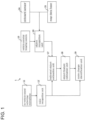
- FIG. 1 is a block diagram showing an embodiment of a travel information processing apparatus 1 according to the present invention.
- Travel information processing apparatus 1 of the present invention embodiment also uses the travel information processing method according to the present embodiment.
- Travel information processing apparatus 1 of the present embodiment inputs a destination in advance to an in-vehicle navigational device or the like, inputs a voice data of a user such as a passenger on the assumption that the vehicle is traveling in a traveling route set by the destination, specifies an object estimated from voice data based on the word indicating the object around the traveling route and the word indicating the positional relation of the object extracted from voice data, outputs image data or voice data indicating the specified object, and changes the traveling route of the vehicle based on image data or voice data.
- the travel information processing apparatus 1 of the present embodiment comprises an onboard sound collection microphone 11, a voice recognition unit 12, a vehicle exterior imaging camera 13, an onboard sensor 14, a map database 15, an object recognition unit 16, an indicated object estimation unit 17, an object feature estimation unit 18 and a route change identification unit 19.
- the in-vehicle sound collecting microphone 11 collects sound emitted by a user, such as a driver or a passenger as a navigator, and outputs voice data to the sound recognizing unit 12.
- the in-vehicle sound collecting microphone 11 is installed at a position where the voice of the user in the vehicle cabin can be easily input.
- One or more microphones may be provided at appropriate locations, such as the top surface of the steering column cover or the instrument panel if they are at the driver seat, the instrument panel if they are at the passenger seat, or the rear or front seat of the console box if they are at the rear seat.
- the voice recognition unit 12 performs a voice recognition process using a known method such as a statistical method from voice data inputted to the in-vehicle sound collection microphone 11, extracts a word indicating objects around traveling route and a word indicating positional relationship of the object from the recognized languages (character string data), and outputs the extracted words to the indicated object estimation unit 17.
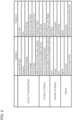
- FIG. 2 is an example of a recognition keyword used in the voice recognition unit 12.
- the word indicating the positional relationship of the object is a word indicating the specific position, the superordinate conceptual position, the relative position, and the order in the specific direction of the object, and refers to a distance from the vehicle, such as "100m ahead” which is often used for explanation of a route, an order in a traveling direction, such as "next second signal", and a superordinate conceptual or relative position, such as "front, rear, right, left of the vehicle".
- the recognition keywords shown in FIG. 2 include a word indicating the motion of the vehicle (i.e., the travel control of the vehicle) and a word indicating the modifiers of the objects in addition to the above-mentioned word indicating the objects around traveling route and the word indicating the positional relationship of the object, and the languages (character string data) recognized by the voice recognition unit 12 are outputted to the route change identification unit 19.
- the word indicating the motion of the vehicle refer to a word relating to driving control, particularly steering operation, such as "turn left”, “stop”, “refuel/charge”, “move to the right lane”, “get on the expressway”, “overtake” and “track”, and this word indicating the motion of the vehicle is extracted from voice data.
- the modifier of an object is a word indicating a color, a shape, a size, specification, or the like of a specific object, and can be exemplified by "a red car", “a round building”, “a large intersection”, “a taxi”, “a one-box car”, or the like.
- the word (character string data) indicating the motion of the subject vehicle and the language (character string data) related to the modifier of an object are used in the route change identification unit 19.
- the vehicle exterior imaging camera 13 is a camera that captures a field of view around the subject vehicle viewed by the driver or the passenger, and for example, it may be installed in the vicinity of the interior mirror in the case of a camera that captures the front field of the view, installed in the upper part of the rear window in the room in the case of a camera that captures the rear field of the view, or installed at a door mirror in the case of a camera that captures the side field of the view, or the like.
- Image data captured by the vehicle exterior imaging camera 13 is outputted to the object recognition unit 16.
- the onboard sensor 14 includes a sensor capable of recognizing a distance to an object, such as a laser or a radar sensor stereo camera mounted on an automatic driving vehicle or the like. Distance to a specific object detected by the onboard sensor 14 is output to the object recognition unit 16.
- the map database 15 is a storage device that stores map data, and the map data stored in the map database 15 is output to the object recognition unit 16.
- the object recognition unit 16 executes a recognition process of a specific object based on image data imaged by the vehicle exterior imaging cameras 13, a distance to a specific object detected by the onboard sensors 14, and map data stored in the map database 15. That is, the object recognition unit 16 uses known techniques such as deep neural network DNNs that utilize deep learning methods to recognize a variety of objects, such as vehicles, bikes, bicycles, pedestrians, signal machines, intersections, crossroads, street trees, convenience stores, gasoline stands, buildings including shops, structures and their signs, etc., which exist around roads and are commonly used to explain routes, and to extract feature quantities (such as a color, a size, a distance, a vehicle model, a vehicle type, etc.) in each recognized area.
- DNNs deep neural network DNNs that utilize deep learning methods to recognize a variety of objects, such as vehicles, bikes, bicycles, pedestrians, signal machines, intersections, crossroads, street trees, convenience stores, gasoline stands, buildings including shops, structures and their signs, etc., which exist around roads and are commonly used
- the indicated object estimation unit 17 estimates an object intended by the user through speech, and outputs the estimation to the object feature estimation unit 18. That is, the indicated object estimating unit 17 estimates an object intended by the user through speech from the language (character string data) recognized by the voice recognizing unit 12 and the object or the feature quantity thereof recognized by the object recognizing unit 16, and outputs the object data to the object feature estimation unit 18. For example, when the word indicating the object around traveling route extracted by the voice recognition unit 12 and the word indicating the positional relation of the object are "the taxi 100m ahead", the indicated object estimation unit 17 recognizes "the taxi” "100m ahead” from image data among the objects recognized by the object recognition unit 16.
- the object feature estimation unit 18 selects feature quantities that differs from the feature specified by the user's voice data or a detailed feature, and outputs the feature to the route change identification unit 19. For example, when a word indicating an object around a traveling route extracted by the voice recognition unit 12 and a word indicating a positional relation of the object, that is, features of the object specified by the user's voice data are "the taxi 100m ahead", a more detailed or different feature quantity is selected as "it is the white Nissan FUGA taxi, isn't it?" instead of selecting and repeating the feature quantity as "it is the taxi 100m ahead, isn't it?" as repeating like a parrot.
- the route change identification unit 19 causes the user to confirm whether or not the change position of the route intended by the user is correct by using the feature quantities selected by the object feature estimation unit 18, and if it is correct, changes the currently set traveling route to the traveling route.
- the route change identification unit 19 presents the feature quantity selected by the object feature estimation unit 18 to the user as image data or voice data. Therefore, the route change identification unit 19 includes a display for displaying image data or a speaker for outputting voice data. When image data is displayed on the display or when voice data is output from the speaker, steering operation information regarding steering operation of the vehicle extracted by the voice recognition unit 12 is also output together with the image data information or the voice data information.
- the route change identification unit 19 may display image data including road information around the subject vehicle and an icon indicating steering operation, the icon being superimposed on the road information.
- the route change identification unit 19 may display image data in which a position of a specified object is marked with respect to road information around the subject vehicle.
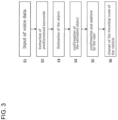
- FIG. 3 is a flow chart showing a basic process sequence of travel information processing apparatus 1 according to the present embodiment.
- travel information processing apparatus 1 of the present embodiment inputs voice data of the user from the in-vehicle sound collecting microphone 11.
- predetermined keywords shown in FIG. 2 are extracted by the voice recognition unit 12.
- the object recognition unit 16 recognizes an object by using the detection data from the vehicle exterior imaging camera 13, the onboard sensor 14, and the map database 15, and the indicated object estimation unit 17 estimates the object from the recognized object and a language (character string data) extracted by the voice recognition unit.
- the object feature estimation unit 18 selects feature quantities and the route change identification unit 19 presents the feature quantities to the user by image data or voice data to confirm the estimated object.
- the route change identification unit 19 causes the user to confirm and approve the feature quantities presented to the user by image data or voice data.
- the user if the user confirms that the presented image data or voice data is correct, the currently set traveling route is changed.
- FIG. 4 is a flow chart showing a more specific process sequence of travel information processing apparatus 1 according to the present embodiment. It is assumed that this processing is repeatedly executed at predetermined time intervals, and that a destination is inputted to a navigation device of the vehicle and a traveling route to the destination is set as a premise for starting this processing. In this case, the operation may be a manual operation or may be an automatic operation for automatically controlling acceleration and deceleration control and/or steering control. First, it is assumed that voice of the user such as a driver or a passenger is constantly inputted to the in-vehicle sound collecting microphone 11 prior to steps S11 to S13, and the voice recognition unit 12 constantly executes the recognition process of the voice data. Travel information processing apparatus 1 of the present embodiment is an example in which a speaker or the like is used to present something to the user or get answers through voice data.
- steps S11 to S13 it is determined whether or not the language (character string data) recognized by the voice recognition unit 12 has the language indicating the action (travel control) shown in FIG. 2 (step S11), the language indicating the positional relationship of the object (step S12), and the language indicating the object (step S13). If each of the language indicating the action, the language indicating the positional relationship of the object, and the language indicating the object exists, the process proceeds to step S14, and estimation of the object intended by the user is started. On the other hand, if any one of the language indicating the action, the language indicating the positional relationship of the object, and the language indicating the object does not exist, the process returns to step S11. Note that step S11 may be omitted and only steps S12 and S13 may be executed.
- step S14 the vehicle exterior imaging camera 13, the onboard sensor 14, and the map database 15 are used so that the object recognizing unit 16 constantly recognizes the object around the vehicle based on image data, distance and position.
- step S15 it is determined whether or not a language indicating details of the object exists in the language recognized by the voice recognition unit 12. If the language indicating the details of the object exists in step S15, the process proceeds to step S16, and the detailed information of each object recognized in step S14 is estimated. If the language indicating the details of the object does not exist in step S15, the process proceeds to step S17 without estimating the detailed information.
- the object recognized in step S14 or S16 is an object existing around the vehicle and is a candidate of an object intended by the user.
- step S17 the indicated object estimation unit 17 compares the language indicating the action recognized in steps S11 to S13, the language indicating the positional relationship of the object, and the language indicating the object, that is, the object intended by the user through the voice, with the object recognized in steps S14 to S16, and determines whether or not there is something to coincident.
- a predetermined threshold value is set as the degree of coincidence, and similar objects may be included. This is because, for example, a color, a shape, a positional relationship, and the like of the object are languages that are generated as a result of being recognized by the subjective view of the user. This is also because, for example, "a red vehicle” indicates different red colors with different lightness.
- step S17 if there is an object coincident with the object recognized by the voice recognition unit 12 in the objects recognized by the object recognition unit 16, the process proceeds to step S18, and if there is no coincident object, the process proceeds to step S21.
- step S21 the indicated object estimation unit 17 requests the user to re-explain as "please explain again” through the speaker because it is determined that there is no object coincident with the object recognized by the voice recognition unit 12 among the objects recognized by the object recognition unit 16.
- step S17 when there is an object coincident with the object recognized by the voice recognition unit 12 among the objects recognized by the object recognition unit 16, the process proceeds to step S18.
- step S18 the object feature estimation unit 18 explains the estimated object to the user through the speaker in order to have the user confirm whether or not the position and the action of the estimated object are correct. Contents of explanation by the object feature estimation unit 18 is explained by using, for example, a color, a size, a vehicle type, a vehicle category, and written characters of the object not to be mere repeat of speech of the user.
- step S19 the user answers whether or not the explained estimated object is an object intended by the user via the route change identification unit 19. Specifically, when the estimated object is explained through the speaker, the answer "Yes” or “No” is given by voice.
- step S19 if the estimated object is the object intended by the user, the process proceeds to step S20, and the route change identification unit 19 changes a traveling route set preliminarily to a traveling route based on the action intended by the user (travel control) in step S20. For example, when the user says “turn left the road in front of the taxi 100m ahead", the traveling route is changed to the traveling route for tuning left the road in front of the taxi 100m ahead, although the preliminarily set traveling route is straight ahead.
- step S19 when the estimated object is not the object intended by the user, the process proceeds to step S22, and the route change identification unit 19 requests the user for a re-explanation or an additional explanation such as "please explain again in detail" through the speaker. If the user doesn't re-explain or explain additionally, the process proceeds to step S21, and if the user re-explains or explains additionally, the process proceeds to step S23.
- step S23 the speech recognizing unit 12 recognizes the user's re-explanation or additional voice data and estimates the object again based on the extracted characteristic quantity of the object, and it is explained to the user through the speaker, and the process returns to step S18.
- the processes after step S18 are as described above.
- FIG. 5 is a flow chart showing another more specific process sequence of travel information processing apparatus 1 according to the present embodiment.
- This process is repeatedly executed at predetermined time intervals, and a destination is inputted to the navigation device of the vehicle and a traveling route to the destination is set as a premise for starting this process.
- it may be a manual operation, or it may be an automatic operation for automatically controlling acceleration and deceleration control and/or steering control.
- the voice of the user such as the driver or the passenger is constantly inputted to the in-vehicle sound collecting microphone 11 prior to steps S11 to S13, and the voice recognition unit 12 constantly executes the process of recognition of voice data.
- Travel information processing apparatus 1 of the present embodiment is an example of a display of a portable terminal or a navigational device presenting to a user or obtaining an answer through image data.
- FIGS. 6-8 illustrate examples of image data displayed on a display.
- steps S31 to S37 is the same as the process in steps S11 to S17 in FIG. 4 .That is, in steps S31 to S33, it is determined whether there is language indicating an action (travel control) in the language (character string data) recognized by the voice recognition unit 12 shown in FIG. 2 (step S31), whether there is language indicating a positional relationship of the object (step S32), and whether there is language indicating objects (step S33), respectively.
- step S31 language indicating an action
- step S32 language indicating a positional relationship of an object
- step S33 language indicating objects
- step S31 when there isn't any of language indicating an action, language indicating a positional relationship of an object, and language indicating an object, the process returns to step S31. Note that step S31 may be omitted and only steps S32 and S33 may be employed.
- step S34 the object recognizing unit 16 constantly recognizes objects around the subject vehicle based on image data, the distance, and the position by using the vehicle exterior imaging camera 13, the onboard sensor 14, and the map database 15.
- step S35 it is determined whether there is language indicating details of an object (a modifier of the object of FIG.2 ) in the language recognized by the voice recognition unit 12. If there is language indicating details of an object in step S35, the process proceeds to step S36, and the detailed information of each object recognized in step S34 is estimated. If there is no language indicating details of an object does not exist in step S35, the process proceeds to step S37 without estimating the detailed information.
- the object recognized in step S34 or S36 is an object existing around the subject vehicle and is a candidate of an object intended by the user.
- step S37 the indicated object estimation unit 17 compares the language indicating the action recognized in steps S31 to S33, the language indicating the positional relationship of the object, and the language indicating the object, that is, the object intended by the user through the voice, with the object recognized in steps S34 to S36, and determines whether or not they are coincident.
- a predetermined threshold value is set in the degree of coincidence, and similar objects may be included. This is because red colors of "red cars" have different lightness values.
- step S37 if there is an object coincident with the object recognized by the voice recognition unit 12 in the objects recognized by the object recognition unit 16, the process proceeds to step S38, and if there is no coincident object, the process proceeds to step S42.
- step S37 when there is an object coincident with the object recognized by the voice recognition unit 12 in the objects recognized by the object recognition unit 16, the process proceeds to step S38.
- step S38 the object feature estimation unit 18 creates image data of the estimated object and presents it to the user through the display in order to have the user confirm whether the position and the action of the estimated object are correct.
- FIG. 6 is a diagram illustrating an exemplary image data created by the object feature estimation unit 18 and displayed on the display. For example, an example is shown in which the user says "turn left on the road in front of the vehicle traveling ahead".
- the object recognized by the object recognition unit 16 with respect to the voice data "turn left on the road in front of the vehicle traveling ahead" of the user is the vehicle V1 and the steering operation information recognized from the language indicating the action is the arrow R1 indicating the left turn, and so these are indicated by a solid line, and the other vehicles V2 and the convenience store C1 in the corner are indicated by a dotted line.
- FIG. 7 is a diagram showing another exemplary image data created by the object feature estimation unit 18 and displayed on the display.
- image data shown in FIG. 6 image data of the vehicles V1 and V2 may be added, or image data of the corner convenience store C1 may be added.
- FIG. 8 is a diagram illustrating further another exemplary image data created by the object feature estimation unit 18 and displayed on the display.
- FIG. 8 is image data captured by the vehicle exterior imaging camera 13 to be displayed as it is for the utterance of the user "turn left in front of the taxi" and a solid line surrounding the taxi V1 which is an estimated object, the arrow display R1 representing the left turn, and dotted lines surrounding the other recognized vehicles V2, V3, V4 are overlapped with this image data.
- the content presented by the object feature estimation unit 18 is detailed information that differs from the explanation of the object specified by the user through voice, for example, objects V2 and C1 other than the object V1 estimated as shown in FIG. 6 , or a color, a size, a vehicle type, a vehicle category, written characters and the like of the estimated object V1 displayed as image data.
- the content should not be same as an explanation of the user but should be beyond it.
- step S39 the user answers whether or not the presented estimated object is the object intended by the user via the route change identification unit 19. Specifically, when the estimated object displayed on the display is correct, the user presses the "Yes" touch button or touches the displayed estimated object itself.
- step S39 if the estimated object is the object intended by the user, the process proceeds to step S40, and the route change identification unit 19 changes a traveling route set preliminarily to a traveling route based on an action intended by the user (travel control) in step S40. For example, when the user utters "turn left the road in front of the taxi", the traveling route is changed to the traveling route for tuning left the road in front of the estimated taxi, although the preliminarily set traveling route is straight ahead.
- step S39 if the estimated object is not an object intended by the user, the process proceeds to step S41, and the route change identifying unit 19 determines whether or not the user has selected another object displayed on the display. For example, if the object estimated in FIG. 8 is the vehicle V2 rather than the vehicle V1, and the user touches the vehicle V2 and selects, it is determined that the vehicle V2 is the vehicle (taxi) intended by the user and the process returns to step S38, and image data of the vehicle V2 surrounded by a solid line is recreated and displayed on the display.
- step S41 when the user does not select a different vehicle, the process proceeds to step S42, where the video when the user starts speaking as shown in FIG. 6 is displayed on the display, and the route change identification unit 19 requests the user to re-explain or explain additionally such as "please explain again” through the display or the speaker.
- the user can re-explain or explain additionally to this, for example, by touching an object on image data.
- step S43 at the time of re-explanation or additional explanation by the user in step S42, there is a possibility that the user has passed through the intended point, and so it is determined whether or not it is necessary to U-turn the subject vehicle in order to change the route, and if it is not necessary to U-turn, the process proceeds to step S40, and traveling route is changed. If it is necessary to U-turn, the process proceed to step 44 to search for and set a traveling route for returning to the same point, and then traveling route is changed to traveling route intended by the user.
- the travel information processing apparatus 1 and the methods of the present embodiment since an object estimated from voice data is specified based on a word indicating an object around the traveling route and a word indicating a positional relation of objects extracted from user's voice data, and image data or voice data indicating the specified object is output, the user can confirm consistency or accuracy with the object intended by the user by viewing the output image data or listening to the output voice data. As a result, it is possible to provide a travel information processing apparatus and a process in which the user can intuitively and easily instruct the vehicle to perform certain driving operations.
- the travel information processing apparatus 1 and the method of the present embodiment since the user's confirmation data is inputted to image data or voice data output from an output device, and traveling route of the vehicle is changed based on the user's confirmation data, it is possible to ensure coincidence or accuracy between the estimated object and the object intended by the user.
- the travel information processing apparatus 1 and the method of the present embodiment since image data or voice data having information different from a word indicating an object around the traveling route extracted from voice data or more detailed information is output, the user can confirm the identification of the object with characteristics different from his/her own explanation, and can perform identification of the object more accurately instead of a parrot-like repetition.
- steering operation information about steering operation of the vehicle is output based on a word about steering operation of the vehicle extracted from voice data together with image data or voice data, not only a position information of the object but also travel control such as motion of the vehicle, that is, the right/left turn or parking/stopping can be identified as information intended by the user.
- an object estimated from voice data is specified based on a map data and information output from an onboard sensor, it is possible to recognize a positional relation with the subject vehicle while sharing the same situation as the user's visual field. For example, it is possible to identify an object intended by the user based on a positional relationship with the subject vehicle, such as the same lane or an adjacent lane, or any object actually visible. Also, by using a map data, it is possible to describe the object intended by the user by adding an attribute to it. For example, while the user uttered "the corner store", more detailed information such as "it is the corner of the cake shop, isn't it?" can be used for identification.
- the travel information processing apparatus 1 and the method of the present embodiment since outputting image data that marks the position of the specified object with respect to road information around the subject vehicle, the positional relationship between the subject vehicle and the identified object is easily visually recognized, the object confirmation with the user is simplified.
- the in-vehicle sound collection microphone 11 corresponds to the voice input device according to the present invention.
- the speech recognition unit 12, the object recognition unit 16, the indicated object estimation unit 17, and the object feature estimation unit 18 correspond to output device according to the present invention.
- the route change identification unit 19 corresponds to the travel information process unit and the confirmation data input unit according to the present invention.
- the vehicle exterior imaging camera 13 corresponds to the imaging device according to the present invention.
- the onboard sensor 14 corresponds to the onboard sensor according to the present invention.
- the map database 15 corresponds to the storage unit according to the present invention.
Landscapes
- Engineering & Computer Science (AREA)
- Physics & Mathematics (AREA)
- Human Computer Interaction (AREA)
- Automation & Control Theory (AREA)
- Multimedia (AREA)
- Mechanical Engineering (AREA)
- Acoustics & Sound (AREA)
- Computational Linguistics (AREA)
- Health & Medical Sciences (AREA)
- Audiology, Speech & Language Pathology (AREA)
- General Physics & Mathematics (AREA)
- Theoretical Computer Science (AREA)
- Transportation (AREA)
- Navigation (AREA)
- Traffic Control Systems (AREA)
- Control Of Driving Devices And Active Controlling Of Vehicle (AREA)
Claims (10)
- Eine Reiseinformationsverarbeitungsvorrichtung (1), aufweisend:eine Spracheingabevorrichtung (11), die konfiguriert ist, um Sprachdaten eines Benutzers einzugeben;eine Einheit (17) zur Schätzung des angezeigten Objekts, die konfiguriert ist, zumSpezifizieren eines Objekts durch Abschätzung aus den Sprachdaten, basierend aufeinem Wort, das aus den Sprachdaten extrahiert wird und das Objekt als ein Ziel zum Ändern einer Fahrbewegung eines betreffenden Fahrzeugs (V0) um eine Fahrtroute herum angibt,einem Wort, das aus den Sprachdaten extrahiert wird und eine Positionsbeziehung des Objekts angibt, undeinem Wort, das aus den Sprachdaten extrahiert wird und sich auf einen Fahrbefehl für das betreffende Fahrzeug (V0) bezieht,und zum Spezifizieren eines oder mehrerer Merkmale des Objekts basierend auf den Sprachdaten;eine Objektmerkmalschätzungseinheit (18), die konfiguriert ist, um ein oder mehrere zusätzliche Merkmale des Objekts auszuwählen, die sich von den Objektmerkmalen, die basierend auf den Sprachdaten spezifiziert wurden, unterscheiden oder detaillierter sind als diese;eine Ausgabevorrichtung, die konfiguriert ist, um Bilddaten oder Sprachdaten auszugeben, die das Objekt anzeigen und eine Position und eine Fahrbewegung zum Ändern der Fahrbewegung des betreffenden Fahrzeugs (V0) erläutern, wobei die Bilddaten oder Sprachdaten Informationen aufweisen, die die zusätzlichen Merkmale des Objekts anzeigen; undeinen Fahrinformationsprozessor, der konfiguriert ist, eine Fahrbewegung des betreffenden Fahrzeugs (V0) basierend auf dem Objekt zu ändern.
- Die Reiseinformationsverarbeitungsvorrichtung (1) nach Anspruch 1, wobei
der Fahrinformationsprozessor die Position und die Fahrbewegung zum Ändern der Fahrbewegung des betreffenden Fahrzeugs (V0) basierend auf dem angegebenen Objekt und dem Fahrbefehl spezifiziert und die Fahrbewegung des betreffenden Fahrzeugs (V0) ändert. - Die Reiseinformationsverarbeitungsvorrichtung (1) nach Anspruch 1 oder 2, ferner aufweisend eine Bestätigungsdateneingabevorrichtung, die konfiguriert ist, um Bestätigungsdaten des Benutzers zu den Bilddaten oder Sprachdaten einzugeben, um zu bestätigen, ob das durch die Bilddaten oder Sprachdaten angezeigte Objekt das vom Benutzer beabsichtigte Objekt ist oder nicht, und
wobei der Fahrinformationsprozessor die Fahrbewegung des betreffenden Fahrzeugs (V0) basierend auf den Bestätigungsdaten ändert. - Die Reiseinformationsverarbeitungsvorrichtung (1) nach einem der Ansprüche 1 bis 3, wobei die Ausgabevorrichtung zusammen mit den Bilddaten oder den Sprachdaten, Lenkbetriebsinformationen, die sich auf einen Lenkbetrieb des betreffenden Fahrzeugs (V0) beziehen, basierend auf einem Wort, das sich auf den Lenkbetrieb bezieht und aus den Sprachdaten extrahiert wurde, ausgibt.
- Die Reiseinformationsverarbeitungsvorrichtung (1) nach Anspruch 4, wobei die Ausgabevorrichtung Bilddaten ausgibt, die Straßeninformationen um das betreffende Fahrzeug (V0) herum und ein den Lenkbetrieb anzeigendes Symbol aufweisen, wobei das Symbol den Straßeninformationen überlagert ist.
- Die Reiseinformationsverarbeitungsvorrichtung (1) nach einem der Ansprüche 1 bis 5, ferner aufweisend einen Speicher, in dem Kartendaten gespeichert sind, und einen Onboard-Sensor (14),
wobei die Einheit (17) zur Schätzung des angezeigten Objekts das Objekt durch Abschätzung aus den Sprachdaten basierend auf der von den Kartendaten und dem Onboard-Sensor (14) ausgegebenen Information spezifiziert. - Die Reiseinformationsverarbeitungsvorrichtung (1) nach Anspruch 6, die ferner eine Abbildungsvorrichtung (13) aufweist, die konfiguriert ist, um ein Bild um das betreffende Fahrzeug (V0) herum zu erfassen, wobei die Bilddaten durch Verwendung von Bilddaten von der Abbildungsvorrichtung (13) erzeugt werden.
- Die Reiseinformationsverarbeitungsvorrichtung (1) nach Anspruch 6 oder 7, wobei die Bilddaten unter Verwendung der Kartendaten erzeugt werden.
- Die Reiseinformationsverarbeitungsvorrichtung (1) nach einem der Ansprüche 1 bis 8, wobei die Ausgabevorrichtung Bilddaten ausgibt, die eine Position des spezifizierten Objekts in Bezug auf Straßeninformationen um das betreffende Fahrzeug (V0) markieren.
- Ein Reiseinformationsverarbeitungsverfahren unter Verwendung eines durch ein Programm betriebenen Computers, wobei das Verfahren folgende Schritte aufweist:Eingabe von Sprachdaten eines Benutzers;Spezifizieren eines Objekts durch Abschätzen aus den Sprachdaten basierend auf einem Wort, das aus den Sprachdaten extrahiert wurde und das Objekt als ein Ziel zum Ändern einer Fahrbewegung eines betreffenden Fahrzeugs (V0) um eine Fahrtroute herum angibt, einem Wort, das aus den Sprachdaten extrahiert wurde und eine Positionsbeziehung des Objekts angibt, und einem Wort, das aus den Sprachdaten extrahiert wurde und sich auf einen Fahrbefehl für das betreffende Fahrzeug (V0) bezieht;Spezifizieren eines oder mehrerer Merkmale des Objekts basierend auf den Sprachdaten;Auswählen eines oder mehrerer zusätzlicher Merkmale des Objekts, die sich von den Objektmerkmalen, die basierend auf den Sprachdaten spezifiziert wurden, unterscheiden oder detaillierter sind als diese;Ausgeben von Bilddaten oder Sprachdaten, die das Objekt anzeigen und eine Position und eine Fahrbewegung zum Ändern der Fahrbewegung des betreffenden Fahrzeugs (V0) erläutern, wobei die Bilddaten oder Sprachdaten Informationen aufweisen, die die zusätzlichen Merkmale des Objekts anzeigen; undÄndern einer Fahrbewegung des betreffenden Fahrzeugs (VO) basierend auf dem Objekt.
Applications Claiming Priority (1)
| Application Number | Priority Date | Filing Date | Title |
|---|---|---|---|
| PCT/JP2018/023274 WO2019244239A1 (ja) | 2018-06-19 | 2018-06-19 | 走行情報処理装置及び処理方法 |
Publications (3)
| Publication Number | Publication Date |
|---|---|
| EP3812231A1 EP3812231A1 (de) | 2021-04-28 |
| EP3812231A4 EP3812231A4 (de) | 2021-05-05 |
| EP3812231B1 true EP3812231B1 (de) | 2024-10-23 |
Family
ID=68983899
Family Applications (1)
| Application Number | Title | Priority Date | Filing Date |
|---|---|---|---|
| EP18923588.0A Active EP3812231B1 (de) | 2018-06-19 | 2018-06-19 | Vorrichtung und verfahren zur verarbeitung von reiseinformationen |
Country Status (5)
| Country | Link |
|---|---|
| US (1) | US11912295B2 (de) |
| EP (1) | EP3812231B1 (de) |
| JP (1) | JP6992893B2 (de) |
| CN (1) | CN112313137B (de) |
| WO (1) | WO2019244239A1 (de) |
Families Citing this family (9)
| Publication number | Priority date | Publication date | Assignee | Title |
|---|---|---|---|---|
| US11447127B2 (en) * | 2019-06-10 | 2022-09-20 | Honda Motor Co., Ltd. | Methods and apparatuses for operating a self-driving vehicle |
| WO2021161712A1 (ja) * | 2020-02-14 | 2021-08-19 | ソニーグループ株式会社 | 撮像装置及び車両制御システム |
| JP6888851B1 (ja) * | 2020-04-06 | 2021-06-16 | 山内 和博 | 自動運転車 |
| US20220122456A1 (en) * | 2020-10-20 | 2022-04-21 | Here Global B.V. | Explanation of erratic driving behavior |
| US12008816B2 (en) * | 2020-12-03 | 2024-06-11 | Hl Klemove Corp. | Method and system for real time object detection |
| JP7798478B2 (ja) * | 2021-03-22 | 2026-01-14 | パイオニア株式会社 | 案内装置 |
| CN115628756B (zh) * | 2022-10-14 | 2024-07-26 | 西安中科华芯测控有限公司 | 一种光纤陀螺标度因数自适应补偿方法 |
| JP7722341B2 (ja) * | 2022-12-01 | 2025-08-13 | トヨタ自動車株式会社 | 車両制御装置、車両制御方法及びプログラム |
| CN116386626A (zh) * | 2023-03-20 | 2023-07-04 | 合众新能源汽车股份有限公司 | 基于智能座舱的感知交互方法及感知交互装置 |
Family Cites Families (22)
| Publication number | Priority date | Publication date | Assignee | Title |
|---|---|---|---|---|
| JPH08202999A (ja) * | 1995-01-25 | 1996-08-09 | Honda Motor Co Ltd | 車両用周囲状況監視装置 |
| JP3582159B2 (ja) * | 1995-07-28 | 2004-10-27 | マツダ株式会社 | 車載用地図表示装置 |
| JP2005098868A (ja) * | 2003-09-25 | 2005-04-14 | Matsushita Electric Ind Co Ltd | 車載コミュニケーション装置 |
| JP2007065998A (ja) * | 2005-08-31 | 2007-03-15 | Denso Corp | 運転支援装置 |
| CN104412323B (zh) * | 2012-06-25 | 2017-12-12 | 三菱电机株式会社 | 车载信息装置 |
| US9085303B2 (en) * | 2012-11-15 | 2015-07-21 | Sri International | Vehicle personal assistant |
| JP6029985B2 (ja) * | 2013-01-11 | 2016-11-24 | クラリオン株式会社 | 情報処理装置、操作システム、および、情報処理装置の操作方法 |
| US9747898B2 (en) | 2013-03-15 | 2017-08-29 | Honda Motor Co., Ltd. | Interpretation of ambiguous vehicle instructions |
| EP3166023A4 (de) * | 2014-07-04 | 2018-01-24 | Clarion Co., Ltd. | Fahrzeuginternes interaktives system und fahrzeuginterne informationsanwendung |
| DE102014222195A1 (de) * | 2014-10-30 | 2016-05-04 | Bayerische Motoren Werke Aktiengesellschaft | Fahrzeugbedienung abhängig vom Fahrmodus |
| JP5945999B1 (ja) | 2015-07-31 | 2016-07-05 | パナソニックIpマネジメント株式会社 | 運転支援装置、運転支援システム、運転支援方法、運転支援プログラム及び自動運転車両 |
| JP6645779B2 (ja) * | 2015-09-11 | 2020-02-14 | 株式会社Nttドコモ | 対話装置および対話プログラム |
| JP2017136968A (ja) | 2016-02-04 | 2017-08-10 | 日立オートモティブシステムズ株式会社 | 車両制御装置 |
| WO2017145364A1 (ja) * | 2016-02-26 | 2017-08-31 | 三菱電機株式会社 | 駐車支援装置および駐車支援方法 |
| US10140770B2 (en) * | 2016-03-24 | 2018-11-27 | Toyota Jidosha Kabushiki Kaisha | Three dimensional heads-up display unit including visual context for voice commands |
| JP6575915B2 (ja) * | 2016-05-31 | 2019-09-18 | パナソニックIpマネジメント株式会社 | 運転支援装置、運転支援システム、運転支援方法、運転支援プログラム及び自動運転車両 |
| DE102016211646A1 (de) * | 2016-06-28 | 2017-12-28 | Bayerische Motoren Werke Aktiengesellschaft | System zur automatisierten Fahrzeugführung mit fahrerseitiger Fahrmanöverauswahl in einer Sonder-Fahrsituation |
| JP6575451B2 (ja) * | 2016-07-20 | 2019-09-18 | 株式会社デンソー | 運転支援装置及び運転支援プログラム |
| US10372132B2 (en) | 2016-12-12 | 2019-08-06 | Apple Inc. | Guidance of autonomous vehicles in destination vicinities using intent signals |
| US10496362B2 (en) * | 2017-05-20 | 2019-12-03 | Chian Chiu Li | Autonomous driving under user instructions |
| US10627815B2 (en) * | 2017-08-22 | 2020-04-21 | Waymo Llc | Context aware stopping for autonomous vehicles |
| KR101930462B1 (ko) * | 2017-09-25 | 2018-12-17 | 엘지전자 주식회사 | 차량 제어 장치 및 그것을 포함하는 차량 |
-
2018
- 2018-06-19 EP EP18923588.0A patent/EP3812231B1/de active Active
- 2018-06-19 US US17/253,849 patent/US11912295B2/en active Active
- 2018-06-19 CN CN201880094814.2A patent/CN112313137B/zh active Active
- 2018-06-19 JP JP2020525115A patent/JP6992893B2/ja active Active
- 2018-06-19 WO PCT/JP2018/023274 patent/WO2019244239A1/ja not_active Ceased
Also Published As
| Publication number | Publication date |
|---|---|
| EP3812231A1 (de) | 2021-04-28 |
| JPWO2019244239A1 (ja) | 2021-06-17 |
| US11912295B2 (en) | 2024-02-27 |
| CN112313137A (zh) | 2021-02-02 |
| US20210261146A1 (en) | 2021-08-26 |
| WO2019244239A1 (ja) | 2019-12-26 |
| JP6992893B2 (ja) | 2022-01-18 |
| CN112313137B (zh) | 2024-06-04 |
| EP3812231A4 (de) | 2021-05-05 |
Similar Documents
| Publication | Publication Date | Title |
|---|---|---|
| EP3812231B1 (de) | Vorrichtung und verfahren zur verarbeitung von reiseinformationen | |
| JP6566145B2 (ja) | 走行支援装置及びコンピュータプログラム | |
| EP3994426B1 (de) | Verfahren und system für szenenbewusste interaktion | |
| CN112334908B (zh) | 用于自主车辆的短语识别模型 | |
| US11493357B2 (en) | Superimposed image display device, superimposed image drawing method, and computer program | |
| US20210166275A1 (en) | System and method for providing content to a user based on a predicted route identified from audio or images | |
| WO2019097763A1 (ja) | 重畳画像表示装置及びコンピュータプログラム | |
| EP3627110B1 (de) | Verfahren zur planung der trajektorie eines fahrzeugs | |
| CN105788323A (zh) | 道路速限检测系统 | |
| US11118934B2 (en) | Method and system of route guidance for a towing vehicle | |
| JP2018173860A (ja) | 走行支援装置及びコンピュータプログラム | |
| JP2023012793A (ja) | 重畳画像表示装置 | |
| JP6435798B2 (ja) | 車両情報案内システム、車両情報案内方法及びコンピュータプログラム | |
| JP2008262481A (ja) | 車両制御装置 | |
| US20220222946A1 (en) | Traffic environment recognition device and vehicle control device | |
| JP2023131981A (ja) | 重畳画像表示装置 | |
| JP2023097939A (ja) | 重畳画像表示装置 | |
| TWI798022B (zh) | 一種道路指示物件的提醒方法及其系統 | |
| JP2025037719A (ja) | カーナビゲーションシステム及び音声案内制御方法 | |
| JP2019179296A (ja) | 走行支援装置及びコンピュータプログラム | |
| JP2023008462A (ja) | 重畳画像表示装置 | |
| JP2024018405A (ja) | 重畳画像表示装置 | |
| JP2023064957A (ja) | 重畳画像表示装置 | |
| JP2024033759A (ja) | 重畳画像表示装置 | |
| JP2023044949A (ja) | 重畳画像表示装置 |
Legal Events
| Date | Code | Title | Description |
|---|---|---|---|
| STAA | Information on the status of an ep patent application or granted ep patent |
Free format text: STATUS: THE INTERNATIONAL PUBLICATION HAS BEEN MADE |
|
| PUAI | Public reference made under article 153(3) epc to a published international application that has entered the european phase |
Free format text: ORIGINAL CODE: 0009012 |
|
| STAA | Information on the status of an ep patent application or granted ep patent |
Free format text: STATUS: REQUEST FOR EXAMINATION WAS MADE |
|
| 17P | Request for examination filed |
Effective date: 20210111 |
|
| AK | Designated contracting states |
Kind code of ref document: A1 Designated state(s): AL AT BE BG CH CY CZ DE DK EE ES FI FR GB GR HR HU IE IS IT LI LT LU LV MC MK MT NL NO PL PT RO RS SE SI SK SM TR |
|
| AX | Request for extension of the european patent |
Extension state: BA ME |
|
| A4 | Supplementary search report drawn up and despatched |
Effective date: 20210408 |
|
| RIC1 | Information provided on ipc code assigned before grant |
Ipc: B60W 50/10 20120101AFI20210331BHEP |
|
| DAV | Request for validation of the european patent (deleted) | ||
| DAX | Request for extension of the european patent (deleted) | ||
| STAA | Information on the status of an ep patent application or granted ep patent |
Free format text: STATUS: EXAMINATION IS IN PROGRESS |
|
| 17Q | First examination report despatched |
Effective date: 20231006 |
|
| GRAP | Despatch of communication of intention to grant a patent |
Free format text: ORIGINAL CODE: EPIDOSNIGR1 |
|
| STAA | Information on the status of an ep patent application or granted ep patent |
Free format text: STATUS: GRANT OF PATENT IS INTENDED |
|
| INTG | Intention to grant announced |
Effective date: 20240808 |
|
| GRAS | Grant fee paid |
Free format text: ORIGINAL CODE: EPIDOSNIGR3 |
|
| GRAA | (expected) grant |
Free format text: ORIGINAL CODE: 0009210 |
|
| STAA | Information on the status of an ep patent application or granted ep patent |
Free format text: STATUS: THE PATENT HAS BEEN GRANTED |
|
| AK | Designated contracting states |
Kind code of ref document: B1 Designated state(s): AL AT BE BG CH CY CZ DE DK EE ES FI FR GB GR HR HU IE IS IT LI LT LU LV MC MK MT NL NO PL PT RO RS SE SI SK SM TR |
|
| REG | Reference to a national code |
Ref country code: GB Ref legal event code: FG4D |
|
| REG | Reference to a national code |
Ref country code: CH Ref legal event code: EP |
|
| REG | Reference to a national code |
Ref country code: DE Ref legal event code: R096 Ref document number: 602018075865 Country of ref document: DE |
|
| REG | Reference to a national code |
Ref country code: IE Ref legal event code: FG4D |
|
| REG | Reference to a national code |
Ref country code: LT Ref legal event code: MG9D |
|
| REG | Reference to a national code |
Ref country code: NL Ref legal event code: MP Effective date: 20241023 |
|
| REG | Reference to a national code |
Ref country code: AT Ref legal event code: MK05 Ref document number: 1734617 Country of ref document: AT Kind code of ref document: T Effective date: 20241023 |
|
| PG25 | Lapsed in a contracting state [announced via postgrant information from national office to epo] |
Ref country code: NL Free format text: LAPSE BECAUSE OF FAILURE TO SUBMIT A TRANSLATION OF THE DESCRIPTION OR TO PAY THE FEE WITHIN THE PRESCRIBED TIME-LIMIT Effective date: 20241023 |
|
| PG25 | Lapsed in a contracting state [announced via postgrant information from national office to epo] |
Ref country code: NL Free format text: LAPSE BECAUSE OF FAILURE TO SUBMIT A TRANSLATION OF THE DESCRIPTION OR TO PAY THE FEE WITHIN THE PRESCRIBED TIME-LIMIT Effective date: 20241023 |
|
| PG25 | Lapsed in a contracting state [announced via postgrant information from national office to epo] |
Ref country code: HR Free format text: LAPSE BECAUSE OF FAILURE TO SUBMIT A TRANSLATION OF THE DESCRIPTION OR TO PAY THE FEE WITHIN THE PRESCRIBED TIME-LIMIT Effective date: 20241023 Ref country code: IS Free format text: LAPSE BECAUSE OF FAILURE TO SUBMIT A TRANSLATION OF THE DESCRIPTION OR TO PAY THE FEE WITHIN THE PRESCRIBED TIME-LIMIT Effective date: 20250223 Ref country code: PT Free format text: LAPSE BECAUSE OF FAILURE TO SUBMIT A TRANSLATION OF THE DESCRIPTION OR TO PAY THE FEE WITHIN THE PRESCRIBED TIME-LIMIT Effective date: 20250224 |
|
| PG25 | Lapsed in a contracting state [announced via postgrant information from national office to epo] |
Ref country code: FI Free format text: LAPSE BECAUSE OF FAILURE TO SUBMIT A TRANSLATION OF THE DESCRIPTION OR TO PAY THE FEE WITHIN THE PRESCRIBED TIME-LIMIT Effective date: 20241023 |
|
| PG25 | Lapsed in a contracting state [announced via postgrant information from national office to epo] |
Ref country code: BG Free format text: LAPSE BECAUSE OF FAILURE TO SUBMIT A TRANSLATION OF THE DESCRIPTION OR TO PAY THE FEE WITHIN THE PRESCRIBED TIME-LIMIT Effective date: 20241023 |
|
| PG25 | Lapsed in a contracting state [announced via postgrant information from national office to epo] |
Ref country code: ES Free format text: LAPSE BECAUSE OF FAILURE TO SUBMIT A TRANSLATION OF THE DESCRIPTION OR TO PAY THE FEE WITHIN THE PRESCRIBED TIME-LIMIT Effective date: 20241023 |
|
| PG25 | Lapsed in a contracting state [announced via postgrant information from national office to epo] |
Ref country code: NO Free format text: LAPSE BECAUSE OF FAILURE TO SUBMIT A TRANSLATION OF THE DESCRIPTION OR TO PAY THE FEE WITHIN THE PRESCRIBED TIME-LIMIT Effective date: 20250123 |
|
| PG25 | Lapsed in a contracting state [announced via postgrant information from national office to epo] |
Ref country code: LV Free format text: LAPSE BECAUSE OF FAILURE TO SUBMIT A TRANSLATION OF THE DESCRIPTION OR TO PAY THE FEE WITHIN THE PRESCRIBED TIME-LIMIT Effective date: 20241023 Ref country code: AT Free format text: LAPSE BECAUSE OF FAILURE TO SUBMIT A TRANSLATION OF THE DESCRIPTION OR TO PAY THE FEE WITHIN THE PRESCRIBED TIME-LIMIT Effective date: 20241023 Ref country code: GR Free format text: LAPSE BECAUSE OF FAILURE TO SUBMIT A TRANSLATION OF THE DESCRIPTION OR TO PAY THE FEE WITHIN THE PRESCRIBED TIME-LIMIT Effective date: 20250124 |
|
| PG25 | Lapsed in a contracting state [announced via postgrant information from national office to epo] |
Ref country code: PL Free format text: LAPSE BECAUSE OF FAILURE TO SUBMIT A TRANSLATION OF THE DESCRIPTION OR TO PAY THE FEE WITHIN THE PRESCRIBED TIME-LIMIT Effective date: 20241023 |
|
| PG25 | Lapsed in a contracting state [announced via postgrant information from national office to epo] |
Ref country code: RS Free format text: LAPSE BECAUSE OF FAILURE TO SUBMIT A TRANSLATION OF THE DESCRIPTION OR TO PAY THE FEE WITHIN THE PRESCRIBED TIME-LIMIT Effective date: 20250123 |
|
| PG25 | Lapsed in a contracting state [announced via postgrant information from national office to epo] |
Ref country code: SM Free format text: LAPSE BECAUSE OF FAILURE TO SUBMIT A TRANSLATION OF THE DESCRIPTION OR TO PAY THE FEE WITHIN THE PRESCRIBED TIME-LIMIT Effective date: 20241023 |
|
| PGFP | Annual fee paid to national office [announced via postgrant information from national office to epo] |
Ref country code: DE Payment date: 20250520 Year of fee payment: 8 |
|
| PG25 | Lapsed in a contracting state [announced via postgrant information from national office to epo] |
Ref country code: DK Free format text: LAPSE BECAUSE OF FAILURE TO SUBMIT A TRANSLATION OF THE DESCRIPTION OR TO PAY THE FEE WITHIN THE PRESCRIBED TIME-LIMIT Effective date: 20241023 |
|
| PGFP | Annual fee paid to national office [announced via postgrant information from national office to epo] |
Ref country code: GB Payment date: 20250520 Year of fee payment: 8 |
|
| PG25 | Lapsed in a contracting state [announced via postgrant information from national office to epo] |
Ref country code: EE Free format text: LAPSE BECAUSE OF FAILURE TO SUBMIT A TRANSLATION OF THE DESCRIPTION OR TO PAY THE FEE WITHIN THE PRESCRIBED TIME-LIMIT Effective date: 20241023 |
|
| PGFP | Annual fee paid to national office [announced via postgrant information from national office to epo] |
Ref country code: FR Payment date: 20250520 Year of fee payment: 8 |
|
| PG25 | Lapsed in a contracting state [announced via postgrant information from national office to epo] |
Ref country code: RO Free format text: LAPSE BECAUSE OF FAILURE TO SUBMIT A TRANSLATION OF THE DESCRIPTION OR TO PAY THE FEE WITHIN THE PRESCRIBED TIME-LIMIT Effective date: 20241023 |
|
| REG | Reference to a national code |
Ref country code: DE Ref legal event code: R097 Ref document number: 602018075865 Country of ref document: DE |
|
| PG25 | Lapsed in a contracting state [announced via postgrant information from national office to epo] |
Ref country code: SK Free format text: LAPSE BECAUSE OF FAILURE TO SUBMIT A TRANSLATION OF THE DESCRIPTION OR TO PAY THE FEE WITHIN THE PRESCRIBED TIME-LIMIT Effective date: 20241023 |
|
| PG25 | Lapsed in a contracting state [announced via postgrant information from national office to epo] |
Ref country code: CZ Free format text: LAPSE BECAUSE OF FAILURE TO SUBMIT A TRANSLATION OF THE DESCRIPTION OR TO PAY THE FEE WITHIN THE PRESCRIBED TIME-LIMIT Effective date: 20241023 |
|
| PG25 | Lapsed in a contracting state [announced via postgrant information from national office to epo] |
Ref country code: IT Free format text: LAPSE BECAUSE OF FAILURE TO SUBMIT A TRANSLATION OF THE DESCRIPTION OR TO PAY THE FEE WITHIN THE PRESCRIBED TIME-LIMIT Effective date: 20241023 |
|
| PLBE | No opposition filed within time limit |
Free format text: ORIGINAL CODE: 0009261 |
|
| STAA | Information on the status of an ep patent application or granted ep patent |
Free format text: STATUS: NO OPPOSITION FILED WITHIN TIME LIMIT |
|
| PG25 | Lapsed in a contracting state [announced via postgrant information from national office to epo] |
Ref country code: SE Free format text: LAPSE BECAUSE OF FAILURE TO SUBMIT A TRANSLATION OF THE DESCRIPTION OR TO PAY THE FEE WITHIN THE PRESCRIBED TIME-LIMIT Effective date: 20241023 |
|
| 26N | No opposition filed |
Effective date: 20250724 |
|
| REG | Reference to a national code |
Ref country code: CH Ref legal event code: H13 Free format text: ST27 STATUS EVENT CODE: U-0-0-H10-H13 (AS PROVIDED BY THE NATIONAL OFFICE) Effective date: 20260127 |
|
| PG25 | Lapsed in a contracting state [announced via postgrant information from national office to epo] |
Ref country code: MC Free format text: LAPSE BECAUSE OF FAILURE TO SUBMIT A TRANSLATION OF THE DESCRIPTION OR TO PAY THE FEE WITHIN THE PRESCRIBED TIME-LIMIT Effective date: 20241023 |
|
| PG25 | Lapsed in a contracting state [announced via postgrant information from national office to epo] |
Ref country code: LU Free format text: LAPSE BECAUSE OF NON-PAYMENT OF DUE FEES Effective date: 20250619 |
|
| REG | Reference to a national code |
Ref country code: BE Ref legal event code: MM Effective date: 20250630 |
|
| PG25 | Lapsed in a contracting state [announced via postgrant information from national office to epo] |
Ref country code: IE Free format text: LAPSE BECAUSE OF NON-PAYMENT OF DUE FEES Effective date: 20250619 |
|
| PG25 | Lapsed in a contracting state [announced via postgrant information from national office to epo] |
Ref country code: BE Free format text: LAPSE BECAUSE OF NON-PAYMENT OF DUE FEES Effective date: 20250630 |
|
| PG25 | Lapsed in a contracting state [announced via postgrant information from national office to epo] |
Ref country code: CH Free format text: LAPSE BECAUSE OF NON-PAYMENT OF DUE FEES Effective date: 20250630 |