EP3813472B1 - Procédé et dispositif de transmission d'informations, et support de stockage informatique - Google Patents
Procédé et dispositif de transmission d'informations, et support de stockage informatique Download PDFInfo
- Publication number
- EP3813472B1 EP3813472B1 EP19837269.0A EP19837269A EP3813472B1 EP 3813472 B1 EP3813472 B1 EP 3813472B1 EP 19837269 A EP19837269 A EP 19837269A EP 3813472 B1 EP3813472 B1 EP 3813472B1
- Authority
- EP
- European Patent Office
- Prior art keywords
- interface
- communication capability
- network device
- lte
- terminal
- Prior art date
- Legal status (The legal status is an assumption and is not a legal conclusion. Google has not performed a legal analysis and makes no representation as to the accuracy of the status listed.)
- Active
Links
Images


Classifications
-
- H—ELECTRICITY
- H04—ELECTRIC COMMUNICATION TECHNIQUE
- H04W—WIRELESS COMMUNICATION NETWORKS
- H04W76/00—Connection management
- H04W76/10—Connection setup
- H04W76/14—Direct-mode setup
-
- H—ELECTRICITY
- H04—ELECTRIC COMMUNICATION TECHNIQUE
- H04W—WIRELESS COMMUNICATION NETWORKS
- H04W74/00—Wireless channel access
- H04W74/08—Non-scheduled access, e.g. ALOHA
-
- H—ELECTRICITY
- H04—ELECTRIC COMMUNICATION TECHNIQUE
- H04W—WIRELESS COMMUNICATION NETWORKS
- H04W8/00—Network data management
- H04W8/22—Processing or transfer of terminal data, e.g. status or physical capabilities
- H04W8/24—Transfer of terminal data
-
- H—ELECTRICITY
- H04—ELECTRIC COMMUNICATION TECHNIQUE
- H04L—TRANSMISSION OF DIGITAL INFORMATION, e.g. TELEGRAPHIC COMMUNICATION
- H04L67/00—Network arrangements or protocols for supporting network services or applications
- H04L67/01—Protocols
- H04L67/12—Protocols specially adapted for proprietary or special-purpose networking environments, e.g. medical networks, sensor networks, networks in vehicles or remote metering networks
-
- H—ELECTRICITY
- H04—ELECTRIC COMMUNICATION TECHNIQUE
- H04L—TRANSMISSION OF DIGITAL INFORMATION, e.g. TELEGRAPHIC COMMUNICATION
- H04L67/00—Network arrangements or protocols for supporting network services or applications
- H04L67/14—Session management
- H04L67/141—Setup of application sessions
-
- H—ELECTRICITY
- H04—ELECTRIC COMMUNICATION TECHNIQUE
- H04W—WIRELESS COMMUNICATION NETWORKS
- H04W4/00—Services specially adapted for wireless communication networks; Facilities therefor
- H04W4/12—Messaging; Mailboxes; Announcements
-
- H—ELECTRICITY
- H04—ELECTRIC COMMUNICATION TECHNIQUE
- H04W—WIRELESS COMMUNICATION NETWORKS
- H04W56/00—Synchronisation arrangements
- H04W56/001—Synchronization between nodes
-
- H—ELECTRICITY
- H04—ELECTRIC COMMUNICATION TECHNIQUE
- H04W—WIRELESS COMMUNICATION NETWORKS
- H04W72/00—Local resource management
- H04W72/20—Control channels or signalling for resource management
- H04W72/25—Control channels or signalling for resource management between terminals via a wireless link, e.g. sidelink
-
- H—ELECTRICITY
- H04—ELECTRIC COMMUNICATION TECHNIQUE
- H04W—WIRELESS COMMUNICATION NETWORKS
- H04W88/00—Devices specially adapted for wireless communication networks, e.g. terminals, base stations or access point devices
- H04W88/02—Terminal devices
- H04W88/06—Terminal devices adapted for operation in multiple networks or having at least two operational modes, e.g. multi-mode terminals
-
- H—ELECTRICITY
- H04—ELECTRIC COMMUNICATION TECHNIQUE
- H04W—WIRELESS COMMUNICATION NETWORKS
- H04W92/00—Interfaces specially adapted for wireless communication networks
- H04W92/16—Interfaces between hierarchically similar devices
- H04W92/18—Interfaces between hierarchically similar devices between terminal devices
-
- H—ELECTRICITY
- H04—ELECTRIC COMMUNICATION TECHNIQUE
- H04W—WIRELESS COMMUNICATION NETWORKS
- H04W4/00—Services specially adapted for wireless communication networks; Facilities therefor
- H04W4/30—Services specially adapted for particular environments, situations or purposes
- H04W4/40—Services specially adapted for particular environments, situations or purposes for vehicles, e.g. vehicle-to-pedestrians [V2P]
-
- H—ELECTRICITY
- H04—ELECTRIC COMMUNICATION TECHNIQUE
- H04W—WIRELESS COMMUNICATION NETWORKS
- H04W76/00—Connection management
- H04W76/10—Connection setup
- H04W76/15—Setup of multiple wireless link connections
Definitions
- the present application relates to the field of wireless communication technology, and more specifically, to a method and device for information transmission, and a computer storage medium.
- a car networking system adopts a sidelink (SL) transmission technology based on a long term evolution (LTE)-device to device (D2D).
- LTE long term evolution
- D2D device to device
- terminals directly communicate with each other via a PC5 interface (an interface between the terminals), that is, the sidelink SL, which has a higher spectrum efficiency and lower transmission delay.
- V2X vehicle-to-everything
- 3GPP 3rd generation partnership project
- eV2x is extended to a multi-carrier scenario, that is, a UE may simultaneously perform transmitting and receiving over more than one carrier.
- the V2x scenario has been further extended to an inter-RAT system.
- an evolved NodeB (eNB) in LTE or an 5G base station gNB in the NR system both can control an LTE-based PC5 interface.
- the eNB in LTE or the 5G base station gNB in the NR system both can control an NR-based PC5 interface.
- a communication capability of the terminal shall be coordinated in different scenarios of network deployment in consideration of the different scenarios of network deployment, such as whether there is a network coverage, a dual-connectivity (DC) relationship between different nodes provided by different or same operators, and the like.
- DC dual-connectivity
- Related technologies are known from US 2018/092027 A1 , WO 2017/049975 A1 , and LIANGHAI JI ET AL: "Applying Multiradio Access Technologies for Reliability Enhancement in Vehicle-to-Everything Communication", IEEE ACCESS, vol. 6, 16 May 2018, pages 23079-23094 .
- the present invention provides, as set out in the appending claims, a method and device for information transmission, and a computer storage medium in accordance with claims which follow.
- an embodiment of the present application provides a method for information transmission, which is applied to a terminal.
- the method includes: sending a first message to a network device, wherein the first message includes communication capability information of the terminal on a PC5 interface.
- an embodiment of the present application provides a method for information transmission, which is applied to a network device.
- the method includes:
- an embodiment of the present application provides a method for information transmission.
- the method includes: sending, by a first network device, a first message to a second network device, wherein the first message is configured to indicate communication capability information of a PC5 interface which can be used by a terminal.
- an embodiment of the present application provides a method for information transmission.
- the method includes: receiving, by a second network device, a first message sent by a first network device, wherein the first message is configured to indicate communication capability information of a PC5 interface which can be used by a terminal.
- an embodiment of the present application provides a terminal.
- the terminal includes a first sending part, configured to send a first message to a network device, wherein the first message includes communication capability information of the terminal on a PC5 interface
- an embodiment of the present application provides a network device.
- the network device includes a second receiving part and a second sending part, wherein
- an embodiment of the present application provides a terminal.
- the terminal includes a first network interface, a first memory, and a first processor, wherein the first network interface is configured to send and receive a signal in an information receiving and sending process with other external network elements; the first memory is configured to store a computer program that can be run on the first processor; and the first processor is configured to execute the method according to the first aspect when running the computer program.
- an embodiment of the present application provides a network device.
- the network device includes a second network interface, a second memory, and a second processor, wherein
- an embodiment of the present application provides a computer storage medium, storing an program for information transmission that, when being executed by at least one processor, implements the method for information transmission according to the first aspect or the second aspect.
- Embodiments of the present application provide a method and device for information transmission, and a computer storage medium.
- the network device may determine a communication capability of the PC5 interface used by the terminal under the control of the network device according to the first message, and thus when the terminal is in a coverage with different networks, it can coordinate the communication capability of the terminal PC5 interface.
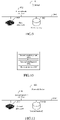
- FIG. 1 shows an exemplary car networking system architecture provided by an embodiment of the present application, and the architecture may be applied to the technical solution in the embodiments of the present application.
- the system architecture may be based on various communication systems, such as a car networking system based on LTE-D2D.
- LTE-D2D Long Term Evolution-D2D
- the car networking system uses direct terminal-to-terminal communication, so it has a higher spectrum efficiency and lower transmission delay.
- a transmission resource of the vehicle terminal 1 is allocated by a base station, such as an evolved NodeB (eNB) in LTE and/or a 5G base station (gNB) in new radio (NR).
- eNB evolved NodeB
- gNB 5G base station
- NR new radio
- the base station described above sends a control message for indicating a grant resource to the vehicle terminal 1 through downlink (DL) shown by the dashed line; and then the vehicle terminal 1 transmits, over SL indicated by the solid arrow, data to a vehicle terminal 2 according to the resource allocated by the base station.
- DL downlink
- gNB 5G base station
- NR new radio
- the communication system on which the car networking system shown in FIG. 1 is based may be a global system of mobile communication (GSM) system, a code division multiple access (CDMA) system, a wideband code division multiple access (WCDMA) system, general packet radio service (GPRS), an LTE system, an LTE frequency division duplex (FDD) system, an LTE time division duplex (TDD), a universal mobile telecommunication system (UMTS), a worldwide interoperability for microwave access (WiMAX) communication system, a new radio (NR) or future 5G system, and the like.
- GSM global system of mobile communication
- CDMA code division multiple access
- WCDMA wideband code division multiple access
- GPRS general packet radio service
- LTE system LTE frequency division duplex
- FDD frequency division duplex
- TDD LTE time division duplex
- UMTS universal mobile telecommunication system
- WiMAX worldwide interoperability for microwave access
- NR new radio
- the vehicle terminal in the embodiments of the present application may also be called a terminal, a terminal device, and the like, which refers to a vehicle terminal device, and may also be a terminal device in a future 5G network or a future evolved public land mobile communication network (PLMN), however the embodiments of the present application are not limited thereto.
- a terminal a terminal device, and the like, which refers to a vehicle terminal device, and may also be a terminal device in a future 5G network or a future evolved public land mobile communication network (PLMN), however the embodiments of the present application are not limited thereto.
- PLMN public land mobile communication network
- the present application describes various embodiments in conjunction with a network device.
- the network device in the embodiments of the present application may be a device used to communicate with a terminal device.
- the network device may be a base transceiver station (BTS) in GSM or CDMA, a NodeB (NB) in a WCDMA system, an evolutional NodeB (eNB or eNodeB) in an LTE system, a wireless controller in a cloud radio access network (CRAN) scenario, a relay station, an access point, a vehicle device, a wearable device, a network device in the future 5G network, a network device in the future evolved PLMN network and the like, however the embodiments of the present application are not limited thereto.
- BTS base transceiver station
- NB NodeB
- eNB or eNodeB evolutional NodeB
- CRAN cloud radio access network
- the two base stations may control a PC5 interface of the vehicle terminal.
- the control refers to not only that an LTE-based PC5 interface of the vehicle terminal is controlled, but also that an NR-based PC5 interface of the vehicle terminal is controlled.
- it is necessary to coordinate a communication capability of the PC5 interface of the vehicle terminal for different scenarios of network deployment.
- the terminal in the embodiments of the present application may be a vehicle terminal, a handheld terminal, a personal digital assistant (PDA), a wearable terminal and the like
- the network in the embodiments of the present application may include an NR network, an LTE network and the like.
- FIG. 2 shows a method for information transmission provided by an embodiment of the present application.
- the method may be applied to a terminal in a D2D under an inter-RAT system, or even to a vehicle terminal in a V2X technology under the inter-RAT system.
- the method may include: S201, sending a first message to a network device, wherein the first message includes communication capability information of the terminal on a PC5 interface.
- the network device may coordinate the communication capability of the PC5 interface of the terminal according to the communication capability information of the PC5 interface reported by the terminal, so that the communication capability of the PC5 interface of the terminal can be coordinated under the coverage with different types of networks.
- the communication capability information of the terminal on the PC5 interface includes: a combination of a communication capability of the PC5 interface supported by the terminal under control of a first network device and the communication capability of the PC5 interface supported by the terminal under control of a second network device, wherein the first network device and the second network device are coupled by a dual connectivity architecture.
- first network device and the second network device are synchronized with each other. In another implementation, the first network device and the second network device are not synchronized with each other.
- access types of the first network device and the second network device are both LTE. In another implementation, access types of the first network device and the second network device are both NR. In yet another implementation, an access type of the first network device is LTE, and the access type of the second network device is NR
- the communication capability information may be used to describe data transmission and communication capabilities of the PC5 interface, and the capability can be reflected or characterized by various parameter values, for example, the number of transmitting chains Tchains that the PC5 interface may provide and the number of receiving chains Rchains that the PC5 interface may provide. It may be understood that, other parameter values than the number of chains that may reflect or characterize the data transmission and communication capabilities of the PC5 interface may be regarded as the communication capability information described in the embodiments of the present application.
- the communication capability information of the terminal on the PC5 interface included in the first message includes: first indication information for indicating an access type of the PC5 interface, and/or second indication information for indicating the access type of a Uu interface which can control the PC5 interface.
- the first indication information for indicating the access type of the PC5 interface may indicate the access type of the PC5 interface, for example, a PC5 interface LTE-PC5 with an LTE access type, or a PC5 interface NR-PC5 with an NR access type.
- the network device being a base station such as eNB or gNB
- the Uu interface is usually used for data transmission between the terminal and the base station. Therefore, the access types of the Uu interface are different according to the different access types reflected by the base station.
- the second indication information for indicating the access type of the Uu interface which can control the PC5 interface may indicate the access type of the Uu interface which can control the PC5 interface, for example, a Uu interface LTE-Uu with the LTE access type or a Uu interface NR-Uu with the NR access type.
- the network device may include at least two access types of network devices, which may be referred to as a first network device and a second network device in the embodiment. Due to the different access types of the two network devices, the communication capability information of the terminal on the PC5 interface that they need to obtain is also correspondingly different. Then, for the first message described in S201, the communication capability information of the terminal on the PC5 interface included in the first message may be carried through different types of signaling. In the embodiment, referring to the communication capability information of the terminal on the PC5 interface included in the first message shown in FIG. 3 and by taking three types of signaling as an example, in the communication capability information of the terminal on the PC5 interface included in the first message:
- representation of a communication combination of the PC5 interface for an LTE and LTE dual connectivity is carried in first signaling.
- representation of a communication capability combination of the PC5 interface for an LTE and LTE dual connectivity is carried in third signaling.
- representation of a communication capability combination of the PC5 interface for an LTE and LTE dual connectivity is carried in fourth signaling.
- representation of a communication capability combination of the PC5 interface for an NR and NR dual connectivity is carried in second signaling.
- representation of a communication capability combination of the PC5 interface for an NR and NR dual connectivity is carried in third signaling.
- representation of a communication capability combination of the PC5 interface for an NR and NR dual connectivity is carried in fifth signaling.
- the first signaling is used to characterize the communication capability of the PC5 interface for LTE
- the communication capability information related to LTE which may specifically include at least one or more of:
- the second signaling is used to characterize the communication capability of the PC5 interface for new radio NR
- what included in the second signaling is the communication capability information related to NR, which may specifically include at least one or more of:
- the third signaling is used to characterize the communication capability of the PC5 interface for an LTE and NR dual connectivity DC, what included in the third signaling is the communication capability information related to both the LTE and NR, which may specifically include a combination of the communication capability information of at least two of:
- the third signaling may further include identification information for indicating the communication capability, and the identification information of the communication capability indicates the communication capability information defined in the first signaling and/or the second signaling.
- the first signaling includes the communication capability information of the PC5 interface LTE-PC5 controlled by the LTE-Uu interface and with the access type of LTE and the identifier of the communication capability information is A
- the second signaling includes the communication capability information of the PC5 interface NR-PC5 controlled by the NR-Uu interface and with the access type of NR and the identifier of the communication capability information is B
- the third signaling also includes the communication capability information of the PC5 interface LTE-PC5 controlled by the LTE-Uu interface and with the access type of LTE and the communication capability information of the PC5 interface NR-PC5 controlled by the NR-Uu interface and with the access type of NR
- the third signaling may only include the identifiers corresponding to the two pieces of communication capability information, i.e., A and B. Therefore, when an opposite end to the terminal receives the third signaling, it can still determine the respectively indicated communication capability information according to the two identifiers A and B.
- the third signaling further includes: identification information for indicating that the terminal device supports a dual connectivity architecture of LTE-Uu and NR-Uu synchronized with each other.
- the third signaling further includes: identification information for indicating that the terminal device supports a dual connectivity architecture of LTE-Uu and NR-Uu not synchronized with each other.
- a communication capability of the PC5 interface for an LTE and LTE dual connectivity includes: identification information for indicating that the terminal device supports a dual connectivity architecture of LTE-Uu and LTE-Uu synchronized with each other.
- a communication capability of the PC5 interface for an LTE and LTE dual connectivity includes: identification information for indicating that the terminal device supports a dual connectivity architecture of LTE-Uu and LTE-Uu not synchronized with each other.
- a communication capability of the PC5 interface for an NR and NR dual connectivity includes: identification information for indicating that the terminal device supports a dual connectivity architecture of NR-Uu and NR-Uu synchronized with each other.
- a communication capability of the PC5 interface for an NR and NR dual connectivity includes: identification information for indicating that the terminal device supports a dual connectivity architecture of NR-Uu and NR-Uu not synchronized with each other.
- the terminal after distinguishing the communication capability information of the terminal on the PC5 interface included in the first message through the above three types of signaling, the terminal reports the same to the network device.
- the terminal since the terminal is in the inter-RAT system and thus will access at least two network devices, the terminal needs to report the communication capability information about the PC5 interface to the at least two network devices through the first message.
- the sending the first message to the network device includes: sending the first signaling, the second signaling, and the third signaling to one target network device among at least two network devices.
- the target network device may determine, according to the access type and requirement thereof, the communication capability of the PC5 interface used by the target network device itself; then determine, according to the communication capability of the PC5 interface used by the target network device itself, the communication capability of the PC5 interface used by other network devices than the target network device from the communication capability information included in the above three types of signaling, and send the same to the other network devices. This allows the other network devices to determine the communication capability of the PC5 interface used by themselves.
- the embodiment takes two network devices as an example, and the two network devices are a first network device with the access type of LTE and a second device with the access type of NR respectively.
- the sending the first message to the network device includes:
- each network device may determine the communication capability of the PC5 interface used by each network device itself according to the requirement thereof.
- the sending the first message to the network device may be implemented in the following two ways:
- the method further includes: receiving a second message sent by the network device, wherein the second message is configured to indicate a communication capability of the PC5 interface used by the terminal under control of the network device.
- a third message sent by the network device is received, wherein the third message is configured to indicate a communication capability of the PC5 interface controlled by the network device.
- the communication capability of the PC5 interface controlled by the network device includes a radio access type (RAT) of the PC5 interface controlled by the network device.
- RAT radio access type
- the terminal determines, according to the third message, whether to report the communication capability of the PC5 interface of at least one of:
- the network device learns the communication capability of the terminal on the PC5 interface by receiving the first message, after the network device determines the communication capability of the PC5 interface used by the terminal under the control of the network device based on the first message, the network device needs to provide feedback to the terminal, and the second message is a specific form of the feedback.
- the terminal may determine, according to the communication capability of the PC5 interface used under the control of the network device, the communication capability of the PC5 interface reserved and used by the terminal itself, and accordingly, the method further includes: determining the communication capability of the PC5 interface used by the terminal, according to the communication capability of the PC5 interface used by the terminal under the control of the network device indicated in the second message.
- the terminal may reserve in advance the communication capability of the PC5 interface used by itself, and accordingly, the method further includes: determining, by the terminal itself, the communication capability of the PC5 interface used by the terminal, before sending the first message to the network device.
- the communication capability information of the PC5 interface used by the terminal described above includes:
- the communication capability of the PC5 interface used by the terminal outside the control of the network device is the communication capability of the PC5 interface that is not included in the reported information.
- the terminal communicates with the network device
- the communication of the PC5 interface under the control of the network device conflicts with the communication of the PC5 interface used by the terminal outside the control of the network device
- the communication of the PC5 interface under the control of the network device has a higher priority. Therefore, a communication priority of the PC5 interface under the control of the network device is higher than that of the PC5 interface used by the terminal outside the control of the network device.
- the network device may determine a communication capability of the PC5 interface used by the terminal according to the first message, and thus when the terminal is in a coverage with different networks, it can coordinate the communication capability of the terminal PC5 interface.
- FIG. 4 shows a method for information transmission provided by an embodiment of the present application.
- the method may be applied to a D2D or V2X technology to achieve one of at least two network devices in an inter-RAT system, and the method may include:
- the network device After the network device receives the first message, it determines the communication capability of the PC5 interface used by the terminal under control of the network device according to the communication capability information of the terminal on the PC5 interface included in the first message, and provides feedback to the terminal through the second message, so that the terminal may reserve the communication capability used by the terminal itself.
- the process of reserving the communication capability used by the terminal itself please refer to the foregoing embodiment, which will not be repeated herein.
- the method for information transmission described in the embodiment realizes the capability coordination of the PC5 interface.
- the communication capability information of the terminal on the PC5 interface included in the first message may be carried through different types of signaling. Therefore, in a possible implementation, the first message may include first signaling, second signaling, and third signaling.
- first signaling By taking these three types of signaling as an example, in the communication capability information of the terminal on the PC5 interface included in the first message, representation of the communication capability of the PC5 interface for long term evolution LTE is carried in the first signaling, the representation of the communication capability of the PC5 interface for new radio NR is carried in the second signaling, and the representation of the communication capability of the PC5 interface for an LTE and NR dual connectivity DC is carried in the third signaling.
- the access type of the network device described in the embodiment may be LTE or NR. Therefore, for the technical solution shown in FIG. 4 , in another possible implementation, for an access type of the network device being LTE: the first message includes first signaling and third signaling, wherein representation of the communication capability of the PC5 interface for long term evolution LTE is carried in the first signaling, and the representation of the communication capability of the PC5 interface for an LTE and NR dual connectivity DC is carried in the third signaling.
- the first message includes second signaling and third signaling, wherein representation of the communication capability of the PC5 interface for new radio NR is carried in the second signaling, and the representation of the communication capability of the PC5 interface for an LTE and NR dual connectivity DC is carried in the third signaling.
- the network device described in the embodiment will receive the communication capability information of the PC5 interface related to other network devices than the network device, then the network device, after determining the communication capability of the PC5 interface required for control thereof, may further indicate the communication capability of the PC5 interface to other network devices. Therefore, based on the above two implementations, after receiving the first message sent by the terminal, the method further includes: sending a first indication message to an other network device than the network device, wherein the first indication message is configured to indicate the communication capability information of the PC5 interface which can be used by the terminal under control of the other network device.
- the first indication message is configured to indicate, to the other network device, the communication capability information of the PC5 interface which can be used by the terminal under control of the other network device, in a case where the network device and the other network device are coupled in a dual connectivity DC architecture.
- NE1 when the first message received by NE1 includes first signaling, second signaling, and third signaling, NE1 may receive the communication capability of the PC5 interface that can be used by other network devices than NE1, such as NE2 with the access type of NR. Therefore, NE1 may send first indication information to NE2 to indicate, to NE2, the communication capability information of the PC5 interface that can be used by NE2 in a case where NE1 and NE2 are coupled in a dual connectivity DC architecture.
- the third signaling may also include the communication capability of the PC5 interface that can be used by NE2. Therefore, NE1 may also send the first indication message to NE2, to indicate, to NE2, the communication capability information of the PC5 interface that can be used by NE2 in a case where NE1 and NE2 are coupled in a dual connectivity DC architecture. It may be understood that when the access type of NE1 is NR and the access type of NE2 is LTE, a similar implementation may be made with reference to the above examples, which will not be repeated in the embodiment.
- the network device described in the embodiment has received the third signaling, and therefore may receive the communication capability of the PC5 interface that can be used potentially by other network devices. Then, it is set that the network device described in the embodiment does not receive the third signaling, that is, other network devices receive the communication capability of the PC5 interface that can be potentially used by the network device described in the embodiment.
- the first message includes first signaling, wherein representation of the communication capability of the PC5 interface for long term evolution LTE is carried in the first signaling.
- the first message includes second signaling, wherein representation of the communication capability of the PC5 interface for new radio NR is carried in the second signaling.
- the method further includes: receiving a second indication message sent by an other network device than the network device, wherein the second indication message is configured to indicate, to the network device, the communication capability information of the PC5 interface which can be used by the terminal under the control of the network device, in a case where the network device and the other network device are coupled in a dual connectivity DC architecture.
- the first message includes first signaling, wherein representation of the communication capability of the PC5 interface for long term evolution LTE is carried in the first signaling.
- the method further includes: determining, from the first signaling, the communication capability of the PC5 interface used by the terminal under the control of the network device, according to the access type of the network device being the LTE, wherein the first signaling includes at least one or more of: the communication capability information of the PC5 interface LTE-PC5 controlled by an LTE-Uu interface and with the access type of the LTE; the communication capability information of the PC5 interface LTE-PC5 controlled by an NR-Uu interface and with the access type of the LTE; and the communication capability information of the PC5 interface NR-PC5 controlled by the LTE-Uu interface and with the access type of NR
- the communication capability of the PC5 interface used by the terminal under the control of the network device may be described by the communication capability information of the PC5 interface LTE-PC5 controlled by the LTE-Uu interface and with the access type of the LTE included in the first signaling.
- the first message includes second signaling, wherein representation of the communication capability of the PC5 interface for new radio NR is carried in the second signaling.
- the method further includes: determining, from the second signaling, the communication capability of the PC5 interface used by the terminal under the control of the network device, according to the access type of the network device being the NR, wherein the second signaling includes at least one or more of: the communication capability information of the PC5 interface NR-PC5 controlled by an NR-Uu interface and with the access type of the NR; the communication capability information of the PC5 interface LTE-PC5 controlled by the NR-Uu interface and with the access type of LTE; and the communication capability information of the PC5 interface NR-PC5 controlled by an LTE-Uu interface and with the access type of the NR.
- the communication capability of the PC5 interface used by the terminal under the control of the network device may be described by the communication capability information of the PC5 interface NR-PC5 controlled by the NR-Uu interface and with the access type of the NR included in the second signaling.
- an embodiment of the present application provides a method for information transmission, which may be applied to a D2D or V2X technology to implement one network device (a first network device) of at least two network devices (for example, the first network device and a second network device) in an inter-RAT system, and the method may include: sending, by a first network device, a first message to a second network device, wherein the first message is configured to indicate communication capability information of a PC5 interface which can be used by a terminal. Further, the first message is configured to indicate the communication capability information of the PC5 interface that can be used by the terminal under the control of the second network device.
- first message in the embodiment may be understood with reference to the description in the first and second embodiments, and the description of the first message in the first and second embodiments may be adaptively included in the embodiment.
- the first message includes first signaling, second signaling, and third signaling, wherein representation of the communication capability of the PC5 interface for LTE is carried in the first signaling, the representation of the communication capability of the PC5 interface for NR is carried in the second signaling, and the representation of the communication capability of the PC5 interface for an LTE and NR dual connectivity DC is carried in the third signaling.
- the first message includes first signaling and third signaling, wherein representation of the communication capability of the PC5 interface for long term evolution LTE is carried in the first signaling, and the representation of the communication capability of the PC5 interface for an LTE and NR dual connectivity DC is carried in the third signaling.
- the first message includes second signaling and third signaling, wherein representation of the communication capability of the PC5 interface for new radio NR is carried in the second signaling, and the representation of the communication capability of the PC5 interface for an LTE and NR dual connectivity DC is carried in the third signaling.
- the first message includes first signaling, wherein representation of the communication capability of the PC5 interface for long term evolution LTE is carried in the first signaling.
- the first message includes second signaling, wherein representation of the communication capability of the PC5 interface for new radio NR is carried in the second signaling.
- the method further includes: sending, by the first network device, PC5 configuration information of the terminal under the first network device to the second network device.
- the PC5 configuration information includes resource configuration information.
- the method further includes: sending, by the first network device, PC5 communication demand information reported by the terminal under the first network device to the second network device.
- the PC5 communication demand information includes sidelink UE information.
- the first network device and the second network device are coupled in a dual connectivity DC architecture.
- the first network device send the first message to the second network device.
- an embodiment of the present application provides a method for information transmission, which may be applied to a D2D or V2X technology to implement one network device (a second network device) of at least two network devices (for example, a first network device and the second network device) in an inter-RAT system, and the method may include:
- the first message is configured to indicate communication capability information of a PC5 interface which can be used by a terminal. Further, the first message is configured to indicate the communication capability information of the PC5 interface that can be used by the terminal under the control of the second network device.
- first message in the embodiment may be understood with reference to the description in the first, second and third embodiments, and the description of the first message in the first, second and third embodiments may be adaptively included in the embodiment.
- the first message includes first signaling, wherein representation of the communication capability of the PC5 interface for LTE is carried in the first signaling.
- the second network device determines the communication capability of the PC5 interface used by the terminal under the control of the second network device from the first signaling, according to the access type of the second network device being the LTE, wherein the first signaling includes at least one or more of: the communication capability information of the PC5 interface LTE-PC5 controlled by an LTE-Uu interface and with the access type of the LTE; the communication capability information of the PC5 interface LTE-PC5 controlled by an NR-Uu interface and with the access type of the LTE; and the communication capability information of the PC5 interface NR-PC5 controlled by the LTE-Uu interface and with the access type of NR
- the first message includes second signaling, wherein representation of the communication capability of the PC5 interface for new radio NR is carried in the second signaling.
- the second network device determines the communication capability of the PC5 interface used by the terminal under the control of the second network device from the second signaling, according to the access type of the second network device being the NR, wherein the second signaling includes at least one or more of: the communication capability information of the PC5 interface NR-PC5 controlled by an NR-Uu interface and with the access type of the NR; the communication capability information of the PC5 interface LTE-PC5 controlled by the NR-Uu interface and with the access type of LTE; and the communication capability information of the PC5 interface NR-PC5 controlled by an LTE-Uu interface and with the access type of the NR
- the first network device and the second network device are coupled in a dual connectivity DC architecture.
- the first network device sends the first message to the second network device.
- a vehicle terminal A is under an inter-RAT system, and thus the vehicle terminal A accesses a network device 1 and a network device 2 simultaneously.
- the access type of the network device 1 is set to be LTE
- the access type of the network device 2 is set to be NR. It may be understood that those skilled in the art may similarly apply the technical solution of the embodiment to the case where the access type of the network device 1 is NR and the access type of the network device 2 is LTE, which will not be repeated herein.
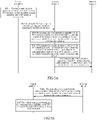
- FIG. 5A shows a specific implementation process of a method for information transmission provided by an embodiment of the present application, and referring to FIG. 5 , the process may include the following steps.
- the vehicle terminal A carries communication capability information thereof about an PC5 interface in first signaling, second signaling, and third signaling respectively.
- the communication capability information of the vehicle terminal A on the PC5 interface includes: first indication information, configured to indicate an access type of the PC5 interface; and/or second indication information, configured to indicate the access type of a Uu interface that can control the PC5 interface. It may be understood that the specific implementation of the first indication information and the second indication information may refer to the corresponding description in the first embodiment, which will not be repeated here.
- first signaling, the second signaling, and the third signaling may be the specific implementation of report information needed to be sent by the terminal to the network device.
- representation of a communication capability of the PC5 interface for long term evolution LTE is carried in first signaling, as shown in the slash-filled box in FIG 3 ; representation of a communication capability of the PC5 interface for new radio NR is carried in second signaling, as shown in the dot-filled box in FIG. 3 ; and representation of a communication capability of the PC5 interface for an LTE and NR dual connectivity DC is carried in third signaling, as shown in the cross-line-filled box in FIG. 3 .
- the content included in the above three types of signaling may also refer to the description of the corresponding part in the first embodiment, which will not be repeated here.
- the vehicle terminal A sends the first signaling, the second signaling, and the third signaling to the network device 1.
- the network device 1 determines the communication capability of the PC5 interface used by the vehicle terminal A under the control of the network device 1 according to the access type of the network device 1 itself and the first signaling, the second signaling, and the third signaling.
- the network device 1 determines the communication capability of the PC5 interface used by the vehicle terminal A under the control of the network device 2 according to the communication capability of the PC5 interface used by the vehicle terminal A under the control of the network device 1.
- the network device 1 sends the communication capability of the PC5 interface used by vehicle terminal A under the control of the network device 2 to the network device 2.
- the network device 1 may directly determine the communication capability of the PC5 interface used by the vehicle terminal A under the control of the network device 2 and send the same to the network device 2.
- what the network device 1 determines and sends to the network device 2 may be the communication capability of the PC5 interface that can be used potentially by the vehicle terminal A under the control of the network device 2.
- the network device 2 may determine the access type of the network device 2 itself, and determine the communication capability of the PC5 interface actually used by the vehicle terminal A under the control of the network device 2.
- the network device 1 and the network device 2 may be regarded as having a master-slave relationship, that is, the network device 1 may be regarded as a master network device, and the network device 2 may be considered as a slave network device.
- both the network device 1 and the network device 2 After both the network device 1 and the network device 2 obtain the communication capability of the PC5 interface used by the vehicle terminal A under the control thereof, they provide feedback to the vehicle terminal A. Therefore, referring to FIG. 5B , the specific example will continue to the following steps.
- the network device feeds back the communication capability of the PC5 interface used by the vehicle terminal A under the control of the network device to the vehicle terminal A.
- the vehicle terminal A determines the communication capability of the PC5 interface to be reserved for use according to the feedback.
- the network device may be the aforementioned network device 1 or 2.
- the vehicle terminal A may determine the communication capability of the PC5 interface reserved for use by the vehicle terminal A itself according to the feedback.
- each device in the architecture shown in FIG. 1 knows or learns the communication capability of the PC5 interface used by itself, so as to realize the coordination of the communication capability of the PC5 interface of the terminal under the coverage with different network types.
- the vehicle terminal A may reserve the communication capability of the PC5 interface used by itself in advance. It should be noted that as for the specific description of that the vehicle terminal A reserves the communication capability of the PC5 interface to be used, please refer to the corresponding description in the first embodiment, which will not be repeated here.
- FIG. 6 shows a specific implementation process of a method for information transmission provided by an embodiment of the present application, and referring to FIG. 6 , the process may include the following steps.
- the vehicle terminal A carries communication capability information thereof about a PC5 interface in first signaling, second signaling, and third signaling, respectively.
- S601 may refer to the specific description of S501 in the foregoing specific example, and details thereof are not repeated here.
- the vehicle terminal A sends the first signaling and the third signaling to the network device 1.
- the vehicle terminal A sends the second signaling to the network device 2.
- each network device may obtain the communication capability of the PC5 interface used by itself according to the signaling received, so as to realize the coordination of the communication capability of the PC5 interface of the terminal under the coverage with different network types.
- the network device 1 sends an indication message to the network device 2 according to the third signaling.
- the indication message may indicate, to the network device 2, the communication capabilities of the PC5 interface that can be used by the vehicle terminal A under the control of the network device 2 when the network device 1 and the network device 2 are coupled in the DC architecture. It may be understood that in a possible implementation process, the indication message may be the communication capability of the PC5 interface used by the vehicle terminal A under the control of the network device 2 that the network device 1 directly determines and sends to the network device 2. In addition, in another possible implementation process, the indication message may be the communication capability of the PC5 interface that can be used potentially by the vehicle terminal A under the control of the network device 2, which may be determined and sent to the network device 2 by the network device 1. After receiving the communication capability of the PC5 interface that can be used potentially, the network device 2 may determine the communication capability of the PC5 interface actually used by the vehicle terminal A under the control of the network device 2 according to the access type of the network device 2 itself.
- the network device 2 may send the indication message to the network device 1 according to the third signaling. It may be understood that, the indication message is configured to indicate, to the network device 1, the communication capability of the PC5 interface that can be used by the vehicle terminal A under the control of the network device 1 when the network device 1 and the network device 2 are coupled in the DC architecture.
- each network device since each network device receives the signaling sent by the vehicle terminal A, each network device may obtain the communication capability of the PC5 interface used by the vehicle terminal A under the control thereof according to the signaling received by itself. Then, each network device may also feed back the communication capability of the PC5 interface used by the vehicle terminal A under the control thereof to the vehicle terminal A, so that the vehicle terminal A may determine the communication capability of the PC5 interface to be reserved for use by the terminal device A according to the fed back communication capability of the PC5 interface used by each network device itself.
- the specific description of the process may refer to S506 and S507 described in the foregoing specific example I, which will not be repeated here.
- FIG. 7 shows a schematic composition diagram of a terminal 70 provided by an embodiment of the present application, and referring to FIG. 7 , the terminal may include: a first sending part 701, configured to send a first message to a network device, wherein the first message includes communication capability information of the terminal on a PC5 interface.
- the communication capability information of the terminal on the PC5 interface includes: a combination of a communication capability of the PC5 interface supported by the terminal under control of a first network device and the communication capability of the PC5 interface supported by the terminal under control of a second network device, wherein the first network device and the second network device are coupled by a dual connectivity architecture.
- the first network device and the second network device are synchronized with each other.
- the first network device and the second network device are not synchronized with each other.
- access types of the first network device and the second network device are both LTE.
- access types of the first network device and the second network device are both NR
- an access type of the first network device is LTE
- the access type of the second network device is NR
- the communication capability information of the terminal on the PC5 interface includes: first indication information for indicating an access type of the PC5 interface, and/or second indication information for indicating the access type of a Uu interface which can control the PC5 interface.
- representation of a communication combination of the PC5 interface for an LTE and LTE dual connectivity is carried in first signaling.
- representation of a communication capability combination of the PC5 interface for an LTE and LTE dual connectivity is carried in third signaling.
- representation of a communication capability combination of the PC5 interface for an LTE and LTE dual connectivity is carried in fourth signaling.
- representation of a communication capability combination of the PC5 interface for an NR and NR dual connectivity is carried in second signaling.
- representation of a communication capability combination of the PC5 interface for an NR and NR dual connectivity is carried in third signaling.
- representation of a communication capability combination of the PC5 interface for an NR and NR dual connectivity is carried in fifth signaling.
- the first signaling includes at least one or more of:
- the second signaling includes at least one or more of:
- the third signaling includes a combination of the communication capability information of at least two of:
- the third signaling further includes identification information for indicating the communication capability, and the identification information of the communication capability indicates the communication capability information defined in the first signaling and/or the second signaling.
- the third signaling further includes identification information for indicating that the terminal device supports a dual connectivity architecture of LTE-Uu and NR-Uu synchronized with each other.
- the third signaling further includes identification information for indicating that the terminal device supports a dual connectivity architecture of LTE-Uu and NR-Uu not synchronized with each other.
- a communication capability of the PC5 interface for an LTE and LTE dual connectivity includes: identification information for indicating that the terminal device supports a dual connectivity architecture of LTE-Uu and LTE-Uu synchronized with each other.
- a communication capability of the PC5 interface for an LTE and LTE dual connectivity includes: identification information for indicating that the terminal device supports a dual connectivity architecture of LTE-Uu and LTE-Uu not synchronized with each other.
- a communication capability of the PC5 interface for an NR and NR dual connectivity includes: identification information for indicating that the terminal device supports a dual connectivity architecture of NR-Uu and NR-Uu synchronized with each other.
- a communication capability of the PC5 interface for an NR and NR dual connectivity includes: identification information for indicating that the terminal device supports a dual connectivity architecture of NR-Uu and NR-Uu not synchronized with each other.
- the first sending part 701 is configured to send the first signaling, the second signaling, and the third signaling to one target network device among at least two network devices.
- the first sending part 701 is configured to:
- the first sending part 701 is configured to send a communication combination of the PC5 interface for an LTE and LTE dual connectivity to a first network device and/or a second network device, wherein the first network device and the second network device form an LTE and LTE dual connectivity architecture.
- the first sending part 701 is configured to send a communication combination of the PC5 interface for an NR and NR dual connectivity to a first network device and/or a second network device, wherein the first network device and the second network device form an NR and NR dual connectivity architecture.
- the terminal 70 further includes: a first receiving part 702, configured to receive a second message sent by the network device, wherein the second message is configured to indicate a communication capability of the PC5 interface used by the terminal under control of the network device.
- the terminal 70 further includes: a first receiving part 702, configured to receive a third message sent by the network device, wherein the third message is configured to indicate a communication capability of the PC5 interface controlled by the network device. Further, the communication capability of the PC5 interface controlled by the network device includes an RAT of the PC5 interface controlled by the network device.
- the terminal 70 further includes: a determining part (not shown), configured to determine whether to report the communication capability of the PC5 interface of at least one of the followings according to the third message:
- the terminal 70 further includes: a first determining part 703, configured to determine the communication capability of the PC5 interface used by the terminal, according to the communication capability of the PC5 interface used by the terminal under the control of the network device indicated in the second message.
- the terminal 70 further includes: a second determining part 704, configured to determine by itself the communication capability of the PC5 interface used by the terminal, before the first sending part 701 sends the first message to the network device.
- the communication capability information of the PC5 interface used by the terminal includes:
- the communication capability of the PC5 interface that is not included in the report information is the communication capability of the PC5 interface used by the terminal outside the control of the network device.
- a communication priority of the PC5 interface under the control of the network device is higher than that of the PC5 interface used by the terminal outside the control of the network device.
- the "part” may be a part of a circuit, a part of a processor, a part of a program or software and the like, however, it may also be a unit, a module, or a non-modularized one.
- various components in the embodiment may be integrated into one processing unit, or respective units may be separated from each other physically, or two or more units may be integrated into one unit.
- the above integrated unit may be implemented in the form of hardware or software functional module.
- the integrated unit is implemented in the form of a software functional module and is not sold or used as an independent product, it may be stored in a computer readable storage medium.
- the computer software product is stored in a storage medium and includes several instructions to enable a computer device (which may a personal computer, a server, a network device or the like) or a processor to execute all or part of the steps of the method described in the embodiment.
- the aforementioned storage media includes: a U disk, a mobile hard disk, a read only memory, a random access memory (RAM), a magnetic disk, an optical disk, or other media that can store program codes.
- the embodiment provides a computer storage medium storing a program for information transmission that, when being executed by at least one processor, implements the step in the method for information transmission according to the above first embodiment.
- FIG. 9 shows a specific hardware structure of a terminal 70 provided by an embodiment of the present application, and referring to FIG. 9 , the terminal 70 may include: a first network interface 901, a first memory 902, and a first processor 903, and respective components are coupled together through a bus system 904.
- the bus system 904 is used to implement connection and communication between these components.
- the bus system 904 includes a data bus as well as a power bus, a control bus, and a status signal bus. However, for clarity of description, various buses are marked as the bus system 904 in FIG. 9 .
- the first network interface 901 is configured to send and receive a signal in an information receiving and sending process with other external network elements.
- the first memory 902 is configured to store a computer program that can be run on the first processor 903.
- the first processor 903 is configured to execute the following step when running the computer program: sending a first message to a network device, wherein the first message includes communication capability information of the terminal on a PC5 interface.
- the first memory 902 in the embodiment of the present application may be a volatile memory or a non-volatile memory, or may include both the volatile and non-volatile memories.
- the non-volatile memory may be a read-only memory (ROM), a programmable read-only memory (PROM), an erasable programmable read-only memory (EPROM), an electrically erasable programmable read-only memory (EEPROM) or flash memory.
- the volatile memory may be a random access memory (RAM), which is used as an external cache.
- RAM random access memory
- DRAM dynamic random access memory
- SDRAM synchronous dynamic random access memory
- DDRSDRAM double data rate SDRAM
- ESDRAM enhanced synchronous dynamic random access memory
- SLDRAM synchlink dynamic random access memory
- DRRAM direct rambus RAM
- the first processor 903 may be an integrated circuit chip with signal processing capability. In the implementation process, the steps of the foregoing method may be achieved by instructions in the form of software or an integrated logic circuit as hardware in the first processor 903.
- the above first processor 903 may be a general-purpose processor, a digital signal processor (DSP), an application specific integrated circuit (ASIC), a field programmable gate array (FPGA) or other programmable logic devices, a discrete gate or transistor logic device, and a discrete hardware component.
- DSP digital signal processor
- ASIC application specific integrated circuit
- FPGA field programmable gate array
- the respective methods, steps, and logical block diagrams disclosed in the embodiment of the present application may be implemented or executed.
- the general-purpose processor may be a microprocessor or the processor may also be any conventional processor or the like.
- the steps of the method disclosed in the embodiment of the present application may be directly embodied as being executed and achieved by a hardware decoding processor, or executed and completed by a combination of hardware and software modules in the decoding processor.
- the software module may be located in a mature storage medium in the field, such as a random access memory, a flash memory, a read-only memory, a programmable read-only memory, or an electrically erasable programmable memory, an a register.
- the storage medium is located in the first memory 902, and the first processor 903 reads the information in the first memory 902, and achieves the steps of the foregoing method in combination with the hardware thereof.
- a processing unit may be implemented in one or more of an application specific integrated circuit (ASIC), digital signal processing (DSP), a digital signal processing device (DSPD), a programmable logic device (PLD), a field-programmable gate array (FPGA), a general-purpose processor, a controller, a microcontroller, a microprocessor, others electronic units for performing the functions described in the application or a combination thereof.
- ASIC application specific integrated circuit
- DSP digital signal processing
- DSPD digital signal processing device
- PLD programmable logic device
- FPGA field-programmable gate array
- the technology described herein may be implemented by a module (for example, a procedure, a function and the like) that performs the function described herein.
- a software code may be stored in a memory and executed by a processor.
- the memory may be implemented in the processor or external to the processor.
- the first processor 903 in the terminal 90 is also configured to, when running a computer program, execute the step in the method described in the foregoing first embodiment, which will not be repeated here.
- FIG. 10 shows the composition of a network device 100 provided by an embodiment of the present application, and referring to FIG. 10 , the network device 100 includes a second receiving part 1001 and a second sending part 1002.
- the second receiving part 1001 is configured to receiving a first message sent by a terminal, wherein the first message includes communication capability information of the terminal on a PC5 interface.
- the second sending part 1002 is configured to send a second message to the terminal, wherein the second message is configured to indicate a communication capability of the PC5 interface used by the terminal under control of the network device.
- the first message includes first signaling, second signaling, and third signaling, wherein representation of the communication capability of the PC5 interface for long term evolution LTE is carried in the first signaling, the representation of the communication capability of the PC5 interface for new radio NR is carried in the second signaling, and the representation of the communication capability of the PC5 interface for an LTE and NR dual connectivity DC is carried in the third signaling.
- the first message includes first signaling and third signaling, wherein representation of the communication capability of the PC5 interface for long term evolution LTE is carried in the first signaling, and the representation of the communication capability of the PC5 interface for an LTE and NR dual connectivity DC is carried in the third signaling.
- the first message includes second signaling and third signaling, wherein representation of the communication capability of the PC5 interface for new radio NR is carried in the second signaling, and the representation of the communication capability of the PC5 interface for an LTE and NR dual connectivity DC is carried in the third signaling.
- the second sending part 1002 is further configured to: send a first indication message to an other network device than the network device after the second receiving part 1001 receives the first message sent by the terminal, wherein the first indication message is configured to indicate, to the other network device, the communication capability information of the PC5 interface which can be used by the terminal under control of the other network device, in a case where the network device and the other network device are coupled in a dual connectivity DC architecture.
- the first message includes first signaling, wherein representation of the communication capability of the PC5 interface for long term evolution LTE is carried in the first signaling.
- the first message includes second signaling, wherein representation of the communication capability of the PC5 interface for new radio NR is carried in the second signaling.
- the second receiving part 1001 is further configured to:
- the second indication message is configured to indicate, to the network device, the communication capability information of the PC5 interface which can be used by the terminal under the control of the network device, in a case where the network device and the other network device are coupled in a dual connectivity DC architecture.
- a determining part may be further included, and be configured to determine, from the first signaling, the communication capability of the PC5 interface used by the terminal under the control of the network device, according to the access type of the network device being the LTE, wherein the first signaling comprises at least one or more of: the communication capability information of the PC5 interface LTE-PC5 controlled by an LTE-Uu interface and with the access type of the LTE; the communication capability information of the PC5 interface LTE-PC5 controlled by an NR-Uu interface and with the access type of the LTE; and the communication capability information of the PC5 interface NR-PC5 controlled by the LTE-Uu interface and with the access type of NR
- the determining part is optionally configured to determine, from the second signaling, the communication capability of the PC5 interface used by the terminal under the control of the network device, according to the access type of the network device being the NR, wherein the second signaling includes at least one or more of: the communication capability information of the PC5 interface NR-PC5 controlled by an NR-Uu interface and with the access type of the NR; the communication capability information of the PC5 interface LTE-PC5 controlled by the NR-Uu interface and with the access type of LTE; and the communication capability information of the PC5 interface NR-PC5 controlled by an LTE-Uu interface and with the access type of the NR
- an embodiment of the present application provides a network device composition, which is called a first network device, and includes: a sending part, configured to send a first message to a second network device, wherein the first message is configured to indicate communication capability information of a PC5 interface which can be used by a terminal, and further the first message is configured to indicate the communication capability information of the PC5 interface which can be used by the terminal under control of the second network device.
- the first message includes first signaling, second signaling, and third signaling, wherein representation of the communication capability of the PC5 interface for long term evolution LTE is carried in the first signaling, the representation of the communication capability of the PC5 interface for new radio NR is carried in the second signaling, and the representation of the communication capability of the PC5 interface for an LTE and NR dual connectivity DC is carried in the third signaling.
- the first message includes first signaling and third signaling, wherein representation of the communication capability of the PC5 interface for long term evolution LTE is carried in the first signaling, and the representation of the communication capability of the PC5 interface for an LTE and NR dual connectivity DC is carried in the third signaling.
- the first message includes second signaling and third signaling, wherein representation of the communication capability of the PC5 interface for new radio NR is carried in the second signaling, and the representation of the communication capability of the PC5 interface for an LTE and NR dual connectivity DC is carried in the third signaling.
- the first message includes first signaling, wherein representation of the communication capability of the PC5 interface for long term evolution LTE is carried in the first signaling.
- the first message includes second signaling, wherein representation of the communication capability of the PC5 interface for new radio NR is carried in the second signaling.
- the sending part is further configured to send PC5 configuration information of the terminal under the first network device to the second network device.
- the PC5 configuration information includes resource configuration information.
- the sending part is further configured to send PC5 communication demand information reported by the terminal under the first network device to the second network device.
- the PC5 communication demand information includes sidelink UE information.
- the first network device and the second network device are coupled in a dual connectivity DC architecture.
- the sending part when the terminal switches from the first network device to the second network device, the sending part sends the first message to the second network device.
- an embodiment of the present application provides a network device composition, which is called a second network device, and includes: a receiving part, configured to receive a first message sent by a first network device, wherein the first message is configured to indicate communication capability information of a PC5 interface which can be used by a terminal. Further, the first message is configured to indicate the communication capability information of the PC5 interface which can be used by the terminal under control of the second network device.
- the first message includes first signaling, wherein representation of the communication capability of the PC5 interface for long term evolution LTE is carried in the first signaling.
- the first message includes second signaling, wherein representation of the communication capability of the PC5 interface for new radio NR is carried in the second signaling.
- the network device further includes a determining part, configured to determine the communication capability of the PC5 interface used by the terminal under the control of the second network device from the first signaling, according to the access type of the second network device being the LTE, wherein the first signaling includes at least one or more of: the communication capability information of the PC5 interface LTE-PC5 controlled by an LTE-Uu interface and with the access type of the LTE; the communication capability information of the PC5 interface LTE-PC5 controlled by an NR-Uu interface and with the access type of the LTE; and the communication capability information of the PC5 interface NR-PC5 controlled by the LTE-Uu interface and with the access type of NR
- the network device further includes: a determining part, configured to determine the communication capability of the PC5 interface used by the terminal under the control of the second network device from the second signaling, according to the access type of the second network device being the NR, wherein the second signaling includes at least one or more of: the communication capability information of the PC5 interface NR-PC5 controlled by an NR-Uu interface and with the access type of the NR; the communication capability information of the PC5 interface LTE-PC5 controlled by the NR-Uu interface and with the access type of LTE; and the communication capability information of the PC5 interface NR-PC5 controlled by an LTE-Uu interface and with the access type of the NR
- the first network device and the second network device are coupled in a dual connectivity DC architecture.
- the receiving part receives the first message sent by the first network device.
- the embodiment provides a computer storage medium storing a program for information transmission that, when being executed by at least one processor, implements the step in the method according to the second embodiment.
- a computer storage medium storing a program for information transmission that, when being executed by at least one processor, implements the step in the method according to the second embodiment.
- the computer storage medium please refer to the specific description in the third embodiment , which is not repeated herein.
- FIG. 11 shows a specific hardware structure of a network device 100 provided by an embodiment of the present application, and referring to FIG. 11 , the network device 100 may include: a second network interface 1101, a second memory 1102, and a second processor 1103, and respective components are coupled together through a bus system 1104.
- the bus system 1104 is used to implement connection and communication between these components.
- the bus system 1104 includes a data bus as well as a power bus, a control bus, and a status signal bus. However, for clarity of description, various buses are marked as the bus system 1104 in FIG. 11 .
- the second network interface 1101 is configured to send and receive a signal in an information receiving and sending process with other external network elements.
- the second memory 1102 is configured to store a computer program that can be run on the second processor 1103.
- the second processor 1103 is configured to execute the following step when running the computer program:
- the second processor 1103 in the network device 100 is further configured to execute the step in the method described in the above second embodiment when running the computer program, which is not repeated herein.
Landscapes
- Engineering & Computer Science (AREA)
- Computer Networks & Wireless Communication (AREA)
- Signal Processing (AREA)
- Databases & Information Systems (AREA)
- Health & Medical Sciences (AREA)
- Computing Systems (AREA)
- General Health & Medical Sciences (AREA)
- Medical Informatics (AREA)
- Mobile Radio Communication Systems (AREA)
- Signal Processing For Digital Recording And Reproducing (AREA)
Claims (15)
- Procédé de transmission d'informations, qui est appliqué à un terminal, comprenant :l'envoi (S201) d'un premier message à un dispositif de réseau, dans lequel le premier message comprend des informations de capacité de communication du terminal sur une interface PC5,dans lequel dans les informations de capacité de communication du terminal sur l'interface PC5 comprises dans le premier message, une représentation d'une capacité de communication de l'interface PC5 pour une technologie d'évolution à long terme LTE est portée dans une première signalisation, et la représentation de la capacité de communication de l'interface PC5 pour une technologie New Radio NR est portée dans une deuxième signalisation.
- Procédé selon la revendication 1, dans lequel les informations de capacité de communication du terminal sur l'interface PC5 comprennent :une combinaison d'une capacité de communication de l'interface PC5 prise en charge par le terminal sous la commande d'un premier dispositif de réseau et de la capacité de communication de l'interface PC5 prise en charge par le terminal sous la commande d'un second dispositif de réseau,dans lequel le premier dispositif de réseau et le second dispositif de réseau sont couplés par une architecture à double connectivité,dans lequel le premier dispositif de réseau et le second dispositif de réseau sont synchronisés l'un avec l'autre ou ne sont pas synchronisés l'un avec l'autre.
- Procédé selon la revendication 1, dans lequel les informations de capacité de communication du terminal sur l'interface PC5 comprennent :une combinaison d'une capacité de communication de l'interface PC5 prise en charge par le terminal sous la commande d'un premier dispositif de réseau et de la capacité de communication de l'interface PC5 prise en charge par le terminal sous la commande d'un second dispositif de réseau,dans lequel le premier dispositif de réseau et le second dispositif de réseau sont couplés par une architecture à double connectivitédans lequel des types d'accès du premier dispositif de réseau et du second dispositif de réseau sont tous deux LTE ou tous deux NR, ou le type d'accès du premier dispositif de réseau est LTE et le type d'accès du second dispositif de réseau est NR.
- Procédé selon la revendication 1, dans lequel les informations de capacité de communication du terminal sur l'interface PC5 comprennent :des première informations d'indication pour indiquer un type d'accès de l'interface PC5, et/oudes secondes informations d'indication pour indiquer le type d'accès d'une interface Uu qui peut commander l'interface PC5.
- Procédé selon la revendication 1, dans lequel dans les informations de capacité de communication du terminal sur l'interface PC5 comprises dans le premier message, une représentation de la capacité de communication de l'interface PC5 pour un DC à double connectivité LTE et NR est portée dans une troisième signalisation.
- Procédé selon la revendication 1, dans lequel dans les informations de capacité de communication du terminal sur l'interface PC5 comprises dans le premier message, une représentation d'une combinaison de communication de l'interface PC5 pour une double connectivité LTE et LTE est portée dans une première signalisation.
- Procédé selon la revendication 1, dans lequel dans les informations de capacité de communication du terminal sur l'interface PC5 comprises dans le premier message, une représentation d'une combinaison de capacité de communication de l'interface PC5 pour une double connectivité LTE et LTE est portée dans une troisième signalisation.
- Procédé selon la revendication 1, dans lequel dans les informations de capacité de communication du terminal sur l'interface PC5 comprises dans le premier message, une représentation d'une combinaison de capacité de communication de l'interface PC5 pour une double connectivité LTE et LTE est portée dans une quatrième signalisation.
- Procédé selon la revendication 1, dans lequel dans les informations de capacité de communication du terminal sur l'interface PC5 comprises dans le premier message, une représentation d'une combinaison de capacité de communication de l'interface PC5 pour une double connectivité NR et NR est portée dans une deuxième signalisation.
- Procédé selon la revendication 1, dans lequel dans les informations de capacité de communication du terminal sur l'interface PC5 comprises dans le premier message, une représentation d'une combinaison de capacité de communication de l'interface PC5 pour une double connectivité NR et NR est portée dans une troisième signalisation.
- Procédé selon la revendication 1, dans lequel dans les informations de capacité de communication du terminal sur l'interface PC5 comprises dans le premier message, une représentation d'une combinaison de capacité de communication de l'interface PC5 pour une double connectivité NR et NR est portée dans une cinquième signalisation.
- Procédé selon la revendication 5 ou 6, dans lequel la première signalisation comprend au moins un ou plusieurs parmi :les informations de capacité de communication de l'interface PC5 LTE-PC5 commandée par une interface LTE-Uu et avec un type d'accès de LTE ;les informations de capacité de communication de l'interface PC5 LTE-PC5 commandée par une interface NR-Uu et avec le type d'accès de la LTE ; etles informations de capacité de communication de l'interface PC5 NR-PC5 commandée par l'interface LTE-Uu et avec le type d'accès de NR.
- Procédé selon la revendication 5 ou 9, dans lequel la deuxième signalisation comprend au moins un ou plusieurs parmi :les informations de capacité de communication de l'interface PC5 NR-PC5 commandée par une interface NR-Uu et avec un type d'accès de NR ;les informations de capacité de communication de l'interface PC5 LTE-PC5 commandée par l'interface NR-Uu et avec le type d'accès de LTE ; etles informations de capacité de communication de l'interface PC5 NR-PC5 commandée par une interface LTE-Uu et avec le type d'accès de la NR.
- Terminal (70), comprenant une première interface de réseau (901), une première mémoire (902), et un premier processeur (903), dans lequella première interface réseau (901) est configurée pour envoyer et recevoir un signal dans un processus de réception et d'envoi d'informations avec d'autres éléments de réseau externes ;la première mémoire (902) est configurée pour stocker un programme informatique qui peut être exécuté sur le premier processeur ; etle premier processeur (903) est configuré pour exécuter les étapes du procédé selon l'une quelconque des revendications 1 à 13 lors de l'exécution du programme informatique.
- Support d'enregistrement informatique, stockant un programme pour une transmission d'informations qui, lorsqu'il est exécuté par au moins un processeur, met en œuvre les étapes du procédé pour une transmission d'informations selon l'une quelconque des revendications 1 à 13.
Priority Applications (1)
| Application Number | Priority Date | Filing Date | Title |
|---|---|---|---|
| EP22207985.7A EP4156840A1 (fr) | 2018-07-19 | 2019-07-19 | Transmission d'informations |
Applications Claiming Priority (5)
| Application Number | Priority Date | Filing Date | Title |
|---|---|---|---|
| CN201810798927 | 2018-07-19 | ||
| CN201811095950 | 2018-09-19 | ||
| CN201811140005 | 2018-09-28 | ||
| CN201811253229 | 2018-10-25 | ||
| PCT/CN2019/096677 WO2020015720A1 (fr) | 2018-07-19 | 2019-07-19 | Procédé et dispositif de transmission d'informations, et support de stockage informatique |
Related Child Applications (1)
| Application Number | Title | Priority Date | Filing Date |
|---|---|---|---|
| EP22207985.7A Division EP4156840A1 (fr) | 2018-07-19 | 2019-07-19 | Transmission d'informations |
Publications (3)
| Publication Number | Publication Date |
|---|---|
| EP3813472A1 EP3813472A1 (fr) | 2021-04-28 |
| EP3813472A4 EP3813472A4 (fr) | 2021-08-25 |
| EP3813472B1 true EP3813472B1 (fr) | 2022-11-30 |
Family
ID=69164180
Family Applications (2)
| Application Number | Title | Priority Date | Filing Date |
|---|---|---|---|
| EP19837269.0A Active EP3813472B1 (fr) | 2018-07-19 | 2019-07-19 | Procédé et dispositif de transmission d'informations, et support de stockage informatique |
| EP22207985.7A Pending EP4156840A1 (fr) | 2018-07-19 | 2019-07-19 | Transmission d'informations |
Family Applications After (1)
| Application Number | Title | Priority Date | Filing Date |
|---|---|---|---|
| EP22207985.7A Pending EP4156840A1 (fr) | 2018-07-19 | 2019-07-19 | Transmission d'informations |
Country Status (9)
| Country | Link |
|---|---|
| US (1) | US11758387B2 (fr) |
| EP (2) | EP3813472B1 (fr) |
| JP (1) | JP7474237B2 (fr) |
| KR (1) | KR102711610B1 (fr) |
| CN (2) | CN112929986B (fr) |
| AU (1) | AU2019303765B2 (fr) |
| ES (1) | ES2934479T3 (fr) |
| FI (1) | FI3813472T3 (fr) |
| WO (1) | WO2020015720A1 (fr) |
Families Citing this family (2)
| Publication number | Priority date | Publication date | Assignee | Title |
|---|---|---|---|---|
| EP3813472B1 (fr) | 2018-07-19 | 2022-11-30 | Guangdong Oppo Mobile Telecommunications Corp., Ltd. | Procédé et dispositif de transmission d'informations, et support de stockage informatique |
| WO2021062400A1 (fr) * | 2019-09-27 | 2021-04-01 | Ofinno, Llc | Opération de liaison latérale assistée par une station de base |
Family Cites Families (18)
| Publication number | Priority date | Publication date | Assignee | Title |
|---|---|---|---|---|
| US10805926B2 (en) * | 2014-08-07 | 2020-10-13 | Apple Inc. | Systems, methods, and devices for proximity services for multi-carrier capable mobile devices |
| KR20260003367A (ko) * | 2015-04-08 | 2026-01-06 | 인터디지탈 패튼 홀딩스, 인크 | 디바이스 대 디바이스간(d2d) 통신을 위한 모바일 릴레이 구현 |
| CN107736038B (zh) * | 2015-06-30 | 2021-01-15 | 苹果公司 | 用于车辆环境的代理协调无线通信操作 |
| WO2017007104A1 (fr) * | 2015-07-07 | 2017-01-12 | 엘지전자 주식회사 | Procédé de communication d'un terminal dans un système de communication v2x, et terminal |
| CN106559443A (zh) * | 2015-09-25 | 2017-04-05 | 中兴通讯股份有限公司 | 车联网v2x业务传输路径的选择方法及装置 |
| CN106998575B (zh) * | 2016-01-22 | 2020-09-29 | 株式会社Kt | 用于执行v2x通信的用户设备的移动性的控制方法及其装置 |
| US20200170059A1 (en) * | 2016-04-01 | 2020-05-28 | Telefonaktiebolaget Lm Ericsson (Publ) | Capability signalling for multicarrier sidelink |
| US10965479B2 (en) * | 2016-04-02 | 2021-03-30 | Comcast Cable Communications, Llc | Bearer modification for V2X communications |
| US10383035B2 (en) * | 2016-09-29 | 2019-08-13 | Sharp Laboratories Of America, Inc. | Providing and obtaining system information for remote wireless terminal |
| US20190239147A1 (en) * | 2016-10-05 | 2019-08-01 | Lg Electronics Inc. | Method for connecting to network and user equipment |
| US10849058B2 (en) * | 2016-11-03 | 2020-11-24 | Lg Electronics Inc. | Method and apparatus for transmitting and receiving data in a wireless communication system |
| WO2018117775A1 (fr) * | 2016-12-23 | 2018-06-28 | 엘지전자(주) | Procédé de réalisation d'une communication v2x dans un système de communication sans fil et dispositif associé |
| US9949065B1 (en) * | 2016-12-30 | 2018-04-17 | Capital One Services, Llc | System and method for automatic bluetooth pairing |
| KR102582554B1 (ko) * | 2017-01-03 | 2023-09-25 | 삼성전자 주식회사 | 차세대 이동 통신 시스템에서 light connection을 지원하는 방법 및 장치 |
| CN110268737B (zh) * | 2017-02-03 | 2022-10-21 | 瑞典爱立信有限公司 | 基于ue功率等级确定报告配置的方法 |
| EP3646662B1 (fr) * | 2017-06-30 | 2026-03-11 | Intel Corporation | Communications v2x utilisant de multiples technologies d'accès radio (multi-rat) |
| US10595355B2 (en) * | 2017-07-10 | 2020-03-17 | Lg Electronics Inc. | Method and apparatus for establishing a connection in a wireless communication system |
| EP3813472B1 (fr) | 2018-07-19 | 2022-11-30 | Guangdong Oppo Mobile Telecommunications Corp., Ltd. | Procédé et dispositif de transmission d'informations, et support de stockage informatique |
-
2019
- 2019-07-19 EP EP19837269.0A patent/EP3813472B1/fr active Active
- 2019-07-19 AU AU2019303765A patent/AU2019303765B2/en active Active
- 2019-07-19 ES ES19837269T patent/ES2934479T3/es active Active
- 2019-07-19 WO PCT/CN2019/096677 patent/WO2020015720A1/fr not_active Ceased
- 2019-07-19 JP JP2021502759A patent/JP7474237B2/ja active Active
- 2019-07-19 CN CN202110302448.9A patent/CN112929986B/zh active Active
- 2019-07-19 KR KR1020217003021A patent/KR102711610B1/ko active Active
- 2019-07-19 FI FIEP19837269.0T patent/FI3813472T3/fi active
- 2019-07-19 CN CN201980044013.XA patent/CN112335327A/zh active Pending
- 2019-07-19 EP EP22207985.7A patent/EP4156840A1/fr active Pending
-
2021
- 2021-01-14 US US17/149,665 patent/US11758387B2/en active Active
Also Published As
| Publication number | Publication date |
|---|---|
| KR20210027420A (ko) | 2021-03-10 |
| CN112929986B (zh) | 2023-01-17 |
| AU2019303765A1 (en) | 2021-02-11 |
| CN112335327A (zh) | 2021-02-05 |
| EP3813472A1 (fr) | 2021-04-28 |
| JP2021530923A (ja) | 2021-11-11 |
| US20210136567A1 (en) | 2021-05-06 |
| JP7474237B2 (ja) | 2024-04-24 |
| CN112929986A (zh) | 2021-06-08 |
| US11758387B2 (en) | 2023-09-12 |
| FI3813472T3 (fi) | 2023-01-13 |
| WO2020015720A1 (fr) | 2020-01-23 |
| AU2019303765B2 (en) | 2024-06-27 |
| KR102711610B1 (ko) | 2024-09-30 |
| ES2934479T3 (es) | 2023-02-22 |
| EP3813472A4 (fr) | 2021-08-25 |
| EP4156840A1 (fr) | 2023-03-29 |
Similar Documents
| Publication | Publication Date | Title |
|---|---|---|
| US12003450B2 (en) | Signal transmission method and device and terminal | |
| JP2023514276A (ja) | ダウンリンク制御情報を認識する方法及び装置 | |
| US11540261B2 (en) | Method for indicating number of transmitting ports of UE, UE and network device | |
| RU2766435C1 (ru) | Способ определения режима передачи данных по прямой линии связи, терминал и сетевое устройство | |
| US11582777B2 (en) | Data transmission method and device, and computer storage medium | |
| WO2020030047A1 (fr) | Procédé de communication et dispositif associé | |
| EP3855827B1 (fr) | Procédé de communication sans fil, dispositif terminal et dispositif réseau | |
| JP2023526163A (ja) | 情報指示方法、装置、機器及び記憶媒体 | |
| US11758387B2 (en) | Information transmission method and device, and computer storage medium | |
| US11303398B2 (en) | Method for transmitting feedback information, and terminal device | |
| JP2021530923A5 (fr) | ||
| US12382380B2 (en) | Link transmission method and terminal device | |
| CN116391385A (zh) | 一种测量方法及装置、终端设备 | |
| CA3090434C (fr) | Methode, terminal, peripherique reseau et support de stockage informatique pour la transmission de donnees dans un systeme de dispositif a dispositif |
Legal Events
| Date | Code | Title | Description |
|---|---|---|---|
| STAA | Information on the status of an ep patent application or granted ep patent |
Free format text: STATUS: THE INTERNATIONAL PUBLICATION HAS BEEN MADE |
|
| PUAI | Public reference made under article 153(3) epc to a published international application that has entered the european phase |
Free format text: ORIGINAL CODE: 0009012 |
|
| STAA | Information on the status of an ep patent application or granted ep patent |
Free format text: STATUS: REQUEST FOR EXAMINATION WAS MADE |
|
| 17P | Request for examination filed |
Effective date: 20210125 |
|
| AK | Designated contracting states |
Kind code of ref document: A1 Designated state(s): AL AT BE BG CH CY CZ DE DK EE ES FI FR GB GR HR HU IE IS IT LI LT LU LV MC MK MT NL NO PL PT RO RS SE SI SK SM TR |
|
| AX | Request for extension of the european patent |
Extension state: BA ME |
|
| A4 | Supplementary search report drawn up and despatched |
Effective date: 20210726 |
|
| RIC1 | Information provided on ipc code assigned before grant |
Ipc: H04W 74/08 20090101AFI20210720BHEP Ipc: H04W 4/00 20180101ALI20210720BHEP Ipc: H04W 36/08 20090101ALI20210720BHEP Ipc: H04L 29/08 20060101ALI20210720BHEP |
|
| DAV | Request for validation of the european patent (deleted) | ||
| DAX | Request for extension of the european patent (deleted) | ||
| RIC1 | Information provided on ipc code assigned before grant |
Ipc: H04W 36/08 20090101ALI20220429BHEP Ipc: H04W 4/00 20180101ALI20220429BHEP Ipc: H04W 74/08 20090101AFI20220429BHEP |
|
| RIC1 | Information provided on ipc code assigned before grant |
Ipc: H04W 4/40 20180101ALI20220525BHEP Ipc: H04W 36/00 20090101ALI20220525BHEP Ipc: H04W 36/08 20090101ALI20220525BHEP Ipc: H04W 4/00 20180101ALI20220525BHEP Ipc: H04W 74/08 20090101AFI20220525BHEP |
|
| GRAP | Despatch of communication of intention to grant a patent |
Free format text: ORIGINAL CODE: EPIDOSNIGR1 |
|
| STAA | Information on the status of an ep patent application or granted ep patent |
Free format text: STATUS: GRANT OF PATENT IS INTENDED |
|
| INTG | Intention to grant announced |
Effective date: 20220708 |
|
| GRAS | Grant fee paid |
Free format text: ORIGINAL CODE: EPIDOSNIGR3 |
|
| GRAA | (expected) grant |
Free format text: ORIGINAL CODE: 0009210 |
|
| STAA | Information on the status of an ep patent application or granted ep patent |
Free format text: STATUS: THE PATENT HAS BEEN GRANTED |
|
| AK | Designated contracting states |
Kind code of ref document: B1 Designated state(s): AL AT BE BG CH CY CZ DE DK EE ES FI FR GB GR HR HU IE IS IT LI LT LU LV MC MK MT NL NO PL PT RO RS SE SI SK SM TR |
|
| REG | Reference to a national code |
Ref country code: CH Ref legal event code: EP Ref country code: GB Ref legal event code: FG4D |
|
| REG | Reference to a national code |
Ref country code: AT Ref legal event code: REF Ref document number: 1535690 Country of ref document: AT Kind code of ref document: T Effective date: 20221215 Ref country code: DE Ref legal event code: R096 Ref document number: 602019022701 Country of ref document: DE |
|
| REG | Reference to a national code |
Ref country code: IE Ref legal event code: FG4D |
|
| REG | Reference to a national code |
Ref country code: NL Ref legal event code: FP |
|
| REG | Reference to a national code |
Ref country code: SE Ref legal event code: TRGR |
|
| REG | Reference to a national code |
Ref country code: ES Ref legal event code: FG2A Ref document number: 2934479 Country of ref document: ES Kind code of ref document: T3 Effective date: 20230222 |
|
| REG | Reference to a national code |
Ref country code: LT Ref legal event code: MG9D |
|
| PG25 | Lapsed in a contracting state [announced via postgrant information from national office to epo] |
Ref country code: PT Free format text: LAPSE BECAUSE OF FAILURE TO SUBMIT A TRANSLATION OF THE DESCRIPTION OR TO PAY THE FEE WITHIN THE PRESCRIBED TIME-LIMIT Effective date: 20230331 Ref country code: NO Free format text: LAPSE BECAUSE OF FAILURE TO SUBMIT A TRANSLATION OF THE DESCRIPTION OR TO PAY THE FEE WITHIN THE PRESCRIBED TIME-LIMIT Effective date: 20230228 Ref country code: LT Free format text: LAPSE BECAUSE OF FAILURE TO SUBMIT A TRANSLATION OF THE DESCRIPTION OR TO PAY THE FEE WITHIN THE PRESCRIBED TIME-LIMIT Effective date: 20221130 |
|
| REG | Reference to a national code |
Ref country code: AT Ref legal event code: MK05 Ref document number: 1535690 Country of ref document: AT Kind code of ref document: T Effective date: 20221130 |
|
| PG25 | Lapsed in a contracting state [announced via postgrant information from national office to epo] |
Ref country code: RS Free format text: LAPSE BECAUSE OF FAILURE TO SUBMIT A TRANSLATION OF THE DESCRIPTION OR TO PAY THE FEE WITHIN THE PRESCRIBED TIME-LIMIT Effective date: 20221130 Ref country code: PL Free format text: LAPSE BECAUSE OF FAILURE TO SUBMIT A TRANSLATION OF THE DESCRIPTION OR TO PAY THE FEE WITHIN THE PRESCRIBED TIME-LIMIT Effective date: 20221130 Ref country code: LV Free format text: LAPSE BECAUSE OF FAILURE TO SUBMIT A TRANSLATION OF THE DESCRIPTION OR TO PAY THE FEE WITHIN THE PRESCRIBED TIME-LIMIT Effective date: 20221130 Ref country code: IS Free format text: LAPSE BECAUSE OF FAILURE TO SUBMIT A TRANSLATION OF THE DESCRIPTION OR TO PAY THE FEE WITHIN THE PRESCRIBED TIME-LIMIT Effective date: 20230330 Ref country code: HR Free format text: LAPSE BECAUSE OF FAILURE TO SUBMIT A TRANSLATION OF THE DESCRIPTION OR TO PAY THE FEE WITHIN THE PRESCRIBED TIME-LIMIT Effective date: 20221130 Ref country code: GR Free format text: LAPSE BECAUSE OF FAILURE TO SUBMIT A TRANSLATION OF THE DESCRIPTION OR TO PAY THE FEE WITHIN THE PRESCRIBED TIME-LIMIT Effective date: 20230301 |
|
| P01 | Opt-out of the competence of the unified patent court (upc) registered |
Effective date: 20230412 |
|
| PG25 | Lapsed in a contracting state [announced via postgrant information from national office to epo] |
Ref country code: SM Free format text: LAPSE BECAUSE OF FAILURE TO SUBMIT A TRANSLATION OF THE DESCRIPTION OR TO PAY THE FEE WITHIN THE PRESCRIBED TIME-LIMIT Effective date: 20221130 Ref country code: RO Free format text: LAPSE BECAUSE OF FAILURE TO SUBMIT A TRANSLATION OF THE DESCRIPTION OR TO PAY THE FEE WITHIN THE PRESCRIBED TIME-LIMIT Effective date: 20221130 Ref country code: EE Free format text: LAPSE BECAUSE OF FAILURE TO SUBMIT A TRANSLATION OF THE DESCRIPTION OR TO PAY THE FEE WITHIN THE PRESCRIBED TIME-LIMIT Effective date: 20221130 Ref country code: DK Free format text: LAPSE BECAUSE OF FAILURE TO SUBMIT A TRANSLATION OF THE DESCRIPTION OR TO PAY THE FEE WITHIN THE PRESCRIBED TIME-LIMIT Effective date: 20221130 Ref country code: CZ Free format text: LAPSE BECAUSE OF FAILURE TO SUBMIT A TRANSLATION OF THE DESCRIPTION OR TO PAY THE FEE WITHIN THE PRESCRIBED TIME-LIMIT Effective date: 20221130 Ref country code: AT Free format text: LAPSE BECAUSE OF FAILURE TO SUBMIT A TRANSLATION OF THE DESCRIPTION OR TO PAY THE FEE WITHIN THE PRESCRIBED TIME-LIMIT Effective date: 20221130 |
|
| PG25 | Lapsed in a contracting state [announced via postgrant information from national office to epo] |
Ref country code: SK Free format text: LAPSE BECAUSE OF FAILURE TO SUBMIT A TRANSLATION OF THE DESCRIPTION OR TO PAY THE FEE WITHIN THE PRESCRIBED TIME-LIMIT Effective date: 20221130 Ref country code: AL Free format text: LAPSE BECAUSE OF FAILURE TO SUBMIT A TRANSLATION OF THE DESCRIPTION OR TO PAY THE FEE WITHIN THE PRESCRIBED TIME-LIMIT Effective date: 20221130 |
|
| REG | Reference to a national code |
Ref country code: DE Ref legal event code: R097 Ref document number: 602019022701 Country of ref document: DE |
|
| PLBE | No opposition filed within time limit |
Free format text: ORIGINAL CODE: 0009261 |
|
| STAA | Information on the status of an ep patent application or granted ep patent |
Free format text: STATUS: NO OPPOSITION FILED WITHIN TIME LIMIT |
|
| 26N | No opposition filed |
Effective date: 20230831 |
|
| PG25 | Lapsed in a contracting state [announced via postgrant information from national office to epo] |
Ref country code: SI Free format text: LAPSE BECAUSE OF FAILURE TO SUBMIT A TRANSLATION OF THE DESCRIPTION OR TO PAY THE FEE WITHIN THE PRESCRIBED TIME-LIMIT Effective date: 20221130 |
|
| PG25 | Lapsed in a contracting state [announced via postgrant information from national office to epo] |
Ref country code: MC Free format text: LAPSE BECAUSE OF FAILURE TO SUBMIT A TRANSLATION OF THE DESCRIPTION OR TO PAY THE FEE WITHIN THE PRESCRIBED TIME-LIMIT Effective date: 20221130 |
|
| PG25 | Lapsed in a contracting state [announced via postgrant information from national office to epo] |
Ref country code: MC Free format text: LAPSE BECAUSE OF FAILURE TO SUBMIT A TRANSLATION OF THE DESCRIPTION OR TO PAY THE FEE WITHIN THE PRESCRIBED TIME-LIMIT Effective date: 20221130 |
|
| PG25 | Lapsed in a contracting state [announced via postgrant information from national office to epo] |
Ref country code: LU Free format text: LAPSE BECAUSE OF NON-PAYMENT OF DUE FEES Effective date: 20230719 |
|
| PG25 | Lapsed in a contracting state [announced via postgrant information from national office to epo] |
Ref country code: LU Free format text: LAPSE BECAUSE OF NON-PAYMENT OF DUE FEES Effective date: 20230719 |
|
| REG | Reference to a national code |
Ref country code: IE Ref legal event code: MM4A |
|
| PG25 | Lapsed in a contracting state [announced via postgrant information from national office to epo] |
Ref country code: IE Free format text: LAPSE BECAUSE OF NON-PAYMENT OF DUE FEES Effective date: 20230719 |
|
| PG25 | Lapsed in a contracting state [announced via postgrant information from national office to epo] |
Ref country code: IE Free format text: LAPSE BECAUSE OF NON-PAYMENT OF DUE FEES Effective date: 20230719 |
|
| PG25 | Lapsed in a contracting state [announced via postgrant information from national office to epo] |
Ref country code: BG Free format text: LAPSE BECAUSE OF FAILURE TO SUBMIT A TRANSLATION OF THE DESCRIPTION OR TO PAY THE FEE WITHIN THE PRESCRIBED TIME-LIMIT Effective date: 20221130 |
|
| PG25 | Lapsed in a contracting state [announced via postgrant information from national office to epo] |
Ref country code: BG Free format text: LAPSE BECAUSE OF FAILURE TO SUBMIT A TRANSLATION OF THE DESCRIPTION OR TO PAY THE FEE WITHIN THE PRESCRIBED TIME-LIMIT Effective date: 20221130 |
|
| PG25 | Lapsed in a contracting state [announced via postgrant information from national office to epo] |
Ref country code: CY Free format text: LAPSE BECAUSE OF FAILURE TO SUBMIT A TRANSLATION OF THE DESCRIPTION OR TO PAY THE FEE WITHIN THE PRESCRIBED TIME-LIMIT; INVALID AB INITIO Effective date: 20190719 |
|
| PG25 | Lapsed in a contracting state [announced via postgrant information from national office to epo] |
Ref country code: HU Free format text: LAPSE BECAUSE OF FAILURE TO SUBMIT A TRANSLATION OF THE DESCRIPTION OR TO PAY THE FEE WITHIN THE PRESCRIBED TIME-LIMIT; INVALID AB INITIO Effective date: 20190719 |
|
| PGFP | Annual fee paid to national office [announced via postgrant information from national office to epo] |
Ref country code: NL Payment date: 20250722 Year of fee payment: 7 |
|
| PGFP | Annual fee paid to national office [announced via postgrant information from national office to epo] |
Ref country code: ES Payment date: 20250801 Year of fee payment: 7 Ref country code: FI Payment date: 20250723 Year of fee payment: 7 |
|
| PGFP | Annual fee paid to national office [announced via postgrant information from national office to epo] |
Ref country code: DE Payment date: 20250724 Year of fee payment: 7 |
|
| PGFP | Annual fee paid to national office [announced via postgrant information from national office to epo] |
Ref country code: IT Payment date: 20250722 Year of fee payment: 7 |
|
| PGFP | Annual fee paid to national office [announced via postgrant information from national office to epo] |
Ref country code: GB Payment date: 20250722 Year of fee payment: 7 Ref country code: BE Payment date: 20250721 Year of fee payment: 7 |
|
| PGFP | Annual fee paid to national office [announced via postgrant information from national office to epo] |
Ref country code: FR Payment date: 20250722 Year of fee payment: 7 |
|
| PGFP | Annual fee paid to national office [announced via postgrant information from national office to epo] |
Ref country code: CH Payment date: 20250801 Year of fee payment: 7 Ref country code: SE Payment date: 20250721 Year of fee payment: 7 |
|
| PG25 | Lapsed in a contracting state [announced via postgrant information from national office to epo] |
Ref country code: TR Free format text: LAPSE BECAUSE OF FAILURE TO SUBMIT A TRANSLATION OF THE DESCRIPTION OR TO PAY THE FEE WITHIN THE PRESCRIBED TIME-LIMIT Effective date: 20221130 |