EP3814005B1 - Systeme und verfahren zur herstellung von organischen säuren direkt aus beta-lactonen - Google Patents
Systeme und verfahren zur herstellung von organischen säuren direkt aus beta-lactonen Download PDFInfo
- Publication number
- EP3814005B1 EP3814005B1 EP19825623.2A EP19825623A EP3814005B1 EP 3814005 B1 EP3814005 B1 EP 3814005B1 EP 19825623 A EP19825623 A EP 19825623A EP 3814005 B1 EP3814005 B1 EP 3814005B1
- Authority
- EP
- European Patent Office
- Prior art keywords
- beta
- catalyst
- reactor
- organic acid
- reagent
- Prior art date
- Legal status (The legal status is an assumption and is not a legal conclusion. Google has not performed a legal analysis and makes no representation as to the accuracy of the status listed.)
- Active
Links
Images


Classifications
-
- B—PERFORMING OPERATIONS; TRANSPORTING
- B01—PHYSICAL OR CHEMICAL PROCESSES OR APPARATUS IN GENERAL
- B01J—CHEMICAL OR PHYSICAL PROCESSES, e.g. CATALYSIS OR COLLOID CHEMISTRY; THEIR RELEVANT APPARATUS
- B01J29/00—Catalysts comprising molecular sieves
- B01J29/04—Catalysts comprising molecular sieves having base-exchange properties, e.g. crystalline zeolites
- B01J29/06—Crystalline aluminosilicate zeolites; Isomorphous compounds thereof
-
- B—PERFORMING OPERATIONS; TRANSPORTING
- B01—PHYSICAL OR CHEMICAL PROCESSES OR APPARATUS IN GENERAL
- B01J—CHEMICAL OR PHYSICAL PROCESSES, e.g. CATALYSIS OR COLLOID CHEMISTRY; THEIR RELEVANT APPARATUS
- B01J29/00—Catalysts comprising molecular sieves
- B01J29/04—Catalysts comprising molecular sieves having base-exchange properties, e.g. crystalline zeolites
- B01J29/06—Crystalline aluminosilicate zeolites; Isomorphous compounds thereof
- B01J29/08—Crystalline aluminosilicate zeolites; Isomorphous compounds thereof of the faujasite type, e.g. type X or Y
- B01J29/084—Y-type faujasite
-
- B—PERFORMING OPERATIONS; TRANSPORTING
- B01—PHYSICAL OR CHEMICAL PROCESSES OR APPARATUS IN GENERAL
- B01J—CHEMICAL OR PHYSICAL PROCESSES, e.g. CATALYSIS OR COLLOID CHEMISTRY; THEIR RELEVANT APPARATUS
- B01J29/00—Catalysts comprising molecular sieves
- B01J29/04—Catalysts comprising molecular sieves having base-exchange properties, e.g. crystalline zeolites
- B01J29/06—Crystalline aluminosilicate zeolites; Isomorphous compounds thereof
- B01J29/18—Crystalline aluminosilicate zeolites; Isomorphous compounds thereof of the mordenite type
-
- C—CHEMISTRY; METALLURGY
- C07—ORGANIC CHEMISTRY
- C07C—ACYCLIC OR CARBOCYCLIC COMPOUNDS
- C07C231/00—Preparation of carboxylic acid amides
- C07C231/12—Preparation of carboxylic acid amides by reactions not involving the formation of carboxamide groups
-
- C—CHEMISTRY; METALLURGY
- C07—ORGANIC CHEMISTRY
- C07C—ACYCLIC OR CARBOCYCLIC COMPOUNDS
- C07C303/00—Preparation of esters or amides of sulfuric acids; Preparation of sulfonic acids or of their esters, halides, anhydrides or amides
- C07C303/02—Preparation of esters or amides of sulfuric acids; Preparation of sulfonic acids or of their esters, halides, anhydrides or amides of sulfonic acids or halides thereof
-
- C—CHEMISTRY; METALLURGY
- C07—ORGANIC CHEMISTRY
- C07C—ACYCLIC OR CARBOCYCLIC COMPOUNDS
- C07C51/00—Preparation of carboxylic acids or their salts, halides or anhydrides
- C07C51/09—Preparation of carboxylic acids or their salts, halides or anhydrides from carboxylic acid esters or lactones
-
- C—CHEMISTRY; METALLURGY
- C07—ORGANIC CHEMISTRY
- C07C—ACYCLIC OR CARBOCYCLIC COMPOUNDS
- C07C67/00—Preparation of carboxylic acid esters
- C07C67/28—Preparation of carboxylic acid esters by modifying the hydroxylic moiety of the ester, such modification not being an introduction of an ester group
- C07C67/293—Preparation of carboxylic acid esters by modifying the hydroxylic moiety of the ester, such modification not being an introduction of an ester group by isomerisation; by change of size of the carbon skeleton
-
- C—CHEMISTRY; METALLURGY
- C07—ORGANIC CHEMISTRY
- C07D—HETEROCYCLIC COMPOUNDS
- C07D307/00—Heterocyclic compounds containing five-membered rings having one oxygen atom as the only ring hetero atom
- C07D307/02—Heterocyclic compounds containing five-membered rings having one oxygen atom as the only ring hetero atom not condensed with other rings
- C07D307/34—Heterocyclic compounds containing five-membered rings having one oxygen atom as the only ring hetero atom not condensed with other rings having two or three double bonds between ring members or between ring members and non-ring members
- C07D307/38—Heterocyclic compounds containing five-membered rings having one oxygen atom as the only ring hetero atom not condensed with other rings having two or three double bonds between ring members or between ring members and non-ring members with substituted hydrocarbon radicals attached to ring carbon atoms
- C07D307/54—Radicals substituted by carbon atoms having three bonds to hetero atoms with at the most one bond to halogen, e.g. ester or nitrile radicals
-
- C—CHEMISTRY; METALLURGY
- C07—ORGANIC CHEMISTRY
- C07D—HETEROCYCLIC COMPOUNDS
- C07D317/00—Heterocyclic compounds containing five-membered rings having two oxygen atoms as the only ring hetero atoms
- C07D317/08—Heterocyclic compounds containing five-membered rings having two oxygen atoms as the only ring hetero atoms having the hetero atoms in positions 1 and 3
- C07D317/10—Heterocyclic compounds containing five-membered rings having two oxygen atoms as the only ring hetero atoms having the hetero atoms in positions 1 and 3 not condensed with other rings
- C07D317/14—Heterocyclic compounds containing five-membered rings having two oxygen atoms as the only ring hetero atoms having the hetero atoms in positions 1 and 3 not condensed with other rings with substituted hydrocarbon radicals attached to ring carbon atoms
- C07D317/30—Radicals substituted by carbon atoms having three bonds to hetero atoms with at the most one bond to halogen, e.g. ester or nitrile radicals
-
- C—CHEMISTRY; METALLURGY
- C07—ORGANIC CHEMISTRY
- C07F—ACYCLIC, CARBOCYCLIC OR HETEROCYCLIC COMPOUNDS CONTAINING ELEMENTS OTHER THAN CARBON, HYDROGEN, HALOGEN, OXYGEN, NITROGEN, SULFUR, SELENIUM OR TELLURIUM
- C07F7/00—Compounds containing elements of Groups 4 or 14 of the Periodic Table
- C07F7/02—Silicon compounds
- C07F7/08—Compounds having one or more C—Si linkages
- C07F7/18—Compounds having one or more C—Si linkages as well as one or more C—O—Si linkages
- C07F7/1804—Compounds having Si-O-C linkages
-
- B—PERFORMING OPERATIONS; TRANSPORTING
- B01—PHYSICAL OR CHEMICAL PROCESSES OR APPARATUS IN GENERAL
- B01J—CHEMICAL OR PHYSICAL PROCESSES, e.g. CATALYSIS OR COLLOID CHEMISTRY; THEIR RELEVANT APPARATUS
- B01J29/00—Catalysts comprising molecular sieves
- B01J29/04—Catalysts comprising molecular sieves having base-exchange properties, e.g. crystalline zeolites
- B01J29/06—Crystalline aluminosilicate zeolites; Isomorphous compounds thereof
- B01J29/064—Crystalline aluminosilicate zeolites; Isomorphous compounds thereof containing iron group metals, noble metals or copper
- B01J29/072—Iron group metals or copper
-
- C—CHEMISTRY; METALLURGY
- C07—ORGANIC CHEMISTRY
- C07C—ACYCLIC OR CARBOCYCLIC COMPOUNDS
- C07C2601/00—Systems containing only non-condensed rings
- C07C2601/06—Systems containing only non-condensed rings with a five-membered ring
- C07C2601/10—Systems containing only non-condensed rings with a five-membered ring the ring being unsaturated
-
- C—CHEMISTRY; METALLURGY
- C07—ORGANIC CHEMISTRY
- C07C—ACYCLIC OR CARBOCYCLIC COMPOUNDS
- C07C2601/00—Systems containing only non-condensed rings
- C07C2601/12—Systems containing only non-condensed rings with a six-membered ring
- C07C2601/14—The ring being saturated
-
- C—CHEMISTRY; METALLURGY
- C07—ORGANIC CHEMISTRY
- C07C—ACYCLIC OR CARBOCYCLIC COMPOUNDS
- C07C2601/00—Systems containing only non-condensed rings
- C07C2601/12—Systems containing only non-condensed rings with a six-membered ring
- C07C2601/16—Systems containing only non-condensed rings with a six-membered ring the ring being unsaturated
-
- C—CHEMISTRY; METALLURGY
- C07—ORGANIC CHEMISTRY
- C07C—ACYCLIC OR CARBOCYCLIC COMPOUNDS
- C07C2601/00—Systems containing only non-condensed rings
- C07C2601/18—Systems containing only non-condensed rings with a ring being at least seven-membered
-
- C—CHEMISTRY; METALLURGY
- C07—ORGANIC CHEMISTRY
- C07C—ACYCLIC OR CARBOCYCLIC COMPOUNDS
- C07C2601/00—Systems containing only non-condensed rings
- C07C2601/18—Systems containing only non-condensed rings with a ring being at least seven-membered
- C07C2601/20—Systems containing only non-condensed rings with a ring being at least seven-membered the ring being twelve-membered
-
- Y—GENERAL TAGGING OF NEW TECHNOLOGICAL DEVELOPMENTS; GENERAL TAGGING OF CROSS-SECTIONAL TECHNOLOGIES SPANNING OVER SEVERAL SECTIONS OF THE IPC; TECHNICAL SUBJECTS COVERED BY FORMER USPC CROSS-REFERENCE ART COLLECTIONS [XRACs] AND DIGESTS
- Y02—TECHNOLOGIES OR APPLICATIONS FOR MITIGATION OR ADAPTATION AGAINST CLIMATE CHANGE
- Y02P—CLIMATE CHANGE MITIGATION TECHNOLOGIES IN THE PRODUCTION OR PROCESSING OF GOODS
- Y02P20/00—Technologies relating to chemical industry
- Y02P20/50—Improvements relating to the production of bulk chemicals
- Y02P20/582—Recycling of unreacted starting or intermediate materials
Definitions
- This invention generally relates to processes for producing organic acids directly form beta-lactones.
- SAPs are used extensively for the manufacture of diapers, adult incontinence products, and feminine hygiene products, as well as in agricultural applications.
- acrylic acid is typically derived from propylene oxidation.
- Propylene is primarily a product of oil refining and its price and availability are closely tied to crude oil prices. Because of this, acrylic acid prices remain tied closely to the price of oil and its fluctuations.
- U.S. Patent 9,096,510 B2 teaches production of acrylic acid from beta-propiolactone using a solid catalyst in at least partial gas phase conditions.
- WO20133191 teaches production of acrylic acid from beta-propiolactone in a two-step process: at first beta-propiolactone is polymerized to produce poly-propiolactone and then acrylic acid is produced via thermolysis of poly-propiolactone. This process capital intensive and has high operating costs as highly exothermic polymerization reaction is followed by highly endothermic thermolysis reaction.
- US2017267618 discloses methods of producing acrylic acid from bPL. Such methods involve the use of a heterogeneous catalyst, such as a zeolite at vapor phase conditions. The method may use a fixed bed, moving bed or fluidized contacting zone as the reactor configurations.
- a heterogeneous catalyst such as a zeolite at vapor phase conditions.
- the method may use a fixed bed, moving bed or fluidized contacting zone as the reactor configurations.
- Fujisawa et al., Chemistry Letters, vol. 11, issue 4, pages 569-570 discloses a reaction of ⁇ -metaloxylated Grignard reagents with ⁇ -propiolactones chemo- and regioselectively in the presence of Li 2 CuCl 4 to afford ⁇ -hydroxycarboxylic acids in high yields.
- organocopper reagents such as diorganocuprates, organocopper-tributylphosphine, and Grignard reagents in the presence of a copper (I) salt, reacted with ⁇ -propiolactones by regioselective ⁇ -carbon-oxygen fission to give 3-substituted propionic acids.
- reactor systems and processes described herein solve an existing need in the art for producing higher purity organic acid products from beta-lactone reagents.
- the reactor systems disclosed herein (nor according to the invention) and processes of the present invention provide higher purity organic acid products from beta-lactone reagents and are economically favorable compared to processes of the prior art.
- One object of the present invention is to provide processes that produce at least one organic acid product from at least one beta-lactone reagent.
- reactor systems that are configured to produce at least one highly pure organic acid product from at least one beta-lactone reagent through the processes of the present invention.
- the reactor systems disclosed herein (not according to the invention) and processes of the present invention include combining a beta-lactone reagent, a heterogenous catalyst, and optionally a solvent or diluent for reaction in a vessel.
- the reactor systems and processes include maintaining the beta-lactone reagent and any solvent or diluent in a vapor phase while contacting the heterogenous catalyst to produce an organic acid product.
- the heterogeneous catalyst comprises a crystalline microporous solid.
- Catalysts of the type that are specifically suited for this invention include alkaline-earth phosphates, supported phosphate salts, calcium hydroxyapatites, inorganic salts, metal oxides, and zeolites.
- the heterogeneous catalyst is an alumina- silicate molecular sieve and more preferably a zeolite having Lewis or Brönsted acidity.
- the zeolites can be in hydrogen form or in cation exchanged form with suitable cations, for example, alkali metals such as Na+ or K+ and alkali-earth cations such as Ca2+, Mg2+, Sr2+, or Ba2+; Zn2+, Cu+, and Cu2+.
- the processes for producing organic acids from beta-lactones may be performed using reactor systems configured to include fixed bed continuous reactor and regeneration. In certain preferred embodiments, the processes for producing organic acids from beta-lactones may be performed using reactor systems configured for passing vapor phase feed streams to a fixed bed of zeolite catalyst. In certain preferred embodiments, beta-lactones may be diluted with inert solvents and/or inert gases prior to reaction.
- polymer refers to a molecule of high relative molecular mass, the structure of which comprises the multiple repetition of units derived, actually or conceptually, from molecules of low relative molecular mass.
- a polymer is comprised of only one monomer species.
- a polymer is a copolymer, terpolymer, heteropolymer, block copolymer, or tapered heteropolymer of one or more epoxides.
- bio-content and bio-based content mean biogenic carbon also known as bio-mass derived carbon, carbon waste streams, and carbon from municipal solid waste.
- bio-content also referred to as “bio-based content”
- bio-based content can be determined based on the following:
- Bio-content or Bio-based content [Bio (Organic) Carbon]/[Total (Organic) Carbon] 100%, as determined by ASTM D6866 (Standard Test Methods for Determining the Bio-based (biogenic) Content of Solid, Liquid, and Gaseous Samples Using Radiocarbon Analysis).
- the ASTM D6866 method allows the determination of the bio-based content of materials using radiocarbon analysis by accelerator mass spectrometry, liquid scintillation counting, and isotope mass spectrometry.
- accelerator mass spectrometry When nitrogen in the atmosphere is struck by an ultraviolet light produced neutron, it loses a proton and forms carbon that has a molecular weight of 14, which is radioactive. This 14C is immediately oxidized into carbon dioxide, and represents a small, but measurable fraction of atmospheric carbon. Atmospheric carbon dioxide is cycled by green plants to make organic molecules during photosynthesis. The cycle is completed when the green plants or other forms of life metabolize the organic molecules producing carbon dioxide which is then able to return back to the atmosphere.
- the application of ASTM D6866 to derive a "bio-based content" is built on the same concepts as radiocarbon dating, but without use of the age equations.
- the analysis is performed by deriving a ratio of the amount of radiocarbon (14C) in an unknown sample to that of a modern reference standard. The ratio is reported as a percentage, with the units "pMC" (percent modern carbon). If the material being analyzed is a mixture of present day radiocarbon and fossil carbon (containing no radiocarbon), then the pMC value obtained correlates directly to the amount of bio-based material present in the sample.
- the modern reference standard used in radiocarbon dating is a NIST (National Institute of Standards and Technology) standard with a known radiocarbon content equivalent approximately to the year AD 1950.
- the year AD 1950 was chosen because it represented a time prior to thermonuclear weapons testing which introduced large amounts of excess radiocarbon into the atmosphere with each explosion (termed “bomb carbon”).
- the AD 1950 reference represents 100 pMC.
- "Bomb carbon” in the atmosphere reached almost twice normal levels in 1963 at the peak of testing and prior to the treaty halting the testing. Its distribution within the atmosphere has been approximated since its appearance, showing values that are greater than 100 pMC for plants and animals living since AD 1950.
- the distribution of bomb carbon has gradually decreased over time, with today's value being near 107.5 pMC. As a result, a fresh biomass material, such as corn, could result in a radiocarbon signature near 107.5 pMC.
- Petroleum-based carbon does not have the signature radiocarbon ratio of atmospheric carbon dioxide.
- compounds derived entirely from renewable resources have at least about 95 percent modern carbon (pMC), they may have at least about 99 pMC, including about 100 pMC.
- a bio-based content result is derived by assigning 100% equal to 107.5 pMC and 0% equal to 0 pMC. In this regard, a sample measuring 99 pMC will give an equivalent bio-based content result of 93%.
- assessments are performed in accordance with ASTM D6866 revision 12 (i.e. ASTM D6866-12).
- ASTM D6866-12 the assessments are performed according to the procedures of Method B of ASTM-D6866-12.
- the mean values encompass an absolute range of 6% (plus and minus 3% on either side of the bio-based content value) to account for variations in end-component radiocarbon signatures. It is presumed that all materials are present day or fossil in origin and that the desired result is the amount of bio-based carbon "present” in the material, not the amount of bio-material "used” in the manufacturing process.
- the bio-content of the organic acids produced by thermolysis of the one or more polylactone products may be based on the bio-content of the one or more epoxide reagents and carbon monoxide reagents.
- the one or more epoxide reagents and carbon monoxide reagents described herein may have a bio-content of greater than 0%, and less than 100%.
- the one or more epoxide reagents and carbon monoxide reagents described herein may have a bio-content of at least 10%, at least 20%, at least 30%, at least 40%, at least 50%, at least 60%, at least 70%, at least 80%, at least 90%, at least 95%, at least 96%, at least 97%, at least 98%, at least 99%, at least 99.5%, at least 99.9%, at least 99.99%, or 100%.
- one or more epoxide reagents and carbon monoxide reagents derived from renewable sources may be used.
- At least a portion of the one or more epoxide reagents and carbon monoxide reagents used is derived from renewable sources, and at least a portion of the one or more epoxide reagents and carbon monoxide reagents is derived from non-renewable sources.
- aliphatic or "aliphatic group”, as used herein, denotes a hydrocarbon moiety that may be straight-chain (i.e., unbranched), branched, or cyclic (including fused, bridging, and spiro-fused polycyclic) and may be completely saturated or may contain one or more units of unsaturation, but which is not aromatic. Unless otherwise specified, aliphatic groups contain 1-30 carbon atoms. In some aspects, aliphatic groups contain 1-12 carbon atoms. In some aspects, aliphatic groups contain 1-8 carbon atoms. In some aspects, aliphatic groups contain 1-6 carbon atoms.
- aliphatic groups contain 1-5 carbon atoms, in some aspects, aliphatic groups contain 1-4 carbon atoms, in yet other aspects aliphatic groups contain 1-3 carbon atoms, and in yet other aspects, aliphatic groups contain 1-2 carbon atoms.
- Suitable aliphatic groups include linear or branched, alkyl, alkenyl, and alkynyl groups, and hybrids thereof such as (cycloalkyl)alkyl, (cycloalkenyl)alkyl or (cycloalkyl)alkenyl.
- acrylate or "acrylates” as used herein refer to any acyl group having a vinyl group adjacent to the acyl carbonyl.
- the terms encompass mono-, di- and tri-substituted vinyl groups.
- acrylates include: acrylate, methacrylate, ethacrylate, cinnamate (3-phenylacrylate), crotonate, tiglate, and senecioate.
- alkyl refers to saturated, straight- or branched-chain hydrocarbon radicals derived from an aliphatic moiety containing between one and six carbon atoms by removal of a single hydrogen atom. Unless otherwise specified, alkyl groups contain 1-12 carbon atoms. In some aspects, alkyl groups contain 1-8 carbon atoms. In some aspects, alkyl groups contain 1-6 carbon atoms. In some aspects, alkyl groups contain 1-5 carbon atoms, in some aspects, alkyl groups contain 1-4 carbon atoms, in yet other aspects, alkyl groups contain 1-3 carbon atoms, and in yet other aspects alkyl groups contain 1-2 carbon atoms.
- alkyl radicals include methyl, ethyl, n-propyl, isopropyl, n-butyl, iso-butyl, sec-butyl, sec-pentyl, iso-pentyl, tert-butyl, n-pentyl, neopentyl, n-hexyl, sec-hexyl, n-heptyl, n-octyl, n-decyl, n-undecyl, and dodecyl.
- partially unsaturated refers to a ring moiety that includes at least one double or triple bond.
- partially unsaturated is intended to encompass rings having multiple sites of unsaturation, but is not intended to include aryl or heteroaryl moieties, as herein defined.
- compounds may contain "optionally substituted” moieties.
- substituted whether preceded by the term “optionally” or not, means that one or more hydrogens of the designated moiety are replaced with a suitable substituent.
- an “optionally substituted” group may have a suitable substituent at each substitutable position of the group, and when more than one position in any given structure may be substituted with more than one substituent selected from a specified group, the substituent may be either the same or different at every position. Combinations of substituents envisioned may include those that result in the formation of stable or chemically feasible compounds.
- stable refers to compounds that are not substantially altered when subjected to conditions to allow for their production, detection, and, in some aspects, their recovery, purification, and use for one or more of the purposes disclosed herein.
- substituents are shown attached to a bond which crosses a bond in a ring of the depicted molecule. This means that one or more of the substituents may be attached to the ring at any available position (usually in place of a hydrogen atom of the parent structure). In cases where an atom of a ring so substituted has two substitutable positions, two groups may be present on the same ring atom. When more than one substituent is present, each is defined independently of the others, and each may have a different structure. In cases where the substituent shown crossing a bond of the ring is -R, this has the same meaning as if the ring were said to be "optionally substituted" as described in the preceding paragraph.
- catalyst refers to a substance the presence of which increases the rate of a chemical reaction, while not being consumed or undergoing a permanent chemical change itself.
- Renewable sources means a source of carbon and/or hydrogen obtained from biological life forms that can replenish itself in less than one hundred years.
- Renewable carbon means carbon obtained from biological life forms that can replenish itself in less than one hundred years.
- Recycled sources mean carbon and/or hydrogen recovered from a previous use in a manufactured article.
- Recycled carbon means carbon recovered from a previous use in a manufactured article.
- the mass fractions disclosed herein can be converted to wt% by multiplying by 100.
- beta-lactone reagents are represented by the following formula:
- one of R 1 and R 2 is H, and the other of R 1 and R 2 is alkyl.
- R 1 is alkyl
- R 2 is H.
- the processes include introducing at least one beta-lactone reagent to at least one reaction vessel; contacting the at least one beta-lactone reagent with at least one heterogenous catalyst in the at least one reaction vessel to produce at least one organic acid; and removing the at least one organic acid from the at least one reaction vessel to provide at least one organic acid product.
- Such processes may produce organic acid products in high yields, by minimizing other by-products that may form, such as polylactones and polyorganic acids.
- Such methods produce at least one organic acid product from at least one beta-lactone reagent in a single step reaction.
- FIG. 1 illustrates a process of producing at least one organic acid product from at least one beta-lactone reagent, by combining a beta-lactone reagent, a zeolite heterogenous catalyst, and optionally a polymerization inhibitor; and producing acrylic acid.
- beta-propiolactone 102 is introduced to a reaction vessel and contacted with zeolite heterogenous reagent 104 and polymerization inhibitor 106 to produce acrylic acid 110, which is removed from the reaction vessel.
- process 100 is performed neat. In other variations, process 100 is performed in the presence of a solvent.
- a different beta-lactone reagent may be used in the process exemplified in FIG. 1 , in place of beta-propiolactone 102.
- any of the substituted beta-propiolactone compounds described herein may be used.
- the beta-lactone reagent used is a beta-propiolactone reagent.
- the beta-propiolactone reagent is a substituted beta-propiolactone compound.
- the beta-propiolactone reagent is beta-propiolactone compound substituted with at least one alkyl.
- the beta-propiolactone reagent is beta-propiolactone compound substituted with at least one C1-10 alkyl. In one variation, the beta-propiolactone reagent is beta-propiolactone compound substituted with at least one methyl, ethyl or propyl. In certain variations of the foregoing, the beta-propiolactone compound is substituted with one or more substituents, to the extent chemically feasible. In one variation, the beta-propiolactone compound is substituted with one substituent. For example, in one variation, the beta-propiolactone compound is substituted with one methyl group.
- the processes include: adjusting the operating pressure to reaction conditions for at least one reaction vessel to provide at least one pressure controlled reaction vessel; heating to reaction conditions at least one reaction vessel to provide a temperature controlled reaction vessel; introducing at least one heterogenous catalyst to at least one reaction vessel to provide at least one catalyst charged reaction vessel; and/or dissolving at least one beta-lactone reagent in a solvent to provide at least one diluted beta-lactone reagent.
- the processes include controlling the rate of the at least one beta-lactone reagent introduced to the at least one reaction vessel. In certain preferred embodiments, the processes include controlling the rate of addition of the at least one beta-lactone reagent to decrease the production of undesirable products. In certain embodiments, the processes include controlling the rate of addition of the at least one beta-lactone reagent to minimize or suppress production of polyorganic acids.
- the amount of the at least one beta-lactone reagent introduced to the at least one reaction vessel may be metered by any suitable methods or techniques in the art.
- the suitable methods or techniques may vary with the scale of production.
- the suitable methods or techniques may range from adding the at least one beta-lactone reagent in lab scale quantities by metering into the at least one reaction vessel via a needle valve to large scale addition through one or more valve and manifold arrangements.
- fixed-bed reactors and moving-bed reactors may have a throughput in a range of relative weight hourly space velocity (WHSV) of the at least one beta-lactone reagent between 0.4 to 2.1 h -1 or between 0.9 to 1.6 h -1 .
- WHSV weight hourly space velocity
- the processes of the present invention may include metering the at least one organic acid removed to produce the at least one organic acid product.
- metering the removal of the at least one organic acid produced may affect the yield of the at least one organic acid product.
- metering the removal of the at least one organic acid produced may increase yield of the at least one acid product.
- the metering the removal of the at least one organic acid minimizes polymerization of the at least one organic acid, and thus, formation of polyorganic acid.
- the at least one organic acid may be removed at elevated temperatures, for example, the temperature is at least 100°C, at least 150°C, at least 200°C, at least 250°C or at least 300°C and may be in a range of between 100°C to 300°C, between 200°C and 250°C, and or between 250°C and 300°C.
- the processes for producing the at least one organic acid product have a yield of at least 50%, at least 55%, at least 60%, at least 65%, at least 70%, at least 75%, at least 80%, at least 85%, at least 90%, or at least 95%.
- the processes produce at least one organic acid product that is an unsaturated aliphatic carboxylic acid having purity of at least 95%, at least 96%, at least 97%, or at least 98%.
- the organic acid product produced is isolated, e.g., by distillation, the organic acid product has a purity of at least 98%, at least 98.5%, at least 99%, at least 99.1%, at least 99.2%, at least 99.3%, at least 99.4%, at least 99.5%, at least 99.6%, at least 99.7%, at least 99.8%, or at least 99.9%.
- the at least one organic acid product includes at least one vinyl group and at least one carboxylic acid group.
- reactor systems used for producing at least one organic acid product from at least one beta-lactone reagent, wherein the at least one beta-lactone reagent is represented by the following formula:
- one of R 1 and R 2 is H, and the other of R 1 and R 2 is alkyl.
- R 1 is alkyl
- R 2 is H.
- the systems may include at least one reaction vessel.
- the at least one reaction vessel comprises a continuous fixed-bed reactor or a fluidized bed reactor.
- the at least one reaction vessel may define an interior volume for receiving material from at least one feed stream and a retaining volume adapted for retaining matter in solid, liquid, and gaseous phases.
- the at least one reaction vessel may be connected to at least one heater for providing heat to the matter in the retaining volume.
- the at least one reaction vessel may be connected to at least one heater.
- the systems further include: a beta-lactone source to output at least one beta-lactone reagent to the at least one reaction vessel.
- the reactor systems and processes for producing at least one organic acid product from at least one beta-lactone reagent use at least one heterogeneous catalyst such as zeolite, metal oxide, supported acid such as phosphoric acid (solid phosphoric acid - SPA), and/or heteropolyacid.
- the at least one heterogeneous catalyst comprises silica-alumina molecular sieves, particularly those modified with phosphate compounds. Catalysts of the type that are specifically suited for this invention include alkaline-earth phosphates, supported phosphate salts, calcium hydroxyapatites, inorganic salts, metal oxides, and zeolites.
- the at least one heterogeneous catalyst is an alumina- silicate molecular sieve and more preferably a zeolite having Lewis or Brönsted acidity.
- the zeolites can be in hydrogen form or in cation exchanged form. Suitable cations are alkali metals such as Na + or K + ; alkali-earth cations such as Ca 2+ , Mg 2+ , Sr 2+ , or Ba 2+ ; as well as Zn 2+ , Cu + , and Cu 2+ .
- the at least one heterogenous catalyst comprises zeolite catalysts chosen from a broad range of zeolites including zeolite framework types which may be beneficially used to practice this invention.
- the different zeolite framework types that may be most beneficially used in this invention comprise MFI (pentasil), FAU (faujasite), MAU (mordenite), BEA (beta) and MWW zeolite structures.
- Useful zeolites from these classes may comprise one-dimensional (1D: ZSM-22), two-dimensional (2D: MCM-22 and ZSM-35), or three dimensional (3D: ZSM-5, ZSM-11, ZSM-5/ZSM-11, and ⁇ -crystalline configurations.
- the zeolites include ZSM-5, zeolite beta, zeolite Y, and zeolite A.
- the zeolite has a micropore volume of at least 30%.
- the zeolite has a micropore volume in the range of between 30% and 80%, or between 60% and 80%.
- the zeolite is a ZSM-5 zeolite or a Y zeolite having a micropore volume in a range between 30% and 45%.
- the heterogenous catalyst is preferably a sodium form ZSM-5 or beta zeolite that an at least 50%, at least 70% or at least 90% exchange of potassium cations with the available cation exchange sites.
- the at least one heterogenous catalyst is preferably a sodium form ZSM-5 that has an at least 50%, at least 70% or at least 90% exchange of potassium cations with the available cation exchange sites and a SiO 2 /Al2O 3 ratio in a range of between 20 and 120, of between 20 and 50 or between 20 and 30.
- the beta-lactone reagents may have a high bio content comprised of carbon atoms from biological sources, recycled sources, renewable sources, and/or otherwise sustainable sources. Such sources may include crop residues, wood residues, grasses, municipal solid waste and algae. In some embodiments, the beta-lactone reagents may be comprised of carbons from any source.
- beta-lactone reagents which may undergo a single step reaction to produce at least one organic acid product (the first item in the list below, the unsubstituted beta-lactone is not part of the invention).
- the reactor systems and processes may include at least one reaction vessel comprising a continuous fixed-bed reactor operating at a reduced pressure for production of at least one organic acid product.
- the continuous fixed-bed reactor is operated at the pressure between 5332 Pa (40 Torr) and 33330 Pa (250 Torr).
- At least one beta-lactone reagent may be introduced to the continuous fixed-bed reactor through at least one feed stream inlet while in vapor phase.
- the at least one beta-lactone reagent is vaporized at the temperature between 80°C and 127°C and then introduced to the at least one feed stream inlet of the continuous fixed-bed reactor packed with a heterogenous catalyst.
- the continuous fixed-bed reactor is operated in the temperature range from 100°C to 300°C, and preferably from 150°C to 250°C.
- the reactor systems and processes may include at least one reaction vessel comprising a continuous fixed-bed reactor configured for receiving at least one beta-lactone reagent diluted with inert solvent or gas.
- the inert solvent or gas may be hexane, nitrogen, argon, or helium.
- the continuous fixed-bed reactor may operate at atmospheric pressure, at the pressure below atmospheric pressure, or at the pressure above atmospheric pressure. In some embodiments, the continuous fixed-bed reactor is operated the pressure between 33330 Pa (250 Torr) and 344738 Pa (50 psig). In certain preferred embodiments, the continuous fixed-bed reactor is operated at the pressure from 34473 Pa (5 psig) to 206843 Pa (30 psig) and temperature range from 100°C to 300°C, or more preferably from 150°C to 250°C.
- the at least beta-lactone reagent is introduced to the reactor in the flow of nitrogen or another inert gas.
- the weight ratio of the at least one beta-lactone reagent to inert gas is from 0.05:1 to about 1.5:1.
- the inert gas is introduced to the continuous fixed-bed reactor containing the at least one beta-lactone reagent in the liquid phase and maintained at the temperature required to achieve the desired concentration of the at least one beta-lactone reagent in the inert gas. Then the mixture of the at least one beta-lactone reagent and inert gas is introduced through the feed stream inlet of the continuous fixed-bed reactor.
- the at least one beta-lactone reagent is injected into a stream of inert gas near and then introduced through inlet of the continuous fixed-bed reactor.
- the concentration of the at least one beta-lactone reagent in inert solution or gas is from 10% to 99%.
- the conversion of the at least one beta-lactone reagent to the at least one organic acid product is performed in the presence of a solvent or diluent.
- the solvent or diluent selected (i) dissolves, or at least partially dissolves, the at least one beta-lactone reagent, but does not react, or minimally reacts, with the at least one beta-lactone reagent; or (ii) has a high boiling point so that the at least one organic acid product may be distilled while solvent remains in a reaction vessel, or a combination of (i) and (ii).
- the solvent is a polar aprotic solvent.
- the solvent may be a high boiling polar aprotic solvent.
- the solvent includes sulfolane.
- the at least one beta-lactone reagent may be diluted in solvent at the ratio of about 1: 1.
- the solvent may be dried using any suitable methods or techniques known in the art prior to use. A combination of any of the solvents described herein may also be used.
- the reactor systems disclosed herein and processes of the present invention may include at least one reaction vessel configured to have more than one section and heat exchangers installed between sections.
- the reactor systems include at least one reaction vessel are configured to have more than one section, all the at least one beta-lactone reagent is converted inside the at least one reaction vessel with the selectivity to at least one organic acid product greater than 90% and preferably greater than 95% and most preferably greater than 99%.
- only part of the at least one beta-lactone reagent is converted to at least one organic acid product and another part of the at least one beta-lactone reagent exiting the at least one reaction vessel is left unconverted.
- the unconverted at least one beta-lactone reagent can be recovered and recycled back to the feed stream inlet of one or more sections of the reaction vessel and/or one or more other reaction vessels.
- the at least one beta-lactone reagent in certain embodiments comprising at least one reaction vessel configured to have more than one section and heat exchangers installed between sections is greater than 50%, preferably, greater than 75%, and most preferably greater than 80% and the residence time in one or more reaction vessels is in the range from 0.1 second to 2 minutes.
- the reactor systems and processes may include at least one reaction vessel configured as a tubular shell-and-tube reactor with a heterogenous catalyst loaded into the tubes and heat transfer fluid fed to the shell side to facilitate temperature control and removal of the heat produced during the reactions.
- the tubular shell-and-tube reactor may be configured as a sectioned tubular shell-and-tube reactor comprising more than one section with heat exchangers installed between sections.
- all the at least one beta-lactone reagent is converted inside the sectioned tubular shell-and-tube reactor with the selectivity to at least one organic acid product greater that 90%, preferably greater than 95%, and most preferably greater than 99%.
- any unconverted at least one beta-lactone reagent can be recovered and recycled back through a feed stream inlet of the sectioned tubular shell-and-tube reactor.
- the residence time in the sectioned tubular shell-and-tube reactor is in the range from 0.1 second to 2 minutes.
- a polymerization inhibitor is used in the conversion of the at least one beta-lactone reagent to at least one organic acid.
- the polymerization inhibitor may be a radical polymerization inhibitor, for example, phenothiazine.
- FIG. 2 illustrates an exemplary embodiment of a reactor system 200 including a reaction vessel 210 defining an interior volume configured to receive a beta-propiolactone reagent, a zeolite heterogenous catalyst, and a polymerization inhibitor.
- the reaction vessel 210 defines a retaining volume to retain the beta-propiolactone reagent, the zeolite heterogenous catalyst, and the polymerization inhibitor and is configured to produce acrylic acid at an elevated temperature. Any of the temperatures described for the processes of the present invention may be employed in the reactor system 200.
- the reaction vessel 210 is configured to produce an organic acid at a temperature between 170°C and 200°C.
- Suitable reaction vessels may include, for example, a Parr reactor.
- reaction vessel 210 is configured to control the rate of addition of the beta-propiolactone reagent, the zeolite heterogenous catalyst, and the polymerization inhibitor added.
- a mixture of the beta-propiolactone reagent and the polymerization inhibitor may be slowly added using a control valve to a mixture of catalyst in a solvent.
- reaction vessel 210 further includes vapor port 214.
- the reaction vessel 210 is configured to continuously strip off at least a portion of the organic acid produced, and vapor port 214 is configured to pass organic acid vapors to a collection vessel 220.
- the reactor system 200 further includes an acid/base scrubber 230, configured to receive organic acid from the collection vessel 220.
- the acid/base scrubber 230 may be omitted.
- elements 212, 216 and 222 are dip tubes.
- FIG. 3 illustrates a reactor system including at least one reaction vessel comprising a fixed-bed reactor.
- a beta-propiolactone reagent may optionally be admixed with a solvent and enter the reactor system via a feed line 312.
- a pair of fixed-bed reactors 310 and 313 each retaining multiple tubular beds of catalyst are configured to receive beta-propiolactone reagent from the feed line 312 at rate controlled by a feed pump 314 to control the rate of addition of the beta-propiolactone reagent.
- the tubular form of fixed-bed reactor is preferred for removing heat from the catalyst bed during the reaction, but is not required and other types of fixed-bed reactors and arrangements may be used.
- Input line 316 may optionally supply additional process input streams such as diluents into admixture with the contents of line 324 to produce a reactor input stream 326.
- the reactor input stream 326 undergoes heating to produce a vapor phase feed stream.
- a heat exchanger 320 supplies a heat input to reactor input stream 326.
- Heat may be from an internal process stream or from an external heat source. The heating will be sufficient to ensure that the reactor input stream is in a complete vapor phase before it enters fixed-bed reactor 310.
- the beta-propiolactone reagent is converted at least in part to organic acid in fixed-bed reactor 310 and fixed-bed reactor 312.
- a transfer line 330 passes an intermediate stream containing unconverted beta-propiolactone reagent and organic acid along with any additional input materials added with the beta-propiolactone reagent to fixed-bed reactor 312.
- An optional heat exchanger 332 may be added to control and adjust, typically by heat removal, the temperature of the intermediate stream before it enters fixed-bed reactor 312.
- An effluent stream 334 is recovered from fixed-bed reactor 312. Reactor effluent stream 334 contains any unconverted beta-propiolactone reagent, organic acid and any additional input materials that may have been added to the reactor input stream 326.
- a product separation section receives effluent stream 334 to recover the organic acid product.
- the separation section will in most cases also recover unconverted beta-propiolactone reagent (which is usually recycle) and the diluent and the other additive streams that may have been added with the feed and are still recoverable while also rejecting unwanted by-products.
- FIG. 4 illustrates a reactor system including at least one reaction vessel comprising a moving bed reactor. More specifically, FIG. 4 illustrates a reaction vessel 410 which defines an upper reaction section 412 that holds a bed of heterogenous catalyst 416 and a lower reaction section 414 that holds a bed of heterogenous catalyst 418, with both moving bed reactor beds arranged for radial flow of reactants across each of the reaction sections.
- reactor vessel 410 is configured to receive a combined beta-propiolactone reagent feed stream comprising the beta-propiolactone reagent.
- a feed line 420 delivers the beta-propiolactone reagent and an additive line 426 delivers any additives for combination into a combined feed 422 that passes through a heater 424 configured for heating the combined feed to ensure delivery of an all vapor phase combined feed stream to reactor section 412.
- the combined feed passes through a heat exchange vessel 430 that is provided to heat the heterogenous catalyst that is entering the moving bed reactor vessel 410 via a catalyst transfer line 450.
- the combined feed flows downward into an annular distribution space 432 that distributes it around the heterogenous catalyst bed 416.
- a center pipe 436 collects an upper reactor effluent comprising acrylic acid, unreacted combined feed and any remaining additives for transfer from the vessel into an inter-heater 440 via a line 438.
- An inter-heater 440 raises the temperature of the first reactor section effluent and returns the heated upper reactor effluent passes to the lower reactor section 414 via line 428.
- An annular space 442 distributes the heated upper reactor effluent around the lower heterogenous catalyst bed 418.
- a lower reactor effluent passes through a center pipe 444 and into annular space 446.
- a line 448 recovers the lower reactor effluent and passes it similar to recovery of acrylic acid product and optional recycle of unconverted beta-propiolactone reagent, recovery of additives, and removal of by-products.
- the heterogenous catalyst is periodically removed from the bottom of the reaction vessel 410 by a catalyst removal line 443 and replaced at the top of the reaction vessel 410 by a catalyst transfer line 450.
- the heterogenous catalyst flows through the reaction vessel by dropping from a catalyst flow line 460 and from collection pipes 452 that withdraw heterogenous catalyst from the annular catalyst bed 418.
- transfer pipes 454 add heterogenous catalyst from the bed of heterogenous catalyst 416 and distribute the heterogenous catalyst around the bed of heterogenous catalyst 418.
- transfer pipes 456 replace it with heterogenous catalyst withdrawn from heat exchange section 458 of heat exchanger 430 that receives fresh and/or regenerated catalyst from catalyst transfer line 450.
- the reaction vessel 410 may operate with or without continuous regeneration. In the latter case, deactivated or partially deactivated catalyst withdrawn by the catalyst flow line 460 may be discarded or transferred to remote regeneration facilities located on-site or off-site for reactivation and reuse of the spent catalyst.
- the catalyst transfer line 450 will be used to supply reactivated or fresh catalyst to the moving bed reactor vessel 410 as catalyst is withdrawn vial catalyst flow line 460.
- FIG. 4 illustrates regeneration system 462 that receives at least partially deactivated catalyst from reaction vessel 420 via a reactivated catalyst line 471 and returns reactivated, and optionally treated catalyst to moving bed reactor vessel 410 via the catalyst transfer line 450.
- the transfer of catalyst to the regeneration system 462 begins with the intermittent passage of catalyst to a lock hopper 464 through line 443 upon the opening and closing of an upper control valve.
- Another control valve 463 regulates the movement of catalyst from lock hopper 464 into a lift vessel 466.
- control valve 463 When heterogenous catalyst is ready for regeneration transfer through reactivated catalyst line 471, control valve 463 is closed and lift gas enters lift vessel 470 via line 468 and is carried to the bottom of lift vessel 466 by lift gas tube 470.
- the lift gas carries the catalyst upward into a catalyst hopper 472 of regeneration system 462. Lift gas disengages from the catalyst in vessel 472 and is removed from the regeneration section 479 by conduit 475.
- Heterogenous catalyst is regenerated as it flows intermittently from the top to the bottom of regeneration system 462. Intermittent passage of catalyst begins with the opening of a valve 490 in a line 491 that results in catalyst from hopper 472 passing downwardly through a line 473 into an upper chamber 477 of a combustion vessel 476 as catalyst drops into a lower portion 488 of the combustion vessel 476 to replace catalyst the dropped into a lock hopper 492. Valve 491 isolates lock hopper 492 for transfer of catalyst into lift vessel 496. Catalyst is transported from lift vessel 496 into line 450 by closing valve 494 and injecting lift gas into lift vessel 496 via line 447 in the manner previously described.
- the regeneration system passes a regeneration gas and may optionally pass one or more treatment and/or purge gases through the regeneration section.
- a baffle 467 divides the combustion vessel into the upper chamber 477 and the lower chamber 488.
- the primary regeneration gas enters the regeneration section 462 via a line 478 and passes into the bottom of upper chamber 477, across a bed 482 of deactivation catalyst.
- a line 474 withdraws the regeneration gas from the top of upper chamber 477.
- Additional regeneration gas or treatment gas enter the bottom of lower chamber 488 via line 487.
- An additional gas stream, typically a treatment gas may also enter a lower contact zone 489 via a line 461.
- a line 479 withdraws gas from lower chamber 488 below baffle 467. Since lower contact zone 489 communicates with combustion vessel 476 conduit 479 also withdraws gas that enter the lower contact zone 489.
- the reactor systems disclosed herein and processes of the present invention include at least one reaction vessel comprising a fluidized bed reactor configured to receive at least one beta-lactone reagent diluted with inert gas such as nitrogen.
- the fluidized bed reactor includes at least one reaction zone where the heterogenous catalyst is suspended/fluidized in the flow of an inert gas such as nitrogen.
- the fluidized-bed reactor may operate at atmospheric pressure, at the pressure below atmospheric pressure, or at the pressure above atmospheric pressure. In certain embodiments, the fluidized-bed reactor operates at a pressure between 33330 Pa (250 Torr) and 344738 Pa (50 psig), but preferably from 34473 Pa (5psig) to 206843 Pa (30psig).
- the fluidized-bed reactor is operated in the temperature range from 100°C to 300°C, and preferably from 150°C to 250°C.
- Inert gas such as nitrogen is introduced to the fluidized-bed reactor to fluidize the heterogenous catalyst.
- the temperature of the gas entering the fluidized-bed reactor can be adjusted to maintain the reactor at the desired temperature.
- the at least one beta-lactone reagent is introduced through at least one feed stream inlet at the bottom of the fluidized-bed reactor and the at least one organic acid product, by-products, and inert gas exit from the top of the fluidized-bed reactor.
- the inert gas is separated from the at least one organic acid product and recycled to the at least one feed stream inlet of the fluidized-bed reactor.
- the fluidized-bed reactor can be configured to include a regeneration zone where the heterogenous catalyst may be regenerated to be reused in subsequent reactions.
- the heterogenous catalyst can be regenerated in a flow of air or dilute oxygen to remove deposited coke.
- deactivation of the heterogenous catalyst may occur over time from at least one of organic material depositing on the surface of the heterogenous catalyst and the production of coke within the pores and on the surface of the zeolite and/or the accumulation of polar acidic compounds.
- the composition of the heterogenous catalyst along with operating conditions, primarily temperature will determine the rate of heterogenous catalyst deactivation by coke formation. Removal of coke and organic material by combustion at elevated temperatures may be incorporated to effectively restore the activity of the heterogenous catalyst.
- Regeneration will typically occur at a temperature of 450 °C or higher. Preferably regeneration will be in a range of between 450 °C and 550 °C.
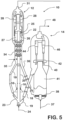
- FIG. 5 illustrates a reactor system including at least one reaction vessel comprising a fluidized bed reactor 10.
- FIG. 5 shows a fluidized bed reactor 10 that includes a dilute phase transfer zone as the catalyst contact zone which may be referred to as riser 20.
- the fluidized bed reactor 10 is configured for fluidized catalyst contacting a beta-propiolactone reagent in a reaction zone 12.
- a beta-lactone feed stream is contacted in reaction zone 12 with a heterogenous catalyst.
- a regenerated heterogenous catalyst entering from a regenerator conduit 18 contacts the beta-lactone reagent combined feed stream comprising beta-lactone and one or more of diluents fluidization gases, and other additives as herein described.
- the regenerated heterogenous catalyst is at substantially higher temperature than the combined feed and additional heating of the feed by contact with the regenerated heterogenous catalyst can provide additional fluidization to lift the heterogenous catalyst and carry up the riser 20 of the fluidized bed reactor 12.
- the regenerator conduit 18 is in downstream communication with the regenerator 14.
- the riser 20 has an inlet 19 in downstream communication with said regenerator conduit 18.
- the regenerator conduit 19 is connected to the FCC riser 20 at a lower end.
- a control valve located between sections 18 and 19 of the regenerator conduit regulates the flow of heterogenous catalyst out of the regenerated catalyst conduit and provides a pressure drop that prevents any substantial flow of the feed stream up the section 18 of the regeneration conduit.
- spent cracking catalyst entering from a recycle catalyst conduit 19 and a riser inlet tube 23 is contacted with the combined beta-propiolactone feed stream riser 20 of the fluidized bed reactor 12 without the spent cracking catalyst undergoing regeneration.
- a valve at the top of riser inlet tube 23 regulates the flow of catalyst through the riser inlet tube 23.
- the spent cracking catalyst recycle will allow additional control of the temperature and/or the activity of the heterogenous catalyst in the fluidized bed reactor 12 and can increase the coke concentration of the heterogenous catalyst in the fluidized bed reactor 12 to aid in the regulation of regenerator temperatures and heterogenous catalyst regeneration.
- the recycle of spent heterogenous catalyst through the recycle catalyst conduit can also be used to increase the ratio of catalyst-to-feed in the fluidized bed reactor.
- the catalyst-to-feed weight ratio is in a range between 5 and 20 and preferably between 10 and 15.
- portions of the beta-propiolactone feed may be fed to the riser 20 through elevated distributors 16 and this can be used to maintain conversion of the beta-propiolactone reagent as the heterogenous catalyst passes up the riser 20.
- the recycle conduit 19 is in downstream communication with a riser outlet 25.
- the recycle conduit 19 is connected to the riser 20 at the outlet end of the recycle conduit by riser tube 23.
- the recycle conduit 19 bypasses the regenerator 14 by being in downstream communication with the riser outlet 25 and the riser tube 23 being in direct, downstream communication with the recycle conduit. Consequently, spent cracking catalyst entering the recycle conduit 19 passes back to the riser 20 before any of it enters the regenerator 14.
- the recycle conduit 19 has no direct communication with the regenerator 14.
- the organic acid containing product gases and spent heterogenous catalyst in the riser 20 are thereafter discharged from the riser outlet 25 into a disengaging chamber 27 which contains the riser outlet.
- the gas stream containing acrylic acid product is disengaged from the heterogenous catalyst in the disengaging chamber 27 using a rough cut separator 26.
- Cyclonic separators which may include one or two stages of cyclones 28 in the fluidized bed reactor reaction chamber 22 further separate heterogenous catalyst from organic acid products.
- Product containing gases exit the fluidized bed reactor reaction chamber 22 through an outlet 31 for transport to downstream product separation facilities to recover acrylic acid, recycle beta-propiolactone reagents, diluents and additives.
- the recycle conduit 19 and the regenerator conduit 18 are in downstream communication with the disengaging chamber 27.
- the outlet temperature of the product containing gas leaving the riser 20 should be less than 325°C and preferably less than less than 300°C.
- the heterogenous catalyst After separation from product containing gases, the heterogenous catalyst falls into a stripping section 34 where an inert gas is injected through a nozzle 35 and distributed to purge any residual product vapor or gas.
- a portion of the spent cracking catalyst is fed to the catalyst regenerator 14 through a spent catalyst conduit 36.
- the catalyst regenerator 14 may be in downstream communication with the riser 20, specifically, the riser outlet 25.
- a portion of the spent heterogenous catalyst is recycled through recycle catalyst conduit 19 to the riser 20 as previously described.
- the flue gas will typically contain carbon dioxide, water vapor, and lesser amounts of carbon monoxide. Depending on the type and the erosion properties of the catalyst the flue gas may also contain small amounts of extremely fine catalyst particles typically in the range of between .2 and 2 micrometers which in some applications will require additional treatment of the flue gas for removal of such particles.
- FIG. 5 depicts a regeneration vessel 14 for the regeneration of heterogenous catalyst having a combustor 41 as the primary zone for the regeneration of the heterogenous catalyst by combustion of the coke and the displacement of other volatile compounds from the surface of the spent cracking catalyst.
- a stream of oxygen-containing gas such as air
- a distributor 38 to contact the coked catalyst, burn coke deposited thereon, and provide regenerated catalyst and a gas stream comprising the products of the combustion and generally referred to as flue gas.
- Catalyst and air flow upwardly together through the combustor 41 and along a combustor riser 40 located within the regeneration vessel 14.
- the catalyst which is at least partially regenerated is discharged through a disengager 42 to effect an initial separation of the catalyst from the flue gas.
- a series of cyclonic separation steps in cyclones 44 and 46 effect further separation of regenerated catalyst and flue gas.
- the cyclones direct the catalyst separated therein into the conduits that extend downwardly from the cyclones and are referred to as diplegs.
- the flue gas which is relatively free of catalyst exits cyclones 44, 46 and flows out of the regenerator vessel 14 through line 48. Regenerated heterogenous catalyst is recycled back to the reactor riser 20 through the regenerated catalyst conduit 18.
- This Example describes the production of trans-2-butenoic acid from the beta-propiolactone reagent exemplified below using a zeolite.
- a mixture of ⁇ -methyl- ⁇ -propiolactone (3.0 g) and phenothiazine (9.0 mg) is added using a needle valve to a mixture of sulfolane (40.0g) and Zeolite Y hydrogen (20.0 g) at about 165°C with 344738 Pa (50 psi) of carbononoxide.
- Zeolite Y hydrogen (80:1 mole ratio SiO 2 /Al 2 O 3 , powder S.A. 780 m 2 /g) is dried under vacuum at about 100°C for one day before use.
- Phenothiazine is the polymerization inhibitor used.
- Sulfolane is the solvent used, and is dried over 3 ⁇ molecular sieves prior to use.
- ⁇ -methyl- ⁇ -propiolactone is added slowly using the needle valve over about 8.6 minutes. The reaction mixture is heated to about 170°C to produce trans-2-butenoic acid.
- the reaction is monitored by infrared spectroscopy (IR).
- IR infrared spectroscopy
- the zeolite is then filtered off from the reaction mixture, and a sample of the resulting mixture is dissolved in deuterium (D 2 O) and chloroform (CDCl 3 ) for nuclear magnetic resonance (NMR) analysis.
- 11 grams of H-ZSM-5 catalyst is loaded into jacketed stainless steel 316 pipe reactor (ID 1.27 cm (0.5 inch)), the catalyst is supported between glass beads columns (stainless steel wool is placed below and above glass beads).
- Multi-point thermocouple is inserted through the center of the reactor and hot oil is circulated through the reactor jacket to maintain the desired reactor temperature.
- the pressure of reactor and saturator is maintained at 65500 Pa (9.5 psig).
- the reaction products are chilled to about 10°C dichloromethane, and the solution of reaction products in dichloromethane is analyzed by gas chromatography.
- the line between the saturator and the reactor as well as the line between the reactor and absorber are heat traced to prevent condensation of ⁇ -methyl- ⁇ -propiolactone to trans-2-butenoic acid.
- the reaction is conducted at the reactor temperature of about 210°C.
- This Example describes the production of methacrylic acid from 3-methyloxetan-2-one using a zeolite.
- a mixture of 3-methyloxetan-2-one (3.0 g) and phenothiazine (9.0 mg) is added using a needle valve to a mixture of sulfolane (40.0g) and Zeolite Y hydrogen (20.0 g) at 165°C with 344738 Pa (50 psi) of carbon monoxide.
- Zeolite Y hydrogen (80:1 mole ratio SiO 2 /Al 2 O 3 , powder S.A. 780 m 2 /g) is dried under vacuum at 100°C for one day before use.
- Phenothiazine is the polymerization inhibitor used.
- Sulfolane is the solvent used, and is dried over 3 ⁇ molecular sieves prior to use.
- 3-methyloxetan-2-one is added slowly using the needle valve over about 8.6 minutes. The reaction mixture is heated to 170°C to produce methacrylic acid.
- the reaction is monitored by infrared spectroscopy (IR).
- IR infrared spectroscopy
- the zeolite is then filtered off from the reaction mixture, and a sample of the resulting mixture is dissolved in deuterium (D 2 O) and chloroform (CDCl 3 ) for nuclear magnetic resonance (NMR) analysis.
- 11 grams of H-ZSM-5 catalyst is loaded into jacketed stainless steel 316 pipe reactor (ID 1.27 cm (0.5 inch)), the catalyst is supported between glass beads columns (stainless steel wool is placed below and above glass beads).
- Multi-point thermocouple is inserted through the center of the reactor and hot oil is circulated through the reactor jacket to maintain the desired reactor temperature.
- the pressure of reactor and saturator is maintained at 65500 Pa (9.5 psig).
- the reaction products are absorbed in chilled to 10°C dichloromethane and the solution of reaction products in dichloromethane is analyzed by gas chromatography.
- the line between the saturator and the reactor as well as the line between the reactor and absorber are heat traced to prevent condensation of 3-methyloxetan-2-one to methacrylic acid.
- the reaction is conducted at the reactor temperature of 210°C.
- This Example describes the production of 4-chloro- cis/trans-2-butenoic acid from the beta-propiolactone reagent exemplified below using a zeolite.
- a mixture of ⁇ -chloromethyl- ⁇ -propiolactone (3.0 g) and phenothiazine (9.0 mg) is added using a needle valve to a mixture of sulfolane (40.0g) and Zeolite Y hydrogen (20.0 g) at about 165°C with 344738 Pa (50 psi) of carbon monoxide.
- Zeolite Y hydrogen (80:1 mole ratio SiO 2 /Al 2 O 3 , powder S.A. 780 m 2 /g) is dried under vacuum at about 100°C for one day before use.
- Phenothiazine is the polymerization inhibitor used.
- Sulfolane is the solvent used, and is dried over 3 ⁇ molecular sieves prior to use.
- ⁇ -chloromethyl- ⁇ -propiolactone is added slowly using the needle valve over about 8.6 minutes. The reaction mixture is heated to about 170°C to produce 4-chloro-cis/trans-2-butenoic acid.
- the reaction is monitored by infrared spectroscopy (IR).
- IR infrared spectroscopy
- the zeolite is then filtered off from the reaction mixture, and a sample of the resulting mixture is dissolved in deuterium (D 2 O) and chloroform (CDCl 3 ) for nuclear magnetic resonance (NMR) analysis.
- 11 grams of H-ZSM-5 catalyst is loaded into jacketed stainless steel 316 pipe reactor (ID 1.27 cm (0.5 inch)), the catalyst is supported between glass beads columns (stainless steel wool is placed below and above glass beads).
- Multi-point thermocouple is inserted through the center of the reactor and hot oil is circulated through the reactor jacket to maintain the desired reactor temperature.
- the pressure of reactor and saturator is maintained at about 65500 Pa (9.5 psig).
- the reaction products are chilled to about 10°C dichloromethane and the solution of reaction products in dichloromethane is analyzed by gas chromatography.
- the line between the saturator and the reactor as well as the line between the reactor and absorber are heat traced to prevent condensation of ⁇ -chloromethyl- ⁇ -propiolactone to 4-chloro-cis/trans-2-butenoic acid.
- the reaction is conducted at the reactor temperature of about 210°C.
- This Example describes the production of 4,4,4-trifluoro-cis/trans-2-butenoic acid from the beta-propiolactone reagent exemplified below using a zeolite.
- a mixture of ⁇ -trifluoromethyl- ⁇ -propiolactone (3.0 g) and phenothiazine (9.0 mg) is added using a needle valve to a mixture of sulfolane (40.0g) and Zeolite Y hydrogen (20.0 g) at about 165°C with 344738 Pa (50 psi) of carbon monoxide.
- Zeolite Y hydrogen (80:1 mole ratio SiO 2 /Al 2 O 3 , powder S.A. 780 m 2 /g) is dried under vacuum at about 100°C for one day before use.
- Phenothiazine is the polymerization inhibitor used.
- Sulfolane is the solvent used, and is dried over 3 ⁇ molecular sieves prior to use.
- ⁇ -trifluoromethyl- ⁇ -propiolactone is added slowly using the needle valve over about 8.6 minutes. The reaction mixture is heated to about 170°C to produce 4,4,4-trifluoro-cis/trans-2-
- the reaction is monitored by infrared spectroscopy (IR).
- IR infrared spectroscopy
- the zeolite is then filtered off from the reaction mixture, and a sample of the resulting mixture is dissolved in deuterium (D 2 O) and chloroform (CDCl 3 ) for nuclear magnetic resonance (NMR) analysis.
- 11 grams of H-ZSM-5 catalyst is loaded into jacketed stainless steel 316 pipe reactor (ID 1.27 cm (0.5 inch)), the catalyst is supported between glass beads columns (stainless steel wool is placed below and above glass beads).
- Multi-point thermocouple is inserted through the center of the reactor and hot oil is circulated through the reactor jacket to maintain the desired reactor temperature.
- the pressure of reactor and saturator is maintained at about 65500 Pa (9.5 psig).
- the reaction products are absorbed in chilled to about 10°C dichloromethane and the solution of reaction products in dichloromethane is analyzed by gas chromatography.
- the line between the saturator and the reactor as well as the line between the reactor and absorber are heat traced to prevent condensation of ⁇ -trifluoromethyl- ⁇ -propiolactone to 4,4,4-trifluoro-cis/trans-2-butenoic acid.
- the reaction is conducted at the reactor temperature of about 210°C.
- Example 10 This Example describes exemplary methods to produce an organic acid from various ⁇ -propiolactone reagents using a zeolite. Exemplary reaction schemes are shown below Example 10.
- a mixture of a ⁇ -propiolactone reagent (3.0 g) and phenothiazine (9.0 mg) is added using a needle valve to a mixture of sulfolane (40.0g) and Zeolite Y hydrogen (20.0 g) at about 165°C with 344738 Pa (50 psi) of carbon monoxide.
- Zeolite Y hydrogen (80:1 mole ratio SiO 2 /Al 2 O 3 , powder S.A. 780 m 2 /g) is dried under vacuum at about 100°C for one day before use.
- Phenothiazine is the polymerization inhibitor used.
- Sulfolane is the solvent used, and is dried over 3 ⁇ molecular sieves prior to use.
- the ⁇ -propiolactone reagent is added slowly using the needle valve over about 8.6 minutes. The reaction mixture is heated to about 170°C to produce an organic acid.
- the reaction is monitored by infrared spectroscopy (IR).
- IR infrared spectroscopy
- the zeolite is then filtered off from the reaction mixture, and a sample of the resulting mixture is dissolved in deuterium (D 2 O) and chloroform (CDCl 3 ) for nuclear magnetic resonance (NMR) analysis.
- This Example describes exemplary methods using vapor phase conversion of a ⁇ -propiolactone reagent to an organic acid using H-ZSM-5. Exemplary reaction schemes are shown below.
- 11 grams of H-ZSM-5 catalyst is loaded into jacketed stainless steel 316 pipe reactor (ID 1.27 cm (0.5 inch)), the catalyst is supported between glass beads columns (stainless steel wool is placed below and above glass beads).
- Multi-point thermocouple is inserted through the center of the reactor and hot oil is circulated through the reactor jacket to maintain the desired reactor temperature.
- the pressure of reactor and saturator is maintained at about 65500 Pa (9.5 psig).
- the reaction products are absorbed in chilled to about 10°C dichloromethane and the solution of reaction products in dichloromethane is analyzed by gas chromatography.
- the line between the saturator and the reactor as well as the line between the reactor and absorber are heat traced to prevent condensation of the ⁇ -propiolactone reagent to an organic acid.
- the reaction is conducted at the reactor temperature of about 210°C.
Landscapes
- Chemical & Material Sciences (AREA)
- Organic Chemistry (AREA)
- Engineering & Computer Science (AREA)
- Chemical Kinetics & Catalysis (AREA)
- Crystallography & Structural Chemistry (AREA)
- Materials Engineering (AREA)
- Oil, Petroleum & Natural Gas (AREA)
- Organic Low-Molecular-Weight Compounds And Preparation Thereof (AREA)
- Low-Molecular Organic Synthesis Reactions Using Catalysts (AREA)
- Devices And Processes Conducted In The Presence Of Fluids And Solid Particles (AREA)
Claims (15)
- Ein Verfahren zum Herstellen von mindestens einem organische Säureprodukt direkt aus mindestens einem beta-Lactonreagenz, wobei das mindestens eine beta-Lacton Reagenz durch die folgende Formel repräsentiert wird:
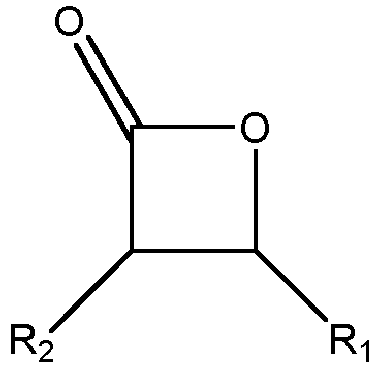 wobei R1 und R2 unabhängig ausgewählt sind aus der Gruppe bestehend aus H, Alkyl, Alkenyl, Alkoxy, Akynyl, Cycloalkyl, Cycloalkenyl und Cycloakynyl, undwobei R1 und R2 nicht beide gleichzeitig H sind,das Verfahren aufweisend:Einführen von mindestens einem Beta-Lactonreagenz in mindestens ein Reaktionsgefäß;In-Kontakt-bringen des mindestens einen beta-Lactonreagenzes mit mindestens einem heterogenen Katalysator in dem mindestens einen Reaktionsgefäß zum Herstellen von mindestens einer organischen Säure; undEntfernen der mindestens einen organischen Säure aus dem einen Reaktionsgefäß zum Bereitstellen des mindestens einen organische Säureprodukts.
 - Verfahren nach Anspruch 1, wobei der heterogene Katalysator einen mikroporösen Feststoff aufweist.
- Verfahren nach Anspruch 1, wobei der mikroporöse Feststoff ausgewählt ist aus der Gruppe bestehend aus Erdalkaliphosphaten, geträgerten Phosphatsalzen, Kalziumhydroxyapatiten, anorganischen Salzen, Metalloxiden und Zeolithen oder einer Kombination davon.
- Verfahren nach irgendeinem der Ansprüche 1 bis 3, wobei der heterogene Katalysator einen Aluminium-Silikat Molekularsieb besitzend Lewis oder Brönsted Azidität aufweist.
- Verfahren nach Anspruch 1, wobei der heterogene Katalysator einen Zeolith aufweist.
- Verfahren nach Anspruch 5, wobei der Zeolith-Katalysator in einer Wasserstoff Form oder in einer Metallkation ausgetauschten Form ist.
- Verfahren nach Anspruch 6, wobei das Metallkation Na+, K+, Ca2+, Mg2+, Cu2+, oder Cu+ ist.
- Verfahren nach irgendeinem der Ansprüche 1 bis 7, wobei das mindestens eine organische Säureprodukt kontinuierlich produziert wird.
- Verfahren nach irgendeinem der Ansprüche 1 bis 8, wobei das mindestens eine beta-Lactonreagenz in das mindestens eine Reaktionsgefäß eingeführt wird, kombiniert mit einem Lösungsmittel.
- Verfahren nach irgendeinem der Ansprüche 1 bis 9, wobei das mindestens eine Reaktionsgefäß weiterhin aufweist:einen kontinuierlichen Festbettreaktor arbeitend bei reduziertem Druck; odereinen kontinuierlichen Festbettreaktor eingestellt zum Erhalten von mindestens einem beta-Lactoreagenz verdünnt mit Inertgas; oder:
einen Flüssigbettreaktor eingestellt zum Erhalten von mindestens einem beta-Lactonreagenz verdünnt mit Inertgas wie Stickstoff; oder:
ein röhrenförmiger Rohrbündelreaktor mit einem heterogenen Katalysator beladen in den Röhren und einer Wärmetransferflüssigkeit zugeführt zur Mantelseite zum Erleichtern der Temperaturkontrolle und Entfernung der Wärme hergestellt während der Reaktionen. - Verfahren nach irgendeinem der Ansprüche 1 bis 10, wobei das beta-Lactonreagenz mit einer Gewicht-Stunden-Raumgeschwindigkeit ("weight hourly space velocity") von 0,1 h-1 bis 2,1 h-1 oder von 0,3 h-1 bis 0,9 h-1 bereitgestellt wird.
- Verfahren nach irgendeinem der Ansprüche 1 bis 11, wobei das mindestens eine organische Säureprodukt kontinuierlich isoliert wird.
- Verfahren nach irgendeinem der Ansprüche 1 bis 12, wobei das mindestens eine organische Säureprodukt bei einer Temperatur zwischen 100 °C und 300 °C produziert wird.
- Verfahren nach irgendeinem der Ansprüche 1 bis 13, wobei eines von R1 und R2 H ist, und das andere von R1 und R2 Alkyl ist.
- Verfahren nach Anspruch 14, wobei R1 Alkyl ist, und R2 H ist.
Applications Claiming Priority (2)
| Application Number | Priority Date | Filing Date | Title |
|---|---|---|---|
| US16/023,410 US20180305286A1 (en) | 2016-03-21 | 2018-06-29 | Systems and Processes for Producing Organic Acids Direct from Beta-Lactones |
| PCT/US2019/039001 WO2020005951A1 (en) | 2018-06-29 | 2019-06-25 | Systems and processes for producing organic acids directly from beta-lactones |
Publications (3)
| Publication Number | Publication Date |
|---|---|
| EP3814005A1 EP3814005A1 (de) | 2021-05-05 |
| EP3814005A4 EP3814005A4 (de) | 2022-03-23 |
| EP3814005B1 true EP3814005B1 (de) | 2024-04-17 |
Family
ID=68987531
Family Applications (1)
| Application Number | Title | Priority Date | Filing Date |
|---|---|---|---|
| EP19825623.2A Active EP3814005B1 (de) | 2018-06-29 | 2019-06-25 | Systeme und verfahren zur herstellung von organischen säuren direkt aus beta-lactonen |
Country Status (5)
| Country | Link |
|---|---|
| EP (1) | EP3814005B1 (de) |
| JP (1) | JP7580755B2 (de) |
| CN (1) | CN112384299A (de) |
| SA (1) | SA520420910B1 (de) |
| WO (1) | WO2020005951A1 (de) |
Family Cites Families (21)
| Publication number | Priority date | Publication date | Assignee | Title |
|---|---|---|---|---|
| US3176042A (en) | 1959-10-20 | 1965-03-30 | Celanese Corp | Treating propiolactone with heated phosphoric acid to produce acrylic acid |
| US3885155A (en) | 1973-11-01 | 1975-05-20 | Stanford Research Inst | Mass spectrometric determination of carbon 14 |
| US4427884A (en) | 1982-01-25 | 1984-01-24 | The Research Foundation Of State University Of New York | Method for detecting and quantifying carbon isotopes |
| NZ203629A (en) * | 1982-04-08 | 1985-07-12 | Mobil Oil Corp | Process and apparatus for conversion of oxygenated compounds to hydrocarbons |
| US4899014A (en) * | 1985-05-14 | 1990-02-06 | Avidan Amos A | Upgrading propene-ethene mixtures in a turbulent fluidized catalyst bed reactor |
| US4973841A (en) | 1990-02-02 | 1990-11-27 | Genus, Inc. | Precision ultra-sensitive trace detector for carbon-14 when it is at concentration close to that present in recent organic materials |
| US5438194A (en) | 1993-07-30 | 1995-08-01 | High Voltage Engineering Europa B.V. | Ultra-sensitive molecular identifier |
| US5412112A (en) * | 1994-06-14 | 1995-05-02 | Industrial Technology Research Institute | Derivatives and preparation of 2,2-dimethyl-5-substituted phenoxy-pentanoic acids |
| US5661299A (en) | 1996-06-25 | 1997-08-26 | High Voltage Engineering Europa B.V. | Miniature AMS detector for ultrasensitive detection of individual carbon-14 and tritium atoms |
| AUPO418696A0 (en) * | 1996-12-12 | 1997-01-16 | Resmed Limited | A substance delivery apparatus |
| JP2009035508A (ja) * | 2007-08-01 | 2009-02-19 | Kaneka Corp | 光学活性カルボン酸の製造方法 |
| WO2009155086A2 (en) | 2008-05-30 | 2009-12-23 | E. I. Du Pont De Nemours And Company | Renewably resourced chemicals and intermediates |
| JP6219834B2 (ja) * | 2011-10-26 | 2017-10-25 | ノボマー, インコーポレイテッド | エポキシドからアクリレートの生成のためのプロセス |
| JP5818716B2 (ja) * | 2012-02-24 | 2015-11-18 | 株式会社日本触媒 | 不飽和カルボン酸類製造用触媒及びその触媒を用いた不飽和カルボン酸製造方法 |
| CN104350034B (zh) | 2012-06-08 | 2018-07-31 | Cj 第一制糖株式会社 | 可再生丙烯酸生产和自其制备的产物 |
| DE102012212424A1 (de) | 2012-07-16 | 2014-01-16 | Basf Se | Verfahren zur Herstellung von Acrylsäure durch eine mit wenigstens einer molekularen Wirkverbindung katalysierte Thermolyse von Poly-3-hydroxypropionat |
| CA2991204A1 (en) | 2015-07-01 | 2017-01-05 | Novomer, Inc. | Polymer compositions produced from biobased ethanol |
| US10662139B2 (en) * | 2016-03-21 | 2020-05-26 | Novomer, Inc. | Acrylic acid production process |
| US20180282251A1 (en) * | 2017-03-21 | 2018-10-04 | Novomer, Inc. | Systems and processes for producing organic acids direct from beta-lactones |
| CN106831389B (zh) * | 2016-12-12 | 2020-03-31 | 中国科学技术大学 | 羧酸类化合物的制备方法 |
| CN112639393B (zh) | 2018-12-28 | 2021-10-15 | 深圳市柔宇科技股份有限公司 | 纸沓厚度识别装置、纸沓厚度识别方法及手写输入装置 |
-
2019
- 2019-06-25 EP EP19825623.2A patent/EP3814005B1/de active Active
- 2019-06-25 WO PCT/US2019/039001 patent/WO2020005951A1/en not_active Ceased
- 2019-06-25 CN CN201980043535.8A patent/CN112384299A/zh active Pending
- 2019-06-25 JP JP2020573354A patent/JP7580755B2/ja active Active
-
2020
- 2020-12-28 SA SA520420910A patent/SA520420910B1/ar unknown
Also Published As
| Publication number | Publication date |
|---|---|
| JP7580755B2 (ja) | 2024-11-12 |
| WO2020005951A1 (en) | 2020-01-02 |
| SA520420910B1 (ar) | 2024-01-14 |
| EP3814005A4 (de) | 2022-03-23 |
| JP2021528478A (ja) | 2021-10-21 |
| EP3814005A1 (de) | 2021-05-05 |
| CN112384299A (zh) | 2021-02-19 |
Similar Documents
| Publication | Publication Date | Title |
|---|---|---|
| US12152004B2 (en) | Systems and processes for producing organic acids directly from beta-lactones | |
| WO2019006366A1 (en) | PROCESS FOR THE PREPARATION OF ORGANIC ACIDS FROM BETA LACTONES | |
| US10662139B2 (en) | Acrylic acid production process | |
| KR101847474B1 (ko) | 산소 함유 화합물을 사용하여 저급 올레핀을 제조하는 방법 | |
| CN102464529B (zh) | 提高低碳烯烃收率的方法 | |
| CN102190550A (zh) | 低碳烯烃的生产方法 | |
| CN101328101B (zh) | 甲醇制烯烃反应-再生系统的快速停车方法 | |
| CN104672040A (zh) | 一种含氧化合物制低碳烯烃的方法及其使用的设备 | |
| CN101239867A (zh) | 提高丙烯收率的方法 | |
| CN102464524A (zh) | 甲醇生产低碳烯烃的方法 | |
| JP7580755B2 (ja) | ベータ-ラクトンから有機酸を直接に生成するためのシステム及びプロセス | |
| CN102464522A (zh) | 低碳烯烃的生产方法 | |
| CN102464528B (zh) | 提高乙烯、丙烯收率的方法 | |
| CN102372542A (zh) | 提高乙烯、丙烯收率的方法 | |
| CN102464526B (zh) | 由甲醇生产低碳烯烃的方法 | |
| CN113387763B (zh) | 含氧化合物生产低碳烯烃的方法 | |
| CN102464527B (zh) | 由低碳醇生产低碳烯烃的方法 | |
| CN103664450B (zh) | 提高低碳烯烃收率的方法 | |
| CN102875283A (zh) | 由甲醇和石脑油制备低碳烯烃的方法 | |
| CN102276384B (zh) | 保持低碳烯烃选择性稳定的方法 | |
| CN102464531A (zh) | 由甲醇催化制备低碳烯烃的方法 | |
| HK40002882A (en) | Improved acrylic acid production process | |
| CN102875290B (zh) | 由甲醇和石脑油制备低碳烯烃的反应装置 | |
| CN102464525A (zh) | 甲醇转化为低碳烯烃的方法 |
Legal Events
| Date | Code | Title | Description |
|---|---|---|---|
| STAA | Information on the status of an ep patent application or granted ep patent |
Free format text: STATUS: THE INTERNATIONAL PUBLICATION HAS BEEN MADE |
|
| PUAI | Public reference made under article 153(3) epc to a published international application that has entered the european phase |
Free format text: ORIGINAL CODE: 0009012 |
|
| STAA | Information on the status of an ep patent application or granted ep patent |
Free format text: STATUS: REQUEST FOR EXAMINATION WAS MADE |
|
| 17P | Request for examination filed |
Effective date: 20210113 |
|
| AK | Designated contracting states |
Kind code of ref document: A1 Designated state(s): AL AT BE BG CH CY CZ DE DK EE ES FI FR GB GR HR HU IE IS IT LI LT LU LV MC MK MT NL NO PL PT RO RS SE SI SK SM TR |
|
| DAV | Request for validation of the european patent (deleted) | ||
| DAX | Request for extension of the european patent (deleted) | ||
| A4 | Supplementary search report drawn up and despatched |
Effective date: 20220223 |
|
| RIC1 | Information provided on ipc code assigned before grant |
Ipc: C07C 67/293 20060101ALI20220218BHEP Ipc: C07C 57/13 20060101ALI20220218BHEP Ipc: C07C 63/10 20060101ALI20220218BHEP Ipc: C07C 63/06 20060101ALI20220218BHEP Ipc: C07C 61/06 20060101ALI20220218BHEP Ipc: C07C 233/09 20060101ALI20220218BHEP Ipc: C07C 309/70 20060101ALI20220218BHEP Ipc: C07C 303/02 20060101ALI20220218BHEP Ipc: C07C 231/12 20060101ALI20220218BHEP Ipc: C07C 69/54 20060101ALI20220218BHEP Ipc: C07C 69/73 20060101ALI20220218BHEP Ipc: C07C 69/78 20060101ALI20220218BHEP Ipc: C07C 69/14 20060101ALI20220218BHEP Ipc: C07C 59/66 20060101ALI20220218BHEP Ipc: C07C 59/58 20060101ALI20220218BHEP Ipc: C07C 57/52 20060101ALI20220218BHEP Ipc: C07C 57/04 20060101ALI20220218BHEP Ipc: C07C 51/09 20060101ALI20220218BHEP Ipc: C07C 51/00 20060101ALI20220218BHEP Ipc: B01J 29/08 20060101ALI20220218BHEP Ipc: B01J 29/06 20060101AFI20220218BHEP |
|
| STAA | Information on the status of an ep patent application or granted ep patent |
Free format text: STATUS: EXAMINATION IS IN PROGRESS |
|
| 17Q | First examination report despatched |
Effective date: 20221202 |
|
| GRAP | Despatch of communication of intention to grant a patent |
Free format text: ORIGINAL CODE: EPIDOSNIGR1 |
|
| STAA | Information on the status of an ep patent application or granted ep patent |
Free format text: STATUS: GRANT OF PATENT IS INTENDED |
|
| RIC1 | Information provided on ipc code assigned before grant |
Ipc: C07C 57/13 20060101ALI20230426BHEP Ipc: C07C 63/10 20060101ALI20230426BHEP Ipc: C07C 63/06 20060101ALI20230426BHEP Ipc: C07C 61/06 20060101ALI20230426BHEP Ipc: C07C 233/09 20060101ALI20230426BHEP Ipc: C07C 309/70 20060101ALI20230426BHEP Ipc: C07C 303/02 20060101ALI20230426BHEP Ipc: C07C 231/12 20060101ALI20230426BHEP Ipc: C07C 69/54 20060101ALI20230426BHEP Ipc: C07C 69/73 20060101ALI20230426BHEP Ipc: C07C 69/78 20060101ALI20230426BHEP Ipc: C07C 69/14 20060101ALI20230426BHEP Ipc: C07C 59/66 20060101ALI20230426BHEP Ipc: C07C 59/58 20060101ALI20230426BHEP Ipc: C07C 57/52 20060101ALI20230426BHEP Ipc: C07C 57/04 20060101ALI20230426BHEP Ipc: C07C 51/09 20060101ALI20230426BHEP Ipc: C07C 51/00 20060101ALI20230426BHEP Ipc: B01J 29/08 20060101ALI20230426BHEP Ipc: B01J 29/06 20060101AFI20230426BHEP |
|
| P01 | Opt-out of the competence of the unified patent court (upc) registered |
Effective date: 20230510 |
|
| INTG | Intention to grant announced |
Effective date: 20230524 |
|
| GRAJ | Information related to disapproval of communication of intention to grant by the applicant or resumption of examination proceedings by the epo deleted |
Free format text: ORIGINAL CODE: EPIDOSDIGR1 |
|
| STAA | Information on the status of an ep patent application or granted ep patent |
Free format text: STATUS: EXAMINATION IS IN PROGRESS |
|
| INTC | Intention to grant announced (deleted) | ||
| GRAP | Despatch of communication of intention to grant a patent |
Free format text: ORIGINAL CODE: EPIDOSNIGR1 |
|
| STAA | Information on the status of an ep patent application or granted ep patent |
Free format text: STATUS: GRANT OF PATENT IS INTENDED |
|
| INTG | Intention to grant announced |
Effective date: 20231110 |
|
| GRAS | Grant fee paid |
Free format text: ORIGINAL CODE: EPIDOSNIGR3 |
|
| GRAA | (expected) grant |
Free format text: ORIGINAL CODE: 0009210 |
|
| STAA | Information on the status of an ep patent application or granted ep patent |
Free format text: STATUS: THE PATENT HAS BEEN GRANTED |
|
| AK | Designated contracting states |
Kind code of ref document: B1 Designated state(s): AL AT BE BG CH CY CZ DE DK EE ES FI FR GB GR HR HU IE IS IT LI LT LU LV MC MK MT NL NO PL PT RO RS SE SI SK SM TR |
|
| REG | Reference to a national code |
Ref country code: GB Ref legal event code: FG4D |
|
| REG | Reference to a national code |
Ref country code: CH Ref legal event code: EP |
|
| REG | Reference to a national code |
Ref country code: DE Ref legal event code: R096 Ref document number: 602019050558 Country of ref document: DE |
|
| REG | Reference to a national code |
Ref country code: IE Ref legal event code: FG4D |
|
| REG | Reference to a national code |
Ref country code: NL Ref legal event code: FP |
|
| REG | Reference to a national code |
Ref country code: LT Ref legal event code: MG9D |
|
| REG | Reference to a national code |
Ref country code: AT Ref legal event code: MK05 Ref document number: 1676738 Country of ref document: AT Kind code of ref document: T Effective date: 20240417 |
|
| PG25 | Lapsed in a contracting state [announced via postgrant information from national office to epo] |
Ref country code: IS Free format text: LAPSE BECAUSE OF FAILURE TO SUBMIT A TRANSLATION OF THE DESCRIPTION OR TO PAY THE FEE WITHIN THE PRESCRIBED TIME-LIMIT Effective date: 20240817 |
|
| PG25 | Lapsed in a contracting state [announced via postgrant information from national office to epo] |
Ref country code: BG Free format text: LAPSE BECAUSE OF FAILURE TO SUBMIT A TRANSLATION OF THE DESCRIPTION OR TO PAY THE FEE WITHIN THE PRESCRIBED TIME-LIMIT Effective date: 20240417 |
|
| PG25 | Lapsed in a contracting state [announced via postgrant information from national office to epo] |
Ref country code: HR Free format text: LAPSE BECAUSE OF FAILURE TO SUBMIT A TRANSLATION OF THE DESCRIPTION OR TO PAY THE FEE WITHIN THE PRESCRIBED TIME-LIMIT Effective date: 20240417 Ref country code: FI Free format text: LAPSE BECAUSE OF FAILURE TO SUBMIT A TRANSLATION OF THE DESCRIPTION OR TO PAY THE FEE WITHIN THE PRESCRIBED TIME-LIMIT Effective date: 20240417 |
|
| PG25 | Lapsed in a contracting state [announced via postgrant information from national office to epo] |
Ref country code: GR Free format text: LAPSE BECAUSE OF FAILURE TO SUBMIT A TRANSLATION OF THE DESCRIPTION OR TO PAY THE FEE WITHIN THE PRESCRIBED TIME-LIMIT Effective date: 20240718 |
|
| PG25 | Lapsed in a contracting state [announced via postgrant information from national office to epo] |
Ref country code: PT Free format text: LAPSE BECAUSE OF FAILURE TO SUBMIT A TRANSLATION OF THE DESCRIPTION OR TO PAY THE FEE WITHIN THE PRESCRIBED TIME-LIMIT Effective date: 20240819 |
|
| PG25 | Lapsed in a contracting state [announced via postgrant information from national office to epo] |
Ref country code: ES Free format text: LAPSE BECAUSE OF FAILURE TO SUBMIT A TRANSLATION OF THE DESCRIPTION OR TO PAY THE FEE WITHIN THE PRESCRIBED TIME-LIMIT Effective date: 20240417 |
|
| PG25 | Lapsed in a contracting state [announced via postgrant information from national office to epo] |
Ref country code: AT Free format text: LAPSE BECAUSE OF FAILURE TO SUBMIT A TRANSLATION OF THE DESCRIPTION OR TO PAY THE FEE WITHIN THE PRESCRIBED TIME-LIMIT Effective date: 20240417 |
|
| PG25 | Lapsed in a contracting state [announced via postgrant information from national office to epo] |
Ref country code: PL Free format text: LAPSE BECAUSE OF FAILURE TO SUBMIT A TRANSLATION OF THE DESCRIPTION OR TO PAY THE FEE WITHIN THE PRESCRIBED TIME-LIMIT Effective date: 20240417 |
|
| PG25 | Lapsed in a contracting state [announced via postgrant information from national office to epo] |
Ref country code: LV Free format text: LAPSE BECAUSE OF FAILURE TO SUBMIT A TRANSLATION OF THE DESCRIPTION OR TO PAY THE FEE WITHIN THE PRESCRIBED TIME-LIMIT Effective date: 20240417 |
|
| PG25 | Lapsed in a contracting state [announced via postgrant information from national office to epo] |
Ref country code: PT Free format text: LAPSE BECAUSE OF FAILURE TO SUBMIT A TRANSLATION OF THE DESCRIPTION OR TO PAY THE FEE WITHIN THE PRESCRIBED TIME-LIMIT Effective date: 20240819 Ref country code: PL Free format text: LAPSE BECAUSE OF FAILURE TO SUBMIT A TRANSLATION OF THE DESCRIPTION OR TO PAY THE FEE WITHIN THE PRESCRIBED TIME-LIMIT Effective date: 20240417 Ref country code: NO Free format text: LAPSE BECAUSE OF FAILURE TO SUBMIT A TRANSLATION OF THE DESCRIPTION OR TO PAY THE FEE WITHIN THE PRESCRIBED TIME-LIMIT Effective date: 20240717 Ref country code: LV Free format text: LAPSE BECAUSE OF FAILURE TO SUBMIT A TRANSLATION OF THE DESCRIPTION OR TO PAY THE FEE WITHIN THE PRESCRIBED TIME-LIMIT Effective date: 20240417 Ref country code: IS Free format text: LAPSE BECAUSE OF FAILURE TO SUBMIT A TRANSLATION OF THE DESCRIPTION OR TO PAY THE FEE WITHIN THE PRESCRIBED TIME-LIMIT Effective date: 20240817 Ref country code: HR Free format text: LAPSE BECAUSE OF FAILURE TO SUBMIT A TRANSLATION OF THE DESCRIPTION OR TO PAY THE FEE WITHIN THE PRESCRIBED TIME-LIMIT Effective date: 20240417 Ref country code: GR Free format text: LAPSE BECAUSE OF FAILURE TO SUBMIT A TRANSLATION OF THE DESCRIPTION OR TO PAY THE FEE WITHIN THE PRESCRIBED TIME-LIMIT Effective date: 20240718 Ref country code: FI Free format text: LAPSE BECAUSE OF FAILURE TO SUBMIT A TRANSLATION OF THE DESCRIPTION OR TO PAY THE FEE WITHIN THE PRESCRIBED TIME-LIMIT Effective date: 20240417 Ref country code: ES Free format text: LAPSE BECAUSE OF FAILURE TO SUBMIT A TRANSLATION OF THE DESCRIPTION OR TO PAY THE FEE WITHIN THE PRESCRIBED TIME-LIMIT Effective date: 20240417 Ref country code: BG Free format text: LAPSE BECAUSE OF FAILURE TO SUBMIT A TRANSLATION OF THE DESCRIPTION OR TO PAY THE FEE WITHIN THE PRESCRIBED TIME-LIMIT Effective date: 20240417 Ref country code: AT Free format text: LAPSE BECAUSE OF FAILURE TO SUBMIT A TRANSLATION OF THE DESCRIPTION OR TO PAY THE FEE WITHIN THE PRESCRIBED TIME-LIMIT Effective date: 20240417 Ref country code: RS Free format text: LAPSE BECAUSE OF FAILURE TO SUBMIT A TRANSLATION OF THE DESCRIPTION OR TO PAY THE FEE WITHIN THE PRESCRIBED TIME-LIMIT Effective date: 20240717 |
|
| PG25 | Lapsed in a contracting state [announced via postgrant information from national office to epo] |
Ref country code: DK Free format text: LAPSE BECAUSE OF FAILURE TO SUBMIT A TRANSLATION OF THE DESCRIPTION OR TO PAY THE FEE WITHIN THE PRESCRIBED TIME-LIMIT Effective date: 20240417 |
|
| REG | Reference to a national code |
Ref country code: DE Ref legal event code: R097 Ref document number: 602019050558 Country of ref document: DE |
|
| PG25 | Lapsed in a contracting state [announced via postgrant information from national office to epo] |
Ref country code: EE Free format text: LAPSE BECAUSE OF FAILURE TO SUBMIT A TRANSLATION OF THE DESCRIPTION OR TO PAY THE FEE WITHIN THE PRESCRIBED TIME-LIMIT Effective date: 20240417 |
|
| PG25 | Lapsed in a contracting state [announced via postgrant information from national office to epo] |
Ref country code: CZ Free format text: LAPSE BECAUSE OF FAILURE TO SUBMIT A TRANSLATION OF THE DESCRIPTION OR TO PAY THE FEE WITHIN THE PRESCRIBED TIME-LIMIT Effective date: 20240417 |
|
| PG25 | Lapsed in a contracting state [announced via postgrant information from national office to epo] |
Ref country code: SK Free format text: LAPSE BECAUSE OF FAILURE TO SUBMIT A TRANSLATION OF THE DESCRIPTION OR TO PAY THE FEE WITHIN THE PRESCRIBED TIME-LIMIT Effective date: 20240417 Ref country code: RO Free format text: LAPSE BECAUSE OF FAILURE TO SUBMIT A TRANSLATION OF THE DESCRIPTION OR TO PAY THE FEE WITHIN THE PRESCRIBED TIME-LIMIT Effective date: 20240417 |
|
| PG25 | Lapsed in a contracting state [announced via postgrant information from national office to epo] |
Ref country code: SM Free format text: LAPSE BECAUSE OF FAILURE TO SUBMIT A TRANSLATION OF THE DESCRIPTION OR TO PAY THE FEE WITHIN THE PRESCRIBED TIME-LIMIT Effective date: 20240417 |
|
| PG25 | Lapsed in a contracting state [announced via postgrant information from national office to epo] |
Ref country code: SM Free format text: LAPSE BECAUSE OF FAILURE TO SUBMIT A TRANSLATION OF THE DESCRIPTION OR TO PAY THE FEE WITHIN THE PRESCRIBED TIME-LIMIT Effective date: 20240417 Ref country code: SK Free format text: LAPSE BECAUSE OF FAILURE TO SUBMIT A TRANSLATION OF THE DESCRIPTION OR TO PAY THE FEE WITHIN THE PRESCRIBED TIME-LIMIT Effective date: 20240417 Ref country code: RO Free format text: LAPSE BECAUSE OF FAILURE TO SUBMIT A TRANSLATION OF THE DESCRIPTION OR TO PAY THE FEE WITHIN THE PRESCRIBED TIME-LIMIT Effective date: 20240417 Ref country code: EE Free format text: LAPSE BECAUSE OF FAILURE TO SUBMIT A TRANSLATION OF THE DESCRIPTION OR TO PAY THE FEE WITHIN THE PRESCRIBED TIME-LIMIT Effective date: 20240417 Ref country code: DK Free format text: LAPSE BECAUSE OF FAILURE TO SUBMIT A TRANSLATION OF THE DESCRIPTION OR TO PAY THE FEE WITHIN THE PRESCRIBED TIME-LIMIT Effective date: 20240417 Ref country code: CZ Free format text: LAPSE BECAUSE OF FAILURE TO SUBMIT A TRANSLATION OF THE DESCRIPTION OR TO PAY THE FEE WITHIN THE PRESCRIBED TIME-LIMIT Effective date: 20240417 Ref country code: MC Free format text: LAPSE BECAUSE OF FAILURE TO SUBMIT A TRANSLATION OF THE DESCRIPTION OR TO PAY THE FEE WITHIN THE PRESCRIBED TIME-LIMIT Effective date: 20240417 |
|
| REG | Reference to a national code |
Ref country code: CH Ref legal event code: PL |
|
| PG25 | Lapsed in a contracting state [announced via postgrant information from national office to epo] |
Ref country code: IT Free format text: LAPSE BECAUSE OF FAILURE TO SUBMIT A TRANSLATION OF THE DESCRIPTION OR TO PAY THE FEE WITHIN THE PRESCRIBED TIME-LIMIT Effective date: 20240417 |
|
| PG25 | Lapsed in a contracting state [announced via postgrant information from national office to epo] |
Ref country code: LU Free format text: LAPSE BECAUSE OF NON-PAYMENT OF DUE FEES Effective date: 20240625 |
|
| PLBE | No opposition filed within time limit |
Free format text: ORIGINAL CODE: 0009261 |
|
| STAA | Information on the status of an ep patent application or granted ep patent |
Free format text: STATUS: NO OPPOSITION FILED WITHIN TIME LIMIT |
|
| 26N | No opposition filed |
Effective date: 20250120 |
|
| PG25 | Lapsed in a contracting state [announced via postgrant information from national office to epo] |
Ref country code: IE Free format text: LAPSE BECAUSE OF NON-PAYMENT OF DUE FEES Effective date: 20240625 |
|
| PG25 | Lapsed in a contracting state [announced via postgrant information from national office to epo] |
Ref country code: SI Free format text: LAPSE BECAUSE OF FAILURE TO SUBMIT A TRANSLATION OF THE DESCRIPTION OR TO PAY THE FEE WITHIN THE PRESCRIBED TIME-LIMIT Effective date: 20240417 Ref country code: CH Free format text: LAPSE BECAUSE OF NON-PAYMENT OF DUE FEES Effective date: 20240630 |
|
| PGFP | Annual fee paid to national office [announced via postgrant information from national office to epo] |
Ref country code: DE Payment date: 20250627 Year of fee payment: 7 |
|
| PGFP | Annual fee paid to national office [announced via postgrant information from national office to epo] |
Ref country code: GB Payment date: 20250627 Year of fee payment: 7 |
|
| PGFP | Annual fee paid to national office [announced via postgrant information from national office to epo] |
Ref country code: NL Payment date: 20250626 Year of fee payment: 7 Ref country code: BE Payment date: 20250627 Year of fee payment: 7 |
|
| PGFP | Annual fee paid to national office [announced via postgrant information from national office to epo] |
Ref country code: FR Payment date: 20250625 Year of fee payment: 7 |
|
| PG25 | Lapsed in a contracting state [announced via postgrant information from national office to epo] |
Ref country code: SE Free format text: LAPSE BECAUSE OF FAILURE TO SUBMIT A TRANSLATION OF THE DESCRIPTION OR TO PAY THE FEE WITHIN THE PRESCRIBED TIME-LIMIT Effective date: 20240417 |
|
| PG25 | Lapsed in a contracting state [announced via postgrant information from national office to epo] |
Ref country code: CY Free format text: LAPSE BECAUSE OF FAILURE TO SUBMIT A TRANSLATION OF THE DESCRIPTION OR TO PAY THE FEE WITHIN THE PRESCRIBED TIME-LIMIT; INVALID AB INITIO Effective date: 20190625 |
|
| PG25 | Lapsed in a contracting state [announced via postgrant information from national office to epo] |
Ref country code: HU Free format text: LAPSE BECAUSE OF FAILURE TO SUBMIT A TRANSLATION OF THE DESCRIPTION OR TO PAY THE FEE WITHIN THE PRESCRIBED TIME-LIMIT; INVALID AB INITIO Effective date: 20190625 |