EP3814538B1 - Verfahren zur rückgewinnung von nichteisenmetallen aus industriellen mineralischen rückständen - Google Patents
Verfahren zur rückgewinnung von nichteisenmetallen aus industriellen mineralischen rückständen Download PDFInfo
- Publication number
- EP3814538B1 EP3814538B1 EP19737686.6A EP19737686A EP3814538B1 EP 3814538 B1 EP3814538 B1 EP 3814538B1 EP 19737686 A EP19737686 A EP 19737686A EP 3814538 B1 EP3814538 B1 EP 3814538B1
- Authority
- EP
- European Patent Office
- Prior art keywords
- solid residue
- residue
- leaching
- ferrous metal
- advantageously
- Prior art date
- Legal status (The legal status is an assumption and is not a legal conclusion. Google has not performed a legal analysis and makes no representation as to the accuracy of the status listed.)
- Active
Links
Images


Classifications
-
- C—CHEMISTRY; METALLURGY
- C22—METALLURGY; FERROUS OR NON-FERROUS ALLOYS; TREATMENT OF ALLOYS OR NON-FERROUS METALS
- C22B—PRODUCTION AND REFINING OF METALS; PRETREATMENT OF RAW MATERIALS
- C22B19/00—Obtaining zinc or zinc oxide
- C22B19/20—Obtaining zinc otherwise than by distilling
- C22B19/22—Obtaining zinc otherwise than by distilling with leaching with acids
-
- C—CHEMISTRY; METALLURGY
- C22—METALLURGY; FERROUS OR NON-FERROUS ALLOYS; TREATMENT OF ALLOYS OR NON-FERROUS METALS
- C22B—PRODUCTION AND REFINING OF METALS; PRETREATMENT OF RAW MATERIALS
- C22B1/00—Preliminary treatment of ores or scrap
- C22B1/02—Roasting processes
-
- C—CHEMISTRY; METALLURGY
- C22—METALLURGY; FERROUS OR NON-FERROUS ALLOYS; TREATMENT OF ALLOYS OR NON-FERROUS METALS
- C22B—PRODUCTION AND REFINING OF METALS; PRETREATMENT OF RAW MATERIALS
- C22B19/00—Obtaining zinc or zinc oxide
- C22B19/02—Preliminary treatment of ores; Preliminary refining of zinc oxide
-
- C—CHEMISTRY; METALLURGY
- C22—METALLURGY; FERROUS OR NON-FERROUS ALLOYS; TREATMENT OF ALLOYS OR NON-FERROUS METALS
- C22B—PRODUCTION AND REFINING OF METALS; PRETREATMENT OF RAW MATERIALS
- C22B19/00—Obtaining zinc or zinc oxide
- C22B19/20—Obtaining zinc otherwise than by distilling
-
- C—CHEMISTRY; METALLURGY
- C22—METALLURGY; FERROUS OR NON-FERROUS ALLOYS; TREATMENT OF ALLOYS OR NON-FERROUS METALS
- C22B—PRODUCTION AND REFINING OF METALS; PRETREATMENT OF RAW MATERIALS
- C22B19/00—Obtaining zinc or zinc oxide
- C22B19/30—Obtaining zinc or zinc oxide from metallic residues or scraps
-
- C—CHEMISTRY; METALLURGY
- C22—METALLURGY; FERROUS OR NON-FERROUS ALLOYS; TREATMENT OF ALLOYS OR NON-FERROUS METALS
- C22B—PRODUCTION AND REFINING OF METALS; PRETREATMENT OF RAW MATERIALS
- C22B3/00—Extraction of metal compounds from ores or concentrates by wet processes
- C22B3/04—Extraction of metal compounds from ores or concentrates by wet processes by leaching
- C22B3/06—Extraction of metal compounds from ores or concentrates by wet processes by leaching in inorganic acid solutions, e.g. with acids generated in situ; in inorganic salt solutions other than ammonium salt solutions
-
- C—CHEMISTRY; METALLURGY
- C22—METALLURGY; FERROUS OR NON-FERROUS ALLOYS; TREATMENT OF ALLOYS OR NON-FERROUS METALS
- C22B—PRODUCTION AND REFINING OF METALS; PRETREATMENT OF RAW MATERIALS
- C22B7/00—Working up raw materials other than ores, e.g. scrap, to produce non-ferrous metals and compounds thereof; Methods of a general interest or applied to the winning of more than two metals
- C22B7/006—Wet processes
-
- C—CHEMISTRY; METALLURGY
- C22—METALLURGY; FERROUS OR NON-FERROUS ALLOYS; TREATMENT OF ALLOYS OR NON-FERROUS METALS
- C22B—PRODUCTION AND REFINING OF METALS; PRETREATMENT OF RAW MATERIALS
- C22B7/00—Working up raw materials other than ores, e.g. scrap, to produce non-ferrous metals and compounds thereof; Methods of a general interest or applied to the winning of more than two metals
- C22B7/02—Working-up flue dust
-
- Y—GENERAL TAGGING OF NEW TECHNOLOGICAL DEVELOPMENTS; GENERAL TAGGING OF CROSS-SECTIONAL TECHNOLOGIES SPANNING OVER SEVERAL SECTIONS OF THE IPC; TECHNICAL SUBJECTS COVERED BY FORMER USPC CROSS-REFERENCE ART COLLECTIONS [XRACs] AND DIGESTS
- Y02—TECHNOLOGIES OR APPLICATIONS FOR MITIGATION OR ADAPTATION AGAINST CLIMATE CHANGE
- Y02P—CLIMATE CHANGE MITIGATION TECHNOLOGIES IN THE PRODUCTION OR PROCESSING OF GOODS
- Y02P10/00—Technologies related to metal processing
- Y02P10/20—Recycling
Definitions
- the present invention is related to a process for recovering valuable non-ferrous metals from residues originating from metallurgical processes, such as hydro- and pyrometallurgical processes.
- iron is present as an undesirable constituent of zinc concentrates, calcine oxides and zinc oxide dust.
- iron dissolves into the solution with zinc and other desired metals.
- Iron constitutes a severe impurity in zinc solution and must be removed before zinc electrolysis.
- iron is removed by its precipitation as jarosite or goethite, and the jarosite process is more widely used than the goethite process. Due to the presence of heavy metals (e.g. As, Cd, Pb, Zn), these hazardous waste streams are currently disposed of in dedicated landfills to contain the risk they could pose to the environment and human health.
- heavy metals e.g. As, Cd, Pb, Zn
- FR 2463189 describes a process which is based on sulphation roasting of goethite sludge in a temperature range of 500-750 °C. Particularly, a roasting temperature between 550 °C and 650 °C ensures selective sulphation of non-ferrous metals from dried goethite sludge.
- a sulphate source either H 2 SO 4 or SO 3(g) were used. However, SO 3(g) can be obtained by decomposition of H 2 SO 4 or other sulphates. After sulphation, the residue was leached in an aqueous solution of H 2 SO 4 at a pH between 1 and 2.
- the leaching temperature is preferably between 20 °C and 60 °C. Under such conditions, it was shown that 90-92% Zn, 86-88% In and 93-94% Cu can be leached with low Fe dissolution (1.8-6%).
- the present invention aims to selectively recover valuable non-ferrous metals (such as, though not limited to, Zn, Ni and Pb) and possibly remove other hazardous contaminants (e.g. As) from residues of metallurgical processes. It is an aim to valorise the (iron-containing) residue matrix material depleted from the non-ferrous metals. It is an aim of the present invention to provide a more economical process for selective recovery of non-ferrous metals from such residues. It is also an aim to provide a more environmentally friendly process for recovery of non-ferrous metals from such residues.
- non-ferrous metals such as, though not limited to, Zn, Ni and Pb
- other hazardous contaminants e.g. As
- the non-ferrous metal is comprised in a first solid residue, which is advantageously a granular or particulate material and advantageously comprises iron, in particular iron oxide.
- the non-ferrous metal can be bound in an iron (oxide) matrix in the first solid residue.
- the first solid residue is mixed with a second solid residue comprising the non-ferrous metal and sulphur, advantageously as a sulphate mineral, thereby obtaining a particulate mixture.
- the second solid residue is advantageously a granular or particulate material.
- the particulate mixture is subjected to a roasting step, advantageously under oxidizing conditions, at a temperature of at least 650 °C to obtain a roasted mixture.
- the roasted mixture is then subjected to leaching under mild conditions, e.g. in a liquid at pH of 5.5 or higher, e.g. pH between 6 and 8; to obtain a leachate which is enriched with the non-ferrous metal.
- Advantageous non-ferrous metals for use in processes as described herein are zinc, lead and nickel.
- mixing a non-ferrous metal and iron containing waste stream with a sulphur containing waste stream advantageously in at least a stoichiometric amount of sulphur to the non-ferrous metal was found to significantly enhance the leaching of the non-ferrous metal after roasting.
- aspects of the present invention are based on the sulphation of the non-ferrous metal, in particular zinc, which is advantageously present in the residue stream, such as goethite residue, Electric Arc Furnace (EAF) dust or Basic Oxygen Furnace (BOF)-sludge as a stable iron spinel, e.g. zinc ferrite (ZnFe 2 O 4 ) or zinc franklinite (ZnFe 2 O 4 ), to form soluble ZnSO 4 , by mixing the residue with a further mineral waste stream, advantageously produced by the non-ferrous industry, comprising sulphur (i.e.
- EAF Electric Arc Furnace
- BOF Basic Oxygen Furnace
- Yet a further advantage is that two or more possibly hazardous waste streams can be treated together, which increases supply reliability of a roasting plant which needs high throughput to be economically sustainable.
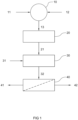
- processes for recovering a non-ferrous metal from a solid residue 11 of a metallurgical process comprises a first step 10 of mixing the residue 11 with a second solid material 12.
- the residue 11 and the solid material 12 are advantageously granular materials.
- the first residue 11 comprises the non-ferrous metal that is to be recovered and comprises iron.
- the non-ferrous metal is bound as an iron oxide, in particular an iron spinel in residue 11.
- suitable iron oxides are zinc ferrite or zinc franklinite (ZnFe 2 O 4 ) and nickel iron oxide.
- the first residue can comprise at least 15% by (dry) weight Fe, preferably at least 20% by weight, preferably at least 25% by weight.
- the amount of non-ferrous metal iron oxide (iron spinel) in the first residue is at least 20% by (dry) weight, advantageously at least 25% by weight, advantageously at least 30% by dry weight of the first residue.
- the first residue 11 is mixed with a second solid material 12 comprising sulphur.
- the second solid material 12 is a solid residue.
- the amount of sulphur in the second material 12 is advantageously at least 15% by (dry) weight, advantageously at least 20% by weight, advantageously at least 25% by weight, advantageously at least 30% by weight.
- the sulphur is advantageously present in the second material as a sulphate mineral and/or as elemental sulphur.
- the amount of sulphate mineral in the second stream is advantageously at least 15% by (dry) weight, advantageously at least 20% by weight, advantageously at least 25% by weight, advantageously at least 30% by weight.
- a suitable example of a sulphate mineral is jarosite, iron sulphate, ferric sulphate, sodium or potassium sulphate, sodium or potassium bisulphate, etc.
- the second stream is advantageously a solid residue, in particular a residue of a metallurgical process.
- different hydrometallurgical processes for producing zinc result in production of goethite residues and jarosite residues. Both residues can advantageously be used in processes according to the present invention.
- the goethite residues can be used as the first residue 11, whereas the jarosite residues can be used as the second residue 12.
- the second solid residue also comprises the non-ferrous metal which one intends to recover from the first residue 11.
- the amount of said non-ferrous metal in the second residue 12 is advantageously at least 0,5% by (dry) weight, advantageously at least 1% by (dry) weight, advantageously at least 1,5% by (dry) weight, advantageously at least about 2% by (dry) weight of the second residue 12.
- the first and second residues are advantageously dry residues. If moist, they can be dried, e.g. at 40-105 °C during a suitable amount of time, e.g. between 12 hours and 48 hours.
- the particle size distribution of either one or both the first residue 11 and the second residue 12, and/or of the resulting mixture advantageously has a 50 percentile diameter (d 50 ) of 100 ⁇ m or less, advantageously 80 ⁇ m or less.
- d 50 is at least 1 ⁇ m, advantageously at least 5 ⁇ m.
- the 90 percentile diameter (d 90 ) of either one or both residues, or the mixture is 100 ⁇ m or less. If coarse, the particle size of the residues and/or the mixture can be reduced to suitable granulometry, e.g. by milling.
- the mixture 13 advantageously has a content of sulphur at least equal to the stoichiometric amount of the non-ferrous metal in the mixture. It is however advantageous to provide sulphur in excess as compared to the stoichiometric amount of the non-ferrous metal, advantageously a ratio of sulphur to non-ferrous metal is at least 2, advantageously at least 4, advantageously at least 6, advantageously at least 8, advantageously at least 10, since some of the sulphur will be lost as SOs gas.
- the mixture 13 obtained in mixing step 10 is fed to a roasting step 20.
- the roasting step is an oxidative roasting, advantageously at a temperature of at least 650°C, advantageously at least 675°C.
- the roasting temperature is advantageously 800°C or less, allowing for conversion of the non-ferrous metal iron oxide into the non-ferrous metal sulphate.
- Roasting is advantageously performed at atmospheric pressure, implying that an open reactor may be used, i.e. a reactor open to the outside atmosphere.
- the residence time of the mixture 13 at the roasting temperature is advantageously at least 20 minutes, advantageously at least 30 minutes, advantageously at least 40 minutes, and advantageously 10 hours or less, advantageously 5 hours or less, advantageously 4 hours or less.
- the roasted material 21 obtained from roasting step 20 is subsequently fed to a leaching step 30.
- leaching is performed in a liquid at neutral pH, in particular a pH of at least 5.5, advantageously a pH of at least 6, advantageously a pH of at least 6.5.
- the pH is advantageously 8 or less.
- An advantageous leaching liquid 31 is water, in particular distilled water.
- Leaching is advantageously performed at a liquid to solid ratio (of leaching liquid 31 to roasted material 21) of at least 1, advantageously at least 5, advantageously at least 10.
- Leaching is advantageously performed at a temperature between 10 °C and 90 °C, advantageously between 15 °C and 75 °C, advantageously between 20 °C and 50 °C.
- the residence time of the roasted material in the leaching liquid can be very short. Given the conversion in a soluble salt, the extraction of the non-ferrous metal into the leaching solution can even be achieved by washing of the roasted material, in a batch or continuous process.
- the residence time of the roasted material in the leaching liquid is at least 10 minutes, advantageously at least 0.5 hours, advantageously at least 1 hour.
- Leaching allows for extracting the non-ferrous metal from the roasted material into solution, while the iron will remain incorporated in the solid material.
- the leaching step 30 hence results in a stream 32 comprising a leachate (leached solution) 41 and residue material 42, advantageously depleted in the non-ferrous metal.
- Stream 32 may be a suspension. It has surprisingly been found that by using a mixture of residues, an efficient leaching can be carried out under mild conditions, thereby obviating the need of using aggressive conditions or highly acidic leaching agents. Another beneficial effect of aspects of the present invention is that iron and/or contaminants advantageously will not leach out, or only leach out in minimal amounts. This facilitates post treatment steps on both the leachate and the remaining solid material.
- a first post-treatment step may involve a filtration step 40 to separate the solid residue material 42 from the leachate 41. Further suitable leaching and/or filtration steps may be contemplated, e.g. to remove contaminants from the leachate 41 and/or from the residue material 42.
- Any one of the process steps as described above may be carried out in a batchwise or a continuous manner.
- the following examples relate to experiments carried out with zinc as the non-ferrous metal.
- the first solid residue was goethite residue from zinc production, comprising zinc as the non-ferrous metal one intends to recover, and the second solid residue was jarosite residue from zinc production. It will be convenient to note that jarosite residue also comprises the non-ferrous metal, in this case zinc, one intends to recover from the first solid residue.
- non-ferrous metal waste materials produced by other industries such as Electric Arc Furnace (EAF) dust or Basic Oxygen Furnace (BOF) sludge, produced by the steel industry, are also iron-rich and contain the stable Zn-ferrite at elevated concentrations, and are accordingly useful as the non-ferrous metal containing residue in the process according to the invention.
- EAF Electric Arc Furnace
- BOF Basic Oxygen Furnace
- compositions of solid materials have been determined by EDXRF (energy dispersive x-ray fluorescence), an art known analytical technique used for the detection of chemical elements.
- Chemical compositions of liquid samples were determined by inductively coupled plasma optical emission spectrometry (ICP-OES), after acid digestion of the sample.
- ICP-OES inductively coupled plasma optical emission spectrometry
- Table 1 Chemical composition of the starting goethite and jarosite sludge (dried at 40 °C for 24 h) Sample Composition [wt. %] Fe Zn Pb 5 As Al Ca Cu Goethite sludge 31.8 5.73 1.61 9.24 0.38 0.82 5.91 0.38 Jarosite sludge 16.4 1.94 2.80 32.6 0.56 0.50 2.44 n.a.
- roasting was conducted by heating the mixtures at a rate of 120 °C/h to 700 °C, at atmospheric pressure in an open reactor, i.e. a reactor open to the outside atmosphere). After dwelling for 1 h at 700 °C, the samples were cooled and manually milled in a mortar to disintegrate the agglomerates formed during roasting.
- Table 2 Chemical composition of the tested goethite-jarosite mixtures after roasting at 700 °C Goethite:Jarosite ratio Composition [wt. %] Mass loss after roasting [wt.
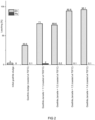
- Figure 2 clearly shows that in case of mixture 1:4, more than 95% of Zn can be selectively leached with no (or limited) Pb co-dissolution.
- the leachate is thus enriched in zinc and devoid of other metals to e.g. enable direct recovery of zinc by means of electrolysis.
- a leachate with high Zn concentration and low level of impurities can be obtained by water leaching after sulphation roasting of mixture goethite and jarosite in the ratio of 1:4.
- the experimental results of Fig. 2 showed that more that 95% of Zn can be selectively leached out.
- Zn-ferrite containing waste stream (goethite residue) was treated separately (without mixing with the non-ferrous metallic waste stream comprising sulphur, i.e. jarosite residue) by roasting and water leaching only 30% of Zn was leached out.
- the solid residue as obtained from example 1 can be further processed by selective leaching steps, e.g. to remove Pb and As.
- a suitable flow diagram is shown in Fig. 3 , in particular for a mixture of goethite to jarosite at ratio 1:4. The mixing, roasting and water leaching steps are identical to Example 1 above.
- a first filtration step 40 was carried out following water leaching to separate the leachate 41, being the solution enriched in zinc, from the solid material 42, depleted in zinc.
- the leachate comprised 5 g/L Zn, 0.5 g/L Ca and less than 3 ppm Fe and less than 4 ppm Pb.
- a subsequent leaching step 50 is carried out on the solid material 42.
- the leaching suspension 51 from leaching step 50 was fed to a filtration step 60 to separate leachate 61 enriched in Pb, and solid residue 62 depleted in Pb.
- Leachate 61 comprised 5 g/L Pb, less than 54 ppm Zn and 1 ppm Fe.
- Solid residue 62 was subjected to a further leaching step 70 for removing As.
- An alkaline leaching with 2M NaOH at L/S ratio 10 for 2 hours at 25°C was performed.
- the suspension was fed to a filtration step 80 to separate the leachate 81 enriched in As from the solid residue 82, depleted in As.
- Leachate 81 comprised 2g/L As
- the solid residue 82 comprised 54 wt% Fe, 4.5 wt% Si, 0.3 wt% Pb, 0.2 wt% Zn, 0.1 wt% Ca and 0.2 wt% As.
- the solid residue 82 has significantly lower amounts of Pb and As. Therefore, the leaching steps 50 and 70 with NaCl and NaOH solution allow to selectively remove further toxic elements like lead and arsenic (Pb and As).
- roasting may influence the (further) bonding of such contaminants in the residue structure in a positive way.
- Roasting temperature may be an important parameter. Referring to Fig. 4 , at roasting temperatures of about 675 °C onwards, there is no detectable leaching of arsenic into the leachate from water leaching following roasting of pure jarosite residue (all process conditions identical to Example 2).
- jarosite residue i.e. the sulfur containing waste material
- BOF sludge Fe-rich sludge
- Table 4 The chemical compositions of the jarosite sludge and the BOF sludge are listed in Table 4. As seen from Table 4, both jarosite and BOF sludge contain Zn. BOF sludge contains almost 5% of Zn, which is mostly present as franklinite (ZnFe 2 O 4 ).
- Jarosite sludge and BOF fines were mixed in a mortar and subsequently roasted at 700°C for 1h (heating rate 120°C/h). The roasting was performed at atmospheric pressure. The purpose of this experiment was to test the conversion of stable ZnFe 2 O 4 , present in BOF dust, into water soluble ZnSO 4 by reacting with SO 3 (g) formed during roasting of jarosite sludge (the same principle as in Example 1). The chemical composition of the mixture after roasting is listed in Table 5. Table 5 Chemical composition of the mixture BOF fines and jarosite sludge after sulphation roasting at 700°C BOF fines Jarosite sludge ratio Composition [wt. %] Mass loss after roasting [wt. %] Fe Zn Pb S As Al Ca Cu (1:4) 33.4 3.64 3.15 9.28 0.87 0.65 4.28 n.a. 30%
- the roasted mixture was leached in distilled water. Leaching was carried out for 1h at L/S ratio 10 and temperature 25 °C. After leaching and filtration the obtained leachates were analysed by ICP-OES and the solid residues were subjected to XRF analysis.
- This example refers to the paper [1] which describes a process where ferric sulphate is used as a source of SO 3 (g) used for conversion of Zn ferrite present in zinc leaching residue (ZLR) into a water soluble form.
- the weight ratios of 5:2 in the mixtures 1 and 2 are based on the molar ratio ferric sulphate/zinc ferrite equal to 1.2, as it is described in reference [1].
- the weight ratios of 1:4 of mixtures 3 and 4 are based on the ratios used in Example 1.
- the mixtures were roasted at the conditions described in Example 1.
- the roasted mixtures were analysed by XRF, and results are shown in Table 8.
- the roasted mixtures were leached in distilled water at the conditions described in the Example 1. After leaching and filtration, the solid samples were dried at 40 °C for 24 hours and were analyzed by XRF. Leachates were analyzed by ICP-OES. The chemical composition of the solid residues and leachates after leaching the mixtures in distilled water are shown in Table 9 and Table 10, respectively. Table 9 Chemical composition of the solid residues after water leaching Mixture [wt.
Landscapes
- Chemical & Material Sciences (AREA)
- Engineering & Computer Science (AREA)
- Organic Chemistry (AREA)
- Materials Engineering (AREA)
- Mechanical Engineering (AREA)
- Metallurgy (AREA)
- Manufacturing & Machinery (AREA)
- Life Sciences & Earth Sciences (AREA)
- Environmental & Geological Engineering (AREA)
- General Life Sciences & Earth Sciences (AREA)
- Geology (AREA)
- Geochemistry & Mineralogy (AREA)
- Inorganic Chemistry (AREA)
- Manufacture And Refinement Of Metals (AREA)
- Processing Of Solid Wastes (AREA)
Claims (15)
- Verfahren zum Gewinnen eines Nichteisenmetalls aus einem ersten festen Reststoff (11), der Eisen umfasst, das Verfahren umfassend:Mischen (10) des ersten festen Reststoffes (11) mit einem zweiten festen Reststoff (12), der das Nichteisenmetall und Schwefel umfasst, wodurch ein Partikelgemisch (13) erlangt wird,Glühen (20) des Partikelgemischs bei einer Temperatur von mindestens 650 °C, um ein geglühtes Gemisch (21) zu erlangen, undAuslaugen (30) des geglühten Gemischs in einer Flüssigkeit (31) bei einem pH von mindestens 5,5, um eine Lösung (41) zu erlangen, die mit dem Nichteisenmetall angereichert ist.
- Verfahren nach Anspruch 1, wobei der erste feste Reststoff (11) mindestens 15 Gewichts-% Fe umfasst.
- Verfahren nach Anspruch 1 oder 2, wobei das Nichteisenmetall als Eisenspinell des Nichteisenmetalls mit mindestens 20 Gewichts-% in dem ersten festen Reststoff (11) vorhanden ist.
- Verfahren nach irgendeinem der vorherigen Ansprüche, wobei das Nichteisenmetall Zink ist.
- Verfahren nach Anspruch 4, wobei der erste feste Reststoff (11) mindestens 20 Gewichts-% Zinkferrit umfasst.
- Verfahren nach irgendeinem der vorherigen Ansprüche, wobei der erste feste Reststoff (11) ein oder eine Kombination aus Goethit-Reststoff aus metallurgischer Verarbeitung von Zink, basischem Sauerstoffofenstaub und Lichtbogenofenstaub ist.
- Verfahren nach irgendeinem der vorherigen Ansprüche, wobei der zweite feste Reststoff (12) mindestens 15 Gewichts-% Sulfatmineralien umfasst, insbesondere wobei der zweite feste Reststoff (12) ein Jarosit-Reststoff aus metallurgischer Verarbeitung von Zink ist.
- Verfahren nach irgendeinem der vorherigen Ansprüche, wobei das Partikelgemisch ein Verhältnis von Schwefel zu dem Nichteisenmetall von mindestens 6 umfasst.
- Verfahren nach irgendeinem der vorherigen Ansprüche, wobei der erste feste Reststoff (11) und der zweite feste Reststoff (12) in Anteilen gemischt werden, sodass das Partikelgemisch (13) eine Schwefelmenge umfasst, die mindestens gleich wie eine stöchiometrische Menge des Nichteisenmetalls in dem Partikelgemisch ist.
- Verfahren nach irgendeinem der vorherigen Ansprüche, wobei einer oder mehrere von dem ersten festen Rückstand (11), dem zweiten festen Rückstand (12) und dem Partikelgemisch eine Partikelgrößenverteilung mit einem 50-Perzentil-Durchmesser (d50) gleich wie oder kleiner als 100 µm aufweisen.
- Verfahren nach irgendeinem der vorherigen Ansprüche, wobei das Glühen (20) bei einer Temperatur zwischen 675 °C und 800 °C durchgeführt wird.
- Verfahren nach irgendeinem der vorherigen Ansprüche, wobei das Auslaugen (30) in Wasser bei einer Temperatur zwischen 10 °C und 90 °C durchgeführt wird, wobei ein Gewichtsverhältnis des Wassers zu dem geglühten Gemisch mindestens 1 ist.
- Verfahren nach Anspruch 12, wobei das Gewichtsverhältnis von Wasser zu geglühtem Gemisch zwischen 5 und 15 liegt.
- Verfahren nach Anspruch 12 oder 13, wobei das Auslaugen (30) bei einer Temperatur zwischen 15 °C und 50 °C durchgeführt wird.
- Verfahren nach Irgendeinem der vorherigen Ansprüche, wobei das Nichteisenmetall Zink ist und der erste feste Reststoff (11) mindestens 30 Gewichts-% Zinkferrit umfasst, wobei der zweite feste Reststoff (12) mindestens 15 Gewichts-% Sulfatmineralien, insbesondere Jarosit, umfasst, wobei das Glühen (20) bei einer Temperatur zwischen 675 °C und 800 °C durchgeführt wird und wobei das Auslaugen (30) in Wasser bei einem Flüssigkeit/Feststoff-Verhältnis von mindestens 5 und bei einer Temperatur zwischen 15 °C und 50 °C durchgeführt wird.
Applications Claiming Priority (2)
| Application Number | Priority Date | Filing Date | Title |
|---|---|---|---|
| EP18180859.3A EP3587599A1 (de) | 2018-06-29 | 2018-06-29 | Verfahren zur rückgewinnung von nichteisenmetallen aus industriellen mineralischen rückständen |
| PCT/EP2019/067502 WO2020002697A1 (en) | 2018-06-29 | 2019-06-28 | Process for recovering non-ferrous metals from industrial mineral residues |
Publications (3)
| Publication Number | Publication Date |
|---|---|
| EP3814538A1 EP3814538A1 (de) | 2021-05-05 |
| EP3814538B1 true EP3814538B1 (de) | 2024-08-07 |
| EP3814538C0 EP3814538C0 (de) | 2024-08-07 |
Family
ID=62837765
Family Applications (2)
| Application Number | Title | Priority Date | Filing Date |
|---|---|---|---|
| EP18180859.3A Withdrawn EP3587599A1 (de) | 2018-06-29 | 2018-06-29 | Verfahren zur rückgewinnung von nichteisenmetallen aus industriellen mineralischen rückständen |
| EP19737686.6A Active EP3814538B1 (de) | 2018-06-29 | 2019-06-28 | Verfahren zur rückgewinnung von nichteisenmetallen aus industriellen mineralischen rückständen |
Family Applications Before (1)
| Application Number | Title | Priority Date | Filing Date |
|---|---|---|---|
| EP18180859.3A Withdrawn EP3587599A1 (de) | 2018-06-29 | 2018-06-29 | Verfahren zur rückgewinnung von nichteisenmetallen aus industriellen mineralischen rückständen |
Country Status (5)
| Country | Link |
|---|---|
| US (1) | US12157928B2 (de) |
| EP (2) | EP3587599A1 (de) |
| CN (1) | CN112119170A (de) |
| PL (1) | PL3814538T3 (de) |
| WO (1) | WO2020002697A1 (de) |
Families Citing this family (5)
| Publication number | Priority date | Publication date | Assignee | Title |
|---|---|---|---|---|
| CN111979422B (zh) * | 2020-07-09 | 2022-10-21 | 有研资源环境技术研究院(北京)有限公司 | 一种综合回收针铁矿渣中有价金属的方法 |
| IT202100005630A1 (it) * | 2021-03-10 | 2022-09-10 | Ecotec Gestione Impianti S R L | Procedimento per il trattamento di residui dell’industria della produzione dello zinco e del piombo, con ottenimento di prodotti valorizzabili e materie prime secondarie, in accordo con le strategie dell’economia circolare |
| KR102632434B1 (ko) * | 2022-10-14 | 2024-02-02 | 고려아연 주식회사 | 아연 제련 공정의 부산물인 산화철로부터 고품위 정제 산화철의 제조방법 |
| CN117344143A (zh) * | 2023-09-14 | 2024-01-05 | 华南理工大学 | 一种从不锈钢粉尘中提取有价金属铬镍锰锌的方法 |
| CN117551887A (zh) * | 2023-10-30 | 2024-02-13 | 重庆大学 | 一种从含铁锌尘泥中低温焙烧提锌并固定重金属的方法 |
Family Cites Families (15)
| Publication number | Priority date | Publication date | Assignee | Title |
|---|---|---|---|---|
| US4102951A (en) * | 1975-05-14 | 1978-07-25 | Monash University | Calcination of basic ferric sulphates |
| DE2530203C3 (de) * | 1975-07-05 | 1978-03-16 | Kernforschungsanlage Juelich Gmbh, 5170 Juelich | Verfahren zur Gewinnung von Nichteisenmetallen aus Thermallaugenschlamm |
| LU81602A1 (fr) | 1979-08-13 | 1981-03-24 | Metallurgie Hoboken | Procede de recuperation de metaux non-ferreux contenus dans un residu riche en oxyde et/ou hydroxyde de fer |
| CA1176853A (en) * | 1981-08-05 | 1984-10-30 | Gerald L. Bolton | Process for recovering zinc from zinc ferrite material |
| CN101245414B (zh) * | 2007-02-15 | 2011-12-21 | 邓彤 | 从红土矿提取金属的方法 |
| CN102443701B (zh) | 2010-10-12 | 2014-11-05 | 中国科学院过程工程研究所 | 铁矾渣的清洁冶金综合利用方法 |
| CN103409621A (zh) * | 2013-07-22 | 2013-11-27 | 昆明理工大学科技产业经营管理有限公司 | 高铁硫化锌精矿与高铁锌焙砂浸出渣联合浸出的方法 |
| CN103589861B (zh) * | 2013-11-27 | 2015-07-22 | 昆明理工大学 | 一种微波硫酸化焙烧-水浸处理铁矾渣的方法 |
| CN103789556B (zh) * | 2014-01-10 | 2015-04-08 | 中南大学 | 一种加入硫酸铁焙烧-水浸回收含铁酸锌废渣中锌的方法 |
| CN103937982B (zh) * | 2014-03-25 | 2016-09-14 | 陕西锌业有限公司 | 湿法工艺从氧化锌浸出渣中提取铅和银的方法 |
| CN104212976B (zh) * | 2014-08-30 | 2016-08-17 | 广东省工业技术研究院(广州有色金属研究院) | 从湿法锌冶炼废渣中回收银的方法 |
| CN104178642B (zh) * | 2014-08-31 | 2015-12-09 | 中南大学 | 一种分离锌浸出渣中锌和铁的方法 |
| CN105331801B (zh) * | 2015-11-27 | 2017-07-18 | 中南大学 | 一种锌精矿与黄铁矿协同焙烧方法 |
| EP3333272A1 (de) * | 2016-12-09 | 2018-06-13 | Tata Steel Nederland Technology B.V. | Verfahren zum selektiven entfernen von zink aus metallurgischen anlagenabfällen |
| CN106916953A (zh) * | 2017-01-11 | 2017-07-04 | 广东省稀有金属研究所 | 降低湿法锌冶炼废渣中铅含量的方法 |
-
2018
- 2018-06-29 EP EP18180859.3A patent/EP3587599A1/de not_active Withdrawn
-
2019
- 2019-06-28 US US17/254,750 patent/US12157928B2/en active Active
- 2019-06-28 PL PL19737686.6T patent/PL3814538T3/pl unknown
- 2019-06-28 EP EP19737686.6A patent/EP3814538B1/de active Active
- 2019-06-28 WO PCT/EP2019/067502 patent/WO2020002697A1/en not_active Ceased
- 2019-06-28 CN CN201980028975.6A patent/CN112119170A/zh active Pending
Also Published As
| Publication number | Publication date |
|---|---|
| CN112119170A (zh) | 2020-12-22 |
| PL3814538T3 (pl) | 2024-10-21 |
| EP3814538C0 (de) | 2024-08-07 |
| US12157928B2 (en) | 2024-12-03 |
| WO2020002697A1 (en) | 2020-01-02 |
| US20210292869A1 (en) | 2021-09-23 |
| EP3814538A1 (de) | 2021-05-05 |
| EP3587599A1 (de) | 2020-01-01 |
Similar Documents
| Publication | Publication Date | Title |
|---|---|---|
| EP3814538B1 (de) | Verfahren zur rückgewinnung von nichteisenmetallen aus industriellen mineralischen rückständen | |
| Ruiz et al. | Recycling of an electric arc furnace flue dust to obtain high grade ZnO | |
| US20200165697A1 (en) | Integrated recovery of metals from complex substrates | |
| Riveros et al. | Arsenic disposal practices in the metallurgical industry | |
| Orhan | Leaching and cementation of heavy metals from electric arc furnace dust in alkaline medium | |
| KR101011382B1 (ko) | 산화 아연 및 아연 페라이트를 함유한 전기로 및 기타 가열로의 분진 및 잔류물 처리 과정 | |
| Xia et al. | Caustic roasting and leaching of electric arc furnace dust | |
| Antuñano et al. | Hydrometallurgical processes for Waelz oxide valorisation–An overview | |
| Antrekowitsch et al. | Hydrometallurgically recovering zinc from electric arc furnace dusts | |
| CA2387834A1 (en) | Resin-in-pulp method for recovery of nickel and cobalt from oxidic ore leach slurry | |
| EP1727916B1 (de) | Rückgewinnung von metallen aus oxidierten metallhaltigen materialien | |
| CN105039713A (zh) | 一种硫化砷渣一步浸出固砷富集有价金属的方法 | |
| Kashyap et al. | Extraction and recovery of zinc and indium from residue rich in zinc ferrite | |
| Jha | Refractoriness of certain gold orestocyanidation: Probable causes and possible solutions | |
| CA2598055C (en) | Method for the recovery of gold from sulphide concentrate | |
| Kamali et al. | A novel process for extracting bismuth from high iron content copper smelting dust by magnetic separation and leaching process | |
| Zhang et al. | Reductive acid leaching of cadmium from zinc neutral leaching residue using hydrazine sulfate | |
| EP2902510A1 (de) | Neues Verfahren zur Laugung von Elektrolichtbogenofenstaub (EAFD) mit Schwefelsäure | |
| ZA200007369B (en) | Treatment of roasted metal sulphide ores and ferrites by leaching with peroxysulphuric acid. | |
| Kurama et al. | Recovery of zinc from waste material using hydro metallurgical processes | |
| EP3333272A1 (de) | Verfahren zum selektiven entfernen von zink aus metallurgischen anlagenabfällen | |
| Jiang et al. | Extraction of metals from a zinc smelting slag using two-step procedure combining acid and ethylene diaminetetraacetic acid disodium | |
| Abramov et al. | Thiourea leaching of gold from processed municipal solid waste incineration residues | |
| Yildirim et al. | Selective iron dissolution from zinc plant residue | |
| KR20170133494A (ko) | 철-함유 슬러지의 처리 방법 |
Legal Events
| Date | Code | Title | Description |
|---|---|---|---|
| STAA | Information on the status of an ep patent application or granted ep patent |
Free format text: STATUS: UNKNOWN |
|
| STAA | Information on the status of an ep patent application or granted ep patent |
Free format text: STATUS: THE INTERNATIONAL PUBLICATION HAS BEEN MADE |
|
| PUAI | Public reference made under article 153(3) epc to a published international application that has entered the european phase |
Free format text: ORIGINAL CODE: 0009012 |
|
| STAA | Information on the status of an ep patent application or granted ep patent |
Free format text: STATUS: REQUEST FOR EXAMINATION WAS MADE |
|
| 17P | Request for examination filed |
Effective date: 20201222 |
|
| AK | Designated contracting states |
Kind code of ref document: A1 Designated state(s): AL AT BE BG CH CY CZ DE DK EE ES FI FR GB GR HR HU IE IS IT LI LT LU LV MC MK MT NL NO PL PT RO RS SE SI SK SM TR |
|
| DAV | Request for validation of the european patent (deleted) | ||
| DAX | Request for extension of the european patent (deleted) | ||
| P01 | Opt-out of the competence of the unified patent court (upc) registered |
Effective date: 20230528 |
|
| GRAP | Despatch of communication of intention to grant a patent |
Free format text: ORIGINAL CODE: EPIDOSNIGR1 |
|
| STAA | Information on the status of an ep patent application or granted ep patent |
Free format text: STATUS: GRANT OF PATENT IS INTENDED |
|
| INTG | Intention to grant announced |
Effective date: 20240402 |
|
| GRAS | Grant fee paid |
Free format text: ORIGINAL CODE: EPIDOSNIGR3 |
|
| GRAA | (expected) grant |
Free format text: ORIGINAL CODE: 0009210 |
|
| STAA | Information on the status of an ep patent application or granted ep patent |
Free format text: STATUS: THE PATENT HAS BEEN GRANTED |
|
| AK | Designated contracting states |
Kind code of ref document: B1 Designated state(s): AL AT BE BG CH CY CZ DE DK EE ES FI FR GB GR HR HU IE IS IT LI LT LU LV MC MK MT NL NO PL PT RO RS SE SI SK SM TR |
|
| REG | Reference to a national code |
Ref country code: GB Ref legal event code: FG4D |
|
| REG | Reference to a national code |
Ref country code: CH Ref legal event code: EP |
|
| REG | Reference to a national code |
Ref country code: IE Ref legal event code: FG4D |
|
| REG | Reference to a national code |
Ref country code: DE Ref legal event code: R096 Ref document number: 602019056579 Country of ref document: DE |
|
| U01 | Request for unitary effect filed |
Effective date: 20240830 |
|
| P04 | Withdrawal of opt-out of the competence of the unified patent court (upc) registered |
Free format text: CASE NUMBER: APP_50788/2024 Effective date: 20240907 |
|
| U07 | Unitary effect registered |
Designated state(s): AT BE BG DE DK EE FI FR IT LT LU LV MT NL PT RO SE SI Effective date: 20240911 |
|
| P05 | Withdrawal of opt-out of the competence of the unified patent court (upc) changed |
Free format text: CASE NUMBER: APP_50788/2024 Effective date: 20240911 |
|
| PG25 | Lapsed in a contracting state [announced via postgrant information from national office to epo] |
Ref country code: GR Free format text: LAPSE BECAUSE OF FAILURE TO SUBMIT A TRANSLATION OF THE DESCRIPTION OR TO PAY THE FEE WITHIN THE PRESCRIBED TIME-LIMIT Effective date: 20241108 |
|
| PG25 | Lapsed in a contracting state [announced via postgrant information from national office to epo] |
Ref country code: IS Free format text: LAPSE BECAUSE OF FAILURE TO SUBMIT A TRANSLATION OF THE DESCRIPTION OR TO PAY THE FEE WITHIN THE PRESCRIBED TIME-LIMIT Effective date: 20241207 |
|
| PG25 | Lapsed in a contracting state [announced via postgrant information from national office to epo] |
Ref country code: HR Free format text: LAPSE BECAUSE OF FAILURE TO SUBMIT A TRANSLATION OF THE DESCRIPTION OR TO PAY THE FEE WITHIN THE PRESCRIBED TIME-LIMIT Effective date: 20240807 |
|
| PG25 | Lapsed in a contracting state [announced via postgrant information from national office to epo] |
Ref country code: ES Free format text: LAPSE BECAUSE OF FAILURE TO SUBMIT A TRANSLATION OF THE DESCRIPTION OR TO PAY THE FEE WITHIN THE PRESCRIBED TIME-LIMIT Effective date: 20240807 Ref country code: RS Free format text: LAPSE BECAUSE OF FAILURE TO SUBMIT A TRANSLATION OF THE DESCRIPTION OR TO PAY THE FEE WITHIN THE PRESCRIBED TIME-LIMIT Effective date: 20241107 |
|
| PG25 | Lapsed in a contracting state [announced via postgrant information from national office to epo] |
Ref country code: RS Free format text: LAPSE BECAUSE OF FAILURE TO SUBMIT A TRANSLATION OF THE DESCRIPTION OR TO PAY THE FEE WITHIN THE PRESCRIBED TIME-LIMIT Effective date: 20241107 Ref country code: IS Free format text: LAPSE BECAUSE OF FAILURE TO SUBMIT A TRANSLATION OF THE DESCRIPTION OR TO PAY THE FEE WITHIN THE PRESCRIBED TIME-LIMIT Effective date: 20241207 Ref country code: HR Free format text: LAPSE BECAUSE OF FAILURE TO SUBMIT A TRANSLATION OF THE DESCRIPTION OR TO PAY THE FEE WITHIN THE PRESCRIBED TIME-LIMIT Effective date: 20240807 Ref country code: GR Free format text: LAPSE BECAUSE OF FAILURE TO SUBMIT A TRANSLATION OF THE DESCRIPTION OR TO PAY THE FEE WITHIN THE PRESCRIBED TIME-LIMIT Effective date: 20241108 Ref country code: ES Free format text: LAPSE BECAUSE OF FAILURE TO SUBMIT A TRANSLATION OF THE DESCRIPTION OR TO PAY THE FEE WITHIN THE PRESCRIBED TIME-LIMIT Effective date: 20240807 |
|
| PG25 | Lapsed in a contracting state [announced via postgrant information from national office to epo] |
Ref country code: SM Free format text: LAPSE BECAUSE OF FAILURE TO SUBMIT A TRANSLATION OF THE DESCRIPTION OR TO PAY THE FEE WITHIN THE PRESCRIBED TIME-LIMIT Effective date: 20240807 |
|
| PG25 | Lapsed in a contracting state [announced via postgrant information from national office to epo] |
Ref country code: CZ Free format text: LAPSE BECAUSE OF FAILURE TO SUBMIT A TRANSLATION OF THE DESCRIPTION OR TO PAY THE FEE WITHIN THE PRESCRIBED TIME-LIMIT Effective date: 20240807 |
|
| PG25 | Lapsed in a contracting state [announced via postgrant information from national office to epo] |
Ref country code: SK Free format text: LAPSE BECAUSE OF FAILURE TO SUBMIT A TRANSLATION OF THE DESCRIPTION OR TO PAY THE FEE WITHIN THE PRESCRIBED TIME-LIMIT Effective date: 20240807 |
|
| PLBE | No opposition filed within time limit |
Free format text: ORIGINAL CODE: 0009261 |
|
| STAA | Information on the status of an ep patent application or granted ep patent |
Free format text: STATUS: NO OPPOSITION FILED WITHIN TIME LIMIT |
|
| U20 | Renewal fee for the european patent with unitary effect paid |
Year of fee payment: 7 Effective date: 20250520 |
|
| PGFP | Annual fee paid to national office [announced via postgrant information from national office to epo] |
Ref country code: PL Payment date: 20250526 Year of fee payment: 7 |
|
| PGFP | Annual fee paid to national office [announced via postgrant information from national office to epo] |
Ref country code: GB Payment date: 20250520 Year of fee payment: 7 |
|
| PGFP | Annual fee paid to national office [announced via postgrant information from national office to epo] |
Ref country code: NO Payment date: 20250522 Year of fee payment: 7 |
|
| 26N | No opposition filed |
Effective date: 20250508 |
|
| PGFP | Annual fee paid to national office [announced via postgrant information from national office to epo] |
Ref country code: CH Payment date: 20250701 Year of fee payment: 7 |
|
| PG25 | Lapsed in a contracting state [announced via postgrant information from national office to epo] |
Ref country code: MC Free format text: LAPSE BECAUSE OF FAILURE TO SUBMIT A TRANSLATION OF THE DESCRIPTION OR TO PAY THE FEE WITHIN THE PRESCRIBED TIME-LIMIT Effective date: 20240807 |
|
| PG25 | Lapsed in a contracting state [announced via postgrant information from national office to epo] |
Ref country code: IE Free format text: LAPSE BECAUSE OF NON-PAYMENT OF DUE FEES Effective date: 20250628 |