EP3815065B1 - Sicherheitsalarmsystem mit einem rfid-etikett - Google Patents
Sicherheitsalarmsystem mit einem rfid-etikett Download PDFInfo
- Publication number
- EP3815065B1 EP3815065B1 EP19803339.1A EP19803339A EP3815065B1 EP 3815065 B1 EP3815065 B1 EP 3815065B1 EP 19803339 A EP19803339 A EP 19803339A EP 3815065 B1 EP3815065 B1 EP 3815065B1
- Authority
- EP
- European Patent Office
- Prior art keywords
- sensor
- window
- door
- rfid tag
- distance
- Prior art date
- Legal status (The legal status is an assumption and is not a legal conclusion. Google has not performed a legal analysis and makes no representation as to the accuracy of the status listed.)
- Active
Links
Images








Classifications
-
- G—PHYSICS
- G08—SIGNALLING
- G08B—SIGNALLING SYSTEMS, e.g. PERSONAL CALLING SYSTEMS; ORDER TELEGRAPHS; ALARM SYSTEMS
- G08B13/00—Burglar, theft or intruder alarms
- G08B13/02—Mechanical actuation
- G08B13/08—Mechanical actuation by opening, e.g. of door, of window, of drawer, of shutter, of curtain, of blind
-
- G—PHYSICS
- G06—COMPUTING OR CALCULATING; COUNTING
- G06K—GRAPHICAL DATA READING; PRESENTATION OF DATA; RECORD CARRIERS; HANDLING RECORD CARRIERS
- G06K19/00—Record carriers for use with machines and with at least a part designed to carry digital markings
- G06K19/06—Record carriers for use with machines and with at least a part designed to carry digital markings characterised by the kind of the digital marking, e.g. shape, nature, code
- G06K19/067—Record carriers with conductive marks, printed circuits or semiconductor circuit elements, e.g. credit or identity cards also with resonating or responding marks without active components
- G06K19/07—Record carriers with conductive marks, printed circuits or semiconductor circuit elements, e.g. credit or identity cards also with resonating or responding marks without active components with integrated circuit chips
- G06K19/0723—Record carriers with conductive marks, printed circuits or semiconductor circuit elements, e.g. credit or identity cards also with resonating or responding marks without active components with integrated circuit chips the record carrier comprising an arrangement for non-contact communication, e.g. wireless communication circuits on transponder cards, non-contact smart cards or RFIDs
-
- G—PHYSICS
- G06—COMPUTING OR CALCULATING; COUNTING
- G06K—GRAPHICAL DATA READING; PRESENTATION OF DATA; RECORD CARRIERS; HANDLING RECORD CARRIERS
- G06K7/00—Methods or arrangements for sensing record carriers, e.g. for reading patterns
- G06K7/10—Methods or arrangements for sensing record carriers, e.g. for reading patterns by electromagnetic radiation, e.g. optical sensing; by corpuscular radiation
- G06K7/10009—Methods or arrangements for sensing record carriers, e.g. for reading patterns by electromagnetic radiation, e.g. optical sensing; by corpuscular radiation sensing by radiation using wavelengths larger than 0.1 mm, e.g. radio-waves or microwaves
- G06K7/10366—Methods or arrangements for sensing record carriers, e.g. for reading patterns by electromagnetic radiation, e.g. optical sensing; by corpuscular radiation sensing by radiation using wavelengths larger than 0.1 mm, e.g. radio-waves or microwaves the interrogation device being adapted for miscellaneous applications
- G06K7/10415—Methods or arrangements for sensing record carriers, e.g. for reading patterns by electromagnetic radiation, e.g. optical sensing; by corpuscular radiation sensing by radiation using wavelengths larger than 0.1 mm, e.g. radio-waves or microwaves the interrogation device being adapted for miscellaneous applications the interrogation device being fixed in its position, such as an access control device for reading wireless access cards, or a wireless ATM
- G06K7/10425—Methods or arrangements for sensing record carriers, e.g. for reading patterns by electromagnetic radiation, e.g. optical sensing; by corpuscular radiation sensing by radiation using wavelengths larger than 0.1 mm, e.g. radio-waves or microwaves the interrogation device being adapted for miscellaneous applications the interrogation device being fixed in its position, such as an access control device for reading wireless access cards, or a wireless ATM the interrogation device being arranged for interrogation of record carriers passing by the interrogation device
Definitions
- the present invention relates to a security alarm system and, in particular, to a security alarm system comprising an RFID tag mounted on window or a door.
- the security sensor system includes a window frame defining a window opening, a window sash movable relative to the window frame between open and closed positions, and a sensor unit embedded in the window frame.
- the sensor unit includes a housing having an inner end within the window frame, an outer end at a surface of the window frame, and a flexible 1 ⁇ 4 wave wire antenna extending e.g. longitudinally of the window frame from the housing.
- the housing contains a sensor switch, a microprocessor, an RF transmitter and a battery for emitting signals to a master station or controller.
- the security sensor system also includes a magnet mounted in the window sash for actuating the sensor switch.
- United States Patent No. 6,577,238 to Whitesmith et al. discloses a system for monitoring the position of one or more RFID tags.
- the system has a detector incorporating circuitry for detecting changes in the range of an RFID tag from the detector and for triggering an alarm if a detected change in range of an RFID tag exceeds a predetermined threshold or if the RFID radio tag cannot be detected by the detector.
- Range may be detected, for example, by measuring the time of a returned radio signal from a tag, by measuring the strength of a returned radio signal from a tag, or by detecting changes in a periodic interval at which energy is transmitted by a tag.
- German Patent Reference No. DE 10 2013 217366 A1 to Neuhold discloses an arrangement for monitoring a position of at least one first object with respect to at least one second object.
- the arrangement contains at least one RFID transponder with a transponder chip with an integrated antenna and at least one secondary antenna for remote interrogation of the RFID transponder.
- the transponder chip is on the at least one first object.
- the at least one secondary antenna is located on the at least one second object.
- the transponder chip and the secondary antenna are inductively and / or capacitively coupled for a short range and with respect to a change in position of the at least one first object relative to the at least one second object, the coupling between the transponder chip and the secondary antenna is interrupted or activated.
- a security alarm system comprising a plurality of RFID tags mounted on a window, a sensor including an RFID reader mounted on the window, and a control panel. A distance between the sensor and the RFID tags increases when the window is opened. The sensor signals the control panel to trigger an alarm when the distance between the sensor and the RFID tags increases beyond a threshold distance and the sensor cannot read the RFID tags.
- the system further includes a substrate strip with said plurality of RFID tags , namely a first RFID tag, a second RFID tag, a third RFID tag and a fourth RFID tag, the substrate strip being mounted on the window or door, wherein the sensor is mounted on a stile of the window and the substrate strip is mounted on a side jamb of the window near a sill thereof, or the substrate strip is mounted on a stile of the window and the sensor is mounted on a side jamb of the window near a sill thereof, or the sensor is mounted on a stile of the door and the substrate strip is mounted on a sill of the door, or the sensor is mounted on a sill of the door and the substrate strip is mounted on a bottom rail of the door.
- the sensor may signal the control panel a distance that the window is opened based on the RFID tags the sensor reads as the window is being opened.
- the sensor signals the control panel to trigger an alarm when the sensor cannot read the RFID tag.
- the security alarm system may be a wireless security alarm system or a wired security alarm system.
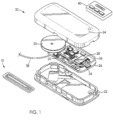
- the sensor 20 includes a housing 22 having a cover 24. There is a circuit board 26 disposed within the housing 22. A microprocessor 28, a power source which may be in the form of a coin cell battery 30, and an RFID reader 32 are each mounted on the circuit board 26. A radio 34 and an antenna 36 are also mounted on the circuit board 26 and allow the sensor 20 to transmit and receive radio signals. There is a wire 38 which may be electrically and releasably connected to the sensor 20. The radio 34 and antenna 36 allow the sensor 20 to communicate with a control panel 40 as part of a wireless security alarm system. The wire allows the sensor 20 communicate with a control panel 40 as part of a wired security alarm system. The sensor 20 communicates with control panel 40 to trigger an alarm.
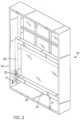
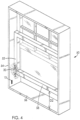
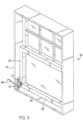
- Figures 2 to 4 show the RFID tag 10 and the sensor 20 being used as a window sensor for a window 50 in a first configuration according to a non claimed example of a security alarm system.
- the first configuration of the security alarm system is a wireless security alarm system in which the sensor 20 is mounted on a stile 52 of the window 50 and the RFID tag 10 is mounted on a side jamb 54 of the window 50 near a sill 56 thereof.
- the window 50 is fully closed in Figure 2 with a bottom rail 58 of the window 50 abutting the sill 56 thereof.
- the sensor 20 is able to read the RFID tag 10 when the window 50 is fully closed and signals that the window 50 is closed.
- the sensor 20 is also able to read the RFID tag 10 when the window 50 is open up to a threshold distance D1. It is desirable to allow the window 50 to be partially opened for ventilation but not opened enough to allow an intruder to enter through the window 50. The sensor 20 will accordingly not trigger an alarm when the sensor 20 is able to read the RFID tag 10. However, and with reference to Figure 4 , when the window 50 is open to a distance D2, which is greater than the threshold distance D1, the sensor 20 is no longer able to read the RFID tag 10 and an alarm is triggered.
- the sensor may be mounted on the bottom rail 58 of the window 60 in other configurations.
- FIGs 5 to 7 show the RFID tag 10 and the sensor 20 being used as a window sensor for a window 50 in a second configuration according to a non claimed example 2. of a security alarm system.
- the second configuration of the security alarm system is a wired security alarm system in which the RFID tag 10 is mounted on the stile 52 of the window 50 and the sensor 20 is mounted on the side jamb 54 of the window 50 near the sill 56 thereof. This allows the sensor 20 to be wired in the second configuration of the security alarm system.
- the window 50 is fully closed in Figure 5 with the bottom rail 58 of the window 50 abutting the sill 56 thereof.
- the sensor 20 is able to read the RFID tag 10 when the window 50 is fully closed and signals that the window 50 is closed.
- the sensor 20 is also able to read the RFID tag 10 when the window 50 is open up to a threshold distance D1. It is desirable to allow the window 50 to be partially opened for ventilation but not opened enough to allow an intruder to enter through the window 50. The sensor 20 will accordingly not trigger an alarm when the sensor 20 is able to read the RFID tag 10. However, and with reference to Figure 7 , when the window 50 is open to a distance D2, which is greater than the threshold distance D1, the sensor 20 is no longer able to read the RFID tag 10 and an alarm is triggered.
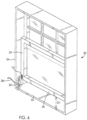
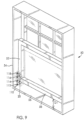
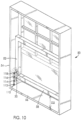
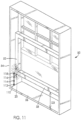
- FIGs 8 to 11 show a substrate strip 110 with a plurality of RFID tags, namely a first RFID tag 112, a second RFID tag 114, a third RFID tag 116, and a fourth RFID tag 118.
- the substrate strip 110 and the sensor 20 are used as a window sensor for a window 50 in a third configuration of a security alarm system according to the invention.
- the third configuration of the security alarm system is a wireless security alarm system in which the sensor 20 is mounted on the stile 52 of the window 50 and the substrate strip 110 is mounted on the side jamb 54 of the window 50 near the sill 56 thereof.
- the window 50 is fully closed in Figure 8 with the bottom rail 58 of the window 50 abutting the sill 56 thereof.
- the sensor 20 is able to read the first RFID tag 112 when the window 50 is fully closed and signals that the window 50 is closed. However, as shown in Figure 9 , the sensor 20 is no longer able to read the first RFID tag 112 when the window 50 is open to a threshold distance D1. The sensor 20 is able though to read the second RFID tag 114 when the window 50 is open to the threshold distance D1 and signals that the window 50 is open to the threshold distance D1. It is desirable to allow the window 50 to be partially opened for ventilation but not opened enough to allow an intruder to enter through the window 50. The sensor 20 will accordingly not trigger an alarm as the sensor 20 is able to read the second RFID tag 114 and determine that the window 50 is open up to the threshold distance D1.
- the sensor 20 when the window 50 is open to a distance D2 or distance D3, which is greater than the threshold distance D1, the sensor 20 is no longer able to read the second RFID tag 114 and the sensor will trigger an alarm as the distance D2 or distance D3 is greater than the threshold distance D1.
- the sensor 20 is able to read the third RFID tag 116 when the window 50 is open to the distance D2, as shown in Figure 10 , and signals that the window 50 is open to the distance D2.
- the sensor 20 is able to read the fourth RFID tag 118 when the window 50 is open to the distance D3 signals that the window 50 is open to the distance D3.
- the third embodiment of the security alarm system is thereby able to determine how much the window 50 is open based on whether the sensor is able to read the third RFID tag 116, the fourth RFID tag 118, or both.
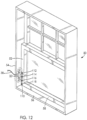
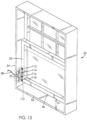
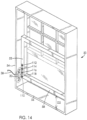
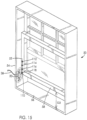
- Figures 12 to 15 show the substrate strip 110 and the sensor 20 being used as a window sensor for a window 50 in a fourth configuration of a security alarm system according to invention.
- the fourth configuration of the security alarm system is a wired security alarm system in which the substrate strip 110 is mounted on the stile 52 of the window 50 and the sensor 20 is mounted on the side jamb 54 of the window 50 near the sill 56 thereof. This allows the sensor 20 to be wired in the fourth configuration of the security alarm system.
- the window 50 is fully closed in Figure 12 with the bottom rail 58 of the window 50 abutting the sill 56 thereof.
- the sensor 20 is able to read the first RFID tag 112 when the window 50 is fully closed and signals that the window 50 is closed.
- the sensor 20 is also no longer able to read the first RFID tag 112 when the window 50 is open to a threshold distance D1.
- the sensor 20 is able though to read the second RFID tag 114 when the window 50 is open to the threshold distance D1 and signals that the window 50 is open to the threshold distance D1. It is desirable to allow the window 50 to be partially opened for ventilation but not opened enough to allow an intruder to enter through the window 50.
- the sensor 20 will accordingly not trigger an alarm as the sensor 20 is able to read the second RFID tag 114 and determine that the window 50 is open up to the threshold distance D1.
- the sensor 20 when the window 50 is open to a distance D2 or a distance D3, which is greater than the threshold distance D1, the sensor 20 is no longer able to read the second RFID tag 114 and the sensor will trigger an alarm as the distance D2 is greater than the threshold distance D1.
- the sensor 20 is able to read the third RFID tag 116 when the window 50 is open to the distance D2, as shown in Figure 14 , and signals that the window 50 is open to the distance D2.
- the sensor 20 is able to read the fourth RFID tag 118 when the window 50 is open to the distance D3 signals that the window 50 is open to the distance D3.
- the fourth embodiment of the security alarm system is thereby able to determine how much the window 50 is open based on whether the sensor is able to read the third RFID tag 116, the fourth RFID tag 118, or both.
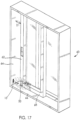
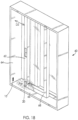
- Figures 16 to 18 show the RFID tag 10 and the sensor 20 being used as a door sensor for a door 60 in a fifth configuration according to a non claimed example of a security alarm system.
- the fifth configuration of the security alarm system is a wireless security alarm system in which the sensor 20 is mounted on a stile 62 of the door 60 and the RFID tag 10 is mounted on a side jamb 64 of the door 60 near a sill 66 thereof.
- the door 60 is fully closed in Figure 16 with the stile 62 of the door 60 abutting the side jamb 64 thereof.
- the sensor 20 is able to read the RFID tag 10 when the door 60 is fully closed and signals that the door 60 is closed.
- the sensor 20 is also able to read the RFID tag 10 when the door 60 is open up to a threshold distance D1. It is desirable to allow the door 60 to be partially opened for ventilation but not opened enough to allow an intruder to enter through the door 60. The sensor 20 will accordingly not trigger an alarm when the sensor 20 is able to read the RFID tag 10. However, and with reference to Figure 18 , when the door 60 is open to a distance D2, which is greater than the threshold distance D1, the sensor 20 is no longer able to read the RFID tag 10 and an alarm is triggered.
- the sensor 20 may be mounted to a bottom rail 68 of the door 60 in other configurations.
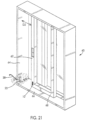
- FIGs 19 to 21 show the RFID tag 10 and the sensor 20 being used as a door sensor for a door 60 in a sixth configuration according to a non claimed example of a security alarm system.
- the sixth configuration of the security alarm system is a wired security alarm system in which the RFID tag 10 is mounted on the stile 62 of the door 60 and the sensor 20 is mounted on the side jamb 64 of the door 60 near the sill 66 thereof. This allows the sensor 20 to be wired in the sixth configuration of the security alarm system.
- the door 60 is fully closed in Figure 19 with the stile 62 of the door 60 abutting the side jamb 64 thereof.
- the sensor 20 is able to read the RFID tag 10 when the door 60 is fully closed and signals that the door 60 is closed.
- the sensor 20 is also able to read the RFID tag 10 when the door 60 is open up to a threshold distance D1. It is desirable to allow the door 60 to be partially opened for ventilation but not opened enough to allow an intruder to enter through the door 60. The sensor 20 will accordingly not trigger an alarm when the sensor 20 is able to read the RFID tag 10. However, and with reference to Figure 21 , when the door 60 is open to a distance D2, which is greater than the threshold distance D1, the door 60 is no longer able to read the RFID tag 10 and an alarm is triggered.
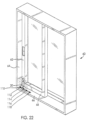
- Figures 22 to 25 show the substrate strip 110 and the sensor 20 being used as a door sensor for a door 60 in a seventh configuration of a security alarm system according to the invention.
- the seventh configuration of the security alarm system is a wireless security alarm system in which the sensor 20 is mounted on the stile 62 of the door 60 and the substrate strip 110 is mounted on the sill 66 of the door.
- the door 60 is fully closed in Figure 22 with the stile 62 of the door 60 abutting the side jamb 64 thereof.
- the sensor 20 is able to read the first RFID tag 112 when the door 60 is fully closed and signals that the door 60 is closed. However, as shown in Figure 23 , the sensor 20 is no longer able to read the first RFID tag 112 when the door 60 is open to a threshold distance D1.
- the sensor 20 is able though to read the second RFID tag 114 when the door 60 is open to the threshold distance D1 and signals that the door 60 is open to the threshold distance D1. It is desirable to allow the door 60 to be partially opened for ventilation but not opened enough to allow an intruder to enter through the door 60. The sensor 20 will accordingly not trigger an alarm as the sensor 20 is able to read the second RFID tag 114 and determine that the door 60 is open up to the threshold distance D1. Referring now to Figures 24 and 25 , when the door 60 is open to a distance D2 or distance D3, which is greater than the threshold distance D1, the sensor 20 is no longer able to read the second RFID tag 114 and the sensor will trigger an alarm as the distance D2 or distance D3 is greater than the threshold distance D1.
- the sensor 20 is able to read the third RFID tag 116 when the door 60 is open to the distance D2, as shown in Figure 24 , and signals that the door 60 is open to the distance D2.
- the sensor 20 is able to read the fourth RFID tag 118 when the door 60 is open to the distance D3 signals that the door 60 is open to the distance D3.
- the seventh embodiment of the security alarm system is thereby able to determine how much the door 60 is open based on whether the sensor is able to read the third RFID tag 116, the fourth RFID tag 118, or both.
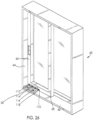
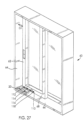
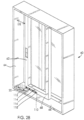
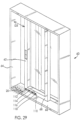
- Figures 26 to 29 show the substrate strip 110 and the sensor 20 being used as a door sensor for a door 60 in an eighth configuration of a security alarm system according to the invention.
- the eighth configuration of the security alarm system is a wired security alarm system in which the sensor 20 is mounted on the sill 66 of the door 60 and the substrate strip 110 is mounted on the bottom rail 68 of the door 60. This allows the sensor 20 to be wired in the eighth configuration of the security alarm system.
- the door 60 is fully closed in Figure 26 with the stile 62 of the door 60 abutting the side jamb 64 thereof.
- the sensor 20 is able to read the first RFID tag 112 when the door 60 is fully closed and signals that the door 60 is closed.
- the sensor 20 is also no longer able to read the first RFID tag 112 when the door 60 is open to a threshold distance D1.
- the sensor 20 is able though to read the second RFID tag 114 when the door 60 is open to the threshold distance D1 and signals that the door 60 is open to the threshold distance D1. It is desirable to allow the door 60 to be partially opened for ventilation but not opened enough to allow an intruder to enter through the door 60.
- the sensor 20 will accordingly not trigger an alarm as the sensor 20 is able to read the second RFID tag 114 and determine that the door 60 is open up to the threshold distance D1.
- the sensor 20 when the door 60 is open to a distance D2 or a distance D3, which is greater than the threshold distance D1, the sensor 20 is no longer able to read the second RFID tag 114 and the sensor will trigger an alarm as the distance D2 is greater than the threshold distance D1.
- the sensor 20 is able to read the third RFID tag 116 when the door 60 is open to the distance D2, as shown in Figure 13 , and signals that the door 60 is open to the distance D2.
- the sensor 20 is able to read the fourth RFID tag 118 when the door 60 is open to the distance D3 signals that the door 60 is open to the distance D3.
- the eighth embodiment of the security alarm system is thereby able to determine how much the door 60 is open based on whether the sensor is able to read the third RFID tag 116, the fourth RFID tag 118, or both.
Landscapes
- Engineering & Computer Science (AREA)
- Physics & Mathematics (AREA)
- General Physics & Mathematics (AREA)
- Theoretical Computer Science (AREA)
- Computer Networks & Wireless Communication (AREA)
- Health & Medical Sciences (AREA)
- Toxicology (AREA)
- Computer Hardware Design (AREA)
- Microelectronics & Electronic Packaging (AREA)
- Electromagnetism (AREA)
- General Health & Medical Sciences (AREA)
- Artificial Intelligence (AREA)
- Computer Vision & Pattern Recognition (AREA)
- Burglar Alarm Systems (AREA)
- Alarm Systems (AREA)
Claims (8)
- Sicherheitsalarmsystem, das Folgendes umfasst:eine Vielzahl von RFID-Tags (112, 114, 116, 118);einen Sensor (20), der ein RFID-Lesegerät (32) beinhaltet, das an dem Fenster (50) oder der Tür (60) montiert ist,wobei ein Abstand zwischen dem Sensor (20) und den RFID-Tags (112, 114, 116, 118) zunimmt, während das Fenster (50) oder die Tür (60) geöffnet wird; undein Bedienfeld (40), wobei der Sensor (20) dem Bedienfeld (40) signalisiert, einen Alarm auszulösen, wenn der Abstand zwischen dem Sensor (20) und den RFID-Tags (112, 114, 116, 118) über einen Schwellenabstand hinaus zunimmt (D1) und der Sensor (20) die RFID-Tags (112, 114, 116, 118) nicht lesen kann,dadurch gekennzeichnet, dass das System ferner einen Substratstreifen (110) mit der Vielzahl von RFID-Tags beinhaltet, nämlich mit einem ersten RFID-Tag (112), einem zweiten RFID-Tag (114), einem dritten RFID-Tag (116) und einem vierten RFID-Tag (118),wobei der Substratstreifen an dem Fenster (50) oder an der Tür (60) montiert ist,wobeider Sensor (20) an einem Holm (52) des Fensters (50) montiert ist und der Substratstreifen (110) an einem Seitenpfosten (54) des Fensters (50) in der Nähe einer Fensterbank (56) davon montiert ist, oderder Substratstreifen (110) an einem Holm (52) des Fensters (50) montiert ist, und der Sensor (20) an einem Seitenpfosten (54) des Fensters (50) nahe einer Fensterbank (56) davon montiert ist, oderder Sensor (20) an einem Holm (62) der Tür (60) montiert ist und der Substratstreifen (110) an einer Schwelle (66) der Tür (60) montiert ist, oderder Sensor (20) an einer Schwelle (66) der Tür (60) montiert ist und der Substratstreifen (110) an einer unteren Schiene (68) der Tür (60) montiert ist.
- Sicherheitsalarmsystem nach Anspruch 1, dadurch gekennzeichnet, dass der Sensor (20) verschiedene der RFID-Tags (112, 114, 116, 118) liest, während das Fenster oder die Tür (50, 60) geöffnet wird, und dass der Sensor (20) dem Bedienfeld (40) einen Abstand, um den das Fenster oder die Tür (50, 60) geöffnet ist, basierend auf den RFID-Tags (112, 114, 116, 118), die der Sensor (20) liest, während das Fenster oder die Tür (50, 60) geöffnet wird, signalisiert.
- Sicherheitsalarmsystem nach Anspruch 1 oder 2, dadurch gekennzeichnet, dass das Sicherheitsalarmsystem ein drahtloses Sicherheitsalarmsystem ist.
- Sicherheitsalarmsystem nach Anspruch 1 oder 2,dadurch gekennzeichnet, dass das Sicherheitsalarmsystem ein drahtgebundenes Sicherheitsalarmsystem ist.
- Sicherheitsalarmsystem nach einem der Ansprüche 1 bis 4, dadurch gekennzeichnet, dass das Sicherheitsalarmsystem das Öffnen des Fensters oder der Tür (50, 60) zur Belüftung gestattet, jedoch nicht weit genug geöffnet ist, um einem Eindringling den Eintritt durch das Fenster oder die Tür (50, 60) zu gestatten.
- Sicherheitsalarmsystem nach einem der Ansprüche 1 bis 5,dadurch gekennzeichnet, dass der Sensor (20) in der Lage ist, ein erstes RFID-Tag (112) zu lesen, wenn das Fenster oder die Tür (50, 60) vollständig geschlossen ist, und signalisiert, dass das Fenster oder die Tür (50, 60) geschlossen ist, dadurch gekennzeichnet dass der Sensor (20) nicht mehr in der Lage ist, das erste RFID-Tag (112) zu lesen, wenn das Fenster oder die Tür (50, 60) bis zu dem Schwellenabstand (D1) geöffnet ist,dadurch gekennzeichnet, dass der Sensor (20) in der Lage ist, ein zweites RFID-Tag (114) zu lesen, wenn das Fenster oder die Tür (50, 60) bis zu dem Schwellenabstand geöffnet ist, und signalisiert, dass das Fenster oder die Tür (50, 60) bis zu dem Schwellenabstand geöffnet ist, wobei der Schwellenabstand es gestattet, das Fenster oder die Tür (50, 60) teilweise zur Belüftung zu öffnen, aber nicht weit genug geöffnet ist, um einem Eindringling den Eintritt durch das Fenster oder die Tür (50, 60) zu gestatten, dadurch gekennzeichnet, dass der Sensor (20) keinen Alarm auslöst, wenn der Sensor (20) in der Lage ist, das zweite RFID-Etikett (114) zu lesen und bestimmt, dass das Fenster oder die Tür (50, 60) bis zu dem Schwellenabstand geöffnet ist, unddadurch gekennzeichnet, dass der Sensor (20) nicht mehr in der Lage ist, das zweite RFID-Tag (114) zu lesen, wenn das Fenster oder die Tür (50, 60) bis zu einem zweiten Abstand (D2) geöffnet ist, der größer als der Schwellenabstand ist, und der Sensor (20) den Alarm auslöst, während der zweite Abstand größer als der Schwellenabstand ist.
- Sicherheitsalarmsystem nach einem der Ansprüche 1 bis 6,dadurch gekennzeichnet, dass der Sensor (20) in der Lage ist, ein erstes RFID-Tag (112) zu lesen, wenn das Fenster oder die Tür (50, 60) vollständig geschlossen ist, und signalisiert, dass das Fenster oder die Tür (50, 60) geschlossen ist, dadurch gekennzeichnet dass der Sensor (20) nicht mehr in der Lage ist, das erste RFID-Tag (112) zu lesen, wenn das Fenster oder die Tür (50, 60) bis zu dem Schwellenabstand (D1) geöffnet ist,dadurch gekennzeichnet, dass der Sensor (20) in der Lage ist, ein zweites RFID-Tag (114) zu lesen, wenn das Fenster oder die Tür (50, 60) bis zu dem Schwellenabstand geöffnet ist, und signalisiert, dass das Fenster oder die Tür (50, 60) bis zu dem Schwellenabstand geöffnet ist, wobei der Schwellenabstand es gestattet, das Fenster oder die Tür (50, 60) teilweise zur Belüftung zu öffnen, aber nicht weit genug geöffnet ist, um einem Eindringling den Eintritt durch das Fenster oder die Tür (50, 60) zu gestatten, dadurch gekennzeichnet, dass der Sensor (20) keinen Alarm auslöst, wenn der Sensor (20) in der Lage ist, das zweite RFID-Tag (114) zu lesen und bestimmt, dass das Fenster oder die Tür (50, 60) bis zu dem Schwellenabstand geöffnet ist, unddadurch gekennzeichnet, dass der Sensor (20) nicht mehr in der Lage ist, das zweite RFID-Tag (114) zu lesen, wenn das Fenster oder die Tür (50, 60) bis zu einem zweiten Abstand (D2) geöffnet ist, der größer als der Schwellenabstand ist, dadurch gekennzeichnet, dass der Sensor (20) in der Lage ist, ein drittes RFID-Tag (116) zu lesen, wenn das Fenster oder die Tür bis zu dem zweiten Abstand (D2) geöffnet ist, und signalisiert, dass das Fenster oder die Tür bis zu dem zweiten Abstand (D2) geöffnet ist, dadurch gekennzeichnet, dass der Sensor (20) keinen Alarm auslöst, wenn der Sensor (20) in der Lage ist, das dritte RFID-Tag (116) zu lesen und bestimmt, dass das Fenster oder die Tür (50, 60) bis zu dem zweiten Abstand (D2) geöffnet ist; unddadurch gekennzeichnet, dass der Sensor (20) nicht mehr in der Lage ist, das zweite RFID-Tag (116) zu lesen, wenn das Fenster oder die Tür (50, 60) bis zu einem dritten Abstand (D3) geöffnet ist, der größer als der Schwellenabstand ist, und der Sensor (20) den Alarm auslöst, während der dritte Abstand größer als der zweite Abstand (D2) ist.
- Sicherheitsalarmsystem nach einem der Ansprüche 1 bis 7,dadurch gekennzeichnet, dass der Sensor (20) in der Lage ist, ein erstes RFID-Tag (112) zu lesen, wenn das Fenster oder die Tür (50, 60) vollständig geschlossen ist, und signalisiert, dass das Fenster oder die Tür (50, 60) geschlossen ist, dadurch gekennzeichnet dass der Sensor (20) nicht mehr in der Lage ist, das erste RFID-Tag (112) zu lesen, wenn das Fenster oder die Tür (50, 60) bis zu dem Schwellenabstand (D1) geöffnet ist,dadurch gekennzeichnet, dass der Sensor (20) in der Lage ist, ein zweites RFID-Tag (114) zu lesen, wenn das Fenster oder die Tür (50, 60) bis zu dem Schwellenabstand geöffnet ist, und signalisiert, dass das Fenster oder die Tür (50, 60) bis zu dem Schwellenabstand geöffnet ist, wobei der Schwellenabstand es gestattet, das Fenster oder die Tür (50, 60) teilweise zur Belüftung zu öffnen, aber nicht weit genug geöffnet ist, um einem Eindringling den Eintritt durch das Fenster oder die Tür (50, 60) zu gestatten, dadurch gekennzeichnet, dass der Sensor (20) keinen Alarm auslöst, wenn der Sensor (20) in der Lage ist, das zweite RFID-Etikett (114) zu lesen und bestimmt, dass das Fenster oder die Tür (50, 60) bis zu dem Schwellenabstand geöffnet ist, unddadurch gekennzeichnet, dass der Sensor (20) nicht mehr in der Lage ist, das zweite RFID-Tag (114) zu lesen, wenn das Fenster oder die Tür (50, 60) bis zu einem zweiten Abstand (D2) geöffnet ist, der größer als der Schwellenabstand ist, dadurch gekennzeichnet, dass der Sensor (20) in der Lage ist, ein drittes RFID-Tag (116) zu lesen, wenn das Fenster oder die Tür bis zu dem zweiten Abstand (D2) geöffnet ist, und signalisiert, dass das Fenster oder die Tür bis zu dem zweiten Abstand (D2) geöffnet ist, dadurch gekennzeichnet, dass der Sensor (20) keinen Alarm auslöst, wenn der Sensor (20) in der Lage ist, das dritte RFID-Tag (116) zu lesen und bestimmt, dass das Fenster oder die Tür (50, 60) bis zu dem zweiten Abstand (D2) geöffnet ist; unddadurch gekennzeichnet, dass der Sensor (20) nicht mehr in der Lage ist, das dritte RFID-Tag (116) zu lesen, wenn das Fenster oder die Tür (50, 60) bis zu einem dritten Abstand (D3) geöffnet ist, der größer als der zweite Abstand ist, dadurch gekennzeichnet, dass der Sensor (20) in der Lage ist, ein viertes RFID-Tag (118) zu lesen, wenn das Fenster oder die Tür (50, 60) bis zu dem dritten Abstand (D3) geöffnet ist, und signalisiert, dass das Fenster oder die Tür bis zu dem dritten Abstand (D3) geöffnet ist, dadurch gekennzeichnet, dass der Sensor keinen Alarm auslöst, wenn der Sensor (20) in der Lage ist, das vierte RFID-Tag (118) zu lesen und bestimmt, dass das Fenster oder die Tür (50, 60) bis zu dem dritten Abstand geöffnet ist, wobei das Sicherheitsalarmsystem dadurch in der Lage ist zu bestimmen, wie weit das Fenster oder die Tür (50, 60) geöffnet ist, basierend darauf, ob der Sensor (20) in der Lage ist, das dritte RFID-Tag (116) und das vierte RFID-Tag zu lesen (118) oder beide zu lesen.
Applications Claiming Priority (2)
| Application Number | Priority Date | Filing Date | Title |
|---|---|---|---|
| US201862672593P | 2018-05-17 | 2018-05-17 | |
| PCT/CA2019/000071 WO2019218050A1 (en) | 2018-05-17 | 2019-05-17 | Security alarm system comprising an rfid tag |
Publications (3)
| Publication Number | Publication Date |
|---|---|
| EP3815065A1 EP3815065A1 (de) | 2021-05-05 |
| EP3815065A4 EP3815065A4 (de) | 2021-06-23 |
| EP3815065B1 true EP3815065B1 (de) | 2023-08-09 |
Family
ID=68540711
Family Applications (1)
| Application Number | Title | Priority Date | Filing Date |
|---|---|---|---|
| EP19803339.1A Active EP3815065B1 (de) | 2018-05-17 | 2019-05-17 | Sicherheitsalarmsystem mit einem rfid-etikett |
Country Status (6)
| Country | Link |
|---|---|
| US (1) | US11295584B2 (de) |
| EP (1) | EP3815065B1 (de) |
| CN (1) | CN112189223A (de) |
| CA (1) | CA3100201C (de) |
| MX (1) | MX2020012192A (de) |
| WO (1) | WO2019218050A1 (de) |
Families Citing this family (17)
| Publication number | Priority date | Publication date | Assignee | Title |
|---|---|---|---|---|
| US11341829B2 (en) | 2014-07-25 | 2022-05-24 | 1010210 B.C. Ltd. | Sensor assembly for use in a security alarm system and method of installing the same |
| US11645897B2 (en) | 2014-07-25 | 2023-05-09 | 1010210 B.C. Ltd. | Sensor assembly for use in a security alarm system and method of installing the same |
| US11763652B2 (en) * | 2014-07-25 | 2023-09-19 | 1010210 B.C. Ltd. | Method of arranging a security alarm system on a window/door and framing, and combination comprising the window/door, framing and security alarm system thereof |
| US11295584B2 (en) | 2018-05-17 | 2022-04-05 | 1010210 B.C. Ltd. | Security alarm system comprising an RFID tag |
| MX2021006916A (es) | 2018-12-10 | 2021-07-07 | 1010210 B C Ltd | Metodo para instalar un sistema de alarma de seguridad y un punto de acceso inalambrico. |
| MX2022009620A (es) * | 2020-02-07 | 2022-09-07 | Saint Gobain | Encristalado que tiene un transpondedor de rfid. |
| USD942294S1 (en) * | 2020-03-16 | 2022-02-01 | Honeywell International Inc. | Enclosure for a security system controller |
| USD942295S1 (en) * | 2020-03-27 | 2022-02-01 | Honeywell International Inc. | Enclosure for a security system controller |
| US11574530B2 (en) * | 2020-06-04 | 2023-02-07 | Ecolink Intelligent Technology, Inc. | Electronic sensor with flexible sensing device |
| USD978696S1 (en) * | 2020-09-22 | 2023-02-21 | Comcast Cable Communications, Llc | Sensor kit |
| USD978697S1 (en) * | 2020-09-22 | 2023-02-21 | Comcast Cable Communications, Llc | Sensor kit |
| USD967723S1 (en) * | 2020-09-22 | 2022-10-25 | Comcast Cable Communications, Llc | Sensor |
| USD967724S1 (en) * | 2020-09-22 | 2022-10-25 | Comcast Cable Communications, Llc | Sensor |
| EP4465274A1 (de) * | 2020-11-19 | 2024-11-20 | 1010210 B.C. Ltd. | Anpassbares sicherheitsalarmsystem mit einem rfid-etikett und installationsverfahren dafür |
| TWD217612S (zh) * | 2021-05-11 | 2022-03-11 | 宏碁股份有限公司 | 定位追蹤器 |
| US12288452B1 (en) * | 2024-10-17 | 2025-04-29 | Birdie Love Inc. | Portable alarm |
| USD1090309S1 (en) * | 2025-03-06 | 2025-08-26 | Cybersecurity Management (Shenzhen) Co., Ltd | Door magnetic alarm |
Family Cites Families (48)
| Publication number | Priority date | Publication date | Assignee | Title |
|---|---|---|---|---|
| JPS51103367U (de) | 1975-02-17 | 1976-08-19 | ||
| US4296410A (en) | 1980-02-25 | 1981-10-20 | Sprague Electric Company | Two-state Hall element proximity sensor device with lamp indicator |
| CA1308167C (en) | 1988-10-25 | 1992-09-29 | Fernando C. Lebron | Magnetic field detector |
| US5007199A (en) | 1990-02-15 | 1991-04-16 | Larmco Security, Inc. | Anti-intrusion window |
| US5434500A (en) | 1993-07-26 | 1995-07-18 | Hauck; Bruce | Magnetic field generator and detector position indicator |
| US8169311B1 (en) | 1999-12-15 | 2012-05-01 | Automotive Technologies International, Inc. | Wireless transmission system for vehicular component control and monitoring |
| NL1000644C2 (en) | 1995-06-23 | 1996-12-24 | Nijenstein Holding B V | Double glazed panel with intruder detection circuit |
| US5714932A (en) | 1996-02-27 | 1998-02-03 | Radtronics, Inc. | Radio frequency security system with direction and distance locator |
| GB9821046D0 (en) | 1998-09-28 | 1998-11-18 | Whitesmith Howard W | Detection system |
| KR100318820B1 (ko) * | 1999-03-13 | 2002-01-05 | 배동만 | 도어 열림 감지용 자기 리드 스위치 |
| GB9925240D0 (en) | 1999-10-26 | 1999-12-29 | Briggs Leslie G | Sensor for security system |
| US6906626B2 (en) | 2000-04-07 | 2005-06-14 | Raymond J. Novotny | Burglar alarm and door chime |
| DE20017433U1 (de) | 2000-10-10 | 2001-03-29 | SeCa GmbH, 77933 Lahr | Vorrichtung zum Erfassen des Öffnungszustandes einer Tür, eines Fensters o.dgl. |
| US6400267B1 (en) | 2001-01-05 | 2002-06-04 | Calstar Systems Group, Inc. | Wireless reed switch-based burglar alarm |
| US6737969B2 (en) | 2001-11-27 | 2004-05-18 | Ion Digital Llp | Wireless security sensor systems for windows and doors |
| US7207142B2 (en) * | 2002-12-04 | 2007-04-24 | Wayne-Dalton Corp. | System and related methods for signaling the position of a movable barrier and securing its position |
| US7079034B2 (en) | 2003-02-03 | 2006-07-18 | Ingrid, Inc. | RFID transponder for a security system |
| US7081816B2 (en) | 2003-06-06 | 2006-07-25 | Ion Digital Llp | Compact wireless sensor |
| ATE482650T1 (de) | 2003-11-03 | 2010-10-15 | Microchips Inc | Medizinprodukt zum messen von glucose |
| EP1683121B1 (de) | 2003-11-13 | 2012-01-11 | CommerceGuard AB | Verfahren und system zum überwachen von behältern zur aufrechterhaltung ihrer sicherheit |
| US6995622B2 (en) | 2004-01-09 | 2006-02-07 | Robert Bosh Gmbh | Frequency and/or phase compensated microelectromechanical oscillator |
| CN1645424A (zh) * | 2005-01-18 | 2005-07-27 | 上海中策工贸有限公司 | 门打开提醒装置 |
| EP1878088B1 (de) | 2005-04-27 | 2018-06-06 | Qualcomm Technologies, Inc. | Funkgerät mit einer für betrieb über mehrere bänder geeigneten antennenanordnung |
| WO2007056836A1 (en) | 2005-11-16 | 2007-05-24 | Distribution Gablex Inc. | Magnetic field position sensor and method of use |
| US9695015B1 (en) * | 2005-12-28 | 2017-07-04 | James Marinelli | Elevator door safety lock system |
| EP1860624A1 (de) | 2006-05-26 | 2007-11-28 | Roto Frank Ag | Fenster, Tür oder dergleichen mit Öffnungszustandserkennung |
| GB0610558D0 (en) | 2006-05-30 | 2006-07-05 | Tagtec Ltd | Security monitoring system |
| US8212670B2 (en) | 2008-10-28 | 2012-07-03 | Ion Digital Llp | Compact wireless recessed sensor with plunger switch |
| US8601534B2 (en) | 2009-07-02 | 2013-12-03 | Samsung Electronics Co., Ltd. | Securely using service providers in elastic computing systems and environments |
| US8410937B2 (en) * | 2009-12-28 | 2013-04-02 | Motorola Solutions, Inc. | Two-part security tag |
| AU2011286457B2 (en) | 2010-08-04 | 2014-12-11 | Christopher Briand Scherer | Active keystone jack |
| CN201780643U (zh) | 2010-09-17 | 2011-03-30 | 陈宏乔 | 一种电子安保系统中的无线操作装置 |
| US8773263B2 (en) | 2011-09-01 | 2014-07-08 | Ecolink Intelligent Technology, Inc. | Security apparatus and method |
| US9142108B2 (en) | 2011-09-01 | 2015-09-22 | Ecolink Intelligent Technology, Inc. | Security apparatus and method |
| US8688052B2 (en) | 2012-01-03 | 2014-04-01 | Silicon Laboratories Inc. | Apparatus and method for phase noise self-test |
| US9245439B2 (en) | 2012-03-28 | 2016-01-26 | Ecolink Intelligent Technology, Inc. | Temporary security bypass method and apparatus |
| US8933789B1 (en) * | 2012-07-13 | 2015-01-13 | The United States of America as represented by the Administrator of the National Aeronauties and Space Administration | Systems and methods for RFID-enabled information collection |
| US8988225B2 (en) | 2012-12-04 | 2015-03-24 | Honeywell International, Inc. | Door/window contact system |
| US9959717B2 (en) | 2013-05-17 | 2018-05-01 | Networked Emergency Systems Inc. | Security and first-responder emergency lighting system |
| DE102013217366A1 (de) | 2013-05-22 | 2014-11-27 | Dieter Neuhold | Anordnung zur Überwachung einer Position mindestens eines ersten Objektes bezüglich mindestens eines zweiten Objektes |
| US9196137B2 (en) | 2014-01-13 | 2015-11-24 | Tyco Fire & Security Gmbh | Two-way wireless communication enabled intrusion detector assemblies |
| DE202014000574U1 (de) | 2014-01-24 | 2014-02-20 | Josef Holzer | Vorrichtung zur Erzeugung von Warn- oder Hinweissignalen |
| US10249161B2 (en) | 2014-07-25 | 2019-04-02 | 1010210 B.C. Ltd. | Magnetic field sensor |
| US9905099B2 (en) | 2014-07-25 | 2018-02-27 | 1010210 B.C. Ltd. | Magnetic field sensor for use in a security alarm system |
| CN205281694U (zh) * | 2015-12-19 | 2016-06-01 | 陈奎发 | 一种门窗磁 |
| US9767660B1 (en) * | 2016-12-22 | 2017-09-19 | Nortek Security & Control Llc | Adjustable entry security sensor |
| US11295584B2 (en) | 2018-05-17 | 2022-04-05 | 1010210 B.C. Ltd. | Security alarm system comprising an RFID tag |
| CN112368751A (zh) | 2018-06-10 | 2021-02-12 | 杭州泰铭信息技术有限公司 | 安全装置系统的组成、制造和使用方法 |
-
2019
- 2019-05-17 US US17/055,287 patent/US11295584B2/en active Active
- 2019-05-17 EP EP19803339.1A patent/EP3815065B1/de active Active
- 2019-05-17 CN CN201980033054.9A patent/CN112189223A/zh active Pending
- 2019-05-17 MX MX2020012192A patent/MX2020012192A/es unknown
- 2019-05-17 CA CA3100201A patent/CA3100201C/en active Active
- 2019-05-17 WO PCT/CA2019/000071 patent/WO2019218050A1/en not_active Ceased
Also Published As
| Publication number | Publication date |
|---|---|
| CA3100201A1 (en) | 2019-11-21 |
| WO2019218050A1 (en) | 2019-11-21 |
| US11295584B2 (en) | 2022-04-05 |
| US20210209907A1 (en) | 2021-07-08 |
| CA3100201C (en) | 2024-01-09 |
| EP3815065A4 (de) | 2021-06-23 |
| MX2020012192A (es) | 2021-01-29 |
| EP3815065A1 (de) | 2021-05-05 |
| CN112189223A (zh) | 2021-01-05 |
Similar Documents
| Publication | Publication Date | Title |
|---|---|---|
| CA3100201C (en) | Security alarm system comprising an rfid tag | |
| US6737969B2 (en) | Wireless security sensor systems for windows and doors | |
| US7283034B2 (en) | Object sensor and controller | |
| EP3937144B1 (de) | Längliche drahtlose sensoranordnung | |
| US7800497B2 (en) | Wireless detection system | |
| US20070194914A1 (en) | RFID perimeter alarm monitoring system | |
| US7388467B2 (en) | System and method for determining a state of a door | |
| CN111163976A (zh) | 安全带锁系统 | |
| US9530261B2 (en) | Method and device for triggering, using an RFID reader, a procedure for actuating a means for locking/unlocking the access doors of a motor vehicle | |
| US20150199888A1 (en) | Two-way wireless communication enabled intrusion detector assemblies | |
| US10720033B2 (en) | Elongated wireless sensor assembly | |
| EP1855756B1 (de) | Türanordnung für ein Nahverkehrfahrzeug, mit einem drahtlosen stromlosen Schaltsensor. | |
| DE102013217366A1 (de) | Anordnung zur Überwachung einer Position mindestens eines ersten Objektes bezüglich mindestens eines zweiten Objektes | |
| EP2717233B1 (de) | Vorrichtung zur Identifizierung einer Katze zum Zwecke der Ansteuerung einer elektronischen Katzenklappe | |
| EP4241262B1 (de) | Anpassbares sicherheitsalarmsystem mit einem rfid-etikett und installationsverfahren dafür | |
| US20090133330A1 (en) | Window or door | |
| DE102006046859A1 (de) | Verfahren zur Überwachung von Räumen über Sicherheitsisolierglaseinheiten | |
| JP2017218766A (ja) | 扉開閉検知システムおよび扉の開閉判定方法 | |
| CN223123232U (zh) | 人在传感器和商旅客房供电用辅助装置 | |
| JP2010130593A (ja) | 小型送信機 | |
| JP2003317040A (ja) | 省電力型rfidカードリーダライター | |
| KR20110129662A (ko) | 알에프 아이디를 이용한 개폐감지장치 |
Legal Events
| Date | Code | Title | Description |
|---|---|---|---|
| STAA | Information on the status of an ep patent application or granted ep patent |
Free format text: STATUS: THE INTERNATIONAL PUBLICATION HAS BEEN MADE |
|
| PUAI | Public reference made under article 153(3) epc to a published international application that has entered the european phase |
Free format text: ORIGINAL CODE: 0009012 |
|
| STAA | Information on the status of an ep patent application or granted ep patent |
Free format text: STATUS: REQUEST FOR EXAMINATION WAS MADE |
|
| 17P | Request for examination filed |
Effective date: 20201202 |
|
| AK | Designated contracting states |
Kind code of ref document: A1 Designated state(s): AL AT BE BG CH CY CZ DE DK EE ES FI FR GB GR HR HU IE IS IT LI LT LU LV MC MK MT NL NO PL PT RO RS SE SI SK SM TR |
|
| A4 | Supplementary search report drawn up and despatched |
Effective date: 20210526 |
|
| RIC1 | Information provided on ipc code assigned before grant |
Ipc: G08B 13/24 20060101AFI20210519BHEP Ipc: G08B 13/08 20060101ALI20210519BHEP Ipc: H04B 1/59 20060101ALI20210519BHEP |
|
| DAV | Request for validation of the european patent (deleted) | ||
| DAX | Request for extension of the european patent (deleted) | ||
| STAA | Information on the status of an ep patent application or granted ep patent |
Free format text: STATUS: EXAMINATION IS IN PROGRESS |
|
| 17Q | First examination report despatched |
Effective date: 20220519 |
|
| GRAP | Despatch of communication of intention to grant a patent |
Free format text: ORIGINAL CODE: EPIDOSNIGR1 |
|
| STAA | Information on the status of an ep patent application or granted ep patent |
Free format text: STATUS: GRANT OF PATENT IS INTENDED |
|
| INTG | Intention to grant announced |
Effective date: 20230303 |
|
| GRAS | Grant fee paid |
Free format text: ORIGINAL CODE: EPIDOSNIGR3 |
|
| GRAA | (expected) grant |
Free format text: ORIGINAL CODE: 0009210 |
|
| STAA | Information on the status of an ep patent application or granted ep patent |
Free format text: STATUS: THE PATENT HAS BEEN GRANTED |
|
| AK | Designated contracting states |
Kind code of ref document: B1 Designated state(s): AL AT BE BG CH CY CZ DE DK EE ES FI FR GB GR HR HU IE IS IT LI LT LU LV MC MK MT NL NO PL PT RO RS SE SI SK SM TR |
|
| REG | Reference to a national code |
Ref country code: GB Ref legal event code: FG4D |
|
| REG | Reference to a national code |
Ref country code: CH Ref legal event code: EP |
|
| REG | Reference to a national code |
Ref country code: IE Ref legal event code: FG4D |
|
| REG | Reference to a national code |
Ref country code: DE Ref legal event code: R096 Ref document number: 602019034727 Country of ref document: DE |
|
| REG | Reference to a national code |
Ref country code: LT Ref legal event code: MG9D |
|
| REG | Reference to a national code |
Ref country code: NL Ref legal event code: MP Effective date: 20230809 |
|
| REG | Reference to a national code |
Ref country code: AT Ref legal event code: MK05 Ref document number: 1598423 Country of ref document: AT Kind code of ref document: T Effective date: 20230809 |
|
| PG25 | Lapsed in a contracting state [announced via postgrant information from national office to epo] |
Ref country code: GR Free format text: LAPSE BECAUSE OF FAILURE TO SUBMIT A TRANSLATION OF THE DESCRIPTION OR TO PAY THE FEE WITHIN THE PRESCRIBED TIME-LIMIT Effective date: 20231110 |
|
| PG25 | Lapsed in a contracting state [announced via postgrant information from national office to epo] |
Ref country code: IS Free format text: LAPSE BECAUSE OF FAILURE TO SUBMIT A TRANSLATION OF THE DESCRIPTION OR TO PAY THE FEE WITHIN THE PRESCRIBED TIME-LIMIT Effective date: 20231209 |
|
| PG25 | Lapsed in a contracting state [announced via postgrant information from national office to epo] |
Ref country code: SE Free format text: LAPSE BECAUSE OF FAILURE TO SUBMIT A TRANSLATION OF THE DESCRIPTION OR TO PAY THE FEE WITHIN THE PRESCRIBED TIME-LIMIT Effective date: 20230809 Ref country code: RS Free format text: LAPSE BECAUSE OF FAILURE TO SUBMIT A TRANSLATION OF THE DESCRIPTION OR TO PAY THE FEE WITHIN THE PRESCRIBED TIME-LIMIT Effective date: 20230809 Ref country code: PT Free format text: LAPSE BECAUSE OF FAILURE TO SUBMIT A TRANSLATION OF THE DESCRIPTION OR TO PAY THE FEE WITHIN THE PRESCRIBED TIME-LIMIT Effective date: 20231211 Ref country code: NO Free format text: LAPSE BECAUSE OF FAILURE TO SUBMIT A TRANSLATION OF THE DESCRIPTION OR TO PAY THE FEE WITHIN THE PRESCRIBED TIME-LIMIT Effective date: 20231109 Ref country code: NL Free format text: LAPSE BECAUSE OF FAILURE TO SUBMIT A TRANSLATION OF THE DESCRIPTION OR TO PAY THE FEE WITHIN THE PRESCRIBED TIME-LIMIT Effective date: 20230809 Ref country code: LV Free format text: LAPSE BECAUSE OF FAILURE TO SUBMIT A TRANSLATION OF THE DESCRIPTION OR TO PAY THE FEE WITHIN THE PRESCRIBED TIME-LIMIT Effective date: 20230809 Ref country code: LT Free format text: LAPSE BECAUSE OF FAILURE TO SUBMIT A TRANSLATION OF THE DESCRIPTION OR TO PAY THE FEE WITHIN THE PRESCRIBED TIME-LIMIT Effective date: 20230809 Ref country code: IS Free format text: LAPSE BECAUSE OF FAILURE TO SUBMIT A TRANSLATION OF THE DESCRIPTION OR TO PAY THE FEE WITHIN THE PRESCRIBED TIME-LIMIT Effective date: 20231209 Ref country code: HR Free format text: LAPSE BECAUSE OF FAILURE TO SUBMIT A TRANSLATION OF THE DESCRIPTION OR TO PAY THE FEE WITHIN THE PRESCRIBED TIME-LIMIT Effective date: 20230809 Ref country code: GR Free format text: LAPSE BECAUSE OF FAILURE TO SUBMIT A TRANSLATION OF THE DESCRIPTION OR TO PAY THE FEE WITHIN THE PRESCRIBED TIME-LIMIT Effective date: 20231110 Ref country code: FI Free format text: LAPSE BECAUSE OF FAILURE TO SUBMIT A TRANSLATION OF THE DESCRIPTION OR TO PAY THE FEE WITHIN THE PRESCRIBED TIME-LIMIT Effective date: 20230809 Ref country code: AT Free format text: LAPSE BECAUSE OF FAILURE TO SUBMIT A TRANSLATION OF THE DESCRIPTION OR TO PAY THE FEE WITHIN THE PRESCRIBED TIME-LIMIT Effective date: 20230809 |
|
| PG25 | Lapsed in a contracting state [announced via postgrant information from national office to epo] |
Ref country code: PL Free format text: LAPSE BECAUSE OF FAILURE TO SUBMIT A TRANSLATION OF THE DESCRIPTION OR TO PAY THE FEE WITHIN THE PRESCRIBED TIME-LIMIT Effective date: 20230809 |
|
| PG25 | Lapsed in a contracting state [announced via postgrant information from national office to epo] |
Ref country code: ES Free format text: LAPSE BECAUSE OF FAILURE TO SUBMIT A TRANSLATION OF THE DESCRIPTION OR TO PAY THE FEE WITHIN THE PRESCRIBED TIME-LIMIT Effective date: 20230809 |
|
| PG25 | Lapsed in a contracting state [announced via postgrant information from national office to epo] |
Ref country code: SM Free format text: LAPSE BECAUSE OF FAILURE TO SUBMIT A TRANSLATION OF THE DESCRIPTION OR TO PAY THE FEE WITHIN THE PRESCRIBED TIME-LIMIT Effective date: 20230809 Ref country code: RO Free format text: LAPSE BECAUSE OF FAILURE TO SUBMIT A TRANSLATION OF THE DESCRIPTION OR TO PAY THE FEE WITHIN THE PRESCRIBED TIME-LIMIT Effective date: 20230809 Ref country code: ES Free format text: LAPSE BECAUSE OF FAILURE TO SUBMIT A TRANSLATION OF THE DESCRIPTION OR TO PAY THE FEE WITHIN THE PRESCRIBED TIME-LIMIT Effective date: 20230809 Ref country code: EE Free format text: LAPSE BECAUSE OF FAILURE TO SUBMIT A TRANSLATION OF THE DESCRIPTION OR TO PAY THE FEE WITHIN THE PRESCRIBED TIME-LIMIT Effective date: 20230809 Ref country code: DK Free format text: LAPSE BECAUSE OF FAILURE TO SUBMIT A TRANSLATION OF THE DESCRIPTION OR TO PAY THE FEE WITHIN THE PRESCRIBED TIME-LIMIT Effective date: 20230809 Ref country code: CZ Free format text: LAPSE BECAUSE OF FAILURE TO SUBMIT A TRANSLATION OF THE DESCRIPTION OR TO PAY THE FEE WITHIN THE PRESCRIBED TIME-LIMIT Effective date: 20230809 Ref country code: SK Free format text: LAPSE BECAUSE OF FAILURE TO SUBMIT A TRANSLATION OF THE DESCRIPTION OR TO PAY THE FEE WITHIN THE PRESCRIBED TIME-LIMIT Effective date: 20230809 |
|
| REG | Reference to a national code |
Ref country code: DE Ref legal event code: R097 Ref document number: 602019034727 Country of ref document: DE |
|
| PG25 | Lapsed in a contracting state [announced via postgrant information from national office to epo] |
Ref country code: IT Free format text: LAPSE BECAUSE OF FAILURE TO SUBMIT A TRANSLATION OF THE DESCRIPTION OR TO PAY THE FEE WITHIN THE PRESCRIBED TIME-LIMIT Effective date: 20230809 |
|
| PLBE | No opposition filed within time limit |
Free format text: ORIGINAL CODE: 0009261 |
|
| STAA | Information on the status of an ep patent application or granted ep patent |
Free format text: STATUS: NO OPPOSITION FILED WITHIN TIME LIMIT |
|
| 26N | No opposition filed |
Effective date: 20240513 |
|
| PG25 | Lapsed in a contracting state [announced via postgrant information from national office to epo] |
Ref country code: SI Free format text: LAPSE BECAUSE OF FAILURE TO SUBMIT A TRANSLATION OF THE DESCRIPTION OR TO PAY THE FEE WITHIN THE PRESCRIBED TIME-LIMIT Effective date: 20230809 |
|
| PG25 | Lapsed in a contracting state [announced via postgrant information from national office to epo] |
Ref country code: BG Free format text: LAPSE BECAUSE OF FAILURE TO SUBMIT A TRANSLATION OF THE DESCRIPTION OR TO PAY THE FEE WITHIN THE PRESCRIBED TIME-LIMIT Effective date: 20230809 |
|
| PG25 | Lapsed in a contracting state [announced via postgrant information from national office to epo] |
Ref country code: BG Free format text: LAPSE BECAUSE OF FAILURE TO SUBMIT A TRANSLATION OF THE DESCRIPTION OR TO PAY THE FEE WITHIN THE PRESCRIBED TIME-LIMIT Effective date: 20230809 |
|
| REG | Reference to a national code |
Ref country code: CH Ref legal event code: PL |
|
| PG25 | Lapsed in a contracting state [announced via postgrant information from national office to epo] |
Ref country code: MC Free format text: LAPSE BECAUSE OF FAILURE TO SUBMIT A TRANSLATION OF THE DESCRIPTION OR TO PAY THE FEE WITHIN THE PRESCRIBED TIME-LIMIT Effective date: 20230809 |
|
| PG25 | Lapsed in a contracting state [announced via postgrant information from national office to epo] |
Ref country code: LU Free format text: LAPSE BECAUSE OF NON-PAYMENT OF DUE FEES Effective date: 20240517 |
|
| PG25 | Lapsed in a contracting state [announced via postgrant information from national office to epo] |
Ref country code: MC Free format text: LAPSE BECAUSE OF FAILURE TO SUBMIT A TRANSLATION OF THE DESCRIPTION OR TO PAY THE FEE WITHIN THE PRESCRIBED TIME-LIMIT Effective date: 20230809 Ref country code: LU Free format text: LAPSE BECAUSE OF NON-PAYMENT OF DUE FEES Effective date: 20240517 Ref country code: CH Free format text: LAPSE BECAUSE OF NON-PAYMENT OF DUE FEES Effective date: 20240531 |
|
| REG | Reference to a national code |
Ref country code: BE Ref legal event code: MM Effective date: 20240531 |
|
| PG25 | Lapsed in a contracting state [announced via postgrant information from national office to epo] |
Ref country code: IE Free format text: LAPSE BECAUSE OF NON-PAYMENT OF DUE FEES Effective date: 20240517 |
|
| PG25 | Lapsed in a contracting state [announced via postgrant information from national office to epo] |
Ref country code: BE Free format text: LAPSE BECAUSE OF NON-PAYMENT OF DUE FEES Effective date: 20240531 |
|
| PGFP | Annual fee paid to national office [announced via postgrant information from national office to epo] |
Ref country code: DE Payment date: 20250529 Year of fee payment: 7 |
|
| PGFP | Annual fee paid to national office [announced via postgrant information from national office to epo] |
Ref country code: GB Payment date: 20250527 Year of fee payment: 7 |
|
| PGFP | Annual fee paid to national office [announced via postgrant information from national office to epo] |
Ref country code: FR Payment date: 20250526 Year of fee payment: 7 |
|
| PG25 | Lapsed in a contracting state [announced via postgrant information from national office to epo] |
Ref country code: CY Free format text: LAPSE BECAUSE OF FAILURE TO SUBMIT A TRANSLATION OF THE DESCRIPTION OR TO PAY THE FEE WITHIN THE PRESCRIBED TIME-LIMIT; INVALID AB INITIO Effective date: 20190517 |
|
| PG25 | Lapsed in a contracting state [announced via postgrant information from national office to epo] |
Ref country code: HU Free format text: LAPSE BECAUSE OF FAILURE TO SUBMIT A TRANSLATION OF THE DESCRIPTION OR TO PAY THE FEE WITHIN THE PRESCRIBED TIME-LIMIT; INVALID AB INITIO Effective date: 20190517 |
|
| PG25 | Lapsed in a contracting state [announced via postgrant information from national office to epo] |
Ref country code: TR Free format text: LAPSE BECAUSE OF FAILURE TO SUBMIT A TRANSLATION OF THE DESCRIPTION OR TO PAY THE FEE WITHIN THE PRESCRIBED TIME-LIMIT Effective date: 20230809 |