EP3816257B1 - Feuille de scellement - Google Patents
Feuille de scellement Download PDFInfo
- Publication number
- EP3816257B1 EP3816257B1 EP19826083.8A EP19826083A EP3816257B1 EP 3816257 B1 EP3816257 B1 EP 3816257B1 EP 19826083 A EP19826083 A EP 19826083A EP 3816257 B1 EP3816257 B1 EP 3816257B1
- Authority
- EP
- European Patent Office
- Prior art keywords
- thiol
- epoxy
- sealant
- sealant sheet
- compound
- Prior art date
- Legal status (The legal status is an assumption and is not a legal conclusion. Google has not performed a legal analysis and makes no representation as to the accuracy of the status listed.)
- Active
Links
Images
Classifications
-
- C—CHEMISTRY; METALLURGY
- C09—DYES; PAINTS; POLISHES; NATURAL RESINS; ADHESIVES; COMPOSITIONS NOT OTHERWISE PROVIDED FOR; APPLICATIONS OF MATERIALS NOT OTHERWISE PROVIDED FOR
- C09J—ADHESIVES; NON-MECHANICAL ASPECTS OF ADHESIVE PROCESSES IN GENERAL; ADHESIVE PROCESSES NOT PROVIDED FOR ELSEWHERE; USE OF MATERIALS AS ADHESIVES
- C09J181/00—Adhesives based on macromolecular compounds obtained by reactions forming in the main chain of the macromolecule a linkage containing sulfur, with or without nitrogen, oxygen, or carbon only; Adhesives based on polysulfones; Adhesives based on derivatives of such polymers
- C09J181/04—Polysulfides
-
- C—CHEMISTRY; METALLURGY
- C08—ORGANIC MACROMOLECULAR COMPOUNDS; THEIR PREPARATION OR CHEMICAL WORKING-UP; COMPOSITIONS BASED THEREON
- C08G—MACROMOLECULAR COMPOUNDS OBTAINED OTHERWISE THAN BY REACTIONS ONLY INVOLVING UNSATURATED CARBON-TO-CARBON BONDS
- C08G75/00—Macromolecular compounds obtained by reactions forming a linkage containing sulfur with or without nitrogen, oxygen, or carbon in the main chain of the macromolecule
- C08G75/14—Polysulfides
-
- C—CHEMISTRY; METALLURGY
- C08—ORGANIC MACROMOLECULAR COMPOUNDS; THEIR PREPARATION OR CHEMICAL WORKING-UP; COMPOSITIONS BASED THEREON
- C08K—Use of inorganic or non-macromolecular organic substances as compounding ingredients
- C08K3/00—Use of inorganic substances as compounding ingredients
- C08K3/01—Use of inorganic substances as compounding ingredients characterized by their specific function
- C08K3/013—Fillers, pigments or reinforcing additives
-
- C—CHEMISTRY; METALLURGY
- C08—ORGANIC MACROMOLECULAR COMPOUNDS; THEIR PREPARATION OR CHEMICAL WORKING-UP; COMPOSITIONS BASED THEREON
- C08K—Use of inorganic or non-macromolecular organic substances as compounding ingredients
- C08K3/00—Use of inorganic substances as compounding ingredients
- C08K3/34—Silicon-containing compounds
- C08K3/346—Clay
-
- C—CHEMISTRY; METALLURGY
- C08—ORGANIC MACROMOLECULAR COMPOUNDS; THEIR PREPARATION OR CHEMICAL WORKING-UP; COMPOSITIONS BASED THEREON
- C08K—Use of inorganic or non-macromolecular organic substances as compounding ingredients
- C08K3/00—Use of inorganic substances as compounding ingredients
- C08K3/40—Glass
-
- C—CHEMISTRY; METALLURGY
- C08—ORGANIC MACROMOLECULAR COMPOUNDS; THEIR PREPARATION OR CHEMICAL WORKING-UP; COMPOSITIONS BASED THEREON
- C08K—Use of inorganic or non-macromolecular organic substances as compounding ingredients
- C08K5/00—Use of organic ingredients
- C08K5/0008—Organic ingredients according to more than one of the "one dot" groups of C08K5/01 - C08K5/59
- C08K5/0025—Crosslinking or vulcanising agents; including accelerators
-
- C—CHEMISTRY; METALLURGY
- C08—ORGANIC MACROMOLECULAR COMPOUNDS; THEIR PREPARATION OR CHEMICAL WORKING-UP; COMPOSITIONS BASED THEREON
- C08K—Use of inorganic or non-macromolecular organic substances as compounding ingredients
- C08K5/00—Use of organic ingredients
- C08K5/36—Sulfur-, selenium-, or tellurium-containing compounds
- C08K5/37—Thiols
-
- C—CHEMISTRY; METALLURGY
- C08—ORGANIC MACROMOLECULAR COMPOUNDS; THEIR PREPARATION OR CHEMICAL WORKING-UP; COMPOSITIONS BASED THEREON
- C08L—COMPOSITIONS OF MACROMOLECULAR COMPOUNDS
- C08L63/00—Compositions of epoxy resins; Compositions of derivatives of epoxy resins
-
- C—CHEMISTRY; METALLURGY
- C08—ORGANIC MACROMOLECULAR COMPOUNDS; THEIR PREPARATION OR CHEMICAL WORKING-UP; COMPOSITIONS BASED THEREON
- C08L—COMPOSITIONS OF MACROMOLECULAR COMPOUNDS
- C08L81/00—Compositions of macromolecular compounds obtained by reactions forming in the main chain of the macromolecule a linkage containing sulfur with or without nitrogen, oxygen or carbon only; Compositions of polysulfones; Compositions of derivatives of such polymers
- C08L81/02—Polythioethers; Polythioether-ethers
-
- C—CHEMISTRY; METALLURGY
- C08—ORGANIC MACROMOLECULAR COMPOUNDS; THEIR PREPARATION OR CHEMICAL WORKING-UP; COMPOSITIONS BASED THEREON
- C08L—COMPOSITIONS OF MACROMOLECULAR COMPOUNDS
- C08L81/00—Compositions of macromolecular compounds obtained by reactions forming in the main chain of the macromolecule a linkage containing sulfur with or without nitrogen, oxygen or carbon only; Compositions of polysulfones; Compositions of derivatives of such polymers
- C08L81/04—Polysulfides
-
- C—CHEMISTRY; METALLURGY
- C09—DYES; PAINTS; POLISHES; NATURAL RESINS; ADHESIVES; COMPOSITIONS NOT OTHERWISE PROVIDED FOR; APPLICATIONS OF MATERIALS NOT OTHERWISE PROVIDED FOR
- C09J—ADHESIVES; NON-MECHANICAL ASPECTS OF ADHESIVE PROCESSES IN GENERAL; ADHESIVE PROCESSES NOT PROVIDED FOR ELSEWHERE; USE OF MATERIALS AS ADHESIVES
- C09J163/00—Adhesives based on epoxy resins; Adhesives based on derivatives of epoxy resins
-
- C—CHEMISTRY; METALLURGY
- C09—DYES; PAINTS; POLISHES; NATURAL RESINS; ADHESIVES; COMPOSITIONS NOT OTHERWISE PROVIDED FOR; APPLICATIONS OF MATERIALS NOT OTHERWISE PROVIDED FOR
- C09J—ADHESIVES; NON-MECHANICAL ASPECTS OF ADHESIVE PROCESSES IN GENERAL; ADHESIVE PROCESSES NOT PROVIDED FOR ELSEWHERE; USE OF MATERIALS AS ADHESIVES
- C09J7/00—Adhesives in the form of films or foils
- C09J7/40—Adhesives in the form of films or foils characterised by release liners
-
- C—CHEMISTRY; METALLURGY
- C09—DYES; PAINTS; POLISHES; NATURAL RESINS; ADHESIVES; COMPOSITIONS NOT OTHERWISE PROVIDED FOR; APPLICATIONS OF MATERIALS NOT OTHERWISE PROVIDED FOR
- C09K—MATERIALS FOR MISCELLANEOUS APPLICATIONS, NOT PROVIDED FOR ELSEWHERE
- C09K3/00—Materials not provided for elsewhere
- C09K3/10—Materials in mouldable or extrudable form for sealing or packing joints or covers
- C09K3/1006—Materials in mouldable or extrudable form for sealing or packing joints or covers characterised by the chemical nature of one of its constituents
- C09K3/1012—Sulfur-containing polymers, e.g. polysulfides
-
- C—CHEMISTRY; METALLURGY
- C08—ORGANIC MACROMOLECULAR COMPOUNDS; THEIR PREPARATION OR CHEMICAL WORKING-UP; COMPOSITIONS BASED THEREON
- C08K—Use of inorganic or non-macromolecular organic substances as compounding ingredients
- C08K3/00—Use of inorganic substances as compounding ingredients
- C08K3/18—Oxygen-containing compounds, e.g. metal carbonyls
- C08K3/24—Acids; Salts thereof
- C08K3/26—Carbonates; Bicarbonates
- C08K2003/265—Calcium, strontium or barium carbonate
-
- C—CHEMISTRY; METALLURGY
- C08—ORGANIC MACROMOLECULAR COMPOUNDS; THEIR PREPARATION OR CHEMICAL WORKING-UP; COMPOSITIONS BASED THEREON
- C08K—Use of inorganic or non-macromolecular organic substances as compounding ingredients
- C08K3/00—Use of inorganic substances as compounding ingredients
- C08K3/34—Silicon-containing compounds
- C08K3/36—Silica
-
- C—CHEMISTRY; METALLURGY
- C08—ORGANIC MACROMOLECULAR COMPOUNDS; THEIR PREPARATION OR CHEMICAL WORKING-UP; COMPOSITIONS BASED THEREON
- C08L—COMPOSITIONS OF MACROMOLECULAR COMPOUNDS
- C08L2203/00—Applications
- C08L2203/16—Applications used for films
- C08L2203/162—Applications used for films sealable films
-
- C—CHEMISTRY; METALLURGY
- C09—DYES; PAINTS; POLISHES; NATURAL RESINS; ADHESIVES; COMPOSITIONS NOT OTHERWISE PROVIDED FOR; APPLICATIONS OF MATERIALS NOT OTHERWISE PROVIDED FOR
- C09J—ADHESIVES; NON-MECHANICAL ASPECTS OF ADHESIVE PROCESSES IN GENERAL; ADHESIVE PROCESSES NOT PROVIDED FOR ELSEWHERE; USE OF MATERIALS AS ADHESIVES
- C09J2301/00—Additional features of adhesives in the form of films or foils
- C09J2301/30—Additional features of adhesives in the form of films or foils characterized by the chemical, physicochemical or physical properties of the adhesive or the carrier
- C09J2301/312—Additional features of adhesives in the form of films or foils characterized by the chemical, physicochemical or physical properties of the adhesive or the carrier parameters being the characterizing feature
-
- C—CHEMISTRY; METALLURGY
- C09—DYES; PAINTS; POLISHES; NATURAL RESINS; ADHESIVES; COMPOSITIONS NOT OTHERWISE PROVIDED FOR; APPLICATIONS OF MATERIALS NOT OTHERWISE PROVIDED FOR
- C09J—ADHESIVES; NON-MECHANICAL ASPECTS OF ADHESIVE PROCESSES IN GENERAL; ADHESIVE PROCESSES NOT PROVIDED FOR ELSEWHERE; USE OF MATERIALS AS ADHESIVES
- C09J2301/00—Additional features of adhesives in the form of films or foils
- C09J2301/40—Additional features of adhesives in the form of films or foils characterized by the presence of essential components
- C09J2301/408—Additional features of adhesives in the form of films or foils characterized by the presence of essential components additives as essential feature of the adhesive layer
-
- C—CHEMISTRY; METALLURGY
- C09—DYES; PAINTS; POLISHES; NATURAL RESINS; ADHESIVES; COMPOSITIONS NOT OTHERWISE PROVIDED FOR; APPLICATIONS OF MATERIALS NOT OTHERWISE PROVIDED FOR
- C09J—ADHESIVES; NON-MECHANICAL ASPECTS OF ADHESIVE PROCESSES IN GENERAL; ADHESIVE PROCESSES NOT PROVIDED FOR ELSEWHERE; USE OF MATERIALS AS ADHESIVES
- C09J2463/00—Presence of epoxy resin
-
- C—CHEMISTRY; METALLURGY
- C09—DYES; PAINTS; POLISHES; NATURAL RESINS; ADHESIVES; COMPOSITIONS NOT OTHERWISE PROVIDED FOR; APPLICATIONS OF MATERIALS NOT OTHERWISE PROVIDED FOR
- C09J—ADHESIVES; NON-MECHANICAL ASPECTS OF ADHESIVE PROCESSES IN GENERAL; ADHESIVE PROCESSES NOT PROVIDED FOR ELSEWHERE; USE OF MATERIALS AS ADHESIVES
- C09J2481/00—Presence of sulfur containing polymers
Definitions
- the sealant sheet disclosed herein comprises an epoxy group-containing polysulfide polymer (AB) having two or more epoxy groups per molecule, a thiol compound (C) having two or more thiol groups per molecule, and a photobase generator (D); wherein the sealant sheet has a storage modulus of 0.005 MPa or greater and 0.8 MPa or less at 25 °C, the storage modulus being determined at a frequency of 1 Hz at 0.5 % strain, using a rheometer.
- a sealant sheet in this embodiment may be referred to as a type (I) sealant sheet.
- thiol compound (C) in view of the balance between the storage properties before use and the curing properties upon use, it is preferable to use a species having a thiol equivalence of 45 g/eq or higher and 450 g/eq or lower.
- the sealant sheet has a storage modulus of 0.005 MPa or greater and 0.8 MPa or less at 25 °C. With the sealant sheet having a storage modulus in this range, a suitable balance can be easily achieved between tightness of adhesion to the target object and retention stability of the sheet shape.
- the storage modulus of the sealant sheet can be, for instance, 0.05 MPa or greater, 0.1 MPa or greater, or even 0.2 MPa or greater.
- the storage modulus is 0.8 MPa or less.
- the storage modulus of the sealant sheet can be, for instance, 0.6 MPa or less, 0.5 MPa or less, 0.4 MPa or less, or even 0.3 MPa or less.
- the storage modulus is determined at a frequency of 1 Hz at 0.5 % strain, using a rheometer.
- a rheometer model name ARES G2 available from TA Instruments Japan, Inc. or a comparable system can be used. More specifically, the storage modulus is determined by the method described later in Examples.
- the thickness of the sealant sheet is not particularly limited and can be selected in accordance with the thickness of the cured sealant to be obtained. From the standpoint of the sealing reliability, etc., in some embodiments, the sealant sheet may have a thickness of, for instance, 0.01 mm or greater, 0.03 mm or greater, 0.05 mm or greater, 0.1 mm or greater, or even 0.15 mm or greater.
- the sealant sheet disclosed herein can also be made in an embodiment where the thickness is, for instance, greater than 0.3 mm, greater than 0.5 mm, greater than 1 mm, or even greater than 1.5 mm.
- the sealant sheet may have a thickness of, for instance, 10 mm or less, 5 mm or less, 3 mm or less, 2 mm or less, 1 mm or less, 0.5 mm or less, or even 0.3 mm or less.
- the photo-curing properties tend to improve. It may be advantageous to reduce the thickness of the sealant sheet from the standpoint of the conformability to surface contours in the area to be sealed, weight reduction, etc.
- the disulfide structure is preferably in the main chain of polysulfide polymer (A).
- the main chain includes the disulfide structure, the resulting cured material tends to show good stretchiness.
- R 1 , R 2 and R 3 in the general formula (1) are independently an alkylene group with 1 to 4 carbon atoms, preferably an alkylene group with 1 to 3 carbon atoms, or more preferably an alkylene group with 1 or 2 carbon atoms.
- the repeat unit (1) has a structure in which an ether structure is connected to a disulfide structure. With a polysulfide polymer (A) having such a repeat unit (1), the resulting cured material tends to have excellent oil resistance and flexibility.
- the average number of repeat units (1) per molecule of polysulfide polymer (A) can be, for instance, 5 or greater, 10 or greater, 15 or greater, or 20 or greater. The average number can be, for instance, 100 or less, 70 or less, or even 50 or less.
- the polysulfide polymer (A) may have, per molecule, solely one region with successive repeat units (1), or two or more such regions.
- the polysulfide polymer (A) may include at least one among structures represented by the following general formulas (2a) and (2b): -CH 2 -S-CH 2 CHOH-R' (2a) -CH 2 -S-CH(CH 2 OH)-R' (2b)
- R' in the general formulas (2a) and (2b) is an organic group having at least one (e.g. about 1 to 5) epoxy group(s).
- the structures of the general formulas (2a) and (2b) can be formed, for instance, by addition reaction between a thiol having a structural moiety represented by -CH 2 -SH and an epoxy compound having a substituent group R' on the epoxy ring.
- Structures represented by the general formulas (2a) and (2b) can be formed by the addition reaction of thiol groups and epoxy groups.
- the polysulfide polymer (A) containing a structure represented by the general formula (2a) or (2b) can be, for instance, a reaction product of a thiol group-containing polysulfide having a disulfide structure and a thiol group in one molecule, and an epoxy compound having two or more epoxy groups in one molecule; or a modified product thereof.
- the upper limit of the average thiol group count is not particularly limited. From the standpoint of the flexibility of the cured material, it can be, for instance, 15 or less, 10 or less, 7 or less, or even 5 or less.
- a polysulfide having an average of two or more thiol groups can be thought as a thiol compound (C) having two or more thiol groups per molecule.
- a thiol group-containing polysulfide having a thiol group at each terminus of the main chain that is, a thiol-bi-terminated polysulfide.
- a sealant sheet comprising a polysulfide polymer (A) synthesized using a thiol-bi-terminated polysulfide, the resulting cured material tends to combine well-balanced strength and stretchiness.
- the type (I) sealant sheet comprises, as the polysulfide polymer (A), an epoxy group-containing polysulfide polymer (AB) having two or more epoxy groups per molecule; and further comprises a thiol compound (C) having two or more thiol groups per molecule as well as a photobase generator (D).
- the sealant sheet in such an embodiment may further include or may be free of a polysulfide polymer (A) that is not an epoxy group-containing polysulfide polymer (AB).
- the sealant sheet in this embodiment may further include or may be free of an epoxy compound (B) that is not an epoxy group-containing polysulfide polymer (AB).
- the epoxy groups in the epoxy group-containing polysulfide polymer (AB) are preferably located at a terminus of the epoxy group-containing polysulfide polymer (AB). With such an epoxy group-containing polysulfide polymer (AB), the resulting cured material tends to be highly stretchable.
- the sealant sheet disclosed herein may include an epoxy group-containing polysulfide polymer (AB) that has two or more epoxy groups at one terminus of the main chain; it may include an epoxy group-containing polysulfide polymer (AB) that has one, two or more epoxy groups at each terminus of the main chain; or it may include both of these.
- the number of epoxy groups in one molecule of the polyfunctional epoxy compound is at least 3 or greater, can be 4 or greater, or even 5 or greater.
- the number of epoxy groups in one molecule of the polyfunctional epoxy compound is usually suitably 10 or less, possibly 8 or less, or even 6 or less.
- a bifunctional epoxy compound can be preferably used as the epoxy compound.
- the use of the bifunctional epoxy compound can be advantageous in obtaining a sealant sheet that gives a cured material showing suitable stretchiness.
- the bifunctional epoxy compound solely one species or a combination of two or more species can be used.
- the bifunctional epoxy compound it is preferable to use an epoxy compound having a five-membered or larger carbon ring structure in the molecule.
- the five-membered or larger carbon ring structure can be, for instance, a benzene ring, naphthalene ring, cyclohexyl ring, etc.
- the epoxy compound including such a carbon ring structure include bisphenol A epoxy resins, bisphenol F epoxy resins, hydrogenated bisphenol A epoxy resins, hydrogenated bisphenol F epoxy resins, and biphenyl epoxy resins.
- a bisphenol F epoxy resin can be used as the bifunctional epoxy compound.
- one, two or more species of polyfunctional epoxy compound can be used in combination with a bifunctional epoxy compound or in place of the bifunctional epoxy resin.
- the use of a polyfunctional epoxy resin may increase the strength of the cured material.
- the combined use of a bifunctional epoxy compound and a polyfunctional epoxy compound can bring about a sealant sheet that provides a cured material that combines strength and stretchiness at a high level.
- the polyfunctional epoxy compound it is possible to use a polyfunctional epoxy compound having an epoxy group-containing repeat unit (i.e. a polyfunctional epoxy polymer) and it is preferable to use, for instance, a novolac-based epoxy resin.
- a polyfunctional epoxy compound having an epoxy group-containing repeat unit i.e. a polyfunctional epoxy polymer
- the novolac-based epoxy resin include phenol novolac-based epoxy resins and o-cresol novolac-based epoxy resins.
- the use of a novolac-based epoxy resin may be advantageous in obtaining a sealant sheet that gives a cured material with high strength and good stretchiness. With the use of a novolac-based epoxy resin having a lower molecular weight, the stretchiness of the cured material tends to increase. For instance, it is preferable to use a phenol novolac-based epoxy resin that exists as liquid at room temperature.
- any of a suitable catalyst can be used as long as the effect obtainable by the art disclosed herein is not greatly impaired.
- a known base catalyst can be suitably selected and used, such as 2,4,6-triaminomethylphenol, triethylamine, and 1,8-diazabicyclo[5.4.0]undeca-7-ene.
- the reaction can be carried out at a reaction temperature of, for instance, 0 °C to 120 °C, preferably 5 °C to 120 °C, or more preferably 10 °C to 120 °C.
- the reaction temperature can be, for instance, 20 °C to 100 °C, 30 °C to 100 °C, 40 °C to 100 °C, or even 60 °C to 100 °C.
- the reaction time is not particularly limited and can be selected, for instance, in a range of 10 minutes to 720 hours (preferably 1 hour to 240 hours).
- the reaction is allowed to proceed by carrying out, in the following order, a first heating step performed at a temperature of, for instance, 60 °C to 120 °C (preferably 70 °C to 110 °C); and a second heating step performed at a temperature of 40 °C to 80 °C (preferably 50 °C to 70 °C).
- a first heating step performed at a temperature of, for instance, 60 °C to 120 °C (preferably 70 °C to 110 °C); and a second heating step performed at a temperature of 40 °C to 80 °C (preferably 50 °C to 70 °C).
- the second heating step is preferably performed at a temperature lower than that of the first heating step.
- the heating time in the first heating step is, for instance, possibly 10 minutes or longer, usually suitably 30 minutes or longer, or also possibly 1 hour or longer.
- the heating time in the first heating step can be selected, for instance, from the range of 10 minutes to 24 hours (preferably 30 minutes to 12 hours, more preferably 1 hour to 6 hours).
- the heating time in the second heating step is, for instance, possibly 3 hours or longer, usually suitably 6 hours or longer, or also possibly 24 hours or longer.
- the heating time in the second heating step can be selected, for instance, from the range of 3 hours to 720 hours (preferably 48 hours to 500 hours, more preferably 72 hours to 300 hours).
- the heating time of the second heating step is preferably longer than that of the first heating step. It is noted that the heating process can be carried out stepwise, divided into three or more steps.
- the bifunctional thiol compound can account for 50 % by weight or more, 70 % by weight or more, or 90 % by weight or more.
- a bifunctional thiol compound can be used solely as the thiol compound.
- the thiol compound allowed to react with the epoxy group-containing polysulfide polymer (AB) for instance, it is possible to use one, two or more species selected among the usable materials for the thiol compound (C) described later.
- the reaction between the epoxy group-containing polysulfide polymer (AB) and the thiol compound can be allowed to proceed in the same manner as for the reaction between a thiol group-containing polysulfide and an epoxy compound described earlier.
- the ratio between the epoxy group-containing polysulfide and the thiol compound used can be selected so that the ratio of the total number of thiol groups in the thiol compound to the total number of epoxy groups in the epoxy group-containing polysulfide, i.e., the epoxy/thiol ratio, has a value below 1.
- the epoxy/thiol ratio value can be, for instance, 0.95 or less, 0.9 or less, or even 0.85 or less.
- the epoxy/thiol ratio value is, for instance, possibly 0.1 or greater, or usually suitably 0.2 or greater.
- the epoxy/thiol ratio value can be, for instance, 0.3 or greater, 0.5 or greater, 0.6 or greater, or even 0.7 or greater.
- the sum of the products of the epoxy equivalences and the weight fractions of the respective epoxy compounds (B) is preferably in these ranges.
- the epoxy equivalence refers to the gram count per equivalence (equivalent weight) of the epoxy group-containing compounds and can be determined based on JIS K7236:2001. Alternatively, nominal values given in a catalog, literature, etc., can be used as well.
- the average epoxy group count of the epoxy compound (B) in the sealant sheet can be, for instance, about 2 or greater and 10 or less. From the standpoint of the flexibility of the cured material, the average epoxy group count can be, for instance, 7 or less, 5 or less, 4 or less, or even below 4. In some embodiments, the average epoxy group count can be 3 or less, 2.5 or less, or even 2.2 or less.
- the epoxy compound (B) one, two or more species of bifunctional epoxy compounds can be used solely. According to such an embodiment, the resulting sealant sheet is likely to provide a favorably stretchable cured material.
- thiol compound (C) in the sealant sheet disclosed herein a compound having two or more thiol groups per molecule can be used without particular limitations. Examples include, but are not limited to, trimethylolpropane tris(thiopropionate) (or trimethylolpropane tris(3-mercaptopropionate)), pentaerythritol tetrakis(thiopropionate), ethylene glycol bisthioglycolate, 1,4-butanediol bisthioglycolate, trimethylolpropane tris(thioglycolate), pentaerythritol tetrakis(thioglycolate), di(2-mercaptoethyl) ether, 1,4-butanedithiol, 1,5-dimercapto-3-thiapentane, 1,8-dimercapto-3,6-dioxaoctane, 1,3,5-trimercaptomethylbenzen
- the thiol equivalence refers to the gram count per equivalence (equivalent weight) of the thiol group-containing compounds and can be determined by iodometry. Alternatively, nominal values given in a catalog, literature, etc., can be used as well.
- the amount of the thiol compound (C) in the sealant sheet is not particularly limited.
- the amount of the thiol compound (C) in the sealant sheet can be selected, for instance, to obtain an aforementioned epoxy/thiol ratio.
- the amount of the thiol compound (C) relative to 100 parts by weight of the epoxy group-containing polysulfide polymer (AB) can be, for instance, 0.05 part by weight or greater, 0.1 part by weight or greater, 0.3 part by weight or greater, or even 0.5 part by weight or greater; and it can be, for instance, 10 parts by weight or less, 5 parts by weight or less, 3 parts by weight or less, or even 1 part by weight or less.
- the amount of the epoxy compound (B) in the sealant sheet is not particularly limited.
- the amount of the epoxy compound (B) in the sealant sheet can be selected, for instance, to obtain an aforementioned epoxy/thiol ratio.
- the amount of the epoxy compound (B) relative to 100 parts by weight of the thiol group-containing polysulfide polymer (AC) can be, for instance, 0.05 part by weight or greater, 0.1 part by weight or greater, 0.3 part by weight or greater, 0.5 part by weight or greater, or even 1 part by weight or greater; and it can be, for instance, 15 parts by weight or less, 10 parts by weight or less, or even 5 parts by weight or less.
- Non-limiting examples of the photosensitizer include benzophenone and benzophenone derivatives such as 4-methylbenzophenone, 3-benzoylbiphenyl, 4-(4-methylphenylthio)benzophenone, methyl 2-benzoyl benzoate, 4-phenylbenzophenone, 4,4'-bis(dimethoxy)benzophenone, 4,4'-bis(dimethylamino)benzophenone, 4,4'-bis(diethylamino)benzophenone, methyl-2-benzoylbenzoate, 2-methylbenzophenone, 3-methylbenzophenone, 3,3'-dimethyl-4-methoxybenzophenone and 2,4,6-trimethylbenzophenone; thioxanthone and thioxanthone derivatives such as 2-Chlorothioxanthone, 4-chlorothioxanthone, 2-isopropylthioxanthone, 4-isopropylthioxanthone, 2,4
- the sealant sheet disclosed herein it is possible to use a filler (e.g. glass filler) having a refractive index in the range of 1.56 or higher below 1.62 and a filler (e.g. talc) having a refractive index outside the range together.
- the ratio of the filler having a refractive index in the range to the total amount of the filler(s) in the sealant sheet is, for instance, possibly 10 % by weight or higher, also 25 % by weight or higher, preferably 45 % by weight or higher, yet also possibly 60 % by weight or higher, or 85 % by weight or higher; or it can be even 100 %.
- the sealant sheet disclosed herein may include other optional components as long as the effect obtainable by the art disclosed herein is not greatly impaired.
- optional components include, but are not limited to, colorants such as dyes and pigments, dispersing agent, plasticizer, softener, flame retardant, anti-aging agent, UV absorber, antioxidant, and photo-stabilizer.
- the sealant sheet placed in a target area to be sealed may show greater temporary fixing properties to the target area.
- the temporary fixing properties refer to properties that inhibit the sealant sheet from lifting off or shifting in position from the target area to be sealed until the sealant sheet placed in the target area cures.
- the lower thiol compound reacts to be incorporated into the cured material.
- the amount by weight of the lower thiol compound can be below 0.1 % by weight, below 0.05 % by weight, or even essentially none.
- the sealant sheet disclosed herein has surface tack and can be temporarily fixed to an area to be sealed.
- the amount by weight of the lower epoxy compound can be below 0.1 % by weight, below 0.05 % by weight, or even essentially none.
- the sealant sheet disclosed herein may have surface tack and can be temporarily fixed to a target area to be sealed.
- the description regarding the reaction between the thiol group-containing polysulfide and the epoxy compound having two or more epoxy group in one molecule may apply. Thus, a redundant description is omitted.
- examples include, but are not limited to, sealed mixing machines or batch mixing machines such as Banbury mixer, kneader, two-roller mill and three-roller mill; and continuous mixing machines such as single screw extruder and two screw extruder.
- a single method or a combination of methods can be employed among known sheet forming methods such as press-molding, calender molding and hot-melt extrusion.
- the press-molding can be normal pressing or vacuum pressing. From the standpoint of preventing the sheet from trapping air bubbles and inhibiting thermal denaturation of the mixture, in some embodiments, vacuum pressing or calender molding can be preferably applied.
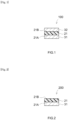
- the resulting sealant sheet can be subjected to, for instance in a form of the release-lined sealant sheet as shown in Fig. 1 or Fig. 2 , storage, processing (e.g. slit processing into a prescribed width, processing a roll into flat sheets, punching out prescribed shapes, etc.), transportation, etc.
- the type (II) sealant sheet comprises a thiol group-containing polysulfide polymer (AC) and an epoxy compound (B) (e.g. an aforementioned lower epoxy compound) together.
- the sealant sheet having such a composition can be produced, for instance, by a method that comprises obtaining a thiol group-containing polysulfide polymer (AC); adding and mixing an epoxy compound (B), a photobase generator (D) and a filler with the thiol group-containing polysulfide polymer (AC); and molding the resulting mixture into a sheet.
- the step of obtaining the mixture may include, in the following order, preparing the thiol group-containing polysulfide polymer (AC) by allowing thiol groups of a compound having two or more thiol groups per molecule to react with epoxy groups of the epoxy group-containing polysulfide polymer (AB); and adding and mixing an epoxy compound (B), a photobase generator (D) and a filler with the thiol group-containing polysulfide polymer (AC).
- the filler can be mixed together when preparing the reaction product.
- the sealant sheet exists as a non-liquid (i.e. solid) sheet in a temperature range around 25 °C; and therefore, unlike a liquid sealant, it is unnecessary for a worker to control the thickness when placing it in a target area to be sealed.
- the sealant sheet can be pre-cut to fit a desired external form and placed in the target area to be sealed (typically adhered with the tack of the sealant sheet).
- the sealant sheet in a roll form can be applied to the target area while unwinding the roll and the remaining sealant sheet can be cut off.
- the use of the sealant sheet disclosed herein can fundamentally solve problems arising during liquid sealant application such as dripping, uneven application and excess spreading, significantly reducing the working time.
- each 0.2 mm thick sealant sheet was irradiated with light at 2000 mJ/cm 2 .
- the irradiated sealant sheet was stored in an environment at 25 °C for 14 days.
- the resulting cured material (cured sealant) was then cut into a 10 mm wide, 50 mm long rectangle to prepare a sample piece. It is noted that with respect to the sealant sheet of Comparative Example 7, the photoirradiation step was not carried out and the cured material obtained after storage in an environment at 25 °C for 14 days was cut in the same manner to prepare a sample piece.
- sealant sheets according to Examples 13 to 17 all had an epoxy/thiol ratio value of 1.0.
Landscapes
- Chemical & Material Sciences (AREA)
- Organic Chemistry (AREA)
- Chemical Kinetics & Catalysis (AREA)
- Health & Medical Sciences (AREA)
- Medicinal Chemistry (AREA)
- Polymers & Plastics (AREA)
- Engineering & Computer Science (AREA)
- Materials Engineering (AREA)
- Dispersion Chemistry (AREA)
- Sealing Material Composition (AREA)
- Epoxy Resins (AREA)
- Polymers With Sulfur, Phosphorus Or Metals In The Main Chain (AREA)
- Inorganic Chemistry (AREA)
- General Chemical & Material Sciences (AREA)
Claims (7)
- Feuille de scellement formée en forme de feuille, la feuille de scellement comprenant les constituants suivants :un polymère polysulfure (AB) contenant des groupes époxy ayant deux groupes époxy ou plus par molécule,un composé thiol (C) ayant deux groupes thiol ou plus par molécule, etun générateur de photobases (D);dans laquelle la feuille de scellement a un module de conservation de 0,005 MPa ou plus et 0,8 MPa ou moins à 25 °C, le module de conservation étant déterminé à une fréquence de 1 Hz sous une contrainte de 0,5 %, à l'aide d'un rhéomètre.
- Feuille de scellement selon la revendication 1, dans laquelle le composé thiol (C) a une équivalence en thiol de 45 g/éq ou plus et 450 g/éq ou moins.
- Feuille de scellement formée en forme de feuille, la feuille de scellement comprenant les constituants suivants :un polymère polysulfure (AC) contenant des groupes thiol ayant deux groupes thiol ou plus par molécule,un composé époxy (B) ayant deux groupes époxy ou plus par molécule, etun générateur de photobases (D),dans laquelle le polymère polysulfure (AC) contenant des groupes thiol est obtenu par réaction d'un polymère polysulfure contenant des groupes époxy avec un composé thiol ayant deux groupes thiol ou plus par molécule, avec des groupes thiol en excès;dans laquelle la feuille de scellement a un module de conservation de 0,005 MPa ou plus et 0,8 MPa ou moins à 25 °C, le module de conservation étant déterminé à une fréquence de 1 Hz sous une contrainte de 0,5 %, à l'aide d'un rhéomètre.
- Feuille de scellement selon la revendication 3, dans laquelle le composé époxy (B) a une équivalence en époxy de 50 g/éq ou plus et 600 g/éq ou moins.
- Feuille de scellement selon l'une quelconque des revendications 1 à 4, dans laquelle le générateur de photobases (D) est un générateur de photobases ionique ayant un cation biguanidique.
- Feuille de scellement selon l'une quelconque des revendications 1 à 5, comprenant en outre un agent de charge.
- Feuille de scellement avec endos anti-adhésif comprenantla feuille de scellement selon l'une quelconque des revendications 1 à 6, etun endos anti-adhésif ayant une face anti-adhésive en contact au moins une face de la feuille de scellement.
Applications Claiming Priority (2)
| Application Number | Priority Date | Filing Date | Title |
|---|---|---|---|
| JP2018120612 | 2018-06-26 | ||
| PCT/JP2019/025445 WO2020004487A1 (fr) | 2018-06-26 | 2019-06-26 | Feuille de scellement |
Publications (3)
| Publication Number | Publication Date |
|---|---|
| EP3816257A1 EP3816257A1 (fr) | 2021-05-05 |
| EP3816257A4 EP3816257A4 (fr) | 2022-07-06 |
| EP3816257B1 true EP3816257B1 (fr) | 2025-04-16 |
Family
ID=68986581
Family Applications (2)
| Application Number | Title | Priority Date | Filing Date |
|---|---|---|---|
| EP19826083.8A Active EP3816257B1 (fr) | 2018-06-26 | 2019-06-26 | Feuille de scellement |
| EP19827579.4A Active EP3816258B1 (fr) | 2018-06-26 | 2019-06-26 | Feuille d'étanchéité |
Family Applications After (1)
| Application Number | Title | Priority Date | Filing Date |
|---|---|---|---|
| EP19827579.4A Active EP3816258B1 (fr) | 2018-06-26 | 2019-06-26 | Feuille d'étanchéité |
Country Status (5)
| Country | Link |
|---|---|
| US (2) | US20210122956A1 (fr) |
| EP (2) | EP3816257B1 (fr) |
| JP (2) | JP7262460B2 (fr) |
| CN (2) | CN112368354B (fr) |
| WO (2) | WO2020004488A1 (fr) |
Families Citing this family (4)
| Publication number | Priority date | Publication date | Assignee | Title |
|---|---|---|---|---|
| JP7273724B2 (ja) | 2017-11-29 | 2023-05-15 | 日東電工株式会社 | シーラントシート |
| JP7458778B2 (ja) * | 2019-12-25 | 2024-04-01 | 日東電工株式会社 | 剥離ライナー付きシーラントシート |
| JP7485511B2 (ja) * | 2019-12-25 | 2024-05-16 | 日東電工株式会社 | シーリング方法 |
| WO2022210045A1 (fr) * | 2021-03-30 | 2022-10-06 | 日東電工株式会社 | Feuille d'étanchéité |
Family Cites Families (36)
| Publication number | Priority date | Publication date | Assignee | Title |
|---|---|---|---|---|
| US3476826A (en) | 1966-05-23 | 1969-11-04 | Thiokol Chemical Corp | Organo-silane modified polysulfide polymers as adhesive additives or primers for high rank polysulfide based adhesive compositions |
| US4267307A (en) | 1979-11-29 | 1981-05-12 | Phillips Petroleum Company | Sealant compositions |
| JPH07108970B2 (ja) | 1990-03-07 | 1995-11-22 | 和義 植松 | 変圧器等の漏油防止用シーリング剤および漏油防止方法 |
| JPH04320478A (ja) | 1991-04-19 | 1992-11-11 | Showa Electric Wire & Cable Co Ltd | ポリサルファイド系シーリング材 |
| JP3442860B2 (ja) | 1994-04-28 | 2003-09-02 | 東レ・ファインケミカル株式会社 | 硬化型組成物 |
| US5663219A (en) * | 1994-05-27 | 1997-09-02 | Morton International, Inc. | Lightweight sealant having improved peel strength |
| JPH08195190A (ja) | 1995-01-20 | 1996-07-30 | Toray Ind Inc | 電池用封口材およびそれを用いた二次電池 |
| JP3400881B2 (ja) | 1995-02-10 | 2003-04-28 | 三菱レイヨン株式会社 | エポキシ樹脂組成物 |
| US6284360B1 (en) * | 1997-09-30 | 2001-09-04 | 3M Innovative Properties Company | Sealant composition, article including same, and method of using same |
| CA2309211C (fr) | 1997-11-07 | 2008-09-02 | Alfredo Reyes Jr. | Agent d'etancheite simple anticorrosion, exempt de chromates, non durcissable, et resistant aux carburants d'aviation |
| JP3941033B2 (ja) | 2000-05-29 | 2007-07-04 | 太陽誘電株式会社 | 電子材料用ポリサルファイド系硬化性樹脂材料、電子用品及び電子材料用ポリサルファイド系硬化性樹脂材料の使用方法 |
| KR100611878B1 (ko) | 1999-06-30 | 2006-08-11 | 다이요 유덴 가부시키가이샤 | 전자재료 조성물, 전자 용품 및 전자재료 조성물의 사용방법 |
| TWI245778B (en) * | 2000-12-27 | 2005-12-21 | Hitachi Chemical Co Ltd | Photobase generating agent, and curable composition comprising the same |
| US6353066B1 (en) * | 2001-02-09 | 2002-03-05 | Fina Technology, Inc. | Method for producing copolymers in the presence of a chain transfer agent |
| US6939941B2 (en) | 2001-09-12 | 2005-09-06 | Toray Fine Chemicals Co., Ltd. | Preparation of polysulfide compositions |
| US7097883B2 (en) | 2003-06-05 | 2006-08-29 | Ppg Industries Ohio, Inc. | Low temperature liquid polythioether polymers |
| US7390859B2 (en) | 2005-02-08 | 2008-06-24 | Ppg Industries Ohio, Inc. | Compositions and methods of making compositions exhibiting fuel resistance |
| CN101910236B (zh) | 2008-01-25 | 2014-04-16 | 三井化学株式会社 | 环氧聚合性组合物、含有该组合物的密封材料组合物 |
| NL1037302C2 (nl) | 2009-09-22 | 2011-03-23 | Jacob Woudsma | Nieuwe werkwijze en/of nieuwe voortbrengsel(en) van thermo hardbare lijmen en/of folies en/of coatings en/of egalisatiemiddelen van elastische epoxyproducten tot niet elastische producten voor het beschermen en voor het onderhoud van huizen, gebouwen, auto's, schepen, jachten, bruggen, wegen, vloeren, plafonds, muren, meubelen, textiel, papier, etc. |
| JP5700203B2 (ja) * | 2010-12-22 | 2015-04-15 | スリーボンドファインケミカル株式会社 | アミンイミド化合物、およびそれを用いた組成物およびその硬化方法 |
| WO2012135180A1 (fr) | 2011-03-28 | 2012-10-04 | 3M Innovative Properties Company | Composition durcissable, article, procédé de durcissement et produit réactionnel sec au toucher |
| CN102516894B (zh) | 2011-11-10 | 2015-07-29 | 郑州中原应用技术研究开发有限公司 | 一种汽车内后视镜镜座专用结构胶片及其制备方法 |
| JP2013119519A (ja) | 2011-12-06 | 2013-06-17 | Toray Fine Chemicals Co Ltd | 液状ポリサルファイドポリマーの製造方法 |
| KR101815029B1 (ko) | 2011-12-15 | 2018-01-08 | 도오레 화인케미칼 가부시키가이샤 | 경화형 조성물 |
| DE102012205951B4 (de) | 2012-04-12 | 2016-09-01 | Chemetall Gmbh | Dichtmassen-System, ungehärtete Grundmasse und Mischung, Härter, Verfahren zum Beschichten eines Substrates und Verwendung eines Dichtmassen-Systems |
| KR102266013B1 (ko) | 2013-06-28 | 2021-06-18 | 후지필름 와코 준야꾸 가부시키가이샤 | 염기 발생제, 이 염기 발생제를 함유하는 염기 반응성 조성물 및 염기 발생 방법 |
| CN106414461B (zh) | 2014-01-24 | 2018-09-11 | 富士胶片和光纯药株式会社 | 硼酸盐系产碱剂和含有该产碱剂的碱反应性组合物 |
| BR112017017216B1 (pt) | 2015-02-13 | 2022-09-27 | Chemetall Gmbh | Método para vedação, revestimento ou/e nivelamento aerodinâmico de pelo menos um elemento de conexão, aparelho automático, e, uso do método inventivo ou/e do aparelho inventivo |
| BR112017023446A2 (pt) * | 2015-04-29 | 2018-07-31 | 3M Innovative Properties Co | método para a fabricação de uma rede polimérica a partir de um politiol e um poliepóxido |
| JP6822401B2 (ja) | 2015-07-24 | 2021-01-27 | 富士フイルム和光純薬株式会社 | 化合物、耐酸性を有する塩基または/およびラジカル発生剤、ならびに該塩基または/およびラジカル発生剤を含有する硬化性樹脂組成物 |
| JP2017145276A (ja) | 2016-02-15 | 2017-08-24 | 日東電工株式会社 | ポリサルファイド系粘着テープ |
| WO2018085190A1 (fr) | 2016-11-03 | 2018-05-11 | 3M Innovative Properties Company | Compositions d'étanchéité de type polythiol |
| CN110072916B (zh) | 2016-12-14 | 2022-06-21 | 3M创新有限公司 | 密封带 |
| US10273391B2 (en) | 2017-01-11 | 2019-04-30 | Prc-Desoto International, Inc. | Delayed curing catalysts for thiol/epoxy reactions |
| JP7273724B2 (ja) | 2017-11-29 | 2023-05-15 | 日東電工株式会社 | シーラントシート |
| JP7037240B2 (ja) | 2018-03-22 | 2022-03-16 | キヤノンマーケティングジャパン株式会社 | 情報処理装置、処理方法、およびプログラム |
-
2019
- 2019-06-26 WO PCT/JP2019/025446 patent/WO2020004488A1/fr not_active Ceased
- 2019-06-26 EP EP19826083.8A patent/EP3816257B1/fr active Active
- 2019-06-26 US US17/254,973 patent/US20210122956A1/en active Pending
- 2019-06-26 JP JP2020527591A patent/JP7262460B2/ja active Active
- 2019-06-26 EP EP19827579.4A patent/EP3816258B1/fr active Active
- 2019-06-26 CN CN201980043243.4A patent/CN112368354B/zh active Active
- 2019-06-26 US US17/254,951 patent/US12234387B2/en active Active
- 2019-06-26 WO PCT/JP2019/025445 patent/WO2020004487A1/fr not_active Ceased
- 2019-06-26 JP JP2020527590A patent/JP7262459B2/ja active Active
- 2019-06-26 CN CN201980043245.3A patent/CN112334562B/zh active Active
Also Published As
| Publication number | Publication date |
|---|---|
| JP7262459B2 (ja) | 2023-04-21 |
| US20210122958A1 (en) | 2021-04-29 |
| WO2020004488A1 (fr) | 2020-01-02 |
| EP3816258B1 (fr) | 2024-06-12 |
| EP3816258A4 (fr) | 2022-04-20 |
| CN112334562B (zh) | 2024-04-09 |
| US20210122956A1 (en) | 2021-04-29 |
| EP3816257A4 (fr) | 2022-07-06 |
| CN112368354B (zh) | 2024-04-09 |
| EP3816257A1 (fr) | 2021-05-05 |
| US12234387B2 (en) | 2025-02-25 |
| CN112368354A (zh) | 2021-02-12 |
| JP7262460B2 (ja) | 2023-04-21 |
| WO2020004487A1 (fr) | 2020-01-02 |
| JPWO2020004488A1 (ja) | 2021-07-15 |
| JPWO2020004487A1 (ja) | 2021-07-08 |
| EP3816258A1 (fr) | 2021-05-05 |
| CN112334562A (zh) | 2021-02-05 |
Similar Documents
| Publication | Publication Date | Title |
|---|---|---|
| EP3816257B1 (fr) | Feuille de scellement | |
| TWI532759B (zh) | 液晶密封劑、使用其的液晶顯示面板的製造方法以及液晶顯示面板 | |
| EP3719097B1 (fr) | Feuille d'étanchéité | |
| KR20120085855A (ko) | 신규 열래디컬 발생제, 그 제조방법, 액정 실링제 및 액정 표시셀 | |
| TWI362542B (fr) | ||
| EP4317352A1 (fr) | Feuille d'étanchéité | |
| US12473458B2 (en) | Sealing method | |
| EP4082777A1 (fr) | Feuille de scellement avec doublure anti-adhésive | |
| EP4082779A1 (fr) | Corps stratifié |
Legal Events
| Date | Code | Title | Description |
|---|---|---|---|
| STAA | Information on the status of an ep patent application or granted ep patent |
Free format text: STATUS: THE INTERNATIONAL PUBLICATION HAS BEEN MADE |
|
| PUAI | Public reference made under article 153(3) epc to a published international application that has entered the european phase |
Free format text: ORIGINAL CODE: 0009012 |
|
| STAA | Information on the status of an ep patent application or granted ep patent |
Free format text: STATUS: REQUEST FOR EXAMINATION WAS MADE |
|
| 17P | Request for examination filed |
Effective date: 20210114 |
|
| AK | Designated contracting states |
Kind code of ref document: A1 Designated state(s): AL AT BE BG CH CY CZ DE DK EE ES FI FR GB GR HR HU IE IS IT LI LT LU LV MC MK MT NL NO PL PT RO RS SE SI SK SM TR |
|
| DAV | Request for validation of the european patent (deleted) | ||
| DAX | Request for extension of the european patent (deleted) | ||
| A4 | Supplementary search report drawn up and despatched |
Effective date: 20220609 |
|
| RIC1 | Information provided on ipc code assigned before grant |
Ipc: C09K 3/10 20060101AFI20220602BHEP |
|
| STAA | Information on the status of an ep patent application or granted ep patent |
Free format text: STATUS: EXAMINATION IS IN PROGRESS |
|
| 17Q | First examination report despatched |
Effective date: 20231218 |
|
| GRAP | Despatch of communication of intention to grant a patent |
Free format text: ORIGINAL CODE: EPIDOSNIGR1 |
|
| STAA | Information on the status of an ep patent application or granted ep patent |
Free format text: STATUS: GRANT OF PATENT IS INTENDED |
|
| INTG | Intention to grant announced |
Effective date: 20241118 |
|
| GRAS | Grant fee paid |
Free format text: ORIGINAL CODE: EPIDOSNIGR3 |
|
| P01 | Opt-out of the competence of the unified patent court (upc) registered |
Free format text: CASE NUMBER: APP_4980/2025 Effective date: 20250130 |
|
| GRAA | (expected) grant |
Free format text: ORIGINAL CODE: 0009210 |
|
| STAA | Information on the status of an ep patent application or granted ep patent |
Free format text: STATUS: THE PATENT HAS BEEN GRANTED |
|
| AK | Designated contracting states |
Kind code of ref document: B1 Designated state(s): AL AT BE BG CH CY CZ DE DK EE ES FI FR GB GR HR HU IE IS IT LI LT LU LV MC MK MT NL NO PL PT RO RS SE SI SK SM TR |
|
| REG | Reference to a national code |
Ref country code: GB Ref legal event code: FG4D |
|
| REG | Reference to a national code |
Ref country code: CH Ref legal event code: EP |
|
| REG | Reference to a national code |
Ref country code: IE Ref legal event code: FG4D |
|
| REG | Reference to a national code |
Ref country code: DE Ref legal event code: R096 Ref document number: 602019068770 Country of ref document: DE |
|
| PGFP | Annual fee paid to national office [announced via postgrant information from national office to epo] |
Ref country code: DE Payment date: 20250626 Year of fee payment: 7 |
|
| PGFP | Annual fee paid to national office [announced via postgrant information from national office to epo] |
Ref country code: FR Payment date: 20250617 Year of fee payment: 7 |
|
| REG | Reference to a national code |
Ref country code: NL Ref legal event code: MP Effective date: 20250416 |
|
| PG25 | Lapsed in a contracting state [announced via postgrant information from national office to epo] |
Ref country code: NL Free format text: LAPSE BECAUSE OF FAILURE TO SUBMIT A TRANSLATION OF THE DESCRIPTION OR TO PAY THE FEE WITHIN THE PRESCRIBED TIME-LIMIT Effective date: 20250416 |
|
| REG | Reference to a national code |
Ref country code: AT Ref legal event code: MK05 Ref document number: 1785675 Country of ref document: AT Kind code of ref document: T Effective date: 20250416 |
|
| PG25 | Lapsed in a contracting state [announced via postgrant information from national office to epo] |
Ref country code: PT Free format text: LAPSE BECAUSE OF FAILURE TO SUBMIT A TRANSLATION OF THE DESCRIPTION OR TO PAY THE FEE WITHIN THE PRESCRIBED TIME-LIMIT Effective date: 20250818 Ref country code: ES Free format text: LAPSE BECAUSE OF FAILURE TO SUBMIT A TRANSLATION OF THE DESCRIPTION OR TO PAY THE FEE WITHIN THE PRESCRIBED TIME-LIMIT Effective date: 20250416 Ref country code: FI Free format text: LAPSE BECAUSE OF FAILURE TO SUBMIT A TRANSLATION OF THE DESCRIPTION OR TO PAY THE FEE WITHIN THE PRESCRIBED TIME-LIMIT Effective date: 20250416 |
|
| REG | Reference to a national code |
Ref country code: LT Ref legal event code: MG9D |
|
| PG25 | Lapsed in a contracting state [announced via postgrant information from national office to epo] |
Ref country code: GR Free format text: LAPSE BECAUSE OF FAILURE TO SUBMIT A TRANSLATION OF THE DESCRIPTION OR TO PAY THE FEE WITHIN THE PRESCRIBED TIME-LIMIT Effective date: 20250717 Ref country code: NO Free format text: LAPSE BECAUSE OF FAILURE TO SUBMIT A TRANSLATION OF THE DESCRIPTION OR TO PAY THE FEE WITHIN THE PRESCRIBED TIME-LIMIT Effective date: 20250716 |
|
| PG25 | Lapsed in a contracting state [announced via postgrant information from national office to epo] |
Ref country code: PL Free format text: LAPSE BECAUSE OF FAILURE TO SUBMIT A TRANSLATION OF THE DESCRIPTION OR TO PAY THE FEE WITHIN THE PRESCRIBED TIME-LIMIT Effective date: 20250416 |
|
| PG25 | Lapsed in a contracting state [announced via postgrant information from national office to epo] |
Ref country code: BG Free format text: LAPSE BECAUSE OF FAILURE TO SUBMIT A TRANSLATION OF THE DESCRIPTION OR TO PAY THE FEE WITHIN THE PRESCRIBED TIME-LIMIT Effective date: 20250416 |
|
| PG25 | Lapsed in a contracting state [announced via postgrant information from national office to epo] |
Ref country code: HR Free format text: LAPSE BECAUSE OF FAILURE TO SUBMIT A TRANSLATION OF THE DESCRIPTION OR TO PAY THE FEE WITHIN THE PRESCRIBED TIME-LIMIT Effective date: 20250416 |
|
| PG25 | Lapsed in a contracting state [announced via postgrant information from national office to epo] |
Ref country code: AT Free format text: LAPSE BECAUSE OF FAILURE TO SUBMIT A TRANSLATION OF THE DESCRIPTION OR TO PAY THE FEE WITHIN THE PRESCRIBED TIME-LIMIT Effective date: 20250416 |
|
| PG25 | Lapsed in a contracting state [announced via postgrant information from national office to epo] |
Ref country code: RS Free format text: LAPSE BECAUSE OF FAILURE TO SUBMIT A TRANSLATION OF THE DESCRIPTION OR TO PAY THE FEE WITHIN THE PRESCRIBED TIME-LIMIT Effective date: 20250716 |
|
| PG25 | Lapsed in a contracting state [announced via postgrant information from national office to epo] |
Ref country code: IS Free format text: LAPSE BECAUSE OF FAILURE TO SUBMIT A TRANSLATION OF THE DESCRIPTION OR TO PAY THE FEE WITHIN THE PRESCRIBED TIME-LIMIT Effective date: 20250816 |
|
| PG25 | Lapsed in a contracting state [announced via postgrant information from national office to epo] |
Ref country code: LV Free format text: LAPSE BECAUSE OF FAILURE TO SUBMIT A TRANSLATION OF THE DESCRIPTION OR TO PAY THE FEE WITHIN THE PRESCRIBED TIME-LIMIT Effective date: 20250416 |
|
| PG25 | Lapsed in a contracting state [announced via postgrant information from national office to epo] |
Ref country code: DK Free format text: LAPSE BECAUSE OF FAILURE TO SUBMIT A TRANSLATION OF THE DESCRIPTION OR TO PAY THE FEE WITHIN THE PRESCRIBED TIME-LIMIT Effective date: 20250416 Ref country code: SM Free format text: LAPSE BECAUSE OF FAILURE TO SUBMIT A TRANSLATION OF THE DESCRIPTION OR TO PAY THE FEE WITHIN THE PRESCRIBED TIME-LIMIT Effective date: 20250416 |
|
| REG | Reference to a national code |
Ref country code: DE Ref legal event code: R097 Ref document number: 602019068770 Country of ref document: DE |
|
| PG25 | Lapsed in a contracting state [announced via postgrant information from national office to epo] |
Ref country code: CZ Free format text: LAPSE BECAUSE OF FAILURE TO SUBMIT A TRANSLATION OF THE DESCRIPTION OR TO PAY THE FEE WITHIN THE PRESCRIBED TIME-LIMIT Effective date: 20250416 |
|
| PG25 | Lapsed in a contracting state [announced via postgrant information from national office to epo] |
Ref country code: EE Free format text: LAPSE BECAUSE OF FAILURE TO SUBMIT A TRANSLATION OF THE DESCRIPTION OR TO PAY THE FEE WITHIN THE PRESCRIBED TIME-LIMIT Effective date: 20250416 |
|
| PG25 | Lapsed in a contracting state [announced via postgrant information from national office to epo] |
Ref country code: SK Free format text: LAPSE BECAUSE OF FAILURE TO SUBMIT A TRANSLATION OF THE DESCRIPTION OR TO PAY THE FEE WITHIN THE PRESCRIBED TIME-LIMIT Effective date: 20250416 Ref country code: RO Free format text: LAPSE BECAUSE OF FAILURE TO SUBMIT A TRANSLATION OF THE DESCRIPTION OR TO PAY THE FEE WITHIN THE PRESCRIBED TIME-LIMIT Effective date: 20250416 |
|
| REG | Reference to a national code |
Ref country code: CH Ref legal event code: H13 Free format text: ST27 STATUS EVENT CODE: U-0-0-H10-H13 (AS PROVIDED BY THE NATIONAL OFFICE) Effective date: 20260127 |
|
| PG25 | Lapsed in a contracting state [announced via postgrant information from national office to epo] |
Ref country code: IT Free format text: LAPSE BECAUSE OF FAILURE TO SUBMIT A TRANSLATION OF THE DESCRIPTION OR TO PAY THE FEE WITHIN THE PRESCRIBED TIME-LIMIT Effective date: 20250416 |
|
| PG25 | Lapsed in a contracting state [announced via postgrant information from national office to epo] |
Ref country code: MC Free format text: LAPSE BECAUSE OF FAILURE TO SUBMIT A TRANSLATION OF THE DESCRIPTION OR TO PAY THE FEE WITHIN THE PRESCRIBED TIME-LIMIT Effective date: 20250416 |
|
| PG25 | Lapsed in a contracting state [announced via postgrant information from national office to epo] |
Ref country code: LU Free format text: LAPSE BECAUSE OF NON-PAYMENT OF DUE FEES Effective date: 20250626 |
|
| PLBE | No opposition filed within time limit |
Free format text: ORIGINAL CODE: 0009261 |
|
| STAA | Information on the status of an ep patent application or granted ep patent |
Free format text: STATUS: NO OPPOSITION FILED WITHIN TIME LIMIT |
|
| REG | Reference to a national code |
Ref country code: CH Ref legal event code: L10 Free format text: ST27 STATUS EVENT CODE: U-0-0-L10-L00 (AS PROVIDED BY THE NATIONAL OFFICE) Effective date: 20260225 |
|
| REG | Reference to a national code |
Ref country code: BE Ref legal event code: MM Effective date: 20250630 |
|
| 26N | No opposition filed |
Effective date: 20260119 |
|
| GBPC | Gb: european patent ceased through non-payment of renewal fee |
Effective date: 20250716 |
|
| PG25 | Lapsed in a contracting state [announced via postgrant information from national office to epo] |
Ref country code: GB Free format text: LAPSE BECAUSE OF NON-PAYMENT OF DUE FEES Effective date: 20250716 |
|
| PG25 | Lapsed in a contracting state [announced via postgrant information from national office to epo] |
Ref country code: IE Free format text: LAPSE BECAUSE OF NON-PAYMENT OF DUE FEES Effective date: 20250626 |
|
| PG25 | Lapsed in a contracting state [announced via postgrant information from national office to epo] |
Ref country code: BE Free format text: LAPSE BECAUSE OF NON-PAYMENT OF DUE FEES Effective date: 20250630 |
|
| PG25 | Lapsed in a contracting state [announced via postgrant information from national office to epo] |
Ref country code: CH Free format text: LAPSE BECAUSE OF NON-PAYMENT OF DUE FEES Effective date: 20250630 |