EP3816352A1 - Dispositif et procédé d'actionnement d'une soupape - Google Patents
Dispositif et procédé d'actionnement d'une soupape Download PDFInfo
- Publication number
- EP3816352A1 EP3816352A1 EP19206117.4A EP19206117A EP3816352A1 EP 3816352 A1 EP3816352 A1 EP 3816352A1 EP 19206117 A EP19206117 A EP 19206117A EP 3816352 A1 EP3816352 A1 EP 3816352A1
- Authority
- EP
- European Patent Office
- Prior art keywords
- fitting
- data
- database
- actuation
- communication device
- Prior art date
- Legal status (The legal status is an assumption and is not a legal conclusion. Google has not performed a legal analysis and makes no representation as to the accuracy of the status listed.)
- Pending
Links
Images


Classifications
-
- E—FIXED CONSTRUCTIONS
- E03—WATER SUPPLY; SEWERAGE
- E03B—INSTALLATIONS OR METHODS FOR OBTAINING, COLLECTING, OR DISTRIBUTING WATER
- E03B9/00—Methods or installations for drawing-off water
- E03B9/02—Hydrants; Arrangements of valves therein; Keys for hydrants
-
- F—MECHANICAL ENGINEERING; LIGHTING; HEATING; WEAPONS; BLASTING
- F16—ENGINEERING ELEMENTS AND UNITS; GENERAL MEASURES FOR PRODUCING AND MAINTAINING EFFECTIVE FUNCTIONING OF MACHINES OR INSTALLATIONS; THERMAL INSULATION IN GENERAL
- F16K—VALVES; TAPS; COCKS; ACTUATING-FLOATS; DEVICES FOR VENTING OR AERATING
- F16K37/00—Special means in or on valves or other cut-off apparatus for indicating or recording operation thereof, or for enabling an alarm to be given
- F16K37/0025—Electrical or magnetic means
- F16K37/0041—Electrical or magnetic means for measuring valve parameters
Definitions
- the invention relates to a device for operating a valve.
- the invention also relates to a method for operating a fitting.
- the invention also relates to a computer program.
- the invention also relates to a machine-readable storage medium.
- EP 0 620 327 B1 discloses a valve system for a fluid distribution system having a valve which can be opened and closed with a valve key.
- the valve key has a sensing device which cooperates with an information storage device in order to detect a rotation of the valve and to store this data.
- EP 0 788 573 B1 discloses an apparatus for logging the operation of a valve.
- a valve is disclosed which can be opened and closed with a valve key.
- An electronic device on the valve transmits data relating to an opening state of the valve via a coupling unit of the valve key to an operative unit of the valve key, whereby valve data, such as valve status, valve rotation speed, can be stored in an internal memory by means of the operative unit.
- DE 198 28 272 B4 discloses an installation set for water or gas supply lines with a transponder. Disclosed is an arrangement with a read / write device which records slide and / or valve data of a pipeline network and transmits it to a central computer.
- EP 3 224 515 B1 discloses a method of identifying an underfloor valve of a valve assembly and a use of a valve assembly. Disclosed is a downhole valve with a fluid control unit and an expansion unit on which an identification reading device can be placed in order to carry out an identification (eg valve type) and an actuation of the downhole valve 2.
- an identification eg valve type
- US 2018/0276594 A1 discloses a method of registering an installed valve. What is taught is the transmission of valve data to a central server, with data (satellite-based location data, identification data) of the valve being stored in a central database in the form of a valve data set.
- a tool or a device for actuating a fitting which can record and transmit data relating to an actuation of the fitting.
- a digital position indicator of the valve can advantageously be implemented on an online platform, whereby incorrect operation and damage to the valve can be largely prevented.
- prompt feedback on the actuation of the valve is given so that appropriate measures can be taken promptly (e.g. in the event of incorrect actuation of the valve).
- the object is achieved with a communication device having a fourth interface for exchanging data with a device for operating a fitting and a fifth interface for exchanging data with a first database, furthermore having a memory device for storing parameters and / or actuation data of a valve.
- the object is achieved with a database having a sixth interface, wherein the database is set up to transmit parameters of a fitting to a communication device and / or to receive actuation data of the fitting from the communication device, wherein the database is set up which To save parameters and / or the actuation data.
- the device also has a signaling device with which the detected actuation data are signaled. This becomes a useful way of detecting correct / incorrect actuation the valve provided, whereby, for example, correct and / or incorrect operation of the valve can be signaled. In this way, for example, quick measures can be taken to end the incorrect operation of the valve.
- the device is characterized in that it also has a memory element for storing parameters and / or the actuation data of the device.
- the parameters mentioned can be saved, whereby e.g. a history of the actuation and / or an actuation specification for the valve can be reproduced.
- the device is characterized in that it also has a locating device. As a result, precise location data can also be transmitted, which allow the affected or actuated valve to be located quickly.
- the communication device is designed for the radio-based exchange of data.
- an online data connection can be implemented between the valve and an external database, which supports good monitoring of the valve.
- the device further comprises a motor device for motorized operation of the device.
- motorized operation of the device can be carried out, which advantageously enables easier actuation of the armature or operation of the device.
- An advantageous development of the communication device is characterized in that at least one of the following parameters can be stored in the memory device and between a first database and a device for operating a
- the valve can be transmitted: torque, angle of rotation, ID, time stamp, geo-position. This enables useful actuation data to be used when logging the actuation of the valve.
- the communication device is set up to synchronize with the first database when there is an existing data connection. In this way, it is advantageously not absolutely necessary to have a permanent data connection available between the communication device and the database. This enables both offline and online operation of the recording of the actuation data of the valve by means of the device.
- Disclosed device features result analogously from corresponding method features and vice versa. This means that features, technical advantages and designs relating to the device for actuating a fitting result in an analogous manner from corresponding features, technical advantages and designs relating to the method for actuating a fitting, and vice versa.
- the wording "or” used below also includes in particular the phrase “and / or”.
- a key idea of the invention is in particular to provide a method in which a user is promptly informed about a status and / or an operational position of a fitting, whereby, for example, improper and / or incorrect operation of the fitting can be largely excluded.
- the valve to be monitored can be, for example, a slide valve, a flap, an actuating element of a hydrant or some other adjusting element of a supply infrastructure, etc.
- the supply infrastructure can be, for example, a waterworks, a district heating network, a natural gas network, a sewage network with pressure drainage and the like, which is provided for the distribution of a corresponding fluid (e.g. water, sewage, natural gas, petroleum, etc.).
- the proposed device in cooperation with a communication device and a database to record an authorized and correct actuation of the valve and to transfer it to a higher-level unit (e.g. a database of a municipal waterworks). to signal.
- a higher-level unit e.g. a database of a municipal waterworks.
- suitable measures can then be taken, e.g. arranging for a personal check of the valve, maintenance, repair, replacement work, etc.
- Fig. 1 shows an overview of a proposed system.
- a state RM represents an idle mode in which a proposed device or tool 100 (not shown) for operating a fitting (not shown) is in an idle mode, for example placed on a base station (not shown) on which an electrical energy store the device 100 can be charged wirelessly.
- the device 100 is removed from the base station.
- a start-up of the device 100 is initiated in a step S2, which e.g. establishes a short-range communication connection (e.g. Bluetooth) between the device 100 and a communication device 300, initialization or activation of electronic components (e.g. torque sensor , Rotation angle sensor, etc.) of the device 100 comprises.
- a short-range communication connection e.g. Bluetooth
- a step S3 it is checked whether the short-range communication link is available for the purpose of a later data transmission to the external communication device 300 (e.g. smartphone, laptop, tablet, etc.). If the short-range communication link is not yet ready, in a step S4 feedback (e.g. visually with a blinking signal and / or acoustically and / or haptically) is output via a signaling device (not shown) optionally arranged on the device 100.
- the external communication device 300 e.g. smartphone, laptop, tablet, etc.
- step S5 it is checked whether the device 100 is placed on a fitting 200 (not shown). If this is the case, further (for example acoustic and / or haptic) feedback can be output in a step S6 via the aforementioned signaling device. If it doesn't is, a branch is made to step S7 and subsequently to step S8, the short-range communication link being available in the meantime, which was checked in step S3.
- further for example acoustic and / or haptic
- step S8 the device 100 is placed on the fitting 200 (not shown) provided with an identification or authentication element (for example NFC tag).
- an identification or authentication element for example NFC tag.
- a communication process K then takes place with a data exchange between the device 100, the communication device 300 and a first database 400, which is described below with reference to FIG Fig. 2 is explained in more detail.
- a step S9 it is checked (for example by means of an NFC reader of the device 100) whether the authentication element (for example NFC chip) of the fitting 200 has the expected ID, whereby it can be checked whether the device 100 is "the correct" fitting 200 is in place.
- the authentication element for example NFC chip
- an acoustic and / or visual feedback (e.g. green LED) is output via the signaling device, with which it is indicated that the device 100 is on the "correct” fitting 200.
- this fact is also signaled to the communication device 300 and subsequently to the first database 400 by means of the communication process K.
- step S11 a branch is made to step S11, in which a recording of the actuation data of the armature 200 is carried out, whereby during the actuation of the armature 200 by means of the device 100, for example, torque, direction of rotation, angle of rotation and a position of the armature 200, angular speed, geographic Position (e.g. GPS), impulses or peak values of torque or angle, closing speed, opening speed of the valve 200, etc. can be sensed and recorded.
- geographic Position e.g. GPS
- At least one suitable sensor can be built into the device 100 for the sensory detection of the aforementioned actuation data.
- At least one sensor can also be installed in the fitting 200, with the recorded data then being transmitted to the device 100 via short-range communication.
- the actuation data are also recorded in step S11 in the case of a device 100 placed on the wrong fitting 200, so that incorrect actuations or unauthorized actuations of the fitting 200 can also be logged as part of the communication process K and suitable steps can be derived therefrom.
- a step S12 checks whether the recording of the actuation data should be continued, a check being made as to whether the authentication element of the fitting 200 is still the correct authentication element and the device 100 is therefore still seated on the correct fitting 200 .
- step S11 the recording of the actuation data continues to be carried out in step S11. If this is not the case, in a step S13 all modules including the optional signaling device of the device 100 are reset, a completion message being generated in a step S14, whereby the device 100 signals the end of the data recording to the communication device 300. In a state MF, the recording of the data in connection with the actuation of the armature 200 is complete.
- step S9 If it is determined in the above-mentioned step S9 that the device 100 is seated on the wrong fitting 200, that is to say that the fitting 200 is the "wrong" fitting 200, which is determined by the device 100 reading out the corresponding authentication element, becomes this Circumstance signaled optically and / or acoustically and / or haptically in a step S15 by means of the signaling device of the device 100, for example by a flashing red LED of the signaling device while simultaneously emitting an acoustic signal tone and / or a vibration.
- a communication process K with the communication device 300 and the first database 400 then takes place, which is described below with reference to FIG Fig. 2 will be explained in more detail.
- a step S16 it is checked whether the device 100 has been removed from the fitting 200. If this is the case, the device 100 is in a state MR ready for a recording of actuation data of another armature 200.
- the device 100 can be inserted into the base station in a step S17 and the device 100 can be shut down in a subsequent step S18, the modules of the device 100 including the short-range communication link including the optional signaling device being shut down.
- the device 100 then switches back to the rest mode of the RM state for reasons of energy saving.
- Fig. 2 shows the communication process or information flow K between the proposed device 100, the proposed communication device 300 and the proposed first database 400.
- ID data of an authentication element 120 of the fitting 200 are initially transmitted from the device 100 to the communication device 300 via short-range communication (for example near field communication, NFC), wherein, for example, the authentication element 120 is read out by a Authentication device 30 of the device 100 can be performed.
- the communication device 300 checks in a step S21 whether it is the authentication element 120 that is read is "the correct" authentication element or not.
- step S21 specific actuation parameters are transmitted from the communication device 300 to the device 100 in step S21, such as maximum permissible torque, maximum permissible angular speed, direction of rotation, speed, etc.
- actuation data such as rotation angle, torque, time stamp, geo-position, number of revolutions, etc.
- the aforementioned actuation data can be recorded by suitable sensors (not shown) within the device 100 during the actuation of the armature 200 and transmitted from the armature 200 to the device 100 via close-range communication.
- the sensors mentioned can also be arranged within the fitting 200, with the recorded actuation data being transmitted to the communication device 300.
- a completion message is transmitted from the communication device 300 to the first database 400.
- the completion message can for example contain time stamps recorded during the actuation of the armature 200, which represent one or more times of the day when the armature 200 was actuated by the device 100.
- the conclusion message can also contain information as to whether the authentication element 120 of the fitting 200 is OK or the correct one or not, and / or a torque, rotational speed profile, number of revolutions, position of the fitting 200 detected via the actuation of the fitting 200 , etc.
- a step S24 data relating to authentication elements 120 of fittings 200 can be transmitted from first database 400 to communication device 300, with data relating to actuation of fitting 200, e.g. target position, max. Torque, per authentication element 120, depending on the type of fitting 200. Angle of rotation, number of revolutions, etc. can be transmitted.
- entries in the first database 400 can be viewed online by means of a computer 800 which can access the first database 400.
- the recorded data can advantageously be temporarily stored on the communication device 300, with these data preferably only being transmitted to the first database 400 if a data connection is available between the communication device 300 and the first database 400, for example via mobile radio and / or via Landline. In this way, an “indirect” connection via communication device 300 to first database 400 is made available for device 100. In this way, no data connection between the communication device 300 and the first database 400 is advantageously required at the time of actuation of the armature 200.
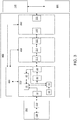
- Fig. 3 shows a simplified block diagram of a proposed system 600.
- the device 100 can be seen, which interacts functionally with the armature 200 in the manner explained above.
- the device 100 has a first interface 10, via which data exchange with the fitting 200 via an interface 110 of the fitting 200 is possible.
- the device 100 also has a second interface 20 via which communication with an external communication device 300 (for example smartphone, tablet, computer, etc.) is possible.
- the device 100 can, for example, be placed on different fittings 200 by means of an adapter (not shown), an adapter and an operating element of the device 100 fitting together in a geometrically defined manner.
- an authentication device 30 for example in the form of an NFC reader, with which the authentication element 120 of the fitting 200 via the Interface 110 of armature 200 can be read into device 100.
- an optional memory element 40 can be seen within the device 100, in which parameters and / or actuation data relating to the armature 200 can be stored. In the absence of the memory element 40, only a determination or detection and subsequent transmission of actuation data of the armature 200 to the communication device 300 is provided. Furthermore, at least one sensor element 50 can be seen within the device 100, e.g. in the form of a rotation angle sensor, torque sensor, locating device, etc. for recording the above-mentioned actuation data of the armature 200.
- a number of revolutions of the valve 200 can be determined.
- a communication device 60 can be seen within the device 100, with which the aforementioned actuation data or the parameters can be transmitted via the second interface 20 to a fourth interface 210 or from the fourth interface 210 of the communication device 300.
- the device 100 can have an optional signaling device 70, by means of which actuation data can be signaled in the above-mentioned manner.
- the mentioned signaling can alternatively also be taken over by the communication device 300 itself (e.g. by means of a signal tone, vibration alarm, light signal, optical display, etc.), so that the signaling device 70 does not necessarily have to be designed as an independent device of the device 100.
- a functional interaction of the communication device 300 with the device 100 takes place via the fourth interface 210 of the communication device 300.
- a functional connection of the communication device 300 to the first Database 400 takes place via a fifth interface 220 of communication device 300.
- data or parameters can be temporarily stored in a storage device 230 of communication device 300, which thus represents a buffer for data / parameters of first database 400.
- a seventh interface 320 of the first database 400 can be seen, to which a second database 700 (for example a customer database with data / parameters of fittings 200) can be connected, with actuation data and / or parameters between the fitting 200 and the second database 700 can be transmitted.
- a second database 700 for example a customer database with data / parameters of fittings 200
- the computer 800 can also be used to access the second database 700.
- the communication device 300 can also be integrated within the device 100, e.g. in the form of a cellular radio modem including a SIM card, as a result of which a radio-based data exchange can be carried out with the first database 400.
- a radio-based data exchange can be carried out with the first database 400.
- the use of an external communication device is advantageously unnecessary, and a short-range communication connection (e.g. Bluetooth) is also not required for the device 100 in this case.
- a visual surface for visualizing actuation processes or data of the armature 200 can be implemented.
- the result is a system 600 for online monitoring of an actuation of the armature 200 by means of a device 100 for actuating the armature 200.
- a locating device for example a GPS sensor element or the like, can also be provided within the device 100.
- the location functionality for the fitting 200 can also be provided by the communication device 300.
- the device 100 can advantageously be operated manually as well as driven by an electric motor device 500 (electric motor). In the latter case, the control of the device 100 can be combined with the recording of the actuation data explained above.
- a physical connection between the motor device 500 and the device 100 can be implemented, for example, via a key nut.
- the motor device 500 can preferably communicate with the device 100, so that the actuation data can also be transmitted from the device 100 to the motor device 500.
- the motor device 500 By connecting the motor device 500 to either the communication device 300 and / or to the first database 400, parameters can be transmitted from the first database 400 to the motor device 500 so that the device 100 can be operated with the parameters provided.
- an arrangement of the communication device 300 within the motor device 500 (not shown) is also conceivable.
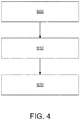
- FIG. 8 shows a basic flow diagram of a method for actuating a fitting 200.
- a step 900 the fitting 200 is authenticated with respect to the device 100.
- a step 910 acquisition of actuation data is carried out while the armature 200 is actuated.
- actuation data is transmitted.
- Valves 200 are usually to be operated at regular time intervals (eg every five years) and checked with regard to their operational position. With the proposed detection of all actuations including torques, the testing effort required for this is advantageously reduced. It is therefore only necessary to operate valves that have not been operated for a defined period of time.
- the proposed method can be used to locate leaks with a limitation of water loss to a defined area by "locking out” areas and thus considering total water consumption.
- a pattern can be recognized using a machine learning approach and thus a probability of a leak area can be determined.
- the acquired status data including the torque provide an operator with statistics and evaluations for the purpose of planning the renewal of fittings 200.
- a supply interruption can be automatically documented for each line and house connection using the proposed method.
- Statistics and key performance indicators can be derived from this. These serve an operator as proof of the interruption per connection / object and help him to optimize the supply quality of the infrastructure to be supplied with the valve (e.g. house connection, etc.). This can be seen, for example, as a duration of non-supply the infrastructure with water, gas, etc., which may be caused by a fault in the valve.
- the invention proposes a device and a method for actuating a fitting, which implement feedback of the actuation of the fitting 200 by the device 100.
- a convenient digital position indicator for the armature 200 can be provided in this way. As a result, correct actuations of the armature 200 and its longevity due to non-damage are thereby supported.
- the proposed method can advantageously be implemented as software that can be executed on the device 100, the communication device 300 and the first database 400.
- the method can also be carried out additionally on the fitting 200 and on the computer 800.
- a simple adaptability of the proposed method is advantageously supported in this way.
Landscapes
- Engineering & Computer Science (AREA)
- General Engineering & Computer Science (AREA)
- Health & Medical Sciences (AREA)
- Life Sciences & Earth Sciences (AREA)
- Hydrology & Water Resources (AREA)
- Public Health (AREA)
- Water Supply & Treatment (AREA)
- Mechanical Engineering (AREA)
- Arrangements For Transmission Of Measured Signals (AREA)
Priority Applications (1)
| Application Number | Priority Date | Filing Date | Title |
|---|---|---|---|
| EP19206117.4A EP3816352A1 (fr) | 2019-10-30 | 2019-10-30 | Dispositif et procédé d'actionnement d'une soupape |
Applications Claiming Priority (1)
| Application Number | Priority Date | Filing Date | Title |
|---|---|---|---|
| EP19206117.4A EP3816352A1 (fr) | 2019-10-30 | 2019-10-30 | Dispositif et procédé d'actionnement d'une soupape |
Publications (1)
| Publication Number | Publication Date |
|---|---|
| EP3816352A1 true EP3816352A1 (fr) | 2021-05-05 |
Family
ID=68392867
Family Applications (1)
| Application Number | Title | Priority Date | Filing Date |
|---|---|---|---|
| EP19206117.4A Pending EP3816352A1 (fr) | 2019-10-30 | 2019-10-30 | Dispositif et procédé d'actionnement d'une soupape |
Country Status (1)
| Country | Link |
|---|---|
| EP (1) | EP3816352A1 (fr) |
Citations (8)
| Publication number | Priority date | Publication date | Assignee | Title |
|---|---|---|---|---|
| EP0620327B1 (fr) | 1993-04-13 | 1999-12-01 | Yorkshire Water Services Ltd. | Système de distribution de fluide |
| US6125868A (en) * | 1998-06-18 | 2000-10-03 | Hydra-Stop, Inc. | Method and apparatus for maintaining valves in a water distribution system |
| EP0788573B1 (fr) | 1994-10-28 | 2002-03-27 | Technolog Limited | Vannes |
| DE19828272B4 (de) | 1998-06-25 | 2004-07-15 | Michael Buhla | Einbaugarnitur für Wasser- oder Gasversorgungsleitungen mit Transponder |
| WO2015074763A1 (fr) * | 2013-11-25 | 2015-05-28 | Gea Tuchenhagen Gmbh | Système équipé d'une vanne et procédé de fonctionnement d'un tel système |
| WO2017078545A1 (fr) * | 2015-11-03 | 2017-05-11 | David John Picton | Débitmètre ultrasonore pour utilisation dans ou à proximité d'un ensemble de vanne |
| US20180276594A1 (en) | 2014-10-27 | 2018-09-27 | Avk Holding A/S | Method of registering an installed valve |
| EP3224515B1 (fr) | 2014-11-28 | 2018-10-10 | AVK Holding A/S | Agencement de vanne, procédé pour identifier une vanne souterraine d'un agencement de vanne et utilisation d'un agencement de vanne |
-
2019
- 2019-10-30 EP EP19206117.4A patent/EP3816352A1/fr active Pending
Patent Citations (8)
| Publication number | Priority date | Publication date | Assignee | Title |
|---|---|---|---|---|
| EP0620327B1 (fr) | 1993-04-13 | 1999-12-01 | Yorkshire Water Services Ltd. | Système de distribution de fluide |
| EP0788573B1 (fr) | 1994-10-28 | 2002-03-27 | Technolog Limited | Vannes |
| US6125868A (en) * | 1998-06-18 | 2000-10-03 | Hydra-Stop, Inc. | Method and apparatus for maintaining valves in a water distribution system |
| DE19828272B4 (de) | 1998-06-25 | 2004-07-15 | Michael Buhla | Einbaugarnitur für Wasser- oder Gasversorgungsleitungen mit Transponder |
| WO2015074763A1 (fr) * | 2013-11-25 | 2015-05-28 | Gea Tuchenhagen Gmbh | Système équipé d'une vanne et procédé de fonctionnement d'un tel système |
| US20180276594A1 (en) | 2014-10-27 | 2018-09-27 | Avk Holding A/S | Method of registering an installed valve |
| EP3224515B1 (fr) | 2014-11-28 | 2018-10-10 | AVK Holding A/S | Agencement de vanne, procédé pour identifier une vanne souterraine d'un agencement de vanne et utilisation d'un agencement de vanne |
| WO2017078545A1 (fr) * | 2015-11-03 | 2017-05-11 | David John Picton | Débitmètre ultrasonore pour utilisation dans ou à proximité d'un ensemble de vanne |
Similar Documents
| Publication | Publication Date | Title |
|---|---|---|
| EP2718908B1 (fr) | Interface de communication mobile, système ayant une interface de communication mobile et procédé d'identification, de diagnostic, d'entretien et de réparation d'un véhicule | |
| EP3070556B1 (fr) | Procédé, dispositif de calcul, unité d'utilisateur et système de paramétrage d'un appareil électrique | |
| EP2019347A1 (fr) | Procédé d'échange d'informations relatives à l'entretien doté d'un système d'entretien assisté par ordinateur | |
| EP2370867A1 (fr) | Procédé de transfert de données de paramètres lors d'un téléchargement vers l'amont et/ou d'un téléchargement vers l'aval, de fixations de paramètres entre des dispositifs de champ et/ou un centre de contrôle | |
| WO2009033904A2 (fr) | Procédé de surveillance d'une installation de processus au moyen d'un bus de champ d'automatisation des processus | |
| WO2003075466A1 (fr) | Procede et dispositif permettant de reduire une quantite de donnees de traitement a transmettre | |
| DE10328906A1 (de) | Feldbusverteilereinheit | |
| WO2022128321A1 (fr) | Procédé pour signaler un défaut dans un système d'automatisation | |
| EP3732868A1 (fr) | Procédé de sécurisation d'un composant d'automatisation | |
| DE102007037247A1 (de) | System und Verfahren zur Instandhaltungsunterstützung | |
| DE10201021A1 (de) | Verfahren zum Instandhalten einer Fabrikationsanlage | |
| WO2011120624A1 (fr) | Unité de maintenance mobile | |
| EP1774418A2 (fr) | Procede et dispositif pour verifier de maniere fonctionnelle un appareil de champ avant sa mise en marche | |
| EP3816352A1 (fr) | Dispositif et procédé d'actionnement d'une soupape | |
| DE10156927A1 (de) | Pumpencontroller mit Teileidentifikation | |
| DE102010028152B4 (de) | Aufzeichnung von History-Informationen in einem Feldgerät | |
| DE10358270A1 (de) | Verfahren zur Inbetriebnahme eines Feldgerätes der Prozessautomatisierungstechnik | |
| EP1265118A1 (fr) | Méthode de surveillance de l'installation d'un appareil mobile | |
| DE102011054462A1 (de) | Kontollvorrichtung zur Überwachung des Füllstands eines Tanks, Tankverwaltungsvorrichtung und Verfahren zur Steuerung der Befüllung eines Tanks | |
| DE102018201838A1 (de) | Verfahren zum Einrichten und Überwachen einer Anlage | |
| EP3321551B1 (fr) | Bride virtuelle pour robinetteries | |
| DE4412534A1 (de) | Perfektionierte Vorrichtung für die Kontrolle von Schweißung | |
| DE102013102342A1 (de) | Feldgerät der Automatisierungstechnik und Verfahren zum Auffinden und Bedienen eines solchen Feldgerätes | |
| WO2005083539A1 (fr) | Systeme de commande de processus et procede pour faire fonctionner ce systeme | |
| DE102017219864A1 (de) | Verfahren zur Diagnose wenigstens einer Automatisierungsanlage und System |
Legal Events
| Date | Code | Title | Description |
|---|---|---|---|
| PUAI | Public reference made under article 153(3) epc to a published international application that has entered the european phase |
Free format text: ORIGINAL CODE: 0009012 |
|
| STAA | Information on the status of an ep patent application or granted ep patent |
Free format text: STATUS: THE APPLICATION HAS BEEN PUBLISHED |
|
| AK | Designated contracting states |
Kind code of ref document: A1 Designated state(s): AL AT BE BG CH CY CZ DE DK EE ES FI FR GB GR HR HU IE IS IT LI LT LU LV MC MK MT NL NO PL PT RO RS SE SI SK SM TR |
|
| STAA | Information on the status of an ep patent application or granted ep patent |
Free format text: STATUS: REQUEST FOR EXAMINATION WAS MADE |
|
| 17P | Request for examination filed |
Effective date: 20210521 |
|
| RBV | Designated contracting states (corrected) |
Designated state(s): AL AT BE BG CH CY CZ DE DK EE ES FI FR GB GR HR HU IE IS IT LI LT LU LV MC MK MT NL NO PL PT RO RS SE SI SK SM TR |
|
| STAA | Information on the status of an ep patent application or granted ep patent |
Free format text: STATUS: EXAMINATION IS IN PROGRESS |
|
| 17Q | First examination report despatched |
Effective date: 20240930 |
|
| P01 | Opt-out of the competence of the unified patent court (upc) registered |
Free format text: CASE NUMBER: APP_15578/2025 Effective date: 20250331 |