EP3817459A1 - Datenverarbeitungsverfahren, benutzergerät und netzwerkseitige vorrichtung - Google Patents
Datenverarbeitungsverfahren, benutzergerät und netzwerkseitige vorrichtung Download PDFInfo
- Publication number
- EP3817459A1 EP3817459A1 EP19819749.3A EP19819749A EP3817459A1 EP 3817459 A1 EP3817459 A1 EP 3817459A1 EP 19819749 A EP19819749 A EP 19819749A EP 3817459 A1 EP3817459 A1 EP 3817459A1
- Authority
- EP
- European Patent Office
- Prior art keywords
- parameter
- capability
- network
- side device
- cross
- Prior art date
- Legal status (The legal status is an assumption and is not a legal conclusion. Google has not performed a legal analysis and makes no representation as to the accuracy of the status listed.)
- Granted
Links
Images



Classifications
-
- H—ELECTRICITY
- H04—ELECTRIC COMMUNICATION TECHNIQUE
- H04W—WIRELESS COMMUNICATION NETWORKS
- H04W52/00—Power management, e.g. Transmission Power Control [TPC] or power classes
- H04W52/02—Power saving arrangements
- H04W52/0209—Power saving arrangements in terminal devices
- H04W52/0212—Power saving arrangements in terminal devices managed by the network, e.g. network or access point is leader and terminal is follower
- H04W52/0216—Power saving arrangements in terminal devices managed by the network, e.g. network or access point is leader and terminal is follower using a pre-established activity schedule, e.g. traffic indication frame
-
- H—ELECTRICITY
- H04—ELECTRIC COMMUNICATION TECHNIQUE
- H04W—WIRELESS COMMUNICATION NETWORKS
- H04W72/00—Local resource management
- H04W72/12—Wireless traffic scheduling
-
- H—ELECTRICITY
- H04—ELECTRIC COMMUNICATION TECHNIQUE
- H04W—WIRELESS COMMUNICATION NETWORKS
- H04W72/00—Local resource management
- H04W72/04—Wireless resource allocation
- H04W72/044—Wireless resource allocation based on the type of the allocated resource
- H04W72/0446—Resources in time domain, e.g. slots or frames
-
- H—ELECTRICITY
- H04—ELECTRIC COMMUNICATION TECHNIQUE
- H04L—TRANSMISSION OF DIGITAL INFORMATION, e.g. TELEGRAPHIC COMMUNICATION
- H04L5/00—Arrangements affording multiple use of the transmission path
- H04L5/0001—Arrangements for dividing the transmission path
- H04L5/0003—Two-dimensional division
- H04L5/0005—Time-frequency
- H04L5/0007—Time-frequency the frequencies being orthogonal, e.g. OFDM(A) or DMT
- H04L5/001—Time-frequency the frequencies being orthogonal, e.g. OFDM(A) or DMT the frequencies being arranged in component carriers
-
- H—ELECTRICITY
- H04—ELECTRIC COMMUNICATION TECHNIQUE
- H04L—TRANSMISSION OF DIGITAL INFORMATION, e.g. TELEGRAPHIC COMMUNICATION
- H04L5/00—Arrangements affording multiple use of the transmission path
- H04L5/003—Arrangements for allocating sub-channels of the transmission path
- H04L5/0053—Allocation of signalling, i.e. of overhead other than pilot signals
- H04L5/0055—Physical resource allocation for ACK/NACK
-
- H—ELECTRICITY
- H04—ELECTRIC COMMUNICATION TECHNIQUE
- H04W—WIRELESS COMMUNICATION NETWORKS
- H04W52/00—Power management, e.g. Transmission Power Control [TPC] or power classes
- H04W52/02—Power saving arrangements
-
- H—ELECTRICITY
- H04—ELECTRIC COMMUNICATION TECHNIQUE
- H04W—WIRELESS COMMUNICATION NETWORKS
- H04W72/00—Local resource management
- H04W72/20—Control channels or signalling for resource management
-
- H—ELECTRICITY
- H04—ELECTRIC COMMUNICATION TECHNIQUE
- H04W—WIRELESS COMMUNICATION NETWORKS
- H04W72/00—Local resource management
- H04W72/20—Control channels or signalling for resource management
- H04W72/23—Control channels or signalling for resource management in the downlink direction of a wireless link, i.e. towards a terminal
-
- H—ELECTRICITY
- H04—ELECTRIC COMMUNICATION TECHNIQUE
- H04W—WIRELESS COMMUNICATION NETWORKS
- H04W76/00—Connection management
- H04W76/20—Manipulation of established connections
- H04W76/27—Transitions between radio resource control [RRC] states
-
- H—ELECTRICITY
- H04—ELECTRIC COMMUNICATION TECHNIQUE
- H04W—WIRELESS COMMUNICATION NETWORKS
- H04W72/00—Local resource management
- H04W72/50—Allocation or scheduling criteria for wireless resources
- H04W72/51—Allocation or scheduling criteria for wireless resources based on terminal or device properties
-
- Y—GENERAL TAGGING OF NEW TECHNOLOGICAL DEVELOPMENTS; GENERAL TAGGING OF CROSS-SECTIONAL TECHNOLOGIES SPANNING OVER SEVERAL SECTIONS OF THE IPC; TECHNICAL SUBJECTS COVERED BY FORMER USPC CROSS-REFERENCE ART COLLECTIONS [XRACs] AND DIGESTS
- Y02—TECHNOLOGIES OR APPLICATIONS FOR MITIGATION OR ADAPTATION AGAINST CLIMATE CHANGE
- Y02D—CLIMATE CHANGE MITIGATION TECHNOLOGIES IN INFORMATION AND COMMUNICATION TECHNOLOGIES [ICT], I.E. INFORMATION AND COMMUNICATION TECHNOLOGIES AIMING AT THE REDUCTION OF THEIR OWN ENERGY USE
- Y02D30/00—Reducing energy consumption in communication networks
- Y02D30/70—Reducing energy consumption in communication networks in wireless communication networks
Definitions
- Embodiments of this disclosure relate to the field of communications technologies, and in particular, to a method for data processing, user equipment, and a network-side device.
- the standard Release 15 (R15) of new radio supports cross-slot scheduling (cross-slot scheduling).
- the principle of cross-slot scheduling is that there are N slots (slot) between a physical downlink control channel (Physical Downlink Control Channel, PDCCH) and a physical downlink shared channel (Physical Downlink Shared Channel, PDSCH) or a physical uplink shared channel (Physical Uplink Shared Channel, PUSCH) scheduled by the PDCCH, where the PDSCH may be configured with K0 slots, the PUSCH may be configured with K2 slots, and K0 and K2 are configured by a base station and indicated by downlink control information (Downlink Control Information, DCI).
- K0 indicates a time interval between the PDCCH and the PDSCH scheduled by the PDCCH; and K2 indicates a time interval between the PDCCH and the PUSCH scheduled by the PDCCH.
- the advantage of cross-slot scheduling of the PDSCH is that user equipment (User Equipment, UE) does not need to buffer PDSCH data in advance; after decoding of the PDCCH, the UE receives the PDSCH data based on an indication of the PDCCH; and the UE can selectively switch on or off a radio frequency (Radio Frequency, RF) module and a base band (Base Band, BB) module, thereby achieving an effect of power saving.
- RF Radio Frequency
- BB Base Band
- a standard in related technologies supports cross-slot scheduling, and a base station can configure a cross-slot scheduling parameter for UE: K0 value, K1 value or K2 value, where K1 indicates a time interval between a PDSCH and an acknowledgement (ACK) message or a negative acknowledgement (NACK) message on a corresponding PUCCH.
- K0, K1 or K2 configured by the base station may be inappropriate for the UE to save power.
- the value of K0, K1 or K2 configured by the base station are too small to achieve the UE's purpose of saving power.
- the standard in the related technologies supports the UE in reporting two processing capabilities (UE processing capability 1 and UE processing capability 2).
- the capabilities are related to a processing time (processing time) of the UE, and each capability is corresponding to a different PDSCH processing delay (N1) and a different PUSCH preparation delay (N2).
- N1 processing time
- N2 PUSCH preparation delay
- the UE cannot adjust its processing capabilities, which prevents the UE from saving power.
- An objective of embodiments of this disclosure is to provide a method for data processing, user equipment, and a network-side device, so as to resolve a problem of ineffective power saving control of UE.
- a method for data processing is provided and applied to UE, where the method includes:
- a method for data processing is further provided and applied to a network-side device, where the method includes:
- a method for data processing is further provided and applied to UE, where the method includes:
- a method for data processing is further provided and applied to a network-side device, where the method includes:
- UE is further provided, including:
- a network-side device including:
- UE is further provided, including:
- a network-side device including:
- UE is further provided, including: a processor, a memory, and a computer program stored in the memory and capable of running on the processor, where when the computer program is executed by the processor, the steps of the method for data processing according to the first aspect are implemented, or the steps of the method for data processing according to the third aspect are implemented.
- a network-side device including: a processor, a memory, and a computer program stored in the memory and capable of running on the processor, where when the computer program is executed by the processor, the steps of the method for data processing according to the second aspect are implemented, or the steps of the method for data processing according to the fourth aspect are implemented.
- a computer-readable storage medium stores a computer program, and when the computer program is executed by a processor, the steps of the method for data processing according to the first aspect, the second aspect, the third aspect, or the fourth aspect are implemented.
- the UE can perform, based on a reported related parameter for cross-slot scheduling, data processing related to cross-slot scheduling, so that the data processing related to cross-slot scheduling meets a power saving requirement of the UE, thereby achieving a better power saving effect.
- DCI format (DCI format)
- DCI formats are defined in NR: DCI format Usage 0_0 Scheduling of physical uplink shared channel (Physical Uplink Shared Channel, PUSCH) in one cell 0_1 Scheduling of PUSCH in one cell 1_0 Scheduling of PDSCH in one cell 1_1 Scheduling of PDSCH in one cell 2_0 Notifying a group of UEs of the slot format (slot format) 2_1 Notifying a group of UEs of resource preemption indication 2_2 Transmit power control (Transmit Power Control, TPC) commands for PUCCH and PUSCH 2_3 TPC commands for sounding reference signal (Sounding Reference Signal, SRS)
- TPC Transmit Power Control
- SRS Sounding Reference Signal
- NR supports two types of UE capabilities with different PDSCH processing delays (N1), namely, PDSCH processing capability 1 and PDSCH processing capability 2, and the two capabilities are corresponding to UE processing capability 1 and UE processing capability 2, respectively.
- the PDSCH processing capability 1 belongs to a basic UE capability, while UE with the PDSCH processing capability 2 has a shorter PDSCH processing delay.
- NR supports two types of UE capabilities with different PUSCH preparation delays (N2), namely, PUSCH delay capability 1 and PUSCH delay capability 2, and the two capabilities are corresponding to UE processing capability 1 and UE processing capability 2, respectively.
- the PUSCH delay capability 1 belongs to a basic UE capability, while UE with PUSCH delay capability 2 has a shorter PUSCH preparation delay.
- FIG. 1 is a schematic architectural diagram of a wireless communications system according to an embodiment of this disclosure.
- the wireless communications system may include a network-side device 10 and user equipment, for example, the user equipment is denoted as UE 11, and the UE 11 may communicate with the network-side device 10.
- the connection between the foregoing devices may be a wireless connection.
- a solid line is used for illustration in FIG. 1 .
- the foregoing communications system may include a plurality of UEs, and a network-side device may communicate (transmit signaling or data) with the plurality of UEs.
- the network-side device 10 provided in this embodiment of this disclosure may be a base station, and the base station may be a base station commonly used, or may be an evolved NodeB (evolved NodeB, eNB), or the network-side device 10 may be a device such as a network-side device (such as a next generation NodeB (next generation NodeB, gNB) or a transmission and reception point (transmission and reception point, TRP)) in a 5G system, or a cell, and so on.
- a network-side device such as a next generation NodeB (next generation NodeB, gNB) or a transmission and reception point (transmission and reception point, TRP)
- a 5G system or a cell, and so on.
- the user equipment provided in this embodiment of this disclosure may be a mobile phone, a tablet computer, a notebook computer, an ultra-mobile personal computer (Ultra-mobile Personal Computer, UMPC), a netbook, a personal digital assistant (Personal Digital Assistant, PDA), or the like.
- Ultra-mobile Personal Computer Ultra-mobile Personal Computer, UMPC
- netbook a personal digital assistant
- PDA Personal Digital Assistant
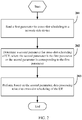
- Step 201 Send a first parameter for cross-slot scheduling (cross-slot scheduling) to a network-side device.
- the UE sends, to the network-side device, a first parameter for cross-slot scheduling corresponding to one or more DCI formats (or referred to as specific DCI formats). For example, the UE reports only a first parameter for cross-slot scheduling corresponding to a part of DCI formats, where the part of DCI formats may be DCI format 0-0, DCI format 0-1, DCI format 1-0, DCI format 1-1, or other DCI formats.
- the UE sends, to the network-side device, a first parameter for cross-slot scheduling corresponding to one or more radio network temporary identifiers (Radio Network Temporary Identifier, RNTI) (or referred to as specific RNTIs).
- RNTI Radio Network Temporary Identifier
- the RNTI includes any one of the following: a cell radio network temporary identifier (C-RNTI), a temporary cell radio network temporary identifier (TC-RNTI), a system information radio network temporary identifier (SI-RNTI), a paging radio network temporary identifier (P-RNTI), a semi-persistent scheduling radio network temporary identifier (SPS-RNTI), a configured scheduling radio network temporary identifier (CS-RNTI), an interruption radio network temporary identifier (INT-RNTI), a transmit power control-sounding reference symbols-radio network temporary identifier (TPC-SRS-RNTI), a transmit power control-physical uplink shared channel-radio network temporary identifier (TPC-PUSCH-RNTI), a transmit power control-physical uplink control channel-radio network temporary identifier (TPC-PUCCH-RNTI), a semi-persistent channel state information radio network temporary identifier (SP-CSI-RNTI), a random access radio network temporary identifier (RA-RNTI),
- the UE sends, to the network-side device, a first parameter for cross-slot scheduling corresponding to one or more PDCCH search space types, where the search space type includes any one of the following: a type 1 common search space (Type 1 CSS), a type 2 common search space (Type 2 CSS), a type 3 common search space (Type 3 CSS), a UE-specific search space, and the like.
- the search space type includes any one of the following: a type 1 common search space (Type 1 CSS), a type 2 common search space (Type 2 CSS), a type 3 common search space (Type 3 CSS), a UE-specific search space, and the like.
- the UE sends, to the network-side device, a first parameter for cross-slot scheduling corresponding to one or more PDCCH search spaces.
- the UE sends, to the network-side device, a first parameter for cross-slot scheduling corresponding to one or more control resource sets (Control-resource SET, CORESET).
- a first parameter for cross-slot scheduling corresponding to one or more control resource sets (Control-resource SET, CORESET).
- Step 202 Determine a second parameter for cross-slot scheduling of the UE, where the second parameter is the first parameter, or the second parameter is corresponding to the first parameter.
- Step 203 Perform, based on the second parameter, data processing related to cross-slot scheduling of the UE.
- step 202 the UE receives the second parameter for cross-slot scheduling from the network-side device, and the second parameter is determined by the network-side device based on the first parameter.
- the UE may receive the second parameter in the following manners:
- the UE reports the first parameter (or referred to as a related parameter) for cross-slot scheduling to the network-side device (for example, a base station), the network-side device configures the second parameter for cross-slot scheduling of the UE by using RRC, MAC or DCI, and the UE performs, based on the second parameter, data processing related to cross-slot scheduling; or the UE performs, based on a reported first parameter, data processing related to cross-slot scheduling.
- the network-side device for example, a base station
- the network-side device configures the second parameter for cross-slot scheduling of the UE by using RRC, MAC or DCI, and the UE performs, based on the second parameter, data processing related to cross-slot scheduling; or the UE performs, based on a reported first parameter, data processing related to cross-slot scheduling.
- the method may further include: receiving a first acknowledgment message from the network-side device, where the first acknowledgment message indicates that network-side device receives the first parameter.
- the first parameter is related to a hardware capability (or referred to as a hardware architecture capability) of the UE and/or a power saving requirement of the UE.
- a hardware capability or referred to as a hardware architecture capability
- the reported first parameter is, for example, K0, K1, or K2 whose value is "a"
- the hardware capability of the UE is a second hardware capability
- the reported first parameter is, for example, K0, K1, or K2 whose value is "b”. That is, the UE can report different first parameters depending on different hardware capabilities.
- the reported first parameter is, for example, K0, K1, or K2 whose value is "c"
- the reported first parameter is, for example, K0, K1, or K2 whose value is "d”. That is, the UE can report different first parameters depending on different power saving requirements.
- the first parameter includes at least one of the following:
- the first parameter includes a UE capability (UE capability) type, where the UE capability type is corresponding to one or more of the following:
- different UE capability types correspond to different values of K0, K1, and/or K2.
- the UE only needs to report the UE capability type, and the network-side device can determine corresponding values of K0, K1, and/or K2 based on a preset correspondence, which effectively reduces resources occupied by the UE in comparison to a manner in which the UE directly reports the values of K0, K1, and/or K2.
- the UE reports a related parameter for cross-slot scheduling to the network-side device, and the UE performs, based on a related parameter for cross-slot scheduling sent by the network-side device or the related parameter for cross-slot scheduling reported by the UE, data processing related to cross-slot scheduling, so that data processing related to cross-slot scheduling meets a power saving requirement of the UE, thereby achieving an optimal power saving effect.
- an embodiment of this disclosure provides another procedure of a method for data processing.
- the method is executed by a network-side device, and specific steps are as follows: Step 301: Receive a first parameter for cross-slot scheduling from UE.
- the network-side device receives, from the UE, a first parameter for cross-slot scheduling corresponding to one or more DCI formats.
- the network-side device receives only a first parameter, sent by the UE, for cross-slot scheduling corresponding to a part of DCI formats, where the part of DCI formats may be DCI format 0-0, DCI format 0-1, DCI format 1-0, DCI format 1-1, or other DCI formats.
- the network-side device receives, from the UE, a first parameter for cross-slot scheduling corresponding to one or more radio network temporary identifiers RNTIs.
- the RNTI includes any one of the following: a cell radio network temporary identifier (C-RNTI), a temporary cell radio network temporary identifier (TC-RNTI), a system information radio network temporary identifier (SI-RNTI), a paging radio network temporary identifier (P-RNTI), a semi-persistent scheduling radio network temporary identifier (SPS-RNTI), a configured scheduling radio network temporary identifier (CS-RNTI), an interruption radio network temporary identifier (INT-RNTI), a transmit power control-sounding reference symbols-radio network temporary identifier (TPC-SRS-RNTI), a transmit power control-physical uplink shared channel-radio network temporary identifier (TPC-PUSCH-RNTI), a transmit power control-physical uplink control channel-radio network temporary identifier (TPC-PUSCH-RN
- the network-side device receives, from the UE, a first parameter for cross-slot scheduling corresponding to one or more PDCCH search space types, where the search space type includes any one of the following: a type 1 common search space (Type 1 CSS), a type 2 common search space (Type 2 CSS), a type 3 common search space (Type 3 CSS), a UE-specific search space, and the like.
- the search space type includes any one of the following: a type 1 common search space (Type 1 CSS), a type 2 common search space (Type 2 CSS), a type 3 common search space (Type 3 CSS), a UE-specific search space, and the like.
- the network-side device receives, from the UE, a first parameter for cross-slot scheduling corresponding to one or more PDCCH search spaces.
- the network-side device receives, from the UE, a first parameter for cross-slot scheduling corresponding to one or more CORESETs.
- Step 302 Send, to the UE, feedback information in response to the first parameter, so that the UE performs, based on the feedback information, data processing related to cross-slot scheduling.
- the feedback information includes a first acknowledgment message, and the first acknowledgment message indicates that the network-side device has received the first parameter.
- the feedback information includes a second parameter, and the second parameter is determined by the network-side device based on the first parameter.
- the network-side device may send feedback information in any one of the following manners:
- the first parameter is related to a hardware capability (or referred to as a hardware architecture capability) of the UE and/or a power saving requirement of the UE.
- a hardware capability or referred to as a hardware architecture capability
- the reported first parameter is, for example, K0 whose value is "a"
- the hardware capability of the UE is a second hardware capability
- the reported first parameter is, for example, K0 whose value is "b”. That is, the UE can report different first parameters depending on different hardware capabilities.
- the reported first parameter when the power saving requirement of the UE is a first power saving requirement, the reported first parameter is, for example, K0 whose value is "c"; when the power saving requirement of the UE is a second power saving requirement, the reported first parameter is, for example, K0 whose value is "d". That is, the UE can report different first parameters depending on different power saving requirements.
- K0 may alternatively be K1 or K2.
- the first parameter includes at least one of the following:
- the first parameter includes a UE capability (UE capability) type, where the UE capability type is corresponding to one or more of the following:
- different UE capability types correspond to different values of K0, K1, and/or K2.
- the UE only needs to report the UE capability type, and the network-side device can determine corresponding values of K0, K1, and/or K2 based on a preset correspondence (for example, a correspondence table between the UE capability types and values of K0, K1, and/or K2), which effectively reduces resources occupied by the UE in comparison to a manner in which the UE directly reports the values of K0, K1, and/or K2.
- a preset correspondence for example, a correspondence table between the UE capability types and values of K0, K1, and/or K2
- the network-side device can configure (or reconfigure) a related parameter for cross-slot scheduling of the UE based on a request of the UE by using RRC, MAC or DCI, so that the configured related parameter for cross-slot scheduling can meet a power saving requirement of the UE.
- an embodiment of this disclosure provides yet another procedure of a method for data processing.
- the method is executed by UE, and specific steps are as follows:
- the fourth parameter for cross-slot scheduling is received from the network-side device, and the fourth parameter is determined by the network-side device based on the first UE capability or the third parameter corresponding to the first UE capability that is reported by the UE.
- RRC signaling is received from the network-side device, where the RRC signaling includes the fourth parameter;
- MAC signaling is received from the network-side device, where the MAC signaling includes the fourth parameter;
- DCI is received from the network-side device, where the DCI includes the fourth parameter.
- Step 403 Perform, based on the fourth parameter, data processing related to cross-slot scheduling.
- a current UE capability of the UE is the second UE capability
- the third parameter corresponding to the first UE capability is a PUSCH preparation delay and/or a PDSCH processing delay
- a PUSCH preparation delay corresponding to the first UE capability is greater than a PUSCH preparation delay corresponding to the second UE capability
- a PDSCH processing delay corresponding to the first UE capability is greater than a PDSCH processing delay corresponding to the second UE capability.
- UE whose current UE capability is the second UE capability can report the first UE capability or a related parameter of the first UE capability to the network-side device, and then perform, based on a related parameter of the second UE capability configured by the network-side device or the related parameter of the first UE capability reported by the UE, data processing related to cross-slot scheduling, to achieve an optimal power saving effect.
- an embodiment of this disclosure provides still another procedure of a method for data processing.
- the method is executed by a network-side device, and specific steps are as follows:
- Step 501 Receive a first UE capability or a third parameter corresponding to a first UE capability that is reported by UE.
- Step 502 Determine a fourth parameter of the UE based on the first UE capability or the third parameter corresponding to the first UE capability, where the fourth parameter is corresponding to the first UE capability or the third parameter corresponding to the first UE capability.
- the fourth parameter is at least one of a time interval between a PDCCH and a PUSCH scheduled by the PDCCH and a time interval between a PDSCH and an ACK message or a NACK message on a corresponding PUCCH.
- Step 503 Send the fourth parameter to the UE.
- a current UE capability of the UE is a second UE capability
- the third parameter corresponding to the first UE capability is a PUSCH preparation delay and/or a PDSCH processing delay
- a PUSCH preparation delay corresponding to the first UE capability is greater than a PUSCH preparation delay corresponding to the second UE capability
- a PDSCH processing delay corresponding to the first UE capability is greater than a PDSCH processing delay corresponding to the second UE capability.
- the method further includes: sending a second acknowledgment message to the UE, where the second acknowledgment message indicates that the network-side device has received the first UE capability or the third parameter corresponding to the first UE capability.
- step 503 RRC signaling is sent to the UE, where the RRC signaling includes the fourth parameter; alternatively, MAC signaling is sent to the UE, where the MAC signaling includes the fourth parameter; alternatively, DCI is sent to the UE, where the DCI includes the fourth parameter.
- the network-side device receives the first UE capability or a related parameter of the first UE capability reported by UE whose current UE capability is the second UE capability, and then sends, to the UE, the fourth parameter determined based on the first UE capability or the related parameter of the first UE capability, so that the UE performs, based on the fourth parameter, data processing related to cross-slot scheduling, to achieve an optimal power saving effect.
- An embodiment of this disclosure further provides UE. Because a principle of resolving a problem by the UE is similar to the method for data processing in the embodiments of this disclosure, for implementation of the UE, reference may be made to the implementation of the method, and repeated descriptions are omitted.
- the UE 600 includes:
- the UE further includes: a first receiving module, configured to receive the second parameter for cross-slot scheduling from the network-side device, where the second parameter is determined by the network-side device based on the first parameter.
- the first receiving module is further configured to receive a first acknowledgment message from the network-side device, where the first acknowledgment message indicates that the network-side device has received the first parameter.
- the first receiving module is further configured to: receive radio resource control RRC signaling from the network-side device, where the RRC signaling includes the second parameter; or receive media access control MAC signaling from the network-side device, where the MAC signaling includes the second parameter; or receive downlink control information DCI from the network-side device, where the DCI includes the second parameter.
- the first parameter is related to a hardware capability of the UE and/or a power saving requirement of the UE.
- the first sending module is further configured to: send, to the network-side device, a first parameter for cross-slot scheduling corresponding to one or more DCI formats; or send, to the network-side device, a first parameter for cross-slot scheduling corresponding to one or more RNTIs; or send, to the network-side device, a first parameter for cross-slot scheduling corresponding to one or more PDCCH search space types; or send, to the network-side device, a first parameter for cross-slot scheduling corresponding to one or more PDCCH search spaces; or send, to the network-side device, a first parameter for cross-slot scheduling corresponding to one or more CORESETs.
- the first parameter includes any one of the following:
- the first parameter includes a UE capability type, where the UE capability type is corresponding to one or more of the following:
- the UE provided in this embodiment of this disclosure may perform the foregoing method embodiment.
- An implementation principle and a technical effect of the UE are similar to those of the method embodiment. No more details are described in this embodiment.
- An embodiment of this disclosure further provides a network-side device. Because a principle of resolving a problem by the network-side device is similar to the method for data processing in the embodiments of this disclosure, for implementation of the network-side device, reference may be made to the implementation of the method, and repeated descriptions are omitted.
- the network-side device 700 includes:
- the feedback information includes a first acknowledgment message
- the first acknowledgment message indicates that the network-side device has received the first parameter
- the feedback information includes a second parameter
- the second parameter is determined by the network-side device based on the first parameter
- the second sending module is further configured to: send RRC signaling to the UE, where the RRC signaling includes the feedback information; or send MAC signaling to the UE, where the MAC signaling includes the feedback information; or send DCI to the UE, where the DCI includes the feedback information.
- the first parameter is related to a hardware capability of the UE and/or a power saving requirement of the UE.
- the second receiving module is further configured to: receive, from the UE, a first parameter for cross-slot scheduling corresponding to one or more DCI formats; or receive, from the UE, a first parameter for cross-slot scheduling corresponding to one or more radio network temporary identifiers RNTIs; or receive, from the UE, a first parameter for cross-slot scheduling corresponding to one or more physical downlink control channel PDCCH search space types; or receive, from the UE, a first parameter for cross-slot scheduling corresponding to one or more physical downlink control channel PDCCH search spaces; or receive, from the UE, a first parameter for cross-slot scheduling corresponding to one or more control resource sets CORESETs.
- the first parameter includes any one of the following:
- the first parameter includes a UE capability type, where the UE capability type is corresponding to one or more of the following:
- the network-side device provided in this embodiment of this disclosure may perform the foregoing method embodiment.
- An implementation principle and a technical effect of the network-side device are similar to those of the method embodiment. No more details are described in this embodiment.
- An embodiment of this disclosure further provides UE. Because a principle of resolving a problem by the UE is similar to the method for data processing in the embodiments of this disclosure, for implementation of the UE, reference may be made to the implementation of the method, and repeated descriptions are omitted.
- the UE 800 includes:
- a current UE capability of the UE is a second UE capability
- the third parameter corresponding to the first UE capability is a PUSCH preparation delay and/or a PDSCH processing delay
- a PUSCH preparation delay corresponding to the first UE capability is greater than a PUSCH preparation delay corresponding to the second UE capability
- a PDSCH processing delay corresponding to the first UE capability is greater than a PDSCH processing delay corresponding to the second UE capability.
- the UE further includes: a third receiving module, configured to receive the fourth parameter for cross-slot scheduling from the network-side device, and the fourth parameter is determined by the network-side device based on the first UE capability or the third parameter corresponding to the first UE capability that is reported by the UE.
- a third receiving module configured to receive the fourth parameter for cross-slot scheduling from the network-side device, and the fourth parameter is determined by the network-side device based on the first UE capability or the third parameter corresponding to the first UE capability that is reported by the UE.
- the third receiving module is further configured to: receive RRC signaling from the network-side device, where the RRC signaling includes the fourth parameter; or receive MAC signaling from the network-side device, where the MAC signaling includes the fourth parameter; or receive DCI from the network-side device, where the DCI includes the fourth parameter.
- the UE provided in this embodiment of this disclosure may perform the foregoing method embodiment.
- An implementation principle and a technical effect of the UE are similar to those of the method embodiment. No more details are described in this embodiment.
- An embodiment of this disclosure further provides a network-side device. Because a principle of resolving a problem by the network-side device is similar to the method for data processing in the embodiments of this disclosure, for implementation of the network-side device, reference may be made to the implementation of the method, and repeated descriptions are omitted.
- the network-side device 900 includes:
- a current UE capability of the UE is a second UE capability
- the third parameter corresponding to the first UE capability is a PUSCH preparation delay and/or a PDSCH processing delay
- a PUSCH preparation delay corresponding to the first UE capability is greater than a PUSCH preparation delay corresponding to the second UE capability
- a PDSCH processing delay corresponding to the first UE capability is greater than a PDSCH processing delay corresponding to the second UE capability.
- the fourth sending module is further configured to send a second acknowledgment message to the UE, where the second acknowledgment message indicates that the network-side device has received the first UE capability or the third parameter corresponding to the first UE capability.
- the fourth sending module is further configured to: send RRC signaling to the UE, where the RRC signaling includes the fourth parameter; or send MAC signaling to the UE, where the MAC signaling includes the fourth parameter; or send DCI to the UE, where the DCI includes the fourth parameter.
- the network-side device provided in this embodiment of this disclosure may perform the foregoing method embodiment.
- An implementation principle and a technical effect of the network-side device are similar to those of the method embodiment. No more details are described in this embodiment.
- user equipment 1000 shown in FIG. 10 includes at least one processor 1001, a memory 1002, at least one network interface 1004, and a user interface 1003.
- the components of the user equipment 1000 are coupled together through a bus system 1005.
- the bus system 1005 is used to implement connection and communication between these components.
- the bus system 1005 further includes a power bus, a control bus, and a status signal bus.
- various buses are marked as the bus system 1005 in FIG. 10 .
- the user interface 1003 may include a display, a keyboard, or a click device (for example, a mouse, a trackball (trackball), a touchpad, or a touchscreen).
- a click device for example, a mouse, a trackball (trackball), a touchpad, or a touchscreen.
- the memory 1002 in this embodiment of this disclosure may be a volatile memory or a non-volatile memory, or may include both a volatile memory and a non-volatile memory.
- the non-volatile memory may be a read-only memory (Read-Only Memory, ROM), a programmable read-only memory (Programmable ROM, PROM), an erasable programmable read-only memory (Erasable PROM, EPROM), an electrically erasable programmable read-only memory (Electrically EPROM, EEPROM), or a flash memory.
- the volatile memory may be a random access memory (Random Access Memory, RAM), which is used as an external cache.
- RAM static random access memory
- SRAM static random access memory
- DRAM dynamic random access memory
- DRAM dynamic random access memory
- SDRAM synchronous dynamic random access memory
- DDRSDRAM double data rate synchronous dynamic random access memory
- Enhanced SDRAM, ESDRAM enhanced synchronous dynamic random access memory
- Synchlink DRAM, SLDRAM synchronous link dynamic random access memory
- Direct Rambus RAM Direct Rambus RAM
- the memory 1002 stores the following elements: executable modules or data structures, or a subset thereof, or an extended set thereof: an operating system 10021 and an application program 10022.
- the operating system 10021 includes various system programs, such as a framework layer, a core library layer, and a driver layer, for implementing various basic services and processing hardware-based tasks.
- the application program 10022 includes various application programs, such as a media player (Media Player) and a browser (Browser), which are used to implement various application services.
- a program for implementing the method in the embodiments of this disclosure may be included in the application program 10022.
- a program or instruction stored in the memory 1002 is invoked. Specifically, a program or instruction stored in the application program 10022 is invoked.
- the program or instruction is executed, the following steps are implemented: sending a first parameter for cross-slot scheduling to a network-side device; determining a second parameter for cross-slot scheduling of the UE, where the second parameter is the first parameter, or the second parameter is corresponding to the first parameter; and performing, based on the second parameter, data processing related to cross-slot scheduling.
- the following steps are implemented: reporting, to a network-side device, a first UE capability or a third parameter corresponding to a first UE capability; determining a fourth parameter for cross-slot scheduling of the UE, where the fourth parameter is corresponding to the first UE capability or the third parameter corresponding to the first UE capability, and the fourth parameter is at least one of a time interval between a PDCCH and a PUSCH scheduled by the PDCCH and a time interval between a PDSCH and an ACK message or a NACK message on a corresponding PUCCH; and performing, based on the fourth parameter, data processing related to cross-slot scheduling, where a current UE capability of the UE is a second UE capability, the third parameter corresponding to the first UE capability is a PUSCH preparation delay and/or a PDSCH processing delay, and a PUSCH preparation delay corresponding to the first UE capability is greater than a PUSCH preparation delay corresponding to the second UE
- the user equipment provided in this embodiment of this disclosure may perform the foregoing method embodiment.
- An implementation principle and a technical effect of the user equipment are similar to those of the method embodiment. No more details are described in this embodiment.
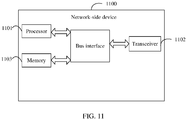
- an embodiment of this disclosure provides another network side device 1100, including a processor 1101, a transceiver 1102, a memory 1103, and a bus interface.
- the processor 1101 is responsible for management of a bus architecture and general processing.
- the memory 1103 may store data used by the processor 1101 to perform an operation.
- the network side device 1100 may further include a computer program that is stored in the memory 1103 and capable of running on the processor 1101.
- the computer program is executed by the processor 1101, the following steps are implemented: receiving a first parameter for cross-slot scheduling from UE; and sending, to the UE, feedback information in response to the first parameter, so that the UE performs, based on the feedback information, data processing related to cross-slot scheduling.
- the following steps are implemented: receiving a first UE capability or a third parameter corresponding to a first UE capability that is reported by UE; determining a fourth parameter of the UE based on the first UE capability or the third parameter corresponding to the first UE capability, where the fourth parameter is corresponding to the first UE capability or the third parameter corresponding to the first UE capability, and the fourth parameter is at least one of a time interval between a PDCCH and a PUSCH scheduled by the PDCCH and a time interval between a PDSCH and an ACK message or a NACK message on a corresponding PUCCH; and sending the fourth parameter to the UE, where a current UE capability of the UE is a second UE capability, the third parameter corresponding to the first UE capability is a PUSCH preparation delay and/or a PDSCH processing delay, and a PUSCH preparation delay corresponding to the first UE capability is greater than a PUSCH preparation delay corresponding to
- the bus architecture may include any quantity of interconnected buses and bridges, and specifically connects together various circuits of one or more processors represented by the processor 1101 and a memory represented by the memory 1103.
- the bus architecture may further connect, for example, a peripheral device or a voltage stabilizer to various other circuits such as a power management circuit. These are well known in the art, and therefore are not further described in this embodiment of this disclosure.
- the bus interface provides interfaces.
- the transceiver 1102 may be a plurality of elements, including a transmitter and a receiver, and provides units configured to perform communication with various other apparatuses over a transmission medium.
- the network-side device provided in this embodiment of this disclosure may perform the foregoing method embodiment.
- An implementation principle and a technical effect of the network-side device are similar to those of the method embodiment. No more details are described in this embodiment.
- An embodiment of this disclosure further provides a computer-readable storage medium.
- the computer-readable storage medium stores a computer program, and when the computer program is executed by a processor, the steps of the method for data processing according to any one of the foregoing embodiments are implemented.
- the software instruction may include a corresponding software module.
- the software module may be stored in a RAM, a flash memory, a ROM, an EPROM, an EEPROM, a register, a hard disk, a removable hard disk, a CD-ROM, or a storage medium of any other form known in the art.
- a storage medium is coupled to the processor, so that the processor can read information from the storage medium or write information into the storage medium.
- the storage medium may be a component of the processor.
- the processor and the storage medium may be located in an ASIC.
- the ASIC may be located in a core network interface device.
- the processor and the storage medium may exist in the core network interface device as discrete components.
- the computer-readable medium includes a computer storage medium and a communications medium, where the communications medium includes any medium that enables a computer program to be transmitted from one place to another place.
- the storage medium may be any available medium accessible by a general-purpose or dedicated computer.
- the embodiments of this disclosure may be provided as a method, a system, or a computer program product. Therefore, the embodiments of this disclosure may be hardware-only embodiments, software-only embodiments, or embodiments with a combination of software and hardware. Moreover, the embodiments of this disclosure may use a form of a computer program product that is implemented on one or more computer-usable storage media (including but not limited to a disk memory, a CD-ROM, an optical memory, and the like) that include computer-usable program code.
- a computer-usable storage media including but not limited to a disk memory, a CD-ROM, an optical memory, and the like
- These computer program instructions may be provided to a general-purpose computer, a special-purpose computer, an embedded processor, or a processor of any other programmable data processing device to generate a machine, so that the instructions executed by a computer or a processor of any other programmable data processing device generate an apparatus for implementing a specific function in one or more processes in the flowcharts and/or in one or more blocks in the block diagrams.
- These computer program instructions may be stored in a computer-readable memory that can instruct the computer or any other programmable data processing device to work in a specific manner, so that the instructions stored in the computer-readable memory generate an artifact that includes an instruction apparatus.
- the instruction apparatus implements a specific function in one or more processes in the flowcharts and/or in one or more blocks in the block diagrams.
- These computer program instructions may be loaded onto a computer or another programmable data processing device, so that a series of operations and steps are performed on the computer or the another programmable device, thereby generating computer-implemented processing. Therefore, the instructions executed on the computer or the another programmable device provide steps for implementing a specific function in one or more processes in the flowcharts and/or in one or more blocks in the block diagrams.
Landscapes
- Engineering & Computer Science (AREA)
- Signal Processing (AREA)
- Computer Networks & Wireless Communication (AREA)
- Mobile Radio Communication Systems (AREA)
- Two-Way Televisions, Distribution Of Moving Picture Or The Like (AREA)
- Electrophonic Musical Instruments (AREA)
Applications Claiming Priority (2)
| Application Number | Priority Date | Filing Date | Title |
|---|---|---|---|
| CN201810610167.8A CN110602769B (zh) | 2018-06-13 | 2018-06-13 | 数据处理方法、用户设备和网络侧设备 |
| PCT/CN2019/089154 WO2019237928A1 (zh) | 2018-06-13 | 2019-05-30 | 数据处理方法、用户设备和网络侧设备 |
Publications (3)
| Publication Number | Publication Date |
|---|---|
| EP3817459A1 true EP3817459A1 (de) | 2021-05-05 |
| EP3817459A4 EP3817459A4 (de) | 2021-08-04 |
| EP3817459B1 EP3817459B1 (de) | 2023-05-10 |
Family
ID=68842419
Family Applications (1)
| Application Number | Title | Priority Date | Filing Date |
|---|---|---|---|
| EP19819749.3A Active EP3817459B1 (de) | 2018-06-13 | 2019-05-30 | Datenverarbeitungsverfahren, benutzergerät und netzwerkseitige vorrichtung |
Country Status (7)
| Country | Link |
|---|---|
| US (1) | US11665685B2 (de) |
| EP (1) | EP3817459B1 (de) |
| JP (1) | JP7179095B2 (de) |
| KR (1) | KR102368537B1 (de) |
| CN (1) | CN110602769B (de) |
| ES (1) | ES2946483T3 (de) |
| WO (1) | WO2019237928A1 (de) |
Families Citing this family (13)
| Publication number | Priority date | Publication date | Assignee | Title |
|---|---|---|---|---|
| CN112425228B (zh) * | 2018-07-13 | 2023-03-10 | 中兴通讯股份有限公司 | 用于资源指示的方法和装置 |
| US12177777B2 (en) * | 2019-04-02 | 2024-12-24 | Apple Inc. | Cross-slot scheduling power saving techniques |
| CN112583557B (zh) * | 2019-09-30 | 2023-06-23 | 大唐移动通信设备有限公司 | 节能信息的传输方法、基站及终端 |
| JP7535533B2 (ja) * | 2019-10-03 | 2024-08-16 | 株式会社Nttドコモ | 端末、無線通信方法、基地局及びシステム |
| WO2021196219A1 (en) * | 2020-04-03 | 2021-10-07 | Nec Corporation | Methods for communication, terminal device, network device, and computer readable media |
| US12389390B2 (en) * | 2020-05-15 | 2025-08-12 | Qualcomm Incorporated | User equipment processing capability indication |
| CN113810997B (zh) * | 2020-06-12 | 2024-11-19 | 维沃移动通信有限公司 | Srs资源指示方法、srs资源确定方法及相关设备 |
| WO2022016454A1 (zh) * | 2020-07-23 | 2022-01-27 | 北京小米移动软件有限公司 | 调度间隔指示方法和装置 |
| WO2022029973A1 (ja) * | 2020-08-06 | 2022-02-10 | 株式会社Nttドコモ | 端末 |
| KR20230122149A (ko) * | 2020-12-23 | 2023-08-22 | 삼성전자주식회사 | 페이징 송수신 방법 및 장치 |
| US12317232B2 (en) * | 2021-01-24 | 2025-05-27 | Qualcomm Incorporated | Rules for determining an application time for a downlink control information (DCI) based update |
| CN115336364B (zh) * | 2021-03-10 | 2025-07-15 | 北京小米移动软件有限公司 | 一种配置、确定下行调度信息的方法、装置、设备及介质 |
| CN113747553B (zh) | 2021-07-30 | 2022-09-09 | 荣耀终端有限公司 | 一种上行传输资源调度方法、基站、用户设备及通信系统 |
Family Cites Families (13)
| Publication number | Priority date | Publication date | Assignee | Title |
|---|---|---|---|---|
| HUE043320T2 (hu) * | 2015-02-26 | 2019-08-28 | Intel Ip Corp | Rendszerek, eljárások és eszközök rádiós elérési technológia koordinációjához |
| US10708920B2 (en) | 2015-03-03 | 2020-07-07 | Qualcomm Incorporated | Method and apparatus for dynamic device capability signaling in wireless communications |
| CN106817774B (zh) * | 2015-12-01 | 2019-07-19 | 展讯通信(上海)有限公司 | 用户终端调度方法及装置 |
| US10462739B2 (en) * | 2016-06-21 | 2019-10-29 | Samsung Electronics Co., Ltd. | Transmissions of physical downlink control channels in a communication system |
| US10231228B2 (en) * | 2016-09-23 | 2019-03-12 | Mediatek Inc. | Methods of two-stage scheduling in downlink control channel |
| WO2018062458A1 (ja) | 2016-09-29 | 2018-04-05 | 株式会社Nttドコモ | ユーザ端末及び無線通信方法 |
| CN109792691B (zh) * | 2016-10-07 | 2021-11-30 | Lg电子株式会社 | 支持无线通信系统中的用于nr的节能机制的方法和设备 |
| CN110121908B (zh) * | 2016-11-01 | 2024-01-16 | 株式会社Ntt都科摩 | 终端、无线通信方法、基站以及系统 |
| EP3641393B1 (de) * | 2017-06-16 | 2023-08-09 | Electronics and Telecommunications Research Institute | Verfahren zur konfiguration der bandbreite zur unterstützung eines breitbandträgers in einem kommunikationssystem |
| KR102010485B1 (ko) * | 2017-10-24 | 2019-08-13 | 엘지전자 주식회사 | 무선 통신 시스템에서 랜덤 액세스 절차를 수행하는 방법 및 장치 |
| US10652826B2 (en) * | 2018-03-23 | 2020-05-12 | Samsung Electronics Co., Ltd. | Method and apparatus for power saving signal design in NR |
| US11032001B2 (en) * | 2018-04-05 | 2021-06-08 | Qualcomm Incorporated | Timing parameter management for bandwidth part switching |
| EP4032345B1 (de) * | 2019-09-19 | 2025-09-03 | Telefonaktiebolaget LM Ericsson (publ) | Funknetzwerkknoten, benutzergerät und in einem drahtloskommunikationsnetzwerk ausgeführte verfahren |
-
2018
- 2018-06-13 CN CN201810610167.8A patent/CN110602769B/zh active Active
-
2019
- 2019-05-30 ES ES19819749T patent/ES2946483T3/es active Active
- 2019-05-30 WO PCT/CN2019/089154 patent/WO2019237928A1/zh not_active Ceased
- 2019-05-30 KR KR1020207035948A patent/KR102368537B1/ko active Active
- 2019-05-30 JP JP2020569042A patent/JP7179095B2/ja active Active
- 2019-05-30 EP EP19819749.3A patent/EP3817459B1/de active Active
-
2020
- 2020-12-02 US US17/110,165 patent/US11665685B2/en active Active
Also Published As
| Publication number | Publication date |
|---|---|
| EP3817459A4 (de) | 2021-08-04 |
| KR102368537B1 (ko) | 2022-02-28 |
| EP3817459B1 (de) | 2023-05-10 |
| CN110602769B (zh) | 2021-04-13 |
| US11665685B2 (en) | 2023-05-30 |
| KR20210008528A (ko) | 2021-01-22 |
| WO2019237928A1 (zh) | 2019-12-19 |
| CN110602769A (zh) | 2019-12-20 |
| JP2021527985A (ja) | 2021-10-14 |
| JP7179095B2 (ja) | 2022-11-28 |
| ES2946483T3 (es) | 2023-07-19 |
| US20210092751A1 (en) | 2021-03-25 |
Similar Documents
| Publication | Publication Date | Title |
|---|---|---|
| US11665685B2 (en) | Method for data processing, user equipment, and network-side device | |
| US11477778B2 (en) | Physical downlink control channel monitoring method, user equipment and network side device | |
| US12432747B2 (en) | Frequency domain resource assignment method and device | |
| US12356326B2 (en) | Configuration method and device | |
| EP3920599A1 (de) | Verfahren zum umschalten des energiesparmodus, verfahren zur konfigurierung des energiesparmodus und kommunikationsvorrichtung | |
| US12501448B2 (en) | Method for determining feedback information transmission location and device | |
| KR102797336B1 (ko) | 신호 수신 또는 송신 방법 및 디바이스, 및 시스템 | |
| US11910317B2 (en) | Signal monitoring method and apparatus | |
| US11026191B2 (en) | Service transmission method, device, and system | |
| US11937250B2 (en) | Method for configuring physical downlink control channel, user equipment and network side device | |
| CN110381568A (zh) | 监听物理下行控制信道的方法、用户设备和网络侧设备 | |
| EP4319387A1 (de) | Verfahren und vorrichtung zur konstruktion eines halbstatischen harq-codebuchs, vorrichtung und lesbares speichermedium | |
| EP4401474A1 (de) | Informationsübertragungsverfahren und -vorrichtung | |
| WO2020220352A1 (zh) | 一种通信方法及设备 | |
| CN115190598A (zh) | 一种信号传输方法、用户设备以及网络设备 | |
| HK40055616A (en) | Energy saving mode switching method, energy saving mode configuration method, and communication device | |
| HK40099647A (en) | Semi-static harq codebook construction method and apparatus, device, and readable storage medium |
Legal Events
| Date | Code | Title | Description |
|---|---|---|---|
| STAA | Information on the status of an ep patent application or granted ep patent |
Free format text: STATUS: THE INTERNATIONAL PUBLICATION HAS BEEN MADE |
|
| PUAI | Public reference made under article 153(3) epc to a published international application that has entered the european phase |
Free format text: ORIGINAL CODE: 0009012 |
|
| STAA | Information on the status of an ep patent application or granted ep patent |
Free format text: STATUS: REQUEST FOR EXAMINATION WAS MADE |
|
| 17P | Request for examination filed |
Effective date: 20201207 |
|
| AK | Designated contracting states |
Kind code of ref document: A1 Designated state(s): AL AT BE BG CH CY CZ DE DK EE ES FI FR GB GR HR HU IE IS IT LI LT LU LV MC MK MT NL NO PL PT RO RS SE SI SK SM TR |
|
| A4 | Supplementary search report drawn up and despatched |
Effective date: 20210706 |
|
| RIC1 | Information provided on ipc code assigned before grant |
Ipc: H04W 72/12 20090101ALI20210630BHEP Ipc: H04W 52/02 20090101AFI20210630BHEP |
|
| DAV | Request for validation of the european patent (deleted) | ||
| DAX | Request for extension of the european patent (deleted) | ||
| GRAP | Despatch of communication of intention to grant a patent |
Free format text: ORIGINAL CODE: EPIDOSNIGR1 |
|
| STAA | Information on the status of an ep patent application or granted ep patent |
Free format text: STATUS: GRANT OF PATENT IS INTENDED |
|
| INTG | Intention to grant announced |
Effective date: 20221223 |
|
| GRAS | Grant fee paid |
Free format text: ORIGINAL CODE: EPIDOSNIGR3 |
|
| GRAA | (expected) grant |
Free format text: ORIGINAL CODE: 0009210 |
|
| STAA | Information on the status of an ep patent application or granted ep patent |
Free format text: STATUS: THE PATENT HAS BEEN GRANTED |
|
| AK | Designated contracting states |
Kind code of ref document: B1 Designated state(s): AL AT BE BG CH CY CZ DE DK EE ES FI FR GB GR HR HU IE IS IT LI LT LU LV MC MK MT NL NO PL PT RO RS SE SI SK SM TR |
|
| REG | Reference to a national code |
Ref country code: GB Ref legal event code: FG4D |
|
| REG | Reference to a national code |
Ref country code: AT Ref legal event code: REF Ref document number: 1567985 Country of ref document: AT Kind code of ref document: T Effective date: 20230515 Ref country code: CH Ref legal event code: EP |
|
| REG | Reference to a national code |
Ref country code: DE Ref legal event code: R096 Ref document number: 602019028865 Country of ref document: DE |
|
| REG | Reference to a national code |
Ref country code: IE Ref legal event code: FG4D |
|
| REG | Reference to a national code |
Ref country code: NL Ref legal event code: FP |
|
| REG | Reference to a national code |
Ref country code: ES Ref legal event code: FG2A Ref document number: 2946483 Country of ref document: ES Kind code of ref document: T3 Effective date: 20230719 |
|
| P01 | Opt-out of the competence of the unified patent court (upc) registered |
Effective date: 20230712 |
|
| REG | Reference to a national code |
Ref country code: LT Ref legal event code: MG9D |
|
| REG | Reference to a national code |
Ref country code: AT Ref legal event code: MK05 Ref document number: 1567985 Country of ref document: AT Kind code of ref document: T Effective date: 20230510 |
|
| PG25 | Lapsed in a contracting state [announced via postgrant information from national office to epo] |
Ref country code: SE Free format text: LAPSE BECAUSE OF FAILURE TO SUBMIT A TRANSLATION OF THE DESCRIPTION OR TO PAY THE FEE WITHIN THE PRESCRIBED TIME-LIMIT Effective date: 20230510 Ref country code: PT Free format text: LAPSE BECAUSE OF FAILURE TO SUBMIT A TRANSLATION OF THE DESCRIPTION OR TO PAY THE FEE WITHIN THE PRESCRIBED TIME-LIMIT Effective date: 20230911 Ref country code: NO Free format text: LAPSE BECAUSE OF FAILURE TO SUBMIT A TRANSLATION OF THE DESCRIPTION OR TO PAY THE FEE WITHIN THE PRESCRIBED TIME-LIMIT Effective date: 20230810 Ref country code: AT Free format text: LAPSE BECAUSE OF FAILURE TO SUBMIT A TRANSLATION OF THE DESCRIPTION OR TO PAY THE FEE WITHIN THE PRESCRIBED TIME-LIMIT Effective date: 20230510 |
|
| PG25 | Lapsed in a contracting state [announced via postgrant information from national office to epo] |
Ref country code: RS Free format text: LAPSE BECAUSE OF FAILURE TO SUBMIT A TRANSLATION OF THE DESCRIPTION OR TO PAY THE FEE WITHIN THE PRESCRIBED TIME-LIMIT Effective date: 20230510 Ref country code: PL Free format text: LAPSE BECAUSE OF FAILURE TO SUBMIT A TRANSLATION OF THE DESCRIPTION OR TO PAY THE FEE WITHIN THE PRESCRIBED TIME-LIMIT Effective date: 20230510 Ref country code: LV Free format text: LAPSE BECAUSE OF FAILURE TO SUBMIT A TRANSLATION OF THE DESCRIPTION OR TO PAY THE FEE WITHIN THE PRESCRIBED TIME-LIMIT Effective date: 20230510 Ref country code: LT Free format text: LAPSE BECAUSE OF FAILURE TO SUBMIT A TRANSLATION OF THE DESCRIPTION OR TO PAY THE FEE WITHIN THE PRESCRIBED TIME-LIMIT Effective date: 20230510 Ref country code: IS Free format text: LAPSE BECAUSE OF FAILURE TO SUBMIT A TRANSLATION OF THE DESCRIPTION OR TO PAY THE FEE WITHIN THE PRESCRIBED TIME-LIMIT Effective date: 20230910 Ref country code: HR Free format text: LAPSE BECAUSE OF FAILURE TO SUBMIT A TRANSLATION OF THE DESCRIPTION OR TO PAY THE FEE WITHIN THE PRESCRIBED TIME-LIMIT Effective date: 20230510 Ref country code: GR Free format text: LAPSE BECAUSE OF FAILURE TO SUBMIT A TRANSLATION OF THE DESCRIPTION OR TO PAY THE FEE WITHIN THE PRESCRIBED TIME-LIMIT Effective date: 20230811 |
|
| PG25 | Lapsed in a contracting state [announced via postgrant information from national office to epo] |
Ref country code: FI Free format text: LAPSE BECAUSE OF FAILURE TO SUBMIT A TRANSLATION OF THE DESCRIPTION OR TO PAY THE FEE WITHIN THE PRESCRIBED TIME-LIMIT Effective date: 20230510 |
|
| REG | Reference to a national code |
Ref country code: CH Ref legal event code: PL |
|
| PG25 | Lapsed in a contracting state [announced via postgrant information from national office to epo] |
Ref country code: SK Free format text: LAPSE BECAUSE OF FAILURE TO SUBMIT A TRANSLATION OF THE DESCRIPTION OR TO PAY THE FEE WITHIN THE PRESCRIBED TIME-LIMIT Effective date: 20230510 |
|
| REG | Reference to a national code |
Ref country code: BE Ref legal event code: MM Effective date: 20230531 |
|
| PG25 | Lapsed in a contracting state [announced via postgrant information from national office to epo] |
Ref country code: SM Free format text: LAPSE BECAUSE OF FAILURE TO SUBMIT A TRANSLATION OF THE DESCRIPTION OR TO PAY THE FEE WITHIN THE PRESCRIBED TIME-LIMIT Effective date: 20230510 Ref country code: SK Free format text: LAPSE BECAUSE OF FAILURE TO SUBMIT A TRANSLATION OF THE DESCRIPTION OR TO PAY THE FEE WITHIN THE PRESCRIBED TIME-LIMIT Effective date: 20230510 Ref country code: RO Free format text: LAPSE BECAUSE OF FAILURE TO SUBMIT A TRANSLATION OF THE DESCRIPTION OR TO PAY THE FEE WITHIN THE PRESCRIBED TIME-LIMIT Effective date: 20230510 Ref country code: LU Free format text: LAPSE BECAUSE OF NON-PAYMENT OF DUE FEES Effective date: 20230530 Ref country code: LI Free format text: LAPSE BECAUSE OF NON-PAYMENT OF DUE FEES Effective date: 20230531 Ref country code: EE Free format text: LAPSE BECAUSE OF FAILURE TO SUBMIT A TRANSLATION OF THE DESCRIPTION OR TO PAY THE FEE WITHIN THE PRESCRIBED TIME-LIMIT Effective date: 20230510 Ref country code: DK Free format text: LAPSE BECAUSE OF FAILURE TO SUBMIT A TRANSLATION OF THE DESCRIPTION OR TO PAY THE FEE WITHIN THE PRESCRIBED TIME-LIMIT Effective date: 20230510 Ref country code: CZ Free format text: LAPSE BECAUSE OF FAILURE TO SUBMIT A TRANSLATION OF THE DESCRIPTION OR TO PAY THE FEE WITHIN THE PRESCRIBED TIME-LIMIT Effective date: 20230510 Ref country code: CH Free format text: LAPSE BECAUSE OF NON-PAYMENT OF DUE FEES Effective date: 20230531 |
|
| REG | Reference to a national code |
Ref country code: DE Ref legal event code: R097 Ref document number: 602019028865 Country of ref document: DE |
|
| PG25 | Lapsed in a contracting state [announced via postgrant information from national office to epo] |
Ref country code: MC Free format text: LAPSE BECAUSE OF FAILURE TO SUBMIT A TRANSLATION OF THE DESCRIPTION OR TO PAY THE FEE WITHIN THE PRESCRIBED TIME-LIMIT Effective date: 20230510 |
|
| REG | Reference to a national code |
Ref country code: IE Ref legal event code: MM4A |
|
| PG25 | Lapsed in a contracting state [announced via postgrant information from national office to epo] |
Ref country code: MC Free format text: LAPSE BECAUSE OF FAILURE TO SUBMIT A TRANSLATION OF THE DESCRIPTION OR TO PAY THE FEE WITHIN THE PRESCRIBED TIME-LIMIT Effective date: 20230510 |
|
| PLBE | No opposition filed within time limit |
Free format text: ORIGINAL CODE: 0009261 |
|
| STAA | Information on the status of an ep patent application or granted ep patent |
Free format text: STATUS: NO OPPOSITION FILED WITHIN TIME LIMIT |
|
| PG25 | Lapsed in a contracting state [announced via postgrant information from national office to epo] |
Ref country code: IE Free format text: LAPSE BECAUSE OF NON-PAYMENT OF DUE FEES Effective date: 20230530 |
|
| 26N | No opposition filed |
Effective date: 20240213 |
|
| PG25 | Lapsed in a contracting state [announced via postgrant information from national office to epo] |
Ref country code: IE Free format text: LAPSE BECAUSE OF NON-PAYMENT OF DUE FEES Effective date: 20230530 |
|
| PG25 | Lapsed in a contracting state [announced via postgrant information from national office to epo] |
Ref country code: SI Free format text: LAPSE BECAUSE OF FAILURE TO SUBMIT A TRANSLATION OF THE DESCRIPTION OR TO PAY THE FEE WITHIN THE PRESCRIBED TIME-LIMIT Effective date: 20230510 |
|
| PG25 | Lapsed in a contracting state [announced via postgrant information from national office to epo] |
Ref country code: SI Free format text: LAPSE BECAUSE OF FAILURE TO SUBMIT A TRANSLATION OF THE DESCRIPTION OR TO PAY THE FEE WITHIN THE PRESCRIBED TIME-LIMIT Effective date: 20230510 Ref country code: IT Free format text: LAPSE BECAUSE OF FAILURE TO SUBMIT A TRANSLATION OF THE DESCRIPTION OR TO PAY THE FEE WITHIN THE PRESCRIBED TIME-LIMIT Effective date: 20230510 Ref country code: BE Free format text: LAPSE BECAUSE OF NON-PAYMENT OF DUE FEES Effective date: 20230531 |
|
| PG25 | Lapsed in a contracting state [announced via postgrant information from national office to epo] |
Ref country code: BG Free format text: LAPSE BECAUSE OF FAILURE TO SUBMIT A TRANSLATION OF THE DESCRIPTION OR TO PAY THE FEE WITHIN THE PRESCRIBED TIME-LIMIT Effective date: 20230510 |
|
| PG25 | Lapsed in a contracting state [announced via postgrant information from national office to epo] |
Ref country code: BG Free format text: LAPSE BECAUSE OF FAILURE TO SUBMIT A TRANSLATION OF THE DESCRIPTION OR TO PAY THE FEE WITHIN THE PRESCRIBED TIME-LIMIT Effective date: 20230510 |
|
| PGFP | Annual fee paid to national office [announced via postgrant information from national office to epo] |
Ref country code: NL Payment date: 20250409 Year of fee payment: 7 |
|
| PGFP | Annual fee paid to national office [announced via postgrant information from national office to epo] |
Ref country code: DE Payment date: 20250402 Year of fee payment: 7 |
|
| PGFP | Annual fee paid to national office [announced via postgrant information from national office to epo] |
Ref country code: ES Payment date: 20250603 Year of fee payment: 7 |
|
| PGFP | Annual fee paid to national office [announced via postgrant information from national office to epo] |
Ref country code: FR Payment date: 20250401 Year of fee payment: 7 |
|
| PG25 | Lapsed in a contracting state [announced via postgrant information from national office to epo] |
Ref country code: CY Free format text: LAPSE BECAUSE OF FAILURE TO SUBMIT A TRANSLATION OF THE DESCRIPTION OR TO PAY THE FEE WITHIN THE PRESCRIBED TIME-LIMIT; INVALID AB INITIO Effective date: 20190530 |
|
| PG25 | Lapsed in a contracting state [announced via postgrant information from national office to epo] |
Ref country code: HU Free format text: LAPSE BECAUSE OF FAILURE TO SUBMIT A TRANSLATION OF THE DESCRIPTION OR TO PAY THE FEE WITHIN THE PRESCRIBED TIME-LIMIT; INVALID AB INITIO Effective date: 20190530 |
|
| PG25 | Lapsed in a contracting state [announced via postgrant information from national office to epo] |
Ref country code: TR Free format text: LAPSE BECAUSE OF FAILURE TO SUBMIT A TRANSLATION OF THE DESCRIPTION OR TO PAY THE FEE WITHIN THE PRESCRIBED TIME-LIMIT Effective date: 20230510 |
|
| PGFP | Annual fee paid to national office [announced via postgrant information from national office to epo] |
Ref country code: GB Payment date: 20260324 Year of fee payment: 8 |