EP3819002A1 - Procédé et unité de régulation permettant de réguler une concentration d'oxygène dans un gaz respiratoire d'un appareil respiratoire - Google Patents
Procédé et unité de régulation permettant de réguler une concentration d'oxygène dans un gaz respiratoire d'un appareil respiratoire Download PDFInfo
- Publication number
- EP3819002A1 EP3819002A1 EP20000399.4A EP20000399A EP3819002A1 EP 3819002 A1 EP3819002 A1 EP 3819002A1 EP 20000399 A EP20000399 A EP 20000399A EP 3819002 A1 EP3819002 A1 EP 3819002A1
- Authority
- EP
- European Patent Office
- Prior art keywords
- oxygen saturation
- oxygen
- oxygen concentration
- target
- breathing gas
- Prior art date
- Legal status (The legal status is an assumption and is not a legal conclusion. Google has not performed a legal analysis and makes no representation as to the accuracy of the status listed.)
- Granted
Links
Images

Classifications
-
- A—HUMAN NECESSITIES
- A61—MEDICAL OR VETERINARY SCIENCE; HYGIENE
- A61M—DEVICES FOR INTRODUCING MEDIA INTO, OR ONTO, THE BODY; DEVICES FOR TRANSDUCING BODY MEDIA OR FOR TAKING MEDIA FROM THE BODY; DEVICES FOR PRODUCING OR ENDING SLEEP OR STUPOR
- A61M16/00—Devices for influencing the respiratory system of patients by gas treatment, e.g. ventilators; Tracheal tubes
- A61M16/10—Preparation of respiratory gases or vapours
- A61M16/12—Preparation of respiratory gases or vapours by mixing different gases
- A61M16/122—Preparation of respiratory gases or vapours by mixing different gases with dilution
- A61M16/125—Diluting primary gas with ambient air
-
- A—HUMAN NECESSITIES
- A61—MEDICAL OR VETERINARY SCIENCE; HYGIENE
- A61M—DEVICES FOR INTRODUCING MEDIA INTO, OR ONTO, THE BODY; DEVICES FOR TRANSDUCING BODY MEDIA OR FOR TAKING MEDIA FROM THE BODY; DEVICES FOR PRODUCING OR ENDING SLEEP OR STUPOR
- A61M16/00—Devices for influencing the respiratory system of patients by gas treatment, e.g. ventilators; Tracheal tubes
- A61M16/0051—Devices for influencing the respiratory system of patients by gas treatment, e.g. ventilators; Tracheal tubes with alarm devices
-
- A—HUMAN NECESSITIES
- A61—MEDICAL OR VETERINARY SCIENCE; HYGIENE
- A61M—DEVICES FOR INTRODUCING MEDIA INTO, OR ONTO, THE BODY; DEVICES FOR TRANSDUCING BODY MEDIA OR FOR TAKING MEDIA FROM THE BODY; DEVICES FOR PRODUCING OR ENDING SLEEP OR STUPOR
- A61M16/00—Devices for influencing the respiratory system of patients by gas treatment, e.g. ventilators; Tracheal tubes
- A61M16/021—Devices for influencing the respiratory system of patients by gas treatment, e.g. ventilators; Tracheal tubes operated by electrical means
- A61M16/022—Control means therefor
- A61M16/024—Control means therefor including calculation means, e.g. using a processor
-
- A—HUMAN NECESSITIES
- A61—MEDICAL OR VETERINARY SCIENCE; HYGIENE
- A61M—DEVICES FOR INTRODUCING MEDIA INTO, OR ONTO, THE BODY; DEVICES FOR TRANSDUCING BODY MEDIA OR FOR TAKING MEDIA FROM THE BODY; DEVICES FOR PRODUCING OR ENDING SLEEP OR STUPOR
- A61M16/00—Devices for influencing the respiratory system of patients by gas treatment, e.g. ventilators; Tracheal tubes
- A61M16/20—Valves specially adapted to medical respiratory devices
- A61M16/201—Controlled valves
-
- A—HUMAN NECESSITIES
- A61—MEDICAL OR VETERINARY SCIENCE; HYGIENE
- A61M—DEVICES FOR INTRODUCING MEDIA INTO, OR ONTO, THE BODY; DEVICES FOR TRANSDUCING BODY MEDIA OR FOR TAKING MEDIA FROM THE BODY; DEVICES FOR PRODUCING OR ENDING SLEEP OR STUPOR
- A61M16/00—Devices for influencing the respiratory system of patients by gas treatment, e.g. ventilators; Tracheal tubes
- A61M16/10—Preparation of respiratory gases or vapours
- A61M16/1005—Preparation of respiratory gases or vapours with O2 features or with parameter measurement
- A61M2016/102—Measuring a parameter of the content of the delivered gas
- A61M2016/1025—Measuring a parameter of the content of the delivered gas the O2 concentration
-
- A—HUMAN NECESSITIES
- A61—MEDICAL OR VETERINARY SCIENCE; HYGIENE
- A61M—DEVICES FOR INTRODUCING MEDIA INTO, OR ONTO, THE BODY; DEVICES FOR TRANSDUCING BODY MEDIA OR FOR TAKING MEDIA FROM THE BODY; DEVICES FOR PRODUCING OR ENDING SLEEP OR STUPOR
- A61M2202/00—Special media to be introduced, removed or treated
- A61M2202/02—Gases
- A61M2202/0208—Oxygen
-
- A—HUMAN NECESSITIES
- A61—MEDICAL OR VETERINARY SCIENCE; HYGIENE
- A61M—DEVICES FOR INTRODUCING MEDIA INTO, OR ONTO, THE BODY; DEVICES FOR TRANSDUCING BODY MEDIA OR FOR TAKING MEDIA FROM THE BODY; DEVICES FOR PRODUCING OR ENDING SLEEP OR STUPOR
- A61M2205/00—General characteristics of the apparatus
- A61M2205/50—General characteristics of the apparatus with microprocessors or computers
- A61M2205/502—User interfaces, e.g. screens or keyboards
- A61M2205/505—Touch-screens; Virtual keyboard or keypads; Virtual buttons; Soft keys; Mouse touches
-
- A—HUMAN NECESSITIES
- A61—MEDICAL OR VETERINARY SCIENCE; HYGIENE
- A61M—DEVICES FOR INTRODUCING MEDIA INTO, OR ONTO, THE BODY; DEVICES FOR TRANSDUCING BODY MEDIA OR FOR TAKING MEDIA FROM THE BODY; DEVICES FOR PRODUCING OR ENDING SLEEP OR STUPOR
- A61M2205/00—General characteristics of the apparatus
- A61M2205/58—Means for facilitating use, e.g. by people with impaired vision
- A61M2205/583—Means for facilitating use, e.g. by people with impaired vision by visual feedback
-
- A—HUMAN NECESSITIES
- A61—MEDICAL OR VETERINARY SCIENCE; HYGIENE
- A61M—DEVICES FOR INTRODUCING MEDIA INTO, OR ONTO, THE BODY; DEVICES FOR TRANSDUCING BODY MEDIA OR FOR TAKING MEDIA FROM THE BODY; DEVICES FOR PRODUCING OR ENDING SLEEP OR STUPOR
- A61M2230/00—Measuring parameters of the user
- A61M2230/20—Blood composition characteristics
- A61M2230/205—Blood composition characteristics partial oxygen pressure (P-O2)
Definitions
- the invention relates to a method for initializing a regulation and a method for regulating a ventilator.
- the invention also relates to a computer program which comprises a program device for carrying out the method.
- the invention also relates to a control unit for regulating the ventilator according to the method and a ventilator.
- Ventilators are used to ventilate living beings, in particular people. Ventilators usually help those living beings to breathe that are only breathing inadequately or intermittently.
- the ventilator supplies the living being to be ventilated with a breathing gas with a ventilation pressure.
- the supply of breathing gas i.e. ventilation, is usually carried out periodically with a ventilation frequency that can be based on a normal breathing frequency or a minute volume of the living being to be ventilated.
- a ventilation frequency can be based on a normal breathing frequency or a minute volume of the living being to be ventilated.
- the ventilator enriches the surrounding air with an oxygen gas. It is known to use the ventilator to provide breathing gas with a suitable moisture content and a suitable temperature for ventilation.
- the ventilator can comprise a humidification unit and / or a heating unit.
- Improper ventilation of the organisms to be ventilated can lead to physical damage.
- a lack of oxygen in the breathing gas can lead to irreversible damage to the brain cells for several minutes.
- an excessive oxygen concentration in the breathing gas that lasts for several minutes, in particular an oxygen concentration between 98% and 100% can also lead to irreversible damage to the brain cells, permanently damage the lungs or reduce vision to the point of complete blindness.
- a blood gas analysis is usually used to ensure that the ventilator or the control of the ventilator are set correctly.
- blood is taken from the living being to be ventilated and its oxygen and carbon dioxide concentration is determined.
- the ventilation is monitored for safe and reliable, ie physiologically correct ventilation with the ventilator.
- the properties of the breathing gas, the gas exchange and the ventilation pressure are usually monitored.
- DE 10 2009 013 396 B3 a device and a method for controlling an oxygen dosage of a ventilator are known.
- the DE 10 2009 013 396 B3 provides for the ventilator to be controlled as a function of a time behavior of the ventilator, of a measuring arrangement connected to the ventilator for measuring oxygen saturation, or of a patient.
- the invention is therefore based on the object of providing an improved regulation of a ventilator which can ensure a more uniform oxygen saturation in a living being to be ventilated and thus more reliable ventilation.
- this object is achieved with a method for initializing a regulation of a ventilator according to claim 1.
- the ventilator comprises a mixing unit for enriching ambient air with an oxygen gas to a target oxygen concentration and for providing the ambient air enriched to the target oxygen concentration as a breathing gas; an air line which is connected to the mixing unit and is designed to supply the ambient air to the mixing unit, the ventilator comprising an air metering unit for adjusting the air flow; an oxygen line which is connected to the mixing unit and is designed to supply the oxygen gas to the mixing unit, the ventilator comprising an oxygen metering unit for adjusting the oxygen gas flow; a breathing gas line which is connected to the mixing unit and is designed to discharge the breathing gas from the mixing unit, the ventilator preferably comprising a breathing gas metering unit for setting a breathing gas flow; a control unit for setting the target oxygen concentration in the breathing gas; and a measuring device for detecting the actual oxygen saturation of the living being to be ventilated and / or the actual oxygen concentration, the measuring device for detecting the actual oxygen saturation preferably comprising a pulse oximeter.
- the method according to the invention is characterized by the following steps: setting a target oxygen saturation interval of a living being to be ventilated; Setting a limit oxygen concentration in the breathing gas; Detecting the ACTUAL oxygen saturation of the living being to be ventilated and / or detecting the ACTUAL oxygen concentration in the breathing gas for an initialization time; and checking a signal quality of the detected ACTUAL oxygen saturation.
- the control is initialized before ventilation is started.
- the oxygen limit concentration is preferably set by the user of the ventilator. This can set the limit oxygen concentration, for example, via a user interface of the ventilator. It is conceivable that setting the limit oxygen concentration includes selecting the limit oxygen concentration from a stored selection list. The setting of the limit oxygen concentration can in particular also take place by entering a value for the limit oxygen concentration.
- the ventilator is preferably designed in such a way that it can guarantee minimal alveolar ventilation during ventilation.
- Minimal alveolar ventilation is guaranteed if a tidal volume of at least 4.4 ml / kg and / or a breathing rate of at least 5 breaths per minute is possible.
- all ventilation modes that guarantee minimal alveolar ventilation are particularly suitable.
- these are also classic pressure or volume-controlled modes such as BILEVEL or VCV, as well as spontaneous modes with different types of pressure support.
- the initialization of the regulation has the advantage that malfunctions or an inadequate signal quality are recognized early. This prevents ventilation with too high or too low an oxygen concentration and prevents (preventive) damage to the living being to be ventilated.
- the target oxygen saturation interval to be set lies between an oxygen saturation of the to respiratory organism of at least 85% and a maximum of 99%, whereby preferably set oxygen saturation target intervals in the range of 85% - 88%, 86% - 89%, 87% - 90%, 88% - 91%, 89% - 92%, 90% - 93%, 91% - 94%, 92% - 95%, 93% - 96%, 94% - 97%, 95% - 98%, or 96% - 99%.
- These target oxygen saturation intervals are particularly suitable for ventilation.
- the target oxygen saturation intervals advantageously allow a quick selection and reduce errors caused by the input of the values by the user.
- the setting of the limiting oxygen concentration in the breathing gas comprises the step: applying an oxygen safety factor to the recorded ACTUAL oxygen concentration, the oxygen safety factor preferably corresponding to 20%. If, for example, a respiratory gas for ventilating a patient has a recorded ACTUAL oxygen concentration of 45%, then applying the oxygen safety factor of 20% results in a limit oxygen concentration of 65% to be set. If the ACTUAL oxygen concentration exceeds the set limit oxygen concentration, an alarm is preferably triggered. In particular, the control continues to run, but can be deactivated by the user. Furthermore, it can be preferred that the regulation is deactivated if the signal quality of the recorded ACTUAL oxygen concentration and / or the ACTUAL oxygen saturation of the living being to be ventilated is inadequate.
- This preferred embodiment has the advantage of setting the limit oxygen concentration in a standardized manner.
- the limiting oxygen concentration can advantageously be automatically calculated and set by the regulation with a correspondingly stored oxygen safety factor.
- the method is characterized by the following steps: starting the ventilation by confirming the set limit oxygen concentration in the breathing gas, if the signal quality is suitable; and / or outputting warning information if the signal quality is unsuitable.
- the user receives immediate feedback as to whether the ventilator and the control of the ventilator are ready for safe and correct ventilation.
- This preferred embodiment of the method informs the user about an inadequate signal quality. This has the advantage that the risk of incorrect or inadequate ventilation is further reduced.
- the object is achieved by a method for regulating a ventilator according to claim 5.
- the proposed method is characterized by the following steps: detecting the actual oxygen saturation of the living being to be ventilated for a ventilation time; Detecting the actual oxygen concentration in the breathing gas for a ventilation time; Setting an oxygen saturation target; Comparing the ACTUAL oxygen saturation with the oxygen saturation target; and regulating the oxygen concentration in the breathing gas to a target oxygen concentration as a function of the comparison of the actual oxygen saturation with the oxygen saturation target, wherein the regulating the oxygen concentration in the breathing gas comprises: regulating the ambient air flow in the air line; and / or regulating the flow of oxygen in the oxygen line; and / or regulating the breathing gas in the breathing gas line.
- the oxygen concentration in the breathing gas is regulated in a range from 21% to 100%.
- the regulation can advantageously be used independently of the ventilation mode.
- the regulation has the advantage that ventilation takes place automatically, in particular on the basis of the recorded ACTUAL oxygen saturation and recorded ACTUAL oxygen concentration on the one hand and the specified oxygen saturation target on the other hand. This advantageously reduces the manual exertion of influence by the user and thus the risk of human error.
- the method for regulating the ventilator according to the second aspect of the invention comprises the method for initializing the regulation of the ventilator according to the first aspect of the invention and / or its preferred embodiments.
- the regulation has the advantage that malfunctions or inadequate signal quality are detected early. This prevents ventilation with an oxygen concentration that is too high or too low and to this extent prevents preventive damage to the living being to be ventilated.
- the method step of regulating the oxygen concentration in the breathing gas comprises the following steps: increasing the oxygen concentration if the recorded ACTUAL oxygen saturation is below the specified oxygen saturation target, and / or if the oxygen concentration of the breathing gas has not been increased for at least a first waiting time , and / or if a course of the recorded ACTUAL oxygen saturation decreases within a trend duration; and / or lowering the oxygen concentration if the recorded ACTUAL oxygen saturation is above the defined oxygen saturation target, and / or if the oxygen concentration of the breathing gas has not been decreased for at least a second waiting time, and / or if the course of the recorded ACTUAL oxygen saturation is within a trend duration increases; and / or maintaining the oxygen concentration if the detected ACTUAL oxygen saturation substantially corresponds to the defined oxygen saturation target.
- the regulation is designed in such a way that sudden changes and / or artifacts in the course of the recorded ACTUAL oxygen saturation are not taken into account.
- sudden changes and / or artifacts in the course of the recorded ACTUAL oxygen saturation are not taken into account.
- high-frequency changes in the temporal course of the recorded ACTUAL oxygen saturation are not taken into account.
- this guarantees reliable ventilation of the living being to be ventilated and prevents sudden and / or damaging changes in the actual oxygen saturation of the living being to be ventilated.
- the method for regulating the ventilator is characterized by the step of checking the signal quality of the recorded ACTUAL oxygen saturation.
- the method for regulating the ventilator is characterized by the step of alarming.
- the process step of alerting takes place when: the recorded ACTUAL oxygen saturation is below the specified oxygen saturation target; and / or the detected ACTUAL oxygen saturation is above the defined oxygen saturation target; and / or the tested signal quality is inadequate, in particular if, after a buffer time, the signal quality is inadequate after renewed testing.
- the signal quality is particularly inadequate if the time course of the recorded ACTUAL oxygen saturation has a large number of artifacts and / or abrupt changes and / or a high-frequency course over time.
- This alarming step includes, in particular, the step of deactivating the regulation if the signal quality is inadequate.
- This preferred embodiment advantageously prevents ventilation with an oxygen concentration that is too high or too low and prevents damage to the living being to be ventilated.
- the method is characterized by the following steps: outputting to a user interface of the ventilator at least one of the following information: course of the ACTUAL oxygen concentration in the breathing gas; and / or duration during which the oxygen concentration was kept essentially unchanged during the regulation; and / or duration since a last change in oxygen concentration; and / or the ACTUAL oxygen saturation; and / or the oxygen saturation target; and / or the limiting oxygen concentration; and / or by the step: inputting at least one of the following commands at the user interface of the ventilator: pausing the regulation of the oxygen concentration in the breathing gas, in particular pausing the regulation of the oxygen concentration for a blood gas measurement; and / or switching on and / or off the detection of the ACTUAL oxygen saturation.
- the input of a named command has the consequence that this command is carried out, that is to say, for example, that the regulation of the oxygen concentration in the breathing gas is paused.
- the user interface is preferably a numerical display for outputting at least one of the aforementioned items of information and / or for entering at least one of the aforementioned commands.
- This preferred embodiment of the method has the particular advantage that a user, for example a doctor, nurse, etc. can quickly and easily recognize whether or when it makes sense to carry out a blood gas analysis.
- the method is characterized in that the oxygen saturation target lies within the set oxygen saturation target interval.
- the method is characterized in that the setting of the oxygen saturation target comprises the steps of: determining an average value of the set oxygen saturation target interval; and setting the determined average value as an oxygen saturation target.
- the method is characterized in that the regulation of the oxygen concentration in the breathing gas takes place with a PID controller as a function of the defined oxygen saturation target of the living being to be ventilated.
- the method is characterized in that the setting of the oxygen saturation target comprises the steps of: determining a moving average value of the detected oxygen saturation over a measurement period; Defining the determined moving average of the recorded oxygen saturation as the oxygen saturation target.
- the measurement duration is preferably 15 seconds.
- the actual oxygen saturation values recorded during the measurement for the duration of the measurement form the basis for the moving average to be determined.
- the method is characterized in that increasing the oxygen concentration comprises the steps of: increasing the ACTUAL oxygen concentration to 100% if the detected ACTUAL oxygen saturation is 10% below the defined oxygen saturation target; and / or increasing the ACTUAL oxygen concentration by 15% if the detected ACTUAL oxygen saturation is 6% -10% below the specified oxygen saturation target; and / or increasing the ACTUAL oxygen concentration by 10% if the detected ACTUAL oxygen saturation is 4% - 6% below the specified oxygen saturation target; and / or increasing the ACTUAL oxygen concentration by 5% if the detected ACTUAL oxygen saturation is 2% -3% below the specified oxygen saturation target; and / or increasing the ACTUAL oxygen concentration by 1% if the detected ACTUAL oxygen saturation is 1% -2% below the specified oxygen saturation target; and / or lowering the oxygen concentration comprises the steps of: lowering the ACTUAL oxygen concentration to 10% if the detected ACTUAL oxygen saturation is 10% or 6% -10% or 4% -6% above the specified oxygen saturation target; and / or lowering the
- the method preferably includes the step of alerting.
- the regulation of the oxygen concentration only takes place when the signal quality of the recorded ACTUAL oxygen saturation in the form of a perfusion index is above a certain lower limit value, this lower limit value being between 0.15% and 0.30%
- regulating the oxygen concentration in the breathing gas comprises the steps of: increasing the oxygen concentration if the recorded ACTUAL oxygen saturation is below the defined oxygen saturation target and / or the oxygen concentration of the breathing gas has not been increased for at least a first waiting time, and / or a course of the recorded ACTUAL oxygen saturation decreases within a trend duration; and / or: lowering the oxygen concentration if: the recorded ACTUAL oxygen saturation is above the defined oxygen saturation target, and / or the oxygen concentration of the breathing gas has not been decreased for at least a second waiting time, and / or a course of the recorded ACTUAL oxygen saturation within a trend duration increases; and / or: maintaining the oxygen concentration if the recorded ACTUAL oxygen saturation substantially corresponds to the defined oxygen saturation target.
- the oxygen concentration is only regulated when the ACTUAL oxygen saturation is between 50% and 100%, preferably between 85% and 98%.
- regulating the oxygen concentration includes the step of waiting for a time interval before the step of increasing or lowering the oxygen concentration is carried out, the determined values of the ACTUAL oxygen saturation in the time interval for regulating the oxygen concentration not be taken into account and / or in the time interval of the scrap of the Hold (203) is carried out and wherein the time interval is between 1 second and 20 seconds, preferably between 5 seconds and 10 seconds.
- Further embodiments of the method include the step of checking the tidal volume, the step of increasing and / or the step of reducing the regulation of the oxygen concentration only taking place when the tidal volume is determined to be sufficiently large, the tidal volume being adjusted by adjusting at least one ventilation pressure is adjusted, the ventilation pressure being adjusted by increasing the inspiratory airway pressure (IPAP) and / or lowering the expiratory airway pressure (EPAP).
- IIPAP inspiratory airway pressure
- EPAP expiratory airway pressure
- a third aspect of the invention relates to a computer program according to claim 16.
- the computer program comprises a program device for carrying out the previously described steps of the method according to the first and / or second aspect as well as those of the preferred embodiments.
- a fourth aspect of the invention relates to a control unit for controlling a ventilator, preferably according to claim 17.
- control unit is configured in such a way as to carry out the previously described steps of the method according to the first and / or second aspect as well as those of the preferred embodiments.
- a fifth aspect of the invention relates to a ventilator for ventilating a living being according to claim 18.
- the ventilator according to the invention comprises the features according to the ventilator of the first two aspects of the invention and their embodiments.
- the ventilator comprises a user interface for inputting or for activating and deactivating at least one of the following functions: switching the detection of the ACTUAL oxygen saturation on and off, pausing ventilation, displaying the specified oxygen saturation target, and / or displaying the limit oxygen concentration.
- the preferably included user interface shows in particular at least one of the following to be output Information: Course of the actual oxygen concentration in the breathing gas; and / or duration during which the oxygen concentration was kept essentially unchanged during the regulation; and / or duration since a last change in oxygen concentration; and / or the ACTUAL oxygen saturation; and / or the oxygen saturation target; and / or the limit oxygen concentration.
- the user interface is a numeric display.
- the ventilator according to the invention comprises a user interface for outputting information and / or for entering commands and / or data, the user interface in particular being a numerical display.
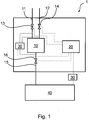
- FIG. 1 shows a schematic representation of a preferred embodiment of a ventilator 1.
- the ventilator 1 comprises a mixing unit 10.
- the mixing unit 10 enriches ambient air with oxygen until a desired target oxygen concentration is reached.
- This ambient air which has the oxygen target concentration and is enriched with oxygen, is made available by the mixing unit 10 as breathing gas for ventilating a living being 40.
- ventilators 1 of this type are connected to corresponding compressed gas lines, for example to supply the ambient air and the oxygen gas.
- the mixing unit 10 has an air line 11. In the air line 11, the ambient air can be fed to the mixing unit 10 during ventilation or to initialize the regulation for ventilation.
- the mixing unit 10 also has an oxygen line 12. Oxygen can be supplied to the mixing unit 10 through the oxygen line 12 during ventilation or to initialize the regulation for ventilation.
- the living being 40 to be ventilated is supplied with the breathing gas having the target oxygen concentration via a breathing gas line 15 for ventilation.
- the breathing gas line 15 is connected to the mixing unit 10.
- the ventilator 1 has a respective metering unit in the respective lines 11, 12.
- the air metering unit 13 an air flow of the ambient air to be supplied can be set, that is to say increased, decreased or maintained.
- the oxygen metering unit 14 an oxygen flow of the ambient air to be supplied can be set, that is to say increased, decreased or maintained.
- the ventilator 1 comprises a breathing gas metering unit 16 in the breathing gas line 15 for setting a breathing gas flow.
- the respective metering units 13, 14, 16 are preferably control valves.
- the ventilator 1 further includes a measuring device 30 for setting the target oxygen concentration.
- a measuring device 30 for setting the target oxygen concentration.
- the measuring device 30 can have, for example, one or more temperature, pressure and / or mass flow sensors.
- the respective currents in the respective lines 11, 12, 15 can be detected and monitored with the measuring device 30.
- the measuring device 30 is designed to detect the oxygen concentration of the breathing gas in the breathing gas line 15.
- the measuring device 30 is designed to detect an oxygen saturation of the living being 40 to be ventilated.
- the measuring device 30 preferably comprises a pulse oximeter which is connected to the living being 40 to be ventilated. With the aid of the measuring device 30 and the respective metering units 13, 14, 16, the ambient air is enriched with oxygen until the target oxygen concentration in the breathing gas is reached.
- a control unit 20 is connected to the measuring device 30 for signaling purposes.
- the control unit 20 is also connected to the respective metering units 13, 14, 16 for signaling purposes.
- the oxygen concentration in the breathing gas is controlled as a function of the recorded ACTUAL oxygen saturation.
- a target oxygen saturation interval or target can range from 85% to 99%.
- the control unit 20 or the control running on the control unit 20 is designed in such a way that the target oxygen concentration is not changed, or at least not immediately, in response to brief outliers or artifacts in the detection of the ACTUAL oxygen saturation.
- the control unit 20 or the control running on the control unit 20 is designed in particular not to take into account strongly fluctuating recorded ACTUAL oxygen saturation values or a temporal course of recorded ACTUAL oxygen saturation values with many artifacts for the control of the target oxygen concentration.
- ACTUAL oxygen saturation values or a temporal course of recorded ACTUAL oxygen saturation values with many artifacts for the control of the target oxygen concentration.
- the ventilator has a user interface (not shown). At least one of the following information is output to the user interface of the ventilator 1: Course of the ACTUAL oxygen concentration in the breathing gas; and / or duration during which the oxygen concentration remains essentially unchanged during the regulation was held; and / or duration since a last change in oxygen concentration; and / or the ACTUAL oxygen saturation; and / or the oxygen saturation target; and / or the limit oxygen concentration. Additionally or alternatively, at least one of the following commands is entered at the user interface of the ventilator 1: pausing the regulation of the oxygen concentration in the breathing gas, in particular pausing the regulation of the oxygen concentration for a blood gas measurement; and / or switching on and / or off the detection of the ACTUAL oxygen saturation.
- the user interface allows the user to extract relevant information in a particularly simple and rapid manner, such as the information mentioned above as an example but not conclusively.
- a display for example relating to the output of the duration since the last change in the oxygen concentration, enables the user to recognize quickly and easily when it makes sense to carry out a blood gas analysis.
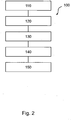
- FIG. 10 shows a more detailed illustration of a preferred embodiment of a method 100 for initializing a regulation of a ventilator 1, such as in FIG Figure 1 described.
- the method 100 comprises the steps of: setting 110 a target oxygen saturation interval of a living being 40 to be ventilated; Setting 120 a limit oxygen concentration in the breathing gas; Detecting 130 the ACTUAL oxygen saturation of the living being 40 to be ventilated and detecting 140 the ACTUAL oxygen concentration in the breathing gas for an initialization time; and checking 150 the signal quality of the detected ACTUAL oxygen saturation.
- FIG. 11 shows a schematic detailed illustration of a preferred embodiment of a method 101 for regulating a ventilator 1, as for example in FIG Figure 1 described.
- the method 101 comprises the following steps: acquiring 130 the ACTUAL oxygen saturation of the living being 40 to be ventilated for a ventilation time; Detecting 140 the ACTUAL oxygen concentration in the breathing gas for a ventilation time; Setting 180 an oxygen saturation target; Comparing 190 the ACTUAL oxygen saturation with the oxygen saturation target; and regulating 200 the oxygen concentration in the breathing gas to a target oxygen concentration as a function of the comparison of the actual oxygen saturation with the oxygen saturation target.
- the regulation of the oxygen concentration in the breathing gas comprises: regulation 200a of the ambient air flow in the air line 11; and or Regulating 200b the flow of oxygen in oxygen line 12; and / or regulating 200c of the breathing gas in the breathing gas line 15. Furthermore, regulating the oxygen concentration includes increasing 201, lowering 202 and / or maintaining 203 the oxygen concentration. Finally, the one in the Figure 3 The preferred embodiment shown of the preferred method 101 for regulating the ventilator 1 includes the method step of alarming 210.
- the oxygen flow is regulated 200b and / or the air flow of the ambient air is regulated 200a and / or the breathing gas flow is regulated 200c.
- the method step of regulating 200 the oxygen concentration comprises in particular the step of increasing 201 the oxygen concentration.
- the oxygen concentration is increased 201 if the recorded ACTUAL oxygen saturation is below the defined oxygen saturation target and / or the oxygen concentration of the breathing gas has not increased at least since a first waiting time and / or a course of the recorded ACTUAL oxygen saturation decreases within a trend duration.
- the method step of regulating 200 the oxygen concentration further includes, in particular, the step of lowering 202 the oxygen concentration.
- the oxygen concentration is lowered 202 if the recorded ACTUAL oxygen saturation is above the defined oxygen saturation target, and / or if the oxygen concentration of the breathing gas has not been decreased for at least a second waiting time, and / or if the course of the recorded ACTUAL oxygen saturation is within a trend duration increases.
- the method step of regulating 200 the oxygen concentration includes, in particular, the step of maintaining 203 the oxygen concentration. The oxygen concentration is held 203 when the detected ACTUAL oxygen saturation substantially corresponds to the set oxygen saturation target.
- the method step of alarming 210 takes place in particular if the recorded ACTUAL oxygen saturation is below the defined oxygen saturation target; and / or the detected ACTUAL oxygen saturation is above the defined oxygen saturation target; and / or the tested signal quality is inadequate, in particular if, after a buffer time, the signal quality is inadequate after renewed testing.
- a medium priority alarm is preferably triggered after the buffer time, for example after 60 seconds.
- the signal quality is particularly inadequate if the temporal course of the ACTUAL oxygen saturation to be detected fluctuates strongly or at high frequencies and / or has artifacts that do not correspond to the usual or natural temporal course of the oxygen saturation of a living being 40 to be ventilated.
- the signal quality can be determined, for example, via the perfusion index, which reflects the ratio of the pulsating component and the non-pulsating component of the infrared signal of the pulse oximeter.
- the regulation (200) of the oxygen concentration takes place, for example, only when the signal quality is in a sufficiently good range.
- the ACTUAL oxygen saturation must also be within predefined limit values so that regulation (200) takes place.
- Sufficiently good signal quality in the form of the perfusion index is present, for example, when the perfusion index is above 0.2%; in some embodiments, 0.25% can also be viewed as the lower limit for good signal quality.
- Sufficient signal quality is no longer present, in particular, when the perfusion index is below 0.15%.
- the limit values of the ACTUAL oxygen saturation can, for example, be between 50% and 100%, preferably between 85% and 98%.
- the regulation (200) of the oxygen concentration takes place in an expanding manner or, alternatively, only if a maximum number of artifacts, such as movement artifacts, is undershot in a time interval. For example, artifacts cannot automatically be taken into account, so that at times the artifacts recognized are not taken into account of the measured ACTUAL oxygen saturation.
- the regulation (200) of the oxygen concentration takes place only after a certain time interval has elapsed after the last regulation (200) of the oxygen concentration and ACTUAL oxygen saturation values have been recorded.
- the step of maintaining (203) the oxygen concentration for the time interval takes place as an alternative.
- the determined values of the ACTUAL oxygen saturation within the time interval are not taken into account for regulating (200) the oxygen concentration.
- the step of holding (203) for the time interval can in principle follow. This time interval is specified in order to be able to recognize the effect of regulating the oxygen concentration.
- the time interval is between 1 second and 20 seconds, for example between 5 seconds and 10 seconds.
- the time interval which is awaited (and / or the step of holding (203) is carried out) until a renewed regulation (200) in the form of increasing (201) or lowering (202) the oxygen concentration is carried out also depends, for example, on the previous one determined change in the ACTUAL oxygen saturation. If, for example, a decrease in the ACTUAL oxygen saturation is registered, the time interval can be shorter than if no or only a slight change, for example of 3% or less, is determined.
- the regulation (200) or the steps of increasing (201) and / or decreasing (202) take place in some embodiments, for example, after checking the tidal volume. If the tidal volume is too small, this can be a cause of a low ACTUAL oxygen saturation, for example, even if the oxygen concentration is high. If, for example, there is no increase in the ACTUAL oxygen saturation after the oxygen concentration has been increased, the tidal volume can be checked. If the tidal volume is too small, i.e. not sufficiently large, the tidal volume is increased by adjusting the ventilation pressures, for example the expiratory airway pressure (EPAP) and the inspiratory airway pressure (IPAP).
- EPAP expiratory airway pressure
- IPAP inspiratory airway pressure
- the IPAP is preferably increased; in some embodiments, the EPAP is reduced to a small extent at the same time.
- the EPAP can also be held constant while the IPAP is increased.
- the oxygen concentration further increases to reach the target oxygen saturation interval.
- the tidal volume to be achieved depends, for example, strongly on the living being to be ventilated, for example the tidal volume for pre-adult living beings is lower than that for adult living beings.
Landscapes
- Health & Medical Sciences (AREA)
- Emergency Medicine (AREA)
- Pulmonology (AREA)
- Engineering & Computer Science (AREA)
- Anesthesiology (AREA)
- Biomedical Technology (AREA)
- Heart & Thoracic Surgery (AREA)
- Hematology (AREA)
- Life Sciences & Earth Sciences (AREA)
- Animal Behavior & Ethology (AREA)
- General Health & Medical Sciences (AREA)
- Public Health (AREA)
- Veterinary Medicine (AREA)
- Measurement Of The Respiration, Hearing Ability, Form, And Blood Characteristics Of Living Organisms (AREA)
Applications Claiming Priority (1)
| Application Number | Priority Date | Filing Date | Title |
|---|---|---|---|
| DE102019130350 | 2019-11-11 |
Publications (2)
| Publication Number | Publication Date |
|---|---|
| EP3819002A1 true EP3819002A1 (fr) | 2021-05-12 |
| EP3819002B1 EP3819002B1 (fr) | 2024-02-28 |
Family
ID=73138567
Family Applications (1)
| Application Number | Title | Priority Date | Filing Date |
|---|---|---|---|
| EP20000399.4A Active EP3819002B1 (fr) | 2019-11-11 | 2020-11-04 | Appareil respiratoire comprenant une unité de régulation permettant de réguler une concentration d'oxygène dans un gaz respiratoire |
Country Status (2)
| Country | Link |
|---|---|
| EP (1) | EP3819002B1 (fr) |
| DE (1) | DE102020006757A1 (fr) |
Cited By (6)
| Publication number | Priority date | Publication date | Assignee | Title |
|---|---|---|---|---|
| CN113289182A (zh) * | 2021-07-09 | 2021-08-24 | 重庆医科大学附属第一医院 | 一种氧疗监测调控系统和调控方法 |
| CN114019103A (zh) * | 2021-11-03 | 2022-02-08 | 浙江工商职业技术学院 | 一种化工流程气体的含氧量调节方法、装置及电子设备 |
| CN114904115A (zh) * | 2022-06-01 | 2022-08-16 | 广州和普乐健康科技有限公司 | 一种呼吸支持设备氧浓度自动控制方法及设备 |
| CN115164963A (zh) * | 2022-05-13 | 2022-10-11 | 广东省计量科学研究院(华南国家计量测试中心) | 一种呼吸机质量检测仪动态校准装置及方法 |
| CN115337157A (zh) * | 2022-10-18 | 2022-11-15 | 昌乐县人民医院 | 一种护理床 |
| CN118286551A (zh) * | 2024-04-16 | 2024-07-05 | 深圳市安保医疗科技股份有限公司 | 基于目标对象的机械通气管理方法、装置、呼吸机及介质 |
Citations (4)
| Publication number | Priority date | Publication date | Assignee | Title |
|---|---|---|---|---|
| DE102009013396B3 (de) | 2009-03-16 | 2010-08-05 | Dräger Medical AG & Co. KG | Vorrichtung und Verfahren zur Steuerung der Sauerstoffdosierung eines Beatmungsgerätes |
| US20130139817A1 (en) * | 2011-12-02 | 2013-06-06 | Dräger Medical GmbH | Oxygen regulation with at least two spo2 monitors and automatic recognition of a signal having a higher rating |
| WO2017079798A1 (fr) * | 2015-11-10 | 2017-05-18 | University Of Tasmania | Procédé, appareil et système pour commander automatiquement la distribution d'oxygène inspiré |
| US20180272087A1 (en) * | 2017-03-23 | 2018-09-27 | Drägerwerk AG & Co. KGaA | Medical system with improved security during an interaction of a medical measuring system with a ventilator or anesthesia device via a data network |
-
2020
- 2020-11-04 DE DE102020006757.3A patent/DE102020006757A1/de active Pending
- 2020-11-04 EP EP20000399.4A patent/EP3819002B1/fr active Active
Patent Citations (4)
| Publication number | Priority date | Publication date | Assignee | Title |
|---|---|---|---|---|
| DE102009013396B3 (de) | 2009-03-16 | 2010-08-05 | Dräger Medical AG & Co. KG | Vorrichtung und Verfahren zur Steuerung der Sauerstoffdosierung eines Beatmungsgerätes |
| US20130139817A1 (en) * | 2011-12-02 | 2013-06-06 | Dräger Medical GmbH | Oxygen regulation with at least two spo2 monitors and automatic recognition of a signal having a higher rating |
| WO2017079798A1 (fr) * | 2015-11-10 | 2017-05-18 | University Of Tasmania | Procédé, appareil et système pour commander automatiquement la distribution d'oxygène inspiré |
| US20180272087A1 (en) * | 2017-03-23 | 2018-09-27 | Drägerwerk AG & Co. KGaA | Medical system with improved security during an interaction of a medical measuring system with a ventilator or anesthesia device via a data network |
Cited By (8)
| Publication number | Priority date | Publication date | Assignee | Title |
|---|---|---|---|---|
| CN113289182A (zh) * | 2021-07-09 | 2021-08-24 | 重庆医科大学附属第一医院 | 一种氧疗监测调控系统和调控方法 |
| CN113289182B (zh) * | 2021-07-09 | 2023-09-15 | 重庆医科大学附属第一医院 | 一种氧疗监测调控系统和调控方法 |
| CN114019103A (zh) * | 2021-11-03 | 2022-02-08 | 浙江工商职业技术学院 | 一种化工流程气体的含氧量调节方法、装置及电子设备 |
| CN115164963A (zh) * | 2022-05-13 | 2022-10-11 | 广东省计量科学研究院(华南国家计量测试中心) | 一种呼吸机质量检测仪动态校准装置及方法 |
| CN114904115A (zh) * | 2022-06-01 | 2022-08-16 | 广州和普乐健康科技有限公司 | 一种呼吸支持设备氧浓度自动控制方法及设备 |
| CN115337157A (zh) * | 2022-10-18 | 2022-11-15 | 昌乐县人民医院 | 一种护理床 |
| CN115337157B (zh) * | 2022-10-18 | 2022-12-13 | 昌乐县人民医院 | 一种护理床 |
| CN118286551A (zh) * | 2024-04-16 | 2024-07-05 | 深圳市安保医疗科技股份有限公司 | 基于目标对象的机械通气管理方法、装置、呼吸机及介质 |
Also Published As
| Publication number | Publication date |
|---|---|
| DE102020006757A1 (de) | 2021-05-12 |
| EP3819002B1 (fr) | 2024-02-28 |
Similar Documents
| Publication | Publication Date | Title |
|---|---|---|
| EP3819002B1 (fr) | Appareil respiratoire comprenant une unité de régulation permettant de réguler une concentration d'oxygène dans un gaz respiratoire | |
| DE102004006396B4 (de) | Vorrichtung zur Beatmung sowie Verfahren zur Steuerung eines Beatmungsgerätes | |
| DE69636501T2 (de) | Einrichtung zur messung von mindestens zwei pneumatischen lungenparametern und messverfahren dazu | |
| EP3912663B1 (fr) | Appareil respiratoire et unité de commande permettant de commander une source de gaz respiratoire | |
| EP0570612B1 (fr) | Méthode et dispositif pour contrÔler et surveiller le débit d'une petite quantité de gaz | |
| EP2892427B1 (fr) | Système d'ajustement automatique d'une pression prescrite par un dispositif respiratoire | |
| CH701124B1 (de) | Beatmungsgerät und Einstellverfahren hierfür. | |
| DE2926747A1 (de) | Beatmungsanlage mit von patientenwerten gesteuertem beatmungsgeraet | |
| DE10014427A1 (de) | Verfahren zur Steuerung eines Beatmungsgerätes sowie Vorrichtung zur Überwachung | |
| DE102007052897A1 (de) | Verfahren zum automatischen Steuern eines Beatmungssystems sowie zugehöriges Beatmungssystem | |
| DE102016013140B4 (de) | Beatmungsvorrichtung und Betriebsverfahren für eine Beatmungsvorrichtung mit einer Bestimmung von Hustenattacken | |
| EP3423136B1 (fr) | Dispositif de ventilation d'un patient | |
| EP3156091B1 (fr) | Dispositif de surveillance d'une déconnexion | |
| DE102018000741A1 (de) | Beatmungsgerät mit Synchronitätsindex | |
| DE102006032860B4 (de) | Überwachungseinrichtung für eine Narkosevorrichtung und Verfahren | |
| DE102015003827A1 (de) | Verfahren und Vorrichtung zur Therapie periodischer Atmung | |
| DE102018003026A1 (de) | Beatmungsvorrichtung mit einem Sicherheitsventil | |
| DE102016007336B4 (de) | Medizintechnische Vorrichtung und Verfahren zur Alarmorganisation | |
| DE102018003027A1 (de) | Beatmungsvorrichtung | |
| DE10212497A1 (de) | Verfahren zur Steuerung eines Beatmungsgerätes sowie Vorrichtung zur Beatmung | |
| DE102014019520B4 (de) | Verfahren zur Erzeugung eines Alarms bei der Überwachung eines Patienten und Vorrichtung hierfür | |
| DE102019120307A1 (de) | Vorrichtung zur unterstützenden Beatmung eines Lebewesens und Computerprogramm | |
| EP3865164A1 (fr) | Système de surveillance permettant de détecter des fuites lors d'une respiration et procédé | |
| EP3758770B1 (fr) | Système de soutien de l'échange gazeux sanguin par la respiration artificielle et l'échange gazeux sanguin extracorporel et système fonctionnant selon le procédé | |
| EP3115075B1 (fr) | Dispositif destine a modifier la pression de gaz respiratoire en fonction d'une masse de la performance cardiaque |
Legal Events
| Date | Code | Title | Description |
|---|---|---|---|
| PUAI | Public reference made under article 153(3) epc to a published international application that has entered the european phase |
Free format text: ORIGINAL CODE: 0009012 |
|
| STAA | Information on the status of an ep patent application or granted ep patent |
Free format text: STATUS: THE APPLICATION HAS BEEN PUBLISHED |
|
| AK | Designated contracting states |
Kind code of ref document: A1 Designated state(s): AL AT BE BG CH CY CZ DE DK EE ES FI FR GB GR HR HU IE IS IT LI LT LU LV MC MK MT NL NO PL PT RO RS SE SI SK SM TR |
|
| STAA | Information on the status of an ep patent application or granted ep patent |
Free format text: STATUS: REQUEST FOR EXAMINATION WAS MADE |
|
| 17P | Request for examination filed |
Effective date: 20211103 |
|
| RBV | Designated contracting states (corrected) |
Designated state(s): AL AT BE BG CH CY CZ DE DK EE ES FI FR GB GR HR HU IE IS IT LI LT LU LV MC MK MT NL NO PL PT RO RS SE SI SK SM TR |
|
| STAA | Information on the status of an ep patent application or granted ep patent |
Free format text: STATUS: EXAMINATION IS IN PROGRESS |
|
| 17Q | First examination report despatched |
Effective date: 20220707 |
|
| P01 | Opt-out of the competence of the unified patent court (upc) registered |
Effective date: 20230522 |
|
| GRAP | Despatch of communication of intention to grant a patent |
Free format text: ORIGINAL CODE: EPIDOSNIGR1 |
|
| STAA | Information on the status of an ep patent application or granted ep patent |
Free format text: STATUS: GRANT OF PATENT IS INTENDED |
|
| INTG | Intention to grant announced |
Effective date: 20230920 |
|
| GRAS | Grant fee paid |
Free format text: ORIGINAL CODE: EPIDOSNIGR3 |
|
| GRAA | (expected) grant |
Free format text: ORIGINAL CODE: 0009210 |
|
| STAA | Information on the status of an ep patent application or granted ep patent |
Free format text: STATUS: THE PATENT HAS BEEN GRANTED |
|
| AK | Designated contracting states |
Kind code of ref document: B1 Designated state(s): AL AT BE BG CH CY CZ DE DK EE ES FI FR GB GR HR HU IE IS IT LI LT LU LV MC MK MT NL NO PL PT RO RS SE SI SK SM TR |
|
| REG | Reference to a national code |
Ref country code: GB Ref legal event code: FG4D Free format text: NOT ENGLISH |
|
| REG | Reference to a national code |
Ref country code: CH Ref legal event code: EP |
|
| REG | Reference to a national code |
Ref country code: DE Ref legal event code: R096 Ref document number: 502020007127 Country of ref document: DE |
|
| REG | Reference to a national code |
Ref country code: IE Ref legal event code: FG4D Free format text: LANGUAGE OF EP DOCUMENT: GERMAN |
|
| REG | Reference to a national code |
Ref country code: LT Ref legal event code: MG9D |
|
| PG25 | Lapsed in a contracting state [announced via postgrant information from national office to epo] |
Ref country code: IS Free format text: LAPSE BECAUSE OF FAILURE TO SUBMIT A TRANSLATION OF THE DESCRIPTION OR TO PAY THE FEE WITHIN THE PRESCRIBED TIME-LIMIT Effective date: 20240628 |
|
| REG | Reference to a national code |
Ref country code: NL Ref legal event code: MP Effective date: 20240228 |
|
| PG25 | Lapsed in a contracting state [announced via postgrant information from national office to epo] |
Ref country code: LT Free format text: LAPSE BECAUSE OF FAILURE TO SUBMIT A TRANSLATION OF THE DESCRIPTION OR TO PAY THE FEE WITHIN THE PRESCRIBED TIME-LIMIT Effective date: 20240228 |
|
| PG25 | Lapsed in a contracting state [announced via postgrant information from national office to epo] |
Ref country code: GR Free format text: LAPSE BECAUSE OF FAILURE TO SUBMIT A TRANSLATION OF THE DESCRIPTION OR TO PAY THE FEE WITHIN THE PRESCRIBED TIME-LIMIT Effective date: 20240529 |
|
| PG25 | Lapsed in a contracting state [announced via postgrant information from national office to epo] |
Ref country code: NL Free format text: LAPSE BECAUSE OF FAILURE TO SUBMIT A TRANSLATION OF THE DESCRIPTION OR TO PAY THE FEE WITHIN THE PRESCRIBED TIME-LIMIT Effective date: 20240228 Ref country code: HR Free format text: LAPSE BECAUSE OF FAILURE TO SUBMIT A TRANSLATION OF THE DESCRIPTION OR TO PAY THE FEE WITHIN THE PRESCRIBED TIME-LIMIT Effective date: 20240228 Ref country code: RS Free format text: LAPSE BECAUSE OF FAILURE TO SUBMIT A TRANSLATION OF THE DESCRIPTION OR TO PAY THE FEE WITHIN THE PRESCRIBED TIME-LIMIT Effective date: 20240528 |
|
| PG25 | Lapsed in a contracting state [announced via postgrant information from national office to epo] |
Ref country code: ES Free format text: LAPSE BECAUSE OF FAILURE TO SUBMIT A TRANSLATION OF THE DESCRIPTION OR TO PAY THE FEE WITHIN THE PRESCRIBED TIME-LIMIT Effective date: 20240228 |
|
| PG25 | Lapsed in a contracting state [announced via postgrant information from national office to epo] |
Ref country code: RS Free format text: LAPSE BECAUSE OF FAILURE TO SUBMIT A TRANSLATION OF THE DESCRIPTION OR TO PAY THE FEE WITHIN THE PRESCRIBED TIME-LIMIT Effective date: 20240528 Ref country code: NO Free format text: LAPSE BECAUSE OF FAILURE TO SUBMIT A TRANSLATION OF THE DESCRIPTION OR TO PAY THE FEE WITHIN THE PRESCRIBED TIME-LIMIT Effective date: 20240528 Ref country code: NL Free format text: LAPSE BECAUSE OF FAILURE TO SUBMIT A TRANSLATION OF THE DESCRIPTION OR TO PAY THE FEE WITHIN THE PRESCRIBED TIME-LIMIT Effective date: 20240228 Ref country code: LT Free format text: LAPSE BECAUSE OF FAILURE TO SUBMIT A TRANSLATION OF THE DESCRIPTION OR TO PAY THE FEE WITHIN THE PRESCRIBED TIME-LIMIT Effective date: 20240228 Ref country code: IS Free format text: LAPSE BECAUSE OF FAILURE TO SUBMIT A TRANSLATION OF THE DESCRIPTION OR TO PAY THE FEE WITHIN THE PRESCRIBED TIME-LIMIT Effective date: 20240628 Ref country code: HR Free format text: LAPSE BECAUSE OF FAILURE TO SUBMIT A TRANSLATION OF THE DESCRIPTION OR TO PAY THE FEE WITHIN THE PRESCRIBED TIME-LIMIT Effective date: 20240228 Ref country code: GR Free format text: LAPSE BECAUSE OF FAILURE TO SUBMIT A TRANSLATION OF THE DESCRIPTION OR TO PAY THE FEE WITHIN THE PRESCRIBED TIME-LIMIT Effective date: 20240529 Ref country code: FI Free format text: LAPSE BECAUSE OF FAILURE TO SUBMIT A TRANSLATION OF THE DESCRIPTION OR TO PAY THE FEE WITHIN THE PRESCRIBED TIME-LIMIT Effective date: 20240228 Ref country code: ES Free format text: LAPSE BECAUSE OF FAILURE TO SUBMIT A TRANSLATION OF THE DESCRIPTION OR TO PAY THE FEE WITHIN THE PRESCRIBED TIME-LIMIT Effective date: 20240228 Ref country code: BG Free format text: LAPSE BECAUSE OF FAILURE TO SUBMIT A TRANSLATION OF THE DESCRIPTION OR TO PAY THE FEE WITHIN THE PRESCRIBED TIME-LIMIT Effective date: 20240228 |
|
| PG25 | Lapsed in a contracting state [announced via postgrant information from national office to epo] |
Ref country code: PT Free format text: LAPSE BECAUSE OF FAILURE TO SUBMIT A TRANSLATION OF THE DESCRIPTION OR TO PAY THE FEE WITHIN THE PRESCRIBED TIME-LIMIT Effective date: 20240628 Ref country code: PL Free format text: LAPSE BECAUSE OF FAILURE TO SUBMIT A TRANSLATION OF THE DESCRIPTION OR TO PAY THE FEE WITHIN THE PRESCRIBED TIME-LIMIT Effective date: 20240228 |
|
| PG25 | Lapsed in a contracting state [announced via postgrant information from national office to epo] |
Ref country code: SE Free format text: LAPSE BECAUSE OF FAILURE TO SUBMIT A TRANSLATION OF THE DESCRIPTION OR TO PAY THE FEE WITHIN THE PRESCRIBED TIME-LIMIT Effective date: 20240228 Ref country code: PT Free format text: LAPSE BECAUSE OF FAILURE TO SUBMIT A TRANSLATION OF THE DESCRIPTION OR TO PAY THE FEE WITHIN THE PRESCRIBED TIME-LIMIT Effective date: 20240628 Ref country code: PL Free format text: LAPSE BECAUSE OF FAILURE TO SUBMIT A TRANSLATION OF THE DESCRIPTION OR TO PAY THE FEE WITHIN THE PRESCRIBED TIME-LIMIT Effective date: 20240228 Ref country code: LV Free format text: LAPSE BECAUSE OF FAILURE TO SUBMIT A TRANSLATION OF THE DESCRIPTION OR TO PAY THE FEE WITHIN THE PRESCRIBED TIME-LIMIT Effective date: 20240228 |
|
| PG25 | Lapsed in a contracting state [announced via postgrant information from national office to epo] |
Ref country code: DK Free format text: LAPSE BECAUSE OF FAILURE TO SUBMIT A TRANSLATION OF THE DESCRIPTION OR TO PAY THE FEE WITHIN THE PRESCRIBED TIME-LIMIT Effective date: 20240228 |
|
| PG25 | Lapsed in a contracting state [announced via postgrant information from national office to epo] |
Ref country code: SM Free format text: LAPSE BECAUSE OF FAILURE TO SUBMIT A TRANSLATION OF THE DESCRIPTION OR TO PAY THE FEE WITHIN THE PRESCRIBED TIME-LIMIT Effective date: 20240228 |
|
| PG25 | Lapsed in a contracting state [announced via postgrant information from national office to epo] |
Ref country code: EE Free format text: LAPSE BECAUSE OF FAILURE TO SUBMIT A TRANSLATION OF THE DESCRIPTION OR TO PAY THE FEE WITHIN THE PRESCRIBED TIME-LIMIT Effective date: 20240228 Ref country code: CZ Free format text: LAPSE BECAUSE OF FAILURE TO SUBMIT A TRANSLATION OF THE DESCRIPTION OR TO PAY THE FEE WITHIN THE PRESCRIBED TIME-LIMIT Effective date: 20240228 |
|
| PG25 | Lapsed in a contracting state [announced via postgrant information from national office to epo] |
Ref country code: SK Free format text: LAPSE BECAUSE OF FAILURE TO SUBMIT A TRANSLATION OF THE DESCRIPTION OR TO PAY THE FEE WITHIN THE PRESCRIBED TIME-LIMIT Effective date: 20240228 |
|
| PG25 | Lapsed in a contracting state [announced via postgrant information from national office to epo] |
Ref country code: SM Free format text: LAPSE BECAUSE OF FAILURE TO SUBMIT A TRANSLATION OF THE DESCRIPTION OR TO PAY THE FEE WITHIN THE PRESCRIBED TIME-LIMIT Effective date: 20240228 Ref country code: SK Free format text: LAPSE BECAUSE OF FAILURE TO SUBMIT A TRANSLATION OF THE DESCRIPTION OR TO PAY THE FEE WITHIN THE PRESCRIBED TIME-LIMIT Effective date: 20240228 Ref country code: RO Free format text: LAPSE BECAUSE OF FAILURE TO SUBMIT A TRANSLATION OF THE DESCRIPTION OR TO PAY THE FEE WITHIN THE PRESCRIBED TIME-LIMIT Effective date: 20240228 Ref country code: EE Free format text: LAPSE BECAUSE OF FAILURE TO SUBMIT A TRANSLATION OF THE DESCRIPTION OR TO PAY THE FEE WITHIN THE PRESCRIBED TIME-LIMIT Effective date: 20240228 Ref country code: DK Free format text: LAPSE BECAUSE OF FAILURE TO SUBMIT A TRANSLATION OF THE DESCRIPTION OR TO PAY THE FEE WITHIN THE PRESCRIBED TIME-LIMIT Effective date: 20240228 Ref country code: CZ Free format text: LAPSE BECAUSE OF FAILURE TO SUBMIT A TRANSLATION OF THE DESCRIPTION OR TO PAY THE FEE WITHIN THE PRESCRIBED TIME-LIMIT Effective date: 20240228 |
|
| REG | Reference to a national code |
Ref country code: DE Ref legal event code: R097 Ref document number: 502020007127 Country of ref document: DE |
|
| PG25 | Lapsed in a contracting state [announced via postgrant information from national office to epo] |
Ref country code: IT Free format text: LAPSE BECAUSE OF FAILURE TO SUBMIT A TRANSLATION OF THE DESCRIPTION OR TO PAY THE FEE WITHIN THE PRESCRIBED TIME-LIMIT Effective date: 20240228 |
|
| PG25 | Lapsed in a contracting state [announced via postgrant information from national office to epo] |
Ref country code: IT Free format text: LAPSE BECAUSE OF FAILURE TO SUBMIT A TRANSLATION OF THE DESCRIPTION OR TO PAY THE FEE WITHIN THE PRESCRIBED TIME-LIMIT Effective date: 20240228 |
|
| PLBE | No opposition filed within time limit |
Free format text: ORIGINAL CODE: 0009261 |
|
| STAA | Information on the status of an ep patent application or granted ep patent |
Free format text: STATUS: NO OPPOSITION FILED WITHIN TIME LIMIT |
|
| 26N | No opposition filed |
Effective date: 20241129 |
|
| PG25 | Lapsed in a contracting state [announced via postgrant information from national office to epo] |
Ref country code: SI Free format text: LAPSE BECAUSE OF FAILURE TO SUBMIT A TRANSLATION OF THE DESCRIPTION OR TO PAY THE FEE WITHIN THE PRESCRIBED TIME-LIMIT Effective date: 20240228 |
|
| PG25 | Lapsed in a contracting state [announced via postgrant information from national office to epo] |
Ref country code: MC Free format text: LAPSE BECAUSE OF FAILURE TO SUBMIT A TRANSLATION OF THE DESCRIPTION OR TO PAY THE FEE WITHIN THE PRESCRIBED TIME-LIMIT Effective date: 20240228 |
|
| PG25 | Lapsed in a contracting state [announced via postgrant information from national office to epo] |
Ref country code: LU Free format text: LAPSE BECAUSE OF NON-PAYMENT OF DUE FEES Effective date: 20241104 |
|
| REG | Reference to a national code |
Ref country code: BE Ref legal event code: MM Effective date: 20241130 |
|
| PG25 | Lapsed in a contracting state [announced via postgrant information from national office to epo] |
Ref country code: BE Free format text: LAPSE BECAUSE OF NON-PAYMENT OF DUE FEES Effective date: 20241130 |
|
| PG25 | Lapsed in a contracting state [announced via postgrant information from national office to epo] |
Ref country code: IE Free format text: LAPSE BECAUSE OF NON-PAYMENT OF DUE FEES Effective date: 20241104 |
|
| REG | Reference to a national code |
Ref country code: CH Ref legal event code: U11 Free format text: ST27 STATUS EVENT CODE: U-0-0-U10-U11 (AS PROVIDED BY THE NATIONAL OFFICE) Effective date: 20251201 |
|
| PGFP | Annual fee paid to national office [announced via postgrant information from national office to epo] |
Ref country code: DE Payment date: 20251118 Year of fee payment: 6 |
|
| PGFP | Annual fee paid to national office [announced via postgrant information from national office to epo] |
Ref country code: GB Payment date: 20251120 Year of fee payment: 6 |
|
| PGFP | Annual fee paid to national office [announced via postgrant information from national office to epo] |
Ref country code: AT Payment date: 20260113 Year of fee payment: 5 |
|
| PGFP | Annual fee paid to national office [announced via postgrant information from national office to epo] |
Ref country code: FR Payment date: 20251120 Year of fee payment: 6 |
|
| PGFP | Annual fee paid to national office [announced via postgrant information from national office to epo] |
Ref country code: CH Payment date: 20251201 Year of fee payment: 6 |
|
| PG25 | Lapsed in a contracting state [announced via postgrant information from national office to epo] |
Ref country code: HU Free format text: LAPSE BECAUSE OF FAILURE TO SUBMIT A TRANSLATION OF THE DESCRIPTION OR TO PAY THE FEE WITHIN THE PRESCRIBED TIME-LIMIT; INVALID AB INITIO Effective date: 20201104 |
|
| PG25 | Lapsed in a contracting state [announced via postgrant information from national office to epo] |
Ref country code: CY Free format text: LAPSE BECAUSE OF FAILURE TO SUBMIT A TRANSLATION OF THE DESCRIPTION OR TO PAY THE FEE WITHIN THE PRESCRIBED TIME-LIMIT; INVALID AB INITIO Effective date: 20201104 |