EP3820108B1 - Procédé, appareil et dispositif de détection de sécurité - Google Patents
Procédé, appareil et dispositif de détection de sécurité Download PDFInfo
- Publication number
- EP3820108B1 EP3820108B1 EP19854829.9A EP19854829A EP3820108B1 EP 3820108 B1 EP3820108 B1 EP 3820108B1 EP 19854829 A EP19854829 A EP 19854829A EP 3820108 B1 EP3820108 B1 EP 3820108B1
- Authority
- EP
- European Patent Office
- Prior art keywords
- iot device
- feature
- iot
- message
- wireless
- Prior art date
- Legal status (The legal status is an assumption and is not a legal conclusion. Google has not performed a legal analysis and makes no representation as to the accuracy of the status listed.)
- Active
Links
Images



Classifications
-
- H—ELECTRICITY
- H04—ELECTRIC COMMUNICATION TECHNIQUE
- H04L—TRANSMISSION OF DIGITAL INFORMATION, e.g. TELEGRAPHIC COMMUNICATION
- H04L63/00—Network architectures or network communication protocols for network security
- H04L63/14—Network architectures or network communication protocols for network security for detecting or protecting against malicious traffic
- H04L63/1408—Network architectures or network communication protocols for network security for detecting or protecting against malicious traffic by monitoring network traffic
- H04L63/1425—Traffic logging, e.g. anomaly detection
-
- H—ELECTRICITY
- H04—ELECTRIC COMMUNICATION TECHNIQUE
- H04L—TRANSMISSION OF DIGITAL INFORMATION, e.g. TELEGRAPHIC COMMUNICATION
- H04L63/00—Network architectures or network communication protocols for network security
- H04L63/14—Network architectures or network communication protocols for network security for detecting or protecting against malicious traffic
- H04L63/1408—Network architectures or network communication protocols for network security for detecting or protecting against malicious traffic by monitoring network traffic
- H04L63/1416—Event detection, e.g. attack signature detection
-
- G—PHYSICS
- G16—INFORMATION AND COMMUNICATION TECHNOLOGY [ICT] SPECIALLY ADAPTED FOR SPECIFIC APPLICATION FIELDS
- G16Y—INFORMATION AND COMMUNICATION TECHNOLOGY SPECIALLY ADAPTED FOR THE INTERNET OF THINGS [IoT]
- G16Y10/00—Economic sectors
- G16Y10/75—Information technology; Communication
-
- G—PHYSICS
- G16—INFORMATION AND COMMUNICATION TECHNOLOGY [ICT] SPECIALLY ADAPTED FOR SPECIFIC APPLICATION FIELDS
- G16Y—INFORMATION AND COMMUNICATION TECHNOLOGY SPECIALLY ADAPTED FOR THE INTERNET OF THINGS [IoT]
- G16Y30/00—IoT infrastructure
- G16Y30/10—Security thereof
-
- H—ELECTRICITY
- H04—ELECTRIC COMMUNICATION TECHNIQUE
- H04L—TRANSMISSION OF DIGITAL INFORMATION, e.g. TELEGRAPHIC COMMUNICATION
- H04L63/00—Network architectures or network communication protocols for network security
- H04L63/20—Network architectures or network communication protocols for network security for managing network security; network security policies in general
-
- H—ELECTRICITY
- H04—ELECTRIC COMMUNICATION TECHNIQUE
- H04L—TRANSMISSION OF DIGITAL INFORMATION, e.g. TELEGRAPHIC COMMUNICATION
- H04L67/00—Network arrangements or protocols for supporting network services or applications
- H04L67/01—Protocols
- H04L67/12—Protocols specially adapted for proprietary or special-purpose networking environments, e.g. medical networks, sensor networks, networks in vehicles or remote metering networks
-
- H—ELECTRICITY
- H04—ELECTRIC COMMUNICATION TECHNIQUE
- H04W—WIRELESS COMMUNICATION NETWORKS
- H04W12/00—Security arrangements; Authentication; Protecting privacy or anonymity
- H04W12/12—Detection or prevention of fraud
-
- H—ELECTRICITY
- H04—ELECTRIC COMMUNICATION TECHNIQUE
- H04W—WIRELESS COMMUNICATION NETWORKS
- H04W12/00—Security arrangements; Authentication; Protecting privacy or anonymity
- H04W12/12—Detection or prevention of fraud
- H04W12/121—Wireless intrusion detection systems [WIDS]; Wireless intrusion prevention systems [WIPS]
Definitions
- IoT Internet of Things
- routers such as routers, home cameras, smart watches, or smart wristbands
- a low power consumption feature of IoT devices and other factors determine that the IoT devices do not have a complex security detection function. Therefore, how to ensure security of IoT devices becomes an urgent technical problem to be alleviated.
- US 2018/0191775 A1 discloses techniques for detection of undesired/unwanted electronic devices. For instance, a spectral signature of an electronic device is received by a sensing device configured to detect presence of an unwanted electronic device in proximity to an electronic device environment. The received spectral signature is matched against multiple stored spectral signatures of one or more electronic devices associated with the electronic device environment. When the spectral signature does not match any of the multiple stored spectral signatures, then the electronic device is classified as an unwanted electronic device.
- US 2016/0261465 A1 relates to behavioral analysis to automate monitoring Internet of Things (IoT) device health in a direct and/or indirect manner.
- IoT Internet of Things
- normal behavior associated with an IoT device in a local IoT network may be modeled such that behaviors observed at the IoT device may be compared to the modeled normal behavior to determine whether the behaviors observed at the IoT device are normal or anomalous.
- more powerful "analyzer” devices can collect behaviors locally observed at other "observer” devices and conduct behavioral analysis across the distributed IoT environment to detect anomalies.
- the IoT devices in the distributed IoT environment may also be provided with on-device behavioral analysis capability to locally detect anomalous conditions. They may also invoke online troubleshooting or assistance from another aggregator node by providing for instance relevant behavior vectors from which the behavioral anomalies were detected.
- US 2017/0006052 A1 discloses an apparatus for providing network security monitoring in a communications network, the apparatus configured to receive communications traffic associated with a wireless sensor network from a sensor that is a member of the wireless sensor network, analyze the communications traffic to determine if an attack is occurring on the wireless sensor network, and generate an alarm if the attack is occurring on the wireless sensor network. Based on historical traffic patterns, a security monitoring server may compare recorded communications traffic most recently received from the wireless sensor network to determine if any unusual patterns of communication are occurring within the wireless sensor network.
- the security detection device can be deployed in the IoT network.
- IoT devices in the IoT network transmit data by using wireless technologies.
- the security detection device includes the software wireless unit, and therefore, can monitor all wireless signals within a wireless coverage area, so as to obtain wireless messages of the IoT devices.
- the security detection device is used to perform security detection on the IoT devices in the IoT network, without intruding or being in contact with the IoT devices or relying on detection capabilities of the IoT devices.
- the security detection device can detect whether the IoT devices run abnormally by obtaining target running features of the IoT devices in combination with historical normal running features, thereby implementing security detection on the IoT devices.
- first, second, and third are used in the present specification to describe various information, the information is not limited by these terms. These terms are only used to differentiate between information of the same type. For example, without departing from the scope of the present specification, first information can also be referred to as second information, and similarly, second information can also be referred to as first information. Depending on the context, for example, the word “if” used here can be explained as “while”, “when”, or “in response to determining”.
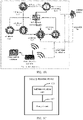
- FIG. 1A is a schematic diagram illustrating an IoT network, according to some example embodiments of the present specification.
- the IoT network includes multiple IoT devices, an IoT network main controller, and an external attacker device, where the external attacker device is attacking two IoT devices.
- a smart home scenario is used as an example for illustration in some embodiments shown in FIG. 1A .
- the IoT network is further widely used in scenarios such as intelligent industrial control scenarios or unmanned retail scenarios.
- IoT devices are diverse, and may not have capabilities and initiatives to conduct security-related investment and research. Some IoT devices do not even have a security detection function. As all operation code embedded in the IoT devices are pre-stored, the IoT devices cannot flexibly update attack detection logic even if they have the security detection function. The IoT devices usually have relatively weak computing capabilities due to the low power consumption feature, and cannot perform additionally complex security detection logic. Therefore, the security detection function is usually relatively weak. Moreover, most attacks against the IoT devices occur at a communications protocol layer, and cause great difficulty to security detection.
- some embodiments of the present specification propose a solution for configuring a control device on the IoT network considering that it is relatively difficult to implement the security detection function on the IoT devices, so that the IoT control device can implement security detection for each IoT device.
- different IoT devices may use different communications protocols.
- most of the IoT devices communicate with each other by using wireless signals, and most attacks against the IoT devices are performed on wireless channels.
- FIG. 1C is a block diagram illustrating a security detection device, according to some example embodiments of the present specification.
- the security detection device includes the following: a software wireless unit 101, configured to monitor a wireless signal sent by the IoT device to obtain a wireless message; and an analysis unit 102, configured to determine a target running feature of the IoT device by using the wireless message, and compare the target running feature with a historical normal running feature of the IoT device to determine whether the IoT device runs abnormally.
- one new security detection device is added, and is configured to detect IoT devices in the IoT network.
- the IoT devices in the IoT network send wireless signals.
- the security detection device monitor all wireless signals within a wireless coverage area of the security detection device, and identify whether the IoT devices are abnormal by using the wireless signals obtained through monitoring.
- the security detection device includes a software wireless unit.
- a broadband software wireless tool such as a universal software radio peripheral (USRP) and software defined radio (LimeSDR) can be used.
- a function of the software wireless unit is to detect wireless signals at all wireless frequencies in a security protection area, and distinguish and filter wireless signals to restore wireless messages corresponding to communications protocols used by each IoT device.
- the communications protocol used by the IoT device mainly includes a Wi-Fi protocol, a Bluetooth protocol, or a Zigbee protocol, etc. Therefore, wireless messages of all IoT devices and wireless messages sent by attackers in the IoT network are collected and filtered by the unit.
- the software wireless unit can obtain wireless messages sent by different IoT devices, and can further distinguish between the wireless messages based on communications protocols used.
- a wireless message acquisition result of the software wireless unit can be output to the analysis unit.
- the analysis unit can determine the target running feature of the IoT device by using the wireless message, and compare the target running feature with the historical normal running feature of the IoT device to determine whether the IoT device runs abnormally.
- the historical normal running feature of the IoT device can be pre-analyzed.
- An analysis purpose is to determine normal running cases of the IoT device in order to monitor, based on the historical normal running feature, whether the IoT device runs abnormally.
- the historical normal running feature of the IoT device can include a quantity variation feature of IoT devices in an IoT network.
- the quantity variation feature indicates an IoT device quantity variation in the IoT network in normal cases. For example, a value of the IoT device quantity usually does not change from 10: 00 PM to 8: 00 AM, and in some time periods, for example, in daytime, the value of the IoT device quantity usually decreases (for example, the quantity decreases as smart wristbands worn by users is turned offline).
- certain IoT devices may sign in or turn offline at a fixed time.
- a user wears a smart wristband, and the user is usually not at home in a certain time period. Consequently, such a device signs in or signs off at a fixed time. Therefore, the historical normal running feature of the IoT device can further include an IoT device's sign-in and sign-off time feature, and whether the IoT device runs abnormally can be determined based on a sign-in and sign-off time.
- wireless messages of an IoT device may be dedicated to a certain IoT device.
- wireless messages of a camera are usually sent to a router, and wireless messages of a smart wristband are usually sent to a smartphone.
- the IoT device may run abnormally. Therefore, the historical normal running feature of the IoT device can further include an IoT device's wireless message recipient feature.
- a message throughput of IoT devices in the IoT network is generally in a stable state in normal cases.
- the throughput generated by IoT devices from 10: 00 PM to 8: 00 AM is usually low, and no frequent communication occurs.
- a message throughput of a certain IoT device is relatively stable in each time period of a day. If the IoT device is attacked, the IoT device may frequently send wireless messages to an attacker device. Therefore, a throughput between IoT devices can be counted to further analyze a message throughput variation feature.
- Wireless messages sent by an IoT device include data, and the data may be processed by using rules (for example, some encryption algorithms) customized by a manufacturer of the IoT device. In actual applications, not customized rules of all IoT device manufacturers can be determined, and an actual service meaning of the data may not be parsed.
- the historical normal running feature is used, which relates to a wireless message quantity variation and a wireless message throughput variation, etc., but does not involve a specific service meaning in the data. The data in the messages does not need to be parsed at a service layer. Therefore, the historical normal running feature can be applied to all IoT devices.
- the data in the wireless messages sent by the IoT device can alternatively be formatted into data with a service meaning.
- service data of the IoT device can be analyzed based on historical running data and a service feature can be determined.
- a service feature of a smart wristband is sending a response result message or transmitting collected data such as a quantity of steps and a heart rate after receiving an instruction from an associated device. If it is identified that the smart wristband sends device information of its associated device to other devices, the smart wristband may run abnormally.
- a message includes a verification code field used to check whether the message is incorrect.
- a verification process can be as follows: A communication sender calculates a verification code for to-be-transmitted data by using a verification rule specified in a predetermined communications protocol. After receiving the message, a communication recipient calculates a verification code for the data in the message by using the verification rule, and determines through comparison whether the calculated verification code is consistent with the verification code in the message.
- a verification code in a wireless message is generated by using a verification rule of a predetermined communications protocol. Therefore, the historical normal running feature can include the following: A verification code in the wireless message is generated by using a verification rule of a predetermined communications protocol.
- the IoT device can modify the verification code field based on private rules, so that a verification code is different from the verification code generated by using the verification rules specified in the communications protocol that may be controlled by an attacker.
- the private rule is different from the verification rule specified in the communications protocol, and specific implementation of the private rule can be flexibly configured as needed in actual applications, so that a verification code generated by using the private rule is different from the verification code generated by using the verification rule specified in the communications protocol.
- Fields other than the verification code field in the wireless message are generated by using the original predetermined communications protocol.
- the private rule can be performing certain modification after a verification code is generated by using a verification rule, for example, performing other conversion after a verification code is generated by using a verification rule.
- a character conversion relationship can be set, and the verification code generated based on the verification rule can be converted into other characters.
- the private rule can be encrypting the alarm data by using a predetermined key and generating a verification code for the encrypted data by using the verification rule.
- the IoT device and the security detection device can pre-agree on a key (which can be a symmetric key or an asymmetric key).
- a verification code can be generated for the encrypted data based on the verification rule.
- the verification code can be modified, so that the security detection device can use the verification code to check whether the data is incorrect.
- the attacker device will consider that an incorrect message is received, without perceiving that the IoT device sends the alarm data.
- the IoT control device can use the private rule to parse out the alarm data in the message, thereby implementing secret alarm data transmission.
- the security detection device can receive various types of messages sent by IoT devices. These messages include normal messages, and also include secretly transmitted messages described in the above-mentioned embodiments.
- the security detection device needs to identify the messages. Based on stipulations in a communications protocol, after receiving a message, the security detection device checks a verification code in the message by using a verification rule specified in the communications protocol. As a verification code of an alarm message is modified, the check fails. In the solutions of some embodiments, if the check fails, the security detection device can parse the verification code by using a private rule. If the parsing succeeds, it can be determined that the IoT device sends a private message.
- the target running feature of the IoT device includes transmitting a private message, and secret data in the message can be further obtained.
- the security detection device can know that the IoT device may be attacked. Further, the security detection device can troubleshoot and block attack behavior.
- a wireless message sent by the attacker device to the IoT device may include an attack instruction, such as a Deauth attack instruction in the Wi-Fi protocol. Therefore, an attack instruction feature can be determined based on the attack instruction.
- the attack behavior can include a replay attack, a denial of service attack, and a password cracking attack, etc.
- a wireless signal feature of such attack behavior can be obtained and set as an attack behavior feature.
- the attacker device may send interference signals to interfere with signal transmission of the IoT devices in the IoT network. Interfering methods may include co-channel interference, adjacent-channel interference, out-of-band interference, intermodulation interference, and blocking interference, etc. Therefore, an interference signal feature can be determined.
- the IoT device may have one target running feature that does not match a historical normal running feature, or may have multiple target running features that do not match historical normal running features.
- the analysis unit can perform summarization, analysis, and decision-making, and further send a final analysis result to a serving side.
- FIG. 2 is a flowchart illustrating the security detection method, according to some example embodiments of the present specification.
- the security detection method can be applied to the security detection device shown in FIG. 1B , and include the following steps:
- the target running feature/the historical normal running feature includes one or more of the following: a quantity variation feature of IoT devices in an IoT network, an IoT device's wireless message recipient feature, an IoT device's wireless message throughput variation feature, an IoT device's sign-in and sign-off time feature, or an IoT device's service feature.
- the determe a target running feature of the IoT device by using the wireless message includes the following: if a verification code fails to be verified by verification rules provided by a predetermined communications protocol, but is subsequently verified by private rules, determining that the target running feature of the IoT device includes transmitting a private message.
- the target running feature/the historical normal running feature includes one or more of the following attack features: an attack instruction feature, a specified attack behavior feature, or an interference signal feature.
- a hardware capability/a computing capability of the IoT device is less than a specified parameter.
- the present specification further provides embodiments of a security detection apparatus and a device that applies the security detection apparatus.
- FIG. 3 is a hardware structural diagram illustrating a device including a security detection apparatus, according to some embodiments of the present specification.
- an electronic device including an apparatus 331 in some embodiments generally can further include other hardware based on actual functions of the device. Details are omitted here for simplicity.
- FIG. 4 is a block diagram illustrating a security detection apparatus, according to some example embodiments of the present specification.
- the apparatus includes the following: an acquisition module 41, configured to obtain a wireless message of an IoT device, where the wireless message is obtained by monitoring, by using a software wireless technology, a wireless signal sent by the IoT device; and a determining module 42, configured to determine a target running feature of the IoT device by using the wireless message, and compare the target running feature with a historical normal running feature of the IoT device to determine whether the IoT device runs abnormally.
- the target running feature/the historical normal running feature includes one or more of the following: a quantity variation feature of IoT devices in an IoT network, an IoT device's wireless message recipient feature, an IoT device's wireless message throughput variation feature, an IoT device's sign-in and sign-off time feature, or an IoT device's service feature.
- the determining module is further configured to, if a verification code fails to be verified by verification rules provided by a predetermined communications protocol, but is subsequently verified by private rules, determine that the target running feature of the IoT device includes transmitting a private message.
- the target running feature/the historical normal running feature includes one or more of the following attack features: an attack instruction feature, a specified attack behavior feature, or an interference signal feature.
- a hardware capability/a computing capability of the IoT device is less than a specified parameter.
- the present specification further provides a security detection device, including a software wireless processor, a memory, a main processor, and a computer program that is stored in the memory and that is capable of running on the main processor, where when executing the program, the main processor implements the following method: obtaining a wireless message of an IoT device, where the wireless message is obtained by monitoring, by using the software wireless processor, a wireless signal sent by the IoT device; and determining a target running feature of the IoT device by using the wireless message, and comparing the target running feature with a historical normal running feature of the IoT device to determine whether the IoT device runs abnormally.
- a security detection device including a software wireless processor, a memory, a main processor, and a computer program that is stored in the memory and that is capable of running on the main processor, where when executing the program, the main processor implements the following method: obtaining a wireless message of an IoT device, where the wireless message is obtained by monitoring, by using the software wireless processor, a wireless signal sent by
- the described apparatus embodiments are merely examples of apparatus embodiments.
- the modules described as separate parts can be or does not have to be physically separate, and parts displayed as modules can be or does not have to be physical modules, and can be located in one location or distributed on a plurality of network modules. Some or all of the modules can be selected based on actual requirements to achieve the objectives of the solutions of the present specification. A person of ordinary skill in the art can understand and implement some embodiments of the present specification without creative efforts.
Landscapes
- Engineering & Computer Science (AREA)
- Computer Security & Cryptography (AREA)
- Computing Systems (AREA)
- Computer Networks & Wireless Communication (AREA)
- Signal Processing (AREA)
- Computer Hardware Design (AREA)
- General Engineering & Computer Science (AREA)
- Accounting & Taxation (AREA)
- Business, Economics & Management (AREA)
- Development Economics (AREA)
- Economics (AREA)
- General Business, Economics & Management (AREA)
- Health & Medical Sciences (AREA)
- General Health & Medical Sciences (AREA)
- Medical Informatics (AREA)
- Mobile Radio Communication Systems (AREA)
- Data Exchanges In Wide-Area Networks (AREA)
- Telephonic Communication Services (AREA)
- Alarm Systems (AREA)
Claims (12)
- Dispositif de détection de sécurité, ce dispositif de détection de sécurité étant configuré de façon à détecter un dispositif IoT dans un réseau IoT, et ce dispositif de détection de sécurité comprenant :une unité logicielle sans fil (101), configurée de façon à surveiller un signal sans fil envoyé par le dispositif IoT afin d'obtenir un message sans fil ; etune unité d'analyse (102), configurée de façon à déterminer une caractéristique de fonctionnement cible du dispositif IoT en utilisant le message sans fil, et à comparer cette caractéristique de fonctionnement cible avec une caractéristique de fonctionnement normal historique du dispositif IoT afin de déterminer si le dispositif IoT fonctionne anormalement ou pas,la détermination de la caractéristique de fonctionnement cible du dispositif IoT en utilisant le message sans fil et la comparaison de cette caractéristique de fonctionnement cible avec la caractéristique de fonctionnement normal historique du dispositif IoT afin de déterminer si le dispositif IoT fonctionne anormalement ou pas comprenant :la détermination d'un premier code de vérification dans le message sans fil généré par le dispositif IoT ;le contrôle du premier code de vérification dans le message en utilisant un code de vérification spécifié dans un protocole de communication, le contrôle du premier code de vérification comprenant le calcul d'un deuxième code de vérification pour des données dans le message sans fil en utilisant la règle de vérification et la détermination au moyen d'une comparaison de si le deuxième code de vérification est conforme ou pas au premier code de vérification ;si ce contrôle échoue, l'analyse syntaxique du premier code de vérification en utilisant une règle privée afin de vérifier si le premier code de vérification a été généré ou pas par le dispositif IoT en utilisant la règle privée afin de parvenir à une transmission de données privée ; etsi l'analyse syntaxique réussit, la détermination que le dispositif IoT envoie un message privé et que la caractéristique de fonctionnement cible du dispositif IoT comprend la transmission du message privé, le message privé étant un message d'alarme dans le message sans fil.
- Dispositif selon la revendication 1, dans lequel chacune de la caractéristique de fonctionnement cible et de la caractéristique de fonctionnement normal historique comprend une ou plusieurs des caractéristiques suivantes :
une caractéristique de variation de quantité de dispositifs IoT dans un réseau IoT, une caractéristique de destinataire de message sans fil du dispositif IoT, une caractéristique de variation de débit de message sans fil du dispositif IoT, une caractéristique de temps d'ouverture et de fermeture de session du dispositif IoT, ou une caractéristique de service du dispositif IoT. - Dispositif selon la revendication 1, la détermination de la caractéristique de fonctionnement cible du dispositif IoT en utilisant le message sans fil, et la comparaison de cette caractéristique de fonctionnement cible avec la caractéristique de fonctionnement normal historique du dispositif IoT afin de déterminer si le dispositif IoT fonctionne anormalement ou pas comprenant :
l'utilisation de la règle privée afin d'extraire par analyse syntaxique le message d'alarme dans le message sans fil. - Dispositif selon la revendication 1, dans lequel chacune de la caractéristique de fonctionnement cible et de la caractéristique de fonctionnement normal historique comprend en outre une ou plusieurs des caractéristiques d'attaque suivantes :
une caractéristique d'instruction d'attaque, une caractéristique de comportement d'attaque spécifié, ou une caractéristique de signal d'interférence. - Dispositif selon la revendication 1, dans lequel une capacité matérielle ou une capacité informatique du dispositif IoT est moins qu'un paramètre spécifié.
- Procédé de détection de sécurité exécuté par un dispositif de détection de sécurité, ce procédé comprenant :l'obtention (202) d'un message sans fil d'un dispositif IoT, ce message sans fil étant obtenu en surveillant, en utilisant une technologie logicielle sans fil, un signal sans fil envoyé par le dispositif IoT ; etla détermination (204) d'une caractéristique de fonctionnement cible du dispositif IoT en utilisant le message sans fil, et la comparaison de cette caractéristique de fonctionnement cible avec une caractéristique de fonctionnement normal historique du dispositif IoT afin de déterminer si le dispositif IoT fonctionne anormalement ou pas,la détermination d'une caractéristique de fonctionnement cible du dispositif IoT en utilisant le message sans fil et la comparaison cette caractéristique de fonctionnement cible avec une caractéristique de fonctionnement normal historique du dispositif IoT afin de déterminer si le dispositif IoT fonctionne anormalement ou pas comprenant :la détermination d'un premier code de vérification dans le message sans fil généré par le dispositif IoT ;le contrôle de ce premier code de vérification dans le message en utilisant une règle de vérification spécifiée dans un protocole de communication, ce contrôle du premier code de vérification comprenant le calcul d'un deuxième code de vérification pour des données dans le message sans fil en utilisant la règle de vérification et la détermination au moyen d'une comparaison de si le deuxième code de vérification est conforme ou pas au premier code de vérification ;si ce contrôle échoue, l'analyse syntaxique du premier code de vérification en utilisant une règle privée afin de vérifier si le premier code de vérification a été généré ou pas par le dispositif IoT en utilisant la règle privée afin de parvenir à une transmission de données privée ; etsi l'analyse syntaxique réussit, la détermination que le dispositif IoT envoie un message privé et que la caractéristique de fonctionnement cible du dispositif IoT comprend la transmission du message privé, le message privé étant un message d'alarme dans le message sans fil.
- Procédé selon la revendication 6, dans lequel chacune de la caractéristique de fonctionnement cible et de la caractéristique de fonctionnement normal historique comprend une ou plusieurs des caractéristiques suivantes :
une caractéristique de variation de quantité de dispositifs IoT dans un réseau IoT, une caractéristique de destinataire de message sans fil du dispositif IoT, une caractéristique de variation de débit de message sans fil du dispositif IoT, une caractéristique de temps d'ouverture et de fermeture de session du dispositif IoT, ou une caractéristique de service du dispositif IoT. - Procédé selon la revendication 6, la détermination d'une caractéristique de fonctionnement cible du dispositif IoT en utilisant le message sans fil et la comparaison de cette caractéristique de fonctionnement cible avec la caractéristique de fonctionnement normal historique du dispositif IoT afin de déterminer si le dispositif IoT fonctionne anormalement ou pas comprenant :
l'utilisation de la règle privée afin d'extraire par analyse syntaxique le message d'alarme dans le message sans fil. - Procédé selon la revendication 6, dans lequel chacune de la caractéristique de fonctionnement cible et de la caractéristique de fonctionnement normal historique comprend une ou plusieurs des caractéristiques d'attaque suivantes :
une caractéristique d'instruction d'attaque, une caractéristique de comportement d'attaque spécifié, ou une caractéristique de signal d'interférence. - Procédé selon la revendication 6, dans lequel une capacité matérielle ou une capacité informatique du dispositif IoT est moins qu'un niveau spécifié.
- Programme informatique comprenant des instructions qui, lorsque ce programme est exécuté par un processeur (300, 310) d'un dispositif de détection de sécurité, font exécuter à ce processeur (300, 310) le procédé selon l'une quelconque des revendications 6 à 10.
- Support de stockage lisible par ordinateur (330, 340) comprenant des instructions qui y sont stockées et qui, lorsqu'elles sont exécutées par un processeur (300, 310) d'un dispositif de détection de sécurité, font exécuter à ce processeur (300, 310) le procédé selon l'une quelconque des revendications 6 à 10.
Applications Claiming Priority (2)
| Application Number | Priority Date | Filing Date | Title |
|---|---|---|---|
| CN201810995418.9A CN109067763B (zh) | 2018-08-29 | 2018-08-29 | 安全检测方法、设备及装置 |
| PCT/CN2019/095522 WO2020042773A1 (fr) | 2018-08-29 | 2019-07-11 | Procédé, appareil et dispositif de détection de sécurité |
Publications (3)
| Publication Number | Publication Date |
|---|---|
| EP3820108A1 EP3820108A1 (fr) | 2021-05-12 |
| EP3820108A4 EP3820108A4 (fr) | 2021-11-10 |
| EP3820108B1 true EP3820108B1 (fr) | 2022-12-07 |
Family
ID=64757688
Family Applications (1)
| Application Number | Title | Priority Date | Filing Date |
|---|---|---|---|
| EP19854829.9A Active EP3820108B1 (fr) | 2018-08-29 | 2019-07-11 | Procédé, appareil et dispositif de détection de sécurité |
Country Status (6)
| Country | Link |
|---|---|
| US (1) | US11201886B2 (fr) |
| EP (1) | EP3820108B1 (fr) |
| CN (1) | CN109067763B (fr) |
| SG (1) | SG11202010201UA (fr) |
| TW (1) | TWI716013B (fr) |
| WO (1) | WO2020042773A1 (fr) |
Families Citing this family (11)
| Publication number | Priority date | Publication date | Assignee | Title |
|---|---|---|---|---|
| CN109067763B (zh) * | 2018-08-29 | 2020-05-29 | 阿里巴巴集团控股有限公司 | 安全检测方法、设备及装置 |
| WO2020206620A1 (fr) * | 2019-04-09 | 2020-10-15 | Orange | Procédés et appareil pour discriminer des dispositifs d'internet des objets sans fil authentiques |
| EP3799451B1 (fr) * | 2019-09-26 | 2022-07-20 | Nokia Technologies Oy | Procede et appareil de detection de dispositif iot compromise |
| CN111181957B (zh) * | 2019-12-27 | 2020-12-04 | 温州心合网络科技有限公司 | 物联网设备安全验证方法、系统及中央控制设备 |
| CN111240928B (zh) * | 2020-01-06 | 2024-04-09 | 上海闻泰信息技术有限公司 | 设备驱动自动化检测方法、装置、设备及存储介质 |
| EP3896591B1 (fr) * | 2020-04-17 | 2024-07-31 | DeepInspect S.r.l. | Procédé et système d'évaluation de sécurité de dispositifs iot |
| IT202000008155A1 (it) * | 2020-04-17 | 2021-10-17 | Nsr S R L | Metodo e sistema per valutazione di vulnerabilità di dispositivi IoT |
| CN112083659A (zh) * | 2020-09-27 | 2020-12-15 | 珠海格力电器股份有限公司 | 智能家居系统安全的监测方法、智能家居系统及存储介质 |
| CN112654024B (zh) * | 2020-12-28 | 2022-08-02 | 支付宝(杭州)信息技术有限公司 | 安全检测方法、装置及计算机设备 |
| US20230189004A1 (en) * | 2021-12-14 | 2023-06-15 | Aeris Communications, Inc. | METHOD OF USING HARDWARE IDENTIFIERS TO DETECT IoT SECURITY INCIDENTS |
| CN121396681B (zh) * | 2025-12-25 | 2026-04-21 | 广东广宇科技发展有限公司 | 网络安全检测预警方法、系统及存储介质 |
Family Cites Families (18)
| Publication number | Priority date | Publication date | Assignee | Title |
|---|---|---|---|---|
| US9450973B2 (en) * | 2011-11-21 | 2016-09-20 | At&T Intellectual Property I, L.P. | Method and apparatus for machine to machine network security monitoring in a communications network |
| CN103532940B (zh) * | 2013-09-30 | 2016-06-08 | 广东电网公司电力调度控制中心 | 网络安全检测方法及装置 |
| CN103619012B (zh) * | 2013-12-02 | 2017-04-12 | 中国联合网络通信集团有限公司 | 一种移动互联网安全评估的方法、系统 |
| US9979606B2 (en) * | 2015-03-04 | 2018-05-22 | Qualcomm Incorporated | Behavioral analysis to automate direct and indirect local monitoring of internet of things device health |
| US10148691B2 (en) * | 2016-12-31 | 2018-12-04 | Fortinet, Inc. | Detection of unwanted electronic devices to provide, among other things, internet of things (IoT) security |
| TWI637621B (zh) * | 2017-01-05 | 2018-10-01 | 緯創資通股份有限公司 | 物聯網讀取裝置、安全存取方法以及控制中心設備 |
| US11070586B2 (en) * | 2017-01-06 | 2021-07-20 | Stackpath, Llc | Cryptographic network protocol escalation path |
| EP3361765A1 (fr) * | 2017-02-10 | 2018-08-15 | Kamstrup A/S | Système et procédé de communication par radiofréquence |
| CN107135092B (zh) * | 2017-03-15 | 2019-11-05 | 浙江工业大学 | 一种面向全局社交服务网的Web服务聚类方法 |
| CN107135093B (zh) * | 2017-03-17 | 2020-05-05 | 西安电子科技大学 | 一种基于有限自动机的物联网入侵检测方法及检测系统 |
| CN106878339A (zh) * | 2017-03-30 | 2017-06-20 | 国网福建省电力有限公司 | 一种基于物联网终端设备的漏洞扫描系统及方法 |
| CN107154940A (zh) * | 2017-05-11 | 2017-09-12 | 济南大学 | 一种物联网漏洞扫描系统及扫描方法 |
| CN107426181B (zh) * | 2017-06-20 | 2019-09-17 | 竞技世界(北京)网络技术有限公司 | 恶意Web访问请求的拦截方法及装置 |
| US10887189B2 (en) * | 2017-08-03 | 2021-01-05 | Dish Network L.L.C. | Systems and methods of mapping connected devices |
| US10616168B2 (en) * | 2017-11-07 | 2020-04-07 | International Business Machines Corporation | Dynamically changing message classification and priority based on IOT device publication |
| CN108063753A (zh) * | 2017-11-10 | 2018-05-22 | 全球能源互联网研究院有限公司 | 一种信息安全监测方法及系统 |
| US10637873B2 (en) * | 2018-03-20 | 2020-04-28 | Bank Of America Corporation | Smart internet of things (“IOT”) relay monitors |
| CN109067763B (zh) * | 2018-08-29 | 2020-05-29 | 阿里巴巴集团控股有限公司 | 安全检测方法、设备及装置 |
-
2018
- 2018-08-29 CN CN201810995418.9A patent/CN109067763B/zh active Active
-
2019
- 2019-06-25 TW TW108122068A patent/TWI716013B/zh not_active IP Right Cessation
- 2019-07-11 EP EP19854829.9A patent/EP3820108B1/fr active Active
- 2019-07-11 WO PCT/CN2019/095522 patent/WO2020042773A1/fr not_active Ceased
- 2019-07-11 SG SG11202010201UA patent/SG11202010201UA/en unknown
-
2020
- 2020-10-28 US US17/082,813 patent/US11201886B2/en active Active
Also Published As
| Publication number | Publication date |
|---|---|
| US11201886B2 (en) | 2021-12-14 |
| CN109067763A (zh) | 2018-12-21 |
| TWI716013B (zh) | 2021-01-11 |
| TW202009769A (zh) | 2020-03-01 |
| EP3820108A4 (fr) | 2021-11-10 |
| EP3820108A1 (fr) | 2021-05-12 |
| CN109067763B (zh) | 2020-05-29 |
| US20210075813A1 (en) | 2021-03-11 |
| WO2020042773A1 (fr) | 2020-03-05 |
| SG11202010201UA (en) | 2020-11-27 |
Similar Documents
| Publication | Publication Date | Title |
|---|---|---|
| US11201886B2 (en) | Security detection method, device, and apparatus | |
| Tabassum et al. | A survey on recent approaches in intrusion detection system in IoTs | |
| US20240340299A1 (en) | Attribute-based policies for integrity monitoring and network intrusion detection | |
| Amaral et al. | Policy and network-based intrusion detection system for IPv6-enabled wireless sensor networks | |
| CN105939334B (zh) | 工业通信网络中的异常检测 | |
| KR101977731B1 (ko) | 제어 시스템의 이상 징후 탐지 장치 및 방법 | |
| Stelte et al. | Thwarting attacks on ZigBee-Removal of the KillerBee stinger | |
| US11392115B2 (en) | Zero-trust architecture for industrial automation | |
| Singh et al. | A review on cyber physical system attacks: Issues and challenges | |
| CN109194643B (zh) | 数据传输、报文解析方法、装置及设备 | |
| Paul et al. | Towards the protection of industrial control systems–conclusions of a vulnerability analysis of profinet IO | |
| Xie et al. | Machine learning-based security active defence model-security active defence technology in the communication network | |
| Proto et al. | Classification and characterization of LoRaWAN energy depletion attacks: A review | |
| Richardson | LoRaWAN sensor network jamming detection and mitigation using machine learning in the cloud | |
| Xu et al. | An Efficient Compromised Nodes Detection System in Wireless Sensor Networks. | |
| HK40002008A (en) | Safety detection method, apparatus and device | |
| HK40002008B (en) | Safety detection method, apparatus and device | |
| Singh et al. | Using AI for IoT Device Anomaly Detection in Edge-Resident Intrusion Detection Systems (IDoS) | |
| HUJŇÁK | Security of Wireless Communication for IoT Devices | |
| Asha | A Comprehensive Approach Enhancing Home Automation Security With Artificial Intelligence Firewalls: Design and Evaluation | |
| KR101563590B1 (ko) | 단방향 통신 시스템을 이용한 데이터 전송 스케줄링 방법 | |
| Dagli et al. | A Survey Paper based: Network Anomaly Detection for IoT Systems in Smart City using Machine Learning Approach. | |
| Latha et al. | An efficient security system in wireless local area network (WLAN) against network intrusion | |
| Lao et al. | Detection and Prevention of Cybersecurity Risks of Cloud‐connected Machinery in Industrial Internet of Things System (IIoT) | |
| Schiller et al. | Computer Science Review |
Legal Events
| Date | Code | Title | Description |
|---|---|---|---|
| STAA | Information on the status of an ep patent application or granted ep patent |
Free format text: STATUS: THE INTERNATIONAL PUBLICATION HAS BEEN MADE |
|
| PUAI | Public reference made under article 153(3) epc to a published international application that has entered the european phase |
Free format text: ORIGINAL CODE: 0009012 |
|
| STAA | Information on the status of an ep patent application or granted ep patent |
Free format text: STATUS: REQUEST FOR EXAMINATION WAS MADE |
|
| 17P | Request for examination filed |
Effective date: 20201027 |
|
| AK | Designated contracting states |
Kind code of ref document: A1 Designated state(s): AL AT BE BG CH CY CZ DE DK EE ES FI FR GB GR HR HU IE IS IT LI LT LU LV MC MK MT NL NO PL PT RO RS SE SI SK SM TR |
|
| A4 | Supplementary search report drawn up and despatched |
Effective date: 20211011 |
|
| RIC1 | Information provided on ipc code assigned before grant |
Ipc: H04W 12/68 20210101ALI20211005BHEP Ipc: H04W 12/121 20210101ALI20211005BHEP Ipc: H04L 29/08 20060101ALI20211005BHEP Ipc: H04L 29/06 20060101AFI20211005BHEP |
|
| DAV | Request for validation of the european patent (deleted) | ||
| DAX | Request for extension of the european patent (deleted) | ||
| REG | Reference to a national code |
Ref country code: DE Ref legal event code: R079 Ref document number: 602019023002 Country of ref document: DE Free format text: PREVIOUS MAIN CLASS: H04L0029060000 Ipc: H04L0009400000 |
|
| GRAP | Despatch of communication of intention to grant a patent |
Free format text: ORIGINAL CODE: EPIDOSNIGR1 |
|
| STAA | Information on the status of an ep patent application or granted ep patent |
Free format text: STATUS: GRANT OF PATENT IS INTENDED |
|
| RIC1 | Information provided on ipc code assigned before grant |
Ipc: H04W 12/12 20210101ALI20220527BHEP Ipc: H04L 9/40 20220101AFI20220527BHEP |
|
| INTG | Intention to grant announced |
Effective date: 20220630 |
|
| GRAS | Grant fee paid |
Free format text: ORIGINAL CODE: EPIDOSNIGR3 |
|
| GRAA | (expected) grant |
Free format text: ORIGINAL CODE: 0009210 |
|
| STAA | Information on the status of an ep patent application or granted ep patent |
Free format text: STATUS: THE PATENT HAS BEEN GRANTED |
|
| AK | Designated contracting states |
Kind code of ref document: B1 Designated state(s): AL AT BE BG CH CY CZ DE DK EE ES FI FR GB GR HR HU IE IS IT LI LT LU LV MC MK MT NL NO PL PT RO RS SE SI SK SM TR |
|
| REG | Reference to a national code |
Ref country code: GB Ref legal event code: FG4D |
|
| REG | Reference to a national code |
Ref country code: CH Ref legal event code: EP Ref country code: AT Ref legal event code: REF Ref document number: 1536970 Country of ref document: AT Kind code of ref document: T Effective date: 20221215 |
|
| REG | Reference to a national code |
Ref country code: DE Ref legal event code: R096 Ref document number: 602019023002 Country of ref document: DE |
|
| REG | Reference to a national code |
Ref country code: IE Ref legal event code: FG4D |
|
| REG | Reference to a national code |
Ref country code: LT Ref legal event code: MG9D |
|
| REG | Reference to a national code |
Ref country code: NL Ref legal event code: MP Effective date: 20221207 |
|
| PG25 | Lapsed in a contracting state [announced via postgrant information from national office to epo] |
Ref country code: SE Free format text: LAPSE BECAUSE OF FAILURE TO SUBMIT A TRANSLATION OF THE DESCRIPTION OR TO PAY THE FEE WITHIN THE PRESCRIBED TIME-LIMIT Effective date: 20221207 Ref country code: NO Free format text: LAPSE BECAUSE OF FAILURE TO SUBMIT A TRANSLATION OF THE DESCRIPTION OR TO PAY THE FEE WITHIN THE PRESCRIBED TIME-LIMIT Effective date: 20230307 Ref country code: LT Free format text: LAPSE BECAUSE OF FAILURE TO SUBMIT A TRANSLATION OF THE DESCRIPTION OR TO PAY THE FEE WITHIN THE PRESCRIBED TIME-LIMIT Effective date: 20221207 Ref country code: FI Free format text: LAPSE BECAUSE OF FAILURE TO SUBMIT A TRANSLATION OF THE DESCRIPTION OR TO PAY THE FEE WITHIN THE PRESCRIBED TIME-LIMIT Effective date: 20221207 Ref country code: ES Free format text: LAPSE BECAUSE OF FAILURE TO SUBMIT A TRANSLATION OF THE DESCRIPTION OR TO PAY THE FEE WITHIN THE PRESCRIBED TIME-LIMIT Effective date: 20221207 |
|
| REG | Reference to a national code |
Ref country code: AT Ref legal event code: MK05 Ref document number: 1536970 Country of ref document: AT Kind code of ref document: T Effective date: 20221207 |
|
| PG25 | Lapsed in a contracting state [announced via postgrant information from national office to epo] |
Ref country code: RS Free format text: LAPSE BECAUSE OF FAILURE TO SUBMIT A TRANSLATION OF THE DESCRIPTION OR TO PAY THE FEE WITHIN THE PRESCRIBED TIME-LIMIT Effective date: 20221207 Ref country code: PL Free format text: LAPSE BECAUSE OF FAILURE TO SUBMIT A TRANSLATION OF THE DESCRIPTION OR TO PAY THE FEE WITHIN THE PRESCRIBED TIME-LIMIT Effective date: 20221207 Ref country code: LV Free format text: LAPSE BECAUSE OF FAILURE TO SUBMIT A TRANSLATION OF THE DESCRIPTION OR TO PAY THE FEE WITHIN THE PRESCRIBED TIME-LIMIT Effective date: 20221207 Ref country code: HR Free format text: LAPSE BECAUSE OF FAILURE TO SUBMIT A TRANSLATION OF THE DESCRIPTION OR TO PAY THE FEE WITHIN THE PRESCRIBED TIME-LIMIT Effective date: 20221207 Ref country code: GR Free format text: LAPSE BECAUSE OF FAILURE TO SUBMIT A TRANSLATION OF THE DESCRIPTION OR TO PAY THE FEE WITHIN THE PRESCRIBED TIME-LIMIT Effective date: 20230308 |
|
| P01 | Opt-out of the competence of the unified patent court (upc) registered |
Effective date: 20230524 |
|
| PG25 | Lapsed in a contracting state [announced via postgrant information from national office to epo] |
Ref country code: NL Free format text: LAPSE BECAUSE OF FAILURE TO SUBMIT A TRANSLATION OF THE DESCRIPTION OR TO PAY THE FEE WITHIN THE PRESCRIBED TIME-LIMIT Effective date: 20221207 |
|
| PG25 | Lapsed in a contracting state [announced via postgrant information from national office to epo] |
Ref country code: SM Free format text: LAPSE BECAUSE OF FAILURE TO SUBMIT A TRANSLATION OF THE DESCRIPTION OR TO PAY THE FEE WITHIN THE PRESCRIBED TIME-LIMIT Effective date: 20221207 Ref country code: RO Free format text: LAPSE BECAUSE OF FAILURE TO SUBMIT A TRANSLATION OF THE DESCRIPTION OR TO PAY THE FEE WITHIN THE PRESCRIBED TIME-LIMIT Effective date: 20221207 Ref country code: PT Free format text: LAPSE BECAUSE OF FAILURE TO SUBMIT A TRANSLATION OF THE DESCRIPTION OR TO PAY THE FEE WITHIN THE PRESCRIBED TIME-LIMIT Effective date: 20230410 Ref country code: EE Free format text: LAPSE BECAUSE OF FAILURE TO SUBMIT A TRANSLATION OF THE DESCRIPTION OR TO PAY THE FEE WITHIN THE PRESCRIBED TIME-LIMIT Effective date: 20221207 Ref country code: CZ Free format text: LAPSE BECAUSE OF FAILURE TO SUBMIT A TRANSLATION OF THE DESCRIPTION OR TO PAY THE FEE WITHIN THE PRESCRIBED TIME-LIMIT Effective date: 20221207 Ref country code: AT Free format text: LAPSE BECAUSE OF FAILURE TO SUBMIT A TRANSLATION OF THE DESCRIPTION OR TO PAY THE FEE WITHIN THE PRESCRIBED TIME-LIMIT Effective date: 20221207 |
|
| PG25 | Lapsed in a contracting state [announced via postgrant information from national office to epo] |
Ref country code: SK Free format text: LAPSE BECAUSE OF FAILURE TO SUBMIT A TRANSLATION OF THE DESCRIPTION OR TO PAY THE FEE WITHIN THE PRESCRIBED TIME-LIMIT Effective date: 20221207 Ref country code: IS Free format text: LAPSE BECAUSE OF FAILURE TO SUBMIT A TRANSLATION OF THE DESCRIPTION OR TO PAY THE FEE WITHIN THE PRESCRIBED TIME-LIMIT Effective date: 20230407 Ref country code: AL Free format text: LAPSE BECAUSE OF FAILURE TO SUBMIT A TRANSLATION OF THE DESCRIPTION OR TO PAY THE FEE WITHIN THE PRESCRIBED TIME-LIMIT Effective date: 20221207 |
|
| REG | Reference to a national code |
Ref country code: DE Ref legal event code: R097 Ref document number: 602019023002 Country of ref document: DE |
|
| PLBE | No opposition filed within time limit |
Free format text: ORIGINAL CODE: 0009261 |
|
| STAA | Information on the status of an ep patent application or granted ep patent |
Free format text: STATUS: NO OPPOSITION FILED WITHIN TIME LIMIT |
|
| PG25 | Lapsed in a contracting state [announced via postgrant information from national office to epo] |
Ref country code: DK Free format text: LAPSE BECAUSE OF FAILURE TO SUBMIT A TRANSLATION OF THE DESCRIPTION OR TO PAY THE FEE WITHIN THE PRESCRIBED TIME-LIMIT Effective date: 20221207 |
|
| 26N | No opposition filed |
Effective date: 20230908 |
|
| PG25 | Lapsed in a contracting state [announced via postgrant information from national office to epo] |
Ref country code: SI Free format text: LAPSE BECAUSE OF FAILURE TO SUBMIT A TRANSLATION OF THE DESCRIPTION OR TO PAY THE FEE WITHIN THE PRESCRIBED TIME-LIMIT Effective date: 20221207 |
|
| PG25 | Lapsed in a contracting state [announced via postgrant information from national office to epo] |
Ref country code: MC Free format text: LAPSE BECAUSE OF FAILURE TO SUBMIT A TRANSLATION OF THE DESCRIPTION OR TO PAY THE FEE WITHIN THE PRESCRIBED TIME-LIMIT Effective date: 20221207 |
|
| PG25 | Lapsed in a contracting state [announced via postgrant information from national office to epo] |
Ref country code: MC Free format text: LAPSE BECAUSE OF FAILURE TO SUBMIT A TRANSLATION OF THE DESCRIPTION OR TO PAY THE FEE WITHIN THE PRESCRIBED TIME-LIMIT Effective date: 20221207 |
|
| REG | Reference to a national code |
Ref country code: CH Ref legal event code: PL |
|
| REG | Reference to a national code |
Ref country code: BE Ref legal event code: MM Effective date: 20230731 |
|
| PG25 | Lapsed in a contracting state [announced via postgrant information from national office to epo] |
Ref country code: LU Free format text: LAPSE BECAUSE OF NON-PAYMENT OF DUE FEES Effective date: 20230711 |
|
| GBPC | Gb: european patent ceased through non-payment of renewal fee |
Effective date: 20230711 |
|
| PG25 | Lapsed in a contracting state [announced via postgrant information from national office to epo] |
Ref country code: LU Free format text: LAPSE BECAUSE OF NON-PAYMENT OF DUE FEES Effective date: 20230711 |
|
| REG | Reference to a national code |
Ref country code: IE Ref legal event code: MM4A |
|
| PG25 | Lapsed in a contracting state [announced via postgrant information from national office to epo] |
Ref country code: CH Free format text: LAPSE BECAUSE OF NON-PAYMENT OF DUE FEES Effective date: 20230731 Ref country code: GB Free format text: LAPSE BECAUSE OF NON-PAYMENT OF DUE FEES Effective date: 20230711 |
|
| PG25 | Lapsed in a contracting state [announced via postgrant information from national office to epo] |
Ref country code: IT Free format text: LAPSE BECAUSE OF FAILURE TO SUBMIT A TRANSLATION OF THE DESCRIPTION OR TO PAY THE FEE WITHIN THE PRESCRIBED TIME-LIMIT Effective date: 20221207 Ref country code: FR Free format text: LAPSE BECAUSE OF NON-PAYMENT OF DUE FEES Effective date: 20230731 Ref country code: BE Free format text: LAPSE BECAUSE OF NON-PAYMENT OF DUE FEES Effective date: 20230731 |
|
| PG25 | Lapsed in a contracting state [announced via postgrant information from national office to epo] |
Ref country code: IE Free format text: LAPSE BECAUSE OF NON-PAYMENT OF DUE FEES Effective date: 20230711 |
|
| PG25 | Lapsed in a contracting state [announced via postgrant information from national office to epo] |
Ref country code: IE Free format text: LAPSE BECAUSE OF NON-PAYMENT OF DUE FEES Effective date: 20230711 |
|
| PG25 | Lapsed in a contracting state [announced via postgrant information from national office to epo] |
Ref country code: BG Free format text: LAPSE BECAUSE OF FAILURE TO SUBMIT A TRANSLATION OF THE DESCRIPTION OR TO PAY THE FEE WITHIN THE PRESCRIBED TIME-LIMIT Effective date: 20221207 |
|
| PG25 | Lapsed in a contracting state [announced via postgrant information from national office to epo] |
Ref country code: BG Free format text: LAPSE BECAUSE OF FAILURE TO SUBMIT A TRANSLATION OF THE DESCRIPTION OR TO PAY THE FEE WITHIN THE PRESCRIBED TIME-LIMIT Effective date: 20221207 |
|
| PG25 | Lapsed in a contracting state [announced via postgrant information from national office to epo] |
Ref country code: CY Free format text: LAPSE BECAUSE OF FAILURE TO SUBMIT A TRANSLATION OF THE DESCRIPTION OR TO PAY THE FEE WITHIN THE PRESCRIBED TIME-LIMIT; INVALID AB INITIO Effective date: 20190711 |
|
| PG25 | Lapsed in a contracting state [announced via postgrant information from national office to epo] |
Ref country code: HU Free format text: LAPSE BECAUSE OF FAILURE TO SUBMIT A TRANSLATION OF THE DESCRIPTION OR TO PAY THE FEE WITHIN THE PRESCRIBED TIME-LIMIT; INVALID AB INITIO Effective date: 20190711 |
|
| PGFP | Annual fee paid to national office [announced via postgrant information from national office to epo] |
Ref country code: DE Payment date: 20250521 Year of fee payment: 7 |
|
| PG25 | Lapsed in a contracting state [announced via postgrant information from national office to epo] |
Ref country code: TR Free format text: LAPSE BECAUSE OF FAILURE TO SUBMIT A TRANSLATION OF THE DESCRIPTION OR TO PAY THE FEE WITHIN THE PRESCRIBED TIME-LIMIT Effective date: 20221207 |