EP3821552B1 - Vorrichtung und verfahren zur unterstützung von harq für wlan - Google Patents
Vorrichtung und verfahren zur unterstützung von harq für wlan Download PDFInfo
- Publication number
- EP3821552B1 EP3821552B1 EP18746899.6A EP18746899A EP3821552B1 EP 3821552 B1 EP3821552 B1 EP 3821552B1 EP 18746899 A EP18746899 A EP 18746899A EP 3821552 B1 EP3821552 B1 EP 3821552B1
- Authority
- EP
- European Patent Office
- Prior art keywords
- data unit
- mpdu
- harq
- fec
- scrambling
- Prior art date
- Legal status (The legal status is an assumption and is not a legal conclusion. Google has not performed a legal analysis and makes no representation as to the accuracy of the status listed.)
- Active
Links
Images




Classifications
-
- H—ELECTRICITY
- H04—ELECTRIC COMMUNICATION TECHNIQUE
- H04L—TRANSMISSION OF DIGITAL INFORMATION, e.g. TELEGRAPHIC COMMUNICATION
- H04L1/00—Arrangements for detecting or preventing errors in the information received
- H04L1/12—Arrangements for detecting or preventing errors in the information received by using return channel
- H04L1/16—Arrangements for detecting or preventing errors in the information received by using return channel in which the return channel carries supervisory signals, e.g. repetition request signals
- H04L1/18—Automatic repetition systems, e.g. Van Duuren systems
- H04L1/1812—Hybrid protocols; Hybrid automatic repeat request [HARQ]
-
- H—ELECTRICITY
- H04—ELECTRIC COMMUNICATION TECHNIQUE
- H04L—TRANSMISSION OF DIGITAL INFORMATION, e.g. TELEGRAPHIC COMMUNICATION
- H04L25/00—Baseband systems
- H04L25/02—Details ; arrangements for supplying electrical power along data transmission lines
- H04L25/03—Shaping networks in transmitter or receiver, e.g. adaptive shaping networks
- H04L25/03828—Arrangements for spectral shaping; Arrangements for providing signals with specified spectral properties
- H04L25/03866—Arrangements for spectral shaping; Arrangements for providing signals with specified spectral properties using scrambling
-
- H—ELECTRICITY
- H04—ELECTRIC COMMUNICATION TECHNIQUE
- H04L—TRANSMISSION OF DIGITAL INFORMATION, e.g. TELEGRAPHIC COMMUNICATION
- H04L1/00—Arrangements for detecting or preventing errors in the information received
- H04L1/004—Arrangements for detecting or preventing errors in the information received by using forward error control
- H04L1/0056—Systems characterized by the type of code used
-
- H—ELECTRICITY
- H04—ELECTRIC COMMUNICATION TECHNIQUE
- H04L—TRANSMISSION OF DIGITAL INFORMATION, e.g. TELEGRAPHIC COMMUNICATION
- H04L1/00—Arrangements for detecting or preventing errors in the information received
- H04L1/004—Arrangements for detecting or preventing errors in the information received by using forward error control
- H04L1/0056—Systems characterized by the type of code used
- H04L1/0067—Rate matching
- H04L1/0068—Rate matching by puncturing
Definitions
- the present invention relates to Hybrid Automatic Repeat Request (HARQ) in wireless communication technologies, particularly for IEEE 802.11, i.e. Wi-Fi.
- HARQ Hybrid Automatic Repeat Request
- the invention proposes devices for supporting such HARQ in Wi-Fi, and further proposes a HARQ method compatible with Wi-Fi.
- HARQ is a feature widely used in various wireless communication technologies, such as in Universal Mobile Telecommunications System (UMTS) and Long Term Evolution (LTE).
- UMTS Universal Mobile Telecommunications System
- LTE Long Term Evolution
- HARQ enables soft combining (or combining of equalized tones).
- LLRs Log Likelihood Ratios
- This soft combining increases the probability for correct packet detection (after retransmission).
- CSMA/CA Carrier Sense Multiple Access / Collision Avoidance
- the existing 802.11 Wi-Fi standards do not support HARQ for various reasons. Supporting HARQ is particularly problematic for the use case of an Aggregated MAC Protocol Data Unit (A-MPDU).
- A-MPDU Aggregated MAC Protocol Data Unit
- the transmitter will have to retransmit only those MPDUs that failed.
- an A-MPDU containing 5 MPDUs is transmitted (each MPDU containing 2000 bits) using a coding rate 1/2.
- the scrambling seed of the scrambler has a periodicity of 128 bits, i.e. it includes scrambler blocks of size 128 bits.
- the FEC operates on FEC blocks of information bits. The boundaries of the MPDUs, scrambler blocks and FEC blocks are not aligned.
- the 2 nd and 3 rd MPDUs fail, these MPDUs are retransmitted as shown in FIG. 9 .
- the retransmission of the failed MPDUs will include different coded bits, due to a different setting of the scrambler (now operated with a different scrambling seed) and FEC (different information bits).
- the LLRs of the initial transmission and the retransmission cannot be combined.
- the misalignment of the MPDUs and the scrambling seed and FEC blocks poses a problem for supporting HARQ.
- US 2008159537 A1 discloses a system and method for scrambling in a wireless communication system.
- US 2018076992 A1 discloses a wireless communication device including a receiver and a transmitter.
- US 9876614 B1 discloses a method for transmission of media access control (MAC) protocol data units (MPDUs) over a wireless local area network (WLAN) communication channel.
- MAC media access control
- MPDUs protocol data units
- US 2009046713 A1 discloses a method and an apparatus for transmitting non-decodable packets.
- the present invention aims to enable HARQ in the standard implementation of 802.11 (i.e. for Wi-Fi).
- the invention has the objective to provide devices and methods to incorporate HARQ with as few changes as possible into the existing Wi-Fi standards.
- the changes should specifically be minimal with respect to existing modules and procedures, like FEC, scrambling, MPDU aggregation, etc.
- the devices and methods of the invention should account for the misalignment of both scrambling and FEC to MPDU boundaries, so that regardless of a location of a MPDU within an A-MPDU, a HARQ procedure can be carried out.
- the invention proposes a solutions for supporting HARQ in 802.11 (Wi-Fi), by focusing on the most typical case of HARQ with the transmission of an A-MPDU.
- a single MPDU transmission is of low efficiency in 802.11. Hence, transmitting an A-MPDU will in many cases be used.
- a first aspect of the invention provides a device for supporting HARQ, the device being configured to transmit to a receiver an A-MPDU according to the IEEE 802.11 standards and including at least two data units, and to transmit to the receiver, together with the A-MPDU, HARQ block information about a division of the A-MPDU into a plurality of determined HARQ Blocks, wherein the device is further configured to scramble and encode the A-MPDU by performing scrambling and by using FEC independently on each of the plurality of HARQ blocks, and to retransmit to the receiver, if a decoding of at least one data unit failed at the receiver, at least a part of the A-MPDU including the at least one failed data unit, wherein each HARQ block includes at least one data unit, wherein the retransmitted part contains each HARQ block that includes a failed data unit, and wherein the device is further configured to scramble and encode the at least one failed data unit in the retransmitted part by performing scrambling based on the same scram
- the receiver is able to combine the respective transmissions for an improved decoding. Accordingly, a HARQ procedure can be carried out regardless of a location of the data unit (e.g. MPDU) within the A-MPDU.
- the device of the first aspect enables HARQ in Wi-Fi.
- a scrambling seed is a sequence of bits, which is used as an input (e.g. to a scrambler) for scrambling the bits of the A-MPDU and the retransmitted part, respectively.
- the scrambling seed (bit sequence) may be periodic, e.g. after each 128 bits the same 128 bits may be repeated (i.e. the scrambling seed can be seen as repetitive arrangement of identical scrambling blocks).
- the same scrambling seed can be achieved, for example, by memorizing it, e.g. for each A-MPDU and/or data unit. Alternatively, by dividing the A-MPDU into determined HARQ blocks, which are then retransmitted as smallest units of the retransmitted part (i.e. the retransmitted part includes at least one HARQ block and an integer number of HARQ blocks), and which may be aligned with the periodicity of the scrambling seed.
- FEC outputs are the encoded bits output after FEC. Using the same FEC outputs means that encoding yields the same coded bits after performing FEC.
- the FEC performed on the failed data unit is operated based on the same blocks of information bits - for the data unit in the initially transmitted A-MPDU on the one hand, and in the retransmitted part on the other hand.
- the same FEC outputs can be achieved, for example, by memorizing the FEC outputs for the A-MPDU and/or for the data units, or memorizing FEC parameters that resulted in the FEC outputs.
- it can be achieved by using the above-described HARQ blocks, and making the HARQ blocks the same size as FEC blocks of information bits, on which the FEC is operated.
- the device is further configured to modify the FEC outputs after encoding the scrambled A-MPDU, particularly by puncturing, and modify the FEC outputs after encoding the at least one failed data unit in the retransmitted part differently than modifying the FEC outputs after encoding the scrambled A-MPDU, particularly by different puncturing.
- the device also supports IR HARQ, wherein modifications of the FEC outputs are typically applied.
- the device may transmit to the receiver an indication of how the puncturing changes between (re)transmissions, i.e. may send puncturing information.
- puncturing information i.e. may send puncturing information.
- the device is further configured to receive an ACK and/or a NACK message from the receiver regarding one or more data units that were correctly and/or incorrectly decoded at the receiver.
- the device can derive, which data units could not be decoded at the receiver, and need to be retransmitted.
- the retransmitted part includes the at least one failed data unit and additional bits.
- a HARQ block includes at least one data unit and additional padding bits.
- the padding bits allow using HARQ blocks of well-defined size (known at device and receiver), while including into each HARQ block an integer number of data units.
- a HARQ block has a number of bits that is a multiple of a total number of bits of a scrambling block.
- the HARQ block information comprises a size, number and/or location of the HARQ blocks in the A-MPDU.
- Together may include that the HARQ block information is transmitted within a signaling part (e.g. preamble) related to the A-MPDU.
- the HARQ block information can, however, also be included in the A-MPDU.
- the HARQ block information can be pre-determined, e.g. it can be determined prior to the communication between the device and the receiver.
- the device is further configured to concatenate multiple data units and/or fragment one or more data units to generate data units of about the size of a HARQ block.
- the HARQ blocks in the A-MPDU are all of a same determined size.
- the device is further configured to maintain the scrambling seed and/or FEC parameters that were used for scrambling and encoding the at least one data unit in the A-MPDU, and use the maintained scrambling seed and/or FEC parameters for scrambling and encoding the at least one failed data unit in the retransmitted part.
- the device By memorizing the scrambling seed and/or FEC parameters, the device is efficiently able to use the same scrambling seed and same FEC outputs when scrambling and encoding a failed data unit in the retransmitted part (the same that was used for scrambling and encoding the data unit in the A-MPDU).
- FEC parameters may include FEC block sizes.
- the maintained FEC parameters may further include inputs to each FEC and each output.
- the device is further configured to maintain the scrambled bits and/or coded bits obtained after performing scrambling and/or after using FEC during the scrambling and encoding of the A-MPDU, and use the maintained scrambled bits and/or coded bits for generating the at least one failed data unit in the retransmitted part.
- the device By memorizing the scrambled and/or coded bits, the device is efficiently able to use the same scrambling seed and same FEC outputs when scrambling and encoding a failed data unit in the retransmitted part.
- the bits of the at least one failed data unit and the additional bits span the entire FEC outputs that were used for encoding said data unit in the A-MPDU.
- the device is configured to transmit to the receiver, together with the retransmitted part, a retransmission indication.
- This provides the receiver with the information that the received transmission is a retransmission.
- the receiver is accordingly able to decode the retransmission and combine it with the initial transmission.
- a second aspect of the invention provides a device for supporting HARQ, the device being configured to receive from a transmitter a scrambled and FEC encoded A-MPDU according to the IEEE 802.11 standards and including at least two encoded data units, receive from the transmitter, together with the A-MPDU, HARQ block information about a division of the A-MPDU into a plurality of determined HARQ Blocks, decode the at least two data units, send to the transmitter an ACK and/or a NACK message regarding one or more data units that were correctly and/or incorrectly decoded, receive from the transmitter, if a decoding of at least one data unit failed, a retransmission of at least a part of the A-MPDU including the at least one failed data unit, and to decode the at least one retransmitted data unit and soft combine it with the previously received failed data unit, wherein each HARQ block includes at least one data unit, wherein each of the plurality of HARQ blocks in the A-MPDU is scrambled and FEC
- a third aspect of the invention provides a method for HARQ, the method comprising transmitting to a receiver an A-MPDU according to the IEEE 802.11 standards and including at least two data units, transmitting to the receiver, together with the A-MPDU, HARQ block information about a division of the A-MPDU into a plurality of determined HARQ Blocks, wherein each of the plurality of HARQ blocks in the A-MPDU is scrambled independently and each of the plurality of scrambled HARQ blocks the scrambled A-MPDU is encoded independently by using FEC, and retransmitting to the receiver, if decoding of at least one data unit failed at the receiver, at least a part of the A-MPDU including the at least one failed data unit, wherein each HARQ block includes at least one data unit, wherein the retransmitted part contains each HARQ block that includes a failed data unit, and wherein the at least one data unit in the retransmitted part is scrambled and encoded by performing scram
- the method further comprises modifying the FEC outputs after encoding the scrambled A-MPDU, particularly by puncturing, and modifying the FEC outputs after encoding the at least one failed data unit in the retransmitted part differently than modifying the FEC outputs after encoding the scrambled A-MPDU, particularly by different puncturing.
- the method further comprises receiving an ACK and/or a NACK message from the receiver regarding one or more data units that were correctly and/or incorrectly decoded at the receiver.
- the retransmitted part includes the at least one failed data unit and additional bits.
- this HARQ block includes at least one data unit and additional padding bits.
- a HARQ block has a number of bits that is a multiple of a total number of bits of a scrambling block.
- the HARQ block information comprises a size, number and/or location of the HARQ blocks in the A-MPDU.
- the method further comprises concatenating multiple data units and/or fragmenting one or more data units to generate data units of about the size of a HARQ block.
- the HARQ blocks in the A-MPDU are all of a same determined size.
- the method comprises maintaining the scrambling seed and/or FEC parameters that were used for scrambling and encoding the at least one data unit in the A-MPDU, and using the maintained scrambling seed and/or FEC parameters for scrambling and encoding the at least one failed data unit in the retransmitted part.
- the method comprises maintaining the scrambled bits and/or coded bits obtained after performing scrambling and/or after using FEC during the scrambling and encoding of the A-MPDU, and using the maintained scrambled bits and/or coded bits for generating the at least one failed data unit in the retransmitted part.
- the bits of the at least one failed data unit and the additional bits span the entire FEC outputs that were used for encoding said data unit in the A-MPDU.
- the method comprises transmitting to the receiver, together with the retransmitted part, a retransmission indication.
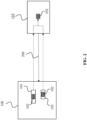
- FIG. 1 shows a device 100 according to an embodiment of the invention.
- the device 100 is configured to support HARQ for (NG) Wi-Fi.
- the device 100 may thereby be a Wi-Fi Access Point (AP), router or the like.
- the device 100 may also by a non-AP Station (STA) such as a smartphone.
- the device 100 may include a scrambler and a FEC unit.
- the device 100 is configured to transmit, to a receiver 110, an aggregated data unit 101 including at least one data unit 102.
- the aggregated data unit 101 is an A-MPDU and the at least one data unit 102 may be a MPDU.
- the device 100 is configured to scramble the aggregated data unit 101 by performing scrambling, and to encode the scrambled aggregated data unit 101 by using FEC.
- the scrambling can, for instance, be implemented by the scrambler of the device 100, and the FEC can be implemented by the FEC unit of the device.
- the scrambling is based on a scrambling seed (bit sequence), particularly a periodic scrambling seed, wherein the periodicity in effect divides the scrambling seed into scrambler blocks containing a determined number of bits (e.g. 128 bits each).
- the scrambling seed is used as input to the scrambler to scramble the bits of the aggregated data unit 101, and thus the bits of each data unit 102.
- the device 100 is further configured to retransmit, to the receiver 110, if a decoding of at least one data unit 102 failed at the receiver 110, at least a part 103 of the aggregated data unit 101 including the at least one failed data unit 102. That is, only the failed at least one data unit 102 can be transmitted, or e.g. the at least one failed data unit 102 and some additional bits.
- the device 100 may determine that the decoding of a data unit 102 at the receiver 110 failed by receiving and analyzing an ACK and/or a Not-Acknowledge (NACK) message from the receiver 110 concerning one or more data units 102 that were correctly and/or incorrectly decoded at the receiver 110.
- NACK Not-Acknowledge
- the device 100 When retransmitting the part 103 of the aggregated data unit 101, the device 100 is configured to scramble and encode the at least one failed data unit 102 in the retransmitted part 103 by performing scrambling based on the same scrambling seed 104 and by using FEC with the same FEC outputs 105 that were used for scrambling and encoding said data unit 102 in the aggregated data unit 101. That is, the bits of the data unit 102 are scrambled in both cases - when transmitted in the aggregated data unit 101 and when transmitted in the retransmitted part 103 - based on the same scrambling bits of the scrambling seed. FEC is further performed based on the same blocks of information bits. In such a manner, the bits after scrambling and FEC in the retransmission are the same as in the original transmission.
- FIG. 2 shows a device 110 according to an embodiment of the invention.
- the device 110 is configured to support HARQ for (NG) Wi-Fi.
- the device 110 may be a Wi-Fi client, STA or the like.
- the device 100 may also be an AP.
- the device 110 may include a descrambler and a FEC unit.
- the device 110 may particularly be the receiver 110 described with respect to FIG. 1 .
- the device 110 is configured to receive from a transmitter 100 an encoded aggregated data unit 101 including at least one encoded data unit 102.
- the transmitter 100 may be the device 100 described with respect to FIG. 1 .
- the aggregated data unit 101 is an A-MPDU and the data unit 102 may be an MPDU.
- the device 110 is further configured to decode the at least one data unit 102, and send to the transmitter 100 an ACK and/or a NACK message 200 regarding one or more data units 102 that were correctly and/or incorrectly decoded.
- the decoding may be performed by the FEC unit, and may include descrambling performed by the descrambler.
- the descrambling is based on a descrambling seed which corresponds to the scrambling seed used at the transmitter 100.
- the device 110 is further configured to receive from the transmitter 100, if a decoding of at least one data unit failed 102, and was accordingly reflected in the ACK and/or NACK message, a retransmission of at least part 103 of the aggregated data unit 101 including the at least one failed data unit 102.
- the device 110 is then able to decode the at least one retransmitted data unit 102 and to soft combine it with the previously received failed data unit 102. Thus, it can obtain a more reliable decoding of the data unit 102.
- the aggregated data unit 101 is assumed to be an A-MPDU 101, which includes one or more data units 102 that are all MPDUs 102.
- a first, very simple solution is retransmitting the entire A-MPDU 101, regardless of which MPDU 102 in the initially transmitted A-MPDU 101 failed.
- the device 100 preferably informs the receiver 110 that the current transmission is a retransmission, e.g. by sending a retransmission indication.
- the same scrambling seed 104 and FEC outputs 105 as for the initial transmission are used for the retransmission of the A-MPDU 101.
- FIG. 3 A second solution is shown in FIG. 3 , and bases on the following:
- the second solution may be further supported by the following:
- a third solution is shown in FIG. 4 and bases on the idea that if the FEC/scrambling would be performed per MPDU 102 (instead of for the entire A-MPDU 101), things would be easier.
- the receiver's PHY layer does not know in advance what is the size of the MPDU 102, so it cannot compute all LDPC parameters (number of FEC blocks, size, etc.).
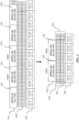
- the third solution proposes to pre-define a 'HARQ Block' 400, which is of known size (i.e. known to both device 100 and receiver 110), and on which FEC/scrambling is performed independent of other HARQ blocks 400.
- the size of the HARQ block 400 may be defined in the specification (single size, one value per A-MPDU length, etc.) or may be negotiated between the device 100 and the receiver 110.
- the size of the HARQ block 400 which may contain at least one MPDU 102, a Zero Length Delimiter (ZLD) and padding 401, may be selected such that it is a multiple of scrambler seed period (128 bits).
- ZLD Zero Length Delimiter
- A-MPDU aggregation or MPDU fragmentation can be used to reduce overhead (padding 401 to reach HARQ block 400 size).
- any beyond the last HARQ block 400 may be denoted post-FEC bits.
- Both the device 100 and the receiver 110 may know in advance the size of a HARQ block 400, so that the location of the first post-FEC bit is easy for them to compute.
- FIG. 4 shows particularly an example with several HARQ blocks 400, each containing at least one MPDU 101.
- MPDU #2 fails, so that the entire HARQ block #2 is retransmitted, yielding the same coded bits, which can be combined with previous LLRs.
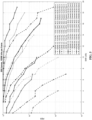
- FIG. 6 shows that there is up to 31% data rate improvement as a function of A-MPDU size for a transmission scheme using HARQ according to the invention.
- FIG. 7 shows a method 700 according to an embodiment of the invention, particularly a HARQ method for Wi-Fi.
- the method 700 may be carried out by an access point or router, and/or by the device 100 shown in FIG. 1 .
Landscapes
- Engineering & Computer Science (AREA)
- Computer Networks & Wireless Communication (AREA)
- Signal Processing (AREA)
- Physics & Mathematics (AREA)
- Spectroscopy & Molecular Physics (AREA)
- Power Engineering (AREA)
- Detection And Prevention Of Errors In Transmission (AREA)
- Mobile Radio Communication Systems (AREA)
Claims (6)
- Vorrichtung (100) zum Unterstützen von hybrider automatischer Wiederholungsanforderung, HARQ, wobei die Vorrichtung (100) zu Folgendem konfiguriert ist:Übertragen, an einen Empfänger (110), einer aggregierten Medienzugriffssteuerprotokolldateneinheit, A-MPDU (101), gemäß den IEEE 802.11-Standards und mindestens zwei Dateneinheiten (102) beinhaltend undÜbertragen, an den Empfänger (110), zusammen mit der A-MPDU (101), von HARQ-Blockinformationen über eine Aufteilung der A-MPDU (101) in eine Vielzahl bestimmter HARQ-Blöcke (400),wobei die Vorrichtung (100) ferner dazu konfiguriert ist, die A-MPDU (101) durch Durchführen einer Verwürfelung und durch Verwenden von Vorwärtsfehlerkorrektur, FEC, unabhängig auf jedem der Vielzahl HARQ-Blöcke (400) zu verwürfeln und zu codieren, underneutes Übertragen, an den Empfänger (110), wenn Decodieren mindestens einer Dateneinheit (102) an dem Empfänger (110) erfolglos war, mindestens eines Teils (103) der A-MPDU (101), der die mindestens eine erfolglose Dateneinheit (102) beinhaltet,wobei jeder HARQ-Block (400) mindestens eine Dateneinheit (102) beinhaltet,wobei der erneut übertragene Teil (103) jeden HARQ-Block (400) enthält, der eine erfolglose Dateneinheit (102) beinhaltet, und wobei die Vorrichtung (100) ferner dazu konfiguriert ist, die mindestens eine erfolglose Dateneinheit (102) in dem erneut übertragenen Teil (103) durch Durchführen einer Verwürfelung basierend auf dem gleichen Verwürfelungs-Seed (104) und durch Verwenden der FEC mit den gleichen FEC-Ausgaben (105), die zum Verwürfeln und Codieren der Dateneinheit (102) in der A-MPDU (101) verwendet wurden, zu verwürfeln und zu codieren.
- Vorrichtung (100) nach Anspruch 1, die ferner zu Folgendem konfiguriert ist:
die FEC-Ausgaben (105) nach dem Codieren der verwürfelten A-MPDU (101) zu modifizieren, insbesondere durch Durchstechen, und die FEC-Ausgaben (105) nach dem Codieren der mindestens einen erfolglosen Dateneinheit (102) in dem erneut übertragenen Teil (103) anders als das Modifizieren der FEC-Ausgaben (105) nach dem Codieren der verwürfelten A-MPDU (101) zu modifizieren, insbesondere durch anderes Durchstechen. - Vorrichtung (100) nach Anspruch 1 oder 2, wobei der erneut übertragene Teil (103) die mindestens eine erfolglose Dateneinheit (102) und zusätzliche Bits (301) beinhaltet.
- Vorrichtung (100) nach einem der vorhergehenden Ansprüche, wobei
ein HARQ-Block (400) mindestens eine Dateneinheit (102) und zusätzliche Füllbits (401) beinhaltet. - Vorrichtung (100) nach einem der vorhergehenden Ansprüche, die ferner zu Folgendem konfiguriert ist:
Beibehalten des Verwürfelungs-Seeds (104) und/oder der FEC-Parameter, die zum Verwürfeln und Codieren der mindestens zwei Dateneinheiten (102) in der A-MPDU (101) verwendet wurden, und Verwenden der beibehaltenen Verwürfelungs-Seeds (104) und/oder der FEC-Parameter zum Verwürfeln und Codieren der mindestens einen erfolglosen Dateneinheit (102) in dem erneut übertragenen Teil (103). - Verfahren (700) für hybride automatische Wiederholungsanforderung, HARQ, wobei das Verfahren (700) Folgendes umfasst:Übertragen (701), an einen Empfänger (110), einer aggregierten Medienzugriffssteuerprotokolldateneinheit, A-MPDU (101), gemäß den IEEE 802.11-Standards und mindestens zwei Dateneinheiten (102) beinhaltend,Übertragen, an den Empfänger (110), zusammen mit der A-MPDU (101), von HARQ-Blockinformationen über eine Aufteilung der A-MPDU (101) in eine Vielzahl bestimmter HARQ-Blöcke (400),wobei jeder der Vielzahl HARQ-Blöcke (400) in der A-MPDU (101) unabhängig verwürfelt wird und jeder der Vielzahl verwürfelter HARQ-Blöcke (400) unabhängig unter Verwendung von Vorwärtsfehlerkorrektur, FEC, codiert wird underneutes Übertragen (702), an den Empfänger (110), wenn Decodieren mindestens einer Dateneinheit (102) an dem Empfänger (110) erfolglos war, mindestens eines Teils der A-MPDU (101), der die mindestens eine erfolglose Dateneinheit (102) beinhaltet,wobei jeder HARQ-Block (400) mindestens eine Dateneinheit (102) beinhaltet,wobei der erneut übertragene Teil (103) jeden HARQ-Block (400) enthält, der eine erfolglose Dateneinheit (102) beinhaltet, und wobei die mindestens eine erfolglose Dateneinheit (102) in dem erneut übertragenen Teil (103) durch Durchführen einer Verwürfelung basierend auf dem gleichen Verwürfelungs-Seed (104) und durch Verwenden der FEC mit den gleichen FEC-Ausgaben (105), die zum Verwürfeln und Codieren der Dateneinheit (102) in der A-MPDU (101) verwendet wurden, verwürfelt und codiert wird.
Applications Claiming Priority (1)
| Application Number | Priority Date | Filing Date | Title |
|---|---|---|---|
| PCT/EP2018/070206 WO2020020456A1 (en) | 2018-07-25 | 2018-07-25 | Device and method for supporting harq for wi-fi |
Publications (2)
| Publication Number | Publication Date |
|---|---|
| EP3821552A1 EP3821552A1 (de) | 2021-05-19 |
| EP3821552B1 true EP3821552B1 (de) | 2025-03-26 |
Family
ID=63047353
Family Applications (1)
| Application Number | Title | Priority Date | Filing Date |
|---|---|---|---|
| EP18746899.6A Active EP3821552B1 (de) | 2018-07-25 | 2018-07-25 | Vorrichtung und verfahren zur unterstützung von harq für wlan |
Country Status (3)
| Country | Link |
|---|---|
| EP (1) | EP3821552B1 (de) |
| CN (1) | CN112534756B (de) |
| WO (1) | WO2020020456A1 (de) |
Families Citing this family (2)
| Publication number | Priority date | Publication date | Assignee | Title |
|---|---|---|---|---|
| WO2022257026A1 (zh) * | 2021-06-08 | 2022-12-15 | 华为技术有限公司 | 通信方法和通信装置 |
| US12592790B2 (en) * | 2022-09-22 | 2026-03-31 | Qualcomm Incorporated | Modulation based hybrid automatic repeat request feedback retransmission design |
Citations (1)
| Publication number | Priority date | Publication date | Assignee | Title |
|---|---|---|---|---|
| US20170222761A1 (en) * | 2008-04-21 | 2017-08-03 | Apple Inc. | Methods and Systems for HARQ Protocols |
Family Cites Families (5)
| Publication number | Priority date | Publication date | Assignee | Title |
|---|---|---|---|---|
| US8243774B2 (en) * | 2007-01-03 | 2012-08-14 | Samsung Electronics Co., Ltd. | System and method for information scrambling in a wireless communication system |
| US20090046713A1 (en) * | 2007-08-16 | 2009-02-19 | Qualcomm, Incorporated | Method and apparatus for transmitting non-decodable packets |
| CN107104781B (zh) * | 2012-02-11 | 2020-06-05 | Lg电子株式会社 | 接收和发送下行链路数据信道的方法及设备 |
| US9876614B1 (en) * | 2014-01-20 | 2018-01-23 | Marvell International Ltd. | Hybrid automatic repeat request for wireless local area network |
| JP2018046459A (ja) * | 2016-09-15 | 2018-03-22 | 株式会社東芝 | 無線通信装置および無線通信方法 |
-
2018
- 2018-07-25 EP EP18746899.6A patent/EP3821552B1/de active Active
- 2018-07-25 WO PCT/EP2018/070206 patent/WO2020020456A1/en not_active Ceased
- 2018-07-25 CN CN201880095973.4A patent/CN112534756B/zh active Active
Patent Citations (1)
| Publication number | Priority date | Publication date | Assignee | Title |
|---|---|---|---|---|
| US20170222761A1 (en) * | 2008-04-21 | 2017-08-03 | Apple Inc. | Methods and Systems for HARQ Protocols |
Also Published As
| Publication number | Publication date |
|---|---|
| CN112534756B (zh) | 2022-07-26 |
| EP3821552A1 (de) | 2021-05-19 |
| WO2020020456A1 (en) | 2020-01-30 |
| CN112534756A (zh) | 2021-03-19 |
Similar Documents
| Publication | Publication Date | Title |
|---|---|---|
| US10790937B1 (en) | Hybrid automatic repeat request for wireless local area network | |
| US8473821B2 (en) | Packet-level erasure protection coding in aggregated packet transmissions | |
| US6778558B2 (en) | System and method for incremental redundancy transmission in a communication system | |
| EP2540024B1 (de) | System und verfahren zum senden und empfangen von bestätigungsinformationen | |
| US12267163B2 (en) | Retransmitted data sending method, retransmitted data receiving method, and apparatus | |
| CN111030785B (zh) | 在无线网络中进行数据重传的方法、系统以及无线接收器 | |
| CN101662346B (zh) | 自动重传控制方法、通信系统及其发射机和接收机 | |
| US12284033B2 (en) | Data retransmission in wireless network | |
| US11309998B2 (en) | Hybrid automatic repeat request for wireless local area network | |
| US20120084618A1 (en) | Jointly encoding a scheduling request indicator and acknowledgments/negative acknowledgments | |
| CN104579579A (zh) | 一种大数据包传输方法和系统 | |
| US11984990B2 (en) | Devices and methods for supporting HARQ for Wi-Fi | |
| EP3821552B1 (de) | Vorrichtung und verfahren zur unterstützung von harq für wlan | |
| CN113366785B (zh) | 用于重传mac协议数据单元(mpdu)的通信发射器 | |
| US20250119237A1 (en) | Device and method for supporting hybrid automatic repeat request (harq) | |
| WO2022050018A1 (ja) | 情報処理装置および情報処理方法 | |
| WO2022050019A1 (ja) | 情報処理装置および復号化方法 | |
| Uzawa et al. | PCI reduction method suitable for type-II HARQ with SR-ARQ |
Legal Events
| Date | Code | Title | Description |
|---|---|---|---|
| STAA | Information on the status of an ep patent application or granted ep patent |
Free format text: STATUS: UNKNOWN |
|
| STAA | Information on the status of an ep patent application or granted ep patent |
Free format text: STATUS: THE INTERNATIONAL PUBLICATION HAS BEEN MADE |
|
| PUAI | Public reference made under article 153(3) epc to a published international application that has entered the european phase |
Free format text: ORIGINAL CODE: 0009012 |
|
| STAA | Information on the status of an ep patent application or granted ep patent |
Free format text: STATUS: REQUEST FOR EXAMINATION WAS MADE |
|
| 17P | Request for examination filed |
Effective date: 20210211 |
|
| AK | Designated contracting states |
Kind code of ref document: A1 Designated state(s): AL AT BE BG CH CY CZ DE DK EE ES FI FR GB GR HR HU IE IS IT LI LT LU LV MC MK MT NL NO PL PT RO RS SE SI SK SM TR |
|
| DAV | Request for validation of the european patent (deleted) | ||
| DAX | Request for extension of the european patent (deleted) | ||
| STAA | Information on the status of an ep patent application or granted ep patent |
Free format text: STATUS: EXAMINATION IS IN PROGRESS |
|
| 17Q | First examination report despatched |
Effective date: 20220105 |
|
| GRAP | Despatch of communication of intention to grant a patent |
Free format text: ORIGINAL CODE: EPIDOSNIGR1 |
|
| STAA | Information on the status of an ep patent application or granted ep patent |
Free format text: STATUS: GRANT OF PATENT IS INTENDED |
|
| INTG | Intention to grant announced |
Effective date: 20241106 |
|
| GRAS | Grant fee paid |
Free format text: ORIGINAL CODE: EPIDOSNIGR3 |
|
| GRAA | (expected) grant |
Free format text: ORIGINAL CODE: 0009210 |
|
| STAA | Information on the status of an ep patent application or granted ep patent |
Free format text: STATUS: THE PATENT HAS BEEN GRANTED |
|
| AK | Designated contracting states |
Kind code of ref document: B1 Designated state(s): AL AT BE BG CH CY CZ DE DK EE ES FI FR GB GR HR HU IE IS IT LI LT LU LV MC MK MT NL NO PL PT RO RS SE SI SK SM TR |
|
| REG | Reference to a national code |
Ref country code: GB Ref legal event code: FG4D |
|
| REG | Reference to a national code |
Ref country code: CH Ref legal event code: EP |
|
| REG | Reference to a national code |
Ref country code: DE Ref legal event code: R096 Ref document number: 602018080462 Country of ref document: DE |
|
| REG | Reference to a national code |
Ref country code: IE Ref legal event code: FG4D |
|
| PG25 | Lapsed in a contracting state [announced via postgrant information from national office to epo] |
Ref country code: RS Free format text: LAPSE BECAUSE OF FAILURE TO SUBMIT A TRANSLATION OF THE DESCRIPTION OR TO PAY THE FEE WITHIN THE PRESCRIBED TIME-LIMIT Effective date: 20250626 |
|
| PG25 | Lapsed in a contracting state [announced via postgrant information from national office to epo] |
Ref country code: FI Free format text: LAPSE BECAUSE OF FAILURE TO SUBMIT A TRANSLATION OF THE DESCRIPTION OR TO PAY THE FEE WITHIN THE PRESCRIBED TIME-LIMIT Effective date: 20250326 |
|
| PGFP | Annual fee paid to national office [announced via postgrant information from national office to epo] |
Ref country code: GB Payment date: 20250605 Year of fee payment: 8 |
|
| REG | Reference to a national code |
Ref country code: LT Ref legal event code: MG9D |
|
| PG25 | Lapsed in a contracting state [announced via postgrant information from national office to epo] |
Ref country code: NO Free format text: LAPSE BECAUSE OF FAILURE TO SUBMIT A TRANSLATION OF THE DESCRIPTION OR TO PAY THE FEE WITHIN THE PRESCRIBED TIME-LIMIT Effective date: 20250626 |
|
| PG25 | Lapsed in a contracting state [announced via postgrant information from national office to epo] |
Ref country code: HR Free format text: LAPSE BECAUSE OF FAILURE TO SUBMIT A TRANSLATION OF THE DESCRIPTION OR TO PAY THE FEE WITHIN THE PRESCRIBED TIME-LIMIT Effective date: 20250326 |
|
| PG25 | Lapsed in a contracting state [announced via postgrant information from national office to epo] |
Ref country code: LV Free format text: LAPSE BECAUSE OF FAILURE TO SUBMIT A TRANSLATION OF THE DESCRIPTION OR TO PAY THE FEE WITHIN THE PRESCRIBED TIME-LIMIT Effective date: 20250326 |
|
| PG25 | Lapsed in a contracting state [announced via postgrant information from national office to epo] |
Ref country code: BG Free format text: LAPSE BECAUSE OF FAILURE TO SUBMIT A TRANSLATION OF THE DESCRIPTION OR TO PAY THE FEE WITHIN THE PRESCRIBED TIME-LIMIT Effective date: 20250326 Ref country code: GR Free format text: LAPSE BECAUSE OF FAILURE TO SUBMIT A TRANSLATION OF THE DESCRIPTION OR TO PAY THE FEE WITHIN THE PRESCRIBED TIME-LIMIT Effective date: 20250627 |
|
| REG | Reference to a national code |
Ref country code: NL Ref legal event code: MP Effective date: 20250326 |
|
| PG25 | Lapsed in a contracting state [announced via postgrant information from national office to epo] |
Ref country code: NL Free format text: LAPSE BECAUSE OF FAILURE TO SUBMIT A TRANSLATION OF THE DESCRIPTION OR TO PAY THE FEE WITHIN THE PRESCRIBED TIME-LIMIT Effective date: 20250326 |
|
| PG25 | Lapsed in a contracting state [announced via postgrant information from national office to epo] |
Ref country code: SE Free format text: LAPSE BECAUSE OF FAILURE TO SUBMIT A TRANSLATION OF THE DESCRIPTION OR TO PAY THE FEE WITHIN THE PRESCRIBED TIME-LIMIT Effective date: 20250326 |
|
| REG | Reference to a national code |
Ref country code: AT Ref legal event code: MK05 Ref document number: 1780021 Country of ref document: AT Kind code of ref document: T Effective date: 20250326 |
|
| PG25 | Lapsed in a contracting state [announced via postgrant information from national office to epo] |
Ref country code: SM Free format text: LAPSE BECAUSE OF FAILURE TO SUBMIT A TRANSLATION OF THE DESCRIPTION OR TO PAY THE FEE WITHIN THE PRESCRIBED TIME-LIMIT Effective date: 20250326 |
|
| PG25 | Lapsed in a contracting state [announced via postgrant information from national office to epo] |
Ref country code: ES Free format text: LAPSE BECAUSE OF FAILURE TO SUBMIT A TRANSLATION OF THE DESCRIPTION OR TO PAY THE FEE WITHIN THE PRESCRIBED TIME-LIMIT Effective date: 20250326 Ref country code: PT Free format text: LAPSE BECAUSE OF FAILURE TO SUBMIT A TRANSLATION OF THE DESCRIPTION OR TO PAY THE FEE WITHIN THE PRESCRIBED TIME-LIMIT Effective date: 20250728 |
|
| PGFP | Annual fee paid to national office [announced via postgrant information from national office to epo] |
Ref country code: DE Payment date: 20250604 Year of fee payment: 8 |
|
| PG25 | Lapsed in a contracting state [announced via postgrant information from national office to epo] |
Ref country code: IT Free format text: LAPSE BECAUSE OF FAILURE TO SUBMIT A TRANSLATION OF THE DESCRIPTION OR TO PAY THE FEE WITHIN THE PRESCRIBED TIME-LIMIT Effective date: 20250326 Ref country code: PL Free format text: LAPSE BECAUSE OF FAILURE TO SUBMIT A TRANSLATION OF THE DESCRIPTION OR TO PAY THE FEE WITHIN THE PRESCRIBED TIME-LIMIT Effective date: 20250326 |
|
| PG25 | Lapsed in a contracting state [announced via postgrant information from national office to epo] |
Ref country code: AT Free format text: LAPSE BECAUSE OF FAILURE TO SUBMIT A TRANSLATION OF THE DESCRIPTION OR TO PAY THE FEE WITHIN THE PRESCRIBED TIME-LIMIT Effective date: 20250326 |
|
| PG25 | Lapsed in a contracting state [announced via postgrant information from national office to epo] |
Ref country code: EE Free format text: LAPSE BECAUSE OF FAILURE TO SUBMIT A TRANSLATION OF THE DESCRIPTION OR TO PAY THE FEE WITHIN THE PRESCRIBED TIME-LIMIT Effective date: 20250326 |
|
| PG25 | Lapsed in a contracting state [announced via postgrant information from national office to epo] |
Ref country code: RO Free format text: LAPSE BECAUSE OF FAILURE TO SUBMIT A TRANSLATION OF THE DESCRIPTION OR TO PAY THE FEE WITHIN THE PRESCRIBED TIME-LIMIT Effective date: 20250326 |
|
| PG25 | Lapsed in a contracting state [announced via postgrant information from national office to epo] |
Ref country code: SK Free format text: LAPSE BECAUSE OF FAILURE TO SUBMIT A TRANSLATION OF THE DESCRIPTION OR TO PAY THE FEE WITHIN THE PRESCRIBED TIME-LIMIT Effective date: 20250326 |
|
| PG25 | Lapsed in a contracting state [announced via postgrant information from national office to epo] |
Ref country code: IS Free format text: LAPSE BECAUSE OF FAILURE TO SUBMIT A TRANSLATION OF THE DESCRIPTION OR TO PAY THE FEE WITHIN THE PRESCRIBED TIME-LIMIT Effective date: 20250726 |
|
| REG | Reference to a national code |
Ref country code: DE Ref legal event code: R097 Ref document number: 602018080462 Country of ref document: DE |
|
| PG25 | Lapsed in a contracting state [announced via postgrant information from national office to epo] |
Ref country code: DK Free format text: LAPSE BECAUSE OF FAILURE TO SUBMIT A TRANSLATION OF THE DESCRIPTION OR TO PAY THE FEE WITHIN THE PRESCRIBED TIME-LIMIT Effective date: 20250326 |
|
| PG25 | Lapsed in a contracting state [announced via postgrant information from national office to epo] |
Ref country code: CZ Free format text: LAPSE BECAUSE OF FAILURE TO SUBMIT A TRANSLATION OF THE DESCRIPTION OR TO PAY THE FEE WITHIN THE PRESCRIBED TIME-LIMIT Effective date: 20250326 |
|
| PLBE | No opposition filed within time limit |
Free format text: ORIGINAL CODE: 0009261 |
|
| STAA | Information on the status of an ep patent application or granted ep patent |
Free format text: STATUS: NO OPPOSITION FILED WITHIN TIME LIMIT |
|
| REG | Reference to a national code |
Ref country code: CH Ref legal event code: L10 Free format text: ST27 STATUS EVENT CODE: U-0-0-L10-L00 (AS PROVIDED BY THE NATIONAL OFFICE) Effective date: 20260211 |
|
| REG | Reference to a national code |
Ref country code: CH Ref legal event code: H13 Free format text: ST27 STATUS EVENT CODE: U-0-0-H10-H13 (AS PROVIDED BY THE NATIONAL OFFICE) Effective date: 20260224 |
|
| 26N | No opposition filed |
Effective date: 20260105 |
|
| PG25 | Lapsed in a contracting state [announced via postgrant information from national office to epo] |
Ref country code: LU Free format text: LAPSE BECAUSE OF NON-PAYMENT OF DUE FEES Effective date: 20250725 |
|
| REG | Reference to a national code |
Ref country code: BE Ref legal event code: MM Effective date: 20250731 |
|
| PG25 | Lapsed in a contracting state [announced via postgrant information from national office to epo] |
Ref country code: BE Free format text: LAPSE BECAUSE OF NON-PAYMENT OF DUE FEES Effective date: 20250731 |
|
| PG25 | Lapsed in a contracting state [announced via postgrant information from national office to epo] |
Ref country code: FR Free format text: LAPSE BECAUSE OF NON-PAYMENT OF DUE FEES Effective date: 20250731 |