EP3822263A1 - Dérivé de quinazoline de type éther de biaryle - Google Patents
Dérivé de quinazoline de type éther de biaryle Download PDFInfo
- Publication number
- EP3822263A1 EP3822263A1 EP19830650.8A EP19830650A EP3822263A1 EP 3822263 A1 EP3822263 A1 EP 3822263A1 EP 19830650 A EP19830650 A EP 19830650A EP 3822263 A1 EP3822263 A1 EP 3822263A1
- Authority
- EP
- European Patent Office
- Prior art keywords
- oxy
- fluoro
- compound
- mmol
- group
- Prior art date
- Legal status (The legal status is an assumption and is not a legal conclusion. Google has not performed a legal analysis and makes no representation as to the accuracy of the status listed.)
- Withdrawn
Links
- 0 *c(cc(c(*)c1)O*)c1Nc1c(cc(*)c(O*)c2)c2ncn1 Chemical compound *c(cc(c(*)c1)O*)c1Nc1c(cc(*)c(O*)c2)c2ncn1 0.000 description 19
- BUMMTDMIUWWUAM-UHFFFAOYSA-N CC(C)(C)CCC(C[n](cc1F)nc1Oc(cc1)cc(Cl)c1N)=O Chemical compound CC(C)(C)CCC(C[n](cc1F)nc1Oc(cc1)cc(Cl)c1N)=O BUMMTDMIUWWUAM-UHFFFAOYSA-N 0.000 description 1
- FMPPVSSEDQFNON-UHFFFAOYSA-N CC(C)(C)NC([n](cc1)nc1Oc(cc(c(N)c1)F)c1F)=O Chemical compound CC(C)(C)NC([n](cc1)nc1Oc(cc(c(N)c1)F)c1F)=O FMPPVSSEDQFNON-UHFFFAOYSA-N 0.000 description 1
- AOILBUZVZMELPO-UHFFFAOYSA-N CC(C)(C)OC(Nc(c(F)c1)ccc1Oc1nc(-c(cn2)cnc2OC)c[s]1)=O Chemical compound CC(C)(C)OC(Nc(c(F)c1)ccc1Oc1nc(-c(cn2)cnc2OC)c[s]1)=O AOILBUZVZMELPO-UHFFFAOYSA-N 0.000 description 1
- FNPLOVDLBBCQIF-UHFFFAOYSA-N CC(C)(C)OC(Nc(ccc(Oc1cccc(-c2nnc(C)[s]2)c1)c1)c1F)=O Chemical compound CC(C)(C)OC(Nc(ccc(Oc1cccc(-c2nnc(C)[s]2)c1)c1)c1F)=O FNPLOVDLBBCQIF-UHFFFAOYSA-N 0.000 description 1
- LNGDIDGLOHLBBE-UHFFFAOYSA-N CC(C)(C)OC(Nc(ccc(Oc1cccc(C(NNC(C)=O)=O)c1)c1)c1F)=O Chemical compound CC(C)(C)OC(Nc(ccc(Oc1cccc(C(NNC(C)=O)=O)c1)c1)c1F)=O LNGDIDGLOHLBBE-UHFFFAOYSA-N 0.000 description 1
- WIQXDLFZNBZJFT-UHFFFAOYSA-N CC(C)(C)OC(Nc(ccc(Oc1nc(BOC(C)(C)C(C)(C)O)c[s]1)c1)c1F)=O Chemical compound CC(C)(C)OC(Nc(ccc(Oc1nc(BOC(C)(C)C(C)(C)O)c[s]1)c1)c1F)=O WIQXDLFZNBZJFT-UHFFFAOYSA-N 0.000 description 1
- FECDJOFSRHTAMA-UHFFFAOYSA-N CC(C)(C)OC(Nc(ccc(Oc1nc(C(O)=O)c[s]1)c1)c1F)=O Chemical compound CC(C)(C)OC(Nc(ccc(Oc1nc(C(O)=O)c[s]1)c1)c1F)=O FECDJOFSRHTAMA-UHFFFAOYSA-N 0.000 description 1
- HDNWDNIQXONPRG-UHFFFAOYSA-N CC(C)(C)OC(Nc(ccc(Oc1nc(C2=CC(F)=C(C)CCC=C2)c[s]1)c1)c1F)=O Chemical compound CC(C)(C)OC(Nc(ccc(Oc1nc(C2=CC(F)=C(C)CCC=C2)c[s]1)c1)c1F)=O HDNWDNIQXONPRG-UHFFFAOYSA-N 0.000 description 1
- VBBOZJFSLMRWDL-UHFFFAOYSA-N CC(C)(C)OC([n](cc1)nc1Oc(cc1)cc(F)c1N)=O Chemical compound CC(C)(C)OC([n](cc1)nc1Oc(cc1)cc(F)c1N)=O VBBOZJFSLMRWDL-UHFFFAOYSA-N 0.000 description 1
- BMEGRZSBETYIEH-UHFFFAOYSA-N CC(C)(C)OC([n](cc1)nc1Oc(cc1)cc(F)c1Nc1c(cc(c(OC)c2)[N+]([O-])=O)c2ncn1)=O Chemical compound CC(C)(C)OC([n](cc1)nc1Oc(cc1)cc(F)c1Nc1c(cc(c(OC)c2)[N+]([O-])=O)c2ncn1)=O BMEGRZSBETYIEH-UHFFFAOYSA-N 0.000 description 1
- SCMAIZGGKMHOLS-UHFFFAOYSA-N CC(C)[O](C(CC1)CCN1C(C=C)=O)C1=CC1 Chemical compound CC(C)[O](C(CC1)CCN1C(C=C)=O)C1=CC1 SCMAIZGGKMHOLS-UHFFFAOYSA-N 0.000 description 1
- BNNTZTSMDNPWHJ-UHFFFAOYSA-N CC(CC(Oc(cc1)cc(F)c1NC(OC(C)(C)C)=O)=C1)C=C1C(O)=O Chemical compound CC(CC(Oc(cc1)cc(F)c1NC(OC(C)(C)C)=O)=C1)C=C1C(O)=O BNNTZTSMDNPWHJ-UHFFFAOYSA-N 0.000 description 1
- RAUYRQQRWKMNLU-UHFFFAOYSA-N CC(CN=CC(c1c[s]c(Oc(cc2)cc(F)c2N)n1)=C1)=C1F Chemical compound CC(CN=CC(c1c[s]c(Oc(cc2)cc(F)c2N)n1)=C1)=C1F RAUYRQQRWKMNLU-UHFFFAOYSA-N 0.000 description 1
- KCKLBCNPAQNPJO-IXPAOQDISA-N CC/C(/C)=C/C=C(\C=N)/c1c[s]c(Oc(cc2)cc(F)c2Nc(c2c3)ncnc2cc(OC)c3OC(CC2)CCN2C(C=C)=O)n1 Chemical compound CC/C(/C)=C/C=C(\C=N)/c1c[s]c(Oc(cc2)cc(F)c2Nc(c2c3)ncnc2cc(OC)c3OC(CC2)CCN2C(C=C)=O)n1 KCKLBCNPAQNPJO-IXPAOQDISA-N 0.000 description 1
- HYGNGCCRYVUDDS-UHFFFAOYSA-N CC1(CC1)NC([n](cc1)nc1Oc(cc1)cc(F)c1N)=O Chemical compound CC1(CC1)NC([n](cc1)nc1Oc(cc1)cc(F)c1N)=O HYGNGCCRYVUDDS-UHFFFAOYSA-N 0.000 description 1
- YJHVSNDLBPJWHR-UHFFFAOYSA-N CCCc(cc(C(C)Nc(ccc(Oc1cccc(CC(NC(C)(C)C)=O)c1)c1)c1F)c(/N=C\N)c1)c1OC Chemical compound CCCc(cc(C(C)Nc(ccc(Oc1cccc(CC(NC(C)(C)C)=O)c1)c1)c1F)c(/N=C\N)c1)c1OC YJHVSNDLBPJWHR-UHFFFAOYSA-N 0.000 description 1
- BRICKEIGCXFQMO-UHFFFAOYSA-N CCc1nnc(-c2cc(O)ccc2)[o]1 Chemical compound CCc1nnc(-c2cc(O)ccc2)[o]1 BRICKEIGCXFQMO-UHFFFAOYSA-N 0.000 description 1
- HLSLKMSPBACXNR-JXMROGBWSA-N CCc1nnc(-c2cccc(Oc(cc3)cc(F)c3Nc3c(cc(c(OC)c4)NC(/C=C/CN(C)C)=O)c4ncn3)c2)[o]1 Chemical compound CCc1nnc(-c2cccc(Oc(cc3)cc(F)c3Nc3c(cc(c(OC)c4)NC(/C=C/CN(C)C)=O)c4ncn3)c2)[o]1 HLSLKMSPBACXNR-JXMROGBWSA-N 0.000 description 1
- MJFJWOAETHEGGW-UHFFFAOYSA-N COc1cc2ncnc(Cl)c2cc1[N+]([O-])=O Chemical compound COc1cc2ncnc(Cl)c2cc1[N+]([O-])=O MJFJWOAETHEGGW-UHFFFAOYSA-N 0.000 description 1
- VWABZYXGESOZAK-UHFFFAOYSA-N COc1cc2ncnc(Nc(ccc(Oc3n[nH]cc3)c3)c3F)c2cc1OC(CC1)CCN1C(C=C)=O Chemical compound COc1cc2ncnc(Nc(ccc(Oc3n[nH]cc3)c3)c3F)c2cc1OC(CC1)CCN1C(C=C)=O VWABZYXGESOZAK-UHFFFAOYSA-N 0.000 description 1
- DYCHFGXYBFSMOZ-UHFFFAOYSA-N Cc1nnc(-c2cc(Oc(cc3)cc(F)c3N)ccc2)[o]1 Chemical compound Cc1nnc(-c2cc(Oc(cc3)cc(F)c3N)ccc2)[o]1 DYCHFGXYBFSMOZ-UHFFFAOYSA-N 0.000 description 1
- QTGUXCVGJIWFBG-UHFFFAOYSA-N Cc1nnc(-c2cccc(Oc(cc3)cc(F)c3Nc3c(cc(c(OCF)c4)OC(CC5)CCN5C(C=C)=O)c4ncn3)c2)[o]1 Chemical compound Cc1nnc(-c2cccc(Oc(cc3)cc(F)c3Nc3c(cc(c(OCF)c4)OC(CC5)CCN5C(C=C)=O)c4ncn3)c2)[o]1 QTGUXCVGJIWFBG-UHFFFAOYSA-N 0.000 description 1
- MNPLTKHJEAFOCA-UHFFFAOYSA-N Nc(ccc(O)c1)c1F Chemical compound Nc(ccc(O)c1)c1F MNPLTKHJEAFOCA-UHFFFAOYSA-N 0.000 description 1
- UIOYEIHBWQTVJC-UHFFFAOYSA-N [O-][N+](c(cc(c(F)c1)Cl)c1F)=O Chemical compound [O-][N+](c(cc(c(F)c1)Cl)c1F)=O UIOYEIHBWQTVJC-UHFFFAOYSA-N 0.000 description 1
- SFMZROCILXQGMC-UHFFFAOYSA-N [O-][N+](c(cc(c(Oc1n[nH]cc1)c1)F)c1F)=O Chemical compound [O-][N+](c(cc(c(Oc1n[nH]cc1)c1)F)c1F)=O SFMZROCILXQGMC-UHFFFAOYSA-N 0.000 description 1
Images






Classifications
-
- C—CHEMISTRY; METALLURGY
- C07—ORGANIC CHEMISTRY
- C07D—HETEROCYCLIC COMPOUNDS
- C07D417/00—Heterocyclic compounds containing two or more hetero rings, at least one ring having nitrogen and sulfur atoms as the only ring hetero atoms, not provided for by group C07D415/00
- C07D417/14—Heterocyclic compounds containing two or more hetero rings, at least one ring having nitrogen and sulfur atoms as the only ring hetero atoms, not provided for by group C07D415/00 containing three or more hetero rings
-
- C—CHEMISTRY; METALLURGY
- C07—ORGANIC CHEMISTRY
- C07D—HETEROCYCLIC COMPOUNDS
- C07D401/00—Heterocyclic compounds containing two or more hetero rings, having nitrogen atoms as the only ring hetero atoms, at least one ring being a six-membered ring with only one nitrogen atom
- C07D401/02—Heterocyclic compounds containing two or more hetero rings, having nitrogen atoms as the only ring hetero atoms, at least one ring being a six-membered ring with only one nitrogen atom containing two hetero rings
- C07D401/12—Heterocyclic compounds containing two or more hetero rings, having nitrogen atoms as the only ring hetero atoms, at least one ring being a six-membered ring with only one nitrogen atom containing two hetero rings linked by a chain containing hetero atoms as chain links
-
- A—HUMAN NECESSITIES
- A61—MEDICAL OR VETERINARY SCIENCE; HYGIENE
- A61K—PREPARATIONS FOR MEDICAL, DENTAL OR TOILETRY PURPOSES
- A61K31/00—Medicinal preparations containing organic active ingredients
- A61K31/33—Heterocyclic compounds
- A61K31/395—Heterocyclic compounds having nitrogen as a ring hetero atom, e.g. guanethidine or rifamycins
- A61K31/495—Heterocyclic compounds having nitrogen as a ring hetero atom, e.g. guanethidine or rifamycins having six-membered rings with two or more nitrogen atoms as the only ring heteroatoms, e.g. piperazine or tetrazines
- A61K31/505—Pyrimidines; Hydrogenated pyrimidines, e.g. trimethoprim
- A61K31/517—Pyrimidines; Hydrogenated pyrimidines, e.g. trimethoprim ortho- or peri-condensed with carbocyclic ring systems, e.g. quinazoline, perimidine
-
- A—HUMAN NECESSITIES
- A61—MEDICAL OR VETERINARY SCIENCE; HYGIENE
- A61K—PREPARATIONS FOR MEDICAL, DENTAL OR TOILETRY PURPOSES
- A61K9/00—Medicinal preparations characterised by special physical form
- A61K9/0012—Galenical forms characterised by the site of application
- A61K9/0053—Mouth and digestive tract, i.e. intraoral and peroral administration
-
- A—HUMAN NECESSITIES
- A61—MEDICAL OR VETERINARY SCIENCE; HYGIENE
- A61P—SPECIFIC THERAPEUTIC ACTIVITY OF CHEMICAL COMPOUNDS OR MEDICINAL PREPARATIONS
- A61P35/00—Antineoplastic agents
-
- A—HUMAN NECESSITIES
- A61—MEDICAL OR VETERINARY SCIENCE; HYGIENE
- A61P—SPECIFIC THERAPEUTIC ACTIVITY OF CHEMICAL COMPOUNDS OR MEDICINAL PREPARATIONS
- A61P43/00—Drugs for specific purposes, not provided for in groups A61P1/00-A61P41/00
-
- C—CHEMISTRY; METALLURGY
- C07—ORGANIC CHEMISTRY
- C07D—HETEROCYCLIC COMPOUNDS
- C07D239/00—Heterocyclic compounds containing 1,3-diazine or hydrogenated 1,3-diazine rings
- C07D239/70—Heterocyclic compounds containing 1,3-diazine or hydrogenated 1,3-diazine rings condensed with carbocyclic rings or ring systems
- C07D239/72—Quinazolines; Hydrogenated quinazolines
- C07D239/86—Quinazolines; Hydrogenated quinazolines with hetero atoms directly attached in position 4
- C07D239/94—Nitrogen atoms
-
- C—CHEMISTRY; METALLURGY
- C07—ORGANIC CHEMISTRY
- C07D—HETEROCYCLIC COMPOUNDS
- C07D401/00—Heterocyclic compounds containing two or more hetero rings, having nitrogen atoms as the only ring hetero atoms, at least one ring being a six-membered ring with only one nitrogen atom
- C07D401/14—Heterocyclic compounds containing two or more hetero rings, having nitrogen atoms as the only ring hetero atoms, at least one ring being a six-membered ring with only one nitrogen atom containing three or more hetero rings
-
- C—CHEMISTRY; METALLURGY
- C07—ORGANIC CHEMISTRY
- C07D—HETEROCYCLIC COMPOUNDS
- C07D403/00—Heterocyclic compounds containing two or more hetero rings, having nitrogen atoms as the only ring hetero atoms, not provided for by group C07D401/00
- C07D403/02—Heterocyclic compounds containing two or more hetero rings, having nitrogen atoms as the only ring hetero atoms, not provided for by group C07D401/00 containing two hetero rings
- C07D403/12—Heterocyclic compounds containing two or more hetero rings, having nitrogen atoms as the only ring hetero atoms, not provided for by group C07D401/00 containing two hetero rings linked by a chain containing hetero atoms as chain links
-
- C—CHEMISTRY; METALLURGY
- C07—ORGANIC CHEMISTRY
- C07D—HETEROCYCLIC COMPOUNDS
- C07D403/00—Heterocyclic compounds containing two or more hetero rings, having nitrogen atoms as the only ring hetero atoms, not provided for by group C07D401/00
- C07D403/14—Heterocyclic compounds containing two or more hetero rings, having nitrogen atoms as the only ring hetero atoms, not provided for by group C07D401/00 containing three or more hetero rings
-
- C—CHEMISTRY; METALLURGY
- C07—ORGANIC CHEMISTRY
- C07D—HETEROCYCLIC COMPOUNDS
- C07D413/00—Heterocyclic compounds containing two or more hetero rings, at least one ring having nitrogen and oxygen atoms as the only ring hetero atoms
- C07D413/02—Heterocyclic compounds containing two or more hetero rings, at least one ring having nitrogen and oxygen atoms as the only ring hetero atoms containing two hetero rings
- C07D413/12—Heterocyclic compounds containing two or more hetero rings, at least one ring having nitrogen and oxygen atoms as the only ring hetero atoms containing two hetero rings linked by a chain containing hetero atoms as chain links
-
- C—CHEMISTRY; METALLURGY
- C07—ORGANIC CHEMISTRY
- C07D—HETEROCYCLIC COMPOUNDS
- C07D413/00—Heterocyclic compounds containing two or more hetero rings, at least one ring having nitrogen and oxygen atoms as the only ring hetero atoms
- C07D413/14—Heterocyclic compounds containing two or more hetero rings, at least one ring having nitrogen and oxygen atoms as the only ring hetero atoms containing three or more hetero rings
-
- C—CHEMISTRY; METALLURGY
- C07—ORGANIC CHEMISTRY
- C07D—HETEROCYCLIC COMPOUNDS
- C07D417/00—Heterocyclic compounds containing two or more hetero rings, at least one ring having nitrogen and sulfur atoms as the only ring hetero atoms, not provided for by group C07D415/00
- C07D417/02—Heterocyclic compounds containing two or more hetero rings, at least one ring having nitrogen and sulfur atoms as the only ring hetero atoms, not provided for by group C07D415/00 containing two hetero rings
- C07D417/12—Heterocyclic compounds containing two or more hetero rings, at least one ring having nitrogen and sulfur atoms as the only ring hetero atoms, not provided for by group C07D415/00 containing two hetero rings linked by a chain containing hetero atoms as chain links
-
- C—CHEMISTRY; METALLURGY
- C07—ORGANIC CHEMISTRY
- C07B—GENERAL METHODS OF ORGANIC CHEMISTRY; APPARATUS THEREFOR
- C07B2200/00—Indexing scheme relating to specific properties of organic compounds
- C07B2200/13—Crystalline forms, e.g. polymorphs
Definitions
- the present invention relates to an inhibitor of an EGFR tyrosine kinase having an exon 20 insertion mutation and/or a HER2 tyrosine kinase having an exon 20 insertion mutation.
- Epidermal growth factor receptor is a tyrosine kinase-type receptor that performs signaling by recognizing factors involved in cell proliferation (Non-patent Reference 1). EGFR is present on the cell membrane, and when this receptor is activated, cell differentiation and proliferation occur. EGFR can be seen in many cells, and excessive expression and gene mutation of EGFR lead to cancer, infiltration and metastasis. In various cancers including non-small cell lung cancer and colon cancer, EGFR is genetically amplified or mutated in the cancer cells, and proliferation of the cancer cells is active. Furthermore, it is known that cells that are genetically amplified or mutated exhibit higher metastaticity than cells that are not.
- Inhibition of phosphorylation of EGFR tyrosine kinases can block signaling necessary for proliferation of cancer cells, thereby suppressing proliferation of cancer cells.
- activation mutations such as a mutation in which leucine 858 of the coding protein is substituted by arginine (L858R), a deletion mutation in exon 19 (exon19del), a mutation in which glycine 719 of the coding protein is substituted by another amino acid (G719X), a mutation in which leucine 861 of the coding protein is substituted by glutamine (L861Q) can be seen in non-small cell lung cancer and the like (Non-patent References 2 to 4).
- Human epidermal growth factor receptor 2 (HER2) is one of the representative growth factor receptor-type oncogene products identified as a human epithelial cell growth factor receptor-type 2 associated oncogene, and is a transmembrane receptor protein having a tyrosine kinase domain with a molecular weight of 185 kDa (Non-patent Reference 9).
- HER2 (neu, ErbB-2) is one of the EGFR family members, and it is known that intracellular tyrosine residues in HER2 are autophosphorylated by formation of a homodimer or heterodimer with HER1 (EGFR, ErbB-1), HER3 (ErbB-3),or HER4 (ErbB-4), which are other EGFR receptors, to be activated, thereby HER2 plays an important role in cell proliferation, differentiation, and survival in normal cells and cancer cells.
- HER2 is overexpressed in various cancer species such as breast cancer, stomach cancer, ovarian cancer, and the like (Non-patent References 10 to 15).
- an exon 20 insertion mutation in the HER2 gene occurs in lung cancer, breast cancer, bladder cancer, ovarian cancer, and the like.
- the mutation results in mutations of insertion of 1 amino acid residue to 4 amino acid residues, and mutations of insertion of 4 amino acid residues, such as A775_G776 ins.
- YVMA, Y772_A775dup are most frequently found (Non-patent References 6, 7, and 16).
- Pozionitib is known as a compound having a quinazoline backbone and being developed as a therapeutic agent for cancers (Patent Reference 1).
- Patent Reference 1 WO 2008150118
- the present invention provides a novel compound having an inhibitory action on an EGFR tyrosine kinase having an exon 20 insertion mutation and/or a HER2 tyrosine kinase having an exon 20 insertion mutation, or a pharmaceutically acceptable salt.
- the present invention relates to the following (1) to (49).
- the compound or a pharmaceutically acceptable salt of the present invention has an inhibitory activity on an EGFR tyrosine kinase having an exon 20 insertion mutation and/or a HER2 tyrosine kinase having an exon 20 insertion mutation, and suppresses cell proliferation.
- the compound or a pharmaceutically acceptable salt thereof of the present invention is useful as an antitumor agent, in particular as a therapeutic agent for a tumor such as lung cancer, breast cancer, bladder cancer, and/or ovarian cancer, and among those tumors, is effective as a therapeutic agent for a tumor that can be treated by inhibiting an EGFR tyrosine kinase having an exon 20 insertion mutation and/or a HER2 tyrosine kinase having an exon 20 insertion mutation.
- halogen atom is, for example, a fluorine atom, a chlorine atom, a bromine atom, or an iodine atom.
- a "C 1 -C 3 alkyl group” is a linear or branched chain alkyl group having 1 to 3 carbon atoms, and examples thereof include a methyl group, an ethyl group, a propyl group, and an isopropyl group.
- a "C 1 -C 6 alkyl group” is a linear or branched chain alkyl group having 1 to 6 carbon atoms, and examples thereof include a methyl group, an ethyl group, a propyl group, an isopropyl group, a butyl group, an isobutyl group, a s-butyl group, a t-butyl group, a pentyl group, an isopentyl group, a 2-methylbutyl group, a neopentyl group, a 1-ethylpropyl group, a hexyl group, an isohexyl group, and a 4-methylpentyl group.
- a "C 1 -C 3 alkoxy group” is a group formed of a C 1 -C 3 alkyl group as described above and an oxy group, and examples thereof include a methoxy group, an ethoxy group, a propoxy group, and an isopropoxy group.
- a "C 3 -C 6 cycloalkyl group” is, for example, a cyclopropyl group, a cyclobutyl group, a cyclopentyl group, or a cyclohexyl group.
- a "C 1 -C 3 alkyl group optionally substituted with 1 to 3 halogen atoms” is a group in which a C 1 -C 3 alkyl group as described above is substituted with a halogen atom, and examples thereof include substituents such as a fluoromethyl group, a difluoromethyl group, and a trifluoromethyl group.
- a "4- to 6-membered nitrogen-containing saturated heterocyclic ring” is a saturated ring containing a nitrogen atom in the ring, and examples thereof include an azetidine ring, a pyrrolidine ring, and a piperidine ring.
- R 1 is a methyl group
- R 2 is Formula (II) as described above
- R 3 is a fluorine atom
- R 4 is a hydrogen atom.
- R 5 is a benzene ring or a pyrazole ring
- R 6 is an oxadiazolyl group optionally substituted with a methyl group, a pyridyl group optionally substituted with 1 or 2 substituents independently selected from the group consisting of a fluorine atom and a methyl group, or -CO-NH-Y
- Y is a tert-butyl group optionally substituted with one fluorine atom.
- a preferred R 5 is any one of R 51 to R 54 below.
- *1 is bonded to an oxygen atom, and *2 is bonded to R 6 .
- a more preferred R 5 is R 52 as described above.
- a preferred R 6 is any one of R 61 to R 632 below.
- a more preferred R 6 is R 613 as described above.
- a preferred combination of R 5 and R 6 is any one of R 71 to R 79 below.
- R 5 and R 6 are R 75 as described above.
- R 1 is a methyl group
- R 2 is a group represented by Formula (II) as described above
- R 3 is a fluorine atom
- R 4 is a hydrogen atom
- R 5 is a benzene ring
- R 6 is an oxadiazolyl group optionally substituted with a methyl group, or -CO-NH-C(CH 3 ) 3 .
- R 1 is a methyl group
- R 2 is a group represented by Formula (II) as described above
- R 3 is a fluorine atom
- R 4 is a hydrogen atom
- R 5 is a pyrazole ring
- R 6 is a pyridyl group optionally substituted with 1 or 2 substituents independently selected from the group consisting of a fluorine atom and a methyl group, or -CO-NH-Y
- Y is a tert-butyl group optionally substituted with one fluorine atom.
- the compound represented by Formula (I) of the present invention can form a pharmaceutically acceptable salt, if desired.
- pharmaceutically acceptable salt refers to a salt which is not significantly toxic and can be used as a medicament.
- the compound represented by Formula (I) of the present invention can form a salt by reacting with an acid when the compound has a basic group.
- the compound represented by Formula (I) of the present invention has a basic group
- the compound can form an acid addition salt by being combined in any proportion with, for example, an acid selected from the group consisting of a hydrohalic acid such as hydrofluoric acid, hydrochloric acid, hydrobromic acid or hydroiodic acid; an inorganic acid such as nitric acid, perchloric acid, sulfuric acid or phosphoric acid; a C 1 -C 6 alkyl sulfonic acid such as methanesulfonic acid, trifluoromethanesulfonic acid or ethanesulfonic acid; an aryl sulfonic acid such as benzenesulfonic acid or p-toluenesulfonic acid; an organic acid such as acetic acid, malic acid, fumaric acid, succinic acid, citric acid, ascorbic acid, tartaric acid, oxalic acid, adipic acid or maleic acid; and an amino acid such as
- a hydrochloride includes salts that may be formed, such as monohydrochloride, dihydrochloride, and trihydrochloride;
- a fumarate includes salts that may be formed, such as mono-fumarate and one-half fumarate; and
- a citrate includes salts that may be formed, such as mono-citrate, two-third citrate, and one-third citrate.
- a pharmaceutically acceptable salt of the compound represented by Formula (I) of the present invention includes both of (i) a salt formed from a compound represented by Formula (I) in which the basic group has been protonated and an acid in which the proton has dissociated, and (ii) an adduct formed from a compound represented by Formula (I) in which the basic group has not been protonated and an acid in which the proton has not dissociated.
- a "pharmaceutically acceptable salt” of the present invention may mean each one of (i) or (ii) above.
- the compound represented by Formula (I) or a pharmaceutically acceptable salt thereof of the present invention may take up a water molecule by being left in the air or by re-crystallization to form a hydrate. Such a hydrate is also included in the compound or salt of the present invention.
- the compound represented by Formula (I) or a pharmaceutically acceptable salt thereof of the present invention may absorb a certain kind of solvent by being left in the solvent or by re-crystallization in the solvent to form a solvate. Such a solvate is also included in the compound or salt of the present invention.
- a compound that is converted to a compound represented by Formula (I), which is an active ingredient of a pharmaceutical composition of the present invention, by reaction with an enzyme or gastric acid or the like under physiological conditions in vivo in other words a compound that undergoes enzymatic oxidation, reduction, hydrolysis or the like to change to a compound represented by Formula (I), or a compound that undergoes hydrolysis or the like by gastric acid or the like to change to a compound represented by Formula (I), is included in the present invention as a "pharmaceutically acceptable prodrug compound".
- examples of the prodrug as described above include a compound in which the amino group is acylated, alkylated or phosphorylated (for example, a compound in which the amino group is eicosanoylated, alanylated, pentylaminocarbonylated, (5-methyl-2-oxo-1,3-dioxolen-4-yl)methoxycarbonylated, tetrahydrofuranylated, pyrrolidyl methylated, pivaloyloxymethylated or tert-butylated).
- a compound in which the amino group is acylated, alkylated or phosphorylated
- the amino group is eicosanoylated, alanylated, pentylaminocarbonylated, (5-methyl-2-oxo-1,3-dioxolen-4-yl)methoxycarbonylated, tetrahydrofuranylated, pyrrolidyl methylated
- examples of the prodrug include a compound in which the hydroxy group is acylated, alkylated, phosphorylated or borated (for example, a compound in which the hydroxy group is acetylated, palmitoylated, propanoylated, pivaloylated, succinylated, fumarylated, alanylated or dimethylaminomethylcarbonylated).
- examples of the prodrug include a compound in which the carboxy group is esterified or amidated (for example, a compound in which the carboxy group is ethyl-esterified, phenyl-esterified, carboxymethyl-esterified, dimethylaminomethyl-esterified, pivaloyloxymethyl-esterified, ethoxycarbonyloxyethyl-esterified or methylamidated) .
- the prodrug in the present invention can be produced from the compound represented by Formula (I) by a known method.
- the prodrug in the present invention also includes a compound that changes to the compound represented by Formula (I) under physiological conditions, as described in " Iyakuhin no kaihatsu (Drug development)", volume 7 Molecular Design, pp. 163-198, 1990, published by Hirokawa-Shoten Ltd.
- the compound represented by Formula (I) or a pharmaceutically acceptable salt thereof of the present invention encompasses all stereoisomers thereof.
- the compound represented by Formula (I) or a pharmaceutically acceptable salt thereof of the present invention may also contain an atomic isotope at a non-natural proportion in one or more of the atoms that constitute the compound.
- the atomic isotope include deuterium ( 2 H) , tritium ( 3 H) , iodine-125 ( 125 I) and carbon-14 ( 14 C).
- the compound may be radiolabeled with radioisotopes such as tritium ( 3 H), iodine-125 ( 125 I) or carbon-14 ( 14 C) .
- radiolabeled compounds are useful as a therapeutic or prophylactic agent, a research reagent such as an assay reagent, and a diagnostic agent such as an in vivo imaging diagnostic agent. All isotopic variants of the compound of the present invention, whether they are radioactive or not, are encompassed within the scope of the present invention.
- Another aspect of the present invention is a crystal of the compound represented by Formula (I) or a pharmaceutically acceptable salt thereof.
- crystal refers to a solid whose internal structure consists of regular repetitions of constituent atoms or molecules in three dimensions, and is distinguished from an amorphous solid or non-crystalline body that does not have such a regular internal structure.
- a crystal encompasses a crystal of the compound represented by Formula (I), a crystal of a hydrate of the compound represented by Formula (I), a crystal of a solvate of the compound represented by Formula (I), a crystal of a pharmaceutically acceptable salt of the compound represented by Formula (I), a crystal of a hydrate of a pharmaceutically acceptable salt of the compound represented by Formula (I), and a crystal of a solvate of a pharmaceutically acceptable salt of the compound represented by Formula (I).
- the crystal of a hydrate of the present invention can take the form of, for example, a 0.1, 0.2, 0.3, 0.4, 0.5, 0.6, 0.7, 0.8, 0.9, 1.0, 1.1, 1.2, 1.3, 1.4, 1.5, 1.6, 1.7, 1.8, 1.9, 2.0, 2.1, 2.2, 2.3, 2.4, 2.5, 2.6, 2.7, 2.8, 2.9, 3.0, 3.1, 3.2, 3.3, 3.4, 3.5, 3.6, 3.7, 3.8, 3.9, 4.0, 4.1, 4.2, 4.3, 4.4, 4.5, 4.6, 4.7, 4.8, 4.9 or 5.0 hydrate, and the amount of hydrated water may be increased or decreased according to humidity.
- confirmation that the compound represented by Formula (I) or a pharmaceutically acceptable salt thereof is in the form of crystal can be performed by observation with a polarization microscope, by powder X-ray crystallography analysis, or by single-crystal X-ray diffraction measurements. Furthermore, the crystal type can be identified by comparing the crystal characteristics with data based on each indicator which has been measured in advance. According to a preferred aspect of the present invention, the crystal in the present invention is one that can be confirmed to be a crystal using such measurement means.
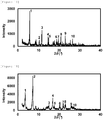
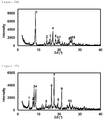
- crystals of the present invention (hereinafter sometimes referred to as "crystal of Example 64 of the present invention", “crystal of Example 65 of the present invention”, “crystal of Example 66 of the present invention", “crystal of Example 67 of the present invention”, “crystal of Example 68 of the present invention", “crystal of Example 69 of the present invention", “crystal of Example 70 of the present invention”, “crystal of Example 71 of the present invention”, “crystal of Example 72 of the present invention”, “crystal of Example 73 of the present invention”, “crystal of Example 74 of the present invention”, “crystal of Example 75 of the present invention”, and “crystal of Example 76 of the present invention", respectively) can be supplied stably as a crystal of a drug substance used in the production of a medicament, and have excellent hygroscopicity or stability. The differences in these crystalline forms are distinguished, in particular, by powder X-ray diffraction.
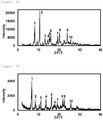
- the crystal of Example 64 of the present invention has peaks at diffraction angles (2 ⁇ ) of 5.78 ⁇ 0.2, 15.48 ⁇ 0.2, 16.38 ⁇ 0.2, 17.24 ⁇ 0.2, 19.28 ⁇ 0.2, 19.90 ⁇ 0.2, 20.42 ⁇ 0.2, 20.82 ⁇ 0.2, 22.04 ⁇ 0.2, and 24.50 ⁇ 0.2 in powder X-ray diffraction with CuK ⁇ radiation.
- the crystal of Example 64 of the present invention can take the form of, for example, a 0.1, 0.2, 0.3, 0.4, 0.5, 0.6, 0.7, 0.8, 0.9, or 1.0 hydrate.
- the crystal of Example 64 is in the form of a 0.2 hydrate.
- Example 65 of the present invention has peaks at diffraction angles (2 ⁇ ) of 4.26 ⁇ 0.2, 8.66 ⁇ 0.2, 13.64 ⁇ 0.2, 14.34 ⁇ 0.2, 14.98 ⁇ 0.2, 17.60 ⁇ 0.2, 19.08 ⁇ 0.2, 22.10 ⁇ 0.2, 23.02 ⁇ 0.2 and 25.88 ⁇ 0.2 in powder X-ray diffraction with CuK ⁇ radiation.
- the crystal of Example 65 of the present invention can take the form of, for example, a 0.5, 0.6, 0.7, 0.8, 0.9, 1.0, 1.1, 1.2, 1.3, 1.4, or 1.5 hydrate.
- the crystal of Example 65 is in the form of a 1.0 hydrate.
- Example 66 of the present invention has peaks at diffraction angles (2 ⁇ ) of 8.08 ⁇ 0.2, 10.32 ⁇ 0.2, 12.90 ⁇ 0.2, 13.48 ⁇ 0.2, 13.82 ⁇ 0.2, 15.44 ⁇ 0.2, 19.76 ⁇ 0.2, 23.60 ⁇ 0.2, 24.24 ⁇ 0.2 and 25.90 ⁇ 0.2 in powder X-ray diffraction with CuK ⁇ radiation.
- the crystal of Example 66 of the present invention can take the form of, for example, a 1.0, 1.1, 1.2, 1.3, 1.4, 1.5, 1.6, 1.7, 1.8, 1.9, or 2.0 hydrate.
- the crystal of Example 66 is in the form of a 1.5 hydrate.
- the crystal of Example 67 of the present invention has peaks at diffraction angles (2 ⁇ ) of 8.14 ⁇ 0.2, 10.56 ⁇ 0.2, 13.10 ⁇ 0.2, 15.16 ⁇ 0.2, 15.50 ⁇ 0.2, 15.92 ⁇ 0.2, 19.30 ⁇ 0.2, 20.18 ⁇ 0.2, 23.92 ⁇ 0.2, and 25.54 ⁇ 0.2 in powder X-ray diffraction with CuK ⁇ radiation.
- the crystal of Example 67 of the present invention can take the form of, for example, a 0.5, 0.6, 0.7, 0.8, 0.9, 1.0, 1.1, 1.2, 1.3, 1.4, or 1.5 hydrate.
- the crystal of Example 67 is in the form of a 1.0 hydrate.
- Example 68 of the present invention has peaks at diffraction angles (2 ⁇ ) of 6.72 ⁇ 0.2, 8.38 ⁇ 0.2, 11.10 ⁇ 0.2, 13.62 ⁇ 0.2, 16.28 ⁇ 0.2, 17.92 ⁇ 0.2, 19.02 ⁇ 0.2, 21.66 ⁇ 0.2, 22.40 ⁇ 0.2 and 25.64 ⁇ 0.2 in powder X-ray diffraction with CuK ⁇ radiation.
- the crystal of Example 68 of the present invention can take the form of, for example, a 2.5, 2.6, 2.7, 2.8, 2.9, 3.0, 3.1, 3.2, 3.3, 3.4, or 3.5 hydrate.
- the crystal of Example 68 is in the form of a 3.0 hydrate.
- the crystal of Example 68 of the present invention can take the form of, for example, mono-, di-, or trimethanesulfonate.
- the crystal of Example 68 is in the form of a monomethanesulfonate.
- Example 69 of the present invention has peaks at diffraction angles (2 ⁇ ) of 5.74 ⁇ 0.2, 10.32 ⁇ 0.2, 11.58 ⁇ 0.2, 14.62 ⁇ 0.2, 14.94 ⁇ 0.2, 18.72 ⁇ 0.2, 19.60 ⁇ 0.2, 20.84 ⁇ 0.2, 22.96 ⁇ 0.2 and 26.42 ⁇ 0.2 in powder X-ray diffraction with CuK ⁇ radiation.
- the crystal of Example 69 of the present invention can take the form of, for example, a 0.1, 0.2, 0.3, 0.4, 0.5, 0.6, 0.7, 0.8, 0.9, or 1.0 hydrate.
- the crystal of Example 69 is in the form of a 0.2 hydrate.
- the crystal of Example 69 of the present invention can take the form of, for example, 1/2- or mono-1,5-naphthalenedisulfonate.
- the crystal of Example 69 is in the form of a 1/2 1,5-naphthalenedisulfonate.
- Example 70 of the present invention has peaks at diffraction angles (2 ⁇ ) of 3.56 ⁇ 0.2, 7.24 ⁇ 0.2, 15.02 ⁇ 0.2, 16.84 ⁇ 0.2, 17.68 ⁇ 0.2, 20.26 ⁇ 0.2, 21.88 ⁇ 0.2, 22.92 ⁇ 0.2, 25.76 ⁇ 0.2 and 27.08 ⁇ 0.2 in powder X-ray diffraction with CuK ⁇ radiation.
- the crystal of Example 70 of the present invention can take the form of, for example, a 0.5, 0.6, 0.7, 0.8, 0.9, 1.0, 1.1, 1.2, 1.3, 1.4, or 1.5 hydrate.
- the crystal of Example 70 is in the form of a 1.0 hydrate.
- the crystal of Example 70 of the present crystal can take the form of, for example, mono-, di-, or trimethanesulfonate.
- the crystal of Example 70 is in the form of a monomethanesulfonate.
- Example 71 of the present invention has peaks at diffraction angles (2 ⁇ ) of 6.22 ⁇ 0.2, 12.16 ⁇ 0.2, 13.60 ⁇ 0.2, 16.26 ⁇ 0.2, 18.50 ⁇ 0.2, 19.58 ⁇ 0.2, 20.58 ⁇ 0.2, 21.06 ⁇ 0.2, 23.30 ⁇ 0.2, and 25.76 ⁇ 0.2 in powder X-ray diffraction with CuK ⁇ radiation.
- the crystal of Example 71 of the present invention can take the form of, for example, a 1.0, 1.1, 1.2, 1.3, 1.4, 1.5, 1.6, 1.7, 1.8, 1.9, or 2.0 hydrate.
- the crystal of Example 71 is in the form of a 1.4 hydrate.
- the crystal of Example 71 of the present invention can take the form of, for example, mono-, di-, tri-, or tetra-benzenesulfonates.
- the crystal of Example 71 is in the form of a monobenzenesulfonate.
- the crystal of Example 72 of the present invention has peaks at diffraction angles (2 ⁇ ) of 3.58 ⁇ 0.2, 14.50 ⁇ 0.2, 16.50 ⁇ 0.2, 24.28 ⁇ 0.2, 24.70 ⁇ 0.2, 24.98 ⁇ 0.2, 25.76 ⁇ 0.2, 26.12 ⁇ 0.2, 26.60 ⁇ 0.2 and 27.40 ⁇ 0.2 in powder X-ray diffraction with CuK ⁇ radiation.
- the crystal of Example 72 of the present invention can take the form of, for example, a 3.5, 3.6, 3.7, 3.8, 3.9, 4.0, 4.1, 4.2, 4.3, 4.4, or 4.5 hydrate.
- the crystal of Example 72 is in the form of a 3.8 hydrate.
- the crystal of Example 72 of the present invention can take the form of, for example, 1/2-, mono-, 3/2-, or di-tartrates.
- the crystal of Example 72 is in the form of a monotartrate.
- Example 73 of the present invention has peaks at diffraction angles (2 ⁇ ) of 7.36 ⁇ 0.2, 8.74 ⁇ 0.2, 13.62 ⁇ 0.2, 15.32 ⁇ 0.2, 16.32 ⁇ 0.2, 17.56 ⁇ 0.2, 19.02 ⁇ 0.2, 19.44 ⁇ 0.2, 21.28 ⁇ 0.2, and 25.02 ⁇ 0.2 in powder X-ray diffraction with CuK ⁇ radiation.
- the crystal of Example 73 of the present invention can take the form of, for example, a 1.0, 1.1, 1.2, 1.3, 1.4, 1.5, 1.6, 1.7, 1.8, 1.9, or 2.0 hydrate.
- the crystal of Example 73 is in the form of a 1.2 hydrate.
- the crystal of Example 73 of the present invention can take the form of, for example, 1/2-, mono-, 3/2-, or di-citrate.
- the crystal of Example 73 is in the form of a monocitrate.
- Example 74 of the present invention has peaks at diffraction angles (2 ⁇ ) of 5.28 ⁇ 0.2, 5.98 ⁇ 0.2, 7.70 ⁇ 0.2, 8.28 ⁇ 0.2, 10.64 ⁇ 0.2, 12.60 ⁇ 0.2, 13.48 ⁇ 0.2, 16.68 ⁇ 0.2, 17.66 ⁇ 0.2, and 20.80 ⁇ 0.2 in powder X-ray diffraction with CuK ⁇ radiation.
- the crystal of Example 74 of the present invention can take the form of, for example, a 3.5, 3.6, 3.7, 3.8, 3.9, 4.0, 4.1, 4.2, 4.3, 4.4, or 4.5 hydrate.
- the crystal of Example 74 is in the form of a 4.0 hydrate.
- the crystal of Example 74 of the present invention can take the form of, for example, mono-, di-, tri-, or tetra-hydrochloride.
- the crystal of Example 74 is in the form of a monohydrochloride.
- Example 75 of the present invention has peaks at diffraction angles (2 ⁇ ) of 8.50 ⁇ 0.2, 13.98 ⁇ 0.2, 15.56 ⁇ 0.2, 16.94 ⁇ 0.2, 18.28 ⁇ 0.2, 19.52 ⁇ 0.2, 20.04 ⁇ 0.2, 25.16 ⁇ 0.2, 25.44 ⁇ 0.2, and 26.10 ⁇ 0.2 in powder X-ray diffraction with CuK ⁇ radiation.
- the crystal of Example 75 of the present invention can take the form of, for example, a 1.5, 1.6, 1.7, 1.8, 1.9, 2.0, 2.1, 2.2, 2.3, 2.4, or 2.5 hydrate.
- the crystal of Example 75 is in the form of a 2.0 hydrate.
- the crystal of Example 75 of the present invention can take the form of, for example, 1/2-, mono-, 3/2-, or di-1,5-naphthalenedisulfonate.
- the crystal of Example 75 is in the form of a 1/2 1,5-naphthalenedisulfonate.
- Example 76 of the present invention has peaks at diffraction angles (2 ⁇ ) of 5.34 ⁇ 0.2, 7.32 ⁇ 0.2, 7.86 ⁇ 0.2, 8.68 ⁇ 0.2, 13.56 ⁇ 0.2, 16.26 ⁇ 0.2, 17.50 ⁇ 0.2, 19.36 ⁇ 0.2, 21.22 ⁇ 0.2, and 24.90 ⁇ 0.2 in powder X-ray diffraction with CuK ⁇ radiation.
- the crystal of Example 76 of the present invention can take the form of, for example, a 1.5, 1.6, 1.7, 1.8, 1.9, 2.0, 2.1, 2.2, 2.3, 2.4, or 2.5 hydrate.
- the crystal of Example 76 is in the form of a 2.0 hydrate.
- the crystal of Example 76 of the present invention can take the form of, for example, 1/2-, mono-, 3/2-, or di-citrate.
- the crystal of Example 76 is in the form of a monocitrate.
- tumor is not limited to a malignant tumor, and includes all types of tumors such as carcinoma, sarcoma, and a benign tumor.
- a malignant tumor is sometimes referred to as "cancer”.
- treat and derivative terms thereof mean remission, amelioration and/or a delay in worsening of a clinical symptom of cancer in a patient developing the cancer.
- EGFR is a tyrosine kinase-type receptor that performs signaling by recognizing factors involved in cell proliferation. EGFR is present on the cell membrane, and when this receptor is activated, cell differentiation and proliferation occur. EGFR can be seen in many cells, and excessive expression and gene mutation of EGFR can lead to cancer, infiltration and metastasis. In various cancers including non-small cell lung cancer and colon cancer, EGFR is overexpressed or genetically mutated in the cancer cells, and proliferation of the cancer cells is active. Furthermore, it is known that cells that are overexpressed or genetically mutated exhibit higher metastaticity than cells that are not. Inhibition of phosphorylation of EGFR tyrosine kinases can block the signaling necessary for proliferation of cancer cells, thereby suppressing proliferation of cancer cells.
- activation mutations such as mutations in which leucine 858 of the coding protein in the EGFR protein is substituted by arginine (L858R), deletion mutations in exon 19 (exon19del), mutations in which glycine 719 of the coding protein is substituted by another amino acid (G719X), mutations in which leucine 861 of the coding protein is substituted by glutamine (L861Q), can be seen in non-small cell lung cancer and the like.
- the exon 20 insertion mutation in an EGFR gene is a mutation that occurs by insertion of a base into an exon 20 region of the EGFR gene.
- EGFR proteins in which 1 amino acid residue to 4 amino acid residues are inserted are generated.
- Insertion mutations of 3 amino acid residues are frequently found, and for example, V769_D770ins.ASV in which ASV is inserted between valine 769 and aspartic acid 770 of the coding protein, D770_N771ins.SVD in which SVD is inserted between aspartic acid 770 and aspartic acid 771, and H773_V774ins.NPH in which NPH is inserted between histidine 773 and valine 774 of the coding protein and the like are known.
- HER2 is one of the representative growth factor receptor-type oncogene products identified as a human epithelial cell growth factor receptor-type 2 associated oncogene, and is a transmembrane receptor protein having a tyrosine kinase domain with a molecular weight of 185 kDa.
- HER2 is one of the EGFR family members consisting of HER1 (EGFR, ErbB-1), HER2 (neu, ErbB-2), HER3 (ErbB-3), and HER4 (ErbB-4).
- HER2 intracellular tyrosine residues in HER2 are autophosphorylated by formation of a homodimer or heterodimer with HER1, HER3, or HER4, which are other EGFR to be activated, thereby HER2 plays an important role in cell proliferation, differentiation, and survival in normal cells and tumor cells.
- the exon 20 insertion mutation in a HER2 gene is a mutation that occurs by insertion of a base into an exon 20 region of the HER2 gene.
- HER2 proteins in which 1 amino acid residue to 4 amino acid residues are inserted are generated. Insertion mutations of 4 amino acid residues are frequently found. Examples thereof include A775_G776 ins.
- YVMA in which YVMA is inserted between alanine 775 and glycine 776
- E770_A771 ins.AYVM in which AYVM is inserted between glutamic acid 770 and alanine 771
- A771_Y772 ins.YVMA in which YVMA is inserted between alanine 771 and tyrosine 772
- Y772_A775dup in which residues from tyrosine 772 to alanine 775 are duplicated.
- the inhibitory effect on an EGFR tyrosine kinase and/or a HER2 tyrosine kinase in the present invention can be measured by a method for measuring the kinase inhibitory activity ordinarily used by a person skilled in the art.
- the cell proliferation inhibitory activity of the compound represented by Formula (I) or a pharmaceutically acceptable salt thereof of the present invention can be examined using a cell proliferation inhibition test method ordinarily used by a person skilled in the art.
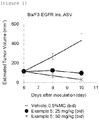
- the cell proliferation inhibitory activity can be measured by the method of Test Example 1.
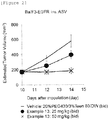
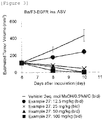
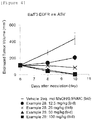
- the antitumor activity in vivo can be examined using an antitumor test method ordinarily used by a person skilled in the art.
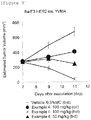
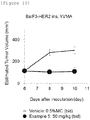
- the antitumor activity can be measured by the method of Test Example 2.
- the compound represented by Formula (I) or a pharmaceutically acceptable salt thereof of the present invention can be used for treating a tumor.
- the compound represented by Formula (I) or a pharmaceutically acceptable salt thereof can be used for treating lung cancer, breast cancer, bladder cancer, ovarian cancer or the like.
- the compound represented by Formula (I) or a pharmaceutically acceptable salt thereof can be used for treating a tumor having exon 20 insertion mutations in an EGFR gene and/or a HER2 gene.
- the presence of a mutation in the EGFR gene and/or the HER2 gene can be confirmed, for example, by examining the base sequence of genomic DNA.
- the compound represented by Formula (I) or a pharmaceutically acceptable salt thereof of the present invention may be used in combination with another antitumor agent.
- another antitumor agent include an alkylating agent, an antimetabolite, an antitumor antibiotic, an antineoplastic plant component, a biological response modifier (BRM), a hormone, a vitamin, an antineoplastic antibody, a molecular targeting agent, and other antitumor agents.
- alkylating agent examples include alkylating agents such as nitrogen mustard, nitrogen mustard-N-oxide, or chlorambutil; aziridine-based alkylating agents such as carbocone or thiotepa; epoxide-based alkylating agents such as dibromomannitol or dibromodulcitol; nitrosourea-based alkylating agents such as carmustine, lomustine, semustine, nimustine hydrochloride, streptozocin, chlorzotocin, and ranimustine; busulfan; improsulfan tosylate; and dacarbazine.
- alkylating agents such as nitrogen mustard, nitrogen mustard-N-oxide, or chlorambutil
- aziridine-based alkylating agents such as carbocone or thiotepa
- epoxide-based alkylating agents such as dibromomannitol or dibromodulcitol
- antimetabolite examples include purine antimetabolites such as 6-mercaptopurine, 6-thioguanine, or thioinosine; pyrimidine antimetabolites such as fluorouracil, tegafur, tegafur uracil, carmofur, doxifluridine, broxuridine, cytarabine, or enocitabine; and folate antimetabolites such as methotrexate or trimetrexate.
- purine antimetabolites such as 6-mercaptopurine, 6-thioguanine, or thioinosine
- pyrimidine antimetabolites such as fluorouracil, tegafur, tegafur uracil, carmofur, doxifluridine, broxuridine, cytarabine, or enocitabine
- folate antimetabolites such as methotrexate or trimetrexate.
- antitumor antibiotic examples include anthracycline-based antibiotic antitumor agents such as mitomycin C, bleomycin, peplomycin, daunorubicin, aclarubicin, doxorubicin, pirarubicin, THP-adriamycin, 4'-epidoxorubicin and epirubicin; chromomycin A3; and actinomycin D.
- anthracycline-based antibiotic antitumor agents such as mitomycin C, bleomycin, peplomycin, daunorubicin, aclarubicin, doxorubicin, pirarubicin, THP-adriamycin, 4'-epidoxorubicin and epirubicin
- chromomycin A3 examples of the antitumor antibiotic
- antineoplastic plant component examples include vinca alkaloids such as vindesine, vincristine or vinblastine; taxanes such as paclitaxel and docetaxel; and epipodophyllotoxins such as etoposide and teniposide.
- Examples of the BRM include tumor necrosis factors and indomethacin.
- hormones examples include hydrocortisone, dexamethasone, methylprednisolone, prednisolone, prasterone, betamethasone, triamcinolone, oxymetholone, nandrolone, methenolone, fosfestrol, ethinyl estradiol, chlormadinone, and medroxyprogesterone.
- vitamin C examples include vitamin C and vitamin A.
- antineoplastic antibody and the molecular targeting agent examples include trastuzumab, rituximab, cetuximab, nimotuzumab, denosumab, bevacizumab, infliximab, imatinib, gefitinib, erlotinib, sunitinib, lapatinib, sorafenib, dasatinib, nilotinib, vemurafenib, and osimertinib.
- antitumor agents examples include cisplatin, carboplatin, oxaliplatin, tamoxifen, camptothecin, ifosfamide, cyclophosphamide, melphalan, L-asparaginase, aceclatone, schizophyllan, picibanil, procarbazine, pipobroman, neocarzinostatin, hydroxyurea, ubenimex, and krestin.
- the compound represented by Formula (I) or a pharmaceutically acceptable salt thereof of the present invention can be administered in various forms.
- administration forms include oral administration with tablets, capsules, granules, emulsions, pills, powders, syrups (liquids) or the like, or parenteral administration with injectables (intravenous, intramuscular, subcutaneous, or intraperitoneal administration), infusions, suppositories (rectal administration) or the like.
- auxiliary agents that are ordinarily used in the technical field of formulation of medicaments, such as an excipient, a binder, a disintegrant, a lubricant, a flavor modifier, a dissolution aid, a suspending agent, and a coating agent.
- examples of the usable carrier include excipients such as lactose, white sugar, sodium chloride, glucose, urea, starch, calcium carbonate, kaolin, crystalline cellulose, and silicic acid; binders such as water, ethanol, propanol, simple syrup, liquid glucose, liquid starch, gelatin solution, carboxymethylcellulose, shellac, methylcellulose, potassium phosphate, and polyvinylpyrrolidone; disintegrating agents such as dry starch, sodium alginate, agar powder, laminaran powder, sodium hydrogen carbonate, calcium carbonate, polyoxyethylene sorbitan fatty acid ester, sodium lauryl sulfate, stearic acid monoglyceride, starch, and lactose; disintegration inhibiting agents such as white sugar, stearin, cocoa butter, and hydrogenated oil; absorption promoting agents such as quaternary ammonium salts and sodium lauryl sulfate; moisturizing agents such as glycer
- examples of the usable carrier include excipients such as glucose, lactose, cocoa butter, starch, hardened vegetable oil, kaolin, and talc; binders such as gum arabic powder, tragacanth powder, gelatin, and ethanol; and disintegrants such as laminaran and agar.
- materials that are conventionally known in the art as carriers can be widely used, and examples thereof include polyethylene glycol, cocoa butter, higher alcohols, esters of higher alcohols, gelatin, and semi-synthetic glycerides.
- liquid, emulsion or suspension agent When used as injections, use as a liquid, emulsion or suspension agent may be possible. It is preferred that such a liquid, emulsion or suspension agent is sterilized, and isotonic with blood.
- the solvent used in the production of the liquid, emulsion or suspension agent is not particularly limited as long as it can be used as a medical diluent, and examples thereof include water, ethanol, propylene glycol, ethoxylated isostearyl alcohol, polyoxylated isostearyl alcohol, and polyoxyethylene sorbitan fatty acid esters.
- the formulation may contain a sufficient amount of salt, glucose or glycerin to prepare an isotonic solution, and may contain a normal dissolution aid, a buffer, a soothing agent, or the like.
- the above formulations can also contain colorants, preservatives, fragrances, flavors, sweeteners, and the like, as needed, as well as other pharmaceuticals.
- the amount of the compound contained in the formulation is not particularly limited and is suitably selected in a wide range, but the compound is usually contained at 0.5 to 70% by weight, preferably 1 to 30% by weight, of the total composition.
- the amount used varies depending on the symptoms, age, or the like of the patient (warm-blooded animal, especially human), and in the case of oral administration, it is preferred that a dose with 2000 mg (preferably 100 mg) as the upper limit and 0.1 mg (preferably 1 mg, even more preferably 10 mg) as the lower limit is administered once to six times per day to a human adult depending on the symptoms.
- the compound of the present invention can be produced by various production methods.
- the following production methods are examples and the present invention is not to be construed as limited thereto.
- the compound represented by Formula (I) or a pharmaceutically acceptable salt thereof of the present invention can be produced by applying a variety of known production methods according to a characteristic based on the basic backbone or the type of the substituent of the compound. Examples of known methods include those described in " ORGANIC FUNCTIONAL GROUP PREPARATIONS", 2nd edition, ACADEMIC PRESS, INC., 1989 , “ Comprehensive Organic Transformations", VCH Publishers Inc., 1989 and the like.
- the compound may be effective in terms of production technique to protect the functional group with an appropriate protecting group at the stage of the raw materials or intermediates, or to substitute the functional group with a group capable of being easily converted to the functional group.
- Examples of such functional groups include an amino group, a hydroxy group, a carboxy group, and the like, and examples of their protecting groups include the protecting groups described in T.W. Greene and P.G. Wuts, "Greene's Protective Groups in Organic Synthesis (4th Edition, John Wiley & Sons, Inc., 2006 )."
- the protecting group or the group capable of being easily converted to the functional group may be appropriately selected depending on each reaction condition of the production methods for producing the compounds.
- the desired compound can be obtained by introducing the corresponding group and carrying out the reaction, and then removing the protecting group from the corresponding group or converting the corresponding group to a desired group as necessary.
- a prodrug of the compound can also be produced by introducing a specific group at the stage of the raw materials or intermediates, or carrying out a reaction using the resulting compound, in the same manner as the protecting group described above.
- the reaction for producing the prodrug can be performed by applying methods known to a person skilled in the art, such as normal esterification, amidation, dehydration, hydrogenation, or the like.
- Compound (a15), the compound represented by Formula (I) wherein R 2 is Formula (II), can be produced by the method shown below. Each step need not necessarily be performed in the order shown below as long as it does not affect the reaction substrates and the reaction products.
- R 1 is the same as defined in (1) described above;
- Pg in Method A represents a protecting group for a nitrogen atom, for example, a tert-butoxycarbonyl group;
- Lg in Method A represents a leaving group, for example, a halogen atom;
- R a1 represents a C 1 -C 6 alkyl group;
- R a2 represents Lg or a hydroxy group;
- R a3 represents a substituent that can be used in a condensation reaction to a nitrogen atom, for example, a halogen atom or a hydroxy group.
- Step A-1 is a step of obtaining Compound a3 from Compound a1 and Compound a2 by a nucleophilic substitution reaction.
- the nucleophilic substitution reaction in this step can be carried out, for example, by reacting with a base such as sodium hydride in a solvent such as N,N-dimethyldimethylformamide.
- Step A-2 is a step of obtaining Compound a4 by protecting the carboxy group of Compound a3 with an ester.
- the esterification in this step can be carried out, for example, by reacting with an alkylating agent such as methyl iodide in the presence of a base such as potassium carbonate in a solvent such as N,N-dimethyldimethylformamide.
- Step A-3 is a step of obtaining Compound a5 by converting the fluorine atom of Compound a4 to a hydroxy group.
- This step can be carried out, for example, by reacting with N-hydroxyacetamide in the presence of a base such as potassium carbonate in a solvent such as dimethylsulfoxide, and heating.
- Step A-4 is a step of obtaining Compound a7 from Compound a5 by alkylating the hydroxy group.
- This step can be carried out, for example, by reacting with an alkylating agent a6 such as methyl iodide in the presence of a base such as potassium carbonate or sodium hydride in a solvent such as N,N-dimethyldimethylformamide.
- an alkylating agent a6 such as methyl iodide
- a base such as potassium carbonate or sodium hydride
- a solvent such as N,N-dimethyldimethylformamide.
- This step can also be carried out by a Mitsunobu reaction in which alcohol a6 is reacted in the coexistence of a phosphine such as triphenylphosphine and an azodicarboxylic acid ester such as bis(2-methoxyethyl) azodicarboxylate in a solvent such as tetrahydrofuran.
- a phosphine such as triphenylphosphine
- an azodicarboxylic acid ester such as bis(2-methoxyethyl) azodicarboxylate
- Compound a7 can also be obtained by first introducing a substituent having a leaving group into the hydroxy group, and then performing a substitution reaction again.
- Step A-5 is a step of converting Compound a7 to Compound a8.
- the reducing reaction in this step can be carried out, for example, by contact-hydrogen reduction with a noble metal catalyst such as palladium carbon in a solvent such as ethanol or by Bechamp reduction with a metal such as zinc in the presence of an acid such as acetic acid in a solvent such as methanol.
- Step A-6 is a step of producing Compound a9 by a cyclization reaction of Compound a8.
- the cyclization reaction in this step can be carried out, for example, by reacting with a compound such as formamidine acetate in a solvent such as 2-methoxyethanol, and heating.
- Step A-7 is a step of introducing a leaving group into Compound a9 to convert to Compound a10.
- the introduction of the leaving group in this step can be carried out, for example, by reacting with a halogenating agent such as thionyl chloride in a solvent such as N,N-dimethylformamide, and heating.
- Step A-8 is a step of obtaining Compound a11 by deprotecting the amino group of Compound a10.
- the deprotecting reaction in this step can employ a method ordinarily used to deprotect an amino group.
- any method can be used as long as the method is a deprotection method appropriate for the protecting group used, and does not affect the reaction substrates and the reaction products.
- Step A-9 is a step of obtaining Compound a13 by acylating an amino group of Compound a11.
- the acylation reaction in this step can be carried out by the use of an acylating agent such as an acid chloride or acid anhydride, or a condensation with a carboxylic acid component using a condensing agent, and any method can be used as long as the solvent and the reaction conditions of such method are appropriate for the reaction conditions of this acylation reaction.
- Step A-10 is a step of obtaining Compound a15 by introducing Compound a14 into Compound a13.
- any method can be used as long as the solvent and the reaction conditions are appropriate for the reaction substrate.
- this step can be carried out by using Compound a14 or a synthetic intermediate capable of being converted to Compound a14 as a substrate in the coexistence of an acid such as hydrochloric acid or trifluoroacetic acid.
- This step can also be carried out in the presence of a base such as potassium carbonate or cesium carbonate.
- the step can be carried out, for example, in a solvent such as 2-propanol or dimethylsulfoxide.
- Step A-11 is a step of obtaining Compound a16 by introducing Compound a14 into Compound a9.
- the nucleophilic substitution reaction in this step can be carried out using Compound a14 or a synthetic intermediate capable of being converted to Compound a14 as a substrate, for example, by reacting with a phosphonium-based condensing agent such as 1H-benzotriazol-1-yloxy-tris(dimethylamino)phosphonium hexafluorophosphate in the coexistence of a base such as 1,8-diazabicyclo[5,4,0]-7-undecene in a solvent such as acetonitrile.
- a phosphonium-based condensing agent such as 1H-benzotriazol-1-yloxy-tris(dimethylamino)phosphonium hexafluorophosphate
- Step A-10 or A-11 when a synthetic intermediate capable of being converted to Compound a14 is used as a substrate, the conversion to Compound a15 can be achieved by using the method for producing the compound represented by Formula (III) described below at any synthetic stage that does not affect the reaction substrates and the reaction products.
- R 1 , R 3 , R 4 , R 5 , R 6 , and X are the same as defined in (1) described above.
- Lg in Method B represents a leaving group, for example, a halogen atom.
- R b1 represents a substituent that can be used in a condensation reaction with a nitrogen atom, for example, a halogen atom or a hydroxy group.
- R b2 represents X, Lg, or a functional group that can be converted to Lg, for example, a halogen atom or a hydroxy group].
- Step B-1 is a step of obtaining Compound b3 from Compound b1 by a nucleophilic substitution reaction.
- the nucleophilic substitution reaction in this step can be carried out, for example, by reacting with alcohol b2 in the presence of a base such as sodium hydride in a solvent such as N,N-dimethylformamide or tetrahydrofuran, and heating.
- Step B-2 is a step of introducing a leaving group into Compound b3 to convert to Compound b4. This step can be performed under the same conditions as in step A-7.
- Step B-3 is a step of obtaining Compound b6 by introducing Compound b5 into Compound b4 by a nucleophilic substitution reaction. This step can be carried out under the same conditions as in step A-10 using Compound b5 or a synthetic intermediate capable of being converted to Compound b5 as a substrate.
- step B-3 when a synthetic intermediate capable of being converted to Compound b5 is used as a substrate, the conversion to Compound b11 can be achieved by the method of producing the compound represented by Formula (III) described below at any synthetic stage that does not affect the reaction substrates and the reaction products.
- Step B-4 is a step of converting Compound b6 to Compound b7. This step can be carried out under the same conditions as in Step A-5.
- Step B-5 is a step of obtaining Compound b11 directly or a synthetic precursor b9 of Compound b11 by condensing Compound b7 and Compound b8.
- any method can be used as long as the solvent and reaction conditions are appropriate for the reaction substrates.
- an acylation with an acylating agent such as an acid chloride, acid anhydride or the like, or a condensation reaction with a carboxylic acid using a condensing agent can be used.
- Step B-6 is a step of obtaining Compound b11 by carrying out a substitution reaction on Compound b9.
- the substitution reaction in this step can be carried out, for example, by reacting with a desired amine b10 in the presence of a base such as N,N-diisopropylethylamine in a solvent such as N,N-dimethylformamide.
- a general production method for each reaction site is shown in order, but each step need not necessarily be performed in the order shown below, as long as it does not affect the reaction substrates and the reaction products.
- the steps below can be carried out in any order as long as they do not affect the reaction substrates and the reaction products.
- the biaryl ether moiety can be produced by Method C.
- R c1 represents an amino group or a substituent capable of being converted to an amino group, for example, an amino group substituted by a protecting group, a nitro group, an ester group, or a carboxy group.
- R c2 represents R 4 or a substituent capable of being converted to R 4 , for example, a hydrogen atom or a halogen atom.
- R c3 represents -R 5- R 6 or a substituent capable of being converted to -R 5 -R 6 , for example, a substituted phenyl group, a substituted pyrazolyl group, or a substituted thiazolyl group.
- R c4 represents a halogen atom.
- R 4 , R 5 , and R 6 are the same as defined in (1) described above.
- Step C-1 is a step of obtaining Compound c3 from Compound c1 and Compound c2, or a step of obtaining Compound c3 from Compound c4 and Compound c5.
- the nucleophilic substitution reaction in this step can be carried out, for example, by reacting with a base such as cesium carbonate, potassium carbonate, or N,N-diisopropylethylamine in a solvent such as dimethylsulfoxide, N,N-dimethylformamide or tetrahydrofuran at a reaction temperature depending on the substrate.
- a base such as cesium carbonate, potassium carbonate, or N,N-diisopropylethylamine
- a solvent such as dimethylsulfoxide, N,N-dimethylformamide or tetrahydrofuran
- Step C-2 is a step of obtaining Compound c3 by Ullmann type coupling of Compound c4 and Compound c5.
- the coupling reaction in this step can be carried out, for example, by reacting with a catalyst such as copper(I) iodide in the coexistence of a ligand such as trans-N,N'-dimethylcyclohexane-1,2-diamine or N,N-dimethylglycine using a base such as cesium carbonate or potassium carbonate in a solvent such as butyronitrile or 1,4-dioxane, and heating.
- a catalyst such as copper(I) iodide
- a base such as cesium carbonate or potassium carbonate
- solvent such as butyronitrile or 1,4-dioxane
- R 6 is -CO-N(Y)(Z) or -CH 2 -CO-N(Y) (Z)
- the R 6 moiety can be produced by Method D.
- Lg in Method D represents a leaving group such as a methanesulfonyloxy group.
- R d1 represents a group represented by Formula (IV): [wherein R 3 , R 4 , and R 5 are the same as defined in (1) described above]. or a substituent capable of being converted to a group represented by Formula (IV).
- R d2 represents a protecting group for a carboxy group, such as an ethyl group or a tert-butyl group.
- R d3 and R d4 represent Y, Z, a substituent capable of being converted to Y, or a substituent capable of being converted to Z.
- Y and Z are the same as defined in (1) described above.]
- Step D-1 is a step of converting Compound d1 to Compound d2.
- This step can be carried out, for example, when R d2 is an ethyl group or the like, by reacting with a base such as aqueous sodium hydroxide solution in a solvent such as tetrahydrofuran.
- This step can be carried out, when R d2 is a tert-butyl group, by reacting with an acid such as trifluoroacetic acid in a solvent such as dichloromethane.
- Step D-2 is a step of obtaining Compound d4 by condensing Compound d2 and Compound d3.
- the amidation in this step can be carried out, for example, by reacting with a condensing agent such as 1-[bis(dimethylamino)methylene]-1H-1,2,3-triazolo[4,5-b]pyridinium 3-oxide hexafluorophosphate in the coexistence of a base such as N,N-diisopropylethylamine in a solvent such as N,N-dimethylformamide.
- a condensing agent such as 1-[bis(dimethylamino)methylene]-1H-1,2,3-triazolo[4,5-b]pyridinium 3-oxide hexafluorophosphate
- Step D-3 is a step of obtaining Compound d5 by reducing Compound d1.
- the reducing reaction in this step can be carried out, for example, by reacting with a reducing agent such as diisobutylaluminium hydride in a solvent such as dichloromethane.
- Step D-4 is a step of obtaining Compound d6 by converting a hydroxy group of Compound d5 to a leaving group.
- the leaving group in this step include a methanesulfonyloxy group and a p-toluenesulfonyloxy group, which can be introduced by a ordinarily used method (reagent, solvent, reaction conditions, or the like).
- Step D-5 is a step of obtaining Compound d7 by introducing a cyano group into Compound d6 by a substitution reaction. This step can be carried out, for example, by reacting with sodium cyanide or the like in a solvent such as dimethylsulfoxide, and heating.
- Step D-6 is a step of converting Compound d7 to Compound d8.
- the hydrolysis in this step can be carried out, for example, by reacting with a base such as aqueous sodium hydroxide solution in a solvent such as ethanol, and heating.
- Step D-7 is a step of obtaining Compound d9 by condensing Compound d8 and Compound d3. This step can be carried out under the same conditions as in Step D-2.
- Step D-8 is a step of obtaining Compound d12 by alkylating Compound d10 with Compound d11.
- the alkylation in this step can be carried out, for example, by reacting with an alkylating agent such as tert-butyl chloroacetate in the presence of a base such as potassium carbonate in a solvent such as N,N-dimethylformamide.
- Step D-9 is a step of obtaining Compound d8 from Compound d12. This step can be carried out under the same conditions as in Step D-1.
- Step D-10 is a step of obtaining Compound d9 by alkylating Compound d10 with Compound d13.
- the alkylation in this step can be carried out, for example, by reacting with an alkylating agent such as N-tert-butyl-2-chloroacetamide in the presence of a base such as potassium carbonate in a solvent such as N,N-dimethylformamide.
- R 5 -R 6 moiety can be produced by Method E.
- R e1 represents a group represented by Formula (IV) or a substituent capable of being converted to a group represented by Formula (IV).
- R e2 represents an alkyl group.
- Pg in Method E represents a protecting group for a terminal acetylene, such as a trimethylsilyl group.
- Lg in Method E represents a leaving group, for example, a halogen atom or a trifluoromethanesulfonyloxy group.
- Step E-1 is a step of introducing an alkynyl group into Compound e1 by a Sonogashira reaction.
- the Sonogashira reaction in this step can be carried out, for example, by adding Compound e2 in the coexistence of a palladium catalyst such as bis(triphenylphosphine)palladium(II) and a copper catalyst such as copper(I) iodide in a solvent such as triethylamine, and heating.
- a palladium catalyst such as bis(triphenylphosphine)palladium(II)
- a copper catalyst such as copper(I) iodide
- Step E-2 is a step of obtaining Compound e4 by deprotecting the terminal acetylene.
- the deprotecting reaction in this step can be carried out by a method ordinarily used to deprotect a terminal acetylene.
- the deprotecting reaction can be carried out by reacting with a base such as potassium carbonate in a solvent such as methanol.
- Step E-3 is a step of obtaining Compound e6 by a 1,3-dipolar cycloaddition reaction of Compound e4 and an azide compound.
- the 1,3-dipolar cycloaddition reaction in this step can be carried out, for example, by reacting with an azide source such as sodium azide, Compound e5 (e.g., an alkylating agent such as iodomethane) and a catalyst such as copper(I) iodide in a solvent such as acetonitrile under heating.
- an azide source such as sodium azide
- Compound e5 e.g., an alkylating agent such as iodomethane
- a catalyst such as copper(I) iodide
- R 5 is a 1,3,4-oxadiazole ring or a 1,3,4-thiadiazole ring
- the R 5 -R 6 moiety can be produced by Method F.
- R f1 represents a group represented by Formula (IV) or a substituent capable of being converted to a group represented by Formula (IV) .
- R f2 represents a C 1 -C 6 alkyl group.
- R f3 represents a group described in Group B.
- Q represents an oxygen atom or a sulfur atom.
- Group B is the same as defined in (1) described above.
- Step F-1 is a step of obtaining Compound f2 by reacting Compound f1 with hydrazine. This step can be carried out, for example, by reacting with hydrazine monohydrate in a solvent such as ethanol under heating.
- Step F-2 is a step of obtaining Compound f5 by acylating Compound f2. This step can be carried out, for example, by reacting with Compound f3 or Compound f4 in a solvent such as dichloromethane.
- Step F-3 is a step of obtaining Compound f6 from Compound f1. This step can be carried out under the same conditions as in Step D-1.
- Step F-4 is a step of obtaining Compound f5 by reacting Compound f6 with Compound f7. This step can be carried out under the same conditions as in Step D-2.
- Step F-5 is a step of obtaining Compound f8 from Compound f5 by a Paal-Knorr type cyclization reaction.
- the 1,3,4-oxadiazole ring can be obtained, for example, by reacting with p-toluenesulfonyl chloride in the coexistence of triethylamine in a solvent such as dichloromethane, and heating.
- the 1,3,4-thiadiazole ring can be obtained, for example, by reacting with Lawesson's reagent in a solvent such as toluene, and heating.
- R 6 moiety can be produced by Method G.
- Pg in Method G represents a protecting group for a pyrazole nitrogen atom, such as a tert-butoxycarbonyl group.
- R g1 represents a group represented by Formula (V): [wherein R 3 or R 4 is the same as defined in (1) described above.] or a substituent capable of being converted to a group represented by Formula (V) .
- R g2 and R g3 represent Y, Z, a substituent capable of being converted to Y, or a substituent capable of being converted to Z.
- Y and Z are the same as defined in (1) described above.
- Step G-1 is a step of converting Compound g1 to Compound g2.
- a method ordinarily used can be employed for the protection of the nitrogen atom in this step.
- Step G-2 is a step of obtaining Compound g3 by modifying a hydroxy group of Compound g2. This step can be carried out under the same conditions as in Step C-1.
- Step G-3 is a step of deprotecting the nitrogen atom of Compound g3 to convert to Compound g4.
- a method ordinarily used can be employed for the deprotection of the nitrogen atom in this step.
- Step G-4 is a step of reacting Compound g4 with Compound g5 to convert to Compound g6.
- the carbamoylation in this step can be carried out, for example, by heating in the coexistence of a base such as triethylamine in a solvent such as 1,2-dichloroethane.
- Step G-5 is a step of converting Compound g7 to Compound g5.
- the acid azidation and subsequent Curtius rearrangement reaction in this step can be carried out, for example, by reacting with diphenylphosphoryl azide in the presence of a base such as triethylamine in a solvent such as toluene, and heating.
- Step G-6 is a step of obtaining Compound g8 by reacting Compound g4 with 4-nitrophenyl chloroformate.
- the urethanization in this step can be carried out, for example, in the coexistence of a base such as triethylamine in a solvent such as dichloromethane.
- Step G-7 is a step of reacting Compound g9 with Compound g8 to convert to Compound g6.
- the carbamoylation in this step can be carried out, for example, in the coexistence of a base such as triethylamine in a solvent such as dichloromethane.
- R 5 is Compound h2 below
- the R 5 moiety can be produced by Method H.
- R h1 represents a group represented by Formula (V) or a substituent capable of being converted to a group represented by Formula (V).
- R h2 represents R 6 or a substituent capable of being converted to R 6 .
- R 6 is the same as defined in (1) described above.
- Step H-1 is a step of obtaining Compound h2 by fluorinating at the 4-position of Compound h1.
- the fluorination in this step can be carried out, for example, by reacting with N-fluoro-N'-(chloromethyl)triethylenediamine bis(tetrafluoroborate) in a solvent such as acetonitrile, and heating.
- R 5 is Compound i3 below
- the R 5 -R 6 moiety can be produced by Method I.
- Lg in Method I represents a leaving group such as an iodo group or a bromo group.
- R 11 represents a group represented by Formula (V) or a substituent capable of being converted to a group represented by Formula (V).
- R i2 represents R 6 or a substituent capable of being converted to R 6 .
- R 6 is the same as defined in (1) described above.
- Step I-1 is a step of obtaining Compound i3 by a nucleophilic substitution reaction of Compound i1 and Compound i2.
- the nucleophilic substitution reaction in this step can be carried out, for example, in a solvent such as dimethylsulfoxide in the presence of a base such as cesium carbonate.
- Step 1-2 is a step of obtaining Compound i3 by Ullmann type coupling of Compound i1 and Compound i4.
- the coupling reaction in this step can be carried out, for example, when Lg is a bromo group, by reacting with a metal catalyst such as copper(I) iodide in the coexistence of a base such as potassium carbonate and a ligand such as trans-N,N'-dimethylcyclohexane-1,2-diamine or N,N-dimethylglycine in a solvent such as dimethylsulfoxide or toluene, and heating.
- a metal catalyst such as copper(I) iodide
- a base such as potassium carbonate
- a ligand such as trans-N,N'-dimethylcyclohexane-1,2-diamine or N,N-dimethylglycine
- R 5 is Compound j3 below
- the R 5 -R 6 moiety can be produced by Method J.
- R j1 represents a group represented by Formula (V) or a substituent capable of being converted to a group represented by Formula (V).
- R j2 represents R 6 or a substituent capable of being converted to R 6 .
- R 6 is the same as defined in (1) described above.
- Step J-1 is a step of obtaining Compound j3 from Compound j1 and Compound j2.
- the coupling reaction in this step can be carried out, for example, by heating Compound j1 and Compound j2 in the presence of a base such as cesium carbonate and a metal catalyst such as tetrakis (triphenylphosphine)palladium(0) or [1,1'-bis(diphenylphosphino)ferrocene]palladium(II) dichloride dichloromethane adduct in a solvent such as hydrous 1,2-dimethoxyethane.
- a base such as cesium carbonate
- a metal catalyst such as tetrakis (triphenylphosphine)palladium(0) or [1,1'-bis(diphenylphosphino)ferrocene]palladium(II) dichloride dichloromethane adduct
- a solvent such as hydrous 1,2-dimethoxyethane
- Step J-2 is a step of obtaining Compound j4 from Compound j1.
- the coupling reaction in this step can be carried out by reacting Compound j1, for example, with bis(pinacolato)diboron in the presence of a base such as potassium acetate and a metal catalyst such as [1,1'-bis(diphenylphosphino)ferrocene]palladium(II) dichloride dichloromethane adduct under heating in a solvent such as 1,4-dioxane.
- a base such as potassium acetate
- a metal catalyst such as [1,1'-bis(diphenylphosphino)ferrocene]palladium(II) dichloride dichloromethane adduct under heating in a solvent such as 1,4-dioxane.
- Step J-3 is a step of obtaining Compound j3 from Compound j4 and Compound j5.
- the coupling reaction in this step can be carried out by heating Compound j4 and Compound j5, for example, in the presence of a base such as cesium carbonate and a metal catalyst such as tetrakis(triphenylphosphine)palladium(0) or [1,1'-bis(diphenylphosphino)ferrocene]palladium(II) dichloride dichloromethane adduct in a solvent such as hydrous 1,2-dimethoxyethane.
- a base such as cesium carbonate
- a metal catalyst such as tetrakis(triphenylphosphine)palladium(0) or [1,1'-bis(diphenylphosphino)ferrocene]palladium(II) dichloride dichloromethane adduct
- solvent such as hydrous 1,2-dimethoxyethane.
- the aromatic amine moiety in the compound represented by Formula (III) can be produced by Method K.
- R 3 and R 4 are the same as defined in (1) described above.
- Pg 1 represents a protecting group for a nitrogen atom, such as a tert-butoxycarbonyl group.
- Pg 2 represents a protecting group for a carboxy group, such as a methyl group or tert-butyl group.
- R k1 is a group represented by Formula (VI): [wherein R 5 and R 6 are the same as defined in (1) described above.] or a substituent capable of being converted to a group represented by Formula (VI).]
- Step K-1 is a step of obtaining Compound k2 by deprotecting the amino group of Compound k1.
- the deprotecting reaction in this step can be carried out by a method ordinarily used to deprotect an amino group.
- the reaction can be carried out by reacting with an acid such as trifluoroacetic acid in a solvent such as dichloromethane.
- Step K-2 is a step of obtaining Compound k1 by protecting the amino group of Compound k2.
- the protection of the amino group in this step can be carried out by a method ordinarily used to protect an amino group.
- Pg 1 is a tert-butoxycarbonyl group
- the reaction can be carried out by reacting with di-tert-butyl dicarbonate or the like in a solvent such as tetrahydrofuran.
- Step K-3 is a step of obtaining Compound k2 from Compound k3. This step can be carried out under the same conditions as in Step A-5.
- Step K-4 is a step of obtaining Compound k5 from Compound k4.
- the deprotecting reaction in this step can be carried out by a method ordinarily used to deprotect a carboxy group.
- the reaction can be carried out by reacting with an acid such as trifluoroacetic acid in a solvent such as dichloromethane.
- Step K-5 is a step of obtaining Compound k1 from Compound k5.
- the acid azidation and subsequent carbamation through a Curtius rearrangement reaction in this step can be carried out, for example, when Pg 1 is a tert-butoxycarbonyl group, by reacting Compound k5 with diphenylphosphoryl azide in the presence of a base such as triethylamine in a solvent such as toluene and heating to obtain an isocyanic acid ester, and then reacting with tert-butanol under heating.
- a base such as triethylamine
- solvent such as toluene
- the compounds produced by the above methods can be isolated and purified by known methods, such as extraction, precipitation, distillation, chromatography, fractional recrystallization, and recrystallization.
- the proton nuclear magnetic resonance spectrum ( 1 H-NMR) was measured with a 400 MHz Nuclear Magnetic Resonance Spectrometer manufactured by JEOL Ltd. or a 400 MHz Nuclear Magnetic Resonance Spectrometer manufactured by Varian, Inc. Spectral data are indicated with significant peaks, and shown in chemical shifts (indicated as relative ppm ( ⁇ ) using tetramethylsilane as a standard substance); the number of protons; multiplicity of peak splitting (indicated as s: singlet, d: doublet, t: triplet, q: quartet, m: multiplet, br: broad, and the like); and, when clear specification was possible, the spin coupling constants as J values (in Hz) .
- the mass spectrum was measured by an electro spray ionization (ESI) method or an atmospheric pressure chemical ionization (APCI) method.
- the mass spectrum data are shown with the maximum ionization peak (in most cases corresponding to maximum UV absorption peak) measured after being passed through a reverse phase high-performance liquid chromatography column (Agilent system; column: Develosil Combi-RP-5, 2.0 x 50 mm, Cadenza CD-C18, 3.0 x 75 mm, or ZORBAX SB-C18, 1.8 ⁇ m, 2.1 x 50 mm; solvent: 0.1% formic acid-containing acetonitrile/water system, or 0.01% trifluoroacetic acid-containing acetonitrile/water system).
- Silica gel column chromatography was performed with commercially available pre-packed columns and automated preparatory purification systems (SP1 manufactured by Biotage AB, EPCLC-W-Prep2XY manufactured by Yamazen CORPORATION, Purif- ⁇ 2 manufactured by Shoko Science Co. Ltd. or the like). Only multiple solvents which were used for the mobile phase are described. Elution was performed under observation by thin layer chromatography (TLC). Silica gel 60 F 254 or 60 NH 2 F 254 S manufactured by Merck KGaA, a NH 2 silica gel 60 F 254 plate manufactured by FUJIFILM Wako Pure Chemical Corporation, or CHROMATOREX NH TLC manufactured by Fuji Silysia Chemical Ltd. was employed as the TLC plate. The mobile phase used for the column chromatography was employed as the developing solvent. A UV detector or staining reagent was employed as the detection method.
- PTLC thin layer chromatography
- Preparative high-performance liquid chromatography was performed with a reverse phase column (Develosil Combi-RP-5) manufactured by Nomura Chemical Co., Ltd., and 0.1% formic acid-containing acetonitrile/water system was used for the mobile phase.
- hexane represents n-hexane.
- reaction solution was diluted with saturated aqueous sodium bicarbonate solution and extracted with dichloromethane (x 3). The organic layer was dried over anhydrous sodium sulfate, filtered, and then concentrated under reduced pressure. The residue was azeotropically concentrated with hexane to obtain the title compound (4.63 g, 13.3 mmol, 2-step yield 97.8%).
- reaction solution was diluted with ethyl acetate, washed with saturated saline, and then dried over anhydrous sodium sulfate.
- the insoluble materials were filtered off and then the filtrate was concentrated under reduced pressure to obtain tert-butyl 4-[2-fluoro-5-(methoxycarbonyl)-4-nitrophenoxy]piperidine-1-carboxylate as a crude product.
- the crude product was used in the next step without further purification.
- tert-butyl 4-[4-amino-2-(fluoromethoxy)-5-(methoxycarbonyl)phenoxy]piperidine-1-carboxylate as a crude product.
- the crude product was used in the next step without further purification.
- 2-methoxyethanol 3-methoxyethanol
- the washing solution was washed with water (x 3) and saturated saline, and the organic layer was dried over anhydrous sodium sulfate, then passed through a pad of silica gel, and eluted with ethyl acetate. The eluted solution was concentrated under reduced pressure. To the obtained residue, methanol was added to form a slurry. The solid was collected by filtration and then dried under reduced pressure to obtain the title compound (27.2 g, 88.5 mmol, yield 96.5%).
- the eluted solution was washed with water and saturated saline, and the organic layer was concentrated under reduced pressure.
- the obtained residue was purified by silica gel column chromatography (ethyl acetate/hexane), and the fraction containing the target substance was concentrated under reduced pressure.
- dichloromethane 32 mL
- trifluoroacetic acid 8 mL was added at room temperature, and the mixture was stirred at room temperature for 4 hours.
- the reaction mixture was concentrated under reduced pressure, and the obtained residue was azeotropically concentrated twice by addition of dichloromethane.
- 60 mL of ethyl acetate was added, and the mixture was dissolved while being heated to reflux.
- the residue was diluted with ethyl acetate and washed with 1 mol/L hydrochloric acid (x 2), saturated aqueous sodium bicarbonate solution, and saturated saline.
- the organic layer was dried over anhydrous sodium sulfate, filtered, and then concentrated under reduced pressure.
- the residue was dissolved in methanol (410 mL), then potassium carbonate (1.13 g, 8.13 mmol) was added thereto, and the mixture was stirred at room temperature for 1 hour.
- the reaction solution was concentrated under reduced pressure, and the residue was diluted with ethyl acetate, and washed with water and saturated saline.
- the organic layer was dried over anhydrous sodium sulfate, filtered, and then concentrated under reduced pressure.
- the reaction solution was concentrated under reduced pressure. To the residue, a saturated aqueous ammonium chloride solution was added, and the mixture was extracted with ethyl acetate. The organic layer was washed with saturated saline, dried over anhydrous sodium sulfate, filtered, and then concentrated under reduced pressure. The concentrate was used in the next step as it was. To a solution of the obtained residue (805 mg) in dimethyl sulfoxide (17 mL), potassium cyanide (350 mg, 5.38 mmol) was added, and the mixture was stirred at room temperature for 1.5 hours and at 50°C for 2 hours. The reaction solution was left to cool, and water was added.
- potassium cyanide 350 mg, 5.38 mmol
- the reaction mixture was diluted with ethyl acetate, washed with water and saturated saline, and the organic layer was dried over anhydrous sodium sulfate.
- the solvent was distilled off under reduced pressure, and the obtained residue was diluted with a mixed solvent of ethyl acetate/hexane (1:2), passed through a pad of silica gel, and eluted with the same solvent.
- the eluted solution was concentrated under reduced pressure to obtain the title compound (685 mg, 1.70 mmol, yield 98.5%).
- N-tert-butyl-2-chloroacetamide (246 mg, 1.64 mmol) and potassium carbonate (340 mg, 2.46 mmol) were further added, and the mixture was stirred at 50°C for 1.5 hours.
- N-tert-butyl-2-chloroacetamide (120 mg, 0.802 mmol) and potassium carbonate (170 mg, 1.23 mmol) were added again, and the mixture was stirred at 50°C for 1.5 hours.
- the reaction solution was ice-cooled, diluted with ethyl acetate, and extracted by addition of water, and washed with saturated saline. The organic layer was dried over anhydrous sodium sulfate, filtered, and then the solvent was distilled off under reduced pressure.
- N-tert-butyl-2-[3-(3-chloro-4-nitrophenoxy)-1H-pyrazol-1-yl]acetamide 260 mg, 0.737 mmol
- acetonitrile 15 mL
- N-fluoro-N'-(chloromethyl)triethylenediamine bis(tetrafluoroborate) 784 mg, 2.21 mmol
- the solvent was distilled off under reduced pressure, and then the residue was diluted with ethyl acetate, and washed with water and saturated aqueous sodium bicarbonate solution sequentially.
- reaction solution was diluted with ethyl acetate, and washed with water, saturated aqueous sodium bicarbonate solution, and saturated saline sequentially.
- the organic layer was dried over anhydrous sodium sulfate, filtered, and then concentrated under reduced pressure.
- the residue was purified by silica gel column chromatography (dichloromethane/methanol) to obtain the title compound (33 mg, 0.086 mmol, yield 19%).
- the reaction mixture was diluted with ethyl acetate, passed through a pad of silica gel and a pad of Celite, and eluted with ethyl acetate.
- the eluted solution was concentrated under reduced pressure and the obtained residue was purified by silica gel column chromatography (ethyl acetate/hexane) to obtain the title compound (86.0 mg, 0.197 mmol, yield 32.1%).
- the reaction mixture was diluted by addition of ethyl acetate, filtered with Celite, and eluted with ethyl acetate.
- the eluted solution was concentrated under reduced pressure and the obtained residue was purified by silica gel column chromatography (ethyl acetate/hexane).
- hexane was added to form a slurry. The slurry was left to stand still and then decanted to separate hexane, and the solid was dried under reduced pressure to obtain the title compound (2.47 g, 5.65 mmol, yield 71.0%).
- the reaction mixture was diluted with water, and the organic layer and the aqueous layer were separated. The aqueous layer was then extracted with dichloromethane. The organic layer was dried over anhydrous sodium sulfate, then passed through a pad of amino silica gel, and eluted with dichloromethane. The eluted solution was concentrated under reduced pressure and the obtained residue was purified by silica gel column chromatography (ethyl acetate/hexane) to obtain the title compound (14.9 g, 38.8 mmol, yield 88.9%).
- tert-Butyl [4-(3- ⁇ [2-(cyclopropylcarbonyl)hydrazinyl]carbonyl ⁇ phenoxy)-2-fluorophenyl]carbamate (452 mg, 1.05 mmol) was dissolved in dichloromethane (10 mL), and triethylamine (293 ⁇ L, 2.11 mmol) and p-toluenesulfonyl chloride (301 mg, 1.58 mmol) were added thereto at 0°C. The mixture was stirred at room temperature for 18 hours. The reaction solution was diluted with dichloromethane, washed with saline, and the organic layer was dried over anhydrous sodium sulfate.
- reaction mixture was diluted by addition of water, and extracted with ethyl acetate. The organic layer was washed with water and saturated saline, and dried over anhydrous sodium sulfate. The insoluble materials were then filtered, and the filtrate was concentrated under reduced pressure. A suspension of the obtained residue (1.31 g), triethylamine (1.8 mL, 13 mmol) and p-toluenesulfonyl chloride (983 mg, 5.15 mmol) in chloroform (50 mL) was stirred at room temperature for 6 hours.
- the organic layer and the aqueous layer were separated, and the aqueous layer was then extracted with dichloromethane.
- the organic layers were combined, and dried over anhydrous sodium sulfate.
- the insoluble materials were filtered, and then the filtrate was concentrated under reduced pressure.
- the obtained residue was purified by amino silica gel column chromatography (dichloromethane), and the obtained product as roughly purified was solidified with a mixed solvent of hexane/diethyl ether and dried under reduced pressure to obtain the title compound (2.18 g, 7.63 mmol, yield 43.8%).
- N,N-diisopropylethylamine 0.092 mL, 0.54 mmol
- acetohydrazide 20 mg, 0.27 mmol
- 1-[bis(dimethylamino)methylene]-1H-1,2,3-triazolo[4,5-b]pyridinium 3-oxide hexafluorophosphate 103 mg, 0.271 mmol
- N,N-dimethylformamide 0.5 mL
- reaction solution was diluted with ethyl acetate, and washed with saturated aqueous sodium bicarbonate solution, water, and saturated saline sequentially.
- the organic layer was dried over anhydrous sodium sulfate, filtered, and then concentrated under reduced pressure.
- the residue was purified by silica gel column chromatography (dichloromethane/ethyl acetate) to obtain the title compound (548 mg, 1.01 mmol, yield 82.4%).
- reaction solution was cooled to be at 0°C and a solution of tert-butyl 3- ⁇ 4-[(6-amino-7-methoxyquinazolin-4-yl)amino]-3-fluorophenoxyl-1H-pyrazole-1-carboxylate (434 mg, 0.929 mmol) in N,N-dimethylacetamide (5 mL) was added thereto.
- the mixture was stirred at the same temperature for 30 minutes, and the reaction solution was warmed to room temperature.
- the reaction solution was stirred for 2.5 hours, then saturated aqueous sodium bicarbonate solution was added thereto, and the mixture was extracted with dichloromethane.
- the obtained solid was washed with water, and dissolved in a mixed solvent of dichloromethane/methanol (9:1). The solution was dried over anhydrous sodium sulfate, filtered, and then concentrated under reduced pressure. The concentrate was dried under reduced pressure at 60°C to obtain the title compound (purity 96%, 968 mg, 1.95 mmol, quantitative).
- the reaction mixture was eluted with a mixed solvent of chloroform/methanol (9:1), and the eluted solution was concentrated under reduced pressure.
- the obtained residue was purified by preparative thin layer chromatography (dichloromethane/methanol). A solution of the obtained product as roughly purified in ethanol was added dropwise to water with stirring, and the mixture was stirred at room temperature for 30 minutes. The solid was collected by filtration and dried under reduced pressure to obtain the title compound (36.8 mg, 0.0600 mmol, yield 69.1%).
- reaction mixture was passed through a pad of amino silica gel, and eluted with 2-propanol.
- the eluted solution was concentrated under reduced pressure and the obtained residue was purified by silica gel column chromatography (dichloromethane/methanol).
- the obtained product as roughly purified was purified by preparative thin layer chromatography (dichloromethane/methanol) to obtain the title compound (42.8 mg, 0.0698 mmol, yield 38.7%).
- Example Compound Intermediate 14 1-(4- ⁇ [4-(2-Fluoro-4- ⁇ [1-(2-methoxypyrimidin-5-yl)-1 H-pyrazol-3-yl]oxy ⁇ anilino)-7-methoxyquinazolin-6-yl]oxy ⁇ piperidin-1-yl)prop-2-en-1-one
- reaction mixture hexachloroethane (6.2 mg, 0.322 mmol), triphenylphosphine (83.7 mg, 0.319 mmol) and triethylamine (88.2 ⁇ L, 0.633 mmol) were added, and the mixture was stirred at room temperature for 2 hours.
- the reaction mixture was purified by silica gel column chromatography (dichloromethane/ethyl acetate and dichloromethane/methanol). To the roughly purified product, a mixed solvent of hexane/2-propanol (1:1) was added to form a slurry.
- the reaction mixture was diluted by addition of ethyl acetate, and the organic layer was washed with water and saturated saline, and dried over anhydrous sodium sulfate. The insoluble materials were filtered off and then the filtrate was concentrated under reduced pressure. The obtained residue was purified by silica gel column chromatography (chloroform/methanol) to obtain the title compound (93.3 mg, 0.152 mmol, yield 63.6%).
- the reaction mixture was diluted by addition of ethyl acetate, passed through a pad of Celite, and eluted with ethyl acetate.
- the eluted solution was washed with water (x 2) and saturated saline, and the organic layer was dried over anhydrous sodium sulfate.
- the insoluble materials were filtered off and then the filtrate was concentrated under reduced pressure.
- the obtained residue was purified by amino silica gel column chromatography (ethyl acetate/methanol and chloroform/methanol) to obtain the title compound (65.2 mg, 0.105 mmol, yield 26.5%).
- Example Compound Bromo compoun d 32 1-(4- ⁇ [4-(2-Fluoro-4- ⁇ [1-(6-fluoropyridin-3-yl)-1 H-pyrazol-3-yl]oxy ⁇ anilino)-7-methoxyquinazolin-6-yl]oxy ⁇ piperidin-1-yl)prop-2-en-1-one 5-Bromo-2-fluoropyridine
- the reaction mixture was diluted by addition of saturated saline, and sonicated to form a slurry, and then the slurry was filtered.
- the obtained solid was washed with water and hexane, and dried under reduced pressure.
- triethylamine (0.11 mL, 1.3 mmol
- p-toluenesulfonyl chloride 102 mg, 0.535 mmol
- chloroform 10 mL
- reaction solution was purified by silica gel column chromatography (chloroform/methanol) and amino silica gel column chromatography (chloroform/methanol) to obtain the title compound (47.0 mg, 0.0744 mmol, yield 27.9%).
- the reaction mixture was diluted with ethyl acetate, the insoluble materials were filtered, and the reaction mixture was eluted with ethyl acetate. The eluted solution was concentrated under reduced pressure. The obtained residue was purified by amino silica gel column chromatography (ethyl acetate/methanol) to obtain the title compound (52.5 mg, 0.0838 mmol, yield 50.4%).
- Example Compound Boronic acid 35 1-(4- ⁇ [4-(2-Fluoro-4- ⁇ [4-(6-methoxypyridin-3-yl)-1,3-thiazol-2-yl]oxy ⁇ anilino)-7-methoxyquinazolin-6-yl]oxy ⁇ piperidin-1-yl)prop-2-en-1-one 2-Methoxypyridine-5-boronic acid
- the reaction mixture was diluted with tetrahydrofuran.
- the insoluble materials were filtered, and the reaction mixture was eluted with tetrahydrofuran.
- the eluted solution was concentrated under reduced pressure, and the obtained residue was purified by silica gel column chromatography (chloroform/methanol).
- the roughly purified product was purified by preparative thin layer chromatography (chloroform/methanol) to obtain the title compound (54.1 mg, 0.0883 mmol, yield 52.7%).
- Example Compound Boronic acid 38 1-(4- ⁇ [4-(2-Fluoro-4- ⁇ [4-(5-fluoropyridin-3-yl)-1,3-thiazol-2-yl]oxy ⁇ anilino)-7-methoxyquinazolin-6-yl]oxy ⁇ piperidin-1-yl)prop-2-en-1-one (5-Fluoropyridin-3-yl)boronic acid
- reaction solution was purified by silica gel column chromatography (methanol dichloromethane/methanol) and amine-modified silica gel column chromatography (ethyl acetate/methanol). The obtained solid was washed with hexane and then dried under reduced pressure at 60°C to obtain the title compound (22.7 mg, 0.0353 mmol, yield 43.9%).
- the reaction solution was diluted with ethyl acetate, and washed with water and saturated saline sequentially. The organic layer was dried over anhydrous sodium sulfate, filtered, and then concentrated under reduced pressure. The residue was purified by amino silica gel column chromatography (ethyl acetate/methanol). The roughly purified product was dissolved in ethyl acetate, and hexane was added thereto. The precipitated solid was collected by filtration and dried under reduced pressure at 60°C to obtain the title compound (41.4 mg, 0.0644 mmol, yield 80.3%).
- the reaction solution was warmed to be at 60°C and stirred for 4 hours.
- the reaction solution was diluted with ethyl acetate, and washed with water and saturated saline sequentially.
- the organic layer was dried over anhydrous sodium sulfate, filtered, and then concentrated under reduced pressure.
- the residue was purified by amino silica gel column chromatography (ethyl acetate/methanol) and silica gel column chromatography (dichloromethane/methanol).
- Example 28 To the compound described in Example 28 (24.77 g, 41.59 mmol), ethanol (100 mL) was added, and the obtained suspension was stirred under ultrasonic irradiation for 30 minutes. Then, the precipitated crystal was collected by filtration, washed with ethanol (50 mL), and dried at 40°C overnight to obtain the title crystal. For this crystal, powder X-ray diffraction measurements and elemental analysis were performed. Elemental analysis: found; C: 62.45%, H: 5.71%, N: 15.21%, F: 3.01%
- SVD cell lines were cultured based on a culture medium of 10% FBS-containing RPMI 1640 supplemented with 1.5 ug/mL puromycin, and 5 ng/mL IL-3 and 100 ng/mL of EGF were further added to the culture solution for Ba/F3-Mock and Ba/F3-EGFR WT, respectively.
- the cells were cultured in a CO 2 incubator set at 37°C, 5% CO 2 .
- SVD Ba/F3 GI 50 (nM) mock 51 104.0 11.8 20.5 805.6 52 244.9 11.9 19.8 2836.7 53 228.7 11.0 16.7 2954.0 54 2894.8 33.4 50.6 >10000 55 440.9 12.9 10.3 4293.6 56 635.4 8.5 4.6 4678.2 57 369.1 8.5 4.1 5091.0 58 251.5 10.3 6.7 4014.5 59 468.2 11.9 7.4 >10000 60 497.3 11.9 10.7 6027.4 61 731.4 25.6 88.1 3116.2 62 732.9 43.9 209.6 1493.5 63 129.2 49.5 81.8 1055.6
- anti-tumor tests were performed by subcutaneous transplantation of Ba/F3-EGFR ins.
- YVMA which were produced by gene transduction into mouse proB cell-derived Ba/F3 cells.
- Each cell was suspended to 1 x 10 8 cells/mL with phosphate buffered saline, and 0.1 mL of the prepared cell suspensions were transplanted subcutaneously into nude mice (female, 6 weeks old). Mice used were grouped by estimated tumor volume value when the average estimated tumor volume reached 100 to 300 mm 3 , and from the same day forced oral administration was started. The administration was performed once or twice daily with 10 mL/kg solution.
Landscapes
- Chemical & Material Sciences (AREA)
- Organic Chemistry (AREA)
- Health & Medical Sciences (AREA)
- Life Sciences & Earth Sciences (AREA)
- Medicinal Chemistry (AREA)
- Pharmacology & Pharmacy (AREA)
- Animal Behavior & Ethology (AREA)
- General Health & Medical Sciences (AREA)
- Public Health (AREA)
- Veterinary Medicine (AREA)
- General Chemical & Material Sciences (AREA)
- Chemical Kinetics & Catalysis (AREA)
- Nuclear Medicine, Radiotherapy & Molecular Imaging (AREA)
- Epidemiology (AREA)
- Nutrition Science (AREA)
- Physiology (AREA)
- Engineering & Computer Science (AREA)
- Bioinformatics & Cheminformatics (AREA)
- Pharmaceuticals Containing Other Organic And Inorganic Compounds (AREA)
- Plural Heterocyclic Compounds (AREA)
Applications Claiming Priority (2)
| Application Number | Priority Date | Filing Date | Title |
|---|---|---|---|
| JP2018127829 | 2018-07-04 | ||
| PCT/JP2019/026483 WO2020009156A1 (fr) | 2018-07-04 | 2019-07-03 | Dérivé de quinazoline de type éther de biaryle |
Publications (2)
| Publication Number | Publication Date |
|---|---|
| EP3822263A1 true EP3822263A1 (fr) | 2021-05-19 |
| EP3822263A4 EP3822263A4 (fr) | 2022-03-16 |
Family
ID=69059535
Family Applications (1)
| Application Number | Title | Priority Date | Filing Date |
|---|---|---|---|
| EP19830650.8A Withdrawn EP3822263A4 (fr) | 2018-07-04 | 2019-07-03 | Dérivé de quinazoline de type éther de biaryle |
Country Status (15)
| Country | Link |
|---|---|
| US (1) | US20230025510A1 (fr) |
| EP (1) | EP3822263A4 (fr) |
| JP (1) | JP7288904B2 (fr) |
| KR (1) | KR20210029165A (fr) |
| CN (1) | CN112334460A (fr) |
| AU (1) | AU2019297889A1 (fr) |
| BR (1) | BR112020027064A2 (fr) |
| CA (1) | CA3105602A1 (fr) |
| CO (1) | CO2021000800A2 (fr) |
| IL (1) | IL279858A (fr) |
| MX (1) | MX2021000014A (fr) |
| PH (1) | PH12021550003A1 (fr) |
| SG (1) | SG11202013218QA (fr) |
| TW (1) | TW202012391A (fr) |
| WO (1) | WO2020009156A1 (fr) |
Cited By (3)
| Publication number | Priority date | Publication date | Assignee | Title |
|---|---|---|---|---|
| WO2023196283A1 (fr) * | 2022-04-05 | 2023-10-12 | Blueprint Medicines Corporation | Inhibiteurs d'egfr |
| EP4293016A4 (fr) * | 2021-03-19 | 2024-08-07 | Beijing Scitech-MQ Pharmaceuticals Limited | Composé à base de quinazoline, composition et utilisation d'un composé à base de quinazoline |
| EP4476211A4 (fr) * | 2022-02-09 | 2026-02-25 | Enliven Inc | Dérivés de quinazoline hétérocycliques acylés utilisés en tant qu'inhibiteurs de erbb2 |
Families Citing this family (7)
| Publication number | Priority date | Publication date | Assignee | Title |
|---|---|---|---|---|
| WO2020262998A1 (fr) * | 2019-06-26 | 2020-12-30 | 한미약품 주식회사 | Nouveau dérivé de quinazoline ayant une activité antitumorale et composition pharmaceutique le comprenant |
| CA3188077A1 (fr) * | 2020-08-10 | 2022-02-17 | Fei Yang | Inhibiteur d'egfr, son procede de preparation et son utilisation |
| WO2022105908A1 (fr) * | 2020-11-23 | 2022-05-27 | 上海和誉生物医药科技有限公司 | Inhibiteur d'egfr, son procédé de préparation et son utilisation pharmaceutique |
| CN113264888A (zh) | 2021-03-04 | 2021-08-17 | 江苏康可得生物技术股份有限公司 | 酪氨酸激酶抑制剂及其药物应用 |
| CA3213079A1 (fr) | 2021-04-13 | 2022-10-20 | Kristin Lynne ANDREWS | Heterocycles amino-substitues pour le traitement de cancers avec des mutations egfr |
| CN117384162A (zh) * | 2022-05-17 | 2024-01-12 | 浙江文达医药科技有限公司 | 选择性her2抑制剂 |
| WO2025167927A1 (fr) * | 2024-02-05 | 2025-08-14 | 苏州韬略生物科技股份有限公司 | Dérivé de quinazoline trisubstitué, sel d'addition d'acide de celui-ci, composition pharmaceutique et utilisation associées |
Family Cites Families (7)
| Publication number | Priority date | Publication date | Assignee | Title |
|---|---|---|---|---|
| JP3370340B2 (ja) * | 1996-04-12 | 2003-01-27 | ワーナー―ランバート・コンパニー | チロシンキナーゼの不可逆的阻害剤 |
| MXPA05012839A (es) * | 2003-05-27 | 2006-05-17 | Pfizer Prod Inc | Quinazolinas y pirido[3,4-d] pirimidinas como inhibidores de receptores tirosina quinasa. |
| TWI377944B (en) * | 2007-06-05 | 2012-12-01 | Hanmi Holdings Co Ltd | Novel amide derivative for inhibiting the growth of cancer cells |
| US9550738B2 (en) * | 2012-05-14 | 2017-01-24 | Hangzhouderenyucheng Biotechnology Ltd | Bicyclic compounds as kinases inhibitors |
| CN103965120B (zh) * | 2013-01-25 | 2016-08-17 | 上海医药集团股份有限公司 | 喹啉及喹唑啉衍生物、制备方法、中间体、组合物及应用 |
| MA46852A (fr) * | 2016-11-17 | 2019-09-25 | Univ Texas | Composés à activité antitumorale contre des cellules cancéreuses porteuses de mutations egfr ou her2 exon 20 |
| WO2020262998A1 (fr) * | 2019-06-26 | 2020-12-30 | 한미약품 주식회사 | Nouveau dérivé de quinazoline ayant une activité antitumorale et composition pharmaceutique le comprenant |
-
2019
- 2019-07-02 TW TW108123293A patent/TW202012391A/zh unknown
- 2019-07-03 JP JP2020529034A patent/JP7288904B2/ja active Active
- 2019-07-03 MX MX2021000014A patent/MX2021000014A/es unknown
- 2019-07-03 WO PCT/JP2019/026483 patent/WO2020009156A1/fr not_active Ceased
- 2019-07-03 SG SG11202013218QA patent/SG11202013218QA/en unknown
- 2019-07-03 KR KR1020207038066A patent/KR20210029165A/ko not_active Withdrawn
- 2019-07-03 CN CN201980044514.8A patent/CN112334460A/zh active Pending
- 2019-07-03 US US17/257,238 patent/US20230025510A1/en not_active Abandoned
- 2019-07-03 BR BR112020027064-4A patent/BR112020027064A2/pt not_active Application Discontinuation
- 2019-07-03 CA CA3105602A patent/CA3105602A1/fr active Pending
- 2019-07-03 AU AU2019297889A patent/AU2019297889A1/en not_active Abandoned
- 2019-07-03 EP EP19830650.8A patent/EP3822263A4/fr not_active Withdrawn
-
2020
- 2020-12-30 IL IL279858A patent/IL279858A/en unknown
-
2021
- 2021-01-03 PH PH12021550003A patent/PH12021550003A1/en unknown
- 2021-01-25 CO CONC2021/0000800A patent/CO2021000800A2/es unknown
Cited By (3)
| Publication number | Priority date | Publication date | Assignee | Title |
|---|---|---|---|---|
| EP4293016A4 (fr) * | 2021-03-19 | 2024-08-07 | Beijing Scitech-MQ Pharmaceuticals Limited | Composé à base de quinazoline, composition et utilisation d'un composé à base de quinazoline |
| EP4476211A4 (fr) * | 2022-02-09 | 2026-02-25 | Enliven Inc | Dérivés de quinazoline hétérocycliques acylés utilisés en tant qu'inhibiteurs de erbb2 |
| WO2023196283A1 (fr) * | 2022-04-05 | 2023-10-12 | Blueprint Medicines Corporation | Inhibiteurs d'egfr |
Also Published As
| Publication number | Publication date |
|---|---|
| JPWO2020009156A1 (ja) | 2021-07-15 |
| SG11202013218QA (en) | 2021-02-25 |
| WO2020009156A1 (fr) | 2020-01-09 |
| BR112020027064A2 (pt) | 2021-05-25 |
| PH12021550003A1 (en) | 2021-09-20 |
| JP7288904B2 (ja) | 2023-06-08 |
| EP3822263A4 (fr) | 2022-03-16 |
| CA3105602A1 (fr) | 2020-01-09 |
| IL279858A (en) | 2021-03-01 |
| US20230025510A1 (en) | 2023-01-26 |
| TW202012391A (zh) | 2020-04-01 |
| CN112334460A (zh) | 2021-02-05 |
| CO2021000800A2 (es) | 2021-02-08 |
| MX2021000014A (es) | 2021-03-09 |
| KR20210029165A (ko) | 2021-03-15 |
| AU2019297889A1 (en) | 2021-02-18 |
Similar Documents
| Publication | Publication Date | Title |
|---|---|---|
| JP7288904B2 (ja) | ビアリールエーテル型キナゾリン誘導体 | |
| JP7846735B2 (ja) | 甲状腺ホルモン受容体ベータアゴニスト化合物 | |
| AU2021326209B2 (en) | EFGR inhibitor, preparation method therefor, and application thereof | |
| EP2857404B1 (fr) | DÉRIVÉS D'IMIDAZO[1,2-b]PYRIDAZINE COMME INHIBITEURS DE KINASE | |
| US12077519B2 (en) | Heteroaryl carboxamide compound | |
| EP3307727B1 (fr) | Inhibiteurs hétérocycliques des protéines erk1 et erk2 et leur utilisation dans le traitement du cancer | |
| EP3985000B1 (fr) | Dérivé de pyrimidine disubstitué en position 2 et 4, son procédé de préparation et ses utilisations | |
| BR112020026748A2 (pt) | Inibidores de quinases dependentes de ciclina | |
| EP1559715B1 (fr) | Sel de n- {2-chloro-4-[(6,7-dimethoxy-4-quinolyl)oxy]phenyl} -n'-(5-methyl-3-isoxazolyl)uree sous forme cristalline | |
| EP3050880A1 (fr) | Dérivé de quinazoline et son procédé de préparation | |
| WO2022200857A1 (fr) | Compositions pharmaceutiques destinées à être utilisées pour prévenir ou traiter une maladie ou un trouble provoqué par ou associé à un ou plusieurs codons de terminaison prématurés | |
| EP3590941B1 (fr) | Composés de dioxane-quinazoline et de dioxane-quinoléine liés à un cycle aromatique substitués par de l'urée, leur procédé de préparation et leur utilisation | |
| CA3059283A1 (fr) | Composes de c5-anilinoquinazoline et leur utilisation dans le traitement du cancer | |
| CA3147876A1 (fr) | Derives de la 1,2,4-oxadiazol-5-one pour le traitement du cancer | |
| WO2024028169A1 (fr) | Nouveaux composés thiophénoliques à substitution spécifique | |
| US20240336606A1 (en) | Substituted benzo or pyridopyrimidine amine inhibitor, preparation method therefor, and application thereof | |
| HK40043221A (en) | Biaryl ether-type quinazoline derivative | |
| EP3350175B1 (fr) | Modulateurs des récepteurs glucocorticoïdes non stéroïdiens pour administration locale de médicaments | |
| WO2023057371A1 (fr) | Dérivés de 1,2,4-oxadiazol-5-one pour traiter le cancer | |
| WO2025056053A1 (fr) | Forme saline et forme cristalline d'un inhibiteur de dérivé hétérocyclique contenant de l'azote, son procédé de préparation et son utilisation | |
| HK40026650A (en) | Aminopyrimidine derivatives, preparation method therefor and use thereof | |
| HK40026650B (en) | Aminopyrimidine derivatives, preparation method therefor and use thereof | |
| HK1207374B (en) | Imidazo[1,2-b]pyridazine derivatives as kinase inhibitors | |
| HK1227385B (en) | 1,2-substituted cyclopentanes as orexin receptor antagonists |
Legal Events
| Date | Code | Title | Description |
|---|---|---|---|
| STAA | Information on the status of an ep patent application or granted ep patent |
Free format text: STATUS: THE INTERNATIONAL PUBLICATION HAS BEEN MADE |
|
| PUAI | Public reference made under article 153(3) epc to a published international application that has entered the european phase |
Free format text: ORIGINAL CODE: 0009012 |
|
| STAA | Information on the status of an ep patent application or granted ep patent |
Free format text: STATUS: REQUEST FOR EXAMINATION WAS MADE |
|
| 17P | Request for examination filed |
Effective date: 20210118 |
|
| AK | Designated contracting states |
Kind code of ref document: A1 Designated state(s): AL AT BE BG CH CY CZ DE DK EE ES FI FR GB GR HR HU IE IS IT LI LT LU LV MC MK MT NL NO PL PT RO RS SE SI SK SM TR |
|
| REG | Reference to a national code |
Ref country code: HK Ref legal event code: DE Ref document number: 40043221 Country of ref document: HK |
|
| DAV | Request for validation of the european patent (deleted) | ||
| DAX | Request for extension of the european patent (deleted) | ||
| REG | Reference to a national code |
Ref country code: DE Ref legal event code: R079 Free format text: PREVIOUS MAIN CLASS: C07D0401120000 Ipc: C07D0239940000 |
|
| A4 | Supplementary search report drawn up and despatched |
Effective date: 20220215 |
|
| RIC1 | Information provided on ipc code assigned before grant |
Ipc: A61P 35/00 20060101ALI20220209BHEP Ipc: A61K 31/517 20060101ALI20220209BHEP Ipc: C07D 417/14 20060101ALI20220209BHEP Ipc: C07D 417/12 20060101ALI20220209BHEP Ipc: C07D 413/14 20060101ALI20220209BHEP Ipc: C07D 413/12 20060101ALI20220209BHEP Ipc: C07D 403/14 20060101ALI20220209BHEP Ipc: C07D 403/12 20060101ALI20220209BHEP Ipc: C07D 401/14 20060101ALI20220209BHEP Ipc: C07D 401/12 20060101ALI20220209BHEP Ipc: C07D 239/94 20060101AFI20220209BHEP |
|
| STAA | Information on the status of an ep patent application or granted ep patent |
Free format text: STATUS: EXAMINATION IS IN PROGRESS |
|
| 17Q | First examination report despatched |
Effective date: 20221128 |
|
| GRAP | Despatch of communication of intention to grant a patent |
Free format text: ORIGINAL CODE: EPIDOSNIGR1 |
|
| STAA | Information on the status of an ep patent application or granted ep patent |
Free format text: STATUS: GRANT OF PATENT IS INTENDED |
|
| INTG | Intention to grant announced |
Effective date: 20230712 |
|
| P01 | Opt-out of the competence of the unified patent court (upc) registered |
Effective date: 20230802 |
|
| STAA | Information on the status of an ep patent application or granted ep patent |
Free format text: STATUS: THE APPLICATION IS DEEMED TO BE WITHDRAWN |
|
| 18D | Application deemed to be withdrawn |
Effective date: 20231123 |