EP3822851A2 - Méthode et dispositif pour la reconnaissance de tableaux, produit programme d'ordinateur, support d'enregistrement de données lisible par ordinateur - Google Patents
Méthode et dispositif pour la reconnaissance de tableaux, produit programme d'ordinateur, support d'enregistrement de données lisible par ordinateur Download PDFInfo
- Publication number
- EP3822851A2 EP3822851A2 EP21165648.3A EP21165648A EP3822851A2 EP 3822851 A2 EP3822851 A2 EP 3822851A2 EP 21165648 A EP21165648 A EP 21165648A EP 3822851 A2 EP3822851 A2 EP 3822851A2
- Authority
- EP
- European Patent Office
- Prior art keywords
- row
- merging
- recognition result
- merged
- candidate
- Prior art date
- Legal status (The legal status is an assumption and is not a legal conclusion. Google has not performed a legal analysis and makes no representation as to the accuracy of the status listed.)
- Withdrawn
Links
Images



Classifications
-
- G—PHYSICS
- G06—COMPUTING OR CALCULATING; COUNTING
- G06V—IMAGE OR VIDEO RECOGNITION OR UNDERSTANDING
- G06V30/00—Character recognition; Recognising digital ink; Document-oriented image-based pattern recognition
- G06V30/40—Document-oriented image-based pattern recognition
- G06V30/41—Analysis of document content
- G06V30/412—Layout analysis of documents structured with printed lines or input boxes, e.g. business forms or tables
-
- G—PHYSICS
- G06—COMPUTING OR CALCULATING; COUNTING
- G06F—ELECTRIC DIGITAL DATA PROCESSING
- G06F18/00—Pattern recognition
- G06F18/20—Analysing
- G06F18/24—Classification techniques
-
- G—PHYSICS
- G06—COMPUTING OR CALCULATING; COUNTING
- G06N—COMPUTING ARRANGEMENTS BASED ON SPECIFIC COMPUTATIONAL MODELS
- G06N3/00—Computing arrangements based on biological models
- G06N3/02—Neural networks
- G06N3/04—Architecture, e.g. interconnection topology
- G06N3/045—Combinations of networks
-
- G—PHYSICS
- G06—COMPUTING OR CALCULATING; COUNTING
- G06N—COMPUTING ARRANGEMENTS BASED ON SPECIFIC COMPUTATIONAL MODELS
- G06N3/00—Computing arrangements based on biological models
- G06N3/02—Neural networks
- G06N3/04—Architecture, e.g. interconnection topology
- G06N3/0464—Convolutional networks [CNN, ConvNet]
-
- G—PHYSICS
- G06—COMPUTING OR CALCULATING; COUNTING
- G06N—COMPUTING ARRANGEMENTS BASED ON SPECIFIC COMPUTATIONAL MODELS
- G06N3/00—Computing arrangements based on biological models
- G06N3/02—Neural networks
- G06N3/08—Learning methods
-
- G—PHYSICS
- G06—COMPUTING OR CALCULATING; COUNTING
- G06N—COMPUTING ARRANGEMENTS BASED ON SPECIFIC COMPUTATIONAL MODELS
- G06N3/00—Computing arrangements based on biological models
- G06N3/02—Neural networks
- G06N3/08—Learning methods
- G06N3/09—Supervised learning
-
- G—PHYSICS
- G06—COMPUTING OR CALCULATING; COUNTING
- G06V—IMAGE OR VIDEO RECOGNITION OR UNDERSTANDING
- G06V10/00—Arrangements for image or video recognition or understanding
- G06V10/20—Image preprocessing
- G06V10/22—Image preprocessing by selection of a specific region containing or referencing a pattern; Locating or processing of specific regions to guide the detection or recognition
-
- G—PHYSICS
- G06—COMPUTING OR CALCULATING; COUNTING
- G06V—IMAGE OR VIDEO RECOGNITION OR UNDERSTANDING
- G06V10/00—Arrangements for image or video recognition or understanding
- G06V10/20—Image preprocessing
- G06V10/26—Segmentation of patterns in the image field; Cutting or merging of image elements to establish the pattern region, e.g. clustering-based techniques; Detection of occlusion
- G06V10/267—Segmentation of patterns in the image field; Cutting or merging of image elements to establish the pattern region, e.g. clustering-based techniques; Detection of occlusion by performing operations on regions, e.g. growing, shrinking or watersheds
-
- G—PHYSICS
- G06—COMPUTING OR CALCULATING; COUNTING
- G06V—IMAGE OR VIDEO RECOGNITION OR UNDERSTANDING
- G06V10/00—Arrangements for image or video recognition or understanding
- G06V10/40—Extraction of image or video features
-
- G—PHYSICS
- G06—COMPUTING OR CALCULATING; COUNTING
- G06V—IMAGE OR VIDEO RECOGNITION OR UNDERSTANDING
- G06V20/00—Scenes; Scene-specific elements
- G06V20/60—Type of objects
- G06V20/62—Text, e.g. of license plates, overlay texts or captions on TV images
-
- G—PHYSICS
- G06—COMPUTING OR CALCULATING; COUNTING
- G06V—IMAGE OR VIDEO RECOGNITION OR UNDERSTANDING
- G06V30/00—Character recognition; Recognising digital ink; Document-oriented image-based pattern recognition
- G06V30/10—Character recognition
- G06V30/19—Recognition using electronic means
- G06V30/191—Design or setup of recognition systems or techniques; Extraction of features in feature space; Clustering techniques; Blind source separation
- G06V30/19173—Classification techniques
-
- G—PHYSICS
- G06—COMPUTING OR CALCULATING; COUNTING
- G06V—IMAGE OR VIDEO RECOGNITION OR UNDERSTANDING
- G06V30/00—Character recognition; Recognising digital ink; Document-oriented image-based pattern recognition
- G06V30/40—Document-oriented image-based pattern recognition
- G06V30/41—Analysis of document content
- G06V30/413—Classification of content, e.g. text, photographs or tables
-
- G—PHYSICS
- G06—COMPUTING OR CALCULATING; COUNTING
- G06V—IMAGE OR VIDEO RECOGNITION OR UNDERSTANDING
- G06V30/00—Character recognition; Recognising digital ink; Document-oriented image-based pattern recognition
- G06V30/40—Document-oriented image-based pattern recognition
- G06V30/41—Analysis of document content
- G06V30/414—Extracting the geometrical structure, e.g. layout tree; Block segmentation, e.g. bounding boxes for graphics or text
-
- G—PHYSICS
- G06—COMPUTING OR CALCULATING; COUNTING
- G06V—IMAGE OR VIDEO RECOGNITION OR UNDERSTANDING
- G06V30/00—Character recognition; Recognising digital ink; Document-oriented image-based pattern recognition
- G06V30/10—Character recognition
Definitions
- Embodiments of the present disclosure relate to the field of computer technology, specifically to the fields of data processing technology and cloud computing, and more specifically to a method and apparatus for recognizing a table, a device and a medium.
- Embodiments of the present disclosure provide a method and apparatus for recognizing a table, a device, a medium, and a computer program product, to improve the accuracy of table recognition.
- some embodiments of the present disclosure provide a method for recognizing a table, the method comprises:
- some embodiments of the present disclosure provide an apparatus for recognizing a table, the apparatus includes:
- an electronic device includes:
- some embodiments of the present disclosure provide a non-transitory computer readable storage medium, storing computer instructions, the computer instructions, being used to cause the computer to perform the method for recognizing a table according to any one of embodiments of the present disclosure.
- some embodiments of the present disclosure provide a computer program product comprising a computer program, the computer program, when executed by a processor, implementing the method for recognizing a table according to any one of embodiments of the present disclosure.
- the candidate table recognition result is obtained by table detection
- table features of the candidate table recognition result namely the merging feature and the direction feature
- structural merging processing is performed on the candidate table recognition result by using the extracted table features to obtain the to-be-merged row and the merging direction of the to-be-merged row
- the candidate table recognition result is further adjusted to obtain the final target table recognition result, which solve the problem of inaccurate recognition results in the existing table recognition solutions, and improve the accuracy of table recognition.
- Fig. 1 is a flowchart of a method for recognizing a table according to an embodiment of the present disclosure.
- Embodiments of the present disclosure may be applicable to the case of recognizing a table picture to obtain a table on the table picture, especially to the case of recognizing a non-border table on the table picture.
- the method disclosed in embodiments of the present disclosure may be performed by an apparatus for recognizing a table, which may be implemented in software and/or hardware, and may be integrated on any electronic device having computing capability, such as a server or a terminal.
- the method for recognizing a table disclosed in an embodiment of the present disclosure may include:
- any neural network model having table detection function such as a model based on convolutional neural network or a model based on residual neural network
- any available method having text detection effect such as CTPN technology (a scene text detection method), TextSnake technology (a text detection method), PSENET technology (a text detection method), or CRAFT technology (a text detection method)
- CTPN technology a scene text detection method
- TextSnake technology a text detection method
- PSENET technology a text detection method
- CRAFT technology a text detection method
- the target picture refers to any to-be-processed picture including a to-be-recognized table, including PDF scans and other pictures in picture formats.
- the table on the target picture may include a table with borders and a non-border table without borders. Preferably, for a non-border table, higher detection accuracy may be ensured.
- the table on the target picture may be a corporate annual report, financial statement, etc.
- the detecting a table on a target picture to obtain a candidate table recognition result includes: detecting an outer frame of the table on the target picture and a text area on the target picture, where, after the text areas are detected, position information, such as position coordinates, of the text area on the target picture may be determined; and performing grid partition on the table on the target picture based on the outer frame of the table and the text areas, to obtain the candidate table recognition result.
- Each text area on the target picture refers to an area that contains at least one word and a distance between words is relatively close.
- Fig.2 takes a target picture including a non-border table as an example, and shows a schematic diagram of the candidate table recognition result of the target picture, and should not be understood as a specific limitation to the embodiment of the present disclosure.
- structured information included in the table such as cell information, row information, and column information, may all be preliminarily determined. At the same time, it may also be seen from Fig.
- the merging feature is a feature obtained according to statistical law, based on a statistical analysis on the characteristics of a large number of tables, and can be used to determine characteristics of the to-be-merged row in the table.
- the to-be-merged row refers to a row that needs to be integrally merged with an adjacent upper row or an adjacent lower row in a row unit.
- the merging feature of the candidate table recognition result includes at least one of: a difference between the number of valid columns in each row in the candidate table recognition result and a maximum number of valid columns in the candidate table recognition result, a relative position relationship between each row in the candidate table recognition result and a header of the candidate table recognition result, whether a text area in each row in the candidate table recognition result includes a preset separator, or whether the text area in each row in the candidate table recognition result includes numeric type data.
- the header refers to, in the candidate table recognition result, the first cell in the row corresponding to the maximum number of valid columns, where the row corresponding to the maximum number of valid columns is determined based on position information.
- the number of valid columns in each row refers to the number of columns corresponding to text areas in the row
- the maximum number of valid columns is the maximum number of columns corresponding to text areas in the table.
- the preset separator may be any symbol applicable in the table to separate the texts or separate the rows, such as a decimal point used to break a value.
- the difference between the number m of valid columns in each row in the candidate table recognition result and the maximum number n of valid columns in the candidate table recognition result may be expressed as: (n-m)/n, or it may also be in other mathematical calculation forms, such as the value of the quotient between m and n.
- the relative position relationship between each row in the candidate table recognition result and the header of the candidate table recognition result includes being above the row where the header is located and being under the row where the header is located.
- the to-be-merged row in the candidate table recognition result may be determined according to a predetermined association relationship between a merging feature of the table and a to-be-merged row in the table (that is, the predetermined association relationship is used to represent regularities between merging features and to-be-merged rows).
- the association relationship between a merging feature and a to-be-merged row in the table may be determined based on machine learning schemes, including but not limited to regression analysis schemes, or the like.
- the greater the difference between the number of valid columns in a row in the candidate table recognition result and the maximum number of valid columns in the candidate table recognition result the greater the probability of that this row belongs to a to-be-merged row; in the candidate table recognition result, the probability of that the row above the header is to be merged into the row where the header is located is higher; in the candidate table recognition result, the probability of that the row with text areas including a preset separator belongs to the to-be-merged row is higher; and in the candidate table recognition result, the probability of that the row with the text area including the numeric type data belongs to the to-be-merged row is higher.
- the direction feature is a feature obtained according to statistical law, based on a statistical analysis on the characteristics of a large number of tables, and can be used to determine merging direction of the to-be-merged row.
- the merging direction includes downward merging and upward merging.
- the upward merging refers to canceling an upper border of the current to-be-merged row and a lower border of the adjacent upper row; and the downward merging refers to canceling a lower border of the current to-be-merged row and an upper border of the adjacent lower row.
- the direction feature of the to-be-merged row includes at least one of: whether the to-be-merged row includes a side header, whether the to-be-merged row only includes the side header, whether a text area of the to-be-merged row includes numeric type data, a ratio of a distance between the to-be-merged row and a lower border of an adjacent upper row to a distance between the to-be-merged row and an upper border of an adjacent lower row, a width difference between the text area (or text box) of the to-be-merged row and a text area of the upper row, and a width difference between the text area of the to-be-merged row and a text area of the lower row, etc.
- the side header refers to, in each row, the cell on the leftmost side of the table according to reading habits.
- the ratio of the distance between the to-be-merged row and the lower border of the adjacent upper row to the distance between the to-be-merged row and the upper border of the adjacent lower row may include a ratio of a distance between the center axis of the to-be-merged row and the lower border of the adjacent upper row to a distance between the center axis of the to-be-merged row and the upper border of the adjacent lower row, or may also be a ratio of a distance between the upper border of the to-be-merged row and the lower border of the adjacent upper row to a distance between the lower border of the to-be-merged row and the upper border of the adjacent lower row;
- the width difference between the text area of the to-be-merged row and the text area of the adjacent upper row may be expressed as: ⁇ l i ⁇ h i h i , here, h i represents the width of the i th text area in the to-be-merged row, l i represents the width of the i th text
- the width difference between the text area of the to-be-merged row and the text area of the adjacent lower row may be expressed as: ⁇ p i ⁇ h i h i , here, h i represents the width of the i th text area in the to-be-merged row, p i represents the width of the i th text area in the adjacent lower row corresponding to the i th text area in the to-be-merged row, and the value of i is an integer.
- the merging direction of the to-be-merged row may be determined based on the relationship between the width difference value and a difference threshold. For example, the situation that the width difference value is greater than the difference threshold may be determined to be upward merging, and the situation that the width difference value is less than or equal to the difference threshold may be determined to be downward merging.
- the difference threshold may be set reasonably, which is not specifically limited in embodiments of the present disclosure.
- the merging direction of the to-be-merged row in the candidate table recognition result may be determined according to a predetermined association relationship between a direction feature of the table and a merging direction of the to-be-merged row (that is, the predetermined association relationship is used to represent regularities between second features and the to-be-merged rows) may be used to determine.
- the association relationship between a direction feature and a merging direction of the to-be-merged row may be determined based on machine learning schemes, including but not limited to regression analysis schemes, or the like.
- the probability of other rows being merged into the current row is high; the greater the value of the ratio of the distance between the to-be-merged row and the lower border of the adjacent upper row to the distance between the to-be-merged row and the upper border of the adjacent lower row, then it indicates that the distance between the to-be-merged row and the adjacent upper row is smaller, and the probability of the to-be-merged row being merged into the adjacent upper row is greater than the probability of the to-be-merged row being merging into the adjacent lower row; the greater the value of the width difference between the text area of the to-be-merged row and the text area of the adjacent upper row, the greater the probability that the to-be-merged row is merged into the adjacent upper row; similarly, the greater the value of the width difference between the text area of the to-be-merged row and the text area of the adjacent lower row, the greater the probability that the to-be-merged row is merged into
- a feature that need to be judged for its types it may be agreed in advance that adopting different character representations for features of different branch types, so as to facilitate a recording of the table features of the candidate table recognition result, and further facilitate subsequent table structured processing.
- the merging features taking the relative position relationship between each row in the candidate table recognition result and the header of the candidate table recognition result as an example, if a row is above the header, the feature of the row may be recorded as 1, if the row is below the header, the feature of the row may be recorded as 0. If the text area of a row in the candidate table recognition result includes a preset separator, the feature of the row may be recorded as 1, otherwise it is recorded as 0.
- the aforementioned recording method is also applicable, and similarly, it is also applicable to the direction feature. For example, if the to-be-merged row includes a side header, the feature of the to-be-merged row is recorded as 1, otherwise, it is recorded as 0.
- Sub-features respectively included in the merging feature of the candidate table recognition result and the merging direction of the to-be-merged row may be used alone or in combination to determine the to-be-merged row and the merging direction. From the perspective of ensuring a high-quality result, the combination of the sub-features is preferred, that is, a comprehensive decision is made by considering a plurality of sub-features.
- Fig. 3 takes a non-border table included in the target picture as an example, showing a schematic diagram of the target table recognition result of the target picture, which should not be interpreted as a specific limitation to embodiments of the present disclosure. Compared with Fig. 2 , Fig. 3 merges some rows in the table to make the table recognition result more accurate.
- text recognition technology such as OCR (optical character recognition) technology
- OCR optical character recognition
- Word or Excel documents may be exported and fed back to users.
- table features of the candidate table recognition result namely the merging feature and the direction feature
- structuralized merging processing is performed on the candidate table recognition result based on the extracted table features to obtain the to-be-merged row and the merging direction of the to-be-merged row, and to further adjust the candidate table recognition result to obtain the final target table recognition result, which solves the problem of inaccurate recognition results in the existing table recognition solutions, and improves the accuracy of table recognition.
- the timing for extracting the merging feature and the direction feature is not strictly limited, and the execution orders of the operation of extracting the merging feature and the direction feature and other operations illustrated in Fig. 1 should not be understood as a specific limitation to embodiments of the present disclosure.
- the direction feature of each row in the table may be extracted at the same time when the merging feature is extracted based on the candidate table recognition result, then, after the to-be-merged row in the candidate table recognition result is determined, the direction feature of the to-be-merged row is directly called to determine the merging direction of the to-be-merged row.
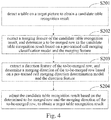
- Fig. 4 illustrates a flowchart of a method for recognizing a table according to another embodiment of the present disclosure. The method further optimizes and expands the above technical solution, and may be combined with the above various alternative embodiments. As shown in Fig. 4 , the method may include:
- the cell merging classification model may be any pre-trained model that can be used to determine whether each row in the candidate table recognition result needs to participate in the merging.
- the model may be a binary classification model, that is, an output result of the model for each row may include: need to participate in the merging or no need to participate in the merging.
- the cell merging direction determination model may be any pre-trained model that can be used to determine the merging direction of the to-be-merged row, and specifically, it may also be a binary classification model, that is, an output result of the model for each to-be-merged row may include: upward merging or downward merging.
- the upward merging refers to canceling an upper border of the current to-be-merged row and a lower border of the adjacent upper row; and the downward merging refers to canceling a lower border of the current to-be-merged row and an upper border of the adjacent lower row.
- the method disclosed in embodiments of the present disclosure further includes training the models:
- the sample merging features and the sample direction features may be extracted at the same time; it is also possible to extract the sample merging features first, and then extract the sample direction features, which is not specifically limited in the embodiment of the present disclosure.
- the cell merging classification model and the cell merging direction determination model may be used alternatively or simultaneously, which may be determined depending on the processing requirements. The technical solution shown in Fig. 4 should not be understood as a specific limitation to embodiments of the present disclosure.
- the sample merging feature includes at least one of: a difference between the number of valid columns in each row in a sample table and a maximum number of valid columns in the sample table, a relative position relationship between each row in the sample table and a header of the sample table, whether a text area in each row in the sample table includes a preset separator, or whether the text area in each row in the sample table includes numeric type data, etc.
- the header refers to, in a sample table, the first cell in a row corresponding to the maximum number of valid columns determined based on position information.
- the number of valid columns in each row refers to the number of columns corresponding to text areas in the row
- the maximum number of valid columns is the maximum number of columns corresponding to text areas in the table.
- the preset separator may be any symbol applicable in the table to separate the texts into rows, such as a decimal point used to break a value.
- the sample direction feature includes at least one of: whether the to-be-merged row includes a side header, whether the to-be-merged row only includes the side header, whether a text area of the to-be-merged row includes numeric type data, a ratio of a distance between the to-be-merged row and a lower border of an adjacent upper row to a distance between the to-be-merged row and an upper border of an adjacent lower row, a width difference between the text area of the to-be-merged row and a text area of the adjacent upper row, and a width difference between the text area of the to-be-merged row and a text area of the adjacent lower row, etc.
- the side header refers to, in each row, the cell on the leftmost side of the table according to reading habits.
- the models may both be obtained by training based on the logistic regression binary classification scheme, GBDT (gradient boosting decision tree) binary classification scheme, XGBoost (eXtreme gradient boosting) binary classification scheme or SVM (support vector machine) binary classification scheme, etc.; automated modeling may be combined to optimize model parameters to obtain the required model; a model fusion method may also be used to train to obtain the required model.
- GBDT gradient boosting decision tree
- XGBoost eXtreme gradient boosting
- SVM support vector machine
- the merging feature and the direction feature of the candidate table recognition result are extracted, which lays a data foundation for subsequent obtaining of an accurate table recognition result; then, the pre-trained cell merging classification model and the merging feature are used to determine a to-be-merged row in the candidate table recognition result, and the pre-trained cell merging direction determination model and the direction feature are used to determine the merging direction of the to-be-merged row; and finally, based on the determined to-be-merged row, the merging direction and the candidate table recognition result, an accurate target table recognition result is obtained, which solves the problem of inaccurate recognition results in the existing table recognition solutions, and improves the accuracy of table recognition.
- the use of the cell merging classification model and the cell merging direction determination model improves the efficiency of table recognition while ensures the accuracy and reliability of table recognition results, effectively, and makes the solution more widely applicable.
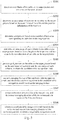
- Fig. 5 is a flowchart of a method for recognizing a table according to another embodiment of the present disclosure. The method further optimizes and expands the above technical solution, and may be combined with the above various alternative embodiments. As shown in Fig. 5 , the method may include:
- the outer frame of the table on the target picture may be detected by using a preset neural network model.
- the preset neural network model may be realized by adding a preset number of convolutional layers to a Yolov3 network structure.
- the preset neural network model is obtained by model training and has the function of detecting the outer frame of a table. Parameters required in the model training may be flexibly set according to detection requirements.
- a result is not directly output but is input into the preset number (the specific value depends on the actual demand) of convolution layers for convolution calculation, and then through a fully connected layer the detection result of the outer frame of the table is output, which may improve the detection accuracy of the outer frame of the table compared to the case where the detection result of the outer frame of the table is directly output through the Yolov3 network structure.
- the preset neural network model used in embodiments of the present disclosure may also improve the accuracy of table detection, and may reduce the misrecognition of some other loose texts as table area, taking into account the accuracy of table recognition and a recall rate.
- the time consumed by the model training and model prediction are much less than those of the Faster R-CNN.
- a cross-entropy loss function may be used as the model loss function to ensure the accuracy of model training.
- the specific form of the cross-entropy loss function may be realized with reference to the function form in the prior art.
- a CRAFT character region awareness for text detection
- the core idea of the CRAFT method is: to propose a method for detecting a single character region and affinity between characters, which is more in line with the core concept of target detection, instead of taking text boxes as targets, so that large text and long text can also be predicted using a small perception field-of-view.
- Fig. 6 is a schematic diagram of a detection result of an outer frame of a table and a text area on a target picture disclosed according to an embodiment of the present disclosure.
- text in the outer frame of the table belongs to the content of the table.
- One text area corresponds to one text box, and the number of text boxes is determined by the content of the table.
- the size of the outer frame of the table and each text box may be set adaptively.
- the method disclosed in embodiments of the present disclosure further includes: detecting a table name of the table on the target picture; and correspondingly, after detecting the outer frame of the table on the target picture, the method disclosed in embodiments of the present disclosure further includes: adjusting the outer frame of the table based on position information of the table name, to avoid partitioning the area occupied by the table name into the table area, thereby improving the detection accuracy of the outer frame of the table.
- the table name detection may be used as a training target during training to obtain the preset neural network model having the function of detecting an outer frame of a table, that is, a training sample table is labeled with the table outer frame and the table name at the same time and then used for model training, so that the trained preset neural network model may be a multi-task model, having both functions of detecting the table outer frame and the table name.
- the position of the table name may also be detected based on, respectively, a position relationship between the table name and the table body and a position relationship between the table name and the header.
- the row with the largest number of text areas corresponding thereto may be determined as the target row.
- One text area in each row may correspond to one column.
- the number of columns corresponding to the target row is the largest to a certain extent.
- the table area may be reasonably partitioned along the column direction of the table according to the range of all text areas in the row direction of the table, to determine a left boundary line and a right boundary line of each column.
- the determining the area range of each column in the table on the target picture based on a row length of the target row and a text area in a table row direction on the target picture includes:
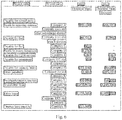
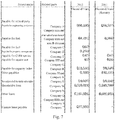
- the second, fourth, and sixth columns in Fig. 7 are blank columns. Blank columns should not show up in a normal table. Therefore, for the accuracy of table recognition, a blank column area needs to be merged into the columns on the left and right sides of the blank columns, such as the column area range shown in Fig. 8 , to obtain a more reasonable and accurate table recognition result.
- the row area range and the column area range of the table on the target picture are determined, and the candidate table recognition result is preliminarily obtained, which lays a foundation for subsequent effective table structuring processing; then performing feature extraction based on the candidate table recognition result, and the extracted features are used to determine the to-be-merged row and the merging direction of the to-be-merged row, so as to realize the effective structuring processing of the candidate table recognition result, to obtain an accurate target table recognition result, which solves the problem of inaccurate recognition results in the existing table recognition solutions, and improves the accuracy of table recognition.
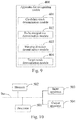
- Fig. 9 is a schematic structural diagram of an apparatus for recognizing a table disclosed according to an embodiment of the present disclosure.
- the embodiment of the present disclosure may be applicable to the case of recognizing a table picture to obtain the table on the table picture, especially the case of recognizing a border table with borders on the table picture.
- the apparatus disclosed in the embodiment of the present disclosure may be implemented in software and/or hardware, and may be integrated on any electronic device having computing capability, such as a server or a terminal.
- an apparatus 400 for recognizing a table disclosed in the embodiment of the present disclosure may include a candidate result determination module 401, a to-be-merged row determination module 402, a merging direction determination module 403, and a target result determination module 404, where:
- the candidate result determination module 401 configured to detect a table on a target picture, to obtain a candidate table recognition result; the to-be-merged row determination module 402, configured to extract a merging feature of the candidate table recognition result, and determine a to-be-merged row in the candidate table recognition result based on the merging feature; the merging direction determination module 403, configured to extract a direction feature of the to-be-merged row, and determine a merging direction of the to-be-merged row based on the direction feature; and the target result determination module 404, configured to adjust the candidate table recognition result based on the to-be-merged row and the merging direction of the to-be-merged row, to obtain a target table recognition result.
- the to-be-merged row determination module 402 includes:
- the merging direction determination module 403 includes:
- the merging feature includes at least one of: a difference between a number of valid columns in each row in the candidate table recognition result and a maximum number of valid columns in the candidate table recognition result, a relative position relationship between each row in the candidate table recognition result and a header of the candidate table recognition result, whether a text area in each row in the candidate table recognition result comprises a preset separator, or whether the text area in each row in the candidate table recognition result comprises numeric type data; and the direction feature includes at least one of: whether the to-be-merged row comprises a side header, whether the to-be-merged row only comprises the side header, whether a text area of the to-be-merged row comprises numeric type data, a ratio of a distance between the to-be-merged row and a lower border of an adjacent upper row to a distance between the to-be-merged row and an upper border of an adjacent lower row, a width difference between the text area of the to-be-merged row and a text area of the upper row, or a width difference between the text area of the
- the apparatus disclosed according to an embodiment of the present disclosure further includes:
- the candidate result determination module 401 includes:
- the candidate result determination unit includes:
- the column area determination subunit includes:
- the outer frame and text detection unit includes:
- the candidate result determination module 401 further includes:
- the apparatus 400 for recognizing a table disclosed in embodiments of the present disclosure may perform any method for recognizing a table disclosed in embodiments of the present disclosure, and has corresponding functional modules for performing the method and beneficial effects thereof.
- the apparatus 400 for recognizing a table disclosed in embodiments of the present disclosure may perform any method for recognizing a table disclosed in embodiments of the present disclosure, and has corresponding functional modules for performing the method and beneficial effects thereof.
- some embodiments of the present disclosure provide an electronic device and a readable storage medium.
- FIG. 10 a block diagram of an electronic device used to implement the method for recognizing a table in embodiments of the present disclosure is illustrated.
- the electronic device is intended to represent various forms of digital computers, such as laptop computers, desktop computers, workbenches, personal digital assistants, servers, blade servers, mainframe computers, and other suitable computers.
- the electronic device may also represent various forms of mobile apparatuses, such as personal digital processors, cellular phones, smart phones, wearable devices, and other similar computing apparatuses.
- the components shown herein, their connections and relationships, and their functions are merely examples, and are not intended to limit the implementation of the embodiments of the present disclosure described and/or claimed herein.
- Fig. 10 is a block diagram of an electronic device of a method for recognizing a table according to an embodiment of the present disclosure.
- the electronic device is intended to represent various forms of digital computers, such as laptop computers, desktop computers, workbenches, personal digital assistants, servers, blade servers, mainframe computers, and other suitable computers.
- the electronic device may also represent various forms of mobile apparatuses, such as personal digital processing, cellular phones, smart phones, wearable devices, and other similar computing apparatuses.
- the components shown herein, their connections and relationships, and their functions are merely examples, and are not intended to limit the implementation of the present disclosure described and/or claimed herein.
- the electronic device includes: one or more processors 501, a memory 502, and interfaces for connecting various components, including high-speed interfaces and low-speed interfaces.
- the various components are connected to each other using different buses, and may be installed on a common motherboard or in other methods as needed.
- the processor may process instructions executed within the electronic device, including instructions stored in or on the memory to display graphic information of GUI (Graphical User Interface) on an external input/output apparatus (such as a display device coupled to the interface).
- GUI Graphic User Interface
- a plurality of processors and/or a plurality of buses may be used together with a plurality of memories if desired.
- a plurality of electronic devices may be connected, and the devices provide some necessary operations (for example, as a server array, a set of blade servers, or a multi-processor system).
- the devices provide some necessary operations (for example, as a server array, a set of blade servers, or a multi-processor system).
- one processor 501 is used as an example.
- the memory 502 is a non-transitory computer readable storage medium provided by an embodiment of the present disclosure.
- the memory stores instructions executable by at least one processor, so that the at least one processor performs the method for processing parking provided by the present disclosure.
- the non-transitory computer readable storage medium of the present disclosure stores computer instructions for causing a computer to perform the method for recognizing a table provided by embodiments of the present disclosure.
- the memory 502 may be used to store non-transitory software programs, non-transitory computer executable programs and modules, such as program instructions/modules corresponding to the method for processing parking in the embodiments of the present disclosure, for example, the candidate result determination module 401, the to-be-merged row determination module 402, the merging direction determination module 403, and the target result determination module 404 shown in Fig. 9 .
- the processor 501 executes the non-transitory software programs, instructions, and modules stored in the memory 502 to execute various functional applications and data processing of the server, that is, to implement the method for recognizing a table in the foregoing method embodiment.
- the memory 502 may include a storage program area and a storage data area, where the storage program area may store an operating system and at least one function required application program; and the storage data area may store data created by the use of the electronic device according to the method for processing parking, etc.
- the memory 502 may include a high-speed random access memory, and may also include a non-transitory memory, such as at least one magnetic disk storage device, a flash memory device, or other non-transitory solid-state storage devices.
- the memory 502 may optionally include memories remotely provided with respect to the processor 501, and these remote memories may be connected to the electronic device of the method for processing parking through a network. Examples of the above network include but are not limited to the Internet, intranet, local area network, mobile communication network, and combinations thereof.
- the electronic device of the method for processing parking may further include: an input apparatus 503 and an output apparatus 504.
- the processor 501, the memory 502, the input apparatus 503, and the output apparatus 504 may be connected through a bus or in other methods. In Fig. 10 , connection through a bus is used as an example.
- the input apparatus 503 may receive input digital or character information, and generate key signal inputs related to user settings and function control of the electronic device of the method for recognizing a table, such as touch screen, keypad, mouse, trackpad, touchpad, pointing stick, one or more mouse buttons, trackball, joystick and other input apparatuses.
- the output apparatus 604 may include a display device, an auxiliary lighting apparatus (for example, LED), a tactile feedback apparatus (for example, a vibration motor), and the like.
- the display device may include, but is not limited to, a liquid crystal display (LCD), a light emitting diode (LED) display, and a plasma display. In some embodiments, the display device may be a touch screen.
- Various embodiments of the systems and technologies described herein may be implemented in digital electronic circuit systems, integrated circuit systems, dedicated ASICs (application specific integrated circuits), computer hardware, firmware, software, and/or combinations thereof. These various embodiments may include: being implemented in one or more computer programs that can be executed and/or interpreted on a programmable system that includes at least one programmable processor.
- the programmable processor may be a dedicated or general-purpose programmable processor, and may receive data and instructions from a storage system, at least one input apparatus, and at least one output apparatus, and transmit the data and instructions to the storage system, the at least one input apparatus, and the at least one output apparatus.
- These computing programs include machine instructions of the programmable processor and may use high-level processes and/or object-oriented programming languages, and/or assembly/machine languages to implement these computing programs.
- machine readable medium and “computer readable medium” refer to any computer program product, device, and/or apparatus (for example, magnetic disk, optical disk, memory, programmable logic apparatus (PLD)) used to provide machine instructions and/or data to the programmable processor, including machine readable medium that receives machine instructions as machine readable signals.
- machine readable signal refers to any signal used to provide machine instructions and/or data to the programmable processor.
- the systems and technologies described herein may be implemented on a computer, the computer has: a display apparatus for displaying information to the user (for example, CRT (cathode ray tube) or LCD (liquid crystal display) monitor); and a keyboard and a pointing apparatus (for example, mouse or trackball), and the user may use the keyboard and the pointing apparatus to provide input to the computer.
- a display apparatus for displaying information to the user
- LCD liquid crystal display
- keyboard and a pointing apparatus for example, mouse or trackball
- Other types of apparatuses may also be used to provide interaction with the user; for example, feedback provided to the user may be any form of sensory feedback (for example, visual feedback, auditory feedback, or tactile feedback); and any form (including acoustic input, voice input, or tactile input) may be used to receive input from the user.
- the systems and technologies described herein may be implemented in a computing system that includes backend components (e.g., as a data server), or a computing system that includes middleware components (e.g., application server), or a computing system that includes frontend components (for example, a user computer having a graphical user interface or a web browser, through which the user may interact with the implementations of the systems and the technologies described herein), or a computing system that includes any combination of such backend components, middleware components, or frontend components.
- the components of the system may be interconnected by any form or medium of digital data communication (e.g., communication network). Examples of the communication network include: local area networks (LAN), wide area networks (WAN), the Internet, and blockchain networks.
- the computer system may include a client and a server.
- the client and the server are generally far from each other and usually interact through the communication network.
- the relationship between the client and the server is generated by computer programs that run on the corresponding computer and have a client-server relationship with each other.
- table features of the candidate table recognition result namely the merging feature and the direction feature
- structure merging processing is performed on the candidate table recognition result by using the extracted table features to obtain the to-be-merged row and the merging direction of the to-be-merged row
- the candidate table recognition result is further adjusted to obtain the final target table recognition result, which solves the problem of inaccurate recognition results in the existing table recognition solutions, and improves the accuracy of table recognition.
Landscapes
- Engineering & Computer Science (AREA)
- Theoretical Computer Science (AREA)
- Physics & Mathematics (AREA)
- General Physics & Mathematics (AREA)
- Multimedia (AREA)
- Computer Vision & Pattern Recognition (AREA)
- Artificial Intelligence (AREA)
- Data Mining & Analysis (AREA)
- General Engineering & Computer Science (AREA)
- Life Sciences & Earth Sciences (AREA)
- Evolutionary Computation (AREA)
- Computational Linguistics (AREA)
- General Health & Medical Sciences (AREA)
- Health & Medical Sciences (AREA)
- Computing Systems (AREA)
- Molecular Biology (AREA)
- Mathematical Physics (AREA)
- Software Systems (AREA)
- Biophysics (AREA)
- Biomedical Technology (AREA)
- Bioinformatics & Cheminformatics (AREA)
- Bioinformatics & Computational Biology (AREA)
- Evolutionary Biology (AREA)
- Computer Graphics (AREA)
- Geometry (AREA)
- Character Input (AREA)
- Image Analysis (AREA)
- Audiology, Speech & Language Pathology (AREA)
- Image Processing (AREA)
Applications Claiming Priority (1)
| Application Number | Priority Date | Filing Date | Title |
|---|---|---|---|
| CN202010508011.6A CN111695553B (zh) | 2020-06-05 | 2020-06-05 | 表格识别方法、装置、设备和介质 |
Publications (2)
| Publication Number | Publication Date |
|---|---|
| EP3822851A2 true EP3822851A2 (fr) | 2021-05-19 |
| EP3822851A3 EP3822851A3 (fr) | 2021-10-20 |
Family
ID=72479619
Family Applications (1)
| Application Number | Title | Priority Date | Filing Date |
|---|---|---|---|
| EP21165648.3A Withdrawn EP3822851A3 (fr) | 2020-06-05 | 2021-03-29 | Procédé et appareil de reconnaissance de tableau, dispositif, support et produit programme informatique |
Country Status (5)
| Country | Link |
|---|---|
| US (1) | US11636699B2 (fr) |
| EP (1) | EP3822851A3 (fr) |
| JP (1) | JP7299939B2 (fr) |
| KR (1) | KR102609341B1 (fr) |
| CN (1) | CN111695553B (fr) |
Families Citing this family (27)
| Publication number | Priority date | Publication date | Assignee | Title |
|---|---|---|---|---|
| CN112417831A (zh) * | 2020-11-23 | 2021-02-26 | 中国建设银行股份有限公司 | 表格合并方法和装置 |
| CN112183511A (zh) * | 2020-12-01 | 2021-01-05 | 江西博微新技术有限公司 | 一种图像导出表格的方法、系统、存储介质及设备 |
| CN112632934B (zh) * | 2020-12-22 | 2023-01-17 | 上海精密计量测试研究所 | 基于比例计算还原表格图片为可编辑的word文件表格的方法 |
| CN112861865B (zh) * | 2021-01-29 | 2024-03-29 | 国网内蒙古东部电力有限公司 | 一种基于ocr技术的辅助审计方法 |
| CN113177397B (zh) * | 2021-04-21 | 2023-03-28 | 平安消费金融有限公司 | 表格的调整方法、装置、设备以及存储介质 |
| CN113033170B (zh) * | 2021-04-23 | 2023-08-04 | 中国平安人寿保险股份有限公司 | 表格标准化处理方法、装置、设备及存储介质 |
| KR102508654B1 (ko) * | 2021-04-23 | 2023-03-10 | 주식회사 티맥스에이아이 | 이미지 기반 테이블 경계선 생성 방법 |
| KR102490486B1 (ko) * | 2021-04-30 | 2023-01-19 | 주식회사 티맥스에이아이 | 이미지 기반 테이블 정보 생성 방법 |
| CN113221519B (zh) * | 2021-05-18 | 2024-03-29 | 北京百度网讯科技有限公司 | 用于处理表格数据的方法、装置、设备、介质和产品 |
| CN113158987B (zh) * | 2021-05-19 | 2022-07-05 | 中国科学技术信息研究所 | 表格处理方法、装置、设备及计算机可读存储介质 |
| KR102342580B1 (ko) * | 2021-07-16 | 2021-12-24 | 주식회사 애자일소다 | 딥러닝 알고리즘을 이용한 정형 데이터 처리 장치 및 방법 |
| CN113821691A (zh) * | 2021-08-13 | 2021-12-21 | 安徽希施玛数据科技有限公司 | 文档处理方法及装置、电子设备及可读存储介质 |
| US12288406B2 (en) * | 2021-09-30 | 2025-04-29 | Adobe Inc. | Utilizing machine-learning based object detection to improve optical character recognition |
| CN114201946B (zh) * | 2021-11-15 | 2025-09-23 | 北京金山办公软件股份有限公司 | 一种表格调整方法以及装置 |
| CN113936286B (zh) * | 2021-11-29 | 2024-06-14 | 中国平安人寿保险股份有限公司 | 图像文本识别方法、装置、计算机设备及存储介质 |
| CN114328536B (zh) * | 2021-12-30 | 2026-03-31 | 浙江核新同花顺网络信息股份有限公司 | 一种表格处理方法和系统 |
| CN115273111B (zh) * | 2022-06-27 | 2023-04-18 | 北京互时科技股份有限公司 | 一种无模板识别图纸材料表的装置 |
| CN115631505B (zh) * | 2022-09-27 | 2025-12-12 | 浙江极氪智能科技有限公司 | 一种文本图像的处理方法、装置及存储介质 |
| CN116110063B (zh) * | 2022-10-25 | 2025-10-31 | 湖南大学 | 一种自顶向下和自底向上相结合的复杂表结构识别方法 |
| CN118228690A (zh) * | 2022-12-19 | 2024-06-21 | 凯钿行动科技股份有限公司 | 处理pdf文档中的表格的方法、装置、计算器设备及存储介质 |
| CN116311301B (zh) * | 2023-02-17 | 2024-06-07 | 北京感易智能科技有限公司 | 无线表格识别方法及系统 |
| CN116071771A (zh) * | 2023-03-24 | 2023-05-05 | 南京燧坤智能科技有限公司 | 表格重构方法、装置、非易失性存储介质及电子设备 |
| CN116127928B (zh) * | 2023-04-17 | 2023-07-07 | 广东粤港澳大湾区国家纳米科技创新研究院 | 表格数据识别方法、装置、存储介质及计算机设备 |
| CN116994272A (zh) * | 2023-07-07 | 2023-11-03 | 中国电信股份有限公司 | 一种针对目标图片的识别方法和装置 |
| CN117195846B (zh) * | 2023-11-07 | 2024-03-01 | 江西五十铃汽车有限公司 | 一种专家表管理方法、系统、存储介质及设备 |
| CN117217172B (zh) * | 2023-11-09 | 2024-04-23 | 金蝶征信有限公司 | 表格信息获取方法、装置、计算机设备、存储介质 |
| CN118332065B (zh) * | 2024-06-13 | 2024-09-06 | 金现代信息产业股份有限公司 | 智能问答场景下的表格知识存储方法、装置、介质及设备 |
Family Cites Families (20)
| Publication number | Priority date | Publication date | Assignee | Title |
|---|---|---|---|---|
| EP0602955B1 (fr) * | 1992-12-17 | 2000-12-27 | Xerox Corporation | Reconnaissance de texte |
| JP3607753B2 (ja) * | 1995-07-31 | 2005-01-05 | 株式会社リコー | 文書画像の領域分割方法および装置、並びに段組種類判別方法および装置 |
| JPH10307888A (ja) | 1997-05-09 | 1998-11-17 | Ricoh Co Ltd | 表処理方法、装置および記録媒体 |
| JP3435375B2 (ja) * | 1999-10-12 | 2003-08-11 | 沖電気工業株式会社 | 文字認識方法および装置 |
| JP4973063B2 (ja) * | 2006-08-14 | 2012-07-11 | 富士通株式会社 | 表データ処理方法及び装置 |
| US8121412B2 (en) | 2008-06-06 | 2012-02-21 | Microsoft Corporation | Recognition of tabular structures |
| JP5318742B2 (ja) | 2009-12-14 | 2013-10-16 | 富士通フロンテック株式会社 | 文字認識方法、文字認識装置および文字認識プログラム |
| CN103577817B (zh) * | 2012-07-24 | 2017-03-01 | 阿里巴巴集团控股有限公司 | 表单识别方法与装置 |
| US9858476B1 (en) * | 2016-06-30 | 2018-01-02 | Konica Minolta Laboratory U.S.A., Inc. | Method for recognizing table, flowchart and text in document images |
| CN108446264B (zh) * | 2018-03-26 | 2022-02-15 | 阿博茨德(北京)科技有限公司 | Pdf文档中的表格矢量解析方法及装置 |
| US10878195B2 (en) | 2018-05-03 | 2020-12-29 | Microsoft Technology Licensing, Llc | Automated extraction of unstructured tables and semantic information from arbitrary documents |
| US11200413B2 (en) * | 2018-07-31 | 2021-12-14 | International Business Machines Corporation | Table recognition in portable document format documents |
| JP7289658B2 (ja) | 2018-09-07 | 2023-06-12 | 株式会社フジクラ | 分類装置、分類方法、分類プログラム、及び検査装置 |
| CN110163198B (zh) * | 2018-09-27 | 2022-03-08 | 腾讯科技(深圳)有限公司 | 一种表格识别重建方法、装置和存储介质 |
| CN109934181A (zh) * | 2019-03-18 | 2019-06-25 | 北京海益同展信息科技有限公司 | 文本识别方法、装置、设备和计算机可读介质 |
| CN110334585B (zh) * | 2019-05-22 | 2023-10-24 | 平安科技(深圳)有限公司 | 表格识别方法、装置、计算机设备和存储介质 |
| CN110390269B (zh) * | 2019-06-26 | 2023-08-01 | 平安科技(深圳)有限公司 | Pdf文档表格提取方法、装置、设备及计算机可读存储介质 |
| CN110502985B (zh) * | 2019-07-11 | 2022-06-07 | 新华三大数据技术有限公司 | 表格识别方法、装置及表格识别设备 |
| CN110532968B (zh) * | 2019-09-02 | 2023-05-23 | 苏州美能华智能科技有限公司 | 表格识别方法、装置和存储介质 |
| CN111062259B (zh) * | 2019-11-25 | 2023-08-25 | 泰康保险集团股份有限公司 | 表格识别方法和装置 |
-
2020
- 2020-06-05 CN CN202010508011.6A patent/CN111695553B/zh active Active
- 2020-12-10 US US17/118,403 patent/US11636699B2/en active Active
-
2021
- 2021-03-26 JP JP2021053487A patent/JP7299939B2/ja active Active
- 2021-03-29 EP EP21165648.3A patent/EP3822851A3/fr not_active Withdrawn
- 2021-03-31 KR KR1020210042119A patent/KR102609341B1/ko active Active
Also Published As
| Publication number | Publication date |
|---|---|
| CN111695553A (zh) | 2020-09-22 |
| CN111695553B (zh) | 2023-09-08 |
| JP7299939B2 (ja) | 2023-06-28 |
| KR102609341B1 (ko) | 2023-12-01 |
| US20210383105A1 (en) | 2021-12-09 |
| EP3822851A3 (fr) | 2021-10-20 |
| KR20210042864A (ko) | 2021-04-20 |
| US11636699B2 (en) | 2023-04-25 |
| JP2021193549A (ja) | 2021-12-23 |
Similar Documents
| Publication | Publication Date | Title |
|---|---|---|
| US11636699B2 (en) | Method and apparatus for recognizing table, device, medium | |
| US11645316B2 (en) | Question answering method and language model training method, apparatus, device, and storage medium | |
| US11625539B2 (en) | Extracting trigger words and arguments from text to obtain an event extraction result | |
| US20210383107A1 (en) | Method, apparatus, device and storage medium for recognizing bill image | |
| EP3885963A1 (fr) | Procédé et appareil de détermination de causalité, dispositif électronique et support de stockage | |
| US11775845B2 (en) | Character recognition method and apparatus, electronic device and computer readable storage medium | |
| CN112487814B (zh) | 实体分类模型训练方法、实体分类方法、装置及电子设备 | |
| US11462039B2 (en) | Method, device, and storage medium for obtaining document layout | |
| US20250259469A1 (en) | Semantic representation of text in document | |
| US11573992B2 (en) | Method, electronic device, and storage medium for generating relationship of events | |
| US11216615B2 (en) | Method, device and storage medium for predicting punctuation in text | |
| CN112926306B (zh) | 文本纠错方法、装置、设备以及存储介质 | |
| CN112541332A (zh) | 表单信息抽取方法、装置、电子设备及存储介质 | |
| CN111127191B (zh) | 风险评估方法及装置 | |
| US20220027575A1 (en) | Method of predicting emotional style of dialogue, electronic device, and storage medium | |
| US20210312308A1 (en) | Method for determining answer of question, computing device and storage medium | |
| EP4057283A2 (fr) | Procédé de détection de la voix, procéde pour apprentissage, appareils et haut-parleur intelligent | |
| EP3822818A1 (fr) | Procédure, appareil, dispositif et moyen de stockage pour réponse intelligente | |
| US20250252256A1 (en) | Machine learning document parser | |
| CN114429633A (zh) | 文本识别方法、模型的训练方法、装置、电子设备及介质 | |
| CN111666771A (zh) | 文书的语义标签抽取、装置、电子设备及可读存储介质 | |
| EP3992774A1 (fr) | Procédé et dispositif d'implémentation d'une opération de produit scalaire, dispositif électronique et support de stockage | |
| US20210374924A1 (en) | Method for translating image and method for training image translation model | |
| CN115270759A (zh) | 表格数据的处理方法、模型训练方法、装置和电子设备 | |
| EP3822822A1 (fr) | Procede et dispositif pour generer un reseau de relation, un dispositif electronique et un support de stockage |
Legal Events
| Date | Code | Title | Description |
|---|---|---|---|
| PUAI | Public reference made under article 153(3) epc to a published international application that has entered the european phase |
Free format text: ORIGINAL CODE: 0009012 |
|
| STAA | Information on the status of an ep patent application or granted ep patent |
Free format text: STATUS: REQUEST FOR EXAMINATION WAS MADE |
|
| 17P | Request for examination filed |
Effective date: 20210329 |
|
| AK | Designated contracting states |
Kind code of ref document: A2 Designated state(s): AL AT BE BG CH CY CZ DE DK EE ES FI FR GB GR HR HU IE IS IT LI LT LU LV MC MK MT NL NO PL PT RO RS SE SI SK SM TR |
|
| PUAL | Search report despatched |
Free format text: ORIGINAL CODE: 0009013 |
|
| AK | Designated contracting states |
Kind code of ref document: A3 Designated state(s): AL AT BE BG CH CY CZ DE DK EE ES FI FR GB GR HR HU IE IS IT LI LT LU LV MC MK MT NL NO PL PT RO RS SE SI SK SM TR |
|
| RIC1 | Information provided on ipc code assigned before grant |
Ipc: G06K 9/00 20060101AFI20210915BHEP |
|
| STAA | Information on the status of an ep patent application or granted ep patent |
Free format text: STATUS: EXAMINATION IS IN PROGRESS |
|
| 17Q | First examination report despatched |
Effective date: 20220623 |
|
| STAA | Information on the status of an ep patent application or granted ep patent |
Free format text: STATUS: THE APPLICATION IS DEEMED TO BE WITHDRAWN |
|
| 18D | Application deemed to be withdrawn |
Effective date: 20230822 |