EP3825733B1 - Lange entfernung lidar-basierte geschwindigkeit - Google Patents
Lange entfernung lidar-basierte geschwindigkeit Download PDFInfo
- Publication number
- EP3825733B1 EP3825733B1 EP20206109.9A EP20206109A EP3825733B1 EP 3825733 B1 EP3825733 B1 EP 3825733B1 EP 20206109 A EP20206109 A EP 20206109A EP 3825733 B1 EP3825733 B1 EP 3825733B1
- Authority
- EP
- European Patent Office
- Prior art keywords
- estimation
- speed
- frame
- estimating
- distance
- Prior art date
- Legal status (The legal status is an assumption and is not a legal conclusion. Google has not performed a legal analysis and makes no representation as to the accuracy of the status listed.)
- Active
Links
Images


Classifications
-
- G—PHYSICS
- G01—MEASURING; TESTING
- G01S—RADIO DIRECTION-FINDING; RADIO NAVIGATION; DETERMINING DISTANCE OR VELOCITY BY USE OF RADIO WAVES; LOCATING OR PRESENCE-DETECTING BY USE OF THE REFLECTION OR RERADIATION OF RADIO WAVES; ANALOGOUS ARRANGEMENTS USING OTHER WAVES
- G01S17/00—Systems using the reflection or reradiation of electromagnetic waves other than radio waves, e.g. lidar systems
- G01S17/02—Systems using the reflection of electromagnetic waves other than radio waves
- G01S17/50—Systems of measurement based on relative movement of target
- G01S17/58—Velocity or trajectory determination systems; Sense-of-movement determination systems
-
- G—PHYSICS
- G01—MEASURING; TESTING
- G01S—RADIO DIRECTION-FINDING; RADIO NAVIGATION; DETERMINING DISTANCE OR VELOCITY BY USE OF RADIO WAVES; LOCATING OR PRESENCE-DETECTING BY USE OF THE REFLECTION OR RERADIATION OF RADIO WAVES; ANALOGOUS ARRANGEMENTS USING OTHER WAVES
- G01S17/00—Systems using the reflection or reradiation of electromagnetic waves other than radio waves, e.g. lidar systems
- G01S17/88—Lidar systems specially adapted for specific applications
- G01S17/93—Lidar systems specially adapted for specific applications for anti-collision purposes
- G01S17/931—Lidar systems specially adapted for specific applications for anti-collision purposes of land vehicles
-
- G—PHYSICS
- G01—MEASURING; TESTING
- G01S—RADIO DIRECTION-FINDING; RADIO NAVIGATION; DETERMINING DISTANCE OR VELOCITY BY USE OF RADIO WAVES; LOCATING OR PRESENCE-DETECTING BY USE OF THE REFLECTION OR RERADIATION OF RADIO WAVES; ANALOGOUS ARRANGEMENTS USING OTHER WAVES
- G01S7/00—Details of systems according to groups G01S13/00, G01S15/00, G01S17/00
- G01S7/48—Details of systems according to groups G01S13/00, G01S15/00, G01S17/00 of systems according to group G01S17/00
- G01S7/4808—Evaluating distance, position or velocity data
-
- G—PHYSICS
- G05—CONTROLLING; REGULATING
- G05B—CONTROL OR REGULATING SYSTEMS IN GENERAL; FUNCTIONAL ELEMENTS OF SUCH SYSTEMS; MONITORING OR TESTING ARRANGEMENTS FOR SUCH SYSTEMS OR ELEMENTS
- G05B13/00—Adaptive control systems, i.e. systems automatically adjusting themselves to have a performance which is optimum according to some preassigned criterion
- G05B13/02—Adaptive control systems, i.e. systems automatically adjusting themselves to have a performance which is optimum according to some preassigned criterion electric
- G05B13/0265—Adaptive control systems, i.e. systems automatically adjusting themselves to have a performance which is optimum according to some preassigned criterion electric the criterion being a learning criterion
- G05B13/027—Adaptive control systems, i.e. systems automatically adjusting themselves to have a performance which is optimum according to some preassigned criterion electric the criterion being a learning criterion using neural networks only
-
- G—PHYSICS
- G06—COMPUTING OR CALCULATING; COUNTING
- G06N—COMPUTING ARRANGEMENTS BASED ON SPECIFIC COMPUTATIONAL MODELS
- G06N3/00—Computing arrangements based on biological models
- G06N3/02—Neural networks
- G06N3/04—Architecture, e.g. interconnection topology
-
- G—PHYSICS
- G06—COMPUTING OR CALCULATING; COUNTING
- G06N—COMPUTING ARRANGEMENTS BASED ON SPECIFIC COMPUTATIONAL MODELS
- G06N3/00—Computing arrangements based on biological models
- G06N3/02—Neural networks
- G06N3/04—Architecture, e.g. interconnection topology
- G06N3/045—Combinations of networks
-
- G—PHYSICS
- G06—COMPUTING OR CALCULATING; COUNTING
- G06N—COMPUTING ARRANGEMENTS BASED ON SPECIFIC COMPUTATIONAL MODELS
- G06N3/00—Computing arrangements based on biological models
- G06N3/02—Neural networks
- G06N3/04—Architecture, e.g. interconnection topology
- G06N3/0464—Convolutional networks [CNN, ConvNet]
Definitions
- the present disclosure relates generally to the automotive, advanced driver assistance systems (ADAS), and autonomous driving (AD) fields. More particularly, the present disclosure relates to long range LIDAR-based speed estimation systems and methods.
- ADAS advanced driver assistance systems
- AD autonomous driving
- the absolute speed of an object in the vicinity of a vehicle is typically based on the determined self speed of the ego vehicle and the relative speed of the object, which may be another vehicle, for example.
- the self speed is typically determined from an external sensor, such as an inertial measurement unit (IMU), a global positioning system (GPS), or the vehicle odometer, which are known to persons of ordinary skill in the art.
- IMU inertial measurement unit
- GPS global positioning system
- the relative speed is typically determined from camera images using annotation, object segmentation, and tracking, taking into account past trajectories.
- object annotation and tracking is difficult when the object is at a long distance from the vehicle, as the object may be hard to detect and the camera can easily lose track of it. The result is error in the absolute speed measurement of surrounding objects, which can significantly impact vehicle safety in ADAS and AD environments.
- the long range LIDAR-based speed estimation systems and methods of the present disclosure divide multiple LIDAR frames into ranges based on the distance of a point from the LIDAR sensor: short range (e.g. up to 50 or 70m), middle range (e.g. from 50 or 70m to 100 or 120m), and long range (e.g. from 100 or 120m to 250m). Given these ranges, tasks are performed separately on each and the results are then combined.
- the systems and methods of the present disclosure are LIDAR agnostic and run in the 10Hz region, for example. Two alternative methodologies are provided.
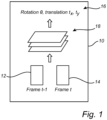
- the present disclosure provides a LIDAR-based method of determining an absolute speed of an object at a long distance from an ego vehicle, the method including: estimating a self speed of the ego vehicle using a first frame t-1 and a second frame t obtained from a LIDAR sensor coupled to the ego vehicle by estimating an intervening rotation ⁇ about a z axis and translation in orthogonal x and y directions using a deep learning algorithm over a relatively closer distance range from the ego vehicle compared to the long distance , dividing each of the first frame t-1 and the second frame t into three adjacent input ranges and estimating a relative speed of the object at the relatively longer distance by subsequently processing each frame using a network, with each input range processed using a corresponding convolutional neural network; and combining the estimation of the estimating the self speed with the estimation of the estimating the relative speed to obtain an estimation of the absolute speed of the object at the long distance.
- the deep learning algorithm is executed by a convolutional neural network.
- the convolutional neural network includes an optical flow estimation network.
- the relatively shorter distance is separated from the long distance by a threshold determined via benchmarking to find ranges that provide enough shorter distance points to estimate rotation and translation and close enough longer distance points to provide adequate computation certainty.
- Each of the convolutional neural networks performs independent input feature extraction and utilizes a separate regression head, but utilizes one of a separate middle layer and a shared middle layer.
- a hand-over mechanism is employed to bridge results between the three adjacent input ranges.
- the present disclosure provides a LIDAR-based method of determining an absolute speed of an object at a long distance from an ego vehicle, the method including: receiving a first frame t-1 and a second frame t obtained from a LIDAR sensor coupled to the ego vehicle and dividing each of the first frame t-1 and the second frame t into three adjacent input ranges and processing each frame using a multi-task network, with the input ranges processed using a corresponding convolutional neural network configured to provide intervening rotation ⁇ about a z axis and translation in orthogonal x and y directions to estimate a self speed of the ego vehicle and object location and speed to estimate a relative speed of the object at the long distance; and combining the estimation of the estimating the self speed with the estimation of the estimating the relative speed to obtain an estimation of the absolute speed of the object at the long distance.
- the relatively shorter distance is separated from the long distance by a threshold determined via benchmarking to find ranges that provide enough shorter distance points to estimate rotation and translation and close enough longer distance points to provide adequate computation certainty.
- Each of the convolutional neural networks performs independent input feature extraction and utilizes a separate regression head, but utilizes one of a separate middle layer and a shared middle layer. A hand-over mechanism is employed to bridge results between the three adjacent input ranges.
- the present disclosure provides a non-transitory computer-readable medium stored in a memory and executed by a processor to determine an absolute speed of an object at a long distance from an ego vehicle via the steps including: estimating a self speed of the ego vehicle using a first frame t-1 and a second frame t obtained from a LIDAR sensor coupled to the ego vehicle by estimating an intervening rotation ⁇ about a z axis and translation in orthogonal x and y directions using a deep learning algorithm over a relatively closer distance range from the ego vehicle compared to the long distance , dividing each of the first frame t-1 and the second frame t into three adjacent input ranges and estimating a relative speed of the object at the long distance by subsequently processing each frame using a network, with each input range processed using a corresponding convolutional neural network; and combining the estimation of the estimating the self speed with the estimation of the estimating the relative speed to obtain an estimation of the absolute speed of the object at the long distance.
- the deep learning algorithm is executed by a convolutional neural network.
- the convolutional neural network includes an optical flow estimation network.
- the relatively shorter distance is separated from the long distance by a threshold determined via benchmarking to find ranges that provide enough shorter distance points to estimate rotation and translation and close enough longer distance points to provide adequate computation certainty.
- Each of the convolutional neural networks performs independent input feature extraction and utilizes a separate regression head, but utilizes one of a separate middle layer and a shared middle layer.
- a hand-over mechanism is employed to bridge results between the three adjacent input ranges.
- the present disclosure provides a non-transitory computer-readable medium stored in a memory and executed by a processor to determine an absolute speed of an object at a long distance from an ego vehicle via the steps including: receiving a first frame t-1 and a second frame t obtained from a LIDAR sensor coupled to the ego vehicle and dividing each of the first frame t-1 and the second frame t into three adjacent input ranges and processing each frame using a multi-task network, with the input ranges processed using a corresponding convolutional neural network configured to provide intervening rotation ⁇ about a z axis and translation in orthogonal x and y directions to estimate a self speed of the ego vehicle and object location and speed to estimate a relative speed of the object at the long distance; and combining the estimation of the estimating the self speed with the estimation of the estimating the relative speed to obtain an estimation of the absolute speed of the object at the long distance.
- the relatively shorter distance is separated from the long distance by a threshold determined via benchmarking to find ranges that provide enough shorter distance points to estimate rotation and translation and close enough longer distance points to provide adequate computation certainty.
- Each of the convolutional neural networks performs independent input feature extraction and utilizes a separate regression head, but utilizes one of a separate middle layer and a shared middle layer. A hand-over mechanism is employed to bridge results between the three adjacent input ranges.
- the long range LIDAR-based speed estimation systems and methods of the present disclosure divide multiple LIDAR frames into ranges based on the distance of a point from the LIDAR sensor: short range (e.g. up to 50 or 70m), middle range (e.g. from 50 or 70m to 100 or 120m), and long range (e.g. from 100 or 120m to 250m). Given these ranges, tasks are performed separately on each and the results are then combined.
- the systems and methods of the present disclosure are LIDAR agnostic and run in the 10Hz region, for example. Two alternative methodologies are provided.
- both self-speed estimation and relative speed estimation are performed, with the combined result used to estimate absolute speed. Range affects are considered.
- Self speed estimation is performed for the short range; a relatively close range, the boundary of which is decided by benchmarking the self speed estimation.
- Relative speed estimation is performed for all ranges using a range awareness algorithm.
- a multi-task network shares both self speed estimation and relative speed estimation for all ranges.
- three regression heads produce two types of results: rotation and translation (for self speed estimation) and object location and speed (for relative speed estimation).
- the rotations, translations, and speeds produced by the multi-task network collectively provide the absolute speed of each object.
- the network 10 is a deep learning network, or convolutional neural network (CNN), such as an optical flow estimation network.
- CNN convolutional neural network
- a CNN is often applied to analyzing images.
- CNNs are regularized versions of multilayer perceptrons, or fully connected networks where each neuron in one layer is connected to all neurons in the next layer. They are somewhat prone to overfitting data.
- Methods for regularization include adding some form of magnitude measurement of weights to the associated loss function.
- CNNs take advantage of the hierarchical pattern of data and assemble more complex patterns using smaller and simpler patterns. Therefore, CNNs limit connectedness and complexity. CNNs use relatively little pre-processing of data as compared to other image classification algorithms, learning the filters that were hand-engineered in traditional algorithms.
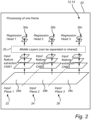
- each of the frames t-1 and t 12,14 is processed using the same network 20 to estimate the relative speed of objects in the vicinity of the vehicle.
- Each of the short range 22, middle range 24, and long range 26 of each frame 12,14 is processed independently, with a separate feature extraction CNN 28a,28b,28c.
- the corresponding three regression heads 30a,30b,30c output the relative speed estimations.
- the middle layers 32 of the CNNs 30a,30b,30c can be shared or separate as between the layers.
- a hand-over mechanism is utilized to bridge the results of neighboring ranges.
- the self speed estimation 10 and the relative speed estimations 20 are simply combined to provide absolute speed estimations 40 for all objects detected by the LIDAR sensor in the various ranges. These absolute speed estimations 40 can then be taken as absolute speeds 42.
- each of the frames t-1 and frame t 12,14 are again processed using the same network 50 to estimate both the self speed of the ego vehicle and the relative speed of objects in the vicinity of the ego vehicle.
- the network 50 is a multi-task network.
- Each of the short range 22, middle range 24, and long range 26 of each frame 12,14 is again processed independently, with a separate feature extraction CNN 28a,28b,28c.
- the corresponding three regression heads 30a,30b,30c output the object locations and speeds, as well as the rotations and translations, as opposed to simply the relative speed estimations.
- the middle layers 32 of the CNNs 30a,30b,30c can again be shared or separate.
- a hand-over mechanism is utilized to bridge the results of neighboring ranges.
- the resulting absolute speed estimations are taken as absolute speeds 42.
- Computer-readable media may include computer-readable storage media, which corresponds to tangible media, such as data storage media, or communication media, including any medium that facilitates transfer of a computer program from one place to another, e.g., according to a communication protocol.
- computer-readable media generally may correspond to (1) a tangible computer-readable storage medium that is non-transitory or (2) a communication medium, such as a signal or carrier wave.
- Data storage media may be any available media that can be accessed by one or more computers or one or more processors to retrieve instructions, code, and/or data structures for implementation of the techniques described in this disclosure.
- a computer program product may include a computer-readable medium.
- such computer-readable storage media can include random-access memory (RAM), read-only memory (ROM), electrically erasable-programmable read-only memory (EEPROM), compact disc read-only memory (CD-ROM) or other optical disc storage, magnetic disk storage, or other magnetic storage devices, flash memory, or any other medium that can be used to store desired program code in the form of instructions or data structures and that can be accessed by a computer. Also, any connection is properly termed a computer-readable medium.
- RAM random-access memory
- ROM read-only memory
- EEPROM electrically erasable-programmable read-only memory
- CD-ROM compact disc read-only memory
- flash memory or any other medium that can be used to store desired program code in the form of instructions or data structures and that can be accessed by a computer.
- any connection is properly termed a computer-readable medium.
- Disk and disc includes compact disc (CD), laser disc, optical disc, digital versatile disc (DVD), and Blu-ray disc, where disks usually reproduce data magnetically, while discs reproduce data optically with lasers. Combinations of the above should also be included within the scope of computer-readable media.
- both self-speed estimation and relative speed estimation are performed, with the combined result used to estimate absolute speed. Range affects are considered. Self speed estimation is performed for the short range, Relative speed estimation is performed for all ranges using a range awareness algorithm.
- a multi-task network shares both self speed estimation and relative speed estimation for all ranges.
- three regression heads produce two types of results: rotation and translation (for self speed estimation) and object location and speed (for relative speed estimation).
- the rotations, translations, and speeds produced by the multi-task network collectively provide the absolute speed of each object.
- the present disclosure provides a LIDAR-based method of determining an absolute speed of an object at a relatively longer distance from an ego vehicle, the method including: estimating a self speed of the ego vehicle using a first frame t-1 and a second frame t obtained from a LIDAR sensor coupled to the ego vehicle by estimating an intervening rotation ⁇ about a z axis and translation in orthogonal x and y directions using a deep learning algorithm over a relatively closer distance range from the ego vehicle; dividing each of the first frame t-1 and the second frame t into three adjacent input ranges and estimating a relative speed of the object at the relatively longer distance by subsequently processing each frame using a network, with each input range processed using a corresponding convolutional neural network; and combining the estimation of the estimating the self speed with the estimation of the estimating the relative speed to obtain an estimation of the absolute speed of the object at the relatively longer distance.
- the deep learning algorithm is executed by a convolutional neural network.
- the convolutional neural network includes an optical flow estimation network.
- the relatively shorter distance is separated from the relatively longer distance by a threshold determined via benchmarking to find ranges that provide enough shorter distance points to estimate rotation and translation and close enough longer distance points to provide adequate computation certainty.
- Each of the convolutional neural networks performs independent input feature extraction and utilizes a separate regression head, but utilizes one of a separate middle layer and a shared middle layer.
- a hand-over mechanism is employed to bridge results between the three adjacent input ranges.
- the present disclosure also provides a LIDAR-based method of determining an absolute speed of an object at a relatively longer distance from an ego vehicle, the method including: receiving a first frame t-1 and a second frame t obtained from a LIDAR sensor coupled to the ego vehicle and dividing each of the first frame t-1 and the second frame t into three adjacent input ranges and processing each frame using a multi-task network, with the input ranges processed using a corresponding convolutional neural network configured to provide intervening rotation ⁇ about a z axis and translation in orthogonal x and y directions to estimate a self speed of the ego vehicle and object location and speed to estimate a relative speed of the object at the relatively longer distance; and combining the estimation of the estimating the self speed with the estimation of the estimating the relative speed to obtain an estimation of the absolute speed of the object at the relatively longer distance.
- the relatively shorter distance is separated from the relatively longer distance by a threshold determined via benchmarking to find ranges that provide enough shorter distance points to estimate rotation and translation and close enough longer distance points to provide adequate computation certainty.
- Each of the convolutional neural networks performs independent input feature extraction and utilizes a separate regression head, but utilizes one of a separate middle layer and a shared middle layer. A hand-over mechanism is employed to bridge results between the three adjacent input ranges.
- the present disclosure further provides a non-transitory computer-readable medium stored in a memory and executed by a processor to determine an absolute speed of an object at a relatively longer distance from an ego vehicle via the steps including: estimating a self speed of the ego vehicle using a first frame t-1 and a second frame t obtained from a LIDAR sensor coupled to the ego vehicle by estimating an intervening rotation ⁇ about a z axis and translation in orthogonal x and y directions using a deep learning algorithm over a relatively closer distance range from the ego vehicle; dividing each of the first frame t-1 and the second frame t into three adjacent input ranges and estimating a relative speed of the object at the relatively longer distance by subsequently processing each frame using a network, with each input range processed using a corresponding convolutional neural network; and combining the estimation of the estimating the self speed with the estimation of the estimating the relative speed to obtain an estimation of the absolute speed of the object at the relatively longer distance.
- the deep learning algorithm is executed by a convolutional neural network.
- the convolutional neural network includes an optical flow estimation network.
- the relatively shorter distance is separated from the relatively longer distance by a threshold determined via benchmarking to find ranges that provide enough shorter distance points to estimate rotation and translation and close enough longer distance points to provide adequate computation certainty.
- Each of the convolutional neural networks performs independent input feature extraction and utilizes a separate regression head, but utilizes one of a separate middle layer and a shared middle layer.
- a hand-over mechanism is employed to bridge results between the three adjacent input ranges.
- the present disclosure still further provides a non-transitory computer-readable medium stored in a memory and executed by a processor to determine an absolute speed of an object at a relatively longer distance from an ego vehicle via the steps including: receiving a first frame t-1 and a second frame t obtained from a LIDAR sensor coupled to the ego vehicle and dividing each of the first frame t-1 and the second frame t into three adjacent input ranges and processing each frame using a multi-task network, with the input ranges processed using a corresponding convolutional neural network configured to provide intervening rotation ⁇ about a z axis and translation in orthogonal x and y directions to estimate a self speed of the ego vehicle and object location and speed to estimate a relative speed of the object at the relatively longer distance; and combining the estimation of the estimating the self speed with the estimation of the estimating the relative speed to obtain an estimation of the absolute speed of the object at the relatively longer distance.
- the relatively shorter distance is separated from the relatively longer distance by a threshold determined via benchmarking to find ranges that provide enough shorter distance points to estimate rotation and translation and close enough longer distance points to provide adequate computation certainty.
- Each of the convolutional neural networks performs independent input feature extraction and utilizes a separate regression head, but utilizes one of a separate middle layer and a shared middle layer. A hand-over mechanism is employed to bridge results between the three adjacent input ranges.
Landscapes
- Engineering & Computer Science (AREA)
- Physics & Mathematics (AREA)
- General Physics & Mathematics (AREA)
- Electromagnetism (AREA)
- Remote Sensing (AREA)
- Radar, Positioning & Navigation (AREA)
- Computer Networks & Wireless Communication (AREA)
- Artificial Intelligence (AREA)
- Theoretical Computer Science (AREA)
- Evolutionary Computation (AREA)
- Health & Medical Sciences (AREA)
- Software Systems (AREA)
- Biophysics (AREA)
- Computational Linguistics (AREA)
- Computing Systems (AREA)
- Mathematical Physics (AREA)
- Molecular Biology (AREA)
- General Health & Medical Sciences (AREA)
- Data Mining & Analysis (AREA)
- General Engineering & Computer Science (AREA)
- Biomedical Technology (AREA)
- Life Sciences & Earth Sciences (AREA)
- Computer Vision & Pattern Recognition (AREA)
- Medical Informatics (AREA)
- Automation & Control Theory (AREA)
- Traffic Control Systems (AREA)
- Optical Radar Systems And Details Thereof (AREA)
Claims (8)
- LIDAR-basiertes Verfahren zum Bestimmen einer absoluten Geschwindigkeit eines Objekts in einem großen Abstand von einem Egofahrzeug, wobei das Verfahren Folgendes umfasst:Schätzen einer Eigengeschwindigkeit des Egofahrzeugs unter Verwendung eines ersten Frames t-1 (12) und eines zweiten Frames t (14), die durch Schätzen einer intervenierenden Drehung θ um eine z-Achse und Translation in einer orthogonalen x- und y-Richtung unter Verwendung eines Tiefenlernalgorithmus über einen relativ kleineren Abstandsbereich vom Egofahrzeug verglichen mit dem großen Abstand von einem LIDAR-Sensor, der an das Egofahrzeug gekoppelt ist, erhalten werden;Teilen von jedem des ersten Frames t-1 und des zweiten Frames t in mehrere benachbarte Eingangsbereiche und Schätzen einer relativen Geschwindigkeit des Objekts in dem relativ größeren Abstand durch nachfolgendes Verarbeiten von jedem Frame unter Verwendung eines Netzwerks (10), wobei jeder Eingangsbereich unter Verwendung eines entsprechenden neuronalen Faltungsnetzwerks verarbeitet wird; undKombinieren der Schätzung des Schätzens der Eigengeschwindigkeit mit der Schätzung des Schätzens der relativen Geschwindigkeit, um eine Schätzung der absoluten Geschwindigkeit des Objekts im großen Abstand zu erhalten.
- Verfahren nach Anspruch 1, wobei der Tiefenlernalgorithmus von einem neuronalen Faltungsnetzwerk ausgeführt wird.
- Verfahren nach Anspruch 2, wobei das neuronale Faltungsnetzwerk ein Netzwerk zum Schätzen eines optischen Flusses umfasst.
- Verfahren nach Anspruch 1, wobei der relativ kleinere Abstand durch einen Schwellwert, der durch Benchmarking bestimmt wird, vom großen Abstand getrennt wird, um Bereiche zu finden, um genügend kleinerer Abstandspunkte bereitzustellen, um eine Drehung und eine Translation zu schätzen, und ausreichend nahe größere Abstandspunkte, um eine angemessene Berechnungsgewissheit bereitzustellen.
- Verfahren nach Anspruch 1, wobei jedes der neuronalen Faltungsnetzwerke eine unabhängige Eingangsmerkmalsextraktion durchführt und einen separaten Regressionskopf nutzt, aber eines von einer separaten Mittelschicht und einer gemeinsam verwendeten Mittelschicht nutzt.
- Verfahren nach Anspruch 1, wobei ein Übergabemechanismus eingesetzt wird, um Ergebnisse zwischen den mehreren benachbarten Eingangsbereichen zu überbrücken.
- Computerprogramm, das Anweisungen umfasst, die, wenn das Programm von einem Computer ausgeführt wird, den Computer veranlassen, das Verfahren nach einem der Ansprüche 1 bis 6 umzusetzen.
- Computerlesbares Medium, auf dem das Computerprogramm nach Anspruch 7 gespeichert ist.
Applications Claiming Priority (1)
| Application Number | Priority Date | Filing Date | Title |
|---|---|---|---|
| US16/687,808 US11531107B2 (en) | 2019-11-19 | 2019-11-19 | Long range LIDAR-based speed estimation |
Publications (2)
| Publication Number | Publication Date |
|---|---|
| EP3825733A1 EP3825733A1 (de) | 2021-05-26 |
| EP3825733B1 true EP3825733B1 (de) | 2024-10-16 |
Family
ID=73172493
Family Applications (1)
| Application Number | Title | Priority Date | Filing Date |
|---|---|---|---|
| EP20206109.9A Active EP3825733B1 (de) | 2019-11-19 | 2020-11-06 | Lange entfernung lidar-basierte geschwindigkeit |
Country Status (3)
| Country | Link |
|---|---|
| US (2) | US11531107B2 (de) |
| EP (1) | EP3825733B1 (de) |
| CN (1) | CN112904359B (de) |
Families Citing this family (9)
| Publication number | Priority date | Publication date | Assignee | Title |
|---|---|---|---|---|
| WO2021016596A1 (en) | 2019-07-25 | 2021-01-28 | Nvidia Corporation | Deep neural network for segmentation of road scenes and animate object instances for autonomous driving applications |
| US11532168B2 (en) | 2019-11-15 | 2022-12-20 | Nvidia Corporation | Multi-view deep neural network for LiDAR perception |
| US12080078B2 (en) | 2019-11-15 | 2024-09-03 | Nvidia Corporation | Multi-view deep neural network for LiDAR perception |
| US11885907B2 (en) | 2019-11-21 | 2024-01-30 | Nvidia Corporation | Deep neural network for detecting obstacle instances using radar sensors in autonomous machine applications |
| US11531088B2 (en) | 2019-11-21 | 2022-12-20 | Nvidia Corporation | Deep neural network for detecting obstacle instances using radar sensors in autonomous machine applications |
| US11531107B2 (en) * | 2019-11-19 | 2022-12-20 | Volvo Car Corporation | Long range LIDAR-based speed estimation |
| US12050285B2 (en) | 2019-11-21 | 2024-07-30 | Nvidia Corporation | Deep neural network for detecting obstacle instances using radar sensors in autonomous machine applications |
| CN112638738B (zh) * | 2020-09-21 | 2022-12-06 | 华为技术有限公司 | 车辆测速装置的故障诊断方法和故障诊断装置 |
| CN114445803B (zh) * | 2022-02-07 | 2025-07-25 | 苏州挚途科技有限公司 | 驾驶数据的处理方法、装置及电子设备 |
Family Cites Families (22)
| Publication number | Priority date | Publication date | Assignee | Title |
|---|---|---|---|---|
| US5638281A (en) * | 1991-01-31 | 1997-06-10 | Ail Systems, Inc. | Target prediction and collision warning system |
| JP2003072416A (ja) | 2001-08-31 | 2003-03-12 | Denso Corp | 車両用走行制御装置 |
| KR20030050150A (ko) * | 2001-12-18 | 2003-06-25 | 현대자동차주식회사 | 도로 상황 판정 시스템 및 그 방법 |
| AU2003225228A1 (en) * | 2002-05-03 | 2003-11-17 | Donnelly Corporation | Object detection system for vehicle |
| JP4396436B2 (ja) * | 2004-07-30 | 2010-01-13 | トヨタ自動車株式会社 | 物標検出装置 |
| JP4811343B2 (ja) | 2007-05-11 | 2011-11-09 | トヨタ自動車株式会社 | 物体検出装置 |
| WO2011114815A1 (ja) | 2010-03-17 | 2011-09-22 | 本田技研工業株式会社 | 車両周辺監視装置 |
| KR101071362B1 (ko) * | 2011-03-25 | 2011-10-07 | 위재영 | 차량의 물체 거리 인식 시스템 및 작동 방법 |
| JP6011625B2 (ja) | 2012-09-03 | 2016-10-19 | トヨタ自動車株式会社 | 速度算出装置及び速度算出方法並びに衝突判定装置 |
| US9625582B2 (en) * | 2015-03-25 | 2017-04-18 | Google Inc. | Vehicle with multiple light detection and ranging devices (LIDARs) |
| CN108140318A (zh) * | 2015-10-22 | 2018-06-08 | 日产自动车株式会社 | 显示控制方法及显示控制装置 |
| CN107193011A (zh) * | 2016-03-15 | 2017-09-22 | 山东理工大学 | 一种用于快速计算无人驾驶车感兴趣区域内车辆速度的方法 |
| US9994221B2 (en) * | 2016-07-13 | 2018-06-12 | Toyota Motor Engineering & Manufacturing North America, Inc. | Presenting travel settings for selection of nearby vehicle to follow |
| CN108122243B (zh) * | 2016-11-26 | 2021-05-28 | 沈阳新松机器人自动化股份有限公司 | 用于机器人检测运动物体的方法 |
| US10217028B1 (en) * | 2017-08-22 | 2019-02-26 | Northrop Grumman Systems Corporation | System and method for distributive training and weight distribution in a neural network |
| CN107609635A (zh) * | 2017-08-28 | 2018-01-19 | 哈尔滨工业大学深圳研究生院 | 一种基于物体检测与光流计算的物体物理速度估计方法 |
| WO2019094843A1 (en) | 2017-11-10 | 2019-05-16 | Nvidia Corporation | Systems and methods for safe and reliable autonomous vehicles |
| US11467590B2 (en) | 2018-04-09 | 2022-10-11 | SafeAI, Inc. | Techniques for considering uncertainty in use of artificial intelligence models |
| US10676085B2 (en) | 2018-04-11 | 2020-06-09 | Aurora Innovation, Inc. | Training machine learning model based on training instances with: training instance input based on autonomous vehicle sensor data, and training instance output based on additional vehicle sensor data |
| CN109579825B (zh) * | 2018-11-26 | 2022-08-19 | 江苏科技大学 | 基于双目视觉和卷积神经网络的机器人定位系统及方法 |
| CN110084832B (zh) * | 2019-04-25 | 2021-03-23 | 亮风台(上海)信息科技有限公司 | 相机位姿的纠正方法、装置、系统、设备和存储介质 |
| US11531107B2 (en) * | 2019-11-19 | 2022-12-20 | Volvo Car Corporation | Long range LIDAR-based speed estimation |
-
2019
- 2019-11-19 US US16/687,808 patent/US11531107B2/en active Active
-
2020
- 2020-11-06 EP EP20206109.9A patent/EP3825733B1/de active Active
- 2020-11-19 CN CN202011300580.8A patent/CN112904359B/zh active Active
-
2022
- 2022-11-17 US US17/988,796 patent/US11921212B2/en active Active
Also Published As
| Publication number | Publication date |
|---|---|
| EP3825733A1 (de) | 2021-05-26 |
| US20210149051A1 (en) | 2021-05-20 |
| US11531107B2 (en) | 2022-12-20 |
| US20230071940A1 (en) | 2023-03-09 |
| US11921212B2 (en) | 2024-03-05 |
| CN112904359A (zh) | 2021-06-04 |
| CN112904359B (zh) | 2024-04-09 |
Similar Documents
| Publication | Publication Date | Title |
|---|---|---|
| EP3825733B1 (de) | Lange entfernung lidar-basierte geschwindigkeit | |
| CN108470332B (zh) | 一种多目标跟踪方法及装置 | |
| Li et al. | RD-VIO: Robust visual-inertial odometry for mobile augmented reality in dynamic environments | |
| WO2020048285A1 (en) | Estimating two-dimensional object bounding box information based on bird's-eye view point cloud | |
| EP4012603B1 (de) | Verfahren zur klassifizierung eines verfolgten objekts | |
| US11080562B1 (en) | Key point recognition with uncertainty measurement | |
| Kosuru et al. | Preventing the false negatives of vehicle object detection in autonomous driving control using clear object filter technique | |
| CN118990480B (zh) | 一种人形机器人的目标识别和定位方法及系统 | |
| CN116189150A (zh) | 基于融合输出的单目3d目标检测方法、装置、设备和介质 | |
| Amarasinghe et al. | U-vip-slam: Underwater visual-inertial-pressure slam for navigation of turbid and dynamic environments | |
| Hong et al. | Selective image registration for efficient visual SLAM on planar surface structures in underwater environment | |
| Yang et al. | Foreground enhancement network for object detection in sonar images: C. Yang et al. | |
| US12044770B2 (en) | Apparatus and method for determining kinetic information | |
| Ebrahimi et al. | A lightweight and robust multi-sensor positioning system integrating GPS/VIO with resilience to GPS outages and visual odometry challenges | |
| CN113033439A (zh) | 用于数据处理的方法、装置和电子设备 | |
| CN114782484A (zh) | 一种针对检测丢失、关联失败的多目标跟踪方法及系统 | |
| Ramtoula et al. | Msl-raptor: A 6dof relative pose tracker for onboard robotic perception | |
| US20240134009A1 (en) | Method and apparatus of filtering dynamic objects in radar-based ego-emotion estimation | |
| CN116863284B (zh) | 基于雷达-光学跨模态特征点融合的目标检测方法及装置 | |
| US20250284289A1 (en) | Method for Controlling a Robot Device | |
| Lv et al. | Target recognition algorithm based on optical sensor data fusion | |
| Karthik et al. | Spatial aware feature extraction for RADAR SLAM | |
| Lim et al. | Minimax Monte Carlo object tracking | |
| Zong et al. | Unmanned Aerial Vehicle for Multi-target Tracking Using Pursuit-Evasion Game Model and Deep Reinforcement Learning | |
| Zhou et al. | Dynamic Scene Vision SLAM Based on Target Detection in RGB-D Images |
Legal Events
| Date | Code | Title | Description |
|---|---|---|---|
| PUAI | Public reference made under article 153(3) epc to a published international application that has entered the european phase |
Free format text: ORIGINAL CODE: 0009012 |
|
| STAA | Information on the status of an ep patent application or granted ep patent |
Free format text: STATUS: THE APPLICATION HAS BEEN PUBLISHED |
|
| AK | Designated contracting states |
Kind code of ref document: A1 Designated state(s): AL AT BE BG CH CY CZ DE DK EE ES FI FR GB GR HR HU IE IS IT LI LT LU LV MC MK MT NL NO PL PT RO RS SE SI SK SM TR |
|
| STAA | Information on the status of an ep patent application or granted ep patent |
Free format text: STATUS: REQUEST FOR EXAMINATION WAS MADE |
|
| 17P | Request for examination filed |
Effective date: 20211126 |
|
| RBV | Designated contracting states (corrected) |
Designated state(s): AL AT BE BG CH CY CZ DE DK EE ES FI FR GB GR HR HU IE IS IT LI LT LU LV MC MK MT NL NO PL PT RO RS SE SI SK SM TR |
|
| P01 | Opt-out of the competence of the unified patent court (upc) registered |
Effective date: 20230828 |
|
| GRAP | Despatch of communication of intention to grant a patent |
Free format text: ORIGINAL CODE: EPIDOSNIGR1 |
|
| STAA | Information on the status of an ep patent application or granted ep patent |
Free format text: STATUS: GRANT OF PATENT IS INTENDED |
|
| RIC1 | Information provided on ipc code assigned before grant |
Ipc: G06N 3/04 20060101ALI20240513BHEP Ipc: G05D 1/00 20060101ALI20240513BHEP Ipc: G01S 17/931 20200101AFI20240513BHEP |
|
| INTG | Intention to grant announced |
Effective date: 20240603 |
|
| GRAS | Grant fee paid |
Free format text: ORIGINAL CODE: EPIDOSNIGR3 |
|
| GRAA | (expected) grant |
Free format text: ORIGINAL CODE: 0009210 |
|
| STAA | Information on the status of an ep patent application or granted ep patent |
Free format text: STATUS: THE PATENT HAS BEEN GRANTED |
|
| AK | Designated contracting states |
Kind code of ref document: B1 Designated state(s): AL AT BE BG CH CY CZ DE DK EE ES FI FR GB GR HR HU IE IS IT LI LT LU LV MC MK MT NL NO PL PT RO RS SE SI SK SM TR |
|
| REG | Reference to a national code |
Ref country code: GB Ref legal event code: FG4D |
|
| REG | Reference to a national code |
Ref country code: CH Ref legal event code: EP |
|
| REG | Reference to a national code |
Ref country code: IE Ref legal event code: FG4D |
|
| REG | Reference to a national code |
Ref country code: DE Ref legal event code: R096 Ref document number: 602020039464 Country of ref document: DE |
|
| REG | Reference to a national code |
Ref country code: LT Ref legal event code: MG9D |
|
| REG | Reference to a national code |
Ref country code: NL Ref legal event code: MP Effective date: 20241016 |
|
| REG | Reference to a national code |
Ref country code: AT Ref legal event code: MK05 Ref document number: 1733344 Country of ref document: AT Kind code of ref document: T Effective date: 20241016 |
|
| PG25 | Lapsed in a contracting state [announced via postgrant information from national office to epo] |
Ref country code: NL Free format text: LAPSE BECAUSE OF FAILURE TO SUBMIT A TRANSLATION OF THE DESCRIPTION OR TO PAY THE FEE WITHIN THE PRESCRIBED TIME-LIMIT Effective date: 20241016 |
|
| PG25 | Lapsed in a contracting state [announced via postgrant information from national office to epo] |
Ref country code: NL Free format text: LAPSE BECAUSE OF FAILURE TO SUBMIT A TRANSLATION OF THE DESCRIPTION OR TO PAY THE FEE WITHIN THE PRESCRIBED TIME-LIMIT Effective date: 20241016 |
|
| PG25 | Lapsed in a contracting state [announced via postgrant information from national office to epo] |
Ref country code: PT Free format text: LAPSE BECAUSE OF FAILURE TO SUBMIT A TRANSLATION OF THE DESCRIPTION OR TO PAY THE FEE WITHIN THE PRESCRIBED TIME-LIMIT Effective date: 20250217 Ref country code: IS Free format text: LAPSE BECAUSE OF FAILURE TO SUBMIT A TRANSLATION OF THE DESCRIPTION OR TO PAY THE FEE WITHIN THE PRESCRIBED TIME-LIMIT Effective date: 20250216 Ref country code: HR Free format text: LAPSE BECAUSE OF FAILURE TO SUBMIT A TRANSLATION OF THE DESCRIPTION OR TO PAY THE FEE WITHIN THE PRESCRIBED TIME-LIMIT Effective date: 20241016 |
|
| PG25 | Lapsed in a contracting state [announced via postgrant information from national office to epo] |
Ref country code: FI Free format text: LAPSE BECAUSE OF FAILURE TO SUBMIT A TRANSLATION OF THE DESCRIPTION OR TO PAY THE FEE WITHIN THE PRESCRIBED TIME-LIMIT Effective date: 20241016 |
|
| PG25 | Lapsed in a contracting state [announced via postgrant information from national office to epo] |
Ref country code: BG Free format text: LAPSE BECAUSE OF FAILURE TO SUBMIT A TRANSLATION OF THE DESCRIPTION OR TO PAY THE FEE WITHIN THE PRESCRIBED TIME-LIMIT Effective date: 20241016 |
|
| PG25 | Lapsed in a contracting state [announced via postgrant information from national office to epo] |
Ref country code: ES Free format text: LAPSE BECAUSE OF FAILURE TO SUBMIT A TRANSLATION OF THE DESCRIPTION OR TO PAY THE FEE WITHIN THE PRESCRIBED TIME-LIMIT Effective date: 20241016 |
|
| PG25 | Lapsed in a contracting state [announced via postgrant information from national office to epo] |
Ref country code: NO Free format text: LAPSE BECAUSE OF FAILURE TO SUBMIT A TRANSLATION OF THE DESCRIPTION OR TO PAY THE FEE WITHIN THE PRESCRIBED TIME-LIMIT Effective date: 20250116 |
|
| PG25 | Lapsed in a contracting state [announced via postgrant information from national office to epo] |
Ref country code: LV Free format text: LAPSE BECAUSE OF FAILURE TO SUBMIT A TRANSLATION OF THE DESCRIPTION OR TO PAY THE FEE WITHIN THE PRESCRIBED TIME-LIMIT Effective date: 20241016 Ref country code: GR Free format text: LAPSE BECAUSE OF FAILURE TO SUBMIT A TRANSLATION OF THE DESCRIPTION OR TO PAY THE FEE WITHIN THE PRESCRIBED TIME-LIMIT Effective date: 20250117 Ref country code: AT Free format text: LAPSE BECAUSE OF FAILURE TO SUBMIT A TRANSLATION OF THE DESCRIPTION OR TO PAY THE FEE WITHIN THE PRESCRIBED TIME-LIMIT Effective date: 20241016 |
|
| PG25 | Lapsed in a contracting state [announced via postgrant information from national office to epo] |
Ref country code: PL Free format text: LAPSE BECAUSE OF FAILURE TO SUBMIT A TRANSLATION OF THE DESCRIPTION OR TO PAY THE FEE WITHIN THE PRESCRIBED TIME-LIMIT Effective date: 20241016 |
|
| PG25 | Lapsed in a contracting state [announced via postgrant information from national office to epo] |
Ref country code: RS Free format text: LAPSE BECAUSE OF FAILURE TO SUBMIT A TRANSLATION OF THE DESCRIPTION OR TO PAY THE FEE WITHIN THE PRESCRIBED TIME-LIMIT Effective date: 20250116 |
|
| REG | Reference to a national code |
Ref country code: CH Ref legal event code: PL |
|
| PG25 | Lapsed in a contracting state [announced via postgrant information from national office to epo] |
Ref country code: SM Free format text: LAPSE BECAUSE OF FAILURE TO SUBMIT A TRANSLATION OF THE DESCRIPTION OR TO PAY THE FEE WITHIN THE PRESCRIBED TIME-LIMIT Effective date: 20241016 |
|
| PG25 | Lapsed in a contracting state [announced via postgrant information from national office to epo] |
Ref country code: MC Free format text: LAPSE BECAUSE OF FAILURE TO SUBMIT A TRANSLATION OF THE DESCRIPTION OR TO PAY THE FEE WITHIN THE PRESCRIBED TIME-LIMIT Effective date: 20241016 |
|
| PG25 | Lapsed in a contracting state [announced via postgrant information from national office to epo] |
Ref country code: DK Free format text: LAPSE BECAUSE OF FAILURE TO SUBMIT A TRANSLATION OF THE DESCRIPTION OR TO PAY THE FEE WITHIN THE PRESCRIBED TIME-LIMIT Effective date: 20241016 |
|
| PG25 | Lapsed in a contracting state [announced via postgrant information from national office to epo] |
Ref country code: LU Free format text: LAPSE BECAUSE OF NON-PAYMENT OF DUE FEES Effective date: 20241106 |
|
| REG | Reference to a national code |
Ref country code: CH Ref legal event code: PL |
|
| REG | Reference to a national code |
Ref country code: DE Ref legal event code: R097 Ref document number: 602020039464 Country of ref document: DE |
|
| PG25 | Lapsed in a contracting state [announced via postgrant information from national office to epo] |
Ref country code: EE Free format text: LAPSE BECAUSE OF FAILURE TO SUBMIT A TRANSLATION OF THE DESCRIPTION OR TO PAY THE FEE WITHIN THE PRESCRIBED TIME-LIMIT Effective date: 20241016 |
|
| PG25 | Lapsed in a contracting state [announced via postgrant information from national office to epo] |
Ref country code: CH Free format text: LAPSE BECAUSE OF NON-PAYMENT OF DUE FEES Effective date: 20241130 |
|
| PG25 | Lapsed in a contracting state [announced via postgrant information from national office to epo] |
Ref country code: RO Free format text: LAPSE BECAUSE OF FAILURE TO SUBMIT A TRANSLATION OF THE DESCRIPTION OR TO PAY THE FEE WITHIN THE PRESCRIBED TIME-LIMIT Effective date: 20241016 |
|
| PG25 | Lapsed in a contracting state [announced via postgrant information from national office to epo] |
Ref country code: SK Free format text: LAPSE BECAUSE OF FAILURE TO SUBMIT A TRANSLATION OF THE DESCRIPTION OR TO PAY THE FEE WITHIN THE PRESCRIBED TIME-LIMIT Effective date: 20241016 |
|
| PG25 | Lapsed in a contracting state [announced via postgrant information from national office to epo] |
Ref country code: CZ Free format text: LAPSE BECAUSE OF FAILURE TO SUBMIT A TRANSLATION OF THE DESCRIPTION OR TO PAY THE FEE WITHIN THE PRESCRIBED TIME-LIMIT Effective date: 20241016 |
|
| PG25 | Lapsed in a contracting state [announced via postgrant information from national office to epo] |
Ref country code: IT Free format text: LAPSE BECAUSE OF FAILURE TO SUBMIT A TRANSLATION OF THE DESCRIPTION OR TO PAY THE FEE WITHIN THE PRESCRIBED TIME-LIMIT Effective date: 20241016 |
|
| PLBE | No opposition filed within time limit |
Free format text: ORIGINAL CODE: 0009261 |
|
| STAA | Information on the status of an ep patent application or granted ep patent |
Free format text: STATUS: NO OPPOSITION FILED WITHIN TIME LIMIT |
|
| REG | Reference to a national code |
Ref country code: BE Ref legal event code: MM Effective date: 20241130 |
|
| PG25 | Lapsed in a contracting state [announced via postgrant information from national office to epo] |
Ref country code: SE Free format text: LAPSE BECAUSE OF FAILURE TO SUBMIT A TRANSLATION OF THE DESCRIPTION OR TO PAY THE FEE WITHIN THE PRESCRIBED TIME-LIMIT Effective date: 20241016 |
|
| 26N | No opposition filed |
Effective date: 20250717 |
|
| PG25 | Lapsed in a contracting state [announced via postgrant information from national office to epo] |
Ref country code: BE Free format text: LAPSE BECAUSE OF NON-PAYMENT OF DUE FEES Effective date: 20241130 |
|
| PG25 | Lapsed in a contracting state [announced via postgrant information from national office to epo] |
Ref country code: IE Free format text: LAPSE BECAUSE OF NON-PAYMENT OF DUE FEES Effective date: 20241106 |
|
| PGFP | Annual fee paid to national office [announced via postgrant information from national office to epo] |
Ref country code: DE Payment date: 20251022 Year of fee payment: 6 |
|
| PGFP | Annual fee paid to national office [announced via postgrant information from national office to epo] |
Ref country code: GB Payment date: 20251023 Year of fee payment: 6 |
|
| PGFP | Annual fee paid to national office [announced via postgrant information from national office to epo] |
Ref country code: FR Payment date: 20251023 Year of fee payment: 6 |
|
| PG25 | Lapsed in a contracting state [announced via postgrant information from national office to epo] |
Ref country code: HU Free format text: LAPSE BECAUSE OF FAILURE TO SUBMIT A TRANSLATION OF THE DESCRIPTION OR TO PAY THE FEE WITHIN THE PRESCRIBED TIME-LIMIT; INVALID AB INITIO Effective date: 20201106 |
|
| PG25 | Lapsed in a contracting state [announced via postgrant information from national office to epo] |
Ref country code: CY Free format text: LAPSE BECAUSE OF FAILURE TO SUBMIT A TRANSLATION OF THE DESCRIPTION OR TO PAY THE FEE WITHIN THE PRESCRIBED TIME-LIMIT; INVALID AB INITIO Effective date: 20201106 |