EP3826214A1 - Procédé et appareil de communication - Google Patents
Procédé et appareil de communication Download PDFInfo
- Publication number
- EP3826214A1 EP3826214A1 EP19846366.3A EP19846366A EP3826214A1 EP 3826214 A1 EP3826214 A1 EP 3826214A1 EP 19846366 A EP19846366 A EP 19846366A EP 3826214 A1 EP3826214 A1 EP 3826214A1
- Authority
- EP
- European Patent Office
- Prior art keywords
- time interval
- transmission parameter
- user equipment
- parameter set
- uplink data
- Prior art date
- Legal status (The legal status is an assumption and is not a legal conclusion. Google has not performed a legal analysis and makes no representation as to the accuracy of the status listed.)
- Granted
Links
Images







Classifications
-
- H—ELECTRICITY
- H04—ELECTRIC COMMUNICATION TECHNIQUE
- H04L—TRANSMISSION OF DIGITAL INFORMATION, e.g. TELEGRAPHIC COMMUNICATION
- H04L5/00—Arrangements affording multiple use of the transmission path
- H04L5/003—Arrangements for allocating sub-channels of the transmission path
-
- H—ELECTRICITY
- H04—ELECTRIC COMMUNICATION TECHNIQUE
- H04W—WIRELESS COMMUNICATION NETWORKS
- H04W72/00—Local resource management
- H04W72/20—Control channels or signalling for resource management
- H04W72/21—Control channels or signalling for resource management in the uplink direction of a wireless link, i.e. towards the network
-
- H—ELECTRICITY
- H04—ELECTRIC COMMUNICATION TECHNIQUE
- H04L—TRANSMISSION OF DIGITAL INFORMATION, e.g. TELEGRAPHIC COMMUNICATION
- H04L5/00—Arrangements affording multiple use of the transmission path
- H04L5/003—Arrangements for allocating sub-channels of the transmission path
- H04L5/0048—Allocation of pilot signals, i.e. of signals known to the receiver
-
- H—ELECTRICITY
- H04—ELECTRIC COMMUNICATION TECHNIQUE
- H04L—TRANSMISSION OF DIGITAL INFORMATION, e.g. TELEGRAPHIC COMMUNICATION
- H04L5/00—Arrangements affording multiple use of the transmission path
- H04L5/003—Arrangements for allocating sub-channels of the transmission path
- H04L5/0078—Timing of allocation
-
- H—ELECTRICITY
- H04—ELECTRIC COMMUNICATION TECHNIQUE
- H04L—TRANSMISSION OF DIGITAL INFORMATION, e.g. TELEGRAPHIC COMMUNICATION
- H04L5/00—Arrangements affording multiple use of the transmission path
- H04L5/0091—Signalling for the administration of the divided path, e.g. signalling of configuration information
- H04L5/0094—Indication of how sub-channels of the path are allocated
-
- H—ELECTRICITY
- H04—ELECTRIC COMMUNICATION TECHNIQUE
- H04W—WIRELESS COMMUNICATION NETWORKS
- H04W28/00—Network traffic management; Network resource management
- H04W28/16—Central resource management; Negotiation of resources or communication parameters, e.g. negotiating bandwidth or QoS [Quality of Service]
- H04W28/18—Negotiating wireless communication parameters
-
- H—ELECTRICITY
- H04—ELECTRIC COMMUNICATION TECHNIQUE
- H04W—WIRELESS COMMUNICATION NETWORKS
- H04W72/00—Local resource management
- H04W72/04—Wireless resource allocation
- H04W72/044—Wireless resource allocation based on the type of the allocated resource
- H04W72/0446—Resources in time domain, e.g. slots or frames
-
- H—ELECTRICITY
- H04—ELECTRIC COMMUNICATION TECHNIQUE
- H04W—WIRELESS COMMUNICATION NETWORKS
- H04W72/00—Local resource management
- H04W72/12—Wireless traffic scheduling
- H04W72/1263—Mapping of traffic onto schedule, e.g. scheduled allocation or multiplexing of flows
- H04W72/1268—Mapping of traffic onto schedule, e.g. scheduled allocation or multiplexing of flows of uplink data flows
-
- H—ELECTRICITY
- H04—ELECTRIC COMMUNICATION TECHNIQUE
- H04W—WIRELESS COMMUNICATION NETWORKS
- H04W72/00—Local resource management
- H04W72/50—Allocation or scheduling criteria for wireless resources
- H04W72/535—Allocation or scheduling criteria for wireless resources based on resource usage policies
Definitions
- This application relates to the field of communications technologies, and in particular, to a communication method and a communications apparatus.
- a long term evolution (long term evolution, LTE) communications system when user equipment performs uplink communication with a network device, the user equipment is in a synchronization state. In other words, when the user equipment maintains an uplink synchronization state with the network device, the user equipment may send an uplink service to the network device.
- a manner in which the user equipment maintains the uplink synchronization state is to adjust a sending occasion of an uplink signal by receiving a timing advance (timing advance, TA) command (command) of the network device.
- timing advance timing advance
- the network device may send the TA command to the user equipment in two manners: (1) The user equipment first sends a random access preamble (random access preamble) to the network device, and then the network device performs timing measurement based on the preamble, and feeds back a measurement result to the user equipment by using the TA command.
- a random access preamble random access preamble
- the network device After the user equipment enters a radio resource control (radio resource control, RRC) connected state, the network device performs timing measurement based on the uplink signal (for example, a sounding reference signal (sounding reference signal, SRS) or a demodulation reference signal (demodulation reference signal, DMRS)) sent by the user equipment, and feeds back the TA command to the user equipment through a media access control (media access control, MAC) control element (control element, CE).
- RRC radio resource control
- An advantage of synchronous transmission is that communication is highly reliable.
- Transmission overheads are high. To maintain uplink synchronization, the user equipment needs to first send the preamble to perform initial synchronization, and maintains the synchronization state by signaling exchange. Therefore, when a small packet service is transmitted in this manner, the transmission overheads occupy a large ratio, and transmission efficiency is reduced.
- a transmission latency is relatively high. The user equipment needs to first send the preamble, and then wait for the network device to feed back the TA to perform synchronization. Therefore, the transmission latency is relatively high, and this is not applicable to a low-latency scenario.
- a new radio (new radio, NR) communications system is a new generation communications system, and covers three communications scenarios: enhanced mobile broadband (enhance mobile broadband, eMBB), ultra-reliable low-latency communication (ultra-reliable low-latency communication, uRLLC), and massive machine-type communications (massive machine-type communications, mMTC).
- eMBB enhanced mobile broadband
- uRLLC ultra-reliable low-latency communication
- mMTC massive machine-type communications
- the eMBB scenario requires a high throughput
- the uRLLC scenario requires high reliability and a low latency
- the mMTC scenario emphasizes massive connections.
- a communication requirement cannot be met in a portion of the scenarios.
- a portion of user equipment may be allowed to perform non-synchronous uplink transmission (or referred to as asynchronous transmission).
- the user equipment may not have information about a valid uplink TA, or may directly send an uplink service to a network device.
- a technical framework of orthogonal frequency division multiplexing (orthogonal frequency division multiplexing, OFDM) is still used in the NR system, and a cyclic prefix is added before each symbol. If a timing offset (plus channel extension) of the asynchronous transmission is less than a length of the cyclic prefix, no intersymbol interference is introduced to the asynchronous transmission. If the timing offset of the asynchronous transmission is greater than the length of the cyclic prefix, the intersymbol interference is introduced, thereby reducing transmission reliability. In a scenario with a relatively large range of a cell, because an uplink timing offset is relatively large, an OFDM cyclic prefix cannot resolve a problem of the asynchronous transmission.
- OFDM orthogonal frequency division multiplexing
- asynchronous transmission there is a configuration in which a plurality of users simultaneously perform transmission on a same time-frequency resource, for example, multi-user multiple-input multiple-output (multiple-input multiple-output, MIMO), or multi-user non-orthogonal multiple access (non-orthogonal multiple access, NOMA).
- MIMO multiple-input multiple-output
- NOMA non-orthogonal multiple access
- channels of the plurality of users are not aligned in terms of time, and this increases interference between the plurality of users.
- the uplink timing offset also causes linear phase rotation in frequency domain (where a time domain latency is equivalent to frequency domain phase rotation). Consequently, accuracy of channel estimation decreases. Therefore, in the OFDM framework, the transmission reliability may be reduced in an existing sending manner.
- This application provides a communication method and a communications apparatus, to balance transmission efficiency and transmission reliability in an uplink transmission process.
- a communication method includes: transmitting uplink data by using a first transmission parameter set when a time interval from a current moment to a latest moment at which uplink timing information is received is less than or equal to a first time interval; or transmitting uplink data by using a second transmission parameter set when a time interval from a current moment to a latest moment at which uplink timing information is received is greater than the first time interval, where a transmission parameter included in the first transmission parameter set is different from that included in the second transmission parameter set.
- different transmission parameter sets are used to transmit the uplink data at different time intervals based on the time interval from the current moment to the latest moment at which the uplink timing information is received, so that both transmission efficiency and transmission reliability can be balanced.
- the transmitting uplink data by using a first transmission parameter set includes: transmitting the uplink data by using a quantity of first retransmissions; or the transmitting uplink data by using a second transmission parameter set includes: transmitting the uplink data by using a quantity of second retransmissions, where the quantity of the first retransmissions is less than the quantity of the second retransmissions.
- the uplink timing information when the time interval from the current moment to the latest moment at which the uplink timing information is received is less than or equal to the first time interval, the uplink timing information may still be valid, and transmission may be performed by using a relatively small quantity of retransmissions or retransmission is not performed, so that transmission efficiency can be improved.
- the time interval from the current moment to the latest moment at which the uplink timing information is received is greater than the first time interval, the uplink timing information is already invalid, and transmission is performed by using a relatively large quantity of retransmissions, so that transmission reliability can be improved.
- the first transmission parameter set when the time interval from the current moment to the latest moment at which the uplink timing information is received is greater than a second time interval and is less than or equal to the first time interval, the first transmission parameter set is used to transmit the uplink data, and the second time interval is less than the first time interval; and the method further includes: transmitting the uplink data by using a third transmission parameter set when the time interval from the current moment to the latest moment at which the uplink timing information is received is less than or equal to the second time interval, where a transmission parameter included in the third transmission parameter set is different from that included in the first transmission parameter set, and the transmission parameter included in the third transmission parameter set is different from that included in the second transmission parameter set.
- the transmitting the uplink data by using a third transmission parameter set includes: transmitting the uplink data based on a quantity of third retransmissions, where the quantity of the third retransmissions is less than the quantity of the first retransmissions.
- the transmitting uplink data by using a first transmission parameter set includes: transmitting the uplink data based on a first frame format, where the first frame format does not include a preamble; or the transmitting uplink data by using a second transmission parameter set includes: transmitting the uplink data based on a second frame format, where the second frame format includes a preamble.
- the uplink timing information when the time interval from the current moment to the latest moment at which the uplink timing information is received is less than or equal to the first time interval, the uplink timing information may be still valid, and only data is sent but the preamble is not sent. Therefore, a network device can still correctly demodulate the data, so that transmission efficiency can be improved.
- the time interval from the current moment to the latest moment at which the uplink timing information is received is greater than the first time interval, the uplink timing information is already invalid, and the preamble is sent while the data is sent. This can improve data demodulation reliability, thereby improving transmission reliability.
- the transmitting uplink data by using a first transmission parameter set includes: transmitting the uplink data based on a first transport block size; or the transmitting uplink data by using a second transmission parameter set includes: transmitting the uplink data based on a second transport block size, where the second transport block size is smaller than the first transport block size.
- the uplink timing information when the time interval from the current moment to the latest moment at which the uplink timing information is received is less than or equal to the first time interval, the uplink timing information may still be valid, and data is transmitted by using a relatively large transport block size, so that transmission efficiency can be improved.
- the time interval from the current moment to the latest moment at which the uplink timing information is received is greater than the first time interval, the uplink timing information is already invalid, and data is transmitted by using a relatively small transport block size. Therefore, an amount of the transmitted data is small, and a corresponding bit rate of channel coding is relatively low, so that transmission reliability can be improved.
- a communication method includes: receiving uplink data from user equipment by using a first transmission parameter set when a time interval from a current moment to a latest moment at which uplink timing information is sent to the user equipment is less than or equal to a first time interval; or receiving uplink data from user equipment by using a second transmission parameter set when a time interval from a current moment to a latest moment at which uplink timing information is sent to the user equipment is greater than the first time interval, where a transmission parameter included in the first transmission parameter set is different from that included in the second transmission parameter set.
- the receiving uplink data from user equipment by using a first transmission parameter set includes: receiving the uplink data from the user equipment based on a quantity of first retransmissions; or the receiving uplink data from user equipment by using a second transmission parameter set includes: receiving the uplink data from the user equipment based on a quantity of second retransmissions, where the quantity of the first retransmissions is less than the quantity of the second retransmissions.
- the first transmission parameter set is used to receive the uplink data from the user equipment, and the second time interval is less than the first time interval; and the method further includes: receiving the uplink data from the user equipment by using a third transmission parameter set when the time interval from the current moment to the latest moment at which the uplink timing information is sent to the user equipment is less than or equal to the second time interval, where a transmission parameter included in the third transmission parameter set is different from that included in the first transmission parameter set, and the transmission parameter included in the third transmission parameter set is different from that included in the second transmission parameter set.
- the receiving the uplink data from the user equipment by using a third transmission parameter set includes: receiving the uplink data from the user equipment based on a quantity of third retransmissions, where the quantity of the third retransmissions is less than the quantity of the first retransmissions.
- the receiving uplink data from user equipment by using a first transmission parameter set includes: receiving the uplink data from the user equipment based on a first frame format, where the first frame format does not include a preamble; or the receiving uplink data from user equipment by using a second transmission parameter set includes: receiving the uplink data from the user equipment based on a second frame format, where the second frame format includes a preamble.
- the receiving uplink data from user equipment by using a first transmission parameter set includes: receiving the uplink data from the user equipment based on a first transport block size; or the receiving uplink data from user equipment by using a second transmission parameter set includes: receiving the uplink data from the user equipment based on a second transport block size, where the second transport block size is smaller than the first transport block size.
- the first transmission parameter set or the second transmission parameter set includes one or more of the following parameters: a quantity of time frequency resources, a quantity of retransmissions, whether to send a preamble, a transport block size, a modulation order, a quantity of layers of non-orthogonal transmission, a quantity of layers of multiple-input multiple-output transmission, a time frequency resource occupied by a pilot, or a transmit power.
- a communications apparatus to implement the communication method according to the first aspect.
- the communications apparatus may be a chip (for example, a communications chip) or user equipment, and may implement the foregoing method by using software or hardware, or by hardware executing corresponding software.
- a processor and a memory are included in a structure of the communications apparatus.
- the processor is configured to support the apparatus in performing a corresponding function in the foregoing communication method.
- the memory is configured to couple to the processor, and the memory stores a program (an instruction) and/or data that are/is necessary for the apparatus.
- the communications apparatus may further include a communications interface, configured to support communication between the apparatus and another network element.
- the communications apparatus may include a unit or a module that performs a corresponding action in the foregoing method.
- a processor and a transceiver apparatus are included.
- the processor is coupled to the transceiver apparatus.
- the processor is configured to execute a computer program or an instruction, to control the transceiver apparatus to receive and send information; and when the processor executes the computer program or the instruction, the processor is further configured to implement the foregoing method.
- the transceiver apparatus may be a transceiver, a transceiver circuit, or an input/output interface. When the communications apparatus is a chip, the transceiver apparatus is a transceiver circuit or an input/output interface.
- a processor is included in a structure of the communications apparatus.
- the processor is configured to support the apparatus in performing a corresponding function in the foregoing communication method.
- a processor is included in a structure of the communications apparatus.
- the processor is configured to: couple to a memory, read an instruction in the memory, and implement the foregoing method according to the instruction.
- a transceiver is included in a structure of the communications apparatus, and is configured to implement the foregoing communication method.
- the transceiver unit may be an input/output unit, for example, an input/output circuit or a communications interface.
- the transceiver unit may be a transmitter/receiver or a transmitter machine/receiver machine.
- a communications apparatus to implement the communication method according to the second aspect.
- the communications apparatus may be a chip (for example, a baseband chip or a communications chip) or a network device, and may implement the foregoing method by using software or hardware, or by hardware executing corresponding software.
- a processor and a memory are included in a structure of the communications apparatus.
- the processor is configured to support the apparatus in performing a corresponding function in the foregoing communication method.
- the memory is configured to couple to the processor, and the memory stores a program (an instruction) and data that are necessary for the apparatus.
- the communications apparatus may further include a communications interface, configured to support communication between the apparatus and another network element.
- the communications apparatus may include a unit or a module that performs a corresponding action in the foregoing method.
- a processor and a transceiver apparatus are included.
- the processor is coupled to the transceiver apparatus.
- the processor is configured to execute a computer program or an instruction, to control the transceiver apparatus to receive and send information; and when the processor executes the computer program or the instruction, the processor is further configured to implement the foregoing method.
- the transceiver apparatus may be a transceiver, a transceiver circuit, or an input/output interface. When the communications apparatus is a chip, the transceiver apparatus is a transceiver circuit or an input/output interface.
- a processor is included in a structure of the communications apparatus.
- the processor is configured to support the apparatus in performing a corresponding function in the foregoing communication method.
- a processor is included in a structure of the communications apparatus.
- the processor is configured to: couple to a memory, read an instruction in the memory, and implement the foregoing method according to the instruction.
- a transceiver is included in a structure of the communications apparatus, and is configured to implement the foregoing communication method.
- the transceiver unit may be an input/output unit, for example, an input/output circuit or a communications interface.
- the transceiver unit may be a transmitter/receiver (which may also be referred to as a transmitter machine/receiver machine).
- a computer-readable storage medium stores a computer program or an instruction.
- the methods according to the foregoing aspects are implemented.
- a computer program product including an instruction is provided.
- the instruction is run on a computer, the computer is enabled to perform the methods according to the foregoing aspects.
- a communications system including the foregoing communications apparatuses.
- FIG. 1 is a schematic diagram of a communications system according to an embodiment of this application.
- the communications system may include at least one network device 100 (only one is shown) and one or more user equipments 200 connected to the network device 100.
- the network device 100 may be a device that can communicate with the user equipment (user equipment, UE) 200.
- the network device 100 may be any device having a wireless transceiver function, and includes but is not limited to a NodeB, an evolved NodeB eNodeB, a base station in a fifth generation (the fifth generation, 5G) communications system, a base station or a network device in a future communications system, an access node in a wireless fidelity (wireless-fidelity, Wi-Fi) system, a wireless relay node, a wireless backhaul node, or the like.
- the network device 100 may be a radio controller in a cloud radio access network (cloud radio access network, CRAN) scenario.
- the network device 100 may be a small cell, a transmission reference point (transmission reference point, TRP), or the like.
- a specific technology and a specific device form that are used by the network device are not limited in the embodiments of this application.
- the user equipment 200 is a device having a wireless transceiver function, and may be deployed on land, where the deployment includes indoor or outdoor, handheld, wearable, or vehicle-mounted deployment, may be deployed on water, for example, on a ship, or may be deployed in air, for example, on an aerocraft, a balloon, and a satellite.
- the user equipment may be a mobile phone (mobile phone), a tablet computer (pad), a computer with a wireless transceiver function, virtual reality (virtual reality, VR) user equipment, augmented reality (augmented reality, AR) user equipment, a wireless terminal in an industrial control (industrial control), a wireless terminal in self driving (self driving), a wireless terminal in telemedicine (remote medical), a wireless terminal in a smart grid (smart grid), a wireless terminal in transportation safety (transportation safety), a wireless terminal in a smart city (smart city), a wireless terminal in a smart home (smart home), or the like.
- An application scenario is not limited in the embodiments of this application.
- the user equipment may also be referred to as a terminal device, access user equipment, a UE unit, a mobile station, a mobile station, a remote station, remote user equipment, a mobile device, a terminal (terminal), a wireless communications device, a UE agent, a UE apparatus, or the like.
- a plurality of' means two or more. In view of this, “a plurality of' may also be understood as “at least two” in the embodiments of the present invention.
- And/or describes an association relationship between associated objects and represents that three relationships may exist. For example, A and/or B may represent the following three cases: Only A exists, both A and B exist, and only B exists. In addition, unless otherwise specified, the character “/" generally indicates an “or” relationship between the associated objects.
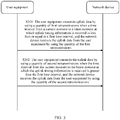
- FIG. 2 is a schematic flowchart of a communication method according to an embodiment of this application. Steps are as follows.
- User equipment transmits uplink data by using a first transmission parameter set when a time interval from a current moment to a latest moment at which uplink timing information is received is less than or equal to a first time interval.
- a network device receives the uplink data from the user equipment by using the first transmission parameter set when a time interval from the current moment to a latest moment at which the uplink timing information is sent to the user equipment is less than or equal to the first time interval.
- the user equipment receives, at some moments, the uplink timing information (for example, a TA command) fed back by the network device.
- the network device feeds back the uplink timing information to the user equipment in two manners: (1) After receiving a preamble, the network device feeds back the uplink timing information to the user equipment by using a random access response (random access response, RAR). (2) The network device may alternatively feed back the uplink timing information to the user equipment through a MAC CE.
- RAR random access response
- the uplink timing information sent by the network device has time validity. As time passes by, the uplink timing information gradually becomes invalid (for example, moving of the user equipment, a change in a channel environment, or an offset of a crystal oscillator of the user equipment causes the uplink timing information to gradually become invalid). Therefore, it may be approximately considered that a longer time from a moment at which the uplink timing information is delivered indicates a severer time offset of uplink transmission of the user equipment, namely, lower reliability of the uplink transmission of the user equipment.
- the user equipment selects different transmission parameter sets based on a time interval from a current moment at which one uplink transmission is performed to a latest moment at which the uplink timing information is set or updated.
- the current moment is a moment at which the user equipment starts to transmit the uplink data by using the transmission parameter set, and may also be referred to as a start moment at which the uplink data is transmitted.
- the user equipment and the network device agree on a plurality of sets of uplink transmission parameters in advance. Each set of uplink transmission parameters corresponds to different transmission reliability and transmission efficiency.
- the user equipment Before transmitting an uplink service, the user equipment first determines the time interval from the current moment to the latest moment at which the uplink timing information is received. The user equipment selects different transmission parameter sets based on different time intervals.
- a parameter selection rule may be agreed on by the user equipment and the network device in advance. To ensure the transmission reliability and balance the transmission efficiency, the selection rule is as follows: A longer time interval indicates that the user equipment selects a transmission parameter set with higher transmission reliability; and a shorter time interval indicates that the user equipment selects a transmission parameter set with higher transmission efficiency.
- the transmission parameter set includes one or more uplink transmission parameters.
- Different transmission parameter sets may mean that types of uplink transmission parameters in the sets are different, or mean that parameter values of a portion of or all of the uplink transmission parameters in the sets are different, or mean that parameter values of a portion of the uplink transmission parameters are different and types of the included uplink transmission parameters are also different.
- the uplink transmission parameter set may include one or more of the following uplink transmission parameters: a time frequency resource parameter, a quantity of retransmissions (or a minimum quantity of retransmissions), a transmission time interval bundling size (TTI Bundling size) (or a minimum quantity of times of TTI bundling), whether to send a preamble, a transport block size (transport block size, TBS), a modulation-related parameter (for example, a modulation and coding scheme (modulation and coding scheme, MCS) level or a modulation order), a non-orthogonal transmission parameter, a MIMO-related parameter (for example, a quantity of layers of MIMO), a pilot (for example, a DMRS) configuration parameter, or a power control parameter.
- a time frequency resource parameter for example, a quantity of retransmissions (or a minimum quantity of retransmissions), a transmission time interval bundling size (TTI Bundling size) (or a minimum quantity of times of T
- Different values may be configured for the uplink transmission parameters based on different time intervals.
- Table 1 Higher reliability Higher transmission efficiency Larger total quantity of time frequency resources Smaller total quantity of the time frequency resources Larger quantity of retransmissions (or larger quantity of minimum retransmissions) Smaller quantity of the retransmissions (or smaller quantity of the minimum retransmissions) Larger quantity of times of TTI bundling (or larger quantity of times of minimum TTI bundling) Smaller quantity of the times of the TTI bundling (or smaller quantity of the times of the minimum TTI bundling) Need to send a preamble Do not send the preamble Set a smaller transport block size Set a larger transport block size Sets a lower modulation order Set a higher modulation order Smaller quantity of layers of non-orthogonal transmission Larger quantity of the layers of the non-orthogonal transmission Smaller quantity of layers of MIMO transmission Larger quantity of
- the plurality of sets of uplink transmission parameters are agreed on by the network device and the user equipment in advance.
- the selection rule of the plurality of sets of parameters may also be agreed on by the network device and the user equipment in advance.
- Both the preset uplink transmission parameters and the preset uplink parameter selection rules may be implemented in the following several manners: (1) preset by a system, where no signaling exchange is needed; (2) configured by the network device by using a broadcast message (for example, a system information block (system information block, SIB); (3) for the user equipment in a connected state, configured by the network device by using user-specific RRC signaling; and (4) for a user in a non-connected state, may be configured by the network device (for example, configured by using RRC connection release (RRC connection release) signaling) in signaling in which the user equipment is configured to enter the non-connected state.
- RRC connection release RRC connection release
- cyclic prefixes there are length configurations of two types of cyclic prefixes (a normal cyclic prefix (normal CP) and an extended cyclic prefix (extended CP)) in the LTE system and the NR system.
- This embodiment may be used in configuration manners with the two types of CPs.
- the foregoing time interval may be determined by setting one or more timers (timer).
- the user equipment sets the one or more timers when receiving the uplink timing information.
- the user equipment selects different transmission parameter sets based on whether the one or more timers expire.
- one timer may be set when the user equipment receives the uplink timing information. Before the timer expires, it may be considered that the time interval from the current moment at which the user equipment transmits the uplink data to the latest moment at which the user equipment receives the uplink timing information is less than or equal to the first time interval.
- Timing duration of the timer may be specified in a protocol, or may be configured by the network device for the user equipment (for example, configured by using RRC signaling).
- the network device may also set one or more timers after sending the uplink timing information.
- the network device selects different transmission parameter sets based on whether the one or more timers expire. Therefore, when data transmitted in uplink by a user is received, different receiving and decoding manners may also be used based on different time intervals, to reduce an effect from asynchronization.
- the user equipment may transmit the uplink data by using the first transmission parameter set, thereby improving data transmission efficiency.
- the uplink transmission parameters in the table on the right of Table 1 are used.
- the user equipment transmits the uplink data by using a second transmission parameter set when the time interval from the current moment to the latest moment at which the uplink timing information is received is greater than the first time interval, where a transmission parameter included in the first transmission parameter set is different from that included in the second transmission parameter set.
- the network device receives the uplink data from the user equipment by using the second transmission parameter set when the time interval from the current moment to the latest moment at which the uplink timing information is sent to the user equipment is greater than the first time interval.
- the time offset of the uplink transmission of the user equipment is relatively large, and the user equipment may transmit the uplink data by using the second transmission parameter set, so that reliability of the uplink data transmission is improved.
- the uplink transmission parameters in the table on the left of Table 1 are used.
- different transmission parameter sets are used to transmit the uplink data at different time intervals based on the time interval from the current moment to the latest moment at which the uplink timing information is received, so that both transmission efficiency and transmission reliability can be balanced.
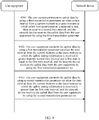
- FIG. 3 is a schematic flowchart of another communication method according to an embodiment of this application. Steps are as follows.
- S201 User equipment transmits uplink data by using a quantity of first retransmissions when a time interval from a current moment to a latest moment at which uplink timing information is received is less than or equal to a first time interval.
- a network device receives the uplink data from the user equipment by using the quantity of the first retransmissions when the time interval from the current moment to the latest moment at which the uplink timing information is received is less than or equal to the first time interval.
- the user equipment starts one timer after receiving the uplink timing information. Before the timer expires, when the time interval from the moment at which the user equipment sends the uplink data to the latest moment at which the user equipment receives the uplink timing information is less than or equal to the first time interval, the user equipment may transmit the uplink data by using the quantity of the first retransmissions.
- the quantity of the retransmissions may also be replaced with a TTI bundling size.
- TTI bundling size In this embodiment, the two terms “TTI bundling "and “retransmission” are not distinguished.
- a common feature of the two terms “TTI bundling "and “retransmission” is that for a same transport block (transport block, TB), coding and modulation are first performed, and then resource mapping is performed.
- resource mapping resources are mapped to time frequency resources corresponding to a plurality of transmission time intervals (transmission time interval, TTI).
- TTI transmission time interval
- the TTI is a time domain resource allocation unit.
- the TTI may be one subframe, one slot, or a plurality of OFDM symbols.
- the time frequency resources in the plurality of TTIs may be adjacent or may not be adjacent.
- FIG. 4 is a schematic diagram of an example of one uplink transmission.
- the quantity of the first retransmissions is 1, that is, the uplink data is transmitted only once.
- the uplink data is transmitted only on a time frequency resource of one TTI, and retransmission is not performed.
- the quantity of the first retransmissions may also be set to a relatively small value. If a quantity of retransmissions is not configured, there is only one transmission for to-be-transmitted uplink data (a data packet) by default.
- the quantity of the retransmissions may be understood as including a current transmission. For example, if the quantity of the first retransmissions is 1, the current transmission is included, and there is one transmission in addition to the current transmission for the to-be-transmitted uplink data (the data packet). This understanding is used in this embodiment.
- the quantity of the retransmissions may also be understood as only the quantity of the retransmissions, that is, the quantity of the retransmissions does not include the current transmission. For example, if the quantity of the retransmissions is 1, there is one retransmission in addition to the current transmission.
- the time interval from the current moment to the latest moment at which the user equipment receives the uplink timing information is less than or equal to the first time interval, and is not long from the moment at which the uplink timing information is delivered (where the uplink timing information is still valid or is just expired)
- a time offset of uplink transmission of the user equipment is relatively small, reliability of the uplink data transmission is relatively high, and the user equipment may transmit the uplink data by using the quantity of the first retransmissions.
- a first transmission parameter set is used for data transmission, retransmission is not needed, or the quantity of the retransmissions is relatively small. Therefore, data efficiency is relatively high.
- the user equipment transmits the uplink data by using a quantity of second retransmissions when the time interval from the current moment to the latest moment at which the uplink timing information is received is greater than the first time interval, where the quantity of the first retransmissions is less than the quantity of the second retransmissions.
- the network device receives the uplink data from the user equipment by using the quantity of the second retransmissions when the time interval from the current moment to the latest moment at which the uplink timing information is received is greater than the first time interval.
- the time interval from the moment at which the user equipment sends the uplink data to the latest moment at which the user equipment receives the uplink timing information is greater than the first time interval, and the user equipment may transmit the uplink data by using the quantity of the second retransmissions.
- the time offset of the uplink transmission of the user equipment is relatively large, and the user equipment may transmit the uplink data by using the quantity of the second retransmissions.
- the quantity of the second retransmissions is greater than the quantity of the first retransmissions.
- the uplink data transmission is performed by using the quantity of the second retransmissions, and reliability is relatively high.
- the quantity of the second retransmissions is K
- K is a value greater than 1
- the quantity of the second retransmissions is greater than the quantity of the first retransmissions.
- the quantity of the retransmissions may be preset by a system, or may be configured by the network device through broadcasting, or may be configured by the network device by using RRC signaling or downlink control information (downlink control information, DCI) (where if the user equipment is in a non-connected state, the user equipment may be configured by the network device by using the RRC signaling or the DCI before the user equipment enters the non-connected state).
- RRC signaling or downlink control information downlink control information (downlink control information, DCI)
- the uplink timing information when the time interval from the current moment to the latest moment at which the uplink timing information is received is less than or equal to the first time interval, the uplink timing information may still be valid, and transmission may be performed by using a relatively small quantity of retransmissions or retransmission is not performed, so that transmission efficiency can be improved.
- the time interval from the current moment to the latest moment at which the uplink timing information is received is greater than the first time interval, the uplink timing information is already invalid, and transmission is performed by using a relatively large quantity of retransmissions, so that transmission reliability can be improved.
- FIG. 5 is a schematic flowchart of still another communication method according to an embodiment of this application. Steps are as follows.
- S301 User equipment transmits uplink data based on a first frame format when a time interval from a current moment to a latest moment at which uplink timing information is received is less than or equal to a first time interval, where the first frame format does not include a preamble.
- a network device receives the uplink data from the user equipment based on the first frame format when the time interval from the current moment to the latest moment at which the uplink timing information is received is less than or equal to the first time interval.
- the user equipment starts one timer after receiving the uplink timing information. Before the timer expires, the time interval from the moment at which the user equipment sends the uplink data to the latest moment at which the user equipment receives the uplink timing information is less than or equal to the first time interval, and the user equipment may transmit the uplink data by using the first frame format.
- the first frame format does not include the preamble.
- the uplink data transmission does not include the preamble.
- the time interval from the current moment to the latest moment at which the user equipment receives the uplink timing information is less than or equal to the first time interval, and is not long from the moment at which the uplink timing information is delivered (where the uplink timing information is still valid or is just expired)
- a time offset of uplink transmission of the user equipment is relatively small, reliability of the uplink data transmission is relatively high, and the user equipment may not send the preamble when transmitting the uplink data.
- the preamble does not need to be sent. Therefore, data transmission efficiency is relatively high.
- the user equipment transmits the uplink data based on a second frame format when the time interval from the current moment to the latest moment at which the uplink timing information is received is greater than the first time interval, where the second frame format includes a preamble.
- the network device receives the uplink data from the user equipment based on the second frame format when the time interval from the current moment to the latest moment at which the uplink timing information is received is greater than the first time interval.
- the time interval from the moment at which the user equipment sends the uplink data to the latest moment at which the user equipment receives the uplink timing information is greater than the first time interval.
- the user equipment further sends one or more extra preambles. As shown in FIG. 6 , after the timer expires, one preamble is sent at the same time when data is sent. The preamble may help the network device adjust a timing error of receiving the signal, to improve reliability of uplink transmission.
- a time frequency resource used to transmit the preamble may be adjacent to or not adjacent to a time frequency resource used to transmit the uplink data.
- a time frequency resource occupied by the preamble may be the same as or different from a time frequency resource of a preamble that is already used by the user equipment for access in a system.
- a sequence set occupied by the preamble may be the same as or different from a preamble sequence set that is already used by the user equipment for access in the system.
- the user equipment may transmit the uplink data by using the second frame format, and the second frame format includes the preamble, so that transmission reliability is relatively high.
- the frame format may be preset by a system, or may be configured by the network device through broadcasting, or may be configured by the network device by using RRC signaling or DCI (where if the user equipment is in a non-connected state, the user equipment may be configured by the network device by using the RRC signaling or the DCI before the user equipment enters the non-connected state).
- a resource used by the user equipment to send the preamble or the data may be agreed on by the user equipment and the network device in advance, or may be higher layer signaling (for example, RRC signaling) or lower layer signaling (for example, a MAC CE or DCI) configured by the user equipment for the user equipment. If the resource of the preamble and the resource of the data are configured by the network device for the user equipment, the resource of the preamble and the resource of the data may be in a same piece of configuration information, or may be in different pieces of configuration information.
- the network device can learn, based on information about the resource on which the preamble is detected, resource information used by the user equipment to send the data.
- the resource information herein may include at least one of the following information: a resource position, a resource number (index), a resource size, a resource quantity, or the like.
- the resource used by the user equipment to send the preamble and the resource used by the user equipment to send the data may be adjacent in time domain, or may not be adjacent in time domain; may be adjacent in frequency domain, or may not be adjacent in frequency domain; may be located on a same time domain resource, or may be located on different time domain resources; may be located on a same frequency domain resource, or may be located on different frequency domain resources; or may be located in a same spatial domain, or may be located in different spatial domains, namely, a beam.
- the resource used by the user equipment to send the data may include a resource used to send a pilot (for example, a DMRS), and the pilot may be used for detection, channel estimation, or the like of the user equipment. It may be understood that in another embodiment of this application, the resource used to send the data may also include the resource used to send the pilot.
- a pilot for example, a DMRS
- the resource used to send the data may also include the resource used to send the pilot.
- the uplink timing information when the time interval from the current moment to the latest moment at which the uplink timing information is received is less than or equal to the first time interval, the uplink timing information may be still valid, and only the data is sent but the preamble is not sent. Therefore, the network device can still correctly demodulate the data, so that transmission efficiency can be improved.
- the time interval from the current moment to the latest moment at which the uplink timing information is received is greater than the first time interval, the uplink timing information is already invalid, and the preamble is sent while the data is sent. This can improve data demodulation reliability, thereby improving transmission reliability.
- FIG. 7 is a schematic flowchart of still another communication method according to an embodiment of this application. Steps are as follows.
- S401 User equipment transmits uplink data by using a first transport block size when a time interval from a current moment to a latest moment at which uplink timing information is received is less than or equal to a first time interval.
- a network device receives the uplink data from the user equipment by using the first transport block size when the time interval from the current moment to the latest moment at which the uplink timing information is received is less than or equal to the first time interval.
- the user equipment starts one timer after receiving the uplink timing information. Before the timer expires, the time interval from the moment at which the user equipment sends the uplink data to the latest moment at which the user equipment receives the uplink timing information is less than or equal to the first time interval, the user equipment may transmit the uplink data by using the first transport block size, and the first transport block size may be set to a relatively large transport block size. On time frequency resources of a same size, a relatively large transport block size is used to transmit data, so that a relatively large amount of data can be transmitted.
- FIG. 8 is a schematic diagram of an example of still another uplink transmission.
- a time interval from a current moment to a latest moment at which uplink timing information is received is less than or equal to a first time interval, that is, before a timer expires or when the timer expires, a first transport block size is N1.
- the first transport block size may be set to a relatively large transport block size, so that a relatively large amount of data can be transmitted. Therefore, data transmission efficiency is relatively high.
- the user equipment transmits the uplink data by using a second transport block size when the time interval from the current moment to the latest moment at which the uplink timing information is received is greater than the first time interval, where the second transport block size is smaller than the first transport block size.
- the network device receives the uplink data from the user equipment by using the second transport block size when the time interval from the current moment to the latest moment at which the uplink timing information is received is greater than the first time interval.
- the time interval from the moment at which the user equipment sends the uplink data to the latest moment at which the user equipment receives the uplink timing information is greater than the first time interval, and the user equipment may transmit the uplink data by using the second transport block size.
- the second transport block size is smaller than the first transport block size. That is, after the timer expires, the user equipment may transmit a relatively small amount of data. As shown in FIG. 8 , after the timer expires, the second transport block size is N2, where N2 ⁇ N1.
- the time offset of the uplink transmission of the user equipment is relatively large, and the user equipment may transmit the uplink data by using the second transport block size.
- the second transport block size is smaller than the first transport block size, so that channel coding may be performed on to-be-transmitted data by using a relatively low bit rate of the channel coding, thereby ensuring data transmission reliability.
- the transport block size may be preset by a system, or may be configured by the network device through broadcasting, or may be configured by the network device by using RRC signaling or DCI (where if the user equipment is in a non-connected state, the user equipment may be configured by the network device by using the RRC signaling or the DCI before the user equipment enters the non-connected state).
- the uplink timing information when the time interval from the current moment to the latest moment at which the uplink timing information is received is less than or equal to the first time interval, the uplink timing information may still be valid, and data is transmitted by using a relatively large transport block size, so that transmission efficiency can be improved.
- the time interval from the current moment to the latest moment at which the uplink timing information is received is greater than the first time interval, the uplink timing information is already invalid, and data is transmitted by using a relatively small transport block size, so that transmission reliability can be improved.
- FIG. 9 is a schematic flowchart of still another communication method according to an embodiment of this application. Steps are as follows.
- S501 User equipment transmits uplink data by using a third transmission parameter set when a time interval from a current moment to a latest moment at which uplink timing information is received is less than or equal to a second time interval.
- a network device receives the uplink data from the user equipment by using the third transmission parameter set when a time interval from the current moment to a latest moment at which the uplink timing information is sent to the user equipment is less than or equal to the second time interval.
- the user equipment may start two timers: a timer 1 and a timer 2, and timeout duration of the timer 1 is less than that of the timer 2.
- the third transmission parameter set may include one or more of the uplink transmission parameters in Table 1.
- the user equipment transmits the uplink data by using a first transmission parameter set when the time interval from the current moment to the latest moment at which the uplink timing information is received is greater than the second time interval and is less than or equal to the first time interval, where the second time interval is less than the first time interval.
- the network device receives the uplink data from the user equipment by using the first transmission parameter set when the time interval from the current moment to the latest moment at which the uplink timing information is received is greater than the second time interval and is less than the first time interval.
- the user equipment transmits the uplink data by using the first transmission parameter set.
- a transmission parameter included in the third transmission parameter set and a transmission parameter included in the first transmission parameter set are different.
- types of uplink transmission parameters in the third transmission parameter set and the first transmission parameter set may be different, or parameter values of a portion of or all of the uplink transmission parameters in the third transmission parameter set and the first transmission parameter set are different, or parameter values of a portion of the uplink transmission parameters in the third transmission parameter set and the first transmission parameter set are different and types of the uplink transmission parameters included in the third transmission parameter set and the first transmission parameter set are also different.
- the user equipment transmits the uplink data by using a quantity of second retransmissions when the time interval from the current moment to the latest moment at which the uplink timing information is received is greater than the first time interval, where the quantity of the first retransmissions is less than the quantity of the second retransmissions.
- the network device receives the uplink data from the user equipment by using the quantity of the second retransmissions when the time interval from the current moment to the latest moment at which the uplink timing information is received is greater than the first time interval.
- the user equipment After the timer 2 expires, in other words, when the time interval from the moment at which the user equipment performs uplink transmission to the latest moment at which the user equipment receives the uplink timing information is greater than the first time interval, the user equipment transmits the uplink data by using the quantity of the second retransmissions.
- the transmission parameter included in the third transmission parameter set is different from the transmission parameter included in the second transmission parameter set.
- types of the transmission parameters of the third transmission parameter set and the transmission parameters of the second transmission parameter set may be different, or values of the transmission parameters of the third transmission parameter set and the transmission parameters of the second transmission parameter set are different, or values of a portion of a plurality of transmission parameters of the third transmission parameter set and a portion of a plurality of transmission parameters of the second transmission parameter set are different.
- the user equipment may perform the uplink transmission by using the third transmission parameter set that can improve data transmission efficiency, and data transmission efficiency is relatively high.
- the time interval from the current moment to the latest moment at which the user equipment receives the uplink timing information is greater than the second time interval and is less than or equal to the first time interval, and there is a period of time from the moment at which the uplink timing information is delivered, the time offset of the uplink transmission of the user equipment is relatively large before the timer 1 expires, and the user equipment may transmit the uplink data by using the first transmission parameter set that balances both transmission efficiency and transmission reliability.
- the time offset of the uplink transmission of the user equipment is relatively large before the timer 2 expires, and the user equipment may transmit the uplink data by using the second transmission parameter set that can improve data transmission efficiency.
- FIG. 10a is a schematic diagram of still another uplink transmission.
- uplink transmission is performed by using a quantity of first retransmissions.
- the uplink transmission is performed by using a second quantity K of retransmissions.
- the quantity of the second retransmissions is greater than the quantity of the first retransmissions.
- the uplink transmission is performed in a manner of sending a preamble and data. Compared with a quantity of retransmissions, sending the preamble can improve data transmission reliability.
- FIG. 10b is a schematic diagram of still another uplink transmission.
- uplink transmission is performed by using a quantity of first retransmissions, and the quantity of the first retransmissions is 0.
- the uplink transmission is performed by using a second quantity K1 of retransmissions, and the quantity of the second retransmissions is greater than the quantity of the first retransmissions.
- the uplink transmission is performed by using a quantity of third retransmissions, and the quantity of the third retransmissions is greater than the quantity of the second retransmissions.
- FIG. 10a and FIG. 10b are merely examples. Any combination of the first transmission parameter set, the second transmission parameter set, and the third transmission parameter set may be selected. This is not limited in this application.
- an embodiment of this application further provides a communications apparatus 1000.
- the communications apparatus may be applied to the communication methods shown in FIG. 2 to FIG. 9 .
- the communications apparatus 1000 may be the user equipment 200 shown in FIG. 1 , or may be a component (for example, a chip) used in the user equipment 200.
- the communications apparatus 1000 includes a processing unit 11 and a transceiver unit 12.
- the processing unit 11 is configured to start a timer.
- the transceiver unit 12 is configured to transmit uplink data by using a first transmission parameter set when a time interval from a current moment to a latest moment at which uplink timing information is received is less than or equal to a first time interval.
- the transceiver unit 12 is further configured to transmit uplink data by using a second transmission parameter set when a time interval from a current moment to a latest moment at which uplink timing information is received is greater than the first time interval.
- a transmission parameter included in the first transmission parameter set is different from that included in the second transmission parameter set.
- the processing unit 11 may be further configured to determine whether a timer expires at the current moment. If the timer does not expire at the current moment, the processing unit indicates the transceiver unit to transmit the uplink data by using the first transmission parameter set. If the timer expires at the current moment, the processing unit indicates the transceiver unit to transmit the uplink data by using the second transmission parameter set.
- the transceiver unit 12 is configured to transmit the uplink data by using a quantity of first retransmissions when the time interval from the current moment to the latest moment at which the uplink timing information is received is less than or equal to the first time interval.
- the transceiver unit 12 is further configured to transmit the uplink data by using a quantity of second retransmissions when the time interval from the current moment to the latest moment at which the uplink timing information is received is greater than the first time interval, where the quantity of the first retransmissions is less than the quantity of the second retransmissions.
- the transceiver unit 12 is configured to transmit the uplink data by using the first transmission parameter set when the time interval from the current moment to the latest moment at which the uplink timing information is received is greater than a second time interval and is less than or equal to the first time interval, and the second time interval is less than the first time interval.
- the transceiver unit 12 is further configured to transmit the uplink data by using a third transmission parameter set when the time interval from the current moment to the latest moment at which the uplink timing information is received is less than or equal to the second time interval, where a transmission parameter included in the third transmission parameter set is different from that included in the first transmission parameter set, and the transmission parameter included in the third transmission parameter set is different from that included in the second transmission parameter set.
- the transceiver unit 12 is configured to transmit the uplink data based on a quantity of third retransmissions when the time interval from the current moment to the latest moment at which the uplink timing information is received is less than or equal to the second time interval, where the quantity of the third retransmissions is less than the quantity of the first retransmissions.
- the transceiver unit 12 is configured to transmit the uplink data based on a first frame format when the time interval from the current moment to the latest moment at which the uplink timing information is received is less than or equal to the first time interval, where the first frame format does not include a preamble.
- the transceiver unit 12 is configured to transmit the uplink data based on a second frame format when the time interval from the current moment to the latest moment at which the uplink timing information is received is greater than the first time interval, where the second frame format includes a preamble.
- the transceiver unit 12 is configured to transmit the uplink data by using a first transport block size when the time interval from the current moment to the latest moment at which the uplink timing information is received is less than or equal to the first time interval.
- the transceiver unit 12 is configured to transmit the uplink data based on a second transport block size when the time interval from the current moment to the latest moment at which the uplink timing information is received is greater than the first time interval, where the second transport block size is smaller than the first transport block size.
- processing unit 11 and the transceiver unit 12 refer to related descriptions of the user equipment in the method embodiments shown in FIG. 2 to FIG. 9 . Details are not described herein.
- an embodiment of this application further provides a communications apparatus 2000.
- the communications apparatus may be applied to the communication methods shown in FIG. 2 to FIG. 9 .
- the communications apparatus 2000 may be the network device 100 shown in FIG. 1 , or may be a component (for example, a chip) used in the network device 100.
- the communications apparatus 2000 includes a processing unit 21 and a transceiver unit 22.
- the processing unit 21 is configured to start a timer.
- the transceiver unit 22 is configured to receive uplink data from user equipment by using a first transmission parameter set when a time interval from a current moment to a latest moment at which uplink timing information is sent to the user equipment is less than or equal to a first time interval.
- the transceiver unit 22 is further configured to receive the uplink data from the user equipment by using a second transmission parameter set when a time interval from a current moment to a latest moment at which uplink timing information is sent to the user equipment is greater than the first time interval.
- a transmission parameter included in the first transmission parameter set is different from that included in the second transmission parameter set.
- the processing unit 11 may be further configured to determine whether a timer expires at the current moment. If the timer does not expire at the current moment, the processing unit indicates the transceiver unit to receive, by using the first transmission parameter set, the uplink data transmitted by the user equipment. If the timer expires at the current moment, the processing unit indicates the transceiver unit to receive, by using the second transmission parameter set, the uplink data transmitted by the user equipment.
- the transceiver unit 22 is configured to receive the uplink data from the user equipment based on a quantity of first retransmissions when the time interval from the current moment to the latest moment at which the uplink timing information is sent to the user equipment is less than or equal to the first time interval.
- the transceiver unit 22 is further configured to receive the uplink data from the user equipment based on a quantity of second retransmissions when the time interval from the current moment to the latest moment at which the uplink timing information is sent to the user equipment is greater than the first time interval, where the quantity of the first retransmissions is less than the quantity of the second retransmissions.
- the transceiver unit 22 is configured to receive the uplink data from the user equipment by using the first transmission parameter set when the time interval from the current moment to the latest moment at which the uplink timing information is sent to the user equipment is greater than a second time interval and is less than or equal to the first time interval, and the second time interval is less than the first time interval.
- the transceiver unit 22 is further configured to receive the uplink data from the user equipment by using a third transmission parameter set when the time interval from the current moment to the latest moment at which the uplink timing information is sent to the user equipment is less than or equal to the second time interval, where a transmission parameter included in the third transmission parameter set is different from that included in the first transmission parameter set, and the transmission parameter included in the third transmission parameter set is different from that included in the second transmission parameter set.
- the transceiver unit 22 is further configured to receive the uplink data from the user equipment based on a quantity of third retransmissions when the time interval from the current moment to the latest moment at which the uplink timing information is sent to the user equipment is less than or equal to the second time interval, where the quantity of the third retransmissions is less than the quantity of the first retransmissions.
- the transceiver unit 22 is configured to receive the uplink data from the user equipment based on a first frame format when the time interval from the current moment to the latest moment at which the uplink timing information is sent to the user equipment is less than or equal to the first time interval, where the first frame format does not include a preamble.
- the transceiver unit 22 is further configured to receive the uplink data from the user equipment based on a second frame format when the time interval from the current moment to the latest moment at which the uplink timing information is sent to the user equipment is greater than the first time interval, where the second frame format includes the preamble.
- the transceiver unit 22 is configured to receive the uplink data from the user equipment based on a first transport block size when the time interval from the current moment to the latest moment at which the uplink timing information is sent to the user equipment is less than or equal to the first time interval.
- the transceiver unit 22 is further configured to receive the uplink data from the user equipment based on a second transport block size when the time interval from the current moment to the latest moment at which the uplink timing information is sent to the user equipment is greater than the first time interval, where the second transport block size is smaller than the first transport block size.
- processing unit 21 and the transceiver unit 22 refer to related descriptions of the network device in the method embodiments shown in FIG. 2 to FIG. 9 . Details are not described herein.
- An embodiment of this application further provides a communications apparatus.
- the communications apparatus is configured to perform the foregoing communication methods. Some or all of the foregoing communication methods may be implemented by using hardware, or may be implemented by using software.
- the communications apparatus may be a chip or an integrated circuit.
- the communications apparatus when some or all of the communication methods in the foregoing embodiments are implemented by using software, the communications apparatus includes a memory configured to store a program and a processor configured to execute the program stored in the memory, so that when the program is executed, the communications apparatus is enabled to implement the communication methods provided in the foregoing embodiments.
- the memory may be a physically independent unit, or may be integrated with the processor.
- the communications apparatus may alternatively include only a processor.
- a memory configured to store a program is located outside the communications apparatus.
- the processor is connected to the memory by using a circuit or wire, and is configured to read and execute the program stored in the memory.
- the processor may be a central processing unit (central processing unit, CPU), a network processor (network processor, NP), or a combination of a CPU and an NP.
- CPU central processing unit
- NP network processor
- the processor may further include a hardware chip.
- the hardware chip may be an application-specific integrated circuit (application-specific integrated circuit, ASIC), a programmable logic device (programmable logic device, PLD), or a combination thereof.
- the PLD may be a complex programmable logic device (complex programmable logic device, CPLD), a field-programmable logic gate array (field-programmable gate array, FPGA), generic array logic (generic array logic, GAL), or any combination thereof.
- the memory may include a volatile memory (volatile memory), for example, a random-access memory (random-access memory, RAM).
- volatile memory volatile memory
- nonvolatile memory non-volatile memory
- flash memory flash memory
- hard disk drive hard disk drive
- solid-state drive solid-state drive
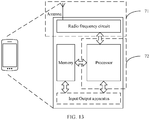
- FIG. 13 is a simplified schematic structural diagram of user equipment.
- the user equipment includes a processor, a memory, a radio frequency circuit, an antenna, and an input/output apparatus.
- the processor is mainly configured to: process a communication protocol and communication data, control the user equipment, execute a software program, process data of the software program, and the like.
- the memory is mainly configured to store the software program and the data.
- the radio frequency circuit is mainly configured to: perform conversion between a baseband signal and a radio frequency signal, and process the radio frequency signal.
- the antenna is mainly configured to send and receive a radio frequency signal in an electromagnetic wave form.
- the input/output apparatus such as a touchscreen, a display, or a keyboard, is mainly configured to: receive data entered by a user and output data to the user. It should be noted that some types of user equipments may not have an input/output apparatus.
- the processor When data needs to be sent, the processor performs baseband processing on the to-be-sent data, and outputs a baseband signal to the radio frequency circuit. After performing radio frequency processing on the baseband signal, the radio frequency circuit sends a radio frequency signal in the electromagnetic wave form through the antenna.
- the radio frequency circuit receives a radio frequency signal by using the antenna, converts the radio frequency signal into a baseband signal, and outputs the baseband signal to the processor, and the processor converts the baseband signal into data and processes the data.
- FIG. 13 shows only one memory and one processor. In an actual user equipment product, there may be one or more processors and one or more memories.
- the memory may also be referred to as a storage medium, a storage device, or the like.
- the memory may be disposed independent of the processor, or may be integrated with the processor. This is not limited in this embodiment of this application.
- the antenna and the radio frequency circuit that have transceiver functions may be considered as a receiving unit and a sending unit (which may also be collectively referred to as a transceiver unit) of the user equipment, and the processor having a processing function may be considered as a processing unit of the user equipment.
- the user equipment includes a transceiver unit 71 and a processing unit 72.
- the transceiver unit 71 may also be referred to as a receiver/transmitter (transmitter) machine, a receiver/transmitter, a receiver/transmitter circuit, or the like.
- the processing unit 72 may also be referred to as a processor, a processing board, a processing module, a processing apparatus, or the like.
- the transceiver unit 71 is configured to perform functions of the user equipment in steps S101 and S102 in the embodiment shown in FIG. 2 .
- the transceiver unit 71 is configured to perform functions of the user equipment in steps S201 and S202 in the embodiment shown in FIG. 3 .
- the transceiver unit 71 is configured to perform functions of the user equipment in steps S301 and S302 in the embodiment shown in FIG. 5 .
- the transceiver unit 71 is configured to perform functions of the user equipment in steps S401 and S402 in the embodiment shown in FIG. 7 .
- the transceiver unit 71 is configured to perform functions of the user equipment in steps S501, S502, and S503 in the embodiment shown in FIG. 9 .
- FIG. 14 is a simplified schematic structural diagram of a network device.
- the network device includes a part 82 and a part for radio frequency signal receiving/sending and conversion, and the radio frequency signal receiving/sending and conversion further includes a transceiver unit 81.
- the part for radio frequency signal receiving/sending and conversion is mainly configured to: send/receive a radio frequency signal and perform conversion between a radio frequency signal and a baseband signal.
- the part 82 is mainly configured to perform baseband processing, control the network device, and so on.
- the transceiver unit 81 may also be referred to as a receiver/transmitter (transmitter) machine, a receiver/transmitter, a receiver/transmitter circuit, or the like.
- the part 82 is usually a control center of the network device, and may usually be referred to as a processing unit, configured to control the network device to perform steps performed by the network device in FIG. 2 to FIG. 9 .
- a processing unit configured to control the network device to perform steps performed by the network device in FIG. 2 to FIG. 9 .
- the part 82 may include one or more boards. Each board may include one or more processors and one or more memories.
- the processor is configured to read and execute a program in the memory to implement a baseband processing function and control the network device. If there is a plurality of boards, the boards may be interconnected to improve a processing capability. In an optional implementation, alternatively, the plurality of boards may share one or more processors, or the plurality of boards share one or more memories, or the plurality of boards simultaneously share one or more processors.
- the transceiver unit 81 is configured to perform functions of the network device in steps S101 and S102 in the embodiment shown in FIG. 2 .
- the transceiver unit 81 is configured to perform functions of the network device in steps S201 and S202 in the embodiment shown in FIG. 3 .
- the transceiver unit 81 is configured to perform functions of the network device in steps S301 and S302 in the embodiment shown in FIG. 5 .
- the transceiver unit 81 is configured to perform functions of the network device in steps S401 and S402 in the embodiment shown in FIG. 7 .
- the transceiver unit 81 is configured to perform functions of the network device in steps S501, S502, and S503 in the embodiment shown in FIG. 9 .
- An embodiment of this application further provides a computer-readable storage medium.
- the computer-readable storage medium stores a computer program or an instruction. When the computer program or the instruction is executed, the methods according to the foregoing aspects are implemented.
- An embodiment of this application further provides a computer program product including an instruction.
- the instruction When the instruction is run on a computer, the computer is enabled to perform the methods according to the foregoing aspects.
- An embodiment of this application further provides a communications system, including the foregoing communications apparatuses.
- division into the units is merely logical function division and may be other division in an actual implementation.
- a plurality of units or components may be combined or integrated into another system, or some features may be ignored or not performed.
- the displayed or discussed mutual couplings or direct couplings or communication connections may be implemented by using some interfaces.
- the indirect couplings or communication connections between the apparatuses or units may be implemented in electronic, mechanical, or other forms.
- the units described as separate parts may or may not be physically separate, and parts displayed as units may or may not be physical units, may be located in one position, or may be distributed on a plurality of network units. Some or all of the units may be selected based on an actual requirement to achieve the objectives of the solutions of the embodiments.
- All or some of the foregoing embodiments may be implemented by using software, hardware, firmware, or any combination thereof.
- the embodiments may be implemented all or partially in a form of a computer program product.
- the computer program product includes one or more computer instructions.
- the computer may be a general-purpose computer, a special-purpose computer, a computer network, or another programmable apparatus.
- the computer instruction may be stored in a computer-readable storage medium, or may be transmitted by using a computer-readable storage medium.
- the computer instruction may be transmitted from a website, computer, server, or data center to another website, computer, server, or data center in a wired (for example, a coaxial cable, an optical fiber, or a digital subscriber line (digital subscriber line, DSL)) or wireless (for example, infrared, radio, or microwave) manner.
- the computer-readable storage medium may be any usable medium accessible by a computer, or a data storage device, such as a server or a data center, integrating one or more usable media.
- the usable medium may be a read-only memory (read-only memory, ROM), a random access memory (random access memory, RAM), or a magnetic medium such as a floppy disk, a hard disk, a magnetic tape, a magnetic disk, or an optical medium such as a digital versatile disc (digital versatile disc, DVD), or a semiconductor medium such as a solid-state drive (solid state disk, SSD).
- ROM read-only memory
- RAM random access memory
- a magnetic medium such as a floppy disk, a hard disk, a magnetic tape, a magnetic disk, or an optical medium such as a digital versatile disc (digital versatile disc, DVD), or a semiconductor medium such as a solid-state drive (solid state disk, SSD).
Landscapes
- Engineering & Computer Science (AREA)
- Signal Processing (AREA)
- Computer Networks & Wireless Communication (AREA)
- Quality & Reliability (AREA)
- Mobile Radio Communication Systems (AREA)
Applications Claiming Priority (2)
| Application Number | Priority Date | Filing Date | Title |
|---|---|---|---|
| CN201810904923.8A CN110830201B (zh) | 2018-08-09 | 2018-08-09 | 通信方法及装置 |
| PCT/CN2019/099804 WO2020030048A1 (fr) | 2018-08-09 | 2019-08-08 | Procédé et appareil de communication |
Publications (3)
| Publication Number | Publication Date |
|---|---|
| EP3826214A1 true EP3826214A1 (fr) | 2021-05-26 |
| EP3826214A4 EP3826214A4 (fr) | 2021-10-06 |
| EP3826214B1 EP3826214B1 (fr) | 2024-04-03 |
Family
ID=69413983
Family Applications (1)
| Application Number | Title | Priority Date | Filing Date |
|---|---|---|---|
| EP19846366.3A Active EP3826214B1 (fr) | 2018-08-09 | 2019-08-08 | Procédé et appareil de communication |
Country Status (4)
| Country | Link |
|---|---|
| US (1) | US20210168791A1 (fr) |
| EP (1) | EP3826214B1 (fr) |
| CN (2) | CN110830201B (fr) |
| WO (1) | WO2020030048A1 (fr) |
Families Citing this family (3)
| Publication number | Priority date | Publication date | Assignee | Title |
|---|---|---|---|---|
| CN113676993B (zh) * | 2020-05-14 | 2022-11-04 | 大唐移动通信设备有限公司 | 随机接入信号的接收方法、装置、接收端和存储介质 |
| CN112414557B (zh) * | 2021-01-21 | 2021-04-23 | 南京微鲤科技有限公司 | 智能手机的温度检测系统及其方法 |
| CN114420126A (zh) * | 2021-10-25 | 2022-04-29 | 联想(北京)有限公司 | 一种语音数据量控制方法、装置和电子设备 |
Family Cites Families (13)
| Publication number | Priority date | Publication date | Assignee | Title |
|---|---|---|---|---|
| CN101141471A (zh) * | 2006-09-05 | 2008-03-12 | 华为技术有限公司 | 上行资源的分配方法、上行数据的接收端及发送端装置 |
| CN101197612B (zh) * | 2006-12-07 | 2011-06-15 | 大唐移动通信设备有限公司 | 计算激活时间的方法及装置 |
| CN102111257B (zh) * | 2011-03-04 | 2015-04-01 | 中兴通讯股份有限公司 | 一种时间提前量的调整方法及系统 |
| WO2013168938A1 (fr) * | 2012-05-10 | 2013-11-14 | Lg Electronics Inc. | Procédé et appareil permettant de commander la désactivation de cellules dans un système de communication sans fil |
| US9572121B2 (en) * | 2012-08-17 | 2017-02-14 | Qualcomm Incorporated | Methods and apparatus for timing synchronization during a wireless uplink random access procedure |
| EP2903357B1 (fr) * | 2012-10-30 | 2018-10-10 | Huawei Technologies Co., Ltd. | Procédé, dispositif, terminal et station de base de transmission de données |
| EP2763321B1 (fr) * | 2013-02-05 | 2020-04-08 | Semtech Corporation | Émetteur longue portée à faible puissance |
| WO2015114700A1 (fr) * | 2014-01-31 | 2015-08-06 | パナソニック インテレクチュアル プロパティ コーポレーション オブ アメリカ | Terminal, station de base, procédé d'émission et procédé de réception |
| CN107105496B (zh) * | 2016-02-19 | 2019-08-23 | 电信科学技术研究院 | 一种获取、返回上行定时提前量的方法及装置、系统 |
| US10541802B2 (en) * | 2016-03-31 | 2020-01-21 | Telefonaktiebolaget Lm Ericsson (Publ) | Application of timing advance command in wireless communication device in enhanced coverage mode |
| US10320530B2 (en) * | 2016-10-25 | 2019-06-11 | Telefonaktiebolaget Lm Ericsson (Publ) | Indication of hybrid automatic repeat request feedback by synchronization signal |
| CN108282896B (zh) * | 2017-01-06 | 2019-08-30 | 电信科学技术研究院 | 一种上行数据重传方法及终端 |
| WO2019192020A1 (fr) * | 2018-04-06 | 2019-10-10 | Nokia Shanghai Bell Co., Ltd. | Procédés et appareils pour l'évolutivité de l'utilisation de ressources d'accès multiple non orthogonal |
-
2018
- 2018-08-09 CN CN201810904923.8A patent/CN110830201B/zh active Active
- 2018-08-09 CN CN202110772796.2A patent/CN114024656A/zh active Pending
-
2019
- 2019-08-08 EP EP19846366.3A patent/EP3826214B1/fr active Active
- 2019-08-08 WO PCT/CN2019/099804 patent/WO2020030048A1/fr not_active Ceased
-
2021
- 2021-02-08 US US17/169,669 patent/US20210168791A1/en not_active Abandoned
Also Published As
| Publication number | Publication date |
|---|---|
| CN114024656A (zh) | 2022-02-08 |
| CN110830201A (zh) | 2020-02-21 |
| WO2020030048A1 (fr) | 2020-02-13 |
| EP3826214A4 (fr) | 2021-10-06 |
| CN110830201B (zh) | 2021-07-09 |
| EP3826214B1 (fr) | 2024-04-03 |
| US20210168791A1 (en) | 2021-06-03 |
Similar Documents
| Publication | Publication Date | Title |
|---|---|---|
| US11528099B2 (en) | Communication method and apparatus | |
| EP3949222B1 (fr) | Procédé et appareil pour déterminer une durée d'une répétition d'un bloc de transport | |
| JP7313347B2 (ja) | 通信方法および装置 | |
| EP3621273B1 (fr) | Procédé et appareil de communication | |
| CN111788861B (zh) | 用于执行随机接入的方法和装置 | |
| US12284679B2 (en) | Communications method and apparatus | |
| US11962526B2 (en) | Method for obtaining quantity of resource elements in communication process and related apparatus | |
| EP3723432A1 (fr) | Dispositif et procédé d'accès aléatoire | |
| CN108476521B (zh) | 用于在无线通信系统中发送或接收控制信息的方法和设备 | |
| KR102208133B1 (ko) | 송신 타입 및 ue 처리 능력에 따른 송신 지연 | |
| EP3550911B1 (fr) | Procédé de communication, dispositif côté réseau et dispositif terminal | |
| RU2726641C1 (ru) | Сигнализация о местоположении опорных сигналов в слотах и минислотах | |
| CN113228544A (zh) | 用于预配置的上行链路资源的重传方案和优化 | |
| JP2021522748A (ja) | 通信方法および通信装置 | |
| US20220272771A1 (en) | Information Indication Method and Apparatus | |
| EP3661298B1 (fr) | Procédé et appareil de communication sans fil | |
| EP3869887A1 (fr) | Procédé et dispositif de transmission | |
| EP3499950B1 (fr) | Procédé de mesure de canal et équipement utilisateur | |
| EP3553989A1 (fr) | Procédé et appareil de transmission de données | |
| CN115189843B (zh) | 一种反馈信息传输方法及装置 | |
| US20210168791A1 (en) | Communication method and communications apparatus | |
| EP3993539B1 (fr) | Procédé de communication et dispositif de communication | |
| CN114451034A (zh) | 一种信息处理方法和通信设备 | |
| EP4580287A1 (fr) | Procédé et appareil de planification de données pour transmission coordonnée | |
| CN114026935B (zh) | 一种数据处理方法及通信装置 |
Legal Events
| Date | Code | Title | Description |
|---|---|---|---|
| STAA | Information on the status of an ep patent application or granted ep patent |
Free format text: STATUS: THE INTERNATIONAL PUBLICATION HAS BEEN MADE |
|
| PUAI | Public reference made under article 153(3) epc to a published international application that has entered the european phase |
Free format text: ORIGINAL CODE: 0009012 |
|
| STAA | Information on the status of an ep patent application or granted ep patent |
Free format text: STATUS: REQUEST FOR EXAMINATION WAS MADE |
|
| 17P | Request for examination filed |
Effective date: 20210218 |
|
| AK | Designated contracting states |
Kind code of ref document: A1 Designated state(s): AL AT BE BG CH CY CZ DE DK EE ES FI FR GB GR HR HU IE IS IT LI LT LU LV MC MK MT NL NO PL PT RO RS SE SI SK SM TR |
|
| A4 | Supplementary search report drawn up and despatched |
Effective date: 20210902 |
|
| RIC1 | Information provided on ipc code assigned before grant |
Ipc: H04W 28/18 20090101ALI20210827BHEP Ipc: H04L 5/00 20060101AFI20210827BHEP |
|
| DAV | Request for validation of the european patent (deleted) | ||
| DAX | Request for extension of the european patent (deleted) | ||
| GRAP | Despatch of communication of intention to grant a patent |
Free format text: ORIGINAL CODE: EPIDOSNIGR1 |
|
| STAA | Information on the status of an ep patent application or granted ep patent |
Free format text: STATUS: GRANT OF PATENT IS INTENDED |
|
| INTG | Intention to grant announced |
Effective date: 20231027 |
|
| GRAS | Grant fee paid |
Free format text: ORIGINAL CODE: EPIDOSNIGR3 |
|
| GRAA | (expected) grant |
Free format text: ORIGINAL CODE: 0009210 |
|
| STAA | Information on the status of an ep patent application or granted ep patent |
Free format text: STATUS: THE PATENT HAS BEEN GRANTED |
|
| AK | Designated contracting states |
Kind code of ref document: B1 Designated state(s): AL AT BE BG CH CY CZ DE DK EE ES FI FR GB GR HR HU IE IS IT LI LT LU LV MC MK MT NL NO PL PT RO RS SE SI SK SM TR |
|
| P01 | Opt-out of the competence of the unified patent court (upc) registered |
Effective date: 20240304 |
|
| REG | Reference to a national code |
Ref country code: CH Ref legal event code: EP |
|
| REG | Reference to a national code |
Ref country code: DE Ref legal event code: R096 Ref document number: 602019049698 Country of ref document: DE |
|
| REG | Reference to a national code |
Ref country code: IE Ref legal event code: FG4D |
|
| REG | Reference to a national code |
Ref country code: LT Ref legal event code: MG9D |
|
| REG | Reference to a national code |
Ref country code: NL Ref legal event code: MP Effective date: 20240403 |
|
| REG | Reference to a national code |
Ref country code: AT Ref legal event code: MK05 Ref document number: 1673572 Country of ref document: AT Kind code of ref document: T Effective date: 20240403 |
|
| PG25 | Lapsed in a contracting state [announced via postgrant information from national office to epo] |
Ref country code: NL Free format text: LAPSE BECAUSE OF FAILURE TO SUBMIT A TRANSLATION OF THE DESCRIPTION OR TO PAY THE FEE WITHIN THE PRESCRIBED TIME-LIMIT Effective date: 20240403 |
|
| PG25 | Lapsed in a contracting state [announced via postgrant information from national office to epo] |
Ref country code: NL Free format text: LAPSE BECAUSE OF FAILURE TO SUBMIT A TRANSLATION OF THE DESCRIPTION OR TO PAY THE FEE WITHIN THE PRESCRIBED TIME-LIMIT Effective date: 20240403 |
|
| PG25 | Lapsed in a contracting state [announced via postgrant information from national office to epo] |
Ref country code: IS Free format text: LAPSE BECAUSE OF FAILURE TO SUBMIT A TRANSLATION OF THE DESCRIPTION OR TO PAY THE FEE WITHIN THE PRESCRIBED TIME-LIMIT Effective date: 20240803 |
|
| PG25 | Lapsed in a contracting state [announced via postgrant information from national office to epo] |
Ref country code: BG Free format text: LAPSE BECAUSE OF FAILURE TO SUBMIT A TRANSLATION OF THE DESCRIPTION OR TO PAY THE FEE WITHIN THE PRESCRIBED TIME-LIMIT Effective date: 20240403 |
|
| PG25 | Lapsed in a contracting state [announced via postgrant information from national office to epo] |
Ref country code: HR Free format text: LAPSE BECAUSE OF FAILURE TO SUBMIT A TRANSLATION OF THE DESCRIPTION OR TO PAY THE FEE WITHIN THE PRESCRIBED TIME-LIMIT Effective date: 20240403 Ref country code: FI Free format text: LAPSE BECAUSE OF FAILURE TO SUBMIT A TRANSLATION OF THE DESCRIPTION OR TO PAY THE FEE WITHIN THE PRESCRIBED TIME-LIMIT Effective date: 20240403 |
|
| PG25 | Lapsed in a contracting state [announced via postgrant information from national office to epo] |
Ref country code: GR Free format text: LAPSE BECAUSE OF FAILURE TO SUBMIT A TRANSLATION OF THE DESCRIPTION OR TO PAY THE FEE WITHIN THE PRESCRIBED TIME-LIMIT Effective date: 20240704 |
|
| PG25 | Lapsed in a contracting state [announced via postgrant information from national office to epo] |
Ref country code: PT Free format text: LAPSE BECAUSE OF FAILURE TO SUBMIT A TRANSLATION OF THE DESCRIPTION OR TO PAY THE FEE WITHIN THE PRESCRIBED TIME-LIMIT Effective date: 20240805 |
|
| PGFP | Annual fee paid to national office [announced via postgrant information from national office to epo] |
Ref country code: GB Payment date: 20240701 Year of fee payment: 6 |
|
| PG25 | Lapsed in a contracting state [announced via postgrant information from national office to epo] |
Ref country code: ES Free format text: LAPSE BECAUSE OF FAILURE TO SUBMIT A TRANSLATION OF THE DESCRIPTION OR TO PAY THE FEE WITHIN THE PRESCRIBED TIME-LIMIT Effective date: 20240403 |
|
| PG25 | Lapsed in a contracting state [announced via postgrant information from national office to epo] |
Ref country code: CZ Free format text: LAPSE BECAUSE OF FAILURE TO SUBMIT A TRANSLATION OF THE DESCRIPTION OR TO PAY THE FEE WITHIN THE PRESCRIBED TIME-LIMIT Effective date: 20240403 |
|
| PG25 | Lapsed in a contracting state [announced via postgrant information from national office to epo] |
Ref country code: AT Free format text: LAPSE BECAUSE OF FAILURE TO SUBMIT A TRANSLATION OF THE DESCRIPTION OR TO PAY THE FEE WITHIN THE PRESCRIBED TIME-LIMIT Effective date: 20240403 |
|
| PG25 | Lapsed in a contracting state [announced via postgrant information from national office to epo] |
Ref country code: PL Free format text: LAPSE BECAUSE OF FAILURE TO SUBMIT A TRANSLATION OF THE DESCRIPTION OR TO PAY THE FEE WITHIN THE PRESCRIBED TIME-LIMIT Effective date: 20240403 |
|
| PG25 | Lapsed in a contracting state [announced via postgrant information from national office to epo] |
Ref country code: LV Free format text: LAPSE BECAUSE OF FAILURE TO SUBMIT A TRANSLATION OF THE DESCRIPTION OR TO PAY THE FEE WITHIN THE PRESCRIBED TIME-LIMIT Effective date: 20240403 |
|
| PG25 | Lapsed in a contracting state [announced via postgrant information from national office to epo] |
Ref country code: PT Free format text: LAPSE BECAUSE OF FAILURE TO SUBMIT A TRANSLATION OF THE DESCRIPTION OR TO PAY THE FEE WITHIN THE PRESCRIBED TIME-LIMIT Effective date: 20240805 Ref country code: PL Free format text: LAPSE BECAUSE OF FAILURE TO SUBMIT A TRANSLATION OF THE DESCRIPTION OR TO PAY THE FEE WITHIN THE PRESCRIBED TIME-LIMIT Effective date: 20240403 Ref country code: NO Free format text: LAPSE BECAUSE OF FAILURE TO SUBMIT A TRANSLATION OF THE DESCRIPTION OR TO PAY THE FEE WITHIN THE PRESCRIBED TIME-LIMIT Effective date: 20240703 Ref country code: LV Free format text: LAPSE BECAUSE OF FAILURE TO SUBMIT A TRANSLATION OF THE DESCRIPTION OR TO PAY THE FEE WITHIN THE PRESCRIBED TIME-LIMIT Effective date: 20240403 Ref country code: IS Free format text: LAPSE BECAUSE OF FAILURE TO SUBMIT A TRANSLATION OF THE DESCRIPTION OR TO PAY THE FEE WITHIN THE PRESCRIBED TIME-LIMIT Effective date: 20240803 Ref country code: HR Free format text: LAPSE BECAUSE OF FAILURE TO SUBMIT A TRANSLATION OF THE DESCRIPTION OR TO PAY THE FEE WITHIN THE PRESCRIBED TIME-LIMIT Effective date: 20240403 Ref country code: GR Free format text: LAPSE BECAUSE OF FAILURE TO SUBMIT A TRANSLATION OF THE DESCRIPTION OR TO PAY THE FEE WITHIN THE PRESCRIBED TIME-LIMIT Effective date: 20240704 Ref country code: FI Free format text: LAPSE BECAUSE OF FAILURE TO SUBMIT A TRANSLATION OF THE DESCRIPTION OR TO PAY THE FEE WITHIN THE PRESCRIBED TIME-LIMIT Effective date: 20240403 Ref country code: ES Free format text: LAPSE BECAUSE OF FAILURE TO SUBMIT A TRANSLATION OF THE DESCRIPTION OR TO PAY THE FEE WITHIN THE PRESCRIBED TIME-LIMIT Effective date: 20240403 Ref country code: CZ Free format text: LAPSE BECAUSE OF FAILURE TO SUBMIT A TRANSLATION OF THE DESCRIPTION OR TO PAY THE FEE WITHIN THE PRESCRIBED TIME-LIMIT Effective date: 20240403 Ref country code: BG Free format text: LAPSE BECAUSE OF FAILURE TO SUBMIT A TRANSLATION OF THE DESCRIPTION OR TO PAY THE FEE WITHIN THE PRESCRIBED TIME-LIMIT Effective date: 20240403 Ref country code: AT Free format text: LAPSE BECAUSE OF FAILURE TO SUBMIT A TRANSLATION OF THE DESCRIPTION OR TO PAY THE FEE WITHIN THE PRESCRIBED TIME-LIMIT Effective date: 20240403 Ref country code: RS Free format text: LAPSE BECAUSE OF FAILURE TO SUBMIT A TRANSLATION OF THE DESCRIPTION OR TO PAY THE FEE WITHIN THE PRESCRIBED TIME-LIMIT Effective date: 20240703 |
|
| REG | Reference to a national code |
Ref country code: DE Ref legal event code: R097 Ref document number: 602019049698 Country of ref document: DE |
|
| PG25 | Lapsed in a contracting state [announced via postgrant information from national office to epo] |
Ref country code: DK Free format text: LAPSE BECAUSE OF FAILURE TO SUBMIT A TRANSLATION OF THE DESCRIPTION OR TO PAY THE FEE WITHIN THE PRESCRIBED TIME-LIMIT Effective date: 20240403 |
|
| PG25 | Lapsed in a contracting state [announced via postgrant information from national office to epo] |
Ref country code: EE Free format text: LAPSE BECAUSE OF FAILURE TO SUBMIT A TRANSLATION OF THE DESCRIPTION OR TO PAY THE FEE WITHIN THE PRESCRIBED TIME-LIMIT Effective date: 20240403 |
|
| PG25 | Lapsed in a contracting state [announced via postgrant information from national office to epo] |
Ref country code: SK Free format text: LAPSE BECAUSE OF FAILURE TO SUBMIT A TRANSLATION OF THE DESCRIPTION OR TO PAY THE FEE WITHIN THE PRESCRIBED TIME-LIMIT Effective date: 20240403 Ref country code: RO Free format text: LAPSE BECAUSE OF FAILURE TO SUBMIT A TRANSLATION OF THE DESCRIPTION OR TO PAY THE FEE WITHIN THE PRESCRIBED TIME-LIMIT Effective date: 20240403 |
|
| PG25 | Lapsed in a contracting state [announced via postgrant information from national office to epo] |
Ref country code: SM Free format text: LAPSE BECAUSE OF FAILURE TO SUBMIT A TRANSLATION OF THE DESCRIPTION OR TO PAY THE FEE WITHIN THE PRESCRIBED TIME-LIMIT Effective date: 20240403 |
|
| PG25 | Lapsed in a contracting state [announced via postgrant information from national office to epo] |
Ref country code: SM Free format text: LAPSE BECAUSE OF FAILURE TO SUBMIT A TRANSLATION OF THE DESCRIPTION OR TO PAY THE FEE WITHIN THE PRESCRIBED TIME-LIMIT Effective date: 20240403 Ref country code: SK Free format text: LAPSE BECAUSE OF FAILURE TO SUBMIT A TRANSLATION OF THE DESCRIPTION OR TO PAY THE FEE WITHIN THE PRESCRIBED TIME-LIMIT Effective date: 20240403 Ref country code: RO Free format text: LAPSE BECAUSE OF FAILURE TO SUBMIT A TRANSLATION OF THE DESCRIPTION OR TO PAY THE FEE WITHIN THE PRESCRIBED TIME-LIMIT Effective date: 20240403 Ref country code: EE Free format text: LAPSE BECAUSE OF FAILURE TO SUBMIT A TRANSLATION OF THE DESCRIPTION OR TO PAY THE FEE WITHIN THE PRESCRIBED TIME-LIMIT Effective date: 20240403 Ref country code: DK Free format text: LAPSE BECAUSE OF FAILURE TO SUBMIT A TRANSLATION OF THE DESCRIPTION OR TO PAY THE FEE WITHIN THE PRESCRIBED TIME-LIMIT Effective date: 20240403 |
|
| PLBE | No opposition filed within time limit |
Free format text: ORIGINAL CODE: 0009261 |
|
| STAA | Information on the status of an ep patent application or granted ep patent |
Free format text: STATUS: NO OPPOSITION FILED WITHIN TIME LIMIT |
|
| 26N | No opposition filed |
Effective date: 20250106 |
|
| REG | Reference to a national code |
Ref country code: CH Ref legal event code: PL |
|
| PG25 | Lapsed in a contracting state [announced via postgrant information from national office to epo] |
Ref country code: LU Free format text: LAPSE BECAUSE OF NON-PAYMENT OF DUE FEES Effective date: 20240808 |
|
| PG25 | Lapsed in a contracting state [announced via postgrant information from national office to epo] |
Ref country code: SI Free format text: LAPSE BECAUSE OF FAILURE TO SUBMIT A TRANSLATION OF THE DESCRIPTION OR TO PAY THE FEE WITHIN THE PRESCRIBED TIME-LIMIT Effective date: 20240403 Ref country code: CH Free format text: LAPSE BECAUSE OF NON-PAYMENT OF DUE FEES Effective date: 20240831 Ref country code: MC Free format text: LAPSE BECAUSE OF FAILURE TO SUBMIT A TRANSLATION OF THE DESCRIPTION OR TO PAY THE FEE WITHIN THE PRESCRIBED TIME-LIMIT Effective date: 20240403 |
|
| REG | Reference to a national code |
Ref country code: BE Ref legal event code: MM Effective date: 20240831 |
|
| PG25 | Lapsed in a contracting state [announced via postgrant information from national office to epo] |
Ref country code: BE Free format text: LAPSE BECAUSE OF NON-PAYMENT OF DUE FEES Effective date: 20240831 |
|
| PG25 | Lapsed in a contracting state [announced via postgrant information from national office to epo] |
Ref country code: FR Free format text: LAPSE BECAUSE OF NON-PAYMENT OF DUE FEES Effective date: 20240831 |
|
| PG25 | Lapsed in a contracting state [announced via postgrant information from national office to epo] |
Ref country code: IE Free format text: LAPSE BECAUSE OF NON-PAYMENT OF DUE FEES Effective date: 20240808 |
|
| PG25 | Lapsed in a contracting state [announced via postgrant information from national office to epo] |
Ref country code: SE Free format text: LAPSE BECAUSE OF FAILURE TO SUBMIT A TRANSLATION OF THE DESCRIPTION OR TO PAY THE FEE WITHIN THE PRESCRIBED TIME-LIMIT Effective date: 20240403 |
|
| PGFP | Annual fee paid to national office [announced via postgrant information from national office to epo] |
Ref country code: DE Payment date: 20250702 Year of fee payment: 7 |
|
| PG25 | Lapsed in a contracting state [announced via postgrant information from national office to epo] |
Ref country code: IT Free format text: LAPSE BECAUSE OF FAILURE TO SUBMIT A TRANSLATION OF THE DESCRIPTION OR TO PAY THE FEE WITHIN THE PRESCRIBED TIME-LIMIT Effective date: 20240403 Ref country code: CY Free format text: LAPSE BECAUSE OF FAILURE TO SUBMIT A TRANSLATION OF THE DESCRIPTION OR TO PAY THE FEE WITHIN THE PRESCRIBED TIME-LIMIT; INVALID AB INITIO Effective date: 20190808 |
|
| PG25 | Lapsed in a contracting state [announced via postgrant information from national office to epo] |
Ref country code: HU Free format text: LAPSE BECAUSE OF FAILURE TO SUBMIT A TRANSLATION OF THE DESCRIPTION OR TO PAY THE FEE WITHIN THE PRESCRIBED TIME-LIMIT; INVALID AB INITIO Effective date: 20190808 |