EP3826246B1 - Dispositif et procédé de traitement de paquets de données - Google Patents
Dispositif et procédé de traitement de paquets de données Download PDFInfo
- Publication number
- EP3826246B1 EP3826246B1 EP19848191.3A EP19848191A EP3826246B1 EP 3826246 B1 EP3826246 B1 EP 3826246B1 EP 19848191 A EP19848191 A EP 19848191A EP 3826246 B1 EP3826246 B1 EP 3826246B1
- Authority
- EP
- European Patent Office
- Prior art keywords
- network
- packet
- electronic device
- flush
- time
- Prior art date
- Legal status (The legal status is an assumption and is not a legal conclusion. Google has not performed a legal analysis and makes no representation as to the accuracy of the status listed.)
- Active
Links
Images



Classifications
-
- H—ELECTRICITY
- H04—ELECTRIC COMMUNICATION TECHNIQUE
- H04L—TRANSMISSION OF DIGITAL INFORMATION, e.g. TELEGRAPHIC COMMUNICATION
- H04L47/00—Traffic control in data switching networks
- H04L47/10—Flow control; Congestion control
- H04L47/28—Flow control; Congestion control in relation to timing considerations
-
- H—ELECTRICITY
- H04—ELECTRIC COMMUNICATION TECHNIQUE
- H04L—TRANSMISSION OF DIGITAL INFORMATION, e.g. TELEGRAPHIC COMMUNICATION
- H04L47/00—Traffic control in data switching networks
- H04L47/10—Flow control; Congestion control
- H04L47/32—Flow control; Congestion control by discarding or delaying data units, e.g. packets or frames
-
- H—ELECTRICITY
- H04—ELECTRIC COMMUNICATION TECHNIQUE
- H04L—TRANSMISSION OF DIGITAL INFORMATION, e.g. TELEGRAPHIC COMMUNICATION
- H04L43/00—Arrangements for monitoring or testing data switching networks
- H04L43/08—Monitoring or testing based on specific metrics, e.g. QoS, energy consumption or environmental parameters
- H04L43/0876—Network utilisation, e.g. volume of load or congestion level
-
- H—ELECTRICITY
- H04—ELECTRIC COMMUNICATION TECHNIQUE
- H04L—TRANSMISSION OF DIGITAL INFORMATION, e.g. TELEGRAPHIC COMMUNICATION
- H04L43/00—Arrangements for monitoring or testing data switching networks
- H04L43/08—Monitoring or testing based on specific metrics, e.g. QoS, energy consumption or environmental parameters
- H04L43/0876—Network utilisation, e.g. volume of load or congestion level
- H04L43/0888—Throughput
-
- H—ELECTRICITY
- H04—ELECTRIC COMMUNICATION TECHNIQUE
- H04L—TRANSMISSION OF DIGITAL INFORMATION, e.g. TELEGRAPHIC COMMUNICATION
- H04L43/00—Arrangements for monitoring or testing data switching networks
- H04L43/16—Threshold monitoring
-
- H—ELECTRICITY
- H04—ELECTRIC COMMUNICATION TECHNIQUE
- H04L—TRANSMISSION OF DIGITAL INFORMATION, e.g. TELEGRAPHIC COMMUNICATION
- H04L47/00—Traffic control in data switching networks
- H04L47/50—Queue scheduling
- H04L47/56—Queue scheduling implementing delay-aware scheduling
- H04L47/562—Attaching a time tag to queues
-
- H—ELECTRICITY
- H04—ELECTRIC COMMUNICATION TECHNIQUE
- H04L—TRANSMISSION OF DIGITAL INFORMATION, e.g. TELEGRAPHIC COMMUNICATION
- H04L49/00—Packet switching elements
- H04L49/90—Buffering arrangements
- H04L49/9026—Single buffer per packet
-
- H—ELECTRICITY
- H04—ELECTRIC COMMUNICATION TECHNIQUE
- H04L—TRANSMISSION OF DIGITAL INFORMATION, e.g. TELEGRAPHIC COMMUNICATION
- H04L49/00—Packet switching elements
- H04L49/90—Buffering arrangements
- H04L49/9057—Arrangements for supporting packet reassembly or resequencing
-
- H—ELECTRICITY
- H04—ELECTRIC COMMUNICATION TECHNIQUE
- H04L—TRANSMISSION OF DIGITAL INFORMATION, e.g. TELEGRAPHIC COMMUNICATION
- H04L49/00—Packet switching elements
- H04L49/90—Buffering arrangements
- H04L49/9084—Reactions to storage capacity overflow
-
- H—ELECTRICITY
- H04—ELECTRIC COMMUNICATION TECHNIQUE
- H04L—TRANSMISSION OF DIGITAL INFORMATION, e.g. TELEGRAPHIC COMMUNICATION
- H04L49/00—Packet switching elements
- H04L49/90—Buffering arrangements
- H04L49/9084—Reactions to storage capacity overflow
- H04L49/9089—Reactions to storage capacity overflow replacing packets in a storage arrangement, e.g. pushout
Definitions
- the disclosure relates to an electronic device and an operation method thereof.
- An electronic device may process a data packet received from another electronic device.
- the electronic device may merge data packets received from a communication modem, and may transfer the merged data packets to a higher layer.
- US 2006/0104303 A1 releates to a method that includes receiving multiple ingress Internet Protocol packets, each of the multiple ingress Internet Protocol packets having an Internet Protocol header and a Transmission Control Protocol segment having a Transmission Control Protocol header and a Transmission Control Protocol payload, where the multiple packets belonging to a same Transmission Control Protocol/Internet Protocol flow.
- responses to packets that require responses may not be transmitted due to the time spent merging the same, and thus transmission speed may be decreased.
- Another aspect of the disclosure is to provide a method and apparatus for flushing data packets at an effective point in time.
- Another aspect of the disclosure is to provide a method and apparatus for performing a packet merge function based on network throughput in a wireless communication system.
- the power management module 188 may manage power supplied to the electronic device 101.
- the power management module 188 may be implemented as at least part of, for example, a power management integrated circuit (PMIC).
- PMIC power management integrated circuit
- a corresponding one of these communication modules may communicate with the external electronic device via the first network 198 (e.g., a short-range communication network, such as BluetoothTM, wireless-fidelity (Wi-Fi) direct, or infrared data association (IrDA)) or the second network 199 (e.g., a long-range communication network, such as a cellular network, the Internet, or a computer network (e.g., LAN or wide area network (WAN)).
- the first network 198 e.g., a short-range communication network, such as BluetoothTM, wireless-fidelity (Wi-Fi) direct, or infrared data association (IrDA)
- the second network 199 e.g., a long-range communication network, such as a cellular network, the Internet, or a computer network (e.g., LAN or wide area network (WAN)
- These various types of communication modules may be implemented as a single component (e.g., a single chip), or may be implemented as multi components (e.
- the wireless communication module 192 may identify and authenticate the electronic device 101 in a communication network, such as the first network 198 or the second network 199, using subscriber information (e.g., international mobile subscriber identity (IMSI)) stored in the subscriber identification module 196.
- subscriber information e.g., international mobile subscriber identity (IMSI)
- the antenna module 197 may transmit or receive a signal or power to or from the outside (e.g., the external electronic device) of the electronic device 101.
- the antenna module 197 may include an antenna including a radiating element composed of a conductive material or a conductive pattern formed in or on a substrate (e.g., PCB).
- the antenna module 197 may include a plurality of antennas. In such a case, at least one antenna appropriate for a communication scheme used in the communication network, such as the first network 198 or the second network 199, may be selected, for example, by the communication module 190 (e.g., the wireless communication module 192) from the plurality of antennas.
- the signal or the power may then be transmitted or received between the communication module 190 and the external electronic device via the selected at least one antenna.
- another component e.g., a radio frequency integrated circuit (RFIC)
- RFIC radio frequency integrated circuit
- At least some of the above-described components may be coupled mutually and communicate signals (e.g., commands or data) therebetween via an inter-peripheral communication scheme (e.g., a bus, general purpose input and output (GPIO), serial peripheral interface (SPI), or mobile industry processor interface (MIPI)).
- an inter-peripheral communication scheme e.g., a bus, general purpose input and output (GPIO), serial peripheral interface (SPI), or mobile industry processor interface (MIPI)
- commands or data may be transmitted or received between the electronic device 101 and the external electronic device 104 via the server 108 coupled with the second network 199.
- Each of the electronic devices 102 and 104 may be a device of a same type as, or a different type, from the electronic device 101.
- all or some of operations to be executed at the electronic device 101 may be executed at one or more of the external electronic devices 102, 104, or 108. For example, if the electronic device 101 should perform a function or a service automatically, or in response to a request from a user or another device, the electronic device 101, instead of, or in addition to, executing the function or the service, may request the one or more external electronic devices to perform at least part of the function or the service.
- the one or more external electronic devices receiving the request may perform the at least part of the function or the service requested, or an additional function or an additional service related to the request, and transfer an outcome of the performing to the electronic device 101.
- the electronic device 101 may provide the outcome, with or without further processing of the outcome, as at least part of a reply to the request.
- a cloud computing, distributed computing, or client-server computing technology may be used, for example.
- the electronic device may be one of various types of electronic devices.
- the electronic devices may include, for example, a portable communication device (e.g., a smartphone), a computer device, a portable multimedia device, a portable medical device, a camera, a wearable device, or a home appliance. According to an embodiment of the disclosure, the electronic devices are not limited to those described above.
- each of such phrases as “A or B,” “at least one of A and B,” “at least one of A or B,” “A, B, or C,” “at least one of A, B, and C,” and “at least one of A, B, or C,” may include any one of, or all possible combinations of the items enumerated together in a corresponding one of the phrases.
- such terms as “1st” and “2nd,” or “first” and “second” may be used to simply distinguish a corresponding component from another, and does not limit the components in other aspect (e.g., importance or order).
- an element e.g., a first element
- the element may be coupled with the other element directly (e.g., wiredly), wirelessly, or via a third element.
- module may include a unit implemented in hardware, software, or firmware, and may interchangeably be used with other terms, for example, “logic,” “logic block,” “part,” or “circuitry”.
- a module may be a single integral component, or a minimum unit or part thereof, adapted to perform one or more functions.
- the module may be implemented in a form of an application-specific integrated circuit (ASIC).
- ASIC application-specific integrated circuit
- Various embodiments as set forth herein may be implemented as software (e.g., the program 140) including one or more instructions that are stored in a storage medium (e.g., internal memory 136 or external memory 138) that is readable by a machine (e.g., the electronic device 101) .
- a processor(e.g., the processor 120) of the machine e.g., the electronic device 101
- the one or more instructions may include a code generated by a complier or a code executable by an interpreter.
- the machine-readable storage medium may be provided in the form of a non-transitory storage medium.
- non-transitory simply means that the storage medium is a tangible device, and does not include a signal (e.g., an electromagnetic wave), but this term does not differentiate between where data is semi-permanently stored in the storage medium and where the data is temporarily stored in the storage medium.
- a method may be included and provided in a computer program product.
- the computer program product may be traded as a product between a seller and a buyer.
- the computer program product may be distributed in the form of a machine-readable storage medium (e.g., compact disc read only memory (CD-ROM)), or be distributed (e.g., downloaded or uploaded) online via an application store (e.g., PlayStoreTM), or between two user devices (e.g., smart phones) directly. If distributed online, at least part of the computer program product may be temporarily generated or at least temporarily stored in the machine-readable storage medium, such as memory of the manufacturer's server, a server of the application store, or a relay server.
- CD-ROM compact disc read only memory
- an application store e.g., PlayStoreTM
- two user devices e.g., smart phones
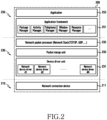
- FIG. 2 is a diagram illustrating a hierarchical configuration for packet processing according to various embodiments.
- the device driver unit 231 may process a received packet so that the received packet is processible in a higher layer.
- the device driver unit 231 may process a packet in a manner appropriate for the operating system that the electronic device 101 currently runs.
- the device driver unit 231 may include one, or two or more, network device drivers (network device driver #1, network device driver #2,..., to network device driver #N).
- a network device driver may receive a packet according to a communication protocol defined by the manufacturer of the network connection device 211.
- Device drivers of network devices e.g., a modem, a LAN card, Bluetooth, nearfield communication (NFC), Wi-Fi, a display, audio, and video
- NFC nearfield communication
- the packet merge unit 233 may perform a packet merge function.
- the packet merge unit 233 may transfer received packets to a higher layer (e.g., the network packet processor 235).
- the packet merge unit 233 may transfer structuralized packets received from the device driver unit 231 to a higher layer.
- the packet merge unit 233 may merge received packets and may transmit the same.
- the packet merge function may be a scheme that merges (or binds) consecutive packet data, having the same IP/TCP header information, into a single packet when receiving network device driver packets, and delivers the merged packets to a network stack.
- the packet merge unit 233 may merge received packets, and may transfer the same to a higher layer all at once, thereby reducing the load on the network packet processor 235.
- the number of responses e.g., acknowledge (ACK)
- ACK acknowledge
- Tput throughput
- the operation in which the packet merge unit 233 merges received packets and transmits the merged packets to a higher layer, or immediately delivers received packets to a higher layer may be referred to as a "flush".
- a "flush” may be an operation of delivering structures stored in the buffer of the packet merge unit 233 to a higher layer.
- the packet merge unit 233 may store structures in the form of a list in the buffer so that the structures correspond to a stream (e.g., a TPC stream).
- the packet merge unit 233 includes a packet list corresponding to each stream.
- the packet merge function may be referred to as "offload” or “receive offload”.
- the packet merge function may be performed as a function defined in the OS that currently runs in the electronic device 101.
- the packet merge function may include "generic receiver offload (GRO)" of Linux TM .
- GRO generator offload
- the packet merge function may be "receive segment coalescing (RSC)" of Windows TM .
- the network packet processor 235 may process a packet received from the packet merge unit 233.
- the network packet processor 235 may include a network stack.
- the network packet processor 235 may include a network layer (e.g., an internet protocol (IP) or an internet control message protocol (ICMP) layer) and a transport layer (a transmission control protocol (TCP) or a user datagram protocol (UDP) layer).
- IP internet protocol
- ICMP internet control message protocol
- TCP transmission control protocol
- UDP user datagram protocol
- the network packet processor 235 may receive a packet from the network connection device 211 via the device driver unit 231 and the packet merge unit 233.
- the network packet processor 235 may process a received packet so that the received packet is processible in the user area, and may transfer the processed packet to the user area.
- the network packet processor 235 may perform IP routing.
- the network packet processor 235 may identify a TCP control block.
- the network packet processor 235 may identify the IP and port number of a corresponding packet.
- the user area (user layer) 250 may perform operations that use packets delivered from the kernel area 230.
- delivered packets may be used appropriately for the purpose of applications that operate in the user layer. For example, a message may be displayed to a user of the electronic device 101, or a video streaming service may be provided.
- the user area 250 may include an application framework 251 and applications 253.
- the applications 253 may operate in an operating system (e.g., the operating system 142 of FIG. 1 ) for controlling resources related to the electronic device and/or an operating system.
- the operating system may include, for example, Android TM , Linux TM , iOS TM , Windows TM , Symbian TM , Tizen TM , or Bada TM .
- the application framework 251 may provide a function required by the applications 253 in common, or may provide various functions to the applications 253 to enable the applications 253 to use the limited system resources within the electronic device.
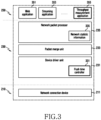
- a flush time may be determined based on a measured network throughput.
- the flush time may be a time for controlling a packet merge function. Every time a received packet is processed, the electronic device 101 may determine whether a flush time has elapsed (or arrived), and if the flush time has elapsed (or arrived), the electronic device 101 may perform flushing.
- a flush time value may be determined based on a throughput value measured by the throughput measurement application 355. For example, a table that shows the relationship between a measured network throughput and a flush time may be defined. For example, the electronic device may store the table in the memory 130.
- the instructions enable the at least one processor to: increase the flush time if the network throughput exceeds a first threshold value; and decrease the flush time if the network throughput is less than a second threshold value.
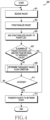
- FIG. 4 is a flowchart 400 illustrating an operation for packet processing according to various embodiments.
- the electronic device 101 may structuralize the packet in operation 403.
- Packet structuralization may be an operation of converting a packet into a structure in a manner appropriate for processing in a higher layer.
- the electronic device 101 may manage the packet provided from the network connection device 211 as a structure.
- the electronic device may manage packets as kernel structures which are referred to as "SKB (sk_buffer)". All modules in a network stack may process packets based on SKB.
- the electronic device may structuralize packets received from the network connection device 211 and may transfer the same to the packet merge unit 233.
- the electronic device 101 adds the structuralized packet to a packet list.
- the packet merge unit 233 of the electronic device 101 may manage the structuralized packets for each packet list.
- the packet merge unit 233 may be a program that provides a packet merge function.
- the packet merge unit 233 may provide a buffer in order to manage the structuralized packets.
- the electronic device 101 may store the structuralized packets using a buffer (e.g., in the form of a list).
- the buffer may be a GRO list.
- the electronic device 101 may manage packets having the same destination using a list based on the destination of each packet (e.g., an address indicated by an IP address and a port).
- a buffer in which packets having the same destination are stored is referred to as a packet list in the description.
- the electronic device 101 may identify a packet list corresponding to the corresponding packet. For example, the electronic device 101 may process a structuralized packet, that is, a structure, and may identify a packet list corresponding to the structure. The electronic device 101 may perform hash calculation on the structure, and may identify the packet list. The electronic device 101 may add the structuralized packet to the identified packet list. If a packet list corresponding to the corresponding packet is not retrieved from a buffer for a packet merge function, the electronic device 101 may produce a new packet list. The electronic device 101 may add the structuralized packet to the produced packet list.
- a structuralized packet that is, a structure
- the electronic device 101 may perform hash calculation on the structure, and may identify the packet list.
- the electronic device 101 may add the structuralized packet to the identified packet list. If a packet list corresponding to the corresponding packet is not retrieved from a buffer for a packet merge function, the electronic device 101 may produce a new packet list. The electronic device 101 may add the structuralized packet to the produced packet list.
- the electronic device 101 determines whether the number of packets in the packet list is greater than or equal to a threshold value.
- a packet merge function may bind structured packets and may provide the same to the network stack all at once, thereby reducing the load of processing a packet in the network stack.
- the electronic device 101 determines whether the packets connected in the form of a list are greater than or equal to the threshold value.
- the threshold value may be 64.
- the electronic device 101 may merge a maximum of 64 packets per packet list. If a number of packets exceeding the maximum of 64 packets (i.e., if 65 packets) are included in the packet list, the electronic device 101 may transfer the connected packets to a higher layer (or may perform flushing).
- the electronic device 101 proceeds with operation 409. If the number of packets in the packet list is greater than or equal to the threshold value (Yes), the electronic device 101 may proceed with operation 413.
- the electronic device 101 determines a threshold-based flush condition.
- the threshold-based flush condition is a condition related to a flush time for controlling a packet merge function.
- the flush time is determined based on a measured throughput.
- the electronic device 101 obtains a flush time value determined based on throughput. For example, a flush time value may be continuously updated.
- the electronic device 101 may identify the throughput using a network throughput measurer of a system, and may update a flush time value to correspond to the defined condition. An operation of updating a flush time value according to various embodiments will be described with reference to FIG. 6 .
- the electronic device 101 may obtain a time value at which flushing was last performed in order to determine the period of time that has elapsed since flushing was performed. According to various embodiments, the electronic device 101 may determine whether a flush time is satisfied by determining whether the determined flush time has elapsed from the point in time at which flushing was last performed up to the current time. For example, in the state in which the number of SKB structures in a GRO list is less than 64 and the flush time has elapsed from the point in time at which the last flush is performed up to the current time, the electronic device 101 may perform control so as to call a flush function of the GRO and process the current structures in the network stack. Determining a flush condition according to various embodiments will be described with reference to FIG. 5 .
- the electronic device 101 may determine whether the flush condition is satisfied. If the flush condition is satisfied (Yes), the electronic device 101 may proceed with operation 413. If the throughput-based flush condition is not satisfied (No), the electronic device 101 may not perform flushing. The electronic device 101 may wait until a packet is received. Subsequently, when a packet is received, the electronic device 101 may perform operations 403 to 407 again after performing operation 401.
- the electronic device 101 may transfer packets to the network stack (or may perform flushing).
- the electronic device 101 may transfer packets, which are managed in the packet merge unit 233, to the network stack.
- the electronic device 101 may flush all packets in the packet list of the corresponding packet.
- the electronic device 101 may flush all packets which are pending in the buffer of the packet merge unit 233, irrespective of a port.
- FIG. 5 is a flowchart 500 illustrating the operation for performing determination in association with packet flushing according to various embodiments.
- FIG. 5 is a part of operation 409 of FIG. 4 , and an electronic device (e.g., the electronic device 101 of FIG. 1 ) or an element (e.g., the processor 120 of FIG. 1 ) of the electronic device 101 may be understood as the subject of the flowchart 500.
- an electronic device e.g., the electronic device 101 of FIG. 1
- an element e.g., the processor 120 of FIG. 1
- the electronic device 101 (e.g., a device driver unit 231 or flush time controller 331) according to various embodiments obtains a flush time value.
- the flush time value is determined based on a throughput value obtained by network throughput measurement.
- the electronic device 101 obtains the determined flush time value.
- the electronic device 101 may receive a notification via a network device driver. For example, in the situation in which the predetermined interval is less than or equal to 100 Mbps, the network device driver of the electronic device 101 may be configured to receive a notification from a network throughput measurer if the network throughput exceeds 100 Mbps. Based on the notification, the electronic device 101 may obtain a flush time value based on the throughput.
- the electronic device 101 may obtain a previous processing time.
- the previous processing time may be the point in time at which flushing was previously performed.
- the electronic device 101 may be configured to store the point in time at which flushing is performed.
- the electronic device 101 may store the point in time at which flushing is performed in the same variable buffer every time that flushing is performed.
- the electronic device 101 may identify, from the storage, the point in time at which flushing was last performed.
- the electronic device 101 may obtain the previous processing time in order to identify the period of time that has elapsed since flushing was performed.
- the previous flush time may be the point in time at which flushing was last performed in association with a packet list corresponding to a packet that is currently being processed, for example, a packet list corresponding to the same port.
- the point in time at which the flushing was previously performed may be the point in time at which flushing was last performed in the packet merge unit 233.
- the electronic device 101 may determine whether the period of time between the previous processing time and the current time exceeds the flush time value. If flushing is not performed during a predetermined period of time, a response (ACK) is not produced with respect to a received packet, and a network speed may become slow. Accordingly, the electronic device 101 may identify the elapsed time. The electronic device 101 may determine the difference between the previous processing time, obtained in operation 503, and the current time. The electronic device 101 may identify whether the difference value exceeds the flush time value obtained in operation 501. That is, the electronic device 101 may identify whether the period of time up to the current time since flushing was last performed exceeds the flush time value.
- the electronic device 101 may determine that the corresponding condition is satisfied in operation 411 of FIG. 4 . If the period of time up to the current time since flushing was last performed does not exceed the flush time value, the electronic device 101 may determine that the corresponding condition is not satisfied in operation 411 of FIG. 4 .
- FIG. 6 is a flowchart 600 illustrating the operation for updating a flush time according to various embodiments.
- an electronic device obtains a throughput.
- the electronic device 101 may obtain the throughput using the throughput measurement application 355.
- the throughput is network packet throughput, and is the number of packets that come from the network packet processor 235 per unit time.
- the throughput may be referred to as "network throughput" or "network speed".
- the electronic device 101 may measure and obtain throughput in units such as bits per second (bps), megabits per second (Mbps), or the like.
- the electronic device 101 obtains a throughput value periodically, for example via the throughput measurement application 355.
- a function of measuring throughput may be included in the kernel area 230.
- the electronic device 101 may measure a network speed and obtain a throughput value using the packet merge unit 233.
- the electronic device 101 may use a throughput measurement function via a network device driver.
- the network throughput obtained in operation 601 may be a packet throughput in the entire network layer of the electronic device 101.
- a network throughput obtained in operation 601 may be a packet throughput for each port depending on each port of the electronic device 101.
- a flush time value determined in operation 603 based on network throughput may be determined for each port.
- a port may include a network socket port included in an IP destination address that is managed by an application allocated to the application.
- the electronic device 101 may determine a flush time value based on throughput.
- the electronic device 101 may determine a flush time value based on the throughput value obtained in operation 601.
- a table that defines the relationship between a throughput value and a flush time value may be defined in advance.
- the table may be stored in, for example, a memory (e.g., the memory 130 of FIG. 1 ) of the electronic device 101.
- the table may be, for example, Table 1 provided below. Table 1] Throughput 0 ⁇ 100Mbps 100 ⁇ 200Mbps 200Mbps Flush time 0 10 ⁇ s 100 ⁇ s
- the number of intervals and a flush time value for each interval defined in Table 1 are examples, and the disclosure is not limited to the table.
- the intervals in the table which define the relationship between a throughput value and a flush time value may be configured as two intervals, or four or more intervals, instead of three intervals as shown in Table 1.
- other flush times in addition to 10 ⁇ s and 100 ⁇ s, may be defined as a flush time.
- network throughput may be measured for the entire network layer, irrespective of a port.
- the electronic device 101 may determine a flush time corresponding to the measured network throughput.
- network throughput may be measured for each port.
- the electronic device 101 may measure the network throughput for each port in operation 601.
- the electronic device 101 may determine a flush time for each port.
- the electronic device 101 updates the flush time value.
- the electronic device 101 may update the flush time value.
- the electronic device 101 may update a flush time corresponding to the entire network layer.
- the electronic device 101 may control a packet merge function using the determined flush time.
- a network throughput may be updated for each port.
- the electronic device 101 may control a packet merge function by applying a flush time for each port using a flush time determined for each port.
- the electronic device 101 may increase or decrease a flush time. For example, according to Table 1, if a network throughput exceeds 200 Mbps, the electronic device 101 may update a flush time from 10 ⁇ s to 100 ⁇ s. When a packet is received, the electronic device 101 may determine whether 100 us has elapsed from the point in time at which flushing was last performed up to the current time, and may determine whether to flush the received packet or to wait until another packet is received after adding the packet to a packet list associated with the corresponding packet. If a network throughput is high, a large number of responses (ACK) is relatively less requested, and thus the electronic device 101 may increase throughput efficiency by increasing the flush time.
- ACK a large number of responses
- the electronic device 101 may increase the flush time if it is determined that the throughput is high (e.g., exceeding a first threshold value).
- the electronic device 101 may decrease the flush time if it is determined that the throughput is low (e.g., less than or equal to a second threshold value). By increasing or decreasing a flush time, the interval of flushing performed by the electronic device 101 may be increased or decreased.
- the electronic device 101 may update a flush time from 10 ⁇ s to 0 ⁇ s. If the flush time is 0 ⁇ s, the electronic device 101 may determine to perform flushing every time that the electronic device 101 determines whether a flush condition is satisfied upon reception of a packet. For example, the electronic device 101 may add a packet received from the network connection device 211 to a packet list, and may immediately transfer the packet to the network stack 235 without waiting for the next packet. If network throughput is low, a response (ACK or NACK) to a transmission end may be requested a relatively large number of times, so the network speed accords with the channel state. The electronic device 101 may perform control so as to transmit a response for each packet more frequently by decreasing a flush time to 0 or to be lower than before.
- the electronic device 101 may adaptively configure a flush time based on network throughput, and may adaptively configure the time at which packets are to be merged and transferred.
- an operation of measuring network throughput and an operation of providing a flush time based on the measured throughput may be needed.
- the function of measuring throughput and the function of providing a flush time may be implemented in the user area 250.
- the electronic device 101 may measure a network throughput using the throughput measurement application 355 (e.g., Argos) of FIG. 3 , and may determine a flush time based on the measured throughput.
- the flush time controller 331 of a network device driver and the throughput measurement application 355 may be configured so that the throughput measurement application 355 provides a notification to the flush time controller 331 of the device driver unit 231.
- both the function of measuring throughput and the function of providing a flush time may be implemented in the kernel area 230.
- the function of measuring throughput and the function of providing a flush time may be implemented as a function of a network device driver of an operator.
- both the function of measuring throughput and the function of providing a flush time may be implemented in the packet merge unit 233.
- the packet merge unit 233 may manage packets for each port, and thus, the electronic device 101 may easily calculate a throughput for each port.
- the electronic device 101 may additionally include a module for determining a flush time based on a throughput value obtained by the packet merge unit 233.
- the function of measuring throughput may be implemented in an application, and the function of providing a flush time may be implemented in the kernel area.
- the throughput measurement application 355 of FIG. 3 may measure a network throughput, and the device driver unit 231 or the packet merge unit 233 may determine a flush time based on the measured throughput.
- the network throughputs are the same, different flush times may be used for respective ports.
- the table used for determining a flush time may differ depending on the features of the application that is used for each port.
- the operations for performing flushing at a given flushing time are described, and the operation of determining a flush time based on network throughput is described in connection with FIG. 6 .
- the operations for performing flushing and the operation of determining a flush time may be performed in parallel.
- flushing is performed based on an updated flush time value in FIGS. 4 , 5 , and 6
- another flush time value may be updated.
- an operation method of the electronic device 101 includes: an operation 401 of receiving a data packet from a network connection device 211, an operation 405 of adding the data packet to a packet list corresponding to the data packet, and, if a number of data packets included in the packet list is less than a threshold value in operation 407, operations 409, 411, and 413 for flushing the data packets to a network stack based on a flush time value for controlling a packet merge function, wherein the flush time value is determined based on network throughput.
- the operation of flushing the data packets may include: an operation of determining whether an interval between a previous processing time and a current time exceeds the flush time value, and an operation of flushing the data packets to the network stack if the interval between the previous processing time and the current time exceeds the flush time value, wherein the previous processing time is the point in time at which flushing was last performed.
- the operation of flushing the data packet may include an operation of identifying the flush time value corresponding to the packet list, among a plurality of flush time values, and the network throughput is determined based on the number of packets related to the packet list that are processed per unit time in a network layer, and the plurality of flush time values may respectively correspond to a plurality of packet lists of the buffer.
- a segment length that is, the size of packets that are merged and transmitted, may be determined based on how long flushing is delayed every time a packet is received. Flushing may not be performed via operations 409 and 411, in addition to operation 407 of FIG. 4 .
- the electronic device 101 may wait for the reception of subsequent packets. Subsequently, when packets are received, the packets may be stored in a buffer via a packet merge function, and whether to perform flushing may be determined again. For example, if a throughput-based flush condition is not satisfied in operation 411, packets that are pending may be merged with subsequently received packets.
- the flush time becomes zero or is decreased, so that packets may not be merged.
- the flush time is increased, so that packets may be merged more.
- the size of a transmitted packet may be limited to an MTU (e.g., 1500 bytes). Therefore, whether the disclosure is implemented may be identified based on a segment length less than the MTU and a segment length greater than or equal to the MTU, which are obtained before and after a change in the network throughput. While the network throughput changes, the packet merge function may be turned on.
- the electronic device 101 may include the network connection device 211, at least one processor, and a memory that is operatively connected to the at least one processor, and the memory may store instructions that, when executed, enable the at least one processor to: obtain a first network throughput; flush first data packets received from the network connection device to a network stack based on the first network throughput; obtain a second network throughput, which is higher than the first network throughput; and merge second data packets received from the network connection device based on the second network throughput and flush the same to the network stack.
- the size of the second data packets may be larger than a maximum transmission unit (MTU), and the size of the first data packets may be smaller than or equal to the MTU.
- MTU maximum transmission unit
- a computer-readable storage medium for storing one or more programs (software modules) may be provided.
- the one or more programs stored in the computer-readable storage medium may be configured for execution by one or more processors within the electronic device.
- the at least one program may include instructions that cause the electronic device to perform the methods according to various embodiments of the disclosure as defined by the appended claims and/or disclosed herein.
- the programs may be stored in non-volatile memories including a random access memory and a flash memory, a read only memory (ROM), an electrically erasable programmable read only memory (EEPROM), a magnetic disc storage device, a compact disc-ROM (CD-ROM), digital versatile discs (DVDs), or other type optical storage devices, or a magnetic cassette.
- ROM read only memory
- EEPROM electrically erasable programmable read only memory
- CD-ROM compact disc-ROM
- DVDs digital versatile discs
- any combination of some or all of them may form a memory in which the program is stored.
- a plurality of such memories may be included in the electronic device.
- the programs may be stored in an attachable storage device which may access the electronic device through communication networks such as the Internet, Intranet, Local Area Network (LAN), Wide LAN (WLAN), and Storage Area Network (SAN) or a combination thereof.
- a storage device may access the electronic device via an external port.
- a separate storage device on the communication network may access a portable electronic device.
- an element included in the disclosure is expressed in the singular or the plural according to presented detailed embodiments.
- the singular form or plural form is selected appropriately to the presented situation for the convenience of description, and the disclosure is not limited by elements expressed in the singular or the plural. Therefore, either an element expressed in the plural may also include a single element or an element expressed in the singular may also include multiple elements.
Landscapes
- Engineering & Computer Science (AREA)
- Computer Networks & Wireless Communication (AREA)
- Signal Processing (AREA)
- Environmental & Geological Engineering (AREA)
- Data Exchanges In Wide-Area Networks (AREA)
- Mobile Radio Communication Systems (AREA)
- Communication Control (AREA)
Claims (13)
- Dispositif électronique (101) comprenant :un dispositif de connexion réseau (211) ;au moins un processeur (120) ; etune mémoire (130) connectée de manière opérationnelle à l'au moins un processeur (120),où la mémoire (130) stocke des instructions qui, lorsqu'elles sont exécutées, permettent à l'au moins un processeur (120) de :recevoir un paquet de données du dispositif de connexion réseau (211) ;ajouter le paquet de données à une liste de paquets correspondant au paquet de données ; etsi un nombre de paquets de données inclus dans la liste de paquets est inférieur à une valeur seuil, vider les paquets de données vers une pile réseau sur la base d'une valeur de temps de vidage pour contrôler une fonction de fusion de paquets, etoù la valeur de temps de vidage est déterminée sur la base d'un débit de réseau, où le débit de réseau est déterminé sur la base d'un nombre de paquets traités par unité de temps dans une couche de réseau, caractérisé en ce queles instructions permettent à l'au moins un processeur (120) de :obtenir périodiquement le débit de réseau ;mettre à jour la valeur de temps de vidage sur la base du débit de réseau obtenu ;si le débit de réseau obtenu se situe dans une plage prédéterminée, générer une notification afin de mettre à jour la valeur de temps de vidage indiquant que le débit de réseau obtenu se situe dans la plage prédéterminée ;fournir la notification générée à un pilote de dispositif de réseau du dispositif électronique ; etmettre à jour la valeur de temps de vidage via le pilote de dispositif de réseau, etoù le pilote de dispositif de réseau est configuré pour déterminer une valeur de temps de vidage à mettre à jour sur la base de la notification.
- Dispositif électronique (101) selon la revendication 1, où les instructions permettent à l'au moins un processeur (120) de :déterminer si un intervalle entre un temps de traitement précédent et un temps actuel dépasse la valeur de temps de vidage, afin de vider les paquets de données ; etvider les paquets de données vers la pile réseau si l'intervalle entre le temps de traitement précédent et le temps actuel dépasse la valeur de temps de vidage,où le temps de traitement précédent est un point dans le temps où le vidage est effectué le plus récemment.
- Dispositif électronique (101) selon la revendication 2, où les instructions permettent à l'au moins un processeur (120) de stocker le temps actuel dans une mémoire tampon variable dans laquelle le temps de traitement précédent est stocké afin de vider les paquets de données.
- Dispositif électronique (101) selon la revendication 2, où les instructions permettent à l'au moins un processeur (120) d'attendre jusqu'à ce qu'un autre paquet de données associé à la liste de paquets soit reçu si l'intervalle entre le temps de traitement précédent et le temps actuel ne dépasse pas la valeur de temps de vidage afin de vider les paquets de données.
- Dispositif électronique (101) selon la revendication 1,
où la valeur de temps de vidage est déterminée sur la base d'un tableau incluant une relation entre une plage de débit de réseau et un temps de vidage. - Dispositif électronique (101) selon la revendication 1, où, pour ajouter le paquet de données à la liste de paquets correspondant au paquet de données, les instructions permettent à l'au moins un processeur (120) de :structurer le paquet de données en traitant le paquet dans une structure et stockant la structure ; etstocker le paquet de données structuré dans la liste de paquets dans une mémoire tampon pour la fonction de fusion de paquets.
- Dispositif électronique (101) selon la revendication 6, où les instructions afin de mettre à jour la valeur de temps de vidage permettent à l'au moins un processeur (120) de :identifier la valeur de temps de vidage correspondant à la liste de paquets, parmi une pluralité de valeurs de temps de vidage,où la pluralité de valeurs de temps de vidage correspond respectivement à une pluralité de listes de paquets de la mémoire tampon.
- Dispositif électronique (101) comme revendiqué selon la revendication 1, où la fonction de fusion de paquets comprend un déchargement de réception générique, GRO, ou une coalescence de segments de réception, RSC,où la pile réseau comprend une couche de réseau et une couche de transport, etoù le dispositif de connexion réseau comprend un contrôleur d'interface de réseau, NIC, ou un modem du dispositif électronique (101).
- Dispositif électronique (101) selon la revendication 1, où les instructions permettent à l'au moins un processeur (120) de :augmenter la valeur de temps de vidage si le débit de réseau dépasse une première valeur seuil ; etdiminuer la valeur de temps de vidage si le débit de réseau est inférieur à une deuxième valeur seuil.
- Procédé de fonctionnement d'un dispositif électronique (101), le procédé comprenantrecevoir un paquet de données d'un dispositif de connexion réseau (211) ;ajouter le paquet de données à une liste de paquets correspondant au paquet de données ; etsi un nombre de paquets de données inclus dans la liste de paquets est inférieur à une valeur seuil, vider les paquets de données vers une pile réseau sur la base d'une valeur de temps de vidage pour contrôler une fonction de fusion de paquets,où la valeur de temps de vidage est déterminée sur la base d'un débit de réseau, où le débit de réseau est déterminé sur la base d'un nombre de paquets traités par unité de temps dans une couche de réseau,caractérisé en ce que le procédé comprend en outre :obtenir périodiquement le débit de réseau ;mettre à jour la valeur de temps de vidage sur la base du débit de réseau obtenu ;si le débit de réseau obtenu se situe dans une plage prédéterminée, générer une notification afin de mettre à jour la valeur de temps de vidage indiquant que le débit de réseau obtenu se situe dans la plage prédéterminée ;fournir la notification générée à un pilote de dispositif de réseau du dispositif électronique ; etmettre à jour la valeur de temps de vidage via le pilote de dispositif de réseau, etdéterminer une valeur de temps de vidage à mettre à jour sur la base de la notification.
- Procédé selon la revendication 10, où le vidage des paquets de données comprend :déterminer si un intervalle entre un temps de traitement précédent et un temps actuel dépasse la valeur de temps de vidage ; etvider les paquets de données vers la pile réseau si l'intervalle entre le temps de traitement précédent et le temps actuel dépasse la valeur de temps de vidage,où le temps de traitement précédent est un point dans le temps où le vidage est effectué le plus récemment.
- Procédé selon la revendication 11, où le vidage des paquets de données comprend :
stocker le temps actuel dans une mémoire tampon variable dans laquelle le temps de traitement précédent est stocké. - Procédé selon la revendication 12, où le vidage des paquets de données comprend :
attendre jusqu'à ce qu'un autre paquet de données associé à la liste de paquets soit reçu si l'intervalle entre le temps de traitement précédent et le temps actuel ne dépasse pas la valeur de temps de vidage.
Applications Claiming Priority (2)
| Application Number | Priority Date | Filing Date | Title |
|---|---|---|---|
| KR1020180092359A KR102619952B1 (ko) | 2018-08-08 | 2018-08-08 | 데이터 패킷을 처리하기 위한 장치 및 방법 |
| PCT/KR2019/004842 WO2020032345A1 (fr) | 2018-08-08 | 2019-04-23 | Dispositif et procédé de traitement de paquets de données |
Publications (3)
| Publication Number | Publication Date |
|---|---|
| EP3826246A1 EP3826246A1 (fr) | 2021-05-26 |
| EP3826246A4 EP3826246A4 (fr) | 2021-09-22 |
| EP3826246B1 true EP3826246B1 (fr) | 2025-07-09 |
Family
ID=69413299
Family Applications (1)
| Application Number | Title | Priority Date | Filing Date |
|---|---|---|---|
| EP19848191.3A Active EP3826246B1 (fr) | 2018-08-08 | 2019-04-23 | Dispositif et procédé de traitement de paquets de données |
Country Status (5)
| Country | Link |
|---|---|
| US (1) | US11924114B2 (fr) |
| EP (1) | EP3826246B1 (fr) |
| KR (1) | KR102619952B1 (fr) |
| CN (1) | CN112585916B (fr) |
| WO (1) | WO2020032345A1 (fr) |
Families Citing this family (7)
| Publication number | Priority date | Publication date | Assignee | Title |
|---|---|---|---|---|
| KR102940819B1 (ko) | 2020-05-11 | 2026-03-19 | 삼성전자주식회사 | 전자 장치 및 전자 장치에서 수신된 데이터 패킷을 처리하는 방법 |
| US12218860B2 (en) | 2020-07-19 | 2025-02-04 | Mellanox Technologies, Ltd | Coalescing packets based on hints generated by network adapter |
| US11595472B2 (en) | 2021-01-19 | 2023-02-28 | Mellanox Technologies, Ltd. | Controlling packet delivery based on application level information |
| US11792139B2 (en) | 2022-01-24 | 2023-10-17 | Mellanox Technologies, Ltd. | Efficient packet reordering using hints |
| WO2023146130A1 (fr) * | 2022-01-28 | 2023-08-03 | 삼성전자 주식회사 | Dispositif électronique pour commander l'agrégation de paquets sur la base d'une capacité de liaison, et procédé de fonctionnement du dispositif électronique |
| US12132665B2 (en) | 2022-11-21 | 2024-10-29 | Mellanox Technologies, Ltd. | Handling of out-of-order transport-layer packets using reorder buffer |
| WO2026023980A1 (fr) * | 2024-07-22 | 2026-01-29 | 삼성전자 주식회사 | Dispositif électronique et procédé de traitement de paquet de données de dispositif électronique |
Family Cites Families (21)
| Publication number | Priority date | Publication date | Assignee | Title |
|---|---|---|---|---|
| US20040236829A1 (en) | 2003-05-13 | 2004-11-25 | Yikang Xu | Reliable delivery of multi-cast conferencing data |
| US7165129B1 (en) * | 2004-01-26 | 2007-01-16 | Cisco Technology, Inc. | Method and apparatus for self-tuning transaction batching |
| CN101057462B (zh) | 2004-11-11 | 2011-12-21 | 皇家飞利浦电子股份有限公司 | 基于优先级的分组排队及组合方法 |
| US7620071B2 (en) | 2004-11-16 | 2009-11-17 | Intel Corporation | Packet coalescing |
| US7596628B2 (en) | 2006-05-01 | 2009-09-29 | Broadcom Corporation | Method and system for transparent TCP offload (TTO) with a user space library |
| US7921328B1 (en) | 2008-04-18 | 2011-04-05 | Network Appliance, Inc. | Checkpoint consolidation for multiple data streams |
| US9043450B2 (en) | 2008-10-15 | 2015-05-26 | Broadcom Corporation | Generic offload architecture |
| US8402226B1 (en) * | 2010-06-18 | 2013-03-19 | Emc Corporation | Rate proportional cache write-back in a storage server |
| US20120284544A1 (en) * | 2011-05-06 | 2012-11-08 | Microsoft Corporation | Storage Device Power Management |
| CN103179613B (zh) | 2011-12-26 | 2015-05-13 | 中国科学院沈阳自动化研究所 | 一种面向工厂自动化tdma无线网络的包聚合方法 |
| US9055010B2 (en) | 2012-09-04 | 2015-06-09 | Apple Inc. | Refreshing blocked media packets for a streaming media session over a wireless network in a stall condition |
| US9083637B2 (en) * | 2013-06-04 | 2015-07-14 | Netgear, Inc. | System and method for providing dynamic QoS to maximize bandwidth utilization |
| KR101458436B1 (ko) | 2014-09-11 | 2014-11-12 | 김근희 | 데이터 전송 방법 및 이를 적용한 주식 체결 시스템 |
| US9483402B2 (en) * | 2014-09-24 | 2016-11-01 | Netapp, Inc. | Methods and systems for dynamically controlled caching |
| US9674297B2 (en) * | 2015-02-09 | 2017-06-06 | International Business Machines Corporation | Handling packet reordering at a network adapter |
| WO2016177435A1 (fr) | 2015-05-06 | 2016-11-10 | Telefonaktiebolaget Lm Ericsson (Publ) | Procédés et dispositifs de gestion de transmissions de paquets de données dans un réseau de communication sans fil adapté multi-chemins et multi-bonds |
| CN106375233B (zh) | 2015-11-09 | 2019-11-15 | 北京智谷技术服务有限公司 | 数据传输方法及数据传输装置 |
| US10003677B2 (en) | 2016-01-31 | 2018-06-19 | Nxp Usa, Inc. | Network application verification at a network processor |
| US20170295516A1 (en) * | 2016-04-08 | 2017-10-12 | Qualcomm Incorporated | Dynamic medium access control reception-reorder timeout in a crowded wireless local area network |
| US20170366605A1 (en) | 2016-06-16 | 2017-12-21 | Alcatel-Lucent Usa Inc. | Providing data plane services for applications |
| US11743158B2 (en) * | 2016-11-14 | 2023-08-29 | Telefonaktiebolaget Lm Ericsson (Publ) | Initial bitrate selection for a video delivery session |
-
2018
- 2018-08-08 KR KR1020180092359A patent/KR102619952B1/ko active Active
-
2019
- 2019-04-23 EP EP19848191.3A patent/EP3826246B1/fr active Active
- 2019-04-23 US US17/250,601 patent/US11924114B2/en active Active
- 2019-04-23 CN CN201980053443.8A patent/CN112585916B/zh active Active
- 2019-04-23 WO PCT/KR2019/004842 patent/WO2020032345A1/fr not_active Ceased
Also Published As
| Publication number | Publication date |
|---|---|
| CN112585916B (zh) | 2024-07-16 |
| WO2020032345A1 (fr) | 2020-02-13 |
| US11924114B2 (en) | 2024-03-05 |
| US20210297360A1 (en) | 2021-09-23 |
| EP3826246A1 (fr) | 2021-05-26 |
| KR102619952B1 (ko) | 2024-01-02 |
| CN112585916A (zh) | 2021-03-30 |
| EP3826246A4 (fr) | 2021-09-22 |
| KR20200017127A (ko) | 2020-02-18 |
Similar Documents
| Publication | Publication Date | Title |
|---|---|---|
| EP3826246B1 (fr) | Dispositif et procédé de traitement de paquets de données | |
| US11102137B2 (en) | Apparatus and method for processing data packet of electronic device | |
| US11343302B2 (en) | Method for controlling bitrate in realtime and electronic device thereof | |
| CN113574836B (zh) | 用于控制数据传输的电子装置和方法 | |
| KR102940819B1 (ko) | 전자 장치 및 전자 장치에서 수신된 데이터 패킷을 처리하는 방법 | |
| US20200301745A1 (en) | Multicore electronic device and packet processing method thereof | |
| US20190380065A1 (en) | Electronic device and wlan relay function control method thereof | |
| CN111083190B (zh) | 处理数据的方法和电子装置 | |
| CN115053198A (zh) | 用于控制进程的电子装置及其方法 | |
| KR102381036B1 (ko) | 무선 통신 시스템에서 데이터 패킷을 처리하기 위한 장치 및 방법 | |
| KR102710601B1 (ko) | 네트워크 패킷 처리 방법 및 이를 위한 전자 장치 | |
| EP3723349A1 (fr) | Dispositif électronique pour la prise en charge du traitement de système de noms de domaines (dns) à faible latence | |
| KR20210060194A (ko) | 패킷 전달을 제어하는 전자 장치 및 그의 동작 방법 | |
| KR20220168407A (ko) | 전자 장치 및 이의 동작 방법 | |
| EP4557875A1 (fr) | Dispositif électronique pour effectuer une communication de données et son procédé de fonctionnement | |
| US11224018B2 (en) | Electronic device and method for reducing current consumption of electronic device in near field wireless communication using same | |
| US20260025337A1 (en) | Electronic device and method for processing data packet thereof | |
| US20190199841A1 (en) | Electronic device for controlled transmission of voice data packet and method thereof | |
| US20260067222A1 (en) | Electronic device for transmitting ack and operation method thereof | |
| KR102755035B1 (ko) | 상향링크 전송을 위한 패킷 드랍을 방지하기 위한 전자 장치 | |
| EP4283940A1 (fr) | Processeur pour effectuer, lorsque le problème se produit, une routine de rétablissement sur la base de la surveillance de l'état et du débit du réseau, et dispositif électronique comprenant celui-ci | |
| KR20250122354A (ko) | 송신 윈도우의 크기에 기반하여 패킷의 병합을 제어하는 전자 장치 및 전자 장치의 동작 방법 | |
| KR20260013851A (ko) | 전자 장치 및 전자 장치의 데이터 패킷을 처리하는 방법 | |
| KR20250135062A (ko) | 전자 장치 및 전자 장치의 데이터 패킷 처리 방법 |
Legal Events
| Date | Code | Title | Description |
|---|---|---|---|
| STAA | Information on the status of an ep patent application or granted ep patent |
Free format text: STATUS: THE INTERNATIONAL PUBLICATION HAS BEEN MADE |
|
| PUAI | Public reference made under article 153(3) epc to a published international application that has entered the european phase |
Free format text: ORIGINAL CODE: 0009012 |
|
| STAA | Information on the status of an ep patent application or granted ep patent |
Free format text: STATUS: REQUEST FOR EXAMINATION WAS MADE |
|
| 17P | Request for examination filed |
Effective date: 20210218 |
|
| AK | Designated contracting states |
Kind code of ref document: A1 Designated state(s): AL AT BE BG CH CY CZ DE DK EE ES FI FR GB GR HR HU IE IS IT LI LT LU LV MC MK MT NL NO PL PT RO RS SE SI SK SM TR |
|
| A4 | Supplementary search report drawn up and despatched |
Effective date: 20210824 |
|
| RIC1 | Information provided on ipc code assigned before grant |
Ipc: H04L 12/823 20130101ALI20210818BHEP Ipc: H04L 12/861 20130101ALI20210818BHEP Ipc: H04L 12/879 20130101ALI20210818BHEP Ipc: H04L 12/875 20130101ALI20210818BHEP Ipc: H04L 12/26 20060101ALI20210818BHEP Ipc: H04L 12/841 20130101AFI20210818BHEP |
|
| DAV | Request for validation of the european patent (deleted) | ||
| DAX | Request for extension of the european patent (deleted) | ||
| STAA | Information on the status of an ep patent application or granted ep patent |
Free format text: STATUS: EXAMINATION IS IN PROGRESS |
|
| 17Q | First examination report despatched |
Effective date: 20230306 |
|
| REG | Reference to a national code |
Ref country code: DE Ref legal event code: R079 Free format text: PREVIOUS MAIN CLASS: H04L0012841000 Ipc: H04L0047320000 Ref country code: DE Ref legal event code: R079 Ref document number: 602019072407 Country of ref document: DE Free format text: PREVIOUS MAIN CLASS: H04L0012841000 Ipc: H04L0047320000 |
|
| GRAP | Despatch of communication of intention to grant a patent |
Free format text: ORIGINAL CODE: EPIDOSNIGR1 |
|
| STAA | Information on the status of an ep patent application or granted ep patent |
Free format text: STATUS: GRANT OF PATENT IS INTENDED |
|
| RIC1 | Information provided on ipc code assigned before grant |
Ipc: H04L 47/56 20220101ALI20250131BHEP Ipc: H04L 49/9057 20220101ALI20250131BHEP Ipc: H04L 49/90 20220101ALI20250131BHEP Ipc: H04L 43/0888 20220101ALI20250131BHEP Ipc: H04L 47/32 20220101AFI20250131BHEP |
|
| INTG | Intention to grant announced |
Effective date: 20250220 |
|
| GRAS | Grant fee paid |
Free format text: ORIGINAL CODE: EPIDOSNIGR3 |
|
| GRAA | (expected) grant |
Free format text: ORIGINAL CODE: 0009210 |
|
| STAA | Information on the status of an ep patent application or granted ep patent |
Free format text: STATUS: THE PATENT HAS BEEN GRANTED |
|
| AK | Designated contracting states |
Kind code of ref document: B1 Designated state(s): AL AT BE BG CH CY CZ DE DK EE ES FI FR GB GR HR HU IE IS IT LI LT LU LV MC MK MT NL NO PL PT RO RS SE SI SK SM TR |
|
| REG | Reference to a national code |
Ref country code: GB Ref legal event code: FG4D |
|
| REG | Reference to a national code |
Ref country code: CH Ref legal event code: EP |
|
| REG | Reference to a national code |
Ref country code: IE Ref legal event code: FG4D |
|
| REG | Reference to a national code |
Ref country code: DE Ref legal event code: R096 Ref document number: 602019072407 Country of ref document: DE |
|
| REG | Reference to a national code |
Ref country code: NL Ref legal event code: MP Effective date: 20250709 |
|
| PG25 | Lapsed in a contracting state [announced via postgrant information from national office to epo] |
Ref country code: PT Free format text: LAPSE BECAUSE OF FAILURE TO SUBMIT A TRANSLATION OF THE DESCRIPTION OR TO PAY THE FEE WITHIN THE PRESCRIBED TIME-LIMIT Effective date: 20251110 |
|
| PG25 | Lapsed in a contracting state [announced via postgrant information from national office to epo] |
Ref country code: NL Free format text: LAPSE BECAUSE OF FAILURE TO SUBMIT A TRANSLATION OF THE DESCRIPTION OR TO PAY THE FEE WITHIN THE PRESCRIBED TIME-LIMIT Effective date: 20250709 |
|
| REG | Reference to a national code |
Ref country code: AT Ref legal event code: MK05 Ref document number: 1812939 Country of ref document: AT Kind code of ref document: T Effective date: 20250709 |
|
| PG25 | Lapsed in a contracting state [announced via postgrant information from national office to epo] |
Ref country code: IS Free format text: LAPSE BECAUSE OF FAILURE TO SUBMIT A TRANSLATION OF THE DESCRIPTION OR TO PAY THE FEE WITHIN THE PRESCRIBED TIME-LIMIT Effective date: 20251109 |
|
| PG25 | Lapsed in a contracting state [announced via postgrant information from national office to epo] |
Ref country code: NO Free format text: LAPSE BECAUSE OF FAILURE TO SUBMIT A TRANSLATION OF THE DESCRIPTION OR TO PAY THE FEE WITHIN THE PRESCRIBED TIME-LIMIT Effective date: 20251009 |
|
| REG | Reference to a national code |
Ref country code: LT Ref legal event code: MG9D |
|
| PG25 | Lapsed in a contracting state [announced via postgrant information from national office to epo] |
Ref country code: AT Free format text: LAPSE BECAUSE OF FAILURE TO SUBMIT A TRANSLATION OF THE DESCRIPTION OR TO PAY THE FEE WITHIN THE PRESCRIBED TIME-LIMIT Effective date: 20250709 |
|
| PG25 | Lapsed in a contracting state [announced via postgrant information from national office to epo] |
Ref country code: FI Free format text: LAPSE BECAUSE OF FAILURE TO SUBMIT A TRANSLATION OF THE DESCRIPTION OR TO PAY THE FEE WITHIN THE PRESCRIBED TIME-LIMIT Effective date: 20250709 |
|
| PG25 | Lapsed in a contracting state [announced via postgrant information from national office to epo] |
Ref country code: HR Free format text: LAPSE BECAUSE OF FAILURE TO SUBMIT A TRANSLATION OF THE DESCRIPTION OR TO PAY THE FEE WITHIN THE PRESCRIBED TIME-LIMIT Effective date: 20250709 |
|
| PG25 | Lapsed in a contracting state [announced via postgrant information from national office to epo] |
Ref country code: GR Free format text: LAPSE BECAUSE OF FAILURE TO SUBMIT A TRANSLATION OF THE DESCRIPTION OR TO PAY THE FEE WITHIN THE PRESCRIBED TIME-LIMIT Effective date: 20251010 |
|
| PG25 | Lapsed in a contracting state [announced via postgrant information from national office to epo] |
Ref country code: SE Free format text: LAPSE BECAUSE OF FAILURE TO SUBMIT A TRANSLATION OF THE DESCRIPTION OR TO PAY THE FEE WITHIN THE PRESCRIBED TIME-LIMIT Effective date: 20250709 |
|
| PG25 | Lapsed in a contracting state [announced via postgrant information from national office to epo] |
Ref country code: LV Free format text: LAPSE BECAUSE OF FAILURE TO SUBMIT A TRANSLATION OF THE DESCRIPTION OR TO PAY THE FEE WITHIN THE PRESCRIBED TIME-LIMIT Effective date: 20250709 |
|
| PG25 | Lapsed in a contracting state [announced via postgrant information from national office to epo] |
Ref country code: BG Free format text: LAPSE BECAUSE OF FAILURE TO SUBMIT A TRANSLATION OF THE DESCRIPTION OR TO PAY THE FEE WITHIN THE PRESCRIBED TIME-LIMIT Effective date: 20250709 Ref country code: PL Free format text: LAPSE BECAUSE OF FAILURE TO SUBMIT A TRANSLATION OF THE DESCRIPTION OR TO PAY THE FEE WITHIN THE PRESCRIBED TIME-LIMIT Effective date: 20250709 |
|
| PG25 | Lapsed in a contracting state [announced via postgrant information from national office to epo] |
Ref country code: RS Free format text: LAPSE BECAUSE OF FAILURE TO SUBMIT A TRANSLATION OF THE DESCRIPTION OR TO PAY THE FEE WITHIN THE PRESCRIBED TIME-LIMIT Effective date: 20251009 |
|
| PG25 | Lapsed in a contracting state [announced via postgrant information from national office to epo] |
Ref country code: ES Free format text: LAPSE BECAUSE OF FAILURE TO SUBMIT A TRANSLATION OF THE DESCRIPTION OR TO PAY THE FEE WITHIN THE PRESCRIBED TIME-LIMIT Effective date: 20250709 |
|
| PG25 | Lapsed in a contracting state [announced via postgrant information from national office to epo] |
Ref country code: SM Free format text: LAPSE BECAUSE OF FAILURE TO SUBMIT A TRANSLATION OF THE DESCRIPTION OR TO PAY THE FEE WITHIN THE PRESCRIBED TIME-LIMIT Effective date: 20250709 |
|
| PGFP | Annual fee paid to national office [announced via postgrant information from national office to epo] |
Ref country code: GB Payment date: 20260324 Year of fee payment: 8 |
|
| PG25 | Lapsed in a contracting state [announced via postgrant information from national office to epo] |
Ref country code: DK Free format text: LAPSE BECAUSE OF FAILURE TO SUBMIT A TRANSLATION OF THE DESCRIPTION OR TO PAY THE FEE WITHIN THE PRESCRIBED TIME-LIMIT Effective date: 20250709 |
|
| PG25 | Lapsed in a contracting state [announced via postgrant information from national office to epo] |
Ref country code: IT Free format text: LAPSE BECAUSE OF FAILURE TO SUBMIT A TRANSLATION OF THE DESCRIPTION OR TO PAY THE FEE WITHIN THE PRESCRIBED TIME-LIMIT Effective date: 20250709 |
|
| PG25 | Lapsed in a contracting state [announced via postgrant information from national office to epo] |
Ref country code: CZ Free format text: LAPSE BECAUSE OF FAILURE TO SUBMIT A TRANSLATION OF THE DESCRIPTION OR TO PAY THE FEE WITHIN THE PRESCRIBED TIME-LIMIT Effective date: 20250709 |
|
| PG25 | Lapsed in a contracting state [announced via postgrant information from national office to epo] |
Ref country code: SK Free format text: LAPSE BECAUSE OF FAILURE TO SUBMIT A TRANSLATION OF THE DESCRIPTION OR TO PAY THE FEE WITHIN THE PRESCRIBED TIME-LIMIT Effective date: 20250709 Ref country code: EE Free format text: LAPSE BECAUSE OF FAILURE TO SUBMIT A TRANSLATION OF THE DESCRIPTION OR TO PAY THE FEE WITHIN THE PRESCRIBED TIME-LIMIT Effective date: 20250709 |