EP3828155A1 - Verfahren zur herstellung funktionalisierter styrolmonomere aus benzol oder aromatischen oxygenaten - Google Patents
Verfahren zur herstellung funktionalisierter styrolmonomere aus benzol oder aromatischen oxygenaten Download PDFInfo
- Publication number
- EP3828155A1 EP3828155A1 EP20209292.0A EP20209292A EP3828155A1 EP 3828155 A1 EP3828155 A1 EP 3828155A1 EP 20209292 A EP20209292 A EP 20209292A EP 3828155 A1 EP3828155 A1 EP 3828155A1
- Authority
- EP
- European Patent Office
- Prior art keywords
- doped
- carbon nitride
- graphitic carbon
- process according
- ethylene
- Prior art date
- Legal status (The legal status is an assumption and is not a legal conclusion. Google has not performed a legal analysis and makes no representation as to the accuracy of the status listed.)
- Granted
Links
Images


Classifications
-
- B—PERFORMING OPERATIONS; TRANSPORTING
- B01—PHYSICAL OR CHEMICAL PROCESSES OR APPARATUS IN GENERAL
- B01J—CHEMICAL OR PHYSICAL PROCESSES, e.g. CATALYSIS OR COLLOID CHEMISTRY; THEIR RELEVANT APPARATUS
- B01J27/00—Catalysts comprising the elements or compounds of halogens, sulfur, selenium, tellurium, phosphorus or nitrogen; Catalysts comprising carbon compounds
- B01J27/24—Nitrogen compounds
-
- B—PERFORMING OPERATIONS; TRANSPORTING
- B01—PHYSICAL OR CHEMICAL PROCESSES OR APPARATUS IN GENERAL
- B01J—CHEMICAL OR PHYSICAL PROCESSES, e.g. CATALYSIS OR COLLOID CHEMISTRY; THEIR RELEVANT APPARATUS
- B01J35/00—Catalysts, in general, characterised by their form or physical properties
- B01J35/40—Catalysts, in general, characterised by their form or physical properties characterised by dimensions, e.g. grain size
- B01J35/45—Nanoparticles
-
- B—PERFORMING OPERATIONS; TRANSPORTING
- B01—PHYSICAL OR CHEMICAL PROCESSES OR APPARATUS IN GENERAL
- B01J—CHEMICAL OR PHYSICAL PROCESSES, e.g. CATALYSIS OR COLLOID CHEMISTRY; THEIR RELEVANT APPARATUS
- B01J21/00—Catalysts comprising the elements, oxides, or hydroxides of magnesium, boron, aluminium, carbon, silicon, titanium, zirconium, or hafnium
- B01J21/18—Carbon
- B01J21/185—Carbon nanotubes
-
- B—PERFORMING OPERATIONS; TRANSPORTING
- B01—PHYSICAL OR CHEMICAL PROCESSES OR APPARATUS IN GENERAL
- B01J—CHEMICAL OR PHYSICAL PROCESSES, e.g. CATALYSIS OR COLLOID CHEMISTRY; THEIR RELEVANT APPARATUS
- B01J23/00—Catalysts comprising metals or metal oxides or hydroxides, not provided for in group B01J21/00
- B01J23/38—Catalysts comprising metals or metal oxides or hydroxides, not provided for in group B01J21/00 of noble metals
- B01J23/40—Catalysts comprising metals or metal oxides or hydroxides, not provided for in group B01J21/00 of noble metals of the platinum group metals
- B01J23/44—Palladium
-
- B—PERFORMING OPERATIONS; TRANSPORTING
- B01—PHYSICAL OR CHEMICAL PROCESSES OR APPARATUS IN GENERAL
- B01J—CHEMICAL OR PHYSICAL PROCESSES, e.g. CATALYSIS OR COLLOID CHEMISTRY; THEIR RELEVANT APPARATUS
- B01J35/00—Catalysts, in general, characterised by their form or physical properties
- B01J35/60—Catalysts, in general, characterised by their form or physical properties characterised by their surface properties or porosity
- B01J35/61—Surface area
- B01J35/612—Surface area less than 10 m2/g
-
- B—PERFORMING OPERATIONS; TRANSPORTING
- B01—PHYSICAL OR CHEMICAL PROCESSES OR APPARATUS IN GENERAL
- B01J—CHEMICAL OR PHYSICAL PROCESSES, e.g. CATALYSIS OR COLLOID CHEMISTRY; THEIR RELEVANT APPARATUS
- B01J35/00—Catalysts, in general, characterised by their form or physical properties
- B01J35/60—Catalysts, in general, characterised by their form or physical properties characterised by their surface properties or porosity
- B01J35/61—Surface area
- B01J35/613—10-100 m2/g
-
- B—PERFORMING OPERATIONS; TRANSPORTING
- B01—PHYSICAL OR CHEMICAL PROCESSES OR APPARATUS IN GENERAL
- B01J—CHEMICAL OR PHYSICAL PROCESSES, e.g. CATALYSIS OR COLLOID CHEMISTRY; THEIR RELEVANT APPARATUS
- B01J35/00—Catalysts, in general, characterised by their form or physical properties
- B01J35/60—Catalysts, in general, characterised by their form or physical properties characterised by their surface properties or porosity
- B01J35/61—Surface area
- B01J35/615—100-500 m2/g
-
- B—PERFORMING OPERATIONS; TRANSPORTING
- B01—PHYSICAL OR CHEMICAL PROCESSES OR APPARATUS IN GENERAL
- B01J—CHEMICAL OR PHYSICAL PROCESSES, e.g. CATALYSIS OR COLLOID CHEMISTRY; THEIR RELEVANT APPARATUS
- B01J35/00—Catalysts, in general, characterised by their form or physical properties
- B01J35/60—Catalysts, in general, characterised by their form or physical properties characterised by their surface properties or porosity
- B01J35/63—Pore volume
- B01J35/633—Pore volume less than 0.5 ml/g
-
- C—CHEMISTRY; METALLURGY
- C07—ORGANIC CHEMISTRY
- C07C—ACYCLIC OR CARBOCYCLIC COMPOUNDS
- C07C2/00—Preparation of hydrocarbons from hydrocarbons containing a smaller number of carbon atoms
- C07C2/76—Preparation of hydrocarbons from hydrocarbons containing a smaller number of carbon atoms by condensation of hydrocarbons with partial elimination of hydrogen
- C07C2/82—Preparation of hydrocarbons from hydrocarbons containing a smaller number of carbon atoms by condensation of hydrocarbons with partial elimination of hydrogen oxidative coupling
- C07C2/84—Preparation of hydrocarbons from hydrocarbons containing a smaller number of carbon atoms by condensation of hydrocarbons with partial elimination of hydrogen oxidative coupling catalytic
-
- B—PERFORMING OPERATIONS; TRANSPORTING
- B01—PHYSICAL OR CHEMICAL PROCESSES OR APPARATUS IN GENERAL
- B01J—CHEMICAL OR PHYSICAL PROCESSES, e.g. CATALYSIS OR COLLOID CHEMISTRY; THEIR RELEVANT APPARATUS
- B01J23/00—Catalysts comprising metals or metal oxides or hydroxides, not provided for in group B01J21/00
- B01J23/38—Catalysts comprising metals or metal oxides or hydroxides, not provided for in group B01J21/00 of noble metals
- B01J23/40—Catalysts comprising metals or metal oxides or hydroxides, not provided for in group B01J21/00 of noble metals of the platinum group metals
Definitions
- This present invention provides a sustainable catalytic process for the production of the functionalised styrene monomers from fossil-based or biomass-derived feedstock materials.
- Methodology involves the coupling of the aromatic oxygenate compounds or benzene with ethylene in a broad temperature range of 150-300 °C with pressures, ranging from 5 to 100 bar, over heterogeneous catalyst materials.
- aromatic ring carbon is directly coupled with ethylene. This opens the door to functionalising the aromatic oxygenate compounds, such as those, derived from biomass, in addition to benzene.
- the present invention relates to the developing of a sustainable and catalytic process for functionalised styrene monomers synthesis from benzene or aromatic oxygenate compounds to reduce the overall production cost and provide benefits to pertinent industries and society. Accordingly the present invention provides a sustainable catalytic process for production of functionalised styrene monomers.
- the method comprises coupling of the aromatic oxygenate compounds or benzene with ethylene at temperature range from 150-300 °C and pressure range from 5 to 100 bar over heterogeneous catalysts.
- Styrene is an industrially important commodity chemical, widely used to produce polystyrene plastic, polyesters, protective coatings, resins, rubbers and other copolymers ( RSC Adv., 2014, 4, 57087-57097 ).
- the chemical structure of styrene contains an active vinyl group that can be further functionalized for the production of versatile synthetic intermediates.
- the global production of styrene is 33.1 million tons per year with the market value of approximately $43.1 billion.
- Non-renewable fossil sources such as coal, natural gas and petroleum meet nearly 86% of the world's energy and 96% of basic, commodity and specialty chemical demands.
- the diminishing reserves of these sources, rising atmospheric CO 2 levels, and socio-economic concerns require a reduction of our dependence on these sources.
- Benzene is a widely available renewable resource that can be produced from lignin.
- Ethylene can also be produced by the dehydration of bio-ethanol.
- the present invention solves the problems outlined above and provides the method as defined in claim 1, as well as the catalyst defined in claim 10.
- Preferred embodiments of the method and the catalyst are disclosed in claims 2 to 9 and 11 to 15 respectively, as well as in the following description.
- the present invention is based on a judiciously designed heterogeneous catalyst for the oxidative coupling of benzene or aromatic oxygenate compounds to produce functionalized styrene monomer.
- heterogeneous metal complexes In most of the reported routes, homogeneous metal complexes have been utilized for the production of such monomers but these catalysts have disadvantages in relation to high production cost, separation, recyclability and disposal.
- Heterogeneous catalytic systems offer distinct advantages in terms of cost reduction, high activity and selectivity easy separation and reusability. Another merit of heterogeneous catalysts is their stability to high temperature and pressure.
- the present invention accordingly provides a process for the oxidative coupling of bio-based or fossil based feedstocks to functionalized styrene monomer with a heterogeneous catalytic system that offers high selectivity under relatively mild reaction conditions.
- the heterogeneous catalyst of the present invention is a catalyst which in particular enables production of styrene under relatively mild conditions and furthermore allows an easy separation of the used catalyst from the reaction mixture.
- the catalysts of the present invention can be reused, in many instances even without any reactivation (for example by reductive treatments to remove any undesired oxidation of the transition metals, if contained in the catalysts or other conventional processes known to the skilled person to re-activate a spent catalyst).
- catalysts are listed in the following: graphene oxide (GO), sulfonated graphene oxide (SGO), reduced graphene oxide (rGO), multiwalled carbon nanotubes (CNT), graphitic carbon nitride(g-C 3 N 4 ), sulfonated graphitic carbon nitride (S-g-C 3 N 4 ), palladium doped reduced graphene oxide (Pd/rGO), palladium doped multiwalled carbon nanotubes (Pd/CNT), palladium doped graphitic carbon nitride(Pd/g-C 3 N 4 ), boron-doped graphitic carbon nitride(B/g-C 3 N 4 , palladium doped sulfonated graphitic carbon nitride (Pd/S-g-C 3 N 4 ), ceria doped sulfonated graphene oxide (Ce/SGO), ceria doped reduced graphene oxide (Ce/SGO
- Preferred catalysts are based on graphitic carbon nitride. Accordingly, preferred catalysts of and to be employed in the present invention comprise a graphitic carbon nitride. It is to be understood that preferred embodiments described for the catalyst as such of course also are applicable to the use of the catalyst in the process of the present invention.
- Examples of suitable graphitic carbon nitride based catalysts are palladium doped graphitic carbon nitride, platinum doped graphitic carbon nitride and ruthenium doped graphitic carbon nitride.
- the catalysts in accordance with the present invention preferably are graphitic carbon nitride and transition metals (Pd, Pt and Ru) supported on this material.
- the suitable amount of transition metal in the catalysts of the present invention is in the range of from 1 to 10 weight percent relative to the support.
- the BET specific surface area of the catalysts of the present invention is generally from 0.01 to 200 m 2 /g, preferably from 0.1 to 150 m 2 /g, in particular from 1 to 100 m 2 /g.
- the pore volume preferably is between 0.1 to 0.50 cm 3 per gram, preferably between 0.15 to 0.40 cm 3 per gram.
- the BET surface is from 0.1 to 150 m 2 , preferably from 1 to 100 m 2 , in combination with a pore volume of between 0.1 to 0.50 cm 3 per gram, preferably between 0.15 to 0.40 cm 3 per gram.
- BET specific surface area and pore volume are determined according to the methods disclosed in Lowell, S., Shields, J.E., Thomas, M.A., and T79s, M., (2012). Characterization of porous solids and powders: surface area, pore size and density (Vol. 16), Springer Science & Business Media .
- the catalysts disclosed herein in particular the graphitic carbon nitride catalytic system disclosed herein has particularly shown efficient activity for oxidative coupling reaction.
- the superior and unexpected activity is based on the fact that the surface of graphitic carbon nitride is decorated with several oxygen functionalities, such as epoxy, hydroxyl, carbonyls, and nitride groups which induce beneficial oxidised defect sites and promotes the oxidative coupling of benzene or aromatic oxygenate compounds with ethylene to produce functionalized styrene monomers.
- the catalytic system disclosed here shows very high activity, selectivity, higher than other catalysts tested or reported in the literature for the oxidative coupling of benzene or aromatic oxygenate compounds to functionalized styrene monomers.
- the process in accordance with the present invention comprises the step of converting a starting material, selected among benzene or aromatic oxygenate , preferably obtained from renewable (bio-based) or fossil based resources to functionalized styrene monomers in the presence of a catalyst as defined above, preferably selected among catalysts based on graphitic carbon nitride, preferably selected among palladium doped graphitic carbon nitride, platinum doped graphitic carbon nitride and palladium doped graphitic carbon nitride.
- a catalyst as defined above, preferably selected among catalysts based on graphitic carbon nitride, preferably selected among palladium doped graphitic carbon nitride, platinum doped graphitic carbon nitride and palladium doped graphitic carbon nitride.
- oxidative coupling reactions have carried out in presence of redox agent.
- redox agent selected from one of the following: copper (II) acetate, palladium (II) acetate, manganese (II) acetate, silver acetate and sodium acetate.
- the palladium(III) of the catalyst is reduced, typically to a palladium(I) state. In order for the reaction to be catalytic with respect to palladium, it is necessary to oxidize the palladium(I) back to palladium (III), and so regenerate the catalyst.
- copper(II) redox agent refers to a chemical compound comprising at least one copper atom in the +2 oxidation State. In one embodiment, the copper(II) redox agent has only one copper atom.
- the reaction is carried out neat, without a solvent. In one embodiment, the reaction is more preferably carried out neat, without a solvent, with a stoichiometric excess of the benzene, which acts both as reactant and solvent (reaction medium).
- the concentration of benzene is at least 0.01 M and not more than 1 M, such as from 0.05M to 0.5M, preferably 0.1M to 0.3 M, such as 0.1M, 0.2M, 0.3M, or 0.4M.
- the pressure of ethylene typically is in the range of from 5 to 100 bar, preferably from 10 to 70 bar and more preferably from 10 to 40 bar, and in particular 30 bar or less and 15 bar or more, such as 20 bar.
- the amount of catalyst in the reaction mixture is not less than 10 mass percent and not higher than 150 mass percent with respect to substrate (i.e. the above identified starting material), such as from 25 to 100 mass percent.
- the process disclosed here typically is carried out at a temperature from 150°C to 300°C, preferably from 200°C to 275°C, more preferably from 225°C to 260°C, such as 250°C.
- reaction time is not critical and may depend from the desired balance of conversion and efficiency as well as selectivity, but generally reaction times of form 30 to 1000 min are suitable, such as from 60 to 600 min, from 60 to 300 min and in embodiments from 80 to 200 min.
- the reaction may be carried out in any suitable reactors known to the skilled person, but stainless steel reactors (autoclave) are in particular suitable. However, other materials may also be suitable as reactor materials and it is of course also possible to provide the inner surface of such a reactor, completely or partially with a coating of a material inert towards the reaction, such as a polymer coating, a ceramic coating etc.
- the benzene, the aromatic oxygenate and/or the ethylene is/are fossil-based or biomass-derived.
- the oxidative aromatic oxygenate according to this invention is based on a functionalized benzene.
- the phenyl-ring of the aromatic oxygenate is substituted by 1 to 3 substituents selected from C 1-4 -alkyl, halogen or O-R 1 , with R 1 being selected from H or C 1-4 -alkyl.
- the phenyl-ring of the aromatic oxygenate is substituted by 1 to 3 substituents selected from C 1-4 -alkyl or O-R 1 , with R 1 being selected from H or C 1-4 -alkyl, and even more preferred the phenyl-ring of the aromatic oxygenate is substituted by 1 or 2 substituents selected from C 1-4 -alkyl or O-R 1 , with R 1 being selected from H or C 1-4 -alkyl, while most preferred the phenyl-ring of the aromatic oxygenate is substituted by 1 or 2 substituents selected from CH 3 , OCH 3 or OH.
- some of the most preferred aromatic oxygenates are selected from phenol, 2-methoxy-phenol, or p -cresol.
- the catalytic oxidative coupling of benzene or with ethylene to styrene monomer was performed using a stainless steel high pressure reactor under the standard operation conditions.
- the novel process of the present invention was carried out at a temperature greater than 150 °C, most preferably between 150 °C and 300 °C, especially between 200°C and 275°C.
- the reactions were carried out under pressure.
- the processes are carried out at pressures of at least 10 bar of ethylene, more preferably at least 20 bar, in some embodiments at least 30 bar, in some embodiments pressure is in the range of 10 bar to 70 bar.
- the reaction should be conducted under conditions where the residence time of the feedstock solution over the catalyst is appropriate to generate the desired products.
- the reaction time is in the range of between 60 and 500 minutes, typically 60-300 minutes, more preferably 60-250 minutes, most preferably 80-200 minutes.
- Grephitic carbon nitride (g-C 3 N 4 ) catalyst was synthesized by heating 10 g of urea in air at a ramp rate of 2.3 K min -1 to a given temperature (923 K), keeping that temperature for 4 h, then cooling without temperature control.
- Palladium doped Grephitic carbon nitride (Pd/g-C 3 N 4 ) catalyst was synthesized by incipient-wetness impregnation method. In a typical procedure, 1 g of g-C 3 N 4 support was added to 20 mL aqueous solution of Pd(NO 3 ) 2 . The pH of the solution was adjusted to 9 by adding 0.2 M NH 4 OH under vigorous stirring.
- the mixture was then stirred for 1 h at 60 °C. After cooling to room temperature, the solid was recovered by filtration and washed with distilled water. The mixture was then placed in a vacuum oven and allowed to dry overnight at 40 °C. The dried material was then transferred to a Schwartz-type drying tube and reduced in a H 2 flow at 350 °C for 3 h. The Pd/g-C 3 N 4 catalyst was subsequently cooled to RT under flowing N 2 .
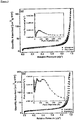
- Powder X-ray diffraction (XRD) studies were conducted using the PANalytical X'Pert Pro instrument. Scanning from 10 to 90° was carried out using the CuK ⁇ radiation source with the wavelength of 0.15406 nm. Nitrogen physisorption analyses were carried out by degassing the catalysts under N2 flow for 4 h at 200 °C. The degassed samples were analyzed in the Micromeritics ASAP 2020 multi-point surface area and porosity analyzer ( Figure 2 ).
- Temperature programmed desorption was performed using the Micromeritics 2920 Autochem II Chemisorption Analyzer ( Figure 3 ).
- the catalysts were pre-treated at 350 °C under the stream of helium for 60 min. The temperature was consequently decreased to 80 °C. 9.8 mol. % CO 2 in He was passed over the catalysts at the flow rate of 30 mL min -1 for 60 min. The excess gas was removed by purging with helium for 30 min. The temperature was after that gradually raised to 900 °C by ramping at 10 °C min -1 under the flow of helium, wherein the desorption data of NH3, is recorded.
- TEM transmission emission scanning electron microscope
- EDX energy-dispersive X-ray spectroscopy
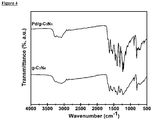
- FT-IR Fourier-transform infrared
- X-ray photoelectron spectroscopy (XPS) analyses were carried out by the PHI XPS spectrometer (Physical Electronics). Sample was deposited on adhesive carbon tape and introduced into ultra-high vacuum spectrometer. The vacuum during XPS analyses was in the range of 10 -9 mbar, as a high surface sensitivity is a general characteristic of the XPS methods. Sample surfaces were excited by the X-ray radiation from the monochromatic Al source at the photon energy of 2.3818 ⁇ 10 -16 J (1486.6 eV). High-energy resolution spectra were acquired with the energy analyser, operating at the resolution of about 9 ⁇ 10 -20 J (0.6 eV) and the pass energy of 4.65 ⁇ 10 -18 J (29 eV).
- Oxidative coupling reaction can be performed in a high pressure batch reactor (e.g. 250 mL, Amar Equipment Pvt. Ltd.) equipped with a thermocouple, pressure gauge, rupture disk, and gas release valve.
- a high pressure batch reactor e.g. 250 mL, Amar Equipment Pvt. Ltd.
- the conversion refers to the percentage of ethylene that has been converted to anything, as a result of this process.
- the selectivity of styrene is the mole percentage of styrene retrieved in the product composition.
- Example 2 The same procedure and conditions as in Example 2 is applied to a variety of catalysts. The results are given in Table 2. TABLE 2 Catalyst Conversion (%) Selectivity (%) GO 7 - rGO 10 4 SGO 6 2 CNT 7 3 Pd/rGO 50 7 Pd/SGO 45 4 Pd/CNT 47 3 Pt/rGO 55 8 Pt/SGO 49 9 Pt/CNT 52 10 Reaction conditions: Benzene 100 mL, ethylene 10 bar, catalyst 1g, time 3h, temperature 200°C.
Landscapes
- Chemical & Material Sciences (AREA)
- Organic Chemistry (AREA)
- Engineering & Computer Science (AREA)
- Materials Engineering (AREA)
- Chemical Kinetics & Catalysis (AREA)
- Nanotechnology (AREA)
- Organic Low-Molecular-Weight Compounds And Preparation Thereof (AREA)
- Catalysts (AREA)
Applications Claiming Priority (1)
| Application Number | Priority Date | Filing Date | Title |
|---|---|---|---|
| LU101516 | 2019-11-29 |
Publications (4)
| Publication Number | Publication Date |
|---|---|
| EP3828155A1 true EP3828155A1 (de) | 2021-06-02 |
| EP3828155A8 EP3828155A8 (de) | 2021-07-14 |
| EP3828155C0 EP3828155C0 (de) | 2025-02-12 |
| EP3828155B1 EP3828155B1 (de) | 2025-02-12 |
Family
ID=69375892
Family Applications (1)
| Application Number | Title | Priority Date | Filing Date |
|---|---|---|---|
| EP20209292.0A Active EP3828155B1 (de) | 2019-11-29 | 2020-11-23 | Verfahren zur herstellung funktionalisierter styrolmonomere aus benzol oder aromatischen oxygenaten |
Country Status (1)
| Country | Link |
|---|---|
| EP (1) | EP3828155B1 (de) |
Cited By (2)
| Publication number | Priority date | Publication date | Assignee | Title |
|---|---|---|---|---|
| CN113937312A (zh) * | 2021-10-16 | 2022-01-14 | 湖南科技大学 | 一种单原子铂基催化剂的制备方法及其产品与应用 |
| CN115837283A (zh) * | 2022-11-22 | 2023-03-24 | 电子科技大学长三角研究院(湖州) | 一种新型氧化铈/石墨相氮化碳纳米复合光催化剂及其制备方法 |
Citations (2)
| Publication number | Priority date | Publication date | Assignee | Title |
|---|---|---|---|---|
| US3689583A (en) * | 1968-12-10 | 1972-09-05 | Naoya Kominami | Production of dimethylstyrenes |
| EP1941946A1 (de) * | 2007-01-04 | 2008-07-09 | Max-Planck-Gesellschaft zur Förderung der Wissenschaften e.V. | Carbonitride als Katalysatoren |
Family Cites Families (2)
| Publication number | Priority date | Publication date | Assignee | Title |
|---|---|---|---|---|
| US3848010A (en) * | 1972-08-01 | 1974-11-12 | Monsanto Co | Catalytic vinylation of aromatic compounds |
| US6127590A (en) * | 1999-03-26 | 2000-10-03 | Nippon Mitsubishi Oil Corporation | Oxidative coupling of olefins and aromatics using a rhodium catalyst and a copper(II) redox agent |
-
2020
- 2020-11-23 EP EP20209292.0A patent/EP3828155B1/de active Active
Patent Citations (2)
| Publication number | Priority date | Publication date | Assignee | Title |
|---|---|---|---|---|
| US3689583A (en) * | 1968-12-10 | 1972-09-05 | Naoya Kominami | Production of dimethylstyrenes |
| EP1941946A1 (de) * | 2007-01-04 | 2008-07-09 | Max-Planck-Gesellschaft zur Förderung der Wissenschaften e.V. | Carbonitride als Katalysatoren |
Non-Patent Citations (10)
| Title |
|---|
| CATAL. SCI. TECHNOL., vol. 3, 2013, pages 519 - 526 |
| CATAL. SCI. TECHNOL., vol. 5, 2015, pages 5062 - 5076 |
| CHEM. REV., vol. 11710, 2017, pages 6834 - 6880 |
| FREDERIC GOETTMANN ET AL: "Chemical Synthesis of Mesoporous Carbon Nitrides Using Hard Templates and Their Use as a Metal-Free Catalyst for Friedel-Crafts Reaction of Benzene", ANGEWANDTE CHEMIE INT ED, WILEY-VCH, DE, vol. 45, no. 27, 13 June 2006 (2006-06-13), pages 4467 - 4471, XP002438612, ISSN: 1433-7851, DOI: 10.1002/ANIE.200600412 * |
| LOWELL, S.SHIELDS, J.E.THOMAS, M.A.THOMMES, M.: "Characterization of porous solids and powders: surface area, pore size and density", vol. 16, 2012, SPRINGER SCIENCE & BUSINESS MEDIA |
| NAT. COMMUN., vol. 9, 2018, pages 1 - 3 |
| RSC ADV., vol. 4, 2014, pages 57087 - 57097 |
| RSC ADV., vol. 6, 2016, pages 32989 - 32993 |
| SCIENCE, vol. 348, no. 6233, 2015, pages 421 - 424 |
| SUGINO, APPL. CATAL., A, vol. 121, 1995, pages 125 - 137 |
Cited By (2)
| Publication number | Priority date | Publication date | Assignee | Title |
|---|---|---|---|---|
| CN113937312A (zh) * | 2021-10-16 | 2022-01-14 | 湖南科技大学 | 一种单原子铂基催化剂的制备方法及其产品与应用 |
| CN115837283A (zh) * | 2022-11-22 | 2023-03-24 | 电子科技大学长三角研究院(湖州) | 一种新型氧化铈/石墨相氮化碳纳米复合光催化剂及其制备方法 |
Also Published As
| Publication number | Publication date |
|---|---|
| EP3828155C0 (de) | 2025-02-12 |
| EP3828155B1 (de) | 2025-02-12 |
| EP3828155A8 (de) | 2021-07-14 |
Similar Documents
| Publication | Publication Date | Title |
|---|---|---|
| Della Pina et al. | Selective oxidation using gold | |
| Chen et al. | Palladium supported on an acidic metal–organic framework as an efficient catalyst in selective aerobic oxidation of alcohols | |
| Edake et al. | Catalytic glycerol hydrogenolysis to 1, 3-propanediol in a gas–solid fluidized bed | |
| Gallegos-Suarez et al. | Effect of the functional groups of carbon on the surface and catalytic properties of Ru/C catalysts for hydrogenolysis of glycerol | |
| Yfanti et al. | Effect of hydrogen donor on glycerol hydrodeoxygenation to 1, 2-propanediol | |
| KR101533535B1 (ko) | 폴리올로부터 글리콜 생산을 위한 텅스텐 카바이드 계열의 촉매 | |
| Liu et al. | Syntheses of new peroxo-polyoxometalates intercalated layered double hydroxides for propene epoxidation by molecular oxygen in methanol | |
| KR20150137733A (ko) | 고활성 피셔-트롭쉬 촉매의 제조방법 | |
| EP3828155B1 (de) | Verfahren zur herstellung funktionalisierter styrolmonomere aus benzol oder aromatischen oxygenaten | |
| AU2015359687B2 (en) | Fischer-Tropsch process using reduced cobalt catalyst | |
| WO2017085603A2 (en) | Methods for the conversion of co2 into syngas for use in the production of olefins | |
| hua Yu et al. | Aerobic oxidation of 4-tert-butyltoluene over cobalt and manganese supported hexagonal mesoporous silicas as heterogeneous catalysts | |
| CN107406775B (zh) | 使用还原活化的钴催化剂的费-托方法 | |
| CA2033732A1 (en) | Tantalum-containing catalyst useful for producing alcohols from synthesis gas | |
| US10549265B2 (en) | Diethyl oxalate catalysts | |
| Vasanthakumar et al. | Mixed-metal MOFs as efficient catalysts for transfer hydrogenation of furfural, levulinic acid and other carbonyl compounds | |
| WO2010055808A1 (ja) | 不飽和炭化水素および含酸素化合物の製造方法、触媒およびその製造方法 | |
| CN114345343B (zh) | 一种用于co2氧化丙烷制丙烯反应催化剂 | |
| Ravi et al. | Additive-and base-free tandem aerobic oxidative cleavage of olefins to esters using bifunctional mesoporous copper-incorporated Al-SBA-15 | |
| Guo et al. | Selective aerobic oxidative C–C bond cleavage using a high-entropy oxide-derived multimetallic catalyst | |
| KR101652467B1 (ko) | 메조세공체 알루미나를 담체로 하여 백금을 담지한 수상개질반응의 촉매, 및 그의 제조 방법 | |
| WO2017141138A1 (en) | Conversion of adjusted methane steam reforming gas composition with co2 for the production of syngas composition for oxo-synthesis | |
| CN111807937A (zh) | 利用乙二醇二甲醚合成乙烯基甲醚的方法 | |
| CN106588607B (zh) | 一种苯甲酸甲酯加氢制备苯甲醛的工艺方法 | |
| JP7441474B2 (ja) | 触媒、イソブチルアルデヒドおよびメタクロレインの製造方法、メタクリル酸の製造方法、及びメタクリル酸エステルの製造方法 |
Legal Events
| Date | Code | Title | Description |
|---|---|---|---|
| PUAI | Public reference made under article 153(3) epc to a published international application that has entered the european phase |
Free format text: ORIGINAL CODE: 0009012 |
|
| STAA | Information on the status of an ep patent application or granted ep patent |
Free format text: STATUS: THE APPLICATION HAS BEEN PUBLISHED |
|
| AK | Designated contracting states |
Kind code of ref document: A1 Designated state(s): AL AT BE BG CH CY CZ DE DK EE ES FI FR GB GR HR HU IE IS IT LI LT LU LV MC MK MT NL NO PL PT RO RS SE SI SK SM TR |
|
| RIN1 | Information on inventor provided before grant (corrected) |
Inventor name: LIKOZAR, BLAZ Inventor name: AVASTHI, KALPANA Inventor name: BOHRE, ASHISH Inventor name: GRILC, MIHA |
|
| STAA | Information on the status of an ep patent application or granted ep patent |
Free format text: STATUS: REQUEST FOR EXAMINATION WAS MADE |
|
| 17P | Request for examination filed |
Effective date: 20211130 |
|
| RBV | Designated contracting states (corrected) |
Designated state(s): AL AT BE BG CH CY CZ DE DK EE ES FI FR GB GR HR HU IE IS IT LI LT LU LV MC MK MT NL NO PL PT RO RS SE SI SK SM TR |
|
| STAA | Information on the status of an ep patent application or granted ep patent |
Free format text: STATUS: EXAMINATION IS IN PROGRESS |
|
| 17Q | First examination report despatched |
Effective date: 20230403 |
|
| GRAP | Despatch of communication of intention to grant a patent |
Free format text: ORIGINAL CODE: EPIDOSNIGR1 |
|
| STAA | Information on the status of an ep patent application or granted ep patent |
Free format text: STATUS: GRANT OF PATENT IS INTENDED |
|
| RIC1 | Information provided on ipc code assigned before grant |
Ipc: B01J 27/24 20060101ALI20240815BHEP Ipc: C07C 15/46 20060101ALI20240815BHEP Ipc: C07C 2/84 20060101AFI20240815BHEP |
|
| INTG | Intention to grant announced |
Effective date: 20240905 |
|
| GRAS | Grant fee paid |
Free format text: ORIGINAL CODE: EPIDOSNIGR3 |
|
| GRAA | (expected) grant |
Free format text: ORIGINAL CODE: 0009210 |
|
| STAA | Information on the status of an ep patent application or granted ep patent |
Free format text: STATUS: THE PATENT HAS BEEN GRANTED |
|
| AK | Designated contracting states |
Kind code of ref document: B1 Designated state(s): AL AT BE BG CH CY CZ DE DK EE ES FI FR GB GR HR HU IE IS IT LI LT LU LV MC MK MT NL NO PL PT RO RS SE SI SK SM TR |
|
| REG | Reference to a national code |
Ref country code: GB Ref legal event code: FG4D |
|
| REG | Reference to a national code |
Ref country code: CH Ref legal event code: EP |
|
| REG | Reference to a national code |
Ref country code: DE Ref legal event code: R096 Ref document number: 602020045851 Country of ref document: DE |
|
| REG | Reference to a national code |
Ref country code: IE Ref legal event code: FG4D |
|
| U01 | Request for unitary effect filed |
Effective date: 20250311 |
|
| U07 | Unitary effect registered |
Designated state(s): AT BE BG DE DK EE FI FR IT LT LU LV MT NL PT RO SE SI Effective date: 20250319 |
|
| PG25 | Lapsed in a contracting state [announced via postgrant information from national office to epo] |
Ref country code: RS Free format text: LAPSE BECAUSE OF FAILURE TO SUBMIT A TRANSLATION OF THE DESCRIPTION OR TO PAY THE FEE WITHIN THE PRESCRIBED TIME-LIMIT Effective date: 20250512 |
|
| PG25 | Lapsed in a contracting state [announced via postgrant information from national office to epo] |
Ref country code: PL Free format text: LAPSE BECAUSE OF FAILURE TO SUBMIT A TRANSLATION OF THE DESCRIPTION OR TO PAY THE FEE WITHIN THE PRESCRIBED TIME-LIMIT Effective date: 20250212 |
|
| PG25 | Lapsed in a contracting state [announced via postgrant information from national office to epo] |
Ref country code: ES Free format text: LAPSE BECAUSE OF FAILURE TO SUBMIT A TRANSLATION OF THE DESCRIPTION OR TO PAY THE FEE WITHIN THE PRESCRIBED TIME-LIMIT Effective date: 20250212 |
|
| PG25 | Lapsed in a contracting state [announced via postgrant information from national office to epo] |
Ref country code: IS Free format text: LAPSE BECAUSE OF FAILURE TO SUBMIT A TRANSLATION OF THE DESCRIPTION OR TO PAY THE FEE WITHIN THE PRESCRIBED TIME-LIMIT Effective date: 20250612 Ref country code: NO Free format text: LAPSE BECAUSE OF FAILURE TO SUBMIT A TRANSLATION OF THE DESCRIPTION OR TO PAY THE FEE WITHIN THE PRESCRIBED TIME-LIMIT Effective date: 20250512 |
|
| PG25 | Lapsed in a contracting state [announced via postgrant information from national office to epo] |
Ref country code: HR Free format text: LAPSE BECAUSE OF FAILURE TO SUBMIT A TRANSLATION OF THE DESCRIPTION OR TO PAY THE FEE WITHIN THE PRESCRIBED TIME-LIMIT Effective date: 20250212 |
|
| PG25 | Lapsed in a contracting state [announced via postgrant information from national office to epo] |
Ref country code: GR Free format text: LAPSE BECAUSE OF FAILURE TO SUBMIT A TRANSLATION OF THE DESCRIPTION OR TO PAY THE FEE WITHIN THE PRESCRIBED TIME-LIMIT Effective date: 20250513 |
|
| PG25 | Lapsed in a contracting state [announced via postgrant information from national office to epo] |
Ref country code: SM Free format text: LAPSE BECAUSE OF FAILURE TO SUBMIT A TRANSLATION OF THE DESCRIPTION OR TO PAY THE FEE WITHIN THE PRESCRIBED TIME-LIMIT Effective date: 20250212 |
|
| PG25 | Lapsed in a contracting state [announced via postgrant information from national office to epo] |
Ref country code: CZ Free format text: LAPSE BECAUSE OF FAILURE TO SUBMIT A TRANSLATION OF THE DESCRIPTION OR TO PAY THE FEE WITHIN THE PRESCRIBED TIME-LIMIT Effective date: 20250212 |
|
| PG25 | Lapsed in a contracting state [announced via postgrant information from national office to epo] |
Ref country code: SK Free format text: LAPSE BECAUSE OF FAILURE TO SUBMIT A TRANSLATION OF THE DESCRIPTION OR TO PAY THE FEE WITHIN THE PRESCRIBED TIME-LIMIT Effective date: 20250212 |
|
| U20 | Renewal fee for the european patent with unitary effect paid |
Year of fee payment: 6 Effective date: 20250923 |
|
| PLBE | No opposition filed within time limit |
Free format text: ORIGINAL CODE: 0009261 |
|
| STAA | Information on the status of an ep patent application or granted ep patent |
Free format text: STATUS: NO OPPOSITION FILED WITHIN TIME LIMIT |
|
| REG | Reference to a national code |
Ref country code: CH Ref legal event code: L10 Free format text: ST27 STATUS EVENT CODE: U-0-0-L10-L00 (AS PROVIDED BY THE NATIONAL OFFICE) Effective date: 20251224 |
|
| 26N | No opposition filed |
Effective date: 20251113 |
|
| REG | Reference to a national code |
Ref country code: CH Ref legal event code: H13 Free format text: ST27 STATUS EVENT CODE: U-0-0-H10-H13 (AS PROVIDED BY THE NATIONAL OFFICE) Effective date: 20260623 |
|
| PG25 | Lapsed in a contracting state [announced via postgrant information from national office to epo] |
Ref country code: MC Free format text: LAPSE BECAUSE OF FAILURE TO SUBMIT A TRANSLATION OF THE DESCRIPTION OR TO PAY THE FEE WITHIN THE PRESCRIBED TIME-LIMIT Effective date: 20250212 |
|
| PG25 | Lapsed in a contracting state [announced via postgrant information from national office to epo] |
Ref country code: CH Free format text: LAPSE BECAUSE OF NON-PAYMENT OF DUE FEES Effective date: 20251130 |