EP3828253A1 - Compositions de carburant de gaz à effet de serre - Google Patents
Compositions de carburant de gaz à effet de serre Download PDFInfo
- Publication number
- EP3828253A1 EP3828253A1 EP19212636.5A EP19212636A EP3828253A1 EP 3828253 A1 EP3828253 A1 EP 3828253A1 EP 19212636 A EP19212636 A EP 19212636A EP 3828253 A1 EP3828253 A1 EP 3828253A1
- Authority
- EP
- European Patent Office
- Prior art keywords
- fuel
- naphtha
- octane
- hydrogen
- fuel composition
- Prior art date
- Legal status (The legal status is an assumption and is not a legal conclusion. Google has not performed a legal analysis and makes no representation as to the accuracy of the status listed.)
- Pending
Links
- 0 C(CO1)*C2C1=CC=CC2 Chemical compound C(CO1)*C2C1=CC=CC2 0.000 description 2
- BFTIVVVZXIHRHZ-UHFFFAOYSA-N CC1Nc2ccc(C)cc2OC1 Chemical compound CC1Nc2ccc(C)cc2OC1 BFTIVVVZXIHRHZ-UHFFFAOYSA-N 0.000 description 1
- YKPYSZOCOIUSEZ-UHFFFAOYSA-N CC1Oc2ccccc2NC1 Chemical compound CC1Oc2ccccc2NC1 YKPYSZOCOIUSEZ-UHFFFAOYSA-N 0.000 description 1
- YGNLKRZOQKGQLJ-UHFFFAOYSA-N Cc1c(C)cc2OCCNc2c1 Chemical compound Cc1c(C)cc2OCCNc2c1 YGNLKRZOQKGQLJ-UHFFFAOYSA-N 0.000 description 1
- VKWQSTIJYWQSAL-UHFFFAOYSA-N Cc1ccc2OCCNc2c1 Chemical compound Cc1ccc2OCCNc2c1 VKWQSTIJYWQSAL-UHFFFAOYSA-N 0.000 description 1
- MYGCKPWMWIJIOC-UHFFFAOYSA-N Cc1ccc2[U]CCNc2c1 Chemical compound Cc1ccc2[U]CCNc2c1 MYGCKPWMWIJIOC-UHFFFAOYSA-N 0.000 description 1
Images

Classifications
-
- C—CHEMISTRY; METALLURGY
- C10—PETROLEUM, GAS OR COKE INDUSTRIES; TECHNICAL GASES CONTAINING CARBON MONOXIDE; FUELS; LUBRICANTS; PEAT
- C10L—FUELS NOT OTHERWISE PROVIDED FOR; NATURAL GAS; SYNTHETIC NATURAL GAS OBTAINED BY PROCESSES NOT COVERED BY SUBCLASSES C10G OR C10K; LIQUIFIED PETROLEUM GAS; USE OF ADDITIVES TO FUELS OR FIRES; FIRE-LIGHTERS
- C10L1/00—Liquid carbonaceous fuels
- C10L1/10—Liquid carbonaceous fuels containing additives
- C10L1/14—Organic compounds
- C10L1/22—Organic compounds containing nitrogen
- C10L1/232—Organic compounds containing nitrogen containing nitrogen in a heterocyclic ring
- C10L1/233—Organic compounds containing nitrogen containing nitrogen in a heterocyclic ring containing nitrogen and oxygen in the ring, e.g. oxazoles
- C10L1/2335—Organic compounds containing nitrogen containing nitrogen in a heterocyclic ring containing nitrogen and oxygen in the ring, e.g. oxazoles morpholino, and derivatives thereof
-
- C—CHEMISTRY; METALLURGY
- C10—PETROLEUM, GAS OR COKE INDUSTRIES; TECHNICAL GASES CONTAINING CARBON MONOXIDE; FUELS; LUBRICANTS; PEAT
- C10L—FUELS NOT OTHERWISE PROVIDED FOR; NATURAL GAS; SYNTHETIC NATURAL GAS OBTAINED BY PROCESSES NOT COVERED BY SUBCLASSES C10G OR C10K; LIQUIFIED PETROLEUM GAS; USE OF ADDITIVES TO FUELS OR FIRES; FIRE-LIGHTERS
- C10L1/00—Liquid carbonaceous fuels
- C10L1/04—Liquid carbonaceous fuels essentially based on blends of hydrocarbons
- C10L1/06—Liquid carbonaceous fuels essentially based on blends of hydrocarbons for spark ignition
-
- C—CHEMISTRY; METALLURGY
- C10—PETROLEUM, GAS OR COKE INDUSTRIES; TECHNICAL GASES CONTAINING CARBON MONOXIDE; FUELS; LUBRICANTS; PEAT
- C10L—FUELS NOT OTHERWISE PROVIDED FOR; NATURAL GAS; SYNTHETIC NATURAL GAS OBTAINED BY PROCESSES NOT COVERED BY SUBCLASSES C10G OR C10K; LIQUIFIED PETROLEUM GAS; USE OF ADDITIVES TO FUELS OR FIRES; FIRE-LIGHTERS
- C10L1/00—Liquid carbonaceous fuels
- C10L1/10—Liquid carbonaceous fuels containing additives
- C10L1/14—Organic compounds
- C10L1/22—Organic compounds containing nitrogen
- C10L1/232—Organic compounds containing nitrogen containing nitrogen in a heterocyclic ring
-
- C—CHEMISTRY; METALLURGY
- C10—PETROLEUM, GAS OR COKE INDUSTRIES; TECHNICAL GASES CONTAINING CARBON MONOXIDE; FUELS; LUBRICANTS; PEAT
- C10L—FUELS NOT OTHERWISE PROVIDED FOR; NATURAL GAS; SYNTHETIC NATURAL GAS OBTAINED BY PROCESSES NOT COVERED BY SUBCLASSES C10G OR C10K; LIQUIFIED PETROLEUM GAS; USE OF ADDITIVES TO FUELS OR FIRES; FIRE-LIGHTERS
- C10L1/00—Liquid carbonaceous fuels
- C10L1/10—Liquid carbonaceous fuels containing additives
- C10L1/14—Organic compounds
- C10L1/22—Organic compounds containing nitrogen
- C10L1/232—Organic compounds containing nitrogen containing nitrogen in a heterocyclic ring
- C10L1/233—Organic compounds containing nitrogen containing nitrogen in a heterocyclic ring containing nitrogen and oxygen in the ring, e.g. oxazoles
-
- C—CHEMISTRY; METALLURGY
- C10—PETROLEUM, GAS OR COKE INDUSTRIES; TECHNICAL GASES CONTAINING CARBON MONOXIDE; FUELS; LUBRICANTS; PEAT
- C10L—FUELS NOT OTHERWISE PROVIDED FOR; NATURAL GAS; SYNTHETIC NATURAL GAS OBTAINED BY PROCESSES NOT COVERED BY SUBCLASSES C10G OR C10K; LIQUIFIED PETROLEUM GAS; USE OF ADDITIVES TO FUELS OR FIRES; FIRE-LIGHTERS
- C10L10/00—Use of additives to fuels or fires for particular purposes
- C10L10/02—Use of additives to fuels or fires for particular purposes for reducing smoke development
-
- C—CHEMISTRY; METALLURGY
- C10—PETROLEUM, GAS OR COKE INDUSTRIES; TECHNICAL GASES CONTAINING CARBON MONOXIDE; FUELS; LUBRICANTS; PEAT
- C10L—FUELS NOT OTHERWISE PROVIDED FOR; NATURAL GAS; SYNTHETIC NATURAL GAS OBTAINED BY PROCESSES NOT COVERED BY SUBCLASSES C10G OR C10K; LIQUIFIED PETROLEUM GAS; USE OF ADDITIVES TO FUELS OR FIRES; FIRE-LIGHTERS
- C10L10/00—Use of additives to fuels or fires for particular purposes
- C10L10/10—Use of additives to fuels or fires for particular purposes for improving the octane number
-
- C—CHEMISTRY; METALLURGY
- C10—PETROLEUM, GAS OR COKE INDUSTRIES; TECHNICAL GASES CONTAINING CARBON MONOXIDE; FUELS; LUBRICANTS; PEAT
- C10L—FUELS NOT OTHERWISE PROVIDED FOR; NATURAL GAS; SYNTHETIC NATURAL GAS OBTAINED BY PROCESSES NOT COVERED BY SUBCLASSES C10G OR C10K; LIQUIFIED PETROLEUM GAS; USE OF ADDITIVES TO FUELS OR FIRES; FIRE-LIGHTERS
- C10L2200/00—Components of fuel compositions
- C10L2200/04—Organic compounds
- C10L2200/0407—Specifically defined hydrocarbon fractions as obtained from, e.g. a distillation column
- C10L2200/0415—Light distillates, e.g. LPG, naphtha
-
- C—CHEMISTRY; METALLURGY
- C10—PETROLEUM, GAS OR COKE INDUSTRIES; TECHNICAL GASES CONTAINING CARBON MONOXIDE; FUELS; LUBRICANTS; PEAT
- C10L—FUELS NOT OTHERWISE PROVIDED FOR; NATURAL GAS; SYNTHETIC NATURAL GAS OBTAINED BY PROCESSES NOT COVERED BY SUBCLASSES C10G OR C10K; LIQUIFIED PETROLEUM GAS; USE OF ADDITIVES TO FUELS OR FIRES; FIRE-LIGHTERS
- C10L2200/00—Components of fuel compositions
- C10L2200/04—Organic compounds
- C10L2200/0407—Specifically defined hydrocarbon fractions as obtained from, e.g. a distillation column
- C10L2200/0415—Light distillates, e.g. LPG, naphtha
- C10L2200/0423—Gasoline
-
- C—CHEMISTRY; METALLURGY
- C10—PETROLEUM, GAS OR COKE INDUSTRIES; TECHNICAL GASES CONTAINING CARBON MONOXIDE; FUELS; LUBRICANTS; PEAT
- C10L—FUELS NOT OTHERWISE PROVIDED FOR; NATURAL GAS; SYNTHETIC NATURAL GAS OBTAINED BY PROCESSES NOT COVERED BY SUBCLASSES C10G OR C10K; LIQUIFIED PETROLEUM GAS; USE OF ADDITIVES TO FUELS OR FIRES; FIRE-LIGHTERS
- C10L2200/00—Components of fuel compositions
- C10L2200/04—Organic compounds
- C10L2200/0461—Fractions defined by their origin
-
- C—CHEMISTRY; METALLURGY
- C10—PETROLEUM, GAS OR COKE INDUSTRIES; TECHNICAL GASES CONTAINING CARBON MONOXIDE; FUELS; LUBRICANTS; PEAT
- C10L—FUELS NOT OTHERWISE PROVIDED FOR; NATURAL GAS; SYNTHETIC NATURAL GAS OBTAINED BY PROCESSES NOT COVERED BY SUBCLASSES C10G OR C10K; LIQUIFIED PETROLEUM GAS; USE OF ADDITIVES TO FUELS OR FIRES; FIRE-LIGHTERS
- C10L2200/00—Components of fuel compositions
- C10L2200/04—Organic compounds
- C10L2200/0461—Fractions defined by their origin
- C10L2200/0469—Renewables or materials of biological origin
-
- C—CHEMISTRY; METALLURGY
- C10—PETROLEUM, GAS OR COKE INDUSTRIES; TECHNICAL GASES CONTAINING CARBON MONOXIDE; FUELS; LUBRICANTS; PEAT
- C10L—FUELS NOT OTHERWISE PROVIDED FOR; NATURAL GAS; SYNTHETIC NATURAL GAS OBTAINED BY PROCESSES NOT COVERED BY SUBCLASSES C10G OR C10K; LIQUIFIED PETROLEUM GAS; USE OF ADDITIVES TO FUELS OR FIRES; FIRE-LIGHTERS
- C10L2230/00—Function and purpose of a components of a fuel or the composition as a whole
- C10L2230/22—Function and purpose of a components of a fuel or the composition as a whole for improving fuel economy or fuel efficiency
-
- C—CHEMISTRY; METALLURGY
- C10—PETROLEUM, GAS OR COKE INDUSTRIES; TECHNICAL GASES CONTAINING CARBON MONOXIDE; FUELS; LUBRICANTS; PEAT
- C10L—FUELS NOT OTHERWISE PROVIDED FOR; NATURAL GAS; SYNTHETIC NATURAL GAS OBTAINED BY PROCESSES NOT COVERED BY SUBCLASSES C10G OR C10K; LIQUIFIED PETROLEUM GAS; USE OF ADDITIVES TO FUELS OR FIRES; FIRE-LIGHTERS
- C10L2270/00—Specifically adapted fuels
- C10L2270/02—Specifically adapted fuels for internal combustion engines
- C10L2270/023—Specifically adapted fuels for internal combustion engines for gasoline engines
-
- C—CHEMISTRY; METALLURGY
- C10—PETROLEUM, GAS OR COKE INDUSTRIES; TECHNICAL GASES CONTAINING CARBON MONOXIDE; FUELS; LUBRICANTS; PEAT
- C10L—FUELS NOT OTHERWISE PROVIDED FOR; NATURAL GAS; SYNTHETIC NATURAL GAS OBTAINED BY PROCESSES NOT COVERED BY SUBCLASSES C10G OR C10K; LIQUIFIED PETROLEUM GAS; USE OF ADDITIVES TO FUELS OR FIRES; FIRE-LIGHTERS
- C10L2290/00—Fuel preparation or upgrading, processes or apparatus therefore, comprising specific process steps or apparatus units
- C10L2290/24—Mixing, stirring of fuel components
Definitions
- This invention relates to fuel compositions for use in a spark-ignition internal combustion engine.
- the invention relates to fuel compositions which may meet standard fuel specifications yet have a relative low well-to-wheel greenhouse gas emissions rating.
- the invention further relates to methods for preparing such fuels.
- Spark-ignition internal combustion engines are widely used for power, both domestically and in industry. For instance, spark-ignition internal combustion engines are commonly used to power vehicles, such as passenger cars, in the automotive industry.
- Well-to-wheel emissions are made up of a combination of well-to-tank emissions (i.e. those relating to the extraction, transportation, refining, etc. of the fuel and any additives contained therein) and tank-to-wheel emissions ( i.e. those relating to the combustion efficiency of the fuel, the chemical composition of the fuel itself, etc. ) .
- well-to-wheel emissions are a useful measure of the overall environmental impact of different fuels.
- Spark-ignition internal combustion engines are typically powered using gasoline, which may be obtained as a crude oil refinery stream. Ideally, refinery streams other than gasoline would also be used as a fuel for a spark-ignition internal combustion engine.
- Naphtha contains a mixture of hydrocarbons having an initial boiling point of at least 35 °C and a final boiling point of up to 210 °C at atmospheric pressure. Typically the majority of naphtha is made up from straight-chain, moderately branched and cyclic aliphatic hydrocarbons, with between five to twelve carbon atoms per molecule. Though naphtha was originally obtained from crude oil, nowadays it is often produced synthetically using Fischer-Tropsch processes or as a byproduct in the production of biodiesel and bio-jet fuels.
- Naphtha would be an effective fuel since it has a high energy density by mass.
- naphtha that has not been subjected to extensive refining represents a fuel component having relatively low well-to-wheel greenhouse gas emissions.
- virgin naphtha typically exhibits a very low octane rating, in particular its research octane number (RON). This has severely limited the extent to which virgin naphtha may be used in a fuel for a spark-ignition internal combustion engine.
- virgin naphtha may be reformed.
- this processing can be energy-intensive and usually reduces the ratio of hydrogen to carbon in the naphtha, resulting in increased CO 2 emissions on combustion.
- many refineries do not have suitable facilities for reforming naphtha, leading to the import and export of virgin and reformed naphtha streams, depending on the local facilities.
- liquid fuels which can be used as a replacement for a conventional gasoline fuel in a spark-ignition internal combustion engine.
- liquid fuels which can be used as drop-in fuels in a spark-ignition internal combustion engine which do not compromise the performance of the fuel and which, crucially, may be less energy intensive in their production and use than conventional gasoline fuels.
- Fuels for a spark-ignition internal combustion engine typically contain a number of additives to improve the properties of the fuel.
- octane improving additives are octane improving additives. These additives increase the octane number of the fuel which is desirable for combatting problems associated with pre-ignition, such as knocking. Additisation of a fuel with an octane improver may be carried out by refineries or other suppliers, e.g. fuel terminals or bulk fuel blenders, so that the fuel meets applicable fuel specifications when the base fuel octane number is otherwise too low.
- Organometallic compounds comprising e.g. iron, lead or manganese, are well-known octane improvers, with tetraethyl lead (TEL) having been extensively used as a highly effective octane improver.
- TEL tetraethyl lead
- TEL and other organometallic compounds are generally now only used in fuels in small amounts, if at all, as they can be toxic, damaging to the engine and damaging to the environment.
- Octane improvers which are not based on metals include oxygenates (e.g. ethers and alcohols) and aromatic amines.
- oxygenates e.g. ethers and alcohols
- aromatic amines these additives also suffer from various drawbacks.
- NMA N-methyl aniline
- an aromatic amine must be used at a relatively high treat rate (1.5 to 2 % weight additive / weight base fuel) to have a significant effect on the octane number of even a conventional gasoline fuel.
- NMA can also be toxic and can cause sludge formation in engines.
- Oxygenates give a reduction in energy density in the fuel and, as with NMA, have to be added at high treat rates, potentially causing compatibility problems with fuel storage, fuel lines, seals and other engine components.
- octane-boosting additives which are derivatives of benzo[1,4]oxazines and 1,5-benzoxazepine. These octane-boosting additives have shown great promise in conventional gasoline fuels due to their non-metallic nature, their low oxygenate content, and their efficacy at low treat rates (see WO 2017/137518 ). However, it was not previously anticipated that the octane-boosters could be used to enhance the octane number of a naphtha-containing fuels to a level whereby the fuel would meet the requirements of modern fuel specifications.
- the new class of octane-boosting additives are highly effective at enhancing the RON value of a fuel which contains a significant amount of naphtha.
- the octane-boosting additives may be used to bring a naphtha-containing fuel up to a standard which meets the requirements of conventional fuel standards, where other methods of boosting the naphtha will contravene such specifications, harm engines and/or worsen the toxicology of the fuel.
- the well-to-wheel greenhouse gas emissions associated with a fuel of the present invention may be significantly lower than that of conventional fuels.
- the present invention provides the use of an octane-boosting additive having the formula:
- a method is also provided for reducing the environmental impact of a fuel for a spark-ignition internal combustion engine which comprises an octane-boosting additive as defined above, said method comprising blending naphtha with the fuel.
- a fuel composition for a spark-ignition internal combustion engine comprising naphtha in an amount of at least 5 % by volume, and an octane-boosting additive as defined above.
- the present invention further provides a method for quantifying the environmental impact of a fuel, said method comprising: blending a fuel of the present invention; and comparing the environmental impact of the blended fuel with that of a reference fuel to arrive at a metric of environmental impact.
- the octane-boosting additives described herein are used in a fuel composition for a spark-ignition internal combustion engine. It will be appreciated that the octane-boosting additives may be used in engines other than spark-ignition internal combustion engines, provided that the fuel in which the additive is used is suitable for use in a spark-ignition internal combustion engine. Gasoline fuels (including those containing oxygenates) are typically used in spark-ignition internal combustion engines.
- the fuel composition according to the present invention may be a gasoline fuel composition.
- the fuel composition may comprise a major amount (i.e. greater than 50 % by weight) of liquid fuel ("base fuel”) and a minor amount (i.e. less than 50 % by weight) of octane-boosting additive described herein. It will be appreciated that the naphtha component of the fuel composition forms part of the liquid fuel.
- Naphthas are mixtures of hydrocarbons that have an initial boiling point of at least 35 °C and a final boiling point of up to 210 °C, the boiling points being determined at atmospheric pressure. Naphtha is largely made up from straight-chain, moderately branched and cyclic aliphatic hydrocarbons, with between five to twelve carbon atoms per molecule. Aromatic compounds may also be present depending on the nature of the crude oil.
- the naphtha that is used in the fuel compositions of the present invention may be selected from petroleum naphtha, bio-naphtha, synthetic naphtha and combinations thereof.
- Petroleum naphtha, bio-naphtha and synthetic naphtha are all well-known sources of naphtha.
- Petroleum naphtha also known as mineral naphtha, is an intermediate hydrocarbon stream that is obtained during the initial processing of crude oil.
- Bio-naphtha is a naphtha stream derived from the processing of biomass.
- Synthetic naphtha is typically synthesized using a Fischer-Tropsch process, in which hydrogen and carbon monoxide react to form hydrocarbons in the presence of a metal catalyst; this naphtha may be referred to as Fischer-Tropsch naphtha.
- Petroleum naphtha typically comprises a higher proportion by mass of aromatic hydrocarbons and sulfur than bio-naphtha or Fischer-Tropsch naphtha, which are typically substantially free of sulfur and comprise low proportions by mass of aromatic hydrocarbons.
- Petroleum naphtha and bio-naphtha typically have a RON of between 40 and 80.
- Reformed naphtha and synthetic naphthas such as Fischer-Tropsch naphtha, may sometimes have higher RON values, for instance up to 60, up to 90 or in some cases even up to 100.
- the present invention relates predominantly to enhancing the octane number, and hence anti-knocking performance, of fuel compositions comprising petroleum naphtha or bio-naphtha since these exhibit lower RON values.
- the naphtha is selected from petroleum naphtha, bio-naphtha and combinations thereof.
- the naphtha that is used in the fuel composition may have a RON of up to 80, preferably up to 75 and more preferably up to 70.
- the naphtha may have a RON of at least 35, preferably at least 40, and more preferably at least 45.
- the naphtha may have a RON of from 35 to 80, preferably from 40 to 75, and more preferably from 45 to 70. It will be appreciated that a naphtha having suitable a RON may be obtained by blending naphthas having higher and lower RONs that those mentioned above.
- the fuel compositions of the present invention comprise naphtha blended in an amount of at least 5 % by volume. Unless otherwise stated, % by volume is used herein to indicate % volume / volume.
- the amount of naphtha that is included in the fuel will depend on a number of different factors, such as the properties of the naphtha, and the target properties for the finished fuel.
- the fuel compositions may comprise naphtha blended in an amount of at least 10 % by volume, preferably at least 15 % by volume, and more preferably at least 20 % by volume.
- the fuel compositions may comprise naphtha blended in an amount of up to 50 % by volume, preferably up to 40 % by volume, and more preferably up to 35 % by volume.
- the fuel compositions may comprise naphtha blended in an amount of from 10 to 50 % by volume, preferably from 15 to 40 % by volume, and more preferably from 20 to 35 % by volume.
- the fuel composition preferably comprises liquid fuel other than naphtha.
- liquid fuels include hydrocarbon fuels (other than naphtha), oxygenates and combinations thereof.
- the fuel composition comprises a hydrocarbon fuel other than naphtha and an oxygenate.
- Hydrocarbon fuels (other than naphtha) that may be used in a spark-ignition internal combustion engine may be selected from those derived from mineral sources, renewable sources such as biomass ( e.g . biomass-to-liquid sources which may be used to produce bio-gasoline), gas-to-liquid sources, coal-to-liquid sources, and combinations thereof.
- Preferred hydrocarbon fuels include mineral-derived fuels such as gasoline base fuels due to cost, but could be hydrocarbons derived from renewable resources where such are available economically.
- the RON of the hydrocarbon fuel will depend on the target specification of the fuel which varies from region to region.
- the hydrocarbon fuel may have a RON of at least 80, preferably at least 85, and more preferably at least 90.
- the hydrocarbon fuel may have a RON of up to 105, preferably up to 100, and more preferably up to 95.
- the hydrocarbon fuel may have a RON of from 80 to 105, preferably from 85 to 100, and more preferably from 90 to 95.
- the fuel composition may comprise the hydrocarbon fuel in an amount of at least 50 %, preferably at least 55 %, and more preferably at least 60 % by volume.
- the fuel composition may comprise the hydrocarbon fuel in an amount of up to 92 %, preferably up to 80 %, and more preferably up to 85 % by volume.
- the fuel composition may comprise the hydrocarbon fuel in an amount of from 50 % to 92 %, preferably from 55 % to 90 %, and more preferably from 60 % to 85 %, by volume.
- hydrocarbon fuel other than naphtha when more than one hydrocarbon fuel other than naphtha is used, these values refer to the total amount of hydrocarbon fuel that may be present in the fuel composition.
- the oxygenate that may optionally be used in the fuel composition may be selected from alcohols, ethers and combinations thereof.
- the oxygenates are preferably bio-oxygenates, i.e. oxygenates that are fully or partially derived from renewable biological sources.
- bio-oxygenates are bioalcohols and bioethers, i.e. ethers prepared using a bioalcohol.
- Preferred oxygenates are mono-alcohols or mono-ethers with a final boiling point of up to 225 °C.
- Suitable mono alcohols may contain less than six, more preferably less than five, carbon atoms, e.g . methanol, ethanol, n-propanol, n-butanol, isobutanol, tert-butanol.
- Suitable ethers may contain at least five carbon atoms, e.g. methyl tert-butyl ether and ethyl tert-butyl ether. Mixtures of oxygenates may, of course, be used.
- the oxygenate is methanol, ethanol, butanol, methyl tert-butyl ether or ethyl tert-butyl ether, more preferably ethanol or ethyl tert-butyl ether.
- the ethyl tert-butyl ether may be fully bio-sourced.
- the ethanol may comply with EN 15376:2014.
- the oxygenate may be introduced into fuel composition in amount so that the fuel composition meets particular automotive industry standards.
- the fuel composition may have a maximum oxygen content of 2.7 % by mass.
- the fuel composition may have maximum amounts of oxygenates as specified in BS EN 228:2012.
- the E5 specification requires methanol: 3.0 % by volume, ethanol: 5.0 % by volume, isopropanol: 10.0 % by volume, iso-butyl alcohol: 10.0 % by volume, tert-butanol: 7.0 % by volume, ethers ( e.g . having 5 or more carbon atoms): 10 % by volume and other oxygenates (subject to suitable final boiling point): 10.0 % by volume.
- the fuel composition may comprises the oxygenate in an amount of up to 85 %.
- the fuel composition may comprise the oxygenate in an amount of at least 1 %, preferably at least 3 %, and more preferably at least 5 % by volume.
- the fuel composition may comprise the oxygenate in an amount of up to 30 %, preferably up to 20 %, and more preferably up to 15 % by volume.
- the fuel composition may comprise the oxygenate in an amount of from 1 % to 30 %, preferably from 3 % to 20 %, and more preferably from 5 % to 15 %, by volume.
- the fuel composition may contain ethanol in an amount of about 5 % by volume ( i.e. an E5 fuel), about 10 % by volume ( i.e. an E10 fuel) or about 15 % by volume ( i.e. an E15 fuel).
- a fuel which is free from ethanol is referred to as an E0 fuel.
- the fuel compositions of the present invention also comprise an octane-boosting additive.
- Preferred octane-boosting additives are discussed in greater detail below.
- the amount of octane-boosting additive that is included in the fuel will depend on the octane number and volume of the naphtha, as well as the target octane number for the finished fuel.
- the fuel composition may comprise the octane-boosting additive in in an amount of at least 0.1 %, preferably at least 0.25 %, and more preferably at least 0.5 % by volume.
- the fuel composition may comprise the octane-boosting additive in an amount of up to 10 %, preferably up to 5 %, and more preferably up to 1 % by volume.
- the fuel composition may comprise the octane-boosting additive in an amount of from 0.1 to 10 %, preferably from 0.25 to 5 %, and more preferably from 0.5 to 1 % by volume.
- the fuel compositions may comprise at least one other further fuel additive.
- additives that may be present in the fuel composition include detergents, friction modifiers/anti-wear additives, corrosion inhibitors, combustion modifiers, anti-oxidants, valve seat recession additives, dehazers/demulsifiers, dyes, markers, odorants, anti-static agents, anti-microbial agents, and lubricity improvers.
- octane improvers may also be used in the fuel composition, i.e. octane improvers which are not octane-boosting additives described herein.
- Suitable detergents include polyisobutylene amines (PIB amines) and polyether amines.
- suitable friction modifiers and anti-wear additives include those that are ash-producing additives or ashless additives.
- suitable friction modifiers and anti-wear additives include esters ( e.g. glycerol mono-oleate) and fatty acids ( e.g. oleic acid and stearic acid).
- Suitable corrosion inhibitors include ammonium salts of organic carboxylic acids, amines and heterocyclic aromatics, e.g . alkylamines, imidazolines and tolyltriazoles.
- Suitable anti-oxidants include phenolic anti-oxidants (e.g. 2,4-di-tert-butylphenol and 3,5-di-tert-butyl-4-hydroxyphenylpropionic acid) and aminic anti-oxidants (e.g . para-phenylenediamine, dicyclohexylamine and derivatives thereof).
- phenolic anti-oxidants e.g. 2,4-di-tert-butylphenol and 3,5-di-tert-butyl-4-hydroxyphenylpropionic acid
- aminic anti-oxidants e.g . para-phenylenediamine, dicyclohexylamine and derivatives thereof.
- valve seat recession additives examples include inorganic salts of potassium or phosphorus.
- suitable further octane improvers include non-metallic octane improvers include N-methyl aniline and nitrogen-based ashless octane improvers
- dehazers/demulsifiers examples include phenolic resins, esters, polyamines, sulfonates or alcohols which are grafted onto polyethylene or polypropylene glycols.
- markers and dyes examples include azo or anthraquinone derivatives.
- Suitable anti-static agents include fuel soluble chromium metals, polymeric sulfur and nitrogen compounds, quaternary ammonium salts or complex organic alcohols.
- the fuel composition is preferably substantially free from all polymeric sulfur and all metallic additives, including chromium based compounds.
- the fuel composition comprises solvent, e.g . which has been used to ensure that the additives are in a form in which they can be stored or combined with the liquid fuel.
- suitable solvents include polyethers and aromatic and/or aliphatic hydrocarbons, e.g . Solvesso (Trade mark), xylenes and kerosene.
- Fuel Composition Typical amount More typical amount (ppm, by weight) (ppm, by weight) Octane-boosting additives 1000 to 100000 2000 to 50000 Detergents 10 to 2000 50 to 300 Friction modifiers and anti-wear additives 10 to 500 25 to 150 Corrosion inhibitors 0.1 to 100 0.5 to 40 Anti-oxidants 1 to 100 10 to 50 Further octane improvers 0 to 20000 50 to 10000 Dehazers and demulsifiers 0.05 to 30 0.1 to 10 Anti-static agents 0.1 to 5 0.5 to 2 Other additive components 0 to 500 0 to 200 Solvent 10 to 3000 50 to 1000
- the fuel composition comprises or consists of additives and solvents in the typical or more typical amounts recited in the table above.
- the fuel composition of the present invention may have a RON of at least 87, preferably at least 90, and more preferably at least 95. Although a significant effect is observed in all fuels in which the octane-boosting additive is used, the effects are more pronounced in low to mid-range fuels. Accordingly, the fuel composition of the present invention may have a RON of up to 105, preferably up to 102, and more preferably up to 100. Thus, the fuel composition of the present invention may have a RON of from 87 to 105, preferably from 90 to 102, and more preferably from 95 to 100.
- the renewable content of the fuel compositions of the present invention is preferably at least 10 %, more preferably at least 15 %, and more preferably at least 20 % by volume.
- the renewable content of the fuel compositions may be up to 50 %, preferably up to 45 %, such as up to 40 % by volume.
- the renewable content of the fuel compositions may be from 10 to 50 %, preferably from 15 to 45 %, and more preferably from 20 to 40 % by volume.
- the renewable content may be achieved where a combination of bio-oxygenates and bio-naphtha are used, or by the use of one of these components alone.
- the fuel composition may meet particular automotive industry standards.
- the fuel composition may meet the requirements of EN 228, e.g. as set out in BS EN 228:2012.
- the fuel composition may meet the requirements of ASTM D 4814, e.g. as set out in ASTM D 4814-19. It will be appreciated that the fuel compositions may meet both requirements, and/or other fuel standards.
- the fuel composition may exhibit one or more (such as all) of the following, e.g ., as defined according to BS EN 228:2012: a minimum research octane number of 95.0, a minimum motor octane number of 85.0 a maximum lead content of 5.0 mg/1, a density of 720.0 to 775.0 kg/m 3 , an oxidation stability of at least 360 minutes, a maximum existent gum content (solvent washed) of 5 mg/100 ml, a class 1 copper strip corrosion (3 h at 50 °C), clear and bright appearance, a maximum olefin content of 18.0 % by weight, a maximum aromatics content of 35.0 % by weight, and a maximum benzene content of 1.00 % by volume.
- BS EN 228:2012 a minimum research octane number of 95.0, a minimum motor octane number of 85.0 a maximum lead content of 5.0 mg/1, a density of 720.0 to 775.0
- the fuel composition may have a sulfur content of up to 50.0 ppm by weight, e.g . up to 10.0 ppm by weight.
- suitable fuel compositions include leaded and unleaded fuel compositions.
- Preferred fuel compositions are unleaded fuel compositions and, as such, are free from tetraethyl lead.
- Other, lead-free organometallic octane boosters such as methylcyclopentadienyl manganese tricarbonyl (MMT), or ferrocene may be used in the fuel composition, but preferably the fuel composition is free of all organometallic compounds.
- MMT methylcyclopentadienyl manganese tricarbonyl
- ferrocene ferrocene
- Fuel compositions of the present invention may be produced by a process which comprises blending, in one or more steps, naphtha with an octane-boosting additive described herein.
- the fuel composition comprises one or more further liquid fuels (i.e. base fuels) and/or fuel additives, these may also be blended, in one or more steps, with the fuel.
- the octane-boosting additive may be combined with the naphtha in the form of a refinery additive composition or as a marketing additive composition.
- the octane-boosting additive may be combined with one or more other components (e.g . additives and/or solvents) of the fuel composition as a marketing additive, e.g. at a terminal or distribution point.
- the octane-boosting additive may also be added to the naphtha on its own at a terminal or distribution point.
- the octane-boosting additive may also be combined with one or more other components (e.g . additives and/or solvents) of the fuel composition for sale in a bottle, e.g. for addition to fuel at a later time.
- the octane-boosting additive and any other additives of the fuel composition may be incorporated into the fuel composition as one or more additive concentrates and/or additive part packs, optionally comprising solvent or diluent.
- the octane-boosting additive may also be added to the fuel within a vehicle in which the fuel is used, either by addition of the additive to the fuel stream or by addition of the additive directly into the combustion chamber.
- octane-boosting additive may be added to the fuel in the form of a precursor compound which, under the combustion conditions encountered in an engine, breaks down to form an octane-boosting additive as defined herein.
- octane-boosting additives used in the present invention have the following formula:
- R 2 , R 3 , R 4 , R 5 , R 11 and R 12 are each independently selected from hydrogen and alkyl groups, and preferably from hydrogen, methyl, ethyl, propyl and butyl groups. More preferably, R 2 , R 3 , R 4 , R 5 , R 11 and R 12 are each independently selected from hydrogen, methyl and ethyl, and even more preferably from hydrogen and methyl.
- R 6 , R 7 , R 8 and R 9 are each independently selected from hydrogen, alkyl and alkoxy groups, and preferably from hydrogen, methyl, ethyl, propyl, butyl, methoxy, ethoxy and propoxy groups. More preferably, R 6 , R 7 , R 8 and R 9 are each independently selected from hydrogen, methyl, ethyl and methoxy, and even more preferably from hydrogen, methyl and methoxy.
- the octane-boosting additive may be substituted in at least one of the positions represented by R 2 , R 3 , R 4 , R 8 , R 6 , R 7 , R 8 , R 9 , R 11 and R 12 , preferably in at least one of the positions represented by R 6 , R 7 , R 8 and R 9 , and more preferably in at least one of the positions represented by R 7 and R 8 . It is believed that the presence of at least one group other than hydrogen may improve the solubility of the octane-boosting additives in a fuel.
- no more than five, preferably no more than three, and more preferably no more than two, of R 2 , R 3 , R 4 , R 5 , R 6 , R 7 , R 8 , R 9 , R 11 and R 12 are selected from a group other than hydrogen.
- one or two of R 2 , R 3 , R 4 , R 5 , R 6 , R 7 , R 8 , R 9 , R 11 and R 12 are selected from a group other than hydrogen.
- only one of R 2 , R 3 , R 4 , R 5 , R 6 , R 7 , R 8 , R 9 , R 11 and R 12 is selected from a group other than hydrogen.
- R 2 and R 3 are hydrogen, and more preferred that both of R 2 and R 3 are hydrogen.
- At least one of R 4 , R 5 , R 7 and R 8 is selected from methyl, ethyl, propyl and butyl groups and the remainder of R 2 , R 3 , R 4 , R 5 , R 6 , R 7 , R 8 , R 9 , R 11 and R 12 are hydrogen. More preferably, at least one of R 7 and R 8 are selected from methyl, ethyl, propyl and butyl groups and the remainder of R 2 , R 3 , R 4 , R 5 , R 6 , R 7 , R 8 , R 9 , R 11 and R 12 are hydrogen.
- At least one of R 4 , R 5 , R 7 and R 8 is a methyl group and the remainder of R 2 , R 3 , R 4 , R 5 , R 6 , R 7 , R 8 , R 9 , R 11 and R 12 are hydrogen. More preferably, at least one of R 7 and R 8 is a methyl group and the remainder of R 2 , R 3 , R 4 , R 5 , R 6 , R 7 , R 8 , R 9 , R 11 and R 12 are hydrogen.
- X is -O- or -NR 10 -, where R 10 is selected from hydrogen, methyl, ethyl, propyl and butyl groups, and preferably from hydrogen, methyl and ethyl groups. More preferably, R 10 is hydrogen. In preferred embodiments, X is -O-.
- n may be 0 to 2, though it is preferred that n is 0.
- Octane-boosting additives that may be used in the present invention include: and
- Preferred octane-boosting additives include:
- the fuel composition may preferably comprise a mixture of:
- references to alkyl groups include different isomers of the alkyl group.
- references to propyl groups embrace n-propyl and i-propyl groups
- references to butyl embrace n-butyl, isobutyl, sec-butyl and tert-butyl groups.
- the octane-boosting additives and naphtha may be used for reducing the environmental impact of a fuel for a spark-ignition internal combustion engine. Also provided is a method for reducing the environmental impact of a fuel for a spark-ignition internal combustion engine. The method comprises blending an octane-boosting additive described herein and naphtha with the fuel.
- the reduction in environmental impact in these instances is relative to the same fuel but in which the octane-boosting additive and naphtha are replaced with mineral-derived hydrocarbon base fuels other than naphtha (i.e. conventional gasoline base fuels).
- the reduction in environmental impact is relative to a fuel having the same oxygenate content, e.g . if the fuel of the present invention is an E10 fuel, then the reduction in environmental impact is relative to an E10 fuel.
- the use and method are for reducing the environmental impact of a fuel having a specific RON, i.e.
- the octane-boosting additive and naphtha are used to reduce environmental impact while maintaining (e.g. ⁇ 0.25) the RON of a fuel and preferably keeping its measured oxygen level within specifications such as BS EN 228:2012 or ASTM D 4814-19.
- naphtha for reducing the environmental impact of a fuel for a spark-ignition internal combustion engine which comprises an octane-boosting additive as described herein, as well as a method for reducing the environmental impact of a fuel for a spark-ignition internal combustion engine which comprises an octane-boosting additive as defined herein, said method comprising blending naphtha with the fuel.
- the reduction in environmental impact in these instances is relative to the same fuel but in which the naphtha is replaced with mineral-derived hydrocarbon base fuels other than naphtha ( i . e . conventional gasoline base fuels).
- the reduction in environmental impact is relative to a fuel having the same oxygenate content.
- the environmental impact of a fuel is preferably reduced by reducing the well-to-wheel greenhouse gas emissions associated with the fuel.
- Well-to-wheel analysis is known in the art as a useful measure of the environmental impact of a component through its entire preparation (well-to-tank) and subsequent use in a vehicle (tank-to-wheel).
- the well-to-wheel analysis relates to greenhouse gas emissions, and may be expressed in terms carbon dioxide equivalents (CO 2 e).
- the tank-to-wheel impact of a fuel may be determined using known methods, such as modelling.
- the tank-to-wheel impact of fuels is based on the combustion efficiency (fuels having the same RON number are assume to exhibit the same efficiency) and is also predicated on the amounts and ratio of hydrogen and carbon in the fuel (higher amounts of hydrogen give a more specific energy efficient fuel, and therefore a high H:C produces comparative less CO 2 ).
- the environmental impact of a fuel for a spark-ignition internal combustion engine may alternatively, or additionally, be reduced by lowering the particulate emissions produced by the fuel.
- the use of naphtha in a fuel reduces the aromatics content, and hence the particulate emissions associated with said fuel.
- Particulate emissions may be measured according to the method specified by the regulatory authorities in a region, for instance according to Commission Regulation (EU) 2017/1151 of 1 June 2017 (see section 4.2).
- the present invention also provides a method for quantifying the environmental impact of a fuel, said method comprising: blending a fuel of the present invention; and comparing the environmental impact of the blended fuel with that of a reference fuel to arrive at a metric of environmental impact.
- the environmental impact associated with the blended fuel may be determined as mentioned above, i.e. by looking at the well-to-wheel greenhouse gas emissions associated with the fuel or, though less preferred, the particulate emissions produced by the blended fuel.
- the metric of environmental impact will depend on the nature of the environmental impact that is measured, e.g . well-to-wheel emissions will take the units gCO 2 e/MJ of energy produced by the fuel.
- the reference fuel may be the same as the blended fuel, but in which the octane-boosting additive and naphtha are replaced with mineral-derived hydrocarbon base fuels other than naphtha (i.e. conventional gasoline base fuels).
- the blended fuel may also have the same oxygenate content, e.g . if the blended fuel is an E10 fuel, then the reference fuel is also an E10 fuel.
- the blended and reference fuels will have the same RON ( e.g. ⁇ 0.25) and their measured oxygen levels will preferably remain within the same specifications such as BS EN 228:2012 or ASTM D 4814-19.
- the reference fuel is a standard reference fuel, e.g. a fuel that is used as a regional benchmark for environmental impact.
- the reference fuel may be a fossil fuel specified in the EU Renewable Energy Directive (RED) II, e.g. having a well-to-wheel greenhouse gas emissions figure of 94 gCO 2 /MJ
- the method comprises monitoring the amount of blended fuel produced over a period of time.
- the period of time may be day, a month or, most preferably, a year.
- the total reduction in environmental impact over a particular period of time may be determined.
- the method of the present invention may further comprise converting the total reduction in environmental impact relative to a reference fuel over a period of into an asset, e.g. a tradable asset such as a carbon credit.
- an asset e.g. a tradable asset such as a carbon credit.
- the naphtha-containing fuel compositions disclosed herein may be used in a spark-ignition internal combustion engine.
- spark-ignition internal combustion engines include direct injection spark-ignition engines and port fuel injection spark-ignition engines.
- the spark-ignition internal combustion engine may be used in automotive applications, e.g . in a vehicle such as a passenger car.
- Suitable direct injection spark-ignition internal combustion engines include boosted direct injection spark-ignition internal combustion engines, e.g. turbocharged boosted direct injection engines and supercharged boosted direct injection engines.
- Suitable engines include 2.0L boosted direct injection spark-ignition internal combustion engines.
- Suitable direct injection engines include those that have side mounted direct injectors and/or centrally mounted direct injectors.
- suitable port fuel injection spark-ignition internal combustion engines include any suitable port fuel injection spark-ignition internal combustion engine including e.g. a BMW 318i engine, a Ford 2.3L Ranger engine and an MB M111 engine.
- the octane-boosting additives disclosed herein may be used to increase the octane number of a fuel comprising naphtha for a spark-ignition internal combustion engine.
- the additives disclosed herein are used as octane-boosting additives in the fuel.
- the octane-boosting additives increase the RON and/or the MON of the fuel.
- the octane-boosting additives increase the RON of the fuel, and more preferably the RON and MON of the fuel.
- RON and MON values, as described herein, may be tested according to ASTM D2699-19 and ASTM D2700-19, respectively.
- the octane-boosting additives described herein may increase the octane number of a naphtha-containing fuel, they may also be used to address abnormal combustion that may arise as a result of a lower than desirable octane number in spark-ignition internal combustion engine.
- the octane-boosting additives may be used for improving the auto-ignition characteristics of a naphtha-containing fuel, e.g. by reducing the propensity of a fuel for at least one of auto-ignition, pre-ignition, knock, mega-knock and super-knock, when used in a spark-ignition internal combustion engine.
- These methods comprise the step of blending an octane-boosting additive described herein with naphtha (and any other further components of the fuel).
- the methods described herein may further comprise delivering the blended fuel to a spark-ignition internal combustion engine and/or operating the spark-ignition internal combustion engine.
- octane-boosting additive on the fuel characteristics of a bio-naphtha was measured.
- fuel compositions were prepared by blending commercially available bio-naphtha (Neste MY Renewable Naphtha, obtained from Neste Oyj of Espoo, Finland) with the following octane-boosting additive:
- the octane-boosting additive was used in the fuel compositions in amounts of 0.5%, 2.0% and 5.0% by volume, with the remainder of the fuel made up from the bio-naphtha.
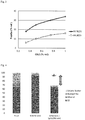
- a graph showing the effect of additive treat rate on RON is also shown in Figure 1 .
- Example 2 Preparation of EN228 compliant E10 bio-naphtha-containing fuel composition
- a fuel composition containing significant amounts of bio-naphtha was prepared which, unlike earlier naphtha-containing fuels, meets the requirements of BS EN 228:2012 for E10 gasoline fuels.
- fuel compositions were prepared by blending 15 % v/v of the bio-naphtha and optionally 0.75 % v/v of the octane-boosting additive from Example 1 (i.e. the octane-boosting additive was used in an amount of 5 % by weight relate to the bio-naphtha) with 10 % v/v ethanol.
- the remainder of the fuel was composed of an E0 95 RON unoxygenated gasoline.
- the RON of the fuel composition is increased to a RON of significantly greater than 95, a key indicator of fuel quality.
- bio-naphtha may be used in a gasoline composition in significant amounts, e.g . amounts of 25 % v/v, while still meeting the requirements of fuel specifications such as EN228 E10 (95 RON).
- the RON of the composition was also predicted based on the known effect of OX2 in conventional gasolines to determine whether the effect observed in a fuel containing a significant amount of naphtha was in line with that observed in conventional gasoline fuels.
- the predicted RON value was 95.0, i.e. significantly lower than that obtained in real life, thereby demonstrating that the extent of the octane-boosting effect in the fuels of the present invention is surprising.
- the RON of the fuels was notably higher than the RON predicted based on the known effect of OX2 in conventional gasolines.
- the predictive model was therefore adjusted so that it was based on real measurements of the enhanced octane-boosting effect observed in fuels containing added naphtha.
- a series of high naphtha fuel compositions containing varying amounts of an octane-boosting additive described herein (OX2) were prepared.
- the base fuels were blends of actual refinery streams, prepared according to recipes used in refining to meet the fuel specifications. The RON of the resulting fuel compositions was tested.
- Naphtha-containing fuels were designed using either mineral or bio-naphtha. Each fuel included 10 % by volume of bioethanol.
- the octane boosting additive OX2 was included in the fuels in an amount of 0.33, 0.5, 0.75 or 1 % by volume.
- the volume of naphtha required for the fuel to meet a target RON of 95 or 98 was then predicted using a model based on real measurements of the enhanced octane-boosting effect of OX2 in naphtha-containing fuels.
- the well-to-wheel greenhouse gas emissions associated with the fuels were calculated. A 2 % combustion benefit in GHG emissions was assumed for 98 RON fuels (see Han et al., Energy Systems Division, Argonne National Laboratory (2015 ), ANL/ESD-15/10: "Well-to-Wheels Greenhouse Gas Emissions Analysis of High-Octane Fuels with Various Market Shares and Ethanol Blending Levels” citing Speth et al., 2014 (6561-6568 ), Environ Sci Technol.: "Economic and environmental benefits of higher-octane gasoline ").
- the well-to-wheel emissions were compared with an E0 95 RON fuel, i.e. a fuel having 0 % volume of renewable components.
- Figure 4 contains graph relating to the 95 RON fuel which contains 0.5 % by volume of octane-boosting additive and 25 % by volume of bio-naphtha (see the first bar on the graph).
- the second bar on the graph in Figure 4 indicates the proportion of the well-to-wheel greenhouse gas emissions that are produced by each of the components in the fuel. It can be seen that the bio-naphtha contributes a disproportionately small level of emissions.
- the third bar on the graph in Figure 4 is a comparison of the fuel to a conventional fossil fuel gasoline having a well-to-wheel greenhouse gas emissions figure of 94 gCO 2 /MJ - this fossil fuel comparator figure is that specified in the EU Renewable Energy Directive (RED) II.
- RED EU Renewable Energy Directive
- Example 7 Reduction in well-to-wheel greenhouse gas emissions of high performance fuels
- a variety of high-performance naphtha-containing fuels were designed having a RON of 102.
- the fuels were additised using the octane-boosting additive OX2, and the amount of naphtha increased so as to maintain the RON.
- the amount of oxygenates was maintained at the same level in the additised and corresponding unadditised fuel.
Landscapes
- Chemical & Material Sciences (AREA)
- Oil, Petroleum & Natural Gas (AREA)
- Engineering & Computer Science (AREA)
- Organic Chemistry (AREA)
- Chemical Kinetics & Catalysis (AREA)
- General Chemical & Material Sciences (AREA)
- Combustion & Propulsion (AREA)
- Liquid Carbonaceous Fuels (AREA)
Priority Applications (4)
| Application Number | Priority Date | Filing Date | Title |
|---|---|---|---|
| EP19212636.5A EP3828253A1 (fr) | 2019-11-29 | 2019-11-29 | Compositions de carburant de gaz à effet de serre |
| PCT/GB2020/053047 WO2021105709A1 (fr) | 2019-11-29 | 2020-11-27 | Compositions de carburant à faible teneur en gaz à effet de serre |
| US17/781,041 US20230028644A1 (en) | 2019-11-29 | 2020-11-27 | Low Greenhouse Gas Fuel Compositions |
| EP20821357.9A EP4065673A1 (fr) | 2019-11-29 | 2020-11-27 | Compositions de carburant à faible teneur en gaz à effet de serre |
Applications Claiming Priority (1)
| Application Number | Priority Date | Filing Date | Title |
|---|---|---|---|
| EP19212636.5A EP3828253A1 (fr) | 2019-11-29 | 2019-11-29 | Compositions de carburant de gaz à effet de serre |
Publications (1)
| Publication Number | Publication Date |
|---|---|
| EP3828253A1 true EP3828253A1 (fr) | 2021-06-02 |
Family
ID=68762438
Family Applications (2)
| Application Number | Title | Priority Date | Filing Date |
|---|---|---|---|
| EP19212636.5A Pending EP3828253A1 (fr) | 2019-11-29 | 2019-11-29 | Compositions de carburant de gaz à effet de serre |
| EP20821357.9A Withdrawn EP4065673A1 (fr) | 2019-11-29 | 2020-11-27 | Compositions de carburant à faible teneur en gaz à effet de serre |
Family Applications After (1)
| Application Number | Title | Priority Date | Filing Date |
|---|---|---|---|
| EP20821357.9A Withdrawn EP4065673A1 (fr) | 2019-11-29 | 2020-11-27 | Compositions de carburant à faible teneur en gaz à effet de serre |
Country Status (3)
| Country | Link |
|---|---|
| US (1) | US20230028644A1 (fr) |
| EP (2) | EP3828253A1 (fr) |
| WO (1) | WO2021105709A1 (fr) |
Citations (6)
| Publication number | Priority date | Publication date | Assignee | Title |
|---|---|---|---|---|
| WO2017036485A1 (fr) * | 2015-09-02 | 2017-03-09 | Sobiha Manal Mohamed Metwally | Essence à indice d'octane élevé provenant de naphta et d'essence à faible indice d'octane |
| WO2017137518A1 (fr) | 2016-02-11 | 2017-08-17 | Bp Oil International Limited | Compositions de carburant |
| US20180355265A1 (en) * | 2015-11-30 | 2018-12-13 | Shell Oil Company | Fuel composition |
| WO2019034584A1 (fr) * | 2017-08-14 | 2019-02-21 | Bp Oil International Limited | Procédé de lutte contre les dépôts |
| WO2019034582A1 (fr) * | 2017-08-14 | 2019-02-21 | Bp Oil International Limited | Procédés de mélange de carburants |
| WO2019034581A1 (fr) * | 2017-08-14 | 2019-02-21 | Bp Oil International Limited | Procédés pour réduire l'oxydation |
Family Cites Families (5)
| Publication number | Priority date | Publication date | Assignee | Title |
|---|---|---|---|---|
| EP3205706A1 (fr) * | 2016-02-11 | 2017-08-16 | Bp Oil International Limited | Procédés pour réduire la corrosion ferreuse |
| EP3205700A1 (fr) * | 2016-02-11 | 2017-08-16 | Bp Oil International Limited | Additivation d'un carburant |
| EP3205703A1 (fr) * | 2016-02-11 | 2017-08-16 | Bp Oil International Limited | Additifs de carburant |
| EP3205702A1 (fr) * | 2016-02-11 | 2017-08-16 | Bp Oil International Limited | Compositions de carburant avec des additifs |
| EP3205704A1 (fr) * | 2016-02-11 | 2017-08-16 | Bp Oil International Limited | Procédés pour la démulsification |
-
2019
- 2019-11-29 EP EP19212636.5A patent/EP3828253A1/fr active Pending
-
2020
- 2020-11-27 WO PCT/GB2020/053047 patent/WO2021105709A1/fr not_active Ceased
- 2020-11-27 US US17/781,041 patent/US20230028644A1/en not_active Abandoned
- 2020-11-27 EP EP20821357.9A patent/EP4065673A1/fr not_active Withdrawn
Patent Citations (6)
| Publication number | Priority date | Publication date | Assignee | Title |
|---|---|---|---|---|
| WO2017036485A1 (fr) * | 2015-09-02 | 2017-03-09 | Sobiha Manal Mohamed Metwally | Essence à indice d'octane élevé provenant de naphta et d'essence à faible indice d'octane |
| US20180355265A1 (en) * | 2015-11-30 | 2018-12-13 | Shell Oil Company | Fuel composition |
| WO2017137518A1 (fr) | 2016-02-11 | 2017-08-17 | Bp Oil International Limited | Compositions de carburant |
| WO2019034584A1 (fr) * | 2017-08-14 | 2019-02-21 | Bp Oil International Limited | Procédé de lutte contre les dépôts |
| WO2019034582A1 (fr) * | 2017-08-14 | 2019-02-21 | Bp Oil International Limited | Procédés de mélange de carburants |
| WO2019034581A1 (fr) * | 2017-08-14 | 2019-02-21 | Bp Oil International Limited | Procédés pour réduire l'oxydation |
Non-Patent Citations (1)
| Title |
|---|
| WANG CHONGMING ET AL: "Investigation of gasoline containing GTL naphtha in a spark ignition engine at full load conditions", FUEL, IPC SCIENCE AND TECHNOLOGY PRESS, GUILDFORD, GB, vol. 194, 17 January 2017 (2017-01-17), pages 436 - 447, XP029900218, ISSN: 0016-2361, DOI: 10.1016/J.FUEL.2017.01.042 * |
Also Published As
| Publication number | Publication date |
|---|---|
| US20230028644A1 (en) | 2023-01-26 |
| WO2021105709A1 (fr) | 2021-06-03 |
| EP4065673A1 (fr) | 2022-10-05 |
Similar Documents
| Publication | Publication Date | Title |
|---|---|---|
| EP3414305B1 (fr) | Composition de carburant | |
| US10961477B2 (en) | Fuel additives | |
| US10927320B2 (en) | Additising a fuel | |
| EP3205702A1 (fr) | Compositions de carburant avec des additifs | |
| EP3414308B1 (fr) | Utilisation pour la réduction de la corrosion ferreuse | |
| EP3414303B1 (fr) | Utilisations des additives pour la démulsification | |
| US11339343B2 (en) | Methods for blending fuels | |
| US20230028644A1 (en) | Low Greenhouse Gas Fuel Compositions | |
| US20210171849A1 (en) | Methods for controlling deposits | |
| US11332682B2 (en) | Methods for reducing oxidation |
Legal Events
| Date | Code | Title | Description |
|---|---|---|---|
| PUAI | Public reference made under article 153(3) epc to a published international application that has entered the european phase |
Free format text: ORIGINAL CODE: 0009012 |
|
| STAA | Information on the status of an ep patent application or granted ep patent |
Free format text: STATUS: THE APPLICATION HAS BEEN PUBLISHED |
|
| AK | Designated contracting states |
Kind code of ref document: A1 Designated state(s): AL AT BE BG CH CY CZ DE DK EE ES FI FR GB GR HR HU IE IS IT LI LT LU LV MC MK MT NL NO PL PT RO RS SE SI SK SM TR |