EP3828545B1 - Verfahren zur erfassung von hilfsinformationen - Google Patents
Verfahren zur erfassung von hilfsinformationen Download PDFInfo
- Publication number
- EP3828545B1 EP3828545B1 EP19868506.7A EP19868506A EP3828545B1 EP 3828545 B1 EP3828545 B1 EP 3828545B1 EP 19868506 A EP19868506 A EP 19868506A EP 3828545 B1 EP3828545 B1 EP 3828545B1
- Authority
- EP
- European Patent Office
- Prior art keywords
- psa
- value
- galnac
- prostate
- auxiliary information
- Prior art date
- Legal status (The legal status is an assumption and is not a legal conclusion. Google has not performed a legal analysis and makes no representation as to the accuracy of the status listed.)
- Active
Links
Images

Classifications
-
- G—PHYSICS
- G01—MEASURING; TESTING
- G01N—INVESTIGATING OR ANALYSING MATERIALS BY DETERMINING THEIR CHEMICAL OR PHYSICAL PROPERTIES
- G01N33/00—Investigating or analysing materials by specific methods not covered by groups G01N1/00 - G01N31/00
- G01N33/48—Biological material, e.g. blood, urine; Haemocytometers
- G01N33/50—Chemical analysis of biological material, e.g. blood, urine; Testing involving biospecific ligand binding methods; Immunological testing
- G01N33/53—Immunoassay; Biospecific binding assay; Materials therefor
- G01N33/575—Immunoassay; Biospecific binding assay; Materials therefor for cancer
- G01N33/57555—Immunoassay; Biospecific binding assay; Materials therefor for cancer of the prostate
-
- G—PHYSICS
- G01—MEASURING; TESTING
- G01N—INVESTIGATING OR ANALYSING MATERIALS BY DETERMINING THEIR CHEMICAL OR PHYSICAL PROPERTIES
- G01N21/00—Investigating or analysing materials by the use of optical means, i.e. using sub-millimetre waves, infrared, visible or ultraviolet light
- G01N21/62—Systems in which the material investigated is excited whereby it emits light or causes a change in wavelength of the incident light
- G01N21/63—Systems in which the material investigated is excited whereby it emits light or causes a change in wavelength of the incident light optically excited
- G01N21/65—Raman scattering
- G01N21/658—Raman scattering enhancement Raman, e.g. surface plasmons
-
- G—PHYSICS
- G16—INFORMATION AND COMMUNICATION TECHNOLOGY [ICT] SPECIALLY ADAPTED FOR SPECIFIC APPLICATION FIELDS
- G16B—BIOINFORMATICS, i.e. INFORMATION AND COMMUNICATION TECHNOLOGY [ICT] SPECIALLY ADAPTED FOR GENETIC OR PROTEIN-RELATED DATA PROCESSING IN COMPUTATIONAL MOLECULAR BIOLOGY
- G16B40/00—ICT specially adapted for biostatistics; ICT specially adapted for bioinformatics-related machine learning or data mining, e.g. knowledge discovery or pattern finding
-
- G—PHYSICS
- G01—MEASURING; TESTING
- G01N—INVESTIGATING OR ANALYSING MATERIALS BY DETERMINING THEIR CHEMICAL OR PHYSICAL PROPERTIES
- G01N21/00—Investigating or analysing materials by the use of optical means, i.e. using sub-millimetre waves, infrared, visible or ultraviolet light
- G01N21/62—Systems in which the material investigated is excited whereby it emits light or causes a change in wavelength of the incident light
- G01N21/63—Systems in which the material investigated is excited whereby it emits light or causes a change in wavelength of the incident light optically excited
- G01N21/64—Fluorescence; Phosphorescence
- G01N21/6428—Measuring fluorescence of fluorescent products of reactions or of fluorochrome labelled reactive substances, e.g. measuring quenching effects, using measuring "optrodes"
- G01N2021/6439—Measuring fluorescence of fluorescent products of reactions or of fluorochrome labelled reactive substances, e.g. measuring quenching effects, using measuring "optrodes" with indicators, stains, dyes, tags, labels, marks
-
- G—PHYSICS
- G01—MEASURING; TESTING
- G01N—INVESTIGATING OR ANALYSING MATERIALS BY DETERMINING THEIR CHEMICAL OR PHYSICAL PROPERTIES
- G01N21/00—Investigating or analysing materials by the use of optical means, i.e. using sub-millimetre waves, infrared, visible or ultraviolet light
- G01N21/62—Systems in which the material investigated is excited whereby it emits light or causes a change in wavelength of the incident light
- G01N21/63—Systems in which the material investigated is excited whereby it emits light or causes a change in wavelength of the incident light optically excited
- G01N21/64—Fluorescence; Phosphorescence
- G01N21/6428—Measuring fluorescence of fluorescent products of reactions or of fluorochrome labelled reactive substances, e.g. measuring quenching effects, using measuring "optrodes"
-
- G—PHYSICS
- G01—MEASURING; TESTING
- G01N—INVESTIGATING OR ANALYSING MATERIALS BY DETERMINING THEIR CHEMICAL OR PHYSICAL PROPERTIES
- G01N2333/00—Assays involving biological materials from specific organisms or of a specific nature
- G01N2333/415—Assays involving biological materials from specific organisms or of a specific nature from plants
-
- G—PHYSICS
- G01—MEASURING; TESTING
- G01N—INVESTIGATING OR ANALYSING MATERIALS BY DETERMINING THEIR CHEMICAL OR PHYSICAL PROPERTIES
- G01N2333/00—Assays involving biological materials from specific organisms or of a specific nature
- G01N2333/415—Assays involving biological materials from specific organisms or of a specific nature from plants
- G01N2333/42—Lectins, e.g. concanavalin, phytohaemagglutinin
-
- G—PHYSICS
- G01—MEASURING; TESTING
- G01N—INVESTIGATING OR ANALYSING MATERIALS BY DETERMINING THEIR CHEMICAL OR PHYSICAL PROPERTIES
- G01N2400/00—Assays, e.g. immunoassays or enzyme assays, involving carbohydrates
-
- G—PHYSICS
- G01—MEASURING; TESTING
- G01N—INVESTIGATING OR ANALYSING MATERIALS BY DETERMINING THEIR CHEMICAL OR PHYSICAL PROPERTIES
- G01N2400/00—Assays, e.g. immunoassays or enzyme assays, involving carbohydrates
- G01N2400/02—Assays, e.g. immunoassays or enzyme assays, involving carbohydrates involving antibodies to sugar part of glycoproteins
Definitions
- the present invention relates to a method for acquiring auxiliary information on prostate cancer.
- Prostate cancer mainly affects men over the age of 60, and is the most common cancer among men in the United States, with the highest number of morbidity and the second highest number of deaths. Particularly in Japan, the rate of increase thereof is remarkable, and according to the Cancer and Statistics White Paper (2012), the mortality rate of prostate cancer between 2020 and 2024 is predicted to be about 1.8 times that in 2000. Therefore, it is an urgent task in this field to accurately determine the presence or absence of prostate cancer and malignancy in the case of the incidence of prostate cancer.
- PSA prostate specific antigen
- a total PSA value measured in a subject is 4 to 10 ng/mL, which is a so-called gray zone
- a detailed examination such as a histopathological diagnosis, to determine the degree of progression (stage), malignancy, and the like of cancer is necessary in many cases.
- a detailed examination such as a histopathological diagnosis, to determine the degree of progression (stage), malignancy, and the like of cancer is necessary in many cases.
- about 10 million PSA tests have been performed annually in recent years, of which less than 10% (less than 1 million people) exceed a reference value of 4 ng/mL, and it is determined that the detailed examination is necessary.
- the cost of the examination alone causes an annual economic loss of 60 billion yen, and further, costs human resources such as doctors, nurses, and laboratory technicians.
- the needle biopsy is a highly invasive examination that usually involves inserting ten or more needles through the subject's perineum or rectum to collect a prostate tissue, also has a risk of complications and infectious diseases, and it is an examination with a problem of a decrease in the QOL of patients.
- the percentage of subjects of the needle biopsy who have positive results is not very high as described above.
- the PSA screening not only the PSA screening but also the "Gleason score" (GS) scored by tissue classifications such as cancer tissue morphology, infiltration stages, or growth patterns, or a grade group based on the Gleason score, an evaluation such as the TNM classification classified by stages, and further, an indicator such as risk classifications (NCCN classification and D'Amico classification) based on the above-described three evaluations (scores) are widely used now as a determination material to determine a treatment policy for prostate cancer.
- the PSA screening and needle biopsy described above are used in either method, and thus, it is difficult to completely eliminate the above-described drawbacks.
- markers with higher specificity than PSA such as a marker that does not increase in prostatic hyperplasia, have been developed.
- Patent Literature 1 describes an invention in which the discrimination performance of prostate cancer is improved by observing the sugar chain structure of PSA.
- Patent Literature 2 made by the present applicants describes an invention in which PSA having a specific sugar residue (which is abundant in PSA of a patient with prostate) at a terminal can be quickly detected with high sensitivity and high accuracy by an SPFS device.
- Patent Literature 3 a patent on an invention relating to the acquisition of diagnostic information for improving the accuracy of discrimination between prostate cancer and benign prostate diseases (such as prostatic hyperplasia) by detecting a sugar chain on PSA and a sugar chain on total mucin
- Patent Literature 4 a patent application for an invention relating to the acquisition of new diagnostic information for improving the accuracy of discrimination therebetween by detecting a sugar chain on PSA and a detection result of a kind of sugar chain contained in mucin in combination
- Patent Literature 5 discloses the use of PSA having an N-acetylgalactosamine (GalNac-PSA) residue as a marker for prostate cancers.
- Non Patent Literature 1 Non Patent Literature 1
- Non Patent Literature 2 discloses the concept of using the overall value of PSA divided by the prostate volume (i.e. PSA without taking into account wether it has an N-acetylgalactosamine residue) to obtain the PSA-density.
- Non-Patent Literature 3 discloses the usage of the concentration of PSA in serum as an early detection method of prostate cancer.
- Non-Patent Literature 3 discloses a differentiation method of ⁇ 2,6- and ⁇ 2,3-sialylated isomers.
- the assay disclosed Non-Patent Literature 3 allows an quantitation of PSA glycoforms from urine and the differentiation between aggressive prostate camcers, indolent prostate cancers, and benign prostate hyperplasia.
- Non Patent Literature 1 Int JMol Sci. 2017 Feb; 18(2): 261 .
- Non Patent Literature 2 NIALL M.
- CORCORAN ET AL "The ability of prostate-specific antigen (PSA) density to predict an upgrade in Gleason score between initial prostate biopsy and prostatectomy diminishes with increasing tumour grade due to reduced PSA secretion per unit tumour volume : ABILITY OF PSA DENSITY TO PREDICT AN UPGRADE IN GLEASON SCORE", BJU INTERNATIONAL, vol. 110, no. 1, 1 July 2012 (2012-07-01), pages 36-42, XP055547746, ISSN: 1464-4096, DOI: 10.1111/j.1464-410X.2011.10681.x .
- Non Patent Literature 3 GUINEVERE S. M. KAMMEIJER ET AL: "An In-Depth Glycosylation Assay for Urinary Prostate-Specific Antigen", ANALYTICAL CHEMISTRY, vol. 90, no. 7, 4 March 2018 (2018-03-04), pages 4414-4421, XP055675609, US, ISSN: 0003-2700, DOI: 10.1021/acs.analchem.7b04281 .
- An object of the present invention is to provide a method for acquiring auxiliary information useful to assist a diagnosis or treatment of prostate cancer.
- the present inventors have found that a value of concentration of prostate specific antigen (GalNAc-PSA) per prostate volume (G-PSA density (G-PSAD)), obtained by dividing a concentration value of GalNAc-PSA having a ⁇ -N-acetylgalactosamine residue at a non-reducing terminal of a sugar chain by the prostate volume value, is useful as auxiliary information to assist the diagnosis or treatment of prostate cancer, and has completed the present invention.
- G-PSA density G-PSAD
- a medical worker other than a doctor such as a medical information technologist, a clinical engineer, and a clinical laboratory technician, can quickly acquire information to assist in the diagnosis or treatment of the prostate cancer with high accuracy, and the information can be provided to the doctor to assist the diagnosis or treatment. Further, the probability of being determined as a false positive can be reduced by using the information for screening, and a medical economic effect can be achieved and a burden on medical personnel and subjects can be decreased by reducing the number of subjects undergoing unnecessary needle biopsies.
- auxiliary information used by reference to assist a diagnosis or treatment of prostate cancer, can be obtained by calculating a value (G-PSA density (G-PSAD)) of GalNAc-PSA concentration per prostate volume.
- G-PSAD G-PSA density
- the "auxiliary information" of the present invention can be referred to in the diagnosis of prostate cancer. Further, the "auxiliary information" of the present invention can be referred to in the process of assisting and treating the diagnosis of cancer malignancy in a patient for which a definitive diagnosis has been made. For example, in the case of determining whether the treatment (monitoring therapy, drug treatment, radiation treatment, or the like) performed to a patient with a confirmed diagnosis of prostate cancer is effective or the like, it is possible to determine the exacerbation, remission, recurrence, or the like of the cancer more accurately than a PSA test by referring to the "auxiliary information" of the present invention.
- the method for acquiring auxiliary information of the present invention is a method for acquiring auxiliary information to assist a diagnosis or treatment of prostate cancer, and includes the following steps (A), (B) and (C).
- GalNAc-PSA prostate specific antigen
- G-PSA density G-PSAD
- the step (A) in the present invention is the step of acquiring the concentration value of the prostate specific antigen (GalNAc-PSA) having the ⁇ -N-acetylgalactosamine residue at the non-reducing terminal of the sugar chain contained in the sample derived from the living body, wherein the step (A) is a step of acquiring the concentration value of the GalNAc-PSA by an interaction between a molecule having an affinity for the ⁇ -N-acetylgalactosamine residue and the GalNAc-PSA.
- GalNAc-PSA prostate specific antigen having the ⁇ -N-acetylgalactosamine residue at the non-reducing terminal of the sugar chain contained in the sample derived from the living body
- the living body is not particularly limited, but is typically a human being, particularly a human being suspected of having prostate cancer.
- the sample derived from the living body include a liquid sample which can be collected by a non-invasive or minimally invasive method, such as blood, urine, and ascites collected from the living body.
- a serum prepared from whole blood that has been anticoagulated or plasma from which solid components such as blood cells have been removed by any method, such as centrifugation, is suitable as the sample in the present invention.
- the sample may be solid or semi-solid (viscous). In such a case, one prepared as a liquid having an appropriate viscosity by a known method or a diluent can also be used.
- the amount of the sample used in the present invention is not particularly limited, but can be arbitrarily set depending on a method for measuring the sample, and is preferably 5 ⁇ L or more and 1,000 ⁇ L or less in general.
- GalNAc-PSA indicates a prostate specific antigen having a ⁇ -N-acetylgalactosamine residue (GalNAc residue) at a non-reducing terminal of a sugar chain. That is, any prostate specific antigen (GalNAc-PSA) having a ⁇ -N-acetylgalactosamine (GalNAc) residue at a non-reducing terminal of a sugar chain in PSA contained in the sample derived from the living body is included in "GalNAc-PSA" without being particularly limited since, for example, either PSA having a N-acetyl-D-galactosamine ⁇ 1-4N acetylglucosamine (hereinafter referred to as LacdiNAc) residue (hereinafter referred to as LacdiNAc-PSA) or PSA having a ⁇ -N-acetylgalactosamine-galactosamine residue (GalNAc-Gal residue) or ⁇ -N-acetyl
- a method for measuring a concentration value of GalNAc-PSA is not particularly limited, and various measurement methods, such as affinity column chromatography, mass spectrometry, enzyme immunoassay, and surface plasmon-field enhanced fluorescence spectroscopy (SPFS), can be used. From the viewpoint of accuracy of a measured concentration value, it is preferable to use the surface plasmon-field enhanced fluorescence spectroscopy.
- a specific example thereof is a method of causing a sample to react with an anti-PSA antibody immobilized on a surface of a SPFS sensor and further causing GalNAc-PSA specifically bound to the anti-PSA antibody to react with a fluorescently labeled molecule that specifically binds to a GalNAc residue to produce a sandwich-type complex consisting of (anti-PSA antibody)...(GalNAc-PSA)...(fluorescently labeled molecule that specifically binds to GalNAc residue) (" -- indicates an antigen-antibody reaction or a lectin-glycoprotein reaction), and measuring the intensity of fluorescence used for labeling by SPFS.
- the fluorescently labeled molecule that specifically binds to the GalNAc residue is not particularly limited, and examples thereof include a fluorescently labeled lectin that specifically binds to GalNAc, a fluorescently labeled anti-GalNAc antibody, and the like.
- a fluorescently labeled anti-GalNAc antibody an anti- ⁇ -N-acetylgalactosamine antibody, which is an antibody having a part or all of GalNAc as an epitope, can be used.
- the "anti-PSA antibody” can be also produced by a general method, or a commercially available one can be purchased. From the viewpoint of measurement stability, it is preferable to use a monoclonal antibody rather than a polyclonal antibody. In addition, an antibody having a protein portion as an epitope rather than a sugar chain of PSA is preferable so as not to prevent the fluorescently labeled molecule that specifically binds to a specific sugar residue ( ⁇ -GalNAc in the present invention) in a sugar chain from binding to the sugar residue.
- Lectins that specifically bind to GalNAc are inexpensive and have excellent stability, and thus, are preferable as a molecule having an affinity for GalNAc, and any lectin may be used as long as the lectin has a sufficiently strong specific affinity for GalNAc.
- lectins such as Wisteria floribunda lectin (WFA), soybean agglutinin (SBA), Vicia Villosa lectin (VVL), and Trichosanthes japonica agglutinin-II (TJA-II) can be exemplified, and can be separated (extracted) from organisms from which the lectins are derived, respectively, for example, seeds by a method such as affinity chromatography and purified, or commercially available products can be obtained.
- WFA Wisteria floribunda lectin
- SBA soybean agglutinin
- VVL Vicia Villosa lectin
- TJA-II Trichosanthes japonica agglutinin-II
- Fluorescent labels for the lectin and anti-GalNAc antibody that specifically bind to GalNAc can be produced by binding a desired fluorescent substance using a general technique. In that case, a commercially available fluorescent substance labeling kit or the like can also be used.
- the fluorescent substance used for the fluorescent labeling of the lectin and the antibody can be appropriately selected from fluorescent dyes capable of emitting appropriate fluorescence according to a desired purpose.
- the step (B) in the present invention is the step of calculating the volume value of the prostate of the living body.
- the volume value may be obtained directly by a method such as palpation, catheterization, endoscopy, urethral pressure measurement, an X-ray examination, and CT scan, or may be calculated from a known formula by a method such as an MRI examination, transrectal ultrasonography, transrectal radial scanning, and transabdominal sector scanning.
- the step (A) or (B) may be performed continuously, simultaneously, or independently by an independent device or operator. In the case of being performed independently, the step (A) may be performed first, or the step (B) may be performed first. Therefore, the acquired GalNAc-PSA concentration value and prostate volume value can be used in the next step (C) whether being acquired simultaneously or continuously, or acquired independently as long as being derived from the same living body.
- the step (C) in the present invention is the step of dividing the concentration value of the prostate specific antigen (GalNAc-PSA) having the ⁇ -N-acetylgalactosamine residue at the non-reducing terminal of the sugar chain, contained in the sample derived from the living body, by the volume value of the prostate of the living body to calculate the value (G-PSA density: GalNAc-PSA/Density (G-PSAD)) of the concentration of the GalNAc-PSA per prostate volume.
- G-PSA density GalNAc-PSA/Density
- GalNAc-PSA is not particularly limited as long as being PSA in which the GalNAc residue is bound to the terminal end of PSA.
- a PSA protein having a sugar chain with which WFA lectin reacts as a standard antigen was dissolved in a buffer solution
- a standard antigen solution was prepared to have a concentration of 1 ng/mL using an absorbance method (measured at wavelengths of 260 nm and 280 nm using a spectrophotometer U-3900 or the like), immunoassay (PSA test kit), or the like, and the concentration of GalNAc-PSA corresponding to a signal detected at the time of measuring the standard antigen solution under the same conditions as the method used for the sample was set to 1 U (unit)/ml.
- the concentration unit is often set based on the original numerical value or criterion as described above in an antigen in which such a standard substance does not exist (for example, GalNAc-PSA in the present invention).
- a numerical value, obtained by converting a fluorescence signal (unit is count or digit), obtained from a detector (photomultiplier tube or photodiode) in which a standard antigen solution prepared to have a certain concentration is provided in an SPFS device produced by a known method under arbitrary reaction conditions, with a predetermined method can be also set as "U/mL".
- a device appropriately adjusted according to conditions such as an antigen to be used may be used as the SPFS device.
- samples are measured with a desired device at each institution for about 1000 healthy subjects, a measurement value at which 95% or more of numerical values of the healthy people fit is set as a reference value in a distribution graph or the like created from the obtained measurement values (for example, detected fluorescence intensity when the SPFS method is used), and it is possible to set a concentration value of GalNAc-PSA corresponding to the concentration of a standard antigen solution with which the same measurement value as the reference value is obtained, as "1 U/mL".
- cm 3 , cc, or ml can be used, and, for example, g/cm 3 , g/ml, g/cc, or the like can be used as a unit of density.
- G-PSAD GaNAc-PSA concentration value per prostate volume: G-PSA density
- U/ml/cm 3 a unit of the value of G-PSAD
- the GalNAc-PSA concentration value and the volume value of the prostate of the living body used in the step (C) can be obtained in the steps (A) and (B), respectively.
- the step (A), the step (B), and the step (C) may be performed by the same institution, the step (A), the step (B), and the step (C) may be performed by different institutions, or two steps among the above steps, may be performed in the same institution, and the remaining one step may be performed in another institution.
- the step (A) may be performed by a subject himself/herself.
- the G-PSAD value may be obtained by performing the step (C) by a research institution or an evaluation institution to which the GalNAc-PSA concentration value obtained in the step (A) performed by the subject and the volume value of the prostate of the living body obtained in the step (B) performed by a technician or the like in the hospital have been sent as data.
- a step (D) in the present invention is a step of classifying the G-PSAD value calculated by the step (C) into two or more groups according to the magnitude thereof.
- the number of groups to be classified is not particularly limited, but is preferably two or three groups, and is particularly preferably three groups from the viewpoint of ease of evaluation or analysis or from the viewpoint of determining a treatment method according to the malignancy.
- a threshold for G-PSAD in order to use the obtained G-PSAD value more effectively as the auxiliary information to assist the diagnosis or treatment.
- the threshold can be set in the same manner as a threshold for a diagnostic marker or a tumor marker, for example, using a general method similar to a known estimation method or information acquisition method based on the value of GalNAc-PSA concentration (G-PSAD) per prostate volume obtained in the step (C).
- G-PSAD GalNAc-PSA concentration
- the threshold it is preferable to examine the correlation between the G-PSAD value and prostate cancer to create a database in advance, and set the threshold from the viewpoint of sensitivity (percentage of subjects with prostate cancer correctly determined as “positive” (%)) and specificity (percentage of subjects without prostate cancer correctly determined as “negative” (%)) based on the database.
- the threshold at which the desired accuracy (sensitivity, specificity) can be estimated by creating a box plot or a receiver operating characteristic curve (ROC curve) based on the G-PSAD values of the respective patients or subjects and whether the patients or subjects have been diagnosed with prostate cancer.
- ROC curve receiver operating characteristic curve
- the sensitivity and specificity vary depending on a position where the threshold is set.
- the threshold may be set to be low in this manner.
- the threshold is set to be higher, the specificity increases (false positives decrease), but the sensitivity decreases.
- the threshold may be set to be higher in this manner, for example, when preferentially finding a subject having a high probability of being positive (affected) for subjects whose presence or absence of disease is difficult to determine in a preliminary diagnosis by measuring only the total PSA.
- a threshold a value that makes the proportion of people with prostate cancer included in a range where the G-PSAD value exceeds the threshold as high as possible (that is, has high sensitivity) and allows people without prostate cancer not to be included in the range as much as possible (that is, has high specificity) in order to assist a positive determination (that is, determination that prostate cancer is present) that the subject has prostate cancer.
- a threshold to assist a negative determination regarding prostate cancer that is, determination that prostate cancer is absent
- the unit of the value of G-PSAD is expressed in U/mL/cm 3
- the sensitivity is prioritized over the specificity to prevent oversight (that is, when it is desired to set the sensitivity of 90% or more and the specificity of 78% or less)
- it is preferable to set the threshold to 0.00146 to 0.00212 U/mL/cm 3 .
- a threshold it is preferable to set a threshold to 0.00273 U/mL/cm 3 or more when giving priority to the specificity (that is, when it is desired to set the sensitivity of 80% or less and the specificity of 86% or more) from the viewpoint of surely extracting a patient with prostate cancer.
- a threshold that can be used as information to assist in a negative diagnosis regarding whether a subject has prostate cancer that is, determination that the subject does not have prostate cancer
- a threshold that can be used as information to assist in a negative diagnosis regarding whether a subject has prostate cancer that is, determination that the subject does not have prostate cancer
- a threshold it is preferable to set a threshold to 0.00146 to 0.00324 U/mL/cm 3 when the purpose is to obtain auxiliary information that is referred to for diagnosing that the probability of prostate cancer is low but follow-up observation is required, regarding the incidence of prostate cancer (that is, when it is desired to set the sensitivity of 70% or more and the specificity of 89% or less).
- auxiliary information that can be referred to for assisting the diagnosis that, for example, a patient with prostate cancer from which a sample has been collected has prostate cancer with a predetermined probability (sensitivity and specificity) if the G-PSAD value is equal to or more than the set threshold or that a patient does not have prostate cancer with a predetermined probability if the G-PSAD value is less than the threshold.
- the threshold When the threshold is changed, the sensitivity and specificity change in tandem, and thus, it is desirable to perform adjustment (optimization) such that the both are balanced. As the number of samples, which is the population of measurement data, increases, it is possible to set a more reliable threshold.
- auxiliary information that is referred to when diagnosing the malignancy of cancer in a patient with prostate cancer similarly by creating a database.
- the "malignancy” referred to here may be based on the Gleason score described above, may be based on a risk classification such as D'amico classification, or may be provided with a desired criterion.
- the Gleason score when used as an evaluation criterion for the "malignancy”, it is preferable to consider the Gleason score of 7 or higher (3+4 or 4+3 or higher) or (4+3 or higher) as “high malignancy”, but other values, such as the Gleason score of 6 or higher (3+3), may be considered as "high malignancy".
- a total PSA concentration value of more than 10 ng/mL may be considered as “high malignancy”
- a stage T2b or higher in the TNM classification may be considered as "high malignancy”.
- the malignancy of prostate cancer is high as the G-PSAD value increases. It is possible to set a threshold with which the estimation with the desired accuracy (sensitivity and specificity) can be performed by creating a box plot based on the G-PSAD value of each patient and the malignancy of the patient. For example, when the Gleason score is used as the malignancy as described above, it is possible to set the threshold with which the estimation with the desired accuracy (sensitivity and specificity) can be performed by creating the box plot based on the G-PSAD values of the respective patients and the respective Gleason scores thereof.
- a threshold which can be used as the information to assist a positive diagnosis that a patient has prostate cancer and the malignancy of the prostate cancer is high (determination that the prostate cancer is likely to be high in malignancy requiring treatment), to 0.00408 U/mL/cm 3 or more.
- a threshold which can be used as information to assist a positive diagnosis that a patient has prostate cancer but the malignancy of the prostate cancer is relatively low (determination that the malignancy is not so high that the prostate cancer requires immediate treatment, that is, the probability of having a malignancy sufficiently covered by follow-up observation of the progress (exacerbation, or the like) of cancer is high), to 0.00321 U/mL/cm 3 or less.
- auxiliary information that can be referred to for assisting the diagnosis that prostate cancer in a patient is likely to be highly malignant with a predetermined probability (sensitivity and specificity) if a G-PSAD value in a patient with prostate cancer is above the set threshold, or that the probability of having a low malignancy is high if the G-PSAD value is less than the threshold.
- the number of samples number of patients
- a step ( ⁇ ) in the present invention is a step of measuring a concentration value of a total prostate specific antigen (total PSA) contained in a sample derived from a living body, and is the step performed using the same sample as the sample performed in the steps (A) to (C).
- the concentration value of total prostate specific antigen (total PSA) contained in the sample derived from the living body is preferably more than 0 and 100 ng/ml or less, and is more preferably 2 to 20 ng/mL from the viewpoint as a criteria for patient selection.
- the total PSA concentration value often takes a value of 2 to 20 ng/mL even for patients with benign prostatic disease (prostatic hyperplasia), which need to be distinguished from patients with prostate cancer, that is, often overlaps with a total PSA value of patients with prostate cancer in this range.
- the usefulness of the auxiliary information obtained by calculating the G-PSAD value is the best for patients with the total PSA concentration value of 2 to 20 ng/mL, which can be said to be a region where it is more difficult to distinguish between the patients with prostate cancer and patients with benign prostate diseases.
- the total PSA can be used to set the threshold, configured to acquire the auxiliary information that can be referred to for assisting the diagnosis or treatment of prostate cancer of the present invention, as described above.
- An auxiliary information acquisition system is a system configured to acquire auxiliary information, and is the system including an input device and an information processing device.
- the input device is a device configured to input information for acquiring auxiliary information according to the present invention.
- the information include a concentration value of GalNAc-PSA and a volume value of prostate of a living body, and may further include a total PSA concentration value and a numerical value of the Gleason score.
- the input device is a receiving device that receives the GalNAc-PSA concentration value or the volume value of the prostate of the living body as digital data.
- the input device may be an input means that directly inputs the GalNAc-PSA concentration value or the volume value of the prostate of the living body, for example, a keyboard, a mouse, or a touch panel.
- the GalNAc-PSA concentration value is measured by another independent device, it is preferable to provide the receiving device capable of receiving the value as digital data from the device.
- the auxiliary information acquisition system may include a device capable of measuring the GalNAc-PSA concentration value, and preferably includes a SPFS device and a detector that can be used in correspondence with the device, for example.
- the information processing device is a device that receives information acquired by the input device and acquires auxiliary information according to the present invention based on the information.
- the information processing device is a device that calculates a value (G-PSA density (G-PSAD)) of GalNAc-PSA concentration per prostate unit volume by calculating a value obtained by dividing the input GalNAc-PSA concentration value by the prostate volume value, and analyzes the information as needed.
- G-PSAD G-PSA density
- the information processed by the information processing device is preferably converted as digital data, may be subjected to arithmetic processing by a known means, or may be further processed into a graph or chart.
- the information processing device include an information storage device configured to store information over time. For example, it is possible to observe the amount of change in a measurement value over time for a certain sample and a rate, a fluctuation, or the like of the change by storing data by associating basic data, such as an age, a weight, examination history, and the amount of change in each information with auxiliary information obtained at each time point for a subject from the input device or the like at a plurality of measurement points. In addition, it is possible to perform arbitrary analysis based on the above pieces of information, for example, creation of an ROC curve, measurement of AUC, or determination of a threshold based on those parameters.
- a program of the present invention describes instructions (processes) for the acquisition system of the present invention, and indicates a system program that controls each part of the acquisition system and processes data in order to execute the information processing or analysis by a central processing unit (CPU) of a computer
- CPU central processing unit
- the program may be stored in the information processing device, or may be recorded in other computer-readable recording media, such as magnetic tapes (such as a digital data storage (DDS)), magnetic disks (such as a hard disk drive (HDD) and a flexible disk (FD)), optical disks (such as a compact disk (CD), a digital versatile disk (DVD), and a Blu-ray disk (BD)), magneto-optical disks (MO), flash memories (a solid state drive (SSD)), memory cards, USB memories, or the like, or may be provided independently.
- DDS digital data storage
- HDD hard disk drive
- FD flexible disk
- optical disks such as a compact disk (CD), a digital versatile disk (DVD), and a Blu-ray disk (BD)
- MO magneto-optical disks
- SSD solid state drive
- a trapezoidal prism transparent substrate made of resin was subjected to plasma washing to form a gold thin film on one side of the substrate by a sputtering method.
- a thickness of the gold thin film was 44 to 52 nm.
- the substrate having the gold thin film formed thereon in this manner was immersed in an ethanol solution containing 1 mM of 10-carboxy-1-decanethiol for 20 minutes or more to form a self-assembled monolayer (SAM) formed of 10-carboxy-1-decanethiol on the surface of the gold thin film.
- SAM self-assembled monolayer
- a mixture obtained by mixing 25 mM of MES-buffered saline, which contains 0.5 mM of N-hydroxysuccinimide (NHS), 0.5 mM of water-soluble carbodiimide (WSC), and 1 mg/mL of carboxymethyl dextran (CMD) (Meito Sangyo Co., Ltd.; CMD-500-06I4: average molecular weight 500,000, degree of substitution 0.51), and 10 mM of NaCl solution (pH 6.0) each by 0.8 mL, was dropped to the dried substrate to cause reaction for 20 minutes, thereby forming a CMD film on the SAM on the substrate. Further, a sealing material having a thickness of 100 ⁇ m was placed on the CMD film to form a flow path having a height of 100 ⁇ m, thereby producing a plasmon excitation sensor.
- NHS N-hydroxysuccinimide
- WSC water-soluble carbodiimide
- CMD carboxymethyl dextran
- a surface of a plasmon excitation sensor prepared in Production Example 1 was washed with MES-buffered saline to equilibrate the surface of the plasmon excitation sensor.
- MES-buffered saline containing 50 mM of N-hydroxysuccinimide (NHS) and 100 mM of water-soluble carbodiimide (WSC) was caused to react on the surface of the plasmon excitation sensor for 20 minutes.
- 20 ⁇ L of anti-PSA monoclonal antibody solution (Mikuri Immunology Research Institute Co., Ltd.; 50 ⁇ g/mL) was caused to react for 30 minutes to bind the antibody to CMD on the plasmon excitation sensor, thereby preparing a resultant having an anti-PSA monoclonal antibody-immobilized CMD film (referred to as a measurement region) on the plasmon excitation sensor.
- PBS phosphate-buffered saline
- BSA bovine serum albumin
- Wisteria floribunda lectin (WFA: VECTOR Laboratories inc.: L-1350) equivalent to 100 ⁇ g and a fluorescent substance labeling kit "Alexa Fluor (registered trademark) 647 protein labeling kit” (Thermo Fisher Scientific Co., Ltd.) were used to produce Alexa Fluor (registered trademark) 647-labeled WFA (hereinafter referred to as fluorescently labeled lectin in the present experimental example) by the following method.
- the above WFA was mixed with 0.1 M of sodium bicarbonate and Alexa Fluor 647 reactive dye included in the above kit and allowed to react at room temperature for 1 hour. Then, the resultant was subjected to gel filtration chromatography and ultrafiltration to remove impurities such as Alexa Fluor 647 reactive dye, which were not used for labeling, thereby obtaining a fluorescently labeled WFA lectin. Then, the absorbance was measured to quantify the concentration of the fluorescently labeled lectin.
- Table 1 shows total PSA concentration values, GalNAc-PSA (LacdiNAc-PSA) values, values (G-PSAD) of GalNAc-PSA per prostate volume, and the Gleason scores in each group of patients.
- 211 people who are considered as patient background have the total PSA of 2 to 20 ng/mL and represent the number of subjects who have undergone needle biopsies, of which 160 people (75.8%) were diagnosed as patients with prostate cancer and 51 people (24.2%) were diagnosed with prostatic hyperplasia.
- the total PSA concentration value was quantified according to the manual using the prostate specific antigen kit "Total PSAAbbott” and the “ARCHITECT Analyzer i1000SR” system (each of which is manufactured by Abbott Japan Co., Ltd.).
- the quantification of GalNAc-PSA was performed by the following method using a flow path type SPFS measuring member provided with the anti-PSA monoclonal antibody-immobilized substrate prepared in Production Examples 1 and 2 and the fluorescently labeled WFA prepared in Production Example 3.
- TBS-T was sent again and washed for 5 minutes. Further, in a state where the flow path is filled with TBS-T, excitation light of Alexa Fluor 647 was emitted using a laser beam having a wavelength of 647 nm, and the measured fluorescence intensity (fluorescence signal) was measured.
- the measured fluorescence intensity of each test sample was converted into a GalNAc-PSA concentration value based on a calibration curve prepared using a test sample having a known GalNAc-PSA value.
- a prostate volume was measured by transrectal ultrasonography (TRUS) using a device such as Aloka prosound alpha7 (Hitachi, Ltd.), which is an ultrasonic diagnostic device, or magnetic resonance imaging (MRI) using a device such as Signa HDx (GE Helthcare) which is a 3D high-quality MRI device.
- TRUS transrectal ultrasonography
- MRI magnetic resonance imaging
- Signa HDx Signa HDx
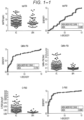
- the total PSA concentration values, the GalNAc-PSA concentration values, and the G-PSAD values are illustrated in column plots (on the left in Fig. 1A).
- a relative operating characteristic curve (ROC curve) was created based on each result (on the right in Fig. 1A).
- the area under the curve (AUC) was measured for each group based on the ROC curve created above. In general, it is determined that the predictive performance and diagnostic performance for a target disease are high as the AUC value is high.
- the AUC value based on the ROC curve created based on the G-PSAD value calculated in the step (C) of the method for acquiring auxiliary information of the present invention was 0.8948.
- a measurement value of AUC based on a conventional total PSA concentration value was 0.5080, and a measurement value of AUC based on the GalNAc-PSA concentration value alone without adding the prostate volume information was 0.7704.
- the diagnostic performance using the G-PSAD value shows clearly excellent results as compared with the conventional diagnostic performance based on the total PSA and GalNAc-PSA concentration values. It is said that an excellent test is performed when the AUC value of the ROC curve exceeds 0.8 as an index of general diagnostic performance, but the AUC value of the ROC curve using the G-PSAD value greatly exceeds 0.8. Therefore, it was found that the test using the G-PSAD value is extremely useful.
- Table 2 shows total PSA concentration values, GalNAc-PSA concentration values, and GalNAc-PSA concentration values per prostate volume (G-PSAD values) in each group of patients, and the Gleason scores and the D'Amico risk classification.
- 339 people who are considered as patient background have the total PSA of 2 to 20 ng/mL and represent the number of subjects who have undergone needle biopsies, of which 150 people (44.2%) were diagnosed as patients with prostate cancer and 189 people (55.8%) were diagnosed with prostatic hyperplasia.
- 134 people having been risk-classified based on the results of needle biopsies or the like were classified into a high-risk group, a medium-risk group, and a low-risk group based on the D'Amico risk classification, and results thereof are illustrated in the lower column of Table 2.
- the measurement of the total PSA concentration value and the GalNAc-PSA concentration value, and the calculation of G-PSAD were performed by the same methods as those in Example 1-1.
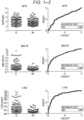
- the total PSA concentration values, the GalNAc-PSA concentration values, and the G-PSAD values are illustrated in column plots (on the left in Fig. 1B).
- a relative operating characteristic curve (ROC curve) was created based on each result (on the right in Fig. 1B).
- Example 1-1 The same analysis as in Example 1-1 was performed based on the column plots and ROC curves created based on the measured numerical values.
- the AUC value based on the ROC curve created based on the G-PSAD value calculated in the step (C) of the method for acquiring auxiliary information of the present invention was 0.8382.
- a conventionally measured value of AUC based on the total PSA concentration value was 0.6267, and a measurement value of AUC based on the GalNAc-PSA concentration value alone without adding the prostate volume information was 0.7626.
- the auxiliary information acquired in the present invention is more excellent in terms of the sensitivity and specificity than the conventional information used for the diagnosis and determination using the total PSA concentration value or using the GalNAc-PSA concentration value. Further, the above results have been obtained using the sample derived from the patient for which it is difficult to determine the positive or negative and of which the total PSA concentration value is a relatively low value of 20 ng/mL or less (mostly 10 ng/mL or less). Thus, it has been found that the auxiliary information acquired in the present invention is useful as the auxiliary information in the scene of the diagnosis and treatment with higher accuracy than the information obtained by the conventional method.
- a threshold with sensitivity as high as possible at a screening stage (pre-stage of histopathological diagnosis (needle biopsy)) (with a low possibility of missing cancer (false negative)) and high specificity (that is, capable of avoiding an unnecessary needle biopsy).
- the threshold of 0.00212 (sensitivity 90%, specificity 78%) can be selected as one index. In other words, this threshold illustrates a possibility that about 80% of unnecessary needle biopsies can be avoided.
- the threshold of G-PSAD is set to 0.00212 as will be described later, it can be estimated that the sensitivity is higher than 95% and the specificity is less than 45% (see Table 4-3). Therefore, it can be said that the G-PSAD value is useful for more accurate determination of the malignancy of prostate cancer according to the presence or absence of prostate cancer, and the information on G-PSAD is considered to be extremely useful in this respect as well.
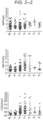
- Measurement results of various markers are illustrated in column plots in which the respective values of the total PSA concentration value (upper graph), the GalNAc-PSA concentration value (middle graph), and the G-PSAD value (lower graph) obtained as above are plotted for each Gleason score (Fig. 2A).
- the total PSA concentration value, the GalNAc-PSA concentration value, and the G-PSAD value were calculated by the same methods as those in Experimental Example 1-1. Although the number of cases is small, a difference was observed most in distributions of groups with the Gleason score of 6 and 7 or higher in G-PSAD, and it was confirmed that the value increases along with the increase of the Gleason score.
- Fig. 2B illustrates the column plot in which the obtained results are plotted for prostatic hyperplasia or each Gleason score.
- a patient with the Gleason score of 3+4 or 4+3 (that is, the sum of Gleason scores is 7 or more) is usually classified as a patient who requires treatment such as surgery (surgical treatment), radiation treatment, endocrine therapy (hormone therapy), and chemotherapy.
- GS 3+3 is considered as a group having cancer but is less likely to die directly with the cancer even if active treatment is not performed in many cases.
- a treatment method called follow-up observation active surveillance: monitoring therapy
- monitoring therapy active surveillance: monitoring therapy
- whether a target to which monitoring therapy is applicable is determined based on results of a PSA test and a prostate biopsy (Gleason score).
- the monitoring therapy based on incorrect prediction of malignancy is selected due to a fact that it is difficult to predict the malignancy by the PSA test, a sampling error of the prostate needle biopsy (such as a biopsy needle not sticking to major cancer tissues), or the like.
- invasive tests such as regular PSA tests and prostate re-biopsies are required to safely perform the monitoring therapy.
- the monitoring therapy is less invasive than surgery, an annual prostate needle biopsy is required, and patients are constantly exposed to anxiety about when their tumors will become malignant. If there is a marker that predicts the presence of highly malignant prostate cancer in such patients with an extremely high probability as described above, not only the accuracy regarding the selection of the monitoring therapy is improved, but also a disease condition can be more accurately grasped by measuring the G-PSAD value during the follow-up observation, and as a result, the patient's anxiety can be alleviated.
- Example 2 the proportion (%) of correctly determination on subjects with prostate cancer as “positive” is defined as “sensitivity”, and the proportion of correct determination on subjects without prostate cancer as “negative” is defined as “specificity”.
- Experimental Example 4 the proportion (%) of correct determination on people with highly malignant cancer as “positive” is defined as “sensitivity”, the proportion of correct determination on people without highly malignant cancer as “negative” is defined as “specificity”, and thresholds set based on each of the sensitivity and specificity are shown in Tables 4-1 to 4-3 similarly to Example 2.
- the risk classification such as the D'Amico classification, which is a complex combination of TNM classification based on stages, PSA values, histopathological diagnosis (Gleason score grade group), has been widely used.
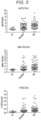
- a comparative study was conducted on the correlation with the D'Amico classification when each value of the total PSA, GalNAc-PSA, and G-PSAD was used as auxiliary information.
- Fig. 3 illustrates correlation results with the D'amico classification in the case of using each value of the total PSA (upper graph), GalNAc-PSA (middle graph), and G-PSAD (lower graph) obtained as above as the auxiliary information.
Landscapes
- Health & Medical Sciences (AREA)
- Life Sciences & Earth Sciences (AREA)
- Engineering & Computer Science (AREA)
- Immunology (AREA)
- Physics & Mathematics (AREA)
- Chemical & Material Sciences (AREA)
- General Health & Medical Sciences (AREA)
- Biomedical Technology (AREA)
- Hematology (AREA)
- Molecular Biology (AREA)
- Urology & Nephrology (AREA)
- General Physics & Mathematics (AREA)
- Analytical Chemistry (AREA)
- Biochemistry (AREA)
- Biotechnology (AREA)
- Pathology (AREA)
- Medical Informatics (AREA)
- Food Science & Technology (AREA)
- Medicinal Chemistry (AREA)
- Microbiology (AREA)
- Cell Biology (AREA)
- Computer Vision & Pattern Recognition (AREA)
- Public Health (AREA)
- Biophysics (AREA)
- Artificial Intelligence (AREA)
- Data Mining & Analysis (AREA)
- Databases & Information Systems (AREA)
- Epidemiology (AREA)
- Evolutionary Computation (AREA)
- Nuclear Medicine, Radiotherapy & Molecular Imaging (AREA)
- Bioethics (AREA)
- Software Systems (AREA)
- Bioinformatics & Cheminformatics (AREA)
- Bioinformatics & Computational Biology (AREA)
- Evolutionary Biology (AREA)
- Spectroscopy & Molecular Physics (AREA)
- Theoretical Computer Science (AREA)
- Investigating Or Analysing Biological Materials (AREA)
Claims (10)
- Verfahren zur Gewinnung von Zusatzinformationen zur Unterstützung einer Diagnose oder Behandlung von Prostatakrebs, umfassend die folgenden Schritte (A), (B) und (C),Schritt (A): ein Schritt der Erfassung eines Konzentrationswertes eines prostataspezifischen Antigens (GalNAc-PSA) mit einem β-N-Acetylgalactosamin-Rest an einem nicht-reduzierenden Ende einer Zuckerkette, das in einer von einem Organismus stammenden Probe enthalten ist,Schritt (B): ein Schritt der Erfassung eines Volumenwertes der Prostata des Organismus, undSchritt (C): ein Schritt des Teilens des Konzentrationswertes des GaINAc-PSA durch den Volumenwert der Prostata des Organismus, um einen Wert (G-PSA-Dichte (G-PSAD)) der Konzentration des GaINAc-PSA pro Prostatavolumen zu berechnen,wobeider Schritt (A) der Erfassung des Konzentrationswertes des GaINAc-PSA durch eine Wechselwirkung zwischen einem Molekül mit einer Affinität für den β-N-Acetylgalactosamin-Rest und dem GaINAc-PSA erfolgt.
- Verfahren zur Gewinnung von Zusatzinformationen nach Anspruch 1, das ferner den Schritt (D) der Klassifizierung der berechneten G-PSAD-Werte in zwei oder mehr Gruppen entsprechend der Größe der Werte umfasst.
- Verfahren zur Gewinnung von Zusatzinformationen nach Anspruch 2, wobei der Schritt (D) ein Schritt des Klassifizierens der berechneten G-PSAD-Werte in drei Gruppen entsprechend der Größenordnung der Werte ist.
- Verfahren zur Gewinnung von Zusatzinformationen nach einem der Ansprüche 1 bis 3, das ferner den Schritt (α) der Gewinnung eines Konzentrationswertes eines gesamten prostataspezifischen Antigens (Gesamt-PSA) umfasst, das in der aus dem Organismus stammenden Probe enthalten ist.
- Verfahren zur Erfassung von Zusatzinformationen nach einem der Ansprüche 1 bis 4, wobei der Konzentrationswert des gesamten prostataspezifischen Antigens (Gesamt-PSA) in der aus dem lebenden Körper stammenden Probe größer als 0 und gleich oder kleiner als 100 ng/ml ist.
- Verfahren zur Erfassung von Zusatzinformationen nach einem der Ansprüche 1 bis 4, wobei der Konzentrationswert des gesamten prostataspezifischen Antigens (Gesamt-PSA) in der vom Organismus stammenden Probe 2 bis 20 ng/ml beträgt.
- Verfahren zur Gewinnung von Zusatzinformationen nach Anspruch 1, wobei das Molekül mit der Affinität für den β-N-Acetylgalactosamin-Rest Wisteria floribunda lectin (WFA), Sojabohnen-Agglutinin (SBA), Vicia Villosa lectin (VVL), Trichosanthes japonica agglutinin-II (TJA-II) oder ein Anti-β-N-Acetylgalactosamin-Antikörper ist.
- Verfahren zur Erfassung von Zusatzinformationen nach Anspruch 1 oder 7, wobei Schritt (A) ein Schritt zur Messung des Konzentrationswerts des GalNAc-PSA durch Oberflächenplasmonen-verstärkte Fluoreszenzspektroskopie entspricht.
- Ein Zusatzinformationserfassungssystem mit: einer Eingabevorrichtung; und einer Informationsverarbeitungsvorrichtung, wobei die Eingabevorrichtung eine Vorrichtung ist, in welche ein Konzentrationswert eines GalNAc-PSA in einer aus einem Organismus gewonnenen Probe und ein Volumenwert der Prostata des Organismus eingegeben wird, und
die Informationsverarbeitungsvorrichtung eine Vorrichtung ist, die Wahrscheinlichkeitsdaten für das Vorhandensein von Prostatakrebs auf der Grundlage von Informationen analysiert, die ein Ergebnis einschließen, das erhalten wird, indem der Konzentrationswert des GalNAc-PSA durch den Volumenwert der Prostata geteilt wird, um einen Wert (G-PSA-Dichte (G-PSAD)) der Konzentration des GalNAc-PSA pro Prostata-Volumeneinheit zu berechnen, wobei das Erfassungssystem das Verfahren zum Erfassen von Zusatzinformationen gemäß einem der Ansprüche 1 bis 8 durchführt. - Ein Programm, das einen Computer zur Durchführung des Erfassungsverfahrens nach einem der Ansprüche 1 bis 8 veranlasst.
Applications Claiming Priority (2)
| Application Number | Priority Date | Filing Date | Title |
|---|---|---|---|
| JP2018189367 | 2018-10-04 | ||
| PCT/JP2019/037514 WO2020071199A1 (ja) | 2018-10-04 | 2019-09-25 | 補助情報の取得方法 |
Publications (3)
| Publication Number | Publication Date |
|---|---|
| EP3828545A1 EP3828545A1 (de) | 2021-06-02 |
| EP3828545A4 EP3828545A4 (de) | 2021-11-03 |
| EP3828545B1 true EP3828545B1 (de) | 2024-01-24 |
Family
ID=70054533
Family Applications (1)
| Application Number | Title | Priority Date | Filing Date |
|---|---|---|---|
| EP19868506.7A Active EP3828545B1 (de) | 2018-10-04 | 2019-09-25 | Verfahren zur erfassung von hilfsinformationen |
Country Status (5)
| Country | Link |
|---|---|
| US (1) | US20210318317A1 (de) |
| EP (1) | EP3828545B1 (de) |
| JP (1) | JP7412344B2 (de) |
| ES (1) | ES2971252T3 (de) |
| WO (1) | WO2020071199A1 (de) |
Family Cites Families (11)
| Publication number | Priority date | Publication date | Assignee | Title |
|---|---|---|---|---|
| JPS5754767B2 (de) | 1972-05-10 | 1982-11-19 | ||
| JPS5726038B2 (de) | 1973-01-12 | 1982-06-02 | ||
| JPS5735250A (en) | 1980-08-12 | 1982-02-25 | Suzuki Sogyo Kk | Heat generating apparatus |
| CO5450246A1 (es) * | 1999-07-13 | 2004-10-29 | Smithkline Beecham Corp | Vacuna |
| EP2407555A1 (de) * | 2010-07-14 | 2012-01-18 | Fundació Institut de Recerca Hospital Universitari Vall d'Hebron, Fundació Privada | Verfahren und Kits zur Diagnose von Prostatakrebs |
| GB201305940D0 (en) * | 2013-04-02 | 2013-05-15 | Immunovia Ab | Methods and arrays for use in the same |
| US10371704B2 (en) * | 2013-12-27 | 2019-08-06 | Konica Minolta, Inc. | Method for discriminating between prostate cancer and a benign prostate disease |
| US12326453B2 (en) * | 2014-03-28 | 2025-06-10 | Opko Diagnostics, Llc | Compositions and methods for active surveillance of prostate cancer |
| EP3358352B1 (de) * | 2015-09-28 | 2019-11-20 | Konica Minolta, Inc. | Verfahren zur kalkulation eines pathologischen gewebediagnoseergebnisses (gleason)-score) von prostatakrebs |
| EP3550304B1 (de) * | 2016-11-29 | 2021-11-17 | Konica Minolta, Inc. | Verfahren zur kalkulation des gleason-scores von prostatakrebs, verfahren zur kalkulation des pathologischen stadiums und verfahren zur erfassung von zusatzinformationen auf der basis der spezifischen psa-konzentration in einer probe |
| CN112136047A (zh) * | 2018-05-18 | 2020-12-25 | 富士胶片和光纯药株式会社 | 判断前列腺癌的方法 |
-
2019
- 2019-09-25 EP EP19868506.7A patent/EP3828545B1/de active Active
- 2019-09-25 WO PCT/JP2019/037514 patent/WO2020071199A1/ja not_active Ceased
- 2019-09-25 US US17/272,848 patent/US20210318317A1/en active Pending
- 2019-09-25 JP JP2020550328A patent/JP7412344B2/ja active Active
- 2019-09-25 ES ES19868506T patent/ES2971252T3/es active Active
Also Published As
| Publication number | Publication date |
|---|---|
| EP3828545A1 (de) | 2021-06-02 |
| WO2020071199A1 (ja) | 2020-04-09 |
| EP3828545A4 (de) | 2021-11-03 |
| US20210318317A1 (en) | 2021-10-14 |
| ES2971252T3 (es) | 2024-06-04 |
| JPWO2020071199A1 (ja) | 2021-09-02 |
| JP7412344B2 (ja) | 2024-01-12 |
Similar Documents
| Publication | Publication Date | Title |
|---|---|---|
| US20210231667A1 (en) | Method for detecting or monitoring prostate cancer | |
| EP2661628B1 (de) | Diagnoseverfahren | |
| Rodriguez-Lopez et al. | Impaired immune reaction and increased lactate and C-reactive protein for early prediction of severe morbidity and pancreatic fistula after pancreatoduodenectomy | |
| Malleo et al. | Reappraisal of nodal staging and study of lymph node station involvement in distal pancreatectomy for body-tail pancreatic ductal adenocarcinoma | |
| Sekacheva et al. | Clinical validation of the novel CLIA-CA-62 assay efficacy for early-stage breast cancer detection | |
| EP3550304B1 (de) | Verfahren zur kalkulation des gleason-scores von prostatakrebs, verfahren zur kalkulation des pathologischen stadiums und verfahren zur erfassung von zusatzinformationen auf der basis der spezifischen psa-konzentration in einer probe | |
| CN114814224A (zh) | 乳头溢液中的Hsp90α在乳腺癌中的应用 | |
| EP3828545B1 (de) | Verfahren zur erfassung von hilfsinformationen | |
| US11054426B2 (en) | Diagnostic method | |
| CN119630966A (zh) | 用于对膀胱癌进行风险分层和管理的方法和系统 | |
| CN113671180A (zh) | Paip1自身抗体在食管鳞癌辅助诊断中的应用 | |
| CN110702904A (zh) | 特定凝集素在制备用以鉴别肺癌分期的测试工具方面的用途以及装置 | |
| Öztürk et al. | Comparison of prostate specific antigen and neuropeptide Y parameters in patients with prostate cancer | |
| JP2001289861A (ja) | 腫瘍マーカーによる癌の評価方法 | |
| CN112763712B (zh) | 一组肿瘤诊断标志物及其应用 | |
| JP7539369B2 (ja) | 病態情報生成方法、病態情報生成システム、he4糖鎖分析キット及びhe4 | |
| Sallam et al. | Management of Pancreatic Cystic Neoplasms: Single Institutional Study | |
| Gómez et al. | Prospective validation of a urine-based proteomics test for predicting clinically significant prostate cancer in biopsy-naive patients | |
| CN113804886A (zh) | 抗fam131a自身抗体在食管鳞癌辅助诊断中的应用 | |
| CN119688988A (zh) | Timp1和foxp3作为诊断结直肠癌的生物标志物组合及其应用 | |
| Abd-EL-Fattah et al. | Evaluation of Neutrophils to Albumin Ratio (NAR) and C-Reactive Protein to Albumin Ratio (CAR) as Markers of Disease Activity in Patients with Ulcerative Colitis | |
| CN119595913A (zh) | 抗fuca2自身抗体在制备肺腺癌辅助诊断产品中的用途 | |
| CN121114441A (zh) | 抗肿瘤相关抗原pten自身抗体在制备afp阴性肝癌诊断产品中的应用 | |
| CN110702903A (zh) | 特定凝集素在制备用以鉴别肺癌类型的测试工具方面的用途以及装置 | |
| CN110702905A (zh) | 特定凝集素在制备用以鉴别肺癌的测试工具方面的用途以及装置 |
Legal Events
| Date | Code | Title | Description |
|---|---|---|---|
| STAA | Information on the status of an ep patent application or granted ep patent |
Free format text: STATUS: THE INTERNATIONAL PUBLICATION HAS BEEN MADE |
|
| PUAI | Public reference made under article 153(3) epc to a published international application that has entered the european phase |
Free format text: ORIGINAL CODE: 0009012 |
|
| STAA | Information on the status of an ep patent application or granted ep patent |
Free format text: STATUS: REQUEST FOR EXAMINATION WAS MADE |
|
| 17P | Request for examination filed |
Effective date: 20210226 |
|
| AK | Designated contracting states |
Kind code of ref document: A1 Designated state(s): AL AT BE BG CH CY CZ DE DK EE ES FI FR GB GR HR HU IE IS IT LI LT LU LV MC MK MT NL NO PL PT RO RS SE SI SK SM TR |
|
| A4 | Supplementary search report drawn up and despatched |
Effective date: 20211004 |
|
| RIC1 | Information provided on ipc code assigned before grant |
Ipc: G01N 33/543 20060101ALI20210928BHEP Ipc: G01N 33/53 20060101ALI20210928BHEP Ipc: G01N 33/574 20060101AFI20210928BHEP |
|
| DAV | Request for validation of the european patent (deleted) | ||
| DAX | Request for extension of the european patent (deleted) | ||
| RAP1 | Party data changed (applicant data changed or rights of an application transferred) |
Owner name: OTSUKA PHARMACEUTICAL CO., LTD. |
|
| STAA | Information on the status of an ep patent application or granted ep patent |
Free format text: STATUS: EXAMINATION IS IN PROGRESS |
|
| 17Q | First examination report despatched |
Effective date: 20221122 |
|
| GRAP | Despatch of communication of intention to grant a patent |
Free format text: ORIGINAL CODE: EPIDOSNIGR1 |
|
| STAA | Information on the status of an ep patent application or granted ep patent |
Free format text: STATUS: GRANT OF PATENT IS INTENDED |
|
| INTG | Intention to grant announced |
Effective date: 20230901 |
|
| GRAS | Grant fee paid |
Free format text: ORIGINAL CODE: EPIDOSNIGR3 |
|
| GRAA | (expected) grant |
Free format text: ORIGINAL CODE: 0009210 |
|
| STAA | Information on the status of an ep patent application or granted ep patent |
Free format text: STATUS: THE PATENT HAS BEEN GRANTED |
|
| AK | Designated contracting states |
Kind code of ref document: B1 Designated state(s): AL AT BE BG CH CY CZ DE DK EE ES FI FR GB GR HR HU IE IS IT LI LT LU LV MC MK MT NL NO PL PT RO RS SE SI SK SM TR |
|
| P01 | Opt-out of the competence of the unified patent court (upc) registered |
Effective date: 20231214 |
|
| REG | Reference to a national code |
Ref country code: GB Ref legal event code: FG4D |
|
| REG | Reference to a national code |
Ref country code: CH Ref legal event code: EP |
|
| REG | Reference to a national code |
Ref country code: IE Ref legal event code: FG4D |
|
| REG | Reference to a national code |
Ref country code: DE Ref legal event code: R096 Ref document number: 602019045795 Country of ref document: DE |
|
| REG | Reference to a national code |
Ref country code: LT Ref legal event code: MG9D |
|
| REG | Reference to a national code |
Ref country code: NL Ref legal event code: MP Effective date: 20240124 |
|
| REG | Reference to a national code |
Ref country code: ES Ref legal event code: FG2A Ref document number: 2971252 Country of ref document: ES Kind code of ref document: T3 Effective date: 20240604 |
|
| PG25 | Lapsed in a contracting state [announced via postgrant information from national office to epo] |
Ref country code: NL Free format text: LAPSE BECAUSE OF FAILURE TO SUBMIT A TRANSLATION OF THE DESCRIPTION OR TO PAY THE FEE WITHIN THE PRESCRIBED TIME-LIMIT Effective date: 20240124 |
|
| PG25 | Lapsed in a contracting state [announced via postgrant information from national office to epo] |
Ref country code: NL Free format text: LAPSE BECAUSE OF FAILURE TO SUBMIT A TRANSLATION OF THE DESCRIPTION OR TO PAY THE FEE WITHIN THE PRESCRIBED TIME-LIMIT Effective date: 20240124 |
|
| PG25 | Lapsed in a contracting state [announced via postgrant information from national office to epo] |
Ref country code: IS Free format text: LAPSE BECAUSE OF FAILURE TO SUBMIT A TRANSLATION OF THE DESCRIPTION OR TO PAY THE FEE WITHIN THE PRESCRIBED TIME-LIMIT Effective date: 20240524 |
|
| PG25 | Lapsed in a contracting state [announced via postgrant information from national office to epo] |
Ref country code: LT Free format text: LAPSE BECAUSE OF FAILURE TO SUBMIT A TRANSLATION OF THE DESCRIPTION OR TO PAY THE FEE WITHIN THE PRESCRIBED TIME-LIMIT Effective date: 20240124 |
|
| PG25 | Lapsed in a contracting state [announced via postgrant information from national office to epo] |
Ref country code: GR Free format text: LAPSE BECAUSE OF FAILURE TO SUBMIT A TRANSLATION OF THE DESCRIPTION OR TO PAY THE FEE WITHIN THE PRESCRIBED TIME-LIMIT Effective date: 20240425 |
|
| REG | Reference to a national code |
Ref country code: AT Ref legal event code: MK05 Ref document number: 1652562 Country of ref document: AT Kind code of ref document: T Effective date: 20240124 |
|
| PG25 | Lapsed in a contracting state [announced via postgrant information from national office to epo] |
Ref country code: HR Free format text: LAPSE BECAUSE OF FAILURE TO SUBMIT A TRANSLATION OF THE DESCRIPTION OR TO PAY THE FEE WITHIN THE PRESCRIBED TIME-LIMIT Effective date: 20240124 Ref country code: RS Free format text: LAPSE BECAUSE OF FAILURE TO SUBMIT A TRANSLATION OF THE DESCRIPTION OR TO PAY THE FEE WITHIN THE PRESCRIBED TIME-LIMIT Effective date: 20240424 |
|
| PG25 | Lapsed in a contracting state [announced via postgrant information from national office to epo] |
Ref country code: AT Free format text: LAPSE BECAUSE OF FAILURE TO SUBMIT A TRANSLATION OF THE DESCRIPTION OR TO PAY THE FEE WITHIN THE PRESCRIBED TIME-LIMIT Effective date: 20240124 |
|
| PG25 | Lapsed in a contracting state [announced via postgrant information from national office to epo] |
Ref country code: RS Free format text: LAPSE BECAUSE OF FAILURE TO SUBMIT A TRANSLATION OF THE DESCRIPTION OR TO PAY THE FEE WITHIN THE PRESCRIBED TIME-LIMIT Effective date: 20240424 Ref country code: NO Free format text: LAPSE BECAUSE OF FAILURE TO SUBMIT A TRANSLATION OF THE DESCRIPTION OR TO PAY THE FEE WITHIN THE PRESCRIBED TIME-LIMIT Effective date: 20240424 Ref country code: LT Free format text: LAPSE BECAUSE OF FAILURE TO SUBMIT A TRANSLATION OF THE DESCRIPTION OR TO PAY THE FEE WITHIN THE PRESCRIBED TIME-LIMIT Effective date: 20240124 Ref country code: IS Free format text: LAPSE BECAUSE OF FAILURE TO SUBMIT A TRANSLATION OF THE DESCRIPTION OR TO PAY THE FEE WITHIN THE PRESCRIBED TIME-LIMIT Effective date: 20240524 Ref country code: HR Free format text: LAPSE BECAUSE OF FAILURE TO SUBMIT A TRANSLATION OF THE DESCRIPTION OR TO PAY THE FEE WITHIN THE PRESCRIBED TIME-LIMIT Effective date: 20240124 Ref country code: GR Free format text: LAPSE BECAUSE OF FAILURE TO SUBMIT A TRANSLATION OF THE DESCRIPTION OR TO PAY THE FEE WITHIN THE PRESCRIBED TIME-LIMIT Effective date: 20240425 Ref country code: FI Free format text: LAPSE BECAUSE OF FAILURE TO SUBMIT A TRANSLATION OF THE DESCRIPTION OR TO PAY THE FEE WITHIN THE PRESCRIBED TIME-LIMIT Effective date: 20240124 Ref country code: BG Free format text: LAPSE BECAUSE OF FAILURE TO SUBMIT A TRANSLATION OF THE DESCRIPTION OR TO PAY THE FEE WITHIN THE PRESCRIBED TIME-LIMIT Effective date: 20240124 Ref country code: AT Free format text: LAPSE BECAUSE OF FAILURE TO SUBMIT A TRANSLATION OF THE DESCRIPTION OR TO PAY THE FEE WITHIN THE PRESCRIBED TIME-LIMIT Effective date: 20240124 |
|
| PG25 | Lapsed in a contracting state [announced via postgrant information from national office to epo] |
Ref country code: PL Free format text: LAPSE BECAUSE OF FAILURE TO SUBMIT A TRANSLATION OF THE DESCRIPTION OR TO PAY THE FEE WITHIN THE PRESCRIBED TIME-LIMIT Effective date: 20240124 Ref country code: PT Free format text: LAPSE BECAUSE OF FAILURE TO SUBMIT A TRANSLATION OF THE DESCRIPTION OR TO PAY THE FEE WITHIN THE PRESCRIBED TIME-LIMIT Effective date: 20240524 |
|
| PG25 | Lapsed in a contracting state [announced via postgrant information from national office to epo] |
Ref country code: SE Free format text: LAPSE BECAUSE OF FAILURE TO SUBMIT A TRANSLATION OF THE DESCRIPTION OR TO PAY THE FEE WITHIN THE PRESCRIBED TIME-LIMIT Effective date: 20240124 Ref country code: PT Free format text: LAPSE BECAUSE OF FAILURE TO SUBMIT A TRANSLATION OF THE DESCRIPTION OR TO PAY THE FEE WITHIN THE PRESCRIBED TIME-LIMIT Effective date: 20240524 Ref country code: PL Free format text: LAPSE BECAUSE OF FAILURE TO SUBMIT A TRANSLATION OF THE DESCRIPTION OR TO PAY THE FEE WITHIN THE PRESCRIBED TIME-LIMIT Effective date: 20240124 Ref country code: LV Free format text: LAPSE BECAUSE OF FAILURE TO SUBMIT A TRANSLATION OF THE DESCRIPTION OR TO PAY THE FEE WITHIN THE PRESCRIBED TIME-LIMIT Effective date: 20240124 |
|
| PG25 | Lapsed in a contracting state [announced via postgrant information from national office to epo] |
Ref country code: DK Free format text: LAPSE BECAUSE OF FAILURE TO SUBMIT A TRANSLATION OF THE DESCRIPTION OR TO PAY THE FEE WITHIN THE PRESCRIBED TIME-LIMIT Effective date: 20240124 |
|
| PG25 | Lapsed in a contracting state [announced via postgrant information from national office to epo] |
Ref country code: SM Free format text: LAPSE BECAUSE OF FAILURE TO SUBMIT A TRANSLATION OF THE DESCRIPTION OR TO PAY THE FEE WITHIN THE PRESCRIBED TIME-LIMIT Effective date: 20240124 |
|
| PG25 | Lapsed in a contracting state [announced via postgrant information from national office to epo] |
Ref country code: CZ Free format text: LAPSE BECAUSE OF FAILURE TO SUBMIT A TRANSLATION OF THE DESCRIPTION OR TO PAY THE FEE WITHIN THE PRESCRIBED TIME-LIMIT Effective date: 20240124 Ref country code: EE Free format text: LAPSE BECAUSE OF FAILURE TO SUBMIT A TRANSLATION OF THE DESCRIPTION OR TO PAY THE FEE WITHIN THE PRESCRIBED TIME-LIMIT Effective date: 20240124 |
|
| REG | Reference to a national code |
Ref country code: DE Ref legal event code: R097 Ref document number: 602019045795 Country of ref document: DE |
|
| PG25 | Lapsed in a contracting state [announced via postgrant information from national office to epo] |
Ref country code: SK Free format text: LAPSE BECAUSE OF FAILURE TO SUBMIT A TRANSLATION OF THE DESCRIPTION OR TO PAY THE FEE WITHIN THE PRESCRIBED TIME-LIMIT Effective date: 20240124 |
|
| PG25 | Lapsed in a contracting state [announced via postgrant information from national office to epo] |
Ref country code: SM Free format text: LAPSE BECAUSE OF FAILURE TO SUBMIT A TRANSLATION OF THE DESCRIPTION OR TO PAY THE FEE WITHIN THE PRESCRIBED TIME-LIMIT Effective date: 20240124 Ref country code: SK Free format text: LAPSE BECAUSE OF FAILURE TO SUBMIT A TRANSLATION OF THE DESCRIPTION OR TO PAY THE FEE WITHIN THE PRESCRIBED TIME-LIMIT Effective date: 20240124 Ref country code: EE Free format text: LAPSE BECAUSE OF FAILURE TO SUBMIT A TRANSLATION OF THE DESCRIPTION OR TO PAY THE FEE WITHIN THE PRESCRIBED TIME-LIMIT Effective date: 20240124 Ref country code: DK Free format text: LAPSE BECAUSE OF FAILURE TO SUBMIT A TRANSLATION OF THE DESCRIPTION OR TO PAY THE FEE WITHIN THE PRESCRIBED TIME-LIMIT Effective date: 20240124 Ref country code: CZ Free format text: LAPSE BECAUSE OF FAILURE TO SUBMIT A TRANSLATION OF THE DESCRIPTION OR TO PAY THE FEE WITHIN THE PRESCRIBED TIME-LIMIT Effective date: 20240124 |
|
| PLBE | No opposition filed within time limit |
Free format text: ORIGINAL CODE: 0009261 |
|
| STAA | Information on the status of an ep patent application or granted ep patent |
Free format text: STATUS: NO OPPOSITION FILED WITHIN TIME LIMIT |
|
| 26N | No opposition filed |
Effective date: 20241025 |
|
| PG25 | Lapsed in a contracting state [announced via postgrant information from national office to epo] |
Ref country code: MC Free format text: LAPSE BECAUSE OF FAILURE TO SUBMIT A TRANSLATION OF THE DESCRIPTION OR TO PAY THE FEE WITHIN THE PRESCRIBED TIME-LIMIT Effective date: 20240124 Ref country code: SI Free format text: LAPSE BECAUSE OF FAILURE TO SUBMIT A TRANSLATION OF THE DESCRIPTION OR TO PAY THE FEE WITHIN THE PRESCRIBED TIME-LIMIT Effective date: 20240124 |
|
| REG | Reference to a national code |
Ref country code: CH Ref legal event code: PL |
|
| PG25 | Lapsed in a contracting state [announced via postgrant information from national office to epo] |
Ref country code: LU Free format text: LAPSE BECAUSE OF NON-PAYMENT OF DUE FEES Effective date: 20240925 |
|
| REG | Reference to a national code |
Ref country code: BE Ref legal event code: MM Effective date: 20240930 |
|
| PG25 | Lapsed in a contracting state [announced via postgrant information from national office to epo] |
Ref country code: BE Free format text: LAPSE BECAUSE OF NON-PAYMENT OF DUE FEES Effective date: 20240930 |
|
| PG25 | Lapsed in a contracting state [announced via postgrant information from national office to epo] |
Ref country code: CH Free format text: LAPSE BECAUSE OF NON-PAYMENT OF DUE FEES Effective date: 20240930 |
|
| PG25 | Lapsed in a contracting state [announced via postgrant information from national office to epo] |
Ref country code: IE Free format text: LAPSE BECAUSE OF NON-PAYMENT OF DUE FEES Effective date: 20240925 |
|
| PGFP | Annual fee paid to national office [announced via postgrant information from national office to epo] |
Ref country code: DE Payment date: 20250820 Year of fee payment: 7 |
|
| PGFP | Annual fee paid to national office [announced via postgrant information from national office to epo] |
Ref country code: IT Payment date: 20250820 Year of fee payment: 7 |
|
| PGFP | Annual fee paid to national office [announced via postgrant information from national office to epo] |
Ref country code: GB Payment date: 20250820 Year of fee payment: 7 |
|
| PGFP | Annual fee paid to national office [announced via postgrant information from national office to epo] |
Ref country code: FR Payment date: 20250820 Year of fee payment: 7 |
|
| PG25 | Lapsed in a contracting state [announced via postgrant information from national office to epo] |
Ref country code: RO Free format text: LAPSE BECAUSE OF FAILURE TO SUBMIT A TRANSLATION OF THE DESCRIPTION OR TO PAY THE FEE WITHIN THE PRESCRIBED TIME-LIMIT Effective date: 20240124 |
|
| REG | Reference to a national code |
Ref country code: DE Ref legal event code: R079 Ref document number: 602019045795 Country of ref document: DE Free format text: PREVIOUS MAIN CLASS: G01N0033574000 Ipc: G01N0033575000 |
|
| PG25 | Lapsed in a contracting state [announced via postgrant information from national office to epo] |
Ref country code: CY Free format text: LAPSE BECAUSE OF FAILURE TO SUBMIT A TRANSLATION OF THE DESCRIPTION OR TO PAY THE FEE WITHIN THE PRESCRIBED TIME-LIMIT; INVALID AB INITIO Effective date: 20190925 |
|
| PGFP | Annual fee paid to national office [announced via postgrant information from national office to epo] |
Ref country code: ES Payment date: 20251001 Year of fee payment: 7 |
|
| PG25 | Lapsed in a contracting state [announced via postgrant information from national office to epo] |
Ref country code: HU Free format text: LAPSE BECAUSE OF FAILURE TO SUBMIT A TRANSLATION OF THE DESCRIPTION OR TO PAY THE FEE WITHIN THE PRESCRIBED TIME-LIMIT; INVALID AB INITIO Effective date: 20190925 |