EP3828751A2 - Verfahren, einrichtung und elektronische vorrichtung zum annotieren von informationen eines strukturierten dokuments - Google Patents
Verfahren, einrichtung und elektronische vorrichtung zum annotieren von informationen eines strukturierten dokuments Download PDFInfo
- Publication number
- EP3828751A2 EP3828751A2 EP21163639.4A EP21163639A EP3828751A2 EP 3828751 A2 EP3828751 A2 EP 3828751A2 EP 21163639 A EP21163639 A EP 21163639A EP 3828751 A2 EP3828751 A2 EP 3828751A2
- Authority
- EP
- European Patent Office
- Prior art keywords
- filled
- field
- content
- target filling
- historical
- Prior art date
- Legal status (The legal status is an assumption and is not a legal conclusion. Google has not performed a legal analysis and makes no representation as to the accuracy of the status listed.)
- Withdrawn
Links
Images


Classifications
-
- G—PHYSICS
- G06—COMPUTING OR CALCULATING; COUNTING
- G06F—ELECTRIC DIGITAL DATA PROCESSING
- G06F40/00—Handling natural language data
- G06F40/10—Text processing
- G06F40/166—Editing, e.g. inserting or deleting
- G06F40/174—Form filling; Merging
-
- G—PHYSICS
- G06—COMPUTING OR CALCULATING; COUNTING
- G06F—ELECTRIC DIGITAL DATA PROCESSING
- G06F16/00—Information retrieval; Database structures therefor; File system structures therefor
- G06F16/90—Details of database functions independent of the retrieved data types
- G06F16/93—Document management systems
-
- G—PHYSICS
- G06—COMPUTING OR CALCULATING; COUNTING
- G06F—ELECTRIC DIGITAL DATA PROCESSING
- G06F40/00—Handling natural language data
- G06F40/10—Text processing
- G06F40/166—Editing, e.g. inserting or deleting
- G06F40/169—Annotation, e.g. comment data or footnotes
-
- G—PHYSICS
- G06—COMPUTING OR CALCULATING; COUNTING
- G06F—ELECTRIC DIGITAL DATA PROCESSING
- G06F40/00—Handling natural language data
- G06F40/10—Text processing
- G06F40/166—Editing, e.g. inserting or deleting
- G06F40/186—Templates
-
- G—PHYSICS
- G06—COMPUTING OR CALCULATING; COUNTING
- G06F—ELECTRIC DIGITAL DATA PROCESSING
- G06F40/00—Handling natural language data
- G06F40/30—Semantic analysis
-
- G—PHYSICS
- G06—COMPUTING OR CALCULATING; COUNTING
- G06V—IMAGE OR VIDEO RECOGNITION OR UNDERSTANDING
- G06V10/00—Arrangements for image or video recognition or understanding
- G06V10/70—Arrangements for image or video recognition or understanding using pattern recognition or machine learning
- G06V10/74—Image or video pattern matching; Proximity measures in feature spaces
- G06V10/75—Organisation of the matching processes, e.g. simultaneous or sequential comparisons of image or video features; Coarse-fine approaches, e.g. multi-scale approaches; using context analysis; Selection of dictionaries
- G06V10/751—Comparing pixel values or logical combinations thereof, or feature values having positional relevance, e.g. template matching
-
- G—PHYSICS
- G06—COMPUTING OR CALCULATING; COUNTING
- G06V—IMAGE OR VIDEO RECOGNITION OR UNDERSTANDING
- G06V30/00—Character recognition; Recognising digital ink; Document-oriented image-based pattern recognition
- G06V30/10—Character recognition
- G06V30/19—Recognition using electronic means
- G06V30/19007—Matching; Proximity measures
- G06V30/19013—Comparing pixel values or logical combinations thereof, or feature values having positional relevance, e.g. template matching
-
- G—PHYSICS
- G06—COMPUTING OR CALCULATING; COUNTING
- G06V—IMAGE OR VIDEO RECOGNITION OR UNDERSTANDING
- G06V30/00—Character recognition; Recognising digital ink; Document-oriented image-based pattern recognition
- G06V30/10—Character recognition
- G06V30/19—Recognition using electronic means
- G06V30/191—Design or setup of recognition systems or techniques; Extraction of features in feature space; Clustering techniques; Blind source separation
- G06V30/19173—Classification techniques
-
- G—PHYSICS
- G06—COMPUTING OR CALCULATING; COUNTING
- G06V—IMAGE OR VIDEO RECOGNITION OR UNDERSTANDING
- G06V30/00—Character recognition; Recognising digital ink; Document-oriented image-based pattern recognition
- G06V30/40—Document-oriented image-based pattern recognition
-
- G—PHYSICS
- G06—COMPUTING OR CALCULATING; COUNTING
- G06V—IMAGE OR VIDEO RECOGNITION OR UNDERSTANDING
- G06V30/00—Character recognition; Recognising digital ink; Document-oriented image-based pattern recognition
- G06V30/10—Character recognition
Definitions
- Embodiments of the present application relate to artificial intelligence technology, deep learning technology, and big data technology in the field of computer technologies, and in particular, to a method, apparatus and electronic device for annotating information of a structured document.
- Invoices, receipts, detailed statements, card certificates, etc. are common document forms in daily work and life, which are characterized by including a large number of word structures with key-value correspondences and word structures in tabular form, i.e., including structured words.
- users can only get paper versions or photos of these documents.
- extracting the key information that can be stored in a structured way involves related technologies of image text recognition, such as word detection, structured parsing, end-to-end word detection and recognition, table extraction and so on.
- image text recognition such as word detection, structured parsing, end-to-end word detection and recognition, table extraction and so on.
- the realization of related technologies of the image text recognition usually needs to use a large amount of annotation data for algorithm training.
- an automatic annotation method that automatically generates annotation data can be used.
- a method for automatically generating annotation data is proposed, and in this method, a frame of background image is selected first, and then a word is randomly written at any position in the background image, and after multiple random writing, multiple annotation data can be obtained.
- the present application provides a method, an apparatus and an electronic device, for annotating information of a structured document.
- a method for annotating information of a structured document including:
- an apparatus for annotating information of a structured document including:
- an electronic device including: at least one processor; and a memory communicatively connected with the at least one processor; where the memory stores instructions executable by the at least one processor, and the instructions are executed by the at least one processor to cause the at least one processor to perform the method according to the first aspect.
- a non-transitory computer-readable storage medium storing computer instructions for causing a computer to execute the method according to the first aspect.
- a target filling information that is different from the historical content and the historical position but has consistent or similar semantics can be generated, and based on the target filling information, an image of an annotated structured document can be obtained, thereby realizing rapid and accurate annotation of the structured document.
- An existing method of automatically generating annotation data is firstly selecting a frame of background image, then randomly writing a word at any position in the background image, and after multiple random writing, obtaining multiple annotation data.
- invoices, receipts, detailed statements, card certificates, etc. they all contain structured data, which has a specific position and a specific format in the document. Therefore, for example, if the method in the prior art is used, it cannot be guaranteed that the structured data is filled with a correct content corresponding to an attribute value at a correct position. Therefore, the method in the prior art cannot be applied to an automatic annotation of documents containing structured data such as invoices, receipts, detailed statements and card certifi cates.
- an embodiment of the present application annotates an image based on an actual structure of a document with structured data, and an actual position and content of a field in the image of the document, thereby realizing a rapid and accurate annotation of a structured document.
- structured documents containing structured data are collectively referred to as structured documents.
- FIG. 1 is a schematic diagram of an exemplary scenario of a method for annotating information of a structured document provided by an embodiment of the present application.
- the method can be applied to a scenario of extracting information of the structured document.
- the method for annotating information of the structured document according to the present application can be firstly used to obtain a large number of annotated documents of a certain type of structured document, and these documents can all be in the form of images. Further, the large number of annotated documents obtained in the present application are used to train an image text recognition algorithm for extracting the structured document. Then, information is extracted from an image of an actual structured document based on a trained image text recognition algorithm.
- Annotating the information of the structured document, training the image text recognition algorithm and extracting the information of the image of the actual structured document based on the trained image text recognition algorithm, which are involved in this scenario, can be completed in the same electronic device, for example, they are all completed in the same server, or they can also be completed in different electronic devices. There is no specific limitation on this in the embodiment of the present application.
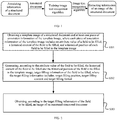
- FIG. 2 is a schematic flowchart of a method for annotating information of a structured document provided by an embodiment of the present application, and an executive entity of the method can be the aforementioned electronic device, such as the aforementioned server.
- the method includes: S201, obtaining a template image of a structured document and at least one piece of annotation information of the template image, where each piece of annotation information of the template image includes an attribute value of a field to be filled, a historical content of the field to be filled, and a historical position of each field to be filled in the template image.
- a structured document refers to a document containing structured data
- the structured data may refer to data with a specific position and a specific format.
- an invoice is used as a structured document, in which each of data has a fixed position and a fixed format.
- the template image of the structured document and the annotation information in the template image can be generated in advance, and a specific process will be described in detail in the following embodiment.
- Each template image can have at least one piece of annotation information.
- one field to be filled can correspond to one piece of annotation information.
- the field to be filled will be smeared out, and in the following processing, a new content will be written to a position where the field to be filled is, thereby completing an automatic annotation of data.
- one piece of annotation information includes the attribute value and the historical content of the field to be filled, and the historical position of the field to be filled in the template image.
- the attribute value of the field to be filled may also be referred to as category of the field to be filled.
- Content of the field to be filled may refer to an actual value of the field to be filled. For example, if a field to be filled in an invoice document is "Zhang San", i.e., a person's name, then the attribute value of the field to be filled is "Name" and the content thereof is "Zhang San”.
- the historical content of the field to be filled can be read directly from an original image when the template image is generated, and the attribute value of the field to be filled can be obtained according to a relationship between fields when the template image is generated.
- attribute value of a field to be filled in a structured document may refer to content of a field that is associated with the field and the attribute is key. For example, if the field to be filled is "Zhang San", and is associated with the "Name" field, the attribute value of the field to be filled is "Name".
- the historical position of the field to be filled may indicate a position of an area occupied by the field to be filled in the template image.
- the historical position may include an upper left pixel position, a lower right pixel position or a center position of the area occupied by the field to be filled in the template image.
- S202 generating, according to the attribute value of the field to be filled, the historical content of the field to be filled and the historical position of the field to be filled in the template image, target filling information of the field to be filled, where the target filling information includes: target filling position, target filling content and target filling format.
- the target filling position may refer to the position of the area occupied by the field to be filled in the annotated structured document to be generated, for example, the upper left pixel position and the lower right pixel position of the area.
- the target filling content refers to a word required to be filled in the field to be filled in the annotated structured document to be generated.
- the target filling format may include: font and size of the word filled in the field to be filled.
- the historical content and the historical position of the field to be filled can be adjusted correspondingly, so as to obtain the target filling information that is different from the field information in the original document but has consistent or similar semantics.
- field information that is different from an original field to be filled but has consistent or similar semantics can be written in the template image, so as to obtain an image of an annotated structured document.
- the target filling information that is different from the historical content and the historical position but has consistent or similar semantics can be generated, and based on the target filling information, the image of the annotated structured document can be obtained, thereby realizing rapid and accurate annotation of the structured document.
- the following describes a process of generating target filling information based on the attribute value, the historical content and the historical position of the field to be filled in step S202.
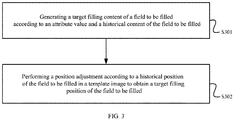
- FIG. 3 is a schematic flowchart of a method for annotating information of a structured document provided by an embodiment of the present application.
- an optional implementation of the foregoing step S202 includes: S301, generating the target filling content of the field to be filled according to the attribute value and the historical content of the foregoing field to be filled.
- the attribute value of the field to be filled may represent a category of the field, such as age, name, etc.
- the historical content of the field to be filled may represent the actual content of the field to be filled in the original document, such as "Zhang San”. Based on the two pieces of information, the target filling content of the field to be filled is generated, which can make that the target filling content is consistent with the attribute value of the field to be filled and may be different in content.
- the historical position can be adjusted upward or downward by a certain value, so that the obtained target filling position is based on the historical position, and is different from the historical position.
- the target filling content is generated based on the historical content and the attribute value
- the target filling position is generated based on the historical position, so that the annotated structured document generated based on the target filling content and the target filling position is semantically consistent with or similar to the content of the original document, and meanwhile has a certain difference, thereby results in diversity of subsequently obtained multiple annotated structured documents.
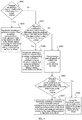
- step S301 The following describes a process of generating the target filling content of the field to be filled in step S301.
- a reference content can be randomly selected from a content corresponding to the attribute value of the field to be filled or a content corresponding to the reference attribute value, and the reference content is used as the target filling content of the field to be filled.
- the foregoing preset corpus may be generated by collecting a large amount of actual corpora in advance, and the preset corpus may include contents belonging to various attribute values.
- the attribute value "name” a large number of actual names can be recorded in the preset corpus, such as "Zhang San”, “Li Si” and “Wang Wu”. These actual names are all associated with the attribute value "name”, identifying that these actual names belong to "name”.
- a reference content can be randomly selected from a content corresponding to the attribute value and is used as a content to be filled. If it does not exist, it is continued to determine whether a reference attribute value whose difference from the attribute value of the field to be filled is smaller than the preset value exists in the preset corpus, and if it exists, a reference content can be randomly selected from a content corresponding to the reference attribute value and is used as a content to be filled.
- the reference attribute value whose difference from the attribute value of the field to be filled is less than the preset value may be a near-synonym of the attribute value of the field to be filled.
- the reference attribute value may be "apellation" or the like.
- the content corresponding to the attribute value or the reference attribute value can be randomly selected as the target filling content, which can make the target filling content conform to the attribute of the field to be filled, i.e., semantically consistent with or similar to the field to be filled, and meanwhile ensures the diversity of the target filling content.
- a part-of-speech of the historical content of the field to be filled is determined, and the target filling content of the field to be filled is generated according to whether a content corresponding to the part-of-speech of the historical content of the field to be filled exists in the preset corpus.
- a part-of-speech analysis can be performed on the historical content of the field to be filled to obtain the part-of-speech of the field to be filled.
- the target filling content of the field to be filled can be generated according to whether the content corresponding to the part-of-speech of the historical content of the field to be filled exists in the preset corpus.
- a filling content close to the actual content of the field to be filled can be obtained as much as possible when the content of the attribute value of the field to be filled does not exist in the preset corpus.
- Generating the target filling content of the field to be filled according to whether the content corresponding to the part-of-speech of the historical content of the field to be filled exists in the preset corpus can be realized through the following process.
- a reference content is randomly selected from the content corresponding to the part-of-speech of the historical content of the field to be filled, and the reference content is used as the target filling content of the field to be filled.
- the part-of-speech of all corpora can be recorded in the preset corpus.
- the reference content is randomly selected from the content corresponding to the part-of-speech of the historical content, and is used as the target filling content.
- the target filling content selected in this way is a noun, not other part-of-speech, such as a verb or an adjective.
- the filling content close to the actual content of the field to be filled can be obtained as much as possible when the content of the attribute value of the field to be filled does not exist in the preset corpus, so as to prevent the generated target filling content from deviating significantly from the actual content of the field to be filled.
- the historical content of the field to be filled is used as the target filling content of the field to be filled.
- the historical content can be directly used as the target filling content of the field to be filled.
- FIG. 4 is a schematic flowchart of generating the target filling content of the field to be filled based on the preset corpus. As shown in FIG. 4 , a generating process may include:
- the following describes a process of performing the position adjustment according to the historical position of the field to be filled in the template image to obtain the target filling position of the field to be filled in step S302.
- FIG. 5 is a schematic flowchart of a method for annotating information of a structured document provided by an embodiment of the present application.
- an optional implementation of the foregoing step S302 includes: S501, adjusting a position of the field to be filled in an area where the historical position of the field to be filled in the template image is located.
- the center position can be moved to the upper left by a certain number of pixels, and a moved position is recorded.
- This step is to separately adjust the position of each field to be filled.
- some or all of fields to be filled can be selected, and the above adjustment can be made for each field.
- This step is to uniformly adjust positions of some or all of fields to be filled in the template image.
- positions of these fields to be filled are moved in the same direction and distance, that is, each field to be filled has the same position moving value.
- step S503 determining whether an adjusted position of a field to be filled overlaps with a position of a field other than the field to be filled; if yes, go to step S504, otherwise, using the adjusted position obtained in step S502 as the target filling position of the field to be filled.
- a position of a certain field to be filled may overlap with a position of other field to be filled. Therefore, a position of a field to be filled with an overlapping problem can be adjusted to obtain the target filling position of the field to be filled.
- a position of the field to be filled can be adjusted, or a position of the other field that overlaps with it can be adjusted.
- the position adjustment in the above steps S501 to S503 can be a random adjustment, i.e., performing a random position adjustment.
- the diversity of positions of the fields in the annotated structured document can be realized.
- step S502 When performing the uniform position adjustment on each field to be filled in the above step S502, if the field to be filled is a field in a table, at least one of the following is performed: adjusting positions of all rows of the table in the same direction and distance, and separately adjusting a position of each column of the table in the same direction and distance.
- table information in an annotated structured document can be diversified, which is helpful for subsequent algorithm training.
- the following describes a process of obtaining the image of the annotated structured document based on the target filling information in the above step S203.
- the image of the annotated structured document can be obtained by filling the target filling content at the target filling position of the template image.
- the image of the annotated structured document can be obtained by filling the target filling content in a target filling format at the target filling position of the template image.
- the target filling content is filled to the target filling position in a specific target filling format, that is, the format of the filling content is considered.
- target filling format can be generated randomly while generating the target filling content and the target filling position.
- the foregoing annotation information may also include a color of the field to be filled.
- the target filling content can be filled at the target filling position of the template image according to the target filling format and the color of the field to be filled, so as to obtain the image of the annotated structured document.
- the color of the target filling content filled in the image of the annotated structured document is red.
- a word slice gray scale image can be generated for each field to be filled according to font, content, etc. Then, the binary word slice gray scale image is subjected to image transformation by randomly selecting an image processing operation such as blurring, histogram equalization and gray scale transformation, and the binary word slice gray scale image is fused with the background of the template image according to font color through Poisson blending or alpha channel blending, thereby achieving the effect of "writing" a word.
- an image processing operation such as blurring, histogram equalization and gray scale transformation
- data enhancement operations such as adding noise, scaling, elastic deformation, and color transformation are performed.
- a user can select a structured document in advance and take an image of the document to obtain an original image. Further, based on manual or tool annotation, the attribute value, the historical content and the historical position of field to be filled in this original document are annotated.
- the user can input these pieces of information into an electronic device.
- the electronic device can perform a smearing treatment on an area where the historical position is located according to the historical position of the field to be filled, to obtain a template image; on the other hand, use the inputted information as the annotation information of the template image.
- a historical position of the field to be filled in the original image is a historical position of the field to be filled in the template image.
- the vicinity of an area to be smeared where the historical position is located in a gray scale image of the original image can be binarized by using an adaptive threshold. Pixels that are in an area with a small gray scale value and are not in the area to be smeared are recorded as a reference area. Further, a pixel belonging to the reference area around an outline of the area to be smeared is obtained as a reference pixel, and pixels on the outline of the area to be smeared are replaced according to a calculated weight according to the reference pixel, thereby achieving the effect of erasing. The replaced pixels are merged into the reference area. Such process is repeated continuously until the area to be smeared is replaced in its entirety.
- FIG. 6 is a module structure diagram of an apparatus for annotating information of a structured document provided by an embodiment of the present application. As shown in FIG. 6 , the apparatus includes:
- the processing module 602 is specifically configured to: generate the target filling content of the field to be filled according to the attribute value and the historical content of the field to be filled; and perform a position adjustment according to the historical position of the field to be filled in the template image, so as to obtain the target filling position of the field to be filled.
- the processing module 602 is specifically configured to: if the attribute value of the field to be filled exists in a preset corpus, randomly select a reference content from a content corresponding to the attribute value of the field to be filled in the preset corpus, and use the reference content as the target filling content of the field to be filled; and if the attribute value of the field to be filled does not exist in the preset corpus, and meanwhile a reference attribute value whose difference from the attribute value of the field to be filled is less than a preset value exists in the preset corpus, randomly select the reference content from a content corresponding to the reference attribute value in the preset corpus, and use the reference content as the target filling content of the field to be filled.
- the processing module 602 is specifically configured to: if neither the attribute value of the field to be filled nor the reference attribute value whose difference from the attribute value of the field to be filled is less than the preset value exist in the preset corpus, determine a part-of-speech of the historical content of the field to be filled, and generate the target filling content of the field to be filled according to whether the content corresponding to the part-of-speech of the historical content of the field to be filled exists in the preset corpus.
- the processing module 602 is specifically configured to: if the content corresponding to the part-of-speech of the historical content of the field to be filled exists in the preset corpus, randomly select a reference content from the content corresponding to the part-of-speech of the historical content of the field to be filled, and use the reference content as the target filling content of the field to be filled.
- the processing module 602 is specifically configured to: if the content corresponding to the part-of-speech of the historical content of the field to be filled does not exist in the preset corpus, use the historical content of the field to be filled as the target filling content of the field to be filled.
- the processing module 602 is specifically configured to: adjust a position of a field to be filled in an area where the historical position of the field to be filled in the template image is located; and adjust a position of at least one field to be filled in the template image in the same direction and distance; and if an adjusted position of a field to be filled overlaps with a position of a field other than the field to be filled, adjust a position of a field to be filled with an overlapping problem, to obtain the target filling position of the field to be filled.
- the processing module 602 is specifically configured to: if the field to be filled is a field in a table, at least one of the following is performed: adjust positions of all rows of the table in the same direction and distance, and separately adjust a position of each column of the table in the same direction and distance.
- the processing module 602 is specifically configured to: adjust positions of all fields to be filled in the template image in the same direction and distance.
- the processing module 602 is specifically configured to: fill the target filling content at the target filling position of the template image according to the target filling format to obtain the image of the annotated structured document.
- the annotation information also includes a color of the field to be filled.
- the processing module 602 is specifically configured to: fill the target filling content at the target filling position of the template image according to the target filling format and the color of the field to be filled, so as to obtain the image of the annotated structured document.
- the processing module 602 is further configured to: according to an attribute value of a field to be filled, a historical content of the field to be filled, and a historical position of each field to be filled in an original image, as instructed by a user, perform a smearing treatment on the original image to obtain the template image and at least one piece of annotation information of the field to be filled in the template image.
- the present application further provides an electronic device and a readable storage medium.
- FIG. 7 it is a block diagram of an electronic device of a method for annotating information of a structured document according to an embodiment of the present application.
- the electronic device is intended to represent various forms of digital computers, such as laptop computers, desktop computers, workstations, personal digital assistants, servers, blade servers, mainframe computers, and other suitable computers.
- the electronic device can also represent various forms of mobile devices, such as personal digital processing, cellular phones, smart phones, wearable devices and other similar computing devices.
- the components shown herein, their connections and relationships, and their functions are merely examples, and are not intended to limit the implementation of the present application described and/or claimed herein.
- the electronic device includes: one or more processors 701, a memory 702, and an interface for connecting various components, including a high-speed interface and a low-speed interface.
- the various components are connected to each other by using different buses, and can be installed on a common main board or be installed in other ways as required.
- the processor(s) may process instructions executable within the electronic device, including instructions stored in or on the memory to display graphical information of GUI on an external input/output device, such as a display device coupled to an interface.
- multiple processors and/or multiple buses may be used together with multiple memories, if necessary.
- multiple electronic devices can be connected, and each device provides some necessary operations (for example, as a server array, a group of blade servers, or a multiprocessor system).
- one processor 701 is taken as an example.
- the memory 702 is a non-transitory computer-readable storage medium provided in the present application. Where the memory stores instructions executable by at least one processor to cause the at least one processor to execute the method for annotating information of the structured document provided in the present application.
- the non-transitory computer-readable storage medium of the present application stores computer instructions for causing a computer to execute the method for annotating information of the structured document provided in the present application.
- the memory 702 as a non-transitory computer-readable storage medium, can be used to store a non-transitory software program, a non-transitory computer executable program, and a module, such as the program instructions/modules corresponding to the method for annotating information of the structured document in the embodiments of the present application (for example, the obtaining module 601 and the processing module 602 shown in FIG. 6 ).
- the processor 701 performs various functional applications of the server and data processing by running a non-transitory software program, instructions, and a module stored in the memory 702, i.e., implementing the method for annotating information of the structured document in the above method embodiments.
- the memory 702 may include a storage program area and a storage data area, where the storage program area may store an operating system and an application program required for at least one function; the storage data area may store data created based on the use of an electronic device for annotating information of the structured document.
- the memory 702 may include a high-speed random access memory, and may also include a non-transitory memory, such as at least one magnetic disk storage device, a flash memory device, or other non-transitory solid-state storage device.
- the memory 702 may optionally include a memory remotely set with respect to the processor 701, and these remote memories may be connected to an electronic device for annotating information of the structured document through a network. Examples of the network include, but are not limited to, an Internet, an Intranet, a local area network, a mobile communication network, and combinations thereof.
- the electronic device for the method for annotating information of the structured document may further include: an input device 703 and an output device 704.
- the processor 701, the memory 702, the input device 703, and the output device 704 may be connected through a bus or in other manner. An example of connecting by bus is shown in FIG. 7 .
- the input device 703 may receive inputted digital or character information and generate key signal input related to user settings and function control of the electronic device for annotating information of the structured document, such as touch screen, keypad, mouse, track pad, touch pad, pointing stick, one or more mouse buttons, track ball, joystick and other input devices.
- the output device 704 may include a display device, an auxiliary lighting device (for example, LED), a tactile feedback device (for example, vibration motor), and the like.
- the display device may include, but is not limited to, a liquid crystal display (LCD), a light emitting diode (LED) display, and a plasma display. In some embodiments, the display device may be a touch screen.
- Various embodiments of the systems and the techniques described herein may be implemented in a digital electronic circuit system, an integrated circuit system, a dedicated ASIC (application specific integrated circuit), computer hardware, firmware, software, and/or combinations thereof. These various embodiments may include: being implemented in one or more computer programs that can be executed and/or interpreted on a programmable system including at least one programmable processor, which can be a special or general programmable processor, and can receive data and instructions from a storage system, at least one input device and at least one output device and transmit the data and the instructions to the storage system, the at least one input device and the at least one output device.
- the systems and techniques described herein can be implemented on a computer, and the computer has: a display device (for example, a CRT (cathode ray tube) or an LCD (liquid crystal display) monitor) for displaying information to the user; and a keyboard and a pointing device (for example, a mouse or a track ball) through which the user can provide an input to the computer.
- a display device for example, a CRT (cathode ray tube) or an LCD (liquid crystal display) monitor
- a keyboard and a pointing device for example, a mouse or a track ball
- Other types of devices can also be used to provide the interaction with the user; for example, a feedback provided to the user can be any form of sensory feedback (for example, visual feedback, auditory feedback, or tactile feedback); and the input from the user can be received in any form (including acoustic input, voice input, or tactile input).
- the systems and techniques described herein can be implemented on a computing system including back-end components (for example, as a data server), or a computing system including middleware components (for example, an application server), or a computing system including front-end components (for example, a user computer with a graphical user interface or a web browser through which the user can interact with the implementation of the systems and technologies described herein), or a computing systems including any combination of the back-end components, the middleware components, or the front-end components.
- the components of the systems can be interconnected through digital data communication (for example, communication network) in any form or medium. Examples of the communication networks include local area network (LAN), wide area network (WAN), and Internet.
- a computer system may include both a client and a server.
- the client and the server are generally far away from each other and usually interact over a communication network.
- a client-server relationship is generated by running a computer program having the client-server relationship on a corresponding computer.
- steps can be reordered, added or deleted using various forms of processes shown above.
- steps described in the present application can be executed in parallel, sequentially or in a different order, so long as the desired result of the technical solution disclosed in the present application can be achieved, there is no limitation on this herein.
Landscapes
- Engineering & Computer Science (AREA)
- Theoretical Computer Science (AREA)
- Physics & Mathematics (AREA)
- General Physics & Mathematics (AREA)
- Computer Vision & Pattern Recognition (AREA)
- Artificial Intelligence (AREA)
- Multimedia (AREA)
- Health & Medical Sciences (AREA)
- General Health & Medical Sciences (AREA)
- General Engineering & Computer Science (AREA)
- Audiology, Speech & Language Pathology (AREA)
- Computational Linguistics (AREA)
- Databases & Information Systems (AREA)
- Medical Informatics (AREA)
- Computing Systems (AREA)
- Evolutionary Computation (AREA)
- Software Systems (AREA)
- Data Mining & Analysis (AREA)
- General Business, Economics & Management (AREA)
- Business, Economics & Management (AREA)
- Document Processing Apparatus (AREA)
- Library & Information Science (AREA)
- Character Input (AREA)
- Machine Translation (AREA)
- Mathematical Physics (AREA)
- User Interface Of Digital Computer (AREA)
Applications Claiming Priority (1)
| Application Number | Priority Date | Filing Date | Title |
|---|---|---|---|
| CN202010538181.9A CN111695518B (zh) | 2020-06-12 | 2020-06-12 | 结构化文档信息标注的方法、装置及电子设备 |
Publications (2)
| Publication Number | Publication Date |
|---|---|
| EP3828751A2 true EP3828751A2 (de) | 2021-06-02 |
| EP3828751A3 EP3828751A3 (de) | 2021-10-13 |
Family
ID=72480794
Family Applications (1)
| Application Number | Title | Priority Date | Filing Date |
|---|---|---|---|
| EP21163639.4A Withdrawn EP3828751A3 (de) | 2020-06-12 | 2021-03-19 | Verfahren, einrichtung und elektronische vorrichtung zum annotieren von informationen eines strukturierten dokuments |
Country Status (5)
| Country | Link |
|---|---|
| US (1) | US11687704B2 (de) |
| EP (1) | EP3828751A3 (de) |
| JP (1) | JP7170773B2 (de) |
| KR (1) | KR20210039360A (de) |
| CN (1) | CN111695518B (de) |
Families Citing this family (14)
| Publication number | Priority date | Publication date | Assignee | Title |
|---|---|---|---|---|
| CN112364857B (zh) * | 2020-10-23 | 2024-04-26 | 中国平安人寿保险股份有限公司 | 基于数值抽取的图像识别方法、装置及存储介质 |
| CN112800761B (zh) * | 2020-12-25 | 2024-09-13 | 讯飞智元信息科技有限公司 | 信息回填方法及其相关电子设备、存储介质 |
| CN114972006A (zh) * | 2021-02-25 | 2022-08-30 | 阿里巴巴集团控股有限公司 | 图像生成方法、装置、设备和存储介质 |
| CN112766268A (zh) * | 2021-03-02 | 2021-05-07 | 阳光财产保险股份有限公司 | 一种文本标注生成方法、装置、电子设备及存储介质 |
| CN113378524B (zh) * | 2021-06-07 | 2024-07-26 | 北京百度网讯科技有限公司 | 更新文档的存储信息的方法、装置、设备和存储介质 |
| CN114708361A (zh) * | 2021-12-09 | 2022-07-05 | 北京云迹科技股份有限公司 | 一种标注图素的方法及装置 |
| CN114818621B (zh) * | 2022-03-25 | 2025-08-08 | 阿里云计算有限公司 | 文档字段信息的处理方法、装置、电子设备和存储介质 |
| CN115526964A (zh) * | 2022-10-20 | 2022-12-27 | 京东科技信息技术有限公司 | 一种图像生成方法、装置、电子设备及存储介质 |
| CN115620319B (zh) * | 2022-11-11 | 2025-10-03 | 杭州海康威视系统技术有限公司 | 包含文本的图像合成方法、装置、计算机设备和存储介质 |
| CN115828881B (zh) * | 2022-12-02 | 2025-12-02 | 中国工商银行股份有限公司 | 数据模板生成方法、装置、电子设备及存储介质 |
| CN115994528B (zh) * | 2022-12-09 | 2025-11-11 | 浙江诺诺网络科技有限公司 | 一种ofd文件生成方法、装置、设备及存储介质 |
| CN116881317B (zh) * | 2023-08-23 | 2026-02-06 | 中国工商银行股份有限公司 | 端口信息生成方法、装置、设备及存储介质 |
| CN117609282B (zh) * | 2024-01-23 | 2024-03-22 | 中航信移动科技有限公司 | 字段标准化处理方法、介质和设备 |
| CN119991234A (zh) * | 2025-02-18 | 2025-05-13 | 远光软件股份有限公司 | 电子发票的生成方法及装置、电子设备及计算机程序产品 |
Family Cites Families (20)
| Publication number | Priority date | Publication date | Assignee | Title |
|---|---|---|---|---|
| DE10162155A1 (de) * | 2000-12-18 | 2002-07-25 | Siemens Corp Res Inc | System und Benutzeroberfläche zum Erzeugen strukturierter Dokumente |
| US20020169803A1 (en) * | 2000-12-18 | 2002-11-14 | Sudarshan Sampath | System and user interface for generating structured documents |
| US9110882B2 (en) * | 2010-05-14 | 2015-08-18 | Amazon Technologies, Inc. | Extracting structured knowledge from unstructured text |
| US8850306B2 (en) * | 2011-03-28 | 2014-09-30 | Microsoft Corporation | Techniques to create structured document templates using enhanced content controls |
| CN103186633B (zh) * | 2011-12-31 | 2016-08-17 | 北京百度网讯科技有限公司 | 一种结构化信息抽取方法、搜索方法和装置 |
| US20170351655A1 (en) * | 2013-09-03 | 2017-12-07 | Google Inc. | Template-aware document editing |
| WO2018209254A1 (en) * | 2017-05-11 | 2018-11-15 | Hubspot, Inc. | Methods and systems for automated generation of personalized messages |
| US20160239473A1 (en) * | 2015-02-12 | 2016-08-18 | Duda, Inc. | Method and System for Auto-Populating Smart Templates with Data from Multiple Sources with Structured and Unstructured Data |
| CN107977665A (zh) | 2017-12-15 | 2018-05-01 | 北京科摩仕捷科技有限公司 | 一种发票中关键信息的识别方法及计算设备 |
| US10489682B1 (en) | 2017-12-21 | 2019-11-26 | Automation Anywhere, Inc. | Optical character recognition employing deep learning with machine generated training data |
| WO2019155384A1 (en) * | 2018-02-06 | 2019-08-15 | Thomson Reuters Global Resources Unlimited Company | Systems and method for generating a structured report from unstructured data |
| KR102039989B1 (ko) * | 2018-03-21 | 2019-11-05 | 주식회사 피앤피소프트 | 비정형 텍스트 이미지에서 텍스트 데이터를 추출하는 방법 및 장치 |
| CN109086756B (zh) * | 2018-06-15 | 2021-08-03 | 众安信息技术服务有限公司 | 一种基于深度神经网络的文本检测分析方法、装置及设备 |
| CN108984683B (zh) * | 2018-06-29 | 2021-06-25 | 北京百度网讯科技有限公司 | 结构化数据的提取方法、系统、设备及存储介质 |
| US11257006B1 (en) * | 2018-11-20 | 2022-02-22 | Amazon Technologies, Inc. | Auto-annotation techniques for text localization |
| CN109977957A (zh) | 2019-03-04 | 2019-07-05 | 苏宁易购集团股份有限公司 | 一种基于深度学习的发票识别方法及系统 |
| JP6590355B1 (ja) | 2019-04-26 | 2019-10-16 | Arithmer株式会社 | 学習モデル生成装置、文字認識装置、学習モデル生成方法、文字認識方法、及びプログラム |
| CN110674627A (zh) * | 2019-08-30 | 2020-01-10 | 深圳壹账通智能科技有限公司 | 文档的生成方法、装置、设备及存储介质 |
| CN110689447A (zh) * | 2019-08-30 | 2020-01-14 | 中国科学院自动化研究所南京人工智能芯片创新研究院 | 一种基于深度学习的社交软件用户发布内容的实时检测方法 |
| US11307741B2 (en) * | 2020-05-28 | 2022-04-19 | Icarus Lived Inc. | Document reader platform |
-
2020
- 2020-06-12 CN CN202010538181.9A patent/CN111695518B/zh active Active
-
2021
- 2021-03-19 US US17/207,179 patent/US11687704B2/en active Active
- 2021-03-19 EP EP21163639.4A patent/EP3828751A3/de not_active Withdrawn
- 2021-03-22 JP JP2021047581A patent/JP7170773B2/ja active Active
- 2021-03-22 KR KR1020210036837A patent/KR20210039360A/ko not_active Withdrawn
Non-Patent Citations (1)
| Title |
|---|
| TELEA A: "An image inpainting technique based on the fast marching method", JOURNAL OF GRAPHICS TOOLS, ASSOCIATION FOR COMPUTING MACHINERY, NEW YORK, US, vol. 9, no. 1, 1 January 2004 (2004-01-01), pages 25 - 36, XP002436361, ISSN: 1086-7651 * |
Also Published As
| Publication number | Publication date |
|---|---|
| JP2021103552A (ja) | 2021-07-15 |
| CN111695518A (zh) | 2020-09-22 |
| EP3828751A3 (de) | 2021-10-13 |
| US11687704B2 (en) | 2023-06-27 |
| US20210390133A1 (en) | 2021-12-16 |
| CN111695518B (zh) | 2023-09-29 |
| KR20210039360A (ko) | 2021-04-09 |
| JP7170773B2 (ja) | 2022-11-14 |
Similar Documents
| Publication | Publication Date | Title |
|---|---|---|
| US11687704B2 (en) | Method, apparatus and electronic device for annotating information of structured document | |
| US12300012B2 (en) | Method and device for training, based on crossmodal information, document reading comprehension model | |
| EP3882784A1 (de) | Verfahren und einrichtung zur extraktion von ereignisargumenten und elektronische vorrichtung | |
| KR102473543B1 (ko) | 디지털 잉크 상호작용을 위한 시스템 및 방법 | |
| US10698597B2 (en) | Reflow of handwriting content | |
| JP7389824B2 (ja) | オブジェクト識別方法と装置、電子機器及び記憶媒体 | |
| KR20180048774A (ko) | 디지털 노트 필기의 시스템 및 방법 | |
| WO2021171274A1 (en) | Machine learned structured data extraction from document image | |
| US9811505B2 (en) | Techniques to provide processing enhancements for a text editor in a computing environment | |
| US9898452B2 (en) | Annotation data generation and overlay for enhancing readability on electronic book image stream service | |
| US20150082159A1 (en) | Text resizing within an embedded image | |
| US20180018315A1 (en) | Information processing device, program, and information processing method | |
| US10275445B2 (en) | Document processing device, document processing method, program, and information storage medium | |
| US9977766B2 (en) | Keyboard input corresponding to multiple languages | |
| KR20210119923A (ko) | 데이터를 주석하는 방법 및 장치 | |
| US20210224476A1 (en) | Method and apparatus for describing image, electronic device and storage medium | |
| US20200026749A1 (en) | Pdf extraction with text-based key | |
| CN119578367A (zh) | 数据处理方法、装置、电子设备及存储介质 | |
| Tiezhi et al. | Web page text recognition and extraction based on OCR | |
| CN109445900B (zh) | 用于图片显示的翻译方法和装置 | |
| CN113038184B (zh) | 数据处理方法、装置、设备及存储介质 | |
| Herbig et al. | Improving the multi-modal post-editing (MMPE) CAT environment based on professional translators’ feedback | |
| CN115114556A (zh) | 一种创建页面的方法和装置 | |
| CN113723118A (zh) | 结合rpa和ai的文档翻译方法、装置、电子设备及存储介质 | |
| CN114489639A (zh) | 文件生成方法、装置、设备及存储介质 |
Legal Events
| Date | Code | Title | Description |
|---|---|---|---|
| PUAI | Public reference made under article 153(3) epc to a published international application that has entered the european phase |
Free format text: ORIGINAL CODE: 0009012 |
|
| STAA | Information on the status of an ep patent application or granted ep patent |
Free format text: STATUS: REQUEST FOR EXAMINATION WAS MADE |
|
| 17P | Request for examination filed |
Effective date: 20210319 |
|
| AK | Designated contracting states |
Kind code of ref document: A2 Designated state(s): AL AT BE BG CH CY CZ DE DK EE ES FI FR GB GR HR HU IE IS IT LI LT LU LV MC MK MT NL NO PL PT RO RS SE SI SK SM TR |
|
| PUAL | Search report despatched |
Free format text: ORIGINAL CODE: 0009013 |
|
| AK | Designated contracting states |
Kind code of ref document: A3 Designated state(s): AL AT BE BG CH CY CZ DE DK EE ES FI FR GB GR HR HU IE IS IT LI LT LU LV MC MK MT NL NO PL PT RO RS SE SI SK SM TR |
|
| RIC1 | Information provided on ipc code assigned before grant |
Ipc: G06K 9/62 20060101ALI20210903BHEP Ipc: G06K 9/00 20060101ALI20210903BHEP Ipc: G06F 40/174 20200101ALI20210903BHEP Ipc: G06F 40/169 20200101AFI20210903BHEP |
|
| STAA | Information on the status of an ep patent application or granted ep patent |
Free format text: STATUS: EXAMINATION IS IN PROGRESS |
|
| 17Q | First examination report despatched |
Effective date: 20230126 |
|
| STAA | Information on the status of an ep patent application or granted ep patent |
Free format text: STATUS: THE APPLICATION HAS BEEN WITHDRAWN |
|
| 18W | Application withdrawn |
Effective date: 20230519 |