EP3829155B1 - Bilderzeugungssystem für eisenbahnfahrzeug - Google Patents
Bilderzeugungssystem für eisenbahnfahrzeug Download PDFInfo
- Publication number
- EP3829155B1 EP3829155B1 EP19840166.3A EP19840166A EP3829155B1 EP 3829155 B1 EP3829155 B1 EP 3829155B1 EP 19840166 A EP19840166 A EP 19840166A EP 3829155 B1 EP3829155 B1 EP 3829155B1
- Authority
- EP
- European Patent Office
- Prior art keywords
- camera
- area
- image
- obstacle
- distance
- Prior art date
- Legal status (The legal status is an assumption and is not a legal conclusion. Google has not performed a legal analysis and makes no representation as to the accuracy of the status listed.)
- Active
Links
Images



Classifications
-
- B—PERFORMING OPERATIONS; TRANSPORTING
- B61—RAILWAYS
- B61K—AUXILIARY EQUIPMENT SPECIALLY ADAPTED FOR RAILWAYS, NOT OTHERWISE PROVIDED FOR
- B61K9/00—Railway vehicle profile gauges; Detecting or indicating overheating of components; Apparatus on locomotives or cars to indicate bad track sections; General design of track recording vehicles
- B61K9/08—Measuring installations for surveying permanent way
-
- B—PERFORMING OPERATIONS; TRANSPORTING
- B61—RAILWAYS
- B61L—GUIDING RAILWAY TRAFFIC; ENSURING THE SAFETY OF RAILWAY TRAFFIC
- B61L23/00—Control, warning or like safety means along the route or between vehicles or trains
- B61L23/04—Control, warning or like safety means along the route or between vehicles or trains for monitoring the mechanical state of the route
- B61L23/041—Obstacle detection
-
- G—PHYSICS
- G01—MEASURING; TESTING
- G01C—MEASURING DISTANCES, LEVELS OR BEARINGS; SURVEYING; NAVIGATION; GYROSCOPIC INSTRUMENTS; PHOTOGRAMMETRY OR VIDEOGRAMMETRY
- G01C3/00—Measuring distances in line of sight; Optical rangefinders
- G01C3/02—Details
- G01C3/06—Use of electric means to obtain final indication
-
- G—PHYSICS
- G06—COMPUTING OR CALCULATING; COUNTING
- G06T—IMAGE DATA PROCESSING OR GENERATION, IN GENERAL
- G06T7/00—Image analysis
- G06T7/70—Determining position or orientation of objects or cameras
-
- H—ELECTRICITY
- H04—ELECTRIC COMMUNICATION TECHNIQUE
- H04N—PICTORIAL COMMUNICATION, e.g. TELEVISION
- H04N13/00—Stereoscopic video systems; Multi-view video systems; Details thereof
- H04N13/20—Image signal generators
- H04N13/204—Image signal generators using stereoscopic image cameras
- H04N13/239—Image signal generators using stereoscopic image cameras using two two-dimensional [2D] image sensors having a relative position equal to or related to the interocular distance
-
- H—ELECTRICITY
- H04—ELECTRIC COMMUNICATION TECHNIQUE
- H04N—PICTORIAL COMMUNICATION, e.g. TELEVISION
- H04N13/00—Stereoscopic video systems; Multi-view video systems; Details thereof
- H04N13/20—Image signal generators
- H04N13/204—Image signal generators using stereoscopic image cameras
- H04N13/243—Image signal generators using stereoscopic image cameras using three or more two-dimensional [2D] image sensors
-
- H—ELECTRICITY
- H04—ELECTRIC COMMUNICATION TECHNIQUE
- H04N—PICTORIAL COMMUNICATION, e.g. TELEVISION
- H04N13/00—Stereoscopic video systems; Multi-view video systems; Details thereof
- H04N13/20—Image signal generators
- H04N13/271—Image signal generators wherein the generated image signals comprise depth maps or disparity maps
-
- H—ELECTRICITY
- H04—ELECTRIC COMMUNICATION TECHNIQUE
- H04N—PICTORIAL COMMUNICATION, e.g. TELEVISION
- H04N13/00—Stereoscopic video systems; Multi-view video systems; Details thereof
- H04N13/20—Image signal generators
- H04N13/296—Synchronisation thereof; Control thereof
-
- H—ELECTRICITY
- H04—ELECTRIC COMMUNICATION TECHNIQUE
- H04N—PICTORIAL COMMUNICATION, e.g. TELEVISION
- H04N7/00—Television systems
- H04N7/18—Closed-circuit television [CCTV] systems, i.e. systems in which the video signal is not broadcast
- H04N7/181—Closed-circuit television [CCTV] systems, i.e. systems in which the video signal is not broadcast for receiving images from a plurality of remote sources
-
- G—PHYSICS
- G03—PHOTOGRAPHY; CINEMATOGRAPHY; ANALOGOUS TECHNIQUES USING WAVES OTHER THAN OPTICAL WAVES; ELECTROGRAPHY; HOLOGRAPHY
- G03B—APPARATUS OR ARRANGEMENTS FOR TAKING PHOTOGRAPHS OR FOR PROJECTING OR VIEWING THEM; APPARATUS OR ARRANGEMENTS EMPLOYING ANALOGOUS TECHNIQUES USING WAVES OTHER THAN OPTICAL WAVES; ACCESSORIES THEREFOR
- G03B35/00—Stereoscopic photography
- G03B35/08—Stereoscopic photography by simultaneous recording
-
- G—PHYSICS
- G06—COMPUTING OR CALCULATING; COUNTING
- G06T—IMAGE DATA PROCESSING OR GENERATION, IN GENERAL
- G06T2207/00—Indexing scheme for image analysis or image enhancement
- G06T2207/10—Image acquisition modality
- G06T2207/10004—Still image; Photographic image
- G06T2207/10012—Stereo images
-
- G—PHYSICS
- G06—COMPUTING OR CALCULATING; COUNTING
- G06T—IMAGE DATA PROCESSING OR GENERATION, IN GENERAL
- G06T2207/00—Indexing scheme for image analysis or image enhancement
- G06T2207/30—Subject of image; Context of image processing
- G06T2207/30248—Vehicle exterior or interior
- G06T2207/30252—Vehicle exterior; Vicinity of vehicle
- G06T2207/30261—Obstacle
-
- H—ELECTRICITY
- H04—ELECTRIC COMMUNICATION TECHNIQUE
- H04N—PICTORIAL COMMUNICATION, e.g. TELEVISION
- H04N23/00—Cameras or camera modules comprising electronic image sensors; Control thereof
- H04N23/45—Cameras or camera modules comprising electronic image sensors; Control thereof for generating image signals from two or more image sensors being of different type or operating in different modes, e.g. with a CMOS sensor for moving images in combination with a charge-coupled device [CCD] for still images
Definitions
- Embodiments described herein relate generally to an imaging system for a railway vehicle.
- a stereo camera as an imaging device that captures images of an area in a traveling direction of a railway vehicle while running so as to inspect a railway track or detect an obstacle (a remarkable object) on the railway track.
- a stereo camera has been mainly utilized as a system in railway vehicles on which the driver actually rides to operate, serving to improve the safety of a railway operation by secondarily detecting an obstacle and determining whether the obstacle will affect the railway operation, for example.
- US 2018/012085 A1 relates to a computer vision based driver assistance devices, systems, methods and associated computer executable code (hereinafter collectively referred to as: "ADAS").
- An ADAS may include one or more fixed image/video sensors and one or more adjustable or otherwise movable image/video sensors, characterized by different dimensions of fields of view.
- An ADAS may include improved image processing.
- An ADAS may also include one or more sensors adapted to monitor/sense an interior of the vehicle and/or the persons within.
- An ADAS may include one or more sensors adapted to detect parameters relating to the driver of the vehicle and processing circuitry adapted to assess mental conditions/alertness of the driver and directions of driver gaze. These may be used to modify ADAS operation/thresholds.
- JP 6 307037 B2 relates to a method and apparatus for detecting an obstacle present on a line by stereo image processing.
- US 2017/359565 A1 relates to an image pickup device and an image pickup method for estimating the depth of an image having a repetitive pattern with high accuracy.
- the peripheral cameras are arranged according to base line lengths based on reciprocals of different prime numbers as having a position of a reference camera, to be a reference when images from different viewpoints are imaged, as a reference.
- FIG. 1 is an exemplary and schematic diagram illustrating a configuration of an imaging system for a railway vehicle 100 according to an embodiment. As illustrated in FIG. 1 , the imaging system 100 is mounted on a railway vehicle RV that travels on a railway track R including a pair of rails in a traveling direction D.
- the imaging system 100 includes an imaging unit 10, a camera controller 12, an image processor 14, and an output 16.
- the imaging unit 10 is installed at the front end of the railway vehicle RV (in a driver's cabin in a leading railway vehicle RV, for example), to capture images of an area (forward area) in the traveling direction D of the railway vehicle RV.
- An image captured by the imaging unit 10 contains the railway track R.
- the imaging unit 10 of the embodiment includes a first imaging module 18 (a stereo camera) capable of capturing a stereo image of a first area in the traveling direction D of the railway vehicle RV and a second imaging module 20 (a monocular camera) capable of capturing images of a second area including at least a farther area than the first area.
- FIG. 2 is an exemplary and schematic diagram illustrating a positional relationship between the first imaging module 18 and the second imaging module 20 in the imaging unit 10.
- the first imaging module 18 and the second imaging module 20 are fixed to, for example, a support member 22 (a support plate or a storage box) so as not to change in mutual positional relationship due to vibration during travelling of the railway vehicle RV.
- a support member 22 a support plate or a storage box
- the first imaging module 18 includes a first camera 10a and a second camera 10b that are placed with a given interval along the width of the railway vehicle RV, for example.
- the first camera 10a and the second camera 10b are exemplified by digital cameras incorporating an image sensor such as a charge coupled device (CCD) or a CMOS image sensor (CIS), and can output high-definition (HD) video data (image data) at a given frame rate.
- CCD charge coupled device
- CIS CMOS image sensor
- the second imaging module 20 includes a third camera 10c.
- the third camera 10c is located, for example, above the intermediate position between the first camera 10a and the second camera 10b aligned along the vehicle width, and can capture high-resolution images with resolution higher than the resolution of the first imaging module 18 (the first camera 10a and the second camera 10b).
- the third camera 10c is exemplified by a digital camera incorporating an image sensor such as a CCD or a CIS, and is capable of outputting video data (image data) with 4K resolution image quality at a given frame rate.
- FIG. 3 is an exemplary and schematic block diagram illustrating the configuration of the imaging system 100.
- the function modules including the camera controller 12 and the image processor 14 may be configured as a computer including hardware such as a processor and a memory, for example.
- the processor of the imaging system 100 implements the respective function modules by loading and executing a computer program from a memory such as a storage.
- the function modules such as the camera controller 12 and the image processor 14 may be implemented by dedicated hardware (circuitry).
- the first camera 10a, the second camera 10b, and the third camera 10c are controlled by the camera controller 12.
- the camera controller 12 supplies a synchronizing signal and control signals for exposure, a shutter speed, white balance, and else to the first camera 10a, the second camera 10b, and the third camera 10c.
- FIG. 4 is an exemplary and schematic diagram illustrating the positional relationship between a first area 24 captured by the first imaging module 18 (the first camera 10a, the second camera 10b) and a second area 26 captured by the second imaging module 20 (the third camera 10c).
- FIG. 4 illustrates a situation that the railway vehicle RV (not illustrated) travels on the railway track R to a station platform 28 ahead.
- the orientations of the optical axes of the first imaging module 18 and the second imaging module 20 are set so that the second area 26 captured by the second imaging module 20 partially overlaps the first area 24 captured by the first imaging module 18.
- the second area 26 includes, as an imaging area, a far area 26a (farther area) not included in the first area 24 and farther than the first area 24, and a near area 26b (nearer area) before the far area and overlapping the first area 24.
- the image processor 14 receives image data (image signal) from the first camera 10a, the second camera 10b, and the third camera 10c and performs various kinds of image processing to the image data.
- the image processor 14 detects the railway track R from the first area 24, detects presence or absence of a remarkable object (such as an obstacle) on the railway track R or in a given area around the railway track R, and detects a distance to the remarkable object.
- the image processor 14 detects the railway track R from the far area 26a of the second area 26, and performs object detection processing including detecting presence or absence of a remarkable object (such as an obstacle) on the railway track R or in a given area around the railway track R and estimating a distance to the remarkable object.
- the first camera 10a and the second camera 10b are spaced apart from each other along the width of the railway vehicle RV, to have the respective imaging areas set to the first area 24.
- the first camera 10a and the second camera 10b serve to capture images of the same first area 24 (same objects contained in the first area 24) at the same timing in accordance with a synchronizing signal.
- the image processor 14 can acquire a stereo image (first stereo image) of the same scene from the first camera 10a and the second camera 10b.
- the image processor 14 can calculate a distance to the object in the first area 24 from a parallax of the acquired first stereo image by known stereo matching or triangulation.
- the first area 24 can be set to an area approximately 200 meters ahead of the railway vehicle RV, which is sufficient for practical distance measurement.
- the image processor 14 can detect the railway track R from the image captured by the first camera 10a or the second camera 10b by a known detecting method of the railway track R.
- the image processor 14 divides the image into a plurality of pixel groups (a detection area or a search area), for example, to detect the railway track R from each pixel group on the basis of a feature amount (feature as to brightness, for example).
- the feature amount may be a criterion indicating a similarity to the railway track R based on a given standard.
- the stationary positions of the first camera 10a and the second camera 10b in the railway vehicle RV are known and the railway vehicle RV travels on the railway track R.
- the image processor 14 may generate a distance image reflecting distance information, from the stereo image received from the first camera 10a and the second camera 10b.
- the image processor 14 may set a detection area on the generated distance image to detect the railway track R.
- the third camera 10c has the imaging area including the first area 24 and functions as a monocular camera, therefore, it cannot calculate a distance to a remarkable object in the far area 26a but can recognize the object, if there is one.
- the third camera 10c being a 4K camera capable of capturing images with 4K image quality, for example, the third camera 10c can detect a remarkable object (hereinafter, referred to as an obstacle) from the far area 26a of the second area 26 that is located approximately 400 meters ahead of the railway vehicle RV, for example.
- the image processor 14 can acquire accurate distance information from the first area 24 imaged by the first camera 10a and the second camera 10b.
- the image processor 14 can accurately calculate a distance to an object M and the size of the object M located in a farthest part 30 of the first area 24.
- an object N located in a nearest part 32 of the far area 26a adjacent to the farthest part 30 appears approximately the same in size as the object M.
- the size of a remarkable object located in the far area 26a such as an obstacle located around the railway track R, for example, is known.
- the sizes of power-transmission poles installed along the railway track R and of structures around the railway track R are known.
- the image processor 14 can calculate a length (size) corresponding to one pixel of the far area 26a. That is, the image processor 14 calculates a first distance to a first position (the object M, for example) in the first area to be able to estimate a second distance to a second position (an object P) in the second area 26 (the far area 26a) from the first distance.
- the third camera 10c captures the image data in 4K image quality, therefore, it can sufficiently ensure reliability of the distance estimation from the number of pixels.
- the image processor 14 can detect a remarkable object (obstacle such as the object M or the object P) from the first area 24 and the second area 26 (far area 26a) by known pattern matching of the detected railway track R and the surrounding area, for example.
- a remarkable object obstacle such as the object M or the object P
- a braking distance is, for example, about 400 meters or below.
- the braking distance at the initial braking speed of 100 km/h is further shortened. That is, if it is possible to estimate the position of an obstacle located 400 meters ahead of the railway vehicle RV, the braking control over the railway vehicle RV can start from about 400 meters before the obstacle, for example.
- the image processor can accurately measure a distance to the obstacle.
- the railway vehicle RV can be stopped before contacting the obstacle detected at 400 meters ahead of the railway vehicle RV, for example.
- the railway vehicle RV can be smoothly decelerated in the area 200 meters or less ahead under detailed braking control, for example. Consequently, the imaging system 100 is applicable to obstacle detection by the railway vehicle RV and automatic braking control over the railway vehicle RV that autonomously travels.
- the image processor 14 receives the first stereo image from the first camera 10a and the second camera 10b to calculate a distance to the obstacle in the first area 24.
- the second area 26, i.e., the imaging area of the third camera 10c partially overlaps the first area 24, i.e., the imaging areas of the first camera 10a and the second camera 10b.
- the image processor 14 can receive a stereo image (second stereo image) of the same scene in the overlapping area between the first area 24 and the second area 26 from the second camera 10b and the third camera 10c, for example.
- the image processor 14 can receive a stereo image (third stereo image) of the same scene in the overlapping area between the first area 24 and the second area 26 from the third camera 10c and the first camera 10a, for example.
- the image processor 14 can measure a distance to the obstacle in the overlapping area from the second stereo image and the third stereo image, as with the distance measurement from the first stereo image.
- the image processor 14 can calculate an average of a result of the distance measurement based on the first stereo image, a result of the distance measurement based on the second stereo image, and a result of the distance measurement based on the third stereo image, for example, to be able to improve the accuracy of the distance to the obstacle in the overlapping area. That is, the image processor 14 can improve the accuracy of distance measurement relative to the obstacle that the railway vehicle RV is approaching. Moreover, the image processor 14 can improve the accuracy of the distance estimation relative to the obstacle located in the far area 26a.
- the first camera 10a and the second camera 10b being HD cameras differ in resolution from the third camera 10c being a 4K camera.
- the image data captured by the third camera 10c is thus subjected to processing to match the resolution of the first camera 10a or the second camera 10b, to enable processing of a stereo image.
- the imaging system 100 of the embodiment can continue to measure (detect) the distance to the obstacle using the third camera 10c as the stereo camera, in place of the first camera 10a or the second camera 10b with a failure. That is, irrespective of occurrence of a malfunction of any of the first camera 10a, the second camera 10b, and the third camera 10c, the railway vehicle RV can continue to autonomously travel.
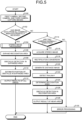
- the following will describe detecting a remarkable object (an obstacle, for example), that is, a series of stereo image processing by the imaging system 100 as configured above, with reference to exemplary and schematic flowcharts illustrated in FIG. 5 and FIG. 6 .
- the processing illustrated in the flowchart of FIG. 5 is repeated in a given processing cycle.
- the camera controller 12 of the imaging system 100 causes the first camera 10a and the second camera 10b to capture images of the first area 24, and the third camera 10c to capture an image of the second area 26 (S100).
- the camera controller 12 supplies a synchronizing signal and control signals for exposure, a shutter speed, and a white balance to the first camera 10a, the second camera 10b, and the third camera 10c to capture the images of the same scene under the same condition.
- the first camera 10a, the second camera 10b, and the third camera 10c are configured to individually receive control signals and power supply, for example. Thus, a malfunction of any of the cameras, if it occurs, does not affect the normally operating cameras from capturing images and outputting image data.
- the image processor 14 After succeeding in acquiring image data successively from all the cameras (the first camera 10a, the second camera 10b, and the third camera 10c) (Yes at S102), the image processor 14 performs processing to a stereo image (S104).
- the stereo image processing will be described in detail, referring to the flowchart of FIG. 6 .
- the image processor 14 subjects the image captured by the first camera 10a and the second camera 10b to rectification conversion (S202). That is, the image processor 14 converts the first stereo image into the one from which parallax is detectable through stereo matching. The image processor 14 then generates a first distance image containing distance information from the images (first stereo image) captured by the first camera 10a and the second camera 10b according to the detected parallax (S204).
- the image processor 14 detects the railway track R from the first distance image by a known detecting method of the railway track R using the feature as to brightness, for example (S206). As described above, the location of the railway track R in the image is generally known. Thus, the image processor 14 can decrease a processing load by setting the detection area of the railway track R to an estimated location. Next, the image processor 14 sets a recognition area for the detected railway track R to detect an obstacle (S208). The image processor 14 detects an obstacle from the set recognition area by a known detecting method (such as pattern matching) (S210). The obstacle detection is mainly intended for ensuring safe operation of the railway vehicle RV, therefore, setting the recognition area to a given limited area on or around the railway track R is basically sufficient for that purpose. The image processor 14 can decrease a processing load in terms of the obstacle detection by setting the recognition area to a limited area.
- the image processor 14 Upon incompletion of the obstacle detection with the combinations of the first camera 10a, the second camera 10b, and the third camera 10c (No at S212), the image processor 14 returns to the operation at S200.
- the image processor 14 After determining at S200 that the image (first stereo image) captured by the first camera 10a and the second camera 10b has been processed (Yes at S200) and the image (second stereo image) captured by the second camera 10b and the third camera 10c has not been processed (No at S214), the image processor 14 performs rectification conversion to the image captured by the second camera 10b and the third camera 10c (S216). That is, the image processor 14 converts the second stereo image into the one from which parallax is detectable through stereo matching. The image processor 14 then generates a second distance image containing distance information from the image (second stereo image) captured by the second camera 10b and the third camera 10c (S218) according to the detected parallax.
- the image processor 14 detects the railway track R from the second distance image (S206) to set a recognition area therefor (S208).
- the image processor 14 performs an obstacle detection to the set recognition area of the second distance image (S210), and determines again at S212 whether the obstacle detection with the combinations of the cameras is completed (S212).
- the image processor 14 After determining at S214 that the image (second stereo image) captured by the second camera 10b and the third camera 10c has been processed (Yes at S214), the image processor 14 performs rectification conversion to the image captured by the third camera 10c and the first camera 10a (S220). That is, the image processor 14 converts the third stereo image into the one from which parallax is detectable through stereo matching. The image processor 14 then generates a third distance image containing distance information from the image (third stereo image) captured by the third camera 10c and the first camera 10a according to the detected parallax (S222).
- the image processor 14 detects the railway track R from the third distance image (S206) to set a recognition area therefor (S208).
- the image processor 14 detects an obstacle from the set recognition area of the third distance image (S210), and determines again at S212 whether the obstacle detection with the combinations of the cameras is completed (S212).
- the image processor 14 After determining completion of the obstacle detection with the combinations of the first camera 10a, the second camera 10b, and the third camera 10c (detection from the first distance image, the second distance image, and the third distance image) at S212 (Yes at S212), the image processor 14 corrects a distance to the obstacle being a remarkable object and corrects an obstacle detected position (improvement in accuracy of distance) on the basis of results of the detection (S224).
- the image processor 14 temporarily stores the detected obstacle and the distance to the obstacle in the storage as a result of the detection from the near area (the first area 24 or the overlapping area between the first area 24 and the second area 26) (S226).
- the three stereo cameras of combinations of the first camera 10a, the second camera 10b, and the third camera 10c individually measure the distance to the obstacle and reflect the measurements in the obstacle detected position, which can improve the accuracy of distance measurement to the obstacle in the overlapping area between the first area 24 and the second area 26.
- the generation of the second distance image and the third distance image may be omissible.
- the image processor 14 can implement the distance measurement to the obstacle in the near area from the stereo image with a reduced load.
- the image processor 14 After completion of the obstacle detection in the near area, the image processor 14 returns to the flowchart of FIG. 5 , and adds the far area 26a captured by the third camera 10c to the near area to expand the detection area of the railway track R (setting of an expanded recognition area) (S106). Then, the image processor 14 detects an obstacle from the expanded recognition area (S108). Prior to the obstacle detection from the expanded recognition area, the image processor 14 may detect the railway track R to set the detection area of an obstacle by a known detecting method of the railway track R using the feature as to brightness, similarly to the first area 24.
- the image processor 14 may focus on continuity of the railway track R over the first area 24 and the far area 26a, regard the railway track R detected in the first area 24 as extending to the far area 26a, and detect an obstacle from the area extended from the first area 24.
- the image processor 14 estimates a distance to the obstacle in the expanded area (far area 26a) (S110).
- the object M in the farthest part 30 of the near area (first area 24) substantially matches in size with the object N in the nearest part 32 of the far area 26a.
- the image processor 14 can calculate the distance to the object M accurately by processing the stereo image of the first area 24.
- the image processor 14 can estimate the position of the obstacle (distance to the obstacle) detected in the far area 26a from the distance to the obstacle M (obstacle N) through comparison of the sizes between the obstacle N in the far area 26a and an obstacle located farther than the obstacle N.
- the image processor 14 may omit the operation of S110. Thereby, the image processor 14 can reduce a processing load as to the far area 26a.
- the image processor 14 outputs results of the detection of the obstacle to the output 16 (S112), temporarily ending this processing. That is, after detecting an obstacle from the first area 24 (or the overlapping area between the first area 24 and the second area 26) through the stereo image processing at S104, the image processor 14 provides, through the output 16, the detected obstacle and the position thereof (distance thereto) to the operation system of the railway vehicle RV and an external system that serves to manage and monitor the travelling of the railway vehicle RV, to reflect them in the control of the railway vehicle RV. Similarly, after detecting an obstacle from the far area 26a, the image processor 14 provides, through the output 16, information indicating detection of the obstacle to the operation system of the railway vehicle RV and the external system, and reflects the information in the control of the railway vehicle RV.
- the image processor 14 may output such information as well through the output 16.
- the image processor 14 may add emphatic signals for highlighting the obstacle and alarm signals to the detected obstacle at the time of providing the information to the external system (security center) through the output 16, for example.
- the image processor 14 After determining a failure in successively receiving image data from all the cameras (first camera 10a, second camera 10b, and third camera 10c) at S102 (No at S102), the image processor 14 checks the number of the cameras normally operating (S114). If two of the first camera 10a, the second camera 10b, and the third camera 10c are normally outputting image data to the image processor 14 (Yes at S114), the image processor 14 acquires the stereo image captured by the two cameras (S116). That is, the image processor 14 acquires any of the first stereo image, the second stereo image, and the third stereo image. The image processor 14 subjects the acquired stereo image to rectification conversion (S118). That is, the image processor 14 converts the acquired stereo image into the one from which parallax is detectable through stereo matching. The image processor 14 generates the distance image from the stereo image in accordance with the detected parallax (S120).
- the image processor 14 detects the railway track R from the generated distance image by a known detecting method of the railway track R using the feature as to brightness (S122). Next, the image processor 14 sets, for the detected railway track R, a recognition area in which an obstacle is to be detected (S124). The image processor 14 detects an obstacle from the set recognition area by a known detecting method (pattern matching, for example) (S126). The image processor 14 outputs a result of the detection of an obstacle in the near area through the output 16 (S128), temporarily ending this processing. That is, the image processor 14 performs obstacle detection processing, using the two cameras capable of outputting normal image data at the moment.
- the image processor 14 performs obstacle detection in a limited area, that is, the first area 24 which the first camera 10a and the second camera 10b can normally capture. Meanwhile, irrespective of a malfunction of either the first camera 10a or the second camera 10b, the image processor 14 can detect presence or absence of an obstacle and the position thereof from the overlapping area between the first area 24 and the second area 26, and can detect an obstacle from the far area 26a, if any.
- the image processor 14 determines that detection of an obstacle, if any, and the position thereof (distance thereto) is unfeasible, and performs error processing (S130). That is, the image processor 14 provides error information to the operation system of the railway vehicle RV or the external system through the output 16, to reflect the error information in the control of travelling of the railway vehicle RV. For example, the operation system or the external system causes the railway vehicle RV to temporarily stop travelling.
- the imaging system 100 can enlarge the detection area for the remarkable object, such as an obstacle, by capturing the stereo image of the same scene from the images captured by the first camera 10a, the second camera 10b, and the third camera 10c. Typically, it is unlikely that two or more cameras malfunction at the same time.
- the imaging system 100 can acquire a stereo image with at least two cameras. Thus, the imaging system 100 can avoid occurrence of the situation that a malfunction of one of the cameras directly causes the railway vehicle RV to become unable to autonomously operate.
- the present embodiment has described one example of the imaging unit 10 that the first imaging module 18 includes two HD cameras (first camera 10a and second camera 10b) and the second imaging module 20 includes one 4K camera (third camera 10c).
- the imaging system 100 including a minimum number of elements can expand the obstacle detection area and deal with a malfunction of a camera.
- the imaging unit 10 may include four or more cameras, which can exert the same effects.
- the embodiment has described the example that the imaging system 100 is applied to the railway vehicle RV that is autonomously operable.
- the imaging system 100 may be applied to a railway vehicle where a driver can ride (regardless of whether the driver operates the vehicle), which can exert the same effects.
- the output 16 may display the image, as illustrated in FIG. 4 , on a display installed at a driver's seat, for example, and display a result of detection of an obstacle or output an audio message or alarm sound corresponding to the result.
Landscapes
- Engineering & Computer Science (AREA)
- Multimedia (AREA)
- Signal Processing (AREA)
- Physics & Mathematics (AREA)
- General Physics & Mathematics (AREA)
- Mechanical Engineering (AREA)
- Remote Sensing (AREA)
- Radar, Positioning & Navigation (AREA)
- Electromagnetism (AREA)
- Computer Vision & Pattern Recognition (AREA)
- Theoretical Computer Science (AREA)
- Train Traffic Observation, Control, And Security (AREA)
- Image Analysis (AREA)
- Studio Devices (AREA)
- Measurement Of Optical Distance (AREA)
- Cameras In General (AREA)
- Stereoscopic And Panoramic Photography (AREA)
- Closed-Circuit Television Systems (AREA)
- Electric Propulsion And Braking For Vehicles (AREA)
Claims (3)
- Bildaufnahmesystem für ein Schienenfahrzeug (100), umfassend:ein erstes Bildaufnahmemodul (18), das in einem führenden Schienenfahrzeug (RV) angeordnet ist, zum Aufnehmen eines Stereobildes eines ersten Bereichs (24) in einer Fahrtrichtung (D) des Schienenfahrzeugs (RV);ein zweites Bildaufnahmemodul (20), das in dem führenden Schienenfahrzeug (RV) angeordnet ist und das in der Lage ist, einen zweiten Bereich (26) aufzunehmen, umfassend einen entfernteren Bereich (26a) und einen näheren Bereich (26b), wobei der entferntere Bereich (26a) entfernter als zumindest der erste Bereich (24) ist, wobei der nähere Bereich (26b) mit dem ersten Bereich (24) überlappt vor dem entfernteren Bereich (26a), wobei das zweite Bildaufnahmemodul (20) konfiguriert ist, ein hochauflösendes Bild mit einer Auflösung aufzunehmen, die höher ist als die Auflösung des ersten Bildaufnahmemoduls (18); undeinen Bildprozessor (14), der konfiguriert ist:einen ersten Abstand zu einer ersten Position in dem näheren Bereich (26b), der den ersten Bereich (24) überlappt, zu berechnen, wobei der erste Abstand berechnet wird aus dem von dem ersten Bildaufnahmemodul (18) aufgenommenen Stereobild,eine Länge entsprechend einem Pixel des entfernteren Bereichs (26a) in einem hochauflösenden Bild zu berechnen, das von dem zweiten Bildaufnahmemodul (20) aufgenommen wird, wobei die Länge berechnet wird, basierend auf einer bekannten Größe eines Objekts, das in dem entfernteren Bereich (26a) angeordnet ist, undeinen zweiten Abstand zu einer zweiten Position in dem entfernteren Bereich (26a) des zweiten Bereichs (26) zu schätzen, wobei der zweite Abstand aus dem ersten Abstand und der Länge entsprechend dem einen Pixel des entfernteren Bereichs (26) geschätzt wird.
- Bildaufnahmesystem (100) gemäß Anspruch 1, wobeidas erste Bildaufnahmemodul (18) eine erste Kamera (10a) und eine zweite Kamera (10b) umfasst, unddas zweite Bildaufnahmemodul (20) eine dritte Kamera (10c) umfasst, wobei das System (100) ferner umfasst:eine Kamerasteuerung (12), die konfiguriert ist:zu bewirken, dass die erste Kamera (10a) und die zweite Kamera (10b) ein erstes Stereobild des ersten Bereichs (24) aufnehmen,zu bewirken, dass die zweite Kamera (10b) und die dritte Kamera (10c) ein zweites Stereobild aufnehmen, das mindestens einen Teil des ersten Bereichs (24) enthält, undzu bewirken, dass die dritte Kamera (10c) und die erste Kamera (10a) ein drittes Stereobild aufnehmen, das zumindest einen Teil des ersten Bereichs enthält, undeinen Bildprozessor (14), der konfiguriert ist, eine Objekterkennungsverarbeitung in Bezug auf den ersten Bereich (24) basierend auf dem ersten Stereobild, dem zweiten Stereobild und dem dritten Stereobild durchzuführen.
- Bildgebungssystem (100) gemäß Anspruch 2, wobei der Bildprozessor (24) bewirkt, dass zwei der ersten Kamera (10a), der zweiten Kamera (10b) und der dritten Kamera (10c) das Stereobild kontinuierlich aufnehmen.
Applications Claiming Priority (2)
| Application Number | Priority Date | Filing Date | Title |
|---|---|---|---|
| JP2018138596A JP7150508B2 (ja) | 2018-07-24 | 2018-07-24 | 鉄道車両用撮像システム |
| PCT/JP2019/025429 WO2020021949A1 (ja) | 2018-07-24 | 2019-06-26 | 鉄道車両用撮像システム |
Publications (4)
| Publication Number | Publication Date |
|---|---|
| EP3829155A1 EP3829155A1 (de) | 2021-06-02 |
| EP3829155A4 EP3829155A4 (de) | 2022-04-20 |
| EP3829155C0 EP3829155C0 (de) | 2025-04-23 |
| EP3829155B1 true EP3829155B1 (de) | 2025-04-23 |
Family
ID=69180463
Family Applications (1)
| Application Number | Title | Priority Date | Filing Date |
|---|---|---|---|
| EP19840166.3A Active EP3829155B1 (de) | 2018-07-24 | 2019-06-26 | Bilderzeugungssystem für eisenbahnfahrzeug |
Country Status (5)
| Country | Link |
|---|---|
| EP (1) | EP3829155B1 (de) |
| JP (1) | JP7150508B2 (de) |
| CN (1) | CN112470456B (de) |
| SG (1) | SG11202012917RA (de) |
| WO (1) | WO2020021949A1 (de) |
Families Citing this family (2)
| Publication number | Priority date | Publication date | Assignee | Title |
|---|---|---|---|---|
| CN113486783A (zh) * | 2021-07-02 | 2021-10-08 | 浙江省交通投资集团有限公司智慧交通研究分公司 | 轨道交通车辆的障碍物检测方法及系统 |
| JP2025019899A (ja) * | 2023-07-28 | 2025-02-07 | 株式会社東芝 | 情報処理装置、情報処理システム、および情報処理方法 |
Family Cites Families (18)
| Publication number | Priority date | Publication date | Assignee | Title |
|---|---|---|---|---|
| JPH10318805A (ja) * | 1997-05-15 | 1998-12-04 | Toshiba Fa Syst Eng Kk | 移動点検システム |
| JP2001242521A (ja) | 2000-02-28 | 2001-09-07 | Fuji Heavy Ind Ltd | カメラの組み立て構造、カメラの調整方法、および調整用治具 |
| JP2008196891A (ja) * | 2007-02-09 | 2008-08-28 | Mitsubishi Precision Co Ltd | 多眼カメラ |
| JP5146330B2 (ja) * | 2009-01-15 | 2013-02-20 | 日産自動車株式会社 | 車両用道路標示認識装置 |
| JP5030983B2 (ja) * | 2009-02-10 | 2012-09-19 | 株式会社日立製作所 | 列車の停止検知システム並びに列車の移動速度及び位置検出システム |
| JP2010271143A (ja) * | 2009-05-20 | 2010-12-02 | Ricoh Co Ltd | 撮像装置、距離測定装置、及び車外監視装置、並びに撮像方法 |
| JP5407898B2 (ja) * | 2010-01-25 | 2014-02-05 | 株式会社豊田中央研究所 | 対象物検出装置及びプログラム |
| JP5472328B2 (ja) * | 2010-02-02 | 2014-04-16 | コニカミノルタ株式会社 | ステレオカメラ |
| US9720089B2 (en) * | 2012-01-23 | 2017-08-01 | Microsoft Technology Licensing, Llc | 3D zoom imager |
| CN105636853B (zh) * | 2013-07-31 | 2018-04-24 | 铁路视像有限公司 | 用于障碍物识别和避开的系统和方法 |
| DE102013110615B3 (de) * | 2013-09-26 | 2014-11-27 | Sick Ag | 3D-Kamera nach dem Stereoskopieprinzip und Verfahren zum Erfassen von Tiefenkarten |
| JPWO2015045501A1 (ja) * | 2013-09-27 | 2017-03-09 | 日立オートモティブシステムズ株式会社 | 外界認識装置 |
| US20170359565A1 (en) * | 2015-02-20 | 2017-12-14 | Sony Corporation | Image pickup device and image pickup method |
| JP6307037B2 (ja) * | 2015-03-31 | 2018-04-04 | 公益財団法人鉄道総合技術研究所 | 障害物検知方法およびその装置 |
| JP2016197795A (ja) * | 2015-04-03 | 2016-11-24 | 日立オートモティブシステムズ株式会社 | 撮像装置 |
| DE112015006347T5 (de) * | 2015-09-30 | 2017-12-07 | Komatsu Ltd. | Bildaufnahmevorrichtung |
| JP6660751B2 (ja) * | 2016-02-04 | 2020-03-11 | 日立オートモティブシステムズ株式会社 | 撮像装置 |
| US10007854B2 (en) * | 2016-07-07 | 2018-06-26 | Ants Technology (Hk) Limited | Computer vision based driver assistance devices, systems, methods and associated computer executable code |
-
2018
- 2018-07-24 JP JP2018138596A patent/JP7150508B2/ja active Active
-
2019
- 2019-06-26 WO PCT/JP2019/025429 patent/WO2020021949A1/ja not_active Ceased
- 2019-06-26 SG SG11202012917RA patent/SG11202012917RA/en unknown
- 2019-06-26 CN CN201980048961.0A patent/CN112470456B/zh active Active
- 2019-06-26 EP EP19840166.3A patent/EP3829155B1/de active Active
Also Published As
| Publication number | Publication date |
|---|---|
| EP3829155C0 (de) | 2025-04-23 |
| WO2020021949A1 (ja) | 2020-01-30 |
| EP3829155A1 (de) | 2021-06-02 |
| EP3829155A4 (de) | 2022-04-20 |
| JP7150508B2 (ja) | 2022-10-11 |
| JP2020017824A (ja) | 2020-01-30 |
| CN112470456B (zh) | 2022-04-26 |
| SG11202012917RA (en) | 2021-02-25 |
| CN112470456A (zh) | 2021-03-09 |
Similar Documents
| Publication | Publication Date | Title |
|---|---|---|
| KR101343975B1 (ko) | 돌발검지 시스템 | |
| US10144351B2 (en) | Information presentation system | |
| US9747524B2 (en) | Disparity value deriving device, equipment control system, movable apparatus, and robot | |
| US20070069872A1 (en) | Vehicle driving assist system | |
| JP2005300315A (ja) | 物体検出装置 | |
| US10586348B2 (en) | Distance measurement device and image capturing control device | |
| US10974719B2 (en) | Mobile object control system, mobile object control method, and program | |
| JP2012038229A (ja) | ドライブレコーダー | |
| EP3829155B1 (de) | Bilderzeugungssystem für eisenbahnfahrzeug | |
| US20180286076A1 (en) | Vision system for a motor vehicle and method of controlling a vision system | |
| JP2009239485A (ja) | 車両用環境認識装置および先行車追従制御システム | |
| EP2913999A1 (de) | Disparitätswertableitungsvorrichtung, Ausrüstungssteuerungssystem, bewegliche Vorrichtung, Roboter, Disparitätswertableitungsverfahren und computerlesbares Speichermedium | |
| JP5717416B2 (ja) | 運転支援制御装置 | |
| WO2020261838A1 (ja) | 画像処理装置と画像処理方法およびプログラム | |
| US20160021313A1 (en) | Image Processing Apparatus | |
| US20200111227A1 (en) | Orientation detection apparatus for vehicle, image processing system, vehicle, and orientation detection method for vehicle | |
| JP2012098776A (ja) | 運転支援装置 | |
| EP2919191B1 (de) | Disparitätswertableitungsvorrichtung, ausrüstungssteuerungssystem, bewegliche vorrichtung, roboter und disparitätswerterzeugungsverfahren | |
| JP2006295346A (ja) | 画像処理装置及びこれを用いる車両用運転支援装置 | |
| JP4114647B2 (ja) | 障害物検出装置 | |
| US20230328195A1 (en) | Image processing device that can measure distance to object, movable apparatus, image processing method, and storage medium | |
| US20240070909A1 (en) | Apparatus and method for distance estimation | |
| US12327416B2 (en) | Image processing system, image processing method, and storage medium | |
| JPWO2019208257A1 (ja) | 車載カメラ装置 | |
| JP2000207695A (ja) | 車外監視装置 |
Legal Events
| Date | Code | Title | Description |
|---|---|---|---|
| STAA | Information on the status of an ep patent application or granted ep patent |
Free format text: STATUS: THE INTERNATIONAL PUBLICATION HAS BEEN MADE |
|
| PUAI | Public reference made under article 153(3) epc to a published international application that has entered the european phase |
Free format text: ORIGINAL CODE: 0009012 |
|
| STAA | Information on the status of an ep patent application or granted ep patent |
Free format text: STATUS: REQUEST FOR EXAMINATION WAS MADE |
|
| 17P | Request for examination filed |
Effective date: 20210112 |
|
| AK | Designated contracting states |
Kind code of ref document: A1 Designated state(s): AL AT BE BG CH CY CZ DE DK EE ES FI FR GB GR HR HU IE IS IT LI LT LU LV MC MK MT NL NO PL PT RO RS SE SI SK SM TR |
|
| DAV | Request for validation of the european patent (deleted) | ||
| DAX | Request for extension of the european patent (deleted) | ||
| A4 | Supplementary search report drawn up and despatched |
Effective date: 20220322 |
|
| RIC1 | Information provided on ipc code assigned before grant |
Ipc: H04N 13/271 20180101ALI20220316BHEP Ipc: H04N 13/243 20180101ALI20220316BHEP Ipc: H04N 13/239 20180101ALI20220316BHEP Ipc: H04N 7/18 20060101ALI20220316BHEP Ipc: G06T 7/593 20170101ALI20220316BHEP Ipc: G03B 35/08 20210101ALI20220316BHEP Ipc: G03B 15/00 20210101ALI20220316BHEP Ipc: G01C 3/06 20060101ALI20220316BHEP Ipc: B61K 13/00 20060101ALI20220316BHEP Ipc: B61K 9/08 20060101ALI20220316BHEP Ipc: H04N 5/225 20060101AFI20220316BHEP |
|
| STAA | Information on the status of an ep patent application or granted ep patent |
Free format text: STATUS: EXAMINATION IS IN PROGRESS |
|
| 17Q | First examination report despatched |
Effective date: 20240126 |
|
| REG | Reference to a national code |
Ref country code: DE Ref legal event code: R079 Free format text: PREVIOUS MAIN CLASS: H04N0005225000 Ipc: H04N0013243000 Ref document number: 602019069097 Country of ref document: DE |
|
| GRAP | Despatch of communication of intention to grant a patent |
Free format text: ORIGINAL CODE: EPIDOSNIGR1 |
|
| STAA | Information on the status of an ep patent application or granted ep patent |
Free format text: STATUS: GRANT OF PATENT IS INTENDED |
|
| RIC1 | Information provided on ipc code assigned before grant |
Ipc: H04N 23/45 20230101ALI20250115BHEP Ipc: B61K 13/00 20060101ALI20250115BHEP Ipc: G01C 3/06 20060101ALI20250115BHEP Ipc: G03B 15/00 20210101ALI20250115BHEP Ipc: G03B 35/08 20210101ALI20250115BHEP Ipc: G06T 7/593 20170101ALI20250115BHEP Ipc: H04N 7/18 20060101ALI20250115BHEP Ipc: H04N 13/239 20180101ALI20250115BHEP Ipc: H04N 13/271 20180101ALI20250115BHEP Ipc: B61K 9/08 20060101ALI20250115BHEP Ipc: H04N 13/243 20180101AFI20250115BHEP |
|
| INTG | Intention to grant announced |
Effective date: 20250211 |
|
| GRAS | Grant fee paid |
Free format text: ORIGINAL CODE: EPIDOSNIGR3 |
|
| GRAA | (expected) grant |
Free format text: ORIGINAL CODE: 0009210 |
|
| STAA | Information on the status of an ep patent application or granted ep patent |
Free format text: STATUS: THE PATENT HAS BEEN GRANTED |
|
| AK | Designated contracting states |
Kind code of ref document: B1 Designated state(s): AL AT BE BG CH CY CZ DE DK EE ES FI FR GB GR HR HU IE IS IT LI LT LU LV MC MK MT NL NO PL PT RO RS SE SI SK SM TR |
|
| REG | Reference to a national code |
Ref country code: GB Ref legal event code: FG4D |
|
| REG | Reference to a national code |
Ref country code: CH Ref legal event code: EP |
|
| REG | Reference to a national code |
Ref country code: IE Ref legal event code: FG4D |
|
| U01 | Request for unitary effect filed |
Effective date: 20250423 |
|
| U07 | Unitary effect registered |
Designated state(s): AT BE BG DE DK EE FI FR IT LT LU LV MT NL PT RO SE SI Effective date: 20250428 |
|
| U20 | Renewal fee for the european patent with unitary effect paid |
Year of fee payment: 7 Effective date: 20250606 |
|
| RAP2 | Party data changed (patent owner data changed or rights of a patent transferred) |
Owner name: KABUSHIKI KAISHA TOSHIBA |
|
| U1K | Transfer of rights of the unitary patent after the registration of the unitary effect |
Owner name: KABUSHIKI KAISHA TOSHIBA; JP |
|
| PG25 | Lapsed in a contracting state [announced via postgrant information from national office to epo] |
Ref country code: ES Free format text: LAPSE BECAUSE OF FAILURE TO SUBMIT A TRANSLATION OF THE DESCRIPTION OR TO PAY THE FEE WITHIN THE PRESCRIBED TIME-LIMIT Effective date: 20250423 |
|
| PG25 | Lapsed in a contracting state [announced via postgrant information from national office to epo] |
Ref country code: GR Free format text: LAPSE BECAUSE OF FAILURE TO SUBMIT A TRANSLATION OF THE DESCRIPTION OR TO PAY THE FEE WITHIN THE PRESCRIBED TIME-LIMIT Effective date: 20250724 Ref country code: NO Free format text: LAPSE BECAUSE OF FAILURE TO SUBMIT A TRANSLATION OF THE DESCRIPTION OR TO PAY THE FEE WITHIN THE PRESCRIBED TIME-LIMIT Effective date: 20250723 |
|
| PG25 | Lapsed in a contracting state [announced via postgrant information from national office to epo] |
Ref country code: PL Free format text: LAPSE BECAUSE OF FAILURE TO SUBMIT A TRANSLATION OF THE DESCRIPTION OR TO PAY THE FEE WITHIN THE PRESCRIBED TIME-LIMIT Effective date: 20250423 |
|
| PG25 | Lapsed in a contracting state [announced via postgrant information from national office to epo] |
Ref country code: HR Free format text: LAPSE BECAUSE OF FAILURE TO SUBMIT A TRANSLATION OF THE DESCRIPTION OR TO PAY THE FEE WITHIN THE PRESCRIBED TIME-LIMIT Effective date: 20250423 |
|
| PG25 | Lapsed in a contracting state [announced via postgrant information from national office to epo] |
Ref country code: RS Free format text: LAPSE BECAUSE OF FAILURE TO SUBMIT A TRANSLATION OF THE DESCRIPTION OR TO PAY THE FEE WITHIN THE PRESCRIBED TIME-LIMIT Effective date: 20250723 |
|
| PG25 | Lapsed in a contracting state [announced via postgrant information from national office to epo] |
Ref country code: IS Free format text: LAPSE BECAUSE OF FAILURE TO SUBMIT A TRANSLATION OF THE DESCRIPTION OR TO PAY THE FEE WITHIN THE PRESCRIBED TIME-LIMIT Effective date: 20250823 |
|
| PG25 | Lapsed in a contracting state [announced via postgrant information from national office to epo] |
Ref country code: SM Free format text: LAPSE BECAUSE OF FAILURE TO SUBMIT A TRANSLATION OF THE DESCRIPTION OR TO PAY THE FEE WITHIN THE PRESCRIBED TIME-LIMIT Effective date: 20250423 |
|
| PG25 | Lapsed in a contracting state [announced via postgrant information from national office to epo] |
Ref country code: CZ Free format text: LAPSE BECAUSE OF FAILURE TO SUBMIT A TRANSLATION OF THE DESCRIPTION OR TO PAY THE FEE WITHIN THE PRESCRIBED TIME-LIMIT Effective date: 20250423 |
|
| PG25 | Lapsed in a contracting state [announced via postgrant information from national office to epo] |
Ref country code: SK Free format text: LAPSE BECAUSE OF FAILURE TO SUBMIT A TRANSLATION OF THE DESCRIPTION OR TO PAY THE FEE WITHIN THE PRESCRIBED TIME-LIMIT Effective date: 20250423 |
|
| REG | Reference to a national code |
Ref country code: CH Ref legal event code: H13 Free format text: ST27 STATUS EVENT CODE: U-0-0-H10-H13 (AS PROVIDED BY THE NATIONAL OFFICE) Effective date: 20260127 |
|
| PG25 | Lapsed in a contracting state [announced via postgrant information from national office to epo] |
Ref country code: MC Free format text: LAPSE BECAUSE OF FAILURE TO SUBMIT A TRANSLATION OF THE DESCRIPTION OR TO PAY THE FEE WITHIN THE PRESCRIBED TIME-LIMIT Effective date: 20250423 |
|
| PLBE | No opposition filed within time limit |
Free format text: ORIGINAL CODE: 0009261 |
|
| STAA | Information on the status of an ep patent application or granted ep patent |
Free format text: STATUS: NO OPPOSITION FILED WITHIN TIME LIMIT |
|
| REG | Reference to a national code |
Ref country code: CH Ref legal event code: L10 Free format text: ST27 STATUS EVENT CODE: U-0-0-L10-L00 (AS PROVIDED BY THE NATIONAL OFFICE) Effective date: 20260304 |
|
| GBPC | Gb: european patent ceased through non-payment of renewal fee |
Effective date: 20250723 |
|
| 26N | No opposition filed |
Effective date: 20260126 |
|
| PG25 | Lapsed in a contracting state [announced via postgrant information from national office to epo] |
Ref country code: GB Free format text: LAPSE BECAUSE OF NON-PAYMENT OF DUE FEES Effective date: 20250723 |
|
| PG25 | Lapsed in a contracting state [announced via postgrant information from national office to epo] |
Ref country code: IE Free format text: LAPSE BECAUSE OF NON-PAYMENT OF DUE FEES Effective date: 20250626 |
|
| PG25 | Lapsed in a contracting state [announced via postgrant information from national office to epo] |
Ref country code: CH Free format text: LAPSE BECAUSE OF NON-PAYMENT OF DUE FEES Effective date: 20250630 |