EP3829538B1 - Composition topique - Google Patents
Composition topique Download PDFInfo
- Publication number
- EP3829538B1 EP3829538B1 EP18758670.6A EP18758670A EP3829538B1 EP 3829538 B1 EP3829538 B1 EP 3829538B1 EP 18758670 A EP18758670 A EP 18758670A EP 3829538 B1 EP3829538 B1 EP 3829538B1
- Authority
- EP
- European Patent Office
- Prior art keywords
- composition
- crisaborole
- oil phase
- composition according
- weight
- Prior art date
- Legal status (The legal status is an assumption and is not a legal conclusion. Google has not performed a legal analysis and makes no representation as to the accuracy of the status listed.)
- Active
Links
Images

Classifications
-
- A—HUMAN NECESSITIES
- A61—MEDICAL OR VETERINARY SCIENCE; HYGIENE
- A61K—PREPARATIONS FOR MEDICAL, DENTAL OR TOILETRY PURPOSES
- A61K31/00—Medicinal preparations containing organic active ingredients
- A61K31/69—Boron compounds
-
- A—HUMAN NECESSITIES
- A61—MEDICAL OR VETERINARY SCIENCE; HYGIENE
- A61K—PREPARATIONS FOR MEDICAL, DENTAL OR TOILETRY PURPOSES
- A61K47/00—Medicinal preparations characterised by the non-active ingredients used, e.g. carriers or inert additives; Targeting or modifying agents chemically bound to the active ingredient
- A61K47/06—Organic compounds, e.g. natural or synthetic hydrocarbons, polyolefins, mineral oil, petrolatum or ozokerite
- A61K47/08—Organic compounds, e.g. natural or synthetic hydrocarbons, polyolefins, mineral oil, petrolatum or ozokerite containing oxygen, e.g. ethers, acetals, ketones, quinones, aldehydes, peroxides
- A61K47/14—Esters of carboxylic acids, e.g. fatty acid monoglycerides, medium-chain triglycerides, parabens or PEG fatty acid esters
-
- A—HUMAN NECESSITIES
- A61—MEDICAL OR VETERINARY SCIENCE; HYGIENE
- A61K—PREPARATIONS FOR MEDICAL, DENTAL OR TOILETRY PURPOSES
- A61K47/00—Medicinal preparations characterised by the non-active ingredients used, e.g. carriers or inert additives; Targeting or modifying agents chemically bound to the active ingredient
- A61K47/30—Macromolecular organic or inorganic compounds, e.g. inorganic polyphosphates
- A61K47/32—Macromolecular compounds obtained by reactions only involving carbon-to-carbon unsaturated bonds, e.g. carbomers, poly(meth)acrylates, or polyvinyl pyrrolidone
-
- A—HUMAN NECESSITIES
- A61—MEDICAL OR VETERINARY SCIENCE; HYGIENE
- A61K—PREPARATIONS FOR MEDICAL, DENTAL OR TOILETRY PURPOSES
- A61K47/00—Medicinal preparations characterised by the non-active ingredients used, e.g. carriers or inert additives; Targeting or modifying agents chemically bound to the active ingredient
- A61K47/44—Oils, fats or waxes according to two or more groups of A61K47/02-A61K47/42; Natural or modified natural oils, fats or waxes, e.g. castor oil, polyethoxylated castor oil, montan wax, lignite, shellac, rosin, beeswax or lanolin
-
- A—HUMAN NECESSITIES
- A61—MEDICAL OR VETERINARY SCIENCE; HYGIENE
- A61K—PREPARATIONS FOR MEDICAL, DENTAL OR TOILETRY PURPOSES
- A61K9/00—Medicinal preparations characterised by special physical form
- A61K9/0012—Galenical forms characterised by the site of application
- A61K9/0014—Skin, i.e. galenical aspects of topical compositions
-
- A—HUMAN NECESSITIES
- A61—MEDICAL OR VETERINARY SCIENCE; HYGIENE
- A61K—PREPARATIONS FOR MEDICAL, DENTAL OR TOILETRY PURPOSES
- A61K9/00—Medicinal preparations characterised by special physical form
- A61K9/06—Ointments; Bases therefor; Other semi-solid forms, e.g. creams, sticks, gels
-
- A—HUMAN NECESSITIES
- A61—MEDICAL OR VETERINARY SCIENCE; HYGIENE
- A61K—PREPARATIONS FOR MEDICAL, DENTAL OR TOILETRY PURPOSES
- A61K9/00—Medicinal preparations characterised by special physical form
- A61K9/10—Dispersions; Emulsions
- A61K9/107—Emulsions ; Emulsion preconcentrates; Micelles
-
- A—HUMAN NECESSITIES
- A61—MEDICAL OR VETERINARY SCIENCE; HYGIENE
- A61P—SPECIFIC THERAPEUTIC ACTIVITY OF CHEMICAL COMPOUNDS OR MEDICINAL PREPARATIONS
- A61P17/00—Drugs for dermatological disorders
-
- A—HUMAN NECESSITIES
- A61—MEDICAL OR VETERINARY SCIENCE; HYGIENE
- A61P—SPECIFIC THERAPEUTIC ACTIVITY OF CHEMICAL COMPOUNDS OR MEDICINAL PREPARATIONS
- A61P17/00—Drugs for dermatological disorders
- A61P17/06—Antipsoriatics
Definitions
- WO 2017/093857 A1 these two examples are repeated but with crisaborole as the active.
- Emily IP et al Journal of the American Academy of Dermatol, Mosby, Inc, US, vol. 56, no.2 (2007), p AB177 , relates to the formulation, skin penetration and anti-inflammatory activity of a novel borinic acid ester AN2728.
- WO 2007/095638 A2 relates to boron-containing small molecules as anti-inflammatory agents.
- WO 2018/142117 A1 relates to a topical composition comprising a polyaphron dispersion.
- Creams are advantageous over non-aqueous ointments in the sense that they generally have a better aesthetic profile and elicit improved patient compliance.
- US 2016/0318955 A1 makes no mention of the physical/chemical stability of the creams or whether the drug remains in solution. It is believed that crisaborole would have a tendency to crystallise out of the cream formulations disclosed in US 2016/0318955 A1 , particularly when present at a relatively high concentration (e.g. 2%). This could, in turn, give rise to physical instability of the formulation. Poor solvation of the crisaborole may also have a negative effect on skin permeation.
- the present invention provides a composition for topical application according to claim 1.
- the present inventors have found that the present invention, which includes a discontinuous liquid oil phase, achieves improved skin penetration compared with the formulations containing a solidified oil phase disclosed in US 2016/0318955 A1 .
- the present inventors' finding that the use of a liquid oil phase improves skin penetration of crisaborole is surprising and unexpected, since this effect is not known for similar alternative pharmaceutically active ingredients.
- the solid emulsifying and structuring agent serves to physically stabilise the composition, its incorporation at the levels disclosed in US 2016/0318955 A1 inhibits permeation of the active.
- the discontinuous liquid oil phase is homogeneous. In other words, it contains no solid inclusions or precipitates.
- the discontinuous liquid oil phase is a liquid at a temperature of 25 °C.
- the discontinuous liquid oil phase is a liquid at a temperature of 25 °C and a pressure of 10 5 Pa.
- the discontinuous liquid oil phase has a melting point of less than 22 °C, more preferably less than 20 °C, at 1 atm pressure.
- the composition comprises crisaborole.
- the chemical structure of crisaborole is depicted in Figure 1 .
- the source of crisaborole is preferably anhydrous crisaborole, although it will be appreciated that other sources of crisaborole may be used.
- the term "crisaborole” as used herein encompasses the free acid, salts (such as pharmaceutically acceptable salts), solvates and hydrates thereof.
- the amounts of crisaborole to be incorporated into the compositions described herein are based on the anhydrous form of crisaborole. It would be within the capabilities of the skilled person to adjust the quantity used in the preparation of the composition depending on the source used to provide the desired amount in the final composition.
- the crisaborole is present in an amount of from 1 to 5 wt% by weight of the composition, more preferably from 1.5 to 5 wt%, still more preferably from 1.5 to 4 wt%, and most preferably from 1.5 to 3.5 wt%.
- the present inventors have found that the present invention enables crisaborole to remain fully solvated in the composition even when it is present at relatively high concentrations.
- Preferably at least 95 wt% of the crisaborole is dissolved in the composition, more preferably at least 98 wt%, and most preferably at least 99 wt%.
- the crisaborole is in solution in the composition, more preferably at least 98 wt%, and most preferably at least 99 wt%.
- the crisaborole is dissolved at these levels throughout a temperature range of from 4 to 20°C.
- the crisaborole is predominantly in the discontinuous liquid oil phase.
- “predominantly” it is meant that at least 90 wt% of the crisaborole in the composition is present in the discontinuous liquid oil phase, preferably at least 95 wt%, and more preferably at least 99 wt%.
- the discontinuous liquid oil phase is present in an amount of at least 40 wt% by weight of the composition, preferably at least 50 wt%, more preferably at least 60 wt%, still more preferably at least 65 wt%, and most preferably at least 70 wt%.
- the discontinuous liquid oil phase is present in an amount of at most 80 wt% by weight of the composition.
- the crisaborole is preferably predominantly in the discontinuous liquid oil phase.
- the discontinuous liquid oil phase comprises an oil, preferably a pharmaceutically acceptable oil.
- the oil is present in an amount of at least 40 wt% by weight of the composition, preferably at least 50 wt%, preferably at least 60 wt%, still more preferably at least 65 wt%, and most preferably at least 70 wt%.
- the oil is present in an amount of at most 80 wt% by weight of the composition.
- the continuous aqueous phase preferably comprises less than 10 wt%, preferably less than 5 wt%, more preferably less than 2 wt%, and most preferably less than 1 wt% by weight of the composition of a polar water-miscible solvent selected from the group consisting of C 1 -C 4 alcohols, polyethylene glycol, ethylene glycol, propylene glycol, butylene glycol, pentylene glycol, glycerol, diethylene glycol mono ethyl ether, propylene carbonate and mixtures of two or more thereof.
- a polar water-miscible solvent selected from the group consisting of C 1 -C 4 alcohols, polyethylene glycol, ethylene glycol, propylene glycol, butylene glycol, pentylene glycol, glycerol, diethylene glycol mono ethyl ether, propylene carbonate and mixtures of two or more thereof.
- oils which may be used in the present invention include coconut oil, squalane, isopropyl myristate, isopropyl isostearate, isopropyl palmitate, modified triglycerides, caprylic capric glycerides, fractionated triglycerides, glyceryl tricaprate, glyceryl tricaproate, glyceryl tricaprylate, glyceryl tricaprylate/caprate, glyceryl tricaprylate/caprate/laurate, glyceryl tricaprylate/caprate/linoleate, glyceryl tricaprylate/caprate/stearate, glyceryl trilaurate, glyceryl trilinoleate, glyceryl trilinolenate, glyceryl trioleate, glyceryl triundecanoate, linoleic glycerides, saturated polyglycolized glycerides, synthetic medium chain
- the oil comprises diisopropyl adipate and/or diethyl sebacate and/or dibutyl sebacate.
- the diisopropyl adipate and/or diethyl sebacate and/or dibutyl sebacate are preferably present in a total amount of at least 60 wt% by weight of the discontinuous liquid oil phase, more preferably at least 70 wt%, still more preferably at least 75 wt%.
- the diisopropyl adipate and/or diethyl sebacate and/or dibutyl sebacate are present in a total amount of at most 80 wt% by weight of the discontinuous liquid oil phase.
- the oil comprises diisopropyl adipate, more preferably in the aforementioned amounts.
- these preferred oils have been found to have a good solubility profile for crisaborole. Nevertheless, it is known to be difficult to obtain stable dispersions where these oils are used as a high proportion of the oil phase. Surprisingly, the present inventors have found that these oils can be incorporated as a high proportion of the discontinuous liquid oil phase.
- the oil in addition to the diisopropyl adipate and/or diethyl sebacate and/or dibutyl sebacate, the oil preferably further comprises caprylic/capric triglycerides and/or castor oil, more preferably castor oil.
- the caprylic/capric triglycerides and/or castor oil increase the viscosity of the diisopropyl adipate and/or diethyl sebacate and/or dibutyl sebacate, thereby improving its processability. It may also improve the physical stability of the composition especially when low levels of surfactant are used.
- caprylic/capric triglycerides and/or castor oil has been found to provide improved dermal diffusion of the active.
- the oil comprises or consists of diisopropyl adipate and castor oil.
- the oil comprises diisopropyl adipate and/or diethyl sebacate and/or dibutyl adipate.
- the diisopropyl adipate and/or diethyl sebacate and/or dibutyl adipate are preferably present in a total amount of at least 60 wt% by weight of the discontinuous liquid oil phase, more preferably at least 70 wt%, still more preferably at least 75 wt%.
- the diisopropyl adipate and/or diethyl sebacate and/or dibutyl adipate are present in a total amount of at most 80 wt% by weight of the discontinuous liquid oil phase.
- the oil comprises diisopropyl adipate, more preferably in the aforementioned amounts.
- diisopropyl adipate have been found to have a good solubility profile for crisaborole and achieve good dermal diffusion of the active in an in vitro model, as shown in Example 6. Nevertheless, it is known to be difficult to obtain stable dispersions where these oils are used as a high proportion of the oil phase. Surprisingly, the present inventors have found that these oils can be incorporated as a high proportion of the discontinuous liquid oil phase in the present invention.
- the oil preferably further comprises caprylic/capric triglycerides and/or castor oil, more preferably castor oil.
- the oil consists essentially of or consists of the diisopropyl adipate and/or diethyl sebacate and/or dibutyl adipate, and, where present, the caprylic/capric triglycerides and/or castor oil are preferably present in a total amount of at least 10 wt% by weight of the discontinuous liquid oil phase, preferably at least 25 wt%.
- the oil comprises, by weight of the composition:
- the crisaborole peak purity measured after storage for 3 months at 40 °C under the conditions described in Reference Example 3 was 99.3%.
- Example 5 The formulations of Example 5 described herein, but not according to the invention, and crisaborole equivalents of
- Examples 28B and 29 of US 2016/0318955 were tested for their chemical and physical stability.
- the samples were stored at room temperature for 24 hours in a closed, airtight glass container with headspace comprising no more than 5% by volume of the total usable volume of the container.
- the samples were then analysed using the HPLC method of Reference Example 3. The percentages of two impurity peaks are shown in the following table: Percentage area of impurity RRT 0.73 RRT 0.92 US 2016/0318955 Example 28B 0.07 1.34 US 2016/0318955 Example 29 1.02 0.65 Example 5 0.06 0.27 Standard - 0.02
- Example 29 of US 2016/0318955 was the most unstable sample tested with not only additional impurities but also having crystals evident under the microscope. The two observations may be related as the crystals will be exposed to water as they are not encapsulated within the oil phase (c.f. Reference Example 7).
- the impurity detected at 0.73RRT is believed to be a degradation impurity related to aqueous exposure.
- Example 28B of US 2016/0318955 The sample based on Example 28B of US 2016/0318955 was found to exhibit a high level of the impurity at RRT 0.92. The cause of this impurity is, at present, unknown.
- An emulsion composition for topical application comprising the following components: Wt % Crisaborole* 2.0 Methylparaben 0.15 Propylparaben 0.03 Glyceryl monostearate SE* - Laureth-4* 0.30 Butylated Hydroxytoluene* 0.02 Edetate Disodium 0.05 Pemulen TR-2 0.25 Carbopol Ultrez 10 0.20 25% Trolamine 0.84 Propylene glycol 5.0 Octyldodecanol* 10.0 Oleyl alcohol* 10.0 Benzyl Alcohol* 2.0 Diisopropyl Adipate* 10.0 Purified Water QS 100 *oil phase components
- the method for preparing the composition was as follows: In a suitable vessel at 60°C ⁇ 5 purified water, methylparaben, propylparaben, propylene glycol and edetate disodium were combined.
- oleyl alcohol, benzyl alcohol, diisopropyl adipate, octyldodecanol, butylated hydroxytoluene, Laureth-4 and crisaborole were combined at 60°C ⁇ 5 until a clear solution was obtained.
- the Pemulen TR-2 was rapidly dispersed into the oil phase and then the oil phase was quickly mixed into the aqueous phase with homogenizer mixing. The temperature was maintained at 60°C ⁇ 5 for 5 minutes. The mixture was allowed to cool whilst stirring with a propeller, the trolamine solution was added and mixing was continued until the composition was at room temperature.
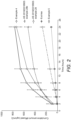
- a local skin penetration study in minipigs was conducted to assess the local skin penetration of the composition prepared in accordance with Examples 4 and 9 above and a composition prepared in accordance with Example 28B of US 2016/0318955 (but with the boron-based active agent replaced with 2 wt% crisaborole).
- the study was conducted to assess the dermal absorption of the crisaborole after being administered twice daily by dermal application on areas of 2.5 x 2.5 cm to minipigs for days.
- the formulation of Example 4 is not according to the invention.
- the formulation of Example 9 is according to the invention.
- Example 4 (not in accordance with the invention) 25.0 156.25 312.5 4
- Example 9 (in accordance with the invention) 25.0 156.25 312.5 4 US 2016/0318955
- Example 28B 25.0 156.25 312.5 4
- All formulations contained 2 wt% crisaborole.
- Biopsies were taken for bioanalysis from all application sites 4 hours +/- 10 minutes after the wash on Day 8. At each sampling time, two (one for back-up purposes) biopsies from each application site were taken. In total 24 biopsies from each animal at each sampling time. The biopsies were taken from the centre of the application sites. Prior to collection of the skin samples, the stratum corneum was separated from the skin in the part of the application site, where the biopsies were taken, by 20 strippings per two biopsies, using a commercial adhesive tape.
- the oil phase was made up with simple stirring.
- the aqueous phase was made by dispersing the pemulen, sodium citrate, citric acid and Phenoxyethanol in the water with moderate stirring.
- the sodium hydroxide was then added.
- the oil phase was then slowly added to the aqueous phase with stirring.
- the pH was then finally adjusted if necessary or made to quantity with water.
Landscapes
- Health & Medical Sciences (AREA)
- Chemical & Material Sciences (AREA)
- Public Health (AREA)
- Veterinary Medicine (AREA)
- Medicinal Chemistry (AREA)
- Pharmacology & Pharmacy (AREA)
- Life Sciences & Earth Sciences (AREA)
- Animal Behavior & Ethology (AREA)
- General Health & Medical Sciences (AREA)
- Epidemiology (AREA)
- Dermatology (AREA)
- Engineering & Computer Science (AREA)
- Chemical Kinetics & Catalysis (AREA)
- General Chemical & Material Sciences (AREA)
- Bioinformatics & Cheminformatics (AREA)
- Nuclear Medicine, Radiotherapy & Molecular Imaging (AREA)
- Organic Chemistry (AREA)
- Dispersion Chemistry (AREA)
- Inorganic Chemistry (AREA)
- Oil, Petroleum & Natural Gas (AREA)
- Medicinal Preparation (AREA)
- Pharmaceuticals Containing Other Organic And Inorganic Compounds (AREA)
Claims (14)
- Composition pour application topique comprenant une phase aqueuse continue, une phase huileuse liquide discontinue et du crisaborole,dans laquelle la phase huileuse liquide discontinue est un liquide à 25°C,dans laquelle la composition ne comprend pas de dispersion de polyaphron,dans laquelle la phase huileuse liquide discontinue comprend de l'adipate de diisopropyle et/ou du sébacate de diéthyle et/ou de l'adipate de dibutyle, etdans laquelle la composition comprend moins de 5 % en poids de la composition de monostéarate de glycéryle, d'alcool cétylique, d'alcool stéarylique, d'acide stéarique, de ricinoléate de cétyle, de stéarate de propylène glycol, de stéarate de PEG-2, de monostéarate de sorbitane, ou de mélanges de deux de ceux-ci ou plus.
- Composition selon la revendication 1, dans laquelle le crisaborole est présent en une quantité de 1 à 5 % en poids de la composition, de préférence de 1,5 à 3,5 % en poids.
- Composition selon la revendication 1 ou la revendication 2, dans laquelle le crisaborole est principalement dans la phase huileuse liquide discontinue.
- Composition selon l'une quelconque des revendications précédentes, dans laquelle la composition comprend un ou plusieurs agents pharmaceutiquement actifs supplémentaires.
- Composition selon l'une quelconque des revendications précédentes, dans laquelle l'adipate de diisopropyle et/ou le sébacate de diéthyle et/ou l'adipate de dibutyle sont présents en une quantité totale d'au moins 60 % en poids de la phase huileuse liquide discontinue.
- Composition selon l'une quelconque des revendications précédentes, dans laquelle la phase huileuse liquide discontinue comprend, en poids de la composition :(i) de l'adipate de diisopropyle en une quantité de 5 à 45 % en poids ;(ii) du sébacate de diéthyle et/ou de l'adipate de dibutyle en une quantité totale de 5 à 45 % en poids ; et(iii) de l'huile de ricin et/ou des triglycérides capryliques/capriques en une quantité totale de 5 à 45 % en poids.
- Composition selon l'une quelconque des revendications précédentes, présentant une teneur totale en tensioactif inférieure à 5 % en poids de la composition, de préférence inférieure à 3 % en poids.
- Composition selon l'une quelconque des revendications précédentes, dans laquelle la composition comprend un tensioactif comprenant un copolymère réticulé, le copolymère réticulé comprenant des unités monomères d'acide acrylique.
- Composition selon l'une quelconque des revendications précédentes, dans laquelle la composition comprend au moins 10 % en poids d'eau par rapport au poids de la composition ; et/ou
dans laquelle la composition est sous la forme d'une lotion ou d'une crème. - Composition selon l'une quelconque des revendications précédentes, dans laquelle au moins 95 % en poids du crisaborole sont dissous dans la composition, de préférence dans une plage de températures allant de 4 à 20°C.
- Composition selon l'une quelconque des revendications précédentes, dans laquelle la composition est chimiquement et/ou physiquement stable pendant au moins 12 mois à 25°C ± 2°C, après mesure à une humidité relative de 60 % ± 5 % ; et/ou dans laquelle la composition est chimiquement et/ou physiquement stable pendant au moins 6 mois à 40°C ± 3°C, après mesure à une humidité relative de 60 % ± 5 %.
- Composition selon l'une quelconque des revendications précédentes pour utilisation dans le traitement du corps humain ou animal par thérapie.
- Composition pharmaceutique selon l'une quelconque des revendications 1 à 11, pour utilisation dans le traitement de la dermatite atopique ou du psoriasis.
- Conditionnement comprenant de 20 à 300 g de la composition selon l'une quelconque des revendications 1 à 11, ou de 20 à 300 g de la composition pour utilisation selon la revendication 12 ou la revendication 13.
Applications Claiming Priority (1)
| Application Number | Priority Date | Filing Date | Title |
|---|---|---|---|
| PCT/GB2018/052191 WO2020025910A1 (fr) | 2018-07-31 | 2018-07-31 | Composition topique |
Publications (3)
| Publication Number | Publication Date |
|---|---|
| EP3829538A1 EP3829538A1 (fr) | 2021-06-09 |
| EP3829538B1 true EP3829538B1 (fr) | 2025-07-02 |
| EP3829538C0 EP3829538C0 (fr) | 2025-07-02 |
Family
ID=63294365
Family Applications (1)
| Application Number | Title | Priority Date | Filing Date |
|---|---|---|---|
| EP18758670.6A Active EP3829538B1 (fr) | 2018-07-31 | 2018-07-31 | Composition topique |
Country Status (12)
| Country | Link |
|---|---|
| US (1) | US20210275554A1 (fr) |
| EP (1) | EP3829538B1 (fr) |
| JP (1) | JP7268132B2 (fr) |
| KR (1) | KR20210039407A (fr) |
| CN (1) | CN112384201A (fr) |
| AU (1) | AU2018435421B2 (fr) |
| BR (1) | BR112020025884A2 (fr) |
| CA (2) | CA3105417C (fr) |
| ES (1) | ES3039445T3 (fr) |
| IL (1) | IL280533A (fr) |
| MX (1) | MX2021001258A (fr) |
| WO (1) | WO2020025910A1 (fr) |
Families Citing this family (6)
| Publication number | Priority date | Publication date | Assignee | Title |
|---|---|---|---|---|
| GB201701583D0 (en) | 2017-01-31 | 2017-03-15 | Drug Delivery Solutions Ltd | Topical composition |
| CN113712977A (zh) * | 2020-05-25 | 2021-11-30 | 南京帝昌医药科技有限公司 | 一种克立硼罗外用制剂其制备方法及用途 |
| CN116600786A (zh) * | 2020-07-28 | 2023-08-15 | 阿尔库缇斯生物疗法股份有限公司 | 含有jak抑制剂和月桂醇聚醚-4的局部制剂 |
| JP2024544404A (ja) | 2021-12-15 | 2024-11-29 | アーキュティス・バイオセラピューティクス・インコーポレーテッド | Shr0302の安定な製剤 |
| CN116139085B (zh) * | 2023-03-01 | 2024-11-08 | 深圳市贝美药业有限公司 | 一种外用气雾剂及其制备方法 |
| CN116270464B (zh) * | 2023-03-01 | 2025-09-30 | 深圳市贝美药业有限公司 | 一种克立硼罗气雾剂及其制备方法 |
Family Cites Families (14)
| Publication number | Priority date | Publication date | Assignee | Title |
|---|---|---|---|---|
| US4486333A (en) | 1981-04-10 | 1984-12-04 | Felix Sebba | Preparation of biliquid foam compositions |
| EP0410348A1 (fr) * | 1989-07-26 | 1991-01-30 | G.D. Searle & Co. | Composition de spironolactone à usage topique |
| FR2710840B1 (fr) | 1993-10-04 | 1995-12-01 | Applic Transferts Technolo | Compositions viscoélastiques hautement concentrées en composés fluorés, leur préparation et leurs utilisations dans le domaine médical et en cosmétique. |
| PT884995E (pt) | 1996-03-08 | 2002-11-29 | Disperse Ltd | Dispersoes incluindo uma espuma biliquida a base de oleo e um gel aquoso |
| JP5038912B2 (ja) * | 2005-02-16 | 2012-10-03 | アナコール ファーマシューティカルズ,インコーポレイテッド | ホウ素含有小分子 |
| NZ570257A (en) * | 2006-02-16 | 2011-11-25 | Anacor Pharmaceuticals Inc | Boron-containing small molecules as anti-inflammatory agents |
| FR2898499B1 (fr) * | 2006-03-15 | 2008-11-28 | Galderma Sa | Nouvelles compositions topiques sous forme d'emulsion h/e comprenant un glycol pro-penetrant |
| EP1970047A1 (fr) * | 2007-03-15 | 2008-09-17 | Drug Delivery Solutions Limited | Composition topique de type polyaphron avec un corticosteroide |
| JP5745279B2 (ja) * | 2008-01-09 | 2015-07-08 | アナコール ファーマシューティカルズ,インコーポレイテッド | 抗炎症剤としてのホウ素含有小分子 |
| BRPI0908565A2 (pt) * | 2008-03-06 | 2017-05-23 | Anacor Pharmaceuticals Inc | composto, formulação farmacêutica, métodos para reduzir a liberação de uma citocina ou de uma quimiocina, para tratar uma condição em um animal e para inibir uma fosfodiesterase |
| HUE053115T2 (hu) * | 2015-11-30 | 2021-06-28 | Anacor Pharmaceuticals Inc | Topikális gyógyszerészeti formulációk gyulladással összefüggõ állapotok kezelésére |
| WO2017102565A1 (fr) * | 2015-12-15 | 2017-06-22 | Rita Dobmeyer | Composition pharmaceutique comprenant un acide fulvique et au moins un composé contenant du bore |
| WO2018013655A1 (fr) * | 2016-07-12 | 2018-01-18 | Pliva Hrvatska D.O.O. | Formes à l'état solide de crisaborole |
| GB201701583D0 (en) * | 2017-01-31 | 2017-03-15 | Drug Delivery Solutions Ltd | Topical composition |
-
2018
- 2018-07-31 ES ES18758670T patent/ES3039445T3/es active Active
- 2018-07-31 MX MX2021001258A patent/MX2021001258A/es unknown
- 2018-07-31 US US17/259,296 patent/US20210275554A1/en active Pending
- 2018-07-31 BR BR112020025884-9A patent/BR112020025884A2/pt unknown
- 2018-07-31 CA CA3105417A patent/CA3105417C/fr active Active
- 2018-07-31 CN CN201880095195.9A patent/CN112384201A/zh active Pending
- 2018-07-31 KR KR1020217005508A patent/KR20210039407A/ko not_active Ceased
- 2018-07-31 WO PCT/GB2018/052191 patent/WO2020025910A1/fr not_active Ceased
- 2018-07-31 AU AU2018435421A patent/AU2018435421B2/en active Active
- 2018-07-31 EP EP18758670.6A patent/EP3829538B1/fr active Active
- 2018-07-31 JP JP2021505277A patent/JP7268132B2/ja active Active
- 2018-07-31 CA CA3250198A patent/CA3250198A1/en active Pending
-
2021
- 2021-01-31 IL IL280533A patent/IL280533A/en unknown
Also Published As
| Publication number | Publication date |
|---|---|
| CN112384201A (zh) | 2021-02-19 |
| CA3105417A1 (fr) | 2020-02-06 |
| AU2018435421B2 (en) | 2024-12-12 |
| JP2022501314A (ja) | 2022-01-06 |
| ES3039445T3 (en) | 2025-10-21 |
| KR20210039407A (ko) | 2021-04-09 |
| IL280533A (en) | 2021-03-01 |
| AU2018435421A1 (en) | 2021-01-07 |
| JP7268132B2 (ja) | 2023-05-02 |
| EP3829538C0 (fr) | 2025-07-02 |
| EP3829538A1 (fr) | 2021-06-09 |
| CA3250198A1 (en) | 2025-10-10 |
| US20210275554A1 (en) | 2021-09-09 |
| BR112020025884A2 (pt) | 2021-03-23 |
| MX2021001258A (es) | 2021-04-12 |
| CA3105417C (fr) | 2025-07-08 |
| WO2020025910A1 (fr) | 2020-02-06 |
Similar Documents
| Publication | Publication Date | Title |
|---|---|---|
| CA3105417C (fr) | Composition comprenant une phase aqueuse continue, une phase huileuse fluide discontinue et un crisaborole | |
| US12447146B2 (en) | Topical composition comprising tacrolimus | |
| EP3768241B1 (fr) | Composition topique comprenant calcipotriol et dipropionate de bétaméthasone | |
| US11744799B2 (en) | Topical composition | |
| RU2807884C2 (ru) | Композиция для местного применения | |
| BR112019015435B1 (pt) | Composição para aplicação tópica, e, método para fabricar uma composição | |
| HK1092699B (en) | Pharmaceutical compositions of lavendustin |
Legal Events
| Date | Code | Title | Description |
|---|---|---|---|
| STAA | Information on the status of an ep patent application or granted ep patent |
Free format text: STATUS: UNKNOWN |
|
| STAA | Information on the status of an ep patent application or granted ep patent |
Free format text: STATUS: THE INTERNATIONAL PUBLICATION HAS BEEN MADE |
|
| PUAI | Public reference made under article 153(3) epc to a published international application that has entered the european phase |
Free format text: ORIGINAL CODE: 0009012 |
|
| STAA | Information on the status of an ep patent application or granted ep patent |
Free format text: STATUS: THE APPLICATION HAS BEEN PUBLISHED |
|
| STAA | Information on the status of an ep patent application or granted ep patent |
Free format text: STATUS: REQUEST FOR EXAMINATION WAS MADE |
|
| 17P | Request for examination filed |
Effective date: 20210112 |
|
| AK | Designated contracting states |
Kind code of ref document: A1 Designated state(s): AL AT BE BG CH CY CZ DE DK EE ES FI FR GB GR HR HU IE IS IT LI LT LU LV MC MK MT NL NO PL PT RO RS SE SI SK SM TR |
|
| DAV | Request for validation of the european patent (deleted) | ||
| DAX | Request for extension of the european patent (deleted) | ||
| STAA | Information on the status of an ep patent application or granted ep patent |
Free format text: STATUS: EXAMINATION IS IN PROGRESS |
|
| 17Q | First examination report despatched |
Effective date: 20231127 |
|
| GRAP | Despatch of communication of intention to grant a patent |
Free format text: ORIGINAL CODE: EPIDOSNIGR1 |
|
| STAA | Information on the status of an ep patent application or granted ep patent |
Free format text: STATUS: GRANT OF PATENT IS INTENDED |
|
| RIC1 | Information provided on ipc code assigned before grant |
Ipc: A61P 17/06 20060101ALI20250128BHEP Ipc: A61P 17/00 20060101ALI20250128BHEP Ipc: A61K 31/69 20060101ALI20250128BHEP Ipc: A61K 47/44 20170101ALI20250128BHEP Ipc: A61K 47/32 20060101ALI20250128BHEP Ipc: A61K 47/14 20170101ALI20250128BHEP Ipc: A61K 9/06 20060101ALI20250128BHEP Ipc: A61K 9/107 20060101AFI20250128BHEP |
|
| INTG | Intention to grant announced |
Effective date: 20250205 |
|
| RIN1 | Information on inventor provided before grant (corrected) |
Inventor name: CRUTCHLEY, NIGEL |
|
| GRAS | Grant fee paid |
Free format text: ORIGINAL CODE: EPIDOSNIGR3 |
|
| GRAA | (expected) grant |
Free format text: ORIGINAL CODE: 0009210 |
|
| STAA | Information on the status of an ep patent application or granted ep patent |
Free format text: STATUS: THE PATENT HAS BEEN GRANTED |
|
| RAP3 | Party data changed (applicant data changed or rights of an application transferred) |
Owner name: MC2 THERAPEUTICS LIMITED |
|
| RIN1 | Information on inventor provided before grant (corrected) |
Inventor name: CRUTCHLEY, NIGEL |
|
| AK | Designated contracting states |
Kind code of ref document: B1 Designated state(s): AL AT BE BG CH CY CZ DE DK EE ES FI FR GB GR HR HU IE IS IT LI LT LU LV MC MK MT NL NO PL PT RO RS SE SI SK SM TR |
|
| REG | Reference to a national code |
Ref country code: GB Ref legal event code: FG4D |
|
| REG | Reference to a national code |
Ref country code: CH Ref legal event code: EP |
|
| REG | Reference to a national code |
Ref country code: DE Ref legal event code: R096 Ref document number: 602018083201 Country of ref document: DE |
|
| REG | Reference to a national code |
Ref country code: IE Ref legal event code: FG4D |
|
| U01 | Request for unitary effect filed |
Effective date: 20250702 |
|
| U07 | Unitary effect registered |
Designated state(s): AT BE BG DE DK EE FI FR IT LT LU LV MT NL PT RO SE SI Effective date: 20250710 |
|
| U20 | Renewal fee for the european patent with unitary effect paid |
Year of fee payment: 8 Effective date: 20250801 |
|
| PGFP | Annual fee paid to national office [announced via postgrant information from national office to epo] |
Ref country code: ES Payment date: 20250828 Year of fee payment: 8 |
|
| PGFP | Annual fee paid to national office [announced via postgrant information from national office to epo] |
Ref country code: GB Payment date: 20250801 Year of fee payment: 8 |
|
| PGFP | Annual fee paid to national office [announced via postgrant information from national office to epo] |
Ref country code: CH Payment date: 20250929 Year of fee payment: 8 |
|
| REG | Reference to a national code |
Ref country code: ES Ref legal event code: FG2A Ref document number: 3039445 Country of ref document: ES Kind code of ref document: T3 Effective date: 20251021 |
|
| PG25 | Lapsed in a contracting state [announced via postgrant information from national office to epo] |
Ref country code: IS Free format text: LAPSE BECAUSE OF FAILURE TO SUBMIT A TRANSLATION OF THE DESCRIPTION OR TO PAY THE FEE WITHIN THE PRESCRIBED TIME-LIMIT Effective date: 20251102 |
|
| PG25 | Lapsed in a contracting state [announced via postgrant information from national office to epo] |
Ref country code: NO Free format text: LAPSE BECAUSE OF FAILURE TO SUBMIT A TRANSLATION OF THE DESCRIPTION OR TO PAY THE FEE WITHIN THE PRESCRIBED TIME-LIMIT Effective date: 20251002 |
|
| PG25 | Lapsed in a contracting state [announced via postgrant information from national office to epo] |
Ref country code: HR Free format text: LAPSE BECAUSE OF FAILURE TO SUBMIT A TRANSLATION OF THE DESCRIPTION OR TO PAY THE FEE WITHIN THE PRESCRIBED TIME-LIMIT Effective date: 20250702 |
|
| PG25 | Lapsed in a contracting state [announced via postgrant information from national office to epo] |
Ref country code: GR Free format text: LAPSE BECAUSE OF FAILURE TO SUBMIT A TRANSLATION OF THE DESCRIPTION OR TO PAY THE FEE WITHIN THE PRESCRIBED TIME-LIMIT Effective date: 20251003 |
|
| PG25 | Lapsed in a contracting state [announced via postgrant information from national office to epo] |
Ref country code: CZ Free format text: LAPSE BECAUSE OF FAILURE TO SUBMIT A TRANSLATION OF THE DESCRIPTION OR TO PAY THE FEE WITHIN THE PRESCRIBED TIME-LIMIT Effective date: 20250702 |
|
| PG25 | Lapsed in a contracting state [announced via postgrant information from national office to epo] |
Ref country code: PL Free format text: LAPSE BECAUSE OF FAILURE TO SUBMIT A TRANSLATION OF THE DESCRIPTION OR TO PAY THE FEE WITHIN THE PRESCRIBED TIME-LIMIT Effective date: 20250702 |
|
| PG25 | Lapsed in a contracting state [announced via postgrant information from national office to epo] |
Ref country code: RS Free format text: LAPSE BECAUSE OF FAILURE TO SUBMIT A TRANSLATION OF THE DESCRIPTION OR TO PAY THE FEE WITHIN THE PRESCRIBED TIME-LIMIT Effective date: 20251002 |
|
| PG25 | Lapsed in a contracting state [announced via postgrant information from national office to epo] |
Ref country code: SM Free format text: LAPSE BECAUSE OF FAILURE TO SUBMIT A TRANSLATION OF THE DESCRIPTION OR TO PAY THE FEE WITHIN THE PRESCRIBED TIME-LIMIT Effective date: 20250702 |
|
| PG25 | Lapsed in a contracting state [announced via postgrant information from national office to epo] |
Ref country code: SK Free format text: LAPSE BECAUSE OF FAILURE TO SUBMIT A TRANSLATION OF THE DESCRIPTION OR TO PAY THE FEE WITHIN THE PRESCRIBED TIME-LIMIT Effective date: 20250702 |
|
| PLBE | No opposition filed within time limit |
Free format text: ORIGINAL CODE: 0009261 |
|
| STAA | Information on the status of an ep patent application or granted ep patent |
Free format text: STATUS: NO OPPOSITION FILED WITHIN TIME LIMIT |