EP3831287B1 - Procédé, dispositif et support d'informations non transitoire lisible par machine de mesure de signal biologique basée sur un panneau tactile capacitif - Google Patents
Procédé, dispositif et support d'informations non transitoire lisible par machine de mesure de signal biologique basée sur un panneau tactile capacitif Download PDFInfo
- Publication number
- EP3831287B1 EP3831287B1 EP20163916.8A EP20163916A EP3831287B1 EP 3831287 B1 EP3831287 B1 EP 3831287B1 EP 20163916 A EP20163916 A EP 20163916A EP 3831287 B1 EP3831287 B1 EP 3831287B1
- Authority
- EP
- European Patent Office
- Prior art keywords
- parameters
- normalized signal
- biosignal
- signal
- primary
- Prior art date
- Legal status (The legal status is an assumption and is not a legal conclusion. Google has not performed a legal analysis and makes no representation as to the accuracy of the status listed.)
- Active
Links
Images




Classifications
-
- A—HUMAN NECESSITIES
- A61—MEDICAL OR VETERINARY SCIENCE; HYGIENE
- A61B—DIAGNOSIS; SURGERY; IDENTIFICATION
- A61B5/00—Measuring for diagnostic purposes; Identification of persons
- A61B5/02—Detecting, measuring or recording for evaluating the cardiovascular system, e.g. pulse, heart rate, blood pressure or blood flow
- A61B5/024—Measuring pulse rate or heart rate
- A61B5/02405—Determining heart rate variability
-
- A—HUMAN NECESSITIES
- A61—MEDICAL OR VETERINARY SCIENCE; HYGIENE
- A61B—DIAGNOSIS; SURGERY; IDENTIFICATION
- A61B5/00—Measuring for diagnostic purposes; Identification of persons
- A61B5/74—Details of notification to user or communication with user or patient; User input means
- A61B5/7475—User input or interface means, e.g. keyboard, pointing device, joystick
-
- A—HUMAN NECESSITIES
- A61—MEDICAL OR VETERINARY SCIENCE; HYGIENE
- A61B—DIAGNOSIS; SURGERY; IDENTIFICATION
- A61B5/00—Measuring for diagnostic purposes; Identification of persons
- A61B5/02—Detecting, measuring or recording for evaluating the cardiovascular system, e.g. pulse, heart rate, blood pressure or blood flow
- A61B5/024—Measuring pulse rate or heart rate
- A61B5/02438—Measuring pulse rate or heart rate with portable devices, e.g. worn by the patient
-
- A—HUMAN NECESSITIES
- A61—MEDICAL OR VETERINARY SCIENCE; HYGIENE
- A61B—DIAGNOSIS; SURGERY; IDENTIFICATION
- A61B5/00—Measuring for diagnostic purposes; Identification of persons
- A61B5/02—Detecting, measuring or recording for evaluating the cardiovascular system, e.g. pulse, heart rate, blood pressure or blood flow
- A61B5/024—Measuring pulse rate or heart rate
- A61B5/02444—Details of sensor
-
- A—HUMAN NECESSITIES
- A61—MEDICAL OR VETERINARY SCIENCE; HYGIENE
- A61B—DIAGNOSIS; SURGERY; IDENTIFICATION
- A61B5/00—Measuring for diagnostic purposes; Identification of persons
- A61B5/68—Arrangements of detecting, measuring or recording means, e.g. sensors, in relation to patient
- A61B5/6887—Arrangements of detecting, measuring or recording means, e.g. sensors, in relation to patient mounted on external non-worn devices, e.g. non-medical devices
- A61B5/6898—Portable consumer electronic devices, e.g. music players, telephones, tablet computers
-
- A—HUMAN NECESSITIES
- A61—MEDICAL OR VETERINARY SCIENCE; HYGIENE
- A61B—DIAGNOSIS; SURGERY; IDENTIFICATION
- A61B5/00—Measuring for diagnostic purposes; Identification of persons
- A61B5/72—Signal processing specially adapted for physiological signals or for diagnostic purposes
- A61B5/7203—Signal processing specially adapted for physiological signals or for diagnostic purposes for noise prevention, reduction or removal
-
- A—HUMAN NECESSITIES
- A61—MEDICAL OR VETERINARY SCIENCE; HYGIENE
- A61B—DIAGNOSIS; SURGERY; IDENTIFICATION
- A61B5/00—Measuring for diagnostic purposes; Identification of persons
- A61B5/72—Signal processing specially adapted for physiological signals or for diagnostic purposes
- A61B5/7235—Details of waveform analysis
- A61B5/725—Details of waveform analysis using specific filters therefor, e.g. Kalman or adaptive filters
-
- A—HUMAN NECESSITIES
- A61—MEDICAL OR VETERINARY SCIENCE; HYGIENE
- A61B—DIAGNOSIS; SURGERY; IDENTIFICATION
- A61B5/00—Measuring for diagnostic purposes; Identification of persons
- A61B5/72—Signal processing specially adapted for physiological signals or for diagnostic purposes
- A61B5/7235—Details of waveform analysis
- A61B5/7264—Classification of physiological signals or data, e.g. using neural networks, statistical classifiers, expert systems or fuzzy systems
- A61B5/7267—Classification of physiological signals or data, e.g. using neural networks, statistical classifiers, expert systems or fuzzy systems involving training the classification device
-
- A—HUMAN NECESSITIES
- A61—MEDICAL OR VETERINARY SCIENCE; HYGIENE
- A61B—DIAGNOSIS; SURGERY; IDENTIFICATION
- A61B5/00—Measuring for diagnostic purposes; Identification of persons
- A61B5/74—Details of notification to user or communication with user or patient; User input means
- A61B5/742—Details of notification to user or communication with user or patient; User input means using visual displays
-
- G—PHYSICS
- G16—INFORMATION AND COMMUNICATION TECHNOLOGY [ICT] SPECIALLY ADAPTED FOR SPECIFIC APPLICATION FIELDS
- G16H—HEALTHCARE INFORMATICS, i.e. INFORMATION AND COMMUNICATION TECHNOLOGY [ICT] SPECIALLY ADAPTED FOR THE HANDLING OR PROCESSING OF MEDICAL OR HEALTHCARE DATA
- G16H50/00—ICT specially adapted for medical diagnosis, medical simulation or medical data mining; ICT specially adapted for detecting, monitoring or modelling epidemics or pandemics
- G16H50/20—ICT specially adapted for medical diagnosis, medical simulation or medical data mining; ICT specially adapted for detecting, monitoring or modelling epidemics or pandemics for computer-aided diagnosis, e.g. based on medical expert systems
-
- A—HUMAN NECESSITIES
- A61—MEDICAL OR VETERINARY SCIENCE; HYGIENE
- A61B—DIAGNOSIS; SURGERY; IDENTIFICATION
- A61B5/00—Measuring for diagnostic purposes; Identification of persons
- A61B5/72—Signal processing specially adapted for physiological signals or for diagnostic purposes
- A61B5/7235—Details of waveform analysis
- A61B5/7253—Details of waveform analysis characterised by using transforms
-
- G—PHYSICS
- G06—COMPUTING OR CALCULATING; COUNTING
- G06F—ELECTRIC DIGITAL DATA PROCESSING
- G06F3/00—Input arrangements for transferring data to be processed into a form capable of being handled by the computer; Output arrangements for transferring data from processing unit to output unit, e.g. interface arrangements
- G06F3/01—Input arrangements or combined input and output arrangements for interaction between user and computer
- G06F3/03—Arrangements for converting the position or the displacement of a member into a coded form
- G06F3/041—Digitisers, e.g. for touch screens or touch pads, characterised by the transducing means
- G06F3/044—Digitisers, e.g. for touch screens or touch pads, characterised by the transducing means by capacitive means
Definitions
- the embodiments herein generally relate to the field of biosignal measurements and, more particularly, to method and device for capacitive touch panel based biosignal measurement.
- Handheld and wearable devices have been used widely for day to day health monitoring and screening. Initial monitoring of vital signs via contact and noncontact-based measurements using such wearable devices or handheld devices without need for clinical measurements has become increasingly popular. This non-clinical monitoring enables seamless health monitoring and alerting a subject at early stages of health fluctuations. Research and development has been carried out to make theses portable non-clinical measurements methods more accurate, reliable, cost efficient and power efficient.
- Various sensors have been tried and tested for these portable, handheld devices that enable capturing biosignals such as photoplethysmogram (PPG), electrocardiogram (ECG), to derive various parameters from the sensed biosignals. The parameters derived such as beat-to-beat interval, hear rate and the like, and are indicative of health condition of the subject.
- PPG photoplethysmogram
- ECG electrocardiogram
- Touch panels or touch screens of the devices have capacitive sensor arrays to sense the touch.
- the sensor capacitance depends on the dielectric constant of the surrounding medium and therefore, can be used to measure the dielectric properties of the biological tissue.
- Tissue permittivity determines the change in capacitance that is modeled as a parallel capacitor with capacitance determined by the tissue properties.
- chronotherapeutic dosing can include receiving, using a processor, sensor data from a sensor for a user, wherein the sensor data is collected subsequent to the user starting a regimen for a medication, determining, using the processor, a biological marker from the sensor data, wherein the biological marker is correlated with the medication, and comparing, using the processor, the biological marker with an expected state of the biological marker based upon a dose time of the medication.
- Chronotherapeutic dosing can also include providing, using the processor, a notification indicating a result of the comparing.
- US 2016/228015 A1 discloses a physiological monitoring device, comprising: a physiological signal acquisition block in the form of a capacitive touch panel for detecting user's physiological signals; a micro-processor block for capturing capacitance change in accordance with the user's physiological signal and estimating user's physiological data; and an application program for controlling the operation of physiological monitoring device.
- US 2017/027521 A1 discloses a system for monitoring vital signs, configured to be used in conjunction with a computerized mobile device, the system including: a cover sensor assembly adapted to be operably engaged with the computerized mobile device, the cover sensor assembly having integrated therein at least one physiological sensor; a physiological data acquisition module configured to generate a physiological parameter measurement descriptive of a physical stimulus received by the at least one physiological sensor; and a validation module configured to control a validity status of the physiological parameter measurement.
- EP 2 656 783 A1 discloses a signal processing device comprising: a sampling unit configured to acquire a sample data series of a signal indicating a touch state quantity detected in a touch panel; an analysis unit configured to determine a frequency spectral distribution by transforming the sample data series into a frequency domain; and a peak detection unit configured to detect a peak in a frequency band of a pulse in the frequency spectral distribution, and to find a frequency of the detected peak so as to determine the pulse.
- WO 2017/070430 A1 discloses a heart rate detection device comprising multi-use capacitive touch sensors. Fluctuations in capacitance are detected using capacitive touch sensors. These capacitive touch sensors are also used to detect touch inputs to control operations of a computing device. When contact of a person's hand with the computing device is detected, the capacitive touch sensors produce raw capacitance data that indicates detected capacitance fluctuations. The raw capacitance data is extracted from the capacitive touch sensors using a modified device driver that bypasses default driver configurations that ignore fluctuations in capacitance due to heartbeats. Times during which the person's hand contacts the computing device and locations of the contact are determined from the raw capacitance data indicative of the fluctuations. The extracted raw capacitance data is then processed to determine the person's heart rate.
- Petteri Hyvarinen "Heartbeat sensing with a touchscreen” relates to heart rate monitors that are usually sold as individual devices, or when the functionality is included in another product they at least require dedicated sensors. However, everyone with a smartphone carries with them a 100-200 sensor array, and its capabilities are currently dramatically underused. A regular touchscreen has a grid of sensors that measure capacitance. When a user touches the screen with a finger, the capacitance of the finger, arm and body is sensed by the touchscreen. Now, suppose that some physiological phenomenon would result in changes in the capacitance of the touching finger. If the sensors were sensitive enough, maybe they could pick up a physiological signal.
- Embodiments of the present disclosure present technological improvements as solutions to one or more of the above-mentioned technical problems recognized by the inventors in conventional systems.
- a method in accordance with the invention is defined in claim 1.
- a device in accordance with the invention is defined in claim 4.
- One or more non-transitory machine readable information storage mediums in accordance with the invention are defined in claim 7.
- Embodiments herein provide a method and system for capacitive touch panel based biosignal measurement.
- the system herein is interchangeably referred as device.
- the method senses a change in raw capacitance value ( ⁇ C) of a capacitive touch panel of a device comprising an array of sensors.
- the method disclosed herein derives a normalized signal by normalizing the raw signal corresponding to the change in raw capacitance ( ⁇ C) of the capacitive touch panel.
- the normalization of the raw signal enables capturing inter-relationships between a plurality of variables that affect the raw capacitance value such as a) a set of device specific parameters associated with the capacitive touch panel of the device, b) a set of ethnographic parameters, and c) metadata associated with a subject been monitored.
- method provides correction in the raw signal before extracting one or more parameters of a primary biosignal, such as a Photoplethysmogram (PPG) and provides higher accuracy in biosignal measurement using capacitive touch panel based devices by personalizing the biosignal measurements.
- the method further enables deriving one or more parameters of one or more secondary biosignals.
- the method attempts eliminating introduction of error in biosignal measurement due to specific characteristics of the capacitive touch panel been used by any device used for measurement, this enables providing device parameter agnostic biosignal measurements.
- FIGS. 1 through 7B where similar reference characters denote corresponding features consistently throughout the figures, there are shown preferred embodiments and these embodiments are described in the context of the following exemplary system and/or method.
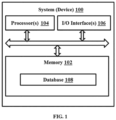
- FIG. 1 is a functional block diagram of a system 100, alternatively referred as device 100, for capacitive touch panel based biosignal measurement, in accordance with some embodiments of the present disclosure.
- the system 100 herein, may be interchangeably referred as device 100.
- the system 100 includes a processor(s) 104, communication interface device(s), alternatively referred as input/output (I/O) interface(s) 106, and one or more data storage devices or a memory 102 operatively coupled to the processor(s) 104.
- the processor(s) 104 can be one or more hardware processors 104.
- the one or more hardware processors 104 can be implemented as one or more microprocessors, microcomputers, microcontrollers, digital signal processors, central processing units, state machines, logic circuitries, and/or any devices that manipulate signals based on operational instructions.
- the one or more hardware processors 104 is configured to fetch and execute computer-readable instructions stored in the memory 102.
- system 100 or device 100 can be implemented in a variety of computing systems that provide a capacitive touch panel interface, such as laptop computers, notebooks, hand-held devices such as mobile phones, workstations, mainframe computers, servers, a network cloud and the like.
- the I/O interface(s) 106 can include a variety of software and hardware interfaces, for example, a web interface, a graphical user interface, a touch user interface (TUI) and the like and can facilitate multiple communications within a wide variety of networks N/W and protocol types, including wired networks, for example, LAN, cable, etc., and wireless networks, such as WLAN, cellular, or satellite.
- the I/O interface (s) 106 can include one or more ports for connecting a number of devices to one another or to another server.
- the I/O interface 106 via the TUI, typically the capacitive touch panel, enables detecting a touch event performed by the subject on the capacitive touch panel of the device100.
- the capacitive touch panel comprises an array of sensors, wherein the array is scanned at regular predefined time interval to obtain a raw signal corresponding to change in raw capacitance value ( ⁇ C) generated by the capacitive touch panel due to the touch event.
- the sensed and scanned signal data can be stored in a database 108 of the memory 102.
- one or more normalization models can be locally stored in the database, so as to enable the device 100 to utilize the appropriate best suitable normalization model for implementing the method for personalized biosignal measurement.
- Various statistical techniques and Machine learning (ML) techniques can also be stored in the repository, to be used for generating normalization models.
- a set of changes in the raw capacitance values ( ⁇ Cs) generated for a set of touch events performed by a set of sample subjects on a set of sample capacitive touch panels (representing the set of device specific parameters) along with corresponding set of ethnographic parameters and metadata of the set of sample subjects can also be stored in the database 108.
- these normalization models can be generated by a central server and stored in an external repository, to be accessed by the device. Further, the central server with incremental updates provides easy and scalable mechanism to update local database on the device 100. Also, true measurements of primary biosignal for the set of sample subjects and any subject under test and may be stored in the memory 102.
- the memory 102 may include any computer-readable medium known in the art including, for example, volatile memory, such as static random access memory (SRAM) and dynamic random access memory (DRAM), and/or non-volatile memory, such as read only memory (ROM), erasable programmable ROM, flash memories, hard disks, optical disks, and magnetic tapes.
- volatile memory such as static random access memory (SRAM) and dynamic random access memory (DRAM)
- non-volatile memory such as read only memory (ROM), erasable programmable ROM, flash memories, hard disks, optical disks, and magnetic tapes.
- FIG. 2A and FIG. 2B depict a flow diagram of a method for capacitive touch panel based biosignal measurement, using the system of FIG. 1 , in accordance with some embodiments of the present disclosure.
- the system 100 comprises one or more data storage devices or the memory 102 operatively coupled to the processor(s) 104 and is configured to store instructions for execution of steps of the method 200 by the processor(s) 104.
- the steps of the method 200 of the present disclosure will now be explained with reference to the components or blocks of the system 100 as depicted in FIG. 1 and the steps of flow diagram as depicted in FIG. 2 through FIG. 4 .
- process steps, method steps, techniques or the like may be described in a sequential order, such processes, methods and techniques may be configured to work in alternate orders. In other words, any sequence or order of steps that may be described does not necessarily indicate a requirement that the steps to be performed in that order.
- the steps of processes described herein may be performed in any order practical. Further, some steps may be performed simultaneously.
- the one or more hardware processors 104 are configured to detect a touch event performed by the subject on the capacitive touch panel of the device 100, wherein the capacitive touch panel comprises an array of sensors.
- the array of sensors is scanned at regular predefined time intervals.
- a representative arrangement of the sensor array and the touch event generated by a finger of the subject is depicted in FIG. 5A .
- the one or more hardware processors 104 are configured to obtain the raw signal corresponding to change in a raw capacitance ( ⁇ C) value generated by the capacitive touch panel.
- the raw signal generated by touch panels of any device may not be readily accessible for any direct usage, as such access is restricted by device manufacturers.
- the system 100 can have device specific drivers built in, which enable capturing the raw signals from the capacitive touch panels of devices for any further usage, such as biosignal measurements.
- the device specific drivers of the method 200 are based on valid touch, detected in accordance a predefined threshold capacitance level.
- the one or more processors 104 are configured to derive a normalized signal by normalizing the raw signal.
- the normalization is performed using a normalization model comprised in the memory 102 or database 108, wherein the normalization model which when executed by the one or more hardware processors 104 derives the normalized signal by considering inter-relationships between the plurality of variables that affect the raw capacitance value.
- the plurality of variables comprises a) the set of device specific parameters associated with the capacitive touch panel of the device, b) the set of ethnographic parameters, and c) the metadata associated with the subject.
- FIG. 3 illustrates a flow diagram depicting a process 300 for generating normalization models using a combination of statistical techniques and ML techniques implemented with reference to system of FIG. 1 and the method 200 of FIG. 2 , in accordance with some embodiments of the present disclosure.
- the normalization models can be created by the system 100 apriori and stored in the database 108 or an external database, wherein specific normalization model best suited for a particular device and a specific subject can be accessed and used.
- these normalization models can be generated by a central server and stored in an external repository, to be accessed by the device through the I/O interface 106 via any of the available communication channels.
- a client application on the device 100 can have the above mentioned set of models embedded in application or downloaded in real time.
- Client application can choose right set of normalization factor by a) getting the device display configuration, which provides characteristics of the capacitive touch panel and b) the metadata.
- the one or more hardware processors 104 are configured to record the set of changes in the raw capacitance values ( ⁇ Cs) generated for the set of touch events performed by the set of sample subjects on the set of sample capacitive touch panels representing the set of device specific parameters, along with corresponding set of ethnographic parameters and metadata of the set of sample subjects.
- the device specific parameters, the ethnographic parameters and the metadata represents the variables for generating the normalization models. For example, variable V1 through V3, among possible n variables (V1 through Vn), which may affect the change in capacitance represented by the raw signal may be:
- V1 is obtained by querying the model / make / API calls by application itself.
- V2 could be derived from location by application itself.
- V3 could be obtained by asking end user to key in the data. Based on V1 / V2/ V3 - appropriate model will be selected/ downloaded from repository by client application for data analysis.
- the one or more hardware processors 104 are configured to simultaneously record corresponding true measurements of the primary biosignal for the set of sample subjects.
- An example data collection setup comprises a) Unit to collect the change in capacitance values ( ⁇ Cs), users' metadata and the like and b) Unit comprising medically approved devices to collect corresponding biosignal (HR / BR) in parallel with ( ⁇ Cs).
- the one or more hardware processors 104 are configured to establish a correlation among the true measurements of the primary signal for the set of sample subjects, the corresponding set of ethnographic parameters, the metadata of the set of sample subjects and the set of sample capacitive touch panels.
- Establishing correlation refers to identifying a set of features among a plurality of features of the collected data using known statistical techniques for dimensionality reduction and then using ML techniques such as linear regression models and Support Vector Machine (SVM) models for regression and classification of the collected data.
- ML techniques such as linear regression models and Support Vector Machine (SVM) models for regression and classification of the collected data.
- SVM Support Vector Machine
- the one or more hardware processors 104 are configured to derive the set of normalization models for multiple capacitive touch panels and multiple configurations of multiple ethnographic parameters, for varying set of metadata.
- the one or more hardware processors 104 are configured to extract, from the normalized signal, one or more parameters (say a first set of parameters) associated with the primary biosignal among a plurality of biosignals corresponding to the subject.
- the extraction is in accordance to a capacitance signal to biosignal conversion model.
- the primary biosignal which can be a PPG signal
- the one or more extracted parameters can be heart rate, pulse rate and the like.
- the one or more hardware processors 104 are configured to derive one or more parameters (say a second set of parameters) associated with one or more secondary biosignals.
- a longitudinal HR measurement is extracted and a derived or extracted one or more parameters of the secondary biosignal from the HR measurement can be heart rate variability (HRV). It can be done by logging HR data for extended period of time and using statistical techniques coupled with region specific medical standard guidelines to measure the HRV. Further, combination one or more parameters associated with PPG and ECG signals can enable deriving Blood pressure information of the subject.
- HRV heart rate variability
- the one or more hardware processors 104 are configured to analyze the one or more parameters (the first set of parameters) associated with the primary biosignal and the one or more parameters (the second set of parameters) associated with the secondary biosignals to determine health condition of the subject by comparing the analyzed one or more parameters with corresponding subject specific standard values.
- subject specific standard values enable analyzing the subject in accordance with normal range values for specific health category of that subject and avoids raising unnecessary alerts. For example, patient taking certain types of medication could have elevated heart rate. Or some aged people have elevated blood pressure - which is normal for their condition.
- the one or more hardware processors 104 are configured to display the analysis on the device indicating current health condition of the subject.
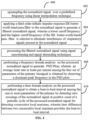
- FIG. 4 illustrates a flow diagram 400 depicting a process of the method of FIG. 2 with reference to the system 100 for extracting one or more parameters of the primary bio signal from the normalized signal, in accordance with some embodiments of the present disclosure.
- the one or more hardware processors 104 are configured to upsample the normalized signal over a predefined frequency using linear interpolation technique.
- the one or more hardware processors 104 are configured to apply a third order infinite impulse response IIR Butterworth band-pass filter to the normalized signal to generate a filtered normalized signal, wherein a lower cutoff frequency and a higher cutoff frequency of the IIR Butter-worth band-pass filter is selected to eliminate interference of respiratory signals present in the normalized signal.
- the one or more hardware processors are configured to process the filtered normalized signal using signal smoothening and signal detrending techniques.
- the one or more hardware processors are configured to perform a frequency domain analysis on the processed normalized signal to generate Power Spectral Density (PSD) Plots.
- PSD Power Spectral Density
- An average heart rate in beats per minute among the one or more parameters of the primary biosignal is obtained by observing a dominant peak frequency in the PSD.
- the one or more hardware processors are configured to perform a time domain analysis on the processed normalized signal to obtain a beat-to-beat interval among the one or more parameters of the primary.
- the beat-to-beat interval can be obtained by detecting zero crossings of the processed normalized signal at positive onset of a periodic cycle of the normalized signal for detecting consecutive local maximas, wherein time difference between two consecutive local maximas provides the beat-to-beat interval.
- the results discuss on a) evaluation of the mean heart rate in the frequency domain and its corresponding absolute error measurements in beats per minute (B.P.M.) and b) M.A.E. beat-to-beat heart rate (H.R.) measurement in the time domain.
- the participants are requested to sit on a chair in front of a capacitive touch sensor or capacitive touch panel such as available from Texas Inc.
- the capacitive touch sensors have a sampling rate of 20 Hz.
- the pulse oximeter serving as a reference instrument to capture PPG signal and having a sampling rate of 60 Hz is clipped into the middle finger of each participant in every trial.
- the corresponding participant is then asked to touch the two electrodes in the sensor board using one of their fingertips from the other hand.
- the arrangement is as shown in FIG. 5A .
- the participants were then asked to try and apply similar amount of pressure at the fingertip touching the sensors and breathe normally. They were also requested to keep their finger steady while touching the sensors in order to minimize sudden abrupt change in capacitance values due to body movement artifacts.
- the experimental data from the reference instrument and the capacitive sensors is simultaneously recorded for 30 seconds and safely stored in the system 100 to be later processed in MATLAB TM .
- Each participant is requested to undergo physical exercise to increase their heart rate. This is carried out to test the accuracy and validate findings for a higher pulse rate estimation.
- Experimental data for a higher heart rate are recorded in the same manner as that of the normal heart rate.
- A. Heart Rate Extraction The signals obtained from the sensor board and the reference instrument are upsampled over 250 Hz using linear interpolation. This is done to ensure that the recommended bandwidth of 250 Hz while dealing with heart rate measurements is maintained.
- the sampling frequency used by the method disclosed herein was upheld at 256 Hz.
- the third order infinite impulse response (I.I.R.) butter-worth band-pass digital filter is applied to the signals of our interest to extract the heart rate.
- the cut-off frequencies were chosen to be 0.8-3 Hz, thereby covering a heart rate of almost 50-180 Beats per Minute (B.P.M). The lower cut-off frequency was set at 0.8. Hz.
- FIG. 5B depicts plots of the normalized filtered signal obtained from the sensors and the reference instrument. Tests are carried out for 30 seconds from Trail No. 2 undergoing normal heart rate measurements. The filtered signals were then later analyzed in the frequency and time domain to estimate the mean heart rate.
- the local maximum points and the time indices between two consecutive onset heartbeat can be mathematically expressed as: ⁇ y ⁇ a b , f y ⁇ f Y
- a and b correspond to the two consecutive heart beats at the positive onset of a cycle and the local maximum signal of a heart cycle is given by Y.
- TRi The difference in time interval between the two consecutive maxima points
- MAE absolute mean error
- the filtered signal from the sensor board is compared with the reference signal, recorded from the pulse oximeter. Tests and measurements are carried out in the time and frequency domain to validate the results.
- the hardware device can be any kind of device which can be programmed including e.g. any kind of computer like a server or a personal computer, or the like, or any combination thereof.
- the device may also include means which could be e.g. hardware means like e.g. an application-specific integrated circuit (ASIC), a field-programmable gate array (FPGA), or a combination of hardware and software means, e.g.
- ASIC application-specific integrated circuit
- FPGA field-programmable gate array
- the means can include both hardware means and software means.
- the method embodiments described herein could be implemented in hardware and software.
- the device may also include software means.
- the embodiments may be implemented on different hardware devices, e.g. using a plurality of CPUs.
- the embodiments herein can comprise hardware and software elements.
- the embodiments that are implemented in software include but are not limited to, firmware, resident software, microcode, etc.
- the functions performed by various components described herein may be implemented in other components or combinations of other components.
- a computer-usable or computer readable medium can be any apparatus that can comprise, store, communicate, propagate, or transport the program for use by or in connection with the instruction execution system, apparatus, or device.
- a computer-readable storage medium refers to any type of physical memory on which information or data readable by a processor may be stored.
- a computer-readable storage medium may store instructions for execution by one or more processors, including instructions for causing the processor(s) to perform steps or stages consistent with the embodiments described herein.
- the term "computer-readable medium” should be understood to include tangible items and exclude carrier waves and transient signals, i.e., be non-transitory. Examples include random access memory (RAM), read-only memory (ROM), volatile memory, nonvolatile memory, hard drives, CD ROMs, DVDs, flash drives, disks, and any other known physical storage media.
Landscapes
- Health & Medical Sciences (AREA)
- Life Sciences & Earth Sciences (AREA)
- Engineering & Computer Science (AREA)
- Public Health (AREA)
- Medical Informatics (AREA)
- Biomedical Technology (AREA)
- Physics & Mathematics (AREA)
- General Health & Medical Sciences (AREA)
- Pathology (AREA)
- Veterinary Medicine (AREA)
- Biophysics (AREA)
- Heart & Thoracic Surgery (AREA)
- Molecular Biology (AREA)
- Surgery (AREA)
- Animal Behavior & Ethology (AREA)
- Cardiology (AREA)
- Physiology (AREA)
- Artificial Intelligence (AREA)
- Signal Processing (AREA)
- Psychiatry (AREA)
- Computer Vision & Pattern Recognition (AREA)
- Mathematical Physics (AREA)
- Fuzzy Systems (AREA)
- Evolutionary Computation (AREA)
- Data Mining & Analysis (AREA)
- Databases & Information Systems (AREA)
- Epidemiology (AREA)
- Primary Health Care (AREA)
- Multimedia (AREA)
- Measurement And Recording Of Electrical Phenomena And Electrical Characteristics Of The Living Body (AREA)
Claims (9)
- Procédé de mesure de signal biologique basée sur un panneau tactile capacitif, le procédé comprenant les étapes ci-dessous consistant à :détecter (202), par l'intermédiaire d'un ou plusieurs processeurs matériels (104), un événement tactile mis en oeuvre par un sujet sur un panneau tactile capacitif d'un dispositif comprenant un réseau de capteurs, en balayant le réseau à des intervalles de temps réguliers prédéfinis ;obtenir (204), par l'intermédiaire dudit un ou desdits plusieurs processeurs matériels (104), un signal brut correspondant au changement d'une valeur de capacité brute générée par le panneau tactile capacitif lors de la détection de l'événement tactile ;dériver (206), par l'intermédiaire dudit un ou desdits plusieurs processeurs matériels (104), un signal normalisé en normalisant le signal brut à l'aide d'un modèle de normalisation, dans lequel le modèle de normalisation dérive le signal normalisé sur la base d'interrelations entre une pluralité de variables qui affectent la valeur de capacité brute, dans lequel la pluralité de variables comprend a) un ensemble de paramètres spécifiques au dispositif associés au panneau tactile capacitif du dispositif, b) un ensemble de paramètres ethnographiques, et c) des métadonnées associées au sujet, dans lequel l'ensemble de paramètres spécifiques au dispositif comprend une densité d'éléments de détection capacitifs, une plage dynamique de changement de la valeur de capacité par rapport à l'événement tactile, un retard du balayage du réseau de capacité, qui est dépendant de la vitesse/puissance de traitement d'une unité de contrôleur de pavé tactile, dans lequel l'ensemble de paramètres ethnographiques comprend une taille moyenne de doigts, un potentiel statique normalisé, une couleur de peau, une épaisseur dermique, dans lequel les métadonnées associées au sujet incluent un âge, une profession, et dans lequel le modèle de normalisation est généré en faisant appel à une combinaison de techniques statistiques et de techniques d'apprentissage automatique, ML, dans lequel l'étape de génération comprend les étapes ci-dessous consistant à :enregistrer (302) un ensemble de changements de chaque valeur de capacité brute générée pour un ensemble d'événements tactiles mis en oeuvre par un ensemble de sujets échantillons sur un ensemble de panneaux tactiles capacitifs échantillons, représentant l'ensemble de paramètres spécifiques au dispositif, ainsi qu'un ensemble correspondant de paramètres ethnographiques et de métadonnées de l'ensemble de sujets échantillons ;enregistrer simultanément (304) des mesures réelles correspondantes d'un signal biologique primaire pour l'ensemble de sujets échantillons ;établir (306) une corrélation entre les mesures réelles du signal biologique primaire pour l'ensemble de sujets échantillons, l'ensemble correspondant de paramètres ethnographiques, les métadonnées de l'ensemble de sujets échantillons et l'ensemble de panneaux tactiles capacitifs échantillons, dans laquelle la corrélation est établie à l'aide des techniques statistiques et des techniques d'apprentissage automatique, ML ; etdériver (308) l'ensemble de modèles de normalisation pour de multiples panneaux tactiles capacitifs et de multiples configurations de multiples paramètres ethnographiques, pour un ensemble variable de métadonnées ;extraire (208), par l'intermédiaire dudit un ou desdits plusieurs processeurs matériels (104), à partir du signal normalisé, un premier ensemble de paramètres associés au signal biologique primaire parmi une pluralité de signaux biologiques correspondant au sujet conformément à un modèle de conversion de signal de capacité en signal biologique, dans lequel le premier ensemble de paramètres comprend une fréquence cardiaque ou une fréquence de pouls ;dériver (210), par l'intermédiaire dudit un ou desdits plusieurs processeurs matériels (104), un deuxième ensemble de paramètres associés à un ou plusieurs signaux biologiques secondaires parmi la pluralité de signaux biologiques, à partir du premier ensemble de paramètres associés au signal biologique primaire, dans lequel le deuxième ensemble de paramètres comprend une variabilité de fréquence cardiaque ;analyser (212), par l'intermédiaire dudit un ou desdits plusieurs processeurs matériels (104), le premier ensemble de paramètres associés au signal biologique primaire et le deuxième ensemble de paramètres associés aux signaux biologiques secondaires en vue de générer une alerte indicative de l'état de santé du sujet, en comparant le premier ensemble de paramètres analysé et le deuxième ensemble de paramètres analysé à des valeurs standard spécifiques au sujet correspondantes ; etafficher (214), par l'intermédiaire dudit un ou desdits plusieurs processeurs matériels (104), l'analyse sur le dispositif indiquant l'état de santé actuel du sujet.
- Procédé selon la revendication 1, dans lequel le modèle de normalisation est présélectionné conformément au dispositif et au sujet à partir d'un ensemble de modèles de normalisation stockés dans un référentiel.
- Procédé selon la revendication 1, dans lequel l'étape d'extraction d'un ou plusieurs paramètres du signal biologique primaire, à partir du signal normalisé, comprend les étapes ci-dessous consistant à :suréchantillonner (402) le signal normalisé sur une fréquence prédéfinie, à l'aide d'une technique d'interpolation linéaire ;appliquer (404) un filtre passe-bande de Butterworth à réponse impulsionnelle infinie (IIR) de troisième ordre, au signal normalisé, en vue de générer un signal normalisé filtré, dans lequel une fréquence de coupure inférieure et une fréquence de coupure supérieure du filtre passe-bande de Butterworth à réponse IIR sont sélectionnées pour éliminer un brouillage de signaux respiratoires présents dans le signal normalisé ;traiter (406) le signal normalisé filtré à l'aide de techniques de lissage et de redressement de signal ; etmettre en oeuvre :une analyse de domaine fréquentiel (408) sur le signal normalisé traité, en vue de générer des tracés de densité spectrale de puissance (PSD), dans lequel une fréquence cardiaque moyenne en battements par minute parmi les paramètres du premier ensemble de paramètres du signal biologique primaire est obtenue en observant une fréquence de crête dominante dans les tracés de densité PSD ; etune analyse de domaine temporel (410) sur le signal normalisé traité, en vue d'obtenir un intervalle entre les battements parmi ledit un ou lesdits plusieurs paramètres du signal biologique primaire en détectant des passages par zéro du signal normalisé traité au début positif d'un cycle périodique du signal normalisé traité pour détecter des maxima locaux consécutifs, dans lequel une différence de temps entre deux maxima locaux consécutifs fournit un intervalle entre les battements.
- Dispositif (100) de mesure de signal biologique basée sur un panneau tactile capacitif, le dispositif (100) comprenant :une mémoire (102) stockant des instructions ;une ou plusieurs interfaces d'entrée/sortie (I/O) (106) ; etun ou plusieurs processeurs matériels (104) couplés à la mémoire (102) par l'intermédiaire de ladite une ou desdites plusieurs interfaces I/O (106), dans lesquels ledit un ou lesdits plusieurs processeurs matériels (104) sont configurés, par les instructions, de manière à mettre en oeuvre les étapes ci-dessous consistant à :détecter un événement tactile mis en oeuvre par un sujet sur un panneau tactile capacitif d'un dispositif comprenant un réseau de capteurs, en balayant le réseau à des intervalles de temps réguliers prédéfinis ;obtenir un signal brut correspondant au changement d'une valeur de capacité brute générée par le panneau tactile capacitif lors de la détection de l'événement tactile ;dériver un signal normalisé en normalisant le signal brut à l'aide d'un modèle de normalisation, dans lequel le modèle de normalisation dérive le signal normalisé sur la base d'interrelations entre une pluralité de variables qui affectent la valeur de capacité brute, dans lequel la pluralité de variables comprend a) un ensemble de paramètres spécifiques au dispositif associés au panneau tactile capacitif du dispositif, b) un ensemble de paramètres ethnographiques, et c) des métadonnées associées au sujet, dans lequel l'ensemble de paramètres spécifiques au dispositif comprend une densité d'éléments de détection capacitifs, une plage dynamique de changement de la valeur de capacité par rapport à l'événement tactile, un retard du balayage du réseau de capacité, qui est dépendant de la vitesse/puissance de traitement d'une unité de contrôleur de pavé tactile, dans lequel l'ensemble de paramètres ethnographiques comprend une taille moyenne de doigts, un potentiel statique normalisé, une couleur de peau, une épaisseur dermique, dans lequel les métadonnées associées au sujet incluent un âge, une profession, et dans lequel le modèle de normalisation est généré en faisant appel à une combinaison de techniques statistiques et de techniques d'apprentissage automatique, ML, dans lequel l'étape de génération comprend les étapes ci-dessous consistant à :enregistrer (302) un ensemble de changements de chaque valeur de capacité brute générée pour un ensemble d'événements tactiles mis en oeuvre par un ensemble de sujets échantillons sur un ensemble de panneaux tactiles capacitifs échantillons, représentant l'ensemble de paramètres spécifiques au dispositif, ainsi qu'un ensemble correspondant de paramètres ethnographiques et de métadonnées de l'ensemble de sujets échantillons ;enregistrer simultanément (304) des mesures réelles correspondantes d'un signal biologique primaire pour l'ensemble de sujets échantillons ;établir (306) une corrélation entre les mesures réelles du signal biologique primaire pour l'ensemble de sujets échantillons, l'ensemble correspondant de paramètres ethnographiques, les métadonnées de l'ensemble de sujets échantillons et l'ensemble de panneaux tactiles capacitifs échantillons, dans laquelle la corrélation est établie à l'aide des techniques statistiques et des techniques d'apprentissage automatique, ML; etdériver (308) l'ensemble de modèles de normalisation pour de multiples panneaux tactiles capacitifs et de multiples configurations de multiples paramètres ethnographiques, pour un ensemble variable de métadonnées ;extraire, à partir du signal normalisé, un premier ensemble de paramètres associés au signal biologique primaire parmi une pluralité de signaux biologiques correspondant au sujet conformément à un modèle de conversion de signal de capacité en signal biologique, dans lequel le premier ensemble de paramètres comprend une fréquence cardiaque ou une fréquence de pouls ;dériver un deuxième ensemble de paramètres associés à un ou plusieurs signaux biologiques secondaires parmi la pluralité de signaux biologiques, à partir du premier ensemble de paramètres associés au signal biologique primaire, dans lequel le deuxième ensemble de paramètres comprend une variabilité de fréquence cardiaque ;analyser le premier ensemble de paramètres associés au signal biologique primaire et le deuxième ensemble de paramètres associés aux signaux biologiques secondaires en vue de générer une alerte indicative de l'état de santé du sujet, en comparant le premier ensemble de paramètres analysé et le deuxième ensemble de paramètres analysé à des valeurs standard spécifiques au sujet correspondantes ; etafficher l'analyse sur le dispositif (100) indiquant l'état de santé actuel du sujet.
- Dispositif (100) selon la revendication 4, dans lequel ledit un ou lesdits plusieurs processeurs matériels (104) sont configurés de manière à présélectionner le modèle de normalisation conformément au dispositif (100) et au sujet à partir d'un ensemble de modèles de normalisation stockés dans un référentiel.
- Dispositif (100) selon la revendication 4, dans lequel ledit un ou lesdits plusieurs processeurs matériels (104) sont configurés de manière à extraire un ou plusieurs paramètres du signal biologique primaire, à partir du signal normalisé, en mettant en oeuvre les étapes ci-dessous consistant à :suréchantillonner le signal normalisé sur une fréquence prédéfinie, à l'aide d'une technique d'interpolation linéaire ;appliquer un filtre passe-bande de Butterworth à réponse impulsionnelle infinie (IIR) de troisième ordre, au signal normalisé, en vue de générer un signal normalisé filtré, dans lequel une fréquence de coupure inférieure et une fréquence de coupure supérieure du filtre passe-bande de Butterworth à réponse IIR sont sélectionnées pour éliminer un brouillage de signaux respiratoires présents dans le signal normalisé ;traiter le signal normalisé filtré à l'aide de techniques de lissage et de redressement de signal ; etmettre en oeuvre :une analyse de domaine fréquentiel sur le signal normalisé traité, en vue de générer des tracés de densité spectrale de puissance (PSD), dans lequel une fréquence cardiaque moyenne en battements par minute parmi les paramètres du premier ensemble de paramètres du signal biologique primaire est obtenue en observant une fréquence de crête dominante dans les tracés de densité PSD ; etune analyse de domaine temporel sur le signal normalisé traité, en vue d'obtenir un intervalle entre les battements parmi ledit un ou lesdits plusieurs paramètres du signal biologique primaire en détectant des passages par zéro du signal normalisé traité au début positif d'un cycle périodique du signal normalisé traité pour détecter des maxima locaux consécutifs, dans lequel une différence de temps entre deux maxima locaux consécutifs fournit un intervalle entre les battements.
- Un ou plusieurs supports non transitoires de stockage d'informations lisibles par machine comprenant des instructions qui, lorsqu'elles sont exécutées par un ou plusieurs processeurs matériels, amènent ledit un ou lesdits plusieurs processeurs matériels à mettre en oeuvre un procédé comprenant les étapes ci-dessous consistant à :détecter un événement tactile mis en oeuvre par un sujet sur un panneau tactile capacitif d'un dispositif comprenant un réseau de capteurs, en balayant le réseau à des intervalles de temps réguliers prédéfinis ;obtenir un signal brut correspondant au changement d'une valeur de capacité brute générée par le panneau tactile capacitif lors de la détection de l'événement tactile ;dériver un signal normalisé en normalisant le signal brut à l'aide d'un modèle de normalisation, dans lequel le modèle de normalisation dérive le signal normalisé sur la base d'interrelations entre une pluralité de variables qui affectent la valeur de capacité brute, dans lequel la pluralité de variables comprend a) un ensemble de paramètres spécifiques au dispositif associés au panneau tactile capacitif du dispositif, b) un ensemble de paramètres ethnographiques, et c) des métadonnées associées au sujet, dans lequel l'ensemble de paramètres spécifiques au dispositif comprend une densité d'éléments de détection capacitifs, une plage dynamique de changement de la valeur de capacité par rapport à l'événement tactile, un retard du balayage du réseau de capacité, qui est dépendant de la vitesse/puissance de traitement d'une unité de contrôleur de pavé tactile, dans lequel l'ensemble de paramètres ethnographiques comprend une taille moyenne de doigts, un potentiel statique normalisé, une couleur de peau, une épaisseur dermique, dans lequel les métadonnées associées au sujet incluent un âge, une profession, et dans lequel le modèle de normalisation est généré en faisant appel à une combinaison de techniques statistiques et de techniques d'apprentissage automatique, ML, dans lequel l'étape de génération comprend les étapes ci-dessous consistant à :enregistrer (302) un ensemble de changements de chaque valeur de capacité brute générée pour un ensemble d'événements tactiles mis en oeuvre par un ensemble de sujets échantillons sur un ensemble de panneaux tactiles capacitifs échantillons, représentant l'ensemble de paramètres spécifiques au dispositif, ainsi qu'un ensemble correspondant de paramètres ethnographiques et de métadonnées de l'ensemble de sujets échantillons ;enregistrer simultanément (304) des mesures réelles correspondantes d'un signal biologique primaire pour l'ensemble de sujets échantillons ;établir (306) une corrélation entre les mesures réelles du signal biologique primaire pour l'ensemble de sujets échantillons, l'ensemble correspondant de paramètres ethnographiques, les métadonnées de l'ensemble de sujets échantillons et l'ensemble de panneaux tactiles capacitifs échantillons, dans laquelle la corrélation est établie à l'aide des techniques statistiques et des techniques d'apprentissage automatique, ML; etdériver (308) l'ensemble de modèles de normalisation pour de multiples panneaux tactiles capacitifs et de multiples configurations de multiples paramètres ethnographiques, pour un ensemble variable de métadonnées ;extraire, à partir du signal normalisé, un premier ensemble de paramètres associés au signal biologique primaire parmi une pluralité de signaux biologiques correspondant au sujet conformément à un modèle de conversion de signal de capacité en signal biologique, dans lequel le premier ensemble de paramètres comprend une fréquence cardiaque ou une fréquence de pouls ;dériver un deuxième ensemble de paramètres associés à un ou plusieurs signaux biologiques secondaires parmi la pluralité de signaux biologiques, à partir du premier ensemble de paramètres associés au signal biologique primaire, dans lequel le deuxième ensemble de paramètres comprend une variabilité de fréquence cardiaque ;analyser le premier ensemble de paramètres associés au signal biologique primaire et le deuxième ensemble de paramètres associés aux signaux biologiques secondaires en vue de générer une alerte indicative de l'état de santé du sujet, en comparant le premier ensemble de paramètres analysé et le deuxième ensemble de paramètres analysé à des valeurs standard spécifiques au sujet correspondantes ; etafficher l'analyse sur le dispositif indiquant l'état de santé actuel du sujet.
- Ledit un ou lesdits plusieurs supports non transitoires de stockage d'informations lisibles par machine selon la revendication 7, dans lesquels le modèle de normalisation est présélectionné conformément au dispositif et au sujet à partir d'un ensemble de modèles de normalisation stockés dans un référentiel.
- Ledit un ou lesdits plusieurs supports non transitoires de stockage d'informations lisibles par machine selon la revendication 7, dans lesquels l'étape d'extraction d'un ou plusieurs paramètres du signal biologique primaire, à partir du signal normalisé, comprend les étapes ci-dessous consistant à :suréchantillonner le signal normalisé sur une fréquence prédéfinie, à l'aide d'une technique d'interpolation linéaire ;appliquer un filtre passe-bande de Butterworth à réponse impulsionnelle infinie (IIR) de troisième ordre, au signal normalisé, en vue de générer un signal normalisé filtré, dans lequel une fréquence de coupure inférieure et une fréquence de coupure supérieure du filtre passe-bande de Butterworth à réponse IIR sont sélectionnées pour éliminer un brouillage de signaux respiratoires présents dans le signal normalisé ;traiter le signal normalisé filtré à l'aide de techniques de lissage et de redressement de signal ; etmettre en oeuvre :une analyse de domaine fréquentiel sur le signal normalisé traité, en vue de générer des tracés de densité spectrale de puissance (PSD), dans lequel une fréquence cardiaque moyenne en battements par minute parmi les paramètres du premier ensemble de paramètres du signal biologique primaire est obtenue en observant une fréquence de crête dominante dans les tracés de densité PSD ; etune analyse de domaine temporel sur le signal normalisé traité, en vue d'obtenir un intervalle entre les battements parmi ledit un ou lesdits plusieurs paramètres du signal biologique primaire en détectant des passages par zéro du signal normalisé traité au début positif d'un cycle périodique du signal normalisé traité pour détecter des maxima locaux consécutifs, dans lequel une différence de temps entre deux maxima locaux consécutifs fournit un intervalle entre les battements.
Applications Claiming Priority (1)
| Application Number | Priority Date | Filing Date | Title |
|---|---|---|---|
| IN201921050009 | 2019-12-04 |
Publications (3)
| Publication Number | Publication Date |
|---|---|
| EP3831287A1 EP3831287A1 (fr) | 2021-06-09 |
| EP3831287B1 true EP3831287B1 (fr) | 2024-08-07 |
| EP3831287C0 EP3831287C0 (fr) | 2024-08-07 |
Family
ID=70224216
Family Applications (1)
| Application Number | Title | Priority Date | Filing Date |
|---|---|---|---|
| EP20163916.8A Active EP3831287B1 (fr) | 2019-12-04 | 2020-03-18 | Procédé, dispositif et support d'informations non transitoire lisible par machine de mesure de signal biologique basée sur un panneau tactile capacitif |
Country Status (2)
| Country | Link |
|---|---|
| US (1) | US11432779B2 (fr) |
| EP (1) | EP3831287B1 (fr) |
Families Citing this family (2)
| Publication number | Priority date | Publication date | Assignee | Title |
|---|---|---|---|---|
| US11872047B2 (en) * | 2021-04-09 | 2024-01-16 | Atsens Co., Ltd. | Bio-signal data processing apparatus and method, and computer program for executing the method |
| WO2025233790A1 (fr) | 2024-05-08 | 2025-11-13 | Coer Systems Gmbh | Système et procédé d'évaluation de santé cardiorespiratoire proactive à l'aide d'une détection capacitive de perturbations de champ électrique |
Family Cites Families (8)
| Publication number | Priority date | Publication date | Assignee | Title |
|---|---|---|---|---|
| KR101462283B1 (ko) | 2008-10-22 | 2014-11-14 | 삼성전자주식회사 | 심전도 측정 방법 및 장치 |
| JP5745265B2 (ja) * | 2010-12-22 | 2015-07-08 | 株式会社ソニー・コンピュータエンタテインメント | 信号処理装置、タッチパネルユニット、情報処理装置および信号処理方法 |
| KR102227980B1 (ko) | 2014-11-21 | 2021-03-15 | 삼성전자주식회사 | 생체신호를 측정하는 터치 패널 장치 및 이를 이용한 생체신호 측정 방법 |
| US20160228015A1 (en) * | 2015-02-06 | 2016-08-11 | Access Medical Sdn. Bhd. | Physiological monitoring device |
| WO2017021948A1 (fr) * | 2015-08-02 | 2017-02-09 | G Medical Innovations Holdings Ltd | Dispositif, système et procédé de surveillance non-invasive de paramètres physiologiques |
| KR102402546B1 (ko) | 2015-08-24 | 2022-05-26 | 삼성전자주식회사 | 생체신호를 감지하는 터치 패널 장치 및 이를 이용하여 사용자의 호흡에 관한 정보를 획득하는 방법 |
| US10299729B2 (en) * | 2015-10-23 | 2019-05-28 | Google Llc | Heart rate detection with multi-use capacitive touch sensors |
| US11039986B2 (en) * | 2016-02-25 | 2021-06-22 | Samsung Electronics Co., Ltd. | Chronotherapeutic dosing of medication and medication regimen adherence |
-
2020
- 2020-03-18 EP EP20163916.8A patent/EP3831287B1/fr active Active
- 2020-03-19 US US16/823,415 patent/US11432779B2/en active Active
Also Published As
| Publication number | Publication date |
|---|---|
| EP3831287A1 (fr) | 2021-06-09 |
| US11432779B2 (en) | 2022-09-06 |
| EP3831287C0 (fr) | 2024-08-07 |
| US20210169429A1 (en) | 2021-06-10 |
Similar Documents
| Publication | Publication Date | Title |
|---|---|---|
| EP3698707B1 (fr) | Système, produit programme d'ordinateur et medium de stockage de surveillance dynamique d'informations d'électrocardiogramme | |
| US11006874B2 (en) | Real-time stress determination of an individual | |
| Iftikhar et al. | Multiclass classifier based cardiovascular condition detection using smartphone mechanocardiography | |
| US9974488B2 (en) | Early detection of hemodynamic decompensation using taut-string transformation | |
| Ellis et al. | A careful look at ECG sampling frequency and R-peak interpolation on short-term measures of heart rate variability | |
| US20100286549A1 (en) | System and Method for Assessing Efficacy of Therapeutic Agents | |
| Raj et al. | A personalized point-of-care platform for real-time ECG monitoring | |
| WO2016201130A1 (fr) | Procédé et appareil de surveillance de fréquence cardiaque utilisant un capteur d'électrocardiogramme | |
| CN108201435A (zh) | 睡眠分期确定方法、相关设备及计算机可读介质 | |
| Page et al. | Visualization of health monitoring data acquired from distributed sensors for multiple patients | |
| EP3073400A1 (fr) | Système et procédé permettant de déterminer le stress psychologique d'une personne | |
| WO2023214957A1 (fr) | Modèles d'apprentissage automatique pour estimer des biomarqueurs physiologiques | |
| US11179046B2 (en) | Method and system for detection of atrial fibrillation | |
| EP3831287B1 (fr) | Procédé, dispositif et support d'informations non transitoire lisible par machine de mesure de signal biologique basée sur un panneau tactile capacitif | |
| EP3466338A1 (fr) | Estimation de la charge cognitive basée sur la dilatation de la pupille | |
| Ho et al. | A telesurveillance system with automatic electrocardiogram interpretation based on support vector machine and rule-based processing | |
| US20180235464A1 (en) | Method and system for detecting time domain cardiac parameters by using pupillary response | |
| KR102403404B1 (ko) | 호흡-심전도 신호를 사용한 정신적 스트레스 검출 방법 및 시스템 | |
| WO2021050972A1 (fr) | Système habitronique pour quantification automatique, objective et continue de la douleur | |
| CN116186502A (zh) | 一种多模态视觉神经功能检测方法及其系统 | |
| Kong et al. | Multi-level pain quantification using a smartphone and electrodermal activity | |
| EP3305181B1 (fr) | Procédé et système pour déterminer un état inactif et son implication sur le calcul de la charge cognitive d'un individu | |
| Yu et al. | A deep learning method for contactless emotion recognition from ballistocardiogram | |
| CN117547260A (zh) | 基于睡眠脑电波的血糖预测方法、系统、设备及存储介质 | |
| Oresko | Portable heart attack warning system by monitoring the ST segment via smartphone electrocardiogram processing |
Legal Events
| Date | Code | Title | Description |
|---|---|---|---|
| PUAI | Public reference made under article 153(3) epc to a published international application that has entered the european phase |
Free format text: ORIGINAL CODE: 0009012 |
|
| STAA | Information on the status of an ep patent application or granted ep patent |
Free format text: STATUS: THE APPLICATION HAS BEEN PUBLISHED |
|
| AK | Designated contracting states |
Kind code of ref document: A1 Designated state(s): AL AT BE BG CH CY CZ DE DK EE ES FI FR GB GR HR HU IE IS IT LI LT LU LV MC MK MT NL NO PL PT RO RS SE SI SK SM TR |
|
| STAA | Information on the status of an ep patent application or granted ep patent |
Free format text: STATUS: REQUEST FOR EXAMINATION WAS MADE |
|
| 17P | Request for examination filed |
Effective date: 20211209 |
|
| RBV | Designated contracting states (corrected) |
Designated state(s): AL AT BE BG CH CY CZ DE DK EE ES FI FR GB GR HR HU IE IS IT LI LT LU LV MC MK MT NL NO PL PT RO RS SE SI SK SM TR |
|
| GRAP | Despatch of communication of intention to grant a patent |
Free format text: ORIGINAL CODE: EPIDOSNIGR1 |
|
| STAA | Information on the status of an ep patent application or granted ep patent |
Free format text: STATUS: GRANT OF PATENT IS INTENDED |
|
| INTG | Intention to grant announced |
Effective date: 20240328 |
|
| GRAS | Grant fee paid |
Free format text: ORIGINAL CODE: EPIDOSNIGR3 |
|
| GRAA | (expected) grant |
Free format text: ORIGINAL CODE: 0009210 |
|
| STAA | Information on the status of an ep patent application or granted ep patent |
Free format text: STATUS: THE PATENT HAS BEEN GRANTED |
|
| AK | Designated contracting states |
Kind code of ref document: B1 Designated state(s): AL AT BE BG CH CY CZ DE DK EE ES FI FR GB GR HR HU IE IS IT LI LT LU LV MC MK MT NL NO PL PT RO RS SE SI SK SM TR |
|
| REG | Reference to a national code |
Ref country code: GB Ref legal event code: FG4D |
|
| REG | Reference to a national code |
Ref country code: CH Ref legal event code: EP |
|
| REG | Reference to a national code |
Ref country code: DE Ref legal event code: R096 Ref document number: 602020035155 Country of ref document: DE |
|
| REG | Reference to a national code |
Ref country code: IE Ref legal event code: FG4D |
|
| U01 | Request for unitary effect filed |
Effective date: 20240807 |
|
| U07 | Unitary effect registered |
Designated state(s): AT BE BG DE DK EE FI FR IT LT LU LV MT NL PT SE SI Effective date: 20240814 |
|
| PG25 | Lapsed in a contracting state [announced via postgrant information from national office to epo] |
Ref country code: NO Free format text: LAPSE BECAUSE OF FAILURE TO SUBMIT A TRANSLATION OF THE DESCRIPTION OR TO PAY THE FEE WITHIN THE PRESCRIBED TIME-LIMIT Effective date: 20241107 |
|
| PG25 | Lapsed in a contracting state [announced via postgrant information from national office to epo] |
Ref country code: GR Free format text: LAPSE BECAUSE OF FAILURE TO SUBMIT A TRANSLATION OF THE DESCRIPTION OR TO PAY THE FEE WITHIN THE PRESCRIBED TIME-LIMIT Effective date: 20241108 Ref country code: PL Free format text: LAPSE BECAUSE OF FAILURE TO SUBMIT A TRANSLATION OF THE DESCRIPTION OR TO PAY THE FEE WITHIN THE PRESCRIBED TIME-LIMIT Effective date: 20240807 |
|
| PG25 | Lapsed in a contracting state [announced via postgrant information from national office to epo] |
Ref country code: IS Free format text: LAPSE BECAUSE OF FAILURE TO SUBMIT A TRANSLATION OF THE DESCRIPTION OR TO PAY THE FEE WITHIN THE PRESCRIBED TIME-LIMIT Effective date: 20241207 |
|
| PG25 | Lapsed in a contracting state [announced via postgrant information from national office to epo] |
Ref country code: HR Free format text: LAPSE BECAUSE OF FAILURE TO SUBMIT A TRANSLATION OF THE DESCRIPTION OR TO PAY THE FEE WITHIN THE PRESCRIBED TIME-LIMIT Effective date: 20240807 |
|
| PG25 | Lapsed in a contracting state [announced via postgrant information from national office to epo] |
Ref country code: ES Free format text: LAPSE BECAUSE OF FAILURE TO SUBMIT A TRANSLATION OF THE DESCRIPTION OR TO PAY THE FEE WITHIN THE PRESCRIBED TIME-LIMIT Effective date: 20240807 Ref country code: RS Free format text: LAPSE BECAUSE OF FAILURE TO SUBMIT A TRANSLATION OF THE DESCRIPTION OR TO PAY THE FEE WITHIN THE PRESCRIBED TIME-LIMIT Effective date: 20241107 |
|
| PG25 | Lapsed in a contracting state [announced via postgrant information from national office to epo] |
Ref country code: RS Free format text: LAPSE BECAUSE OF FAILURE TO SUBMIT A TRANSLATION OF THE DESCRIPTION OR TO PAY THE FEE WITHIN THE PRESCRIBED TIME-LIMIT Effective date: 20241107 Ref country code: PL Free format text: LAPSE BECAUSE OF FAILURE TO SUBMIT A TRANSLATION OF THE DESCRIPTION OR TO PAY THE FEE WITHIN THE PRESCRIBED TIME-LIMIT Effective date: 20240807 Ref country code: NO Free format text: LAPSE BECAUSE OF FAILURE TO SUBMIT A TRANSLATION OF THE DESCRIPTION OR TO PAY THE FEE WITHIN THE PRESCRIBED TIME-LIMIT Effective date: 20241107 Ref country code: IS Free format text: LAPSE BECAUSE OF FAILURE TO SUBMIT A TRANSLATION OF THE DESCRIPTION OR TO PAY THE FEE WITHIN THE PRESCRIBED TIME-LIMIT Effective date: 20241207 Ref country code: HR Free format text: LAPSE BECAUSE OF FAILURE TO SUBMIT A TRANSLATION OF THE DESCRIPTION OR TO PAY THE FEE WITHIN THE PRESCRIBED TIME-LIMIT Effective date: 20240807 Ref country code: GR Free format text: LAPSE BECAUSE OF FAILURE TO SUBMIT A TRANSLATION OF THE DESCRIPTION OR TO PAY THE FEE WITHIN THE PRESCRIBED TIME-LIMIT Effective date: 20241108 Ref country code: ES Free format text: LAPSE BECAUSE OF FAILURE TO SUBMIT A TRANSLATION OF THE DESCRIPTION OR TO PAY THE FEE WITHIN THE PRESCRIBED TIME-LIMIT Effective date: 20240807 |
|
| PG25 | Lapsed in a contracting state [announced via postgrant information from national office to epo] |
Ref country code: SM Free format text: LAPSE BECAUSE OF FAILURE TO SUBMIT A TRANSLATION OF THE DESCRIPTION OR TO PAY THE FEE WITHIN THE PRESCRIBED TIME-LIMIT Effective date: 20240807 |
|
| PG25 | Lapsed in a contracting state [announced via postgrant information from national office to epo] |
Ref country code: CZ Free format text: LAPSE BECAUSE OF FAILURE TO SUBMIT A TRANSLATION OF THE DESCRIPTION OR TO PAY THE FEE WITHIN THE PRESCRIBED TIME-LIMIT Effective date: 20240807 |
|
| PG25 | Lapsed in a contracting state [announced via postgrant information from national office to epo] |
Ref country code: SK Free format text: LAPSE BECAUSE OF FAILURE TO SUBMIT A TRANSLATION OF THE DESCRIPTION OR TO PAY THE FEE WITHIN THE PRESCRIBED TIME-LIMIT Effective date: 20240807 |
|
| U20 | Renewal fee for the european patent with unitary effect paid |
Year of fee payment: 6 Effective date: 20250325 |
|
| PLBE | No opposition filed within time limit |
Free format text: ORIGINAL CODE: 0009261 |
|
| STAA | Information on the status of an ep patent application or granted ep patent |
Free format text: STATUS: NO OPPOSITION FILED WITHIN TIME LIMIT |
|
| 26N | No opposition filed |
Effective date: 20250508 |
|
| PGFP | Annual fee paid to national office [announced via postgrant information from national office to epo] |
Ref country code: CH Payment date: 20250401 Year of fee payment: 6 |
|
| PG25 | Lapsed in a contracting state [announced via postgrant information from national office to epo] |
Ref country code: MC Free format text: LAPSE BECAUSE OF FAILURE TO SUBMIT A TRANSLATION OF THE DESCRIPTION OR TO PAY THE FEE WITHIN THE PRESCRIBED TIME-LIMIT Effective date: 20240807 |
|
| PG25 | Lapsed in a contracting state [announced via postgrant information from national office to epo] |
Ref country code: IE Free format text: LAPSE BECAUSE OF NON-PAYMENT OF DUE FEES Effective date: 20250318 |
|
| REG | Reference to a national code |
Ref country code: CH Ref legal event code: U11 Free format text: ST27 STATUS EVENT CODE: U-0-0-U10-U11 (AS PROVIDED BY THE NATIONAL OFFICE) Effective date: 20260401 |
|
| PGFP | Annual fee paid to national office [announced via postgrant information from national office to epo] |
Ref country code: GB Payment date: 20260304 Year of fee payment: 7 |
|
| PG25 | Lapsed in a contracting state [announced via postgrant information from national office to epo] |
Ref country code: RO Free format text: LAPSE BECAUSE OF FAILURE TO SUBMIT A TRANSLATION OF THE DESCRIPTION OR TO PAY THE FEE WITHIN THE PRESCRIBED TIME-LIMIT Effective date: 20240807 |
|
| U20 | Renewal fee for the european patent with unitary effect paid |
Year of fee payment: 7 Effective date: 20260323 |