EP3831420A1 - Verfahren zur herstellung einer für einen patienten mit diabetischem fuss spezifischen folie zur dermalen regenation und unter verwendung davon hergestellte, für einen patienten mit diabetischem fuss spezifische folie - Google Patents
Verfahren zur herstellung einer für einen patienten mit diabetischem fuss spezifischen folie zur dermalen regenation und unter verwendung davon hergestellte, für einen patienten mit diabetischem fuss spezifische folie Download PDFInfo
- Publication number
- EP3831420A1 EP3831420A1 EP19828950.6A EP19828950A EP3831420A1 EP 3831420 A1 EP3831420 A1 EP 3831420A1 EP 19828950 A EP19828950 A EP 19828950A EP 3831420 A1 EP3831420 A1 EP 3831420A1
- Authority
- EP
- European Patent Office
- Prior art keywords
- adipose tissue
- skin regeneration
- layer
- filter
- patient
- Prior art date
- Legal status (The legal status is an assumption and is not a legal conclusion. Google has not performed a legal analysis and makes no representation as to the accuracy of the status listed.)
- Pending
Links
Images


Classifications
-
- A—HUMAN NECESSITIES
- A61—MEDICAL OR VETERINARY SCIENCE; HYGIENE
- A61K—PREPARATIONS FOR MEDICAL, DENTAL OR TOILETRY PURPOSES
- A61K35/00—Medicinal preparations containing materials or reaction products thereof with undetermined constitution
- A61K35/12—Materials from mammals; Compositions comprising non-specified tissues or cells; Compositions comprising non-embryonic stem cells; Genetically modified cells
- A61K35/35—Fat tissue; Adipocytes; Stromal cells; Connective tissues
-
- B—PERFORMING OPERATIONS; TRANSPORTING
- B33—ADDITIVE MANUFACTURING TECHNOLOGY
- B33Y—ADDITIVE MANUFACTURING, i.e. MANUFACTURING OF THREE-DIMENSIONAL [3D] OBJECTS BY ADDITIVE DEPOSITION, ADDITIVE AGGLOMERATION OR ADDITIVE LAYERING, e.g. BY 3D PRINTING, STEREOLITHOGRAPHY OR SELECTIVE LASER SINTERING
- B33Y80/00—Products made by additive manufacturing
-
- A—HUMAN NECESSITIES
- A61—MEDICAL OR VETERINARY SCIENCE; HYGIENE
- A61F—FILTERS IMPLANTABLE INTO BLOOD VESSELS; PROSTHESES; DEVICES PROVIDING PATENCY TO, OR PREVENTING COLLAPSING OF, TUBULAR STRUCTURES OF THE BODY, e.g. STENTS; ORTHOPAEDIC, NURSING OR CONTRACEPTIVE DEVICES; FOMENTATION; TREATMENT OR PROTECTION OF EYES OR EARS; BANDAGES, DRESSINGS OR ABSORBENT PADS; FIRST-AID KITS
- A61F13/00—Bandages or dressings; Absorbent pads
- A61F13/00051—Accessories for dressings
- A61F13/00063—Accessories for dressings comprising medicaments or additives, e.g. odor control, PH control, debriding, antimicrobic
-
- A—HUMAN NECESSITIES
- A61—MEDICAL OR VETERINARY SCIENCE; HYGIENE
- A61F—FILTERS IMPLANTABLE INTO BLOOD VESSELS; PROSTHESES; DEVICES PROVIDING PATENCY TO, OR PREVENTING COLLAPSING OF, TUBULAR STRUCTURES OF THE BODY, e.g. STENTS; ORTHOPAEDIC, NURSING OR CONTRACEPTIVE DEVICES; FOMENTATION; TREATMENT OR PROTECTION OF EYES OR EARS; BANDAGES, DRESSINGS OR ABSORBENT PADS; FIRST-AID KITS
- A61F13/00—Bandages or dressings; Absorbent pads
- A61F13/01—Non-adhesive bandages or dressings
- A61F13/01021—Non-adhesive bandages or dressings characterised by the structure of the dressing
-
- A—HUMAN NECESSITIES
- A61—MEDICAL OR VETERINARY SCIENCE; HYGIENE
- A61F—FILTERS IMPLANTABLE INTO BLOOD VESSELS; PROSTHESES; DEVICES PROVIDING PATENCY TO, OR PREVENTING COLLAPSING OF, TUBULAR STRUCTURES OF THE BODY, e.g. STENTS; ORTHOPAEDIC, NURSING OR CONTRACEPTIVE DEVICES; FOMENTATION; TREATMENT OR PROTECTION OF EYES OR EARS; BANDAGES, DRESSINGS OR ABSORBENT PADS; FIRST-AID KITS
- A61F2/00—Filters implantable into blood vessels; Prostheses, i.e. artificial substitutes or replacements for parts of the body; Appliances for connecting them with the body; Devices providing patency to, or preventing collapsing of, tubular structures of the body, e.g. stents
- A61F2/02—Prostheses implantable into the body
- A61F2/10—Hair or skin implants
- A61F2/105—Skin implants, e.g. artificial skin
-
- A—HUMAN NECESSITIES
- A61—MEDICAL OR VETERINARY SCIENCE; HYGIENE
- A61K—PREPARATIONS FOR MEDICAL, DENTAL OR TOILETRY PURPOSES
- A61K35/00—Medicinal preparations containing materials or reaction products thereof with undetermined constitution
- A61K35/12—Materials from mammals; Compositions comprising non-specified tissues or cells; Compositions comprising non-embryonic stem cells; Genetically modified cells
- A61K35/14—Blood; Artificial blood
- A61K35/15—Cells of the myeloid line, e.g. granulocytes, basophils, eosinophils, neutrophils, leucocytes, monocytes, macrophages or mast cells; Myeloid precursor cells; Antigen-presenting cells, e.g. dendritic cells
-
- A—HUMAN NECESSITIES
- A61—MEDICAL OR VETERINARY SCIENCE; HYGIENE
- A61K—PREPARATIONS FOR MEDICAL, DENTAL OR TOILETRY PURPOSES
- A61K35/00—Medicinal preparations containing materials or reaction products thereof with undetermined constitution
- A61K35/12—Materials from mammals; Compositions comprising non-specified tissues or cells; Compositions comprising non-embryonic stem cells; Genetically modified cells
- A61K35/14—Blood; Artificial blood
- A61K35/17—Lymphocytes; B-cells; T-cells; Natural killer cells; Interferon-activated or cytokine-activated lymphocytes
-
- A—HUMAN NECESSITIES
- A61—MEDICAL OR VETERINARY SCIENCE; HYGIENE
- A61K—PREPARATIONS FOR MEDICAL, DENTAL OR TOILETRY PURPOSES
- A61K35/00—Medicinal preparations containing materials or reaction products thereof with undetermined constitution
- A61K35/12—Materials from mammals; Compositions comprising non-specified tissues or cells; Compositions comprising non-embryonic stem cells; Genetically modified cells
- A61K35/28—Bone marrow; Haematopoietic stem cells; Mesenchymal stem cells of any origin, e.g. adipose-derived stem cells
-
- A—HUMAN NECESSITIES
- A61—MEDICAL OR VETERINARY SCIENCE; HYGIENE
- A61K—PREPARATIONS FOR MEDICAL, DENTAL OR TOILETRY PURPOSES
- A61K35/00—Medicinal preparations containing materials or reaction products thereof with undetermined constitution
- A61K35/12—Materials from mammals; Compositions comprising non-specified tissues or cells; Compositions comprising non-embryonic stem cells; Genetically modified cells
- A61K35/36—Skin; Hair; Nails; Sebaceous glands; Cerumen; Epidermis; Epithelial cells; Keratinocytes; Langerhans cells; Ectodermal cells
-
- A—HUMAN NECESSITIES
- A61—MEDICAL OR VETERINARY SCIENCE; HYGIENE
- A61K—PREPARATIONS FOR MEDICAL, DENTAL OR TOILETRY PURPOSES
- A61K35/00—Medicinal preparations containing materials or reaction products thereof with undetermined constitution
- A61K35/12—Materials from mammals; Compositions comprising non-specified tissues or cells; Compositions comprising non-embryonic stem cells; Genetically modified cells
- A61K35/44—Vessels; Vascular smooth muscle cells; Endothelial cells; Endothelial progenitor cells
-
- A—HUMAN NECESSITIES
- A61—MEDICAL OR VETERINARY SCIENCE; HYGIENE
- A61K—PREPARATIONS FOR MEDICAL, DENTAL OR TOILETRY PURPOSES
- A61K38/00—Medicinal preparations containing peptides
- A61K38/16—Peptides having more than 20 amino acids; Gastrins; Somatostatins; Melanotropins; Derivatives thereof
- A61K38/17—Peptides having more than 20 amino acids; Gastrins; Somatostatins; Melanotropins; Derivatives thereof from animals; from humans
- A61K38/19—Cytokines; Lymphokines; Interferons
- A61K38/20—Interleukins [IL]
- A61K38/2006—IL-1
-
- A—HUMAN NECESSITIES
- A61—MEDICAL OR VETERINARY SCIENCE; HYGIENE
- A61K—PREPARATIONS FOR MEDICAL, DENTAL OR TOILETRY PURPOSES
- A61K38/00—Medicinal preparations containing peptides
- A61K38/16—Peptides having more than 20 amino acids; Gastrins; Somatostatins; Melanotropins; Derivatives thereof
- A61K38/17—Peptides having more than 20 amino acids; Gastrins; Somatostatins; Melanotropins; Derivatives thereof from animals; from humans
- A61K38/19—Cytokines; Lymphokines; Interferons
- A61K38/20—Interleukins [IL]
- A61K38/204—IL-6
-
- A—HUMAN NECESSITIES
- A61—MEDICAL OR VETERINARY SCIENCE; HYGIENE
- A61K—PREPARATIONS FOR MEDICAL, DENTAL OR TOILETRY PURPOSES
- A61K38/00—Medicinal preparations containing peptides
- A61K38/16—Peptides having more than 20 amino acids; Gastrins; Somatostatins; Melanotropins; Derivatives thereof
- A61K38/17—Peptides having more than 20 amino acids; Gastrins; Somatostatins; Melanotropins; Derivatives thereof from animals; from humans
- A61K38/22—Hormones
- A61K38/2264—Obesity-gene products, e.g. leptin
-
- A—HUMAN NECESSITIES
- A61—MEDICAL OR VETERINARY SCIENCE; HYGIENE
- A61K—PREPARATIONS FOR MEDICAL, DENTAL OR TOILETRY PURPOSES
- A61K38/00—Medicinal preparations containing peptides
- A61K38/16—Peptides having more than 20 amino acids; Gastrins; Somatostatins; Melanotropins; Derivatives thereof
- A61K38/17—Peptides having more than 20 amino acids; Gastrins; Somatostatins; Melanotropins; Derivatives thereof from animals; from humans
- A61K38/22—Hormones
- A61K38/28—Insulins
-
- A—HUMAN NECESSITIES
- A61—MEDICAL OR VETERINARY SCIENCE; HYGIENE
- A61K—PREPARATIONS FOR MEDICAL, DENTAL OR TOILETRY PURPOSES
- A61K38/00—Medicinal preparations containing peptides
- A61K38/16—Peptides having more than 20 amino acids; Gastrins; Somatostatins; Melanotropins; Derivatives thereof
- A61K38/17—Peptides having more than 20 amino acids; Gastrins; Somatostatins; Melanotropins; Derivatives thereof from animals; from humans
- A61K38/22—Hormones
- A61K38/30—Insulin-like growth factors, i.e. somatomedins, e.g. IGF-1, IGF-2
-
- A—HUMAN NECESSITIES
- A61—MEDICAL OR VETERINARY SCIENCE; HYGIENE
- A61K—PREPARATIONS FOR MEDICAL, DENTAL OR TOILETRY PURPOSES
- A61K38/00—Medicinal preparations containing peptides
- A61K38/16—Peptides having more than 20 amino acids; Gastrins; Somatostatins; Melanotropins; Derivatives thereof
- A61K38/17—Peptides having more than 20 amino acids; Gastrins; Somatostatins; Melanotropins; Derivatives thereof from animals; from humans
- A61K38/36—Blood coagulation or fibrinolysis factors
- A61K38/363—Fibrinogen
-
- A—HUMAN NECESSITIES
- A61—MEDICAL OR VETERINARY SCIENCE; HYGIENE
- A61K—PREPARATIONS FOR MEDICAL, DENTAL OR TOILETRY PURPOSES
- A61K38/00—Medicinal preparations containing peptides
- A61K38/16—Peptides having more than 20 amino acids; Gastrins; Somatostatins; Melanotropins; Derivatives thereof
- A61K38/43—Enzymes; Proenzymes; Derivatives thereof
- A61K38/46—Hydrolases (3)
- A61K38/48—Hydrolases (3) acting on peptide bonds (3.4)
- A61K38/482—Serine endopeptidases (3.4.21)
- A61K38/4833—Thrombin (3.4.21.5)
-
- A—HUMAN NECESSITIES
- A61—MEDICAL OR VETERINARY SCIENCE; HYGIENE
- A61K—PREPARATIONS FOR MEDICAL, DENTAL OR TOILETRY PURPOSES
- A61K9/00—Medicinal preparations characterised by special physical form
- A61K9/0012—Galenical forms characterised by the site of application
- A61K9/0014—Skin, i.e. galenical aspects of topical compositions
-
- A—HUMAN NECESSITIES
- A61—MEDICAL OR VETERINARY SCIENCE; HYGIENE
- A61K—PREPARATIONS FOR MEDICAL, DENTAL OR TOILETRY PURPOSES
- A61K9/00—Medicinal preparations characterised by special physical form
- A61K9/70—Web, sheet or filament bases ; Films; Fibres of the matrix type containing drug
- A61K9/7007—Drug-containing films, membranes or sheets
-
- A—HUMAN NECESSITIES
- A61—MEDICAL OR VETERINARY SCIENCE; HYGIENE
- A61L—METHODS OR APPARATUS FOR STERILISING MATERIALS OR OBJECTS IN GENERAL; DISINFECTION, STERILISATION OR DEODORISATION OF AIR; CHEMICAL ASPECTS OF BANDAGES, DRESSINGS, ABSORBENT PADS OR SURGICAL ARTICLES; MATERIALS FOR BANDAGES, DRESSINGS, ABSORBENT PADS OR SURGICAL ARTICLES
- A61L27/00—Materials for grafts or prostheses or for coating grafts or prostheses
- A61L27/14—Macromolecular materials
- A61L27/22—Polypeptides or derivatives thereof, e.g. degradation products
- A61L27/225—Fibrin; Fibrinogen
-
- A—HUMAN NECESSITIES
- A61—MEDICAL OR VETERINARY SCIENCE; HYGIENE
- A61L—METHODS OR APPARATUS FOR STERILISING MATERIALS OR OBJECTS IN GENERAL; DISINFECTION, STERILISATION OR DEODORISATION OF AIR; CHEMICAL ASPECTS OF BANDAGES, DRESSINGS, ABSORBENT PADS OR SURGICAL ARTICLES; MATERIALS FOR BANDAGES, DRESSINGS, ABSORBENT PADS OR SURGICAL ARTICLES
- A61L27/00—Materials for grafts or prostheses or for coating grafts or prostheses
- A61L27/36—Materials for grafts or prostheses or for coating grafts or prostheses containing ingredients of undetermined constitution or reaction products thereof, e.g. transplant tissue, natural bone, extracellular matrix
- A61L27/3604—Materials for grafts or prostheses or for coating grafts or prostheses containing ingredients of undetermined constitution or reaction products thereof, e.g. transplant tissue, natural bone, extracellular matrix characterised by the human or animal origin of the biological material, e.g. hair, fascia, fish scales, silk, shellac, pericardium, pleura, renal tissue, amniotic membrane, parenchymal tissue, fetal tissue, muscle tissue, fat tissue, enamel
-
- A—HUMAN NECESSITIES
- A61—MEDICAL OR VETERINARY SCIENCE; HYGIENE
- A61L—METHODS OR APPARATUS FOR STERILISING MATERIALS OR OBJECTS IN GENERAL; DISINFECTION, STERILISATION OR DEODORISATION OF AIR; CHEMICAL ASPECTS OF BANDAGES, DRESSINGS, ABSORBENT PADS OR SURGICAL ARTICLES; MATERIALS FOR BANDAGES, DRESSINGS, ABSORBENT PADS OR SURGICAL ARTICLES
- A61L27/00—Materials for grafts or prostheses or for coating grafts or prostheses
- A61L27/36—Materials for grafts or prostheses or for coating grafts or prostheses containing ingredients of undetermined constitution or reaction products thereof, e.g. transplant tissue, natural bone, extracellular matrix
- A61L27/38—Materials for grafts or prostheses or for coating grafts or prostheses containing ingredients of undetermined constitution or reaction products thereof, e.g. transplant tissue, natural bone, extracellular matrix containing added animal cells
- A61L27/3804—Materials for grafts or prostheses or for coating grafts or prostheses containing ingredients of undetermined constitution or reaction products thereof, e.g. transplant tissue, natural bone, extracellular matrix containing added animal cells characterised by specific cells or progenitors thereof, e.g. fibroblasts, connective tissue cells, kidney cells
- A61L27/3813—Epithelial cells, e.g. keratinocytes, urothelial cells
-
- A—HUMAN NECESSITIES
- A61—MEDICAL OR VETERINARY SCIENCE; HYGIENE
- A61L—METHODS OR APPARATUS FOR STERILISING MATERIALS OR OBJECTS IN GENERAL; DISINFECTION, STERILISATION OR DEODORISATION OF AIR; CHEMICAL ASPECTS OF BANDAGES, DRESSINGS, ABSORBENT PADS OR SURGICAL ARTICLES; MATERIALS FOR BANDAGES, DRESSINGS, ABSORBENT PADS OR SURGICAL ARTICLES
- A61L27/00—Materials for grafts or prostheses or for coating grafts or prostheses
- A61L27/50—Materials characterised by their function or physical properties, e.g. injectable or lubricating compositions, shape-memory materials, surface modified materials
- A61L27/54—Biologically active materials, e.g. therapeutic substances
-
- A—HUMAN NECESSITIES
- A61—MEDICAL OR VETERINARY SCIENCE; HYGIENE
- A61L—METHODS OR APPARATUS FOR STERILISING MATERIALS OR OBJECTS IN GENERAL; DISINFECTION, STERILISATION OR DEODORISATION OF AIR; CHEMICAL ASPECTS OF BANDAGES, DRESSINGS, ABSORBENT PADS OR SURGICAL ARTICLES; MATERIALS FOR BANDAGES, DRESSINGS, ABSORBENT PADS OR SURGICAL ARTICLES
- A61L27/00—Materials for grafts or prostheses or for coating grafts or prostheses
- A61L27/50—Materials characterised by their function or physical properties, e.g. injectable or lubricating compositions, shape-memory materials, surface modified materials
- A61L27/60—Materials for use in artificial skin
-
- A—HUMAN NECESSITIES
- A61—MEDICAL OR VETERINARY SCIENCE; HYGIENE
- A61P—SPECIFIC THERAPEUTIC ACTIVITY OF CHEMICAL COMPOUNDS OR MEDICINAL PREPARATIONS
- A61P17/00—Drugs for dermatological disorders
- A61P17/02—Drugs for dermatological disorders for treating wounds, ulcers, burns, scars, keloids, or the like
-
- A—HUMAN NECESSITIES
- A61—MEDICAL OR VETERINARY SCIENCE; HYGIENE
- A61P—SPECIFIC THERAPEUTIC ACTIVITY OF CHEMICAL COMPOUNDS OR MEDICINAL PREPARATIONS
- A61P3/00—Drugs for disorders of the metabolism
- A61P3/08—Drugs for disorders of the metabolism for glucose homeostasis
- A61P3/10—Drugs for disorders of the metabolism for glucose homeostasis for hyperglycaemia, e.g. antidiabetics
-
- B—PERFORMING OPERATIONS; TRANSPORTING
- B29—WORKING OF PLASTICS; WORKING OF SUBSTANCES IN A PLASTIC STATE IN GENERAL
- B29C—SHAPING OR JOINING OF PLASTICS; SHAPING OF MATERIAL IN A PLASTIC STATE, NOT OTHERWISE PROVIDED FOR; AFTER-TREATMENT OF THE SHAPED PRODUCTS, e.g. REPAIRING
- B29C33/00—Moulds or cores; Details thereof or accessories therefor
- B29C33/38—Moulds or cores; Details thereof or accessories therefor characterised by the material or the manufacturing process
- B29C33/3842—Manufacturing moulds, e.g. shaping the mould surface by machining
-
- B—PERFORMING OPERATIONS; TRANSPORTING
- B29—WORKING OF PLASTICS; WORKING OF SUBSTANCES IN A PLASTIC STATE IN GENERAL
- B29C—SHAPING OR JOINING OF PLASTICS; SHAPING OF MATERIAL IN A PLASTIC STATE, NOT OTHERWISE PROVIDED FOR; AFTER-TREATMENT OF THE SHAPED PRODUCTS, e.g. REPAIRING
- B29C64/00—Additive manufacturing, i.e. manufacturing of three-dimensional [3D] objects by additive deposition, additive agglomeration or additive layering, e.g. by 3D printing, stereolithography or selective laser sintering
- B29C64/30—Auxiliary operations or equipment
- B29C64/386—Data acquisition or data processing for additive manufacturing
-
- B—PERFORMING OPERATIONS; TRANSPORTING
- B33—ADDITIVE MANUFACTURING TECHNOLOGY
- B33Y—ADDITIVE MANUFACTURING, i.e. MANUFACTURING OF THREE-DIMENSIONAL [3D] OBJECTS BY ADDITIVE DEPOSITION, ADDITIVE AGGLOMERATION OR ADDITIVE LAYERING, e.g. BY 3D PRINTING, STEREOLITHOGRAPHY OR SELECTIVE LASER SINTERING
- B33Y50/00—Data acquisition or data processing for additive manufacturing
-
- B—PERFORMING OPERATIONS; TRANSPORTING
- B33—ADDITIVE MANUFACTURING TECHNOLOGY
- B33Y—ADDITIVE MANUFACTURING, i.e. MANUFACTURING OF THREE-DIMENSIONAL [3D] OBJECTS BY ADDITIVE DEPOSITION, ADDITIVE AGGLOMERATION OR ADDITIVE LAYERING, e.g. BY 3D PRINTING, STEREOLITHOGRAPHY OR SELECTIVE LASER SINTERING
- B33Y70/00—Materials specially adapted for additive manufacturing
-
- C—CHEMISTRY; METALLURGY
- C12—BIOCHEMISTRY; BEER; SPIRITS; WINE; VINEGAR; MICROBIOLOGY; ENZYMOLOGY; MUTATION OR GENETIC ENGINEERING
- C12N—MICROORGANISMS OR ENZYMES; COMPOSITIONS THEREOF; PROPAGATING, PRESERVING, OR MAINTAINING MICROORGANISMS; MUTATION OR GENETIC ENGINEERING; CULTURE MEDIA
- C12N5/00—Undifferentiated human, animal or plant cells, e.g. cell lines; Tissues; Cultivation or maintenance thereof; Culture media therefor
- C12N5/06—Animal cells or tissues; Human cells or tissues
- C12N5/0602—Vertebrate cells
- C12N5/0652—Cells of skeletal and connective tissues; Mesenchyme
- C12N5/0653—Adipocytes; Adipose tissue
-
- A—HUMAN NECESSITIES
- A61—MEDICAL OR VETERINARY SCIENCE; HYGIENE
- A61F—FILTERS IMPLANTABLE INTO BLOOD VESSELS; PROSTHESES; DEVICES PROVIDING PATENCY TO, OR PREVENTING COLLAPSING OF, TUBULAR STRUCTURES OF THE BODY, e.g. STENTS; ORTHOPAEDIC, NURSING OR CONTRACEPTIVE DEVICES; FOMENTATION; TREATMENT OR PROTECTION OF EYES OR EARS; BANDAGES, DRESSINGS OR ABSORBENT PADS; FIRST-AID KITS
- A61F2240/00—Manufacturing or designing of prostheses classified in groups A61F2/00 - A61F2/26 or A61F2/82 or A61F9/00 or A61F11/00 or subgroups thereof
- A61F2240/001—Designing or manufacturing processes
- A61F2240/002—Designing or making customized prostheses
- A61F2240/004—Using a positive or negative model, e.g. moulds
-
- A—HUMAN NECESSITIES
- A61—MEDICAL OR VETERINARY SCIENCE; HYGIENE
- A61L—METHODS OR APPARATUS FOR STERILISING MATERIALS OR OBJECTS IN GENERAL; DISINFECTION, STERILISATION OR DEODORISATION OF AIR; CHEMICAL ASPECTS OF BANDAGES, DRESSINGS, ABSORBENT PADS OR SURGICAL ARTICLES; MATERIALS FOR BANDAGES, DRESSINGS, ABSORBENT PADS OR SURGICAL ARTICLES
- A61L2430/00—Materials or treatment for tissue regeneration
- A61L2430/34—Materials or treatment for tissue regeneration for soft tissue reconstruction
-
- B—PERFORMING OPERATIONS; TRANSPORTING
- B29—WORKING OF PLASTICS; WORKING OF SUBSTANCES IN A PLASTIC STATE IN GENERAL
- B29C—SHAPING OR JOINING OF PLASTICS; SHAPING OF MATERIAL IN A PLASTIC STATE, NOT OTHERWISE PROVIDED FOR; AFTER-TREATMENT OF THE SHAPED PRODUCTS, e.g. REPAIRING
- B29C64/00—Additive manufacturing, i.e. manufacturing of three-dimensional [3D] objects by additive deposition, additive agglomeration or additive layering, e.g. by 3D printing, stereolithography or selective laser sintering
- B29C64/10—Processes of additive manufacturing
- B29C64/106—Processes of additive manufacturing using only liquids or viscous materials, e.g. depositing a continuous bead of viscous material
-
- B—PERFORMING OPERATIONS; TRANSPORTING
- B33—ADDITIVE MANUFACTURING TECHNOLOGY
- B33Y—ADDITIVE MANUFACTURING, i.e. MANUFACTURING OF THREE-DIMENSIONAL [3D] OBJECTS BY ADDITIVE DEPOSITION, ADDITIVE AGGLOMERATION OR ADDITIVE LAYERING, e.g. BY 3D PRINTING, STEREOLITHOGRAPHY OR SELECTIVE LASER SINTERING
- B33Y10/00—Processes of additive manufacturing
-
- C—CHEMISTRY; METALLURGY
- C07—ORGANIC CHEMISTRY
- C07K—PEPTIDES
- C07K14/00—Peptides having more than 20 amino acids; Gastrins; Somatostatins; Melanotropins; Derivatives thereof
- C07K14/435—Peptides having more than 20 amino acids; Gastrins; Somatostatins; Melanotropins; Derivatives thereof from animals; from humans
- C07K14/52—Cytokines; Lymphokines; Interferons
- C07K14/521—Chemokines
-
- C—CHEMISTRY; METALLURGY
- C07—ORGANIC CHEMISTRY
- C07K—PEPTIDES
- C07K14/00—Peptides having more than 20 amino acids; Gastrins; Somatostatins; Melanotropins; Derivatives thereof
- C07K14/435—Peptides having more than 20 amino acids; Gastrins; Somatostatins; Melanotropins; Derivatives thereof from animals; from humans
- C07K14/52—Cytokines; Lymphokines; Interferons
- C07K14/54—Interleukins [IL]
-
- C—CHEMISTRY; METALLURGY
- C07—ORGANIC CHEMISTRY
- C07K—PEPTIDES
- C07K14/00—Peptides having more than 20 amino acids; Gastrins; Somatostatins; Melanotropins; Derivatives thereof
- C07K14/435—Peptides having more than 20 amino acids; Gastrins; Somatostatins; Melanotropins; Derivatives thereof from animals; from humans
- C07K14/78—Connective tissue peptides, e.g. collagen, elastin, laminin, fibronectin, vitronectin or cold insoluble globulin [CIG]
-
- C—CHEMISTRY; METALLURGY
- C07—ORGANIC CHEMISTRY
- C07K—PEPTIDES
- C07K14/00—Peptides having more than 20 amino acids; Gastrins; Somatostatins; Melanotropins; Derivatives thereof
- C07K14/81—Protease inhibitors
- C07K14/8107—Endopeptidase (E.C. 3.4.21-99) inhibitors
- C07K14/811—Serine protease (E.C. 3.4.21) inhibitors
- C07K14/8121—Serpins
- C07K14/8125—Alpha-1-antitrypsin
-
- C—CHEMISTRY; METALLURGY
- C07—ORGANIC CHEMISTRY
- C07K—PEPTIDES
- C07K2299/00—Coordinates from 3D structures of peptides, e.g. proteins or enzymes
Definitions
- the present invention relates to a method of manufacturing a diabetic foot patient-specific skin regeneration sheet and a diabetic foot patient-specific skin regeneration sheet manufactured using the same.
- Diabetic foot syndrome is ulceration of feet caused by the damage to skin tissue due to skin cuts, particularly, in feet of a person with diabetes mellitus. This is a phenomenon caused by a foot ulcer resulting from neuropathy or a peripheral vascular disease caused by diabetes mellitus or a worsening wound infection in a diabetic patient. Approximately 20% of patients with diabetes mellitus have diabetic foot syndrome at least once, and approximately 1 to 3% of the patients have partial leg amputations.
- diabetic foot syndrome is a major cause of degrading the quality of the life of a diabetic patient, a means for treating such syndrome is required.
- studies for restoring skin tissue in a necrotic area caused by diabetic foot syndrome to enable normal lives are demanded.
- the specification is directed to providing a method of manufacturing a diabetic foot patient-specific skin regeneration sheet which may restore skin in a necrotic lesion of a diabetic foot patient to normal skin, and a diabetic foot patient-specific skin regeneration sheet manufactured using the same.
- One aspect of the present invention provides a method of manufacturing a diabetic foot patient-specific skin regeneration sheet, which includes: A) extracting autologous adipose tissue; B) removing fibers in the autologous adipose tissue using a first filter having a pore diameter of 2 to 3 mm; C) crushing the autologous adipose tissue from which the fibers are removed by sequentially passing it through a second filter having a pore diameter of 450 to 550 ⁇ m and a third filter having a pore diameter of 150 to 250 ⁇ m; D) acquiring an adipose tissue extract by extracting the ground autologous adipose tissue collected on a fourth filter having a pore diameter of 25 to 75 ⁇ m; E) obtaining 3D data of the skin defect area of a patient using a 3D scanner, and then based on the data, manufacturing a 3D mold corresponding to the skin defect area using a 3D printer; F) forming a proto-layer by applying
- Another aspect of the present invention provides a diabetic foot patient-specific skin regeneration sheet manufactured using the above-described method.
- a method of manufacturing a diabetic foot patient-specific skin regeneration sheet according to the present invention rapidly manufactures a skin regeneration sheet suitable for a diabetic foot patient so that high cell activity and the skin regeneration promoting effect of a cell growth factor can be expected, resulting in the effective restoration of an affected area.
- a skin regeneration sheet with a shape matching the affected area of a diabetic foot patient (that is, a shape with the same shape and depth) can be manufactured, thereby more effectively restoring the affected area.
- the first member when one member is disposed "on" another member, the first member is in contact with the second member, or a third member is interposed between the two members.
- the present invention provides a method of manufacturing a diabetic foot patient-specific skin regeneration sheet, which includes:
- the step A) may be to extract autologous adipose tissue of a diabetic foot patient using general liposuction.
- the autologous adipose tissue in Step A) may be obtained by removing saline used in liposuction and blood mixed with the adipose tissue from the extract obtained by liposuction.
- Step A) may be to extract autologous adipose tissue by removing blood and physiological saline contained in the extract acquired by liposuction.
- the extract acquired by liposuction may be left for a predetermined time to allow blood and physiological saline to be separated from the adipose layer, and then the blood and the physiological saline may be filtrated, thereby extracting autologous adipose tissue.
- the following adipose tissue extract may be extracted more effectively, and the extracted adipose tissue extract may more effectively contain a growth factor and active cells, which are suitable for treatment.
- Step B) is to remove fibers in the extracted autologous adipose tissue using a first filter having a relatively large pore diameter.
- the first filter in Step B) may be a syringe filter formed of stainless steel.
- the first filter has a filter part formed of stainless steel with high strength, fibers may be effectively separated from the autologous adipose tissue.
- a syringe may be installed at both ends of the first filter, and the extracted autologous adipose tissue may pass through the first filter two times or more using the piston movement of the syringe, specifically, two to three times.
- Step B) first, fibers in the autologous adipose tissue are filtrated to more effectively and rapidly crush the autologous adipose tissue.
- Step C) may include crushing the autologous adipose tissue by passing the fiber-removed autologous adipose tissue through the second filter, and additionally crushing the autologous adipose tissue by passing the filtrate thereof through the third filter.
- Step C) may be to crush the fiber-removed autologous adipose tissue by injecting the fiber-removed autologous adipose tissue into a filter bag, and passing the tissue through a filter by applying an external pressure.
- the fiber-removed autologous adipose tissue may be injected into a filter bag, and then outside the filter bag, a tool such as a silicone spatula may be used to sequentially pass the fiber-removed autologous adipose tissue through the second filter and the third filter to crush the autologous adipose tissue.
- the filter bag which is a closed pouch-shape filter kit formed of flexible plastic, has an inlet at one side and an outlet at the other side, and an inner space divided by filters.
- the second and third filters in Step C) may be used by modifying a filter bag of a Lipocell kit manufactured by Tiss'you.
- the present invention is not limited thereto, and filters suitable for the purpose of the present invention can be used.
- Step C when the autologous adipose tissue is crushed using filters with gradually reduced pore diameters, the time for more finely crushing the autologous adipose tissue may be greatly reduced, and cells in the adipose tissue extract may retain high cell activity.
- Step C although the adipose tissue is finely crushed by a physical method, large amounts of adipose tissue, active cells and active proteins effective for treatment may be effectively obtained.
- an extracellular matrix and growth factors can be collected in an optimal active state, and physical properties for accomplishing (3D) bioprinting may be acquired.
- Step D) is to filtrate the autologous adipose tissue crushed in Step C) through the fourth filter, and then acquire a material collected on the filter after disposing of the filtrate.
- the mixture may be filtrated through the fourth filter to separate and remove the filtrate, and the material collected on the fourth filter may be used as an adipose tissue extract.
- the material removed by filtration may be excessively finely crushed, and thus may contain adipose tissue with reduced cell activity, blood or the physiological saline, which may hinder the activity of a final skin regeneration sheet intended by the present invention and therefore has to be removed.
- Step D) may be to remove the material filtrated through the fourth filter after the fiber-removed autologous adipose tissue and physiological saline are injected into a filter bag.
- the fiber-removed autologous adipose tissue and physiological saline may be injected into a filter bag, and then the crushed autologous adipose tissue may be filtrated through the fourth filter by applying a suitable pressure.
- the fourth filter in Step D) may be used by modifying a filter bag of a Lipocell kit manufactured by Tiss'you.
- the present invention is not limited thereto, and a filter suitable for the purpose of the present invention may be used.
- the adipose tissue extract prepared according to the present invention may abundantly contain growth factors, active cells and active proteins, which are required for skin restoration of a diabetic foot patient. Further, since a bioprinting composition (e.g., first solution) using the adipose tissue extract may be maintained at a suitable viscosity and discharged at a constant rate without clogging a nozzle during bioprinting, the composition is suitable for manufacturing a skin regeneration sheet requiring precise bioprinting.
- a bioprinting composition e.g., first solution
- adipose tissue extract may be rapidly extracted while containing the maximum amount of growth factors, active cells and active proteins, more effective treatment is possible.
- Step E) may use 3D scanning or printing equipment, which is known in the art.
- the 3D mold may maintain the three-dimensional structure (that is, shape, size, depth, etc.) of an affected area during the application of the first solution and the second solution, and may be removed after the skin regeneration sheet is manufactured.
- the 3D mold may be formed using a biocompatible polymer generally used in the art.
- the 3D mold may be manufactured using PCL. Since the PCL has a low melting point and high flexibility, it may be easily separated from the manufactured skin regeneration sheet.
- the PCL may be used to produce an optimal mold suitable for the three-dimensional structure of the affected area, and the skin regeneration sheet manufactured using a 3D mold which has the same three-dimensional structure as the affected area may be effectively adhered to the affected area to help in skin restoration.
- Step G Curing as skin regeneration layer
- a proto-layer may refer to a layer formed by applying a biocomposition which has not been cured.
- the proto-layer may refer to a layer which is applied to the inside of the 3D mold and not yet cured by a composition containing thrombin.
- Step F) and Step G) may be performed using inkjet bioprinting or 3D bioprinting, respectively.
- a bioprinting device having two or more nozzles, which is known in the art, may be used and the first solution and the second solution may be discharged from respective nozzles so as to form a three-dimensional structure.
- a 3D bioprinter or inkjet bioprinter is used during the formation of the proto-layer, cells and an extracellular matrix may be distributed homogeneously, and cell aggregation in the skin regeneration layer after curing may be prevented.
- curing may be accomplished within 30 seconds to 5 minutes, and specifically, 10 seconds to 1 minute.
- Step B) to Step G) may be accomplished within 30 minutes. Specifically, Step B) to Step G) may be accomplished within 1 to 15 minutes or 1 to 5 minutes after adipose tissue extraction.
- a patient-specific skin regeneration sheet may be very rapidly manufactured, so that the activity of cells and an extracellular matrix in the patient-specific skin regeneration sheet may be maximized.
- Step H) may be to separate a diabetic foot patient-specific skin regeneration sheet (selectively including the following epidermal regeneration layer) including a skin regeneration layer from the 3D mold.
- the diabetic foot patient-specific skin regeneration sheet removed from the 3D mold may be attached to the skin defect area of a diabetic foot patient to maximize the skin regenerative effect of the affected area.
- the first solution may contain an adipose tissue extract and fibrinogen.
- the adipose tissue extract may include an adipose-derived stromal vascular fraction and an adipose-derived extracellular matrix.
- the adipose-derived stromal vascular fraction may include adipose-derived stem cells.
- the adipose-derived stromal vascular fraction may differentiate into skin tissue in the affected area of a diabetic foot patient to help in the restoration of the affected area along with the adipose-derived extracellular matrix.
- the adipose-derived extracellular matrix may provide an environment in which the cells differentiating into skin tissue in the affected area of the diabetic foot patient may be fixed.
- the first solution may contain at least one selected from the group consisting of insulin, insulin-like growth factors, granulocytes, lymphocytes, endothelial cells, monocytes, macrophages, adipose-derived stem cells, adipocytokines, adiponectin, leptin, IL-6, IL-1 ⁇ , MCP-1 and PAI-1.
- the first solution may contain a higher content of insulin than the insulin concentration in the affected area of the diabetic foot patient, or insulin-like growth factors, and therefore the affected area may be effectively restored by compensating for the deficiency of insulin supply caused by the necrosis of capillaries in the affected area of the diabetic foot patient.
- the fibrinogen in the first solution may react with the thrombin in the second solution, thereby forming a fibrin-fibrin network, which may serve to sufficiently fix active cells in the skin regeneration layer.
- the fibrinogen in the first solution may be a 40% to 60% dilution of 60 IU fibrinogen.
- the thrombin in the second solution may be a 40% to 60% dilution of 500 IU thrombin.
- the fibrinogen and thrombin concentrations exceed the above-mentioned ranges, the content of fibrin glue in the skin regeneration layer is excessively high, so that the differentiation into skin cells may not be effective, and cell viability may be lowered. Further, due to an excessively high hardness of the skin regeneration layer, compatibility with the affected area may be lowered. Moreover, when the fibrinogen and thrombin concentrations are less than the above range, the hardness of the skin regeneration layer is excessively low, making handling difficult, and when the flowability of the manufactured skin regeneration sheet is excessively high, the sheet may not be effectively applied to the affected area.
- the manufactured skin regeneration sheet may exhibit the highest cell viability, and may be maximally effective when applied to the affected area due to suitable hardness and flowability. Further, the distribution of proteins and active cells in the skin regeneration sheet may be uniformly maintained, and thus the affected area can be effectively treated.
- the first solution may further include aprotinin.
- the aprotinin which is an inhibitor of a protease secreted from the pancreas, is a polypeptide consisting of a total of 58 amino acids.
- the aprotinin is usually extracted from a bovine lung, and is known to have a homeostatic action by hindering fibrin degradation in blood.
- the aprotinin may be included at 900 to 1,100 kininogen inactivator units (KIU), and specifically, 1000 KIU per 1 ml of the first solution.
- KIU 1,100 kininogen inactivator units
- the second solution may be prepared by dispersing thrombin in a calcium chloride solution.
- the second solution may include 5 to 6.5 mg of calcium chloride.
- the solvent of the first solution and the second solution may be water, and specifically, physiological saline.
- the fibrinogen in the first solution and the thrombin in the second solution may be obtained from a commercial fibrin glue kit.
- the present invention uses a fibrin glue consisting of fibrinogen and thrombin as an adhesive, which is able to have a higher viscosity than a hyaluronic acid adhesive or collagen adhesive, so that the skin regeneration layer may have an excellent adhesive strength to the affected area, and maintain a proper strength.
- the volume ratio of the adipose tissue extract to the fibrinogen in the first solution may be 3:1 to 5:1.
- the strength and cell differentiation capacity of the manufactured skin regeneration sheet may be most effectively realized.
- the skin regeneration layer may include finely crushed adipose-derived cells and active factors in a fibrin matrix.
- the skin regeneration layer may include various cells and/or active factors, in addition to the adipose-derived extracellular matrix and the adipose-derived stromal vascular fraction.
- the method may further include forming an additional proto-layer by applying an additional first solution containing an adipose tissue extract, fibrinogen and keratinocytes onto the skin regeneration layer, and then applying an additional second solution containing thrombin onto the additional proto-layer to cure the proto-layer into an epidermal regeneration layer.
- the additional first solution and the additional second solution may be applied to the inside of the 3D mold by the same method as the above-described method of applying the first solution and the second solution.
- the additional first solution may contain an adipose tissue extract, fibrinogen and keratinocytes, which may be prepared by adding keratinocytes to the above-described first solution.
- the additional second solution may be the same as the above-described second solution.
- the additional first solution may be applied onto the cured skin regeneration layer, thereby forming an additional proto-layer, and the additional second solution may be applied onto the additional proto-layer to be cured into a skin regeneration layer.
- the epidermal regeneration layer may include finely-crushed adipose-derived cells and active factors in the fibrin matrix like the above-described skin regeneration layer, and further include keratinocytes.
- the epidermal regeneration layer may be incorporated as a part of the diabetic foot patient-specific skin regeneration sheet, and particularly, located at the outermost surface of the affected area to more effectively help epidermal regeneration in the affected area.
- the skin regeneration layer may effectively help in restoring the affected area
- the epidermal regeneration layer may be located at the outermost surface of the affected area to help in restoring the epidermal layer of the affected area, resulting in fast restoration.
- a diabetic foot patient-specific skin regeneration sheet manufactured using the above-described manufacturing method is provided.
- the diabetic foot patient-specific skin regeneration sheet may consist of the above-described skin regeneration layer alone, or include both of the above-described skin regeneration layer and epidermal regeneration layer.
- the thickness of the diabetic foot patient-specific skin regeneration sheet may be at least 1 mm. Specifically, when the thickness of the diabetic foot patient-specific skin regeneration sheet is less than 1 mm, skin cells may not be regenerated from a dermal layer, resulting in the delay of the restoration of the affected area, or a non-uniform surface of the restored skin. More specifically, the thickness of the diabetic foot patient-specific skin regeneration sheet may be 1 to 10 mm, or 1 to 5 mm.
- a syringe containing the patient's fat and a fresh syringe were installed at a bidirectional inlet of a connector having a stainless-steel syringe filter (Adnizer, SKT-AN-2400, BSL) with a pore diameter of 2.4 mm, and fibers were removed from autologous adipose tissue by passing the adipose through the filter two or three times by movement of a piston.
- Adnizer SKT-AN-2400, BSL
- the fiber-removed adipose was injected into a filter bag (Adipose tissue processing device, Tiss'you) having a PET filter with a pore diameter of 500 ⁇ m, followed by filtration using a silicone spatula. Subsequently, using a filter bag (Adipose tissue processing device, Tiss'you) having a PET filter with a pore diameter of 200 ⁇ m, the adipose which had passed through the 500 ⁇ m filter was filtrated by the same method as described above.
- a filter bag Adipose tissue processing device, Tiss'you
- adipose tissue processing device Tiss'you
- a filter bag Adipose tissue processing device, Tiss'you
- the physiological saline and other impurities were removed, thereby obtaining an adipose tissue extract.
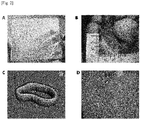
- FIG. 1 shows a stepwise process of acquiring an adipose tissue extract according to an exemplary embodiment.
- FIG. 1A shows a process of removing fibers from autologous adipose tissue using a syringe filter.
- FIGS. 1B and 1C show that the fiber-removed autologous adipose tissue is injected into a filter bag, and then a silicone spatula is used to pass the autologous adipose tissue through a filter.
- FIG. ID shows the finally obtained adipose tissue extract.
- a fibrinogen (60 IU) solution and a thrombin (500 IU) solution of a Beriplast kit (Beriplast P Combi-Set, CSL Behring L.L.C.) were diluted 50% with physiological saline.
- the 50% diluted fibrinogen solution and the adipose tissue extract were mixed in a volume ratio of 1:4, thereby preparing a first solution.
- the 50% diluted thrombin solution was used as a second solution.
- the center of a steam-sterilized 10 cm ⁇ 10 cm latex-attached glass plate was marked with a dot.
- one sheet of a dialysis membrane was cut in a square shape 1 to 2 mm larger than an affected area of the patient, soaked in physiological saline, and attached to the center of the latex-attached glass plate.
- the center of the glass plate was located at the center of a 3D bioprinter bed (INVIVO, ROKIT HEALTHCARE) to level the glass plate bed.
- a PCL 3D mold suitable for the shape and size of the affected area
- the morphology of the affected area was photographed, and converted into a 3D modeling file.
- the 3D modeling file was input to the 3D bioprinter (INVIVO, ROKIT HEALTHCARE), 1 to 2 g of a medical-grade PCL (RESOMER C 209, EVONIK, MW 45,000) was put into an air-dispenser of the 3D bioprinter (INVIVO, ROKIT HEALTHCARE), and then a 3D mold was printed under conditions of a temperature of 80 to 100 °C and a pressure of 600 to 800 kPa.
- a medical-grade PCL RESOMER C 209, EVONIK, MW 45,000
- FIG. 2 shows a process of manufacturing a patient-specific 3D mold according to an exemplary embodiment.
- FIG. 2A is a latex-attached glass plate, to which a dialysis membrane is attached.
- FIG. 2B shows the affected area of the diabetic foot patient, and
- FIG. 2C is a 3D modeling result of the affected area of the patient.
- FIG. 2D shows the finally-manufactured patient-specific 3D mold.
- the printed 3D mold was placed in a 3D bioprinter (INVIVO, ROKIT HEALTHCARE) in the center of the 3D bioprinter bed.
- the first solution was loaded in Dispenser 1 set to have a nozzle size of 0.5 mm, a printing speed of 10 mm/s, an extrusion rate of 300%, a filling rate of 50% and an outer wall thickness of 0.5 mm
- the second solution was loaded in Dispenser 2 set to have a nozzle size of 0.5 mm, a printing speed of 10 mm/s, an extrusion rate of 500% and a filling rate of 70%
- the first solution was discharged in the 3D mold and the second solution was immediately discharged therein, followed by curing of the solutions.
- the 3D mold was removed, thereby obtaining a patient-specific skin regeneration sheet.
- the affected area of the diabetic foot patient was cleaned, and then thrombin was sufficiently sprayed onto a surface that will be attached to the affected area using a spray-installed syringe.
- the affected area was covered with the patient-specific skin regeneration sheet manufactured as described above and treated by wet dressing, the affected area and the surrounding thereof were protected using sponge foam.
- the progress was observed by changing the dressing on the affected area every week.
- FIG. 3 shows a process of applying a patient-specific skin regeneration sheet to a diabetic foot patient according to an exemplary embodiment and a result thereby.
- FIG. 3A shows the affected area of the diabetic foot patient
- FIG. 3B shows that the manufactured skin regeneration sheet is attached to the affected area.
- FIG. 3C shows the affected area two weeks after the procedure.
- the defect site was rapidly restored.
- FIG. 3C despite a treatment period of two weeks after the procedure, it can be confirmed that the defect site was 100% restored and thus filled with skin tissue.
Landscapes
- Health & Medical Sciences (AREA)
- Life Sciences & Earth Sciences (AREA)
- Engineering & Computer Science (AREA)
- Chemical & Material Sciences (AREA)
- General Health & Medical Sciences (AREA)
- Veterinary Medicine (AREA)
- Public Health (AREA)
- Animal Behavior & Ethology (AREA)
- Medicinal Chemistry (AREA)
- Epidemiology (AREA)
- Biomedical Technology (AREA)
- Immunology (AREA)
- Pharmacology & Pharmacy (AREA)
- Zoology (AREA)
- Cell Biology (AREA)
- Dermatology (AREA)
- Bioinformatics & Cheminformatics (AREA)
- Transplantation (AREA)
- Biotechnology (AREA)
- Hematology (AREA)
- Developmental Biology & Embryology (AREA)
- Oral & Maxillofacial Surgery (AREA)
- Virology (AREA)
- Proteomics, Peptides & Aminoacids (AREA)
- Gastroenterology & Hepatology (AREA)
- Diabetes (AREA)
- Chemical Kinetics & Catalysis (AREA)
- Vascular Medicine (AREA)
- Molecular Biology (AREA)
- Materials Engineering (AREA)
- Manufacturing & Machinery (AREA)
- Endocrinology (AREA)
- Organic Chemistry (AREA)
- Heart & Thoracic Surgery (AREA)
- Genetics & Genomics (AREA)
- Urology & Nephrology (AREA)
- Botany (AREA)
- Obesity (AREA)
- Nuclear Medicine, Radiotherapy & Molecular Imaging (AREA)
- General Chemical & Material Sciences (AREA)
Applications Claiming Priority (2)
| Application Number | Priority Date | Filing Date | Title |
|---|---|---|---|
| KR1020190124693A KR102091151B1 (ko) | 2019-10-08 | 2019-10-08 | 당뇨병성 족부병증 환자 맞춤형 피부 재생 시트의 제조방법 및 이를 이용하여 제조된 당뇨병성 족부병증 환자 맞춤형 피부 재생 시트 |
| PCT/KR2019/013856 WO2021071001A1 (ko) | 2019-10-08 | 2019-10-22 | 당뇨병성 족부병증 환자 맞춤형 피부 재생 시트의 제조방법 및 이를 이용하여 제조된 당뇨병성 족부병증 환자 맞춤형 피부 재생 시트 |
Publications (2)
| Publication Number | Publication Date |
|---|---|
| EP3831420A1 true EP3831420A1 (de) | 2021-06-09 |
| EP3831420A4 EP3831420A4 (de) | 2021-11-10 |
Family
ID=69958141
Family Applications (1)
| Application Number | Title | Priority Date | Filing Date |
|---|---|---|---|
| EP19828950.6A Pending EP3831420A4 (de) | 2019-10-08 | 2019-10-22 | Verfahren zur herstellung einer für einen patienten mit diabetischem fuss spezifischen folie zur dermalen regenation und unter verwendung davon hergestellte, für einen patienten mit diabetischem fuss spezifische folie |
Country Status (16)
| Country | Link |
|---|---|
| US (2) | US12465622B2 (de) |
| EP (1) | EP3831420A4 (de) |
| JP (1) | JP7216067B2 (de) |
| KR (1) | KR102091151B1 (de) |
| CN (1) | CN112955193A (de) |
| AU (1) | AU2019382300B2 (de) |
| BR (1) | BR112020001079B1 (de) |
| CL (1) | CL2020001416A1 (de) |
| CO (1) | CO2020006531A2 (de) |
| EC (1) | ECSP20029226A (de) |
| JO (1) | JOP20200151A1 (de) |
| MX (1) | MX2020000589A (de) |
| PE (1) | PE20230243A1 (de) |
| SG (1) | SG11202000169YA (de) |
| TW (1) | TWI866986B (de) |
| WO (1) | WO2021071001A1 (de) |
Cited By (1)
| Publication number | Priority date | Publication date | Assignee | Title |
|---|---|---|---|---|
| USD594742S1 (en) | 2006-02-08 | 2009-06-23 | Philip Morris Usa Inc. | Package |
Families Citing this family (2)
| Publication number | Priority date | Publication date | Assignee | Title |
|---|---|---|---|---|
| KR20220083621A (ko) * | 2020-12-11 | 2022-06-20 | 주식회사 로킷헬스케어 | 조직 재생용 조성물 및 이의 제조방법 |
| WO2022139540A1 (ko) * | 2020-12-24 | 2022-06-30 | 주식회사 로킷헬스케어 | 조직 재생 패치의 제조방법 |
Family Cites Families (14)
| Publication number | Priority date | Publication date | Assignee | Title |
|---|---|---|---|---|
| JPH10291937A (ja) * | 1997-02-20 | 1998-11-04 | Sekisui Chem Co Ltd | 創傷被覆材 |
| KR20030043313A (ko) * | 2001-11-27 | 2003-06-02 | 한스바이오메드 주식회사 | 사람 각질세포 및 성장인자가 함유된 피브린 접착제를주재로 한 피부재생촉진제 및 그의 제조방법 |
| KR101145508B1 (ko) * | 2003-06-18 | 2012-05-15 | 사이토리 테라퓨틱스, 인크. | 자가 지방 이식의 증대에 있어서 지방 조직 유래의 세포를사용하는 방법 |
| US20100040583A1 (en) * | 2008-03-27 | 2010-02-18 | Vincent Falanga | Compositions and methods using stem cells in cutaneous wound healing |
| KR20110032513A (ko) | 2009-09-23 | 2011-03-30 | 김민 | 조직 재생용 조성물 |
| CN108504539B (zh) * | 2010-08-06 | 2021-11-02 | 通用医院公司以麻省总医院名义经营 | 用于细胞处理相关应用的系统和设备 |
| HK1206060A1 (en) | 2011-12-07 | 2015-12-31 | 财团法人工业技术研究院 | Method and device for isolation of non-fat cells from an adipose tissue |
| KR20160025180A (ko) | 2014-08-27 | 2016-03-08 | 백승훈 | 헬리컬 파일 및 이의 시공방법 |
| US10188777B2 (en) | 2015-08-20 | 2019-01-29 | Aurastem Llc | Liposuction device and system and use thereof |
| KR101847471B1 (ko) * | 2016-03-15 | 2018-04-11 | 가톨릭관동대학교기술지주 주식회사 | 성분 분리기, 이를 포함하는 성분 분리 키트 및 이를 이용한 성분 분리방법 |
| CN206027182U (zh) * | 2016-06-23 | 2017-03-22 | 夏正义 | 一种均质化脂肪提取器 |
| KR20200099201A (ko) | 2018-01-08 | 2020-08-21 | 마이크로배스큘러 티슈, 인코포레이티드 | 신경 손상을 치료하기 위한 조성물 및 방법 |
| AU2018406738B2 (en) | 2018-01-31 | 2024-10-10 | Rokit Healthcare Inc. | Bioink composition for cartilage regeneration, method for manufacturing customized scaffold for cartilage regeneration using same, and customized scaffold for cartilage regeneration manufactured using manufacturing method |
| PE20211587A1 (es) | 2018-01-31 | 2021-08-18 | Rokit Healthcare Inc | Composicion de tinta biologica para lamina para la regeneracion de la dermis, metodo de fabricacion de lamina personalizada para regeneracion de la dermis usando la misma, y lamina personalizada para regeneracion de la dermis fabricada con el metodo de fabricacion |
-
2019
- 2019-10-08 KR KR1020190124693A patent/KR102091151B1/ko active Active
- 2019-10-22 SG SG11202000169YA patent/SG11202000169YA/en unknown
- 2019-10-22 WO PCT/KR2019/013856 patent/WO2021071001A1/ko not_active Ceased
- 2019-10-22 CN CN201980003589.1A patent/CN112955193A/zh active Pending
- 2019-10-22 PE PE2020000619A patent/PE20230243A1/es unknown
- 2019-10-22 EP EP19828950.6A patent/EP3831420A4/de active Pending
- 2019-10-22 MX MX2020000589A patent/MX2020000589A/es unknown
- 2019-10-22 BR BR112020001079-0A patent/BR112020001079B1/pt active IP Right Grant
- 2019-10-22 AU AU2019382300A patent/AU2019382300B2/en active Active
- 2019-10-22 JP JP2020501355A patent/JP7216067B2/ja active Active
- 2019-10-22 US US16/630,684 patent/US12465622B2/en active Active
-
2020
- 2020-05-28 CL CL2020001416A patent/CL2020001416A1/es unknown
- 2020-05-28 CO CONC2020/0006531A patent/CO2020006531A2/es unknown
- 2020-06-03 EC ECSENADI202029226A patent/ECSP20029226A/es unknown
- 2020-06-11 JO JOJO/P/2020/0151A patent/JOP20200151A1/ar unknown
- 2020-06-16 TW TW109120202A patent/TWI866986B/zh active
-
2025
- 2025-10-16 US US19/360,096 patent/US20260041717A1/en active Pending
Cited By (1)
| Publication number | Priority date | Publication date | Assignee | Title |
|---|---|---|---|---|
| USD594742S1 (en) | 2006-02-08 | 2009-06-23 | Philip Morris Usa Inc. | Package |
Also Published As
| Publication number | Publication date |
|---|---|
| TW202117006A (zh) | 2021-05-01 |
| JOP20200151A1 (ar) | 2020-06-11 |
| JP2022508977A (ja) | 2022-01-20 |
| SG11202000169YA (en) | 2021-05-28 |
| TWI866986B (zh) | 2024-12-21 |
| PE20230243A1 (es) | 2023-02-07 |
| US12465622B2 (en) | 2025-11-11 |
| AU2019382300B2 (en) | 2026-03-05 |
| CL2020001416A1 (es) | 2021-07-19 |
| AU2019382300A1 (en) | 2021-04-22 |
| JP7216067B2 (ja) | 2023-01-31 |
| CN112955193A (zh) | 2021-06-11 |
| US20260041717A1 (en) | 2026-02-12 |
| KR102091151B1 (ko) | 2020-03-20 |
| US20210401897A1 (en) | 2021-12-30 |
| WO2021071001A1 (ko) | 2021-04-15 |
| BR112020001079A2 (pt) | 2021-06-08 |
| CO2020006531A2 (es) | 2021-04-30 |
| EP3831420A4 (de) | 2021-11-10 |
| MX2020000589A (es) | 2022-04-27 |
| BR112020001079B1 (pt) | 2024-01-30 |
| ECSP20029226A (es) | 2020-08-31 |
Similar Documents
| Publication | Publication Date | Title |
|---|---|---|
| US20260041717A1 (en) | Method of manufacturing diabetic foot patient-specific dermal regeneration sheet and diabetic foot patient-specific dermal regeneration sheet manufactured using the same | |
| AU2020267589B2 (en) | Tissue derived porous matrices and methods for making and using same | |
| WO2016004212A1 (en) | Hydrogels for treating and ameliorating wounds and methods for making and using them | |
| AU2018405440B2 (en) | Bioink composition for dermis regeneration sheet, method for manufacturing customized dermis regeneration sheet using same, and customized dermis regeneration sheet manufactured using manufacturing method | |
| US20200390930A1 (en) | Systems and methods for treating a wound with wound packing | |
| US20180325741A1 (en) | Biodegradable negative pressure wound therapy dressing | |
| KR102144897B1 (ko) | 키토산 섬유성 스폰지 구조의 의료용 드레싱재 및 그 제조 방법 | |
| JP7319382B2 (ja) | 凍結乾燥硝子軟骨パウダーを用いた軟骨再生用組成物の製造方法、これを用いて製造された軟骨再生用組成物、軟骨再生用組成物を用いた患者オーダーメード型軟骨再生用スキャフォールドの製造方法及び患者オーダーメード型軟骨再生用スキャフォールド | |
| KR102586028B1 (ko) | 당뇨병성 족부병증 환자 맞춤형 피부 재생 시트의 제조방법 및 이를 이용하여 제조된 당뇨병성 족부병증 환자 맞춤형 피부 재생 시트 | |
| RU2828211C2 (ru) | Способ производства дермального регенерационного листа, специфичного в отношении диабетической стопы пациента, и дермальный регенерационный лист, специфичный в отношении диабетической стопы пациента, полученный этим способом | |
| RU2828211C9 (ru) | Способ производства дермального регенерационного листа, специфичного в отношении пациента с диабетической стопой, и дермальный регенерационный лист, специфичный в отношении пациента с диабетической стопой, полученный этим способом | |
| JP2023527435A (ja) | 網膜を利用した腎臓治療用組成物、それを含む腎臓治療用医療キット、及び、その硬化物を含む腎臓治療用フィルム | |
| CN109646718A (zh) | 用于微整形的再生组织基质组合物、制备及应用 | |
| EP4631538A1 (de) | Neue biotinten auf fibrinogenbasis zur wundheilung und geweberegeneration | |
| EP4631552A1 (de) | System zur bereitstellung einer biotinte in form eines sprays | |
| RU2793240C2 (ru) | Композиция биочернил для листа для регенерации дермы, способ изготовления индивидуализированного листа для регенерации дермы с использованием композиции и индивидуализированный лист для регенерации дермы, изготовленный с использованием способа изготовления биочернил | |
| US20240042100A1 (en) | Method of manufacturing a tissue regeneration patch | |
| CN121130158A (zh) | 一种负载一氧化氮纳米粒和脂肪提取物的温敏水凝胶及其在糖尿病创面治疗中的应用 |
Legal Events
| Date | Code | Title | Description |
|---|---|---|---|
| STAA | Information on the status of an ep patent application or granted ep patent |
Free format text: STATUS: UNKNOWN |
|
| STAA | Information on the status of an ep patent application or granted ep patent |
Free format text: STATUS: THE INTERNATIONAL PUBLICATION HAS BEEN MADE |
|
| PUAI | Public reference made under article 153(3) epc to a published international application that has entered the european phase |
Free format text: ORIGINAL CODE: 0009012 |
|
| STAA | Information on the status of an ep patent application or granted ep patent |
Free format text: STATUS: REQUEST FOR EXAMINATION WAS MADE |
|
| 17P | Request for examination filed |
Effective date: 20200109 |
|
| AK | Designated contracting states |
Kind code of ref document: A1 Designated state(s): AL AT BE BG CH CY CZ DE DK EE ES FI FR GB GR HR HU IE IS IT LI LT LU LV MC MK MT NL NO PL PT RO RS SE SI SK SM TR |
|
| A4 | Supplementary search report drawn up and despatched |
Effective date: 20211011 |
|
| RIC1 | Information provided on ipc code assigned before grant |
Ipc: A61L 27/60 20060101AFI20211005BHEP |
|
| DAV | Request for validation of the european patent (deleted) | ||
| DAX | Request for extension of the european patent (deleted) | ||
| STAA | Information on the status of an ep patent application or granted ep patent |
Free format text: STATUS: EXAMINATION IS IN PROGRESS |
|
| 17Q | First examination report despatched |
Effective date: 20230424 |