EP3832496A1 - Amélioration de la mise en cache du contenu des bases de données par les serveurs proxy - Google Patents
Amélioration de la mise en cache du contenu des bases de données par les serveurs proxy Download PDFInfo
- Publication number
- EP3832496A1 EP3832496A1 EP20211656.2A EP20211656A EP3832496A1 EP 3832496 A1 EP3832496 A1 EP 3832496A1 EP 20211656 A EP20211656 A EP 20211656A EP 3832496 A1 EP3832496 A1 EP 3832496A1
- Authority
- EP
- European Patent Office
- Prior art keywords
- database
- query
- proxy server
- client
- response
- Prior art date
- Legal status (The legal status is an assumption and is not a legal conclusion. Google has not performed a legal analysis and makes no representation as to the accuracy of the status listed.)
- Withdrawn
Links
Images

Classifications
-
- G—PHYSICS
- G06—COMPUTING OR CALCULATING; COUNTING
- G06F—ELECTRIC DIGITAL DATA PROCESSING
- G06F16/00—Information retrieval; Database structures therefor; File system structures therefor
- G06F16/90—Details of database functions independent of the retrieved data types
- G06F16/95—Retrieval from the web
- G06F16/957—Browsing optimisation, e.g. caching or content distillation
- G06F16/9574—Browsing optimisation, e.g. caching or content distillation of access to content, e.g. by caching
-
- G—PHYSICS
- G06—COMPUTING OR CALCULATING; COUNTING
- G06F—ELECTRIC DIGITAL DATA PROCESSING
- G06F16/00—Information retrieval; Database structures therefor; File system structures therefor
- G06F16/20—Information retrieval; Database structures therefor; File system structures therefor of structured data, e.g. relational data
- G06F16/22—Indexing; Data structures therefor; Storage structures
- G06F16/2282—Tablespace storage structures; Management thereof
-
- G—PHYSICS
- G06—COMPUTING OR CALCULATING; COUNTING
- G06F—ELECTRIC DIGITAL DATA PROCESSING
- G06F16/00—Information retrieval; Database structures therefor; File system structures therefor
- G06F16/20—Information retrieval; Database structures therefor; File system structures therefor of structured data, e.g. relational data
- G06F16/24—Querying
- G06F16/245—Query processing
- G06F16/2453—Query optimisation
- G06F16/24534—Query rewriting; Transformation
- G06F16/24539—Query rewriting; Transformation using cached or materialised query results
-
- G—PHYSICS
- G06—COMPUTING OR CALCULATING; COUNTING
- G06F—ELECTRIC DIGITAL DATA PROCESSING
- G06F16/00—Information retrieval; Database structures therefor; File system structures therefor
- G06F16/20—Information retrieval; Database structures therefor; File system structures therefor of structured data, e.g. relational data
- G06F16/28—Databases characterised by their database models, e.g. relational or object models
- G06F16/284—Relational databases
-
- G—PHYSICS
- G06—COMPUTING OR CALCULATING; COUNTING
- G06F—ELECTRIC DIGITAL DATA PROCESSING
- G06F16/00—Information retrieval; Database structures therefor; File system structures therefor
- G06F16/30—Information retrieval; Database structures therefor; File system structures therefor of unstructured textual data
- G06F16/33—Querying
- G06F16/3331—Query processing
- G06F16/3332—Query translation
- G06F16/3338—Query expansion
-
- G—PHYSICS
- G06—COMPUTING OR CALCULATING; COUNTING
- G06F—ELECTRIC DIGITAL DATA PROCESSING
- G06F16/00—Information retrieval; Database structures therefor; File system structures therefor
- G06F16/90—Details of database functions independent of the retrieved data types
- G06F16/901—Indexing; Data structures therefor; Storage structures
- G06F16/9017—Indexing; Data structures therefor; Storage structures using directory or table look-up
-
- G—PHYSICS
- G06—COMPUTING OR CALCULATING; COUNTING
- G06F—ELECTRIC DIGITAL DATA PROCESSING
- G06F16/00—Information retrieval; Database structures therefor; File system structures therefor
- G06F16/90—Details of database functions independent of the retrieved data types
- G06F16/95—Retrieval from the web
- G06F16/953—Querying, e.g. by the use of web search engines
- G06F16/9532—Query formulation
-
- H—ELECTRICITY
- H04—ELECTRIC COMMUNICATION TECHNIQUE
- H04L—TRANSMISSION OF DIGITAL INFORMATION, e.g. TELEGRAPHIC COMMUNICATION
- H04L67/00—Network arrangements or protocols for supporting network services or applications
- H04L67/50—Network services
- H04L67/56—Provisioning of proxy services
- H04L67/568—Storing data temporarily at an intermediate stage, e.g. caching
Definitions
- the query string is then stored as a part of the cache key", at col. 8; FIG. 6D.
- US Patent No. 7,127,713 the teachings of which are hereby incorporated by reference in their entirety, describes among other things an edge server (which is or can be a proxy server) caching data and the results of queries. See e.g., cols. 20-21, where it describes, for example, "Caching and Using XML Data", including how "an XML Query implementation can be used to retrieve only the relevant records from the cached XML.” Also described at cols.
- Results-set caching classes can be used to traverses and access the retrieved data.”
- JDBC provides performance hints like setting the number of rows that should be fetched from the database each time new rows are needed, called the fetch size, see section 5.1.9, "ResultSet”, at www ⁇ dot>cs ⁇ dot>mun ⁇ dot>ca/java-api-1. 5/guide/j dbc/getstart/resultset. html.
- CDN technologies including examples of request routing mechanisms using DNS and otherwise, as well as proxy server technologies, can be found in the following documents, the teachings of which are hereby incorporated by reference in their entireties: US Patent Nos. 6,108,703 ; 7,293,093 ; 7,096,263 ; 7,096,266 ; 7,484,002 ; 7,523,181 ; 7,574,499 ; 7,240,100 ; 7,603,439 ; 7,725,602 ; 7,716,367 ; 7,996,531 ; 7,925,713 ; 7,058,706 ; 7,251,688 ; 7,274,658 ; 7,912,978 ; 8,195,831 .
- HTTP HyperText Transfer Protocol
- client device hardware in combination with software (e.g., a browser or player application). While context may indicate the hardware or the software exclusively, should such distinction be appropriate, the teachings hereof can be implemented in any combination of hardware and software. Hardware may be actual or virtualized.
- the interface protocol is provided directly by the database or by a service allowing access to the database in a controlled manner, although the teachings hereof are not limited to any particular interface protocol, or indeed to any particular kind of database.
- the origin database may be delivered via a database service with infrastructure that replicates, caches, distributes or otherwise scales the delivery of the database contents from a given point on the Internet. References to origin or origin database in this document should be understood to potentially encompass such a database service.
- a proxy server When a proxy server receives a client request that requires information from an origin database, the proxy server can construct a database query to fetch the requisite information from the database in a 'forward request' operation.
- the response from the origin database can be cached by the proxy server.
- a client request might (i) explicitly contain a request for database content, that is, it could explicitly contain a particular database query (although it may need to be converted in format from the HTTP carrier to a format suitable for querying the database, e.g., by extracting parameters from URL parameters, and the like); in other cases (ii) a client might request a given web page or other content that requires or causes the proxy server (e.g.
- a proxy server can implement an over-caching function.
- This over-caching function causes the proxy server to fetch from origin more data than necessary to respond to the client's request.
- a subsequent client query of: SELECT title, color FROM catalog ORDER BY price LIMIT 10 OFFSET 10 for the 'next page' of data can also be answered by the cached slab. If a client request involves many rows that are more than one slab-worth, the proxy server will divide (internally) the request into the standardized size and request multiple slabs, covering the desired range. Again, and as those skilled in the art will understand, the above is merely an example for illustrative purposes.
- the proxy server caches the entire response, but then applies the parameters of the client query to this payload to prepare a response for the client; namely, it interprets the JSON array elements as query result rows, with each object being a result row with identified field names, of which the field names mentioned in the client query should be retained (title and price), and the others elided, preserving valid JSON formatting, and stopping after three objects to obey the limit (LIMIT 3).
- FIG. 1 provides an illustration of the components of the proxy server that can perform the over-caching and other processes described above.
- the proxy server's request handling process 104 can attempt to locate the cache entry for the applicable database query in a local cache 105. This can be done, e.g. using known techniques such as applying a hash function to a URL, of portion thereof, at which the database is reachable to arrive at a cache handle.
- the proxy server 100 can run a query engine (e.g, a SQL engine) 107 and using the cache handle the engine can determine if the currently stored data in the cache entry (that is, a cached portion of the database) is sufficient to answer the query.
- a query engine e.g, a SQL engine
- the request handling process 104 issues a request to the query engine 107 to examine a particular cache entry or entries (holding the table, i.e., the slabs) at message (2), the query engine creates a suitable database lookup targeting the cache entry at message (3), and the result is returned in messages (4), and then (5).
- a virtual table name index may be used in addition to other standard indexing techniques to speed up cache lookups.
- the cached entry does have sufficient data, the applicable portions of the cache entry (e.g, the rows and columns) are extracted; the request handling process 204 uses it to serve the client a message (10).
- a database query is formulated to send to the origin infrastructure 102 (or simply "origin 102" for short), with over-caching applied so that more of the database 103 than strictly necessary to answer the instant query is fetched from origin 102.
- the requesting handling process 104 relies on a separate over-caching module 106 to intake the query that is actually received from the client, from the request handling process 104, at message (6), canonicalize and expand it for over-caching.
- the expanded query is sent to the origin 102 and response with the slab received at message exchange indicated by (7).
- the over-caching module 106 can be built into the back-end function of a proxy server. However, a wide variety of implementation approaches are possible (e.g., daemon, web service, etc., as mentioned earlier).
- a proxy server can choose (e.g., at the time of a client request) the amount of data that it will fetch from origin.
- control can refer to controlling the decision-making as to a threshold, binary choice of "over-cache vs. do not overcache" and/or to the determination of the degree of over-caching to apply.
- Over-caching can be controlled based on cache pressure.
- cache pressure refers to a metric reflecting how full the local cache is at a point in time. If the cache pressure is high, then the cache has little free space and it may need to evict objects even before they have expired.
- Cache pressure can be used in a variety of ways. For example, query parameters can be expanded up to a limit imposed by current cache pressure, or some limit on table size can be applied based on cache pressure. Or, there can be a binary cache pressure/no-pressure flag that turns the expansion feature on/off
- cache pressure One way to measure cache pressure is the amount of available memory for caching. If there is none, or very little, available then the cache pressure is high. If there is a lot of space, the cache pressure is low. If only a few different objects are being requested from the proxy, and/or there are many expired objects (which are typically treated as 'free' space since they can be overwritten), then the cache pressure may be deemed to be low. The exact measurements and thresholds of what is high and low will depend on the actual implementation, cache replacement/eviction algorithms, cache size, rate of object requests, and like characteristics, as known in the art.
- the origin database can report inter-write times (or a statistical summary thereof) to the proxy server or some server in the CDN platform.
- the proxy server can observe and track the changes in the table when it issues forward requests. Once it sees a change, it can use this as the inter-write time.
- over-caching can be controlled based on a recent history of queries.
- This technique involves the proxy server observing its own (and/or possibly another server's) queries to a given origin database over a defined period of time, e.g., a sliding window of time capturing the most recent N seconds. For example, a sliding window of time of about 5 minutes could be used. However, in some cases, particularly for popular content, this time window may be too long (unnecessarily long, leading to too many stored queries taking up too much space). Therefore, in an alternative embodiment, the last about 1000 or so queries can be kept and analyzed.
- the proxy server aggregates the queries by taking the union of the queries, and requests that slab from the origin database. This query aggregation process is essentially a way of implementing the expansion step previously mentioned. As an example consider the following 6 queries:
- slabs may be created using LIMIT and OFFSET as described above, which is likely most beneficial for the versions that do not contain a WHERE clause.
- the proxy server can tag the slab with one or more tokens (also referred to as tags), in the manner described in US Patent Nos. 9,648,125 ; 9,807,190 ; 9,813,515 ; 9,641,640 ; and 10,063,652 , the teachings of which are hereby incorporated by reference.
- This tagging enables invalidation on-demand by token.
- the tagging scheme could utilize the expanded query for the slab as a token, with characters munged to fit the token syntax requirements.
- Another scheme can involve limiting the query type allowed and building a token by giving sub-tokens implicit meaning, e.g., ⁇ virtual table name or hash thereof >_ ⁇ offset>_ ⁇ limit>.
- the aforementioned tokens could have a particular hostname or tenant identifier added (e.g, as a prefix) to facilitate lookup.
- the tokens could be managed within the context of a request handling process that binds the caching process to a configuration for a given tenant.
- Slabs can be invalidated on-demand, preferably as a whole. For example, upon a write event that occurs either at a proxy server or that is propagated to the CDN from origin or other source, all slabs that include the updated cell can be invalidated using the cache token (tag) purge.
- tag cache token
- a proxy server in the CDN itself may initiate a purge request to the relevant purge subsystem (which will then propagate back to all proxy servers including the one making that request) rather than doing the same from the database server subsystem. If all INSERT, DELETE, UPDATE queries, or similar queries, are sent via a proxy server, or notified to a proxy server, this may be easier to implement.
- Cache tag invalidation may employ range tokens for formal support of primary key numbering, as described in US Patent Nos. 9,648,125 ; 9,807,190 ; 9,813,515 ; 9,641,640 ; and 10,063,652 .
- tokens may be considered to be 'range' tokens by expressing ranges of values in a specific syntactic style.
- a response can be tagged with range tokens that indicate, for example, a range of values to which the response relates (such as table row numbers).
- a subsequent invalidation of a specific value within the range of previously listed range tokens can invalidate those range tokens and the responses to which they were connected.
- a token for a slab may be of the form: ⁇ virtual table name or hash thereof>[ ⁇ offset>.. ⁇ offset+limit>] e.g. : FROM_catalog_ORDER-BY_price[1..5] to indicate that the cached slab, for the 'catalog' table ordered by 'price' field, comprises data from rows 1-5.
- the table identifier is followed by a first set of brackets to indicate the range of the rows, the double-dot indicating the range between the endpoints 1 and 5.
- columns may also be enumerated, as such: table[1..5][1..10] which in this case indicates that the cached slab, for a table called 'table' comprises data from rows 1-5 and columns 1-10 in those rows, using some stable mapping of column names to column numbers.
- table identifier is followed by a first set of brackets to indicate the range of the rows, the double-dot indicating the range between the endpoints 1 and 5.
- the second set of brackets indicates the columns in those rows in similar syntax.
- table[2][3] would cause the proxy server to invalidate the slab, because the token refers to a cell within the slab (row 2, column 3), and the invalidation means that the cell is no longer valid (e.g., due to an update).
- a proxy server can then re-request the slab from origin (e.g., right away, or upon receiving a subsequent client request).
- a new slab can be pushed through the system (e.g, via a publish/subscribe system) from origin (or its associated database service) to proxy server.
- a proxy server that receives a write event to a given cell may update its own local copy of a slab that includes that cell with the updated cell for a brief period of time until the slab is invalidated or updated from the data store subsystem.
- This local updating can serve to provide consistency to the client who just authored a change.
- the local cache is also tasked with resolving the common question of simultaneous conflicting updates -- thus, proxy servers patching their own local update will have it overwritten by an authoritative consistency-enforcing value in a short time period.
- the proxy server upon receiving the invalidation, could mark only row 2 as invalid. It could do this by invalidating the original slab, breaking the slab into two sub-slabs (without the now-invalid row) and re-caching (or re-indexing) those sub-slabs with their own tokens:
- a range token system may entertain tokens that have an 'infinity' bound on the upper range element, thus allowing them to represent an invalidation target for an offset and all higher rows (e.g., invalidating table[14+] invalidates table[11...20] and table[20...30]).
- the range token system may used fixed ranges in the tokens attached to content and entertain invalidation requests that specify a numeric point inside ranges, and also all ranges starting higher than the given numeric point, thus allowing fewer tokens since the content will be tagged more simply and the invalidation logic will be slightly smarter.
- the entire slab can be considered to have a TTL equal to the minimum TTL of any row within it, for the purposes of asynchronously refreshing the whole slab if it is nearly-expiring and 'hot'; i.e. results have been served from it recently.
- a data set returned from the database in response to a query often needs to be transformed by the proxy into a suitable format, such as a JSON object, CSV, or otherwise, before returning it to the client.
- a suitable format such as a JSON object, CSV, or otherwise.
- multiple rows can be represented using a JSON array
- multiple columns (or attributes) in a row can be represented as a collection of name / value pairs.
- a query directive that normally retrieves a particular node in a tree or graph can be expanded to retrieve all nodes within a given distance N of the target node.
- Pagination is non-standard and varied in GraphQL, unlike SQL, so pagination handling will vary based on the approach used by that GraphQL implementation, but example approaches approaches include (a) custom parameters on a node that mimic LIMIT and OFFSET; (b) custom parameters on a node that mimic LIMIT and use an identifier or value as an 'after' designator, that is, to indicate which value after which the next results should be fetched; (c) a cursor-based system where custom parameters on a node mimic LIMIT and use an identifier to provide an 'after' value that matches a cursor value.
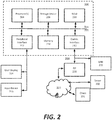
- Computer system 200 includes a microprocessor 204 coupled to bus 201. In some systems, multiple processor and/or processor cores may be employed. Computer system 200 further includes a main memory 210, such as a random access memory (RAM) or other storage device, coupled to the bus 201 for storing information and instructions to be executed by processor 204. A read only memory (ROM) 208 is coupled to the bus 201 for storing information and instructions for processor 204. A non-volatile storage device 206, such as a magnetic disk, solid state memory (e.g., flash memory), or optical disk, is provided and coupled to bus 201 for storing information and instructions. Other application-specific integrated circuits (ASICs), field programmable gate arrays (FPGAs) or circuitry may be included in the computer system 200 to perform functions described herein.
- ASICs application-specific integrated circuits
- FPGAs field programmable gate arrays
- a peripheral interface 212 may be provided to communicatively couple computer system 200 to a user display 214 that displays the output of software executing on the computer system, and an input device 215 (e.g., a keyboard, mouse, trackpad, touchscreen) that communicates user input and instructions to the computer system 200.
- an input device 215 e.g., a keyboard, mouse, trackpad, touchscreen
- a computer system 200 may not have a user interface beyond a network port, e.g., in the case of a server in a rack.
- the peripheral interface 212 may include interface circuitry, control and/or level-shifting logic for local buses such as RS-485, Universal Serial Bus (USB), IEEE 1394, or other communication links.
- Computer system 200 is coupled to a communication interface 216 that provides a link (e.g., at a physical layer, data link layer,) between the system bus 201 and an external communication link.
- the communication interface 216 provides a network link 218.
- the communication interface 216 may represent an Ethernet or other network interface card (NIC), a wireless interface, modem, an optical interface, or other kind of input/output interface.
- NIC network interface card
- Network link 218 provides data communication through one or more networks to other devices. Such devices include other computer systems that are part of a local area network (LAN) 226. Furthermore, the network link 218 provides a link, via an internet service provider (ISP) 220, to the Internet 222. In turn, the Internet 222 may provide a link to other computing systems such as a remote server 230 and/or a remote client 231. Network link 218 and such networks may transmit data using packet-switched, circuit-switched, or other data-transmission approaches.
- ISP internet service provider
- the computer system 200 may implement the functionality described herein as a result of the processor executing code.
- code may be read from or stored on a non-transitory computer-readable medium, such as memory 210, ROM 208, or storage device 206.
- a non-transitory computer-readable medium such as memory 210, ROM 208, or storage device 206.
- Other forms of non-transitory computer-readable media include disks, tapes, magnetic media, SSD, CD-ROMs, optical media, RAM, PROM, EPROM, and EEPROM, flash memory. Any other non-transitory computer-readable medium may be employed.
- Executing code may also be read from network link 218 (e.g., following storage in an interface buffer, local memory, or other circuitry).
Landscapes
- Engineering & Computer Science (AREA)
- Theoretical Computer Science (AREA)
- Databases & Information Systems (AREA)
- Physics & Mathematics (AREA)
- Data Mining & Analysis (AREA)
- General Engineering & Computer Science (AREA)
- General Physics & Mathematics (AREA)
- Software Systems (AREA)
- Computational Linguistics (AREA)
- Mathematical Physics (AREA)
- Signal Processing (AREA)
- Computer Networks & Wireless Communication (AREA)
- Information Retrieval, Db Structures And Fs Structures Therefor (AREA)
- Information Transfer Between Computers (AREA)
Applications Claiming Priority (1)
| Application Number | Priority Date | Filing Date | Title |
|---|---|---|---|
| US16/706,765 US20210173888A1 (en) | 2019-12-08 | 2019-12-08 | Proxy server caching of database content |
Publications (1)
| Publication Number | Publication Date |
|---|---|
| EP3832496A1 true EP3832496A1 (fr) | 2021-06-09 |
Family
ID=73698705
Family Applications (1)
| Application Number | Title | Priority Date | Filing Date |
|---|---|---|---|
| EP20211656.2A Withdrawn EP3832496A1 (fr) | 2019-12-08 | 2020-12-03 | Amélioration de la mise en cache du contenu des bases de données par les serveurs proxy |
Country Status (2)
| Country | Link |
|---|---|
| US (1) | US20210173888A1 (fr) |
| EP (1) | EP3832496A1 (fr) |
Cited By (1)
| Publication number | Priority date | Publication date | Assignee | Title |
|---|---|---|---|---|
| CN115168499A (zh) * | 2022-09-05 | 2022-10-11 | 金蝶软件(中国)有限公司 | 数据库表的分片方法、装置、计算机设备和存储介质 |
Families Citing this family (12)
| Publication number | Priority date | Publication date | Assignee | Title |
|---|---|---|---|---|
| US11263186B2 (en) * | 2020-02-06 | 2022-03-01 | Servicenow, Inc. | System and method for customized graphQL data-handling scripts |
| US11550800B1 (en) | 2020-09-30 | 2023-01-10 | Amazon Technologies, Inc. | Low latency query processing and data retrieval at the edge |
| US12360976B1 (en) * | 2020-09-30 | 2025-07-15 | Amazon Technologies, Inc. | Low latency writes to local tables by event-triggered functions at the edge |
| CN113515545B (zh) * | 2021-06-30 | 2024-05-14 | 北京百度网讯科技有限公司 | 数据查询方法、装置、系统、电子设备以及存储介质 |
| CN115696454A (zh) * | 2021-07-26 | 2023-02-03 | 中兴通讯股份有限公司 | 数据处理方法、网元以及计算机可读存储介质 |
| US11709882B2 (en) | 2021-10-21 | 2023-07-25 | International Business Machines Corporation | Image storage system for images with duplicate parts |
| US11960544B2 (en) | 2021-10-28 | 2024-04-16 | International Business Machines Corporation | Accelerating fetching of result sets |
| US11522943B1 (en) | 2022-02-02 | 2022-12-06 | Servicenow, Inc. | System and method for deferring data retrieval |
| US12001503B2 (en) | 2022-02-02 | 2024-06-04 | Servicenow, Inc. | System and method for delivering application metadata |
| CN114741415A (zh) * | 2022-04-20 | 2022-07-12 | 网易(杭州)网络有限公司 | 一种数据处理方法、装置、存储介质及计算机设备 |
| KR102539691B1 (ko) * | 2022-10-20 | 2023-06-02 | 주식회사 메디씽큐 | 수술 단계 영상 전송 방법 및 이를 이용한 시스템 |
| US12498996B2 (en) * | 2023-03-31 | 2025-12-16 | Intuit Inc. | Hybrid pagination for retrieving data |
Citations (25)
| Publication number | Priority date | Publication date | Assignee | Title |
|---|---|---|---|---|
| US6108703A (en) | 1998-07-14 | 2000-08-22 | Massachusetts Institute Of Technology | Global hosting system |
| EP1251436A2 (fr) * | 2001-04-18 | 2002-10-23 | Nec Corporation | Dispositif de recouvrement de données, serveur de recouvrement de données et système de recouvrement de données, et aussi un procédé de recouvrement de données et un programme d'ordinateur |
| US20030154239A1 (en) * | 2002-01-11 | 2003-08-14 | Davis Andrew Thomas | Java application framework for use in a content delivery network (CDN) |
| US20040133538A1 (en) * | 2002-12-23 | 2004-07-08 | Amiri Khalil S. | Transparent edge-of-network data cache |
| US7058706B1 (en) | 2000-03-31 | 2006-06-06 | Akamai Technologies, Inc. | Method and apparatus for determining latency between multiple servers and a client |
| US7096266B2 (en) | 2001-01-08 | 2006-08-22 | Akamai Technologies, Inc. | Extending an Internet content delivery network into an enterprise |
| US7096263B2 (en) | 2000-05-26 | 2006-08-22 | Akamai Technologies, Inc. | Method for predicting file download time from mirrored data centers in a global computer network |
| US7200681B1 (en) | 2001-07-30 | 2007-04-03 | Akamai Technologies, Inc. | Edge side components and application programming environment for building and delivering highly distributed heterogenous component-based web applications |
| US7240100B1 (en) | 2000-04-14 | 2007-07-03 | Akamai Technologies, Inc. | Content delivery network (CDN) content server request handling mechanism with metadata framework support |
| US7251688B2 (en) | 2000-05-26 | 2007-07-31 | Akamai Technologies, Inc. | Method for generating a network map |
| US7274658B2 (en) | 2001-03-01 | 2007-09-25 | Akamai Technologies, Inc. | Optimal route selection in a content delivery network |
| US7293093B2 (en) | 2000-04-17 | 2007-11-06 | Akamai Technologies, Inc. | HTML delivery from edge-of-network servers in a content delivery network (CDN) |
| US7484002B2 (en) | 2000-08-18 | 2009-01-27 | Akamai Technologies, Inc. | Content delivery and global traffic management network system |
| US7523181B2 (en) | 1999-11-22 | 2009-04-21 | Akamai Technologies, Inc. | Method for determining metrics of a content delivery and global traffic management network |
| US7574499B1 (en) | 2000-07-19 | 2009-08-11 | Akamai Technologies, Inc. | Global traffic management system using IP anycast routing and dynamic load-balancing |
| US7603439B2 (en) | 2002-04-09 | 2009-10-13 | Akamai Technologies, Inc. | System for tiered distribution in a content delivery network |
| US7716367B1 (en) | 2000-07-20 | 2010-05-11 | Akamai Technologies, Inc. | Network performance monitoring in a content delivery service |
| US7725602B2 (en) | 2000-07-19 | 2010-05-25 | Akamai Technologies, Inc. | Domain name resolution using a distributed DNS network |
| US7912978B2 (en) | 2000-07-19 | 2011-03-22 | Akamai Technologies, Inc. | Method for determining metrics of a content delivery and global traffic management network |
| US7925713B1 (en) | 1999-11-22 | 2011-04-12 | Akamai Technologies, Inc. | Method for operating an integrated point of presence server network |
| US7996531B2 (en) | 2001-06-06 | 2011-08-09 | Akamai Technologies, Inc. | Content delivery network map generation using passive measurement data |
| WO2017066393A1 (fr) * | 2015-10-13 | 2017-04-20 | Home Box Office, Inc. | Extension de réponse de ressource |
| US9641640B2 (en) | 2013-10-04 | 2017-05-02 | Akamai Technologies, Inc. | Systems and methods for controlling cacheability and privacy of objects |
| US9648125B2 (en) | 2013-10-04 | 2017-05-09 | Akamai Technologies, Inc. | Systems and methods for caching content with notification-based invalidation |
| US9813515B2 (en) | 2013-10-04 | 2017-11-07 | Akamai Technologies, Inc. | Systems and methods for caching content with notification-based invalidation with extension to clients |
Family Cites Families (7)
| Publication number | Priority date | Publication date | Assignee | Title |
|---|---|---|---|---|
| US7359890B1 (en) * | 2002-05-08 | 2008-04-15 | Oracle International Corporation | System load based adaptive prefetch |
| US9912718B1 (en) * | 2011-04-11 | 2018-03-06 | Viasat, Inc. | Progressive prefetching |
| US9294582B2 (en) * | 2011-12-16 | 2016-03-22 | Microsoft Technology Licensing, Llc | Application-driven CDN pre-caching |
| US10129365B2 (en) * | 2013-11-13 | 2018-11-13 | Cisco Technology, Inc. | Method and apparatus for pre-fetching remote content based on static and dynamic recommendations |
| US10063653B2 (en) * | 2014-12-29 | 2018-08-28 | Akamai Technologies, Inc. | Distributed server architecture for supporting a predictive content pre-fetching service for mobile device users |
| US9736263B2 (en) * | 2015-02-16 | 2017-08-15 | Telefonaktiebolaget L M Ericsson (Publ) | Temporal caching for ICN |
| JP2019204335A (ja) * | 2018-05-24 | 2019-11-28 | 株式会社日立製作所 | データ処理装置およびプリフェッチ方法 |
-
2019
- 2019-12-08 US US16/706,765 patent/US20210173888A1/en not_active Abandoned
-
2020
- 2020-12-03 EP EP20211656.2A patent/EP3832496A1/fr not_active Withdrawn
Patent Citations (29)
| Publication number | Priority date | Publication date | Assignee | Title |
|---|---|---|---|---|
| US6108703A (en) | 1998-07-14 | 2000-08-22 | Massachusetts Institute Of Technology | Global hosting system |
| US7925713B1 (en) | 1999-11-22 | 2011-04-12 | Akamai Technologies, Inc. | Method for operating an integrated point of presence server network |
| US7523181B2 (en) | 1999-11-22 | 2009-04-21 | Akamai Technologies, Inc. | Method for determining metrics of a content delivery and global traffic management network |
| US7058706B1 (en) | 2000-03-31 | 2006-06-06 | Akamai Technologies, Inc. | Method and apparatus for determining latency between multiple servers and a client |
| US7240100B1 (en) | 2000-04-14 | 2007-07-03 | Akamai Technologies, Inc. | Content delivery network (CDN) content server request handling mechanism with metadata framework support |
| US7293093B2 (en) | 2000-04-17 | 2007-11-06 | Akamai Technologies, Inc. | HTML delivery from edge-of-network servers in a content delivery network (CDN) |
| US7096263B2 (en) | 2000-05-26 | 2006-08-22 | Akamai Technologies, Inc. | Method for predicting file download time from mirrored data centers in a global computer network |
| US7251688B2 (en) | 2000-05-26 | 2007-07-31 | Akamai Technologies, Inc. | Method for generating a network map |
| US7912978B2 (en) | 2000-07-19 | 2011-03-22 | Akamai Technologies, Inc. | Method for determining metrics of a content delivery and global traffic management network |
| US8195831B2 (en) | 2000-07-19 | 2012-06-05 | Akamai Technologies Inc. | Method and apparatus for determining and using server performance metrics with domain name services |
| US7574499B1 (en) | 2000-07-19 | 2009-08-11 | Akamai Technologies, Inc. | Global traffic management system using IP anycast routing and dynamic load-balancing |
| US7725602B2 (en) | 2000-07-19 | 2010-05-25 | Akamai Technologies, Inc. | Domain name resolution using a distributed DNS network |
| US7716367B1 (en) | 2000-07-20 | 2010-05-11 | Akamai Technologies, Inc. | Network performance monitoring in a content delivery service |
| US7484002B2 (en) | 2000-08-18 | 2009-01-27 | Akamai Technologies, Inc. | Content delivery and global traffic management network system |
| US7096266B2 (en) | 2001-01-08 | 2006-08-22 | Akamai Technologies, Inc. | Extending an Internet content delivery network into an enterprise |
| US7274658B2 (en) | 2001-03-01 | 2007-09-25 | Akamai Technologies, Inc. | Optimal route selection in a content delivery network |
| EP1251436A2 (fr) * | 2001-04-18 | 2002-10-23 | Nec Corporation | Dispositif de recouvrement de données, serveur de recouvrement de données et système de recouvrement de données, et aussi un procédé de recouvrement de données et un programme d'ordinateur |
| US7996531B2 (en) | 2001-06-06 | 2011-08-09 | Akamai Technologies, Inc. | Content delivery network map generation using passive measurement data |
| US7200681B1 (en) | 2001-07-30 | 2007-04-03 | Akamai Technologies, Inc. | Edge side components and application programming environment for building and delivering highly distributed heterogenous component-based web applications |
| US7127713B2 (en) | 2002-01-11 | 2006-10-24 | Akamai Technologies, Inc. | Java application framework for use in a content delivery network (CDN) |
| US20030154239A1 (en) * | 2002-01-11 | 2003-08-14 | Davis Andrew Thomas | Java application framework for use in a content delivery network (CDN) |
| US7603439B2 (en) | 2002-04-09 | 2009-10-13 | Akamai Technologies, Inc. | System for tiered distribution in a content delivery network |
| US20040133538A1 (en) * | 2002-12-23 | 2004-07-08 | Amiri Khalil S. | Transparent edge-of-network data cache |
| US9641640B2 (en) | 2013-10-04 | 2017-05-02 | Akamai Technologies, Inc. | Systems and methods for controlling cacheability and privacy of objects |
| US9648125B2 (en) | 2013-10-04 | 2017-05-09 | Akamai Technologies, Inc. | Systems and methods for caching content with notification-based invalidation |
| US9807190B2 (en) | 2013-10-04 | 2017-10-31 | Akamai Technologies, Inc. | Distributed caching system with subscription based notification of cache invalidations |
| US9813515B2 (en) | 2013-10-04 | 2017-11-07 | Akamai Technologies, Inc. | Systems and methods for caching content with notification-based invalidation with extension to clients |
| US10063652B2 (en) | 2013-10-04 | 2018-08-28 | Akamai Technologies, Inc. | Distributed caching system with distributed notification of current content |
| WO2017066393A1 (fr) * | 2015-10-13 | 2017-04-20 | Home Box Office, Inc. | Extension de réponse de ressource |
Non-Patent Citations (1)
| Title |
|---|
| AMIRI K ET AL: "DBProxy: a dynamic data cache for web applications", PROCEEDINGS 19TH. INTERNATIONAL CONFERENCE ON DATA ENGINEERING. (ICDE'2003). BANGALORE, INDIA, MARCH 5 - 8, 2003; [INTERNATIONAL CONFERENCE ON DATA ENGINEERING. (ICDE)], NEW YORK, NY : IEEE, US, vol. CONF. 19, 5 March 2003 (2003-03-05), pages 821 - 831, XP010678890, ISBN: 978-0-7803-7665-6, DOI: 10.1109/ICDE.2003.1260881 * |
Cited By (1)
| Publication number | Priority date | Publication date | Assignee | Title |
|---|---|---|---|---|
| CN115168499A (zh) * | 2022-09-05 | 2022-10-11 | 金蝶软件(中国)有限公司 | 数据库表的分片方法、装置、计算机设备和存储介质 |
Also Published As
| Publication number | Publication date |
|---|---|
| US20210173888A1 (en) | 2021-06-10 |
Similar Documents
| Publication | Publication Date | Title |
|---|---|---|
| EP3832496A1 (fr) | Amélioration de la mise en cache du contenu des bases de données par les serveurs proxy | |
| US12566710B2 (en) | Cache aware searching | |
| US11423026B2 (en) | Method and system for defining an object-agnostic offlinable data storage model | |
| US11762775B2 (en) | Systems and methods for implementing overlapping data caching for object application program interfaces | |
| US7647417B1 (en) | Object cacheability with ICAP | |
| US11792295B2 (en) | Real-time message delivery and update service in a proxy server network | |
| US20200117733A1 (en) | Blockchain integration layer | |
| US20160012097A1 (en) | Checking freshness of data for a data integration system, dis | |
| CN108920600A (zh) | 一种基于数据关联性的分布式文件系统元数据预取方法 | |
| US12189623B2 (en) | Systems and methods for data management and query optimization | |
| US20130060810A1 (en) | Smart database caching | |
| WO2019109326A1 (fr) | Procédé et dispositif de traitement de mémoire cache de page, et serveur | |
| CN112988666A (zh) | 一种基于布谷鸟过滤器的分布式日志条件查询方法与系统 | |
| CN118643076A (zh) | 基于单向隔离网络的分布式数据查询的系统和方法 | |
| US11799882B1 (en) | Network endpoint identification through network fingerprint based entity resolution | |
| Gleim et al. | HTTP extensions for the management of highly dynamic data resources | |
| US20090157600A1 (en) | Federated pagination management | |
| US11947490B2 (en) | Index generation and use with indeterminate ingestion patterns | |
| US12225079B2 (en) | Ensuring coherency across responses when handling a series of client requests | |
| US20250272244A1 (en) | Client originated cache key modifiers in edge caching systems | |
| CN103902610A (zh) | 搜索方法和装置 | |
| Gleim et al. | of Highly Dynamic Data Resources | |
| US20230153241A1 (en) | Internet caches with object hints | |
| CN121030114A (zh) | 请求处理方法、电子设备、存储介质、程序产品 | |
| CN121858625A (zh) | 一种列表缓存读取方法、装置、设备、存储介质及产品 |
Legal Events
| Date | Code | Title | Description |
|---|---|---|---|
| PUAI | Public reference made under article 153(3) epc to a published international application that has entered the european phase |
Free format text: ORIGINAL CODE: 0009012 |
|
| STAA | Information on the status of an ep patent application or granted ep patent |
Free format text: STATUS: THE APPLICATION HAS BEEN PUBLISHED |
|
| AK | Designated contracting states |
Kind code of ref document: A1 Designated state(s): AL AT BE BG CH CY CZ DE DK EE ES FI FR GB GR HR HU IE IS IT LI LT LU LV MC MK MT NL NO PL PT RO RS SE SI SK SM TR |
|
| STAA | Information on the status of an ep patent application or granted ep patent |
Free format text: STATUS: THE APPLICATION IS DEEMED TO BE WITHDRAWN |
|
| 18D | Application deemed to be withdrawn |
Effective date: 20211210 |
|
| P01 | Opt-out of the competence of the unified patent court (upc) registered |
Effective date: 20230505 |