EP3832512A1 - Procédure d'apprentissage machine pour une analyse de protection des données - Google Patents
Procédure d'apprentissage machine pour une analyse de protection des données Download PDFInfo
- Publication number
- EP3832512A1 EP3832512A1 EP20211009.4A EP20211009A EP3832512A1 EP 3832512 A1 EP3832512 A1 EP 3832512A1 EP 20211009 A EP20211009 A EP 20211009A EP 3832512 A1 EP3832512 A1 EP 3832512A1
- Authority
- EP
- European Patent Office
- Prior art keywords
- data
- pseudonymized
- attributes
- machine learning
- computer unit
- Prior art date
- Legal status (The legal status is an assumption and is not a legal conclusion. Google has not performed a legal analysis and makes no representation as to the accuracy of the status listed.)
- Granted
Links
Images
Classifications
-
- G—PHYSICS
- G06—COMPUTING OR CALCULATING; COUNTING
- G06F—ELECTRIC DIGITAL DATA PROCESSING
- G06F21/00—Security arrangements for protecting computers, components thereof, programs or data against unauthorised activity
- G06F21/60—Protecting data
- G06F21/62—Protecting access to data via a platform, e.g. using keys or access control rules
- G06F21/6218—Protecting access to data via a platform, e.g. using keys or access control rules to a system of files or objects, e.g. local or distributed file system or database
- G06F21/6245—Protecting personal data, e.g. for financial or medical purposes
- G06F21/6254—Protecting personal data, e.g. for financial or medical purposes by anonymising data, e.g. decorrelating personal data from the owner's identification
Definitions
- the invention relates to a method, a system and a computer program for the automated checking of the quality of pseudonymized data records and / or anonymized data records.
- a first data set of originally collected original data in particular data about people, is initially stored on a computer unit.
- people are assigned certain attributes in such a data record. These attributes can be divided into so-called identifiers, quasi-identifiers and / or sensitive attributes.
- An entry in the first data record could look like this: Identifier: John Doe; Quasi-identifier "age”: 29 years; Quasi-identifier "gender”: male; Quasi-identifier "ZIP code”: 83321; sensitive attribute "illness”: flu.
- a second data record of pseudonymized data is generated, which is preferably stored on another computer unit.
- Common encryption methods are used for pseudonymization.
- the pseudonymization should preferably make the original data unrecognizable in such a way that the personal reference in the second data record can only be restored with great effort without knowing the key used.
- the data will be viewed as legally anonymous. Legally anonymous data are not subject to the General Data Protection Regulation and can therefore be processed further. If, on the other hand, it is possible to assign the data to a natural person again by using additional information, the data is not anonymous.
- Such repersonalization can also be possible without knowledge of the keys if statistical properties of the data allow conclusions to be drawn about individuals. In this case, the data must be treated additionally in order to exclude repersonalization, for example by aggregating data.
- the question often arises whether a data record is anonymous.
- the special case of whether the data record of the pseudonymized data fulfills legal anonymity without knowledge of the key is particularly important. This property is referred to below as the quality of the pseudonymization.
- this question is answered by a purely manual check based on a professional assessment of the criticality.
- One of the common test criteria is, for example, k-anonymity, whereby it is estimated whether the data record fulfills k-anonymity for a sufficiently large value k.
- it is checked whether the principle of data economy is adhered to. This check is associated with a lot of effort, since only the attributes can be viewed in order to protect the data during a manual check. With a large number of attributes, this manual check is extremely complex and error-prone.
- attribute is understood to be the definition level for characteristics. As such, they are analytically determined, defined and described and, for a certain type of object, defined as elements of its structure ("modeled"). To process the data, attributes and attribute values can be used to restrict the amount.
- the k-anonymity is a formal data protection model with which statements can be made about anonymized data sets.
- a publication of data offers k-anonymity if the identifying information of each individual is indistinguishable from at least k-1 other individuals and thus a correct link with the associated sensitive attributes is made more difficult.
- the letter k thus represents a parameter that is replaced by a natural number in this specific case. A larger k represents greater anonymity in this context.
- overfitting refers to a specific adaptation of a model to a given data set.
- overfitting means specifying a model that contains too many explanatory variables.
- Overfitting is to be assessed as negative because the actual (lower) goodness of fit is concealed and the model is better adapted to the sample data, but due to the lack of generality there is no transferability to the population.
- the concept of over-fitting is explained a little technically in order to facilitate the understanding of the invention.
- overfitting is used to characterize a model that contains additional, irrelevant regressors (irrelevant explanatory variables).
- a model characterized as underfitting does not contain some or all of the relevant regressors.
- the coefficient of determination R 2 which measures the quality of the fit of the model to the sample data, cannot decrease.
- Over-fitting thus worsens the estimation properties of the model, in particular also by virtue of the fact that an increasing number of regressors reduces the number of degrees of freedom.
- the selection of the data set in particular the number of observations, measuring points or samples, is an essential criterion for reliable and successful modeling. Otherwise the assumptions obtained from this data do not allow any conclusions to be drawn about reality. This also applies in particular to statistical statements.
- the maximum possible complexity of the model is proportional to the representativeness of the training set and thus also to its size for a given signal-to-noise ratio.
- a data model is adapted to existing training data in several training steps. For example, with a few dozen handwriting samples, a computer can be trained to correctly recognize and assign handwritten digits (0-9). The aim here is to be able to recognize handwriting from people whose handwriting was not included in the training set.
- EP 1 550 967 A2 describes a procedure with which people who cannot be clearly identified can be assigned and recognized with the help of other data sets.
- a method for the automated checking of the quality of pseudonymized data records by means of a machine learning method is specified, with a first data record of originally collected original data that have an assignment of an object contained in the data record with its attributes being stored on a computer unit, with the first data record being a pseudonymization process on the computer unit is transferred into a second data record pseudonymized data record.
- the essence of the invention is that the machine learning method determines possible attributes from the pseudonymized data, in particular identifiers and / or quasi-identifiers, by means of an over-adjustment of parameters, a so-called overfitting, and that the computing unit uses a test method to determine the Checked the quality of the pseudonymised data.
- the machine learning process expediently runs automatically, with the second data record of the pseudonymized data being transferred to the learning process as input.
- the particularly secure processing unit allows the pseudonymized data to be passed on only in the event of a positive test result.
- the overfitting makes it possible for the largest possible number of critical attributes, in particular identifiers and quasi-identifiers, to be found. This expediently ensures that all "true" quasi-identifiers of the original data set are located among these found quasi-identifiers with a very high degree of certainty. In order to test the quality of the pseudonymized data set using the algorithm, it is better to include too many quasi-identifiers than too few quasi-identifiers in the test model.
- the test method expediently checks whether it is possible to draw conclusions about the original data from the attributes determined.
- the test procedure can check whether from the pseudonymized data, without knowledge of the key, but possibly with the inclusion of publicly available data (such as telephone directory data or Census data) it is possible to draw conclusions about the original data.
- an inference is to be understood as meaning that the attributes can be combined in such a way that a possible combination enables a person to be identified from the original data.
- the machine learning process receives the pseudonymized data set as input, as well as publicly available data, as well as the information which attributes are known and encrypted identifiers. A common machine learning method is then given as a target to identify an individual without necessarily having to resort to the known identifiers.
- An overfitting of the process is enforced by appropriate parameterization. If the method is then able to identify an individual with a hit probability of 1 / k, the pseudonymized data violate k-anonymity. In this case, the test procedure is deemed to have been failed. If no common machine learning method is capable of doing this, it can expediently be assumed that the pseudonymized data will comply with legal k anonymity after the key has been destroyed. In this case, the test procedure is considered passed. If necessary, however, further tests are necessary to ensure anonymity, since a single passed test procedure may not guarantee complete protection of the data.
- the test method is preferably considered to have been passed if the original data are identified with a hit probability of less than 1 / k, with regard to k anonymity.
- This barrier is set up for practical reasons, that under certain circumstances it cannot be avoided to guarantee absolute data protection, but on the other hand sufficient anonymity of the data must be ensured.
- the computer unit therefore preferably forms a secure data protection test environment. This ensures that unauthorized persons cannot gain access to the original data and / or the pseudonymised data, which ensures data protection.
- the computer unit expediently has an interface for forwarding the pseudonymized data, the pseudonymized data only being forwarded via the interface when the test is assessed as having been passed.
- the corresponding requirements can be individually adapted to different requirements, stored and automatically evaluated by the computer unit.
- the pseudonymized data is therefore advantageously only forwarded to a consumer of this data if sufficient data protection is ensured. This proves to be an advantage both for the owners of the original data and for the data consumers, since they are obliged to ensure adequate data protection and justify themselves to both the legislation and the public. This accusation can be refuted by the fact that the data consumers state that they have only used data that have been carefully checked for anonymity.
- the overfitting is preferably selected to be maximal, in particular within a parameter range of a machine learning method provided.
- the "bigger" the overfitting the more precisely the method will identify an individual.
- the attributes of the original data can be analyzed by an algorithm with regard to their informative value and, if necessary, their number reduced before the pseudonymization. For this purpose, statistical evaluations of individual attributes and their relationship to one another can be used in order to increase the "data economy".
- Additional statistical tools can preferably be applied to the source data provided in the data protection test environment.
- each attribute independently of each other on its properties, such as the number of different characteristics, the types of values, the values of the values, the distribution of different values and / or the proportion of missing values is analyzed. It may be necessary to make a professional assessment beforehand as to which attributes are permitted which evaluation, without again outputting personal data.
- Each attribute is checked for its meaningfulness with regard to the following other attributes: A target ("target") of a request page, the identifier, possible quasi-identifiers and / or possible quasi-quasi-targets by calculating properties of the attribute pairs, for example using correlations, Lorenz curve and / or the Gini index. This evaluation can also run completely automatically in the secure data protection test environment.
- the requested data attributes marked as (quasi) identifiers, attributes marked as (quasi) targets and / or a list of approved test criteria for each attribute are transferred as input.
- the output takes the form of a report with the respective evaluations for each attribute. This report serves as a discussion basis for the data release.
- a possible further output is a data volume that has already been reduced in accordance with the test results, for example by removing attributes that correlate very highly with the identifier or that have no correlation whatsoever with the target.
- the computing unit generates and provides a report on the test results.
- This report can be the basis for an automated forwarding of the data, but it can also be used to enable people to assess, document and / or check the quality of the pseudonymization.
- a partially automated release check of this type has the advantage of being able to detect security gaps more easily and thus ensuring improved protection of the data.
- the remaining manual check can be carried out much more precisely and quickly.
- test results can be generated by a computer program that implements a machine learning process with overfitting.
- This computer program preferably runs on a specially secured computer unit that allows the pseudonymized data to be passed on only in the event of a positive test result.
- a system for the automated checking of the quality of pseudonymized data records is specified, which is set up and suitable for carrying out the method described above.
- a computer program is specified that is carried out by a computer and has commands that cause the computer to carry out the steps of the method described above.
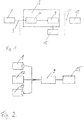
- Fig. 1 schematically the sequence of the method according to the invention on a computer unit.
- the originally collected original data, which have personal information, are stored in a source data system 1 that is assigned to the computer unit.
- This original data and the subsequent check relate to all possibly personal data, for example customer data and employee data. It is not a prerequisite of the inventive teaching that these data have to be made available in a classic database system.
- the original data are requested by a potential data consumer, for example by a customer, and transferred from the source data system 1 to a data protection test environment 5 via a secure interface 3 transferred technically specially secured second computer unit.
- This data protection check environment 5 can be set up on the computer unit temporarily or permanently as a secure environment for checking the data protection provisions.
- the source data is transferred as input to a pseudonymization module 7, for example an encoder, which pseudonymizes the original data according to a method that can be selected in advance.
- the data are forwarded to a test module 9 to check the quality of anonymity.
- the critical attributes of the pseudonymized data are determined in a machine learning process by means of overfitting.
- the machine learning process is "forced" to overfitting by appropriately preset parameters.
- the task of the test module 9 is to identify an individual as a target. Here it is iterated over a random sample or over all individuals from the original data.
- the machine learning process runs in a strongly protected environment without human intervention, which ensures that the data can only be accessed if the anonymity test has been successfully passed.
- the test module 9 also creates a test report 15 and makes it available for viewing.
- the original data, the pseudonymized data, attributes designated as identifiers, that is to say the target attribute 17, generally available census data 19 and / or in principle all other available data come into consideration as input for the test module 9.
- the test report 15 provides information as to whether the test with regard to K anonymity was passed or not.
- further properties of the learned models can be output (taking data protection regulations into account), which help in assessing the quality of the pseudonymization.
- the report can output whether, in the event of a negative test result, a further adjustment of the data volume, i.e. a further pseudonymization, has to be carried out. This includes, for example, an evaluation of the probability of a hit achieved in each iteration / individual.
Landscapes
- Engineering & Computer Science (AREA)
- Health & Medical Sciences (AREA)
- Bioethics (AREA)
- General Health & Medical Sciences (AREA)
- Theoretical Computer Science (AREA)
- Computer Hardware Design (AREA)
- Databases & Information Systems (AREA)
- Computer Security & Cryptography (AREA)
- Software Systems (AREA)
- Physics & Mathematics (AREA)
- General Engineering & Computer Science (AREA)
- General Physics & Mathematics (AREA)
- Medical Informatics (AREA)
- Storage Device Security (AREA)
Applications Claiming Priority (1)
| Application Number | Priority Date | Filing Date | Title |
|---|---|---|---|
| DE102019133137.4A DE102019133137A1 (de) | 2019-12-05 | 2019-12-05 | Maschinelles Lernverfahren für eine Datenschutzanalyse |
Publications (2)
| Publication Number | Publication Date |
|---|---|
| EP3832512A1 true EP3832512A1 (fr) | 2021-06-09 |
| EP3832512B1 EP3832512B1 (fr) | 2026-01-28 |
Family
ID=73694724
Family Applications (1)
| Application Number | Title | Priority Date | Filing Date |
|---|---|---|---|
| EP20211009.4A Active EP3832512B1 (fr) | 2019-12-05 | 2020-12-01 | Procédure d'apprentissage machine pour une analyse de protection des données |
Country Status (2)
| Country | Link |
|---|---|
| EP (1) | EP3832512B1 (fr) |
| DE (1) | DE102019133137A1 (fr) |
Citations (4)
| Publication number | Priority date | Publication date | Assignee | Title |
|---|---|---|---|---|
| US20020169793A1 (en) | 2001-04-10 | 2002-11-14 | Latanya Sweeney | Systems and methods for deidentifying entries in a data source |
| EP1550967A2 (fr) | 2003-12-31 | 2005-07-06 | Investigative Consultants, Inc. | Système et procédé pour l'identification unique des personnes |
| US20130198194A1 (en) | 2012-01-31 | 2013-08-01 | International Business Machines Corporation | Method and system for preserving privacy of a dataset |
| US20170177907A1 (en) * | 2015-07-15 | 2017-06-22 | Privacy Analytics Inc. | System and method to reduce a risk of re-identification of text de-identification tools |
-
2019
- 2019-12-05 DE DE102019133137.4A patent/DE102019133137A1/de active Pending
-
2020
- 2020-12-01 EP EP20211009.4A patent/EP3832512B1/fr active Active
Patent Citations (4)
| Publication number | Priority date | Publication date | Assignee | Title |
|---|---|---|---|---|
| US20020169793A1 (en) | 2001-04-10 | 2002-11-14 | Latanya Sweeney | Systems and methods for deidentifying entries in a data source |
| EP1550967A2 (fr) | 2003-12-31 | 2005-07-06 | Investigative Consultants, Inc. | Système et procédé pour l'identification unique des personnes |
| US20130198194A1 (en) | 2012-01-31 | 2013-08-01 | International Business Machines Corporation | Method and system for preserving privacy of a dataset |
| US20170177907A1 (en) * | 2015-07-15 | 2017-06-22 | Privacy Analytics Inc. | System and method to reduce a risk of re-identification of text de-identification tools |
Non-Patent Citations (2)
| Title |
|---|
| MATHIEU N GALTIER ET AL: "Substra: a framework for privacy-preserving, traceable and collaborative Machine Learning", ARXIV.ORG, CORNELL UNIVERSITY LIBRARY, 201 OLIN LIBRARY CORNELL UNIVERSITY ITHACA, NY 14853, 25 October 2019 (2019-10-25), XP081520905 * |
| YEOM SAMUEL ET AL: "Privacy Risk in Machine Learning: Analyzing the Connection to Overfitting", 2018 IEEE 31ST COMPUTER SECURITY FOUNDATIONS SYMPOSIUM (CSF), IEEE, 9 July 2018 (2018-07-09), pages 268 - 282, XP033382340, DOI: 10.1109/CSF.2018.00027 * |
Also Published As
| Publication number | Publication date |
|---|---|
| DE102019133137A1 (de) | 2021-06-10 |
| EP3832512B1 (fr) | 2026-01-28 |
Similar Documents
| Publication | Publication Date | Title |
|---|---|---|
| DE69908360T2 (de) | Rechnersystem und verfahren zur erklärung des verhaltens eines modelles das eingangsdaten auf ausgangdaten abbildet | |
| DE69923435T2 (de) | System und verfahren zur optimierung der leistungskontrolle von komplexen informationstechnologiesystemen | |
| DE102021004157A1 (de) | Maschinell lernendes Modellieren zum Schutz gegen die Online-Offenlegung empfindlicher Daten | |
| DE112018005725T5 (de) | Daten-deidentifikation auf der grundlage eines erkennens von zulässigen konfigurationen für daten-deidentifikationsprozesse | |
| DE112018004946T5 (de) | Kognitive datenanonymisierung | |
| EP1307816A1 (fr) | Systeme de determination d'origines d'erreur | |
| DE112012004331T5 (de) | Verwenden der Stärke von Rückverfolgbarkeitsverknüpfungen zum Überwachen der Software-Entwicklungsintegrität | |
| DE112021003403T5 (de) | Benachrichtigungsverwaltung in datenverarbeitungssystemen | |
| DE112018001290T5 (de) | Verfahren zum Schätzen der Löschbarkeit von Datenobjekten | |
| DE102012214196A1 (de) | Erkennen nicht eindeutiger Namen in einer Gruppe von Namen | |
| DE112021001565B4 (de) | Sortieren von datenelementen eines bestimmten satzes von datenelementen | |
| DE102014116117B4 (de) | Verfahren und System zum Mining von Mustern in einem Datensatz | |
| DE102008020381A1 (de) | System und Verfahren zum Sammeln von Daten aus industriellen Anlagen | |
| EP2601594A1 (fr) | Procédé et dispositif de traitement automatique de données en un format de cellule | |
| DE102023200361A1 (de) | Multivariate Ausreißer-Erkennung zum Datenschutz | |
| EP3942372B1 (fr) | Procédé de validation de paramètres de système d'un système énergétique, procédé pour faire fonctionner un système énergétique et système de gestion d'énergie pour un système énergétique | |
| DE202022101216U1 (de) | Ein System zur Bestimmung von lärmbelasteten Regionen mit Hilfe von Data-Mining-Ansätzen und Clustertechniken | |
| EP3832512A1 (fr) | Procédure d'apprentissage machine pour une analyse de protection des données | |
| EP1264253B1 (fr) | Procede et dispositif pour la modelisation d'un systeme | |
| DE102020205394A1 (de) | Computerimplementiertes Verfahren und Vorrichtung zum Erstellen eines Knowledge Graph | |
| WO2021004877A1 (fr) | Identification de serveurs non utilisés | |
| DE102019207061A1 (de) | Verfahren zur Validierung von Systemparametern eines Energiesystems, Verfahren zum Betrieb eines Energiesystems sowie Energiemanagementsystem für ein Energiesystem | |
| DE202022104376U1 (de) | Ein System zur Erstellung eines Vorhersagemodells für Unfälle unter Verwendung eines maschinellen Lernalgorithmus | |
| DE102020106857A1 (de) | Mikroskopiesystem und verfahren zum verarbeiten von mikroskopbildern | |
| DE19855873A1 (de) | Verfahren und Anordnung zum Entwurf eines technischen Systems |
Legal Events
| Date | Code | Title | Description |
|---|---|---|---|
| PUAI | Public reference made under article 153(3) epc to a published international application that has entered the european phase |
Free format text: ORIGINAL CODE: 0009012 |
|
| STAA | Information on the status of an ep patent application or granted ep patent |
Free format text: STATUS: THE APPLICATION HAS BEEN PUBLISHED |
|
| AK | Designated contracting states |
Kind code of ref document: A1 Designated state(s): AL AT BE BG CH CY CZ DE DK EE ES FI FR GB GR HR HU IE IS IT LI LT LU LV MC MK MT NL NO PL PT RO RS SE SI SK SM TR |
|
| STAA | Information on the status of an ep patent application or granted ep patent |
Free format text: STATUS: REQUEST FOR EXAMINATION WAS MADE |
|
| 17P | Request for examination filed |
Effective date: 20211117 |
|
| RBV | Designated contracting states (corrected) |
Designated state(s): AL AT BE BG CH CY CZ DE DK EE ES FI FR GB GR HR HU IE IS IT LI LT LU LV MC MK MT NL NO PL PT RO RS SE SI SK SM TR |
|
| STAA | Information on the status of an ep patent application or granted ep patent |
Free format text: STATUS: EXAMINATION IS IN PROGRESS |
|
| 17Q | First examination report despatched |
Effective date: 20240411 |
|
| GRAP | Despatch of communication of intention to grant a patent |
Free format text: ORIGINAL CODE: EPIDOSNIGR1 |
|
| STAA | Information on the status of an ep patent application or granted ep patent |
Free format text: STATUS: GRANT OF PATENT IS INTENDED |
|
| INTG | Intention to grant announced |
Effective date: 20250905 |
|
| GRAS | Grant fee paid |
Free format text: ORIGINAL CODE: EPIDOSNIGR3 |
|
| GRAA | (expected) grant |
Free format text: ORIGINAL CODE: 0009210 |
|
| STAA | Information on the status of an ep patent application or granted ep patent |
Free format text: STATUS: THE PATENT HAS BEEN GRANTED |
|
| AK | Designated contracting states |
Kind code of ref document: B1 Designated state(s): AL AT BE BG CH CY CZ DE DK EE ES FI FR GB GR HR HU IE IS IT LI LT LU LV MC MK MT NL NO PL PT RO RS SE SI SK SM TR |
|
| REG | Reference to a national code |
Ref country code: CH Ref legal event code: F10 Free format text: ST27 STATUS EVENT CODE: U-0-0-F10-F00 (AS PROVIDED BY THE NATIONAL OFFICE) Effective date: 20260128 Ref country code: GB Ref legal event code: FG4D Free format text: NOT ENGLISH |
|
| REG | Reference to a national code |
Ref country code: DE Ref legal event code: R096 Ref document number: 502020012616 Country of ref document: DE |
|
| REG | Reference to a national code |
Ref country code: IE Ref legal event code: FG4D Free format text: LANGUAGE OF EP DOCUMENT: GERMAN |