EP3834469B1 - Procédé et dispositif de rapport d'état de tampon - Google Patents
Procédé et dispositif de rapport d'état de tampon Download PDFInfo
- Publication number
- EP3834469B1 EP3834469B1 EP19847233.4A EP19847233A EP3834469B1 EP 3834469 B1 EP3834469 B1 EP 3834469B1 EP 19847233 A EP19847233 A EP 19847233A EP 3834469 B1 EP3834469 B1 EP 3834469B1
- Authority
- EP
- European Patent Office
- Prior art keywords
- bsr
- mac
- triggered
- mac pdu
- base station
- Prior art date
- Legal status (The legal status is an assumption and is not a legal conclusion. Google has not performed a legal analysis and makes no representation as to the accuracy of the status listed.)
- Active
Links
Images




Classifications
-
- H—ELECTRICITY
- H04—ELECTRIC COMMUNICATION TECHNIQUE
- H04W—WIRELESS COMMUNICATION NETWORKS
- H04W72/00—Local resource management
- H04W72/20—Control channels or signalling for resource management
- H04W72/21—Control channels or signalling for resource management in the uplink direction of a wireless link, i.e. towards the network
-
- H—ELECTRICITY
- H04—ELECTRIC COMMUNICATION TECHNIQUE
- H04W—WIRELESS COMMUNICATION NETWORKS
- H04W28/00—Network traffic management; Network resource management
- H04W28/02—Traffic management, e.g. flow control or congestion control
- H04W28/0278—Traffic management, e.g. flow control or congestion control using buffer status reports
-
- H—ELECTRICITY
- H04—ELECTRIC COMMUNICATION TECHNIQUE
- H04W—WIRELESS COMMUNICATION NETWORKS
- H04W72/00—Local resource management
- H04W72/20—Control channels or signalling for resource management
- H04W72/23—Control channels or signalling for resource management in the downlink direction of a wireless link, i.e. towards a terminal
-
- H—ELECTRICITY
- H04—ELECTRIC COMMUNICATION TECHNIQUE
- H04W—WIRELESS COMMUNICATION NETWORKS
- H04W76/00—Connection management
- H04W76/10—Connection setup
-
- H—ELECTRICITY
- H04—ELECTRIC COMMUNICATION TECHNIQUE
- H04W—WIRELESS COMMUNICATION NETWORKS
- H04W80/00—Wireless network protocols or protocol adaptations to wireless operation
- H04W80/02—Data link layer protocols
-
- H—ELECTRICITY
- H04—ELECTRIC COMMUNICATION TECHNIQUE
- H04L—TRANSMISSION OF DIGITAL INFORMATION, e.g. TELEGRAPHIC COMMUNICATION
- H04L47/00—Traffic control in data switching networks
- H04L47/10—Flow control; Congestion control
- H04L47/30—Flow control; Congestion control in combination with information about buffer occupancy at either end or at transit nodes
Definitions
- the present disclosure relates to buffer status reporting during uplink scheduling in a wireless communications network.
- the 5G or pre-5G communication system is also called a 'beyond 4G network' or a 'post long term evolution (LTE) system'.
- the 5G communication system is considered to be implemented in higher frequency (mmWave) bands, e.g., 60 GHz bands, so as to accomplish higher data rates.
- mmWave e.g. 60 GHz bands
- beamforming massive multiple-input multiple-output (MIMO), full dimensional MIMO (FD-MIMO), array antenna, analog beamforming, and large scale antenna techniques are discussed with respect to 5G communication systems.
- RANs cloud radio access networks
- D2D device-to-device
- SWSC sliding window superposition coding
- ACM advanced coding modulation
- FBMC filter bank multi carrier
- NOMA non-orthogonal multiple access
- SCMA sparse code multiple access
- the Internet which is a human centered connectivity network where humans generate and consume information
- IoT Internet of things
- IoE Internet of everything
- sensing technology “wired/wireless communication and network infrastructure”, “service interface technology”, and “security technology”
- M2M machine-to-machine
- MTC machine type communication
- IoT Internet technology services
- IoT may be applied to a variety of fields including smart home, smart building, smart city, smart car or connected cars, smart grid, health care, smart appliances and advanced medical services through convergence and combination between existing information technology (IT) and various industrial applications.
- IT information technology
- 5G communication systems to IoT networks.
- technologies such as a sensor network, MTC, and M2M communication may be implemented by beamforming, MIMO, and array antennas.
- Application of a cloud RAN as the above-described big data processing technology may also be considered to be as an example of convergence between the 5G technology and the IoT technology.
- a user equipment, UE for a wireless communication system, the UE being capable of dual connectivity to two different Radio Access Technologies, the UE comprising: a Radio Frequency hardware unit; and processing circuitry to control the Radio Frequency hardware unit, wherein the processing circuitry is to: implement a first MAC entity corresponding to a first Radio Access Technology, RAT, type and a second MAC entity corresponding to a second different RAT technology type; trigger a Buffer Status Report, BSR, using at least one of the first MAC entity and the second MAC entity, the trigger being responsive to buffering of data awaiting UL transmission, the data having a split bearer type or a direct bearer type; assemble a MAC PDU in at least one of the first MAC entity and the second MAC entity and, if the MAC PDU comprises a BSR MAC Control Element providing information on UL buffer contents corresponding to at least one of the first RAT and the second RAT, select a BSR trigger cancellation policy selection of the policy depending both
- the selected BSR trigger cancellation is to be performed at the assembly of the MAC PDU assembly or at a subsequent transmission of the MAC PDU.
- one of the first MAC entity and the second MAC entity is an LTE MAC entity and the other of the first MAC entity and the second MAC entity is a New Radio MAC entity.
- the MAC PDU is assembled only in a New Radio MAC entity and wherein the BSR cancellation test comprises determining if the BSR MAC CE included buffer status information for all Logical Channel Groups which at a time when the MAC PDU was assembled had buffered data for UL transmission.
- the processing unit is to cancel all pending BSRs triggered up to a time of the MAC PDU assembly.
- the processing circuitry is to suppress cancellation of at least a subset of the pending triggered BSRs.
- the UE has dual connectivity to an LTE base station and a new Radio base station and wherein the buffered data for UL transmission corresponds to a direct bearer and wherein the BSR cancellation test comprises associating the MAC PDU with either the LTE base station or the New Radio base station.
- the BSR cancellation test is to associate the MAC PDU with the LTE base station if at least one of: the MAC PDU is transmitted over an LTE cell, transmitted over an LTE cell group or assembled by the LTE MAC entity.
- the processing circuitry is to cancel all previously triggered BSRs if the MAC PDU contains a MAC BSR CE.
- the BSR is to associate the MAC PDU with the New Radio base station if at least one of: the MAC PDU is transmitted over a New radio cell, transmitted over a New Radio cell group or assembled by the New Radio MAC entity.
- the processing circuitry is to determine if the BSR MAC CE included buffer status information for all Logical Channel Groups of the New Radio UE MAC entity having buffered data for UL transmission at a time when the MAC PDU was assembled.
- the processing circuitry is to suppress cancellation of all pending BSRs triggered prior to MAC PDU assembly for the New Radio MAC entity.
- processing circuitry is further to suppress cancellation of a subset of pending triggered scheduling requests for the New Radio MAC entity and corresponding to the excluded buffer status information and to ensure continued running of each respective sr-ProhibitTimer.
- the processing unit is to cancel all BSRs triggered for the New Radio MAC entity up to a time of the MAC PDU assembly.
- processing circuitry is further to cancel all scheduling requests for the New Radio MAC entity up to a time of the MAC PDU assembly and to stop each respective sr-ProhibitTimer.
- the UE has dual connectivity to an LTE base station and a new Radio base station and wherein the buffered data for UL transmission corresponds to a split bearer and wherein BSR MAC CEs pertaining to arrival of data for the split bearer are transmitted over one or the other of the NR cell and the LTE cell.
- the BSR cancellation test is to associate the MAC PDU with the LTE base station if at least one of: the MAC PDU is transmitted over an LTE cell, transmitted over an LTE cell group or assembled by the LTE MAC entity.
- the processing circuitry is to cancel all previously triggered BSRs for both the LTE MAC entity and the New Radio MAC entity.
- the BSR is to associate the MAC PDU with the New Radio base station if at least one of: the MAC PDU is transmitted over a New radio cell, transmitted over a New Radio cell group or assembled by the New Radio MAC entity.
- the processing circuitry is to determine if the BSR MAC CE included buffer status information for all Logical Channel Groups having buffered data at a time when the MAC PDU was assembled.
- the processing circuitry is to suppress cancellation of pending triggered BSRs for both the LTE MAC entity and the New radio MAC entity.
- the processing unit is to cancel all BSRs triggered for both the LTE MAC entity and the New radio MAC entity up to a time of the MAC PDU assembly.
- BSR trigger(s) corresponding to one of the LTE MAC entity and the New Radio MAC entity are duplicated on the other of the LTE MAC entity and the New Radio MAC entity and wherein the duplicated BSR trigger(s) cause the processing circuitry to generate a respective MAC PDU in both the New Radio MAC entity and the LTE MAC entity.
- the BSR cancelation test comprises determining that the UL data corresponds to a dual connection split bearer for which the buffered data threshold has been exceeded and selecting an identical BSR cancellation mechanism for both the LTE MAC entity and the New Radio MAC entity.
- the identical BSR cancellation mechanism is selected from an LTE cancellation mechanism comprising cancelling all previously triggered BSRs if the MAC PDU contains a MAC BSR CE or a New Radio cancellation mechanism comprising selectively cancelling or suppressing cancellation of BSR triggers generated prior to assembly of the MAC PDUs depending on an outcome of a check if the BSR MAC CE included all Logical Channel Groups having data available for transmission when the respective MAC PDU was assembled.
- a method of UL scheduling management in a UE of a wireless communications network comprising: implementing a first MAC entity corresponding to a first Radio Access Technology type and a second MAC entity corresponding to a second different Radio Access technology type; triggering a Buffer Status Report, BSR, using at least one of the first MAC entity and the second MAC entity, the trigger being responsive to buffering of data awaiting UL transmission, the data having a split bearer type or a direct bearer type; assemble a MAC PDU in at least one of the first MAC entity and the second MAC entity and, if the MAC PDU comprises a BSR MAC Control Element providing information on UL buffer contents corresponding to at least one of the first RAT and the second RAT; and selecting a BSR trigger cancellation policy, selection of the policy depending both on the Radio Access Technology type of the MAC entity used for assembly of the MAC PDU and on the bear
- the selected BSR trigger cancellation is to be performed at the assembly of the MAC PDU assembly or at a subsequent transmission of the MAC PDU.
- one of the first MAC entity and the second MAC entity is an LTE MAC entity and the other of the first MAC entity and the second MAC entity is a New Radio MAC entity.
- the MAC PDU is assembled only in a New Radio MAC entity and wherein the BSR cancellation test comprises determining if the BSR MAC CE included buffer status information for all Logical Channel Groups having buffered data for UL transmission at a time when the MAC PDU was assembled.
- a user equipment, UE for a wireless communication system, the UE comprising: a Radio Frequency hardware unit; and processing circuitry to control the Radio Frequency hardware unit, wherein the processing circuitry is to: trigger, via a Media Access Control, MAC, entity, a Buffer Status Report, BSR, the trigger being responsive to buffering of data awaiting uplink, UL, transmission; assemble a MAC Packet Data Unit, PDU and, if the MAC PDU contains a BSR MAC Control Element providing BSR information, perform a BSR trigger cancellation test to determine if the BSR MAC Control Element included buffer status information for all Logical Channel Groups which at the time when the MAC PDU was assembled had buffered data for UL transmission and to perform BSR trigger cancellation depending on an outcome of the BSR trigger cancellation test.
- the processing circuitry is to: trigger, via a Media Access Control, MAC, entity, a Buffer Status Report, BSR, the trigger being responsive to buffering of data awaiting uplink, UL,
- the BSR trigger cancellation test is performed at a MAC PDU assembly stage or at a MAC PDU transmission stage.
- the processing unit is to cancel all BSR triggered prior to the assembly of the MAC PDU.
- the BSR trigger cancellation test determines that the BSR MAC CE excluded buffer status information of at least one Logical Channel Group that had buffered data for UL transmission, the buffer status triggers issued prior to the assembly of the MAC PDU are not cancelled.
- processing circuitry is further to at least one of: prevent cancellation of one or more pending scheduling requests for MAC entity; keep all pending SRs triggered prior to MAC PDU assembly; and keep all pending SRs corresponding to the BSR triggers that are not cancelled.
- processing circuitry is to ensure continued running of a respective sr-ProhibitTimer for each scheduling request for which cancellation is prevented.
- the UE has dual connectivity to an LTE base station and a new Radio base station and comprises an LTE MAC entity and a New Radio MAC entity and wherein the BSR trigger is responsive to buffering of UL data for a direct bearer and wherein the BSR cancellation test is invoked when the MAC PDU assembly is performed by a New Radio MAC entity of the UE or when the MAC PDU is to be transmitted over a New radio cell or over a New Radio cell group.
- a further different BSR cancellation test is t performed if at least one of: the MAC PDU is transmitted over an LTE cell, transmitted over an LTE cell group or the MAC PDU assembly is performed by the LTE MAC entity of the UE.
- the processing circuitry is to cancel all previously issued BSR triggers in the LTE MAC entity if the MAC PDU contains a BSR MAC CE.
- the implemented BSR cancellation test is to determine if the BSR MAC CE included buffer status information for all Logical Channel Groups of the New Radio MAC entity of the UE having buffered data for UL transmission at a time when the MAC PDU was assembled.
- any pending BSR triggers issued by the New Radio MAC entity prior to the assembly of the MAC PDU are retained.
- processing circuitry is further to prevent cancellation of one or more pending scheduling requests for the New Radio MAC entity corresponding to the retained BSR triggers.
- processing circuitry is to ensure continued running of a respective sr-ProhibitTimer for each scheduling request for which cancellation is prevented.
- the processing unit is to cancel all pending BSR triggers for the New Radio MAC entity issued prior to the MAC PDU assembly.
- processing circuitry is further to cancel all pending scheduling requests for the New Radio MAC entity issued prior to the MAC PDU assembly and to stop each respective sr-ProhibitTimer.
- the UE has dual connectivity to an LTE base station and a New Radio base station and comprises an LTE MAC entity and an New Radio MAC entity and wherein the BSR trigger is responsive to buffering of UL data for a split bearer and wherein the BSR cancellation test is invoked when the MAC PDU assembly is performed by the New Radio MAC entity of the UE or when the MAC PDU is to be transmitted over a New radio cell or transmitted over a New Radio cell group
- the UE has dual connectivity to an LTE base station and a New Radio base station and comprises an LTE MAC entity and an New Radio MAC entity and wherein the BSR trigger is responsive to buffering of UL data for a split bearer and wherein the BSR cancellation test is invoked for both BSRs triggers generated by the New Radio MAC entity and BSR triggers generated by the LTE MAC entity when an UL buffer threshold is exceed.
- the BSR cancellation test determines that the BSR MAC CE excluded buffer status information of at least one Logical Channel Group of either the LTE MAC entity or the New Radio MAC entity that had buffered data at a time when the MAC PDU was assembled, the buffer status triggers issued prior to the assembly of the MAC PDU are not cancelled for both the LTE MAC entity and the New radio MAC entity.
- the processing unit is to cancel all pending BSRs triggered for both the LTE MAC entity and the New radio MAC entity up to a time of the MAC PDU assembly.
- a method of UL scheduling management in a UE of a wireless communications network comprising: triggering, via a Media Access Control, MAC, entity, a Buffer Status Report, BSR, the trigger being responsive to buffering of data awaiting uplink, UL, transmission; assembling a MAC Packet Data Unit, PDU, comprising a BSR MAC Control Element providing BSR information; and performing a BSR trigger cancellation test to determine if the BSR MAC Control Element included buffer status information for all Logical Channel Groups having buffered data for UL transmission when the MAC PDU was assembled; and performing BSR trigger cancellation depending on an outcome of the BSR trigger cancellation test.
- the BSR trigger cancellation test is performed at a MAC PDU assembly stage or at a MAC PDU transmission stage.
- the processing unit is to cancel all BSR triggered prior to the assembly of the MAC PDU.
- the BSR trigger cancellation test determines that the BSR MAC CE excluded buffer status information of at least one Logical Channel Group that had buffered data for UL transmission at the time of MAC PDU assembly, any pending buffer status triggers issued prior to the assembly of the MAC PDU are not cancelled.
- a method of reporting a buffer status of a terminal comprising: triggering a buffer status report (BSR) in a media access control (MAC) layer, based on a BSR riggering condition; transmitting, to a base station, a scheduling request (SR) for transmitting uplink data; receiving an uplink resource allocation grant (UL grant) from the base station, based on the SR; assembling a media access control protocol data unit (MAC PDU); transmitting the MAC PDU; and determining whether to cancel the triggered BSR, based on a BSR MAC control element (BSR MAC CE) included in the MAC PDU.
- BSR buffer status report
- MAC media access control
- the determining of whether to cancel the triggered BSR comprises canceling the triggered BSR, based on whether the BSR MAC CE contains buffer status information up to a certain event that triggers a BSR prior to the assembly of the MAC PDU.
- the method further comprises canceling the triggered BSR when the uplink resource allocation grant is able to accommodate all pending data available for uplink transmission and is not sufficient to accommodate the BSR MAC CE and a MAC sub-header.
- the method further comprises triggering the SR, based on a certain SR triggering condition; determining whether the triggered SR has been triggered prior to the assembly of the MAC PDU; and determining whether to cancel the triggered SR, based on a result of the determination whether the triggered SR has been triggered prior to the assembly of the MAC PDU.
- the determining of whether to cancel the triggered SR comprises canceling the triggered SR, based on whether the BSR MAC CE contains buffer status information up to a certain event that triggers a BSR prior to the assembly of the MAC PDU.
- the method further comprises canceling the triggered SR when the uplink resource allocation grant is able to accommodate all pending data available for uplink transmission.
- the method further comprises stopping an sr-ProhibitTimer, when it is determined that the triggered SR is cancelled.
- the determining of whether to cancel the triggered BSR is performed when the MAC PDU is transmitted to the base station.
- the determining of whether to cancel the triggered SR is performed when the MAC PDU is transmitted to the base station.
- the triggering of the BSR is performed after the MAC PDU is assembled and before the MAC PDU is transmitted.
- a UE for reporting a buffer status comprising: a transceiver; and one or more processors coupled with the transceiver, wherein the processor is configured to: trigger a buffer status report (BSR) in a media access control (MAC) layer, based on a BSR triggering condition; transmit, to a base station, a scheduling request (SR) for transmitting uplink data; receive an uplink resource allocation grant (UL grant) from the base station, based on the SR; assemble a media access control protocol data unit (MAC PDU); transmit the MAC PDU; and determine whether to cancel the triggered BSR, based on a BSR MAC control element (BSR MAC CE) included in the MAC PDU.
- BSR buffer status report
- MAC media access control
- the processor is further configured to cancel the triggered BSR, based on whether the BSR MAC CE contains buffer status information up to a certain event that triggers a BSR prior to the assembly of the MAC PDU.
- the processor is further configured to cancel the triggered BSR when the uplink resource allocation grant is able to accommodate all pending data available for uplink transmission and is not sufficient to accommodate the BSR MAC CE and a MAC sub-header.
- the processor is further configured to: trigger the SR, based on a certain SR triggering condition; determine whether the triggered SR has been triggered prior to the assembly of the MAC PDU; and determine whether to cancel the triggered SR, based on a result of the determination whether the triggered SR has been triggered prior to the assembly of the MAC PDU.
- the processor is further configured to cancel the triggered SR, based on whether the BSR MAC CE contains buffer status information up to a certain event that triggers a BSR prior to the assembly of the MAC PDU.
- the processor is further configured to cancel the triggered SR when the uplink resource allocation grant is able to accommodate all pending data available for uplink transmission.
- the processor is further configured to stop an sr-ProhibitTimer, when it is determined that the triggered SR is cancelled.
- the determination as to whether to cancel the triggered BSR is performed when the MAC PDU is transmitted to the base station.
- the determination as to whether to cancel the triggered SR is performed when the MAC PDU is transmitted to the base station.
- the BSR is triggered after the MAC PDU is assembled and before the MAC PDU is transmitted.
- Wireless or mobile (cellular) communications networks in which a mobile terminal (UE, such as a mobile handset) communicates via a radio link with a network of base stations or other wireless access points connected to a telecommunications network, have undergone rapid development through a number of generations.
- Second Generation (2G) digital systems such as Global System for Mobile communications (GSM) have been largely replaced or augmented by Third Generation (3G) digital systems such as the Universal Mobile Telecommunications System (UMTS), which uses a Universal Terrestrial Radio Access Network (UTRAN) radio access technology and a similar core network to GSM.
- UMTS is specified in standards produced by the 3 rd Generation Partnership Project (3GPP).
- 3GPP design specify and standardise technologies for mobile wireless communications networks.
- LTE Long Term Evolution
- LTE Advanced is defined by 3GPP standards releases from 3GPP Release 10 and considered to be a 4G mobile communication system by the International Telecommunication Union (ITU).
- 5G Fifth Generation
- NR New Radio
- 5G networks will include the capacity to provide extremely high data rates to mobile users in relatively compact geographical areas.
- a wider frequency band such as may be available in the Extremely High Frequency (EHF) band (roughly in the 30-300 GHz range). Radio waves in this band range from 10 mm to 1 mm and so the band is sometimes referred to as the millimetre band or millimetre wave (mm-wave).
- EHF Extremely High Frequency
- mm-wave millimetre band
- unlicensed spectrum around 60 GHz may be exploited to provide a high data rate service in a small cell.
- Radio waves in the 60 GHz band are subject to high atmospheric attenuation due to absorption by gases in the atmosphere and so are limited in range, though with the benefit of allowing for smaller frequency reuse distances.
- EHF transmissions are also substantially line of sight and are readily blocked by objects in their path or reflected or diffracted by building edges. These limitations on EHF transmissions may be mitigated through the use of beam-forming which can increase effective transmission range. Beam-forming may also be exploited at lower frequencies for the purpose of enhanced frequency reuse.
- Transmission beam-forming concentrates a reach region of a radio wave in a specific direction using a plurality of antennas (an antenna array).
- Reception beam-forming concentrates the reception of radio waves from an intended direction using a reception antenna array.
- mmSCs millimetre wave Small Cells
- mm-wave frequency a small cell
- Each mmSC communicates with a UE through the use of a directional beam pair in which respective transmission and reception beams are selected to provide for maximum received signal strength based on the known or estimated locations of the UE and the mmSC.
- a 5G RAT is to combine a mm-wave network with an overlaid conventional cellular network such as LTE.
- the UE may have dual RF interfaces for the LTE link and the mm-wave link respectively, referred to as Inter RAT (IRAT) dual connectivity (IRAT aggregation).
- IRAT Inter RAT
- An ability for a mobile device to connect simultaneously to LTE and 5G New Radio is referred to as "EN-DC", which stands for E-UTRAN New Radio - Dual Connectivity.
- GSM Global System for Mobile communications
- UMTS Universal Mobile communications
- 3GPP TS 37.340 version 15.2.0 of June 2018 describes LTE and NR multi-connectivity including general principles in section 4.1.
- BSR Buffer Status Reports
- LTE base station and NR base station are uses to refer to transmission-reception points for the corresponding Radio Access technology.
- LTE base stations may alternatively be denoted eNodeBs or eNBs and NR base stations may alternatively be denoted 5G base stations gNodeBs or gNBs.
- the BSR is a Media Access Control (MAC) layer message indicating to the LTE base station or to the NR base station the volume of data to transmit.
- MAC Media Access Control
- the network Responsive to a Scheduling Request sent from the UE to a connected base station after generation of a BSR trigger by the UE and if there are no uplink grant(s) already scheduled or configured, the network allocates a certain amount of UL Grant (e.g. resources for PUSCH) if the resource is available.
- the BSR trigger may be viewed as an internal UE signal. This makes efficient use of resources by only allocating resources when there is UL data awaiting transmission and not allocating more resources than needed.
- a MAC PDU containing BSR information in a Buffer Status Report Medium Access Control Element (BSR MAC CE) may be transmitted to the base station using the allocated UL resources depending on the size of the UL grant. When the MAC PDU including a BSR MAC CE is transmitted, at least some previously triggered BSRs may be cancelled. It is desirable to ensure that the serving LTE base station and/or NR base station efficiently receive buffer status information for all logical channels.
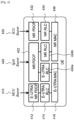
- FIG. 1 schematically illustrates uplink scheduling between a base station and a UE.
- the base station 110 may be an LTE base station or an NR base station.
- the base station 110 has a scheduler 112 that makes UL resource scheduling allocations to a UE 150.
- the UE 150 comprises a priority handling unit 152, a first MAC entity 154, an optional second different MAC entity 156 and a plurality of Radio Link Control (RLC) buffers 158a, 158b, , 158n.
- RLC Radio Link Control
- the uplink scheduler 112 dynamically controls which UEs are to transmit on their uplink shared channel and on which uplink time and frequency resources.
- the base station scheduler 112 determines a transport format for the UE but the uplink scheduling decision is taken per UE rather than per radio bearer.
- the base station 110 controls a payload of a scheduled UE, but the UE 150 itself is responsible for generating a MAC PDU, , by selecting from which radio bearers the data is taken based on strict rules defined in the 3GPP specifications.
- the base station scheduler 112 may allocate uplink resources to take into account quality of service (QoS) requirements.
- QoS quality of service
- the first MAC entity 154 may be associated with the base station 110 and this MAC entity has six logical channels, which have been sub-divided into four Logical Channel Groups (LCGs).
- the second different MAC entity 156 also has six logical channels and four differently assigned LCGs. From a scheduling perspective, buffer information from each logical channel is beneficial although this could result in too much overhead. Logical channels are therefore grouped into LCGs and the reporting is done per group. A buffer-size field in a buffer status report indicates an amount of data awaiting transmission across all logical channels in a logical-channel group.
- the first MAC entity 154 may be associated with an LTE base station whereas the second MAC entity 156 may be associated with an NR base station or vice versa.
- the UE in some embodiments may be a single connectivity NR (or 5G) terminal.
- the EN-DC is deployed with the LTE network as the core network so that the LTE base station represents a Master Node and the NR base station represents a Secondary Node.
- alternative deployments may have a 5G core network in which the Master Node is the NR base station and the Secondary node is an LTE base station.
- the UL resource grant allocated by the base station 110 may be used by the UE to transmit a BSR MAC CE specifying the quantity of data in the RLC buffers 158a to 158n awaiting transmission.
- BSRs In terms of data structure of BSRs to be included in the MAC PDU and a BSR MAC CE, there are a number of different types of BSR: Long BSRs, Short BSRs, Padding BSRs, Truncated BSRs, Periodic BSRs and Regular BSRs.
- a Short BSR informs the base station about amount of data in UL buffer only for one specific LCG of a plurality of possible LCGs and includes an LCG identifier field.
- a Long BSR includes an amount of buffered data in each of the full set of LCGs and has, for example, a six-bit field to specify a buffer size for each of four LCGs.
- BSR triggers There are a number of “triggers” in the UE that may prompt the UE to send a BSR to a base station corresponding to a connected radio bearer.
- the BSR trigger conditions are described in 3GPP TS 36.321 version 11.5.2.0 of July 2018 section 5.4.5 for LTE and in 3GPP TS 38.321 version 15.2.0 of June 2018 section 5.4.5 for NR (5G).
- a summary of BSR triggers is as follows:
- the UE may include a BSR MAC CE as part of a MAC PDU and set the BSR index values all to zero.
- a Long BSR will be sent to the base station by the UE, whereas in other circumstances a Short BSR will be sent.
- a Regular BSR and a Periodic BSR the decision to send a long or a Short BSR may be summarised as follows:
- This long or Short BSR type determination is based solely on the number of LCGs having buffered data awaiting transmission and takes no account of the size of the UL grant.
- Padding BSR (rather than a Regular BSR or a Periodic BSR) the decision on whether to send a Long BSR, a Short BSR or a further type denoted a "Truncated BSR" is made differently.
- the following algorithm may apply to deciding on a type of Padding BSR:
- a Short BSR or a Truncated BSR may be sent in the BSR MAC CE of the MAC PDU, even if that excludes information on data buffered in some of the LCGs when the MAC PDU was assembled. This is due to bandwidth constraints in the Padding BSR.
- a Regular BSR rather than a Padding BSR
- the long type or short type may be allocated as indicated above depending entirely on the number of LCGs that have data buffered for transmission.
- the information that is ultimately transmitted to the base station in the MAC PDU may exclude some of the LCGs. This is because a Logical Channel Prioritisation Procedure may initially determine that a Long BSR is appropriate for the Regular BSR, but subsequently determine that there is no room for the Long BSR based on the size of the UL grant. In this situation a Padding BSR may be sent instead of the more appropriate Long BSR. This may have the consequence that the recipient base station is unaware of the total volume of buffered data awaiting uplink transmission.
- BSR cancellation and Scheduling Request (SR) policies may differ between LTE and 5G.
- This may be denoted an NR BSR trigger cancellation policy, which may be modified according to some embodiments.
- the BSR triggers are issued in response to certain conditions, as described above. Once a BSR has been triggered then a corresponding BSR MAC CE is to be generated (provided the UE has received an UL grant), the BSR MAC CE to include Buffer Status Report information corresponding to a buffered data quantity pertaining to one LCG (short BSR) or all LCGs (Long BSR) or a subset of LCGs (truncated BSR or padding BSR) at a given point in time. The relevant point in time may be the time of MAC PDU assembly or the time of BSR MAC CE generation. When a BSR is triggered it will be pending until cancelled.
- LTE specification 3GPP TS 36.321 version 15.2.0 of July 2018 section 5.4.3 states: "When an SR is triggered, it shall be considered as pending until it is cancelled. All pending SR(s) shall be cancelled and sr-ProbihitTimer and ssr-ProhibitTimer shall be stopped when a MAC PDU is assembled and this PDU includes a BSR which contains buffer status up to (and including) the last event that triggered a BSR (see subclause 5.4.5),..” This may be considered an LTE SR trigger cancellation policy.
- a Scheduling Request is used for requesting UL-SCH resources for new transmission in both LTE and 5G.
- the size of the UL grant may not be sufficient to accommodate a Long BSR, resulting in a Padding BSR or Truncated BSR being included in the BSR MAC CE instead of the Long BSR.
- the triggered BSR(s) up to and including the last event that triggered a BSR prior to MAC PDU assembly may be cancelled. This may have the consequence that the base station is unaware of data awaiting transmission in some LCGs.
- the Padding BSRs and Truncated BSRs that are sometimes used in lieu of Long BSRs do not accurately represent an up to date buffer status.
- the present technique involves performing a BSR cancellation test, which in the case of NR, only cancels existing BSR triggers if the BSR MAC CE included in the MAC PDU covered all LGCs that had data available for UL transmission when the BSR MAC CE was assembled.
- a BSR cancellation test which in the case of NR, only cancels existing BSR triggers if the BSR MAC CE included in the MAC PDU covered all LGCs that had data available for UL transmission when the BSR MAC CE was assembled.
- 5G has no TTI.
- 4G assembly and transmission of a MAC PDU are more likely to be closely spaced than in 5G.
- one or more BSR triggers may occur after MAC PDU assembly but prior to transmission of the same MAC PDU.
- the MAC entity 154, 156 may be configured with zero, one, or more SR configurations.
- An SR configuration may consist of a set of PUCCH resources for SR across different bandwidth parts and cells. For a logical channel, at most one PUCCH resource for a given SR configuration is configured per bandwidth part.
- Each SR configuration corresponds to one or more logical channels.
- Each logical channel may be mapped to zero or one SR configuration, which is configured by the RRC.
- the SR configuration of the logical channel that triggered the BSR (if such a configuration exists) is considered as a corresponding SR configuration for the triggered SR.
- the cancellation of SRs is aligned with the new BSR cancellation test.
- all pending SR(s) triggered prior to the MAC PDU assembly shall be cancelled and each respective sr-ProhibitTimer shall be stopped when the MAC PDU is transmitted and this PDU includes a BSR MAC CE which contains buffer status up to (and including) the last event that triggered a BSR prior to the MAC PDU assembly, and this buffer status covers all LCGs which had data available for transmission when the BSR MAC CE was built.
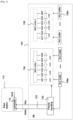
- FIG. 2 schematically illustrates a communication sequence between a UE 210 and an NR base station 290.
- the NR base station 290 sends a communication 291 the UE 210 Radio Resource Control (RRC) connection reconfiguration information for NR, Data Radio bearer configuration information, LCH configuration information and LCG configuration information.
- RRC Radio Resource Control
- uplink data arrives in the RLC buffers and/or the PDCP buffers.
- a first BSR trigger is generated by an NR MAC entity of the UE 210 at box 214 when no uplink grant is currently available for the relevant LCGs.
- a scheduling request 215 is issued form the UE 210 to the NR base station 290.
- the NR base station allocates UL resource to the UE at box 292, which is communicated by an UL grant signal 217.
- the UE 210 at box 216 After issuance of the scheduling request 215, the UE 210 at box 216 generates a second BSR trigger responsive to higher priority data in the UL buffers than the data associated with the first BSR trigger 214.
- the UE 210 assembles a MAC PDU and concurrently checks which LCGs have data awaiting UL transmission.
- a BSR MAC CE may be included in the MAC PDU and may include the buffer status information relevant to both the first BSR trigger 214 and to the second BSR trigger 216.
- a third BSR trigger is generated by a MAC entity of the UE 210 at box 220.
- the third BSR trigger is too late for inclusion in the MAC PDU assembled at box 218.
- LCP Logical Channel Prioritisation
- the LCP process involves deciding at the outset, purely based on the number of LCGs with buffered data for transmission, an appropriate BSR MAC CE to include in the MAC PDU (e.g. Long BSR or Short BSR).
- This initial decision does not take into account a size of an UL grant on which the MAC PDU is to be sent. It is more computationally efficient to allocate the BSR MAC CE in this way although in principle an available bandwidth in the corresponding UL grant could be predicted.
- a situation can arise whereby at the end of the LCP process, close to finalisation of the MAC PDU assembly, the initial allocation of BSR MAC CE is changed due to lack of available UL bandwidth in the UL grant. This change of allocation can lead to a gap in the reporting of some LCG buffers having UL data awaiting transmission due to the way that BSR triggers are cancelled, assuming that the initially allocated BSR MAC CE was transmitted to the base station.
- a BSR cancellation test is performed to decide whether or not to cancel the first BSR trigger 214 and the second BSR trigger 216.
- This BSR cancellation test involves a check to correlate the contents of any BSR MAC CE included in the MAC PDU assembled at box 218 with the LCG buffer status at a time corresponding to the MAC PDU assembly at box 218.
- the MAC PDU may not always include a BSR MAC CE, but cancellation of BSR triggers may be performed only where the MAC PDU does contain a BSR MAC CE corresponding to one of more BSR triggers.
- a decision is made whether or not to cancel at least one of the first BSR trigger 214 and the second BSR trigger 216.
- the relevant buffer status information will be included in the MAC PDU assembled at box 218.
- only buffer status information relevant to the first BSR trigger 214 may have been included in the MAC PDU, in which case the first BSR trigger 214 may be cancelled but the second BSR trigger 216 will remain active.
- the MAC PDU may have been devoid of up to date buffer status information corresponding to BSR 1 and BSR2, in which case neither of the two triggers is cancelled.
- the MAC PDU that was assembled at box 218 is transmitted to the NR base station 290.
- the third BSR trigger 220 was generated after assembly of the PDU at box 218, it is not a candidate for cancellation because the updated buffer status information that it contains arrived too late for inclusion in the MAC PDU that was assembled at box 218.
- Figure 2 shows the BSR cancellation test being performed around the time of the MAC PDU assembly, in alternative embodiments it could be performed just before or soon after transmission of the MAC PDU at box 226.
- the cancellation of pending triggered BSRs responsive to an outcome of the BSR cancellation test may be performed at a stage of MAC PDU (and hence BSR MAC CE) assembly, or alternatively may be performed at a stage of MAC PDU transmission.
- Figure 3A schematically illustrates a UE 310 having a simultaneous dual connection to both a Master base station 322 and a Secondary base station 324.
- a backhaul link 325 is provided for communication between the Master 322 and Secondary 324 base stations.
- a Master cell 332 is an area within which the UE can form a wireless connection with the Mater base station 322.
- Secondary cell 334 is an area within which the UE 310 can form a wireless connection with the secondary base station. There is an overlap region between the Master cell 332 and the Secondary cell 334. In the case of EN-DC, the UE can simultaneously form an NR wireless connection and an LTE wireless connection at least within the overlap region.
- the master base station 322 is an LTE base station whilst the Secondary Base station is an NR base station.
- the Master base station 322 is an NR base station whilst the Secondary Base station is an LTE base station.
- Each of the communications links in the Figure 3A embodiment may use carrier aggregation and thus there may be a Master Cell Group associated with the Master base station 322 and/or there may be a Secondary Cell Group associated with the Secondary base station 324.
- Multi-RAT Dual Connectivity is a generalization of the Intra-E-UTRA Dual Connectivity (DC) described in 3GPP TS 36.300 version 15.2.0 of July 2018 , where a multiple receive/transmit UE may be configured to utilise resources provided by two different nodes connected via a non-ideal backhaul, one providing LTE (or E-UTRAN) access and the other one providing NR access.
- One node 322 acts as the Master Node and the other as the Secondary Node 324.
- the Master Node 322 and Secondary Node 324 may be connected via a network interface and at least the Master Node322 is connected to the core network.
- MR-DC is currently designed based on the assumption of non-ideal backhaul 325 between the different nodes but can also be used in case of ideal backhaul 325.
- FIG. 3B schematically illustrates one example EN-DC architecture.
- Evolved Terrestrial radio Access Network (E-UTRAN) supports MR-DC via E-UTRA-NR Dual Connectivity (EN-DC), in which a UE (not shown) is connected to one LTE base station 352 that acts as a Master Node and one NR base station 354 (sometimes denoted a gNodeB) that acts as a Secondary Node.
- the LTE base station 352 may be connected to the Evolved Packet Core of LTE via an S1 interface 353 and to the NR base station 354 via an X2 interface 355.
- the NR base station 354 might also be connected to the EPC via an S1-U interface 357 and to other NR base stations 356 via an X2-U interface 361.
- FIG. 4 schematically illustrates three different bearer types for EN-DC.
- the three bearer types are a Master Cell Group (MCG) bearer 410, a split bearer 420 and a Secondary Cell Group (SCG) Bearer 430.
- MCG bearer 410 has either an E-UTRA (LTE) or an NR Packet Data Convergence Protocol (PDCP) entity 412, an E-UTRA Radio Link Control (RLC) RLC entity 414 and an E-UTRA MAC entity 416.
- the split bearer 420 has an NR PDCP entity 422 which connects to both an E-UTRA RLC entity 424a and an NR RLC 424b.
- the E-UTRA RLC 424a connects to the E-UTRA MAC 416 like the MCG bearer 410.
- the NR RLC 424b of the split bearer 420 connects to an NR MAC 436 associated with the SCG bearer 430.
- a split bearer at least in the context of Dual Connectivity may be considered to be a bearer that is transmitted and received via both master and secondary base stations.
- the SCG bearer 430 has an independent path through an NR PDCP entity 432, an NR RLC entity 434 and the NR MAC 436.
- NR PDCP is used for all bearers except for the MCG bearers 410, which can be configured by the network to have either an E-UTRA PDCP or an NR-PDCP.
- MCG bearer 410 only MCG radio resources are involved.
- SCG bearer 430 only SCG radio resources are involved.
- both MCG and SCG radio resources are involved.
- the MCG bearer 410 and the SCG bearer 430 may be denoted "direct bearers".
- the LTE MAC entity 416 and the NR MAC entity 436 are independent so that SR and BSRs triggered in the LTE MAC entity 416 are independent from those triggered in the NR MAC entity 436 and vice versa.
- the LTE MAC 416 and the NR MAC 436 have some inter-dependency.
- the triggering of SRs and BSRs by the LTE MAC 416 and the NR MAC 436 has some inter-dependency.
- the inter-dependent BSRs may be triggered in both the LTE MAC 416 and the NR MAC 436, due to the arrival of data for the UL split bearer but in some cases (see Figure 6A example) the MAC PDU containing the corresponding BSR MAC CE may only be transmitted over one or the other of the LTE radio bearer and the NR radio bearer. In other cases, where an uplink buffer volume threshold is exceeded (see Figure 6B example), two MAC PDUs containing inter-dependent BSR MAC CEs may be transmitted one over the LTE radio bearer and the other over the NR radio bearer.
- Figure 5 schematically illustrates a communication sequence involving performing a BSR and SR cancellation test in an EN-DC case for direct bearers.
- a UE 510 has dual connectivity to an NR base station 580 and to an LTE eNB 590.
- the LTE eNB 590 is the Master node.
- the LTE eNB 590 performs RRC connection configuration for LTE including DRB configuration, LCH configuration and LCG configuration.
- the LTE eNB 590 also performs RRC connection configuration for NR, again including DRB configuration, LCH configuration and LCG configuration.
- one or more BSR triggers are generated independently by the NR MAC entity and by the LTE MAC entity (not shown). If a BSR trigger is generated by the LTE MAC entity then an LTE SR may be triggered to obtain an LTE UL grant. However, if a BSR trigger is instead generated by the NR MAC entity then an NR SR may be triggered to result in an NR UL grant.
- the UE may have simultaneous direct radio bearer connections with both the NR base station 580 and the LTE eNB 590.
- LCP Logical Channel Prioritisation
- MAC PDU assembly MAC PDU assembly
- MAC PDU assembly MAC PDU assembly
- the LCP procedure allows the UE 510 to satisfy the Quality of Service of each radio bearer in an efficient way.
- a Prioritized Bit Rate (PBR) is defined for each logical channel, in order to transmit data in order of importance but also to avoid starvation of data with lower priority.
- the PBR is the minimum data rate guaranteed for the logical channel. Even if the logical channel has low priority, at least a small amount of MAC PDU space is allocated to guarantee the PBR.
- the LCP process at box 516 may initially determine that a Long BSR should be sent, but subsequently determine that there is no room for the Long BSR.
- the UE also assembles a MAC PDU in the appropriate NR MAC entity and/or LTE MAC entity at box 516, depending on which BSRs were generated and which UL grants were received. In this particular example, only the NR UL grant 581 is received by the UE 510 so the MAC PDU is assembled in the NR MAC entity only.
- a parallel check is performed via box 518a to determine if the MAC PDU is to be transmitted over the LTE cell (or over the MCG or generated by the LTE MCG MAC) and via box 518b to determine if the MAC PDU is to be transmitted over the NR cell (or over the SCG or generated by the NR SCG MAC).
- an LTE BSR cancellation policy is applied whereby all previously triggered BSRs and SRs for the LTE MAC entity only are cancelled provided that a BSR was included in the MAC PDU assembled at box 516. Then at box 522a the MAC PDU is transmitted over the LTE cell.
- an NR BSR cancellation policy modified according to the present technique is applied, whereby all previously triggered BSRs and SRs up to (and including) the last event that triggered a BSR for only the NR MAC entity (not the LTE MAC entity) prior to the BSR assembly at box 516 are cancelled provided that a BSR was included in the assembled MAC PDU and provided that it is verified that the MAC PDU included up tp date information on data buggered by all LCGs at the time of assembly of the MAC PDU. Then at box 522b the MAC PDU is transmitted over the NR cell.
- the BSR trigger cancellation policy is selected to match the radio access technology type (LTE or NR) over which the MAC PDU (including the BSR MAC CE) is to be transmitted.
- LTE or NR radio access technology type
- Figure 6A and Figure 6B show that selection of the BSR trigger cancellation policy depends not only on the RAT type, but also on the bearer type.
- Figure 5 shows the policy choice for a direct bearer whereas Figure 6A and Figure 6B show two different policy choices in the case of data arriving for UL transmission on a split bearer.
- a choice of which BSR triggers to cancel and/or a choice of which SRs to cancel after assembly of a MAC PDU including a BSR MAC CE is complete depends on the bearer type.
- the bearer type may be selected from, for example, a split bearer type or a direct bearer type.
- different BSR trigger cancellation policies and different SR trigger cancellation policies may be selected to apply to a PDU depending on which type of MAC entity generated the MAC PDU.
- Figure 6A schematically illustrates a communication sequence involving performing a BSR and SR cancellation test in an EN-DC case for split bearers.
- the aspects that are identical to the Figure 5 example for EN-DC direct bearers are described above.
- the Figure 6A example differs from the Figure 5 example at box 612, some BSR triggers pertaining to the UL split bearer are inter-dependently generated by both the NR MAC entity and the LTE MAC entity. It follows that when it is determined at box 618a that the MAC PDU is to be transmitted over the LTE cell (but not also the NR cell), all previously triggered BSRs are cancelled for both the LTE MAC entity and for the NR MAC entity.
- the MAC PDU is assembled in one or the other of the NR MAC entity and the LTE MAC entity, which differs from the dual connectivity direct bearer case at box 516.
- the answer is no meaning that the MAC PDU is to be transmitted over the NR cell (but not also the LTE cell)
- all BSRs triggered for both MAC entities prior to MAC PDU assembly are cancelled when the MAC PDU is transmitted at box 624b and this PDU includes a BSR MAC CE which contains buffer status up to (and including) the last event that triggered a BSR prior to the MAC PDU assembly at box 616, and this buffer status covers all LCGs which had data available for transmission when the BSR MAC CE was built.
- the BSR MAC CE may provide information of the total buffer contents corresponding to LCGs pertaining to the split bearer and being managed by both the NR MAC entity and the LTE MAC entity in a single BSR MAC CE.
- a given BSR MAC CE provides information only on the LTE MAC entity or the NR MAC entity that generated it, and two BSR MAC CEs are reported.
- Figure 6B schematically illustrates a BSR cancellation test performed in a dual connectivity system having a split bearer where UL data exceeding a buffer threshold means that the BSR trigger is transmitted to both the NR and the LTE base stations.
- the UE 610 communicates with an LTE eNB 690 as a master node and with an NR base station 680 as a secondary node.
- the master node 690 sends a first configuration message 651 to perform RRC connection reconfiguration for LTE including DRP configuration LCH configuration and LCG configuration.
- a second configuration signal 653 is sent from the master node 690 to the UE 610 to perform RRC configuration for NR, which also includes DRP configuration, LCH configuration and LCG configuration.
- data arrives in the uplink buffers of the UE and as a result, one or more BSR triggers being generated.
- the BSR triggers are generated by both the NR MAC entity and the LTE MAC entity in the UE 610.
- logical channel prioritisation is performed by the UE to decide on an appropriate BSR MAC CE to build and to ensure that each logical channel is given an appropriate quality of service.
- a first uplink grant 655 is received from the NR base station 680 and a second uplink grant 657 is received from the LTE eNB 690.
- an UL buffer threshold such as a PDCP buffer threshold is exceeded, so a MAC PDU containing a MAC BSR CE corresponding to a BSR trigger is assembled in both the NR MAC entity and the LTE entity to correspond to the same BSR trigger because the condition exists in this example whereby a buffer threshold is exceeded.
- two MAC PDUs containing inter-dependent BSR MAC CEs are generated and transmitted.
- the two MAC PDUs may not include exactly the same BSRs because there may be triggers not pertaining to the split bearer.
- the network makes sure that double scheduling does not occur. Because a split bearer is being used the network might otherwise, without intervention, use different BSR and SR cancellation mechanisms for the LTE cell group and for the NR cell group. This could undesirably result in the network not cancelling some of the twin triggers that exist in both MACs.
- the UE selects between alternative BSR cancellation mechanisms. In this example a selection is made between:
- a single BSR cancellation mechanism is selected at box 658, next at block 660 the same selected BSR cancellation screen scheme is applied to both the LTE MAC entity and to the NR MAC entity of the UE 610. Then at box 662 a MAC PDU including the same BSR's is transmitted over each of the LTE cell group and the NR cell group.
- the example of Figure 6B is similar to the example of Figure 6A in that they both involve dual connectivity and a split bearer, the difference being that in the Figure 6A example, the MAC PDU is assembled in one or the other of the NR MAC entity and the LTE MAC entity whereas in the Figure 6B example the same BSR trigger information is sent in a MAC PDU to each of the LTE MAC entity and the NR MAC entity.
- a single BSR policy is selected and uniformly applied to MAC PDUs generated to by both the NR MAC entity and the LTE MAC entity.
- Either the LTE BSR/SR trigger cancellation policy or the NR BSR/SR trigger cancellation policy may be selected, provided that the same policy is used for the MAC PDU assembled in both MAC entities. This policy can be applied to only those BSR triggers pertaining to the split bearer, or all pending BSR triggers.
- Figure 7 is a flowchart schematically illustrating how a BSR cancellation mechanism and an SR cancellation mechanism is selected according to the present technique.
- date arrives in an uplink buffer of a UE and it is determined whether or not the data is associated with a split bearer for an EN-DC capable UE. If it is determined at box 712 that the data is not to be transmitted via a split bearer then the process proceeds to block 720 where it is determined whether or not the BSRs are to be transmitted over an NR cell group.
- the process proceeds to block 724 whereupon a check is performed as to whether or not the BSR MAC CE included buffer status for all LCGs having data for transmission at the time that the corresponding MAC PDU was assembled.
- the appropriate BSR and SR cancellation strategy is decided accordingly. In particular, if the BSR MAC CE of the assembled MAC PDU did include an up-to-date buffer status for all LCGs then all BSRs and SRs triggered up to and including the point of MAC PDU assembly are cancelled.
- none of the BSR triggers may be cancelled if none of the buffer status information was included in the BSR MAC CE or only those BSR triggers for which the appropriate information was in fact included in the BSR MAC CE are selectively cancelled.
- the cancelled BSR triggers and SR triggers may thus correspond to a subset of the full set of BSRs triggered up to the point of assembly of the MAC PDU.
- the process proceeds to block 730 where it is determined whether or not the UE should report each BSR to both the master node and the secondary node. In this example, the UE reports to both master and secondary nodes in the event that a buffer threshold is reached. Where the threshold is exceeded, the process proceeds to block 732 whereupon a given BSR cancellation mechanism selected. Provided that a given BSR cancellation mechanism is used by both the Master node MAC entity and the Secondary node MAC entity then the BSR cancellation and the SR cancellation should be efficient and effective. Either the LTE BSR cancellation mechanism or the NR cancellation mechanism with the LCG buffer status check may be used at box 732.
- the process proceeds to block 720 where the BSRs are transmitted over only one or the other of the LTE cell/cell group and the NR cell/cell group.
- the master cell group corresponds to the LTE cell group
- the secondary cell group corresponds to the NR cell group.
- the master node could correspond to the NR cell group whilst the secondary node could correspond to the LTE cell group.
- FIG. 8 provides a schematic diagram of the structure of a base station 800 which is arranged to operate in accordance with the examples of the present technique described above.
- the base station 800 includes a transmitter 802 arranged to transmit signals to a UE; a receiver 804 arranged to receive signals from the UE; and a controller 806 arranged to control the transmitter and receiver and to perform processing such as in accordance with the above described method of performing a BSR cancellation test to determine an appropriate BSR cancellation policy and optionally an SR cancellation policy.
- the base station may be a 5G base station or an LTE base station (LTE base station).
- LTE base station LTE base station
- FIG. 9 provides a schematic diagram of the structure of a UE 900 which is arranged to operate in accordance with the examples of the present technique described above.
- the UE 900 includes a transmitter 920 arranged to transmit signals to the 5G base station and/or to an LTE base station; a receiver 940 arranged to receive signals from the 5G base station and/or from an LTE base station; and a controller 960 arranged to control the transmitter and receiver and to perform processing such as in accordance with the above described method of requesting performing a BSR cancellation test to determine an appropriate BSR cancellation policy and optionally and SR cancellation policy.
- the transmitter 902 and the receiver 904 may be part of Radio Frequency hardware and the controller 906 may comprise one or more general purpose or special purpose processor or processing circuitry.
- the transmitter, receiver, and controller have been illustrated as separate elements, any single element or plurality of elements which provide equivalent functionality may be used to implement the examples of the present technique described above.
- the various embodiments of the present disclosure may also be implemented via computer executable instructions stored on a computer readable storage medium, such that when executed cause a computer to operate in accordance with any other the aforementioned embodiments.
Landscapes
- Engineering & Computer Science (AREA)
- Computer Networks & Wireless Communication (AREA)
- Signal Processing (AREA)
- Mobile Radio Communication Systems (AREA)
Claims (15)
- Procédé permettant de rapporter l'état de tampon d'un terminal, le procédé comprenant :déclencher un rapport d'état de tampon, BSR, dans une couche de commande d'accès au support, MAC, sur la base d'une condition de déclenchement du BSR ;transmettre, à une station de base, une demande de programmation, SR, pour la transmission de données de liaison montante ;recevoir depuis la station de base une autorisation d'allocation de ressources de liaison montante, autorisation UL , en fonction de la RS ;assembler une unité de données de protocole de commande d'accès au support, MAC PDU, comprenant un élément de commande BSR MAC, BSR MAC CE ;transmettre la MAC PDU ; etannuler un BSR déclenché avant l'assemblage de la MAC PDU, dans le cas où le BSR MAC CE comprend des informations d'état de tampon pour tous les groupes de canaux logiques, LCG, ayant des données à transmettre.
- Procédé de la revendication 1, dans lequel l'annulation du BSR déclenché comprend l'annulation du BSR déclenché, en fonction du fait que le BSR MAC CE contient des informations d'état de tampon jusqu'à un certain événement qui déclenche un BSR avant l'assemblage de la MAC PDU.
- Procédé de la revendication 1, comprenant en outre l'annulation du BSR déclenché lorsque l'autorisation d'allocation de ressources de liaison montante est en mesure d'accueillir toutes les données en attente disponibles pour la transmission de liaison montante et n'est pas suffisante pour accueillir le BSR MAC CE et un sous-en-tête MAC.
- Procédé de la revendication 1, comprenant en outre :déclencher la RS, sur la base d'une certaine condition de déclenchement de la RS ;déterminer si la SR déclenchée a été déclenchée avant l'assemblage de la MAC PDU; etdéterminer s'il convient d'annuler la RS déclenchée, en fonction du résultat de la détermination du déclenchement de la RS avant l'assemblage de la MAC PDU.
- Procédé de la revendication 4, dans lequel la détermination de l'annulation de la SR déclenchée comprend l'annulation de la SR déclenchée, en fonction du fait que le BSR MAC CE contient des informations d'état de tampon jusqu'à un certain événement qui déclenche un BSR avant l'assemblage de la MAC PDU.
- Procédé de la revendication 4, comprenant en outre l'annulation de la SR déclenchée lorsque l'autorisation d'allocation de ressources de liaison montante est en mesure d'accueillir toutes les données en attente disponibles pour la transmission de liaison montante.
- Procédé de la revendication 4, comprenant en outre l'arrêt d'un sr-ProhibitTimer, lorsqu'il est déterminé que la SR déclenchée est annulée.
- Procédé de la revendication 1, dans lequel l'annulation du BSR déclenché est effectuée lorsque la MAC PDU est transmise à la station de base.
- Procédé de la revendication 4, dans lequel la détermination de l'annulation ou non de la SR déclenchée est effectuée lorsque la MAC PDU est transmise à la station de base.
- Procédé de la revendication 1, dans lequel le déclenchement du BSR est effectué après l'assemblage de la MAC PDU et avant la transmission de la MAC PDU.
- Équipement utilisateur, UE, (900) pour rapporter un état de tampon, l'UE comprenant :un émetteur-récepteur (902, 904) ; etun ou plusieurs processeurs (906) couplés à l'émetteur-récepteur (902, 904),dans lequel un ou plusieurs processeurs sont configurés pour :déclencher un rapport d'état de tampon, BSR, dans une couche de commande d'accès au support, MAC,, sur la base d'une condition de déclenchement du BSR ;transmettre, à une station de base, une demande de programmation, SR, pour la transmission de données de liaison montante ;recevoir depuis la station de base une autorisation d'allocation de ressources de liaison montante, autorisation UL, en fonction de la RS ;assembler une unité de données de protocole de commande d'accès au support, MAC PDU, comprenant un élément de commande BSR MAC, BSR MAC CE ;transmettre la MAC PDU ; etannuler un BSR déclenché avant l'assemblage de la MAC PDU, dans le cas où le BSR MAC CE comprend des informations d'état de tampon pour tous les groupes de canaux logiques, LCG, ayant des données à transmettre.
- UE de la revendication 11, dans laquelle l'un ou les plusieurs processeurs sont en outre configurés pour annuler le BSR déclenché, en fonction du fait que le BSR MAC CE contient des informations d'état de tampon jusqu'à un certain événement qui déclenche un BSR avant l'assemblage de la MAC PDU.
- UE de la revendication 11, dans lequel l'un ou les plusieurs processeurs sont en outre configurés pour annuler la BSR déclenchée lorsque l'autorisation d'allocation de ressources de liaison montante est capable d'accueillir toutes les données en attente disponibles pour la transmission de liaison montante et n'est pas suffisante pour accueillir le BSR MAC CE et un sous-en-tête MAC.
- UE de la revendication 11, dans laquelle l'un ou les plusieurs processeurs sont en outre configurés pour :déclencher la RS, sur la base d'une certaine condition de déclenchement de la RS ;déterminer si la SR déclenchée a été déclenchée avant l'assemblage de la MAC PDU; etdéterminer s'il convient d'annuler la RS déclenchée, en fonction du résultat de la détermination du déclenchement de la RS avant l'assemblage de la MAC PDU.
- UE de la revendication 10, dans laquelle l'un ou les plusieurs processeurs sont en outre configurés pour annuler la SR déclenchée, en fonction du fait que le BSR MAC CE contient ou non des informations d'état de tampon jusqu'à un certain événement qui déclenche un BSR avant l'assemblage de la MAC PDU.
Priority Applications (1)
| Application Number | Priority Date | Filing Date | Title |
|---|---|---|---|
| EP23183205.6A EP4231700B1 (fr) | 2018-08-08 | 2019-08-08 | Procédé et dispositif de rapport d'état de tampon |
Applications Claiming Priority (3)
| Application Number | Priority Date | Filing Date | Title |
|---|---|---|---|
| GBGB1812926.2A GB201812926D0 (en) | 2018-08-08 | 2018-08-08 | Buffer status reporting |
| GB1812970.0A GB2576200B (en) | 2018-08-08 | 2018-08-09 | Buffer status reporting |
| PCT/KR2019/010014 WO2020032648A1 (fr) | 2018-08-08 | 2019-08-08 | Procédé et dispositif de rapport d'état de tampon |
Related Child Applications (2)
| Application Number | Title | Priority Date | Filing Date |
|---|---|---|---|
| EP23183205.6A Division EP4231700B1 (fr) | 2018-08-08 | 2019-08-08 | Procédé et dispositif de rapport d'état de tampon |
| EP23183205.6A Division-Into EP4231700B1 (fr) | 2018-08-08 | 2019-08-08 | Procédé et dispositif de rapport d'état de tampon |
Publications (3)
| Publication Number | Publication Date |
|---|---|
| EP3834469A1 EP3834469A1 (fr) | 2021-06-16 |
| EP3834469A4 EP3834469A4 (fr) | 2021-10-27 |
| EP3834469B1 true EP3834469B1 (fr) | 2024-01-03 |
Family
ID=63518438
Family Applications (2)
| Application Number | Title | Priority Date | Filing Date |
|---|---|---|---|
| EP23183205.6A Active EP4231700B1 (fr) | 2018-08-08 | 2019-08-08 | Procédé et dispositif de rapport d'état de tampon |
| EP19847233.4A Active EP3834469B1 (fr) | 2018-08-08 | 2019-08-08 | Procédé et dispositif de rapport d'état de tampon |
Family Applications Before (1)
| Application Number | Title | Priority Date | Filing Date |
|---|---|---|---|
| EP23183205.6A Active EP4231700B1 (fr) | 2018-08-08 | 2019-08-08 | Procédé et dispositif de rapport d'état de tampon |
Country Status (6)
| Country | Link |
|---|---|
| US (1) | US12096439B2 (fr) |
| EP (2) | EP4231700B1 (fr) |
| KR (1) | KR102853859B1 (fr) |
| CN (1) | CN112567798B (fr) |
| GB (3) | GB201812926D0 (fr) |
| WO (1) | WO2020032648A1 (fr) |
Families Citing this family (12)
| Publication number | Priority date | Publication date | Assignee | Title |
|---|---|---|---|---|
| US10932238B2 (en) * | 2018-04-26 | 2021-02-23 | Verizon Patent And Licensing Inc. | Identifying a type of cellular connection and a type of service area from cellular broadcast data |
| US11057811B2 (en) * | 2018-12-14 | 2021-07-06 | T-Mobile Usa, Inc. | Bearer selection for dual connectivity cellular systems |
| WO2021007732A1 (fr) * | 2019-07-12 | 2021-01-21 | Oppo广东移动通信有限公司 | Procédé de communication sans fil et dispositif |
| US11470017B2 (en) * | 2019-07-30 | 2022-10-11 | At&T Intellectual Property I, L.P. | Immersive reality component management via a reduced competition core network component |
| TWI739694B (zh) * | 2020-02-07 | 2021-09-11 | 華碩電腦股份有限公司 | 無線通訊系統中遞送中繼的緩衝區狀態報告的方法和設備 |
| CN116868650A (zh) * | 2021-02-01 | 2023-10-10 | 高通股份有限公司 | 用于控制消息监视的动态带宽部分切换 |
| GB2606015B (en) * | 2021-04-22 | 2024-12-04 | Canon Kk | Method and apparatus for managing low latency data transmission in a wireless network |
| US12543173B2 (en) | 2022-01-20 | 2026-02-03 | Electronics And Telecommunications Research Institute | Method and apparatus for predicting traffic and transmitting a buffer prediction status report |
| WO2024026748A1 (fr) * | 2022-08-03 | 2024-02-08 | Apple Inc. | Procédés et appareil de gestion d'ensembles de pdu dans un trafic xr |
| CN117917914A (zh) * | 2022-10-20 | 2024-04-23 | 上海朗帛通信技术有限公司 | 一种被用于无线通信的通信节点中的方法和装置 |
| CN120883663A (zh) * | 2023-04-05 | 2025-10-31 | 苹果公司 | 用于调度请求和缓冲区状态报告的方法 |
| TWI877849B (zh) * | 2023-10-20 | 2025-03-21 | 財團法人資訊工業策進會 | 資料傳輸方法及通訊裝置 |
Family Cites Families (21)
| Publication number | Priority date | Publication date | Assignee | Title |
|---|---|---|---|---|
| PL3094148T3 (pl) | 2009-05-05 | 2020-08-24 | Telefonaktiebolaget Lm Ericsson (Publ) | Sposób i układ w systemie komunikacji bezprzewodowej |
| JP5607991B2 (ja) * | 2009-09-02 | 2014-10-15 | 創新音▲速▼股▲ふん▼有限公司 | Bsrの方法及び通信装置 |
| CN102264098B (zh) * | 2010-05-31 | 2015-12-16 | 中兴通讯股份有限公司 | 一种缓冲区状态报告处理的方法和装置 |
| US9258088B2 (en) * | 2010-06-18 | 2016-02-09 | Acer Incorporated | Method of performing buffer status reporting and communication device thereof |
| KR101772122B1 (ko) | 2011-03-18 | 2017-08-28 | 삼성전자 주식회사 | 무선 통신 시스템에서 버퍼상태보고를 전송하는 방법 및 장치 |
| CN102761967B (zh) * | 2011-04-29 | 2015-09-23 | 华为技术有限公司 | 数据发送方法、传输资源分配方法和装置 |
| EP2560448A1 (fr) * | 2011-08-18 | 2013-02-20 | Fujitsu Limited | Planification de transmission de liaison montante activée par demande |
| PL2765731T3 (pl) * | 2012-12-24 | 2021-11-22 | Innovative Sonic Corporation | Sposoby i urządzenie dla usprawnienia małej komórki w systemie komunikacji bezprzewodowej |
| EP2811808A1 (fr) | 2013-04-01 | 2014-12-10 | Innovative Sonic Corporation | Procédé et appareil pour déclencher un rapport d'état de tampon (BSR) dans une connectivité double |
| WO2015142080A1 (fr) * | 2014-03-19 | 2015-09-24 | Lg Electronics Inc. | Procédé et appareil pour déterminer des priorités de rapports d'état de tampon dans un système de communication sans fil |
| WO2016021960A1 (fr) | 2014-08-08 | 2016-02-11 | 주식회사 아이티엘 | Procédé et appareil de gestion de rapport d'état de tampon dans un système de communication sans fil prenant en charge une communication de dispositif à dispositif |
| KR102236589B1 (ko) | 2014-08-08 | 2021-04-06 | 주식회사 아이티엘 | 단말간 통신을 지원하는 무선 통신 시스템에서 버퍼상태보고 운용 방법 및 장치 |
| EP3216296B1 (fr) | 2014-11-05 | 2020-09-30 | LG Electronics Inc. | Procédé pour annuler des requêtes de planification déclenchées par un rapport d'état de mémoire tampon de liaison latérale dans un système de communication de dispositif à dispositif (d2d) et dispositif associé |
| WO2017007148A1 (fr) * | 2015-07-06 | 2017-01-12 | Lg Electronics Inc. | Procédé pour annuler un rapport d'état de tampon (bsr) ou une requête de planification (sr) dans une connectivité double et un dispositif à cet effet |
| US10194459B2 (en) | 2016-02-18 | 2019-01-29 | Lg Electronics Inc. | Method of transmitting and receiving message for communication between UEs in wireless communication system and apparatus using method |
| US10200991B2 (en) | 2016-04-25 | 2019-02-05 | Ofinno Technologies, Llc | Scheduling request process in a wireless device and wireless network |
| US10218558B2 (en) | 2016-04-25 | 2019-02-26 | Ofinno Technologies, Llc | Media access control mechanism in a wireless device |
| KR102609090B1 (ko) * | 2017-03-13 | 2023-12-04 | 삼성전자주식회사 | 다중 뉴머롤로지 연산을 위하여 버퍼 상태 보고를 관리하기 위한 사용자 장비 및 방법 |
| WO2018204770A1 (fr) * | 2017-05-04 | 2018-11-08 | Ofinno Technologies, Llc | Demande de planification dans un dispositif sans fil et réseau sans fil |
| EP3701742A1 (fr) * | 2017-11-01 | 2020-09-02 | Mediatek Inc. | Rapport d'état de tampon pour prétraitement de support divisé dans des communications sans fil |
| US11109399B2 (en) * | 2018-06-29 | 2021-08-31 | Asustek Computer Inc. | Method and apparatus for multi-hop integrated access and backhaul systems |
-
2018
- 2018-08-08 GB GBGB1812926.2A patent/GB201812926D0/en not_active Ceased
- 2018-08-09 GB GB2016599.9A patent/GB2587128B/en active Active
- 2018-08-09 GB GB1812970.0A patent/GB2576200B/en active Active
-
2019
- 2019-08-08 EP EP23183205.6A patent/EP4231700B1/fr active Active
- 2019-08-08 WO PCT/KR2019/010014 patent/WO2020032648A1/fr not_active Ceased
- 2019-08-08 KR KR1020217007039A patent/KR102853859B1/ko active Active
- 2019-08-08 CN CN201980053923.4A patent/CN112567798B/zh active Active
- 2019-08-08 EP EP19847233.4A patent/EP3834469B1/fr active Active
- 2019-08-08 US US17/266,789 patent/US12096439B2/en active Active
Also Published As
| Publication number | Publication date |
|---|---|
| GB201812926D0 (en) | 2018-09-19 |
| WO2020032648A1 (fr) | 2020-02-13 |
| GB2587128A (en) | 2021-03-17 |
| US20210345383A1 (en) | 2021-11-04 |
| EP4231700A2 (fr) | 2023-08-23 |
| GB202016599D0 (en) | 2020-12-02 |
| KR102853859B1 (ko) | 2025-09-01 |
| KR20210030493A (ko) | 2021-03-17 |
| EP3834469A1 (fr) | 2021-06-16 |
| US12096439B2 (en) | 2024-09-17 |
| GB2576200B (en) | 2021-02-10 |
| EP4231700B1 (fr) | 2024-11-27 |
| GB2576200A (en) | 2020-02-12 |
| GB201812970D0 (en) | 2018-09-26 |
| GB2587128B (en) | 2021-09-08 |
| EP4231700A3 (fr) | 2023-11-15 |
| EP3834469A4 (fr) | 2021-10-27 |
| CN112567798A (zh) | 2021-03-26 |
| CN112567798B (zh) | 2024-07-02 |
Similar Documents
| Publication | Publication Date | Title |
|---|---|---|
| EP3834469B1 (fr) | Procédé et dispositif de rapport d'état de tampon | |
| US12185149B2 (en) | Method for calculating an amount of data available for transmission and a device therefor | |
| US11653381B2 (en) | Uplink transmission based on UL-grant associated with specific logical channel priority | |
| US9961698B2 (en) | Radio base station, wireless terminal, methods performed therein, computer program, and computer-readable storage medium | |
| CN107852746B (zh) | 用于信道接入过程的方法以及用户设备 | |
| US10085254B2 (en) | Method for reporting amount of data available for transmission in a wireless communication system and a device therefor | |
| US9999033B2 (en) | Method for calculating and reporting a buffer status and device therefor | |
| US10856260B2 (en) | Data transmission method and related device | |
| JP2020174394A (ja) | 無線端末 | |
| CN112997536A (zh) | 在无线通信系统中选择用于终端之间的直接通信的无线接入技术的装置和方法 | |
| KR102788913B1 (ko) | 무선 통신 시스템에서 통신을 수행하는 방법 및 장치 | |
| US11877301B2 (en) | Method and apparatus for transmitting buffer size information in wireless communication system | |
| JP2023526459A (ja) | バッファ状態報告の強化 | |
| KR20110111984A (ko) | 이동통신시스템에서 효율적인 경쟁기반 역방향 전송 방법 | |
| EP4380082A1 (fr) | Procédé et appareil de communication sans fil | |
| KR20220140751A (ko) | 채널 처리 방법, 장치, 장비 및 저장 매체 | |
| CN113615293B (zh) | 逻辑信道优先级的协调 | |
| US20250142405A1 (en) | Buffer status report with integrated access backhaul | |
| KR20250021036A (ko) | 무선 통신 시스템에서 잔여 시간 보고 방법 및 장치 | |
| CN120937481A (zh) | 调度延迟敏感数据传输 |
Legal Events
| Date | Code | Title | Description |
|---|---|---|---|
| STAA | Information on the status of an ep patent application or granted ep patent |
Free format text: STATUS: THE INTERNATIONAL PUBLICATION HAS BEEN MADE |
|
| PUAI | Public reference made under article 153(3) epc to a published international application that has entered the european phase |
Free format text: ORIGINAL CODE: 0009012 |
|
| STAA | Information on the status of an ep patent application or granted ep patent |
Free format text: STATUS: REQUEST FOR EXAMINATION WAS MADE |
|
| 17P | Request for examination filed |
Effective date: 20210211 |
|
| AK | Designated contracting states |
Kind code of ref document: A1 Designated state(s): AL AT BE BG CH CY CZ DE DK EE ES FI FR GB GR HR HU IE IS IT LI LT LU LV MC MK MT NL NO PL PT RO RS SE SI SK SM TR |
|
| A4 | Supplementary search report drawn up and despatched |
Effective date: 20210923 |
|
| RIC1 | Information provided on ipc code assigned before grant |
Ipc: H04W 72/14 20090101ALI20210917BHEP Ipc: H04W 72/12 20090101ALI20210917BHEP Ipc: H04W 28/02 20090101AFI20210917BHEP |
|
| DAV | Request for validation of the european patent (deleted) | ||
| DAX | Request for extension of the european patent (deleted) | ||
| GRAP | Despatch of communication of intention to grant a patent |
Free format text: ORIGINAL CODE: EPIDOSNIGR1 |
|
| STAA | Information on the status of an ep patent application or granted ep patent |
Free format text: STATUS: GRANT OF PATENT IS INTENDED |
|
| RIC1 | Information provided on ipc code assigned before grant |
Ipc: H04W 72/21 20230101ALN20230203BHEP Ipc: H04W 72/23 20230101ALI20230203BHEP Ipc: H04W 72/12 20090101ALI20230203BHEP Ipc: H04W 28/02 20090101AFI20230203BHEP |
|
| INTG | Intention to grant announced |
Effective date: 20230302 |
|
| RIN1 | Information on inventor provided before grant (corrected) |
Inventor name: JANG, JAEHYUK Inventor name: KIM, SOENGHUN Inventor name: TESANOVIC, MILOS |
|
| GRAJ | Information related to disapproval of communication of intention to grant by the applicant or resumption of examination proceedings by the epo deleted |
Free format text: ORIGINAL CODE: EPIDOSDIGR1 |
|
| STAA | Information on the status of an ep patent application or granted ep patent |
Free format text: STATUS: REQUEST FOR EXAMINATION WAS MADE |
|
| GRAP | Despatch of communication of intention to grant a patent |
Free format text: ORIGINAL CODE: EPIDOSNIGR1 |
|
| STAA | Information on the status of an ep patent application or granted ep patent |
Free format text: STATUS: GRANT OF PATENT IS INTENDED |
|
| INTC | Intention to grant announced (deleted) | ||
| RIC1 | Information provided on ipc code assigned before grant |
Ipc: H04W 72/21 20230101ALN20230710BHEP Ipc: H04W 72/23 20230101ALI20230710BHEP Ipc: H04W 72/12 20090101ALI20230710BHEP Ipc: H04W 28/02 20090101AFI20230710BHEP |
|
| INTG | Intention to grant announced |
Effective date: 20230726 |
|
| GRAS | Grant fee paid |
Free format text: ORIGINAL CODE: EPIDOSNIGR3 |
|
| RAP3 | Party data changed (applicant data changed or rights of an application transferred) |
Owner name: SAMSUNG ELECTRONICS CO., LTD. |
|
| GRAA | (expected) grant |
Free format text: ORIGINAL CODE: 0009210 |
|
| STAA | Information on the status of an ep patent application or granted ep patent |
Free format text: STATUS: THE PATENT HAS BEEN GRANTED |
|
| AK | Designated contracting states |
Kind code of ref document: B1 Designated state(s): AL AT BE BG CH CY CZ DE DK EE ES FI FR GB GR HR HU IE IS IT LI LT LU LV MC MK MT NL NO PL PT RO RS SE SI SK SM TR |
|
| REG | Reference to a national code |
Ref country code: GB Ref legal event code: FG4D |
|
| REG | Reference to a national code |
Ref country code: DE Ref legal event code: R096 Ref document number: 602019044621 Country of ref document: DE |
|
| REG | Reference to a national code |
Ref country code: CH Ref legal event code: EP |
|
| REG | Reference to a national code |
Ref country code: IE Ref legal event code: FG4D |
|
| REG | Reference to a national code |
Ref country code: NL Ref legal event code: FP |
|
| REG | Reference to a national code |
Ref country code: LT Ref legal event code: MG9D |
|
| PG25 | Lapsed in a contracting state [announced via postgrant information from national office to epo] |
Ref country code: ES Free format text: LAPSE BECAUSE OF FAILURE TO SUBMIT A TRANSLATION OF THE DESCRIPTION OR TO PAY THE FEE WITHIN THE PRESCRIBED TIME-LIMIT Effective date: 20240103 |
|
| PG25 | Lapsed in a contracting state [announced via postgrant information from national office to epo] |
Ref country code: ES Free format text: LAPSE BECAUSE OF FAILURE TO SUBMIT A TRANSLATION OF THE DESCRIPTION OR TO PAY THE FEE WITHIN THE PRESCRIBED TIME-LIMIT Effective date: 20240103 |
|
| REG | Reference to a national code |
Ref country code: AT Ref legal event code: MK05 Ref document number: 1648014 Country of ref document: AT Kind code of ref document: T Effective date: 20240103 |
|
| PG25 | Lapsed in a contracting state [announced via postgrant information from national office to epo] |
Ref country code: IS Free format text: LAPSE BECAUSE OF FAILURE TO SUBMIT A TRANSLATION OF THE DESCRIPTION OR TO PAY THE FEE WITHIN THE PRESCRIBED TIME-LIMIT Effective date: 20240503 |
|
| PG25 | Lapsed in a contracting state [announced via postgrant information from national office to epo] |
Ref country code: LT Free format text: LAPSE BECAUSE OF FAILURE TO SUBMIT A TRANSLATION OF THE DESCRIPTION OR TO PAY THE FEE WITHIN THE PRESCRIBED TIME-LIMIT Effective date: 20240103 |
|
| PG25 | Lapsed in a contracting state [announced via postgrant information from national office to epo] |
Ref country code: GR Free format text: LAPSE BECAUSE OF FAILURE TO SUBMIT A TRANSLATION OF THE DESCRIPTION OR TO PAY THE FEE WITHIN THE PRESCRIBED TIME-LIMIT Effective date: 20240404 |
|
| PG25 | Lapsed in a contracting state [announced via postgrant information from national office to epo] |
Ref country code: RS Free format text: LAPSE BECAUSE OF FAILURE TO SUBMIT A TRANSLATION OF THE DESCRIPTION OR TO PAY THE FEE WITHIN THE PRESCRIBED TIME-LIMIT Effective date: 20240403 Ref country code: HR Free format text: LAPSE BECAUSE OF FAILURE TO SUBMIT A TRANSLATION OF THE DESCRIPTION OR TO PAY THE FEE WITHIN THE PRESCRIBED TIME-LIMIT Effective date: 20240103 |
|
| PG25 | Lapsed in a contracting state [announced via postgrant information from national office to epo] |
Ref country code: AT Free format text: LAPSE BECAUSE OF FAILURE TO SUBMIT A TRANSLATION OF THE DESCRIPTION OR TO PAY THE FEE WITHIN THE PRESCRIBED TIME-LIMIT Effective date: 20240103 Ref country code: CZ Free format text: LAPSE BECAUSE OF FAILURE TO SUBMIT A TRANSLATION OF THE DESCRIPTION OR TO PAY THE FEE WITHIN THE PRESCRIBED TIME-LIMIT Effective date: 20240103 |
|
| PG25 | Lapsed in a contracting state [announced via postgrant information from national office to epo] |
Ref country code: RS Free format text: LAPSE BECAUSE OF FAILURE TO SUBMIT A TRANSLATION OF THE DESCRIPTION OR TO PAY THE FEE WITHIN THE PRESCRIBED TIME-LIMIT Effective date: 20240403 Ref country code: NO Free format text: LAPSE BECAUSE OF FAILURE TO SUBMIT A TRANSLATION OF THE DESCRIPTION OR TO PAY THE FEE WITHIN THE PRESCRIBED TIME-LIMIT Effective date: 20240403 Ref country code: LT Free format text: LAPSE BECAUSE OF FAILURE TO SUBMIT A TRANSLATION OF THE DESCRIPTION OR TO PAY THE FEE WITHIN THE PRESCRIBED TIME-LIMIT Effective date: 20240103 Ref country code: IS Free format text: LAPSE BECAUSE OF FAILURE TO SUBMIT A TRANSLATION OF THE DESCRIPTION OR TO PAY THE FEE WITHIN THE PRESCRIBED TIME-LIMIT Effective date: 20240503 Ref country code: HR Free format text: LAPSE BECAUSE OF FAILURE TO SUBMIT A TRANSLATION OF THE DESCRIPTION OR TO PAY THE FEE WITHIN THE PRESCRIBED TIME-LIMIT Effective date: 20240103 Ref country code: GR Free format text: LAPSE BECAUSE OF FAILURE TO SUBMIT A TRANSLATION OF THE DESCRIPTION OR TO PAY THE FEE WITHIN THE PRESCRIBED TIME-LIMIT Effective date: 20240404 Ref country code: CZ Free format text: LAPSE BECAUSE OF FAILURE TO SUBMIT A TRANSLATION OF THE DESCRIPTION OR TO PAY THE FEE WITHIN THE PRESCRIBED TIME-LIMIT Effective date: 20240103 Ref country code: BG Free format text: LAPSE BECAUSE OF FAILURE TO SUBMIT A TRANSLATION OF THE DESCRIPTION OR TO PAY THE FEE WITHIN THE PRESCRIBED TIME-LIMIT Effective date: 20240103 Ref country code: AT Free format text: LAPSE BECAUSE OF FAILURE TO SUBMIT A TRANSLATION OF THE DESCRIPTION OR TO PAY THE FEE WITHIN THE PRESCRIBED TIME-LIMIT Effective date: 20240103 |
|
| PG25 | Lapsed in a contracting state [announced via postgrant information from national office to epo] |
Ref country code: PL Free format text: LAPSE BECAUSE OF FAILURE TO SUBMIT A TRANSLATION OF THE DESCRIPTION OR TO PAY THE FEE WITHIN THE PRESCRIBED TIME-LIMIT Effective date: 20240103 Ref country code: PT Free format text: LAPSE BECAUSE OF FAILURE TO SUBMIT A TRANSLATION OF THE DESCRIPTION OR TO PAY THE FEE WITHIN THE PRESCRIBED TIME-LIMIT Effective date: 20240503 |
|
| PG25 | Lapsed in a contracting state [announced via postgrant information from national office to epo] |
Ref country code: SE Free format text: LAPSE BECAUSE OF FAILURE TO SUBMIT A TRANSLATION OF THE DESCRIPTION OR TO PAY THE FEE WITHIN THE PRESCRIBED TIME-LIMIT Effective date: 20240103 Ref country code: PT Free format text: LAPSE BECAUSE OF FAILURE TO SUBMIT A TRANSLATION OF THE DESCRIPTION OR TO PAY THE FEE WITHIN THE PRESCRIBED TIME-LIMIT Effective date: 20240503 Ref country code: PL Free format text: LAPSE BECAUSE OF FAILURE TO SUBMIT A TRANSLATION OF THE DESCRIPTION OR TO PAY THE FEE WITHIN THE PRESCRIBED TIME-LIMIT Effective date: 20240103 Ref country code: LV Free format text: LAPSE BECAUSE OF FAILURE TO SUBMIT A TRANSLATION OF THE DESCRIPTION OR TO PAY THE FEE WITHIN THE PRESCRIBED TIME-LIMIT Effective date: 20240103 |
|
| REG | Reference to a national code |
Ref country code: DE Ref legal event code: R097 Ref document number: 602019044621 Country of ref document: DE |
|
| PG25 | Lapsed in a contracting state [announced via postgrant information from national office to epo] |
Ref country code: DK Free format text: LAPSE BECAUSE OF FAILURE TO SUBMIT A TRANSLATION OF THE DESCRIPTION OR TO PAY THE FEE WITHIN THE PRESCRIBED TIME-LIMIT Effective date: 20240103 |
|
| PG25 | Lapsed in a contracting state [announced via postgrant information from national office to epo] |
Ref country code: SM Free format text: LAPSE BECAUSE OF FAILURE TO SUBMIT A TRANSLATION OF THE DESCRIPTION OR TO PAY THE FEE WITHIN THE PRESCRIBED TIME-LIMIT Effective date: 20240103 |
|
| PG25 | Lapsed in a contracting state [announced via postgrant information from national office to epo] |
Ref country code: EE Free format text: LAPSE BECAUSE OF FAILURE TO SUBMIT A TRANSLATION OF THE DESCRIPTION OR TO PAY THE FEE WITHIN THE PRESCRIBED TIME-LIMIT Effective date: 20240103 |
|
| PG25 | Lapsed in a contracting state [announced via postgrant information from national office to epo] |
Ref country code: SK Free format text: LAPSE BECAUSE OF FAILURE TO SUBMIT A TRANSLATION OF THE DESCRIPTION OR TO PAY THE FEE WITHIN THE PRESCRIBED TIME-LIMIT Effective date: 20240103 |
|
| PG25 | Lapsed in a contracting state [announced via postgrant information from national office to epo] |
Ref country code: SM Free format text: LAPSE BECAUSE OF FAILURE TO SUBMIT A TRANSLATION OF THE DESCRIPTION OR TO PAY THE FEE WITHIN THE PRESCRIBED TIME-LIMIT Effective date: 20240103 Ref country code: SK Free format text: LAPSE BECAUSE OF FAILURE TO SUBMIT A TRANSLATION OF THE DESCRIPTION OR TO PAY THE FEE WITHIN THE PRESCRIBED TIME-LIMIT Effective date: 20240103 Ref country code: RO Free format text: LAPSE BECAUSE OF FAILURE TO SUBMIT A TRANSLATION OF THE DESCRIPTION OR TO PAY THE FEE WITHIN THE PRESCRIBED TIME-LIMIT Effective date: 20240103 Ref country code: EE Free format text: LAPSE BECAUSE OF FAILURE TO SUBMIT A TRANSLATION OF THE DESCRIPTION OR TO PAY THE FEE WITHIN THE PRESCRIBED TIME-LIMIT Effective date: 20240103 Ref country code: DK Free format text: LAPSE BECAUSE OF FAILURE TO SUBMIT A TRANSLATION OF THE DESCRIPTION OR TO PAY THE FEE WITHIN THE PRESCRIBED TIME-LIMIT Effective date: 20240103 |
|
| PLBE | No opposition filed within time limit |
Free format text: ORIGINAL CODE: 0009261 |
|
| STAA | Information on the status of an ep patent application or granted ep patent |
Free format text: STATUS: NO OPPOSITION FILED WITHIN TIME LIMIT |
|
| PG25 | Lapsed in a contracting state [announced via postgrant information from national office to epo] |
Ref country code: IT Free format text: LAPSE BECAUSE OF FAILURE TO SUBMIT A TRANSLATION OF THE DESCRIPTION OR TO PAY THE FEE WITHIN THE PRESCRIBED TIME-LIMIT Effective date: 20240103 |
|
| 26N | No opposition filed |
Effective date: 20241007 |
|
| PG25 | Lapsed in a contracting state [announced via postgrant information from national office to epo] |
Ref country code: IT Free format text: LAPSE BECAUSE OF FAILURE TO SUBMIT A TRANSLATION OF THE DESCRIPTION OR TO PAY THE FEE WITHIN THE PRESCRIBED TIME-LIMIT Effective date: 20240103 |
|
| REG | Reference to a national code |
Ref country code: CH Ref legal event code: PL |
|
| PG25 | Lapsed in a contracting state [announced via postgrant information from national office to epo] |
Ref country code: LU Free format text: LAPSE BECAUSE OF NON-PAYMENT OF DUE FEES Effective date: 20240808 |
|
| GBPC | Gb: european patent ceased through non-payment of renewal fee |
Effective date: 20240808 |
|
| PG25 | Lapsed in a contracting state [announced via postgrant information from national office to epo] |
Ref country code: SI Free format text: LAPSE BECAUSE OF FAILURE TO SUBMIT A TRANSLATION OF THE DESCRIPTION OR TO PAY THE FEE WITHIN THE PRESCRIBED TIME-LIMIT Effective date: 20240103 Ref country code: CH Free format text: LAPSE BECAUSE OF NON-PAYMENT OF DUE FEES Effective date: 20240831 Ref country code: MC Free format text: LAPSE BECAUSE OF FAILURE TO SUBMIT A TRANSLATION OF THE DESCRIPTION OR TO PAY THE FEE WITHIN THE PRESCRIBED TIME-LIMIT Effective date: 20240103 |
|
| REG | Reference to a national code |
Ref country code: BE Ref legal event code: MM Effective date: 20240831 |
|
| PG25 | Lapsed in a contracting state [announced via postgrant information from national office to epo] |
Ref country code: GB Free format text: LAPSE BECAUSE OF NON-PAYMENT OF DUE FEES Effective date: 20240808 |
|
| PG25 | Lapsed in a contracting state [announced via postgrant information from national office to epo] |
Ref country code: BE Free format text: LAPSE BECAUSE OF NON-PAYMENT OF DUE FEES Effective date: 20240831 |
|
| PG25 | Lapsed in a contracting state [announced via postgrant information from national office to epo] |
Ref country code: FR Free format text: LAPSE BECAUSE OF NON-PAYMENT OF DUE FEES Effective date: 20240831 |
|
| PG25 | Lapsed in a contracting state [announced via postgrant information from national office to epo] |
Ref country code: IE Free format text: LAPSE BECAUSE OF NON-PAYMENT OF DUE FEES Effective date: 20240808 |
|
| PGFP | Annual fee paid to national office [announced via postgrant information from national office to epo] |
Ref country code: NL Payment date: 20250708 Year of fee payment: 7 |
|
| PG25 | Lapsed in a contracting state [announced via postgrant information from national office to epo] |
Ref country code: FI Free format text: LAPSE BECAUSE OF FAILURE TO SUBMIT A TRANSLATION OF THE DESCRIPTION OR TO PAY THE FEE WITHIN THE PRESCRIBED TIME-LIMIT Effective date: 20240103 |
|
| PGFP | Annual fee paid to national office [announced via postgrant information from national office to epo] |
Ref country code: DE Payment date: 20250707 Year of fee payment: 7 |
|
| PG25 | Lapsed in a contracting state [announced via postgrant information from national office to epo] |
Ref country code: CY Free format text: LAPSE BECAUSE OF FAILURE TO SUBMIT A TRANSLATION OF THE DESCRIPTION OR TO PAY THE FEE WITHIN THE PRESCRIBED TIME-LIMIT; INVALID AB INITIO Effective date: 20190808 |
|
| PG25 | Lapsed in a contracting state [announced via postgrant information from national office to epo] |
Ref country code: HU Free format text: LAPSE BECAUSE OF FAILURE TO SUBMIT A TRANSLATION OF THE DESCRIPTION OR TO PAY THE FEE WITHIN THE PRESCRIBED TIME-LIMIT; INVALID AB INITIO Effective date: 20190808 |