EP3836468B1 - Verfahren zur bestimmung einer uplink-kanal-ressource und endgerät - Google Patents
Verfahren zur bestimmung einer uplink-kanal-ressource und endgerät Download PDFInfo
- Publication number
- EP3836468B1 EP3836468B1 EP19848365.3A EP19848365A EP3836468B1 EP 3836468 B1 EP3836468 B1 EP 3836468B1 EP 19848365 A EP19848365 A EP 19848365A EP 3836468 B1 EP3836468 B1 EP 3836468B1
- Authority
- EP
- European Patent Office
- Prior art keywords
- subbands
- uplink data
- pusch
- harq
- frequency domain
- Prior art date
- Legal status (The legal status is an assumption and is not a legal conclusion. Google has not performed a legal analysis and makes no representation as to the accuracy of the status listed.)
- Active
Links
Images



Classifications
-
- H—ELECTRICITY
- H04—ELECTRIC COMMUNICATION TECHNIQUE
- H04L—TRANSMISSION OF DIGITAL INFORMATION, e.g. TELEGRAPHIC COMMUNICATION
- H04L1/00—Arrangements for detecting or preventing errors in the information received
- H04L1/12—Arrangements for detecting or preventing errors in the information received by using return channel
- H04L1/16—Arrangements for detecting or preventing errors in the information received by using return channel in which the return channel carries supervisory signals, e.g. repetition request signals
- H04L1/18—Automatic repetition systems, e.g. Van Duuren systems
- H04L1/1867—Arrangements specially adapted for the transmitter end
- H04L1/1887—Scheduling and prioritising arrangements
-
- H—ELECTRICITY
- H04—ELECTRIC COMMUNICATION TECHNIQUE
- H04L—TRANSMISSION OF DIGITAL INFORMATION, e.g. TELEGRAPHIC COMMUNICATION
- H04L1/00—Arrangements for detecting or preventing errors in the information received
- H04L1/12—Arrangements for detecting or preventing errors in the information received by using return channel
- H04L1/16—Arrangements for detecting or preventing errors in the information received by using return channel in which the return channel carries supervisory signals, e.g. repetition request signals
- H04L1/1607—Details of the supervisory signal
- H04L1/1671—Details of the supervisory signal the supervisory signal being transmitted together with control information
-
- H—ELECTRICITY
- H04—ELECTRIC COMMUNICATION TECHNIQUE
- H04L—TRANSMISSION OF DIGITAL INFORMATION, e.g. TELEGRAPHIC COMMUNICATION
- H04L1/00—Arrangements for detecting or preventing errors in the information received
- H04L1/12—Arrangements for detecting or preventing errors in the information received by using return channel
- H04L1/16—Arrangements for detecting or preventing errors in the information received by using return channel in which the return channel carries supervisory signals, e.g. repetition request signals
- H04L1/18—Automatic repetition systems, e.g. Van Duuren systems
- H04L1/1812—Hybrid protocols; Hybrid automatic repeat request [HARQ]
- H04L1/1819—Hybrid protocols; Hybrid automatic repeat request [HARQ] with retransmission of additional or different redundancy
-
- H—ELECTRICITY
- H04—ELECTRIC COMMUNICATION TECHNIQUE
- H04L—TRANSMISSION OF DIGITAL INFORMATION, e.g. TELEGRAPHIC COMMUNICATION
- H04L1/00—Arrangements for detecting or preventing errors in the information received
- H04L1/12—Arrangements for detecting or preventing errors in the information received by using return channel
- H04L1/16—Arrangements for detecting or preventing errors in the information received by using return channel in which the return channel carries supervisory signals, e.g. repetition request signals
- H04L1/18—Automatic repetition systems, e.g. Van Duuren systems
- H04L1/1822—Automatic repetition systems, e.g. Van Duuren systems involving configuration of automatic repeat request [ARQ] with parallel processes
-
- H—ELECTRICITY
- H04—ELECTRIC COMMUNICATION TECHNIQUE
- H04L—TRANSMISSION OF DIGITAL INFORMATION, e.g. TELEGRAPHIC COMMUNICATION
- H04L1/00—Arrangements for detecting or preventing errors in the information received
- H04L1/12—Arrangements for detecting or preventing errors in the information received by using return channel
- H04L1/16—Arrangements for detecting or preventing errors in the information received by using return channel in which the return channel carries supervisory signals, e.g. repetition request signals
- H04L1/18—Automatic repetition systems, e.g. Van Duuren systems
- H04L1/1867—Arrangements specially adapted for the transmitter end
- H04L1/1893—Physical mapping arrangements
-
- H—ELECTRICITY
- H04—ELECTRIC COMMUNICATION TECHNIQUE
- H04L—TRANSMISSION OF DIGITAL INFORMATION, e.g. TELEGRAPHIC COMMUNICATION
- H04L27/00—Modulated-carrier systems
- H04L27/0006—Assessment of spectral gaps suitable for allocating digitally modulated signals, e.g. for carrier allocation in cognitive radio
-
- H—ELECTRICITY
- H04—ELECTRIC COMMUNICATION TECHNIQUE
- H04L—TRANSMISSION OF DIGITAL INFORMATION, e.g. TELEGRAPHIC COMMUNICATION
- H04L5/00—Arrangements affording multiple use of the transmission path
- H04L5/0001—Arrangements for dividing the transmission path
- H04L5/0003—Two-dimensional division
- H04L5/0005—Time-frequency
- H04L5/0007—Time-frequency the frequencies being orthogonal, e.g. OFDM(A) or DMT
-
- H—ELECTRICITY
- H04—ELECTRIC COMMUNICATION TECHNIQUE
- H04L—TRANSMISSION OF DIGITAL INFORMATION, e.g. TELEGRAPHIC COMMUNICATION
- H04L5/00—Arrangements affording multiple use of the transmission path
- H04L5/0001—Arrangements for dividing the transmission path
- H04L5/0003—Two-dimensional division
- H04L5/0005—Time-frequency
- H04L5/0007—Time-frequency the frequencies being orthogonal, e.g. OFDM(A) or DMT
- H04L5/001—Time-frequency the frequencies being orthogonal, e.g. OFDM(A) or DMT the frequencies being arranged in component carriers
-
- H—ELECTRICITY
- H04—ELECTRIC COMMUNICATION TECHNIQUE
- H04L—TRANSMISSION OF DIGITAL INFORMATION, e.g. TELEGRAPHIC COMMUNICATION
- H04L5/00—Arrangements affording multiple use of the transmission path
- H04L5/003—Arrangements for allocating sub-channels of the transmission path
- H04L5/0044—Allocation of payload; Allocation of data channels, e.g. PDSCH or PUSCH
-
- H—ELECTRICITY
- H04—ELECTRIC COMMUNICATION TECHNIQUE
- H04L—TRANSMISSION OF DIGITAL INFORMATION, e.g. TELEGRAPHIC COMMUNICATION
- H04L5/00—Arrangements affording multiple use of the transmission path
- H04L5/003—Arrangements for allocating sub-channels of the transmission path
- H04L5/0053—Allocation of signalling, i.e. of overhead other than pilot signals
-
- H—ELECTRICITY
- H04—ELECTRIC COMMUNICATION TECHNIQUE
- H04L—TRANSMISSION OF DIGITAL INFORMATION, e.g. TELEGRAPHIC COMMUNICATION
- H04L5/00—Arrangements affording multiple use of the transmission path
- H04L5/003—Arrangements for allocating sub-channels of the transmission path
- H04L5/0053—Allocation of signalling, i.e. of overhead other than pilot signals
- H04L5/0055—Physical resource allocation for ACK/NACK
-
- H—ELECTRICITY
- H04—ELECTRIC COMMUNICATION TECHNIQUE
- H04L—TRANSMISSION OF DIGITAL INFORMATION, e.g. TELEGRAPHIC COMMUNICATION
- H04L5/00—Arrangements affording multiple use of the transmission path
- H04L5/0091—Signalling for the administration of the divided path, e.g. signalling of configuration information
- H04L5/0094—Indication of how sub-channels of the path are allocated
-
- H—ELECTRICITY
- H04—ELECTRIC COMMUNICATION TECHNIQUE
- H04W—WIRELESS COMMUNICATION NETWORKS
- H04W72/00—Local resource management
- H04W72/04—Wireless resource allocation
- H04W72/044—Wireless resource allocation based on the type of the allocated resource
-
- H—ELECTRICITY
- H04—ELECTRIC COMMUNICATION TECHNIQUE
- H04W—WIRELESS COMMUNICATION NETWORKS
- H04W72/00—Local resource management
- H04W72/12—Wireless traffic scheduling
- H04W72/1263—Mapping of traffic onto schedule, e.g. scheduled allocation or multiplexing of flows
- H04W72/1268—Mapping of traffic onto schedule, e.g. scheduled allocation or multiplexing of flows of uplink data flows
-
- H—ELECTRICITY
- H04—ELECTRIC COMMUNICATION TECHNIQUE
- H04W—WIRELESS COMMUNICATION NETWORKS
- H04W72/00—Local resource management
- H04W72/20—Control channels or signalling for resource management
- H04W72/23—Control channels or signalling for resource management in the downlink direction of a wireless link, i.e. towards a terminal
-
- H—ELECTRICITY
- H04—ELECTRIC COMMUNICATION TECHNIQUE
- H04W—WIRELESS COMMUNICATION NETWORKS
- H04W72/00—Local resource management
- H04W72/04—Wireless resource allocation
- H04W72/044—Wireless resource allocation based on the type of the allocated resource
- H04W72/0453—Resources in frequency domain, e.g. a carrier in FDMA
-
- H—ELECTRICITY
- H04—ELECTRIC COMMUNICATION TECHNIQUE
- H04W—WIRELESS COMMUNICATION NETWORKS
- H04W74/00—Wireless channel access
- H04W74/08—Non-scheduled access, e.g. ALOHA
- H04W74/0808—Non-scheduled access, e.g. ALOHA using carrier sensing, e.g. carrier sense multiple access [CSMA]
Definitions
- the present disclosure generally relates to communication field, and more particularly, to an uplink channel resource determination method and a terminal.
- the 3rd Generation Partnership Project (3GPP) standards organization to deploy a New Radio (NR) network on an unlicensed spectrum, so as to achieve fair and effective usage of the unlicensed spectrum and increase a data transmission rate of NR systems.
- NR New Radio
- UE User Equipment
- LTE Long Term Evolution
- a licensed spectrum and an unlicensed spectrum are used cooperatively through carrier aggregation, that is, a terminal and an Evolved Node B (eNB) may simultaneously operate on the licensed spectrum and the unlicensed spectrum, which is called New RAT unlicense (NR-U) technology.
- eNB Evolved Node B
- NR-U New RAT unlicense
- interlaces are adopted for Physical Uplink Share Channel (PUSCH) transmission, and each interlace is a basic unit of resource allocation, interlace of 20MHz/10MHz contains 10 Physical Resource Blocks (PRBs) evenly distributed in a frequency domain.
- PRBs Physical Resource Blocks
- interlace 0 consists of Resource Blocks (RBs) with indexes of 0, 10, 20, ..., 90.
- RB0 to RB9 constitute interlaced resource cluster
- RB10 to RB19 constitute interlaced resource cluster 1, and so on.
- Each interlaced resource cluster contains 10 RBs which belong to different interlaces.
- the Listen-Before-Talk (LBT) mechanism may be adopted to realize the coexistence of LAA and other systems of different operators in an unlicensed spectrum.
- LBT Listen-Before-Talk
- CCA Clear Channel Assessment
- a carrier or a Bandwidth Part supports a relatively large bandwidth range, for example, greater than 20MHz, or less than 20MHz.
- Existing uplink resource indication uses full carrier or full BWP as a unit, thereby resulting in low resource utilization and poor NR network performance.
- WO 2018/084660 A1 discloses a UL Control Subband Determination Method.
- a UE-specific UL control subband may be preconfigured semi-statically (e.g., by RRC signaling or so as to be equal to the UE specific bandwidth).
- multiple UL control subbands may be configured in consideration of flexibility of the NR-PUCCH transmission region.
- the gNB may dynamically indicate a UL control subband (or multiple UL control subbands) in which the corresponding NR-PUCCH is to be transmitted, through L1 signaling (e.g., DCI for scheduling DL data).
- the gNB may configure a plurality of UL control subbands through higher layer signaling and dynamically indicate, through separate L1 signaling, a UL control subband in which the NR-PUCCH is to be transmitted.
- WO 2018/128938 A1 discloses an apparatus of a UE configured for bandwidth adaptation (BWA).
- the apparatus includes: one or more processors configured to: decode resource allocation information for a first radio frequency (RF) bandwidth including a primary subband available to the UE for data communication; decode resource allocation information for a second RF bandwidth, wherein the second RF bandwidth includes the first RF bandwidth and at least one secondary subband available to the UE for data communication; and encode data for transmission to a gNB using resources allocated for the second RF bandwidth in the primary subband and the secondary subband; and a memory interface configured to send to a memory the resource allocation information for the first RF bandwidth and the second RF bandwidth.
- RF radio frequency
- Determining the second RF bandwidth comprising: decoding an X-bit BWA indicator field (BWA-IF) in a DCI format that is mapped on a UE-specific search space (USS), wherein: the X-bit BWA-IF includes a bitmap with a length equal to a number of subbands or RF bandwidths configured for a selected UE; the X-bit BWA-IF includes a bitmap with a length equal to a number of subbands in a subband group (SG) in the primary subband; or the X-bit BWA-IF includes a set of predetermined values used to indicate one of a plurality of sets subbands that are configured by higher layer signaling.
- BWA-IF X-bit BWA indicator field
- USS UE-specific search space
- a carrier or a BWP supports a relatively large bandwidth range, for example, greater than 20MHz, or less than 20MHz.
- Existing uplink resource indication uses full carrier or full BWP as a unit, thereby resulting in low resource utilization and poor NR network performance.
- frequency domain resource information corresponding to N subbands contained in a current carrier is indicated to a UE through high-layer signaling, and one or more subbands for uplink data transmission are further indicated to the UE through downlink control information, so that the UE transmits uplink data based on frequency domain resource information corresponding to the one or more subbands for uplink data transmission.
- An uplink resource can be indicated in unit of subband, thereby improving resource utilization and performance of a NR network.
- Figure 1 is a flow chart of an uplink channel resource indication method according to an embodiment. Referring to Figure 1 , the method may include S101 and S102.
- frequency domain resource information corresponding to N subbands contained in a current carrier is indicated to a UE through high-layer signaling, where N>1.
- uplink resource indication uses full carrier or full BWP as a unit, thereby resulting in low resource utilization and poor NR network performance.
- uplink resources are indicated in unit of subband.
- bandwidth corresponding to the subband is less than or equal to bandwidth of the current carrier or bandwidth of the current BWP (i.e., the currently activated BWP).
- the bandwidth of the subband may be 20MHz, 40MHz, or others, which is not limited in the present disclosure.
- the high-layer signaling may be cell-level high-layer signaling, that is, each cell indicates to the UE the frequency domain resource information corresponding to the N subbands contained in the current carrier.
- the frequency domain resource information corresponding to the N subbands includes (N-1) CRB indexes, wherein the (N-1) CRB indexes are used to indicate a starting CRB of the N subbands. That is, from a first available CRB index of the carrier bandwidth to the first CRB index minus 1 is the first subband, from the first CRB index to the second CRB index is the second subband, ..., from the (N-1)-th CRB index to the greatest CRB index of the carrier bandwidth is the N-th subband.
- N 2, that is, the current carrier contains 2 subbands, and 1 CRB index is used to indicate the starting CRB of the 2 subbands.
- the CRB index of x means that from the first available CRB index of the carrier bandwidth (for example, CRB6) to (x-1) is the first subband, and from x to the greatest CRB index of the carrier bandwidth is the second subband.
- one or more subbands for uplink data transmission are indicated to the UE through downlink control information, so that the UE uses a frequency domain resource corresponding to the one or more subbands for uplink data transmission to transmit uplink data based on frequency domain resource information corresponding to the one or more subbands for uplink data transmission.
- the one or more subbands for uplink transmission are scheduled through Downlink Control Information (DCI).
- DCI Downlink Control Information
- an index of the one or more subbands for uplink data transmission may be indicated to the UE through a bitmap in the downlink control information.
- downlink scheduling indicates that an access mode of a PUSCH is short LBT
- the current carrier includes N subbands
- the current BWP includes M subbands
- the DCI includes a bitmap with M bits to indicate which subbands can be used for uplink data transmission.
- the frequency domain resource indication information in each subband is the same.
- an index of the one or more subbands for uplink data transmission may be indicated to the UE through a Resource Indication Value (RIV) in the downlink control information.
- RIV Resource Indication Value
- downlink scheduling indicates that an access mode of a PUSCH is short LBT
- the current carrier includes N subbands
- the current BWP includes M subbands
- the DCI includes a RIV field of M bits to indicate which subbands can be used for uplink data transmission.
- using RIV to indicate to the UE the index of the one or more subbands for uplink data transmission can merely indicate continuous subbands, and the frequency domain resource indication information in each of the subbands is the same. Which method is used is determined according to requirements in practical applications.
- a frequency domain resource allocation field in the DCI may further be used to indicate which interlaces and which clusters are allocated, so that the UE can determine the one or more subbands for uplink data transmission based on a starting position and length of the cluster.
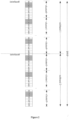
- an embodiment of the present disclosure provides a diagram of a relation between interlace, cluster and subband according to an embodiment, as shown in Figure 2 .
- the bandwidth corresponding to the current BWP is 40MHz, which is divided into subband 1 and subband 2, and the bandwidth corresponding to each subband is 20MHz.
- Each subband corresponds to 10 clusters, which are cluster 0 to cluster 9.
- Each cluster contains 10 RBs including RB 0 to RB 9, and the 10 RBs belong to different interlaces.
- interlace 0 consists of RBs with index 0 in each cluster.
- a starting position and length of at least one interlaced resource cluster for uplink data transmission may be indicated to the UE through a resource indication value in the downlink control information, so that the UE can determine the one or more subbands for uplink data transmission based on the starting position and the length of the interlaced resource cluster.
- the downlink control information may not carry subband information.
- frequency domain resource information corresponding to N subbands contained in a current carrier is indicated to a UE through high-layer signaling, and one or more subbands for uplink data transmission is further indicated to the UE through downlink control information, so that the UE transmits uplink data based on frequency domain resource information corresponding to the one or more subbands for uplink data transmission.
- An uplink resource can be indicated in unit of subband, thereby improving resource utilization and performance of a NR network.
- an embodiment of the present disclosure provides an uplink channel resource determination method as shown in Figure 9 .
- the uplink channel resource determination method includes S901 and S902.
- high-layer signaling is received from a base station, wherein the high-layer signaling includes frequency domain resource information corresponding to N subbands contained in a current carrier, where N>1.
- the base station may use the method in the embodiment as shown in Figure 1 to indicate the frequency domain resource information corresponding to the N subbands contained in the current carrier, which is not described in detail here.
- downlink control information is received from the base station, wherein the downlink control information includes one or more subbands for uplink data transmission, and a frequency domain resource corresponding to the one or more subbands for uplink data transmission is used to transmit uplink data, based on frequency domain resource information corresponding to the one or more subbands for uplink data transmission.
- the base station may use the method in the embodiment as shown in Figure 1 to indicate the one or more subbands for uplink data transmission, which is not described in detail here.
- the frequency domain resource information corresponding to the N subbands includes (N-1) CRB indexes, wherein the (N-1) CRB indexes are used for indicating a starting CRB of the N subbands.
- Downlink scheduling indicates an access mode of a PUSCH.
- the access mode of the PUSCH is short LBT, all of the one or more subbands for uplink data transmission correspond to one PUSCH; and when the access mode of the PUSCH is long LBT, each of the one or more subbands for uplink data transmission corresponds to one PUSCH.
- downlink scheduling indicates that an access mode of a PUSCH is short LBT, all of the one or more subbands for uplink data transmission correspond to one PUSCH; and if downlink scheduling indicates that the access mode of the PUSCH is long LBT, each of the one or more subbands for uplink data transmission corresponds to one PUSCH.
- using the frequency domain resource corresponding to the one or more subbands for uplink data transmission to transmit uplink data includes: performing LBT detection on the one or more subbands indicated by the downlink control information; selecting a subband where the LBT detection succeeds as a candidate subband based on a result of the LBT detection; and using the frequency domain resource corresponding to the candidate subband to transmit uplink data.
- any one subband may be selected from the subbands where the LBT detection succeeds as the candidate subband.
- Using the frequency domain resource corresponding to the candidate subband to transmit uplink data further includes: determining a HARQ ID used by the PUSCH corresponding to the i-th time slot based on formula (1): mod n HARQ_ID + i , N HARQ where i is a relative index corresponding to a time slot for scheduling the PUSCH in the downlink control information, n HARQ_ID is a starting HARQ ID indicated in the downlink control information, N HARQ is a total number of HARQ IDs, and mod() is a remainder operator.
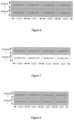
- an embodiment of the present disclosure provides a diagram of HARQ ID as shown in Figure 3 .
- the current BWP includes two subbands, DCI schedules 4 time slots, the starting HARQ ID is 0, and LBT detection succeeds in merely one subband (subband 2).
- the UE selects subband 2 to transmit PUSCH, and determines, based on the formula (1), that the HARQ IDs used by slot 0 to slot 3 are 0, 1, 2 and 3 respectively.
- an embodiment of the present disclosure provides another diagram of HARQ ID as shown in Figure 4 .
- the current BWP includes two subbands (subband 1 and subband 2), DCI schedules 4 time slots, the starting HARQ ID is 0, and LBT detection succeeds in both the two subbands.
- the UE selects subband 1 with a lower index value to transmit PUSCH, and determines, based on the formula (1), that the HARQ IDs used by slot 0 to slot 3 are 0, 1, 2 and 3 respectively.
- using the frequency domain resource corresponding to the one or more subbands for uplink data transmission to transmit uplink data includes: performing LBT detection on the one or more subbands indicated by the downlink control information; and using the frequency domain resource corresponding to all the subbands where the LBT detection succeeds to transmit uplink data based on a result of the LBT detection.
- the subbands corresponds to the same PUSCH or different PUSCHs.
- using the frequency domain resource corresponding to all the subbands where the LBT detection succeeds to transmit uplink data further includes: determining a HARQ ID used by the PUSCH corresponding to the i-th time slot based on the formula (1).
- an embodiment of the present disclosure provides another diagram of HARQ ID as shown in Figure 5 .
- the current BWP includes two subbands, DCI schedules 4 time slots, the starting HARQ ID is 0, and LBT detection succeeds in merely one subband (subband 2).
- the UE selects subband 2 to transmit PUSCH, and determines, based on the formula (1), that the HARQ IDs used by slot 0 to slot 3 are 0, 1, 2 and 3 respectively.
- an embodiment of the present disclosure provides another diagram of HARQ ID as shown in Figure 6 .
- the current BWP includes two subbands (subband 1 and subband 2), DCI schedules 4 time slots, the starting HARQ ID is 0, and LBT detection succeeds in both the two subbands.
- the UE selects both the subband 1 and the subband 2 to transmit the same PUSCH, and determines, for the subband 1 and the subband 2 based on the formula (1), that the HARQ IDs used by slot 0 to slot 3 are 0, 1, 2 and 3 respectively.
- an embodiment of the present disclosure provides another diagram of HARQ ID as shown in Figure 7 .
- the current BWP includes two subbands, DCI schedules 4 time slots, the starting HARQ ID is 0, and LBT detection succeeds in merely one subband (subband 2).
- the UE selects subband 2 to transmit PUSCH, and determines, based on the formula (2), that the HARQ IDs used by slot 0 to slot 3 are 1, 3, 5 and 7 respectively.
- an embodiment of the present disclosure provides another diagram of HARQ ID as shown in Figure 8 .
- the current BWP includes two subbands (subband 1 and subband 2), DCI schedules 4 time slots, the starting HARQ ID is 0, and LBT detection succeeds in both the two subbands.
- the UE selects both the subband 1 and the subband 2 to transmit the same PUSCH, and determines, for the subband 2 based on the formula (2), that the HARQ IDs used by slot 0 to slot 3 are 1, 3, 5 and 7 respectively, and for the subband 1 based on the formula (2), that the HARQ IDs used by slot 0 to slot 3 are 0, 2, 4 and 6 respectively.
- the high-layer signaling is received from the base station, and then the downlink control information is received from the base station, so that the UE uses a frequency domain resource corresponding to the one or more subbands for uplink data transmission to transmit uplink data, based on frequency domain resource information corresponding to the one or more subbands for uplink data transmission.
- An uplink resource can be indicated in unit of subband, thereby improving resource utilization and performance of a NR network.
- an embodiment of the present disclosure further provides a base station (not claimed) capable of performing the uplink channel resource indication method as shown in Figure 10 .
- the base station 10 may include a first indication circuitry 101 and a second indication circuitry 102.
- the first indication circuitry 101 is configured to indicate frequency domain resource information corresponding to N subbands contained in a current carrier to a UE through high-layer signaling, where N>1 ⁇
- the second indication circuitry 102 is configured to indicate one or more subbands for uplink data transmission to the UE through downlink control information, so that the UE uses a frequency domain resource corresponding to the one or more subbands for uplink data transmission to transmit uplink data based on frequency domain resource information corresponding to the one or more subbands for uplink data transmission.
- the frequency domain resource information corresponding to the N subbands includes (N-1) CRB indexes, wherein the (N-1) CRB indexes are used for indicating a starting CRB of the N subbands.
- the second indication circuitry 102 is configured to indicate an index of the one or more subbands for uplink data transmission to the UE through a bitmap in the downlink control information.
- the second indication circuitry 102 is configured to indicate an index of the one or more subbands for uplink data transmission to the UE through a resource indication value in the downlink control information.
- the second indication circuitry 102 is configured to indicate a starting position and length of at least one interlaced resource cluster for uplink data transmission to the UE through a resource indication value in the downlink control information.
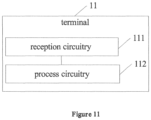
- an embodiment of the present disclosure further provides a terminal capable of performing the uplink channel resource determination method as shown in Figure 11 .
- the terminal 11 includes a reception circuitry 111 and a process circuitry 112.
- the reception circuitry 111 is configured to receive high-layer signaling from a base station, wherein the high-layer signaling includes frequency domain resource information corresponding to N subbands contained in a current carrier, where N>1.
- the process circuitry 112 is configured to receive downlink control information from the base station, wherein the downlink control information includes one or more subbands for uplink data transmission, and use a frequency domain resource corresponding to the one or more subbands for uplink data transmission to transmit uplink data, based on frequency domain resource information corresponding to the one or more subbands for uplink data transmission.
- the frequency domain resource information corresponding to the N subbands includes (N-1) CRB indexes, wherein the (N-1) CRB indexes are used for indicating a starting CRB of the N subbands.
- each of the one or more subbands for uplink data transmission corresponds to one PUSCH.
- the process circuitry 112 includes: a detection sub-circuitry (not shown), a selection sub-circuitry (not shown) and a first transmission sub-circuitry (not shown).
- the detection sub-circuitry is configured to perform LBT detection on the one or more subbands indicated by the downlink control information.
- the selection sub-circuitry is configured to select a subband where the LBT detection succeeds as a candidate subband based on a result of the LBT detection.
- the first transmission sub-circuitry is configured to use the frequency domain resource corresponding to the candidate subband to transmit uplink data.
- the first transmission sub-circuitry is further configured to determine a HARQ ID used by the PUSCH corresponding to the i-th time slot based on the following formula: mod( n HARQ_ID + i,N HARQ ), where i is a relative index corresponding to a time slot for scheduling the PUSCH in the downlink control information, n HARQ_ID is a starting HARQ ID indicated in the downlink control information, N HARQ is a total number of HARQ IDs, and mod() is a remainder operator.
- the process circuitry 112 includes: a detection sub-circuitry (not shown) and a second transmission sub-circuitry (not shown).
- the detection sub-circuitry is configured to perform LBT detection on the one or more subbands indicated by the downlink control information.
- the second transmission sub-circuitry is configured to use the frequency domain resource corresponding to the one or more subbands where the LBT detection succeeds to transmit uplink data based on a result of the LBT detection.
- the one or more subbands correspond to the same PUSCH or different PUSCHs.
- the second transmission sub-circuitry is further configured to determine a HARQ ID used by the PUSCH corresponding to the i-th time slot based on the following formula: mod( n HARQ_ID + i,N HARQ ), where i is a relative index corresponding to a time slot for scheduling the PUSCH in the downlink control information, n HARQ_ID is a starting HARQ ID indicated in the downlink control information, N HARQ is a total number of HARQ IDs, and mod() is a remainder operator.
- a nonvalatile or nontransitory computer readable storage medium having computer instructions stored therein wherein when the computer instructions are executed, any one of the above uplink channel resource indication methods or the above uplink channel resource determination methods is performed.
- a base station including a memory and a processor
- the memory has computer instructions stored therein, and when the processor executes the computer instructions, any one of the above uplink channel resource indication methods is performed.
- a terminal including a memory and a processor
- the memory has computer instructions stored therein, and when the processor executes the computer instructions, any one of the above uplink channel resource determination methods is performed.
- the storage medium may include a Read Only Memory (ROM), a Random Access Memory (RAM), a magnetic disk or an optical disk.
Landscapes
- Engineering & Computer Science (AREA)
- Signal Processing (AREA)
- Computer Networks & Wireless Communication (AREA)
- Physics & Mathematics (AREA)
- Health & Medical Sciences (AREA)
- General Health & Medical Sciences (AREA)
- Spectroscopy & Molecular Physics (AREA)
- Mobile Radio Communication Systems (AREA)
Claims (4)
- Ein Uplink-Kanalressourcen-Bestimmungsverfahren, das folgende Schritte aufweist:Empfangen (S901) einer Hohe-Schicht-Signalisierung von einer Basisstation (10), wobei die Hohe-Schicht-Signalisierung Frequenzbereichsressourceninformationen aufweist, die N Teilbändern entsprechen, die in einem aktuellen Träger enthalten sind, wobei N>1; undEmpfangen (S902) von Downlink-Steuerinformationen von der Basisstation (10), wobei die Downlink-Steuerinformationen ein oder mehrere Teilbänder zur Uplink-Datenübertragung aufweisen, und Verwenden einer Frequenzbereichsressource, die dem einen oder den mehreren Teilbändern zur Uplink-Datenübertragung entspricht, um Uplink-Daten zu übertragen, basierend auf Frequenzbereichsressourceninformationen, die dem einen oder den mehreren Teilbändern zur Uplink-Datenübertragung entsprechen,dadurch gekennzeichnet, dasswenn eine Downlink-Planung anzeigt, dass ein Zugriffsmodus eines Physischer-Uplink-Geteilter-Kanals, PUSCH, ein kurzes Hören-vor-Reden, LBT, ist, alle des einen oder der mehreren Teilbänder zur Uplink-Datenübertragung einem PUSCH entsprechen;wenn eine Downlink-Planung anzeigt, dass der Zugriffsmodus des PUSCH ein langes LBT ist, jedes des einen oder der mehreren Teilbänder zur Uplink-Datenübertragung einem PUSCH entspricht;wobei das Verwenden der Frequenzbereichsressource, die dem einen oder den mehreren Teilbändern zur Uplink-Datenübertragung entspricht, um Uplink-Daten zu übertragen, folgende Schritte aufweist:Durchführen, durch eine Detektionsteilschaltung, einer LBT-Detektion an dem einen oder den mehreren Teilbändern, die durch die Downlink-Steuerinformationen angezeigt werden; undAuswählen, durch eine Auswahlteilschaltung, eines Teilbands aus dem einen oder den mehreren Teilbändern, in dem die LBT-Detektion erfolgreich ist, als ein Kandidatenteilband basierend auf einem Ergebnis der LBT-Detektion, und Verwenden, durch eine erste Übertragungsteilschaltung, der Frequenzbereichsressource, die dem Kandidatenteilband entspricht, um Uplink-Daten zu übertragen; oder Verwenden, durch eine zweite Übertragungsteilschaltung, der Frequenzbereichsressource, die dem einen oder den mehreren Teilbändern entspricht, in dem die LBT-Detektion erfolgreich ist, um Uplink-Daten basierend auf dem Ergebnis der LBT-Detektion zu übertragen, wobei für jedes Zeitfenster das eine oder die mehreren Teilbänder dem gleichen PUSCH oder unterschiedlichen PUSCHs entsprechen;wobei das Verwenden der Frequenzbereichsressource, die dem Kandidatenteilband entspricht, um Uplink-Daten zu übertragen, oder, wenn das eine oder die mehreren Teilbänder dem gleichen PUSCH entsprechen, ein Verwenden der Frequenzbereichsressource, die dem einen oder den mehreren Teilbändern entspricht, in dem die LBT-Detektion erfolgreich ist, um Uplink-Daten zu übertragen, folgende Schritte aufweist:Bestimmen einer HARQ-ID, die durch den PUSCH verwendet wird, der dem i-ten Zeitfenster entspricht, basierend auf der folgenden Formel:
 wobei i ein relativer index ist, der einem Zeitfenster zum Planen des PUSCH in den Downlink-Steuerinformationen entspricht, n HARQ_ID eine Start-HARQ-ID ist, die in den Downlink-Steuerinformationen angezeigt wird, NHARQ eine Gesamtzahl von HARQ-IDs ist und mod() ein Restoperator ist.
 - Das Verfahren gemäß Anspruch 1, wobei die Frequenzbereichsressourceninformationen, die den N Teilbändern entsprechen, (N-1) Gemeinsame-Ressource-Block-, CRB,-Indizes umfassen, wobei die (N-1) CRB-Indizes zum Angeben eines Anfangs-CRB der N Teilbänder verwendet werden.
- Ein Endgerät (11), das folgende Merkmale aufweist:eine Empfangsschaltungsanordnung (111), die konfiguriert ist zum Empfangen einer Hohe-Schicht-Signalisierung von einer Basisstation (10), wobei die Hohe-Schicht-Signalisierung Frequenzbereichsressourceninformationen umfasst, die N Teilbändern entsprechen, die in einem aktuellen Träger enthalten sind, wobei N>1; undeine Verarbeitungsschaltungsanordnung (112), die konfiguriert ist zum Empfangen von Downlink-Steuerinformationen von der Basisstation (10), wobei die Downlink-Steuerinformationen ein oder mehrere Teilbänder für eine Uplink-Datenübertragung umfassen, und zum Verwenden einer Frequenzbereichsressource, die dem einen oder den mehreren Teilbändern für eine Uplink-Datenübertragung entspricht, zum Übertragen von Uplink-Daten basierend auf Frequenzbereichsressourceninformationen, die dem einen oder den mehreren Teilbändern für eine Uplink-Datenübertragung entsprechen,dadurch gekennzeichnet, dasswenn eine Downlink-Planung anzeigt, dass ein Zugriffsmodus eines Physischer-Uplink-Geteilter-Kanals, PUSCH, ein kurzes Hören-vor-Reden, LBT, ist, alle des einen oder der mehreren Teilbänder für eine Uplink-Datenübertragung einem PUSCH entsprechen;wenn eine Downlink-Planung anzeigt, dass der Zugriffsmodus des PUSCH ein langes LBT ist, jedes des einen oder der mehreren Teilbänder für eine Uplink-Datenübertragung einem PUSCH entspricht;wobei die Verarbeitungsschaltungsanordnung (112) folgende Merkmale aufweist:eine Detektionsteilschaltungsanordnung, die konfiguriert ist zum Durchführen einer LBT-Detektion an dem einen oder den mehreren Teilbändern, die durch die Downlink-Steuerinformationen angezeigt werden; undeine Auswahlteilschaltungsanordnung, die konfiguriert ist zum Auswählen eines Teilbands aus dem einen oder den mehreren Teilbändern, bei dem die LBT-Detektion erfolgreich ist, als ein Kandidatenteilband basierend auf einem Ergebnis der LBT-Detektion, und eine erste Übertragungsteilschaltungsanordnung, die konfiguriert ist zum Verwenden der Frequenzbereichsressource, die dem Kandidatenteilband entspricht, zum Übertragen von Uplink-Daten; oder eine zweite Übertragungsteilschaltungsanordnung, die konfiguriert ist zum Verwenden der Frequenzbereichsressource, die dem einen oder den mehreren Teilbändern entspricht, bei dem die LBT-Detektion erfolgreich ist, zum Übertragen von Uplink-Daten basierend auf einem Ergebnis der LBT-Detektion, wobei für jedes Zeitfenster das eine oder die mehreren Teilbänder dem gleichen PUSCH oder unterschiedlichen PUSCHs entsprechen,wobei die erste Übertragungsteilschaltungsanordnung konfiguriert ist zum, oder, wenn das eine oder die mehreren Teilbänder dem gleichen PUSCH entsprechen, die zweite Übertragungsteilschaltungsanordnung konfiguriert ist zum: Bestimmen einer HARQ-ID, die durch den PUSCH verwendet wird, der dem i-ten Zeitfenster entspricht, basierend auf der folgenden Formel:
 wobei i ein relativer index ist, der einem Zeitfenster zum Planen des PUSCH in den Downlink-Steuerinformationen entspricht, n HARQ_ID eine Start-HARQ-ID ist, die in den Downlink-Steuerinformationen angezeigt wird, NHARQ eine Gesamtzahl von HARQ-IDs ist und mod() ein Restoperator ist.
 - Das Endgerät (11) gemäß Anspruch 3, wobei die Frequenzbereichsressourceninformationen, die den N Teilbändern entsprechen, (N-1) Gemeinsame-Ressource-Block-, CRB,-Indizes umfassen, wobei die (N-1) CRB-Indizes zum Angeben eines Anfangs-CRB der N Teilbänder verwendet werden.
Applications Claiming Priority (2)
| Application Number | Priority Date | Filing Date | Title |
|---|---|---|---|
| CN201810899832.XA CN110830194B (zh) | 2018-08-08 | 2018-08-08 | 上行信道资源的指示及确定方法、基站、终端、介质 |
| PCT/CN2019/092980 WO2020029698A1 (zh) | 2018-08-08 | 2019-06-26 | 上行信道资源的指示及确定方法、基站、终端、介质 |
Publications (3)
| Publication Number | Publication Date |
|---|---|
| EP3836468A1 EP3836468A1 (de) | 2021-06-16 |
| EP3836468A4 EP3836468A4 (de) | 2022-05-11 |
| EP3836468B1 true EP3836468B1 (de) | 2024-08-28 |
Family
ID=69413915
Family Applications (1)
| Application Number | Title | Priority Date | Filing Date |
|---|---|---|---|
| EP19848365.3A Active EP3836468B1 (de) | 2018-08-08 | 2019-06-26 | Verfahren zur bestimmung einer uplink-kanal-ressource und endgerät |
Country Status (4)
| Country | Link |
|---|---|
| US (1) | US11552773B2 (de) |
| EP (1) | EP3836468B1 (de) |
| CN (1) | CN110830194B (de) |
| WO (1) | WO2020029698A1 (de) |
Families Citing this family (19)
| Publication number | Priority date | Publication date | Assignee | Title |
|---|---|---|---|---|
| CN116528370A (zh) | 2017-06-16 | 2023-08-01 | 华为技术有限公司 | 一种通信方法及装置 |
| CN110602787B (zh) | 2018-04-04 | 2020-08-07 | 华为技术有限公司 | 一种发送、接收上行控制信息的方法及装置 |
| WO2020237424A1 (zh) * | 2019-05-24 | 2020-12-03 | 北京小米移动软件有限公司 | 基于非授权频谱的通信方法、装置及存储介质 |
| WO2021159484A1 (en) * | 2020-02-14 | 2021-08-19 | Lenovo (Beijing) Limited | Method and apparatus for scheduling pusch or pdsch |
| US12432775B2 (en) | 2020-03-17 | 2025-09-30 | Beijing Xiaomi Mobile Software Co., Ltd. | Communication method, apparatus, and device, and readable storage medium |
| WO2021195801A1 (en) * | 2020-03-28 | 2021-10-07 | Qualcomm Incorporated | Multiple resources in channels for low latency communication in unlicensed band |
| CN115278785A (zh) | 2020-04-10 | 2022-11-01 | 展讯通信(上海)有限公司 | 上行数据传输的子频带的确定方法、终端及可读存储介质 |
| WO2022151236A1 (zh) * | 2021-01-14 | 2022-07-21 | Oppo广东移动通信有限公司 | 资源确定方法、装置、设备及存储介质 |
| US12185370B2 (en) * | 2021-04-02 | 2024-12-31 | Qualcomm Incorporated | Sensing bandwidth determination by a user equipment (UE) for a listen-before-transmit (LBT) operation |
| CN115209556B (zh) * | 2021-04-08 | 2025-02-18 | 维沃移动通信有限公司 | 传输资源确定方法和设备 |
| CN115866757B (zh) * | 2021-09-24 | 2026-03-06 | 展讯通信(上海)有限公司 | 数据传输方向的指示方法及装置、通信装置 |
| CN116133123B (zh) * | 2021-11-12 | 2026-03-24 | 中国移动通信有限公司研究院 | 一种频域资源分配方法、装置及设备 |
| CN116506960A (zh) * | 2022-01-17 | 2023-07-28 | 展讯半导体(南京)有限公司 | 数据传输方法及装置、存储介质、终端设备、网络设备 |
| CN118055500A (zh) * | 2022-11-15 | 2024-05-17 | 维沃移动通信有限公司 | 频域资源确定方法、终端及网络侧设备 |
| CN116261899A (zh) * | 2022-12-16 | 2023-06-13 | 北京小米移动软件有限公司 | 资源确定方法、装置、通信装置和存储介质 |
| CN116602036A (zh) * | 2023-03-15 | 2023-08-15 | 北京小米移动软件有限公司 | 资源确定、资源指示方法及装置、存储介质 |
| WO2024197671A1 (zh) * | 2023-03-29 | 2024-10-03 | 北京小米移动软件有限公司 | 上行传输执行、接收方法和装置、通信装置和存储介质 |
| CN116506964B (zh) * | 2023-04-28 | 2024-11-05 | 中国电信股份有限公司 | 子带全双工的保护间隔调节方法、装置、设备及介质 |
| WO2025097437A1 (en) * | 2023-11-10 | 2025-05-15 | Zte Corporation | Subband configuration |
Family Cites Families (16)
| Publication number | Priority date | Publication date | Assignee | Title |
|---|---|---|---|---|
| CN102404584B (zh) | 2010-09-13 | 2014-05-07 | 腾讯科技(成都)有限公司 | 调整场景左右摄像机的方法及装置、3d眼镜、客户端 |
| CN102404854B (zh) * | 2011-11-04 | 2018-04-06 | 中兴通讯股份有限公司 | 一种上行解调参考信号的资源配置方法及系统 |
| EP3641159B1 (de) | 2015-01-09 | 2022-10-12 | Samsung Electronics Co., Ltd. | Verfahren und vorrichtung zur übertragung eines steuerkanals für ein endgerät in einem drahtloskommunikationssystem |
| CN106507486B (zh) * | 2015-09-08 | 2020-04-28 | 华为技术有限公司 | 用于上行数据传输的方法、网络设备和终端设备 |
| CN106658742B (zh) | 2015-11-03 | 2020-07-03 | 中兴通讯股份有限公司 | 数据调度及传输的方法、装置及系统 |
| CN108476506B (zh) * | 2016-01-20 | 2023-08-15 | 株式会社Ntt都科摩 | 用户终端、无线基站以及无线通信方法 |
| CN105722229B (zh) * | 2016-02-05 | 2019-08-27 | 北京佰才邦技术有限公司 | 信道的选择方法和装置 |
| US10904879B2 (en) * | 2016-04-01 | 2021-01-26 | Nokia Solutions And Networks Oy | Rach preamble transmission and multiplexing with data and/or control signals |
| KR102329949B1 (ko) * | 2016-07-05 | 2021-11-23 | 한국전자통신연구원 | 뉴머롤러지를 이용한 전송 방법 및 장치, 그리고 뉴머롤러지를 이용한 스케줄링 방법 및 장치 |
| CN107743315B (zh) * | 2016-08-11 | 2022-01-11 | 上海诺基亚贝尔股份有限公司 | 用于基于竞争的传输的方法和设备 |
| WO2018084660A1 (ko) | 2016-11-04 | 2018-05-11 | 엘지전자 주식회사 | 무선 통신 시스템에서 단말과 기지국 간 물리 상향링크 제어 채널 송수신 방법 및 이를 지원하는 장치 |
| CN108076518B (zh) | 2016-11-17 | 2021-01-05 | 华为技术有限公司 | 一种上行数据传输方法及设备 |
| CN110050433B (zh) | 2017-01-09 | 2022-07-05 | 苹果公司 | 用于无线通信系统的带宽自适应 |
| US11229031B2 (en) * | 2017-12-16 | 2022-01-18 | Lg Electronics Inc. | Uplink control information transmitting method in wireless communication system and device using method |
| US10873423B2 (en) * | 2018-02-15 | 2020-12-22 | Huawei Technologies Co., Ltd. | Systems and methods for allocation of uplink control channel resources in unlicensed spectrum |
| US11184776B2 (en) * | 2018-07-16 | 2021-11-23 | Kt Corporation | Method and apparatus for performing wireless communication in unlicensed band |
-
2018
- 2018-08-08 CN CN201810899832.XA patent/CN110830194B/zh active Active
-
2019
- 2019-06-26 WO PCT/CN2019/092980 patent/WO2020029698A1/zh not_active Ceased
- 2019-06-26 EP EP19848365.3A patent/EP3836468B1/de active Active
- 2019-06-26 US US17/265,860 patent/US11552773B2/en active Active
Non-Patent Citations (1)
| Title |
|---|
| LG ELECTRONICS: "Further details on channel access in LAA UL", vol. RAN WG1, no. Nanjing, China; 20160523 - 20160527, 14 May 2016 (2016-05-14), XP051096418, Retrieved from the Internet <URL:http://www.3gpp.org/ftp/tsg_ran/WG1_RL1/TSGR1_85/Docs/> [retrieved on 20160514] * |
Also Published As
| Publication number | Publication date |
|---|---|
| EP3836468A1 (de) | 2021-06-16 |
| EP3836468A4 (de) | 2022-05-11 |
| CN110830194A (zh) | 2020-02-21 |
| WO2020029698A1 (zh) | 2020-02-13 |
| US11552773B2 (en) | 2023-01-10 |
| CN110830194B (zh) | 2020-10-30 |
| US20210176028A1 (en) | 2021-06-10 |
Similar Documents
| Publication | Publication Date | Title |
|---|---|---|
| EP3836468B1 (de) | Verfahren zur bestimmung einer uplink-kanal-ressource und endgerät | |
| US11337244B2 (en) | Scheduling subband allocation method and apparatus, and device and readable storage medium | |
| US11770162B2 (en) | Uplink transmissions in wireless communications | |
| CN102958133B (zh) | 接入通信系统的方法、下行信息发送方法、终端及基站 | |
| US11395291B2 (en) | Allocating transmission resources in communication networks that provide low latency services | |
| US9191824B2 (en) | Sharing frequencies in an OFDM-based wireless communication system | |
| EP2293633A1 (de) | Verfahren, system und vorrichtung für ressourcenzuweisung | |
| EP3238495B1 (de) | Planungsverbesserung in drahtloser kommunikation | |
| EP3618537B1 (de) | Nachrichtenübertragungsverfahren und -vorrichtung, endgerät und basisstation | |
| US20200154423A1 (en) | Data transmission method, related device, and system | |
| US9826535B2 (en) | Base station apparatus, radio communication system, and radio communication controlling method | |
| EP3833125B1 (de) | Verfahren und vorrichtung zur betriebsmittelplanungsanzeige und kommunikationssystem | |
| CN107567105B (zh) | 一种pucch资源的调度方法和装置 | |
| CN111342944B (zh) | 一种将调制符号的映射到分配子帧的方法 | |
| WO2021098795A1 (en) | Data transmission method, data transmission device, non-transitory computer readable medium, and chip | |
| US11438875B2 (en) | Signaling receiving method and related device | |
| EP4135245A1 (de) | Uplink-datenübertragungsverfahren, endgerät und lesbares speichermedium | |
| US10645723B2 (en) | Signal transmission method, signal transmission control method, user equipment, and base station | |
| CN107027183B (zh) | 一种资源分配、数据传输方法及装置 | |
| EP3373688A1 (de) | Verfahren und vorrichtung zur übertragung von daten | |
| CN108811090B (zh) | 一种资源分配指示方法、装置、网络侧设备及用户设备 | |
| EP4266618A1 (de) | Überwachung eines kanals mit punktierten ressourcenelementen in telekommunikationssystemen | |
| EP4668956A1 (de) | Verfahren und vorrichtung zur bestimmung der transportblockgrösse, vorrichtung und speichermedium | |
| CN111294976A (zh) | 上行传输方法、用户终端及计算机可读存储介质 |
Legal Events
| Date | Code | Title | Description |
|---|---|---|---|
| STAA | Information on the status of an ep patent application or granted ep patent |
Free format text: STATUS: THE INTERNATIONAL PUBLICATION HAS BEEN MADE |
|
| PUAI | Public reference made under article 153(3) epc to a published international application that has entered the european phase |
Free format text: ORIGINAL CODE: 0009012 |
|
| STAA | Information on the status of an ep patent application or granted ep patent |
Free format text: STATUS: REQUEST FOR EXAMINATION WAS MADE |
|
| 17P | Request for examination filed |
Effective date: 20210121 |
|
| AK | Designated contracting states |
Kind code of ref document: A1 Designated state(s): AL AT BE BG CH CY CZ DE DK EE ES FI FR GB GR HR HU IE IS IT LI LT LU LV MC MK MT NL NO PL PT RO RS SE SI SK SM TR |
|
| DAV | Request for validation of the european patent (deleted) | ||
| DAX | Request for extension of the european patent (deleted) | ||
| A4 | Supplementary search report drawn up and despatched |
Effective date: 20220408 |
|
| RIC1 | Information provided on ipc code assigned before grant |
Ipc: H04W 74/08 20090101ALN20220404BHEP Ipc: H04W 72/04 20090101ALN20220404BHEP Ipc: H04W 72/12 20090101ALI20220404BHEP Ipc: H04L 27/00 20060101ALI20220404BHEP Ipc: H04L 1/18 20060101ALI20220404BHEP Ipc: H04L 5/00 20060101AFI20220404BHEP |
|
| STAA | Information on the status of an ep patent application or granted ep patent |
Free format text: STATUS: EXAMINATION IS IN PROGRESS |
|
| 17Q | First examination report despatched |
Effective date: 20230220 |
|
| GRAP | Despatch of communication of intention to grant a patent |
Free format text: ORIGINAL CODE: EPIDOSNIGR1 |
|
| STAA | Information on the status of an ep patent application or granted ep patent |
Free format text: STATUS: GRANT OF PATENT IS INTENDED |
|
| RIC1 | Information provided on ipc code assigned before grant |
Ipc: H04W 72/23 20230101ALN20240307BHEP Ipc: H04W 74/0808 20240101ALN20240307BHEP Ipc: H04W 72/0453 20230101ALN20240307BHEP Ipc: H04L 1/1867 20230101ALI20240307BHEP Ipc: H04L 1/1822 20230101ALI20240307BHEP Ipc: H04W 72/12 20090101ALI20240307BHEP Ipc: H04L 27/00 20060101ALI20240307BHEP Ipc: H04L 1/1812 20230101ALI20240307BHEP Ipc: H04L 5/00 20060101AFI20240307BHEP |
|
| INTG | Intention to grant announced |
Effective date: 20240320 |
|
| RIC1 | Information provided on ipc code assigned before grant |
Ipc: H04L 27/00 20060101ALI20240308BHEP Ipc: H04L 1/1812 20230101ALI20240308BHEP Ipc: H04L 5/00 20060101AFI20240308BHEP Ipc: H04W 72/23 20230101ALN20240308BHEP Ipc: H04W 74/0808 20240101ALN20240308BHEP Ipc: H04W 72/0453 20230101ALN20240308BHEP Ipc: H04L 1/1867 20230101ALI20240308BHEP Ipc: H04L 1/1822 20230101ALI20240308BHEP Ipc: H04W 72/12 20090101ALI20240308BHEP |
|
| GRAS | Grant fee paid |
Free format text: ORIGINAL CODE: EPIDOSNIGR3 |
|
| GRAA | (expected) grant |
Free format text: ORIGINAL CODE: 0009210 |
|
| STAA | Information on the status of an ep patent application or granted ep patent |
Free format text: STATUS: THE PATENT HAS BEEN GRANTED |
|
| AK | Designated contracting states |
Kind code of ref document: B1 Designated state(s): AL AT BE BG CH CY CZ DE DK EE ES FI FR GB GR HR HU IE IS IT LI LT LU LV MC MK MT NL NO PL PT RO RS SE SI SK SM TR |
|
| REG | Reference to a national code |
Ref country code: CH Ref legal event code: EP |
|
| REG | Reference to a national code |
Ref country code: DE Ref legal event code: R096 Ref document number: 602019058028 Country of ref document: DE |
|
| REG | Reference to a national code |
Ref country code: IE Ref legal event code: FG4D |
|
| REG | Reference to a national code |
Ref country code: LT Ref legal event code: MG9D |
|
| PG25 | Lapsed in a contracting state [announced via postgrant information from national office to epo] |
Ref country code: NO Free format text: LAPSE BECAUSE OF FAILURE TO SUBMIT A TRANSLATION OF THE DESCRIPTION OR TO PAY THE FEE WITHIN THE PRESCRIBED TIME-LIMIT Effective date: 20241128 |
|
| REG | Reference to a national code |
Ref country code: AT Ref legal event code: MK05 Ref document number: 1719130 Country of ref document: AT Kind code of ref document: T Effective date: 20240828 |
|
| PG25 | Lapsed in a contracting state [announced via postgrant information from national office to epo] |
Ref country code: NL Free format text: LAPSE BECAUSE OF FAILURE TO SUBMIT A TRANSLATION OF THE DESCRIPTION OR TO PAY THE FEE WITHIN THE PRESCRIBED TIME-LIMIT Effective date: 20240828 Ref country code: PL Free format text: LAPSE BECAUSE OF FAILURE TO SUBMIT A TRANSLATION OF THE DESCRIPTION OR TO PAY THE FEE WITHIN THE PRESCRIBED TIME-LIMIT Effective date: 20240828 Ref country code: GR Free format text: LAPSE BECAUSE OF FAILURE TO SUBMIT A TRANSLATION OF THE DESCRIPTION OR TO PAY THE FEE WITHIN THE PRESCRIBED TIME-LIMIT Effective date: 20241129 Ref country code: PT Free format text: LAPSE BECAUSE OF FAILURE TO SUBMIT A TRANSLATION OF THE DESCRIPTION OR TO PAY THE FEE WITHIN THE PRESCRIBED TIME-LIMIT Effective date: 20241230 Ref country code: FI Free format text: LAPSE BECAUSE OF FAILURE TO SUBMIT A TRANSLATION OF THE DESCRIPTION OR TO PAY THE FEE WITHIN THE PRESCRIBED TIME-LIMIT Effective date: 20240828 |
|
| PG25 | Lapsed in a contracting state [announced via postgrant information from national office to epo] |
Ref country code: BG Free format text: LAPSE BECAUSE OF FAILURE TO SUBMIT A TRANSLATION OF THE DESCRIPTION OR TO PAY THE FEE WITHIN THE PRESCRIBED TIME-LIMIT Effective date: 20240828 |
|
| PG25 | Lapsed in a contracting state [announced via postgrant information from national office to epo] |
Ref country code: LV Free format text: LAPSE BECAUSE OF FAILURE TO SUBMIT A TRANSLATION OF THE DESCRIPTION OR TO PAY THE FEE WITHIN THE PRESCRIBED TIME-LIMIT Effective date: 20240828 |
|
| REG | Reference to a national code |
Ref country code: NL Ref legal event code: MP Effective date: 20240828 |
|
| PG25 | Lapsed in a contracting state [announced via postgrant information from national office to epo] |
Ref country code: IS Free format text: LAPSE BECAUSE OF FAILURE TO SUBMIT A TRANSLATION OF THE DESCRIPTION OR TO PAY THE FEE WITHIN THE PRESCRIBED TIME-LIMIT Effective date: 20241228 Ref country code: AT Free format text: LAPSE BECAUSE OF FAILURE TO SUBMIT A TRANSLATION OF THE DESCRIPTION OR TO PAY THE FEE WITHIN THE PRESCRIBED TIME-LIMIT Effective date: 20240828 |
|
| PG25 | Lapsed in a contracting state [announced via postgrant information from national office to epo] |
Ref country code: HR Free format text: LAPSE BECAUSE OF FAILURE TO SUBMIT A TRANSLATION OF THE DESCRIPTION OR TO PAY THE FEE WITHIN THE PRESCRIBED TIME-LIMIT Effective date: 20240828 |
|
| PG25 | Lapsed in a contracting state [announced via postgrant information from national office to epo] |
Ref country code: ES Free format text: LAPSE BECAUSE OF FAILURE TO SUBMIT A TRANSLATION OF THE DESCRIPTION OR TO PAY THE FEE WITHIN THE PRESCRIBED TIME-LIMIT Effective date: 20240828 Ref country code: RS Free format text: LAPSE BECAUSE OF FAILURE TO SUBMIT A TRANSLATION OF THE DESCRIPTION OR TO PAY THE FEE WITHIN THE PRESCRIBED TIME-LIMIT Effective date: 20241128 |
|
| PG25 | Lapsed in a contracting state [announced via postgrant information from national office to epo] |
Ref country code: RS Free format text: LAPSE BECAUSE OF FAILURE TO SUBMIT A TRANSLATION OF THE DESCRIPTION OR TO PAY THE FEE WITHIN THE PRESCRIBED TIME-LIMIT Effective date: 20241128 Ref country code: PT Free format text: LAPSE BECAUSE OF FAILURE TO SUBMIT A TRANSLATION OF THE DESCRIPTION OR TO PAY THE FEE WITHIN THE PRESCRIBED TIME-LIMIT Effective date: 20241230 Ref country code: PL Free format text: LAPSE BECAUSE OF FAILURE TO SUBMIT A TRANSLATION OF THE DESCRIPTION OR TO PAY THE FEE WITHIN THE PRESCRIBED TIME-LIMIT Effective date: 20240828 Ref country code: NO Free format text: LAPSE BECAUSE OF FAILURE TO SUBMIT A TRANSLATION OF THE DESCRIPTION OR TO PAY THE FEE WITHIN THE PRESCRIBED TIME-LIMIT Effective date: 20241128 Ref country code: NL Free format text: LAPSE BECAUSE OF FAILURE TO SUBMIT A TRANSLATION OF THE DESCRIPTION OR TO PAY THE FEE WITHIN THE PRESCRIBED TIME-LIMIT Effective date: 20240828 Ref country code: LV Free format text: LAPSE BECAUSE OF FAILURE TO SUBMIT A TRANSLATION OF THE DESCRIPTION OR TO PAY THE FEE WITHIN THE PRESCRIBED TIME-LIMIT Effective date: 20240828 Ref country code: IS Free format text: LAPSE BECAUSE OF FAILURE TO SUBMIT A TRANSLATION OF THE DESCRIPTION OR TO PAY THE FEE WITHIN THE PRESCRIBED TIME-LIMIT Effective date: 20241228 Ref country code: HR Free format text: LAPSE BECAUSE OF FAILURE TO SUBMIT A TRANSLATION OF THE DESCRIPTION OR TO PAY THE FEE WITHIN THE PRESCRIBED TIME-LIMIT Effective date: 20240828 Ref country code: GR Free format text: LAPSE BECAUSE OF FAILURE TO SUBMIT A TRANSLATION OF THE DESCRIPTION OR TO PAY THE FEE WITHIN THE PRESCRIBED TIME-LIMIT Effective date: 20241129 Ref country code: FI Free format text: LAPSE BECAUSE OF FAILURE TO SUBMIT A TRANSLATION OF THE DESCRIPTION OR TO PAY THE FEE WITHIN THE PRESCRIBED TIME-LIMIT Effective date: 20240828 Ref country code: ES Free format text: LAPSE BECAUSE OF FAILURE TO SUBMIT A TRANSLATION OF THE DESCRIPTION OR TO PAY THE FEE WITHIN THE PRESCRIBED TIME-LIMIT Effective date: 20240828 Ref country code: BG Free format text: LAPSE BECAUSE OF FAILURE TO SUBMIT A TRANSLATION OF THE DESCRIPTION OR TO PAY THE FEE WITHIN THE PRESCRIBED TIME-LIMIT Effective date: 20240828 Ref country code: AT Free format text: LAPSE BECAUSE OF FAILURE TO SUBMIT A TRANSLATION OF THE DESCRIPTION OR TO PAY THE FEE WITHIN THE PRESCRIBED TIME-LIMIT Effective date: 20240828 |
|
| PG25 | Lapsed in a contracting state [announced via postgrant information from national office to epo] |
Ref country code: SM Free format text: LAPSE BECAUSE OF FAILURE TO SUBMIT A TRANSLATION OF THE DESCRIPTION OR TO PAY THE FEE WITHIN THE PRESCRIBED TIME-LIMIT Effective date: 20240828 Ref country code: RO Free format text: LAPSE BECAUSE OF FAILURE TO SUBMIT A TRANSLATION OF THE DESCRIPTION OR TO PAY THE FEE WITHIN THE PRESCRIBED TIME-LIMIT Effective date: 20240828 Ref country code: DK Free format text: LAPSE BECAUSE OF FAILURE TO SUBMIT A TRANSLATION OF THE DESCRIPTION OR TO PAY THE FEE WITHIN THE PRESCRIBED TIME-LIMIT Effective date: 20240828 |
|
| PG25 | Lapsed in a contracting state [announced via postgrant information from national office to epo] |
Ref country code: EE Free format text: LAPSE BECAUSE OF FAILURE TO SUBMIT A TRANSLATION OF THE DESCRIPTION OR TO PAY THE FEE WITHIN THE PRESCRIBED TIME-LIMIT Effective date: 20240828 |
|
| PG25 | Lapsed in a contracting state [announced via postgrant information from national office to epo] |
Ref country code: CZ Free format text: LAPSE BECAUSE OF FAILURE TO SUBMIT A TRANSLATION OF THE DESCRIPTION OR TO PAY THE FEE WITHIN THE PRESCRIBED TIME-LIMIT Effective date: 20240828 |
|
| PG25 | Lapsed in a contracting state [announced via postgrant information from national office to epo] |
Ref country code: IT Free format text: LAPSE BECAUSE OF FAILURE TO SUBMIT A TRANSLATION OF THE DESCRIPTION OR TO PAY THE FEE WITHIN THE PRESCRIBED TIME-LIMIT Effective date: 20240828 Ref country code: SK Free format text: LAPSE BECAUSE OF FAILURE TO SUBMIT A TRANSLATION OF THE DESCRIPTION OR TO PAY THE FEE WITHIN THE PRESCRIBED TIME-LIMIT Effective date: 20240828 |
|
| REG | Reference to a national code |
Ref country code: DE Ref legal event code: R097 Ref document number: 602019058028 Country of ref document: DE |
|
| PLBE | No opposition filed within time limit |
Free format text: ORIGINAL CODE: 0009261 |
|
| STAA | Information on the status of an ep patent application or granted ep patent |
Free format text: STATUS: NO OPPOSITION FILED WITHIN TIME LIMIT |
|
| PGFP | Annual fee paid to national office [announced via postgrant information from national office to epo] |
Ref country code: DE Payment date: 20250618 Year of fee payment: 7 |
|
| 26N | No opposition filed |
Effective date: 20250530 |
|
| PG25 | Lapsed in a contracting state [announced via postgrant information from national office to epo] |
Ref country code: SE Free format text: LAPSE BECAUSE OF FAILURE TO SUBMIT A TRANSLATION OF THE DESCRIPTION OR TO PAY THE FEE WITHIN THE PRESCRIBED TIME-LIMIT Effective date: 20240828 |
|
| REG | Reference to a national code |
Ref country code: CH Ref legal event code: H13 Free format text: ST27 STATUS EVENT CODE: U-0-0-H10-H13 (AS PROVIDED BY THE NATIONAL OFFICE) Effective date: 20260127 |
|
| PG25 | Lapsed in a contracting state [announced via postgrant information from national office to epo] |
Ref country code: MC Free format text: LAPSE BECAUSE OF FAILURE TO SUBMIT A TRANSLATION OF THE DESCRIPTION OR TO PAY THE FEE WITHIN THE PRESCRIBED TIME-LIMIT Effective date: 20240828 |
|
| PG25 | Lapsed in a contracting state [announced via postgrant information from national office to epo] |
Ref country code: LU Free format text: LAPSE BECAUSE OF NON-PAYMENT OF DUE FEES Effective date: 20250626 |
|
| GBPC | Gb: european patent ceased through non-payment of renewal fee |
Effective date: 20250626 |
|
| REG | Reference to a national code |
Ref country code: BE Ref legal event code: MM Effective date: 20250630 |
|
| PG25 | Lapsed in a contracting state [announced via postgrant information from national office to epo] |
Ref country code: GB Free format text: LAPSE BECAUSE OF NON-PAYMENT OF DUE FEES Effective date: 20250626 |
|
| PG25 | Lapsed in a contracting state [announced via postgrant information from national office to epo] |
Ref country code: IE Free format text: LAPSE BECAUSE OF NON-PAYMENT OF DUE FEES Effective date: 20250626 |
|
| PG25 | Lapsed in a contracting state [announced via postgrant information from national office to epo] |
Ref country code: BE Free format text: LAPSE BECAUSE OF NON-PAYMENT OF DUE FEES Effective date: 20250630 |
|
| PG25 | Lapsed in a contracting state [announced via postgrant information from national office to epo] |
Ref country code: FR Free format text: LAPSE BECAUSE OF NON-PAYMENT OF DUE FEES Effective date: 20250630 |
|
| PG25 | Lapsed in a contracting state [announced via postgrant information from national office to epo] |
Ref country code: CH Free format text: LAPSE BECAUSE OF NON-PAYMENT OF DUE FEES Effective date: 20250630 |