EP3836633A1 - Verfahren zur leistungseffizienten datenübertragung - Google Patents
Verfahren zur leistungseffizienten datenübertragung Download PDFInfo
- Publication number
- EP3836633A1 EP3836633A1 EP19214520.9A EP19214520A EP3836633A1 EP 3836633 A1 EP3836633 A1 EP 3836633A1 EP 19214520 A EP19214520 A EP 19214520A EP 3836633 A1 EP3836633 A1 EP 3836633A1
- Authority
- EP
- European Patent Office
- Prior art keywords
- data transmission
- power
- user equipment
- value
- power value
- Prior art date
- Legal status (The legal status is an assumption and is not a legal conclusion. Google has not performed a legal analysis and makes no representation as to the accuracy of the status listed.)
- Withdrawn
Links
- 230000005540 biological transmission Effects 0.000 title claims abstract description 147
- 238000000034 method Methods 0.000 title claims abstract description 41
- 230000011664 signaling Effects 0.000 claims abstract description 47
- 230000001413 cellular effect Effects 0.000 claims abstract description 19
- 230000003213 activating effect Effects 0.000 claims description 2
- 238000004891 communication Methods 0.000 description 15
- 238000013459 approach Methods 0.000 description 9
- 230000003111 delayed effect Effects 0.000 description 8
- 230000008569 process Effects 0.000 description 8
- 238000005259 measurement Methods 0.000 description 7
- 238000005516 engineering process Methods 0.000 description 6
- 238000012545 processing Methods 0.000 description 5
- 230000001934 delay Effects 0.000 description 4
- 230000004044 response Effects 0.000 description 4
- 230000008901 benefit Effects 0.000 description 3
- 238000005457 optimization Methods 0.000 description 3
- 230000006399 behavior Effects 0.000 description 2
- 230000008859 change Effects 0.000 description 2
- 238000010586 diagram Methods 0.000 description 2
- 238000005562 fading Methods 0.000 description 2
- 238000012546 transfer Methods 0.000 description 2
- 230000006978 adaptation Effects 0.000 description 1
- 230000010267 cellular communication Effects 0.000 description 1
- 230000008878 coupling Effects 0.000 description 1
- 238000010168 coupling process Methods 0.000 description 1
- 238000005859 coupling reaction Methods 0.000 description 1
- 230000005611 electricity Effects 0.000 description 1
- 238000011156 evaluation Methods 0.000 description 1
- 238000009434 installation Methods 0.000 description 1
- 230000003993 interaction Effects 0.000 description 1
- 230000002045 lasting effect Effects 0.000 description 1
- 230000007774 longterm Effects 0.000 description 1
- 238000012423 maintenance Methods 0.000 description 1
- 230000007246 mechanism Effects 0.000 description 1
- 230000009467 reduction Effects 0.000 description 1
- 230000002618 waking effect Effects 0.000 description 1
Images


Classifications
-
- H—ELECTRICITY
- H04—ELECTRIC COMMUNICATION TECHNIQUE
- H04W—WIRELESS COMMUNICATION NETWORKS
- H04W52/00—Power management, e.g. Transmission Power Control [TPC] or power classes
- H04W52/02—Power saving arrangements
- H04W52/0209—Power saving arrangements in terminal devices
- H04W52/0251—Power saving arrangements in terminal devices using monitoring of local events, e.g. events related to user activity
-
- H—ELECTRICITY
- H04—ELECTRIC COMMUNICATION TECHNIQUE
- H04W—WIRELESS COMMUNICATION NETWORKS
- H04W52/00—Power management, e.g. Transmission Power Control [TPC] or power classes
- H04W52/02—Power saving arrangements
- H04W52/0209—Power saving arrangements in terminal devices
- H04W52/0225—Power saving arrangements in terminal devices using monitoring of external events, e.g. the presence of a signal
-
- H—ELECTRICITY
- H04—ELECTRIC COMMUNICATION TECHNIQUE
- H04W—WIRELESS COMMUNICATION NETWORKS
- H04W52/00—Power management, e.g. Transmission Power Control [TPC] or power classes
- H04W52/02—Power saving arrangements
- H04W52/0209—Power saving arrangements in terminal devices
- H04W52/0251—Power saving arrangements in terminal devices using monitoring of local events, e.g. events related to user activity
- H04W52/0258—Power saving arrangements in terminal devices using monitoring of local events, e.g. events related to user activity controlling an operation mode according to history or models of usage information, e.g. activity schedule or time of day
-
- Y—GENERAL TAGGING OF NEW TECHNOLOGICAL DEVELOPMENTS; GENERAL TAGGING OF CROSS-SECTIONAL TECHNOLOGIES SPANNING OVER SEVERAL SECTIONS OF THE IPC; TECHNICAL SUBJECTS COVERED BY FORMER USPC CROSS-REFERENCE ART COLLECTIONS [XRACs] AND DIGESTS
- Y02—TECHNOLOGIES OR APPLICATIONS FOR MITIGATION OR ADAPTATION AGAINST CLIMATE CHANGE
- Y02D—CLIMATE CHANGE MITIGATION TECHNOLOGIES IN INFORMATION AND COMMUNICATION TECHNOLOGIES [ICT], I.E. INFORMATION AND COMMUNICATION TECHNOLOGIES AIMING AT THE REDUCTION OF THEIR OWN ENERGY USE
- Y02D30/00—Reducing energy consumption in communication networks
- Y02D30/70—Reducing energy consumption in communication networks in wireless communication networks
Definitions
- the present invention relates to a method for a user equipment for data transmission.
- the invention also pertains to a user equipment using said method.
- loT Internet of Things
- the user equipment needs to indicate to the cellular network that it is still operative, in order to avoid that the cellular network, where the user equipment is operating in, marks the user equipment as switched off, when it does not send any type of signals.
- This type of communication is called non-momentary.
- the first aspect of the invention it is proposed a method for data transmission from a user equipment to a remote server by means of a base station of a cellular network, wherein the user equipment is configured to carry out payload data transmission to said remote server, the method comprising the steps of:
- the invention relates to user equipments operating in a cellular network, comprising a plurality of base stations.
- the user equipment is operating with the cellular network by means of one of the base stations, hereinafter the serving base station.
- the user equipment is in particular configured to carry out payload data transmissions to a remote server, connectively coupled to the cellular network, in particular over the internet.
- the user equipment and base station resp. cellular network implement in particular the technology standards of 4G (LTE) and/or 5G (New Radio NR) and beyond.
- such payload data transmissions relate to data acquired by the user equipment. This is in particular the case for metering device, which in particular carry out the payload transmissions regularly, that means following a schedule. Furthermore it needs to be noted that the traffic of such devices is in most cases delay tolerant, means the exact time when the transmission or reception takes place is not that important unless the transfer is executed within a certain time. Downlink (DL) traffic needs to wait when applying eDRX and PSM unless the user equipment is listening or again interacting with the cellular network and uplink (UL) traffic is preferably executed at these points not interrupting the sleep period. However, when to exactly carry out the data transmission is not determined.
- DL Downlink
- UL uplink
- the remote server and/or the user equipment it is not important that the data are transmitted at the very time which is following the schedule, but within a certain period.
- the user equipment is operating stationary, that means is not spatially moving in the cell area, but is e.g. rather fixed on a wall.
- Such user equipments are in particular operating with a tight power budget, typically due to being operated with batteries, which are supposed to last for a defined period, in particular for several years.
- the data transmission conditions might at the time of the scheduled data transmission be so bad that it requires a remarkable amount of power for submitting such payload data. This might be the case e.g. due to an obstacle in the path direction to the serving base station, like a parking truck or the like.
- the approach of the inventive method is to delay the payload traffic, as long as this is possible. This is for delay-uncritical data transmission no problem, while a solution for the problem needs to consider, that a data transmission cannot be delayed perennially.
- the inventive solution therefore suggests a new way of identifying if a delay is needed.
- the user equipment according to the first aspect of the invention carries out a first signaling data transmission to the serving base station.
- signaling data transmission is a transmission only between the user equipment and the base station which is supposed to facilitate the communication link between the base station and the camping user equipment.
- TAU tracking-area update
- the TAU is carried out by means of a RACH request, wherein the energy for an RACH request is ramped up, based on open loop power measurements, until the base station sends a response. Then the user equipment knows with which power the TAU message is transmitted.
- the RACH messaging may be considered as signaling data transmission. This applies in particular to the RACH transmissions in preparation of a TAU. Depending upon the radio conditions the RACH procedure until the base station responds also relates to signaled data of similar size, which could give an indication about the power needed for a payload data transmission.
- the first signaling data transmission determined a first power value, which represents the power which was spent by the user equipment for carrying out said first signaling data transmission.
- a first power value which represents the power which was spent by the user equipment for carrying out said first signaling data transmission.
- the first power value is locally stored as a reference value for the next steps.
- Such storing is either in the volatile or permanent memory of the user equipment.
- the step of determining a first power value the step of activating a power saving mode at the user equipment, and deactivating said power saving mode before the step of carrying out the second signaling data transmission.
- This embodiment comprises that the user equipment activates the PSM mode between two signaling data transmission, in particular between two TAU messages.
- the user equipment can additionally request a maximum time that the PSM may last.
- the user equipment gets a response which takes into account the expected time between two TAU messages.
- a second signaling data transmission to the base station is carried out by the user equipment, then it is proposed according to the inventive method to determine a second power value which represents the power spent for said second signaling data transmission.
- the inventive method takes advantage and proposes a comparison of the reference power value and the second power value.
- this comparison can be used for deciding if the data transmission would be with an acceptable amount of power, or exceed the envisages power budget for such regular payload data transmissions. Therefore it is evaluated if the second power value exceeds the reference power value by a predetermined threshold.
- Such predetermined threshold may be in absolute units, a percentage value or a combination thereof. If the predetermined threshold is exceeded, then the payload data transmission is delayed by a predetermined time.
- Such predetermined time might be a fixed time, or a time which is derived from a standard-defined timer.
- the delay for the next payload data transmission lasts at least after conducting a third signaling data transmission to the base station.
- the delay is at least lasting until the next TAU is carried out, which in particular means after conducting another PSM phase.
- This is fully sufficient e.g. for a payload data transmission that shall happen once a day, and with a ⁇ 1 hour PSM duration the payload data transmissions may be delayed for a couple of times until better traffic conditions are met.
- the reference power value is kept until the data transmission is successfully carried out.
- the second power value would be used as reference value - which was found as representing too bad traffic conditions - then with a third TAU leading to a third power value equaling the second power value, then the payload data transmission would happen under conditions that were previously found as too power consuming.
- the delay lasts shorter than the next power saving mode is activated.
- This variant suggests that the delay is only for a few seconds or minutes after the PSM is activated again. This is preferably for short time delays, e.g. when data are to be transmitted hourly. A momentary disturbance of the radio link to the base station can be avoided by this embodiment.
- EDT Early Data Transmission
- the user equipment can also change its CE-class means the number of repetitions to be performed.
- CE-class means the number of repetitions to be performed.
- the general approach of this inventive method is in particular advantageous as not only the power for carrying out uplink data transmission is considered, rather than downlink signal measurements or so, and moreover the reference value also is derived from the actual conditions around. That means when a user equipment is operating as a metering device in the basement of a house, which leads to enhanced coverage operation, then it is to expect that each payload data transmission requires more power than when installed outside on plain sight to the base station tower. Nonetheless this is supposed to be the reference for a situation which is seen as "good radio conditions". When even these conditions get worse, then the delay can be applied, in order to avoid investing too much energy in a on data packet payload data transmission.
- the first parameter is the predetermined threshold value.
- the predetermined threshold value may be reduced again.
- This embodiment relates to the reference power value. To improve the relevance of the reference power value, it is proposed to consider at least two power values, which are in particular determined by TAUs that were carried out.
- At least two successive TAUs are considered for the reference power value to achieve an average power value.
- Preferably a fixed amount of successive TAUs are considered in order to achieve a moving average power value.
- This embodiment improves relevance of the reference value by reducing the impact of singular events that influence the power value for submitting a signaling data transmission in the either or the other direction. Hence a more reliable reference power value is achieved which improves the behavior of the user equipment towards conducting only delays, where necessary, and not to carry out payload data transmissions when the radio conditions are too bad.
- the user equipment is further maintaining a maximum delay tolerance value, wherein the method comprises the step of carrying out the next payload data transmission in case the expired delay exceeds the maximum delay tolerance value.
- this threshold value When this threshold value is reached, then according to this embodiment the payload data transmission needs to be carried out, even though a delay decision would be made based on the comparison of reference power value and the latest determined second power value for the last TAU message.
- This embodiment assures that the user equipment behaves in line with the expected data transmission requirements, but may lead to a knowingly bad power consumption for this data transmission.
- the predetermined threshold value is amended. Preferably it is reduced. That could lead to the situation that before reaching the maximum delay tolerance value, where the radio conditions could be worse than ever, that a not good but acceptable situation, and consequently power consumption, for carrying out the payload data transmission, is detected.
- the power saving mode duration might be amended. There are two options: With an increase the power consumption over the time is reduced, and could by that compensate more power consumed for the payload data transmission.
- the delay tolerance value in particular when it relates to the mere number the number of delays.
- the user equipment for data transmission to a remote server by means of a base station of a cellular network, wherein the user equipment is configured regularly carrying out payload data transmission to said remote server, further configured to:
- This aspect of the invention relates to a user equipment for operating in a cellular network. It is implementing at least one of the technology standard 4G, 5G or beyond.
- a communication unit like a wireless module, that performs all communication with the serving base station of the cellular network
- an application part which controls the communication unit, and/or the user interface and other tasks of the user equipment.
- the user equipment in particular the communication unit, further comprises transmitting and receiving circuitry, typically a transceiver, which is connected to at least one antenna.
- transmitting and receiving circuitry typically a transceiver, which is connected to at least one antenna.
- the user equipment is operating stationary, which means in particular that it is fixed installed. This installation is e.g. for metering devices often done in the basement of the house.
- the second aspect of the invention shares the advantages of the first aspect of the invention.
- this invention advantageously solves the depicted problem and offers a solution for assuring a power consumption aware payload data transmission scheme in particular for non-momentary data.
- FIG. 1 schematically shows a user equipment 1 of the type to which the present invention is applied as an embodiment. It is capable of operating with a base station 2 of a cellular network, supporting the technology standard of 4G, 5G or beyond.
- the user equipment is in particular an loT device, like a metering device measuring the consumed current.
- the user equipment 1 is composed from an application part 9, coupled with a user interface 8, and a communication part.
- the communication part in particular comprises processing circuitry 10, like a central processing unit (CPU).
- processing circuitry 10 like a central processing unit (CPU).
- CPU central processing unit
- one processing circuitry for the application (application processor) and one for the communication unit (baseband processor) is available, or the same processing circuitry is shared for both tasks.
- an USIM 4 for storing the access credentials for getting access to the cellular network of the base station 2 is communicatively coupled to the user equipment 1.
- This is in particular a removable USIM (or UICC etc.), but also soldered variants are a possible option for this type of user equipment.
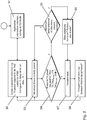
- step S1 it starts in step S1 with the initialisation step, where the application 9 of the user equipment 1 activates - in particular by means of user interface 8 interaction - the PO (power optimized) mode, which is basically incorporated by the inventive method.
- the application 9 of the user equipment 1 activates - in particular by means of user interface 8 interaction - the PO (power optimized) mode, which is basically incorporated by the inventive method.
- step S2 the user equipment, in particular the communication unit sets the initial values for the parameter governing the execution of the PO mode.
- This comprises in particular an initial reference power value representing the TX power needed for carrying out a TAU request.
- This reference power value is in particular preset by carrying out a TAU request and determining the TX power value spent for this TAU.
- the PSM lasts for a certain time, in particular requested in conjunction with the TAU request from step S3.
- step S4 the user equipment is awaken and carries out a second TAU request, and again measures the TX power for this second TAU request.
- the first (previous) and second (current) TX power values for the respective TAUs are compared.
- the process floor branches to Step S5 or S7 in dependence of this comparison. If the second TX power value is higher by a predetermined threshold value of X dB then the transmission of the data packet shall be delayed, and the process flow jumps to step S5.
- step S5 it is however first checked if the maximum delay tolerance value for delayed data transmission is reached. For this a preferably counter is maintained, which is increased when a delay is carried out.
- step S3 the process flow branches back to step S3 and the user equipment 1 activates another idle / PSM phase.
- the reference power value remains the same. Further the counter for delays, if needed, is increased.
- step S6 the process flow branches to step S6.
- the parameter of the flow are foreseen, e.g. the predetermined threshold value xDB, the maximum delay tolerance or the PSM duration.
- step S7 carries out the payload data transmission to the remote server via the base station 2.
- step S8 it is then checked, in particular based on the required TX power for the data transmission, if the expected lifetime of the battery can be achieved when the currently happening amount of TX power is needed for TAU and payload data transmission. If not, further parameter amendments or an indication to the application, so that the operator gets informed through the user interface and may take appropriate steps to act in time, that means long time before the battery is empty.
- FIG. 3 a time/power diagram shows the impact of applying the exemplifying embodiment of the inventive method on a user equipment.
- the time is shown on the horizontal axis, the needed power for single operation in the vertical axis.
- the time points T1-T10 depict certain events that are described below.
- the hatched areas below the events indicate the needed TX power for executing the tasks by the exemplifying user equipment.
- the square measure of the areas represent the invested total TX power.
- the earliest event depicted at timepoint T1 is a first TAU request TAU1 sent by the user equipment 1 to the base station 2. This is the regular operation for TAUs, indicating to the base station 2 after some (predefined) time that the user equipment is still in operation and still camping on the base station 2.
- the user equipment measures the TX power needed for carrying out the first TAU request and stores the value as first power value PV1.
- the user equipment 1 After the TAU the user equipment 1 remains for some time in idle mode. This time has according to the 4G standard the duration T3324. In idle mode the user equipments listens to paging after an (e)DRX cycle and thus requires some more power after each DRX cycle for listening to paging in the DL.
- the PSM mode is activated.
- the user equipment 1 is falling in a deep sleep mode, where not even paging messages are listened to. It is visible that during the PSM phase the power consumption is remarkably lower than during idle mode operation. In this time period the module may also shut down its main processor suspend its software and only perform clocking for awaking in time.
- the data packet is supposed to be sent to the remote server by the user equipment 1, but his is not momentary data, but delay tolerant. That means, it does not have to be transmitted as soon as it is possible, in particular after the PSM phase has ended.
- the PSM phase ends, this is according to the standard governed by duration T3412.
- the first operation the user equipment after waking up is to carry out the next TAU request TAU2 at timepoint T5.
- the power ramps up in particular for the RACH procedure preceding each TAU. But then the TAU itself is submitted.
- TX power needed for the second TAU TAU2 is determined and stored as second power value PV2.
- the second TAU TAU2 has a higher bar, than the first TAU. Consequently the first power value PV1 is significantly lower than the second power value PV2.
- the TX power needed for the third TAU TAU3 is stored as the third power value PV3. This is again compared to the first power value PV1, which remained the reference power value due to the fact, that after the second TAU a delay was decided, meaning the second power value was found as being too high.
- the third TAU needed less power than the second TAU.
- the reasons for that may be widespread.
- the path between antenna of the user equipment and the base station is disturbed. This can lead to a worse coverage enhancement situation with more repetitions, that obviously leads to a remarkable increase of TX power for sending the TAU request.
- timepoint T9 the transmission of data packet DP1 is carried out. Also for this operation the power is indicated. Should this have been carried out after the second TAU, provided that the radio conditions have not changed since, then the hatched box would have been higher, but most probably take the same time. The square measure difference indicates, how much more time this data packet transmission would have had cost, if the data packet transmission were not delayed.
- the data packet DP1 could have been submitted directly in conjunction with the TAU, which is foreseen as part of the Early Data Transmission (EDT) concept. This is in particular, but not only, the case when no delay is possible anymore due to that the delay tolerance value is reached.
- EDT Early Data Transmission
- the user equipment After transmission of the data packet DP1, the user equipment then again activates the PSM mode in timepoint T10. Currently not data packet is waiting.
- the third power value PV3 now becomes the reference power value for the following TAUs. When the next data packet is supposed to be transmitted then the same procedure is applied.
Landscapes
- Engineering & Computer Science (AREA)
- Computer Networks & Wireless Communication (AREA)
- Signal Processing (AREA)
- Mobile Radio Communication Systems (AREA)
Priority Applications (5)
| Application Number | Priority Date | Filing Date | Title |
|---|---|---|---|
| EP19214520.9A EP3836633A1 (de) | 2019-12-09 | 2019-12-09 | Verfahren zur leistungseffizienten datenübertragung |
| PCT/EP2020/084977 WO2021116056A1 (en) | 2019-12-09 | 2020-12-08 | Method for power efficient data transmission |
| JP2022534858A JP7372468B2 (ja) | 2019-12-09 | 2020-12-08 | 電力効率の良いデータ送信方法 |
| EP20819749.1A EP4074104B1 (de) | 2019-12-09 | 2020-12-08 | Verfahren zur leistungseffizienten datenübertragung |
| US17/783,093 US12250635B2 (en) | 2019-12-09 | 2020-12-08 | Method for power efficient data transmission |
Applications Claiming Priority (1)
| Application Number | Priority Date | Filing Date | Title |
|---|---|---|---|
| EP19214520.9A EP3836633A1 (de) | 2019-12-09 | 2019-12-09 | Verfahren zur leistungseffizienten datenübertragung |
Publications (1)
| Publication Number | Publication Date |
|---|---|
| EP3836633A1 true EP3836633A1 (de) | 2021-06-16 |
Family
ID=68840954
Family Applications (2)
| Application Number | Title | Priority Date | Filing Date |
|---|---|---|---|
| EP19214520.9A Withdrawn EP3836633A1 (de) | 2019-12-09 | 2019-12-09 | Verfahren zur leistungseffizienten datenübertragung |
| EP20819749.1A Active EP4074104B1 (de) | 2019-12-09 | 2020-12-08 | Verfahren zur leistungseffizienten datenübertragung |
Family Applications After (1)
| Application Number | Title | Priority Date | Filing Date |
|---|---|---|---|
| EP20819749.1A Active EP4074104B1 (de) | 2019-12-09 | 2020-12-08 | Verfahren zur leistungseffizienten datenübertragung |
Country Status (4)
| Country | Link |
|---|---|
| US (1) | US12250635B2 (de) |
| EP (2) | EP3836633A1 (de) |
| JP (1) | JP7372468B2 (de) |
| WO (1) | WO2021116056A1 (de) |
Citations (1)
| Publication number | Priority date | Publication date | Assignee | Title |
|---|---|---|---|---|
| EP2670069A1 (de) * | 2012-06-01 | 2013-12-04 | Telefonaktiebolaget L M Ericsson AB (Publ) | Datenübertragungssteuerung |
Family Cites Families (3)
| Publication number | Priority date | Publication date | Assignee | Title |
|---|---|---|---|---|
| US7570975B2 (en) * | 2005-10-26 | 2009-08-04 | Motorola, Inc. | Method and apparatus for management of low-battery mobile stations |
| WO2009099287A1 (en) * | 2008-02-04 | 2009-08-13 | Samsung Electronics Co., Ltd. | Control and data multiplexing in communication systems |
| CN110430032B (zh) * | 2013-04-12 | 2022-04-12 | 北京三星通信技术研究有限公司 | 一种多子帧调度中的上行功率控制方法 |
-
2019
- 2019-12-09 EP EP19214520.9A patent/EP3836633A1/de not_active Withdrawn
-
2020
- 2020-12-08 EP EP20819749.1A patent/EP4074104B1/de active Active
- 2020-12-08 JP JP2022534858A patent/JP7372468B2/ja active Active
- 2020-12-08 US US17/783,093 patent/US12250635B2/en active Active
- 2020-12-08 WO PCT/EP2020/084977 patent/WO2021116056A1/en not_active Ceased
Patent Citations (1)
| Publication number | Priority date | Publication date | Assignee | Title |
|---|---|---|---|---|
| EP2670069A1 (de) * | 2012-06-01 | 2013-12-04 | Telefonaktiebolaget L M Ericsson AB (Publ) | Datenübertragungssteuerung |
Also Published As
| Publication number | Publication date |
|---|---|
| JP2023505541A (ja) | 2023-02-09 |
| EP4074104C0 (de) | 2024-01-31 |
| WO2021116056A1 (en) | 2021-06-17 |
| US20230014097A1 (en) | 2023-01-19 |
| EP4074104B1 (de) | 2024-01-31 |
| JP7372468B2 (ja) | 2023-10-31 |
| EP4074104A1 (de) | 2022-10-19 |
| US12250635B2 (en) | 2025-03-11 |
Similar Documents
| Publication | Publication Date | Title |
|---|---|---|
| US9167530B2 (en) | Power saving modes in wireless devices | |
| KR101553596B1 (ko) | 어플리케이션 프로세서 웨이크-업 억제 | |
| US10015741B2 (en) | System and method for low power signaling in a wireless local area network | |
| US10064135B2 (en) | Mobile station, core network node, base station subsystem, and methods for implementing longer paging cycles in a cellular network | |
| EP2158698B1 (de) | Vorrichtung und verfahren zum betrieb eines leerlaufmodus in einem drahtlosen kommunikationssystem | |
| WO2008004800A1 (en) | System and method for performing periodic ranging in sleep mode in a communication system | |
| US10341973B2 (en) | Determining reference frame information in a telecommunication network | |
| US11382060B2 (en) | Method and system for paging user equipment | |
| KR102238811B1 (ko) | Iot 디바이스의 배터리 절약을 위한 방법 및 이를 위한 서버 | |
| EP4074104B1 (de) | Verfahren zur leistungseffizienten datenübertragung | |
| KR101979671B1 (ko) | 빈번하게 변경되는 비콘 구성요소를 이용한 비콘 신호 처리 최소화 방법 및 장치 | |
| WO2024170589A1 (en) | Method for paging for network energy saving | |
| WO2025031892A1 (en) | Methods and devices for selecting, by a user equipment, a repeating pattern for a low power wake-up signal in a wireless communication system | |
| WO2025031878A1 (en) | Methods and devices for selecting an operating mode with different repeating patterns for a low power wake-up signal in a wireless communication system | |
| WO2025031840A1 (en) | Methods and devices for selecting, by a base station, a repeating pattern for a low power wake-up signal in a wireless communication system | |
| KR20240152387A (ko) | 수신기의 스케줄링된 비활성화를 위해 구성된 통신 디바이스로의 비주기적 다운링크 소규모 데이터 전송물을 전송하는 방법 | |
| CN122002481A (zh) | 一种物理下行控制信道监听方法及终端设备 | |
| KR20230164058A (ko) | 불연속 통신을 위한 방법 | |
| JP2009239448A (ja) | 移動体通信ネットワークシステム、移動端末及びその通信制御方法 | |
| HK1185496A (en) | Application processor wake-up suppression | |
| KR20180092614A (ko) | 무선통신 단말기의 통신 모듈 및 그 제어 메시지 생성 방법 |
Legal Events
| Date | Code | Title | Description |
|---|---|---|---|
| PUAI | Public reference made under article 153(3) epc to a published international application that has entered the european phase |
Free format text: ORIGINAL CODE: 0009012 |
|
| STAA | Information on the status of an ep patent application or granted ep patent |
Free format text: STATUS: THE APPLICATION HAS BEEN PUBLISHED |
|
| AK | Designated contracting states |
Kind code of ref document: A1 Designated state(s): AL AT BE BG CH CY CZ DE DK EE ES FI FR GB GR HR HU IE IS IT LI LT LU LV MC MK MT NL NO PL PT RO RS SE SI SK SM TR |
|
| STAA | Information on the status of an ep patent application or granted ep patent |
Free format text: STATUS: THE APPLICATION IS DEEMED TO BE WITHDRAWN |
|
| 18D | Application deemed to be withdrawn |
Effective date: 20211217 |