EP3839120A2 - Nanofaservliesmaterial auf gelatinebasis - Google Patents
Nanofaservliesmaterial auf gelatinebasis Download PDFInfo
- Publication number
- EP3839120A2 EP3839120A2 EP20210075.6A EP20210075A EP3839120A2 EP 3839120 A2 EP3839120 A2 EP 3839120A2 EP 20210075 A EP20210075 A EP 20210075A EP 3839120 A2 EP3839120 A2 EP 3839120A2
- Authority
- EP
- European Patent Office
- Prior art keywords
- woven material
- nanofibrous
- crosslinking agent
- chemical crosslinking
- nanofibrous non
- Prior art date
- Legal status (The legal status is an assumption and is not a legal conclusion. Google has not performed a legal analysis and makes no representation as to the accuracy of the status listed.)
- Granted
Links
Images


Classifications
-
- C—CHEMISTRY; METALLURGY
- C08—ORGANIC MACROMOLECULAR COMPOUNDS; THEIR PREPARATION OR CHEMICAL WORKING-UP; COMPOSITIONS BASED THEREON
- C08J—WORKING-UP; GENERAL PROCESSES OF COMPOUNDING; AFTER-TREATMENT NOT COVERED BY SUBCLASSES C08B, C08C, C08F, C08G or C08H
- C08J3/00—Processes of treating or compounding macromolecular substances
- C08J3/24—Crosslinking, e.g. vulcanising, of macromolecules
- C08J3/243—Two or more independent types of crosslinking for one or more polymers
-
- D—TEXTILES; PAPER
- D04—BRAIDING; LACE-MAKING; KNITTING; TRIMMINGS; NON-WOVEN FABRICS
- D04H—MAKING TEXTILE FABRICS, e.g. FROM FIBRES OR FILAMENTARY MATERIAL; FABRICS MADE BY SUCH PROCESSES OR APPARATUS, e.g. FELTS, NON-WOVEN FABRICS; COTTON-WOOL; WADDING ; NON-WOVEN FABRICS FROM STAPLE FIBRES, FILAMENTS OR YARNS, BONDED WITH AT LEAST ONE WEB-LIKE MATERIAL DURING THEIR CONSOLIDATION
- D04H1/00—Non-woven fabrics formed wholly or mainly of staple fibres or like relatively short fibres
- D04H1/70—Non-woven fabrics formed wholly or mainly of staple fibres or like relatively short fibres characterised by the method of forming fleeces or layers, e.g. reorientation of fibres
- D04H1/72—Non-woven fabrics formed wholly or mainly of staple fibres or like relatively short fibres characterised by the method of forming fleeces or layers, e.g. reorientation of fibres the fibres being randomly arranged
-
- B—PERFORMING OPERATIONS; TRANSPORTING
- B32—LAYERED PRODUCTS
- B32B—LAYERED PRODUCTS, i.e. PRODUCTS BUILT-UP OF STRATA OF FLAT OR NON-FLAT, e.g. CELLULAR OR HONEYCOMB, FORM
- B32B21/00—Layered products comprising a layer of wood, e.g. wood board, veneer, wood particle board
- B32B21/10—Next to a fibrous or filamentary layer
-
- B—PERFORMING OPERATIONS; TRANSPORTING
- B32—LAYERED PRODUCTS
- B32B—LAYERED PRODUCTS, i.e. PRODUCTS BUILT-UP OF STRATA OF FLAT OR NON-FLAT, e.g. CELLULAR OR HONEYCOMB, FORM
- B32B21/00—Layered products comprising a layer of wood, e.g. wood board, veneer, wood particle board
- B32B21/14—Layered products comprising a layer of wood, e.g. wood board, veneer, wood particle board comprising wood board or veneer
-
- B—PERFORMING OPERATIONS; TRANSPORTING
- B32—LAYERED PRODUCTS
- B32B—LAYERED PRODUCTS, i.e. PRODUCTS BUILT-UP OF STRATA OF FLAT OR NON-FLAT, e.g. CELLULAR OR HONEYCOMB, FORM
- B32B27/00—Layered products comprising a layer of synthetic resin
- B32B27/12—Layered products comprising a layer of synthetic resin next to a fibrous or filamentary layer
-
- B—PERFORMING OPERATIONS; TRANSPORTING
- B32—LAYERED PRODUCTS
- B32B—LAYERED PRODUCTS, i.e. PRODUCTS BUILT-UP OF STRATA OF FLAT OR NON-FLAT, e.g. CELLULAR OR HONEYCOMB, FORM
- B32B5/00—Layered products characterised by the non- homogeneity or physical structure, i.e. comprising a fibrous, filamentary, particulate or foam layer; Layered products characterised by having a layer differing constitutionally or physically in different parts
- B32B5/02—Layered products characterised by the non- homogeneity or physical structure, i.e. comprising a fibrous, filamentary, particulate or foam layer; Layered products characterised by having a layer differing constitutionally or physically in different parts characterised by structural features of a fibrous or filamentary layer
- B32B5/022—Non-woven fabric
-
- B—PERFORMING OPERATIONS; TRANSPORTING
- B32—LAYERED PRODUCTS
- B32B—LAYERED PRODUCTS, i.e. PRODUCTS BUILT-UP OF STRATA OF FLAT OR NON-FLAT, e.g. CELLULAR OR HONEYCOMB, FORM
- B32B5/00—Layered products characterised by the non- homogeneity or physical structure, i.e. comprising a fibrous, filamentary, particulate or foam layer; Layered products characterised by having a layer differing constitutionally or physically in different parts
- B32B5/02—Layered products characterised by the non- homogeneity or physical structure, i.e. comprising a fibrous, filamentary, particulate or foam layer; Layered products characterised by having a layer differing constitutionally or physically in different parts characterised by structural features of a fibrous or filamentary layer
- B32B5/024—Woven fabric
-
- B—PERFORMING OPERATIONS; TRANSPORTING
- B32—LAYERED PRODUCTS
- B32B—LAYERED PRODUCTS, i.e. PRODUCTS BUILT-UP OF STRATA OF FLAT OR NON-FLAT, e.g. CELLULAR OR HONEYCOMB, FORM
- B32B5/00—Layered products characterised by the non- homogeneity or physical structure, i.e. comprising a fibrous, filamentary, particulate or foam layer; Layered products characterised by having a layer differing constitutionally or physically in different parts
- B32B5/02—Layered products characterised by the non- homogeneity or physical structure, i.e. comprising a fibrous, filamentary, particulate or foam layer; Layered products characterised by having a layer differing constitutionally or physically in different parts characterised by structural features of a fibrous or filamentary layer
- B32B5/12—Layered products characterised by the non- homogeneity or physical structure, i.e. comprising a fibrous, filamentary, particulate or foam layer; Layered products characterised by having a layer differing constitutionally or physically in different parts characterised by structural features of a fibrous or filamentary layer characterised by the relative arrangement of fibres or filaments of different layers, e.g. the fibres or filaments being parallel or perpendicular to each other
-
- B—PERFORMING OPERATIONS; TRANSPORTING
- B32—LAYERED PRODUCTS
- B32B—LAYERED PRODUCTS, i.e. PRODUCTS BUILT-UP OF STRATA OF FLAT OR NON-FLAT, e.g. CELLULAR OR HONEYCOMB, FORM
- B32B5/00—Layered products characterised by the non- homogeneity or physical structure, i.e. comprising a fibrous, filamentary, particulate or foam layer; Layered products characterised by having a layer differing constitutionally or physically in different parts
- B32B5/22—Layered products characterised by the non- homogeneity or physical structure, i.e. comprising a fibrous, filamentary, particulate or foam layer; Layered products characterised by having a layer differing constitutionally or physically in different parts characterised by the presence of two or more layers which are next to each other and are fibrous, filamentary, formed of particles or foamed
- B32B5/24—Layered products characterised by the non- homogeneity or physical structure, i.e. comprising a fibrous, filamentary, particulate or foam layer; Layered products characterised by having a layer differing constitutionally or physically in different parts characterised by the presence of two or more layers which are next to each other and are fibrous, filamentary, formed of particles or foamed one layer being a fibrous or filamentary layer
- B32B5/26—Layered products characterised by the non- homogeneity or physical structure, i.e. comprising a fibrous, filamentary, particulate or foam layer; Layered products characterised by having a layer differing constitutionally or physically in different parts characterised by the presence of two or more layers which are next to each other and are fibrous, filamentary, formed of particles or foamed one layer being a fibrous or filamentary layer another layer next to it also being fibrous or filamentary
-
- B—PERFORMING OPERATIONS; TRANSPORTING
- B32—LAYERED PRODUCTS
- B32B—LAYERED PRODUCTS, i.e. PRODUCTS BUILT-UP OF STRATA OF FLAT OR NON-FLAT, e.g. CELLULAR OR HONEYCOMB, FORM
- B32B5/00—Layered products characterised by the non- homogeneity or physical structure, i.e. comprising a fibrous, filamentary, particulate or foam layer; Layered products characterised by having a layer differing constitutionally or physically in different parts
- B32B5/22—Layered products characterised by the non- homogeneity or physical structure, i.e. comprising a fibrous, filamentary, particulate or foam layer; Layered products characterised by having a layer differing constitutionally or physically in different parts characterised by the presence of two or more layers which are next to each other and are fibrous, filamentary, formed of particles or foamed
- B32B5/24—Layered products characterised by the non- homogeneity or physical structure, i.e. comprising a fibrous, filamentary, particulate or foam layer; Layered products characterised by having a layer differing constitutionally or physically in different parts characterised by the presence of two or more layers which are next to each other and are fibrous, filamentary, formed of particles or foamed one layer being a fibrous or filamentary layer
- B32B5/26—Layered products characterised by the non- homogeneity or physical structure, i.e. comprising a fibrous, filamentary, particulate or foam layer; Layered products characterised by having a layer differing constitutionally or physically in different parts characterised by the presence of two or more layers which are next to each other and are fibrous, filamentary, formed of particles or foamed one layer being a fibrous or filamentary layer another layer next to it also being fibrous or filamentary
- B32B5/275—Layered products characterised by the non- homogeneity or physical structure, i.e. comprising a fibrous, filamentary, particulate or foam layer; Layered products characterised by having a layer differing constitutionally or physically in different parts characterised by the presence of two or more layers which are next to each other and are fibrous, filamentary, formed of particles or foamed one layer being a fibrous or filamentary layer another layer next to it also being fibrous or filamentary characterised by one woven fabric layer next to a non-woven fabric layer
-
- B—PERFORMING OPERATIONS; TRANSPORTING
- B32—LAYERED PRODUCTS
- B32B—LAYERED PRODUCTS, i.e. PRODUCTS BUILT-UP OF STRATA OF FLAT OR NON-FLAT, e.g. CELLULAR OR HONEYCOMB, FORM
- B32B7/00—Layered products characterised by the relation between layers; Layered products characterised by the relative orientation of features between layers, or by the relative values of a measurable parameter between layers, i.e. products comprising layers having different physical, chemical or physicochemical properties; Layered products characterised by the interconnection of layers
- B32B7/04—Interconnection of layers
- B32B7/12—Interconnection of layers using interposed adhesives or interposed materials with bonding properties
-
- B—PERFORMING OPERATIONS; TRANSPORTING
- B32—LAYERED PRODUCTS
- B32B—LAYERED PRODUCTS, i.e. PRODUCTS BUILT-UP OF STRATA OF FLAT OR NON-FLAT, e.g. CELLULAR OR HONEYCOMB, FORM
- B32B9/00—Layered products comprising a layer of a particular substance not covered by groups B32B11/00 - B32B29/00
- B32B9/005—Layered products comprising a layer of a particular substance not covered by groups B32B11/00 - B32B29/00 comprising one layer of ceramic material, e.g. porcelain, ceramic tile
-
- B—PERFORMING OPERATIONS; TRANSPORTING
- B32—LAYERED PRODUCTS
- B32B—LAYERED PRODUCTS, i.e. PRODUCTS BUILT-UP OF STRATA OF FLAT OR NON-FLAT, e.g. CELLULAR OR HONEYCOMB, FORM
- B32B9/00—Layered products comprising a layer of a particular substance not covered by groups B32B11/00 - B32B29/00
- B32B9/04—Layered products comprising a layer of a particular substance not covered by groups B32B11/00 - B32B29/00 comprising such particular substance as the main or only constituent of a layer, which is next to another layer of the same or of a different material
- B32B9/047—Layered products comprising a layer of a particular substance not covered by groups B32B11/00 - B32B29/00 comprising such particular substance as the main or only constituent of a layer, which is next to another layer of the same or of a different material made of fibres or filaments
-
- C—CHEMISTRY; METALLURGY
- C08—ORGANIC MACROMOLECULAR COMPOUNDS; THEIR PREPARATION OR CHEMICAL WORKING-UP; COMPOSITIONS BASED THEREON
- C08J—WORKING-UP; GENERAL PROCESSES OF COMPOUNDING; AFTER-TREATMENT NOT COVERED BY SUBCLASSES C08B, C08C, C08F, C08G or C08H
- C08J5/00—Manufacture of articles or shaped materials containing macromolecular substances
- C08J5/005—Reinforced macromolecular compounds with nanosized materials, e.g. nanoparticles, nanofibres, nanotubes, nanowires, nanorods or nanolayered materials
-
- D—TEXTILES; PAPER
- D01—NATURAL OR MAN-MADE THREADS OR FIBRES; SPINNING
- D01F—CHEMICAL FEATURES IN THE MANUFACTURE OF ARTIFICIAL FILAMENTS, THREADS, FIBRES, BRISTLES OR RIBBONS; APPARATUS SPECIALLY ADAPTED FOR THE MANUFACTURE OF CARBON FILAMENTS
- D01F4/00—Monocomponent artificial filaments or the like of proteins; Manufacture thereof
-
- D—TEXTILES; PAPER
- D04—BRAIDING; LACE-MAKING; KNITTING; TRIMMINGS; NON-WOVEN FABRICS
- D04H—MAKING TEXTILE FABRICS, e.g. FROM FIBRES OR FILAMENTARY MATERIAL; FABRICS MADE BY SUCH PROCESSES OR APPARATUS, e.g. FELTS, NON-WOVEN FABRICS; COTTON-WOOL; WADDING ; NON-WOVEN FABRICS FROM STAPLE FIBRES, FILAMENTS OR YARNS, BONDED WITH AT LEAST ONE WEB-LIKE MATERIAL DURING THEIR CONSOLIDATION
- D04H1/00—Non-woven fabrics formed wholly or mainly of staple fibres or like relatively short fibres
- D04H1/40—Non-woven fabrics formed wholly or mainly of staple fibres or like relatively short fibres from fleeces or layers composed of fibres without existing or potential cohesive properties
- D04H1/58—Non-woven fabrics formed wholly or mainly of staple fibres or like relatively short fibres from fleeces or layers composed of fibres without existing or potential cohesive properties by applying, incorporating or activating chemical or thermoplastic bonding agents, e.g. adhesives
- D04H1/64—Non-woven fabrics formed wholly or mainly of staple fibres or like relatively short fibres from fleeces or layers composed of fibres without existing or potential cohesive properties by applying, incorporating or activating chemical or thermoplastic bonding agents, e.g. adhesives the bonding agent being applied in wet state, e.g. chemical agents in dispersions or solutions
-
- D—TEXTILES; PAPER
- D06—TREATMENT OF TEXTILES OR THE LIKE; LAUNDERING; FLEXIBLE MATERIALS NOT OTHERWISE PROVIDED FOR
- D06N—WALL, FLOOR, OR LIKE COVERING MATERIALS, e.g. LINOLEUM, OILCLOTH, ARTIFICIAL LEATHER, ROOFING FELT, CONSISTING OF A FIBROUS WEB COATED WITH A LAYER OF MACROMOLECULAR MATERIAL; FLEXIBLE SHEET MATERIAL NOT OTHERWISE PROVIDED FOR
- D06N3/00—Artificial leather, oilcloth or other material obtained by covering fibrous webs with macromolecular material, e.g. resins, rubber or derivatives thereof
- D06N3/0002—Artificial leather, oilcloth or other material obtained by covering fibrous webs with macromolecular material, e.g. resins, rubber or derivatives thereof characterised by the substrate
- D06N3/0004—Artificial leather, oilcloth or other material obtained by covering fibrous webs with macromolecular material, e.g. resins, rubber or derivatives thereof characterised by the substrate using ultra-fine two-component fibres, e.g. island/sea, or ultra-fine one component fibres (< 1 denier)
-
- D—TEXTILES; PAPER
- D06—TREATMENT OF TEXTILES OR THE LIKE; LAUNDERING; FLEXIBLE MATERIALS NOT OTHERWISE PROVIDED FOR
- D06N—WALL, FLOOR, OR LIKE COVERING MATERIALS, e.g. LINOLEUM, OILCLOTH, ARTIFICIAL LEATHER, ROOFING FELT, CONSISTING OF A FIBROUS WEB COATED WITH A LAYER OF MACROMOLECULAR MATERIAL; FLEXIBLE SHEET MATERIAL NOT OTHERWISE PROVIDED FOR
- D06N3/00—Artificial leather, oilcloth or other material obtained by covering fibrous webs with macromolecular material, e.g. resins, rubber or derivatives thereof
- D06N3/0002—Artificial leather, oilcloth or other material obtained by covering fibrous webs with macromolecular material, e.g. resins, rubber or derivatives thereof characterised by the substrate
- D06N3/0011—Artificial leather, oilcloth or other material obtained by covering fibrous webs with macromolecular material, e.g. resins, rubber or derivatives thereof characterised by the substrate using non-woven fabrics
-
- D—TEXTILES; PAPER
- D06—TREATMENT OF TEXTILES OR THE LIKE; LAUNDERING; FLEXIBLE MATERIALS NOT OTHERWISE PROVIDED FOR
- D06N—WALL, FLOOR, OR LIKE COVERING MATERIALS, e.g. LINOLEUM, OILCLOTH, ARTIFICIAL LEATHER, ROOFING FELT, CONSISTING OF A FIBROUS WEB COATED WITH A LAYER OF MACROMOLECULAR MATERIAL; FLEXIBLE SHEET MATERIAL NOT OTHERWISE PROVIDED FOR
- D06N3/00—Artificial leather, oilcloth or other material obtained by covering fibrous webs with macromolecular material, e.g. resins, rubber or derivatives thereof
- D06N3/0002—Artificial leather, oilcloth or other material obtained by covering fibrous webs with macromolecular material, e.g. resins, rubber or derivatives thereof characterised by the substrate
- D06N3/0015—Artificial leather, oilcloth or other material obtained by covering fibrous webs with macromolecular material, e.g. resins, rubber or derivatives thereof characterised by the substrate using fibres of specified chemical or physical nature, e.g. natural silk
- D06N3/0018—Collagen fibres or collagen on fibres
-
- B—PERFORMING OPERATIONS; TRANSPORTING
- B32—LAYERED PRODUCTS
- B32B—LAYERED PRODUCTS, i.e. PRODUCTS BUILT-UP OF STRATA OF FLAT OR NON-FLAT, e.g. CELLULAR OR HONEYCOMB, FORM
- B32B2250/00—Layers arrangement
- B32B2250/05—5 or more layers
-
- B—PERFORMING OPERATIONS; TRANSPORTING
- B32—LAYERED PRODUCTS
- B32B—LAYERED PRODUCTS, i.e. PRODUCTS BUILT-UP OF STRATA OF FLAT OR NON-FLAT, e.g. CELLULAR OR HONEYCOMB, FORM
- B32B2250/00—Layers arrangement
- B32B2250/20—All layers being fibrous or filamentary
-
- B—PERFORMING OPERATIONS; TRANSPORTING
- B32—LAYERED PRODUCTS
- B32B—LAYERED PRODUCTS, i.e. PRODUCTS BUILT-UP OF STRATA OF FLAT OR NON-FLAT, e.g. CELLULAR OR HONEYCOMB, FORM
- B32B2262/00—Composition or structural features of fibres which form a fibrous or filamentary layer or are present as additives
- B32B2262/06—Vegetal fibres
- B32B2262/062—Cellulose fibres, e.g. cotton
-
- B—PERFORMING OPERATIONS; TRANSPORTING
- B32—LAYERED PRODUCTS
- B32B—LAYERED PRODUCTS, i.e. PRODUCTS BUILT-UP OF STRATA OF FLAT OR NON-FLAT, e.g. CELLULAR OR HONEYCOMB, FORM
- B32B2262/00—Composition or structural features of fibres which form a fibrous or filamentary layer or are present as additives
- B32B2262/08—Animal fibres, e.g. hair, wool, silk
-
- B—PERFORMING OPERATIONS; TRANSPORTING
- B32—LAYERED PRODUCTS
- B32B—LAYERED PRODUCTS, i.e. PRODUCTS BUILT-UP OF STRATA OF FLAT OR NON-FLAT, e.g. CELLULAR OR HONEYCOMB, FORM
- B32B2264/00—Composition or properties of particles which form a particulate layer or are present as additives
- B32B2264/10—Inorganic particles
-
- B—PERFORMING OPERATIONS; TRANSPORTING
- B32—LAYERED PRODUCTS
- B32B—LAYERED PRODUCTS, i.e. PRODUCTS BUILT-UP OF STRATA OF FLAT OR NON-FLAT, e.g. CELLULAR OR HONEYCOMB, FORM
- B32B2264/00—Composition or properties of particles which form a particulate layer or are present as additives
- B32B2264/10—Inorganic particles
- B32B2264/102—Oxide or hydroxide
-
- B—PERFORMING OPERATIONS; TRANSPORTING
- B32—LAYERED PRODUCTS
- B32B—LAYERED PRODUCTS, i.e. PRODUCTS BUILT-UP OF STRATA OF FLAT OR NON-FLAT, e.g. CELLULAR OR HONEYCOMB, FORM
- B32B2264/00—Composition or properties of particles which form a particulate layer or are present as additives
- B32B2264/10—Inorganic particles
- B32B2264/104—Oxysalt, e.g. carbonate, sulfate, phosphate or nitrate particles
-
- B—PERFORMING OPERATIONS; TRANSPORTING
- B32—LAYERED PRODUCTS
- B32B—LAYERED PRODUCTS, i.e. PRODUCTS BUILT-UP OF STRATA OF FLAT OR NON-FLAT, e.g. CELLULAR OR HONEYCOMB, FORM
- B32B2264/00—Composition or properties of particles which form a particulate layer or are present as additives
- B32B2264/10—Inorganic particles
- B32B2264/107—Ceramic
- B32B2264/108—Carbon, e.g. graphite particles
-
- B—PERFORMING OPERATIONS; TRANSPORTING
- B32—LAYERED PRODUCTS
- B32B—LAYERED PRODUCTS, i.e. PRODUCTS BUILT-UP OF STRATA OF FLAT OR NON-FLAT, e.g. CELLULAR OR HONEYCOMB, FORM
- B32B2307/00—Properties of the layers or laminate
- B32B2307/70—Other properties
- B32B2307/732—Dimensional properties
-
- B—PERFORMING OPERATIONS; TRANSPORTING
- B32—LAYERED PRODUCTS
- B32B—LAYERED PRODUCTS, i.e. PRODUCTS BUILT-UP OF STRATA OF FLAT OR NON-FLAT, e.g. CELLULAR OR HONEYCOMB, FORM
- B32B2437/00—Clothing
-
- B—PERFORMING OPERATIONS; TRANSPORTING
- B32—LAYERED PRODUCTS
- B32B—LAYERED PRODUCTS, i.e. PRODUCTS BUILT-UP OF STRATA OF FLAT OR NON-FLAT, e.g. CELLULAR OR HONEYCOMB, FORM
- B32B2535/00—Medical equipment, e.g. bandage, prostheses or catheter
-
- B—PERFORMING OPERATIONS; TRANSPORTING
- B32—LAYERED PRODUCTS
- B32B—LAYERED PRODUCTS, i.e. PRODUCTS BUILT-UP OF STRATA OF FLAT OR NON-FLAT, e.g. CELLULAR OR HONEYCOMB, FORM
- B32B2553/00—Packaging equipment or accessories not otherwise provided for
-
- B—PERFORMING OPERATIONS; TRANSPORTING
- B32—LAYERED PRODUCTS
- B32B—LAYERED PRODUCTS, i.e. PRODUCTS BUILT-UP OF STRATA OF FLAT OR NON-FLAT, e.g. CELLULAR OR HONEYCOMB, FORM
- B32B2605/00—Vehicles
-
- C—CHEMISTRY; METALLURGY
- C08—ORGANIC MACROMOLECULAR COMPOUNDS; THEIR PREPARATION OR CHEMICAL WORKING-UP; COMPOSITIONS BASED THEREON
- C08J—WORKING-UP; GENERAL PROCESSES OF COMPOUNDING; AFTER-TREATMENT NOT COVERED BY SUBCLASSES C08B, C08C, C08F, C08G or C08H
- C08J2375/00—Characterised by the use of polyureas or polyurethanes; Derivatives of such polymers
- C08J2375/04—Polyurethanes
-
- C—CHEMISTRY; METALLURGY
- C08—ORGANIC MACROMOLECULAR COMPOUNDS; THEIR PREPARATION OR CHEMICAL WORKING-UP; COMPOSITIONS BASED THEREON
- C08J—WORKING-UP; GENERAL PROCESSES OF COMPOUNDING; AFTER-TREATMENT NOT COVERED BY SUBCLASSES C08B, C08C, C08F, C08G or C08H
- C08J2383/00—Characterised by the use of macromolecular compounds obtained by reactions forming in the main chain of the macromolecule a linkage containing silicon with or without sulfur, nitrogen, oxygen, or carbon only; Derivatives of such polymers
- C08J2383/04—Polysiloxanes
-
- C—CHEMISTRY; METALLURGY
- C08—ORGANIC MACROMOLECULAR COMPOUNDS; THEIR PREPARATION OR CHEMICAL WORKING-UP; COMPOSITIONS BASED THEREON
- C08J—WORKING-UP; GENERAL PROCESSES OF COMPOUNDING; AFTER-TREATMENT NOT COVERED BY SUBCLASSES C08B, C08C, C08F, C08G or C08H
- C08J2389/00—Characterised by the use of proteins; Derivatives thereof
- C08J2389/04—Products derived from waste materials, e.g. horn, hoof or hair
-
- C—CHEMISTRY; METALLURGY
- C08—ORGANIC MACROMOLECULAR COMPOUNDS; THEIR PREPARATION OR CHEMICAL WORKING-UP; COMPOSITIONS BASED THEREON
- C08J—WORKING-UP; GENERAL PROCESSES OF COMPOUNDING; AFTER-TREATMENT NOT COVERED BY SUBCLASSES C08B, C08C, C08F, C08G or C08H
- C08J2475/00—Characterised by the use of polyureas or polyurethanes; Derivatives of such polymers
- C08J2475/04—Polyurethanes
-
- C—CHEMISTRY; METALLURGY
- C08—ORGANIC MACROMOLECULAR COMPOUNDS; THEIR PREPARATION OR CHEMICAL WORKING-UP; COMPOSITIONS BASED THEREON
- C08J—WORKING-UP; GENERAL PROCESSES OF COMPOUNDING; AFTER-TREATMENT NOT COVERED BY SUBCLASSES C08B, C08C, C08F, C08G or C08H
- C08J2483/00—Characterised by the use of macromolecular compounds obtained by reactions forming in the main chain of the macromolecule a linkage containing silicon with or without sulfur, nitrogen, oxygen, or carbon only; Derivatives of such polymers
- C08J2483/04—Polysiloxanes
-
- C—CHEMISTRY; METALLURGY
- C08—ORGANIC MACROMOLECULAR COMPOUNDS; THEIR PREPARATION OR CHEMICAL WORKING-UP; COMPOSITIONS BASED THEREON
- C08J—WORKING-UP; GENERAL PROCESSES OF COMPOUNDING; AFTER-TREATMENT NOT COVERED BY SUBCLASSES C08B, C08C, C08F, C08G or C08H
- C08J2489/00—Characterised by the use of proteins; Derivatives thereof
- C08J2489/04—Products derived from waste materials, e.g. horn, hoof or hair
-
- D—TEXTILES; PAPER
- D06—TREATMENT OF TEXTILES OR THE LIKE; LAUNDERING; FLEXIBLE MATERIALS NOT OTHERWISE PROVIDED FOR
- D06N—WALL, FLOOR, OR LIKE COVERING MATERIALS, e.g. LINOLEUM, OILCLOTH, ARTIFICIAL LEATHER, ROOFING FELT, CONSISTING OF A FIBROUS WEB COATED WITH A LAYER OF MACROMOLECULAR MATERIAL; FLEXIBLE SHEET MATERIAL NOT OTHERWISE PROVIDED FOR
- D06N2203/00—Macromolecular materials of the coating layers
- D06N2203/06—Macromolecular compounds obtained otherwise than by reactions only involving carbon-to-carbon unsaturated bonds
- D06N2203/065—Polyamides
-
- D—TEXTILES; PAPER
- D06—TREATMENT OF TEXTILES OR THE LIKE; LAUNDERING; FLEXIBLE MATERIALS NOT OTHERWISE PROVIDED FOR
- D06N—WALL, FLOOR, OR LIKE COVERING MATERIALS, e.g. LINOLEUM, OILCLOTH, ARTIFICIAL LEATHER, ROOFING FELT, CONSISTING OF A FIBROUS WEB COATED WITH A LAYER OF MACROMOLECULAR MATERIAL; FLEXIBLE SHEET MATERIAL NOT OTHERWISE PROVIDED FOR
- D06N2203/00—Macromolecular materials of the coating layers
- D06N2203/06—Macromolecular compounds obtained otherwise than by reactions only involving carbon-to-carbon unsaturated bonds
- D06N2203/066—Silicon polymers
-
- D—TEXTILES; PAPER
- D06—TREATMENT OF TEXTILES OR THE LIKE; LAUNDERING; FLEXIBLE MATERIALS NOT OTHERWISE PROVIDED FOR
- D06N—WALL, FLOOR, OR LIKE COVERING MATERIALS, e.g. LINOLEUM, OILCLOTH, ARTIFICIAL LEATHER, ROOFING FELT, CONSISTING OF A FIBROUS WEB COATED WITH A LAYER OF MACROMOLECULAR MATERIAL; FLEXIBLE SHEET MATERIAL NOT OTHERWISE PROVIDED FOR
- D06N2203/00—Macromolecular materials of the coating layers
- D06N2203/06—Macromolecular compounds obtained otherwise than by reactions only involving carbon-to-carbon unsaturated bonds
- D06N2203/068—Polyurethanes
-
- D—TEXTILES; PAPER
- D06—TREATMENT OF TEXTILES OR THE LIKE; LAUNDERING; FLEXIBLE MATERIALS NOT OTHERWISE PROVIDED FOR
- D06N—WALL, FLOOR, OR LIKE COVERING MATERIALS, e.g. LINOLEUM, OILCLOTH, ARTIFICIAL LEATHER, ROOFING FELT, CONSISTING OF A FIBROUS WEB COATED WITH A LAYER OF MACROMOLECULAR MATERIAL; FLEXIBLE SHEET MATERIAL NOT OTHERWISE PROVIDED FOR
- D06N2205/00—Condition, form or state of the materials
- D06N2205/20—Cured materials, e.g. vulcanised, cross-linked
-
- D—TEXTILES; PAPER
- D06—TREATMENT OF TEXTILES OR THE LIKE; LAUNDERING; FLEXIBLE MATERIALS NOT OTHERWISE PROVIDED FOR
- D06N—WALL, FLOOR, OR LIKE COVERING MATERIALS, e.g. LINOLEUM, OILCLOTH, ARTIFICIAL LEATHER, ROOFING FELT, CONSISTING OF A FIBROUS WEB COATED WITH A LAYER OF MACROMOLECULAR MATERIAL; FLEXIBLE SHEET MATERIAL NOT OTHERWISE PROVIDED FOR
- D06N2207/00—Treatments by energy or chemical effects
- D06N2207/12—Treatments by energy or chemical effects by wave energy or particle radiation
- D06N2207/123—Treatments by energy or chemical effects by wave energy or particle radiation using electromagnetic radiation, e.g. IR, UV, actinic light, laser, X-ray, gamma-ray, microwave, radio frequency
-
- D—TEXTILES; PAPER
- D06—TREATMENT OF TEXTILES OR THE LIKE; LAUNDERING; FLEXIBLE MATERIALS NOT OTHERWISE PROVIDED FOR
- D06N—WALL, FLOOR, OR LIKE COVERING MATERIALS, e.g. LINOLEUM, OILCLOTH, ARTIFICIAL LEATHER, ROOFING FELT, CONSISTING OF A FIBROUS WEB COATED WITH A LAYER OF MACROMOLECULAR MATERIAL; FLEXIBLE SHEET MATERIAL NOT OTHERWISE PROVIDED FOR
- D06N2207/00—Treatments by energy or chemical effects
- D06N2207/12—Treatments by energy or chemical effects by wave energy or particle radiation
- D06N2207/126—Treatments by energy or chemical effects by wave energy or particle radiation using particle radiation, e.g. ion, electron, neutron
-
- D—TEXTILES; PAPER
- D06—TREATMENT OF TEXTILES OR THE LIKE; LAUNDERING; FLEXIBLE MATERIALS NOT OTHERWISE PROVIDED FOR
- D06N—WALL, FLOOR, OR LIKE COVERING MATERIALS, e.g. LINOLEUM, OILCLOTH, ARTIFICIAL LEATHER, ROOFING FELT, CONSISTING OF A FIBROUS WEB COATED WITH A LAYER OF MACROMOLECULAR MATERIAL; FLEXIBLE SHEET MATERIAL NOT OTHERWISE PROVIDED FOR
- D06N2207/00—Treatments by energy or chemical effects
- D06N2207/14—Corona, ionisation, electrical discharge
-
- D—TEXTILES; PAPER
- D06—TREATMENT OF TEXTILES OR THE LIKE; LAUNDERING; FLEXIBLE MATERIALS NOT OTHERWISE PROVIDED FOR
- D06N—WALL, FLOOR, OR LIKE COVERING MATERIALS, e.g. LINOLEUM, OILCLOTH, ARTIFICIAL LEATHER, ROOFING FELT, CONSISTING OF A FIBROUS WEB COATED WITH A LAYER OF MACROMOLECULAR MATERIAL; FLEXIBLE SHEET MATERIAL NOT OTHERWISE PROVIDED FOR
- D06N2211/00—Specially adapted uses
- D06N2211/10—Clothing
-
- D—TEXTILES; PAPER
- D06—TREATMENT OF TEXTILES OR THE LIKE; LAUNDERING; FLEXIBLE MATERIALS NOT OTHERWISE PROVIDED FOR
- D06N—WALL, FLOOR, OR LIKE COVERING MATERIALS, e.g. LINOLEUM, OILCLOTH, ARTIFICIAL LEATHER, ROOFING FELT, CONSISTING OF A FIBROUS WEB COATED WITH A LAYER OF MACROMOLECULAR MATERIAL; FLEXIBLE SHEET MATERIAL NOT OTHERWISE PROVIDED FOR
- D06N2211/00—Specially adapted uses
- D06N2211/12—Decorative or sun protection articles
- D06N2211/14—Furniture, upholstery
-
- D—TEXTILES; PAPER
- D06—TREATMENT OF TEXTILES OR THE LIKE; LAUNDERING; FLEXIBLE MATERIALS NOT OTHERWISE PROVIDED FOR
- D06N—WALL, FLOOR, OR LIKE COVERING MATERIALS, e.g. LINOLEUM, OILCLOTH, ARTIFICIAL LEATHER, ROOFING FELT, CONSISTING OF A FIBROUS WEB COATED WITH A LAYER OF MACROMOLECULAR MATERIAL; FLEXIBLE SHEET MATERIAL NOT OTHERWISE PROVIDED FOR
- D06N2211/00—Specially adapted uses
- D06N2211/12—Decorative or sun protection articles
- D06N2211/20—Packaging
-
- D—TEXTILES; PAPER
- D06—TREATMENT OF TEXTILES OR THE LIKE; LAUNDERING; FLEXIBLE MATERIALS NOT OTHERWISE PROVIDED FOR
- D06N—WALL, FLOOR, OR LIKE COVERING MATERIALS, e.g. LINOLEUM, OILCLOTH, ARTIFICIAL LEATHER, ROOFING FELT, CONSISTING OF A FIBROUS WEB COATED WITH A LAYER OF MACROMOLECULAR MATERIAL; FLEXIBLE SHEET MATERIAL NOT OTHERWISE PROVIDED FOR
- D06N2211/00—Specially adapted uses
- D06N2211/12—Decorative or sun protection articles
- D06N2211/22—Patches, e.g. medical patches, repair patches
Definitions
- the present disclosure relates generally to biodegradable and eco-friendly nanofibrous materials; and more specifically, to methods for producing nanofibrous non-woven material, nanofibrous non-woven materials and products produced thereof.
- animal hides and natural fibers such as cotton or silk have been processed and used as textiles, packaging materials and for aesthetic purposes.
- processing of animal hides to produce leather has been a major cause of environmental pollution, wildlife endangerment and several ethical concerns.
- synthetic fibers such as polyester and nylon have become widely popular as such synthetic fibers are easy to manufacture on a large scale.
- synthetic fibers pose ecological concerns as such fibers are manufactured using non-renewable resources and are non-biodegradable.
- Gelatin is a protein that is produced by irreversible hydrolysis of collagen.
- Collagen itself is an abundant protein in connective tissues, making up about one third of the total protein content in mammalian organisms.
- Collagen and gelatin can be both considered as residual products while they are produced during the recycling process of organic waste received from animals (e.g. bones, skin and other low-value parts).
- non-woven materials produced from gelatin possess high surface area and high porosity, such materials have poor mechanical properties and cannot be employed for applications requiring durability and strength of the material.
- non-woven materials produced from gelatin have high moisture absorption and moisture retention properties.
- the present disclosure seeks to provide a method for producing a nanofibrous non-woven material.
- the present disclosure also seeks to provide a nanofibrous non-woven material comprising cross-linked gelatin nanofibers.
- An aim of the present disclosure is to provide a solution that overcomes at least partially the problems encountered in prior art and to provide the solution for making leather-like material from gelatin.
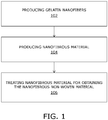
- the present disclosure provides a method for producing a nanofibrous non-woven material, the method comprising producing gelatin nanofibers; producing a nanofibrous material using the produced gelatin nanofibers; and treating the nanofibrous material by a crosslinking agent for forming adhesion bonds in the nanofibrous material and to obtain the nanofibrous non-woven material.
- the present disclosure provides a nanofibrous non-woven material comprising cross-linked gelatin nanofibers.
- the present disclosure provides nanofibrous material comprising gelatin nanofibers that can be cross-linked which interfibrous voids are partially filled with polymeric material like polysiloxane.
- the present disclosure provides nanofibrous material comprising gelatin nanofibers that can be cross-linked which interfibrous voids are partially filled with polymeric material like polymer derived from natural oil polymerization.
- the present disclosure provides nanofibrous material comprising gelatin nanofibers that can be cross-linked which interfibrous voids are partially filled with polymeric material like polyurethane.
- the present disclosure provides a laminated material comprising of material described above and the substrate that can be wood, cotton.
- Embodiments of the present disclosure substantially eliminate or at least partially address the aforementioned problems in the prior art, and enables high tensile strength, abrasion resistance and resistance to the environment in the nanofibrous non-woven material.
- the present disclosure provides a method for producing a nanofibrous gelatin-based nanofibrous non-woven material, wherein adhesion between the gelatin nanofibers is significantly improved using the crosslinking agent, thereby producing a material with high water-resistance and improved mechanical properties that is strong enough to be used in applications such as textile, fashion, interior design, automotive, packaging.
- Fibers adhesion to each other needs to be improved to improve mechanical properties of gelatin-based non-woven material.
- This can be done by treatment with more durable polymers (0 to 40% w/w) such as two component silicone polymers, natural Latex, polyurethane polymers, natural oils (linseed oil, rapeseed oil, palm oil, olive oil) and with a mixture of these oils.
- this kind of treatment would add water resistance to the material without previous cross- linking.
- the embodiments further enable the faster production and improve material durability, because gelatin fibers produced by known methods (e.g. electrospinned material) was too thin and production too slow, expensive and energy demanding.
- the embodiments of the present disclosure good for more than just making an eco-friendly material and enable to make nanofibrous materials faster than other current technologies.
- the material produced according to the present disclosure is an airy fibrous gelatin-based material that can be easily produced on an industrial scale and have potential applications in the textile industry, interior design, drug testing, dentistry, wound care or even filtration.
- Chemical crosslinking reaction can be carried out in various conditions: temperature -80...250 °C, pressure 0...100 bar, with the presence or absence of chemical catalyst, initiator or additional reagent (such as a base or acid) and with presence or absence of physical modifier (such as UV-light or microwave irradiation).
- Physical crosslinking serves the same purpose as chemical crosslinking, two different approaches are available: (i) New covalent bonds between fiber and crosslinker are not formed. Rather, the crosslinker binds with the fiber by other interactions, such as dispersion, dipole-dipole, dipole-induced dipole forces and by hydrogen bonding.
- Crosslinker may be any polymer (polyethylene, polypropylene, polysiloxane, polyurethane, polyvinyl alcohol, polyvinyl acetate, polyethylene glycol, polyamide or any co-polymer) which can be incorporated into fibrous gelatin matrix.
- (ii) New covalent bonds between fibers are formed, but only a physical stimulus is used to form these. Such physical stimuli are e.g. electron beam irradiation, plasma treatment, thermal treatment.
- the present disclosure provides a method for producing a nanofibrous non-woven material, the method comprising producing gelatin nanofibers; producing a nanofibrous material using the produced gelatin nanofibers; and treating the nanofibrous material by a crosslinking agent for forming adhesion bonds in the nanofibrous material and to obtain the nanofibrous non-woven material.
- the present disclosure provides a nanofibrous non-woven material comprising cross-linked gelatin nanofibers.
- the present disclosure provides a nanofibrous material comprising gelatin nanofibers that can be cross-linked which interfibrous voids are partially filled with polymeric material like polysiloxane.
- the present disclosure provides a nanofibrous material comprising gelatin nanofibers that can be cross-linked which interfibrous voids are partially filled with polymeric material like polymer derived from natural oil polymerization.
- the present disclosure provides a nanofibrous material comprising gelatin nanofibers that can be cross-linked which interfibrous voids are partially filled with polymeric material like polyurethane.
- the present disclosure provides a laminated material comprising of material described above in the embodiments of the second aspect and the substrate that can be wood, cotton.
- the present disclosure provides a method of producing nanofibrous non-woven material and a nanofibrous non-woven material comprising cross-linked gelatin nanofibers.
- the nanofibrous non-woven material produced using the method described herein has high tensile strength, abrasion resistance, tear strength, color fastness, resistance to surface wetting, static air permeability, resistance by ignition to match, resistance of elongation at rupture and resistance to the environment.
- the adhesion between the gelatin nanofibers is significantly improved using the crosslinking agent, thereby producing a material with high water-resistance and improved mechanical properties that is strong enough to be used in applications such as textile, fashion, interior design, automotive, packaging.
- the method of the present disclosure is efficient, economically viable and can be scaled for mass-production.
- the embodiments according to the present disclosure enable to make gelatin-based nanofibrous material, which help to reduce abundant waste of leather and meat industries while at the same time solving the problem of mass-fashion and automotive brands not having eco-friendly materials available in mass-scale.
- the embodiments of the nanofibrous non-woven material according to the present disclosure enable a material that is unique on its own, has a texture similar to leather or suede and suitable for similar applications.
- the method comprises producing gelatin nanofibers.
- gelatin is a protein that is produced by irreversible hydrolysis of collagen.
- Collagen is an abundant protein in connective tissues of animals, making up about one third of the total protein content in mammalian organisms.
- Collagen and gelatin can be both considered as residual products while they are produced during the recycling process of organic waste received from animals, for example bones, skin and other low-value parts.
- the gelatin obtained thereby is processed using techniques such as electrospinning, drawing, blow-spinning, thermal-induced phase separation, template synthesis to produce the gelatin nanofibers.
- wet spinning is commonly used that involves the extrusion of a protein solution through a spinneret into an acid-salt coagulating bath, which usually contains aqueous ammonium sulfate, acetic acid, isopropanol, or acetone.
- dry spinning comprises extrusion into an evaporative atmosphere.
- gelatin is generally derived from low-valued waste of livestock industry by-products that are generally burnt leading to release of toxic pollutants into environment.
- use of such livestock industry by-products for production of gelatin thereby reduces environmental pollution and provides sustainable, bio-degradable nanofibers.
- a weighted average diameter of the gelatin nanofibers is 20 nm-2 ⁇ m.
- the diameter of the gelatin nanofibers is a function of the process used to obtain the gelatin nanofibers from gelatin.
- the weighted average diameter is calculated based on diameter of each of the gelatin nanofibers obtained. It will be appreciated that the diameter of the gelatin nanofibers may vary. Therefore, the weighted average diameter is calculated as an average of the product of different diameters of nanofibers obtained and number of each of the nanofibers of different diameters.
- the weighted average diameter of the gelatin nanofibers may be, for example, from 20 nm (nanometers), 30 nm, 40 nm, 50 nm, 60 nm, 70 nm, 80 nm, 90 nm, 0.1 ⁇ m (micrometers), 0.2 ⁇ m, 0.3 ⁇ m, 0.4 ⁇ m, 0.5 ⁇ m, 0.6 ⁇ m, 0.7 ⁇ m, 0.8 ⁇ m, 0.9 ⁇ m or 1 ⁇ m up to 50 nm, 60 nm, 70 nm, 80 nm, 90 nm, 0.1 ⁇ m, 0.2 ⁇ m, 0.3 ⁇ m, 0.4 ⁇ m, 0.5 ⁇ m, 0.6 ⁇ m, 0.7 ⁇ m, 0.8 ⁇ m, 0.9 ⁇ m, 1 ⁇ m, 1.5 ⁇ m or 2 ⁇ m.
- the method comprises producing a nanofibrous material using the produced gelatin nanofibers.
- the gelatin nanofibers are bonded to form the nanofibrous material.
- techniques such as mechanical bonding, chemical bonding, thermal bonding or a combination thereof may be employed to produce the nanofibrous material from the gelatin nanofibers.
- mechanical bonding physical entanglement of the nanofibers is performed to produce the nanofibrous material.
- empty spaces between the nanofibers are either partially or completely filled subsequently to improve water-resistant properties of the nanofibrous material.
- the method comprises treating the nanofibrous material by a crosslinking agent for forming adhesion bonds in the nanofibrous material and to obtain the nanofibrous non-woven material.
- the singular gelatin nanofibers have high tensile strength and elastic modulus.
- the nanofibrous material obtained using such gelatin nanofibers has poor mechanical properties due to weak interactions between the nanofibers. Therefore, interaction and adhesion between the fibers needs to be improved to enhance the mechanical properties of nanofibrous material.
- the term "crosslinking agent” refers to a process or a chemical compound that improves adhesion between the gelatin nanofibers of the nanofibrous material.
- the crosslinking agent enhances interaction by forming adhesion bonds between the gelatin nanofibers using a process or may provide the chemical compound that may interlink the gelatin nanofibers with each other. Furthermore, by improving the adhesion between the gelatin nanofibers, the crosslinking agent enables to fill interfibrous voids in the nanofibrous non-woven material. Beneficially, water-resistant properties of the nanofibrous non-woven material are significantly improved by the crosslinking agent as the interfibrous voids act as capillaries and absorb water by capillary action.
- adhesion bonds in the nanofibrous material enables to enhance interactions between the gelatin fibers and to improve fibers adhesion to each other to improve mechanical properties of the non-woven nanofibrous material. Further, forming the bonds enables to fill voids between the fibers in the non-woven nanofibrous material and thus to reduce water absorption caused by the empty spaces between the fibers.
- the empty space between the fibers act as capillaries and therefore absorb water due to capillary forces. Therefore, by filing the empty spaces by crosslinking reactions it enables to block the capillary forces.
- treating by the crosslinking agent comprises treating by a first physical crosslinking agent selected from a physical stimuli group comprising electron beam irradiation, plasma treatment, thermal treatment for forming covalent adhesion bonds between the gelatin nanofibers in the nanofibrous non-woven material.
- the first physical crosslinking agent forms covalent adhesion bonds amongst the gelatin nanofibers in the nanofibrous non-woven material.
- the electronic beam irradiation enables free radical formation in the nanofibrous non-woven material, wherein two free radicals induced by irradiation combine to form a covalent bond, thereby improving adhesion between the gelatin nanofibers.
- plasma treatment induces crosslinking between the gelatin nanofibers and improves structural and morphological stability of the nanofibrous non-woven material.
- thermal treatment the nanofibrous material is heated at controlled temperatures for predefined time periods to obtain desired crosslinking between the gelatin nanofibers.
- the physical stimuli enable improvement of mechanical properties of nanofibrous non-woven material using a simplified and efficient process.
- treating by the crosslinking agent comprises incorporating a second physical crosslinking agent selected from a polymer group comprising polymers polyethylene, polypropylene, polysiloxane, polyurethane, polyvinyl alcohol, polyvinyl acetate, polyethylene glycol, polyamide, or any co-polymer including at least one of the polymers into the nanofibrous non-woven material for forming adhesion bonds between the second physical crosslinking agent and the gelatin nanofibers in the nanofibrous non-woven material by dispersion, dipole-dipole forces, dipole induced dipole forces or hydrogen bonding.
- a second physical crosslinking agent selected from a polymer group comprising polymers polyethylene, polypropylene, polysiloxane, polyurethane, polyvinyl alcohol, polyvinyl acetate, polyethylene glycol, polyamide, or any co-polymer including at least one of the polymers into the nanofibrous non-woven material for forming adhesion bonds between the second physical crosslinking agent and
- the second physical crosslinking agent does not form covalent bonds with the gelatin nanofibers and bonds with the gelatin nanofibers by other interactions such as dispersion, dipole-dipole forces, dipole induced dipole forces or hydrogen bonding.
- Such intermolecular forces between functional groups of the gelatin nanofibers and the second physical crosslinking agent allow binding of the polymer with the gelatin nanofibers in the nanofibrous non-woven material.
- the type of polymers for second physical crosslinking agent is selected based on types of properties desired from the nanofibrous non-woven material. It will be appreciated that the polar functional groups of the gelatin nanofibers are masked using the second physical crosslinking agent in order to improve water-resistant properties of the nanofibrous non-woven material.
- the two or more reactive functional groups of the monomeric or polymeric compounds react with the functional groups of gelatin nanofibers, for example, hydroxyl (-OH), carboxyl (-COOH), amino (- NH2), amide (-CONH2).
- the chemical crosslinking agent enables polymerization of the nanofibrous non-woven material and crosslinks the gelatin nanofibers.
- the two or more reactive functions groups are carboxylic acid derivatives i.e.
- a halogen for example, F, -CI, -Br, -I
- N-hydroxysuccinimidyl 1-hydroxybenzotriazolyl or any other group, of which corresponding acid HX has water-phase pKa value lower than 14.
- the chemical crosslinking reaction may be carried out at temperature, for example, from -80°, -70°, -60°, -50°, -40°, -30°, -20°, -10°, 0°, 10°, 20°, 30°, 40°, 50°, 60°, 70°, 80°, 90°, 100°, 110°, 120°, 130°, 140°, 150°, 160°, 170°, 180°, 190°, 200°, 210°, 220° or 230° Celsius (C) up to -60°, -50°, -40°, -30°, -20°, -10°, 0°, 10°, 20°, 30°, 40°, 50°, 60°, 70°, 80°, 90°, 100°, 110°, 120°, 130°, 140°, 150°, 160°, 170°, 180°, 190°, 200°, 210°, 220°, 230°, 240° or 250° C.
- C 230° Celsius
- the chemical crosslinking reaction may be carried out at pressure, for example, from 0, 10, 20, 30, 40, 50, 60, 70, 80 or 90 bar up to 10, 20, 30, 40, 50, 60, 70, 80, 90 or 100 bar. Additionally, optionally, the chemical crosslinking reaction is carried out in presence of at least one of: a chemical catalyst, a polymerization initiator or an additional reagent, such as a base or an acid, a physical modifier such as UV-light or microwave radiation.
- carrying out the chemical crosslinking reaction with the chemical crosslinking agent comprises treating the nanofibrous non-woven material in a treatment solution, wherein the treatment solution comprises vinyl-terminated polydimethylsiloxane (vt-PDMS), hydroxy-terminated polydimethylsiloxane (ht-PDMS) or a combination thereof and poly(dimethylsiloxane-comethylhydrosiloxane) (co-PMHS) as the chemical crosslinking agent, wherein viscosity of the chemical crosslinking agent is 1 cSt - 500000 cSt, concentration of the chemical crosslinking agent in the treatment solution is 0.001 %-50 %, hydride substitution ratio in co-PDMS is 0.2 % - 100 %; and drying the treated nanofibrous non-woven material at a drying temperature 0°C - 250°C for a time period 1 second - 48 hours.
- the treatment solution comprises vinyl-terminated polydimethylsiloxane (vt-PDMS),
- the nanofibrous non-woven material is treated with the chemical crosslinking agent, wherein the gelatin nanofibers are polymerized with polysiloxane in the time period the nanofibrous non-woven material is dried.
- treating the nanofibrous non-woven material may comprise one or more processes such as immersing, coating, applying, spraying the nanofibrous non-woven material with the chemical crosslinking agent or the solution or mixture comprising the crosslinking agent.
- the drying temperature and time period are selected based on specific composition of the treatment solution used for treating the nanofibrous non-woven material.
- the drying temperature may be, for example, from 0°, 10°, 20°, 30°, 40°, 50°, 60°, 70°, 80°, 90°, 100°, 110°, 120°, 130°, 140°, 150°, 160°, 170°, 180°, 190°, 200°, 210°, 220°, 230° or 240°C up to 10°, 20°, 30°, 40°, 50°, 60°, 70°, 80°, 90°, 100°, 110°, 120°, 130°, 140°, 150°, 160°, 170°, 180°, 190°, 200°, 210°, 220°, 230°, 240° or 250°C.
- the time period for drying may be, for example, from 1, 5, 10, 20, 30, 60 seconds, 2, 5, 10, 15, 30, 45, 60 minutes, 2, 3, 4, 5, 10, 15, 20, 25, 30, 35, 40 or 45 hours up to 5, 10, 20, 30, 60 seconds, 2, 5, 10, 15, 30, 45, 60 minutes, 2, 3, 4, 5, 10, 15, 20, 25, 30, 35, 40, 45 or 48 hours.
- the viscosity of the chemical crosslinking agent is 1 - 500000 cSt.
- the viscosity of the chemical crosslinking agent may be, for example, from 1, 2, 3, 4, 5, 6, 7, 8, 9, 10, 50, 100, 200, 300, 400, 500, 1000, 5000, 10000, 15000, 20000, 50000, 75000, 100000, 150000, 200000, 250000, 300000, 350000 or 400000 centistokes (cSt) up to 2, 3, 4, 5, 6, 7, 8, 9, 10, 50, 100, 200, 300, 400, 500, 1000, 5000, 10000, 15000, 20000, 50000, 75000, 100000, 150000, 200000, 250000, 300000, 350000, 400000, 450000 or 500000 cSt.
- hydrides having the viscosity 2 - 3 cSt may be used.
- concentration of the chemical crosslinking agent in the treatment solution may be for example, from 0.001, 0.002, 0.003, 0.004, 0.005, 0.01, 0.05, 0.1, 0.5, 1, 2, 3, 5, 10, 15, 20, 25, 30, 35, 40 or 45 % up to 0.002, 0.003, 0.004, 0.005, 0.01, 0.05, 0.1, 0.5, 1, 2, 3, 5, 10, 15, 20, 25, 30, 35, 40, 45 or 50 %.
- the hydride substitution ratio in poly(dimethylsiloxane-comethylhydrosiloxane) may be, for example, from 0.2, 0.3, 0.4, 0.5, 1, 2, 3, 5, 10, 15, 20, 25, 30, 35, 40, 45, 50, 55, 60, 65, 70, 75, 80, 85, 90 or 95 % up to 0.3, 0.4, 0.5, 1, 2, 3, 5, 10, 15, 20, 25, 30, 35, 40, 45, 50, 55, 60, 65, 70, 75, 80, 85, 90, 95 or 100 %.
- the treatment solution further comprises a catalyst and a solvent.
- the catalyst is a platinum-based catalyst or a rhodium-based catalyst that is capable of catalyzing vinyl-hydride addition reaction or de-hydrosilylation reaction.
- the concentration of the catalyst in the treatment solution is 0.001 ppm - 1000 ppm (parts per million).
- the concentration of the catalyst in the treatment solution may be from 0.001, 0.002, 0.003, 0.004, 0.005, 0.01, 0.05, 0.1, 1, 5, 10, 50, 100, 200, 300, 400, 500, 750 or 900 ppm up to 0.002, 0.003, 0.004, 0.005, 0.01, 0.05, 0.1, 1, 5, 10, 50, 100, 200, 300, 400, 500, 750, 900 or 1000 ppm.
- the solvent used in the treatment solution is of low polarity.
- the solvent examples include, but are not limited to, isomers of pentane, hexane, heptane and octane, cyclohexane, benzene, toluene, isomers of xylene, tetra-chlorocarbon, chloroform, dichloromethane, diethyl ether, methyl-t-butylether or mixtures thereof.
- the treatment solution comprises a filler.
- filler include, but are not limited to, hydrophilic or hydrophobic silica particles, diatomaceous earth, calcium carbonate, carbon black, montmorillonite or other clays. The concentration of filler in the treatment solution may be up to 75%.
- carrying out the chemical crosslinking reaction with the chemical crosslinking agent comprises treating the nanofibrous non-woven material in a treatment solution, wherein the treatment solution comprises hydroxyl-terminated polydimethylsiloxane (ht-PDMS) and a chemical compound capable of reacting with hydroxyl groups of ht-PDMS as the chemical crosslinking agent, wherein viscosity of the chemical crosslinking agent is 0.1 cSt-500000 cSt or the chemical crosslinking agent is in solid form and concentration of the chemical crosslinking agent in the treatment solution is 0.001%-99%; and drying the treated nanofibrous non-woven material at a drying temperature 0°C-250°C for a time period 1 second to 120 hours.
- ht-PDMS hydroxyl-terminated polydimethylsiloxane
- a chemical compound capable of reacting with hydroxyl groups of ht-PDMS as the chemical crosslinking agent
- viscosity of the chemical crosslinking agent is 0.1 cSt-500000
- the nanofibrous non-woven material is treated with the chemical crosslinking agent, wherein the gelatin nanofibers are polymerized with polysiloxane in the time period the nanofibrous non-woven material is dried.
- the chemical compound capable of reacting with hydroxyl groups of ht-PDMS may have a general structure of R1Si(OCOR2) 3 , R1Si(OR2) 3 , Si(OR1) 4 , wherein R1 and R2 represent alkyl substituents or may be di-t-butoxydiacetoxysilane, bis-(triethoxysilyl)ethane, methyltris-(methylethylketoximino)silane, vinyltris-(methylethylketoximino) silane, vinyltriisopropenoxysilane, bis(N- methylbenzamido) ethoxymethylsilane, tris(cyclohexylamino)methylsilane.
- the drying temperature and time period are selected based on specific composition of the treatment solution used for treating the nanofibrous non-woven material.
- the drying temperature may be, for example, from 0°, 10°, 20°, 30°, 40°, 50°, 60°, 70°, 80°, 90°, 100°, 110°, 120°, 130°, 140°, 150°, 160°, 170°, 180°, 190°, 200°, 210°, 220°, 230° or 240°C up to 10°, 20°, 30°, 40°, 50°, 60°, 70°, 80°, 90°, 100°, 110°, 120°, 130°, 140°, 150°, 160°, 170°, 180°, 190°, 200°, 210°, 220°, 230°, 240° or 250° C.
- the time period for drying may be, for example, from 1, 5, 10, 20, 30, 60 seconds, 2, 5, 10, 15, 30, 45, 60 minutes, 2, 3, 4, 5, 10, 15, 20, 25, 30, 35, 40, 45, 50, 60, 70, 80, 90, 100 or 110 hours up to 5, 10, 20, 30, 60 seconds, 2, 5, 10, 15, 30, 45, 60 minutes, 2, 3, 4, 5, 10, 15, 20, 25, 30, 35, 40, 45, 50, 60, 70, 80, 90, 100, 110 or 120 hours.
- the viscosity of the chemical crosslinking agent is 0.1 - 500000 cSt.
- the viscosity of the chemical crosslinking agent may be, for example, from 0.1, 0.2, 0.3, 0.4, 0.5, 0.6, 0.7, 0.8, 0.9, 1, 2, 3, 4, 5, 6, 7, 8, 9, 10, 50, 100, 200, 300, 400, 500, 1000, 5000, 10000, 15000, 20000, 50000, 75000, 100000, 150000, 200000, 250000, 300000, 350000 or 400000 cSt up to 0.2, 0.3, 0.4, 0.5, 0.6, 0.7, 0.8, 0.9, 1, 2, 3, 4, 5, 6, 7, 8, 9, 10, 50, 100, 200, 300, 400, 500, 1000, 5000, 10000, 15000, 20000, 50000, 75000, 100000, 150000, 200000, 250000, 300000, 350000, 400000, 450000 or 500000 cSt.
- condensation cure silicone crosslinkers which are low molecular weight liquid and less viscous than water can be used.
- the chemical crosslinking agent is in solid form.
- the concentration of the chemical crosslinking agent in the treatment solution may be for example, from 0.001, 0.002, 0.003, 0.004, 0.005, 0.01, 0.05, 0.1, 0.5, 1, 2, 3, 5, 10, 15, 20, 25, 30, 35, 40, 45, 50, 55, 60, 65, 70, 75, 80, 85, 90 or 95 % up to 0.002, 0.003, 0.004, 0.005, 0.01, 0.05, 0.1, 0.5, 1, 2, 3, 5, 10, 15, 20, 25, 30, 35, 40, 45, 50, 55, 60, 65, 70, 75, 80, 85, 90, 95 or 99 %.
- the concentration of chemical compound capable of reacting with hydroxyl groups of ht-PDMS in the treatment solution is 0.001% to 20%.
- the concentration of the chemical compound may be, for example, from 0.001, 0.002, 0.003, 0.004, 0.005, 0.01, 0.05, 0.1, 0.5, 1, 2, 3, 5, 10 or 15 % up to 0.002, 0.003, 0.004, 0.005, 0.01, 0.05, 0.1, 0.5, 1, 2, 3, 5, 10, 15 or 20 %.
- the treatment solution further comprises a solvent.
- the solvent may be of a low polarity.
- the solvent include, but are not limited to, isomers of pentane, hexane, heptane and octane, cyclohexane, benzene, toluene, isomers of xylene, tetra-chlorocarbon, chloroform, dichloromethane, diethyl ether, methyl-t-butylether or mixtures thereof.
- the treatment solution comprises a catalyst.
- the catalyst is a tin-based catalyst or a titanium-based catalyst used to accelerate crosslinking reaction.
- the concentration of the catalyst in the treatment solution may be up to 5%.
- the treatment solution comprises a filler.
- filler include, but are not limited to, hydrophilic or hydrophobic silica particles, diatomaceous earth, calcium carbonate, carbon black, montmorillonite or other clays.
- the concentration of filler in the treatment solution may be up to 75%.
- carrying out the chemical crosslinking reaction with the chemical crosslinking agent comprises treating the nanofibrous non-woven material with a natural oil mixture, wherein the natural oil mixture comprises at least one natural oil of a olive oil, rapeseed oil, hemp oil, castor oil, linseed oil, soybean oil, corn oil, cottonseed oil, palm oil, safflower oil, sunflower oil or any mixture of said oils as the chemical crosslinking agent, wherein concentration of the natural oil in the natural oil mixture is 0.1 %-100 %; and drying the treated nanofibrous non-woven material at a drying temperature 40°C-250°C for a time period 1 hour to 120 hours for carrying out radical polymerization between carbon-carbon double bonds present in the natural oil mixture; forming a polymeric material between gelatin nanofibers.
- the natural oil mixture comprises at least one natural oil of a olive oil, rapeseed oil, hemp oil, castor oil, linseed oil, soybean oil, corn oil, cottonseed oil, palm oil, saf
- the one or more natural oils in natural oil mixture are triglycerides containing at least one carbon-carbon double bond in side-chains thereof.
- the treated nanofibrous non-woven material is dried at an elevated drying temperature (i.e., 40°C - 250°C) to carry out the radical polymerization between carbon-carbon double bonds present in the natural oil mixture, thereby forming the polymeric material between gelatin nanofibers.
- the gelatin nanofibers are polymerized with biopolymers.
- the drying temperature may be, for example, from 40°, 50°, 60°, 70°, 80°, 90°, 100°, 110°, 120°, 130°, 140°, 150°, 160°, 170°, 180°, 190°, 200°, 210°, 220°, 230° or 240°C up to 50°, 60°, 70°, 80°, 90°, 100°, 110°, 120°, 130°, 140°, 150°, 160°, 170°, 180°, 190°, 200°, 210°, 220°, 230°, 240° or 250°C.
- the time period for drying may be, for example, from 1, 2, 3, 4, 5, 10, 15, 20, 25, 30, 35, 40, 45, 50, 60, 70, 80, 90, 100 or 110 hours up to 2, 3, 4, 5, 10, 15, 20, 25, 30, 35, 40, 45, 50, 60, 70, 80, 90, 100, 110 or 120 hours.
- the concentration of the natural oil in the natural oil mixture may be, for example, from 0.1, 0.2, 0.3, 0.4, 0.5, 0.6, 0.7, 0.8, 0.9, 1, 2, 3, 4, 5, 6, 7, 8, 9, 10, 15, 20, 25, 30, 35, 40, 45, 50, 60, 70, 80 or 90 % up to 0.2, 0.3, 0.4, 0.5, 0.6, 0.7, 0.8, 0.9, 1, 2, 3, 4, 5, 6, 7, 8, 9, 10, 15, 20, 25, 30, 35, 40, 45, 50, 60, 70, 80, 90 or 100 %.
- the natural oil mixture further comprises a solvent of low to medium polarity.
- the solvent include, but are not limited to, isomers of pentane, hexane, heptane and octane, cyclohexane, benzene, toluene, isomers of xylene, tetra-chlorocarbon, chloroform, dichloromethane, diethyl ether, methyl-t-butylether, ethyl acetate, acetone, tetrahydrofuran, isopropyl alcohol or mixtures thereof.
- the natural oil mixture comprises a radical polymerization initiator.
- the concentration of the radical polymerization initiator may be up to 5%.
- the radical polymerization initiator may be selected from a group comprising azobisisobutyronitrile (AIBN), 1,1'-Azobis(cyclohexanecarbonitrile) (ABCN), benzoyl peroxide, di-tert-butylperoxide.
- the treatment solution comprises additives.
- the additives may include plasticizers such as dibutylphthalate, dioctylphthalate, triethyl citrate, tributyl citrate, lecithin, colophonium, and fillers such as hydrophilic or hydrophobic silica particles, diatomaceous earth, calcium carbonate, carbon black, montmorillonite or other clays.
- concentration of the additives in the natural oil mixture may be up to 5%.
- the nanofibrous non-woven material is a bio-based, fully biodegradable material produced using non-woven material treated with natural oil mixture comprising linseed oil.
- Such material may be employed to bind atmospheric pollution, with an efficiency of up to 18 times the weight of the material.
- Gelatin itself cannot bind the oil, but by coating the gelatin fibers with linseed oil, it makes the material oleophilic, while retaining the fibrous structure in which the oil is stored.
- the fiber content in the treated nanofibrous non-woven material is 70 - 90 % by weight and processing percentage (i.e., content of linseed oil and optionally, solvents) is 10 - 30 %.
- the nanofibrous non-woven material is 80-90% and the processing percentage is 10-20%.
- carrying out the chemical crosslinking reaction with the chemical crosslinking agent comprises treating the nanofibrous non-woven material in a polyurethane forming mixture, wherein the polyurethane forming mixture comprises polyol and polyisocyanate as the chemical crosslinking agent, wherein molar mass of each of the polyol and polyisocyanate is 50-1000000, concentration of the chemical crosslinking agent in the mixture is 0.01 %-75 %; and drying the treated nanofibrous non-woven material at a drying temperature 0°C-250°C for a time period 1 second to 48 hours.
- the polyols and polyisocyanates in the polyurethane forming mixture react with each other to form a urethane bond.
- urea bonds may be formed when polyisocyanate is partially hydrolyzed to amine, which then reacts with unhydrolyzed isocyanate group.
- the polyol has at least two hydroxyl (-OH) groups and its main chain structure may be aliphatic or aromatic.
- the polyisocyanate has at least two isocyanate (-NCO) groups and its main chain structure may be aliphatic or aromatic.
- the drying temperature may be, for example, from 0°, 10°, 20°, 30°, 40°, 50°, 60°, 70°, 80°, 90°, 100°, 110°, 120°, 130°, 140°, 150°, 160°, 170°, 180°, 190°, 200°, 210°, 220°, 230° or 240°C up to 10°, 20°, 30°, 40°, 50°, 60°, 70°, 80°, 90°, 100°, 110°, 120°, 130°, 140°, 150°, 160°, 170°, 180°, 190°, 200°, 210°, 220°, 230°, 240° or 250° C.
- the time period for drying may be, for example, from 1, 5, 10, 20, 30, 60 seconds, 2, 5, 10, 15, 30, 45, 60 minutes, 2, 3, 4, 5, 10, 15, 20, 25, 30, 35, 40 or 45 hours up to 5, 10, 20, 30, 60 seconds, 2, 5, 10, 15, 30, 45, 60 minutes, 2, 3, 4, 5, 10, 15, 20, 25, 30, 35, 40, 45 or 48 hours.
- the molar mass of the each of the polyol and polyisocyanate may be, for example, from 50, 60, 70, 80, 90, 100, 200, 300, 400, 500, 1000, 5000, 10000, 15000, 20000, 50000, 75000, 100000, 150000, 200000, 300000, 400000, 500000, 600000, 700000, 800000 or 900000 up to 60, 70, 80, 90, 100, 200, 300, 400, 500, 1000, 5000, 10000, 15000, 20000, 50000, 75000, 100000, 150000, 200000, 300000, 400000, 500000, 600000, 700000, 800000, 900000 or 1000000.
- the concentration of the chemical crosslinking agent in the mixture may be, for example, from 0.01, 0.02, 0.03, 0.04, 0.05, 0.06, 0.07, 0.08, 0.09, 0.1, 0.2, 0.3, 0.4, 0.5, 0.6, 0.7, 0.8, 0.9, 1, 2, 3, 4, 5, 6, 7, 8, 9, 10, 15, 20, 25, 30,35, 40, 45, 50, 55, 60, 65 or 70 % up to 0.02, 0.03, 0.04, 0.05, 0.06, 0.07, 0.08, 0.09, 0.1, 0.2, 0.3, 0.4, 0.5, 0.6, 0.7, 0.8, 0.9, 1, 2, 3, 4, 5, 6, 7, 8, 9, 10, 15, 20, 25, 30,35, 40, 45, 50, 55, 60, 65, 70 or 75 %.
- the polyurethane forming mixture further comprises a catalyst and a solvent.
- the catalyst is tertiary amines and tin or bismuth compounds.
- the concentration of the catalyst in the treatment solution is 0.001% - 5%.
- the concentration of the catalyst in the treatment solution may be from 0.001, 0.002, 0.003, 0.004, 0.005, 0.01, 0.05, 0.1, 1.0, 1.5, 2.0, 2.5, 3.0, 3.5, 4.0 or 4.5 % up to 0.002, 0.003, 0.004, 0.005, 0.01, 0.05, 0.1, 1.0, 1.5, 2.0, 2.5, 3.0, 3.5, 4.0, 4.5 or 5 %.
- the solvent examples include, but are not limited to, ethyl alcohol, methyl alcohol, isopropyl alcohol, water, ethyl acetate, chloroform, dichloromethane, diethyl ether, tetrahydrofuran, methyl-t-butylether, acetone or mixtures thereof.
- concentration of the solvent in the polyurethane forming mixture may be up to 99.99%.
- nanofibrous non-woven material increases ten-fold in comparison with untreated gelatin-based fibrous material.
- tensile strengths of the nanofibrous non-woven material is substantially dependent on the method used to produce gelatin nanofibers.
- the treatment of nanofibrous non-woven material with the crosslinking agent further improves environmental resistance of the material and other characteristics such as water resistance, abrasion resistance, softness.
- the polar functional groups of the gelatin nanofibers are masked using the chemical crosslinking agent in order to improve water-resistant properties of the nanofibrous non-woven material.
- the method further comprises laminating at least one layer of the nanofibrous non-woven material with at least one layer of a reinforcing material, wherein the reinforcing material is at least one of wood, plywood, plastic, ceramics, cotton, cotton gauze, stronger woven material.
- the nanofibrous non-woven material further comprises at least one layer of reinforcing material as lamination.
- laminated material comprising of material described above (e.g.
- nanofibrous material comprising gelatin nanofibers that can be cross-linked which interfibrous voids are partially filled with polymeric material like polysiloxane, filled with polymeric material like polymer derived from natural oil polymerization, filled with polymeric material like polyurethane) and the substrate that can be wood, cotton.
- reinforcing material is a stronger material and lamination is carried to achieve required final strength and improved mechanical properties of the nanofibrous non-woven material.
- the reinforcing material may be selected from at least one of a rigid or non-rigid surfaces such as wood, plywood, plastic, ceramics, cotton, cotton gauze, stronger woven material, based on aesthetic and visual requirements or based on intended application of the material.
- the lamination of the nanofibrous non-woven material can be carried out to achieve final strength of the material depending on the application using methods such as thermal treatment, pressure treatment, adhesive layer application, needle punching or a combination thereof.
- the thermal treatment may comprise heat treatment of the nanofibrous non-woven material at a temperature of 20°C - 200°C.
- adhesive used for laminating the at least one layer of the nanofibrous non-woven material with at least one layer of a reinforcing material may include adhesives such as hot-melt glue, natural latex, polyurethane based adhesives, thermo-reactive adhesives, etc.
- the at least one layer of reinforcing material may be glued to one side of the nanofibrous non-woven material or both side of the nanofibrous non-woven material.
- the nanofibrous non-woven material comprising at least one layer of reinforcing material as lamination may in addition comprise one or more additional layers of nanofibrous non-woven material.
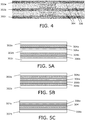
- the at least one layer of reinforcing material may be glued between two layers of the nanofibrous non-woven material.
- the at least one layer of reinforcing material and two or more nanofibrous non-woven material may be glued in turn, wherein between each two layers of nanofibrous non-woven material there is one or more layers of reinforcing materials.
- the thickness of the nanofibrous non-woven material comprising at least one layer of reinforcing material as lamination range from 0.5, 0.6, 0.7, 0.8, 0.9, 1.0, 1.1, 1.2, 1.3, 1.4, 1.5, 1.6, 1.7, 1.8, 1.9, 2.0, 2.1, 2.2, 2.3, 2.4, 2.5, 2.6, 2.7, 2.8, 2.9, 3.0, 3.1, 3.2, 3.3, 3.4, 3.5, 3.6, 3.7, 3.8, 3.9, 4.0, 4.1, 4.2, 4.3, 4.4, 4.5, 4.6, 4.7, 4.8, 4.9, 5.5, 6.0, 6.5, 7.0, 7.5, 8.0, 8.5, 9.0, 9.5 or 10 mm up to .6, 0.7, 0.8, 0.9, 1.0, 1.1, 1.2, 1.3, 1.4, 1.5, 1.6, 1.7, 1.8, 1.9, 2.0, 2.1, 2.2, 2.3, 2.4, 2.5, 2.6, 2.7
- Laminated material comprising three non-woven material layers laminated with 4 cotton gauge reinforcing material layers enables to provide end material having thickness 2 - 4 mm which is suitable for the wide range of applications and products according to the claim 15.
- the at least one layer of reinforcing material layer may be at an angle of 0 - 90° with respect to the nanofibrous non-woven material layer.
- layer of reinforcing material layer may be at an angle 0 or 45°, or in another example, wherein the nanofibrous non-woven material comprises more than one reinforcing material layers then at least one reinforcing material layer may be at an angle 0 and at least one reinforcing material layer may be at an angle 45°.
- the present disclosure also relates to the nanofibrous non-woven material as described above.
- the nanofibrous non-woven material comprises the gelatin nanofibers treated by a first physical crosslinking agent selected from a physical stimuli group comprising electron beam irradiation, plasma treatment, thermal treatment; or a second physical crosslinking agent incorporated into the nanofibrous non-woven material and selected from a polymer group comprising polymers polyethylene, polypropylene, polysiloxane, polyurethane, polyvinyl alcohol, polyvinyl acetate, polyethylene glycol, polyamide, or any co-polymer including at least one of the polymers.
- a first physical crosslinking agent selected from a physical stimuli group comprising electron beam irradiation, plasma treatment, thermal treatment
- a second physical crosslinking agent incorporated into the nanofibrous non-woven material selected from a polymer group comprising polymers polyethylene, polypropylene, polysiloxane, polyurethane, polyvinyl alcohol, polyvinyl acetate, polyethylene glycol, polyamide, or any co-polymer including
- a chemical crosslinking agent selected from a group of monomeric or polymeric compounds having two or more reactive functional groups, wherein the group of monomeric or polymeric compounds comprises amino (-NH2)
- Chemical crosslinking reaction can be carried out in various conditions: temperature -80...250 °C, pressure 0...100 bar, with the presence or absence of chemical catalyst, initiator or additional reagent (such as a base or acid) and with presence or absence of physical modifier (such as UV-light or microwave irradiation).
- the present disclosure provides a material comprising a nanofibrous non-woven material produced by using the method for producing a nanofibrous non-woven material for making a non-woven leather-like material for textile, fashion, interior design, automotive, packaging applications; biomaterial for dentistry, wound-care, cell cultivation applications; air filtration products.
- the material comprising a nanofibrous non-woven material provides an eco-friendly textile alternative for fashion or interior design purposes with a texture similar to suede or leather.
- the material may be used as a three-dimensional scaffolding for cell cultivation, for example, for growing liver cells than can be used for cancer drug testing.
- the material may be used as a biomaterial for dentistry to support bone regrowth after tooth extraction.
- Nanofibrous gelatin-based material can be treated by previously mentioned crosslinking techniques to improve mechanical properties of the material.
- crosslinking techniques are described.
- Nanofibrous gelatin-based material is immersed in a solution containing the following components: vinyl- or hydroxy-terminated polydimethylsiloxane (vt-PDMS or ht-PDMS correspondingly) or their combination in any ratio, poly(dimethylsiloxane-co-methylhydrosiloxane) (co-PMHS), platinum or rhodium-based catalyst, solvent and a filler (optional).
- Viscosities of vt-PDMS, ht-PDMS and co-PDMS can vary from 5-500000 cSt and their concentration in treatment solution can vary from 0.001% - 50%. Hydride substitution ratio in co-PDMS can vary from 0.2 - 100%.
- Pt-based or Rh-based catalyst which is capable of catalyzing vinyl-hydride addition reaction or dehydrosilylation reaction can be used with concentration range of 0.001-1000 ppm.
- Solvents with low polarity can be used, such as isomers of pentane, hexane, heptane and octane, cyclohexane, benzene, toluene, isomers of xylene, tetrachlorocarbon, chloroform, dichloromethane, diethyl ether, methyl-t-butylether, or their mixtures.
- Optional fillers include hydrophilic or hydrophobic silica particles, diatomaceous earth, calcium carbonate, carbon black, montmorillonite or other clays which concentration can vary from 0% to 75%.
- concentration can vary from 0% to 75%.
- Nanofibrous gelatin-based material is immersed in a solution containing the following components: hydroxyl-terminated polydimethylsiloxane (ht-PDMS), crosslinker capable reacting with hydroxyl groups of ht-PDMS, solvent, optional catalyst and optional filler.
- ht-PDMS hydroxyl-terminated polydimethylsiloxane
- crosslinker capable reacting with hydroxyl groups of ht-PDMS
- solvent optional catalyst and optional filler.
- Crosslinker can be any chemical compound capable of reacting with two hydroxyl groups of ht-PDMS.
- they can have general structures R1Si(OCOR2)3, R1Si(OR2)3, Si(OR1)4, where R1 and R2 represent alkyl substituents or can be di-t-butoxydiacetoxysilane, bis(triethoxysilyl)ethane, methyltris(methylethylketoximino)silane, vinyltris(methylethylketoximino)silane, vinyltriisopropenoxysilane, bis(N- methylbenzamido) ethoxymethylsilane, tris(cyclohexylamino) methylsilane.
- Crosslinker concentration can vary from 0.001% - 20%.
- Solvents with low polarity can be used, such as isomers of pentane, hexane, heptane and octane, cyclohexane, benzene, toluene, isomers of xylene, tetrachlorocarbon, chloroform, dichloromethane, diethyl ether, methyl-t-butylether, or their mixtures.
- a tin- or titanium-based catalyst can be added to accelerate reaction with concentration of 0-5%.
- Optional fillers include hydrophilic or hydrophobic silica particles, diatomaceous earth, calcium carbonate, carbon black, montmorillonite or other clays which concentration can vary from 0% to 75%.
- drying temperatures can vary from 0 - 250 °C, and the drying time can vary from 1 second to 120 hours depending on the exact composition of treatment solution used.
- the treatment time when using catalyst, can be reduced from 4h to 15 min when using silanes in the treatment mixtures.
- Nanofibrous gelatin-based material is treated with a mixture containing natural oils, optional solvent, optional initiator and optional additives.
- Natural oil can be any triglyceride containing at least one carbon-carbon double bond in their side-chains, such as olive, rapeseed, hemp, castor, linseed, soybean, corn, cottonseed, palm, safflower, sunflower oil or any mixture of oils.
- Their total content in treatment mixture can vary from 0.1-100%.
- Solvents with low to medium polarity can be used, such as isomers of pentane, hexane, heptane and octane, cyclohexane, benzene, toluene, isomers of xylene, tetrachlorocarbon, chloroform, dichloromethane, diethyl ether, methyl-t-butylether, ethyl acetate, acetone, tetrahydrofuran, isopropyl alcohol or their mixtures.
- Radical polymerization initiator can be added to mixture, such as azobisisobutyronitrile (AIBN), 1,1'-Azobis(cyclohexanecarbonitrile) (ABCN), benzoyl peroxide, di-tert-butylperoxide, with a concentration from 0-5%.
- Optional additives include plasticizers such as dibutylphthalate, dioctylphthalate, triethyl citrate, tributyl citrate, lecithin, colophonium and fillers such as hydrophilic or hydrophobic silica particles, diatomaceous earth, calcium carbonate, carbon black, montmorillonite or other clays. Concentration of additives can vary from 0-75%. After treating the material with natural oil mixture, the product is dried 1-120 hours at elevated temperature (40 - 250 °C) to carry out radical polymerization between carbon-carbon double bonds present in natural oils, forming a polymeric material between gelatin fibres.
- Nanofibrous gelatin-based material is treated with polyurethane forming mixture.
- Mixture consists of polyols and polyisocyanates that react with each other to form a urethane bond. Alternatively, urea bonds may be formed, when polyisocyanate is partially hydrolyzed to amine, which then reacts with unhydrolysed isocyanate group.
- the polyol has at least two hydroxyl (-OH) groups and its main chain structure can be aliphatic or aromatic. Polyol molar mass can range from 50 to 1000000 and its content in mixture can vary from 0.01% - 75%.
- the polyisocyanate has at least two isocyanate (-NCO) groups and its main chain structure can be aliphatic or aromatic.
- Polyisocyanate molar mass can range from 50 to 1000000 and its content in mixture can vary from 0.01% - 75%. Additionally, the mixture can include catalysts such as tertiary amines and tin or bismuth compounds with concentrations 0.001% - 5%. Mixture can be diluted with different solvents like ethyl alcohol, methyl alcohol, isopropyl alcohol, water, ethyl acetate, chloroform, dichloromethane, diethyl ether, tetrahydrofuran, methyl-t-butylether, acetone or other solvents or their mixtures. Solvent content can vary from 0% - 99.99%.
- the material After immersion of nanofibrous gelatin-based material to treatment mixture, the material is dried for a time range of 1 s... 48 h at a temperature between 0 - 250 °C. After treatment there is a ten-fold tensile strength increase compared to untreated gelatine-based fibrous material. Tensile strengths of the base and end material depend greatly on the method used to produce gelatin nanofibers. Treatment also improves environmental resistance of the material and other characteristics such as water resistance, abrasion resistance, softness.
- Material is laminated on rigid surface (wood, plywood, plastic, ceramics) for decorative purposes. This is achieved with heat (20-200 °C), pressure, adhesive layer, needle punching or combination of said methods. Lamination is carried out to enhance end materials mechanical properties. In that case material described above acts as a visual/decorative layer as substrate will determine mechanical properties of the end material.
- the present disclosure is focused on making eco-friendly textile for fashion or interior design that compared to other materials is now the most similar to suede or leather.
- the nanofibrous mesh that is created with the described process can be used also in various other applications, such as: (1) 3d scaffold for cell cultivation (for instance for growing liver cells on it that can then be used for cancer drug testing); (2) biomaterial for dentistry to help the bone to re-grow after tooth extraction; (3) wound-care; (4) air filtration.
- the embodiments of the leather-like material according to the present disclosure have been tested in textile applications and accessories of the leather-like material have been produced. Different measurements to determine physical properties of the leather-like material have been carried out. For example following tests have been carried out: Tear Strength (ISO 13937-2:2000) - 4,02 to 6,60 N; Tensile Strength (EN ISO 13934-1:2013) 99,78 to 590 N; Abrasion/Martindale test (ISO 12947-1:2001 and ISO 12947-4:2001) - up to 50 000 cycles.
- test results of the nanofibrous non-woven material are described in the table as follows.
- TESTED PROPERTY TEST METHOD Unit DIFFERENT SAMPLES RESULTS treatment A treatment B treatment C Tear Strength ISO 13937-2:2000 Mean Peak Force (N) 6.60 4.02 5.3
- washing solution score evaluation (15 - no change) wool - 5; wool - 5; acryl- 5; acryl- 5; polyester - 5; polyester-4/5; polyamid - 5; polyamid-4/5; cotton - 5; cotton-4/5; acetate - 5 acetate - 4
- Colour fastness to perspiration ISO 105-E04 both alkaline and acidic tests were conducted and colour fastness where tested with different textiles to see whether colour passes on those textiles.
- An example material according to the present disclosure comprises biopolymer nanofibers that are bonded with adhesive and finally laminated with reinforcing layer.
- a diameter of the biopolymer fibers may be 20nm-2 ⁇ m and treated with adhesive to enhance materials tensile strength, abrasion resistance and resistance to environment.
- FIG. 1 there is shown a flow chart depicting steps of a method for producing a nanofibrous non-woven material, in accordance with an embodiment of the present disclosure, wherein the method comprises producing gelatin nanofibers at step 102, producing a nanofibrous material using the produced gelatin nanofibers at step 104, treating the nanofibrous material by a crosslinking agent for forming adhesion bonds in the nanofibrous material and to obtain the nanofibrous non-woven material 106.
- the steps 102, 104 and 106 are illustrative and other alternatives can also be provided where one or more steps are added, removed, or are provided in a different sequence without departing from the scope of the claims herein.
- FIG. 2A and FIG. 2B show scanning electron microscope (SEM) images of the nanofibrous non-woven material, in accordance with an embodiment of the present disclosure, wherein gelatin fibers are covered by silicone treating.
- FIG. 2A illustrates the gelatin fibers covered by silicone treating of the nanofibrous non-woven material with respect to a scale of 50 ⁇ m
- FIG. 2B illustrates the gelatin fibers covered by silicone treating of the nanofibrous non-woven material with respect to a scale of 100 ⁇ m.
- crosslinking is observed between the gelatin nanofibers in the nanofibrous non-woven material.
- Figure Fig. 3 illustrates an example of laminated nanofibrous non-woven material according to an embodiment of the preset disclosure, wherein the laminated nanofibrous non-woven material having nanofibrous non-woven material layers 302 (i.e. darker layers) and reinforcing material layers 304, 306 (i.e. lighter layers).
- the laminated nanofibrous non-woven material having nanofibrous non-woven material layers 302 (i.e. darker layers) and reinforcing material layers 304, 306 (i.e. lighter layers).
- Figure Fig. 4 illustrates another example of laminated nanofibrous non-woven material according to an embodiment of the present disclosure and illustrates a bidirectionally oriented material layers used to reinforce the nanofibrous non-woven material, wherein the laminated nanofibrous non-woven material comprises a first nanofibrous non-woven material layer of pretreated primary material 302a, a second nanofibrous non-woven material layer of pretreated primary material 302b, a third nanofibrous non-woven material layer of pretreated primary material 302c, a first layer of reinforcing material 304 and a second layer of reinforcing material 306.
- the first layer of reinforcing material 304 and the second layer of reinforcing material 306 form the bidirectionally oriented material layers comprising both cotton gauze, wherein orientation of the first layer of reinforcing material 304 is aligned at an angle of 0° and orientation of the second layer of reinforcing material 306 is aligned at an angle of 45°.
- FIG. 5A, FIG. 5B and FIG. 5C there are shown schematic illustrations of laminated nanofibrous non-woven materials, in accordance with various implementations of the present disclosure, comprising at least one nanofibrous non-woven material layer 302 and one or more lamination layers for reinforcing the material.
- FIG. 5A there is illustrated an example of laminated nanofibrous non-woven material comprising a first nanofibrous non-woven material layer 302a, a second nanofibrous non-woven material layer 302b, a first layer of reinforcing material 304a and a second layer of reinforcing material 306a glued between the first nanofibrous non-woven material layer 302a and the second nanofibrous non-woven material layer 302b, wherein the first layer of reinforcing material 304a is at an angle of 45° with respect to the first nanofibrous non-woven material layer 302a and the second layer of reinforcing material 306a, and the second nanofibrous non-woven material layer 306a is at an angle of 0° with respect to the first nanofibrous non-woven material layer 302a and the first layer of reinforcing material 304a, and wherein laminated nanofibrous non-woven material further comprises a third nanofibrous non-woven material layer 302c, third layer of reinforcing material 304b and
- FIG. 5B there is illustrated another example of laminated nanofibrous non-woven material comprising a first nanofibrous non-woven material layer 302a, a second nanofibrous non-woven material layer 302b, and a first layer of reinforcing material 304a, a second layer of reinforcing material 306a, a third layer of reinforcing material 306b and a fourth layer of reinforcing material 304b glued between the first nanofibrous non-woven material layer 302a and the second nanofibrous non-woven material layer 302b, wherein the first layer of reinforcing material 304a and the fourth layer of reinforcing material 304b are correspondingly at an angle of 45° with respect to the first nanofibrous non-woven material layer 302a and the second nanofibrous non-woven material layer 304b, and the second layer of reinforcing material 306a and third layer of reinforcing material 306b between the first and fourth layers of reinforcing material 304a, 304b are at an
- FIG. 5C there is illustrated yet another example of laminated nanofibrous non-woven material comprising a first nanofibrous non-woven material layer 302a, a second nanofibrous non-woven material layer 302b, and a first layer of reinforcing material 304, a second layer of reinforcing material 306a, a third layer of reinforcing material 306b glued alternately between the first nanofibrous non-woven material layer 302a and the second nanofibrous non-woven material layer 302b, wherein the second layer of reinforcing material 306a and the third layer of reinforcing material 306b are correspondingly at an angle of 0° with respect to the first nanofibrous non-woven material layer 302a and the second nanofibrous non-woven material layer 304b, and the first layer of reinforcing material 304 is an angle of 45° with respect to the second layer of reinforcing material 306a and the third layer of reinforcing material 306b.
Landscapes
- Engineering & Computer Science (AREA)
- Textile Engineering (AREA)
- Chemical & Material Sciences (AREA)
- Chemical Kinetics & Catalysis (AREA)
- Organic Chemistry (AREA)
- Materials Engineering (AREA)
- Health & Medical Sciences (AREA)
- Medicinal Chemistry (AREA)
- Polymers & Plastics (AREA)
- Life Sciences & Earth Sciences (AREA)
- Ceramic Engineering (AREA)
- Wood Science & Technology (AREA)
- General Chemical & Material Sciences (AREA)
- Manufacturing & Machinery (AREA)
- Nanotechnology (AREA)
- Dispersion Chemistry (AREA)
- Treatments For Attaching Organic Compounds To Fibrous Goods (AREA)
- Laminated Bodies (AREA)
- Artificial Filaments (AREA)
Applications Claiming Priority (1)
| Application Number | Priority Date | Filing Date | Title |
|---|---|---|---|
| US201962941168P | 2019-11-27 | 2019-11-27 |
Publications (3)
| Publication Number | Publication Date |
|---|---|
| EP3839120A2 true EP3839120A2 (de) | 2021-06-23 |
| EP3839120A3 EP3839120A3 (de) | 2021-09-15 |
| EP3839120B1 EP3839120B1 (de) | 2025-04-30 |
Family
ID=73598772
Family Applications (1)
| Application Number | Title | Priority Date | Filing Date |
|---|---|---|---|
| EP20210075.6A Active EP3839120B1 (de) | 2019-11-27 | 2020-11-26 | Nanofaservliesmaterial auf gelatinebasis |
Country Status (2)
| Country | Link |
|---|---|
| US (1) | US20210155764A1 (de) |
| EP (1) | EP3839120B1 (de) |
Cited By (1)
| Publication number | Priority date | Publication date | Assignee | Title |
|---|---|---|---|---|
| WO2023116952A1 (en) * | 2021-12-20 | 2023-06-29 | Česká zemědělská univerzita v Praze | Multilayer wood coating system and method of its application |
Families Citing this family (2)
| Publication number | Priority date | Publication date | Assignee | Title |
|---|---|---|---|---|
| CN115434073B (zh) * | 2022-09-13 | 2023-06-02 | 上海迅江科技有限公司 | 一种聚氨酯纳米纤维防水透湿膜及其制备方法和应用 |
| TWI876821B (zh) * | 2024-01-05 | 2025-03-11 | 英屬開曼群島商意騰科技股份有限公司 | 資料處理系統 |
Family Cites Families (8)
| Publication number | Priority date | Publication date | Assignee | Title |
|---|---|---|---|---|
| DE1619288A1 (de) * | 1965-11-13 | 1970-12-03 | Svit N P | Biegsames Flaechengebilde,insbesondere Kunstleder und Verfahren zu seiner Herstellung |
| US6977231B1 (en) * | 1999-01-21 | 2005-12-20 | Nipro Corporation | Suturable adhesion-preventing membrane |
| JP3887703B2 (ja) * | 2003-12-01 | 2007-02-28 | 学校法人 関西大学 | ゼラチン繊維とその製造方法 |
| EP2021536B1 (de) * | 2006-04-24 | 2014-02-26 | Coloplast A/S | Aus einem unbedenklichen lösungsmittel trockengesponnene vliese |
| CN105013012B (zh) * | 2014-04-28 | 2018-04-10 | 韩国原子力医学院 | 提高吸水性的天然高分子纳米纤维复合材料制造方法 |
| ES2914053T3 (es) * | 2014-11-03 | 2022-06-07 | Modern Meadow Inc | Biomateriales obtenidos mediante ingeniería reforzados y métodos de fabricación de los mismos |
| WO2017096240A1 (en) * | 2015-12-03 | 2017-06-08 | The Government Of The United States Of America As Represented By The Secretary Of The Navy | Biopapers as a substrate for tissue culture |
| EP3205754B1 (de) * | 2016-02-15 | 2020-03-25 | Modern Meadow, Inc. | Verfahren zur herstellung von elektrokompaktierten leder |
-
2020
- 2020-11-25 US US17/104,314 patent/US20210155764A1/en not_active Abandoned
- 2020-11-26 EP EP20210075.6A patent/EP3839120B1/de active Active
Cited By (1)
| Publication number | Priority date | Publication date | Assignee | Title |
|---|---|---|---|---|
| WO2023116952A1 (en) * | 2021-12-20 | 2023-06-29 | Česká zemědělská univerzita v Praze | Multilayer wood coating system and method of its application |
Also Published As
| Publication number | Publication date |
|---|---|
| US20210155764A1 (en) | 2021-05-27 |
| EP3839120A3 (de) | 2021-09-15 |
| EP3839120B1 (de) | 2025-04-30 |
Similar Documents
| Publication | Publication Date | Title |
|---|---|---|
| US20210155764A1 (en) | Gelatin-based nanofibrous non-woven material | |
| Kang et al. | Development of mainly plant protein-derived plywood bioadhesives via soy protein isolate fiber self-reinforced soybean meal composites | |
| US20080090939A1 (en) | Biodegradable soy protein-based compositions and composites formed therefrom | |
| Qiu et al. | Fabrication and characterization of biodegradable composites based on microfibrillated cellulose and polyvinyl alcohol | |
| Basak et al. | Development of natural fibre based flexural composite: A sustainable mimic of natural leather | |
| EP2231809A1 (de) | Hochfeste umweltfreundliche wellplatten | |
| US20100087113A1 (en) | Steam permissive and water non permissive screen, and method for making same | |
| US20240044073A1 (en) | Layer composite for use as an imitation leather | |
| Jadhav et al. | Production of green composites from various sustainable raw materials | |
| US20110033671A1 (en) | High Strength Environmentally Friendly Contoured Articles | |
| FR2479288A1 (fr) | Procede de production de materiaux en feuille non tissee lies de facon chimique, contenant un liant de structure microheteroporeuse | |
| Pattnaik et al. | Influence of waste vetiver root fiber on mechanical, hydrophobicity, and biodegradation of soy-based biocomposites as plastic substitute | |
| US20210310185A1 (en) | Biodegradable synthetic leather produced from recycled material | |
| JPWO2016147671A1 (ja) | カチオン染料で染色された立毛調人工皮革及びその製造方法 | |
| KR102429528B1 (ko) | 셀룰로오스 나노 섬유를 이용한 생분해성수지 기반 복합 고분자 및 그의 제조 방법 | |
| Jose et al. | Wool-polymer composites: a comprehensive review on preparation, properties, and applications | |
| CN114605917B (zh) | 一种基于丝素蛋白-pmma-壳聚糖的环保防潮涂料 | |
| CN119032207A (zh) | 仿皮革 | |
| WO2009079580A1 (en) | High-strength, environmentally friendly building panels | |
| JP2009138022A (ja) | 熱可塑性複合材料組成物 | |
| CN116670348A (zh) | 具有可生物降解的粘合剂的沥青膜 | |
| Ichhaporia | Composites from natural fibers | |
| WO2021078955A1 (fr) | Composition d'adhérisation pour textile et textile de renfort y relatif | |
| JP4549915B2 (ja) | スエード調人工皮革およびその製造方法 | |
| KR102854704B1 (ko) | 접착제 조성물, 고무 보강재 및 물품 |
Legal Events
| Date | Code | Title | Description |
|---|---|---|---|
| PUAI | Public reference made under article 153(3) epc to a published international application that has entered the european phase |
Free format text: ORIGINAL CODE: 0009012 |
|
| STAA | Information on the status of an ep patent application or granted ep patent |
Free format text: STATUS: THE APPLICATION HAS BEEN PUBLISHED |
|
| AK | Designated contracting states |
Kind code of ref document: A2 Designated state(s): AL AT BE BG CH CY CZ DE DK EE ES FI FR GB GR HR HU IE IS IT LI LT LU LV MC MK MT NL NO PL PT RO RS SE SI SK SM TR |
|
| PUAL | Search report despatched |
Free format text: ORIGINAL CODE: 0009013 |
|
| AK | Designated contracting states |
Kind code of ref document: A3 Designated state(s): AL AT BE BG CH CY CZ DE DK EE ES FI FR GB GR HR HU IE IS IT LI LT LU LV MC MK MT NL NO PL PT RO RS SE SI SK SM TR |
|
| RIC1 | Information provided on ipc code assigned before grant |
Ipc: D01F 11/02 20060101ALI20210810BHEP Ipc: D06N 3/00 20060101ALI20210810BHEP Ipc: D04H 1/72 20120101ALI20210810BHEP Ipc: D01F 4/00 20060101ALI20210810BHEP Ipc: B32B 5/26 20060101ALI20210810BHEP Ipc: D04H 1/64 20120101AFI20210810BHEP |
|
| STAA | Information on the status of an ep patent application or granted ep patent |
Free format text: STATUS: REQUEST FOR EXAMINATION WAS MADE |
|
| 17P | Request for examination filed |
Effective date: 20220315 |
|
| RBV | Designated contracting states (corrected) |
Designated state(s): AL AT BE BG CH CY CZ DE DK EE ES FI FR GB GR HR HU IE IS IT LI LT LU LV MC MK MT NL NO PL PT RO RS SE SI SK SM TR |
|
| REG | Reference to a national code |
Ref country code: DE Ref legal event code: R079 Free format text: PREVIOUS MAIN CLASS: D04H0001640000 Ipc: B32B0005020000 Ref country code: DE Ref legal event code: R079 Ref document number: 602020050333 Country of ref document: DE Free format text: PREVIOUS MAIN CLASS: D04H0001640000 Ipc: B32B0005020000 |
|
| GRAP | Despatch of communication of intention to grant a patent |
Free format text: ORIGINAL CODE: EPIDOSNIGR1 |
|
| STAA | Information on the status of an ep patent application or granted ep patent |
Free format text: STATUS: GRANT OF PATENT IS INTENDED |
|
| RIC1 | Information provided on ipc code assigned before grant |
Ipc: B32B 27/12 20060101ALI20241104BHEP Ipc: B32B 21/14 20060101ALI20241104BHEP Ipc: B32B 9/04 20060101ALI20241104BHEP Ipc: B32B 9/00 20060101ALI20241104BHEP Ipc: B32B 21/10 20060101ALI20241104BHEP Ipc: B32B 7/12 20060101ALI20241104BHEP Ipc: B32B 5/12 20060101ALI20241104BHEP Ipc: D06N 3/00 20060101ALI20241104BHEP Ipc: D04H 1/72 20120101ALI20241104BHEP Ipc: D01F 4/00 20060101ALI20241104BHEP Ipc: B32B 5/26 20060101ALI20241104BHEP Ipc: D04H 1/64 20120101ALI20241104BHEP Ipc: B32B 5/02 20060101AFI20241104BHEP |
|
| INTG | Intention to grant announced |
Effective date: 20241120 |
|
| GRAS | Grant fee paid |
Free format text: ORIGINAL CODE: EPIDOSNIGR3 |
|
| GRAA | (expected) grant |
Free format text: ORIGINAL CODE: 0009210 |
|
| STAA | Information on the status of an ep patent application or granted ep patent |
Free format text: STATUS: THE PATENT HAS BEEN GRANTED |
|
| RAP3 | Party data changed (applicant data changed or rights of an application transferred) |
Owner name: GELATEX TECHNOLOGIES OUE |
|
| AK | Designated contracting states |
Kind code of ref document: B1 Designated state(s): AL AT BE BG CH CY CZ DE DK EE ES FI FR GB GR HR HU IE IS IT LI LT LU LV MC MK MT NL NO PL PT RO RS SE SI SK SM TR |
|
| REG | Reference to a national code |
Ref country code: CH Ref legal event code: EP Ref country code: GB Ref legal event code: FG4D |
|
| REG | Reference to a national code |
Ref country code: DE Ref legal event code: R096 Ref document number: 602020050333 Country of ref document: DE |
|
| REG | Reference to a national code |
Ref country code: IE Ref legal event code: FG4D |
|
| REG | Reference to a national code |
Ref country code: NL Ref legal event code: MP Effective date: 20250430 |
|
| REG | Reference to a national code |
Ref country code: AT Ref legal event code: MK05 Ref document number: 1789671 Country of ref document: AT Kind code of ref document: T Effective date: 20250430 |
|
| PG25 | Lapsed in a contracting state [announced via postgrant information from national office to epo] |
Ref country code: FI Free format text: LAPSE BECAUSE OF FAILURE TO SUBMIT A TRANSLATION OF THE DESCRIPTION OR TO PAY THE FEE WITHIN THE PRESCRIBED TIME-LIMIT Effective date: 20250430 Ref country code: PT Free format text: LAPSE BECAUSE OF FAILURE TO SUBMIT A TRANSLATION OF THE DESCRIPTION OR TO PAY THE FEE WITHIN THE PRESCRIBED TIME-LIMIT Effective date: 20250901 Ref country code: ES Free format text: LAPSE BECAUSE OF FAILURE TO SUBMIT A TRANSLATION OF THE DESCRIPTION OR TO PAY THE FEE WITHIN THE PRESCRIBED TIME-LIMIT Effective date: 20250430 |
|
| REG | Reference to a national code |
Ref country code: LT Ref legal event code: MG9D |
|
| PG25 | Lapsed in a contracting state [announced via postgrant information from national office to epo] |
Ref country code: NO Free format text: LAPSE BECAUSE OF FAILURE TO SUBMIT A TRANSLATION OF THE DESCRIPTION OR TO PAY THE FEE WITHIN THE PRESCRIBED TIME-LIMIT Effective date: 20250730 Ref country code: GR Free format text: LAPSE BECAUSE OF FAILURE TO SUBMIT A TRANSLATION OF THE DESCRIPTION OR TO PAY THE FEE WITHIN THE PRESCRIBED TIME-LIMIT Effective date: 20250731 |
|
| PG25 | Lapsed in a contracting state [announced via postgrant information from national office to epo] |
Ref country code: PL Free format text: LAPSE BECAUSE OF FAILURE TO SUBMIT A TRANSLATION OF THE DESCRIPTION OR TO PAY THE FEE WITHIN THE PRESCRIBED TIME-LIMIT Effective date: 20250430 Ref country code: NL Free format text: LAPSE BECAUSE OF FAILURE TO SUBMIT A TRANSLATION OF THE DESCRIPTION OR TO PAY THE FEE WITHIN THE PRESCRIBED TIME-LIMIT Effective date: 20250430 |
|
| PG25 | Lapsed in a contracting state [announced via postgrant information from national office to epo] |
Ref country code: BG Free format text: LAPSE BECAUSE OF FAILURE TO SUBMIT A TRANSLATION OF THE DESCRIPTION OR TO PAY THE FEE WITHIN THE PRESCRIBED TIME-LIMIT Effective date: 20250430 |
|
| PG25 | Lapsed in a contracting state [announced via postgrant information from national office to epo] |
Ref country code: HR Free format text: LAPSE BECAUSE OF FAILURE TO SUBMIT A TRANSLATION OF THE DESCRIPTION OR TO PAY THE FEE WITHIN THE PRESCRIBED TIME-LIMIT Effective date: 20250430 |
|
| PG25 | Lapsed in a contracting state [announced via postgrant information from national office to epo] |
Ref country code: AT Free format text: LAPSE BECAUSE OF FAILURE TO SUBMIT A TRANSLATION OF THE DESCRIPTION OR TO PAY THE FEE WITHIN THE PRESCRIBED TIME-LIMIT Effective date: 20250430 |
|
| PG25 | Lapsed in a contracting state [announced via postgrant information from national office to epo] |
Ref country code: RS Free format text: LAPSE BECAUSE OF FAILURE TO SUBMIT A TRANSLATION OF THE DESCRIPTION OR TO PAY THE FEE WITHIN THE PRESCRIBED TIME-LIMIT Effective date: 20250731 |
|
| PG25 | Lapsed in a contracting state [announced via postgrant information from national office to epo] |
Ref country code: IS Free format text: LAPSE BECAUSE OF FAILURE TO SUBMIT A TRANSLATION OF THE DESCRIPTION OR TO PAY THE FEE WITHIN THE PRESCRIBED TIME-LIMIT Effective date: 20250830 |
|
| PG25 | Lapsed in a contracting state [announced via postgrant information from national office to epo] |
Ref country code: LV Free format text: LAPSE BECAUSE OF FAILURE TO SUBMIT A TRANSLATION OF THE DESCRIPTION OR TO PAY THE FEE WITHIN THE PRESCRIBED TIME-LIMIT Effective date: 20250430 |
|
| PGFP | Annual fee paid to national office [announced via postgrant information from national office to epo] |
Ref country code: DE Payment date: 20251119 Year of fee payment: 6 |
|
| PGFP | Annual fee paid to national office [announced via postgrant information from national office to epo] |
Ref country code: GB Payment date: 20251121 Year of fee payment: 6 |
|
| PG25 | Lapsed in a contracting state [announced via postgrant information from national office to epo] |
Ref country code: SM Free format text: LAPSE BECAUSE OF FAILURE TO SUBMIT A TRANSLATION OF THE DESCRIPTION OR TO PAY THE FEE WITHIN THE PRESCRIBED TIME-LIMIT Effective date: 20250430 Ref country code: DK Free format text: LAPSE BECAUSE OF FAILURE TO SUBMIT A TRANSLATION OF THE DESCRIPTION OR TO PAY THE FEE WITHIN THE PRESCRIBED TIME-LIMIT Effective date: 20250430 |
|
| PGFP | Annual fee paid to national office [announced via postgrant information from national office to epo] |
Ref country code: FR Payment date: 20251126 Year of fee payment: 6 |
|
| PG25 | Lapsed in a contracting state [announced via postgrant information from national office to epo] |
Ref country code: CZ Free format text: LAPSE BECAUSE OF FAILURE TO SUBMIT A TRANSLATION OF THE DESCRIPTION OR TO PAY THE FEE WITHIN THE PRESCRIBED TIME-LIMIT Effective date: 20250430 |
|
| PG25 | Lapsed in a contracting state [announced via postgrant information from national office to epo] |
Ref country code: EE Free format text: LAPSE BECAUSE OF FAILURE TO SUBMIT A TRANSLATION OF THE DESCRIPTION OR TO PAY THE FEE WITHIN THE PRESCRIBED TIME-LIMIT Effective date: 20250430 |
|
| PG25 | Lapsed in a contracting state [announced via postgrant information from national office to epo] |
Ref country code: RO Free format text: LAPSE BECAUSE OF FAILURE TO SUBMIT A TRANSLATION OF THE DESCRIPTION OR TO PAY THE FEE WITHIN THE PRESCRIBED TIME-LIMIT Effective date: 20250430 Ref country code: SK Free format text: LAPSE BECAUSE OF FAILURE TO SUBMIT A TRANSLATION OF THE DESCRIPTION OR TO PAY THE FEE WITHIN THE PRESCRIBED TIME-LIMIT Effective date: 20250430 |
|
| PG25 | Lapsed in a contracting state [announced via postgrant information from national office to epo] |
Ref country code: IT Free format text: LAPSE BECAUSE OF FAILURE TO SUBMIT A TRANSLATION OF THE DESCRIPTION OR TO PAY THE FEE WITHIN THE PRESCRIBED TIME-LIMIT Effective date: 20250430 |
|
| REG | Reference to a national code |
Ref country code: DE Ref legal event code: R097 Ref document number: 602020050333 Country of ref document: DE |
|
| PLBE | No opposition filed within time limit |
Free format text: ORIGINAL CODE: 0009261 |
|
| STAA | Information on the status of an ep patent application or granted ep patent |
Free format text: STATUS: NO OPPOSITION FILED WITHIN TIME LIMIT |
|
| REG | Reference to a national code |
Ref country code: CH Ref legal event code: L10 Free format text: ST27 STATUS EVENT CODE: U-0-0-L10-L00 (AS PROVIDED BY THE NATIONAL OFFICE) Effective date: 20260311 |
|
| 26N | No opposition filed |
Effective date: 20260202 |