EP3839925B1 - Système de génération d'informations de jointure secrète, systèmes de jointure secrète, procédés associés, dispositif de calcul secret et programme - Google Patents
Système de génération d'informations de jointure secrète, systèmes de jointure secrète, procédés associés, dispositif de calcul secret et programme Download PDFInfo
- Publication number
- EP3839925B1 EP3839925B1 EP19850173.6A EP19850173A EP3839925B1 EP 3839925 B1 EP3839925 B1 EP 3839925B1 EP 19850173 A EP19850173 A EP 19850173A EP 3839925 B1 EP3839925 B1 EP 3839925B1
- Authority
- EP
- European Patent Office
- Prior art keywords
- vector
- share
- permutation
- generated
- elements
- Prior art date
- Legal status (The legal status is an assumption and is not a legal conclusion. Google has not performed a legal analysis and makes no representation as to the accuracy of the status listed.)
- Active
Links
Images




Classifications
-
- G—PHYSICS
- G06—COMPUTING OR CALCULATING; COUNTING
- G06F—ELECTRIC DIGITAL DATA PROCESSING
- G06F21/00—Security arrangements for protecting computers, components thereof, programs or data against unauthorised activity
- G06F21/60—Protecting data
- G06F21/62—Protecting access to data via a platform, e.g. using keys or access control rules
- G06F21/6218—Protecting access to data via a platform, e.g. using keys or access control rules to a system of files or objects, e.g. local or distributed file system or database
- G06F21/6227—Protecting access to data via a platform, e.g. using keys or access control rules to a system of files or objects, e.g. local or distributed file system or database where protection concerns the structure of data, e.g. records, types, queries
-
- G—PHYSICS
- G06—COMPUTING OR CALCULATING; COUNTING
- G06F—ELECTRIC DIGITAL DATA PROCESSING
- G06F7/00—Methods or arrangements for processing data by operating upon the order or content of the data handled
- G06F7/22—Arrangements for sorting or merging computer data on continuous record carriers, e.g. tape, drum, disc
- G06F7/24—Sorting, i.e. extracting data from one or more carriers, rearranging the data in numerical or other ordered sequence, and rerecording the sorted data on the original carrier or on a different carrier or set of carriers sorting methods in general
-
- G—PHYSICS
- G06—COMPUTING OR CALCULATING; COUNTING
- G06F—ELECTRIC DIGITAL DATA PROCESSING
- G06F17/00—Digital computing or data processing equipment or methods, specially adapted for specific functions
- G06F17/10—Complex mathematical operations
- G06F17/16—Matrix or vector computation, e.g. matrix-matrix or matrix-vector multiplication, matrix factorization
-
- G—PHYSICS
- G06—COMPUTING OR CALCULATING; COUNTING
- G06F—ELECTRIC DIGITAL DATA PROCESSING
- G06F40/00—Handling natural language data
- G06F40/10—Text processing
- G06F40/166—Editing, e.g. inserting or deleting
- G06F40/177—Editing, e.g. inserting or deleting of tables; using ruled lines
-
- G—PHYSICS
- G06—COMPUTING OR CALCULATING; COUNTING
- G06F—ELECTRIC DIGITAL DATA PROCESSING
- G06F7/00—Methods or arrangements for processing data by operating upon the order or content of the data handled
- G06F7/22—Arrangements for sorting or merging computer data on continuous record carriers, e.g. tape, drum, disc
- G06F7/36—Combined merging and sorting
-
- G—PHYSICS
- G06—COMPUTING OR CALCULATING; COUNTING
- G06F—ELECTRIC DIGITAL DATA PROCESSING
- G06F7/00—Methods or arrangements for processing data by operating upon the order or content of the data handled
- G06F7/60—Methods or arrangements for performing computations using a digital non-denominational number representation, i.e. number representation without radix; Computing devices using combinations of denominational and non-denominational quantity representations, e.g. using difunction pulse trains, STEELE computers, phase computers
- G06F7/72—Methods or arrangements for performing computations using a digital non-denominational number representation, i.e. number representation without radix; Computing devices using combinations of denominational and non-denominational quantity representations, e.g. using difunction pulse trains, STEELE computers, phase computers using residue arithmetic
- G06F7/724—Finite field arithmetic
-
- G—PHYSICS
- G06—COMPUTING OR CALCULATING; COUNTING
- G06F—ELECTRIC DIGITAL DATA PROCESSING
- G06F7/00—Methods or arrangements for processing data by operating upon the order or content of the data handled
- G06F7/76—Arrangements for rearranging, permuting or selecting data according to predetermined rules, independently of the content of the data
-
- G—PHYSICS
- G09—EDUCATION; CRYPTOGRAPHY; DISPLAY; ADVERTISING; SEALS
- G09C—CIPHERING OR DECIPHERING APPARATUS FOR CRYPTOGRAPHIC OR OTHER PURPOSES INVOLVING THE NEED FOR SECRECY
- G09C1/00—Apparatus or methods whereby a given sequence of signs, e.g. an intelligible text, is transformed into an unintelligible sequence of signs by transposing the signs or groups of signs or by replacing them by others according to a predetermined system
-
- H—ELECTRICITY
- H04—ELECTRIC COMMUNICATION TECHNIQUE
- H04L—TRANSMISSION OF DIGITAL INFORMATION, e.g. TELEGRAPHIC COMMUNICATION
- H04L9/00—Cryptographic mechanisms or cryptographic arrangements for secret or secure communications; Network security protocols
- H04L9/08—Key distribution or management, e.g. generation, sharing or updating, of cryptographic keys or passwords
- H04L9/0816—Key establishment, i.e. cryptographic processes or cryptographic protocols whereby a shared secret becomes available to two or more parties, for subsequent use
- H04L9/085—Secret sharing or secret splitting, e.g. threshold schemes
-
- H—ELECTRICITY
- H04—ELECTRIC COMMUNICATION TECHNIQUE
- H04L—TRANSMISSION OF DIGITAL INFORMATION, e.g. TELEGRAPHIC COMMUNICATION
- H04L2209/00—Additional information or applications relating to cryptographic mechanisms or cryptographic arrangements for secret or secure communication H04L9/00
- H04L2209/46—Secure multiparty computation, e.g. millionaire problem
Definitions
- the present invention relates to secure computation techniques.
- it relates to techniques for joining two tables while maintaining confidentiality.
- Non-patent Literature 1 For example, a technique described in Non-patent Literature 1 is known as a technique for joining two tables while maintaining confidentiality. Non-patent Literature 1 has realized equi-join in a case with key overlap.
- WO 2018/061800 A1 (NIPPON TELEGRAPH & TELEPHONE [JP]) 5 April 2018 discloses an equijoin technique of performing an equijoin of two tables by using a common key attribute of the two tables with information contained in the tables kept secret by secure computation.
- Non-Patent Literature 1 Naoto Kiribuchi, Dai Ikarashi, Gembu Morohashi, and Koki Hamada, "An Efficient Equi-Join Algorithm for Secure Computation and Its Implementation Toward Secure Comprehensive Analyses of Users' Attribute and History Information",
- the present invention provides a secure joining information generation system, a secure joining system, methods therefor, a secure computing apparatus, and a program for generating information necessary to join two tables while maintaining confidentiality in a case with no key overlap more rapidly than the technique of Non-patent Literature 1.
- the present invention provides a secure joining information generation system, a secure joining system, methods therefor, a secure computing apparatus, and a program, having the features of the respective independent claims. Embodiments are described by the dependent claims.
- a secure joining information generation system is a secure joining information generation system including a plurality of secure computing apparatuses, where F k and F v are arbitrary rings; [ ⁇ ] is a share generated by secret sharing of ⁇ , with ⁇ being an arbitrary vector or arbitrary permutation; m 0 and m 1 are integers greater than or equal to 1; k 0 ⁇ F k m0 is a vector of a key of a first table; v 0 ⁇ F v m0 is a vector of an attribute value of the first table; k 1 ⁇ F k m1 is a vector of a key of a second table; v 1 ⁇ F v m1 is a vector of an attribute value of the second table; and ⁇ 0 and ⁇ 1 are predetermined permutations with lengths of m 0 and m 1 , respectively.
- the plurality of secure computing apparatuses include: a plurality of vector joining units that use a share [k 0 ] of the vector k 0 and a share [k 1 ] of the vector k 1 to generate a share [k] of a vector k ⁇ [F k ] m0+m1 which is generated by joining the vector k 0 and the vector k 1 ; a plurality of first vector generation units that generate a share [f] of a vector f which is generated by joining m 0 0's and m 1 1's; a plurality of first permutation calculation units that use the share [k] to generate a share [ ⁇ ] of a permutation ⁇ for stable sorting of the vector k; a plurality of first permutation application units that use the share [k], the share [ ⁇ ], and the share [f] to generate a share [ ⁇ (k)] of a vector ⁇ (k) which is generated by application of the permutation ⁇ to the vector k and
- a secure joining system includes the plurality of secure computing apparatuses of the secure joining information generation system described above.
- a secure joining system is a secure joining system including a plurality of secure computing apparatuses, where F k and F v are arbitrary rings; [ ⁇ ] is a share generated by secret sharing of ⁇ , with ⁇ being an arbitrary vector or arbitrary permutation; m 0 and m 1 are integers greater than or equal to 1; k 0 e F k m0 is a vector of a key of a first table; v 0 ⁇ F v m0 is a vector of an attribute value of the first table; k 1 e F k m1 is a vector of a key of a second table; v 1 ⁇ F v m1 is a vector of an attribute value of the second table; and ⁇ 0 and ⁇ 1 are predetermined permutations with lengths of m 0 and m 1 , respectively.
- the plurality of secure computing apparatuses include: a plurality of secure joining information generation units that use a share [k 0 ] of the vector k 0 , a share [k 1 ] of the vector k 1 , a share [ ⁇ 0 ] of the permutation ⁇ 0 , and a share [ ⁇ 1 ] of the permutation ⁇ 1 to generate a share [ ⁇ 0 ( ⁇ 0 -1 )] of a vector ⁇ 0 ( ⁇ 0 -1 ) which is generated by application of the permutation ⁇ 0 to an inverse permutation ⁇ 0 -1 of a permutation ⁇ 0 , where permutation of each vector of the first table with the permutation ⁇ 0 causes records for keys common to the first table and the second table to move to a head side, a share [ ⁇ 1 ( ⁇ 1 -1 )] of a vector ⁇ 1 ( ⁇ 1 -1 ) which is generated by application of the permutation ⁇ 1 to an inverse per
- a secure joining system is a secure joining system including a plurality of secure computing apparatuses, where F k and F v are arbitrary rings; [ ⁇ ] is a share generated by secret sharing of ⁇ , with ⁇ being an arbitrary vector or arbitrary permutation; m 0 and m 1 are integers greater than or equal to 1; k 0 ⁇ F k m0 is a vector of a key of a first table; v 0 ⁇ F v m0 is a vector of an attribute value of the first table; k 1 e F k m1 is a vector of a key of a second table; v 1 ⁇ F v m1 is a vector of an attribute value of the second table; and ⁇ 0 and ⁇ 1 are predetermined permutations with lengths of m 0 and m 1 , respectively.
- the plurality of secure computing apparatuses include: a plurality of secure joining information generation units that use a share [k 0 ] of the vector k 0 , a share [k 1 ] of the vector k 1 , a share [ ⁇ 0 ] of the permutation ⁇ 0 , and a share [ ⁇ 1 ] of the permutation ⁇ 1 to generate a share [ ⁇ 0 ( ⁇ 0 -1 )] of a vector ⁇ 0 ( ⁇ 0 -1 ) which is generated by application of the permutation ⁇ 0 to an inverse permutation ⁇ 0 -1 of a permutation ⁇ 0 , where permutation of each vector of the first table with the permutation ⁇ 0 causes records for keys common to the first table and the second table to move to a head side, a share [ ⁇ 1 ( ⁇ 1 -1 )] of a vector ⁇ 1 ( ⁇ 1 -1 ) which is generated by application of the permutation ⁇ 1 to an inverse per
- This secure joining system and method performs so-called inner join. That is, this secure joining system joins records that are common to a first table and a second table while maintaining confidentiality.
- the secure joining system includes N ( ⁇ 2) secure computing apparatuses 1 1 , ..., 1 N .
- the secure computing apparatuses 1 1 , ..., 1 N are each connected to a communication network 2.
- the communication network 2 is a circuit-switched or packet-switched communication network configured to allow communications between connected apparatuses, and can be the Internet, a local area network (LAN), a wide area network (WAN), and the like, for example.
- the apparatuses do not necessarily be capable of communicating online via the communication network 2.
- they may be configured such that information entered to the secure computing apparatuses 1 1 , ..., 1 N is stored in a portable recording medium such as magnetic tape or a USB memory and the information is entered offline to the secure computing apparatuses 1 1 , ..., 1 N from the portable recording medium.
- a portable recording medium such as magnetic tape or a USB memory
- the secure computing apparatus 1 n of the secure joining system includes a vector joining unit 11 n , a first vector generation unit 12 n , a first permutation calculation unit 13 n , a first permutation application unit 14 n , a second vector generation unit 15 n , a third vector generation unit 16 n , a second permutation calculation unit 17 n , a second permutation application unit 18 n , a fourth vector generation unit 19 n , a fifth vector generation unit 110 n , a first inverse permutation application unit 111 n , a first vector separation unit 112 n , a second inverse permutation application unit 113 n , a second vector separation unit 114 n , a third permutation application unit 115 n , a fourth permutation
- the secure joining method is implemented.
- the processing at each step is performed in secure computation. That is, the secure computing apparatus 1 n performs the processing at each step without reconstructing a share, in other words, without knowing the content of the share.
- the secure computing apparatus 1 n is a special apparatus configured by loading of a special program into a well-known or dedicated computer having a central processing unit (CPU), main storage unit (random access memory: RAM), and the like, for example.
- the secure computing apparatus 1 n executes various kinds of processing under control of the central processing unit, for example.
- Data input to the secure computing apparatus 1 n and data resulting from processing are stored in the main storage unit, for example, and the data stored in the main storage unit is read into the central processing unit as necessary to be used for other processing.
- the components of the secure computing apparatus 1 n may at least partially consist of hardware such as an integrated circuit.
- [ ⁇ ] is assumed to be a share generated by secret sharing of ⁇ , with ⁇ being an arbitrary vector or an arbitrary permutation.
- m 0 , m 1 , L 0 , and L 1 are integers greater than or equal to 1.
- m 0 , m 1 , L 0 , and L 1 may be the same value or different values.
- the first table has m 0 records. Each one of the m 0 records has one key and attribute values of L 0 attributes. Let k 0 ⁇ F k m0 be a vector of the keys of the first table. Let v 0 ⁇ F v m0 be a vector of the attribute values of each attribute of the first table. It is assumed that there are no overlapping keys in the first table. In a case where the first table contains the attribute values of multiple attributes, v 0 may be a vector which is a concatenation of the attribute values of the multiple attributes.
- the second table has m 1 records. Each one of the m 1 records has one key and attribute values of L 1 attributes. Let k 1 ⁇ F k m1 be a vector of the keys of the second table. Let v 1 ⁇ F v m1 be a vector of the attribute values of each attribute of the second table. It is assumed that there are no overlapping keys in the second table. In a case where the second table contains the attribute values of multiple attributes, v 1 may be a vector which is a concatenation of the attribute values of the multiple attributes like v 0 .
- a vector with its elements being rings is also a ring
- data formed by arranging the values of the respective attributes contained in a record can be considered to be a vector, that is, a ring.
- a share [k 0 ] of the vector k 0 and a share [k 1 ] of the vector k 1 are input to the vector joining units 11 1 , ..., 11 N .
- the vector joining units 11 1 , ..., 11 N each join [k 0 ] and [k 1 ] to obtain [k] e [F k ] m0+m1 .
- the vector joining units 11 1 , ..., 11 N each use the share [k 0 ] of the vector k 0 and the share [k 1 ] of the vector k 1 to generate a share [k] of a vector k e [F k ] m0+m1 which is generated by joining the vector k 0 and the vector k 1 (step S1).
- the generated share [k] is output to the first permutation calculation units 13 1 , ..., 13 N and the first permutation application units 14 1 , ..., 14 N .
- the first vector generation units 12 1 , ..., 12 N each generate a share [f] of a vector f which is generated by joining m 0 0's and m 1 1's (step S2).
- the share [f] is output to the first permutation application units 14 1 , ..., 14 N .
- the share [k] is input to the first permutation calculation units 13 1 , ..., 13 N .
- the first permutation calculation units 13 1 , ..., 13 N each use the share [k] to generate a share [ ⁇ ] of a permutation ⁇ for stable sorting of the vector k (step S3).
- the share [ ⁇ ] is output to the first permutation application units 14 1 , ..., 14 N , the first inverse permutation application units 111 1 , ..., 111 N and the second inverse permutation application units 113 1 , ..., 113 N .
- each sequence (i, j) T of the permutation ⁇ means that the ith element of the vector to which the permutation is applied is moved to the jth element.
- ⁇ 1 2 3 4 5 6 7 1 3 4 2 5 6 7
- Stable sort refers to sorting in which the order of equal data before sorting is preserved after the sorting.
- Generation of the share [ ⁇ ] of the permutation ⁇ for performing a stable sort can be implemented with the approach of Reference Literature 1, for example.
- Reference Literature 1 Dai Ikarashi, Koki Hamada, Ryo Kikuchi, and Koji Chida, "A Design and an Implementation of Super-high-speed Multi-party Sorting: The Day When Multi-party Computation Reaches Scripting Languages", CSS2017, 2017
- the share [k], the share [ ⁇ ], and the share [f] are input to the first permutation application units 14 1 , ..., 14 N .
- the first permutation application units 14 1 , ..., 14 N each use the share [k], the share [ ⁇ ], and the share [f] to generate a share [ ⁇ (k)] of a vector ⁇ (k) which is generated by application of the permutation ⁇ to the vector k and a share [ ⁇ (f)] of a vector ⁇ (f) which is generated by application of the permutation ⁇ to the vector f (step S4).
- the share [ ⁇ (k)] is output to the second vector generation units 15 1 , ..., 15 N .
- the share [ ⁇ (f)] is output to the second permutation application units 18 1 , ..., 18 N .
- the share [ ⁇ (k)] is input to the second vector generation units 15 1 , ..., 15 N .
- the second vector generation units 15 1 , ..., 15 N each use the share [ ⁇ (k)] to generate a share [e] of a vector e which has 1 when a certain element of the vector ⁇ (k) and the element following that element are the same and has 0 when they are different as the element corresponding to that element (step S5).
- e n-1 0 holds.
- the share [e] is output to the third vector generation units 16 1 , ..., 16 N .
- the share [e] is input to the third vector generation units 16 1 , ..., 16 N .
- the third vector generation units 16 1 , ..., 16 N each use the share [e] to generate a share [e'] of a vector e', which is generated by bit inversion of each element of a vector which has 1 when one of a certain element of the vector e and the element preceding that element is 1 and has 0 otherwise as the element corresponding to that element (step S6).
- the share [e'] is output to the second permutation calculation units 17 1 , ..., 17 N and the first inverse permutation application units 111 1 , ..., 111 N .
- the share [e'] is input to the second permutation calculation units 17 1 , ..., 17 N .
- the second permutation calculation units 17 1 , ..., 17 N each use the share [e'] to generate a share [ ⁇ '] of a permutation ⁇ ' for stable sorting of the vector e' (step S7).
- the share [ ⁇ '] is output to the second permutation application units 18 1 , ..., 18 N and the second inverse permutation application units 113 1 , ..., 113 N .
- ⁇ ′ 1 2 3 4 5 6 7 1 2 5 3 4 6 7
- the share [ ⁇ (f)] and the share [ ⁇ '] are input to the second permutation application units 18 1 , ..., 18 N .
- the share [f] is output to the fourth vector generation units 19 1 , ..., 19 N and the fifth vector generation units 110 1 , ..., 110 N .
- the share [f] is input to the fourth vector generation units 19 1 , ..., 19 N .
- the fourth vector generation units 19 1 , ..., 19 N each use the share [f] to generate a share [s] of a vector s, each element of which is a sum of elements of the vector f up to an element corresponding to that element, the elements including the element corresponding to that element, and a share [s'] of a vector s', each element of which is a sum of elements of a bit-inverted vector up to an element corresponding to that element, the elements including the element corresponding to that element, where the bit-inverted vector is a vector generated by bit inversion of each element of the vector f (step S9).
- the share [s] and the share [s'] are output to the fifth vector generation units 110 1 , ..., 110 N .
- the share [f], the share [s] and the share [s'] are input to the fifth vector generation units 110 1 , ..., 110 N .
- the share [ ⁇ "] is output to the second inverse permutation application units 113 1 , ..., 113 N .
- the share [e'] and the share [ ⁇ ] are input to the first inverse permutation application units 111 1 , ..., 111 N .
- the share [e"] is output to the first vector separation units 112 1 , ..., 112 N .
- the share [e"] is input to the first vector separation units 112 1 , ..., 112 N .
- the first vector separation units 112 1 , ..., 112 N each use the share [e"] to generate a share [g 0 ] of a vector g 0 which is formed from the first m 0 elements of the vector e" and a share [g 1 ] of a vector g 1 which is formed from the remaining m 1 elements of the vector e" (step S12).
- the share [g 1 ] is output.
- the share [ ⁇ "], the share [ ⁇ ] and the share [ ⁇ '] are input to the second inverse permutation application units 113 1 , ..., 113 N .
- the share [ ⁇ ′′′ -1 ] is output to the second vector separation units 114 1 , ..., 114 N .
- ⁇ ′′′ -1 (0, 2, 1, 0, 1, 2, 3) is yielded when the permutation ⁇ is the permutation of the Formula (1) above and the permutation ⁇ ' is the permutation of the Formula (2) above.
- the share [ ⁇ ′′′ -1 ] is input to the second vector separation units 114 1 , ..., 114 N .
- the second vector separation units 114 1 , ..., 114 N each use the share [ ⁇ ′′′ -1 ] to generate a share [ ⁇ 0 -1 ] of a vector ⁇ 0 -1 which is formed from the first m 0 elements of the vector ⁇ ′′′ -1 and a share [ ⁇ 1 -1 ] of a vector ⁇ 1 -1 which is formed from the remaining m 1 elements of the vector ⁇ ′′′ -1 (step S14).
- the share [ ⁇ 0 -1 ] and the share [ ⁇ 1 -1 ] are output to the third permutation application units 115 1 , ..., 115 N .
- the share [ ⁇ 0 -1 ] and the share [ ⁇ 1 -1 ], a share [ ⁇ 0 ] of a permutation ⁇ 0 , and a share [ ⁇ 1 ] of a permutation ⁇ 1 are input to the third permutation application units 115 1 , ..., 115 N .
- the third permutation application units 115 1 , ..., 115 N each use the share [ ⁇ 0 -1 ], the share [ ⁇ 1 -1 ], the share [ ⁇ 0 ] of the permutation ⁇ 0 , and the share [ ⁇ 1 ] of the permutation ⁇ 1 to generate a share [ ⁇ 0 ( ⁇ 0 -1 )] of a vector ⁇ 0 ( ⁇ 0 -1 ) which is generated by application of the permutation ⁇ 0 to the vector ⁇ 0 -1 and a share [ ⁇ 1 ( ⁇ 1 -1 )] of a vector ⁇ 1 ( ⁇ 1 -1 ) which is generated by application of the permutation ⁇ 1 to the vector ⁇ 1 -1 , and release ⁇ 0 ( ⁇ 0 -1 ) and ⁇ 1 ( ⁇ 1 -1 ) (step S15).
- the permutations ⁇ 0 and ⁇ 1 are predetermined permutations, which may be random permutations, for example.
- the permutations ⁇ 0 and ⁇ 1 may be predefined permutations or may be generated when the processing at step S15 is performed.
- the permutations ⁇ 0 and ⁇ 1 and their shares [ ⁇ 0 ] and [ ⁇ 1 ] can be generated by the approach described in Section 4.1 of Reference Literature 1, for example. It is assumed that the secure computing apparatus 1 n (1 ⁇ n ⁇ N) has information on the permutations ⁇ 0 and ⁇ 1 and their shares [ ⁇ 0 ] and [ ⁇ 1 ] and is capable of calculation using the permutations ⁇ 0 and ⁇ 1 and their shares [ ⁇ 0 ] and [ ⁇ 1 ].
- the share [k 0 ] of the vector k 0 , the share [v 0 ] of the vector v 0 , the share [k 1 ] of the vector k 1 , and the share [v 1 ] of the vector v 1 are input to the fourth permutation application units 116 1 , ..., 116 N .
- the share [k 0 '], the share [v 0 '], the share [k 1 '], and the share [v 1 '] are output to the first joined table generation units 117 1 , ..., 117 N .
- the share [k 0 '], the share [v 0 '], the share [k 1 '], and the share [v 1 '] are input to the first joined table generation units 117 1 , ..., 117 N .
- the first joined table generation units 117 1 , ..., 117 N each use the share [k 0 '], the share [v 0 '], the share [k 1 '], and the share [v 1 '] to generate a joined table which joins a vector generated by extracting the first c elements of the vector k 0 ', a vector generated by extracting the first c elements of the vector v 0 ', a vector generated by extracting the first c elements of the vector k 1 ', and a vector generated by extracting the first c elements of the vector v 1 ', where c is the number of 0 elements in the vector g 0 or the vector g 1 (step S17).
- This secure joining system and method performs so-called left outer join. That is, this secure joining system joins records that are common to the first table and the second table with records that exist only in the first table while maintaining confidentiality.
- the secure joining system for performing left outer join is similar to the secure joining system for performing inner join except that it includes a filtering unit 118 n , a fifth permutation application unit 119 n , and a second joined table generation unit 120 n instead of including the fourth permutation application unit 116 n and the first joined table generation unit 117 n .
- the secure joining method for performing left outer join is similar to the secure joining method for performing inner join except that it performs the processing at steps S18 to S20 instead of performing the processing at step S16 and step S17.
- the secure computing apparatus 1 n of the secure joining system includes the vector joining unit 11 n , the first vector generation unit 12 n , the first permutation calculation unit 13 n , the first permutation application unit 14 n , the second vector generation unit 15 n , the third vector generation unit 16 n , the second permutation calculation unit 17 n , the second permutation application unit 18 n , the fourth vector generation unit 19 n , the fifth vector generation unit 110 n , the first inverse permutation application unit 111 n , the first vector separation unit 112 n , the second inverse permutation application unit 113 n , the second vector separation unit 114 n , the third permutation application unit 115 n , the filtering unit 118 n , the fifth permutation application unit 119 n , and the second joined table generation unit 120 n , for example.
- processing at ⁇ step S1> to ⁇ step S15> is performed.
- processing at ⁇ step S1> to ⁇ step S15> is similar to the processing at ⁇ step S1> to ⁇ step S15> described in Section [Secure joining system and method for performing inner join], overlapping description is not repeated here.
- the share [g 1 ], the share [k 1 ] of the vector k 1 , and the share [v 1 ] of the vector v 1 are input to the filtering units 118 1 , ..., 118 N .
- k 1 ' be the vector of the key of the modified second table
- v 1 ' be the vector of the attribute value of the modified second table.
- the modified second table is output to the fifth permutation application units 119 1 , ..., 119 N .
- the share [k 0 ] of the vector k 0 , the share [v 0 ] of the vector v 0 , the share [k 1 '] of k 1 ', which is the vector of the key of the modified second table, the share [v 1 '] of v 1 ', which is the vector of the attribute value of the modified second table, the share [ ⁇ 0 ] of the permutation ⁇ 0 , the share [ ⁇ 1 ] of the permutation ⁇ 1 , the share [ ⁇ 0 ( ⁇ 0 -1 )], and the share [ ⁇ 1 ( ⁇ 1 -1 )] are input to the fifth permutation application units 119 1 , ..., 119 N .
- the share [k 0 '], the share [v 0 '], the share [k 1 "], and the share [v 1 "] are output to the second joined table generation units 120 1 , ..., 120 N .
- the share [k 0 '], the share [v 0 '], the share [k 1 "], and the share [v 1 "] are input to the second joined table generation units 120 1 , ..., 120 N .
- the second joined table generation units 120 1 , ..., 120 N each use the share [k 0 '], the share [v 0 '], the share [k 1 "], and the share [v 1 "] to generate, when m 0 ⁇ m 1 , a joined table which joins the vector k 0 ', the vector v 0 ', a vector generated by extracting the first m 0 elements of the vector k 1 ", and a vector generated by extracting the first m 0 elements of the vector v 1 ", and to generate, when m 0 > m 1 , a joined table which joins a vector generated by adding m 0 -m 1 elements being a predefined value u k indicating null to the vector k 1 ", a vector generated by adding m 0 -m 1 elements being a predefined value u v indicating null to the vector v 1 ", the vector k 0 ', and the vector v 0 ' (step S20).
- left outer join of the first table and the second table can be performed while maintaining confidentiality.
- this secure joining system and method performs so-called full outer join.
- this secure joining system joins records that are common to the first table and the second table, records that exist only in the first table, and records that exist only in the second table while maintaining confidentiality.
- the secure joining system for performing full outer join is similar to the secure joining system for performing inner join except that it includes a third joined table generation unit 121 n instead of including the first joined table generation unit 117 n .
- the secure joining method for performing full outer join is similar to the secure joining method for performing inner join except that it performs the processing at step S21 instead of performing the processing at step S17.
- the secure computing apparatus 1 n of the secure joining system includes the vector joining unit 11 n , the first vector generation unit 12 n , the first permutation calculation unit 13 n , the first permutation application unit 14 n , the second vector generation unit 15 n , the third vector generation unit 16 n , the second permutation calculation unit 17 n , the second permutation application unit 18 n , the fourth vector generation unit 19 n , the fifth vector generation unit 110 n , the first inverse permutation application unit 111 n , the first vector separation unit 112 n , the second inverse permutation application unit 113 n , the second vector separation unit 114 n , the third permutation application unit 115 n , the fourth permutation application unit 116 n , and the third joined table generation unit 121 n , for example.
- processing at ⁇ step S1> to ⁇ step S16> is performed.
- processing at ⁇ step S1> to ⁇ step S16> is similar to the processing at ⁇ step S1> to ⁇ step S16> described in Section [Secure joining system and method for performing inner join], overlapping description is not repeated here.
- the share [k 0 '], the share [v 0 '], the share [k 1 '], and the share [v 1 '] are input to the third joined table generation units 121 1 , ..., 121 N .
- the third joined table generation units 121 1 , ..., 121 N each use the share [k 0 '], the share [v 0 '], the share [k 1 '], and the share [v 1 '] to generate a joined table which joins a table (1) which joins a vector generated by extracting the first c elements of the vector k 0 ', a vector generated by extracting the first c elements of the vector v 0 ', a vector generated by extracting the first c elements of the vector k 1 ', and a vector generated by extracting the first c elements of the vector v 1 ', a table (2) which joins a vector generated by extracting the remaining m 0 -c elements of the vector k 0 ', a vector generated by extracting the remaining m 0 -c elements of the vector v 0 ', and a vector having a value corresponding to the attribute value of the second table set to a predefined value u' 1,v indicating null, and
- the table from the first row to the second row corresponds to table (1)
- the table in the third row corresponds to table (2)
- the table from the fourth row to the fifth row corresponds to table (3).
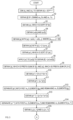
- the secure computing apparatus 1 n of the secure joining information generation system includes the vector joining unit 11 n , the first vector generation unit 12 n , the first permutation calculation unit 13 n , the first permutation application unit 14 n , the second vector generation unit 15 n , the third vector generation unit 16 n , the second permutation calculation unit 17 n , the second permutation application unit 18 n , the fourth vector generation unit 19 n , the fifth vector generation unit 110 n , the first inverse permutation application unit 111 n , the first vector separation unit 112 n , the second inverse permutation application unit 113 n , the second vector separation unit 114 n , and the third permutation application unit 115, as shown by broken lines in Figs. 2 , 6 , and 7 .
- the secure joining information generation method is implemented by the execution of steps S1 to S15 by the components of the secure computing apparatus 1 n of the secure joining information generation system. As the processing at step S1 to step S15 is similar to those described above, overlapping description is not repeated.
- Multiple secure joining information generation units of the secure joining information generation system can be said to use the share [k 0 ] of the vector k 0 , the share [k 1 ] of the vector k 1 , the share [ ⁇ 0 ] of the permutation ⁇ 0 , and the share [ ⁇ 1 ] of the permutation ⁇ 1 to generate: the share [ ⁇ 0 ( ⁇ 0 -1 )] of the vector [ ⁇ 0 ( ⁇ 0 -1 )] which is generated by application of the permutation ⁇ 0 to the inverse permutation ⁇ 0 -1 of the permutation ⁇ 0 , where permutation of each vector of the first table with the permutation ⁇ 0 causes records for keys common to the first table and the second table to move to the head side; the share [ ⁇ 1 ( ⁇ 1 -1 )] of the vector ⁇ 1 ( ⁇ 1 -1 ) which is generated by application of the permutation ⁇ 1 to the inverse permutation ⁇ 1 -1 of the permutation
- the attribute of a key may be a composite key of x attributes, where x is a positive integer greater than or equal to 2.
- the processing at step S1 may be performed in the following manner, for example.
- the keys of the first table are assumed to be k 0,0 , ..., k 0,x-1 .
- the keys of the second table are assumed to be k 1,0 , ..., k 1,x-1 .
- each element of k' 0 can be represented in 2 bits.
- (k' 0 ) 0 is the lower bit of k' 0 upon bit decomposition
- a vector of bit representations of keys (1, 2, 3, 1, 3, 4, 5) is obtained.
- This vector can be k' which is used at step S2 and after. In this manner, a case with a composite key can also be addressed.
- overlap of keys refers to whether keys overlap in terms of combination of the values of the all key attributes and it is assumed that mere overlapping of the values of individual attributes is not regarded as an overlap. For example, a combination of (1, 0) and (1, 1) is not an overlap.
- the computer-readable recording medium may be any medium such as a magnetic recording device, an optical disk, a magneto-optical recording medium, and a semiconductor memory.
- Distribution of this program is implemented by sales, transfer, rental, and other transactions of a portable recording medium such as a DVD and a CD-ROM on which the program is recorded, for example. Furthermore, this program may be stored in a storage unit of a server computer and transferred from the server computer to other computers via a network so as to be distributed.
- a computer which executes such program first stores the program recorded in a portable recording medium or transferred from a server computer once in a storage unit thereof, for example.
- the computer reads out the program stored in the storage unit thereof and performs processing in accordance with the program thus read out.
- the computer may directly read out the program from a portable recording medium and perform processing in accordance with the program.
- the computer may sequentially perform processing in accordance with the received program.
- a configuration may be adopted in which the transfer of a program to the computer from the server computer is not performed and the above-described processing is executed by so-called application service provider (ASP)-type service by which the processing functions are implemented only by an instruction for execution thereof and result acquisition.
- ASP application service provider
- a program in this form includes information which is provided for processing performed by electronic calculation equipment and which is equivalent to a program (such as data which is not a direct instruction to the computer but has a property specifying the processing performed by the computer).
- the present apparatus is configured with a predetermined program executed on a computer.
- the present apparatus may be configured with at least part of these processing contents realized in a hardware manner.
Landscapes
- Engineering & Computer Science (AREA)
- Theoretical Computer Science (AREA)
- Physics & Mathematics (AREA)
- General Physics & Mathematics (AREA)
- General Engineering & Computer Science (AREA)
- Mathematical Physics (AREA)
- Pure & Applied Mathematics (AREA)
- Mathematical Analysis (AREA)
- Mathematical Optimization (AREA)
- Computational Mathematics (AREA)
- Computer Hardware Design (AREA)
- Software Systems (AREA)
- General Health & Medical Sciences (AREA)
- Data Mining & Analysis (AREA)
- Health & Medical Sciences (AREA)
- Databases & Information Systems (AREA)
- Computing Systems (AREA)
- Computer Security & Cryptography (AREA)
- Computational Linguistics (AREA)
- Audiology, Speech & Language Pathology (AREA)
- Artificial Intelligence (AREA)
- Algebra (AREA)
- Bioethics (AREA)
- Computer Networks & Wireless Communication (AREA)
- Signal Processing (AREA)
- Complex Calculations (AREA)
- Information Retrieval, Db Structures And Fs Structures Therefor (AREA)
Claims (13)
- Système de génération d'informations de jonction sécurisée comprenant une pluralité d'appareils de calcul sécurisé pour la réalisation d'une jonction sécurisée d'une première table et d'une seconde table à l'aide d'informations intermédiaires, dans lequelFk et Fv sont des anneaux arbitraires ; [α] est une part générée par le partage secret de α, α étant un vecteur arbitraire ou une permutation arbitraire ; m0 et m1 sont des nombres entiers supérieurs ou égaux à 1 ; k0 ∈ Fk m0 est un vecteur de clés d'une première table sans chevauchement ; v0 ∈ Fv m0 est un vecteur d'une valeur d'attribut de la première table ; k1 ∈ Fk m1 est un vecteur de clés d'une seconde table sans chevauchement ; v1 ∈ Fv m1 est un vecteur d'une valeur d'attribut de la seconde table ; et π0 et π1 sont des permutations prédéterminées ayant des longueurs de m0 et m1, respectivement, etchacun des appareils de calcul sécurisé de la pluralité d'appareils de calcul sécurisé inclut :une unité de jonction de vecteurs qui utilise une part [k0] du vecteur k0 et une part [k1] du vecteur k1 pour générer une part [k] d'un vecteur k ∈ [Fk]m0+m1 qui est généré par la jonction du vecteur k0 et du vecteur k1,une première unité de génération de vecteur qui génère une part [f] d'un vecteur f qui est généré par la jonction de m0 0 et de m1 1,une première unité de calcul de permutation qui utilise la part [k] pour générer une part [σ] d'une permutation σ pour un tri stable du vecteur k,une première unité d'application de permutation qui utilise la part [k], la part [σ], et la part [f] pour générer une part [σ(k)] d'un vecteur σ(k) qui est généré par l'application de la permutation σ sur le vecteur k et une part [σ(f)] d'un vecteur σ(f) qui est généré par l'application de la permutation σ sur le vecteur f,une deuxième unité de génération de vecteur qui utilise la part [σ(k)] pour générer une part [e] d'un vecteur e, pour laquelle [ei] = [σ(k)i, = σ(k)i+1] pour 0 ≤ i < (m0 + m1 - 1), où [em0+m1-1] = [0],une troisième unité de génération de vecteur qui utilise la part [e] pour générer une part [e'] d'un vecteur e', qui est généré de sorte que e'j = 0 quand exactement l'un parmi ej et ej-1 vaut 1, et e'j = 1 dans le cas contraire, pour 0 ≤ j < (m0 + m1),une seconde unité de calcul de permutation qui utilise la part [e'] pour générer une part [σ'] d'une permutation σ' pour un tri stable du vecteur e',une deuxième unité d'application de permutation qui utilise la part [σ(f)] et la part [σ'] pour générer une part [f'] d'un vecteur f' = σ' (σ(f)) qui est généré par l'application de la permutation σ' sur le vecteur σ(f),une quatrième unité de génération de vecteur qui utilise la part [f'] pour générer une part [s] d'un vecteur s, dont chaque élément est une somme d'éléments du vecteur f' jusqu'à un élément correspondant à cet élément, les éléments incluant l'élément correspondant à cet élément, et une part [s'] d'un vecteur s', dont chaque élément est une somme d'éléments d'un vecteur à bits inversés jusqu'à un élément correspondant à cet élément, les éléments incluant l'élément correspondant à cet élément, où le vecteur à bits inversés est un vecteur généré par une inversion de bit de chaque élément du vecteur f',une cinquième unité de génération de vecteur qui utilise la part [f'], la part [s], et la part [s'] pour calculer une part [σ"] d'un vecteur σ" = f's + (1 - f')s' - 1,une première unité d'application de permutation inverse qui utilise la part [e'] et la part [σ] pour générer une part [e''] d'un vecteur e" = σ-1(e') qui est généré par l'application d'une permutation inverse σ-1 de la permutation σ sur le vecteur e',une première unité de séparation de vecteur qui utilise la part [e"] pour générer une part [go] d'un vecteur g0 qui est formé à partir de m0 premiers éléments du vecteur e" et une part [g1] d'un vecteur g1 qui est formé à partir de m1 éléments restants du vecteur e'',une seconde unité d'application de permutation inverse qui utilise la part [σ"], la part [σ], et la part [σ'] pour générer une part [σ‴-1] d'un vecteur σ‴-1 = σ-1(σ'-1(σ")) qui est généré par l'application d'une permutation inverse σ'-1 de la permutation σ' et de la permutation inverse σ-1 de la permutation σ sur le vecteur σ",une seconde unité de séparation de vecteur qui utilise la part [σ‴-1] pour générer une part [σ0 -1] d'un vecteur σ0 -1 qui est formé à partir de m0 premiers éléments du vecteur σ‴-1 et une part [σ1 -1] d'un vecteur σ1 -1 qui est formé à partir de m1 éléments restants du vecteur σ‴-1, etune troisième unité d'application de permutation qui utilise la part [σ0 -1], la part [σ1 -1], une part [π0] de la permutation π0, et une part [π1] de la permutation π1 pour générer une part [π0(σ0 -1)] d'un vecteur π0(σ0 -1) qui est généré par l'application de la permutation π0 sur le vecteur σ0 -1 et une part [π1(σ1 -1)] d'un vecteur π1(σ1 -1) qui est généré par l'application de la permutation π1 sur le vecteur σ1 -1, et publie le π0(σ0 -1) et le π1(σ1 -1) comme étant les informations intermédiaires.
- Système de jonction sécurisée comprenant :la pluralité d'appareils de calcul sécurisé du système de génération d'informations de jonction sécurisée selon la revendication 1, dans lequelchacun des appareils de calcul sécurisé de la pluralité d'appareils en outre de calcul sécurisé inclut en outre :une quatrième unité d'application de permutation qui utilise la part [k0] du vecteur ko, une part [v0] du vecteur v0, la part [k1] du vecteur k1, et une part [v1] du vecteur v1 pour calculer une part [k0'] d'un vecteur k0' = (π0(σ0 -1))-1(π0(k0)), une part [v0'] d'un vecteur v0' = (π0(σ0 -1))-1(π0(v0)), une part [k1'] d'un vecteur k1' = (π1(σ1 -1))-1(π1(k1')), et une part [v1'] d'un vecteur v1' = (π1(σ1 -1))-1(π1(v1')), etune première unité de génération de table jointe qui utilise la part [ko'], la part [v0'], la part [k1'], et la part [v1'] pour générer une table jointe qui joint un vecteur généré par l'extraction de c premiers éléments du vecteur k0', un vecteur généré par l'extraction de c premiers éléments du vecteur v0', un vecteur généré par l'extraction de c premiers éléments du vecteur k1', et un vecteur généré par l'extraction de c premiers éléments du vecteur v1', où c est le nombre d'éléments 0 dans le vecteur g0 ou le vecteur g1.
- Système de jonction sécurisée comprenant :la pluralité d'appareils de calcul sécurisé du système de génération d'informations de jonction sécurisée selon la revendication 1, dans lequelchacun des appareils de calcul sécurisé de la pluralité d'appareils en outre de calcul sécurisé inclut en outre :une unité de filtrage qui utilise la part [g1], la part [k1] du vecteur k1, et la part [v1] du vecteur v1 pour générer une seconde table modifiée dans laquelle si g1,i = 1, le ième élément de la clé de la seconde table est défini sur une valeur prédéfinie u1,k indiquant nulle et le ième élément de l'attribut de la seconde table est défini sur une valeur prédéfinie u1,v indiquant nulle, où g1,i est le ième élément du vecteur g1,une cinquième unité d'application de permutation qui utilise la part [k0] du vecteur ko, une part [v0] du vecteur v0, une part [k1'] de k1', qui est un vecteur de la clé de la seconde table modifiée, une part [v1'] de v1', qui est un vecteur de la valeur d'attribut de la seconde table modifiée, la part [π0] de la permutation π0, la part [π1] de la permutation π1, la part [π0(σ0 -1)] , et la part [π1(σ1 -1) ] pour calculer une part [k0'] d'un vecteur k0' = (π0(σ0 -1)-1(π0(k0)), une part [v0'] d'un vecteur v0' = (π0(σ0 -1)-1(π0(v0)), une part [k1"] d'un vecteur k1" = (π1(σ1 -1)-1(π1(k1')), et une part [v1"] d'un vecteur v1" = (π1(σ1 -1)-1(π1(v1')), etune deuxième unité de génération de table jointe qui utilise la part [k0'], la part [v0'], la part [k1"] et la part [v1"] pour générer, lorsque m0 < m1, une table jointe qui joint le vecteur k0', le vecteur v0', un vecteur généré par l'extraction de m0 premiers éléments du vecteur k1", et un vecteur généré par l'extraction de m0 premiers éléments du vecteur v1", et pour générer, lorsque m0 > m1, une table jointe qui joint le vecteur k0', le vecteur v0', un vecteur généré par l'ajout de m0-m1 éléments, qui est une valeur prédéfinie uk indiquant nulle, au vecteur k1", et un vecteur généré par l'ajout de m0-m1 éléments, qui est une valeur prédéfinie uv indiquant nulle, au vecteur v1".
- Système de jonction sécurisée comprenant :la pluralité d'appareils de calcul sécurisé du système de génération d'informations de jonction sécurisée selon la revendication 1, dans lequelchacun des appareils de calcul sécurisé de la pluralité d'appareils en outre de calcul sécurisé inclut en outre :une quatrième unité d'application de permutation qui utilise la part [k0] du vecteur ko, une part [v0] du vecteur v0, la part [k1] du vecteur k1, et une part [v1] du vecteur v1, pour calculer une part [k0'] d'un vecteur k0' = (π0(σ0 -1)-1(π0(k0)), une part [v0'] d'un vecteur v0' = (π0(σ0 -1)-1(π0(v0)), une part [k1'] d'un vecteur k1' = (π1(σ1 -1)-1(π1(k1')), et une part [v1'] d'un vecteur v1' = (π1(σ1 -1)-1(π1(v1')), etune troisième unité de génération de table jointe qui utilise la part [ko'], la part [vo'], la part [k1'] et la part [v1'] pour générer une table jointe qui joint une table (1) qui joint un vecteur généré par l'extraction de c premiers éléments du vecteur k0', un vecteur généré par l'extraction de c premiers éléments du vecteur v0', un vecteur généré par l'extraction de c premiers éléments du vecteur k1', et un vecteur généré par l'extraction de c premiers éléments du vecteur v1', une table (2) qui joint un vecteur généré par l'extraction de m0-c éléments restants du vecteur k0', un vecteur généré par l'extraction de m0-c éléments restants du vecteur v0', et un vecteur ayant une valeur correspondant à la valeur d'attribut de la seconde table définie sur une valeur prédéfinie u'1,v indiquant nulle, et une table (3) qui joint un vecteur généré par l'extraction de m0-c éléments restants du vecteur v0', un vecteur généré par l'extraction de m1-c éléments restants du vecteur v1', et un vecteur ayant une valeur correspondant à la valeur d'attribut de la première table définie sur une valeur prédéfinie u'0,v indiquant nulle, où c est le nombre d'éléments 0 dans le vecteur g0 ou le vecteur g1.
- Appareil de calcul sécurisé pour la réalisation d'une jonction sécurisée d'une première table et d'une seconde table à l'aide d'informations intermédiaires, dans lequelFk et Fv sont des anneaux arbitraires ; [α] est une part générée par le partage secret de α, α étant un vecteur arbitraire ou une permutation arbitraire ; m0 et m1 sont des nombres entiers supérieurs ou égaux à 1 ; k0 E Fk m0 est un vecteur de clés d'une première table sans chevauchement ; v0 ∈ Fv m0 est un vecteur d'une valeur d'attribut de la première table ; k1 E Fk m1 est un vecteur de clés d'une seconde table sans chevauchement ; v1 ∈ Fv m1 est un vecteur d'une valeur d'attribut de la seconde table ; et π0 et π1 sont des permutations prédéterminées ayant des longueurs de m0 et m1, respectivement, etl'appareil de calcul sécurisé inclut :une unité de jonction de vecteurs qui utilise une part [k0] du vecteur k0 et une part [k1] du vecteur k1 pour générer une part [k] d'un vecteur k ∈ [Fk]m0+m1 qui est généré par la jonction du vecteur k0 et du vecteur k1,une première unité de génération de vecteur qui génère une part [f] d'un vecteur f qui est généré par la jonction de m0 0 et de m1 1,une première unité de calcul de permutation qui utilise la part [k] pour générer une part [σ] d'une permutation σ pour un tri stable du vecteur k,une première unité d'application de permutation qui utilise la part [k], la part [σ], et la part [f] pour générer une part [σ(k)] d'un vecteur σ(k) qui est généré par l'application de la permutation σ sur le vecteur k et une part [σ(f)] d'un vecteur σ(f) qui est généré par l'application de la permutation σ sur le vecteur f,une deuxième unité de génération de vecteur qui utilise la part [σ(k)] pour générer une part [e] d'un vecteur e, pour laquelle [ei] = [σ(k)i = σ(k)i+1] pour 0 ≤ i < (m0 + m1 - 1), où [em0+m1-1] = [0],une troisième unité de génération de vecteur qui utilise la part [e] pour générer une part [e'] d'un vecteur e', qui est généré de sorte que e'j = 0 quand exactement l'un parmi ej et ej-1 vaut 1, et e'j = 1 dans le cas contraire, pour 0 ≤ j < (m0 + m1),une seconde unité de calcul de permutation qui utilise la part [e'] pour générer une part [σ'] d'une permutation σ' pour un tri stable du vecteur e',une deuxième unité d'application de permutation qui utilise la part [σ(f)] et la part [σ'] pour générer une part [f'] d'un vecteur f' = σ'(σ(f)) qui est généré par l'application de la permutation σ' sur le vecteur σ(f),une quatrième unité de génération de vecteur qui utilise la part [f'] pour générer une part [s] d'un vecteur s, dont chaque élément est une somme d'éléments du vecteur f' jusqu'à un élément correspondant à cet élément, les éléments incluant l'élément correspondant à cet élément, et une part [s'] d'un vecteur s', dont chaque élément est une somme d'éléments d'un vecteur à bits inversés jusqu'à un élément correspondant à cet élément, les éléments incluant l'élément correspondant à cet élément, où le vecteur à bits inversés est un vecteur généré par une inversion de bit de chaque élément du vecteur f',une cinquième unité de génération de vecteur qui utilise la part [f'], la part [s], et la part [s'] pour calculer une part [σ"] d'un vecteur σ" = f's + (1 - f')s' - 1,une première unité d'application de permutation inverse qui utilise la part [e'] et la part [σ] pour générer une part [e''] d'un vecteur e" = σ-1(e') qui est généré par l'application d'une permutation inverse σ-1 de la permutation σ sur le vecteur e',une première unité de séparation de vecteur qui utilise la part [e"] pour générer une part [go] d'un vecteur g0 qui est formé à partir de m0 premiers éléments du vecteur e" et une part [g1] d'un vecteur g1 qui est formé à partir de m1 éléments restants du vecteur e",une seconde unité d'application de permutation inverse qui utilise la part [(σ"], la part [σ], et la part [σ'] pour générer une part [σ‴-1] d'un vecteur σ‴-1 = σ-1(σ'-1(σ")) qui est généré par l'application d'une permutation inverse σ'-1 de la permutation σ' et de la permutation inverse σ-1 de la permutation σ sur le vecteur σ",une seconde unité de séparation de vecteur qui utilise la part [σ‴-1] pour générer une part [σ0 -1] d'un vecteur σ0 -1 qui est formé à partir de m0 premiers éléments du vecteur σ‴-1 et une part [σ1 -1] d'un vecteur σ1 -1 qui est formé à partir de m1 éléments restants du vecteur σ‴-1, etune troisième unité d'application de permutation qui utilise la part [σ0 -1], la part [σ1 -1], une part [π0] de la permutation π0, et une part [π1] de la permutation π1 pour générer une part [π0(σ0 -1)] d'un vecteur π0(σ0 -1) qui est généré par l'application de la permutation π0 sur le vecteur σ0 -1 et une part [π1(σ1 -1)] d'un vecteur π1(σ1 -1) qui est généré par l'application de la permutation π1 sur le vecteur σ1 -1, et publie le π0(σ0 -1) et le π1(σ1 -1) comme étant les informations intermédiaires.
- Appareil de calcul sécurisé selon la revendication 5, dans lequel l'appareil de calcul sécurisé inclut en outre :une quatrième unité d'application de permutation qui utilise la part [ko] du vecteur k0, une part [v0] du vecteur v0, la part [k1] du vecteur k1, et une part [v1] du vecteur v1 pour calculer une part [k0'] d'un vecteur k0' = (π0(σ0 -1))-1(π0(k0)), une part [v0'] d'un vecteur v0' = (π0(σ0 -1))-1(π0(v0)), une part [k1'] d'un vecteur k1' = (π1(σ1 -1 ))-1(π1(k1')), et une part [v1'] d'un vecteur v1' = (π1(σ1 -1))-1(π1(v1') ), etune première unité de génération de table jointe qui utilise la part [k0'], la part [v0'], la part [k1'], et la part [v1'] pour générer une table jointe qui joint un vecteur généré par l'extraction de c premiers éléments du vecteur k0', un vecteur généré par l'extraction de c premiers éléments du vecteur v0', un vecteur généré par l'extraction de c premiers éléments du vecteur k1', et un vecteur généré par l'extraction de c premiers éléments du vecteur v1', où c est le nombre d'éléments 0 dans le vecteur g0 ou le vecteur g1.
- Appareil de calcul sécurisé selon la revendication 5,
dans lequel l'appareil de calcul sécurisé inclut en outre :une unité de génération d'informations de jonction sécurisée qui utilise une part [ko] du vecteur k0, une part [k1] du vecteur k1, une part [π0] de la permutation π0, et une part [π1] de la permutation π1 pour générer : une part [π0(σ0 -1)] d'un vecteur π0(σ0 -1) qui est généré par l'application de la permutation π0 sur une permutation inverse σ0 -1 d'une permutation σ0, où une permutation de chaque vecteur de la première table avec la permutation σ0 amène des enregistrements pour des clés communes à la première table et à la seconde table à se déplacer vers un côté tête ; une part [π1(σ1 -1)] d'un vecteur π1(σ1 -1) qui est généré par l'application de la permutation π1 sur une permutation inverse σ1 -1 d'une permutation σ1, où une permutation de chaque vecteur de la seconde table avec la permutation σ1 amène des enregistrements pour des clés communes à la première table et à la seconde table à se déplacer vers le côté tête ; une part [go] d'un vecteur g0 qui est formé à partir d'une valeur g0,i indiquant si le ième enregistrement de la première table est un enregistrement pour une clé qui est commune à la première table et à la seconde table ; et une part [g1] d'un vecteur g1 qui est formé à partir d'une valeur g1,i indiquant si le ième enregistrement de la seconde table est un enregistrement pour une clé qui est commune à la première table et à la seconde table,une unité de filtrage qui utilise la part [g1], la part [k1] du vecteur k1, et la part [v1] du vecteur v1 pour générer une seconde table modifiée dans laquelle si g1,i = 1, le ième élément de la clé de la seconde table est défini sur une valeur prédéfinie u1,k indiquant nulle et le ième élément de l'attribut de la seconde table est défini sur une valeur prédéfinie u1,v indiquant nulle, où g1,i est le ième élément du vecteur g1,une cinquième unité d'application de permutation qui utilise la part [k0] du vecteur k0, une part [v0] du vecteur v0, une part [k1'] de k1', qui est un vecteur de la clé de la seconde table modifiée, une part [v1'] de v1', qui est un vecteur de la valeur d'attribut de la seconde table modifiée, la part [π0] de la permutation π0, la part [π1] de la permutation π1, la part [π0(σ0 -1)] , et la part [π1(σ1 -1)] pour calculer une part [k0'] d'un vecteur ko' = (π0(σ0 -1)-1(π0(k0)), une part [v0'] d'un vecteur v0' = (π0(σ0 -1)-1(π0(v0)), une part [k1"] d'un vecteur k1" = (π1(σ1 -1)-1(π1(k1')), et une part [v1"] d'un vecteur v1" = (π1(σ1 -1)-1(π1(v1')), etune deuxième unité de génération de table jointe qui utilise la part [k0'], la part [v0'], la part [k1"] et la part [v1"] pour générer, lorsque m0 < m1, une table jointe qui joint le vecteur k0', le vecteur v0', un vecteur généré par l'extraction de m0 premiers éléments du vecteur k1", et un vecteur généré par l'extraction de m0 premiers éléments du vecteur v1", et pour générer, lorsque m0 > m1, une table jointe qui joint le vecteur k0', le vecteur v0', un vecteur généré par l'ajout de m0-m1 éléments, qui est une valeur prédéfinie uk indiquant nulle, au vecteur k1", et un vecteur généré par l'ajout de m0-m1 éléments, qui est une valeur prédéfinie uv indiquant nulle, au vecteur v1". - Appareil de calcul sécurisé selon la revendication 5,
dans lequel l'appareil de calcul sécurisé inclut en outre :une unité de génération d'informations de jonction sécurisée qui utilise une part [ko] du vecteur k0, une part [k1] du vecteur k1, une part [π0] de la permutation π0, et une part [π1] de la permutation π1 pour générer : une part [π0(σ0 -1)] d'un vecteur π0(σ0 -1) qui est généré par l'application de la permutation π0 sur une permutation inverse σ0 -1 d'une permutation σ0, où une permutation de chaque vecteur de la première table avec la permutation σ0 amène des enregistrements pour des clés communes à la première table et à la seconde table à se déplacer vers un côté tête ; une part [π1(σ1 -1)] d'un vecteur π1(σ1 -1) qui est généré par l'application de la permutation π1 sur une permutation inverse σ1 -1 d'une permutation σ1, où une permutation de chaque vecteur de la seconde table avec la permutation σ1 amène des enregistrements pour des clés communes à la première table et à la seconde table à se déplacer vers le côté tête ; une part [go] d'un vecteur g0 qui est formé à partir d'une valeur g0,i indiquant si le ième enregistrement de la première table est un enregistrement pour une clé qui est commune à la première table et à la seconde table ; et une part [g1] d'un vecteur g1 qui est formé à partir d'une valeur g1,i indiquant si le ième enregistrement de la seconde table est un enregistrement pour une clé qui est commune à la première table et à la seconde table,une quatrième unité d'application de permutation qui utilise la part [ko] du vecteur k0, une part [v0] du vecteur v0, la part [k1] du vecteur k1, et une part [v1] du vecteur v1 pour calculer une part [k0'] d'un vecteur k0' = (π0(σ0 -1))-1(π0(k0)), une part [v0'] d'un vecteur v0' = (π0(σ0 -1))-1(π0(v0)), une part [k1'] d'un vecteur k1' = (π1(σ1 -1))-1(π1(k1')), et une part [v1'] d'un vecteur v1' = (π1(σ1 -1))-1(π1(v1') ), etune troisième unité de génération de table jointe qui utilise la part [k0'], la part [vo'], la part [k1'] et la part [v1'] pour générer une table jointe qui joint une table (1) qui joint un vecteur généré par l'extraction de c premiers éléments du vecteur ko', un vecteur généré par l'extraction de c premiers éléments du vecteur v0', un vecteur généré par l'extraction de c premiers éléments du vecteur k1', et un vecteur généré par l'extraction de c premiers éléments du vecteur v1', une table (2) qui joint un vecteur généré par l'extraction de m0-c éléments restants du vecteur k0', un vecteur généré par l'extraction de m0-c éléments restants du vecteur v0', et un vecteur ayant une valeur correspondant à la valeur d'attribut de la seconde table définie sur une valeur prédéfinie u'1,v indiquant nulle, et une table (3) qui joint un vecteur généré par l'extraction de m0-c éléments restants du vecteur v0', un vecteur généré par l'extraction de m1-c éléments restants du vecteur v1', et un vecteur ayant une valeur correspondant à la valeur d'attribut de la seconde table défini sur une valeur prédéfinie u'0,v indiquant nulle, où c est le nombre d'éléments 0 dans le vecteur g0 ou le vecteur g1. - Procédé de génération d'informations de jonction sécurisée pour la réalisation d'une jonction sécurisée d'une première table et d'une seconde table à l'aide d'informations intermédiaires,où Fk et Fv sont des anneaux arbitraires ; [α] est une part générée par le partage secret de α, α étant un vecteur arbitraire ou une permutation arbitraire ; m0 et m1 sont des nombres entiers supérieurs ou égaux à 1 ; k0 E Fk m0 est un vecteur de clés d'une première table sans chevauchement ; v0 ∈ Fv m0 est un vecteur d'une valeur d'attribut de la première table ; k1 E Fk m1 est un vecteur de clés d'une seconde table sans chevauchement ; v1 ∈ Fv m1 est un vecteur d'une valeur d'attribut de la seconde table ; et π0 et π1 sont des permutations prédéterminées ayant des longueurs de m0 et m1, respectivement,le procédé de génération d'informations de jonction sécurisée comprenant :une étape de jonction de vecteurs dans laquelle chacune d'une pluralité d'unités de jonction de vecteurs utilise une part [ko] du vecteur k0 et une part [k1] du vecteur k1 pour générer une part [k] d'un vecteur k ∈ [Fk]m0+m1 qui est généré par la jonction du vecteur k0 et du vecteur k1 ;une première étape de génération de vecteur dans laquelle chacune d'une pluralité de premières unités de génération de vecteur génère une part [f] d'un vecteur f qui est généré par la jonction de m0 0 et de m1 1 ;une première étape de calcul de permutation dans laquelle chacune d'une pluralité de premières unités de calcul de permutation utilise la part [k] pour générer une part [σ] d'une permutation σ pour un tri stable du vecteur k ;une première étape d'application de permutation dans laquelle chacune d'une pluralité de premières unités d'application de permutation utilise la part [k], la part [σ], et la part [f] pour générer une part [σ(k)] d'un vecteur σ(k) qui est généré par l'application de la permutation σ sur le vecteur k et une part [σ(f)] d'un vecteur σ(f) qui est généré par l'application de la permutation σ sur le vecteur f ;une deuxième étape de génération de vecteur dans laquelle chacune d'une pluralité de deuxièmes unités de génération de vecteur utilise la part [σ(k)] pour générer une part [e] d'un vecteur e, pour laquelle [ei] = [σ(k)i = σ(k)i+1] pour 0 ≤ i < (m0 + m1 - 1), où [em0+m1-1] - [0] ;une troisième étape de génération de vecteur dans laquelle chacune d'une pluralité de troisièmes unités de génération de vecteur utilise la part [e] pour générer une part [e'] d'un vecteur e', qui est généré de sorte que e'j = 0 quand exactement l'un parmi ej et ej-1 vaut 1, et e'j = 1 dans le cas contraire, pour 0 ≤ j < (m0 + m1) ;une seconde étape de calcul de permutation dans laquelle chacune d'une pluralité de secondes unités de calcul de permutation utilise la part [e'] pour générer une part [σ'] d'une permutation σ' pour un tri stable du vecteur e' ;une deuxième étape d'application de permutation dans laquelle chacune d'une pluralité de deuxièmes unités d'application de permutation utilise la part [σ(f)] et la part [σ'] pour générer une part [f'] d'un vecteur f' = σ'(σ(f)) qui est généré par l'application de la permutation σ' sur le vecteur σ(f) ;une quatrième étape de génération de vecteur dans laquelle chacune d'une pluralité de quatrièmes unités de génération de vecteur utilise la part [f'] pour générer une part [s] d'un vecteur s, dont chaque élément est une somme d'éléments du vecteur f' jusqu'à un élément correspondant à cet élément, les éléments incluant l'élément correspondant à cet élément, et une part [s'] d'un vecteur s', dont chaque élément est une somme d'éléments d'un vecteur à bits inversés jusqu'à un élément correspondant à cet élément, les éléments incluant l'élément correspondant à cet élément, où le vecteur à bits inversés est un vecteur généré par une inversion de bit de chaque élément du vecteur f' ;une cinquième étape de génération de vecteur dans laquelle chacune d'une pluralité de cinquièmes unités de génération de vecteur utilise la part [f'], la part [s], et la part [s'] pour calculer une part [σ"] d'un vecteur σ" = f's + (1 - f')s' - 1 ;une première étape d'application de permutation inverse dans laquelle chacune d'une pluralité de premières unités d'application de permutation inverse utilise la part [e'] et la part [σ] pour générer une part [e"] d'un vecteur e" = σ-1(e') qui est généré par l'application d'une permutation inverse σ-1 de la permutation σ sur le vecteur e' ;une première étape de séparation de vecteur dans laquelle chacune d'une pluralité de premières unités de séparation de vecteur utilise la part [e"] pour générer une part [g0] d'un vecteur g0 qui est formé à partir de m0 premiers éléments du vecteur e" et une part [g1] d'un vecteur g1 qui est formé à partir de m1 éléments restants du vecteur e" ;une seconde étape d'application de permutation inverse dans laquelle chacune d'une pluralité de secondes unités d'application de permutation inverse utilise la part [σ"], la part [σ], et la part [σ'] pour générer une part [σ‴-1] d'un vecteur σ‴-1= σ-1(σ'-1(σ")) qui est généré par l'application d'une permutation inverse σ'-1 de la permutation σ' et de la permutation inverse σ-1 de la permutation σ sur le vecteur σ" ;une seconde étape de séparation de vecteur dans laquelle chacune d'une pluralité de secondes unités de séparation de vecteur utilise la part [σ‴-1] pour générer une part [σ0 -1] d'un vecteur σ0 -1 qui est formé à partir de m0 premiers éléments du vecteur σ‴-1 et une part [σ1 -1] d'un vecteur σ1 -1 qui est formé à partir de m1 éléments restants du vecteur σ‴-1 ; etune troisième étape d'application de permutation dans laquelle chacune d'une pluralité de troisièmes unités d'application de permutation utilise la part [σ0 -1], la part [σ1 -1], une part [π0] de la permutation π0, et une part [π1] de la permutation π1 pour générer une part [π0(σ0 -1)] d'un vecteur π0(σ0 -1)qui est généré par l'application de la permutation π0 sur le vecteur σ0 -1 et une part [π1(σ1 -1)] d'un vecteur π1(σ1 -1) qui est généré par l'application de la permutation π1 sur le vecteur σ1 -1, et publie le π0(σ0 -1)et le π1(σ1 -1) comme étant les informations intermédiaires.
- Procédé de jonction sécurisée comprenant :les étapes du système de génération d'informations de jonction sécurisée selon la revendication 9 ;une quatrième étape d'application de permutation dans laquelle chacune d'une pluralité de quatrièmes unités d'application de permutation utilise la part [ko] du vecteur k0, une part [v0] du vecteur v0, la part [k1] du vecteur k1, et une part [v1] du vecteur v1 pour calculer une part [k0'] d'un vecteur k0' = (π0(σ0 -1))-1(π0(k0)), une part [v0'] d'un vecteur v0' = (π0(σ0 -1))-1(π0(v0)), une part [k1'] d'un vecteur k1' = (π1(σ1 -1))-1(π1(k1')), et une part [v1'] d'un vecteur v1' = (π1(σ1 -1))-1(π1(v1')) ; etune première étape de génération de table jointe dans laquelle chacune d'une pluralité de premières unités de génération de table jointe utilise la part [k0'], la part [v0'] , la part [k1'] , et la part [v1'] pour générer une table jointe qui joint un vecteur généré par l'extraction de c premiers éléments du vecteur k0', un vecteur généré par l'extraction de c premiers éléments du vecteur v0', un vecteur généré par l'extraction de c premiers éléments du vecteur k1', et un vecteur généré par l'extraction de c premiers éléments du vecteur v1', où c est le nombre d'éléments 0 dans le vecteur g0 ou le vecteur g1.
- Procédé de jonction sécurisée comprenant :les étapes du système de génération d'informations de jonction sécurisée selon la revendication 9 ;une étape de filtrage dans laquelle chacune d'une pluralité d'unités de filtrage utilise la part [g1], la part [k1] du vecteur k1, et la part [v1] du vecteur v1 pour générer une seconde table modifiée dans laquelle si g1,i = 1, le ième élément de la clé de la seconde table est défini sur une valeur prédéfinie u1,k indiquant nulle et le ième élément de l'attribut de la seconde table est défini sur une valeur prédéfinie u1,v indiquant nulle, où g1,i est le ième élément du vecteur g1 ;une cinquième étape d'application de permutation dans laquelle chacune d'une pluralité de cinquièmes unités d'application de permutation utilise la part [ko] du vecteur k0, une part [v0] du vecteur v0, une part [k1'] de k1', qui est un vecteur de la clé de la seconde table modifiée, une part [v1'] de v1', qui est un vecteur de la valeur d'attribut de la seconde table modifiée, la part [π0] de la permutation π0, la part [π1] de la permutation π1, la part [π0(σ0 -1)], et la part [π1(σ1 -1)] pour calculer une part [k0'] d'un vecteur k0' = (π0(σ0 -1)-1(π0(k0)), une part [v0'] d'un vecteur v0' = (π0(σ0 -1)-1(π0(v0)), une part [k1"] d'un vecteur k1" = (π1(σ1 -1)-1(π1(k1')), et une part [v1"] d'un vecteur v1" = (π1(σ1 -1)-1(π1(v1')) ; etune deuxième étape de génération de table jointe dans laquelle chacune d'une pluralité de deuxièmes unités de génération de table jointe utilise la part [k0'], la part [v0'], la part [k1"] et la part [v1"] pour générer, lorsque m0 < m1, une table jointe qui joint le vecteur k0', le vecteur v0', un vecteur généré par l'extraction de m0 premiers éléments du vecteur k1", et un vecteur généré par l'extraction de m0 premiers éléments du vecteur v1", et pour générer, lorsque m0 > m1, une table jointe qui joint le vecteur k0', le vecteur v0', un vecteur généré par l'ajout de m0-m1 éléments, qui est une valeur prédéfinie uk indiquant nulle, au vecteur k1", et un vecteur généré par l'ajout de m0-m1 éléments, qui est une valeur prédéfinie uv indiquant nulle, au vecteur v1".
- Procédé de jonction sécurisée comprenant :les étapes du système de génération d'informations de jonction sécurisée selon la revendication 9 ;une quatrième étape d'application de permutation dans laquelle chacune d'une pluralité de quatrièmes unités d'application de permutation utilise la part [k0] du vecteur k0, une part [v0] du vecteur v0, la part [k1] du vecteur k1, et une part [v1] du vecteur v1, pour calculer une part [k0'] d'un vecteur k0' = (π0(σ0 -1)-1(π0(k0)), une part [v0'] d'un vecteur v0' = (π0(σ0 -1)-1(π0(v0)), une part [k1'] d'un vecteur k1' = (π1(σ1 -1)-1(π1(k1')), et une part [v1'] d'un vecteur v1' = (π1(σ1 -1)-1(π1(v1')) ; etune troisième étape de génération de table jointe dans laquelle chacune d'une pluralité de troisièmes unités de génération de table jointe utilise la part [k0'], la part [v0'] , la part [k1'] et la part [v1'] pour générer une table jointe qui joint une table (1) qui joint un vecteur généré par l'extraction de c premiers éléments du vecteur k0', un vecteur généré par l'extraction de c premiers éléments du vecteur v0', un vecteur généré par l'extraction de c premiers éléments du vecteur k1', et un vecteur généré par l'extraction de c premiers éléments du vecteur v1', une table (2) qui joint un vecteur généré par l'extraction de m0-c éléments restants du vecteur k0', un vecteur généré par l'extraction de m0-c éléments restants du vecteur v0', et un vecteur ayant une valeur correspondant à la valeur d'attribut de la seconde table définie sur une valeur prédéfinie u'1,v indiquant nulle, et une table (3) qui joint un vecteur généré par l'extraction de m0-c éléments restants du vecteur v0', un vecteur généré par l'extraction de m1-c éléments restants du vecteur v1', et un vecteur ayant une valeur correspondant à la valeur d'attribut de la première table définie sur une valeur prédéfinie u'0,v indiquant nulle, où c est le nombre d'éléments 0 dans le vecteur g0 ou le vecteur g1.
- Programme qui, lors de son exécution par un ordinateur, amène l'ordinateur à réaliser le procédé selon l'une quelconque des revendications 9 à 12.
Applications Claiming Priority (2)
| Application Number | Priority Date | Filing Date | Title |
|---|---|---|---|
| JP2018152413 | 2018-08-13 | ||
| PCT/JP2019/031477 WO2020036127A1 (fr) | 2018-08-13 | 2019-08-08 | Système de génération d'informations de jointure secrète, système de jointure secrète, procédé associé, dispositif de calcul secret et programme |
Publications (3)
| Publication Number | Publication Date |
|---|---|
| EP3839925A1 EP3839925A1 (fr) | 2021-06-23 |
| EP3839925A4 EP3839925A4 (fr) | 2022-05-11 |
| EP3839925B1 true EP3839925B1 (fr) | 2023-06-21 |
Family
ID=69525331
Family Applications (1)
| Application Number | Title | Priority Date | Filing Date |
|---|---|---|---|
| EP19850173.6A Active EP3839925B1 (fr) | 2018-08-13 | 2019-08-08 | Système de génération d'informations de jointure secrète, systèmes de jointure secrète, procédés associés, dispositif de calcul secret et programme |
Country Status (6)
| Country | Link |
|---|---|
| US (1) | US12079363B2 (fr) |
| EP (1) | EP3839925B1 (fr) |
| JP (1) | JP7067626B2 (fr) |
| CN (1) | CN112567443B (fr) |
| AU (1) | AU2019322591B2 (fr) |
| WO (1) | WO2020036127A1 (fr) |
Families Citing this family (1)
| Publication number | Priority date | Publication date | Assignee | Title |
|---|---|---|---|---|
| WO2022244226A1 (fr) * | 2021-05-21 | 2022-11-24 | 日本電信電話株式会社 | Système de couplage sécurisé, dispositif de traitement d'informations, procédé de couplage sécurisé et programme |
Family Cites Families (9)
| Publication number | Priority date | Publication date | Assignee | Title |
|---|---|---|---|---|
| JP5498406B2 (ja) | 2011-01-21 | 2014-05-21 | 日本電信電話株式会社 | マッチングシステム、マッチングシステムの方法 |
| JP5480828B2 (ja) * | 2011-01-24 | 2014-04-23 | 日本電信電話株式会社 | 秘密ソートシステム、秘密ソート装置、秘密ソート方法、秘密ソートプログラム |
| JP5650630B2 (ja) * | 2011-11-22 | 2015-01-07 | 日本電信電話株式会社 | 鍵交換システム、鍵交換装置、鍵交換方法、鍵交換プログラム |
| WO2014007311A1 (fr) * | 2012-07-05 | 2014-01-09 | 日本電信電話株式会社 | Système de partage de secrets, dispositif de distribution de données, dispositif de conversion de données distribuées, procédé de partage de secrets et programme |
| WO2014007310A1 (fr) * | 2012-07-05 | 2014-01-09 | 日本電信電話株式会社 | Système de partage de secrets, dispositif de distribution de données, dispositif de conversion de données distribuées, procédé de partage de secrets et programme |
| JP5907902B2 (ja) * | 2013-01-21 | 2016-04-26 | 日本電信電話株式会社 | 秘密計算による表の等結合システム、方法 |
| JP5860557B1 (ja) * | 2015-02-06 | 2016-02-16 | 日本電信電話株式会社 | 秘密公開方法、秘密公開システム、秘密公開装置、およびプログラム |
| CN106452745B (zh) * | 2016-09-27 | 2019-07-02 | 中国农业大学 | 一种秘密数据共享的验证方法及装置 |
| US11250004B2 (en) | 2016-09-27 | 2022-02-15 | Nippon Telegraph And Telephone Corporation | Secure equijoin system, secure equijoin device, secure equijoin method, and program |
-
2019
- 2019-08-08 US US17/267,808 patent/US12079363B2/en active Active
- 2019-08-08 AU AU2019322591A patent/AU2019322591B2/en active Active
- 2019-08-08 WO PCT/JP2019/031477 patent/WO2020036127A1/fr not_active Ceased
- 2019-08-08 CN CN201980053656.0A patent/CN112567443B/zh active Active
- 2019-08-08 EP EP19850173.6A patent/EP3839925B1/fr active Active
- 2019-08-08 JP JP2020537441A patent/JP7067626B2/ja active Active
Also Published As
| Publication number | Publication date |
|---|---|
| US12079363B2 (en) | 2024-09-03 |
| JP7067626B2 (ja) | 2022-05-16 |
| AU2019322591A1 (en) | 2021-03-11 |
| AU2019322591B2 (en) | 2021-12-23 |
| JPWO2020036127A1 (ja) | 2021-08-10 |
| EP3839925A4 (fr) | 2022-05-11 |
| CN112567443A (zh) | 2021-03-26 |
| WO2020036127A1 (fr) | 2020-02-20 |
| US20210182419A1 (en) | 2021-06-17 |
| CN112567443B (zh) | 2024-05-14 |
| EP3839925A1 (fr) | 2021-06-23 |
Similar Documents
| Publication | Publication Date | Title |
|---|---|---|
| EP3786928B1 (fr) | Système, méthode, dispositif et programme de calcul sécurisé de maximum aggregé et de calcul sécurisé de minimum aggregé | |
| EP3806070B1 (fr) | Système de calcul de fonction agrégée de secret, dispositif de calcul de secret, procédé de calcul de fonction agrégée de secret, et programme | |
| EP3786926B1 (fr) | Système de sommes agrégées sécurisé, dispositif de calcul sécurisé, procédé de calcul sécurisé, et programme | |
| EP3839922B1 (fr) | Système de jointure sécurisé, procédé, dispositif de calcul sécurisé et programme | |
| US11868510B2 (en) | Secure cross tabulation system, secure computation apparatus, secure cross tabulation method, and program | |
| EP3786927B1 (fr) | Système, dispositif, procédé et programme pour calcul sécurisé de médiane agrégée | |
| EP3246900B1 (fr) | Dispositif de génération de matrice et de clé, système de génération de matrice et de clé, dispositif de couplage de matrice, procédé de génération de matrice et de clé et programme | |
| EP3839925B1 (fr) | Système de génération d'informations de jointure secrète, systèmes de jointure secrète, procédés associés, dispositif de calcul secret et programme | |
| EP3813042B1 (fr) | Système de combinaison de secrets, procédé, dispositif de calcul de secret et programme | |
| EP3839923B1 (fr) | Système de calcul de mappage fort de secrets, procédé associé, dispositif de calcul de secrets et programme | |
| EP3767609A1 (fr) | Système de référence à une table de secret, procédé, dispositif de calcul de secret et programme | |
| EP4354415B1 (fr) | Dispositif informatique sécurisé, système informatique sécurisé, procédé informatique sécurisé et programme |
Legal Events
| Date | Code | Title | Description |
|---|---|---|---|
| STAA | Information on the status of an ep patent application or granted ep patent |
Free format text: STATUS: THE INTERNATIONAL PUBLICATION HAS BEEN MADE |
|
| PUAI | Public reference made under article 153(3) epc to a published international application that has entered the european phase |
Free format text: ORIGINAL CODE: 0009012 |
|
| STAA | Information on the status of an ep patent application or granted ep patent |
Free format text: STATUS: REQUEST FOR EXAMINATION WAS MADE |
|
| 17P | Request for examination filed |
Effective date: 20210315 |
|
| AK | Designated contracting states |
Kind code of ref document: A1 Designated state(s): AL AT BE BG CH CY CZ DE DK EE ES FI FR GB GR HR HU IE IS IT LI LT LU LV MC MK MT NL NO PL PT RO RS SE SI SK SM TR |
|
| DAV | Request for validation of the european patent (deleted) | ||
| DAX | Request for extension of the european patent (deleted) | ||
| A4 | Supplementary search report drawn up and despatched |
Effective date: 20220411 |
|
| RIC1 | Information provided on ipc code assigned before grant |
Ipc: G09C 1/00 20060101ALI20220405BHEP Ipc: H04L 9/08 20060101AFI20220405BHEP |
|
| REG | Reference to a national code |
Ref country code: DE Free format text: PREVIOUS MAIN CLASS: G09C0001000000 Ref country code: DE Ref legal event code: R079 Ref document number: 602019031475 Country of ref document: DE Free format text: PREVIOUS MAIN CLASS: G09C0001000000 Ipc: H04L0009080000 |
|
| RIC1 | Information provided on ipc code assigned before grant |
Ipc: G09C 1/00 20060101ALI20221222BHEP Ipc: H04L 9/08 20060101AFI20221222BHEP |
|
| GRAP | Despatch of communication of intention to grant a patent |
Free format text: ORIGINAL CODE: EPIDOSNIGR1 |
|
| STAA | Information on the status of an ep patent application or granted ep patent |
Free format text: STATUS: GRANT OF PATENT IS INTENDED |
|
| INTG | Intention to grant announced |
Effective date: 20230130 |
|
| GRAS | Grant fee paid |
Free format text: ORIGINAL CODE: EPIDOSNIGR3 |
|
| GRAA | (expected) grant |
Free format text: ORIGINAL CODE: 0009210 |
|
| STAA | Information on the status of an ep patent application or granted ep patent |
Free format text: STATUS: THE PATENT HAS BEEN GRANTED |
|
| AK | Designated contracting states |
Kind code of ref document: B1 Designated state(s): AL AT BE BG CH CY CZ DE DK EE ES FI FR GB GR HR HU IE IS IT LI LT LU LV MC MK MT NL NO PL PT RO RS SE SI SK SM TR |
|
| REG | Reference to a national code |
Ref country code: CH Ref legal event code: EP |
|
| REG | Reference to a national code |
Ref country code: DE Ref legal event code: R096 Ref document number: 602019031475 Country of ref document: DE |
|
| REG | Reference to a national code |
Ref country code: AT Ref legal event code: REF Ref document number: 1581692 Country of ref document: AT Kind code of ref document: T Effective date: 20230715 |
|
| REG | Reference to a national code |
Ref country code: IE Ref legal event code: FG4D |
|
| REG | Reference to a national code |
Ref country code: LT Ref legal event code: MG9D |
|
| REG | Reference to a national code |
Ref country code: NL Ref legal event code: MP Effective date: 20230621 |
|
| PG25 | Lapsed in a contracting state [announced via postgrant information from national office to epo] |
Ref country code: SE Free format text: LAPSE BECAUSE OF FAILURE TO SUBMIT A TRANSLATION OF THE DESCRIPTION OR TO PAY THE FEE WITHIN THE PRESCRIBED TIME-LIMIT Effective date: 20230621 Ref country code: NO Free format text: LAPSE BECAUSE OF FAILURE TO SUBMIT A TRANSLATION OF THE DESCRIPTION OR TO PAY THE FEE WITHIN THE PRESCRIBED TIME-LIMIT Effective date: 20230921 |
|
| REG | Reference to a national code |
Ref country code: AT Ref legal event code: MK05 Ref document number: 1581692 Country of ref document: AT Kind code of ref document: T Effective date: 20230621 |
|
| PG25 | Lapsed in a contracting state [announced via postgrant information from national office to epo] |
Ref country code: RS Free format text: LAPSE BECAUSE OF FAILURE TO SUBMIT A TRANSLATION OF THE DESCRIPTION OR TO PAY THE FEE WITHIN THE PRESCRIBED TIME-LIMIT Effective date: 20230621 Ref country code: NL Free format text: LAPSE BECAUSE OF FAILURE TO SUBMIT A TRANSLATION OF THE DESCRIPTION OR TO PAY THE FEE WITHIN THE PRESCRIBED TIME-LIMIT Effective date: 20230621 Ref country code: LV Free format text: LAPSE BECAUSE OF FAILURE TO SUBMIT A TRANSLATION OF THE DESCRIPTION OR TO PAY THE FEE WITHIN THE PRESCRIBED TIME-LIMIT Effective date: 20230621 Ref country code: LT Free format text: LAPSE BECAUSE OF FAILURE TO SUBMIT A TRANSLATION OF THE DESCRIPTION OR TO PAY THE FEE WITHIN THE PRESCRIBED TIME-LIMIT Effective date: 20230621 Ref country code: HR Free format text: LAPSE BECAUSE OF FAILURE TO SUBMIT A TRANSLATION OF THE DESCRIPTION OR TO PAY THE FEE WITHIN THE PRESCRIBED TIME-LIMIT Effective date: 20230621 Ref country code: GR Free format text: LAPSE BECAUSE OF FAILURE TO SUBMIT A TRANSLATION OF THE DESCRIPTION OR TO PAY THE FEE WITHIN THE PRESCRIBED TIME-LIMIT Effective date: 20230922 |
|
| PG25 | Lapsed in a contracting state [announced via postgrant information from national office to epo] |
Ref country code: FI Free format text: LAPSE BECAUSE OF FAILURE TO SUBMIT A TRANSLATION OF THE DESCRIPTION OR TO PAY THE FEE WITHIN THE PRESCRIBED TIME-LIMIT Effective date: 20230621 |
|
| PG25 | Lapsed in a contracting state [announced via postgrant information from national office to epo] |
Ref country code: SK Free format text: LAPSE BECAUSE OF FAILURE TO SUBMIT A TRANSLATION OF THE DESCRIPTION OR TO PAY THE FEE WITHIN THE PRESCRIBED TIME-LIMIT Effective date: 20230621 |
|
| PG25 | Lapsed in a contracting state [announced via postgrant information from national office to epo] |
Ref country code: ES Free format text: LAPSE BECAUSE OF FAILURE TO SUBMIT A TRANSLATION OF THE DESCRIPTION OR TO PAY THE FEE WITHIN THE PRESCRIBED TIME-LIMIT Effective date: 20230621 |
|
| PG25 | Lapsed in a contracting state [announced via postgrant information from national office to epo] |
Ref country code: IS Free format text: LAPSE BECAUSE OF FAILURE TO SUBMIT A TRANSLATION OF THE DESCRIPTION OR TO PAY THE FEE WITHIN THE PRESCRIBED TIME-LIMIT Effective date: 20231021 |
|
| PG25 | Lapsed in a contracting state [announced via postgrant information from national office to epo] |
Ref country code: SM Free format text: LAPSE BECAUSE OF FAILURE TO SUBMIT A TRANSLATION OF THE DESCRIPTION OR TO PAY THE FEE WITHIN THE PRESCRIBED TIME-LIMIT Effective date: 20230621 Ref country code: SK Free format text: LAPSE BECAUSE OF FAILURE TO SUBMIT A TRANSLATION OF THE DESCRIPTION OR TO PAY THE FEE WITHIN THE PRESCRIBED TIME-LIMIT Effective date: 20230621 Ref country code: RO Free format text: LAPSE BECAUSE OF FAILURE TO SUBMIT A TRANSLATION OF THE DESCRIPTION OR TO PAY THE FEE WITHIN THE PRESCRIBED TIME-LIMIT Effective date: 20230621 Ref country code: PT Free format text: LAPSE BECAUSE OF FAILURE TO SUBMIT A TRANSLATION OF THE DESCRIPTION OR TO PAY THE FEE WITHIN THE PRESCRIBED TIME-LIMIT Effective date: 20231023 Ref country code: IS Free format text: LAPSE BECAUSE OF FAILURE TO SUBMIT A TRANSLATION OF THE DESCRIPTION OR TO PAY THE FEE WITHIN THE PRESCRIBED TIME-LIMIT Effective date: 20231021 Ref country code: ES Free format text: LAPSE BECAUSE OF FAILURE TO SUBMIT A TRANSLATION OF THE DESCRIPTION OR TO PAY THE FEE WITHIN THE PRESCRIBED TIME-LIMIT Effective date: 20230621 Ref country code: EE Free format text: LAPSE BECAUSE OF FAILURE TO SUBMIT A TRANSLATION OF THE DESCRIPTION OR TO PAY THE FEE WITHIN THE PRESCRIBED TIME-LIMIT Effective date: 20230621 Ref country code: CZ Free format text: LAPSE BECAUSE OF FAILURE TO SUBMIT A TRANSLATION OF THE DESCRIPTION OR TO PAY THE FEE WITHIN THE PRESCRIBED TIME-LIMIT Effective date: 20230621 Ref country code: AT Free format text: LAPSE BECAUSE OF FAILURE TO SUBMIT A TRANSLATION OF THE DESCRIPTION OR TO PAY THE FEE WITHIN THE PRESCRIBED TIME-LIMIT Effective date: 20230621 |
|
| PG25 | Lapsed in a contracting state [announced via postgrant information from national office to epo] |
Ref country code: PL Free format text: LAPSE BECAUSE OF FAILURE TO SUBMIT A TRANSLATION OF THE DESCRIPTION OR TO PAY THE FEE WITHIN THE PRESCRIBED TIME-LIMIT Effective date: 20230621 |
|
| PG25 | Lapsed in a contracting state [announced via postgrant information from national office to epo] |
Ref country code: MC Free format text: LAPSE BECAUSE OF FAILURE TO SUBMIT A TRANSLATION OF THE DESCRIPTION OR TO PAY THE FEE WITHIN THE PRESCRIBED TIME-LIMIT Effective date: 20230621 |
|
| REG | Reference to a national code |
Ref country code: DE Ref legal event code: R097 Ref document number: 602019031475 Country of ref document: DE |
|
| REG | Reference to a national code |
Ref country code: CH Ref legal event code: PL |
|
| PG25 | Lapsed in a contracting state [announced via postgrant information from national office to epo] |
Ref country code: MC Free format text: LAPSE BECAUSE OF FAILURE TO SUBMIT A TRANSLATION OF THE DESCRIPTION OR TO PAY THE FEE WITHIN THE PRESCRIBED TIME-LIMIT Effective date: 20230621 |
|
| PG25 | Lapsed in a contracting state [announced via postgrant information from national office to epo] |
Ref country code: LU Free format text: LAPSE BECAUSE OF NON-PAYMENT OF DUE FEES Effective date: 20230808 |
|
| PLBE | No opposition filed within time limit |
Free format text: ORIGINAL CODE: 0009261 |
|
| STAA | Information on the status of an ep patent application or granted ep patent |
Free format text: STATUS: NO OPPOSITION FILED WITHIN TIME LIMIT |
|
| PG25 | Lapsed in a contracting state [announced via postgrant information from national office to epo] |
Ref country code: LU Free format text: LAPSE BECAUSE OF NON-PAYMENT OF DUE FEES Effective date: 20230808 Ref country code: DK Free format text: LAPSE BECAUSE OF FAILURE TO SUBMIT A TRANSLATION OF THE DESCRIPTION OR TO PAY THE FEE WITHIN THE PRESCRIBED TIME-LIMIT Effective date: 20230621 Ref country code: CH Free format text: LAPSE BECAUSE OF NON-PAYMENT OF DUE FEES Effective date: 20230831 |
|
| PG25 | Lapsed in a contracting state [announced via postgrant information from national office to epo] |
Ref country code: SI Free format text: LAPSE BECAUSE OF FAILURE TO SUBMIT A TRANSLATION OF THE DESCRIPTION OR TO PAY THE FEE WITHIN THE PRESCRIBED TIME-LIMIT Effective date: 20230621 |
|
| REG | Reference to a national code |
Ref country code: BE Ref legal event code: MM Effective date: 20230831 |
|
| REG | Reference to a national code |
Ref country code: IE Ref legal event code: MM4A |
|
| 26N | No opposition filed |
Effective date: 20240322 |
|
| PG25 | Lapsed in a contracting state [announced via postgrant information from national office to epo] |
Ref country code: SI Free format text: LAPSE BECAUSE OF FAILURE TO SUBMIT A TRANSLATION OF THE DESCRIPTION OR TO PAY THE FEE WITHIN THE PRESCRIBED TIME-LIMIT Effective date: 20230621 |
|
| PG25 | Lapsed in a contracting state [announced via postgrant information from national office to epo] |
Ref country code: IE Free format text: LAPSE BECAUSE OF NON-PAYMENT OF DUE FEES Effective date: 20230808 |
|
| PG25 | Lapsed in a contracting state [announced via postgrant information from national office to epo] |
Ref country code: IE Free format text: LAPSE BECAUSE OF NON-PAYMENT OF DUE FEES Effective date: 20230808 |
|
| PG25 | Lapsed in a contracting state [announced via postgrant information from national office to epo] |
Ref country code: BE Free format text: LAPSE BECAUSE OF NON-PAYMENT OF DUE FEES Effective date: 20230831 |
|
| PG25 | Lapsed in a contracting state [announced via postgrant information from national office to epo] |
Ref country code: BG Free format text: LAPSE BECAUSE OF FAILURE TO SUBMIT A TRANSLATION OF THE DESCRIPTION OR TO PAY THE FEE WITHIN THE PRESCRIBED TIME-LIMIT Effective date: 20230621 |
|
| PG25 | Lapsed in a contracting state [announced via postgrant information from national office to epo] |
Ref country code: BG Free format text: LAPSE BECAUSE OF FAILURE TO SUBMIT A TRANSLATION OF THE DESCRIPTION OR TO PAY THE FEE WITHIN THE PRESCRIBED TIME-LIMIT Effective date: 20230621 |
|
| PG25 | Lapsed in a contracting state [announced via postgrant information from national office to epo] |
Ref country code: CY Free format text: LAPSE BECAUSE OF FAILURE TO SUBMIT A TRANSLATION OF THE DESCRIPTION OR TO PAY THE FEE WITHIN THE PRESCRIBED TIME-LIMIT; INVALID AB INITIO Effective date: 20190808 |
|
| PG25 | Lapsed in a contracting state [announced via postgrant information from national office to epo] |
Ref country code: HU Free format text: LAPSE BECAUSE OF FAILURE TO SUBMIT A TRANSLATION OF THE DESCRIPTION OR TO PAY THE FEE WITHIN THE PRESCRIBED TIME-LIMIT; INVALID AB INITIO Effective date: 20190808 |
|
| PGFP | Annual fee paid to national office [announced via postgrant information from national office to epo] |
Ref country code: DE Payment date: 20250820 Year of fee payment: 7 |
|
| PGFP | Annual fee paid to national office [announced via postgrant information from national office to epo] |
Ref country code: IT Payment date: 20250825 Year of fee payment: 7 |
|
| PGFP | Annual fee paid to national office [announced via postgrant information from national office to epo] |
Ref country code: GB Payment date: 20250820 Year of fee payment: 7 |
|
| PGFP | Annual fee paid to national office [announced via postgrant information from national office to epo] |
Ref country code: FR Payment date: 20250828 Year of fee payment: 7 |
|
| PG25 | Lapsed in a contracting state [announced via postgrant information from national office to epo] |
Ref country code: TR Free format text: LAPSE BECAUSE OF FAILURE TO SUBMIT A TRANSLATION OF THE DESCRIPTION OR TO PAY THE FEE WITHIN THE PRESCRIBED TIME-LIMIT Effective date: 20230621 |
|
| REG | Reference to a national code |
Ref country code: DE Ref legal event code: R081 Ref document number: 602019031475 Country of ref document: DE Owner name: NTT, INC., JP Free format text: FORMER OWNER: NIPPON TELEGRAPH AND TELEPHONE CORPORATION, TOKYO, JP Ref country code: DE Ref legal event code: R082 Ref document number: 602019031475 Country of ref document: DE Representative=s name: DENNEMEYER & ASSOCIATES RECHTSANWALTSGESELLSCH, DE |