EP3841728B1 - Réseautage axé sur les informations sur des réseaux 5g ou ultérieurs - Google Patents
Réseautage axé sur les informations sur des réseaux 5g ou ultérieurs Download PDFInfo
- Publication number
- EP3841728B1 EP3841728B1 EP19755659.0A EP19755659A EP3841728B1 EP 3841728 B1 EP3841728 B1 EP 3841728B1 EP 19755659 A EP19755659 A EP 19755659A EP 3841728 B1 EP3841728 B1 EP 3841728B1
- Authority
- EP
- European Patent Office
- Prior art keywords
- icn
- network
- node
- content
- data
- Prior art date
- Legal status (The legal status is an assumption and is not a legal conclusion. Google has not performed a legal analysis and makes no representation as to the accuracy of the status listed.)
- Active
Links
Images



Classifications
-
- H—ELECTRICITY
- H04—ELECTRIC COMMUNICATION TECHNIQUE
- H04L—TRANSMISSION OF DIGITAL INFORMATION, e.g. TELEGRAPHIC COMMUNICATION
- H04L67/00—Network arrangements or protocols for supporting network services or applications
- H04L67/50—Network services
- H04L67/60—Scheduling or organising the servicing of application requests, e.g. requests for application data transmissions using the analysis and optimisation of the required network resources
- H04L67/63—Routing a service request depending on the request content or context
-
- H—ELECTRICITY
- H04—ELECTRIC COMMUNICATION TECHNIQUE
- H04L—TRANSMISSION OF DIGITAL INFORMATION, e.g. TELEGRAPHIC COMMUNICATION
- H04L67/00—Network arrangements or protocols for supporting network services or applications
- H04L67/01—Protocols
- H04L67/10—Protocols in which an application is distributed across nodes in the network
Definitions
- the invention relates to a communication network having data planes and network functions, and to user equipment (pl.) which may be connected to the communication network and which may represent Information-Centric Networking (ICN) nodes of an ICN network.
- the communication network may, during operational use, transport ICN protocol-based traffic of the ICN nodes.
- the invention further relates to entities associated with the communication network, such as a network node or a distributed system of network nodes, to a method for use with the communication network, and to a computer program comprising instructions for causing a processor system to perform the method.
- entities associated with the communication network such as a network node or a distributed system of network nodes
- ICN Information-Centric Networking
- ICN Information-Centric Networking
- IP Internet Protocol
- a requester may consume the content it requests itself or alternatively may request the content on behalf of another node. There may thus be a chain of nodes between the publisher and the consumer of content.
- content consumer mobility is typically native and does not need specific handling.
- next generation communication networks such as 3GPP's 5G [5].
- These communication networks may separate network functions from the underlying hardware resources, being the network nodes of the communication network.
- NV Network Virtualization
- NFV Network Function Virtualization
- 'providing' or 'establishing' a network function may thus refer to the instantiation of the network function in the communication network.
- the next generation communication networks may further provide virtual data planes which separate data traffic in the network.
- virtual data planes which may be established by Software-Defined Network (SDN) but also by other techniques, may include a control plane to enable transmission of control data in the network, and a user plane to enable transmission of user data to and/or from User Equipment (UE) connected to the network.
- SDN Software-Defined Network
- UE User Equipment
- the user plane may also be referred to as ⁇ data plane'.
- a set of virtualized network functions may be provided which may be instantiable using one or more of the plurality of network nodes and which comprise user plane functions operating in the user plane and control plane functions operating in the control plane.
- control plane functions may include a Session Management Function (SMF) configured for session management of protocol data unit (PDU) sessions involving user equipment connected to the communication network.
- SMF Session Management Function
- the main advantages of these communication networks in regard to content distribution may be their wide wireless coverage and their handling of mobility.
- these communication networks will for the first time achieve 'true' fixed-mobile convergence - one 'core' communication network as an umbrella to many access networks. This provides the potential to have a single entry point to the Internet for a subscriber regardless of access type usage.
- 3GPP [5] currently does not provide native support for ICN protocols, nor is such support envisioned.
- ICN protocol-based traffic will be overlaid over next-generation communication networks (also referred to as 'ICN-as-an-overlay') and control over the ICN protocol-based traffic may have to be exercised outside of the communication network's domain.
- This may likely lead to inefficiencies in traffic routing (e.g., tromboning, double tunneling) which in turn may result in poor service delivery.
- a reason for this is that control decisions made in the ICN and '5G' domains may be contradictory and thereby counterproductive.
- WO2018/039054 discloses a method performed by a serving network node for handover of a communication device to a target network node. The method comprises determining, based on content of an ICN request, a need for handover, and initiating, in response to the determining, a handover of the communication device to the target network node.
- a new network function may be provided in the communication network, namely an ICN application function (ICN-AF) configured to control ICN protocol-based traffic flow between a set of user equipment (UE).
- ICN-AF may obtain information indicative of whether, and optionally to which degree, a respective ICN node is publisher of content in the exchange of content between the ICN nodes, and may, for example via a session management function (SMF), initiate the reassignment of a protocol data unit (PDU) session of an ICN node which is not characterized as publisher of content to a data network access point which has connectivity to, or which is the same as, a data network access point assigned to an ICN node which is characterized as publisher.
- SMF session management function
- a network node or a distributed system of network nodes may be configured as an information-centric networking application function for use in a communication network, according to claim 1.
- a method may be provided for use with a communication network which may comprise a plurality of network nodes according to claim 12.
- transitory or non-transitory computer-readable medium may comprise a computer program which may comprise instructions for causing a processor system to perform the method.
- the above measures may be based on the consideration that if an ICN node has a relatively large amount of published content (henceforth also simply referred to as 'publisher'), its PDU session is preferably kept static in the ICN layer as opposed to an ICN node that has less or no published content.
- ⁇ having content' includes the ICN node itself having the content, but also an ICN network behind the ICN node having the content.
- the PDU sessions of ICN nodes having less or no published content, but which instead request content for themselves (henceforth also simply referred to as 'requester' or 'consumer') or on behalf of an ICN network behind the ICN node ('requester'), may be more dynamic as their session mobility is natively handled by the ICN layer. Conversely, the session mobility of publishers is not efficiently handled by the ICN layer. As such, it may be preferred to keep their PDU sessions static or at least to limit their movement in the communication network, but if needed, rather move PDU sessions of requesters in the communication network.
- an ICN application function may be provided.
- application functions may be provided in communication networks to 'tailor' the communication network to the requirements of applications which use the network.
- 3GPP [5] describes an architecture for a next generation mobile network which includes application functions. This architecture is shown in Fig. 1 , where the AF is shown to be instantiated as a control plane function operating in the Control Plane (CP) of the network.
- CP Control Plane
- the AF in this architecture may be seen as merely representing a function placeholder for different applications and having only broadly defined procedures for how applications can influence the network traffic.
- the ICN-AF may be specifically configured to control ICN protocol-based traffic flow between ICN nodes.
- the ICN may have standard, e.g., 3GPP, functionality of an AF network function as well as ICN-specific functionality.
- the ICN-AF may obtain information from ICN nodes which is indicative of whether, and optionally to which degree, a respective ICN node is publisher of content in the exchange of content between the ICN nodes. Such information may also, at least indirectly, be indicative of whether, and optionally to which degree, a respective ICN node is a requester of content.
- the ICN-AF may consider this particular ICN node as 'not a publisher' and thereby presume it to be a requester in the exchange of content between ICN nodes.
- the ICN-AF may control the mobility of PDU sessions of ICN nodes based on the obtained information. Specifically, the ICN-AF may 'move' PDU sessions of ICN nodes which are not characterized as publisher of content towards ICN nodes which are characterized as publisher of content.
- ' characterized as ' may refer to an explicit or implicit characterization by the ICN-AF, e.g., according to criteria such as, but not limited to the number of published content items, the size of the published content items, etc.
- the ICN-AF characterizing a particular ICN node as ' not a publisher ' may specifically refer to characterization of the ICN node by the ICN-AF, but which does not exclude that the ICN node in fact does publish content ( it may , but not to a degree according to which the ICN-AF internally considers the ICN node to be a publisher ) nor does it imply that the ICN node is actually requester of content ( it may or may not, but statistically , non-publishers may likely be requesters ).
- the ICN nodes identified as ' not a publisher ' may in the following also simply be referred to as ' presumed requesters ' due to a presumption of said ICN nodes being requesters.
- ' move ' may refer to the initiating of a reassignment of the PDU session of a requester to another data network access point, while ' move towards ' may specifically refer to the initiating of an assignment of a data network access point which has connectivity to, or is the same as, the data network access point of an ICN node which is characterized as publisher.
- Such reassignment may, for example, be initiated by the ICN-AF by requesting a session management function (SMF) to effect said reassignment.
- SMF session management function
- ' has connectivity to ' refers to data connectivity, e.g., allowing data to be exchanged, and may include direct connections between data network access points, e.g., via a node-to-node transport link, but also indirect connections, e.g., via one or more switches.
- the moving of a PDU session of an ICN node by initiating the reassigning of a data network access point to the ICN node may in the following also be simply referred to as ' moving a PDU session of an ICN node ' or ' moving the ICN node '.
- the ICN-AF may account for session mobility of publishers being poorly handled in the overlaying ICN network, while still facilitating ICN traffic flow between the presumed requesters and the publishers as both are assigned the same or directly or indirectly connected data network access points.
- An advantage of the use of the ICN-AF may be that the communication network better supports ICN protocol-based traffic between user equipment acting as ICN nodes.
- the same 'flat model' as described in Fig. 2 of that article may be established, but with less impact to the (5G) network architecture, e.g., without requiring changes to the Serving Gateway (S-GW) or the PDN Gateway (P-GW).
- S-GW Serving Gateway
- P-GW PDN Gateway
- control plane functions may further comprise a session management function (SMF) for session management of the protocol data unit (PDU) sessions involving the user equipment
- ICN-AF ICN application function
- the ICN-AF may send a request to the SMF to reassign the PDU session in a manner as described elsewhere in this specification. It will be appreciated that instead of using the SMF, also other mechanisms for effecting the reassignment may be used and are within reach of the skilled person on the basis of the present specification.
- the ICN-AF may (re)assign the PDU session of the presumed requester to the data network access point which is nearest in terms of a distance in the network topology to the data network access point of the ICN node characterized as publisher.
- the data network access point may be selected which has the smallest number of hops from the publisher's data network access point, or has the smallest network delay thereto, etc.
- Various other distance metrics exist and may be used.
- the ICN application function may receive second information which may identify content items which are published by a respective ICN node, or the network behind it, for example by the information providing the names or name prefixes of published content items.
- the second information may be the same type of information which is indicative of whether, and optionally to which degree, a respective ICN node is publisher of content in the exchange of content between the ICN nodes (the latter information also being referred to as 'first' information). For example, from the names or name prefixes, it may be determined whether an ICN node is to be characterized as publisher, and if so, which content items are published.
- the ICN application function may receive third information which may identify content items which may be requested by a respective ICN node, or the network behind it. Such third information may be received in a same or similar manner as described for the first or second information. Using all three types of information, the ICN application function may initiate the reassignment of the protocol data unit (PDU) session of an ICN node which is based on the third information characterized as requester of a content item to a data network access point which has connectivity to, or which is the same as, a data network access point assigned to an ICN node which is based on the second information characterized as publisher of the content item.
- PDU protocol data unit
- the ICN application function may specifically move a requester which requests certain content, say content 'A', in a content-dependent manner, e.g., towards a publisher of content 'A'. It is noted that such content-dependent 'moving' is not a requirement, as simply moving requesters to establish connectivity with publishers may on average establish improved connectivity between publishers and requesters, even if in some cases it is not needed for a particular requester to be in connectivity with a particular publisher.
- the ICN application function may be configured to, in the establishment of a protocol data unit session for an ICN node which is not characterized as publisher of content, initiate an assignment of said protocol data unit session to a data network access point which has connectivity to, or which is the same as, a data network access point assigned to an ICN node which is characterized as publisher of content.
- the ICN-AF may also control or influence the new establishment of the PDU session of a presumed requester in a similar manner, namely by, in the establishment of the PDU session, initiating the assigning of a data network access point which has connectivity to, or which is the same as, a data network access point assigned to a publisher. It is noted that this functionality may be implemented by the ICN-AF separately from the functionality of reassigning data network access points of existing PDU sessions.
- the ICN application function is configured to limit or avoid initiating the reassignment of a data network access point for an ICN node which is characterized as publisher of content.
- the term ' limit ' may be defined relative to the movement of PDU sessions of ICN nodes which are not characterized as publisher of content.
- ' limit ' may refer to the PDU sessions of publishers being, on average, moved less frequently than PDU sessions of presumed requesters.
- the ICN-AF may avoid or limit initiating the moving of the PDU sessions of publishers but, if possible, rather initiate the move of the PDU sessions of presumed requesters.
- said (re)assignment may comprise providing a data network access identifier identifying a (re)assigned data network access point to a respective ICN node.
- data network access identifiers DNAI
- DNAI data network access identifiers
- the information obtained by the ICN application function may be indicative of at least one of: a number of content objects, and a data size of all or individual ones of the content objects, which are published by the respective ICN node.
- Various information may be indicative of whether a respective ICN node is a publisher and to which degree, such as, but not limited to, a number of content objects (also referred to as content items) and/or their size, individually and/or combined.
- the ICN application function may be configured to receive the information pertaining to a respective ICN node from the respective ICN node.
- the ICN application function may receive the information pertaining to a respective ICN node from the respective ICN node via a non-access stratum (NAS) transport mechanism, or via a protocol data unit (PDU) session of the respective ICN node.
- An ICN node may itself provide various types of (statistical) information to the ICN-AF which may allow the ICN-AF to characterize the particular ICN node.
- a data communication channel may be established between the ICN-AF and the ICN node, such as one of those indicated above, while the ICN node may be configured to report such information using via data communication channel.
- control plane functions may further comprise a network exposure function
- the ICN application function may be configured to communicate with the session management function and/or other control plane functions via the network exposure function.
- control plane functions may further comprise a policy control function for policy control of quality of service in the communication network
- the session management function may be configured to perform the session management based on policy data provided by the policy control function
- the ICN application function may be configured to control the session management of protocol data unit sessions via the policy control function.
- the communication network may be a telecommunication network.
- the communication network may comprise a core network, e.g., of a connectivity provider's network.
- the connectivity provider's network may be a network adhering to one or more 3GPP standards.
- AMF - Access and Mobility Management Function may provide UE-based authentication, authorization, and mobility management.
- the AMF may be the first element that a UE connects to when it wishes to use a 5G network.
- DN - Data Network may represent a network outside of the 5G network. This may still be inside the operator's network, or may be outside, facing the Internet.
- NEF - Network Exposure Function may expose the network functions and capabilities of the 5G network to 3rd parties, e.g., not affiliated with the operator.
- PCF - Policy Control Function may be responsible for policy control in order to enable Quality of Service (QoS) management.
- QoS Quality of Service
- PDU - Protocol Data Unit this term may refer to a packet or frame exchanged between a UE and an entity in the Data Network.
- PDU Session an association between the UE and a Data Network (DN) that provides a PDU connectivity service.
- the type of association may be IP, Ethernet or Unstructured.
- the UE may exchange data with the particular DN.
- (R)AN - (Radio) Access Network part of the network that connects the UE with the core 5G network (e.g., AMF, PCF, NEF, SMF, UPF may be in the core).
- SMF - Session Management Function may be responsible for session management and may allocate addresses to UEs; may also select and control the UPFs for data transfer; the SMF may be seen as an SDN network controller.
- UE - User Equipment may represent an end-user device (e.g. mobile phone, tablet, smart watch, VR headset, TV, set-top box, laptop, etc.).
- end-user device e.g. mobile phone, tablet, smart watch, VR headset, TV, set-top box, laptop, etc.
- UPF - User Plane Function may route the PDU sessions of UEs across the 5G network; it may be seen as a network router or switch or forwarder.
- Fig. 1 shows the general architecture of a communication network 100 as described by [5] which may represent a connectivity provider's network, and in which an application function (AF) is provided as a control plane function operating in the control plane CP of the network. It can be seen that the AF is connected to a service bus 110 in the control plane CP.
- Fig. 1 further illustrates the user plane UP, and interfaces N1, N2 and N4 which may be used by the control plane to setup data-paths in the user plane.
- a N6 interface is shown to an (external) data network DN.
- Fig. 2 provides a schematic and conceptual overview of the communication network from the perspective of an ICN application function (ICN-AF).
- ICN-AF may be a newly provided network function which may control and influence ICN protocol-based traffic in the communication network.
- three UEs UE1 - UE3 are shown to be connected to the user plane (UP) of the network, while three data network access points (DNAla - DNAIc) are provided.
- UP user plane
- DNAla - DNAIc data network access points
- the term 'DNAI' refers to Data Network Access Identifier, but with the term being used here and elsewhere as a representation of the data network access point which is identified by the respective DNAI.
- a data network access point may represent an exit link to a specific Data Network Name (DNN), e.g., as defined in accordance with 3GPP TS 23.501.
- DNN Data Network Name
- the UEs may act as ICN nodes within an ICN network (not explicitly shown in Fig. 2 ) and may exchange content via ICN protocol-based traffic. Such UEs are also referred to as ICN-UE's or simply as ICN nodes. Generally, the ICN-UEs may use ICN protocols to exchange content over Ethernet, IP or Unstructured PDU sessions.
- Fig. 2 shows an embodiment in which Ethernet PDU sessions are used and in which PDU sessions may be switched via internal switches of the network, e.g., via one or more User Plane Functions (UPF) hosting a DNAI.
- PPF User Plane Functions
- Such switching may also involve external switches, e.g., the switch 130 between DNAla and DNAlb.
- the newly provided ICN-AF may control the ICN protocol-based traffic flow between the ICN-UE's.
- the ICN-AF itself is not shown in Fig. 2 .
- the ICN-AF may reorganize the ICN layer network connectivity based on a role of a respective ICN-UE, being a publisher of content or not (possibly quantified to reflect a degree by which an ICN-UE is publisher).
- the characterization of publisher or not may be based on information received by the ICN-AF from ICN-UEs, as will also be further explained with reference to Fig. 4 and 5 .
- the ICN-AF's functionality may be based on the recognition that if a particular ICN-UE has a significant amount of published content, its PDU session is preferably kept static, or may be limited in movement in the ICN layer compared to an ICN-UE that has no published content.
- the PDU sessions of the latter type of UEs may be more dynamic as their session mobility may be natively handled by the ICN layer.
- the ICN-AF may control the ICN protocol-based traffic flow to move the PDU sessions of presumed requesters towards publishers, rather than the other way around. As will also explained with reference to Figs.
- the moving of a PDU session of a particular UE may involve reassigning a DNAI to the UE, but may also be simply referred to as ' moving the PDU session of the UE ' or ' moving the UE ' .
- the ICN-AF may thus evaluate the PDU sessions between ICN-UEs and DNAls and, depending on each of the ICN-UE's published content, initiate changes in the network to influence the ICN protocol-based traffic flow.
- This functionality may also be referred to as the 'orchestration' of the ICN traffic, and may be performed by the ICN-AF, which itself may have standard 3GPP functionality of the AF network function as well as ICN specific functionality implementing the described functionality.
- Fig. 3 illustrates the following.
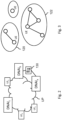
- An ICN-UE may publish or request content solely by itself. However, an ICN-UE may also connect an 'island' 120, 122 of other ICN nodes to the communication network, in which case it may publish or request content on behalf of other ICN nodes in the island 120, 122. Accordingly, when characterizing an ICN-UE as publisher or not, and optionally to a degree of being a publisher, this may effectively also, or primarily, characterize the ICN island connected by the respective ICN-UE to the communication network.
- an ICN-UE may represent both a publisher and a requester of content, both by its own or by way of the ICN-UE connecting an ICN island to the network.
- a portion of the ICN nodes within the ICN island may be publishers and another portion of the ICN node may be requesters.
- a reference to an ICN-UE being a 'publisher' thus does not exclude the ICN-UE also being a 'requester'.
- the ICN-AF may primarily or only obtain information which is indicative of whether, and optionally to which degree, an ICN-UE is a publisher, and characterize the ICN-UE as a 'requester' only by the ICN-UE being, on the basis of the obtained information, not considered a publisher.
- the ICN-AF may receive information indicative of whether, and optionally to which degree, a respective ICN node is publisher of content in the exchange of content between the ICN nodes.
- the NAS transport mechanism as defined in 3GPP TS 23.501 may be used for an ICN node to communicate with the ICN-AF.
- Fig. 4 illustrates such data communication between the ICN-AF and ICN-UEs via the NAS transport mechanism.
- the messages exchanged between the UE and the ICN-AF may be part of an ICN-5G control protocol and used to provide information to the ICN-AF about published content.
- this information may be sent using aggregation, e.g., advertising only name prefixes instead of full names, as there usually is a constraint on the PDU size in NAS transport.
- the use of the NAS transport mechanism may be preferred over other alternatives as the control plane may be tightly coupled and the development possibilities may be larger: the ICN-AF may have access to the control plane of the network and may use all the authorized services from each network function. This may avoid or reduce the need for security related boundaries between systems, allow more cross-system functionality and generally improve efficiency in content delivery.
- Fig. 5 shows an alternative to Fig. 4 , namely one where a message exchange between the ICN-AF and ICN-UEs takes place via the user plane of the communication network.
- This and later figures essentially combine Fig. 1 and 2 to illustrate the message exchange while omitting parts of the communication network for sake of legibility.
- a PDU session which is established for ICN traffic may be used by the ICN-UE to provide information to the ICN-AF about published content.
- the ICN-AF may be in part located in the ICN-UE's user plane (not shown explicitly in Fig. 5 ) since the ICN-AF may need to exchange messages with the ICN-UE before the ICN-UE joins the ICN network.
- the ICN-AF may therefore need to be reachable from every DNAI to which a particular ICN-UE may establish a PDU session to.
- this type of embodiment does not rely on a tight technical relation between the ICN and the 5G operators. Accordingly, the ICN-AF may not have access to the 5G network control plane but may send requests via the Network Exposure Function (NEF).
- NEF Network Exposure Function
- the message exchange may be as follows (the numbering matching Fig. 5 ):
- the information obtained by the ICN-AF may be indicative of whether, and optionally to which degree, a respective ICN-UE is a publisher of content.
- This information may also be referred to as 'published content information' and may take various forms.
- the information may be indicative of a quantity of the published content, for example the number of published content items (also referred to as 'content objects').
- Such information may be reported directly by an ICN-UE, e.g., as a numeric value, but also indirectly, e.g., by reporting the names or name prefixes of published content items to the ICN-AF.
- Another example is that an ICN-UE may report the size of the published content, either instead or in addition to the number of published content items.
- the total size of the published content items may be reported, or the size per published content item.
- the size may be relevant as larger content items may take longer to transfer and thus are more at risk of being disrupted due to movement of a publisher. It may thus be preferable to limit the movement of publishers which have large(r) content items, for example, relative to the movement of publishers which have a same number but smaller content items.
- the published content information may be directly indicative of a respective ICN-UE being a publisher of content, but in some embodiments only indirectly indicative of a respective ICN-UE being requester. Namely, if the information indicates that a respective ICN-UE is not a publisher, or only to a relatively low degree, or if such information is not received at all, the ICN-AF may presume the ICN-UE to be a requester. Accordingly, the information obtained from the ICN-UE may be only indirectly indicative of whether the ICN-UE is a requester.
- Figs. 6-7B illustrate the control of ICN protocol-based traffic flow by the ICN-AF when an ICN-UE requests to establish a PDU session.
- a first part of the message exchange may be as follows (the numbering matching Fig. 6 ):
- the ICN-AF may decide to establish such connectivity. Depending on the published content by UE3 and the ICN network behind it, the ICN-AF may influence traffic routing by sending a request or multiple requests to the PCF regarding each PDU session (see also step 12 below). In case UE3 has a significant amount of published content and UE1 and UE2 have less published content, the PDU sessions of UE1 and UE2 may be moved to DNAIc. However, if that is not the case, then only the PDU session of UE3 may be moved either to DNAIb or DNAla, depending on UE3's location. An objective of the ICN-AF may be to move the (presumed) requesters towards the publishers, not the other way around. With further reference to Fig. 6 , the message exchange may further comprise:
- Figs. 7A , 7B show a different outcome of step 14 depending on whether UE3 has a significant amount of published content compared to UE1 and UE2 or not.
- Fig. 7A shows the former case, showing the PDU sessions of UE1 and UE2 (2' and 5' in Fig. 7A ) having been moved to DNAIc.
- Fig. 7B shows the latter case, showing the PDU session of UE3 having been moved to DNAlb (9' in Fig. 7B ) or alternatively to DNAla (dotted line, 9" in Fig. 7B ).
- the procedure of steps 12-14 is specified in 3GPP TS 23.502 clause 4.3.6.
- Fig. 8 shows different options for user plane switching which may be used to effect the movement of PDU sessions.
- the entities involved in the switching are also simply referred to as 'switches' or 'switching functions'.
- a switch may be provided as integral part 132 of the UPF, as an external switch 130 between DNAls, or as an external switch 134 to an ICN island 124.
- a distinct difference between these switching functions are their interfaces to the ICN-AF which are shown as (dashed) lines in Fig. 8 and which are further explained in the following.
- Ethernet PDU sessions may be convenient because multiple QoS flows may be provided in the 5G network and because the UPFs have switching functionality.
- the UPFs may be considered regular ethernet switches (as indicated in Fig. 8 by the switch 132 being shown as an integral part of the UPF), with each PDU session being a link.
- ICN protocol-based traffic may already be defined to flow over Ethernet, no special handling may be necessary.
- this Ethernet-type of switching may also be performed outside of the 3GPP network, even between DNAls, when using external switches such as switches 130, 134. This may be especially useful in situations where the 3GPP network operator and the ICN network operator have or may have different levels of technical relations.
- the ICN-AF may be aware of such a switching function either by configuration or standard dynamic switch-controller association establishment, for example via an interface 140 from the external switch 130 to the ICN-AF.
- a switching function may also be aware of ICN layer traffic and have an interface to the ICN-AF over which ICN layer information, such as Interest and Data message statistics, topology messages, etc., may be exchanged.
- the switching function may act as 1) a data collection point and provide information to the ICN-AF, or 2) become involved in the control plane of the network by acting as an ICN-UE and having an ICN network ('ICN island') behind it.
- An advantage of the first option may be that the ICN-AF may obtain more information on network status upon which to base its control of ICN protocol-based traffic flow.
- An advantage of the second option may be that ICN islands may also be connected from the DNN side instead of only the UE side.
- Unstructured PDU sessions may also be used.
- a routing entity may need to be provided outside of the 3GPP network, as well as an ICN router behind the UPF.
- an adaptation of the ICN layer in the UE to the point-to-point PDU session may be needed, for example in the form of ICN over PPPoE or another point-to-point like tunnel.
- the ICN packets may also be carried in UDP or TCP/IP over the PDU session layer, at the expense of additional overhead. Using this encapsulation might be beneficial when directly connecting to an existing UDP or TCP/IP overlaid ICN network.
- ICN-AF interworking between the ICN-AF and the switching functions, including those acting as ICN-router (see below). For example, if there exists an association between the ICN-AF and a particular ethernet switch, e.g., by means of the aforementioned standard dynamic switch-controller association establishment, only the DNAI connections may need to be sent to the ICN-AF so that the ICN-AF may take these into account when (re)organizing the PDU sessions.
- a switching function is ICN traffic aware and reports ICN-related information such as the number of Interests and Data messages between endpoints
- the switching function may be considered to represent an ICN router.
- the reported information may take the form of tuples (Source, Destination, Number of Interest Packets, Number of Data Packets) or simply the number of Interest or Data packets per Source or Destination.
- the ICN-AF may use this information either as a supplement to the published content information received from UEs, or in some embodiments reorganize the PDU sessions in the network solely based on Interest/Data statistics instead of the published content.
- the Source and Destination identifiers may be associated with UE PDU sessions in the 5G network.
- the ICN router function is performed by the UPF, this may be fairly straightforward case since the UPF already has a context for each specific UE containing tunnel IDs. However, if this is not the case, the ICN-AF may need to correlate the PDU sessions to the statistics in the ICN router. If the PDU sessions are of type Ethernet or IP, the MAC or IP address may be used as it designates the UE side of the PDU session. However, in case of Unstructured PDU session type there may a tunnel between the UPF and the ICN router for each PDU session as specified in TS 23.501. Each of these tunnels may represent a different Face ID to the ICN router and may be reported to the ICN-AF during each tunnel establishment to enable the ICN-AF to perform the above correlation to bind the Interest and Data information to a specific Face ID.
- the ICN-AF to ICN router interface may also include the functionality of an ICN-UE to ICN-AF interface. This may enable the ICN router to report the published content in that network, which in turn may further influence the ICN-AF's orchestration of ICN traffic, even though the ICN network is not bound to a PDU session and cannot be moved.
- a PDU session has a corresponding entity in the ICN Router, for example a Tunnel ID (in case the ICN router function is implemented by the UPF) or a Face ID (in case of Unstructured PDU session type)
- throughput statistics may also be provided to the ICN-AF. Based on these throughput statistics, the ICN-AF may for example reorganize the network or request the UEs to establish a second PDU.
- the ICN-AF may partly reside in the control plane and partly in the user plane of the communication network.
- the ICN-AF may be partitioned in an application function control plane part operating in the control plane and an application function user plane part operating in the user plane.
- the latter may be embodied by a switching function or an ICN router.
- the communication network may be configured to enable instantiation of different network slices.
- ICN traffic may flow via a dedicated network slice, isolating it from other traffic handled by the network.
- Fig. 9 shows a system 200 which may represent a device or network node implementing an ICN-AF, or an ICN router, or an ICN-UE configured for communicating with the ICN-AF.
- Fig. 9 shows the system 200 to comprise a network interface 210 for communicating with (other) network nodes in the network.
- the network interface 210 may take any suitable form, including but not limited to a wired network interface based on Ethernet or optical fiber or a wireless network interface.
- Fig. 9 further shows the system 200 comprising a storage 230, such as a hard disk, a solid-state drive, or an array thereof, which may be used by the system 200 for storing data.
- the system 200 may further comprise a processor 220 which may be configured, e.g., by hardware design or software, to perform the operations described with reference to Fig. 2-8 in as far as pertaining to an ICN-AF, an ICN router or an ICN-UE.
- the processor 220 may be embodied by a single Central Processing Unit (CPU), but also by a combination or system of such CPUs and/or other types of processing units.
- the system 200 may be embodied by a (single) device or apparatus but also by a distributed system of such devices or apparatuses.
- the aforementioned device or apparatus may comprise one or more (micro)processors which execute appropriate software.
- Software implementing the functionality of the function(s) may have been downloaded and/or stored in a corresponding memory or memories, e.g., in volatile memory such as RAM or in non-volatile memory such as Flash.
- the function(s) may be implemented in the device or apparatus in the form of programmable logic, e.g., as a Field-Programmable Gate Array (FPGA).
- FPGA Field-Programmable Gate Array
- each function may be implemented as a circuit.
- any of the methods described in this specification may be implemented on a computer as a computer implemented method, as dedicated hardware, or as a combination of both.
- Instructions for the computer e.g., executable code
- the executable code may be stored in a transitory or non-transitory manner. Examples of computer readable mediums include memory devices, optical storage devices, integrated circuits, servers, online software, etc.
- Fig. 10 shows by way of example an optical storage device 300.
- Fig. 11 is a block diagram illustrating an exemplary data processing system that may be used in the embodiments described in this specification.
- data processing systems include data processing entities described in this specification, including but not limited to data processing entities implementing functions such as but not limited to an ICN-AF, an ICN router, an ICN-UE, etc.
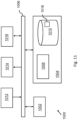
- the data processing system 1000 may include at least one processor 1002 coupled to memory elements 1004 through a system bus 1006. As such, the data processing system may store program code within memory elements 1004. Further, processor 1002 may execute the program code accessed from memory elements 1004 via system bus 1006. In one aspect, data processing system may be implemented as a computer that is suitable for storing and/or executing program code. It should be appreciated, however, that data processing system 1000 may be implemented in the form of any system including a processor and memory that is capable of performing the functions described within this specification.
- Memory elements 1004 may include one or more physical memory devices such as, for example, local memory 1008 and one or more bulk storage devices 1010.
- Local memory may refer to random access memory or other non-persistent memory device(s) generally used during actual execution of the program code.
- a bulk storage device may be implemented as a hard drive, solid state disk or other persistent data storage device.
- the processing system 1000 may also include one or more cache memories (not shown) that provide temporary storage of at least some program code in order to reduce the number of times program code must be retrieved from bulk storage device 1010 during execution.
- I/O devices depicted as input device 1012 and output device 1014 optionally can be coupled to the data processing system.
- input devices may include, but are not limited to, for example, a microphone, a keyboard, a pointing device such as a mouse, or the like.
- output devices may include, but are not limited to, for example, a monitor or display, speakers, or the like.
- Input device and/or output device may be coupled to data processing system either directly or through intervening I/O controllers.
- a network adapter 1016 may also be coupled to data processing system to enable it to become coupled to other systems, computer systems, remote network devices, and/or remote storage devices through intervening private or public networks.
- the network adapter may comprise a data receiver for receiving data that is transmitted by said systems, devices and/or networks to said data and a data transmitter for transmitting data to said systems, devices and/or networks.
- Modems, cable modems, and Ethernet cards are examples of different types of network adapter that may be used with data processing system 1000.
- memory elements 1004 may store an application 1018. It should be appreciated that data processing system 1000 may further execute an operating system (not shown) that can facilitate execution of the application.
- the application being implemented in the form of executable program code, can be executed by data processing system 1000, e.g., by processor 1002. Responsive to executing the application, the data processing system may be configured to perform one or more operations to be described herein in further detail.
- data processing system 1000 may implement an ICN-AF.
- application 1018 may represent an application that, when executed, configures data processing system 1000 to perform the functions described herein with reference to an ICN-AF.
- data processing system 1000 may implement an ICN router.
- application 1018 may represent an application that, when executed, configures data processing system 1000 to perform the functions described herein with reference to an ICN router.
- data processing system 1000 may implement an ICN-UE.
- application 1018 may represent an application that, when executed, configures data processing system 1000 to perform the functions described herein with reference to an ICN-UE.
- any reference signs placed between parentheses shall not be construed as limiting the claim.
- Use of the verb "comprise” and its conjugations does not exclude the presence of elements or steps other than those stated in a claim.
- the article “a” or “an” preceding an element does not exclude the presence of a plurality of such elements.
- Expressions such as “at least one of” when preceding a list or group of elements represent a selection of all or of any subset of elements from the list or group.
- the expression, “at least one of A, B, and C” should be understood as including only A, only B, only C, both A and B, both A and C, both B and C, or all of A, B, and C.
- the invention may be implemented by means of hardware comprising several distinct elements, and by means of a suitably programmed computer.
- the device claim enumerating several means several of these means may be embodied by one and the same item of hardware.
- the mere fact that certain measures are recited in mutually different dependent claims does not indicate that a combination of these measures cannot be used to advantage.
Landscapes
- Engineering & Computer Science (AREA)
- Computer Networks & Wireless Communication (AREA)
- Signal Processing (AREA)
- Mobile Radio Communication Systems (AREA)
Claims (13)
- Nœud de réseau (200) ou système distribué de noeuds de réseau configurés comme une fonction d'application de réseautage centré sur l'information, ICN-AF, à utiliser avec un réseau de communication (100), ce réseau de communication comprenant une pluralité de noeuds de réseau et étant configuré de façon à fournir :- un plan de commande pour permettre la transmission de données de commande dans le réseau de communication ;- un plan d'utilisateur pour permettre la transmission de données vers et depuis un équipement utilisateur qui est connecté au réseau de communication ; et- un ensemble de fonctions de réseau qui comprennent des fonctions de plan de commande fonctionnant dans le plan de commande, ces fonctions de plan de commande comprenant la fonction d'application de réseautage centré sur l'information, ICN-AF, pour commander un écoulement de trafic basé sur protocole ICN entre un ensemble d'équipements utilisateurs, UE,chaque équipement utilisateur, UE, de l'ensemble d'équipements utilisateurs représentant un noeud ICN dans un réseau ICN et étant configuré pour l'échange de contenu via un trafic basé sur protocole ICN, ce trafic basé sur protocole ICN étant transporté au moins en partie via des sessions d'unités de données de protocole, PDU, dans le réseau de communication ;le noeud de réseau ou le système distribué de noeuds de réseau comprenant :- une interface de réseau (210) avec le réseau de communication ;- un système de traitement (220) configuré de façon à :- pour au moins un des noeuds ICN, obtenir des informations indicatives de si, et facultativement dans quelle mesure, un noeud ICN respectif est éditeur de contenu dans l'échange de contenu entre les noeuds ICN, et de façon à commander la mobilité des sessions PDU de noeuds ICN en se basant sur les informations obtenues ;- lancer une réattribution d'une session d'unités de données de protocole, PDU, d'un noeud ICN lorsque ce noeud ICN n'est pas caractérisé comme éditeur de contenu, cette réattribution étant faite à un point d'accès réseau de données qui a une connectivité avec, ou qui est le même que, un point d'accès réseau de données attribué à un deuxième noeud ICN qui est caractérisé comme éditeur de contenu ;caractérisés en ce que- la fonction d'application ICN, ICN-AF, est configurée de façon à limiter ou à éviter le lancement de la réattribution d'un point d'accès réseau de données pour un noeud ICN lorsque ce noeud ICN est caractérisé comme éditeur de contenu.
- Noeud de réseau ou système distribué de noeuds de réseau selon la revendication 1, dans lesquels les fonctions de plan de commande comprennent en outre une fonction de gestion de session, SMF, pour la gestion de session des sessions d'unités de données de protocole, PDU, impliquant l'équipement utilisateur, et dans lesquels la fonction d'application ICN, ICN-AF, est configurée de façon à lancer la réattribution de la session PDU en demandant à la fonction de gestion de session, SMF, d'effectuer la réattribution.
- Noeud de réseau ou système distribué de noeuds de réseau selon la revendication 1 ou 2, dans lesquels la fonction d'application ICN, ICN-AF, est configurée de façon à, dans l'établissement d'une session d'unités de données de protocole, PDU, pour un noeud ICN qui n'est pas caractérisé comme éditeur de contenu, lancer une attribution de ladite session d'unités de données de protocole, PDU, à un point d'accès réseau de données qui a une connectivité à, ou qui est le même que, un point d'accès réseau de données attribué à un noeud ICN qui est caractérisé comme éditeur de contenu.
- Noeud de réseau ou système distribué de noeuds de réseau selon l'une quelconque des revendications précédentes, dans lesquels ladite réattribution comprend la fourniture d'un identifiant d'accès à réseau de données identifiant un point d'accès réseau de données réattribué à un noeud ICN respectif.
- Noeud de réseau ou système distribué de noeuds de réseau selon l'une quelconque des revendications précédentes, dans lesquels les informations obtenues par la fonction d'application, ICN-AF, sont indicatives d'au moins :- soit un nombre d'objet de contenu,- soit une taille de données de tous les objets de contenu ou d'objets de contenu individuels, qui sont édités par le noeud ICN respectif.
- Noeud de réseau ou système distribué de noeuds de réseau selon l'une quelconque des revendications précédentes, dans lesquels la fonction d'application ICN, ICN-AF, est configurée de façon à recevoir les informations se rapportant à un noeud ICN respectif en provenance de ce noeud ICN respectif.
- Noeud de réseau ou système distribué de noeuds de réseau selon la revendication 7, dans lesquels la fonction d'application ICN, ICN-AF, est configurée de façon à recevoir les informations se rapportant à un noeud ICN respectif en provenance de ce noeud ICN respectif via :- un mécanisme de transport à strate de non-accès ; ou- via une session d'unités de données de protocole, PDU, du noeud ICN respectif.
- Noeud de réseau ou système distribué de noeuds de réseau selon l'une quelconque des revendications 2 à 7, dans lesquels les fonctions du plan de commande comprennent en outre une fonction d'exposition de réseau, NEF, et dans lesquels la fonction d'application ICN, ICN-AF, est configurée de façon à communiquer avec la fonction de gestion de session, SMF, et/ou avec d'autres fonctions du plan de commande via la fonction d'exposition de réseau.
- Noeud de réseau ou système distribué de noeuds de réseau selon l'une quelconque des revendications précédentes, dans lesquels les fonctions du plan de commande comprennent en outre une fonction de commande de politique, PCF, pour la commande de politique de la qualité du service dans le réseau de communication, la fonction de gestion de session, SMF, étant configurée de façon à exécuter la gestion de session en se basant sur des données de politique fournies par la fonction de commande de politique, et la fonction d'application ICN, ICN-AF, étant configurée de façon à commander la gestion de session des sessions d'unités de données de protocole, PDU, via la fonction de commande de politique, PCF.
- Noeud de réseau ou système distribué de noeuds de réseau selon l'une quelconque des revendications précédentes, dans lequel la fonction d'application ICN, ICN-AF, est configurée de façon à, lorsqu'il y a des points d'accès réseau de données multiples qui ont une connectivité avec le point d'accès réseau de données du noeud ICN caractérisé comme éditeur, lancer la réattribution de la session PDU du noeud ICN qui n'est pas caractérisé comme éditeur de contenu au point d'accès réseau de données qui est le plus proche, en termes d'une distance dans la topologie du réseau de données, du point d'accès réseau de données du noeud ICN caractérisé comme éditeur.
- Noeud de réseau ou système distribué de noeuds de réseau selon l'une quelconque des revendications précédentes, dans lequel la fonction d'application ICN, ICN-AF, est configurée de façon à recevoir :- une deuxième information qui identifie des éléments de contenu qui sont édités par un noeud ICN respectif, ou par le réseau derrière le noeud ICN, par exemple par cette information fournissant les noms ou les préfixes de noms d'éléments de contenu édités ; et- une troisième information qui identifie des éléments de contenu qui sont demandés par un noeud ICN respectif, ou par le réseau derrière le noeud ICN respectif ;la fonction d'application ICN, ICN-AF, étant configurée en outre de façon à lancer la réattribution de la session d'unités de données de protocole, PDU, d'un noeud ICN qui est basé sur la troisième information caractérisé comme demandeur d'un élément de contenu à un point d'accès réseau de données qui a une connectivité avec, ou qui est le même que, un point d'accès réseau de données attribué à un noeud ICN qui est basé sur la deuxième information caractérisé comme éditeur de l'élément du contenu.
- Procédé à utiliser avec un réseau de communication (100) qui comporte une pluralité de noeuds de réseau (200) et qui est configuré de façon à fournir :- un plan de commande pour permettre la transmission de données de commande dans le réseau de communication ;- un plan d'utilisateur pour permettre la transmission de données vers ou depuis un équipement utilisateur qui est connecté au réseau de communication ; et- un ensemble de fonctions de réseau qui comprennent des fonctions de plan de commande fonctionnant dans le plan de commande ;ce procédé comprenant :- la commande, par une fonction d'application ICN, ICN-AF, d'un écoulement de trafic basé sur protocole entre un ensemble d'équipements utilisateurs, UE, chaque équipement utilisateur, UE, de l'ensemble d'équipements utilisateurs représentant un noeud ICN dans un réseau ICN et étant configuré pour l'échange de contenu via un trafic basé sur protocole ICN, ce trafic basé sur protocole ICN étant transporté au moins en partie via des sessions d'unités de données de protocole, PDU, dans le réseau de communication ;la commande de l'écoulement du trafic basé sur protocole ICN comprenant :- pour au moins un des noeuds ICN, l'obtention d'informations indicatives de si, et facultativement dans quelle mesure, un noeud ICN respectif est éditeur de contenu dans l'échange de contenu entre les noeuds ICN, et la commande de la mobilité de sessions PDU de noeuds ICN en se basant sur les informations obtenues ;- le lancement de la réattribution d'une session d'unités de données de protocole, PDU, d'un noeud ICN lorsque ce ce noeud ICN n'est pas caractérisé comme éditeur de contenu, cette réattribution étant faite à un point d'accès réseau de données qui a une connectivité avec, ou qui est le même que, un point d'accès réseau de données attribué à un deuxième noeud ICN qui est caractérisé comme éditeur de l'élément du contenu ;caractérisé en ce quela fonction d'application ICN, ICN-AF, est configurée de façon à limiter ou à éviter le lancement de la réattribution d'un point d'accès réseau de données pour un noeud ICN lorsque ce noeud ICN est caractérisé comme éditeur de contenu.
- Support transitoire ou non transitoire lisible par ordinateur (300) comprenant un programme informatique, ce programme informatique comprenant des instructions pour faire en sorte qu'un système de traitement exécute le procédé selon la revendication 12.
Applications Claiming Priority (2)
| Application Number | Priority Date | Filing Date | Title |
|---|---|---|---|
| EP18190629 | 2018-08-24 | ||
| PCT/EP2019/072544 WO2020039054A1 (fr) | 2018-08-24 | 2019-08-23 | Mise en réseau centrée sur l'information sur des réseaux 5g ou ultérieurs |
Publications (2)
| Publication Number | Publication Date |
|---|---|
| EP3841728A1 EP3841728A1 (fr) | 2021-06-30 |
| EP3841728B1 true EP3841728B1 (fr) | 2024-02-21 |
Family
ID=63405019
Family Applications (1)
| Application Number | Title | Priority Date | Filing Date |
|---|---|---|---|
| EP19755659.0A Active EP3841728B1 (fr) | 2018-08-24 | 2019-08-23 | Réseautage axé sur les informations sur des réseaux 5g ou ultérieurs |
Country Status (3)
| Country | Link |
|---|---|
| US (1) | US11558491B2 (fr) |
| EP (1) | EP3841728B1 (fr) |
| WO (1) | WO2020039054A1 (fr) |
Families Citing this family (5)
| Publication number | Priority date | Publication date | Assignee | Title |
|---|---|---|---|---|
| DE102017206769B4 (de) * | 2017-04-21 | 2024-12-24 | Festo Se & Co. Kg | Gateway-Modul und Modulanordnung |
| WO2020039056A1 (fr) | 2018-08-24 | 2020-02-27 | Koninklijke Kpn N.V. | Réseautage centré sur l'information sur des réseaux 5g ou ultérieurs |
| US11032381B2 (en) * | 2019-06-19 | 2021-06-08 | Servicenow, Inc. | Discovery and storage of resource tags |
| CN112003957B (zh) * | 2020-10-28 | 2021-02-26 | 腾讯科技(深圳)有限公司 | 调度接入点的方法、装置、服务器以及存储介质 |
| US12316723B2 (en) | 2021-06-25 | 2025-05-27 | Intel Corporation | Information centric network unstructured data carrier |
Citations (1)
| Publication number | Priority date | Publication date | Assignee | Title |
|---|---|---|---|---|
| WO2018137755A1 (fr) * | 2017-01-24 | 2018-08-02 | Telefonaktiebolaget Lm Ericsson (Publ) | Procédés et entités de réseau pour transfert intercellulaire |
Family Cites Families (18)
| Publication number | Priority date | Publication date | Assignee | Title |
|---|---|---|---|---|
| WO2016170559A1 (fr) | 2015-04-23 | 2016-10-27 | Nec Corporation | Procédé et système pour une réservation de bande passante pour une ingénierie de trafic à base d'arbre multiple dans des réseaux centrés sur le contenu |
| CN112738772B (zh) | 2015-08-04 | 2024-07-02 | 康维达无线有限责任公司 | 物联网端对端服务层服务质量管理 |
| US10397809B2 (en) | 2016-05-13 | 2019-08-27 | Cisco Technology, Inc. | Mobility loss detection and recovery |
| CN109548090B (zh) | 2016-05-24 | 2020-07-07 | 华为技术有限公司 | QoS控制方法及设备 |
| WO2018112897A1 (fr) * | 2016-12-23 | 2018-06-28 | 华为技术有限公司 | Procédé et dispositif d'activation de session, et système |
| US10531420B2 (en) * | 2017-01-05 | 2020-01-07 | Huawei Technologies Co., Ltd. | Systems and methods for application-friendly protocol data unit (PDU) session management |
| CN110431859B (zh) * | 2017-03-20 | 2022-04-15 | Lg电子株式会社 | 用于无线通信系统中层之间交互的方法及其设备 |
| WO2018225039A1 (fr) | 2017-06-09 | 2018-12-13 | Telefonaktiebolaget Lm Ericsson (Publ) | Procédé de régulation d'encombrement dans un réseau |
| EP3471470B1 (fr) * | 2017-06-15 | 2021-03-31 | LG Electronics Inc. -1- | Procédé permettant de répondre à une demande et dispositif de réseau |
| WO2018236164A1 (fr) * | 2017-06-21 | 2018-12-27 | 엘지전자(주) | Procédé et dispositif d'exécution d'une procédure de demande de service dans un système de communication sans fil |
| CN109392042B (zh) * | 2017-08-14 | 2021-10-26 | 华为技术有限公司 | 一种会话管理方法、异系统互操作的方法及网络装置 |
| CN109600759B (zh) * | 2017-09-30 | 2022-04-29 | 华为技术有限公司 | 一种策略确定的方法及通信装置 |
| US10999787B2 (en) * | 2018-02-17 | 2021-05-04 | Huawei Technologies Co., Ltd. | System and method for UE context and PDU session context management |
| US10499276B2 (en) | 2018-03-06 | 2019-12-03 | Verizon Patent And Licensing Inc. | Method and system for end-to-end admission and congestion control based on network slicing |
| EP3777460B1 (fr) * | 2018-04-06 | 2025-02-19 | Lenovo (Singapore) Pte. Ltd. | Détermination de paramètres de comportement d'unité distante |
| CN110831031B (zh) * | 2018-08-13 | 2021-10-01 | 大唐移动通信设备有限公司 | 一种持续在线pdu会话的管理方法及装置 |
| WO2020039056A1 (fr) | 2018-08-24 | 2020-02-27 | Koninklijke Kpn N.V. | Réseautage centré sur l'information sur des réseaux 5g ou ultérieurs |
| US12445895B2 (en) | 2019-11-07 | 2025-10-14 | Samsung Electronics Co., Ltd. | Device and method for supporting quality of service in wireless communication system |
-
2019
- 2019-08-23 WO PCT/EP2019/072544 patent/WO2020039054A1/fr not_active Ceased
- 2019-08-23 EP EP19755659.0A patent/EP3841728B1/fr active Active
- 2019-08-23 US US17/268,374 patent/US11558491B2/en active Active
Patent Citations (1)
| Publication number | Priority date | Publication date | Assignee | Title |
|---|---|---|---|---|
| WO2018137755A1 (fr) * | 2017-01-24 | 2018-08-02 | Telefonaktiebolaget Lm Ericsson (Publ) | Procédés et entités de réseau pour transfert intercellulaire |
Also Published As
| Publication number | Publication date |
|---|---|
| WO2020039054A1 (fr) | 2020-02-27 |
| US11558491B2 (en) | 2023-01-17 |
| EP3841728A1 (fr) | 2021-06-30 |
| US20210194989A1 (en) | 2021-06-24 |
Similar Documents
| Publication | Publication Date | Title |
|---|---|---|
| US12166637B2 (en) | Multi-access management service frameworks for cloud and edge networks | |
| EP3841728B1 (fr) | Réseautage axé sur les informations sur des réseaux 5g ou ultérieurs | |
| EP3676705B1 (fr) | Fonction d'application dans un réseau et sa commande | |
| CN112911525B (zh) | 应用功能影响业务路由的消息和系统 | |
| US11134410B2 (en) | Quality of service (QoS) control in mobile edge computing (MEC) | |
| US10129108B2 (en) | System and methods for network management and orchestration for network slicing | |
| CN104255046B (zh) | 可定制的移动宽带网络系统和定制移动宽带网络的方法 | |
| US11784886B2 (en) | Network slice usage | |
| CN111480366A (zh) | 共享pdu会话建立和绑定 | |
| US11503498B2 (en) | Information-centric networking over 5G or later networks | |
| CN113825251B (zh) | 会话建立方法、装置、系统及计算机存储介质 | |
| EP3494674A1 (fr) | Pré-configuration de réseau virtuel permettant de prendre en charge l'acheminement de trafic basé sur un service | |
| EP4352922B1 (fr) | Système et procédé d'établissement d'une session de pdu double couche | |
| WO2021115429A1 (fr) | Appareil et procédé de communication |
Legal Events
| Date | Code | Title | Description |
|---|---|---|---|
| STAA | Information on the status of an ep patent application or granted ep patent |
Free format text: STATUS: UNKNOWN |
|
| STAA | Information on the status of an ep patent application or granted ep patent |
Free format text: STATUS: THE INTERNATIONAL PUBLICATION HAS BEEN MADE |
|
| PUAI | Public reference made under article 153(3) epc to a published international application that has entered the european phase |
Free format text: ORIGINAL CODE: 0009012 |
|
| STAA | Information on the status of an ep patent application or granted ep patent |
Free format text: STATUS: REQUEST FOR EXAMINATION WAS MADE |
|
| 17P | Request for examination filed |
Effective date: 20210324 |
|
| AK | Designated contracting states |
Kind code of ref document: A1 Designated state(s): AL AT BE BG CH CY CZ DE DK EE ES FI FR GB GR HR HU IE IS IT LI LT LU LV MC MK MT NL NO PL PT RO RS SE SI SK SM TR |
|
| DAV | Request for validation of the european patent (deleted) | ||
| DAX | Request for extension of the european patent (deleted) | ||
| STAA | Information on the status of an ep patent application or granted ep patent |
Free format text: STATUS: EXAMINATION IS IN PROGRESS |
|
| 17Q | First examination report despatched |
Effective date: 20230125 |
|
| P01 | Opt-out of the competence of the unified patent court (upc) registered |
Effective date: 20230517 |
|
| REG | Reference to a national code |
Ref country code: DE Free format text: PREVIOUS MAIN CLASS: H04L0029080000 Ipc: H04W0076220000 Ref legal event code: R079 Ref document number: 602019046926 Country of ref document: DE |
|
| GRAP | Despatch of communication of intention to grant a patent |
Free format text: ORIGINAL CODE: EPIDOSNIGR1 |
|
| STAA | Information on the status of an ep patent application or granted ep patent |
Free format text: STATUS: GRANT OF PATENT IS INTENDED |
|
| RIC1 | Information provided on ipc code assigned before grant |
Ipc: H04L 67/148 20220101ALI20230920BHEP Ipc: H04W 76/22 20180101AFI20230920BHEP |
|
| INTG | Intention to grant announced |
Effective date: 20231025 |
|
| GRAS | Grant fee paid |
Free format text: ORIGINAL CODE: EPIDOSNIGR3 |
|
| GRAA | (expected) grant |
Free format text: ORIGINAL CODE: 0009210 |
|
| STAA | Information on the status of an ep patent application or granted ep patent |
Free format text: STATUS: THE PATENT HAS BEEN GRANTED |
|
| AK | Designated contracting states |
Kind code of ref document: B1 Designated state(s): AL AT BE BG CH CY CZ DE DK EE ES FI FR GB GR HR HU IE IS IT LI LT LU LV MC MK MT NL NO PL PT RO RS SE SI SK SM TR |
|
| REG | Reference to a national code |
Ref country code: GB Ref legal event code: FG4D |
|
| REG | Reference to a national code |
Ref country code: CH Ref legal event code: EP |
|
| REG | Reference to a national code |
Ref country code: DE Ref legal event code: R096 Ref document number: 602019046926 Country of ref document: DE |
|
| REG | Reference to a national code |
Ref country code: IE Ref legal event code: FG4D |
|
| REG | Reference to a national code |
Ref country code: NL Ref legal event code: FP |
|
| REG | Reference to a national code |
Ref country code: LT Ref legal event code: MG9D |
|
| PG25 | Lapsed in a contracting state [announced via postgrant information from national office to epo] |
Ref country code: IS Free format text: LAPSE BECAUSE OF FAILURE TO SUBMIT A TRANSLATION OF THE DESCRIPTION OR TO PAY THE FEE WITHIN THE PRESCRIBED TIME-LIMIT Effective date: 20240621 |
|
| PG25 | Lapsed in a contracting state [announced via postgrant information from national office to epo] |
Ref country code: LT Free format text: LAPSE BECAUSE OF FAILURE TO SUBMIT A TRANSLATION OF THE DESCRIPTION OR TO PAY THE FEE WITHIN THE PRESCRIBED TIME-LIMIT Effective date: 20240221 |
|
| PG25 | Lapsed in a contracting state [announced via postgrant information from national office to epo] |
Ref country code: GR Free format text: LAPSE BECAUSE OF FAILURE TO SUBMIT A TRANSLATION OF THE DESCRIPTION OR TO PAY THE FEE WITHIN THE PRESCRIBED TIME-LIMIT Effective date: 20240522 |
|
| REG | Reference to a national code |
Ref country code: AT Ref legal event code: MK05 Ref document number: 1660231 Country of ref document: AT Kind code of ref document: T Effective date: 20240221 |
|
| PG25 | Lapsed in a contracting state [announced via postgrant information from national office to epo] |
Ref country code: HR Free format text: LAPSE BECAUSE OF FAILURE TO SUBMIT A TRANSLATION OF THE DESCRIPTION OR TO PAY THE FEE WITHIN THE PRESCRIBED TIME-LIMIT Effective date: 20240221 Ref country code: RS Free format text: LAPSE BECAUSE OF FAILURE TO SUBMIT A TRANSLATION OF THE DESCRIPTION OR TO PAY THE FEE WITHIN THE PRESCRIBED TIME-LIMIT Effective date: 20240521 |
|
| PG25 | Lapsed in a contracting state [announced via postgrant information from national office to epo] |
Ref country code: ES Free format text: LAPSE BECAUSE OF FAILURE TO SUBMIT A TRANSLATION OF THE DESCRIPTION OR TO PAY THE FEE WITHIN THE PRESCRIBED TIME-LIMIT Effective date: 20240221 |
|
| PG25 | Lapsed in a contracting state [announced via postgrant information from national office to epo] |
Ref country code: AT Free format text: LAPSE BECAUSE OF FAILURE TO SUBMIT A TRANSLATION OF THE DESCRIPTION OR TO PAY THE FEE WITHIN THE PRESCRIBED TIME-LIMIT Effective date: 20240221 |
|
| PG25 | Lapsed in a contracting state [announced via postgrant information from national office to epo] |
Ref country code: RS Free format text: LAPSE BECAUSE OF FAILURE TO SUBMIT A TRANSLATION OF THE DESCRIPTION OR TO PAY THE FEE WITHIN THE PRESCRIBED TIME-LIMIT Effective date: 20240521 Ref country code: NO Free format text: LAPSE BECAUSE OF FAILURE TO SUBMIT A TRANSLATION OF THE DESCRIPTION OR TO PAY THE FEE WITHIN THE PRESCRIBED TIME-LIMIT Effective date: 20240521 Ref country code: LT Free format text: LAPSE BECAUSE OF FAILURE TO SUBMIT A TRANSLATION OF THE DESCRIPTION OR TO PAY THE FEE WITHIN THE PRESCRIBED TIME-LIMIT Effective date: 20240221 Ref country code: IS Free format text: LAPSE BECAUSE OF FAILURE TO SUBMIT A TRANSLATION OF THE DESCRIPTION OR TO PAY THE FEE WITHIN THE PRESCRIBED TIME-LIMIT Effective date: 20240621 Ref country code: HR Free format text: LAPSE BECAUSE OF FAILURE TO SUBMIT A TRANSLATION OF THE DESCRIPTION OR TO PAY THE FEE WITHIN THE PRESCRIBED TIME-LIMIT Effective date: 20240221 Ref country code: GR Free format text: LAPSE BECAUSE OF FAILURE TO SUBMIT A TRANSLATION OF THE DESCRIPTION OR TO PAY THE FEE WITHIN THE PRESCRIBED TIME-LIMIT Effective date: 20240522 Ref country code: FI Free format text: LAPSE BECAUSE OF FAILURE TO SUBMIT A TRANSLATION OF THE DESCRIPTION OR TO PAY THE FEE WITHIN THE PRESCRIBED TIME-LIMIT Effective date: 20240221 Ref country code: ES Free format text: LAPSE BECAUSE OF FAILURE TO SUBMIT A TRANSLATION OF THE DESCRIPTION OR TO PAY THE FEE WITHIN THE PRESCRIBED TIME-LIMIT Effective date: 20240221 Ref country code: BG Free format text: LAPSE BECAUSE OF FAILURE TO SUBMIT A TRANSLATION OF THE DESCRIPTION OR TO PAY THE FEE WITHIN THE PRESCRIBED TIME-LIMIT Effective date: 20240221 Ref country code: AT Free format text: LAPSE BECAUSE OF FAILURE TO SUBMIT A TRANSLATION OF THE DESCRIPTION OR TO PAY THE FEE WITHIN THE PRESCRIBED TIME-LIMIT Effective date: 20240221 |
|
| PG25 | Lapsed in a contracting state [announced via postgrant information from national office to epo] |
Ref country code: PT Free format text: LAPSE BECAUSE OF FAILURE TO SUBMIT A TRANSLATION OF THE DESCRIPTION OR TO PAY THE FEE WITHIN THE PRESCRIBED TIME-LIMIT Effective date: 20240621 Ref country code: PL Free format text: LAPSE BECAUSE OF FAILURE TO SUBMIT A TRANSLATION OF THE DESCRIPTION OR TO PAY THE FEE WITHIN THE PRESCRIBED TIME-LIMIT Effective date: 20240221 |
|
| PG25 | Lapsed in a contracting state [announced via postgrant information from national office to epo] |
Ref country code: SE Free format text: LAPSE BECAUSE OF FAILURE TO SUBMIT A TRANSLATION OF THE DESCRIPTION OR TO PAY THE FEE WITHIN THE PRESCRIBED TIME-LIMIT Effective date: 20240221 Ref country code: PT Free format text: LAPSE BECAUSE OF FAILURE TO SUBMIT A TRANSLATION OF THE DESCRIPTION OR TO PAY THE FEE WITHIN THE PRESCRIBED TIME-LIMIT Effective date: 20240621 Ref country code: PL Free format text: LAPSE BECAUSE OF FAILURE TO SUBMIT A TRANSLATION OF THE DESCRIPTION OR TO PAY THE FEE WITHIN THE PRESCRIBED TIME-LIMIT Effective date: 20240221 Ref country code: LV Free format text: LAPSE BECAUSE OF FAILURE TO SUBMIT A TRANSLATION OF THE DESCRIPTION OR TO PAY THE FEE WITHIN THE PRESCRIBED TIME-LIMIT Effective date: 20240221 |
|
| PG25 | Lapsed in a contracting state [announced via postgrant information from national office to epo] |
Ref country code: DK Free format text: LAPSE BECAUSE OF FAILURE TO SUBMIT A TRANSLATION OF THE DESCRIPTION OR TO PAY THE FEE WITHIN THE PRESCRIBED TIME-LIMIT Effective date: 20240221 |
|
| PG25 | Lapsed in a contracting state [announced via postgrant information from national office to epo] |
Ref country code: SM Free format text: LAPSE BECAUSE OF FAILURE TO SUBMIT A TRANSLATION OF THE DESCRIPTION OR TO PAY THE FEE WITHIN THE PRESCRIBED TIME-LIMIT Effective date: 20240221 |
|
| PG25 | Lapsed in a contracting state [announced via postgrant information from national office to epo] |
Ref country code: CZ Free format text: LAPSE BECAUSE OF FAILURE TO SUBMIT A TRANSLATION OF THE DESCRIPTION OR TO PAY THE FEE WITHIN THE PRESCRIBED TIME-LIMIT Effective date: 20240221 Ref country code: EE Free format text: LAPSE BECAUSE OF FAILURE TO SUBMIT A TRANSLATION OF THE DESCRIPTION OR TO PAY THE FEE WITHIN THE PRESCRIBED TIME-LIMIT Effective date: 20240221 |
|
| PG25 | Lapsed in a contracting state [announced via postgrant information from national office to epo] |
Ref country code: SK Free format text: LAPSE BECAUSE OF FAILURE TO SUBMIT A TRANSLATION OF THE DESCRIPTION OR TO PAY THE FEE WITHIN THE PRESCRIBED TIME-LIMIT Effective date: 20240221 |
|
| PG25 | Lapsed in a contracting state [announced via postgrant information from national office to epo] |
Ref country code: SM Free format text: LAPSE BECAUSE OF FAILURE TO SUBMIT A TRANSLATION OF THE DESCRIPTION OR TO PAY THE FEE WITHIN THE PRESCRIBED TIME-LIMIT Effective date: 20240221 Ref country code: SK Free format text: LAPSE BECAUSE OF FAILURE TO SUBMIT A TRANSLATION OF THE DESCRIPTION OR TO PAY THE FEE WITHIN THE PRESCRIBED TIME-LIMIT Effective date: 20240221 Ref country code: RO Free format text: LAPSE BECAUSE OF FAILURE TO SUBMIT A TRANSLATION OF THE DESCRIPTION OR TO PAY THE FEE WITHIN THE PRESCRIBED TIME-LIMIT Effective date: 20240221 Ref country code: EE Free format text: LAPSE BECAUSE OF FAILURE TO SUBMIT A TRANSLATION OF THE DESCRIPTION OR TO PAY THE FEE WITHIN THE PRESCRIBED TIME-LIMIT Effective date: 20240221 Ref country code: DK Free format text: LAPSE BECAUSE OF FAILURE TO SUBMIT A TRANSLATION OF THE DESCRIPTION OR TO PAY THE FEE WITHIN THE PRESCRIBED TIME-LIMIT Effective date: 20240221 Ref country code: CZ Free format text: LAPSE BECAUSE OF FAILURE TO SUBMIT A TRANSLATION OF THE DESCRIPTION OR TO PAY THE FEE WITHIN THE PRESCRIBED TIME-LIMIT Effective date: 20240221 |
|
| REG | Reference to a national code |
Ref country code: DE Ref legal event code: R097 Ref document number: 602019046926 Country of ref document: DE |
|
| PG25 | Lapsed in a contracting state [announced via postgrant information from national office to epo] |
Ref country code: IT Free format text: LAPSE BECAUSE OF FAILURE TO SUBMIT A TRANSLATION OF THE DESCRIPTION OR TO PAY THE FEE WITHIN THE PRESCRIBED TIME-LIMIT Effective date: 20240221 |
|
| PLBE | No opposition filed within time limit |
Free format text: ORIGINAL CODE: 0009261 |
|
| STAA | Information on the status of an ep patent application or granted ep patent |
Free format text: STATUS: NO OPPOSITION FILED WITHIN TIME LIMIT |
|
| PG25 | Lapsed in a contracting state [announced via postgrant information from national office to epo] |
Ref country code: IT Free format text: LAPSE BECAUSE OF FAILURE TO SUBMIT A TRANSLATION OF THE DESCRIPTION OR TO PAY THE FEE WITHIN THE PRESCRIBED TIME-LIMIT Effective date: 20240221 |
|
| 26N | No opposition filed |
Effective date: 20241122 |
|
| REG | Reference to a national code |
Ref country code: CH Ref legal event code: PL |
|
| PG25 | Lapsed in a contracting state [announced via postgrant information from national office to epo] |
Ref country code: LU Free format text: LAPSE BECAUSE OF NON-PAYMENT OF DUE FEES Effective date: 20240823 |
|
| PG25 | Lapsed in a contracting state [announced via postgrant information from national office to epo] |
Ref country code: SI Free format text: LAPSE BECAUSE OF FAILURE TO SUBMIT A TRANSLATION OF THE DESCRIPTION OR TO PAY THE FEE WITHIN THE PRESCRIBED TIME-LIMIT Effective date: 20240221 Ref country code: CH Free format text: LAPSE BECAUSE OF NON-PAYMENT OF DUE FEES Effective date: 20240831 Ref country code: MC Free format text: LAPSE BECAUSE OF FAILURE TO SUBMIT A TRANSLATION OF THE DESCRIPTION OR TO PAY THE FEE WITHIN THE PRESCRIBED TIME-LIMIT Effective date: 20240221 |
|
| REG | Reference to a national code |
Ref country code: BE Ref legal event code: MM Effective date: 20240831 |
|
| PG25 | Lapsed in a contracting state [announced via postgrant information from national office to epo] |
Ref country code: BE Free format text: LAPSE BECAUSE OF NON-PAYMENT OF DUE FEES Effective date: 20240831 |
|
| PG25 | Lapsed in a contracting state [announced via postgrant information from national office to epo] |
Ref country code: IE Free format text: LAPSE BECAUSE OF NON-PAYMENT OF DUE FEES Effective date: 20240823 |
|
| PGFP | Annual fee paid to national office [announced via postgrant information from national office to epo] |
Ref country code: NL Payment date: 20250821 Year of fee payment: 7 |
|
| PGFP | Annual fee paid to national office [announced via postgrant information from national office to epo] |
Ref country code: DE Payment date: 20250820 Year of fee payment: 7 |
|
| PGFP | Annual fee paid to national office [announced via postgrant information from national office to epo] |
Ref country code: GB Payment date: 20250820 Year of fee payment: 7 |
|
| PGFP | Annual fee paid to national office [announced via postgrant information from national office to epo] |
Ref country code: FR Payment date: 20250828 Year of fee payment: 7 |
|
| PG25 | Lapsed in a contracting state [announced via postgrant information from national office to epo] |
Ref country code: CY Free format text: LAPSE BECAUSE OF FAILURE TO SUBMIT A TRANSLATION OF THE DESCRIPTION OR TO PAY THE FEE WITHIN THE PRESCRIBED TIME-LIMIT; INVALID AB INITIO Effective date: 20190823 |
|
| PG25 | Lapsed in a contracting state [announced via postgrant information from national office to epo] |
Ref country code: HU Free format text: LAPSE BECAUSE OF FAILURE TO SUBMIT A TRANSLATION OF THE DESCRIPTION OR TO PAY THE FEE WITHIN THE PRESCRIBED TIME-LIMIT; INVALID AB INITIO Effective date: 20190823 |