EP3841773B1 - Service d'enchère par point prédictif pour des ressources de réseau - Google Patents
Service d'enchère par point prédictif pour des ressources de réseau Download PDFInfo
- Publication number
- EP3841773B1 EP3841773B1 EP18930560.0A EP18930560A EP3841773B1 EP 3841773 B1 EP3841773 B1 EP 3841773B1 EP 18930560 A EP18930560 A EP 18930560A EP 3841773 B1 EP3841773 B1 EP 3841773B1
- Authority
- EP
- European Patent Office
- Prior art keywords
- resource
- additional
- network device
- service
- network
- Prior art date
- Legal status (The legal status is an assumption and is not a legal conclusion. Google has not performed a legal analysis and makes no representation as to the accuracy of the status listed.)
- Active
Links
Images


Classifications
-
- H—ELECTRICITY
- H04—ELECTRIC COMMUNICATION TECHNIQUE
- H04W—WIRELESS COMMUNICATION NETWORKS
- H04W16/00—Network planning, e.g. coverage or traffic planning tools; Network deployment, e.g. resource partitioning or cells structures
- H04W16/14—Spectrum sharing arrangements between different networks
-
- H—ELECTRICITY
- H04—ELECTRIC COMMUNICATION TECHNIQUE
- H04W—WIRELESS COMMUNICATION NETWORKS
- H04W88/00—Devices specially adapted for wireless communication networks, e.g. terminals, base stations or access point devices
- H04W88/08—Access point devices
-
- H—ELECTRICITY
- H04—ELECTRIC COMMUNICATION TECHNIQUE
- H04W—WIRELESS COMMUNICATION NETWORKS
- H04W92/00—Interfaces specially adapted for wireless communication networks
- H04W92/04—Interfaces between hierarchically different network devices
- H04W92/12—Interfaces between hierarchically different network devices between access points and access point controllers
Definitions
- the present disclosure relates generally to bidding for network resources, and in particular to bidding for network resources to be used over an additional network interface of a network device.
- Edge routers and other network devices within a network often have both fixed broadband internet connectivity. Some edge routers experience variable levels of traffic, and to accommodate this, they support prepaid licensed spectrum connectivity up to a certain bandwidth with fixed service level agreement (SLA) parameters.
- SLA service level agreement
- pre-paid licensed spectrum access is expensive and the fact that SLAs are static in nature does not provide for predictive, dynamic, and cost effective slicing of network traffic flows at the edge network device.
- Current licensed spectrum service providers only provide static options for network usage, and currently dynamic bidding for additional network resources is unavailable.
- resource managers pre-provision for a certain amount of static provisioning of capacity on route uplinks (e.g., LTE or 5G uplinks).
- the resource managers buy spectrum in bulk and allow users to uplink in accordance with the static provisioning.
- the user can buy chunks of spectrum for a month or other fixed period of time. If the entire spectrum isn't used, however, it gets wasted.
- a network device needs more spectrum than has been provisioned, there's no way for it to do so in real time or on demand - it must work within the spectrum that has already been provisioned.
- the document US 2014/315560 A1 discloses the dynamic allocation of wireless spectrum for utilization by operator networks.
- An operator network may enable users of mobile devices, such as cellular phones or other devices configured for wireless communication, to send and receive content over a wireless network.
- a certain amount of wireless spectrum may be dedicated for such communication by a government or other entity that controls or provides frequencies associated with the wireless spectrum for communicating the content.
- Certain embodiments herein relate to allocating the wireless spectrum for use by operator networks for servicing their customers. Thus, a limited amount of wireless spectrum may be divided or split among operator networks using certain techniques described herein.
- a network device can include a first network interface and a second network interface.
- a resource manager can receive from the network device a request for an additional resource for the second interface on the network device, the request including negotiation parameters for the additional resource. If a match to the request is found by the resource manager, the resource manager can send, to the network device, configuration parameters in accordance with the negotiation parameters for the additional resource to be used over the second network interface.
- the configuration parameters once received by the network device, cause a modification of the network device such that the additional resource is used over the second network interface for a period of time.
- a network device such as an edge router
- statically provisioned e.g., backhauls for pre-purchased spectrum or bandwidth
- licensed spectrum interfaces e.g., 4G/5G backhauls
- traffic can be carried via the statically provisioned interface only as per the configured intent.
- the network device can request additional spectrum over the one or more licensed spectrum interfaces as demand requires, enabling the network device to dynamically handle its traffic requirements as needed or desired.
- Additional licensed spectrum, or additional resources can be provided by a service provider through a spot bidding framework managed by a resource manager.
- the network devices and the resource manager, along with the service providers, can negotiate through the spot bidding framework and configure additional resources, such as capacity and quality of service (QoS), to be used by the requesting network device.
- QoS quality of service
- the network device can request additional resources after observing that additional resources are needed to support its current traffic needs (e.g., based on the type of traffic it's handling and its current load).
- a predictive engine on the network device can predict or determine whether additional resources should be requested.
- FIG. 1 shows an example schematic diagram of a spot bidding framework that includes a network device and a resource manager.
- the resource manager is configured to negotiate in a bidding process with service providers in order to identify and then provide additional resources to the network device in accordance with some embodiments.
- the network device can include a first network interface (e.g., statically provisioned) and a second network interface (e.g., capable of licensed spectrum connectivity), although any number of statically provisioned or licensed spectrum network interfaces can be used.
- a resource manager can receive from the network device a request for an additional resource for the second interface on the network device, the request including various negotiation parameters for the additional resource (e.g., type of connectivity desired, pricing parameters, etc.).
- the resource manager sends configuration parameters to the network device.
- the configuration parameters are in accordance with the negotiation parameters that specify the additional resource to be used over the second network interface.
- the configuration parameters once received by the network device, cause a modification of the network device such that the additional resource is used over the second network interface over the period of time offered and agreed to by the service provider providing the additional resource.
- System 100 illustrates an example embodiment system for dynamically requesting an additional network resource for use by network devices.
- the network devices can support statically provisioned connections and bandwidths as well as additional, often licensed spectrum that are provided on demand.
- network device 110 can include multiple interfaces, such as network interface A 112 that provides fixed internet connectivity and one or more supplemental network interfaces, such as network interface B 114 that provides connectivity to a mobile network or licensed spectrum that can increase or decrease bandwidth in real time or near real time.
- resource manager 120 can receive a request (e.g., bid 122) from network device 110 for an additional resource for network interface B 114.
- the requesting bid 122 can be generated or created by bid service 116, which can include within bid 122 multiple negotiation parameters for the requested additional resource, such as the type of connectivity required, a desired time period, an acceptable price or price range, etc.
- bid 122 is sent to resource manager 120 based on a determination that the first network interface on the network device could benefit from an additional resource based on a dynamic determination that current network traffic is above a capability of network interface A 112. Any technique for monitoring traffic over network interface A 112 can be used for this dynamic determination, such that an increase in traffic over network interface A 112's capabilities can triggers bid 122 creation in bid service 116. Bid 122 can also be sent to resource manager 120 based on a determination that the resources needed to support currently executing application types exceeds a capability of network interface A 112.
- bid 122 can be sent based on predictive determinations made by prediction engine 118.
- Specific types of applications may require more bandwidth or there could be predictable increases in load based on time of day, seasonal load, etc.
- Prediction engine 118 has the capability of identifying the type of connectivity desired, and how long additional network resources would need to be provided to network device 110 based on traffic prediction and/or application fingerprinting (e.g. presence of AR/VR applications in the network during a certain time of the day, high seasonal traffic requirements during holiday hours etc.).
- Prediction engine 118 can monitor and base predictions on historical traffic data indicative of current or upcoming time periods, such as traffic picking up during rush hour on a weekday. The prediction can be in real time, near real time, or periodic based on the prediction engine's 118 configured intent.
- prediction engine 118 can utilize one or more predictive models based on load and type of applications being executed to calculate future bandwidth/spectrum needs of network device 110. If the predictive models predict a future bandwidth usage that potentially exceeds the bandwidth capabilities provided by network interface A 112, prediction engine 118 can notify bid service 116 of the additional spectrum or bandwidth needed so that bid 122 can be generated that requests the needed additional spectrum or bandwidth from resource manager 120. Prediction engine 118 in conjunction with bid service 116 can use, in some examples, a defined API interface with resource manager 120 to spot bid and negotiate for additional network resources including, but not limited to, bandwidth, quality of service (QOS), duration, capacity, etc. in real time or near real time as demand increases (or decreases).
- QOS quality of service
- Resource manager 120 which in some examples can be controlled by a mobile virtual network operator, can receive bid 122 for the additional resource which includes negotiation parameters corresponding to the additional resource requested by network device 110.
- Bid 122 can include, but is not limited to including, a bid price and a type of additional resource.
- the type of additional resource can be specified by parameters that include, but is not limited to including, one or more of a duration, data volume, quality of service, or service level agreement parameter.
- negotiation service 124 can negotiate on behalf of network device 110 to match bid 122 with a service provider offering the requested additional resources.
- resource manager 120 includes an inventory of pre-purchased offers from service providers who can provide additional resources.
- the pre-purchased offers can be stored in pre-purchased resource store 126, which can store the resources offered for purchase as well as resource parameters that can be matched with bid's 122 negotiation parameters.
- negotiation service 124 can select the corresponding offer for the additional network spectrum from a service provider in pre-purchased resource store 126, which can then be provided by the selected service provider for a period of time specified by the service provider or by bid 122.
- negotiation service 124 can interface with outside service providers 128 to solicit offers that match the negotiation parameters in bid 122.
- configuration service 130 can generate configuration parameters 132 that enable network device 110 to establish connectivity over network interface B 114.
- the configuration parameters 132 are sent to network device 110, which modifies network interface B 114 to establish connectivity in accordance with the additional resources for a period of time within service provider's offer.
- the configuration parameters 132 can cause a reprograming of network device 110 to enable usage of the additional network spectrum over network interface B 114 over the period of time.
- FIG. 2 is a flowchart representation of providing additional resources to a network device in accordance with some embodiments.
- the spot bidding process can begin when a network device (e.g., network device 110) sends a request (e.g., bid 122) to the resource manager 120 for an additional resource for network interface B 114 (step 210).
- the request can be based on an observation or prediction that network device 110 may require additional resource connectivity over network interface B 114.
- Bid service 116 can use a defined API interface with the resource manager 120 to negotiate a bidding policy for the additional resources.
- the request includes one or more negotiation parameters, some of which may be fixed and some of which may be open to service provider counteroffers.
- the negotiation parameters can include additional spectrum for a specified length of time and for a specified price, but while the price parameters may be fixed, the length of time may be shortened to what the service provider can offer.
- the negotiation parameters define how the resource manager 120 matches network device 110 with a service provider offering additional resources.
- the negotiation parameters specify a type of resource requested (e.g., duration, data volume, quality of service, SLA parameters, etc.), an IMEI number, a bid price (e.g., a range of the maximum and minimum acceptable bidding price for the requested resources), etc. to assist resource manager 120 in the bidding process.
- Resource manager 120 can determine if the inventory of pre-purchased resources contains a resource in accordance within the prescribed bid price specified by the negotiation parameters of bid 122 (step 212). If the inventory contains a resource within the bid price/price range, resource manager 120 will determine if the resource is matched to or otherwise in accordance with the negotiation parameters (step 214).
- resource manager 120 can use its internal available or unused resources from the pool of connections it purchased or otherwise contracted from various service providers. Based on the requested resource, resource manager 120 can select an appropriate available or unused connection. The pre-purchased resources can also be searched and selected based on geographic location, since service providers located closer to network device 110 can offer resources with higher tier services or lower prices than service providers located farther away.
- Resource manager 120 can optimize pricing and the quality of resource offered to network device 110. Where available, resource manager 120 can interact with the mobile service providers to retrieve instantaneous resource vs. cost estimates. Resource manager 120 can utilize a resource vs. cost mapping function that is most optimal within the range of the customer bid.
- step 216 can be skipped if bid 122 specifies that a lower tier service is not acceptable (or bid 122 can specify that only resources above a threshold tier is acceptable).
- all or a portion of the negotiation parameters in the request are not modifiable by resource manager 120. If a pre-purchased resource is not within the bid price range or negotiation parameters, resource manager 120 can communicate and negotiate with outside service providers for an additional resource in accordance with the request (step 218). If an outside service provider can provide an offer for a resource that matches bid 122's negotiation parameters, then that resource is selected by resource manager 120 to fulfill network device 110's request (step 220).
- Acceptance by network device 110 may be required before initiating the licensed spectrum in some examples. If a resource is selected (either from a pre-purchased resource or from an outside service provider), resource manager 120 can send the service provider's offer to network device 110 for acceptance (in other embodiments, this step can be skipped and the first resource meeting the bid price and negotiation parameters are automatically accepted). If an acceptance is required, network device 110 can reply to resource manager 120 with parameters associated with a response type (e.g., accept the offer, proposed new request, new cost structure, proposed alternate policy, reject the offer, etc.). The network device reply can also include a map of values per response type (such as values related to a proposed new cost structure or proposed alternate policy). The service provider may also negotiate with network device 110 through resource manager 120.
- a response type e.g., accept the offer, proposed new request, new cost structure, proposed alternate policy, reject the offer, etc.
- the network device reply can also include a map of values per response type (such as values related to a proposed new cost structure or proposed alternate policy).
- resource manager 120 can offer a new higher price for the requested resources or propose a lower tier service within the proposed cost on behalf of the service provider.
- Prediction engine 118 can either accept the proposal or go on a bidding loop with resource manager 120 until an acceptable offer is found according to the negotiation parameters. If prediction engine 118 accepts a proposed policy, it will send an acknowledge message to resource manager 120 with the parameters of the accepted policy.
- resource manager 120 can send configuration parameters 132 for the additional resource to be used over network interface B 114 (step 222).
- the configuration parameters 132 cause a modification of network device 110 to enable usage of the additional resource over network interface B 114 (step 224).
- resource manager 120 will send configuration information to network device 110, which will in turn configure the network device's programmable sim with the details of the service provider and the connectivity parameters. At that point, network device 110 will start forwarding traffic of the chosen flows via the licensed spectrum interface (network interface B 114).
- the additional resource is automatically terminated over the network interface B 114 when the period of time that has been negotiated for has expired.
- Resource manager 120 can disable the service, for example, by removing the MNO database entry for the edge router IMEI and inform the edge router via a service complete API.
- the additional resource over the network interface B 115 is extended after the period of negotiated time has expired, and the network device is charged a price based on the actual usage of the additional resource within the extended time. If the prediction engine 118 decides that it needs to extend the resource usage further (such as through one or more predictive models), it will renegotiate the contract with resource manager 120 prior to the expiry of the previous contract.
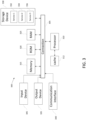
- FIG. 3 shows an example of computing system 300 in which the components of the system are in communication with each other using connection 305.
- Connection 305 can be a physical connection via a bus, or a direct connection into processor 310, such as in a chipset architecture.
- Connection 305 can also be a virtual connection, networked connection, or logical connection.
- computing system 300 is a distributed system in which the functions described in this disclosure can be distributed within a datacenter, multiple datacenters, a peer network, etc.
- one or more of the described system components represents many such components each performing some or all of the function for which the component is described.
- the components can be physical or virtual devices.
- Example system 300 includes at least one processing unit (CPU or processor) 310 and connection 305 that couples various system components including system memory 315, such as read only memory (ROM) and random access memory (RAM) to processor 310.
- system memory 315 such as read only memory (ROM) and random access memory (RAM)
- Computing system 300 can include a cache of high-speed memory connected directly with, in close proximity to, or integrated as part of processor 310.
- Processor 310 can include any general purpose processor and a hardware service or software service, such as services 332, 334, and 336 stored in storage device 330, configured to control processor 310 as well as a special-purpose processor where software instructions are incorporated into the actual processor design.
- Processor 310 may essentially be a completely self-contained computing system, containing multiple cores or processors, a bus, memory controller, cache, etc.
- a multi-core processor may be symmetric or asymmetric.
- computing system 300 includes an input device 345, which can represent any number of input mechanisms, such as a microphone for speech, a touch-sensitive screen for gesture or graphical input, keyboard, mouse, motion input, speech, etc.
- Computing system 300 can also include output device 335, which can be one or more of a number of output mechanisms known to those of skill in the art.
- output device 335 can be one or more of a number of output mechanisms known to those of skill in the art.
- multimodal systems can enable a user to provide multiple types of input/output to communicate with computing system 300.
- Computing system 300 can include communications interface 340, which can generally govern and manage the user input and system output. There is no restriction on operating on any particular hardware arrangement and therefore the basic features here may easily be substituted for improved hardware or firmware arrangements as they are developed.
- Storage device 330 can be a non-volatile memory device and can be a hard disk or other types of computer readable media which can store data that are accessible by a computer, such as magnetic cassettes, flash memory cards, solid state memory devices, digital versatile disks, cartridges, random access memories (RAMs), read only memory (ROM), and/or some combination of these devices.
- a computer such as magnetic cassettes, flash memory cards, solid state memory devices, digital versatile disks, cartridges, random access memories (RAMs), read only memory (ROM), and/or some combination of these devices.
- the storage device 330 can include software services, servers, services, etc., that when the code that defines such software is executed by the processor 310, it causes the system to perform a function.
- a hardware service that performs a particular function can include the software component stored in a computer-readable medium in connection with the necessary hardware components, such as processor 310, connection 305, output device 335, etc., to carry out the function.
- the present technology may be presented as including individual functional blocks including functional blocks comprising devices, device components, steps or routines in a method embodied in software, or combinations of hardware and software.
- a service can be software that resides in memory of a client device and/or one or more servers of a content management system and perform one or more functions when a processor executes the software associated with the service.
- a service is a program, or a collection of programs that carry out a specific function.
- a service can be considered a server.
- the memory can be a non-transitory computer-readable medium.
- the computer-readable storage devices, mediums, and memories can include a cable or wireless signal containing a bit stream and the like.
- non-transitory computer-readable storage media expressly exclude media such as energy, carrier signals, electromagnetic waves, and signals per se.
- Such instructions can comprise, for example, instructions and data which cause or otherwise configure a general purpose computer, special purpose computer, or special purpose processing device to perform a certain function or group of functions. Portions of computer resources used can be accessible over a network.
- the computer executable instructions may be, for example, binaries, intermediate format instructions such as assembly language, firmware, or source code. Examples of computer-readable media that may be used to store instructions, information used, and/or information created during methods according to described examples include magnetic or optical disks, solid state memory devices, flash memory, USB devices provided with non-volatile memory, networked storage devices, and so on.
- Devices implementing methods according to these disclosures can comprise hardware, firmware and/or software, and can take any of a variety of form factors. Typical examples of such form factors include servers, laptops, smart phones, small form factor personal computers, personal digital assistants, and so on. Functionality described herein also can be embodied in peripherals or add-in cards. Such functionality can also be implemented on a circuit board among different chips or different processes executing in a single device, by way of further example.
- the instructions, media for conveying such instructions, computing resources for executing them, and other structures for supporting such computing resources are means for providing the functions described in these disclosures.
Landscapes
- Engineering & Computer Science (AREA)
- Computer Networks & Wireless Communication (AREA)
- Signal Processing (AREA)
- Data Exchanges In Wide-Area Networks (AREA)
Claims (14)
- Procédé de demande dynamique d'une ressource réseau, ledit procédé comprenant :la réception, en provenance d'un dispositif réseau comprenant une première interface réseau et une deuxième interface réseau, d'une demande faite à un service gestionnaire de ressources concernant une ressource supplémentaire pour la deuxième interface sur le dispositif réseau, la demande comprenant des paramètres de négociation pour la ressource supplémentaire ;l'envoi, depuis le service gestionnaire de ressources vers le dispositif réseau, de paramètres de configuration pour la ressource supplémentaire devant être utilisée sur la deuxième interface réseau, les paramètres de configuration étant en conformité avec les paramètres de négociation ; etcaractérisé en ce que les paramètres de configuration servent à provoquer une modification d'un SIM - module d'identification de l'abonné - programmable du dispositif réseau lorsque ladite modification a été reçue par ledit module d'identification de l'abonné, de manière à provoquer une utilisation de la ressource supplémentaire sur la deuxième interface réseau pendant une certaine période de temps.
- Procédé selon la revendication 1, dans lequel la demande concernant une ressource supplémentaire comprend un prix d'offre et un type de ressource supplémentaire comprenant au moins l'un ou l'une de ceux ou celles parmi une durée, un volume de données, une qualité de service ou un paramètre d'accord de niveau de service.
- Procédé selon la revendication 1 ou 2, dans lequel le gestionnaire de ressources comprend un inventaire de ressources offertes par une pluralité de prestataires de services, ledit gestionnaire de ressources comprenant au moins une partie de l'inventaire des ressources qui ont été préachetées.
- Procédé selon la revendication 3, dans lequel le gestionnaire de ressources sélectionne une ressource parmi la partie de l'inventaire des ressources qui ont été préachetées, la ressource se situant dans une fourchette prescrite d'un prix de l'offre et étant en conformité avec les paramètres de négociation.
- Procédé selon la revendication 3, dans lequel, lorsqu'il a été déterminé qu'aucun de ceux parmi la pluralité de prestataires services n'offre une ressource se situant dans une fourchette prescrite d'un prix de l'offre, le gestionnaire de ressources sélectionne une ressource parmi la partie de l'inventaire des ressources qui ont été préachetées avec un service de niveau inférieur dans la fourchette prescrite du prix de l'offre.
- Procédé selon l'une quelconque des revendications précédentes, dans lequel il se produit au moins l'un ou l'autre des faits qui suivent :en se basant sur une détermination du fait qu'une pluralité de prestataires de services n'offre pas la ressource supplémentaire en conformité avec les paramètres de négociation, le gestionnaire de ressources communique avec des prestataires de services se trouvant en dehors de la pluralité de prestataires de services pour la ressource supplémentaire en conformité avec la demande ;la ressource supplémentaire est automatiquement achevée sur la deuxième interface réseau lorsque la période de temps a expiré ;la ressource supplémentaire sur la deuxième interface réseau est étendue après l'expiration de la période de temps, et le dispositif réseau est chargé en fonction de l'utilisation en cours de la ressource supplémentaire dans les limites du temps prolongé ;les paramètres de négociation comprennent un spectre supplémentaire pour une durée de temps spécifiée et pour un prix spécifié.
- Support non transitoire lisible par ordinateur, support sur lequel sont stockées des instructions exécutables par un ou plusieurs processeurs d'un système informatique, afin de mettre en œuvre un procédé de demande dynamique d'une ressource réseau, les instructions amenant le système informatique à :recevoir, en provenance d'un dispositif réseau comprenant une première interface réseau et une deuxième interface réseau, une demande faite à un service gestionnaire de ressources concernant une ressource supplémentaire pour la deuxième interface sur le dispositif réseau, la demande comprenant des paramètres de négociation pour la ressource supplémentaire ;envoyer, depuis le service gestionnaire de ressources vers le dispositif réseau, des paramètres de configuration pour la ressource supplémentaire devant être utilisée sur la deuxième interface réseau, les paramètres de configuration étant en conformité avec les paramètres de négociation ; etcaractérisé en ce que les paramètres de configuration servent à provoquer une modification d'un SIM - module d'identification de l'abonné - programmable du dispositif réseau lorsque ladite modification a été reçue par ledit module d'identification de l'abonné, de manière à provoquer une utilisation de la ressource supplémentaire sur la deuxième interface réseau pendant une certaine période de temps.
- Support non transitoire lisible par ordinateur selon la revendication 7, dans lequel la demande concernant une ressource supplémentaire comprend un prix d'offre et un type de ressource supplémentaire comprenant au moins l'un ou l'une de ceux ou celles parmi une durée, un volume de données, une qualité de service ou un paramètre d'accord de niveau de service.
- Support non transitoire lisible par ordinateur selon la revendication 7 ou 8, dans lequel le gestionnaire de ressources comprend un inventaire de ressources offertes par une pluralité de prestataires de services, ledit gestionnaire de ressources comprenant au moins une partie de l'inventaire des ressources qui ont été préachetées.
- Support non transitoire lisible par ordinateur selon la revendication 9, dans lequel le gestionnaire de ressources sélectionne une ressource parmi la partie de l'inventaire des ressources qui ont été préachetées, la ressource se situant dans une fourchette prescrite d'un prix de l'offre et étant en conformité avec les paramètres de négociation.
- Support non transitoire lisible par ordinateur selon la revendication 9, dans lequel, lorsqu'il a été déterminé qu'aucun de ceux parmi la pluralité de prestataires services n'offre une ressource se situant dans une fourchette prescrite d'un prix de l'offre, le gestionnaire de ressources sélectionne une ressource parmi la partie de l'inventaire des ressources qui ont été préachetées avec un service de niveau inférieur dans la fourchette prescrite du prix de l'offre.
- Support non transitoire lisible par ordinateur selon l'une quelconque des revendications 7 à 11, dans lequel il se produit au moins l'un ou l'autre des faits qui suivent :en se basant sur une détermination du fait qu'une pluralité de prestataires de services n'offre pas la ressource supplémentaire en conformité avec les paramètres de négociation, le gestionnaire de ressources communique avec des prestataires de services se trouvant en dehors de la pluralité de prestataires de services pour la ressource supplémentaire en conformité avec la demande ;la ressource supplémentaire est automatiquement achevée sur la deuxième interface réseau lorsque la période de temps a expiré ;support dans lequel la ressource supplémentaire sur la deuxième interface réseau est étendue après l'expiration de la période de temps, et le dispositif réseau est chargé en fonction de l'utilisation en cours de la ressource supplémentaire dans les limites du temps prolongé ;les paramètres de négociation comprennent un spectre supplémentaire pour une durée de temps spécifiée et pour un prix spécifié.
- système de demande dynamique d'une ressource réseau, ledit système comprenant :un dispositif réseau sur un réseau comprenant une première interface réseau et une deuxième interface réseau, système dans lequel le dispositif réseau :prévoit qu'une première interface réseau sur le dispositif réseau pourrait bénéficier d'une ressource supplémentaire ;en fonction de la prévision, ledit dispositif réseau envoie une demande au service gestionnaire de ressources concernant la ressource supplémentaire, la demande comprenant des paramètres de négociation pour la ressource supplémentaire ; etledit système comprend un gestionnaire de ressources en communication avec le dispositif réseau, système dans lequel le gestionnaire de ressources :sélectionne une ressource auprès d'un prestataire de services, ladite ressource se situant dans une fourchette prescrite d'un prix de l'offre et étant en conformité avec les paramètres de négociation de la demande ;envoie des paramètres de configuration au dispositif réseau pour la ressource supplémentaire devant être utilisée sur la deuxième interface réseau ; etcaractérisé en ce que les paramètres de configuration servent à provoquer une modification d'un SIM - module d'identification de l'abonné - programmable du dispositif réseau lorsque ladite modification a été reçue par ledit module d'identification de l'abonné, de manière à provoquer une utilisation de la ressource supplémentaire sur la deuxième interface réseau pendant une certaine période de temps.
- système selon la revendication 13, dans lequel le gestionnaire de ressources comprend un inventaire de ressources offertes par une pluralité de prestataires de services, ledit gestionnaire de ressources comprenant au moins une partie de l'inventaire des ressources qui ont été préachetées.
Applications Claiming Priority (1)
| Application Number | Priority Date | Filing Date | Title |
|---|---|---|---|
| PCT/US2018/047104 WO2020040727A1 (fr) | 2018-08-20 | 2018-08-20 | Service d'enchère par point prédictif pour des ressources de réseau |
Publications (3)
| Publication Number | Publication Date |
|---|---|
| EP3841773A1 EP3841773A1 (fr) | 2021-06-30 |
| EP3841773A4 EP3841773A4 (fr) | 2022-03-30 |
| EP3841773B1 true EP3841773B1 (fr) | 2024-07-17 |
Family
ID=69591245
Family Applications (1)
| Application Number | Title | Priority Date | Filing Date |
|---|---|---|---|
| EP18930560.0A Active EP3841773B1 (fr) | 2018-08-20 | 2018-08-20 | Service d'enchère par point prédictif pour des ressources de réseau |
Country Status (2)
| Country | Link |
|---|---|
| EP (1) | EP3841773B1 (fr) |
| WO (1) | WO2020040727A1 (fr) |
Families Citing this family (1)
| Publication number | Priority date | Publication date | Assignee | Title |
|---|---|---|---|---|
| EP4454246A4 (fr) * | 2021-12-23 | 2025-10-01 | Ericsson Telefon Ab L M | Noeud de serveur, dispositif client et procédés exécutés par ceux-ci pour le traitement de sessions liées aux médias |
Family Cites Families (7)
| Publication number | Priority date | Publication date | Assignee | Title |
|---|---|---|---|---|
| US8295877B2 (en) * | 2008-12-17 | 2012-10-23 | Airhop Communications, Inc. | Base station with coordinated multiple air-interface operations |
| US8934373B2 (en) * | 2010-07-15 | 2015-01-13 | Rivada Networks, Llc | Methods and systems for mutiRAN dynamic spectrum arbitrage |
| KR101645524B1 (ko) * | 2012-02-25 | 2016-08-04 | 인텔 코포레이션 | 스펙트럼 서비스의 동적 공유를 관리하기 위한 방법 및 장치 |
| US10003546B1 (en) * | 2012-11-19 | 2018-06-19 | Cox Communications, Inc. | Bandwidth override |
| US20140279136A1 (en) * | 2013-03-15 | 2014-09-18 | Verizon Patent And Licensing Inc. | Bandwidth auctioning |
| US9832653B2 (en) * | 2013-04-18 | 2017-11-28 | Intel Corporation | Dynamic allocation of wireless spectrum for utilization by wireless operator networks |
| US9549360B2 (en) * | 2015-01-28 | 2017-01-17 | Alcatel Lucent | User equipment assisted handover in licensed and unlicensed frequency bands |
-
2018
- 2018-08-20 EP EP18930560.0A patent/EP3841773B1/fr active Active
- 2018-08-20 WO PCT/US2018/047104 patent/WO2020040727A1/fr not_active Ceased
Also Published As
| Publication number | Publication date |
|---|---|
| WO2020040727A1 (fr) | 2020-02-27 |
| EP3841773A1 (fr) | 2021-06-30 |
| EP3841773A4 (fr) | 2022-03-30 |
Similar Documents
| Publication | Publication Date | Title |
|---|---|---|
| US10972532B2 (en) | Dynamic shared server resource allocation | |
| CN104170428B (zh) | 实现交易的云谱服务模式 | |
| US11070625B2 (en) | Server connection capacity management | |
| US10771533B2 (en) | Adaptive communication control device | |
| KR102362660B1 (ko) | 주어진 애플리케이션 또는 상황에 대한 네트워크 선택 | |
| US8244874B1 (en) | Edge-based resource spin-up for cloud computing | |
| US8849976B2 (en) | Dynamic route requests for multiple clouds | |
| US20190068751A1 (en) | Server request management | |
| Chiha et al. | Network slicing cost allocation model | |
| EP2847989B1 (fr) | Commerce électronique à réseautage de points d'accès sans fil wi-fi | |
| Oddi et al. | A resource allocation algorithm of multi-cloud resources based on markov decision process | |
| WO2013049079A2 (fr) | Gestion de demande dynamique au moyen de capacités informatiques en nuage | |
| KR20220149597A (ko) | 다수의 통신사들의 인접 mec 호스트들 간에 지리적으로 집중된 워크로드의 공유 | |
| US12393959B2 (en) | System and method for offering network slice as a service | |
| US20190150036A1 (en) | Distributed ledger system for management of exchanges of wireless services between wireless service providers | |
| CN109067869A (zh) | 云计算系统中微服务节点的管理方法和装置 | |
| KR102389334B1 (ko) | 클라우드 서비스를 위한 가상 머신 프로비저닝 시스템 및 방법 | |
| CN116076061A (zh) | 边缘服务支持服务器和边缘服务支持服务器的操作方法 | |
| US11606745B2 (en) | System, method, and computer program for orchestrating re-provisioning of network subscriber dedicated network slices | |
| WO2020040727A1 (fr) | Service d'enchère par point prédictif pour des ressources de réseau | |
| KR20150074531A (ko) | 주문형 대역폭 서비스 제공 장치 및 방법 | |
| JP7658693B2 (ja) | モバイルkube-edge自動構成 | |
| CN115348214B (zh) | 一种数据流量管控方法、装置和系统 | |
| KR101685852B1 (ko) | 클라우드 컴퓨팅 서비스의 스팟 인스턴스 기반의 가용자원경매를 위한 입찰가 결정방법 | |
| CN116418814A (zh) | 一种边缘业务的处理方法、系统及设备 |
Legal Events
| Date | Code | Title | Description |
|---|---|---|---|
| STAA | Information on the status of an ep patent application or granted ep patent |
Free format text: STATUS: THE INTERNATIONAL PUBLICATION HAS BEEN MADE |
|
| PUAI | Public reference made under article 153(3) epc to a published international application that has entered the european phase |
Free format text: ORIGINAL CODE: 0009012 |
|
| STAA | Information on the status of an ep patent application or granted ep patent |
Free format text: STATUS: REQUEST FOR EXAMINATION WAS MADE |
|
| 17P | Request for examination filed |
Effective date: 20210314 |
|
| AK | Designated contracting states |
Kind code of ref document: A1 Designated state(s): AL AT BE BG CH CY CZ DE DK EE ES FI FR GB GR HR HU IE IS IT LI LT LU LV MC MK MT NL NO PL PT RO RS SE SI SK SM TR |
|
| DAV | Request for validation of the european patent (deleted) | ||
| DAX | Request for extension of the european patent (deleted) | ||
| A4 | Supplementary search report drawn up and despatched |
Effective date: 20220225 |
|
| RIC1 | Information provided on ipc code assigned before grant |
Ipc: H04W 92/12 20090101ALN20220221BHEP Ipc: H04W 88/08 20090101ALN20220221BHEP Ipc: H04W 16/14 20090101AFI20220221BHEP |
|
| P01 | Opt-out of the competence of the unified patent court (upc) registered |
Effective date: 20230525 |
|
| GRAP | Despatch of communication of intention to grant a patent |
Free format text: ORIGINAL CODE: EPIDOSNIGR1 |
|
| STAA | Information on the status of an ep patent application or granted ep patent |
Free format text: STATUS: GRANT OF PATENT IS INTENDED |
|
| RIC1 | Information provided on ipc code assigned before grant |
Ipc: H04W 92/12 20090101ALN20240222BHEP Ipc: H04W 88/08 20090101ALN20240222BHEP Ipc: H04W 16/14 20090101AFI20240222BHEP |
|
| RIC1 | Information provided on ipc code assigned before grant |
Ipc: H04W 92/12 20090101ALN20240227BHEP Ipc: H04W 88/08 20090101ALN20240227BHEP Ipc: H04W 16/14 20090101AFI20240227BHEP |
|
| INTG | Intention to grant announced |
Effective date: 20240313 |
|
| GRAS | Grant fee paid |
Free format text: ORIGINAL CODE: EPIDOSNIGR3 |
|
| GRAA | (expected) grant |
Free format text: ORIGINAL CODE: 0009210 |
|
| STAA | Information on the status of an ep patent application or granted ep patent |
Free format text: STATUS: THE PATENT HAS BEEN GRANTED |
|
| AK | Designated contracting states |
Kind code of ref document: B1 Designated state(s): AL AT BE BG CH CY CZ DE DK EE ES FI FR GB GR HR HU IE IS IT LI LT LU LV MC MK MT NL NO PL PT RO RS SE SI SK SM TR |
|
| REG | Reference to a national code |
Ref country code: CH Ref legal event code: EP |
|
| REG | Reference to a national code |
Ref country code: DE Ref legal event code: R096 Ref document number: 602018072046 Country of ref document: DE |
|
| REG | Reference to a national code |
Ref country code: IE Ref legal event code: FG4D |
|
| REG | Reference to a national code |
Ref country code: LT Ref legal event code: MG9D |
|
| REG | Reference to a national code |
Ref country code: NL Ref legal event code: MP Effective date: 20240717 |
|
| PG25 | Lapsed in a contracting state [announced via postgrant information from national office to epo] |
Ref country code: PT Free format text: LAPSE BECAUSE OF FAILURE TO SUBMIT A TRANSLATION OF THE DESCRIPTION OR TO PAY THE FEE WITHIN THE PRESCRIBED TIME-LIMIT Effective date: 20241118 |
|
| REG | Reference to a national code |
Ref country code: AT Ref legal event code: MK05 Ref document number: 1705251 Country of ref document: AT Kind code of ref document: T Effective date: 20240717 |
|
| PG25 | Lapsed in a contracting state [announced via postgrant information from national office to epo] |
Ref country code: NL Free format text: LAPSE BECAUSE OF FAILURE TO SUBMIT A TRANSLATION OF THE DESCRIPTION OR TO PAY THE FEE WITHIN THE PRESCRIBED TIME-LIMIT Effective date: 20240717 |
|
| PG25 | Lapsed in a contracting state [announced via postgrant information from national office to epo] |
Ref country code: PT Free format text: LAPSE BECAUSE OF FAILURE TO SUBMIT A TRANSLATION OF THE DESCRIPTION OR TO PAY THE FEE WITHIN THE PRESCRIBED TIME-LIMIT Effective date: 20241118 Ref country code: NL Free format text: LAPSE BECAUSE OF FAILURE TO SUBMIT A TRANSLATION OF THE DESCRIPTION OR TO PAY THE FEE WITHIN THE PRESCRIBED TIME-LIMIT Effective date: 20240717 |
|
| PG25 | Lapsed in a contracting state [announced via postgrant information from national office to epo] |
Ref country code: NO Free format text: LAPSE BECAUSE OF FAILURE TO SUBMIT A TRANSLATION OF THE DESCRIPTION OR TO PAY THE FEE WITHIN THE PRESCRIBED TIME-LIMIT Effective date: 20241017 |
|
| PG25 | Lapsed in a contracting state [announced via postgrant information from national office to epo] |
Ref country code: GR Free format text: LAPSE BECAUSE OF FAILURE TO SUBMIT A TRANSLATION OF THE DESCRIPTION OR TO PAY THE FEE WITHIN THE PRESCRIBED TIME-LIMIT Effective date: 20241018 Ref country code: FI Free format text: LAPSE BECAUSE OF FAILURE TO SUBMIT A TRANSLATION OF THE DESCRIPTION OR TO PAY THE FEE WITHIN THE PRESCRIBED TIME-LIMIT Effective date: 20240717 Ref country code: PL Free format text: LAPSE BECAUSE OF FAILURE TO SUBMIT A TRANSLATION OF THE DESCRIPTION OR TO PAY THE FEE WITHIN THE PRESCRIBED TIME-LIMIT Effective date: 20240717 |
|
| PG25 | Lapsed in a contracting state [announced via postgrant information from national office to epo] |
Ref country code: BG Free format text: LAPSE BECAUSE OF FAILURE TO SUBMIT A TRANSLATION OF THE DESCRIPTION OR TO PAY THE FEE WITHIN THE PRESCRIBED TIME-LIMIT Effective date: 20240717 |
|
| PG25 | Lapsed in a contracting state [announced via postgrant information from national office to epo] |
Ref country code: LV Free format text: LAPSE BECAUSE OF FAILURE TO SUBMIT A TRANSLATION OF THE DESCRIPTION OR TO PAY THE FEE WITHIN THE PRESCRIBED TIME-LIMIT Effective date: 20240717 |
|
| PG25 | Lapsed in a contracting state [announced via postgrant information from national office to epo] |
Ref country code: IS Free format text: LAPSE BECAUSE OF FAILURE TO SUBMIT A TRANSLATION OF THE DESCRIPTION OR TO PAY THE FEE WITHIN THE PRESCRIBED TIME-LIMIT Effective date: 20241117 Ref country code: AT Free format text: LAPSE BECAUSE OF FAILURE TO SUBMIT A TRANSLATION OF THE DESCRIPTION OR TO PAY THE FEE WITHIN THE PRESCRIBED TIME-LIMIT Effective date: 20240717 |
|
| PG25 | Lapsed in a contracting state [announced via postgrant information from national office to epo] |
Ref country code: HR Free format text: LAPSE BECAUSE OF FAILURE TO SUBMIT A TRANSLATION OF THE DESCRIPTION OR TO PAY THE FEE WITHIN THE PRESCRIBED TIME-LIMIT Effective date: 20240717 |
|
| PG25 | Lapsed in a contracting state [announced via postgrant information from national office to epo] |
Ref country code: RS Free format text: LAPSE BECAUSE OF FAILURE TO SUBMIT A TRANSLATION OF THE DESCRIPTION OR TO PAY THE FEE WITHIN THE PRESCRIBED TIME-LIMIT Effective date: 20241017 Ref country code: ES Free format text: LAPSE BECAUSE OF FAILURE TO SUBMIT A TRANSLATION OF THE DESCRIPTION OR TO PAY THE FEE WITHIN THE PRESCRIBED TIME-LIMIT Effective date: 20240717 |
|
| PG25 | Lapsed in a contracting state [announced via postgrant information from national office to epo] |
Ref country code: RS Free format text: LAPSE BECAUSE OF FAILURE TO SUBMIT A TRANSLATION OF THE DESCRIPTION OR TO PAY THE FEE WITHIN THE PRESCRIBED TIME-LIMIT Effective date: 20241017 Ref country code: PL Free format text: LAPSE BECAUSE OF FAILURE TO SUBMIT A TRANSLATION OF THE DESCRIPTION OR TO PAY THE FEE WITHIN THE PRESCRIBED TIME-LIMIT Effective date: 20240717 Ref country code: NO Free format text: LAPSE BECAUSE OF FAILURE TO SUBMIT A TRANSLATION OF THE DESCRIPTION OR TO PAY THE FEE WITHIN THE PRESCRIBED TIME-LIMIT Effective date: 20241017 Ref country code: LV Free format text: LAPSE BECAUSE OF FAILURE TO SUBMIT A TRANSLATION OF THE DESCRIPTION OR TO PAY THE FEE WITHIN THE PRESCRIBED TIME-LIMIT Effective date: 20240717 Ref country code: IS Free format text: LAPSE BECAUSE OF FAILURE TO SUBMIT A TRANSLATION OF THE DESCRIPTION OR TO PAY THE FEE WITHIN THE PRESCRIBED TIME-LIMIT Effective date: 20241117 Ref country code: HR Free format text: LAPSE BECAUSE OF FAILURE TO SUBMIT A TRANSLATION OF THE DESCRIPTION OR TO PAY THE FEE WITHIN THE PRESCRIBED TIME-LIMIT Effective date: 20240717 Ref country code: GR Free format text: LAPSE BECAUSE OF FAILURE TO SUBMIT A TRANSLATION OF THE DESCRIPTION OR TO PAY THE FEE WITHIN THE PRESCRIBED TIME-LIMIT Effective date: 20241018 Ref country code: FI Free format text: LAPSE BECAUSE OF FAILURE TO SUBMIT A TRANSLATION OF THE DESCRIPTION OR TO PAY THE FEE WITHIN THE PRESCRIBED TIME-LIMIT Effective date: 20240717 Ref country code: ES Free format text: LAPSE BECAUSE OF FAILURE TO SUBMIT A TRANSLATION OF THE DESCRIPTION OR TO PAY THE FEE WITHIN THE PRESCRIBED TIME-LIMIT Effective date: 20240717 Ref country code: BG Free format text: LAPSE BECAUSE OF FAILURE TO SUBMIT A TRANSLATION OF THE DESCRIPTION OR TO PAY THE FEE WITHIN THE PRESCRIBED TIME-LIMIT Effective date: 20240717 Ref country code: AT Free format text: LAPSE BECAUSE OF FAILURE TO SUBMIT A TRANSLATION OF THE DESCRIPTION OR TO PAY THE FEE WITHIN THE PRESCRIBED TIME-LIMIT Effective date: 20240717 |
|
| REG | Reference to a national code |
Ref country code: CH Ref legal event code: PL |
|
| PG25 | Lapsed in a contracting state [announced via postgrant information from national office to epo] |
Ref country code: RO Free format text: LAPSE BECAUSE OF FAILURE TO SUBMIT A TRANSLATION OF THE DESCRIPTION OR TO PAY THE FEE WITHIN THE PRESCRIBED TIME-LIMIT Effective date: 20240717 Ref country code: DK Free format text: LAPSE BECAUSE OF FAILURE TO SUBMIT A TRANSLATION OF THE DESCRIPTION OR TO PAY THE FEE WITHIN THE PRESCRIBED TIME-LIMIT Effective date: 20240717 Ref country code: SM Free format text: LAPSE BECAUSE OF FAILURE TO SUBMIT A TRANSLATION OF THE DESCRIPTION OR TO PAY THE FEE WITHIN THE PRESCRIBED TIME-LIMIT Effective date: 20240717 |
|
| PG25 | Lapsed in a contracting state [announced via postgrant information from national office to epo] |
Ref country code: LU Free format text: LAPSE BECAUSE OF NON-PAYMENT OF DUE FEES Effective date: 20240820 |
|
| REG | Reference to a national code |
Ref country code: DE Ref legal event code: R097 Ref document number: 602018072046 Country of ref document: DE |
|
| PG25 | Lapsed in a contracting state [announced via postgrant information from national office to epo] |
Ref country code: CH Free format text: LAPSE BECAUSE OF NON-PAYMENT OF DUE FEES Effective date: 20240831 Ref country code: MC Free format text: LAPSE BECAUSE OF FAILURE TO SUBMIT A TRANSLATION OF THE DESCRIPTION OR TO PAY THE FEE WITHIN THE PRESCRIBED TIME-LIMIT Effective date: 20240717 Ref country code: EE Free format text: LAPSE BECAUSE OF FAILURE TO SUBMIT A TRANSLATION OF THE DESCRIPTION OR TO PAY THE FEE WITHIN THE PRESCRIBED TIME-LIMIT Effective date: 20240717 |
|
| PG25 | Lapsed in a contracting state [announced via postgrant information from national office to epo] |
Ref country code: CZ Free format text: LAPSE BECAUSE OF FAILURE TO SUBMIT A TRANSLATION OF THE DESCRIPTION OR TO PAY THE FEE WITHIN THE PRESCRIBED TIME-LIMIT Effective date: 20240717 |
|
| PG25 | Lapsed in a contracting state [announced via postgrant information from national office to epo] |
Ref country code: SK Free format text: LAPSE BECAUSE OF FAILURE TO SUBMIT A TRANSLATION OF THE DESCRIPTION OR TO PAY THE FEE WITHIN THE PRESCRIBED TIME-LIMIT Effective date: 20240717 |
|
| PLBE | No opposition filed within time limit |
Free format text: ORIGINAL CODE: 0009261 |
|
| STAA | Information on the status of an ep patent application or granted ep patent |
Free format text: STATUS: NO OPPOSITION FILED WITHIN TIME LIMIT |
|
| 26N | No opposition filed |
Effective date: 20250422 |
|
| REG | Reference to a national code |
Ref country code: BE Ref legal event code: MM Effective date: 20240831 |
|
| PG25 | Lapsed in a contracting state [announced via postgrant information from national office to epo] |
Ref country code: BE Free format text: LAPSE BECAUSE OF NON-PAYMENT OF DUE FEES Effective date: 20240831 |
|
| PG25 | Lapsed in a contracting state [announced via postgrant information from national office to epo] |
Ref country code: IE Free format text: LAPSE BECAUSE OF NON-PAYMENT OF DUE FEES Effective date: 20240820 |
|
| PG25 | Lapsed in a contracting state [announced via postgrant information from national office to epo] |
Ref country code: SE Free format text: LAPSE BECAUSE OF FAILURE TO SUBMIT A TRANSLATION OF THE DESCRIPTION OR TO PAY THE FEE WITHIN THE PRESCRIBED TIME-LIMIT Effective date: 20240717 |
|
| PGFP | Annual fee paid to national office [announced via postgrant information from national office to epo] |
Ref country code: DE Payment date: 20250715 Year of fee payment: 8 |
|
| PGFP | Annual fee paid to national office [announced via postgrant information from national office to epo] |
Ref country code: GB Payment date: 20250804 Year of fee payment: 8 |
|
| PGFP | Annual fee paid to national office [announced via postgrant information from national office to epo] |
Ref country code: FR Payment date: 20250804 Year of fee payment: 8 |
|
| PG25 | Lapsed in a contracting state [announced via postgrant information from national office to epo] |
Ref country code: CY Free format text: LAPSE BECAUSE OF FAILURE TO SUBMIT A TRANSLATION OF THE DESCRIPTION OR TO PAY THE FEE WITHIN THE PRESCRIBED TIME-LIMIT; INVALID AB INITIO Effective date: 20180820 Ref country code: IT Free format text: LAPSE BECAUSE OF FAILURE TO SUBMIT A TRANSLATION OF THE DESCRIPTION OR TO PAY THE FEE WITHIN THE PRESCRIBED TIME-LIMIT Effective date: 20240717 |
|
| PG25 | Lapsed in a contracting state [announced via postgrant information from national office to epo] |
Ref country code: HU Free format text: LAPSE BECAUSE OF FAILURE TO SUBMIT A TRANSLATION OF THE DESCRIPTION OR TO PAY THE FEE WITHIN THE PRESCRIBED TIME-LIMIT; INVALID AB INITIO Effective date: 20180820 |