EP3842028A1 - Composition pour réduire les lésions cutanées dues à la pollution - Google Patents
Composition pour réduire les lésions cutanées dues à la pollution Download PDFInfo
- Publication number
- EP3842028A1 EP3842028A1 EP19219354.8A EP19219354A EP3842028A1 EP 3842028 A1 EP3842028 A1 EP 3842028A1 EP 19219354 A EP19219354 A EP 19219354A EP 3842028 A1 EP3842028 A1 EP 3842028A1
- Authority
- EP
- European Patent Office
- Prior art keywords
- polymer
- salt
- pollutant
- acrylamidopropyltrimonium
- skin
- Prior art date
- Legal status (The legal status is an assumption and is not a legal conclusion. Google has not performed a legal analysis and makes no representation as to the accuracy of the status listed.)
- Withdrawn
Links
- 239000000203 mixture Substances 0.000 title claims description 41
- 230000037380 skin damage Effects 0.000 title 1
- 239000003344 environmental pollutant Substances 0.000 claims abstract description 64
- 231100000719 pollutant Toxicity 0.000 claims abstract description 62
- 229920000642 polymer Polymers 0.000 claims abstract description 37
- 150000003839 salts Chemical class 0.000 claims abstract description 35
- 230000006378 damage Effects 0.000 claims abstract description 17
- 230000001404 mediated effect Effects 0.000 claims abstract description 9
- 230000002265 prevention Effects 0.000 claims abstract description 6
- 238000000034 method Methods 0.000 claims description 12
- 230000003859 lipid peroxidation Effects 0.000 claims description 10
- 230000000699 topical effect Effects 0.000 claims description 6
- 239000002537 cosmetic Substances 0.000 claims description 5
- 210000004209 hair Anatomy 0.000 claims description 5
- HRPVXLWXLXDGHG-UHFFFAOYSA-N Acrylamide Chemical compound NC(=O)C=C HRPVXLWXLXDGHG-UHFFFAOYSA-N 0.000 claims description 4
- VEXZGXHMUGYJMC-UHFFFAOYSA-M Chloride anion Chemical compound [Cl-] VEXZGXHMUGYJMC-UHFFFAOYSA-M 0.000 claims description 4
- 229920001577 copolymer Polymers 0.000 claims description 4
- 210000004761 scalp Anatomy 0.000 claims description 4
- 125000005843 halogen group Chemical group 0.000 claims description 2
- 210000003491 skin Anatomy 0.000 description 38
- WSMYVTOQOOLQHP-UHFFFAOYSA-N Malondialdehyde Chemical compound O=CCC=O WSMYVTOQOOLQHP-UHFFFAOYSA-N 0.000 description 27
- 229940118019 malondialdehyde Drugs 0.000 description 27
- 238000012360 testing method Methods 0.000 description 25
- 230000008859 change Effects 0.000 description 21
- 239000000126 substance Substances 0.000 description 19
- 230000002248 lipoperoxidative effect Effects 0.000 description 10
- 230000003833 cell viability Effects 0.000 description 9
- 230000000694 effects Effects 0.000 description 8
- XLYOFNOQVPJJNP-UHFFFAOYSA-N water Substances O XLYOFNOQVPJJNP-UHFFFAOYSA-N 0.000 description 8
- 238000010630 lipid peroxidation (MDA) assay Methods 0.000 description 7
- 239000003921 oil Substances 0.000 description 7
- 230000004075 alteration Effects 0.000 description 6
- 210000004027 cell Anatomy 0.000 description 6
- 239000001963 growth medium Substances 0.000 description 6
- 239000004615 ingredient Substances 0.000 description 6
- 238000003556 assay Methods 0.000 description 5
- 150000001875 compounds Chemical class 0.000 description 5
- 238000009472 formulation Methods 0.000 description 5
- WSFSSNUMVMOOMR-UHFFFAOYSA-N Formaldehyde Chemical compound O=C WSFSSNUMVMOOMR-UHFFFAOYSA-N 0.000 description 4
- LRHPLDYGYMQRHN-UHFFFAOYSA-N N-Butanol Chemical compound CCCCO LRHPLDYGYMQRHN-UHFFFAOYSA-N 0.000 description 4
- CBENFWSGALASAD-UHFFFAOYSA-N Ozone Chemical compound [O-][O+]=O CBENFWSGALASAD-UHFFFAOYSA-N 0.000 description 4
- 230000004888 barrier function Effects 0.000 description 4
- 229910001385 heavy metal Inorganic materials 0.000 description 4
- 239000002609 medium Substances 0.000 description 4
- 239000000178 monomer Substances 0.000 description 4
- 239000013641 positive control Substances 0.000 description 4
- RVBUGGBMJDPOST-UHFFFAOYSA-N 2-thiobarbituric acid Chemical compound O=C1CC(=O)NC(=S)N1 RVBUGGBMJDPOST-UHFFFAOYSA-N 0.000 description 3
- CSCPPACGZOOCGX-UHFFFAOYSA-N Acetone Chemical compound CC(C)=O CSCPPACGZOOCGX-UHFFFAOYSA-N 0.000 description 3
- UHOVQNZJYSORNB-UHFFFAOYSA-N Benzene Chemical compound C1=CC=CC=C1 UHOVQNZJYSORNB-UHFFFAOYSA-N 0.000 description 3
- 206010012438 Dermatitis atopic Diseases 0.000 description 3
- LFQSCWFLJHTTHZ-UHFFFAOYSA-N Ethanol Chemical compound CCO LFQSCWFLJHTTHZ-UHFFFAOYSA-N 0.000 description 3
- 239000012981 Hank's balanced salt solution Substances 0.000 description 3
- DNIAPMSPPWPWGF-UHFFFAOYSA-N Propylene glycol Chemical compound CC(O)CO DNIAPMSPPWPWGF-UHFFFAOYSA-N 0.000 description 3
- 239000000524 Thiobarbituric Acid Reactive Substance Substances 0.000 description 3
- 229920001586 anionic polysaccharide Polymers 0.000 description 3
- 150000004836 anionic polysaccharides Chemical class 0.000 description 3
- 239000003963 antioxidant agent Substances 0.000 description 3
- 235000006708 antioxidants Nutrition 0.000 description 3
- 201000008937 atopic dermatitis Diseases 0.000 description 3
- 239000007795 chemical reaction product Substances 0.000 description 3
- XEYBRNLFEZDVAW-ARSRFYASSA-N dinoprostone Chemical compound CCCCC[C@H](O)\C=C\[C@H]1[C@H](O)CC(=O)[C@@H]1C\C=C/CCCC(O)=O XEYBRNLFEZDVAW-ARSRFYASSA-N 0.000 description 3
- 239000003974 emollient agent Substances 0.000 description 3
- 239000000839 emulsion Substances 0.000 description 3
- 229930195733 hydrocarbon Natural products 0.000 description 3
- 150000002430 hydrocarbons Chemical class 0.000 description 3
- 229910052500 inorganic mineral Inorganic materials 0.000 description 3
- 239000007788 liquid Substances 0.000 description 3
- 239000003550 marker Substances 0.000 description 3
- 230000007246 mechanism Effects 0.000 description 3
- 239000011707 mineral Substances 0.000 description 3
- 125000005575 polycyclic aromatic hydrocarbon group Chemical group 0.000 description 3
- 238000010186 staining Methods 0.000 description 3
- 210000001519 tissue Anatomy 0.000 description 3
- 208000002874 Acne Vulgaris Diseases 0.000 description 2
- 239000006144 Dulbecco’s modified Eagle's medium Substances 0.000 description 2
- PEDCQBHIVMGVHV-UHFFFAOYSA-N Glycerine Chemical compound OCC(O)CO PEDCQBHIVMGVHV-UHFFFAOYSA-N 0.000 description 2
- VEXZGXHMUGYJMC-UHFFFAOYSA-N Hydrochloric acid Chemical compound Cl VEXZGXHMUGYJMC-UHFFFAOYSA-N 0.000 description 2
- MHAJPDPJQMAIIY-UHFFFAOYSA-N Hydrogen peroxide Chemical compound OO MHAJPDPJQMAIIY-UHFFFAOYSA-N 0.000 description 2
- 206010061218 Inflammation Diseases 0.000 description 2
- KFZMGEQAYNKOFK-UHFFFAOYSA-N Isopropanol Chemical compound CC(C)O KFZMGEQAYNKOFK-UHFFFAOYSA-N 0.000 description 2
- FAPWRFPIFSIZLT-UHFFFAOYSA-M Sodium chloride Chemical compound [Na+].[Cl-] FAPWRFPIFSIZLT-UHFFFAOYSA-M 0.000 description 2
- 238000000692 Student's t-test Methods 0.000 description 2
- 206010000496 acne Diseases 0.000 description 2
- 238000004458 analytical method Methods 0.000 description 2
- 230000003078 antioxidant effect Effects 0.000 description 2
- 208000010668 atopic eczema Diseases 0.000 description 2
- 238000006243 chemical reaction Methods 0.000 description 2
- 239000003795 chemical substances by application Substances 0.000 description 2
- 239000006071 cream Substances 0.000 description 2
- 235000014113 dietary fatty acids Nutrition 0.000 description 2
- 229960002986 dinoprostone Drugs 0.000 description 2
- 239000003814 drug Substances 0.000 description 2
- 210000002615 epidermis Anatomy 0.000 description 2
- 238000000605 extraction Methods 0.000 description 2
- 229930195729 fatty acid Natural products 0.000 description 2
- 239000000194 fatty acid Substances 0.000 description 2
- 239000000499 gel Substances 0.000 description 2
- 210000003780 hair follicle Anatomy 0.000 description 2
- 230000004054 inflammatory process Effects 0.000 description 2
- 150000002632 lipids Chemical class 0.000 description 2
- 239000006210 lotion Substances 0.000 description 2
- 239000013642 negative control Substances 0.000 description 2
- 230000036542 oxidative stress Effects 0.000 description 2
- -1 oxides Substances 0.000 description 2
- 239000002245 particle Substances 0.000 description 2
- 239000013618 particulate matter Substances 0.000 description 2
- XEYBRNLFEZDVAW-UHFFFAOYSA-N prostaglandin E2 Natural products CCCCCC(O)C=CC1C(O)CC(=O)C1CC=CCCCC(O)=O XEYBRNLFEZDVAW-UHFFFAOYSA-N 0.000 description 2
- 239000002453 shampoo Substances 0.000 description 2
- 239000000779 smoke Substances 0.000 description 2
- 239000000243 solution Substances 0.000 description 2
- 239000007921 spray Substances 0.000 description 2
- 230000035899 viability Effects 0.000 description 2
- 239000012855 volatile organic compound Substances 0.000 description 2
- 208000002782 Acneiform Eruptions Diseases 0.000 description 1
- 239000004215 Carbon black (E152) Substances 0.000 description 1
- 102000016938 Catalase Human genes 0.000 description 1
- 108010053835 Catalase Proteins 0.000 description 1
- 102000008186 Collagen Human genes 0.000 description 1
- 108010035532 Collagen Proteins 0.000 description 1
- 102000016942 Elastin Human genes 0.000 description 1
- 108010014258 Elastin Proteins 0.000 description 1
- WQZGKKKJIJFFOK-GASJEMHNSA-N Glucose Natural products OC[C@H]1OC(O)[C@H](O)[C@@H](O)[C@@H]1O WQZGKKKJIJFFOK-GASJEMHNSA-N 0.000 description 1
- 241000282412 Homo Species 0.000 description 1
- 102000015696 Interleukins Human genes 0.000 description 1
- 108010063738 Interleukins Proteins 0.000 description 1
- 239000004909 Moisturizer Substances 0.000 description 1
- 206010028980 Neoplasm Diseases 0.000 description 1
- CTQNGGLPUBDAKN-UHFFFAOYSA-N O-Xylene Chemical compound CC1=CC=CC=C1C CTQNGGLPUBDAKN-UHFFFAOYSA-N 0.000 description 1
- 206010030113 Oedema Diseases 0.000 description 1
- 208000012641 Pigmentation disease Diseases 0.000 description 1
- 206010063493 Premature ageing Diseases 0.000 description 1
- 208000032038 Premature aging Diseases 0.000 description 1
- 201000004681 Psoriasis Diseases 0.000 description 1
- 208000000453 Skin Neoplasms Diseases 0.000 description 1
- 102000019197 Superoxide Dismutase Human genes 0.000 description 1
- 108010012715 Superoxide dismutase Proteins 0.000 description 1
- 208000003443 Unconsciousness Diseases 0.000 description 1
- 230000003187 abdominal effect Effects 0.000 description 1
- 239000011358 absorbing material Substances 0.000 description 1
- 239000002253 acid Substances 0.000 description 1
- 230000009471 action Effects 0.000 description 1
- 239000013543 active substance Substances 0.000 description 1
- 239000000809 air pollutant Substances 0.000 description 1
- 231100001243 air pollutant Toxicity 0.000 description 1
- 238000003915 air pollution Methods 0.000 description 1
- 150000001298 alcohols Chemical class 0.000 description 1
- 230000000172 allergic effect Effects 0.000 description 1
- 150000001413 amino acids Chemical class 0.000 description 1
- 238000013459 approach Methods 0.000 description 1
- 239000007864 aqueous solution Substances 0.000 description 1
- 239000012298 atmosphere Substances 0.000 description 1
- 239000008277 atmospheric particulate matter Substances 0.000 description 1
- QVGXLLKOCUKJST-UHFFFAOYSA-N atomic oxygen Chemical compound [O] QVGXLLKOCUKJST-UHFFFAOYSA-N 0.000 description 1
- 230000002238 attenuated effect Effects 0.000 description 1
- 230000000975 bioactive effect Effects 0.000 description 1
- 230000015572 biosynthetic process Effects 0.000 description 1
- 239000000872 buffer Substances 0.000 description 1
- 239000000969 carrier Substances 0.000 description 1
- 210000000170 cell membrane Anatomy 0.000 description 1
- 239000002738 chelating agent Substances 0.000 description 1
- 239000003638 chemical reducing agent Substances 0.000 description 1
- 235000019504 cigarettes Nutrition 0.000 description 1
- 238000004140 cleaning Methods 0.000 description 1
- 239000011248 coating agent Substances 0.000 description 1
- 238000000576 coating method Methods 0.000 description 1
- 229920001436 collagen Polymers 0.000 description 1
- 238000000354 decomposition reaction Methods 0.000 description 1
- 230000018044 dehydration Effects 0.000 description 1
- 238000006297 dehydration reaction Methods 0.000 description 1
- 239000008367 deionised water Substances 0.000 description 1
- 230000001877 deodorizing effect Effects 0.000 description 1
- 230000008021 deposition Effects 0.000 description 1
- 239000003085 diluting agent Substances 0.000 description 1
- 201000010099 disease Diseases 0.000 description 1
- 208000037265 diseases, disorders, signs and symptoms Diseases 0.000 description 1
- 239000012153 distilled water Substances 0.000 description 1
- 229940079593 drug Drugs 0.000 description 1
- 230000002900 effect on cell Effects 0.000 description 1
- 230000002500 effect on skin Effects 0.000 description 1
- 229920002549 elastin Polymers 0.000 description 1
- 239000003995 emulsifying agent Substances 0.000 description 1
- 238000005516 engineering process Methods 0.000 description 1
- 230000002255 enzymatic effect Effects 0.000 description 1
- 150000002148 esters Chemical class 0.000 description 1
- 230000005284 excitation Effects 0.000 description 1
- 238000004299 exfoliation Methods 0.000 description 1
- 125000005313 fatty acid group Chemical group 0.000 description 1
- 150000004665 fatty acids Chemical class 0.000 description 1
- 239000006260 foam Substances 0.000 description 1
- 239000003205 fragrance Substances 0.000 description 1
- 239000011521 glass Substances 0.000 description 1
- 239000008103 glucose Substances 0.000 description 1
- 235000011187 glycerol Nutrition 0.000 description 1
- 150000002334 glycols Chemical class 0.000 description 1
- 238000012735 histological processing Methods 0.000 description 1
- 239000003906 humectant Substances 0.000 description 1
- TUJKJAMUKRIRHC-UHFFFAOYSA-N hydroxyl Chemical compound [OH] TUJKJAMUKRIRHC-UHFFFAOYSA-N 0.000 description 1
- 230000001939 inductive effect Effects 0.000 description 1
- 230000002757 inflammatory effect Effects 0.000 description 1
- 230000002401 inhibitory effect Effects 0.000 description 1
- 230000005764 inhibitory process Effects 0.000 description 1
- 230000000977 initiatory effect Effects 0.000 description 1
- 230000007794 irritation Effects 0.000 description 1
- 210000002510 keratinocyte Anatomy 0.000 description 1
- 238000004519 manufacturing process Methods 0.000 description 1
- 239000000463 material Substances 0.000 description 1
- 238000002483 medication Methods 0.000 description 1
- 230000003061 melanogenesis Effects 0.000 description 1
- 239000012528 membrane Substances 0.000 description 1
- 235000013336 milk Nutrition 0.000 description 1
- 210000004080 milk Anatomy 0.000 description 1
- 239000003607 modifier Substances 0.000 description 1
- 230000001333 moisturizer Effects 0.000 description 1
- 230000003472 neutralizing effect Effects 0.000 description 1
- 239000002674 ointment Substances 0.000 description 1
- 238000012261 overproduction Methods 0.000 description 1
- 230000003647 oxidation Effects 0.000 description 1
- 238000007254 oxidation reaction Methods 0.000 description 1
- 239000001301 oxygen Substances 0.000 description 1
- 229910052760 oxygen Inorganic materials 0.000 description 1
- 239000003002 pH adjusting agent Substances 0.000 description 1
- 239000012188 paraffin wax Substances 0.000 description 1
- 239000006072 paste Substances 0.000 description 1
- 230000008506 pathogenesis Effects 0.000 description 1
- 230000035515 penetration Effects 0.000 description 1
- 239000002304 perfume Substances 0.000 description 1
- 238000005502 peroxidation Methods 0.000 description 1
- 210000001539 phagocyte Anatomy 0.000 description 1
- 230000019612 pigmentation Effects 0.000 description 1
- 239000000419 plant extract Substances 0.000 description 1
- 229920000058 polyacrylate Polymers 0.000 description 1
- 239000002861 polymer material Substances 0.000 description 1
- 235000020777 polyunsaturated fatty acids Nutrition 0.000 description 1
- 239000000843 powder Substances 0.000 description 1
- 239000003755 preservative agent Substances 0.000 description 1
- 230000003244 pro-oxidative effect Effects 0.000 description 1
- 230000008569 process Effects 0.000 description 1
- 239000000047 product Substances 0.000 description 1
- 230000001737 promoting effect Effects 0.000 description 1
- 239000003380 propellant Substances 0.000 description 1
- 230000001681 protective effect Effects 0.000 description 1
- 102000004169 proteins and genes Human genes 0.000 description 1
- 108090000623 proteins and genes Proteins 0.000 description 1
- 239000003642 reactive oxygen metabolite Substances 0.000 description 1
- 230000009467 reduction Effects 0.000 description 1
- 238000012552 review Methods 0.000 description 1
- 239000006254 rheological additive Substances 0.000 description 1
- 238000005070 sampling Methods 0.000 description 1
- 210000001732 sebaceous gland Anatomy 0.000 description 1
- 230000001953 sensory effect Effects 0.000 description 1
- 229920002050 silicone resin Polymers 0.000 description 1
- 230000009759 skin aging Effects 0.000 description 1
- 230000037067 skin hydration Effects 0.000 description 1
- 239000000344 soap Substances 0.000 description 1
- 241000894007 species Species 0.000 description 1
- 238000005728 strengthening Methods 0.000 description 1
- 230000000475 sunscreen effect Effects 0.000 description 1
- 239000000516 sunscreening agent Substances 0.000 description 1
- 239000004094 surface-active agent Substances 0.000 description 1
- 239000000725 suspension Substances 0.000 description 1
- 210000000106 sweat gland Anatomy 0.000 description 1
- 238000003786 synthesis reaction Methods 0.000 description 1
- 230000000451 tissue damage Effects 0.000 description 1
- 231100000827 tissue damage Toxicity 0.000 description 1
- 230000036572 transepidermal water loss Effects 0.000 description 1
- 239000011782 vitamin Substances 0.000 description 1
- 235000013343 vitamin Nutrition 0.000 description 1
- 229940088594 vitamin Drugs 0.000 description 1
- 229930003231 vitamin Natural products 0.000 description 1
- 235000019155 vitamin A Nutrition 0.000 description 1
- 239000011719 vitamin A Substances 0.000 description 1
- 235000019165 vitamin E Nutrition 0.000 description 1
- 239000011709 vitamin E Substances 0.000 description 1
- 239000003039 volatile agent Substances 0.000 description 1
- 239000007762 w/o emulsion Substances 0.000 description 1
- 239000001993 wax Substances 0.000 description 1
- 239000008096 xylene Substances 0.000 description 1
Images

Classifications
-
- A—HUMAN NECESSITIES
- A61—MEDICAL OR VETERINARY SCIENCE; HYGIENE
- A61Q—SPECIFIC USE OF COSMETICS OR SIMILAR TOILETRY PREPARATIONS
- A61Q19/00—Preparations for care of the skin
-
- A—HUMAN NECESSITIES
- A61—MEDICAL OR VETERINARY SCIENCE; HYGIENE
- A61K—PREPARATIONS FOR MEDICAL, DENTAL OR TOILETRY PURPOSES
- A61K31/00—Medicinal preparations containing organic active ingredients
- A61K31/74—Synthetic polymeric materials
- A61K31/785—Polymers containing nitrogen
-
- A—HUMAN NECESSITIES
- A61—MEDICAL OR VETERINARY SCIENCE; HYGIENE
- A61K—PREPARATIONS FOR MEDICAL, DENTAL OR TOILETRY PURPOSES
- A61K8/00—Cosmetics or similar toiletry preparations
- A61K8/18—Cosmetics or similar toiletry preparations characterised by the composition
- A61K8/72—Cosmetics or similar toiletry preparations characterised by the composition containing organic macromolecular compounds
- A61K8/81—Cosmetics or similar toiletry preparations characterised by the composition containing organic macromolecular compounds obtained by reactions involving only carbon-to-carbon unsaturated bonds
- A61K8/8141—Compositions of homopolymers or copolymers of compounds having one or more unsaturated aliphatic radicals, each having only one carbon-to-carbon double bond, and at least one being terminated by only one carboxyl radical, or of salts, anhydrides, esters, amides, imides or nitriles thereof; Compositions of derivatives of such polymers
- A61K8/8158—Homopolymers or copolymers of amides or imides, e.g. (meth) acrylamide; Compositions of derivatives of such polymers
-
- A—HUMAN NECESSITIES
- A61—MEDICAL OR VETERINARY SCIENCE; HYGIENE
- A61P—SPECIFIC THERAPEUTIC ACTIVITY OF CHEMICAL COMPOUNDS OR MEDICINAL PREPARATIONS
- A61P17/00—Drugs for dermatological disorders
-
- A—HUMAN NECESSITIES
- A61—MEDICAL OR VETERINARY SCIENCE; HYGIENE
- A61P—SPECIFIC THERAPEUTIC ACTIVITY OF CHEMICAL COMPOUNDS OR MEDICINAL PREPARATIONS
- A61P17/00—Drugs for dermatological disorders
- A61P17/18—Antioxidants, e.g. antiradicals
-
- A—HUMAN NECESSITIES
- A61—MEDICAL OR VETERINARY SCIENCE; HYGIENE
- A61Q—SPECIFIC USE OF COSMETICS OR SIMILAR TOILETRY PREPARATIONS
- A61Q17/00—Barrier preparations; Preparations brought into direct contact with the skin for affording protection against external influences, e.g. sunlight, X-rays or other harmful rays, corrosive materials, bacteria or insect stings
- A61Q17/04—Topical preparations for affording protection against sunlight or other radiation; Topical sun tanning preparations
-
- A—HUMAN NECESSITIES
- A61—MEDICAL OR VETERINARY SCIENCE; HYGIENE
- A61Q—SPECIFIC USE OF COSMETICS OR SIMILAR TOILETRY PREPARATIONS
- A61Q19/00—Preparations for care of the skin
- A61Q19/08—Anti-ageing preparations
Definitions
- the present invention relates to the use of certain compounds to prevent pollution damage to the skin of an individual. More specifically it relates to the use of compounds and compositions for the prevention of lipoperoxidation-based damage to the skin.
- Air pollution is known to have major effects on the human skin. Pollutants such as polycyclic aromatic hydrocarbons, volatile organic compounds, oxides, particulate matter, ozone and cigarette smoke affect the skin as it is the outermost barrier, causing damage by inducing oxidative stress.
- Human skin acts as a biological shield against pro-oxidative chemicals and physical air pollutants and as such, exposure to these pollutants can have serious effects.
- smoke contributes to premature aging and an increase in the incidence of psoriasis, acne and skin cancers and is also implicated in allergic skin conditions such as atopic dermatitis and eczema.
- Polyaromatic hydrocarbons are associated with extrinsic skin aging, pigmentation, cancers and acneiform eruptions.
- Volatile organic compounds have been associated with atopic dermatitis.
- Lipid peroxidation (lipoperoxidation) is known to be caused by pollution and is a crucial step in the pathogenesis of several disease states in adults and infants. Lipid peroxidation is a process generated mainly by the effect of several reactive oxygen-containing species (hydroxyl radical, hydrogen peroxide etc.). It can also be generated by the action of several phagocytes. The reactive oxygen species ("ROS”) readily attack the polyunsaturated fatty acids of the fatty acid cell membrane, initiating a self-propagating chain reaction. Malondialdehyde (MDA) is one of several low molecular weight end products formed via the decomposition of certain primary and secondary lipid peroxidation products ( Janero, Free Radic. Biol. Med. 1990; 9(6)515-540 ).
- MDA can thus be used as a marker of lipoperooxidation and can be conveniently assayed using thiobarbituric acid, with which it forms a fluorescent adduct.
- the destruction of membrane lipids and the end-products of such lipid peroxidation reactions are especially dangerous for the viability of cells, even tissues.
- Lipoperoxidation can occur in the skin.
- the skin is a complex tissue comprising many cell types, not only the keratinocytes that make up the surface.
- the skin also includes sweat glands, sebaceous glands and hair follicles, and the cells making up these structures are also susceptible to lipoperoxidation.
- cells making up hair fibres produced from the hair follicles may also be damaged by pollution-mediated effects, such as lipoperoxidation.
- pollution can be addressed in many different ways and the present invention is directed to the prevention of lipoperoxidation-based damage to the skin through the use of barriers, specifically film-forming compositions.
- US2017100311 generally relates to a skin treatment composition
- a skin treatment composition comprising an emulsion (e.g., a water-in-oil emulsion) comprising an oil phase comprising (a) an acrylate polymer and (b) a silicone resin, wherein (a) and (b) are dissolved in a non-volatile emollient oil, and wherein the composition is essentially free of any additional emulsifiers (i.e., beyond any already listed above).
- the composition can be configured to dry to a coating comprising at least 60 wt percent of the emollient oil.
- this disclosure does not deal with the prevention of lipoperoxidation-based damage to the skin through the use of a specific film-forming composition.
- the present invention is based on the discovery by the inventors that certain compounds, which are safe for topical application to humans, are effective in preventing or reducing damage to human tissue (especially human skin) mediated by pollutants.
- the invention provides a polymer comprising an acrylamidopropyltrimonium salt for use in the prevention of pollutant-mediated damage to human skin.
- the invention provides a method for preventing pollutant-mediated damage to human skin, the method comprising the step of applying to the skin of a human subject an effective amount of a polymer comprising an acrylamidopropyltrimonium salt.
- the method is a method for cosmetic treatment of the skin by preventing pollution-mediated damage thereto.
- the polymer preferably comprises polyacrylamidopropyltrimonium salt and in some embodiments the polymer consists entirely of polyacrylamidopropyltrimonium salt. In some embodiments the polymer may comprise a percentage of one or more other monomers.
- the polymer may compromise other monomers in addition to acrylamidopropyltrimonium salt, it is preferred that only one additional monomer is incorporated into the polymer.
- An especially preferred additional monomer is acrylamide.
- the polymer of use in the invention will typically comprise at least 50 mol% of acrylamidopropyltrimonium salt, and preferably will comprise from 51 to 100 mol% acrylamidopropyltrimonium salt.
- the polymer comprising the acrylamidopropyltrimonium salt should be present at a concentration of at least 1mg/ml in a composition to be applied to the skin, preferably at a concentration of at least 5 mg/ml, and more preferably at a concentration of at least 20mg/ml.
- a maximum concentration of the polymer comprising the acrylamidopropyltrimonium salt will typically be about 100mg/ml, so suitable concentration ranges encompass 1-100mg/ml, preferably 5-100mg/ml, more preferably 20-50mg/ml.
- the salt is a halide, especially a chloride.
- the polymer comprising the acrylamidopropyltrimonium salt inhibits or reduces lipid peroxidation mediated by pollutants.
- the polymer comprising the acrylamidopropyltrimonium salt is preferably applied to the skin on the face and/or hands, but could also be applied to the skin on other parts of the body, especially where the skin might be exposed to pollutants.
- Such other parts include, for example, the neck, scalp, arms, legs and torso.
- the invention comprises the use of a polymer consisting of polyacrylamidopropyltrimonium chloride.
- This compound has the chemical structure: and is commercially available from Ashland, USA under the trade mark N-DurHance A-1000 polymer, and is used as an ingredient in shampoos and conditioners.
- n in the formula above is typically in the range 500-2,500, preferably in the range 1000-2,000, and most preferably in the range 1,200-1,800.
- the polymer is a co-polymer of acrylamidopropyltrimonium salt and acrylamide.
- a co-polymer is commercially available from Ashland, USA under the trade mark N-DurHance AA 2000. This polymer material is similar to N-DurHance A-1000 and is approved as an ingredient for compositions for topical application.
- the invention may utilise a mixture of two or more different polymers, each polymer comprising an acrylamidopropyltrimonium salt.
- the invention may utilise a mixture comprising two polymers, especially a mixture comprising a first polymer consisting of polyacrylamidopropyltrimonium salt, and a second polymer being a co-polymer of acrylamide and acrylamidopropyltrimonium salt.
- the invention may utilise a mixture of Ashland N-DurHance A-1000 and Ashland N-DurHance AA 2000.
- the two polymers may be combined in any suitable ratio (e.g. from 20:1 to 1:20) and, given the teaching of the present specification, the person skilled in the art could determine a preferred ratio and percentage content of the two polymers in a formulation without exercise of inventive activity.
- the polymer comprising an acrylamidopropyltrimonium salt for use in the invention has an average molecular greater than 50 kDa, preferably greater than 100 kDa, more preferably greater than 150 kDa, and most preferably greater than 200 kDa.
- the polymer comprising the acrylamidopropyltrimonium salt of use in the invention has an average molecular weight of less than 1,000 kDa, preferably less than 750 kDa, and most preferably less than 500 kDa.
- a preferred average molecular weight for the polymer comprising the acrylamidopropyltrimonium salt of use in the invention lies in the range 250-500 kDa, more preferably 250-400 kDa.
- the polymer comprising the acrylamidopropyltrimonium salt is conveniently present in a composition formulated for topical application to human skin, scalp or hair.
- a composition formulated for topical application to human skin, scalp or hair may be formulated as a cleaning formulation such as a liquid soap, a gel, a shampoo, a conditioner or the like; or as a cosmetic such as a face cream, face spray, body spray, body lotion, moisturizer, foundation or the like.
- a cleaning formulation such as a liquid soap, a gel, a shampoo, a conditioner or the like
- a cosmetic such as a face cream, face spray, body spray, body lotion, moisturizer, foundation or the like.
- the formulation of such personal care compositions is well-known to those skilled in the art and forms no part of the present invention.
- the amount of polymer comprising acrylamidopropyltrimonium salt in the personal care composition may vary within quite wide limits, such as from 0.5% v/v to 10.0% v/v, but to obtain optimal anti-lipoperoxidation activity it is considered that an amount in the range 1.0-5.0% v/v is likely to be preferable, and an amount in the range 2.0-4.0% v/v is most preferable.
- compositions of use in the present invention will typically include a dermatologically acceptable carrier.
- a dermatologically acceptable carrier is a diluent that does not cause significant irritation to the skin and does not negate or interfere with the anti-pollutant properties of the polyacrylamidopropyltrimonium salt active agent.
- dermatologically acceptable carriers examples include, but are not limited to, water, such as deionized or distilled water, emulsions, such as oil-in-water or water-in-oil emulsions, alcohols, such as ethanol, isopropanol or the like, acetone, glycols, such as propylene glycol, glycerin or the like, creams, aqueous solutions, oils ointments, pastes, gels, lotions, milks, foams, suspensions, powders, or mixtures thereof.
- the composition contains from about 99.95 to about 50% v/v of the dermatologically acceptable carrier.
- the personal care composition may also contain other ingredients, such as emollients (e.g. hydrocarbon oils, esters, natural oils, or fatty acids), surfactants, rheology modifiers, humectants, waxes, sensory modifiers, preservatives/antioxidants/chelating agents, reducing agents, pH adjusting agents/buffers/neutralizing agents, sunscreen actives, vitamins, proteins/amino acids, plant extracts, natural ingredients, bio-actives, fragrances/perfumes, deodorizing actives, topical medicament actives, infrared (IR)-absorbing materials, acne medications, volatiles/propellants.
- emollients e.g. hydrocarbon oils, esters, natural oils, or fatty acids
- surfactants e.g. hydrocarbon oils, esters, natural oils, or fatty acids
- rheology modifiers e.g. hydrocarbon oils, esters, natural oils, or fatty acids
- humectants e.g. hydro
- the personal care compositions are generally administered topically by applying the compositions onto the skin in a conventional manner, such as by rubbing or massaging the skin with the composition.
- a person of ordinary skill in the art can readily determine an appropriate frequency with which the compositions should be applied. The frequency may depend, for example, on the amount of pollution that an individual is encountering in a given day. By way of nonlimiting example, administration of the composition at least once per day may be suitable.
- polyacrylamidopropyltrimonium salts are capable of forming a film. Without being bound by any particular theory, it is hypothesised that the ability to form a thin barrier on human skin may be involved in the mechanism by which the compound acts to protect skin against pollution or other agents that mediate lipoperoxidation.
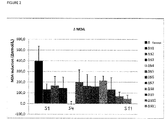
- the anti-pollutant activity was evaluated by:
- samples S1-S3 contained the same test substance, "V”, but at three difference concentrations
- samples S4-S6 all contained the same test substance ("A-1000") but at three concentrations (3%, 1.75% and 0.5% w/v respectively).
- Test substance A-1000 was polyacrylamidopropyltrimonium chloride, with an average molecular weight of about 300 kDa.
- samples S1-S11 were topically applied to the explants, 2 ⁇ l per explant (about 2mg sample per cm 2 of explant), and the samples spread over the explants using a small spatula, 4 explant replicates per sample. Control explants did not receive any treatment. All explants (sample treated and control) underwent replacement of the BEM culture medium (2ml per well) on day 2, following pollutant exposure (described below).
- the pollutant formulation applied to the explants comprised a mixture of heavy metals, hydrocarbons and diesel particulates as follows:
- explants selected for pollutant exposure were placed in the PolluBox® system (BIO-EC, 1 Chemin de Saulxier, Longjumeau, France) with 900 ⁇ l per well of Hanks' Balanced Salt Solution (HBBS), and exposed to 3ml of a vaporized mixture of polycyclic aromatic hydrocarbons, heavy metals and particulate matter supplemented with NaCl 0.9% (150 ⁇ l of NaCl 0.9% per ml of pollutant solution) for 1.5 hours.
- BIO-EC Hanks' Balanced Salt Solution
- control explants were kept in 1 ml of HBSS during this time. On D2, at the end of the pollutant exposure, all the explants were put back in 2ml of fresh BEM medium. In each case, at the end of pollutant exposure, the test and control explants were put back in the BEM medium renewed on D2.
- the BEM culture medium from all explants (2 ml) was harvested on D4 (24 hours after the second pollutant exposure) and frozen at -20°C for subsequent MDA assay.
- the samples were dehydrated and impregnated in paraffin using a Leica PEARL dehydration automat.
- the samples were embedded using a Leica EG 1160 embedding station. 5 ⁇ m-thick sections were made using a Leica RM 2125 Minot-type microtome, and the sections were mounted on Superfrost® histological glass slides.
- microscopical observations were performed using a Leica DMLB or Olympus BX43 microscope. Pictures were digitized with a numeric DP72 Olympus camera with CellD storing software.
- the cell viability of epidermal and dermal structures was observed on paraffinized sections after Masson's trichrome staining, Goldner variant. The cellular viability was assessed by microscopical observation.
- MDA malondialdehyde
- MDA MDA
- T hioBarbituric A cid R eactive substances T hioBarbituric A cid R eactive substances
- the MDA was assayed in HBSS medium by addition of TBARs solution (thiobarbituric acid, hydrochloric acid and tricholoroacetic acid) and placed in a water bath (80°C for 14 minutes). Substances such as glucose which are not related with lipoperoxidation are known to react with thiobarbituric acid. Therefore, to enhance the specificity of the assay, the MDA was first extracted by a liquid/liquid extraction with butanol. The MD in the butanol extraction was measured by spectrofluorimetry (excitation: 515 nm, emission: 550 nm) using a Tecan Infinite® M200 Pro microplate reader.
- samples 1-9 and 11 did not have any significant effect on cell viability, compared to untreated control explants.
- treatment of the explants with sample 10 did induce slight alterations in the explants, with two cell layers of the epidermis presenting some oedema and the presence of a few cells with nuclei in early stages of pyknosis.
- test samples were well-tolerated by human skin and did not cause any detectable alterations to cell viability, with the sole exception of test sample 10, which caused some slight alterations.
- sample S4 gave a highly significant reduction in ⁇ MDA and is thus the best substance, of those tested, in protecting against pollutant exposure-induced lipoperoxidation.
Landscapes
- Health & Medical Sciences (AREA)
- Life Sciences & Earth Sciences (AREA)
- Veterinary Medicine (AREA)
- Public Health (AREA)
- General Health & Medical Sciences (AREA)
- Animal Behavior & Ethology (AREA)
- Chemical & Material Sciences (AREA)
- Pharmacology & Pharmacy (AREA)
- Medicinal Chemistry (AREA)
- Dermatology (AREA)
- Bioinformatics & Cheminformatics (AREA)
- General Chemical & Material Sciences (AREA)
- Chemical Kinetics & Catalysis (AREA)
- Organic Chemistry (AREA)
- Nuclear Medicine, Radiotherapy & Molecular Imaging (AREA)
- Engineering & Computer Science (AREA)
- Epidemiology (AREA)
- Biochemistry (AREA)
- Birds (AREA)
- Acyclic And Carbocyclic Compounds In Medicinal Compositions (AREA)
- Cosmetics (AREA)
Priority Applications (1)
| Application Number | Priority Date | Filing Date | Title |
|---|---|---|---|
| EP19219354.8A EP3842028A1 (fr) | 2019-12-23 | 2019-12-23 | Composition pour réduire les lésions cutanées dues à la pollution |
Applications Claiming Priority (1)
| Application Number | Priority Date | Filing Date | Title |
|---|---|---|---|
| EP19219354.8A EP3842028A1 (fr) | 2019-12-23 | 2019-12-23 | Composition pour réduire les lésions cutanées dues à la pollution |
Publications (1)
| Publication Number | Publication Date |
|---|---|
| EP3842028A1 true EP3842028A1 (fr) | 2021-06-30 |
Family
ID=69005584
Family Applications (1)
| Application Number | Title | Priority Date | Filing Date |
|---|---|---|---|
| EP19219354.8A Withdrawn EP3842028A1 (fr) | 2019-12-23 | 2019-12-23 | Composition pour réduire les lésions cutanées dues à la pollution |
Country Status (1)
| Country | Link |
|---|---|
| EP (1) | EP3842028A1 (fr) |
Citations (6)
| Publication number | Priority date | Publication date | Assignee | Title |
|---|---|---|---|---|
| WO1997026860A1 (fr) * | 1996-01-29 | 1997-07-31 | Johnson & Johnson Consumer Products, Inc. | Compositions detergentes |
| WO2006058755A1 (fr) * | 2004-12-04 | 2006-06-08 | Unilever Plc | Formules de shampoing contenant un mélange de polymère cationique et de tensioactif anionique |
| WO2013174615A2 (fr) * | 2012-05-22 | 2013-11-28 | Unilever N.V. | Composition d'hygiène corporelle |
| EP3097905A1 (fr) * | 2015-05-28 | 2016-11-30 | Symrise AG | Compositions cosmetiques |
| US20170100311A1 (en) | 2014-06-26 | 2017-04-13 | 3M Innovative Properties Company | Skin treatment composition |
| US9693948B1 (en) * | 2015-10-13 | 2017-07-04 | Donna Pohlad | Apple cider vinegar rinse |
-
2019
- 2019-12-23 EP EP19219354.8A patent/EP3842028A1/fr not_active Withdrawn
Patent Citations (6)
| Publication number | Priority date | Publication date | Assignee | Title |
|---|---|---|---|---|
| WO1997026860A1 (fr) * | 1996-01-29 | 1997-07-31 | Johnson & Johnson Consumer Products, Inc. | Compositions detergentes |
| WO2006058755A1 (fr) * | 2004-12-04 | 2006-06-08 | Unilever Plc | Formules de shampoing contenant un mélange de polymère cationique et de tensioactif anionique |
| WO2013174615A2 (fr) * | 2012-05-22 | 2013-11-28 | Unilever N.V. | Composition d'hygiène corporelle |
| US20170100311A1 (en) | 2014-06-26 | 2017-04-13 | 3M Innovative Properties Company | Skin treatment composition |
| EP3097905A1 (fr) * | 2015-05-28 | 2016-11-30 | Symrise AG | Compositions cosmetiques |
| US9693948B1 (en) * | 2015-10-13 | 2017-07-04 | Donna Pohlad | Apple cider vinegar rinse |
Non-Patent Citations (4)
| Title |
|---|
| JANERO, FREE RADIC. BIOL. MED., vol. 9, no. 6, 1990, pages 515 - 540 |
| MISTRY, COSMETICS, vol. 4, 2017, pages 57 |
| PORTUGAL-COHEN ET AL., CLINICAL, COSMETIC AND INVESTIGATIONAL DERMATOLOGY, vol. 10, 2017, pages 185 - 193 |
| XIN QU ET AL: "RINSE-OFF PRODUCTS DEFEND HAIR FROM POLLUTION", vol. 13, no. 4, 1 July 2018 (2018-07-01), pages 32 - 36, XP009515542, ISSN: 2035-4614, Retrieved from the Internet <URL:https://www.teknoscienze.com/wp-content/uploads/2018/09/Foltis_HPC4_2018.pdf> * |
Similar Documents
| Publication | Publication Date | Title |
|---|---|---|
| EP2247949B1 (fr) | Procédé de sélection d'antioxydants pour une utilisation dans des compositions appliquées topiquement | |
| EP2316412B1 (fr) | Concentrés aqueux d'une grande clarté de 4-hexylrésorcinol | |
| EP2316413B1 (fr) | Compositions comprenant un inhibiteur de NFkB et un promoteur du collagène non rétinoïde | |
| KR102233140B1 (ko) | 저분자 히알루론산을 함유하는 피부 개선용 화장료 조성물 | |
| RU2572505C2 (ru) | КОМПОЗИЦИИ, ВКЛЮЧАЮЩИЕ ИНГИБИТОР NFкВ И СТИМУЛЯТОР ОБРАЗОВАНИЯ ТРОПОЭЛАСТИНА | |
| DE69807097T2 (de) | Aktiver synergistischer komplex und kosmetisches und/oder pharmazeutisches produkt das diesen komplex enthält | |
| US20210369583A1 (en) | Compositions for providing skin care benefits and methods of use | |
| JP2003533462A (ja) | エルゴチオネイン及び/又はその誘導体の汚染防止剤としての使用 | |
| JP2003531845A (ja) | No合成酵素阻害剤としてのリポクロマン−6とその使用 | |
| DE69718294T2 (de) | Mittel zur verhinderung der hautalterung | |
| CN101163462B (zh) | 皮肤化妆品及皱纹改善剂 | |
| EP3842028A1 (fr) | Composition pour réduire les lésions cutanées dues à la pollution | |
| CN117164668B (zh) | 多肽化合物、其组合物及其用途 | |
| KR100531503B1 (ko) | 천연원료를 포함하는 화장료 조성물 | |
| JP2003533463A (ja) | チオエーテル、スルホキシド又はスルホン基を含む化合物の、汚染防止化粧剤としての使用 | |
| KR101509241B1 (ko) | 여드름 예방 및 개선용 화장료 조성물 | |
| JP2003533461A (ja) | アントシアンをベースとする汚染防止組成物 | |
| KR102419399B1 (ko) | 시카케어 크림 조성물 및 그 제조방법 | |
| CN119454508A (zh) | 一种包含薁磺酸钠有效成分的抗过敏化妆品组合物 | |
| CN120241563A (zh) | 一种超广谱多效复合防晒组合物及其制备方法和应用 | |
| JP2002255734A (ja) | エラスターゼ活性阻害剤およびこれを含有する抗老化剤 | |
| KR20240057785A (ko) | 편백잎 추출물, 천심련 추출물 및 아스타잔틴을 유효성분으로 포함하는 화장료 조성물 | |
| WO2020178830A1 (fr) | Extraits d'argan pour le traitement d'affections dermatologiques | |
| JP2006225287A (ja) | Sod様活性剤、dpphラジカル補足剤、リノール酸自動酸化抑制剤、血行促進剤 | |
| HK1148070A (en) | Method of selecting antioxidants for use in topically applied compositions |
Legal Events
| Date | Code | Title | Description |
|---|---|---|---|
| PUAI | Public reference made under article 153(3) epc to a published international application that has entered the european phase |
Free format text: ORIGINAL CODE: 0009012 |
|
| STAA | Information on the status of an ep patent application or granted ep patent |
Free format text: STATUS: THE APPLICATION HAS BEEN PUBLISHED |
|
| AK | Designated contracting states |
Kind code of ref document: A1 Designated state(s): AL AT BE BG CH CY CZ DE DK EE ES FI FR GB GR HR HU IE IS IT LI LT LU LV MC MK MT NL NO PL PT RO RS SE SI SK SM TR |
|
| STAA | Information on the status of an ep patent application or granted ep patent |
Free format text: STATUS: THE APPLICATION HAS BEEN WITHDRAWN |
|
| 18W | Application withdrawn |
Effective date: 20210709 |