EP3842052B1 - Agent et procédé de stabilisation de la flore intestinale et d'amélioration de l'hygiène - Google Patents
Agent et procédé de stabilisation de la flore intestinale et d'amélioration de l'hygiène Download PDFInfo
- Publication number
- EP3842052B1 EP3842052B1 EP19219356.3A EP19219356A EP3842052B1 EP 3842052 B1 EP3842052 B1 EP 3842052B1 EP 19219356 A EP19219356 A EP 19219356A EP 3842052 B1 EP3842052 B1 EP 3842052B1
- Authority
- EP
- European Patent Office
- Prior art keywords
- spores
- use according
- agent
- gram
- myceliophthora thermophila
- Prior art date
- Legal status (The legal status is an assumption and is not a legal conclusion. Google has not performed a legal analysis and makes no representation as to the accuracy of the status listed.)
- Active
Links
Images



Classifications
-
- A—HUMAN NECESSITIES
- A61—MEDICAL OR VETERINARY SCIENCE; HYGIENE
- A61P—SPECIFIC THERAPEUTIC ACTIVITY OF CHEMICAL COMPOUNDS OR MEDICINAL PREPARATIONS
- A61P31/00—Antiinfectives, i.e. antibiotics, antiseptics, chemotherapeutics
- A61P31/04—Antibacterial agents
-
- A—HUMAN NECESSITIES
- A61—MEDICAL OR VETERINARY SCIENCE; HYGIENE
- A61K—PREPARATIONS FOR MEDICAL, DENTAL OR TOILETRY PURPOSES
- A61K36/00—Medicinal preparations of undetermined constitution containing material from algae, lichens, fungi or plants, or derivatives thereof, e.g. traditional herbal medicines
- A61K36/06—Fungi, e.g. yeasts
- A61K36/062—Ascomycota
Definitions
- the invention relates to uses of a bactericidal agent for enhancing the performance or promoting the well-being of vertebrates and/or humans, as a disinfectant and/or as a preservative in the environment of vertebrates and/or humans or as a means of personal hygiene in vertebrates and/or humans.
- the digestive tract of vertebrates and humans represents an organ system in which food or feed is not only mechanically broken down, transported, and digested by the body's own enzyme-containing fluids, but also plays a particularly important role in human health. This applies especially to the intestine as part of the digestive tract, where the term "intestine” refers to all intestinal sections such as the duodenum, jejunum, and ileum (these three intestinal sections collectively referred to as the small intestine), the large intestine, and the rectum, along with intestinal appendages such as the ceca.
- the structure of the intestine, the intestinal sections, and the intestinal appendages can vary between the individual classes of vertebrates (mammals and humans, birds, reptiles, amphibians, and fish) as well as within the classes, but this will not be discussed in detail here.
- the importance of the intestine for health arises, among other things, from the multitude of microorganisms that enter the intestine from the outside and colonize it (the intestine can therefore rightly be described as a microbial ecosystem). These microorganisms are not only involved in digestive processes but can also influence the immune system and trigger immune reactions. Collectively, they contribute significantly to the physiological balance of the intestine.
- Disturbances of this balance such as those caused by imbalances within the "intestinal flora" (the totality of all microorganisms present in the intestine) or by microbial intestinal infections and, subsequently, by inflammatory bowel diseases, have significant effects on the overall condition, performance, and well-being of the organism.
- the microorganism groups that make up the intestinal flora are bacteria, archaea, yeasts, fungi, and protozoa, with bacteria constituting the majority of the intestinal flora.
- Bacteria can be divided into two large groups based on the structure of their cell walls: "Gram-positive" bacteria have a lipid bilayer on their cell membrane. A multilayered shell made of peptidoglycan, a macromolecule composed of sugars and amino acids. In Gram-negative bacteria, the peptidoglycan shell is only thin. In Gram-negative bacteria, a second lipid bilayer is deposited on top of this.
- an overabundance of one or another bacterial group compared to the natural state can cause a disruption of intestinal physiology.
- numerous pathogenic, i.e., disease-causing strains are found.
- Known gram-negative pathogenic strains include the genus Salmonella and the species Escherichia coli.
- pathogenic strains are found, for example, in the genera Bacillus, Clostridium, Enterococcus, Staphylococcus , and Streptococcus.
- Bacterial intestinal infections are traditionally treated with antibiotics, which can have bactericidal or bacteriostatic effects against certain bacteria.
- Antibiotics in the conventional sense, therefore, refers to agents that contain representatives of active ingredient groups against bacteria, such as penicillins, cephalosporins, tetracyclines, macrolides, and sulfonamides, and that are administered in the form of pharmaceuticals.
- Bactericidal means that the bacteria are killed by the administered antibiotic
- bacteriostatic means that the growth and reproduction capacity of the bacteria are inhibited. After separation from the bacteriostatic antibiotic, the bacteria can multiply again. Bactericidal and bacteriostatic effects are also summarized below as “antibacterial” effects.
- Antibiotics act specifically and specifically on certain cellular and molecular structures of the bacteria they are directed against. These target structures achieve selective toxicity against the bacteria, thus preventing damage to the host organism's cells. Antibiotics can be used for therapeutic purposes or for disease prevention. In livestock farming, antibiotics have long been used to enhance performance, even without veterinary indication. This practice has been banned in the European Union since 2006.
- Bacteria can possess intrinsic resistance to antibiotics due to the lack of the corresponding target structures. Bacteria can also become resistant to antibiotics (acquired resistance). Acquired resistance is based on a process of mutation and selection under the selective pressure of the presence of one or more antibiotics in the bacteria's habitat. Furthermore, such acquired resistance can be genetically transferred from one bacterial species to another.
- the following groups of alternative agents or active ingredients are typically used to stabilize the intestinal flora: probiotics, prebiotics, phytogens, organic acids and minerals.
- Probiotics are products containing living microorganisms (so-called probiotic bacteria such as lactic acid bacteria or probiotic yeasts) that colonize the intestine and thus positively influence the intestinal flora. This can occur, for example, by displacing pathogenic germs (competitive effect), whereby the underlying principle of action is competition for living space and nutrients.
- Probiotic bacteria can also produce antibacterial peptides and excrete metabolic products, such as short-chain fatty acids, which can have positive effects on the immune system, for example, by stimulating the formation of immunologically modulate active signaling substances such as cytokines, interleukins, and others.
- Probiotic agents also include spores, i.e., persistent stages of bacterial cells that germinate in the intestine after application and become active cells that subsequently multiply.
- Prebiotics are products containing active ingredients that promote the growth of probiotic bacteria in the intestine.
- Prebiotic agents can, for example, be certain sugars or oligosaccharides (molecular chains consisting of a few, typically 2-7, sugar building blocks) that cannot be utilized by the organism to which the prebiotic agents are administered, but which can be metabolized by the bacteria in the intestine, usually in the posterior intestinal sections or in the intestinal appendages of higher animals and humans.
- “Phytogenics” are products containing active ingredients derived from plants or plant parts that can exert an antibacterial effect in the intestines.
- Phytogenic active ingredients include certain plant oils (such as thymol, carvacrol, clove oil, and cinnamon oil) or saturated, medium-chain fatty acids with 6-12 carbon atoms. The latter are found, for example, in coconut oil.
- Organic acids include short-chain, saturated fatty acids such as propionic acid and butyric acid, or other low-molecular-weight acids such as benzoic acid and citric acid. They are primarily known as preservatives, for example, for feed and food, and consequently as agents for ensuring the hygienic status of materials. Organic acids have various antibacterial effects. Propionic acid, for example, disrupts intracellular carbohydrate metabolism and DNA synthesis. Benzoic acid inhibits intracellular enzymes that degrade reactive oxygen species (e.g., certain radicals) and are thus involved in the cell's own detoxification process.
- reactive oxygen species e.g., certain radicals
- Minerals that serve as nutrients (macroelements and trace elements) can also directly affect the intestinal flora.
- One example is zinc, which, in the form of zinc oxide, in suitable formulations and even at subpharmacological doses, has a bactericidal effect on risk germs such as Escherichia coli .
- Probiotics and prebiotics generally only have an indirect effect on the intestinal flora. Furthermore, it is not possible to differentiate between the effect on gram-positive and gram-negative bacteria, especially since typical probiotic bacteria (such as species of the genera Bacillus, Lactobacillus, Enterococcus and Bifidobacterium ) are themselves gram-positive. Prebiotics also only have an indirect effect by promoting the growth of probiotic bacteria.
- the lactic acid produced by the lactic acid bacteria typically used as probiotics can be absorbed in the small intestine in large quantities, i.e. if the probiotic bacteria multiply excessively, and cause health problems. The multiplication of probiotic bacteria in the intestine is generally uncontrollable. In the case of overproliferation, antibiotics must even be administered, which is then particularly contraindicated. It is now also known that excessive colonization of the intestine, particularly the small intestine, with bacteria can have negative health effects.
- Phytogens often act against Gram-negative bacteria, such as species of the genus Salmonella or Escherichia coli. In higher concentrations, phytogens added to feed or food can cause changes in taste or odor, thus impairing feed or food intake. Many phytogens are dedicated flavoring agents. Medium-chain fatty acids are effective against gram-positive bacteria, but their effectiveness depends strongly on the composition of the acid mixture.
- Organic acids can also negatively affect the taste and odor of feed and food. They can also have toxic effects, which makes handling these substances very difficult and necessitates special safety precautions during technical processing and application.
- Zinc is a heavy metal. It is harmful to the environment if it enters the environment, for example, due to inadequate absorption via feces. Therefore, current efforts are aimed at limiting the use of zinc in livestock farming.
- Hygiene is generally understood here to mean measures that reduce the contamination of materials (solids and their surfaces, as well as liquids) in the environment of animals and humans, as well as on the external and internal surfaces of the body, with risky or disease-causing microorganisms by exerting an "antimicrobial” effect, i.e., killing the microorganisms ("biocidal” effect) or inhibiting their growth and reproduction (“biostatic” effect).
- biocidal killing the microorganisms
- biostatic growth and reproduction
- Disinfectants have a biocidal effect against various types of microorganisms and, for practical reasons, are usually available in liquid or gaseous form. They are often a component of "cleaning agents" and usually contain inorganic or organic substances, less frequently biochemical substances, as active ingredients.
- inorganic and organic active ingredients include alcohols (such as ethanol and 1-propanol), aldehydes (such as formaldehyde), oxidizing agents (such as peracetic acid, chlorine, chlorine dioxide, hydrogen peroxide, sodium hypochlorite, ozone, or iodine), phenols (such as chloroxylenol), and surfactants (such as cetyltrimethylammonium bromide).
- An example of an inorganic substance used for disinfection is silver.
- Silver can also be used to disinfect the surfaces of materials. Surfaces that have a biocidal effect thanks to a suitable coating are used, among other things, for surgical instruments. Upon contact with the surface, the microorganisms are killed.
- copper, quaternary ammonium compounds, and organosilanes are also suitable for biocidal surface coating. Organosilanes have a bactericidal effect by mechanically damaging the outer membrane of Gram-negative bacteria. In this way, they prevent the bacteria from adhering to the surface and simultaneously kill them. Other special types of nanostructuring of surfaces can also impart a biocidal effect to surfaces.
- Preservatives increase the shelf life of feed, food, cosmetics, pharmaceuticals, wood, paints, and coatings by suppressing the growth of microorganisms.
- Organic acids such as benzoic acid and citric acid and their salts, sulfur compounds such as sulfur dioxide and sulfites, nitrogen compounds such as nitrates and nitrites, parabens, etc. are commonly used as preservatives with biocidal or biostatic effects.
- Antimicrobial agents are also components of personal hygiene products for humans and animals. This applies to external body surfaces and structures such as the skin and skin processes. (e.g. hair, bristles, feathers, nails, claws or beaks) as well as internal surfaces and structures such as the oral cavity (the mouth) with the teeth and throat.
- Antimicrobial active ingredients contained in hygiene products include sulfur compounds (e.g. methyl(chloro)isothiazolinone), acids (e.g. benzoic acid, sorbic acid, formic acid and salicylic acid), organic alcohols (e.g. farnesol), phenols (e.g. triclosan), chlorine compounds (e.g. chlorhexidine), metal compounds (e.g. copper sulfate) and aldehydes (e.g. formaldehyde).
- sulfur compounds e.g. methyl(chloro)isothiazolinone
- acids e.g. benzoic acid, sorbic acid, formic acid and salicylic acid
- Antimicrobial substances such as those used in hygiene measures or health applications, can also be formulated in the form of nanoparticles or immobilized on the surface of suitable carrier materials as so-called microparticles (microbeads, microspheres).
- Nanoparticles typically have diameters of up to 100 nm.
- Microparticles can have diameters of up to several micrometers. Both nanoparticles and microparticles are produced using special, sometimes complex chemical-biochemical-physical processes.
- the object of the present invention is to provide a novel use of an agent which 1) as a feed additive or food additive stabilizes the intestinal flora in vertebrates and humans by having a bactericidal effect on gram-positive bacteria.
- This makes it possible to modulate the balance between gram-positive and gram-negative bacteria within the bacterial intestinal flora and in particular also the number of risky or pathogenic gram-positive bacteria in the intestine, whereby the disadvantages of the above-mentioned alternative means for stabilising the intestinal flora according to the state of the art are avoided and 2) can be used as a disinfectant to improve the hygienic condition of solid materials or liquids and as a preservative to preserve solid and liquid feed and foodstuffs as well as other products such as cosmetics, and furthermore for personal hygiene, i.e. overall as part of measures to improve hygiene, whereby the disadvantages of the above-mentioned means for disinfection, preservation and personal hygiene according to the state of the art are also avoided here
- the agent according to the invention contains spores of the fungus Myceliophthora thermophila.
- the agent is a bactericidal substance and is also referred to in this application as a "bactericidal agent” or "bactericide.”
- Myceliophthora thermophila is a thermophilic, filamentous fungus belonging to the division Ascomycetes, the class Sordariomycetes, the order Sordariales , and the family Chaetomiaceae.
- Myceliophthora thermophila has been particularly by Apinis (Nova Hedwigia 5:57-78, 1963 ) and by van Oortschot (Persoonia 9:401-408, 1977 ) has been described.
- Myceliophthora thermophila is found in compost, hay and warm soils, from where it can be isolated. The vegetative spores develop singly or in short rows from ampulla-shaped thickenings of conidial hyphae and have a diameter of 3-5 ⁇ m.
- Myceliophthora thermophila is used primarily for the production of technical enzymes for the degradation of plant biomass.
- the fungus is accessible to the public, in particular through deposits of strains at recognized depositories, e.g.
- the strain of the fungus Myceliophtora thermophila used for the investigations detailed in the working examples has been deposited with the Westerdijk Fungal Biodiversity Institute, CBS Collection, Uppsalaan 8, 3508 AD Utrecht, under the identification number Myceliophtora thermophila #154.
- the depositary has assigned the accession number CBS 146310 to the deposit.
- the antibacterial effect was demonstrated independently in three different test procedures: 1) In the "PREMI test,” the potential antibacterial effect within a nutrient agar is tested by measuring the germination of spores and the growth into vegetative cells of the test bacterium Bacillus stearothermophilus after the addition of a liquid and the test substance by measuring the color change of an acid formed during these processes. 2) In the “4-plate test,” the antibacterial effect is measured by the removal of the turbidity of a nutrient agar into which the respective test bacteria were poured, whereby the test substance was added to a punched hole in the agar.
- the spores of Myceliophthora thermophila are the active principle underlying the bactericidal effect against Gram-positive bacteria.
- the underlying active principle is not a water-soluble substance that is either constitutively formed in the cytoplasm of the living spores and released through the spore wall into the surrounding solution, or that is present on the surface of the spores as their constitutive component and from there readily enters the solution.
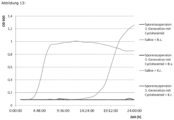
- the bactericidal effect was also maintained when the spores were germinated and spores subsequently formed by the developing fungal mycelium were harvested and tested for their antibacterial effect.
- the bactericidal effect of the spores is therefore stable across generations.
- Heat-treated spores (by autoclaving) of Myceliophthora thermophila showed a greatly reduced bactericidal effect compared to non-heat-treated spores.
- the bactericidal effect of Myceliophthora thermophila spores against Gram-positive bacteria was particularly evident when the spores were produced by culturing the fungus on potato dextrose agar or on vermiculite together with potato infusion and glucose.
- the mechanism underlying the bactericidal effect of Myceliophthora thermophila spores has not yet been fully elucidated.
- the results of previous investigations suggest the following characteristic properties of the active principle, which can be considered features of the invention: 1)
- the active principle underlying the observed bactericidal effect is a property of the spore surface, meaning that the spore surface is "bioactive" in this sense.
- the development of the bactericidal effect requires either direct contact between the bacterial cells and the spore surface or a substance mediating the effect, which is either a signaling substance that comes into contact with the spore surface.
- the bactericidal effect is clearly not limited to the immediate environment of the spores, i.e., once initiated, it spreads spatially and the bactericidal effect also develops at a certain distance from the location of the spores.
- the agent according to the invention has the advantages that accrue to active ingredients immobilized on microparticles through this special type of formulation. These generally include improved stability. Compared to nanoparticles, the fungal spores have the advantage of not being able to penetrate cells of the intestinal epithelium due to their size.
- One advantage over microparticles coated with antimicrobial active ingredients, as available according to the state of the art and for which the bactericidal effect requires direct contact of the bacterial cells with the surface of the particles, is the range of the bactericidal effect of the agent according to the invention beyond the immediate region on the spore surface, so that not every bacterial cell needs to have come into contact with the surface of at least one microparticle at least once in order to be killed.
- the agent according to the invention described here has the particular advantage that it only exerts its bactericidal effect when the fungal spores are within range of Gram-positive bacteria. This means that the bactericidal effect does not develop automatically, but rather when needed.
- a further practical advantage of the agent according to the invention compared to the use of antimicrobial microparticles according to the state of the art is that the spores of Myceliophthora thermophila exhibit their bactericidal effect after cultivation of the fungus. Furthermore, no further necessary and costly coating of the spores or other complex chemical-biochemical-physical treatments is required. Furthermore, the spores do not harm the environment, since Myceliophthora thermophila spores occur ubiquitously under natural conditions.
- US 2002/0102246 A1 describes an enzymatic composition that can be used for disinfection in laundries, on solid surfaces, in water systems, on the skin, on teeth, or on mucous membranes, as well as for the preservation of food products, cosmetics, paints, and coatings.
- This comprises a phenol-oxidizing enzyme system and an enhancer.
- the phenol-oxidizing enzyme system can, for example, be a laccase or a laccase-related enzyme together with oxygen or another oxidizing agent.
- the patent focuses particularly on laccases produced by fungi. Laccase-producing fungi include Myceliophthora thermophila.
- US 7,288,264 B1 describes various antimicrobial articles or agents that kill microorganisms on contact, including microparticles. However, the invention does not describe articles or agents in which the antimicrobial effect is not limited to the immediate surface of the articles.
- WO 2011/033275 Al describes bacterial spores that have a therapeutically active agent on their surface. This invention also does not describe microbial systems in which the antimicrobial effect is not limited to the immediate surface of the spores.
- US 2006/0247 150 A1 describes compositions for disinfecting and cleaning processes containing fungal spores. However, according to this invention, the spores do not have any bactericidal activity.
- the agent according to the invention can be used to stabilize the intestinal flora or the bacterial flora of skin surfaces, body orifices, the mouth (or snout), throat, or other external or internal body surfaces in vertebrates and humans, provided it contains inactivated spores of Myceliophthora thermophila .
- the agent is expected to positively influence the composition of the intestinal flora or other bacterial flora by modulating the number of gram-positive bacteria and increasing resistance to gram-positive, disease-causing bacteria. The latter is particularly important in the case of the intestinal flora during sensitive stages of rearing or growth and reduces the risk of diarrhea and other bacterial diseases. Overall, the well-being of animals and humans is expected to improve significantly through the use of the agent.
- the agent can be used in therapeutic doses for the prevention and treatment of diseases in humans and vertebrates.
- the agent can be used to improve hygiene, i.e. as a disinfectant and as a preservative for the treatment of solid and liquid materials as well as for the personal hygiene of humans and animals with the aim of killing gram-positive bacteria or preventing the growth of gram-positive bacteria.
- the agent according to the invention contains spores of the fungus Myceliophthora thermophila originating from a culture of the fungus.
- the agent contains spores of the fungus Myceliphthora thermophila isolated from a culture of the fungus.
- the spores are isolated from the culture of the fungus by harvesting them from the culture.
- the spores are repeatedly harvested from the culture.
- spores together with the culture or parts of the culture are used as a bactericidal agent.
- the agent according to the invention contains inactivated, i.e., killed spores of the fungus Myceliophthora thermophila.
- the agent according to the invention is a solid containing spores of Myceliophthora thermophila .
- Formulation as a solid is particularly advantageous when the agent is to be mixed into other solids without introducing additional moisture into the preparation.
- the spores are harvested dry from the fungal culture, for example, by suctioning them off the fungal culture and then collecting them, or by adsorbing them from the fungal culture with the aid of adhesive substances, such as sucrose or lactose, and separating the adhesive substance, together with the adhered spores, from the residual fungal culture material by sieving. This creates a solid spore formulation on a carrier material.
- the spores are taken up from the fungal culture using a saline solution (a saline-containing aqueous solution, where the salt is, for example, table salt), and the spore suspension is then dried.
- a saline solution a saline-containing aqueous solution, where the salt is, for example, table salt
- the saline solution may contain additional substances that promote the suspension of the spores in the saline solution, for example, surface-active substances such as Tween 20 or Tween 80 or other surfactants.
- the spore suspension is dried by freeze-drying, vacuum drying, or spray drying. Freeze-drying, vacuum drying, or spray drying are particularly gentle drying methods and suitable for increasing the shelf life of the spores.
- additional substances are added to the solid spore formulation to improve the physical properties and further processing, for example, mixing into solid or liquid preparations, or to increase the shelf life.
- These can be carriers or binders, such as salts of acetic acid or bentonite, flow agents such as diatomaceous earth, preservatives such as organic acids, and surfactants such as Tween 20 or Tween 80, as well as other substances.
- the agent according to the invention is provided in the form of a paste or a cream containing the spores of Myceliophthora thermophila .
- Formulations of the agent in the form of a paste or cream are particularly suitable for disinfecting the surfaces of solid materials or for personal hygiene.
- the agent according to the invention is provided in the form of a liquid preparation containing the spores of Myceliophthora thermophila .
- Liquid formulations of the agent are also very suitable, among other things, for the disinfecting treatment of surfaces of solid materials or external and internal body surfaces.
- the liquid formulation is based on water or alcohol.
- the water- or alcohol-based liquid formulation contains, in addition to the spores of Myceliophthora thermophila , other substances or materials that improve the physical properties and further processing or that increase the shelf life of the liquid formulation. These may be substances that maintain the suspension of the spores in the liquid.
- the agent according to the invention is used as a feed additive or food additive to stabilize the intestinal flora of vertebrates, in particular mammals and birds, in particular farm animals (such as cattle, horses, sheep, goats, pigs, and poultry) and domestic animals (such as dogs and cats), and humans by modulating the number of gram-positive bacteria.
- farm animals such as cattle, horses, sheep, goats, pigs, and poultry
- domestic animals such as dogs and cats
- humans by modulating the number of gram-positive bacteria.
- an increase in performance parameters during animal growth such as mean daily liveweight gain and feed efficiency (the amount of feed consumed per unit of liveweight gain) is to be expected.
- increased resistance to the negative effects of gram-positive bacteria is to be expected across all life stages. This is particularly important during critical stages of rearing, for example, in piglets during the weaning phase.
- the use of the agent according to the invention contributes to improved animal welfare.
- a study demonstrated that the bactericidal effect of Myceliophthora thermophila spores is stable when treated with a protease, suggesting that the bactericidal effect of the spores against Gram-positive bacteria is retained after passage through the stomach and intestines.
- the fungal spores did not cause clinical signs of disease or mortality.
- the LD50 is above 5000 mg/kg body weight when ingested by rats.
- the fungal spores are excreted in the feces. Studies have shown that the fungal spores do not inhibit methane-producing bacteria, meaning that the feces can be used for biogas production.
- the agent according to the invention is mixed in solid form into feed or food.
- the agent according to the invention is added in solid or liquid form to drinking water and drinking water or, in the case of humans, to other drinks (such as fruit or vegetable juices).
- the dosage recommendation is made on the basis of the results of a microbiome analysis, i.e. an analysis of the composition of the intestinal flora, in particular on the basis of a determination of the ratio of the numbers of gram-positive to gram-negative bacteria, in particular by determining the numbers of risky gram-positive bacteria.
- a microbiome analysis i.e. an analysis of the composition of the intestinal flora
- the spores of Myceliophthora thermophila are used in therapeutic doses for the treatment and prevention of bacterial diseases, in particular intestinal diseases, as well as other diseases such as inflammation of the mucous membranes in humans and vertebrates.
- the spores of Myceliophthora thermophila are used in solid or liquid formulation for disinfecting solid materials or surfaces of solid materials or liquids in the contact area of animals and humans with the aim of killing gram-positive bacteria there.
- the spores of Myceliophthora thermophila are used as a component of the bedding in stables in the context of keeping farm animals or domestic animals.
- an aqueous formulation of the spores or a formulation in alcohol is used as a disinfectant.
- the aqueous formulation or the formulation in alcohol contains further disinfectant substances, for example organic acids or surfactants.
- a pasty or gel-like formulation of the spores is used, which is spread onto the surfaces of solid materials and can be washed off after a suitable exposure time.
- the agent according to the invention is used for the preservation of solid and liquid materials. This is intended to suppress the growth of Gram-positive bacteria in these materials.
- the agent according to the invention is used together with other preservatives, for example organic acids.
- the agent according to the invention is used for body hygiene in humans and animals.
- the agent according to the invention is used, for example, in solid soaps, washing lotions, shampoos, toothpastes, or deodorants for the care of external and internal body surfaces in humans and vertebrates.
- the abrasive properties which are determined by the size and surface texture of the spores, can also be utilized for cleaning purposes in hygiene products.
- the agent according to the invention is used in claw cleaning or as a component of udder dips in farm animals.
- the agent according to the invention is used to kill the following gram-positive bacteria: Bacillus subtilis, Bacillus stearothermophilus, Bacillus cereus, Staphylococcus aureus, Enterococcus faecalis, Clostridium perfringens and Clostridium tyrobutyricum.
- the PREMI test is a simple, broad-spectrum microbial screening test for the detection of antimicrobial substances, such as antibiotics.
- the test principle is based on the growth inhibition of Bacillus stearothermophilus.
- a standardized number of Bacillus stearothermophilus spores are embedded in nutrient agar. Upon addition of a liquid, the spores germinate and produce an acid, which causes the nutrient agar to change color from violet to yellow. If growth is inhibited by an antibacterial agent, no color change occurs.
- Ampicillin is an effective antibiotic against Bacillus stearothermophilus and serves as a positive control in the test. Water serves as a negative control, as this should not inhibit growth.
- a preculture of the respective target bacterium is first established.
- a spore suspension containing a defined number of fungal spores is inoculated with the bacterial suspension and incubated.
- the growth rate of the target bacterium can be measured based on the turbidity (measured as OD 600 ).
- the concentration of spores in the spore suspension at which no bacterial growth occurs is the minimum inhibitory concentration (MIC).
- the minimum inhibitory concentration (MIC) of the spore suspension of Myceliophthora thermophila on the growth of Bacillus subtilis was approximately determined.
- CFU colony forming units.
- a spore concentration in the spore suspension of 1 10 6 CFU/mL clearly led to complete inhibition of the growth of Bacillus subtilis.
- This spore concentration corresponds to a ratio of 100 fungal spores per bacterial cell.
- Results from a further study show that the MIC can be limited to the range between 1 10 4 CFU/mL and 5 10 5 CFU/mL. In the study, 5 10 5 CFU/mL corresponds to a ratio of 50 fungal spores per bacterial cell.
- the 4-plate test is another microbiological detection method that enables the detection of antibacterial agents.
- This method is an agar diffusion test.
- the test substances to be examined are placed into punched holes in various culture media inoculated with the test bacteria (target bacteria) Kocuria rhizophila, Micrococcus luteus, Bacillus megaterium , and Bacillus subtilis subsp. spizizenii . These bacteria are Gram-positive.
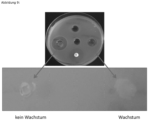
- the presence of antibacterial substances is indicated after appropriate incubation by the formation of zones of inhibition. These are spatial areas within the nutrient agar in which the target bacteria cannot grow and thus cause the agar to become turbid.
- the diameter of the zone of inhibition correlates with the strength of the antibacterial effect.
- Figure 4 shows the results of the 4-plate test.
- Spore extract refers to the solution from which the spores of Myceliophthora thermophila were removed by filtration with a 0.2 ⁇ m syringe filter.
- the antibiotic plates placed on top served as a positive control.
- the spore suspension containing Myceliophthora thermophila spores showed a growth-inhibiting effect on all four test bacteria.
- After autoclaving, the Myceliophthora thermophila spore suspension showed an inhibitory effect only on Bacillus subtilis .
- the solution without fungal spores showed no effect.
- the presence of Myceliophthora thermophila spores is therefore a prerequisite for the antibacterial effect.
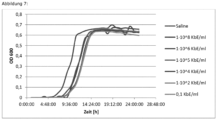
- Figure 7 shows the result of the MIC determination of the spore suspension of Myceliophthora thermophila against Escherichia coli, measured using the liquid culture medium bacterial growth test. Even a spore suspension concentration of 1 10 8 CFU/mL, applied to a bacterial concentration of 1 10 4 CFU/mL, did not inhibit the growth of Escherichia coli.
- the bacterial growth test with liquid nutrient medium was used.
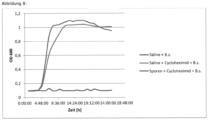
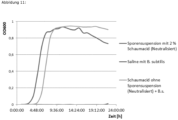
- the spores of Myceliophthora thermophila were inactivated using various methods.
- the UV-treated spore suspension was irradiated with UV light for 2 hours.
- the acid-treated spore suspension was mixed with 2% Schaumacid (H. Wilhelm Schaumann GmbH, An der Mühlenau 4, 25421 Pinneberg), incubated for 48 hours at 4°C, and then neutralized.
- the frozen spore suspension was kept frozen at -20°C for 5 days. All samples were plated on potato dextrose agar to check whether the spores were actually killed and thus no longer germinate.
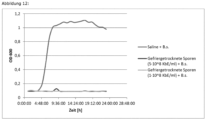
- Freeze-drying proved to be suitable for preserving Myceliophthora thermophila spores.
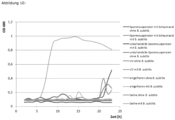
- a study of freeze-dried spores using the bacterial growth test with liquid nutrient medium showed that – even after prior treatment with 2% foam acid – the antibacterial effect of the spores against Bacillus subtilis was maintained (see Figure 12 ). The MIC is not changed by freeze-drying.
- the Figure 14 The results of a further study using the bacterial growth test with liquid nutrient medium show that the antibacterial effect of freeze-dried spores of Myceliophthora thermophila against Bacillus subtilis and Kocuria rhizophila remained stable over a period of 12 weeks when stored at room temperature. At 40°C PDA flasks covered with spores can be stored stably for 20 weeks. Storage of the spore suspension at 4°C for 20 weeks also did not result in any decrease in the antibacterial effect.
Landscapes
- Health & Medical Sciences (AREA)
- Life Sciences & Earth Sciences (AREA)
- Pharmacology & Pharmacy (AREA)
- Mycology (AREA)
- Natural Medicines & Medicinal Plants (AREA)
- Chemical & Material Sciences (AREA)
- Veterinary Medicine (AREA)
- Public Health (AREA)
- General Health & Medical Sciences (AREA)
- Animal Behavior & Ethology (AREA)
- Medicinal Chemistry (AREA)
- Alternative & Traditional Medicine (AREA)
- Communicable Diseases (AREA)
- Epidemiology (AREA)
- Medical Informatics (AREA)
- Botany (AREA)
- Biotechnology (AREA)
- Engineering & Computer Science (AREA)
- Microbiology (AREA)
- Oncology (AREA)
- Chemical Kinetics & Catalysis (AREA)
- General Chemical & Material Sciences (AREA)
- Nuclear Medicine, Radiotherapy & Molecular Imaging (AREA)
- Organic Chemistry (AREA)
- Agricultural Chemicals And Associated Chemicals (AREA)
- Fodder In General (AREA)
- Medicines Containing Material From Animals Or Micro-Organisms (AREA)
Claims (22)
- Utilisation d'un agent bactéricide pour des bactéries à Gram positif contenant des spores du champignon Myceliophthora thermophila pour l'augmentation non thérapeutique des performances de vertébrés et/ou d'humains par stabilisation de la flore intestinale.
- Utilisation d'un agent bactéricide pour des bactéries à Gram positif contenant des spores du champignon Myceliophthora thermophila pour l'amélioration non thérapeutique du bien-être de vertébrés et/ou d'humains par stabilisation de la flore bactérienne de surfaces cutanées, de cavités corporelles, de la bouche (ou de la gueule), de la gorge ou d'autres surfaces corporelles extérieures ou intérieures.
- Utilisation d'un agent bactéricide pour des bactéries à Gram positif contenant des spores du champignon Myceliophthora thermophila comme agent désinfectant et/ou comme agent conservateur pour le traitement de matières solides ou liquides pour l'amélioration de l'hygiène dans l'environnement de vertébrés et/ou d'humains.
- Utilisation d'un agent bactéricide pour des bactéries à Gram positif contenant des spores du champignon Myceliophthora thermophila comme agent pour l'hygiène corporelle non thérapeutique pendant le soin de surfaces corporelles extérieures ou intérieures chez des vertébrés et/ou des humains.
- Utilisation selon l'une des revendications 1 à 4, dans laquelle l'agent bactéricide contient des spores inactivées du champignon M. thermophila.
- Utilisation selon la revendication 5, dans laquelle l'agent bactéricide contient un acide et/ou des spores inactivées par lumière ultraviolette du champignon M. thermophila.
- Utilisation selon l'une des revendications 1 à 6, dans laquelle l'agent bactéricide contient des spores lyophilisées, séchées sous vide ou séchées par pulvérisation du champignon M. thermophila.
- Utilisation selon l'une des revendications 1 à 7, dans laquelle l'agent bactéricide contient un support et des spores du champignon M. thermophila.
- Utilisation selon l'une des revendications 1 à 8, avec l'agent bactéricide sous la forme d'une matière solide.
- Utilisation selon l'une des revendications 1 à 8, avec l'agent bactéricide dans une formulation en pâte ou crème.
- Utilisation selon l'une des revendications 1 à 8, avec l'agent bactéricide dans une formulation liquide.
- Utilisation selon la revendication 11, avec l'agent bactéricide dans une formulation liquide à base d'eau ou d'alcool.
- Utilisation selon l'une des revendications 1 à 12, avec l'agent bactéricide en tant qu'additif d'aliments pour animaux ou en tant qu'additif de denrée alimentaire
- Utilisation selon la revendication 13, avec l'agent bactéricide en tant qu'additif d'aliment pour animaux contenu dans un aliment pour animaux ou en tant qu'additif de denrée alimentaire contenu dans une denrée alimentaire.
- Utilisation selon l'une des revendications 1 à 14, dans laquelle l'agent est ajouté à l'eau potable et l'eau potable est donnée à des vertébrés et/ou à des humains.
- Utilisation selon l'une des revendications 1 à 15, dans laquelle l'agent est ajouté à un aliment pour animaux ou à une denrée alimentaire et l'aliment pour animaux est donné à des vertébrés ou la denrée alimentaire est donnée à des humains.
- Utilisation selon la revendication 3, dans laquelle l'agent est ajouté à l'eau potable et des surfaces dans une étable, une cage, un enclos ou d'autres zones servant à l'élevage de bétail ou d'animaux domestiques sont traitées avec l'eau potable.
- Utilisation selon la revendication 17, dans laquelle les surfaces d'abreuvoirs et/ou de mangeoires et/ou la litière de stabulations sont traitées avec l'agent.
- Utilisation selon la revendication 3, dans laquelle l'agent est ajouté à un aliment pour animaux ou à une denrée alimentaire pour la conservation.
- Utilisation selon l'une des revendications 1 à 19, dans laquelle l'agent est utilisé pour tuer ou inhiber l'une au moins des bactéries à Gram positif suivantes : Bacillus subtilis, Bacillus stearothermophilus, Bacillus cereus, Staphylococcus aureus, Enterococcus faecalis, Clostridium perfringens, Clostridium tyrobutyricum.
- Agent bactéricide pour des bactéries à Gram positif contenant des spores du champignon Myceliophthora thermophila, destiné à être utilisé dans un procédé de traitement ou de prévention de maladies bactériennes dues à des bactéries à Gram positif, en particulier de maladies intestinales et/ou d'inflammations des muqueuses chez l'humain et/ou chez des animaux.
- Agent selon la revendication 21, lequel est un agent bactéricide selon l'une des revendications 5 à 13.
Priority Applications (4)
| Application Number | Priority Date | Filing Date | Title |
|---|---|---|---|
| ES19219356T ES3052532T3 (en) | 2019-12-23 | 2019-12-23 | Composition and methods for stabilising intestinal flora and improving hygiene |
| DK19219356.3T DK3842052T3 (da) | 2019-12-23 | 2019-12-23 | Sammensætning og fremgangsmåder til stabilisering af tarmfloraen og forbedring af hygiejnen |
| EP19219356.3A EP3842052B1 (fr) | 2019-12-23 | 2019-12-23 | Agent et procédé de stabilisation de la flore intestinale et d'amélioration de l'hygiène |
| PL19219356.3T PL3842052T3 (pl) | 2019-12-23 | 2019-12-23 | Środek i sposób stabilizacji flory jelitowej i poprawy higieny |
Applications Claiming Priority (1)
| Application Number | Priority Date | Filing Date | Title |
|---|---|---|---|
| EP19219356.3A EP3842052B1 (fr) | 2019-12-23 | 2019-12-23 | Agent et procédé de stabilisation de la flore intestinale et d'amélioration de l'hygiène |
Publications (2)
| Publication Number | Publication Date |
|---|---|
| EP3842052A1 EP3842052A1 (fr) | 2021-06-30 |
| EP3842052B1 true EP3842052B1 (fr) | 2025-05-28 |
Family
ID=69005586
Family Applications (1)
| Application Number | Title | Priority Date | Filing Date |
|---|---|---|---|
| EP19219356.3A Active EP3842052B1 (fr) | 2019-12-23 | 2019-12-23 | Agent et procédé de stabilisation de la flore intestinale et d'amélioration de l'hygiène |
Country Status (4)
| Country | Link |
|---|---|
| EP (1) | EP3842052B1 (fr) |
| DK (1) | DK3842052T3 (fr) |
| ES (1) | ES3052532T3 (fr) |
| PL (1) | PL3842052T3 (fr) |
Families Citing this family (1)
| Publication number | Priority date | Publication date | Assignee | Title |
|---|---|---|---|---|
| CN114456952B (zh) * | 2022-02-22 | 2023-04-14 | 昆明理工大学 | 一种金孢菌及其应用 |
Citations (1)
| Publication number | Priority date | Publication date | Assignee | Title |
|---|---|---|---|---|
| CN109679856A (zh) * | 2018-12-03 | 2019-04-26 | 湖北新保得生物科技有限公司 | 一种嗜热毁丝霉及其固态发酵方法及应用 |
Family Cites Families (7)
| Publication number | Priority date | Publication date | Assignee | Title |
|---|---|---|---|---|
| US7288264B1 (en) | 1993-12-20 | 2007-10-30 | Surfacine Development Company, L.L.C. | Contact-killing antimicrobial devices |
| JP3649338B2 (ja) * | 1994-06-03 | 2005-05-18 | ノボザイムス バイオテック,インコーポレイティド | 精製されたマイセリオフトラ・ラッカーゼ及びそれをコードする核酸 |
| JP2000506490A (ja) * | 1995-08-18 | 2000-05-30 | ノボ ノルディスク アクティーゼルスカブ | 歯の漂白 |
| US6080391A (en) * | 1997-08-14 | 2000-06-27 | Novo Nordisk A/S | Reduction of malodour |
| US20020102246A1 (en) | 2000-05-08 | 2002-08-01 | Novozymes A/S | Antimicrobial compositions |
| US7795199B2 (en) | 2000-06-29 | 2010-09-14 | Ecolab Inc. | Stable antimicrobial compositions including spore, bacteria, fungi, and/or enzyme |
| GB0916570D0 (en) | 2009-09-21 | 2009-10-28 | Royal Holloway & Bedford New C | Method |
-
2019
- 2019-12-23 ES ES19219356T patent/ES3052532T3/es active Active
- 2019-12-23 EP EP19219356.3A patent/EP3842052B1/fr active Active
- 2019-12-23 DK DK19219356.3T patent/DK3842052T3/da active
- 2019-12-23 PL PL19219356.3T patent/PL3842052T3/pl unknown
Patent Citations (1)
| Publication number | Priority date | Publication date | Assignee | Title |
|---|---|---|---|---|
| CN109679856A (zh) * | 2018-12-03 | 2019-04-26 | 湖北新保得生物科技有限公司 | 一种嗜热毁丝霉及其固态发酵方法及应用 |
Also Published As
| Publication number | Publication date |
|---|---|
| EP3842052A1 (fr) | 2021-06-30 |
| DK3842052T3 (da) | 2025-08-18 |
| ES3052532T3 (en) | 2026-01-08 |
| PL3842052T3 (pl) | 2025-10-06 |
Similar Documents
| Publication | Publication Date | Title |
|---|---|---|
| DE60107846T3 (de) | Mittelkettige fettsäuren und deren verwendung als antimikrobielles mittel | |
| DE69712841T2 (de) | Orale zusammensetzung für tiere | |
| DE69821995T2 (de) | Antimikrobielle zusammensetzung | |
| AU2010246378A1 (en) | Use of allicin as preservative, as disinfectant, as antimicrobial or as biocidal agent | |
| DE3873402T2 (de) | Antimikrobische zubereitungen. | |
| DE60100709T2 (de) | Eine konzentrierte lösung von quarternären ammoniumverbindungen und verfahren zu ihrer anwendung | |
| DE102014104335A1 (de) | Aquaorganismus-Futtermittel und Verwendung desselben | |
| EP2895177B1 (fr) | Utilisation d'une préparation d'acide humique pour le traitement d'homéothermes | |
| US20020114730A1 (en) | Lemon extract and treatment methods | |
| EP3842052A1 (fr) | Agent et procédé de stabilisation de la flore intestinale et d'amélioration de l'hygiène | |
| EP2854553B1 (fr) | Emploi de la delphinidine contre le staphyloccous aureus | |
| KR20050029649A (ko) | 천연 항균 조성물 | |
| KR102430080B1 (ko) | 메틸 갈레이트 및 틸로신을 포함하는 항균용 조성물 | |
| Dimitrova et al. | Pharmacokinetics of pefloxacin and its metabolite norfloxacin in male and female ducks | |
| KR20090018793A (ko) | 파충류 및/또는 이들의 알에서 살모넬라균을 감소 또는 제거하는 방법 | |
| DE10237740A1 (de) | Verwendung natürlicher und synthetischer Huminstoffe in Fischzucht und -haltung | |
| KR100544607B1 (ko) | 양어장용 천연 소독제 | |
| DE69800575T2 (de) | Verwendung eines desinfektionsmittels für lebende fische | |
| EP4011385B1 (fr) | Substance active poue traitement des mammites | |
| AT13888U1 (de) | Zusatzstoff zu Futtermitteln, Nahrungsmitteln, Trinkwasser oder pharmazeutischen Präparaten | |
| WO2005117923A1 (fr) | Bioprotection | |
| Pham et al. | Antibacterial properties of Allium sativum against Ornithobacterium rhinotracheale and Phyllanthus amarus extracts against Escherichia coli | |
| DE19945746C1 (de) | Mittel zur Behandlung von Ziervogelkrankheiten | |
| Stachurska | Bactericidal and fungicidal activity of the wild thyme (Thymus serpyllum) essential oil | |
| Khan et al. | Antibacterial Effects of Ethanol Extract of Aloe vera and Ceftiofur Against Streptococcus dysgalactiae and Streptococcus uberis Isolated from Mastitic Milk of Buffalo |
Legal Events
| Date | Code | Title | Description |
|---|---|---|---|
| PUAI | Public reference made under article 153(3) epc to a published international application that has entered the european phase |
Free format text: ORIGINAL CODE: 0009012 |
|
| STAA | Information on the status of an ep patent application or granted ep patent |
Free format text: STATUS: THE APPLICATION HAS BEEN PUBLISHED |
|
| AK | Designated contracting states |
Kind code of ref document: A1 Designated state(s): AL AT BE BG CH CY CZ DE DK EE ES FI FR GB GR HR HU IE IS IT LI LT LU LV MC MK MT NL NO PL PT RO RS SE SI SK SM TR |
|
| STAA | Information on the status of an ep patent application or granted ep patent |
Free format text: STATUS: REQUEST FOR EXAMINATION WAS MADE |
|
| 17P | Request for examination filed |
Effective date: 20211228 |
|
| RBV | Designated contracting states (corrected) |
Designated state(s): AL AT BE BG CH CY CZ DE DK EE ES FI FR GB GR HR HU IE IS IT LI LT LU LV MC MK MT NL NO PL PT RO RS SE SI SK SM TR |
|
| STAA | Information on the status of an ep patent application or granted ep patent |
Free format text: STATUS: EXAMINATION IS IN PROGRESS |
|
| P01 | Opt-out of the competence of the unified patent court (upc) registered |
Effective date: 20230601 |
|
| 17Q | First examination report despatched |
Effective date: 20230622 |
|
| GRAP | Despatch of communication of intention to grant a patent |
Free format text: ORIGINAL CODE: EPIDOSNIGR1 |
|
| STAA | Information on the status of an ep patent application or granted ep patent |
Free format text: STATUS: GRANT OF PATENT IS INTENDED |
|
| INTG | Intention to grant announced |
Effective date: 20250128 |
|
| GRAS | Grant fee paid |
Free format text: ORIGINAL CODE: EPIDOSNIGR3 |
|
| GRAA | (expected) grant |
Free format text: ORIGINAL CODE: 0009210 |
|
| STAA | Information on the status of an ep patent application or granted ep patent |
Free format text: STATUS: THE PATENT HAS BEEN GRANTED |
|
| AK | Designated contracting states |
Kind code of ref document: B1 Designated state(s): AL AT BE BG CH CY CZ DE DK EE ES FI FR GB GR HR HU IE IS IT LI LT LU LV MC MK MT NL NO PL PT RO RS SE SI SK SM TR |
|
| REG | Reference to a national code |
Ref country code: GB Ref legal event code: FG4D Free format text: NOT ENGLISH |
|
| REG | Reference to a national code |
Ref country code: CH Ref legal event code: EP |
|
| REG | Reference to a national code |
Ref country code: IE Ref legal event code: FG4D Free format text: LANGUAGE OF EP DOCUMENT: GERMAN Ref country code: DE Ref legal event code: R096 Ref document number: 502019013387 Country of ref document: DE |
|
| REG | Reference to a national code |
Ref country code: DK Ref legal event code: T3 Effective date: 20250808 |
|
| REG | Reference to a national code |
Ref country code: NL Ref legal event code: FP |
|
| PG25 | Lapsed in a contracting state [announced via postgrant information from national office to epo] |
Ref country code: FI Free format text: LAPSE BECAUSE OF FAILURE TO SUBMIT A TRANSLATION OF THE DESCRIPTION OR TO PAY THE FEE WITHIN THE PRESCRIBED TIME-LIMIT Effective date: 20250528 |
|
| REG | Reference to a national code |
Ref country code: LT Ref legal event code: MG9D |
|
| PG25 | Lapsed in a contracting state [announced via postgrant information from national office to epo] |
Ref country code: NO Free format text: LAPSE BECAUSE OF FAILURE TO SUBMIT A TRANSLATION OF THE DESCRIPTION OR TO PAY THE FEE WITHIN THE PRESCRIBED TIME-LIMIT Effective date: 20250828 Ref country code: GR Free format text: LAPSE BECAUSE OF FAILURE TO SUBMIT A TRANSLATION OF THE DESCRIPTION OR TO PAY THE FEE WITHIN THE PRESCRIBED TIME-LIMIT Effective date: 20250829 |
|
| PG25 | Lapsed in a contracting state [announced via postgrant information from national office to epo] |
Ref country code: BG Free format text: LAPSE BECAUSE OF FAILURE TO SUBMIT A TRANSLATION OF THE DESCRIPTION OR TO PAY THE FEE WITHIN THE PRESCRIBED TIME-LIMIT Effective date: 20250528 |
|
| PG25 | Lapsed in a contracting state [announced via postgrant information from national office to epo] |
Ref country code: HR Free format text: LAPSE BECAUSE OF FAILURE TO SUBMIT A TRANSLATION OF THE DESCRIPTION OR TO PAY THE FEE WITHIN THE PRESCRIBED TIME-LIMIT Effective date: 20250528 |
|
| PG25 | Lapsed in a contracting state [announced via postgrant information from national office to epo] |
Ref country code: RS Free format text: LAPSE BECAUSE OF FAILURE TO SUBMIT A TRANSLATION OF THE DESCRIPTION OR TO PAY THE FEE WITHIN THE PRESCRIBED TIME-LIMIT Effective date: 20250828 |
|
| PG25 | Lapsed in a contracting state [announced via postgrant information from national office to epo] |
Ref country code: IS Free format text: LAPSE BECAUSE OF FAILURE TO SUBMIT A TRANSLATION OF THE DESCRIPTION OR TO PAY THE FEE WITHIN THE PRESCRIBED TIME-LIMIT Effective date: 20250928 |
|
| PG25 | Lapsed in a contracting state [announced via postgrant information from national office to epo] |
Ref country code: LV Free format text: LAPSE BECAUSE OF FAILURE TO SUBMIT A TRANSLATION OF THE DESCRIPTION OR TO PAY THE FEE WITHIN THE PRESCRIBED TIME-LIMIT Effective date: 20250528 |
|
| REG | Reference to a national code |
Ref country code: CH Ref legal event code: U11 Free format text: ST27 STATUS EVENT CODE: U-0-0-U10-U11 (AS PROVIDED BY THE NATIONAL OFFICE) Effective date: 20260101 |
|
| REG | Reference to a national code |
Ref country code: ES Ref legal event code: FG2A Ref document number: 3052532 Country of ref document: ES Kind code of ref document: T3 Effective date: 20260108 |
|
| PGFP | Annual fee paid to national office [announced via postgrant information from national office to epo] |
Ref country code: GB Payment date: 20251216 Year of fee payment: 7 |
|
| PG25 | Lapsed in a contracting state [announced via postgrant information from national office to epo] |
Ref country code: SM Free format text: LAPSE BECAUSE OF FAILURE TO SUBMIT A TRANSLATION OF THE DESCRIPTION OR TO PAY THE FEE WITHIN THE PRESCRIBED TIME-LIMIT Effective date: 20250528 |
|
| PGFP | Annual fee paid to national office [announced via postgrant information from national office to epo] |
Ref country code: AT Payment date: 20251218 Year of fee payment: 7 |
|
| PGFP | Annual fee paid to national office [announced via postgrant information from national office to epo] |
Ref country code: IT Payment date: 20251219 Year of fee payment: 7 Ref country code: DK Payment date: 20251216 Year of fee payment: 7 |
|
| PGFP | Annual fee paid to national office [announced via postgrant information from national office to epo] |
Ref country code: LU Payment date: 20251216 Year of fee payment: 7 Ref country code: FR Payment date: 20251219 Year of fee payment: 7 Ref country code: NL Payment date: 20251217 Year of fee payment: 7 |
|
| PGFP | Annual fee paid to national office [announced via postgrant information from national office to epo] |
Ref country code: BE Payment date: 20251223 Year of fee payment: 7 |
|
| PG25 | Lapsed in a contracting state [announced via postgrant information from national office to epo] |
Ref country code: CZ Free format text: LAPSE BECAUSE OF FAILURE TO SUBMIT A TRANSLATION OF THE DESCRIPTION OR TO PAY THE FEE WITHIN THE PRESCRIBED TIME-LIMIT Effective date: 20250528 |
|
| PGFP | Annual fee paid to national office [announced via postgrant information from national office to epo] |
Ref country code: PL Payment date: 20251113 Year of fee payment: 7 |
|
| PG25 | Lapsed in a contracting state [announced via postgrant information from national office to epo] |
Ref country code: EE Free format text: LAPSE BECAUSE OF FAILURE TO SUBMIT A TRANSLATION OF THE DESCRIPTION OR TO PAY THE FEE WITHIN THE PRESCRIBED TIME-LIMIT Effective date: 20250528 |
|
| PG25 | Lapsed in a contracting state [announced via postgrant information from national office to epo] |
Ref country code: SK Free format text: LAPSE BECAUSE OF FAILURE TO SUBMIT A TRANSLATION OF THE DESCRIPTION OR TO PAY THE FEE WITHIN THE PRESCRIBED TIME-LIMIT Effective date: 20250528 Ref country code: RO Free format text: LAPSE BECAUSE OF FAILURE TO SUBMIT A TRANSLATION OF THE DESCRIPTION OR TO PAY THE FEE WITHIN THE PRESCRIBED TIME-LIMIT Effective date: 20250528 |
|
| REG | Reference to a national code |
Ref country code: DE Ref legal event code: R097 Ref document number: 502019013387 Country of ref document: DE |
|
| PLBE | No opposition filed within time limit |
Free format text: ORIGINAL CODE: 0009261 |
|
| STAA | Information on the status of an ep patent application or granted ep patent |
Free format text: STATUS: NO OPPOSITION FILED WITHIN TIME LIMIT |
|
| REG | Reference to a national code |
Ref country code: CH Ref legal event code: L10 Free format text: ST27 STATUS EVENT CODE: U-0-0-L10-L00 (AS PROVIDED BY THE NATIONAL OFFICE) Effective date: 20260409 |
|
| PGFP | Annual fee paid to national office [announced via postgrant information from national office to epo] |
Ref country code: ES Payment date: 20260119 Year of fee payment: 7 |
|
| PGFP | Annual fee paid to national office [announced via postgrant information from national office to epo] |
Ref country code: DE Payment date: 20260212 Year of fee payment: 7 |
|
| PGFP | Annual fee paid to national office [announced via postgrant information from national office to epo] |
Ref country code: CH Payment date: 20260101 Year of fee payment: 7 |
|
| 26N | No opposition filed |
Effective date: 20260303 |