EP3842054A1 - Ginkgo-ketoester-tablette und herstellungsverfahren dafür - Google Patents
Ginkgo-ketoester-tablette und herstellungsverfahren dafür Download PDFInfo
- Publication number
- EP3842054A1 EP3842054A1 EP18930670.7A EP18930670A EP3842054A1 EP 3842054 A1 EP3842054 A1 EP 3842054A1 EP 18930670 A EP18930670 A EP 18930670A EP 3842054 A1 EP3842054 A1 EP 3842054A1
- Authority
- EP
- European Patent Office
- Prior art keywords
- tablet
- ginkgo biloba
- ketone ester
- content
- starch
- Prior art date
- Legal status (The legal status is an assumption and is not a legal conclusion. Google has not performed a legal analysis and makes no representation as to the accuracy of the status listed.)
- Pending
Links
Images
Classifications
-
- A—HUMAN NECESSITIES
- A61—MEDICAL OR VETERINARY SCIENCE; HYGIENE
- A61P—SPECIFIC THERAPEUTIC ACTIVITY OF CHEMICAL COMPOUNDS OR MEDICINAL PREPARATIONS
- A61P9/00—Drugs for disorders of the cardiovascular system
- A61P9/10—Drugs for disorders of the cardiovascular system for treating ischaemic or atherosclerotic diseases, e.g. antianginal drugs, coronary vasodilators, drugs for myocardial infarction, retinopathy, cerebrovascula insufficiency, renal arteriosclerosis
-
- A—HUMAN NECESSITIES
- A61—MEDICAL OR VETERINARY SCIENCE; HYGIENE
- A61K—PREPARATIONS FOR MEDICAL, DENTAL OR TOILETRY PURPOSES
- A61K36/00—Medicinal preparations of undetermined constitution containing material from algae, lichens, fungi or plants, or derivatives thereof, e.g. traditional herbal medicines
- A61K36/16—Ginkgophyta, e.g. Ginkgoaceae (Ginkgo family)
-
- A—HUMAN NECESSITIES
- A61—MEDICAL OR VETERINARY SCIENCE; HYGIENE
- A61K—PREPARATIONS FOR MEDICAL, DENTAL OR TOILETRY PURPOSES
- A61K9/00—Medicinal preparations characterised by special physical form
- A61K9/14—Particulate form, e.g. powders, Processes for size reducing of pure drugs or the resulting products, Pure drug nanoparticles
- A61K9/16—Agglomerates; Granulates; Microbeadlets ; Microspheres; Pellets; Solid products obtained by spray drying, spray freeze drying, spray congealing,(multiple) emulsion solvent evaporation or extraction
- A61K9/1605—Excipients; Inactive ingredients
- A61K9/1629—Organic macromolecular compounds
- A61K9/1652—Polysaccharides, e.g. alginate, cellulose derivatives; Cyclodextrin
-
- A—HUMAN NECESSITIES
- A61—MEDICAL OR VETERINARY SCIENCE; HYGIENE
- A61K—PREPARATIONS FOR MEDICAL, DENTAL OR TOILETRY PURPOSES
- A61K9/00—Medicinal preparations characterised by special physical form
- A61K9/20—Pills, tablets, discs, rods
- A61K9/2004—Excipients; Inactive ingredients
- A61K9/2022—Organic macromolecular compounds
- A61K9/205—Polysaccharides, e.g. alginate, gums; Cyclodextrin
- A61K9/2059—Starch, including chemically or physically modified derivatives; Amylose; Amylopectin; Dextrin
-
- A—HUMAN NECESSITIES
- A61—MEDICAL OR VETERINARY SCIENCE; HYGIENE
- A61K—PREPARATIONS FOR MEDICAL, DENTAL OR TOILETRY PURPOSES
- A61K9/00—Medicinal preparations characterised by special physical form
- A61K9/20—Pills, tablets, discs, rods
- A61K9/28—Dragees; Coated pills or tablets, e.g. with film or compression coating
-
- A—HUMAN NECESSITIES
- A61—MEDICAL OR VETERINARY SCIENCE; HYGIENE
- A61K—PREPARATIONS FOR MEDICAL, DENTAL OR TOILETRY PURPOSES
- A61K9/00—Medicinal preparations characterised by special physical form
- A61K9/20—Pills, tablets, discs, rods
- A61K9/28—Dragees; Coated pills or tablets, e.g. with film or compression coating
- A61K9/2806—Coating materials
- A61K9/2833—Organic macromolecular compounds
- A61K9/286—Polysaccharides, e.g. gums; Cyclodextrin
-
- A—HUMAN NECESSITIES
- A61—MEDICAL OR VETERINARY SCIENCE; HYGIENE
- A61K—PREPARATIONS FOR MEDICAL, DENTAL OR TOILETRY PURPOSES
- A61K2236/00—Isolation or extraction methods of medicinal preparations of undetermined constitution containing material from algae, lichens, fungi or plants, or derivatives thereof, e.g. traditional herbal medicine
- A61K2236/30—Extraction of the material
- A61K2236/33—Extraction of the material involving extraction with hydrophilic solvents, e.g. lower alcohols, esters or ketones
- A61K2236/331—Extraction of the material involving extraction with hydrophilic solvents, e.g. lower alcohols, esters or ketones using water, e.g. cold water, infusion, tea, steam distillation or decoction
-
- A—HUMAN NECESSITIES
- A61—MEDICAL OR VETERINARY SCIENCE; HYGIENE
- A61K—PREPARATIONS FOR MEDICAL, DENTAL OR TOILETRY PURPOSES
- A61K2236/00—Isolation or extraction methods of medicinal preparations of undetermined constitution containing material from algae, lichens, fungi or plants, or derivatives thereof, e.g. traditional herbal medicine
- A61K2236/30—Extraction of the material
- A61K2236/33—Extraction of the material involving extraction with hydrophilic solvents, e.g. lower alcohols, esters or ketones
- A61K2236/333—Extraction of the material involving extraction with hydrophilic solvents, e.g. lower alcohols, esters or ketones using mixed solvents, e.g. 70% EtOH
-
- A—HUMAN NECESSITIES
- A61—MEDICAL OR VETERINARY SCIENCE; HYGIENE
- A61K—PREPARATIONS FOR MEDICAL, DENTAL OR TOILETRY PURPOSES
- A61K2236/00—Isolation or extraction methods of medicinal preparations of undetermined constitution containing material from algae, lichens, fungi or plants, or derivatives thereof, e.g. traditional herbal medicine
- A61K2236/30—Extraction of the material
- A61K2236/39—Complex extraction schemes, e.g. fractionation or repeated extraction steps
-
- A—HUMAN NECESSITIES
- A61—MEDICAL OR VETERINARY SCIENCE; HYGIENE
- A61K—PREPARATIONS FOR MEDICAL, DENTAL OR TOILETRY PURPOSES
- A61K2236/00—Isolation or extraction methods of medicinal preparations of undetermined constitution containing material from algae, lichens, fungi or plants, or derivatives thereof, e.g. traditional herbal medicine
- A61K2236/50—Methods involving additional extraction steps
- A61K2236/51—Concentration or drying of the extract, e.g. Lyophilisation, freeze-drying or spray-drying
-
- A—HUMAN NECESSITIES
- A61—MEDICAL OR VETERINARY SCIENCE; HYGIENE
- A61K—PREPARATIONS FOR MEDICAL, DENTAL OR TOILETRY PURPOSES
- A61K2236/00—Isolation or extraction methods of medicinal preparations of undetermined constitution containing material from algae, lichens, fungi or plants, or derivatives thereof, e.g. traditional herbal medicine
- A61K2236/50—Methods involving additional extraction steps
- A61K2236/53—Liquid-solid separation, e.g. centrifugation, sedimentation or crystallization
-
- A—HUMAN NECESSITIES
- A61—MEDICAL OR VETERINARY SCIENCE; HYGIENE
- A61K—PREPARATIONS FOR MEDICAL, DENTAL OR TOILETRY PURPOSES
- A61K2236/00—Isolation or extraction methods of medicinal preparations of undetermined constitution containing material from algae, lichens, fungi or plants, or derivatives thereof, e.g. traditional herbal medicine
- A61K2236/50—Methods involving additional extraction steps
- A61K2236/55—Liquid-liquid separation; Phase separation
Definitions
- the disclosure relates to the technical field of traditional Chinese medicines, and in particular, to a ginkgo biloba ketone ester tablet and preparation method thereof.
- Ginkgo biloba leaves are the dry leaves of Ginkgo biloba which are sweet, bitter, astringent and calming, and belong to heart and lung channels. According to the records of "Chinese Traditional Medicine Records", ginkgo biloba leaves can "astringe Lung Qi, relieve cough and asthma, and stop whites and turbidity".
- Ginkgo biloba ketone ester is a ginkgo biloba extract product developed in China. It is an extract from the dried leaves of Ginkgo Biloba L, a plant of the Ginkgo family. Ginkgo biloba ketone ester includes various forms of preparations.
- ginkgo biloba ketone ester tablets are film-coated tablets, which are light yellow to brown after removing the coat; ginkgo biloba ketone ester tablets taste slightly bitter.
- Ginkgo biloba ketone ester tablets are mainly used in the treatment of dizziness, coronary heart disease and angina pectoris caused by blood-stasis-type chest obstruction and blood-stasis-type mild cerebral arteriosclerosis as well as in blood-activating and stasis-eliminating, and the curative effect is remarkable. Due to the remarkable curative effect of ginkgo biloba ketone ester tablets, adulteration is serious in the production process of relevant products on the market.
- flavonoid aglycones such as quercetin are added to significantly increase the detected content of total flavonol glycosides, which superficially meets the technical requirements of ginkgo biloba ketone ester tablets but actually affects the internal quality of the drug products.
- the content of ginkgolic acids in related products on the market has not been effectively controlled.
- Raw materials with high ginkgolic acids being added will cause certain safety risk.
- traditional preparation methods and quality standards have limitations, which are difficult to ensure the quality stability of ginkgo biloba ketone ester tablets, resulting in a high unqualified rate of ginkgo biloba ketone ester tablets.
- further research and discussion on ginkgo biloba ketone ester tablets are needed.
- the present disclosure provides a ginkgo biloba ketone ester tablet and preparation method thereof, to solve the problem that the traditional ginkgo biloba ketone ester tablet is unstable in quality and low in qualification rate.
- the first aspect of the present disclosure provides a ginkgo biloba ketone ester tablet, which is prepared by mixing ginkgo biloba ketone ester raw materials and excipients, granulating and tabletting.
- the ginkgo biloba ketone ester tablet based on total weight of 0.25-0.26g, meets the following conditions:
- the content of the rutin is less than or equal to 1.28mg/tablet.
- the content of the quercetin is less than or equal to 0.152mg/tablet.
- the content of residual ethanol is less than or equal to 0.08mg/tablet.
- the content of the bilobalide is 1.44-1.92mg/tablet.
- the content of the ginkgolide J is 0.12-0.20mg/tablet.
- the content of the biflavonoids is less than or equal to 0.004mg/tablet.
- the content of total flavonoids in the ginkgo biloba ketone ester tablet is 14.08-26.40mg/tablet by using rutin (C 27 H 30 O 16 ) as a standard sample.
- the content of total flavonoids in the ginkgo biloba ketone ester tablet is 17.6-22mg/tablet by using rutin as a standard sample.
- the content of total flavonoids in the ginkgo biloba ketone ester tablet is 19.6-22mg/tablet by using rutin as a standard sample.
- the content of total flavonoids in the ginkgo biloba ketone ester tablet is calculated according to General Rules 0401 in Chinese Pharmacopoeia (2015 Edition) Volume IV .
- the content of terpene lactones in the ginkgo biloba ketone ester tablet is 2.4-4.8mg/tablet calculated by the total contents of bilobalide (C 15 H 18 O 8 , CAS number 33570-04-6), ginkgolide A (C 20 H 24 O 9 , CAS number 15291-75-5), ginkgolide B (C 20 H 24 O 10 , CAS number 15291-77-7) and ginkgolide C (C 20 H 24 O 11 , CAS number 15291-76-6).
- the content of terpene lactones is calculated as dry products.
- the content of terpene lactones in the ginkgo biloba ketone ester tablet is 3.6-4.8mg/tablet calculated by the total content of bilobalide, ginkgolide A, ginkgolide B and ginkgolide C.
- the content of total ginkgolic acids in the ginkgo biloba ketone ester tablet is less than or equal to 2 ⁇ g/tablet.
- the content of total ginkgolic acids in the ginkgo biloba ketone ester tablet is less than or equal to 1 ⁇ g/tablet.
- the total ginkgolic acids in the ginkgo biloba ketone ester tablet are characterized by the total content of ginkgolic acid C13:0 (C 20 H 32 O 3 , CAS number 20261-38-5), ginkgolic acid C15:1 (C 22 H 34 O 3 , CAS number 22910-60-7), and ginkgolic acid C17:1 (C 24 H 38 O 3 , CAS number 111047-30-4).
- the content of total ginkgolic acids is calculated according to General Rules 0512 and 0431 in Chinese Pharmacopoeia (2015 Edition) Volume IV .
- the content of total flavonol glycosides in the ginkgo biloba ketone ester tablet is 9.6-14.0mg/tablet.
- the content of total flavonol glycosides is calculated as dry products.
- the content of total flavonol glycosides in the ginkgo biloba ketone ester tablet is 12.0-14.0mg/tablet.
- the total flavonol glycosides are mainly glycosides formed by quercetin, kaempferide and isorhamnetin as aglycons, and contain free quercetin, kaempferide and isorhamnetin.
- the chromatographic peak area ratio of quercetin to kaempferide (C 16 H 12 O 6 , CAS number 491-54-3) in the ginkgo biloba ketone ester tablet is 0.8-1.2
- the chromatographic peak area ratio of isorhamnetin (C 16 H 12 O 7 , CAS number 207- 545-5480-19-3) to quercetin is greater than 0.15.
- the three aglycones (quercetin, kaempferide and isorhamnetin) generated after the hydrolysis of ginkgo flavonoids in the ginkgo biloba ketone ester tablet have a certain proportional relationship, which to some extent can reflect that the raw materials and production processes are normal, and can be used to control product quality.
- the chromatographic peak area ratios of quercetin to kaempferol and isorhamnetin to quercetin are calculated according to the traditional methods for determinating total flavonoid glycosides.
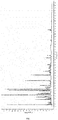
- the fingerprint spectrum of the ginkgo biloba ketone tablets includes four common fingerprint peaks as shown in FIG. 1 : peak 1 is the fingerprint peak of rutin, peak 6 is the fingerprint peak of quercetin, peak 7 is the fingerprint peak of kaempferide, and peak 8 is the fingerprint peak of isorhamnetin.
- the similarity between the fingerprint spectrum of the ginkgo biloba ketone ester tablet and the chromatogram of the test product is greater than or equal to 0.90.
- the similarity between the fingerprint spectra of test products and ginkgo biloba ketone ester tablet is calculated and compared according to "Similarity Evaluation System for Chromatographic Fingerprint of Traditional Chinese Medicine" (version 2.0).
- the contents of rutin, quercetin, bilobalide, ginkgolide J, total flavonol glycoside and terpene lactone, and the fingerprint spectrum of ginkgo biloba ketone ester tablet in the above ginkgo biloba ketone ester tablet are determined by high performance liquid chromatography (HPLC) in General Rules 0512 in Chinese Pharmacopoeia (2015 Edition) Volume IV .
- HPLC-MS high performance liquid chromatography-mass spectrometry
- the second aspect of the present disclosure provides a method for preparing ginkgo biloba ketone ester tablets.
- the desired ginkgo biloba ketone ester tablets are obtained by mixing the ginkgo biloba ketone ester raw material, dextrin, starch, low-substituted hydroxypropyl cellulose, microcrystalline cellulose and carboxymethyl starch sodium according to the composition ratio, granulating, drying, then adding magnesium stearate, mixing and straightening, and tabletting and coating.
- the method for preparing the ginkgo biloba ketone ester tablet includes the following operations:
- the starch is corn starch.
- the starch slurry is corn starch slurry.
- the starch slurry is used as a binding agent for granulation.
- the corn starch slurry is prepared by adding water to the second part of starch, stirring evenly and sieving.
- the corn starch slurry is prepared by stirring the second part of starch with normal temperature water, then adding boiling water, stirring evenly and sieving.
- the normal temperature water and the boiling water are both purified water.
- the mass ratio of the second part of starch to the added water is 2:79-81. More preferably, the mass ratio of the second part of starch to the added water is 2:80.
- the mesh number of the sieving is 70-90 mesh. Most preferably, the mesh number of the sieving is 80 mesh.
- the amount of the second part of starch in the starch is small. As long as the amount of starch can be made into a starch slurry, there is no strict dosage range for the second part of starch.
- the amount of the second part of starch does not exceed 10wt% of the amount of the starch.
- the pre-mixing, granulating, and drying are carried out in a boiling dryer.
- the boiling dryer may be a conventional boiling dryer and can be purchased from the market.
- the outlet air temperature of the boiling dryer is 35-45°C, and the inlet air temperature is 85-95°C.
- the outlet air temperature of the boiling dryer is 35°C, and the inlet air temperature is 95°C.
- the time of the premixing is 10-12 minutes.
- the material temperature when spraying the starch slurry is 54-56°C. More preferably, the material temperature is 55°C.
- the spray pressure when spraying the starch slurry is 0.25-0.35MPa.
- the spray revolving speed when spraying the starch slurry is 40-60 revolutions per minute.
- the oscillation time of the granulation is 110-130 seconds, and the oscillation frequency is 5-8 times. More preferably, the oscillation time of the granulation is 120 seconds, and the oscillation frequency is 6-7 times.
- the stop-drying-material temperature is 60-64°C. More preferably, the stop-drying-material temperature is 62°C.
- the stop-drying-material temperature refers to stopping drying when a set temperature of the material is reached during drying.
- the time for the drying is 15-30 minutes.
- the mesh number of the sieving and straightening is 14-18 mesh. More preferably, the mesh number of the sieving and straightening is 16 mesh.
- the mixing is performed in a mixer.
- the mixer may be a conventional mixer and can be purchased from the market.
- the mixer may be a multi-direction movement mixer.
- the revolving speed of the mixing is 20-25 revolutions per minute.
- the time for the mixing is 5-6 minutes.
- the tabletting is performed in a tablet machine.
- the tablet machine may be a conventional tablet machine and can be purchased from the market.
- the speed of the tabletting is 20-30 revolutions per minute.
- the hardness of the plain tablet is ⁇ 6.0kg/cm 2 .
- the weight of the plain tablet is 0.245g.
- the coating is performed in a coating pan.
- the coating pan may be a conventional coating pan, which can be purchased from the market.
- the outlet air temperature of the coating pan is 40-60°C, and the inlet air temperature is 80-100°C.
- the coating is performed by spraying the coating solution onto the plain tablets for wrapping during heating and rotating, and then continuing heating and drying.
- the revolving speed is 4-9 revolutions per minute.
- the coating solution is selected from one of BGB-75 coating solution or BGB-150E coating solution.
- the BGB-75 coating solution is prepared by adding 3.60 ⁇ 0.01kg of film coating premixed agent to 18.00kg of purified water and stirring in a dissolver for 45-60 minutes.
- the spraying speed of the BGB-75 coating solution is 40-50 revolutions per minute.
- the BGB-150E coating solution is prepared by adding 7.20 ⁇ 0.03kg of film coating premixed agent to 36.00kg of purified water and stirring in a dissolver for 45-60 minutes.
- the spraying speed of the BGB-150E coating solution is 15-30 revolutions per minute.
- the time of the continuing heating and drying is 5-6 minutes.
- composition ratio of the ginkgo biloba ketone ester tablets, in parts by weight includes the following:
- composition ratio of the ginkgo biloba ketone ester tablets, in parts by weight includes the following:
- the CAS number of the low-substituted hydroxypropyl cellulose is 9004-65-3 or 78214-41-2.
- the ginkgo biloba ketone ester raw material is ginkgo biloba leaf.
- the ginkgo biloba leaves are dried ginkgo biloba nursery leaves.
- the ginkgo biloba nursery leaves are leaves of non-adult ginkgo trees, which are planted for the purpose of collecting ginkgo biloba leaves.
- the drying conditions are: the drying temperature is 140-160°C, and the drying time is 6-15 minutes.
- the ginkgo biloba nursery leaves meet the following requirements:
- the definitions of the total flavonol glycosides and terpene lactones in the ginkgo biloba nursery leaves are the same as those of the ginkgo biloba ketone ester tablet mentioned above.
- the definition of the chromatographic peak area ratio of flavonoid aglycones in the ginkgo biloba nursery leaves (that is, the chromatographic peak area ratio among quercetin, kaempferide and isorhamnetin) is the same as that of the above-mentioned ginkgo biloba ketone ester tablet.
- the contents of total ash and acid-insoluble ash in the ginkgo biloba nursery leaves are determined according to the ash determination method described in General Rules 2302 in Chinese Pharmacopoeia (2015 Edition) Volume IV .
- the content of extractum in the ginkgo biloba nursery leaves is determined according to the extractum determination method described in General Rules 2201 in Chinese Pharmacopoeia (2015 Edition) Volume IV
- the content of impurity in the ginkgo biloba nursery leaves is determined according to the impurity determination method described in General Rules 2301 in Chinese Pharmacopoeia (2015 Edition) Volume IV
- the content of water in the ginkgo biloba nursery leaves is determined according to the water determination method described in General Rules 0832 in Chinese Pharmacopoeia (2015 Edition) Volume IV
- the content of sulfur dioxide residue in the ginkgo biloba nursery leaves is determined according to the sulfur dioxide residue determination method described in General Rules 2331 in Chinese Pharmacopoeia (2015 Edition) Volume IV
- the preparation method of the ginkgo biloba ketone ester raw material includes the following operations:
- the crushed ginkgo biloba leaves are obtained by crushing ginkgo biloba leaves.
- the obtaining of the filtrate includes the following:
- the conditions of the heating at reflux for extraction are: 2 times of extraction; 3 hours for each extraction time.
- the conditions of the heating at reflux for extraction are: 1 time of extraction; 0.5 hours for each extraction time.
- the water is purified water.
- the combining and concentrating is selected from one of two methods, one of which is a method of concentrating after combining and the other one is a method of combining after concentrating.
- the method of concentrating after combining is to combine the second filtrate with the first filtrate and then concentrate.
- the method of combining after concentrating is to concentrate the first filtrate first, and then combine with the second filtrate and continue to concentrate.
- the dissolving is the dissolving by using hot water.
- the hot water is purified water heated to 60-100°C.
- the filtrate is concentrated to have no alcohol smell.
- the relative density of the concentrated filtrate is 1.04-1.08.
- the purified water added in the water-sedimentation is 1.5-2.5 times the amount of the ginkgo biloba leaf powder.
- that the purified water added is 1.5-2.5 times the amount of the ginkgo biloba leaf powder means that 1.5-2.5ml of purified water is added to each 1 g of the ginkgo biloba leaf powder.
- the water-sedimentation is the interlayer cooling in 5-7°C cooling water for 12-24 hours.
- the centrifugation conditions are as follows: the centrifugal speed is 13000-15000rpm, and the centrifugal time per 3-5L of supernatant is 0.75-1.25 min.
- the centrifugation conditions are as follows: the centrifugal speed is 14000rpm, and the centrifugal time per 3-5L of supernatant is 1.00min.
- the above-mentioned concentration, water-sedimentation and centrifugation can ensure the optimization of the quality conditions of the ginkgo biloba ketone ester raw material of the present disclosure, so that the quality of the ginkgo biloba ketone ester tablet is better.
- the washing with water is forward-washing with purified water for 1-2 hours first, and then backwashing for 0.5-1.5 hours.
- the washing with water can ensure the optimization of quality conditions such as ginkgolic acids and ignition residue in the ginkgo biloba ketone ester raw material of the present disclosure, so that the quality of the ginkgo biloba ketone ester tablet is better.
- the washing with water is forward-washing with purified water for 1.5 hours first, and then backwashing for 1 hour.
- the eluting with solvent is eluting with 18% ethanol aqueous solution, 30% ethanol aqueous solution and 50% ethanol aqueous solution in sequence to obtain 18% ethanol eluent, 30% ethanol eluent and 50% ethanol eluent, respectively.
- the high-concentration-solvent first eluent is a 50% ethanol eluent.
- the low-concentration-solvent first eluent is a combined solution of an 18% ethanol eluent and a 30% ethanol eluent.
- the washing with water is forward-washing by using purified water 0.5-2 times the volume of the polyamide column. More preferably, the washing with water is forward-washing by using purified water 1 times the volume of the polyamide column.
- the washing with water is capable of further removing impurities, including ginkgolic acids, from the ginkgo biloba ketone ester.
- the low-concentration-solvent first eluent is concentrated to have no alcohol smell before being loaded to the polyamide column.
- the second eluent is an ethanol eluent.
- the combining and concentrating is selected from one of two methods, one of which is a method of concentrating after combining and the other one is a method of combining after concentrating.
- the method of concentrating after combining is to combine the second eluent with the high-concentration-solvent first eluent and then concentrate.
- the method of combining after concentrating is to concentrate the high-concentration-solvent first eluent first, and then combine with the second eluent and continue to concentrate.
- the second eluent and the high-concentration-solvent first eluent are concentrated to have no alcohol smell.
- the extracting is carried out using cyclohexane as a solvent. After the extracting, the cyclohexane extract is discarded.
- the drying is selected from spray drying or vacuum drying.
- the concentrated solution needs to be concentrated into a thick paste.
- the sieving is by passing through an 80-100 mesh sieve. More preferably, the sieving is by passing through a 90-100 mesh sieve. Most preferably, the sieving is by passing through a 100 mesh sieve.
- the sieving can ensure that the particle size of the ginkgo biloba ketone ester raw material of the present disclosure is finer, so that the quality of the ginkgo biloba ketone ester tablets is better.
- the conditions for the mixing are: the mixing equipment is a total mixer; the mixing speed is 10-12rpm; the mixing time is 1.5-2.5 hours.
- the mixing can ensure better uniformity of the ginkgo biloba ketone ester raw material of the present disclosure, so that the quality of the ginkgo biloba ketone ester tablets is better.
- the conditions for the mixing are: the mixing equipment is a total mixer; the mixing speed is 11rpm; the mixing time is 2 hours.
- the third aspect of the present disclosure provides the use of the method for preparing ginkgo biloba ketone ester tablet in the preparation of ginkgo biloba ketone ester tablet.
- the present disclosure provides a ginkgo biloba ketone ester tablet and a preparation method thereof.
- a preparation method thereof Through optimized preparation operations and conditions, high-quality ginkgo biloba ketone ester tablet can be obtained.
- the ginkgo biloba ketone ester tablet of the present disclosure has stable quality and a low unqualified rate. The consistency of different batches of ginkgo biloba ketone ester tablets is good.
- the ginkgo biloba ketone ester tablets can effectively control the amount of ginkgolic acids, preventing the use of high-ginkgolic-acid raw materials in the ginkgo biloba ketone ester tablets, so as to effectively improve the safety of ginkgo biloba ketone ester tablets.
- the ginkgo biloba ketone ester tablets prepared by the method of the present disclosure have improved performances, such as excellent mouthfeel, bitter degree, stability, high-temperature resistance, better formation performance and so on.
- FIG. 1 shows the fingerprint spectrum of the ginkgo biloba ketone ester tablet according to the present disclosure
- 1 rutin
- 6 quercetin
- 7 kaempferide
- 8 isorhamnetin.
- processing equipment or devices not specifically noted in the following embodiments are all conventional equipment or devices in the field. All pressure values and ranges refer to relative pressures.
- the reagents used below are all conventional reagents in the field.
- the instruments used below are all conventional instruments in the field.
- one or more method steps mentioned in the present disclosure are not exclusive of other method steps that may exist before or after the combined steps or that other method steps may be inserted between these explicitly mentioned steps, unless otherwise stated; it should also be understood that the combined connection relationship between one or more equipment/devices mentioned in the present disclosure does not exclude that there may be other equipment/devices before or after the combined equipment/devices or that other equipment/devices may be inserted between these explicitly mentioned equipment/devices, unless otherwise stated.
- the numbering of each method step is only a convenient tool for identifying each method step, and is not intended to limit the order of each method step or to limit the scope of the present disclosure.
- the change or adjustment of the relative relationship shall also be regarded as the scope in which the present disclosure may be implemented without substantially changing the technical content.
- Dried ginkgo biloba nursery leaves are crushed to obtain crushed ginkgo biloba leaves.
- Adding 60% ethanol aqueous solution to the crushed ginkgo biloba leaves extracting twice by heating at reflux, each for 3 hours, and obtaining a first filtrate by filtration.
- adding water to the residual medicine residue left after the filtration extracting for one time by heating at reflux with the extraction time of 0.5 hours, and then obtaining a second filtrate by filtration.
- the combining and concentrating may be conducted by concentrating after combining or combining after concentrating.
- the filtrate onto a macroporous resin column eluting with 18% ethanol aqueous solution, 30% ethanol aqueous solution and 50% ethanol aqueous solution in sequence to obtain 18% ethanol eluent, 30% ethanol eluent and 50% ethanol eluent, respectively, which are the first eluents.
- the 50% ethanol eluent is the high-concentration-solvent first eluent
- the combined solution of the 18% ethanol eluent and the 30% ethanol eluent is the low-concentration-solvent first eluent.
- the low-concentration-solvent first eluent is then concentrated to have no alcohol smell. Loading the low-concentration-solvent first eluent onto a polyamide column, eluting with ethanol to obtain an ethanol eluent, which is the second eluent. Combining and concentrating the second eluent and the high-concentration-solvent first eluent until there is no alcohol smell.
- the combining and concentrating may be conducted by concentrating after combining or combining after concentrating. After the concentrate is extracted with cyclohexane, the cyclohexane extract is discarded. Then, spray-drying the concentrated solution, or concentrating the concentrated solution into a thick paste and vacuum-drying the thick paste. Pulverizing the dried products to obtain the desired ginkgo biloba ketone ester raw material Control Sample 1*.
- the 50% ethanol eluent is the high-concentration-solvent first eluent
- the combined solution of the 18% ethanol eluent and the 30% ethanol eluent is the low-concentration-solvent first eluent.
- the low-concentration-solvent first eluent is then concentrated to have no alcohol smell. Loading the low-concentration-solvent first eluent onto a polyamide column, eluting with ethanol to obtain an ethanol eluent, which is the second eluent. Combining and concentrating the second eluent and the high-concentration-solvent first eluent until there is no alcohol smell.
- the combining and concentrating may be conducted by concentrating after combining or combining after concentrating. After the concentrate is extracted with cyclohexane, the cyclohexane extract is discarded. Then, spray-drying the concentrated solution, or concentrating the concentrated solution into a thick paste and vacuum-drying the thick paste. Pulverizing the dried products to obtain the desired ginkgo biloba ketone ester raw material Control Sample 2*.
- the granules obtained by granulating and drying are straightened after being sieved through a 16 mesh shaking sieve, then put into a multi-direction movement mixer with a rotating speed of 20-25r/min. Adding 0.80kg of magnesium stearate, and mixing for 5-6 minutes. Then tabletting the granules obtained by the mixing in a tablet machine, the speed of the tabletting is controlled at 20-30 revolutions per minute.
- the hardness of plain tablet obtained after the tabletting is greater than or equal to 6.0kg/ cm 2 , and the weight of the plain tablet is 0.245g.
- the coating solution is selected from one of BGB-75 coating solution or BGB-150E coating solution.
- the spraying speed of the BGB-75 coating solution is 40-50 revolutions per minute.
- the spraying speed of the BGB-150E coating solution is 15-30 revolutions per minute.
- the film-coated tablet obtained above is the ginkgo biloba ketone ester tablet Sample 1#.
- the weight of each tablet of the ginkgo biloba ketone ester tablet Sample 1# is 0.25-0.26g.
- the above-mentioned feeding amounts comply with the quality standard WS 3 -227(Z-028)-2002(Z) and the regulations of Chinese Pharmacopoeia (2015 Edition) Volume IV , and fall within the composition ratio of ginkgo biloba ketone ester tablet.
- the granules obtained by granulating and drying are straightened after being sieved through a 16 mesh shaking sieve, then put into a multi-direction movement mixer with a rotating speed of 20-25r/min. Adding 2.5kg of magnesium stearate, and mixing for 5-6 minutes. Then tabletting the granules obtained by the mixing in a tablet machine, the speed of the tabletting is controlled at 20-30 revolutions per minute.
- the hardness of the plain tablet obtained after the tabletting is greater than or equal to 6.0kg/ cm 2 , and the weight of the plain tablet is 0.245g.
- the coating solution is selected from one of BGB-75 coating solution or BGB-150E coating solution.
- the spraying speed of the BGB-75 coating solution is 40-50 revolutions per minute.
- the spraying speed of the BGB-150E coating solution is 15-30 revolutions per minute.
- the film-coated tablet obtained above is ginkgo biloba ketone ester tablet Sample 2#.
- the weight of each tablet of the ginkgo biloba ketone ester tablet Sample 2# is 0.25-0.26g.
- the above-mentioned feeding amounts comply with the quality standard WS 3 -227(Z-028)-2002(Z) and the regulations of Chinese Pharmacopoeia (2015 Edition) Volume IV , and fall within the composition ratio of ginkgo biloba ketone ester tablet.
- the weight of each tablet of the ginkgo biloba ketone ester tablet Control Sample 2* is 0.25-0.26g.
- the above-mentioned feeding amounts comply with the quality standard WS 3 -227(Z-028)-2002(Z) and the regulations of Chinese Pharmacopoeia (2015 Edition) Volume IV , and fall within the composition ratio of ginkgo biloba ketone ester tablet.
- rutin reference substance and quercetin reference substance precisely weighing the reference substances.
- the reference substances are added with methanol to prepare a mixed solution containing 250 ⁇ g of rutin and 25 ⁇ g of quercetin per 1ml, to obtain the reference solution.
- the determination result shows that in ginkgo biloba ketone ester tablet Sample 1#, the content of rutin is 1.18mg/tablet, and the value is ⁇ 1.28mg/tablet; the content of quercetin is 0.132mg/tablet, and the value is ⁇ 0.152mg/tablet.
- the content of rutin is 1.49mg/tablet, and the value is ⁇ 1.60mg/tablet; the content of quercetin is 0.154mg/tablet, and the value is ⁇ 0. 160mg/tablet.
- ginkgo biloba ketone ester tablet Control Sample 2* the content of rutin is 1.81mg/tablet, and the value is >1.60mg/tablet; the content of quercetin is 0.175mg/tablet, and the value is >0. 160mg/tablet. It can be seen from the above content values that the contents of rutin and quercetin in ginkgo biloba ketone ester tablet Sample 1# and ginkgo biloba ketone ester tablet Control Sample 1* are within the specified value range, indicating that there are no adulterated foreign substances, the product process is normal, and the product quality is good.
- the contents of rutin and quercetin in ginkgo biloba ketone ester tablet Sample 1# are all lower than those of ginkgo biloba ketone ester tablet Control Sample 1*, indicating that the product quality of ginkgo biloba ketone ester tablet Sample 1# is better than that of ginkgo biloba ketone ester tablet Control Sample 1*.
- the contents of rutin and quercetin in ginkgo biloba ketone ester tablet Control Sample 2* exceed the specified value range, indicating that there may be adulterated foreign substances, and the product quality is poor.
- the determination result shows that in ginkgo biloba ketone ester tablet Sample 1#, the content of ethanol residue is 0.04mg/tablet, and the value is ⁇ 0.08mg/tablet.
- the content of ethanol residue is 0.11mg/tablet, and the value is ⁇ 0.2mg/tablet.
- the content of ethanol residue is 0.16mg/tablet, and the value is ⁇ 0.2mg/tablet.
- bilobalide reference substance ginkgolide A reference substance, ginkgolide B reference substance, ginkgolide C reference substance and ginkgolide J reference substance, and precisely weighing the reference substances.
- the reference substances are added with methanol to prepare mixed solutions each containing 1.0mg, 0.3mg, 0.7mg and 4mg of each reference substance per 1ml, which is the reference solution.
- the determination shows that the contents of terpene lactones in the ginkgo biloba ketone ester tablet Sample 1# and ginkgo biloba ketone ester tablet Control Sample 1* are calculated as dry products, and are calculated by the total contents of bilobalide, ginkgolide A, ginkgolide B and ginkgolide C.
- the contents of terpene lactones in the ginkgo biloba ketone ester tablet Sample 1# and ginkgo biloba ketone ester tablet Control Sample 1* are 4.3mg/tablet and 3.1mg/tablet, respectively, which are within the specified data range of 2.4-4.8mg/tablet.
- the content of terpene lactones in the ginkgo biloba ketone ester tablet Control Sample 2* is calculated as dry products, and is calculated by the total contents of bilobalide, ginkgolide A, ginkgolide B and ginkgolide C.
- the content of terpene lactones in the ginkgo biloba ketone ester tablet Control Sample 2* is 1.9mg/tablet, which is lower than the specified data range of 2.4-4.8mg/tablet.
- Terpene lactones as unique components in ginkgo biloba, are the main effective components of ginkgo biloba ketone ester tablets in blood-activating and stasis-eliminating as well as in the treatment of angina pectoris, coronary heart disease and cerebral arteriosclerosis. Therefore, terpene lactones need to be within a specified data range. It can be seen that the ginkgo biloba ketone ester tablet Control Sample 2* has poor treatment effect. Ginkgo biloba ketone ester tablet Sample 1# and ginkgo biloba ketone ester tablet Control Sample 1* both have good therapeutic effects.
- ginkgo biloba ketone ester tablet Sample 1# has better therapeutic effect.
- the determination shows that the contents of bilobalide in the ginkgo biloba ketone ester tablet Sample 1# and ginkgo biloba ketone ester tablet Control Sample 1* are 1.78mg/tablet and 1.24mg/tablet, respectively, which are within a specified data range of 1.04-2.08mg/tablet.
- the content of bilobalide in ginkgo biloba ketone ester tablet Control Sample 2* is 0.78mg/tablet, which is lower than the specified data range of 1.04-2.08mg/tablet.
- Bilobalide gives ginkgo biloba ketone ester tablets an anti-PAF effect, as well as nutritional functions for nerves.
- the ginkgo biloba ketone ester tablet Control Sample 2* has poor treatment effect.
- Ginkgo biloba ketone ester tablet Sample 1# and ginkgo biloba ketone ester tablet Control Sample 1* both have good therapeutic effects.
- the content of bilobalide in ginkgo biloba ketone ester tablet Sample 1# is more accurate, which is within a specified data range of 1.44-1.92mg/tablet.
- ginkgo biloba ketone ester tablet Sample 1# has better therapeutic effect.
- the determination shows that the contents of ginkgolide J in the ginkgo biloba ketone ester tablet Sample 1# and ginkgo biloba ketone ester tablet Control Sample 1* are 0.16mg/tablet and 0.04mg/tablet, respectively, which are within a specified data range of 0.04-0.2mg/tablet.
- the content of ginkgolide J in ginkgo biloba ketone ester tablet Control Sample 2* is 0.02mg/tablet, which is lower than the specified data range of 0.04-0.2mg/tablet.
- Ginkgolide J also gives ginkgo biloba ketone ester tablets an anti-PAF effect.
- the ginkgo biloba ketone ester tablet Control Sample 2* has poor treatment effect.
- Ginkgo biloba ketone ester tablet Sample 1# and ginkgo biloba ketone ester tablet Control Sample 1* both have good therapeutic effects.
- the content of Ginkgolide J in ginkgo biloba ketone ester tablet Sample 1# is higher, which is within a specified data range of 0.12-0.20mg/tablet.
- ginkgo biloba ketone ester tablet Sample 1# has better therapeutic effect.
- amentoflavone reference substance amentoflavone reference substance
- bilobetin reference substance amentoflavone reference substance
- ginkgetin reference substance amentoflavone reference substance
- the reference substances are added with ethanol to prepare a mixed solution with a certain concentration of amentoflavone, bilobetin and ginkgetin, which is the reference solution.
- HPLC-MS The conditions of the HPLC-MS are: octadecylsilane chemically bonded silica gel serves as a filler; methanol-1% glacial acetic acid solution (90:10) serves as the mobile phase, eluting isocratically, fully cleaning with methanol-1% glacial acetic acid solution (99:1) that is at least 10 times the volume of the column after all the components to be determined have reached the peak; triple quadrupole mass spectrometer is used for multiple reaction monitoring (MRM) under electrospray ionization (ESI) negative ion mode.
- MRM multiple reaction monitoring
- ESI electrospray ionization
- the determination shows that the contents of biflavonoids in ginkgo biloba ketone ester tablet Sample 1# and ginkgo biloba ketone ester tablet Control Sample 1* are 0.002mg/tablet and 0.006mg/tablet, respectively, that is, the total contents of amentoflavone, bilobetin and ginkgetin in ginkgo biloba ketone ester tablet Sample 1# and ginkgo biloba ketone ester tablet Control Sample 1* are all less than or equal to 0.008mg/tablet.
- the content of biflavonoids in ginkgo biloba ketone ester tablet Control Sample 2* is 0.012mg/tablet, that is, the total contents of amentoflavone, bilobetin and ginkgetin in ginkgo biloba ketone ester tablet Control Sample 2* is higher than 0.008mg/tablet.
- the content of biflavonoids must be controlled due to its allergenicity.
- the content of biflavones in ginkgo biloba ketone ester tablet Control Sample 2 * exceeds the limit, which will make patients more susceptible to allergy.
- ginkgo biloba ketone ester tablet Sample 1# and ginkgo biloba ketone ester tablet Control Sample 1* are within the limit.
- ginkgo biloba ketone ester tablet Sample 1# has a lower biflavonoids content, which can reach 0.004mg/tablet or less, and is less likely to cause sensitization.
- the reference substances are added with methanol to prepare a mixed solution with a certain concentration of genistin and ginkgolide M, which is the reference solution.
- HPLC-MS The conditions of the HPLC-MS are: octadecylsilane chemically bonded silica gel serves as a filler; methanol-1% glacial acetic acid solution (90:10) serves as the mobile phase, eluting isocratically, fully cleaning with methanol-1% glacial acetic acid solution (99:1) that is at least 10 times the volume of the column after all the components to be determined have reached the peak; triple quadrupole mass spectrometer is used for multiple reaction monitoring (MRM) under electrospray ionization (ESI) negative ion mode.
- MRM multiple reaction monitoring
- ESI electrospray ionization
- the content of total flavonoids in ginkgo biloba ketone ester tablet Control Sample 2* is 10.21mg/tablet by using rutin (C 27 H 30 O 16 ) as a standard sample, which is lower than the specified data range of 14.08-26.40mg/tablet.
- Total flavonoids are active substances that contain free flavonoids besides total flavonoid glycosides.
- a certain amount of total flavonoids in ginkgo biloba ketone ester tablet endows ginkgo biloba ketone ester tablet with good therapeutic effect. Therefore, the ginkgo biloba ketone ester tablet Control Sample 2* has poor treatment effect.
- Ginkgo biloba ketone ester tablet Sample 1# and ginkgo biloba ketone ester tablet Control Sample 1* both have good therapeutic effects.
- the content of total flavonoids in ginkgo biloba ketone ester tablet Sample 1# is more accurate, which is within a specified data range of 19.6-22mg/tablet. Compared with ginkgo biloba ketone ester tablet Control Sample 1*, the ginkgo biloba ketone ester tablet Sample 1# has better therapeutic effect.
- ginkgolic acid C13:0 reference substance ginkgolic acid C15:1 reference substance
- ginkgolic acid C17:1 reference substance ginkgolic acid C17:1 reference substance
- the reference substances are added with methanol to prepare a series of mixed solutions respectively containing 0ng/ml, 10ng/ml, 20ng/ml, 50ng/ml, 100ng/ml and 200ng/ml of each reference substance, so as to obtain the reference solutions.
- the conditions of the HPLC-MS are: octadecylsilane chemically bonded silica gel serves as a filler; methanol-1% glacial acetic acid solution (90:10) serves as the mobile phase, eluting isocratically, fully cleaning with methanol-1% glacial acetic acid solution (99:1) that is at least 10 times the volume of the column after all the components to be determined have reached the peak; triple quadrupole mass spectrometer is used for multiple reaction monitoring (MRM) under electrospray ionization (ESI) negative ion mode.
- MRM multiple reaction monitoring
- ESI electrospray ionization
- the component can be determined to be present.
- the determination shows that the contents of total ginkgolic acids in the ginkgo biloba ketone ester tablet Sample 1# and ginkgo biloba ketone ester tablet Control Sample 1* are 0.5 ⁇ g/tablet and 1.6 ⁇ g/tablet, respectively, which are both ⁇ 2 ⁇ g/tablet.
- the content of total ginkgolic acids in the ginkgo biloba ketone ester tablet Control Sample 2* is 4.3 ⁇ g/tablet, which is greater than 2 ⁇ g/tablet.
- Ginkgolic acids have a sensitizing effect. Long-term administration of ginkgo preparation would cause accumulation of ginkgolic acids and do harm to human body.
- the content of total ginkgolic acids in the ginkgo biloba ketone ester tablet Control Sample 2* exceeds the limit, which will cause harm to human body
- the contents of total ginkgolic acids in ginkgo biloba ketone ester tablet Sample 1# and ginkgo biloba ketone ester tablet Control Sample 1* are within the limit.
- ginkgo biloba ketone ester tablet Sample 1# a lower content of total ginkgolic acids, which can reach ⁇ 1 ⁇ g/tablet, and is less likely to cause sensitization and therefore has better safety.
- the reference substances are added with methanol to prepare mixed solutions respectively containing 30 ⁇ g, 30 ⁇ g, 20 ⁇ g of each reference substance per 1ml, to obtain the reference solution.
- the content of total flavonol glycosides in ginkgo biloba ketone ester tablet Control Sample 2* is 7.8mg/tablet (calculated as dry products), which is lower than the specified data range of 9.6-14.0mg/tablet.
- Total flavonol glycosides are active substances that contain free flavonoids.
- a certain amount of total flavonol glycosides in ginkgo biloba ketone ester tablet endows ginkgo biloba ketone ester tablet with good therapeutic effect. Therefore, the ginkgo biloba ketone ester tablet Control Sample 2* has poor treatment effect.
- Ginkgo biloba ketone ester tablet Sample 1# and ginkgo biloba ketone ester tablet Control Sample 1* both have good therapeutic effects.
- the content of total flavonol glycosides in ginkgo biloba ketone ester tablet Sample 1# is higher, which is within a specified data range of 12.0-14.0mg/tablet. Compared with ginkgo biloba ketone ester tablet Control Sample 1*, ginkgo biloba ketone ester tablet Sample 1# has better therapeutic effect.
- ginkgo biloba ketone ester tablet Control Sample 2* the chromatographic peak area ratio of quercetin to kaempferide is 0.54, lower than the specified data range of 0.8-1.2; the chromatographic peak area ratio of isorhamnetin to quercetin is 0.10, lower than 0.15. It can be seen from the above proportional relationship that there are no adulterated foreign substances in ginkgo biloba ketone ester tablet Sample 1# and ginkgo biloba ketone ester tablet Control Sample 1*, indicating the product process is normal, and the product quality is good. The quality of ginkgo biloba ketone ester tablet Control Sample 2* is poor due to the addition of quercetin and adulterated foreign substances.
- the number of theoretical plates calculated by the rutin peak is no less than 10000.
- Table 5 Time (minutes) Mobile phase A (%) Mobile phase B (%) 0-40 15-30 85-70 40-45 30-40 70-60 45-50 40 60 50-60 40-60 60-40 60-70 60 40
- the similarity between the fingerprint spectra of test products and ginkgo biloba ketone ester tablet is calculated and compared according to "Similarity Evaluation System for Chromatographic Fingerprint of Traditional Chinese Medicine" (version 2.0).
- the fingerprint spectrum of the ginkgo biloba ketone ester tablet includes four common fingerprint peaks as shown in FIG. 1 : peak 1 is the fingerprint peak of rutin, peak 6 is the fingerprint peak of quercetin, peak 7 is the fingerprint peak of kaempferide, and peak 8 is the fingerprint peak of isorhamnetin.
- the determination shows that the similarity between the fingerprint spectra of ginkgo biloba ketone ester tablet Sample 1# and ginkgo biloba ketone ester tablet Control Sample 1* and the chromatogram of the test product are 0.97 and 0.92, respectively, which are both greater than or equal to 0.90.
- the similarity between the fingerprint spectrum of the ginkgo biloba ketone ester tablet Control Sample 2* and the chromatogram of the test product is 0.35, which is lower than 0.90. It can be seen from the above similarities that there are no adulterated foreign substances in ginkgo biloba ketone ester tablet Sample 1# and ginkgo biloba ketone ester tablet Control Sample 1*, indicating the product quality is good.
- the quality of ginkgo biloba ketone ester tablet Control Sample 2* is poor due to the addition of adulterated foreign substances.
- Ginkgo biloba nursery leaves that serve as the medicinal raw materials in Embodiment 1 are selected and dried at 140-160 °C for 6-15 minutes, to serve as the raw material Sample 1; at the same time, conventional ginkgo biloba leaves that serve as the medicinal raw materials in Control Example 1 are selected to serve as the raw material Sample 2.
- the contents of total flavonol glycosides and the chromatographic peak area ratios of flavonoid aglycones in raw material Sample 1 and raw material Sample 2 are determined according to the method described in Embodiment 9.
- the contents of terpene lactone in raw material Sample 1 and raw material Sample 2 are determined by the method described in Embodiment 4.
- the contents of total ash and acid-insoluble ash in raw material Sample 1 and raw material Sample 2 are determined according to the ash determination method described in General Rules 2302 in Chinese Pharmacopoeia (2015 Edition) Volume IV .
- the contents of extractum in raw material Sample 1 and raw material Sample 2 are determined according to the extractum determination method described in General Rules 2201 in Chinese Pharmacopoeia (2015 Edition) Volume IV .
- the contents of impurity in raw material Sample 1 and raw material Sample 2 are determined according to the impurity determination method described in General Rules 2301 in Chinese Pharmacopoeia (2015 Edition) Volume IV .
- the contents of water in raw material Sample 1 and raw material Sample 2 are determined according to the water determination method described in General Rules 0832 in Chinese Pharmacopoeia (2015 Edition) Volume IV
- the contents of sulfur dioxide residue in raw material Sample 1 and raw material Sample 2 are determined according to the sulfur dioxide residue determination method described in General Rules 2331 in Chinese Pharmacopoeia (2015 Edition) Volume IV
- the content of total flavonol glycosides in raw material Sample 2 though meets the requirement of the Pharmacopoeia that the content of total flavonol glycosides is greater than or equal to 0.40%, does not meet the requirement specified in the present disclosure that the content of total flavonol glycosides is greater than or equal to 0.85%.
- the content of total flavonol glycosides in raw material Sample 1 is not only greater than or equal to 0.40%, but also greater than or equal to 0.85%.
- the raw material Sample 1 has higher content of total flavonol glycosides, therefore has better raw material quality.
- the content of terpene lactones in raw material Sample 2 though meets the requirement of the Pharmacopoeia that the content of terpene lactones is greater than or equal to 0.25%, does not meet the requirement specified in the present disclosure that the content of terpene lactones is greater than or equal to 0.40%.
- the content of terpene lactones in raw material Sample 1 is not only greater than or equal to 0.25%, but also greater than or equal to 0.40%.
- the raw material Sample 1 has higher content of terpene lactones, therefore has better raw material quality.
- Raw material Sample 1 meets the data range of 0.65-1.2 specified in the present disclosure, while raw material Sample 2 does not meet the data range of 0.65-1.2 specified in the present disclosure.
- the chromatographic peak area ratios of isorhamnetin to quercetin in raw material Sample 1 and raw material Sample 2 are 0.22 and 0.13, respectively.
- Raw material Sample 1 meets the requirement of > 0.15 specified in the present disclosure, while raw material Sample 2 does not meet the requirement of > 0.15 specified in the present disclosure. It can be seen from the above proportional relationship that as raw material, the quality of raw material Sample 1 is better than that of raw material Sample 2.
- the determination shows that the contents of sulfur dioxide residues in raw material Sample 1 and raw material Sample 2 are 13mg/kg and 89mg/kg, respectively, which are both ⁇ 150mg/kg.
- the contents of sulfur dioxide residues in raw material Sample 1 and raw material Sample 2 are all within the limit. Therefore, the raw material qualities of raw material Sample 1 and raw material Sample 2 meet the requirements. However, raw material Sample 1 has better raw material quality due to its lower content of sulfur dioxide residue.
- the determination shows that the total ash content in raw material Sample 1 and raw material Sample 2 are 3.9% and 7.0%, respectively, which are both ⁇ 10.0%.
- the acid-insoluble ash content in raw material Sample 1 and raw material Sample 2 are 0.69% and 1.56%, respectively, which are both ⁇ 2.0%.
- the extractum content in raw material Sample 1 and raw material Sample 2 are 44.3% and 28.4%, respectively, which are both ⁇ 25.0%.
- the impurity content in raw material Sample 1 and raw material Sample 2 are 0.58% and 1.34%, respectively, which are both ⁇ 2.0%.
- the water content in raw material Sample 1 and raw material Sample 2 are 5.4% and 10.2%, respectively, which are both ⁇ 12.0%.
- raw material Sample 1 and raw material Sample 2 are all within the specified limit range, and the quality of the raw materials meets the requirements.
- the relevant content indicators of raw material Sample 1 is better than that of raw material Sample 2. Therefore, the quality of raw material Sample 1 is better.
- ginkgo biloba ketone ester raw material samples with better quality can be prepared, thereby ginkgo biloba ketone ester tablet samples with better quality can be prepared.
- the present disclosure provides a ginkgo biloba ketone ester tablet and a preparation method thereof. Through optimized preparation operations and conditions, high-quality ginkgo biloba ketone ester tablet can be obtained. Compared with the ginkgo biloba ketone ester tablet prepared by traditional methods, the ginkgo biloba ketone ester tablet of the present disclosure has stable quality, low unqualified rate, and good consistency of different batches of bulk drugs.
- the ginkgo biloba ketone ester tablets can effectively control ginkgolic acids, preventing the use of high-ginkgolic-acid raw materials in the ginkgo biloba ketone ester tablets, so as to effectively improve the safety of ginkgo biloba ketone ester tablets.
- the ginkgo biloba ketone ester tablets prepared by the method of the present disclosure have excellent mouthfeel, bitter degree, stability, high-temperature resistance, formation performance and other performances. Therefore, the present disclosure effectively overcomes various shortcomings in the traditional technology and has high industrial utilization value.
Landscapes
- Health & Medical Sciences (AREA)
- Life Sciences & Earth Sciences (AREA)
- Engineering & Computer Science (AREA)
- General Health & Medical Sciences (AREA)
- Medicinal Chemistry (AREA)
- Pharmacology & Pharmacy (AREA)
- Chemical & Material Sciences (AREA)
- Animal Behavior & Ethology (AREA)
- Bioinformatics & Cheminformatics (AREA)
- Public Health (AREA)
- Veterinary Medicine (AREA)
- Epidemiology (AREA)
- Natural Medicines & Medicinal Plants (AREA)
- Biotechnology (AREA)
- Vascular Medicine (AREA)
- Botany (AREA)
- Medical Informatics (AREA)
- Microbiology (AREA)
- Mycology (AREA)
- Urology & Nephrology (AREA)
- Alternative & Traditional Medicine (AREA)
- Cardiology (AREA)
- Heart & Thoracic Surgery (AREA)
- Chemical Kinetics & Catalysis (AREA)
- General Chemical & Material Sciences (AREA)
- Nuclear Medicine, Radiotherapy & Molecular Imaging (AREA)
- Organic Chemistry (AREA)
- Medicines Containing Plant Substances (AREA)
- Medicinal Preparation (AREA)
Applications Claiming Priority (2)
| Application Number | Priority Date | Filing Date | Title |
|---|---|---|---|
| CN201810945399.9A CN109010386B (zh) | 2018-08-20 | 2018-08-20 | 一种银杏酮酯片及其制备方法 |
| PCT/CN2018/105254 WO2020037734A1 (zh) | 2018-08-20 | 2018-09-12 | 一种银杏酮酯片及其制备方法 |
Publications (2)
| Publication Number | Publication Date |
|---|---|
| EP3842054A1 true EP3842054A1 (de) | 2021-06-30 |
| EP3842054A4 EP3842054A4 (de) | 2021-11-17 |
Family
ID=64631211
Family Applications (1)
| Application Number | Title | Priority Date | Filing Date |
|---|---|---|---|
| EP18930670.7A Pending EP3842054A4 (de) | 2018-08-20 | 2018-09-12 | Ginkgo-ketoester-tablette und herstellungsverfahren dafür |
Country Status (4)
| Country | Link |
|---|---|
| EP (1) | EP3842054A4 (de) |
| CN (1) | CN109010386B (de) |
| CA (1) | CA3117699A1 (de) |
| WO (1) | WO2020037734A1 (de) |
Cited By (1)
| Publication number | Priority date | Publication date | Assignee | Title |
|---|---|---|---|---|
| EP3842053A4 (de) * | 2018-08-20 | 2021-11-17 | SPH Xing Ling Sci. & Tech. Pharmaceutical Co., Ltd. | Extrakt aus ginkgo-biloba-blättern und verfahren zu seiner herstellung |
Families Citing this family (3)
| Publication number | Priority date | Publication date | Assignee | Title |
|---|---|---|---|---|
| CN112730822B (zh) * | 2020-12-21 | 2024-01-30 | 浙江上药九旭药业有限公司 | 一种血浆中银杏酮酯制剂有效成分的检测方法 |
| CN113116945A (zh) * | 2021-04-12 | 2021-07-16 | 海南海力制药有限公司 | 一种银杏叶分散片的制备方法 |
| CN116899271B (zh) * | 2023-09-14 | 2023-12-12 | 焱农(济南)生物科技有限公司 | 高含量银杏酚酸生物农药原药的制备方法及制得的原药 |
Family Cites Families (10)
| Publication number | Priority date | Publication date | Assignee | Title |
|---|---|---|---|---|
| US6174531B1 (en) * | 1997-11-25 | 2001-01-16 | Pharmanex Inc. | Methods of preparation of bioginkgo |
| US6030621A (en) * | 1998-03-19 | 2000-02-29 | De Long; Xie | Ginkgo biloba composition, method to prepare the same and uses thereof |
| CN101306202A (zh) * | 2008-03-28 | 2008-11-19 | 陈建海 | 银杏酮酯-环糊精衍生物包合物及其制备方法 |
| CN101485697B (zh) * | 2009-02-25 | 2011-12-14 | 北京四环科宝制药有限公司 | 银杏酮酯分散片及其制备方法 |
| CN102302525B (zh) * | 2011-09-02 | 2014-05-14 | 黑龙江珍宝岛药业股份有限公司 | 一种银杏叶组合物及其制备方法 |
| CN105259268B (zh) * | 2015-10-30 | 2017-11-03 | 上海上药杏灵科技药业股份有限公司 | 一种银杏酮酯中黄酮类和有机酸类成分指纹图谱的检测方法及其应用 |
| CN106344527B (zh) * | 2016-09-20 | 2019-06-21 | 南方医科大学 | 一种3d打印银杏酮酯分散片及其制备方法 |
| CN106265780B (zh) * | 2016-10-25 | 2019-12-03 | 北京汉典制药有限公司 | 银杏酮酯滴丸及其制备方法、系统 |
| CN106727491A (zh) * | 2016-12-08 | 2017-05-31 | 河北润茂制药有限公司 | 一种银杏酮酯药用原料 |
| CN107837215A (zh) * | 2017-11-02 | 2018-03-27 | 河北荃美生物科技有限公司 | 银杏酮酯美容护肤霜、制备方法及其应用 |
-
2018
- 2018-08-20 CN CN201810945399.9A patent/CN109010386B/zh active Active
- 2018-09-12 EP EP18930670.7A patent/EP3842054A4/de active Pending
- 2018-09-12 WO PCT/CN2018/105254 patent/WO2020037734A1/zh not_active Ceased
- 2018-09-12 CA CA3117699A patent/CA3117699A1/en active Pending
Cited By (1)
| Publication number | Priority date | Publication date | Assignee | Title |
|---|---|---|---|---|
| EP3842053A4 (de) * | 2018-08-20 | 2021-11-17 | SPH Xing Ling Sci. & Tech. Pharmaceutical Co., Ltd. | Extrakt aus ginkgo-biloba-blättern und verfahren zu seiner herstellung |
Also Published As
| Publication number | Publication date |
|---|---|
| WO2020037734A1 (zh) | 2020-02-27 |
| CA3117699A1 (en) | 2020-02-27 |
| CN109010386A (zh) | 2018-12-18 |
| EP3842054A4 (de) | 2021-11-17 |
| CN109010386B (zh) | 2024-01-19 |
Similar Documents
| Publication | Publication Date | Title |
|---|---|---|
| US12311002B2 (en) | Extract of Ginkgo biloba leaves and preparation method therefor | |
| US9770479B2 (en) | Extract of Rehmannia glutinasa Libosch for reducing blood sugar, reducing blood fat, treating leukemia, and preparation method and uses thereof | |
| CA3117699A1 (en) | Ginkgo biloba ketone ester tablet and preparation method thereof | |
| JP5654991B2 (ja) | 認知症疾患の症状を改善するための種々の植物抽出物の組合せ | |
| US20250082703A1 (en) | Ginkgo biloba ketone ester capsule and preparation method thereof | |
| CN100584346C (zh) | 制备贮存稳定的常春藤叶提取物的方法及根据该方法制备的提取物 | |
| KR102115669B1 (ko) | 벤조피렌의 생성은 억제되면서 사포닌은 증진되고 플라티코딘 d가 저감되는 흑도라지의 제조방법 | |
| US7943184B2 (en) | Process for preparing an extract from ivy leaves | |
| EP4595947A1 (de) | Herstellungsverfahren für polyporus umbellatus suppe, polyporus umbellatus extraktum und feste formulierung von polyporus umbellatus | |
| CA3113868C (en) | Ginkgo biloba ketone ester and preparation method thereof | |
| CN108785337A (zh) | 一种银杏酮酯颗粒及其制备方法 | |
| RU2772016C1 (ru) | Экстракт листьев гинкго билоба и способ его получения | |
| CN109381496A (zh) | 银杏叶提取物及其质量控制方法和用途 | |
| RU2778292C1 (ru) | Гранулированный сложный кетоновый эфир гинкобилоба и способ его получения | |
| CN109394800B (zh) | 银杏叶提取物、含有其的注射液及它们的质量控制方法 | |
| CN121265683A (zh) | 具有止咳化痰作用的药对组合物及其制成的食品与检测方法 | |
| Trifonova et al. | Changes in Quantitative and Qualitative Composition of Biologically Active Substances in Bidens tripartita L. during Granulation Process | |
| Trifonova et al. | The Effect of Hawthorn Berries (Crataegus spp.) Granulation Process on Biologically Active Compounds Content | |
| CN121910802A (zh) | 糖尿病治疗用生津饮品及其制备方法、化学与药代应用 | |
| CN109010387A (zh) | 一种低毒银杏酮酯组合物及其制剂 | |
| HK1096868B (en) | Method for the production of a storage-resistant ivy leaf extract, and extract produced according to said method |
Legal Events
| Date | Code | Title | Description |
|---|---|---|---|
| STAA | Information on the status of an ep patent application or granted ep patent |
Free format text: STATUS: THE INTERNATIONAL PUBLICATION HAS BEEN MADE |
|
| PUAI | Public reference made under article 153(3) epc to a published international application that has entered the european phase |
Free format text: ORIGINAL CODE: 0009012 |
|
| STAA | Information on the status of an ep patent application or granted ep patent |
Free format text: STATUS: REQUEST FOR EXAMINATION WAS MADE |
|
| 17P | Request for examination filed |
Effective date: 20210128 |
|
| AK | Designated contracting states |
Kind code of ref document: A1 Designated state(s): AL AT BE BG CH CY CZ DE DK EE ES FI FR GB GR HR HU IE IS IT LI LT LU LV MC MK MT NL NO PL PT RO RS SE SI SK SM TR |
|
| A4 | Supplementary search report drawn up and despatched |
Effective date: 20211020 |
|
| RIC1 | Information provided on ipc code assigned before grant |
Ipc: A61K 9/20 20060101ALI20211013BHEP Ipc: A61K 9/16 20060101ALI20211013BHEP Ipc: A61P 9/10 20060101ALI20211013BHEP Ipc: A61K 9/28 20060101ALI20211013BHEP Ipc: A61K 31/352 20060101ALI20211013BHEP Ipc: A61K 31/7048 20060101ALI20211013BHEP Ipc: A61K 31/365 20060101ALI20211013BHEP Ipc: A61K 36/16 20060101AFI20211013BHEP |
|
| DAV | Request for validation of the european patent (deleted) | ||
| DAX | Request for extension of the european patent (deleted) | ||
| STAA | Information on the status of an ep patent application or granted ep patent |
Free format text: STATUS: EXAMINATION IS IN PROGRESS |
|
| 17Q | First examination report despatched |
Effective date: 20250912 |