EP3842084B1 - Vorrichtung zur extrakorporalen blutbehandlung - Google Patents
Vorrichtung zur extrakorporalen blutbehandlung Download PDFInfo
- Publication number
- EP3842084B1 EP3842084B1 EP19219245.8A EP19219245A EP3842084B1 EP 3842084 B1 EP3842084 B1 EP 3842084B1 EP 19219245 A EP19219245 A EP 19219245A EP 3842084 B1 EP3842084 B1 EP 3842084B1
- Authority
- EP
- European Patent Office
- Prior art keywords
- blood
- bicarbonate
- citrate
- patient
- cit
- Prior art date
- Legal status (The legal status is an assumption and is not a legal conclusion. Google has not performed a legal analysis and makes no representation as to the accuracy of the status listed.)
- Active
Links
Images
Classifications
-
- A—HUMAN NECESSITIES
- A61—MEDICAL OR VETERINARY SCIENCE; HYGIENE
- A61M—DEVICES FOR INTRODUCING MEDIA INTO, OR ONTO, THE BODY; DEVICES FOR TRANSDUCING BODY MEDIA OR FOR TAKING MEDIA FROM THE BODY; DEVICES FOR PRODUCING OR ENDING SLEEP OR STUPOR
- A61M1/00—Suction or pumping devices for medical purposes; Devices for carrying-off, for treatment of, or for carrying-over, body-liquids; Drainage systems
- A61M1/36—Other treatment of blood in a by-pass of the natural circulatory system, e.g. temperature adaptation, irradiation ; Extra-corporeal blood circuits
- A61M1/3672—Means preventing coagulation
-
- A—HUMAN NECESSITIES
- A61—MEDICAL OR VETERINARY SCIENCE; HYGIENE
- A61M—DEVICES FOR INTRODUCING MEDIA INTO, OR ONTO, THE BODY; DEVICES FOR TRANSDUCING BODY MEDIA OR FOR TAKING MEDIA FROM THE BODY; DEVICES FOR PRODUCING OR ENDING SLEEP OR STUPOR
- A61M1/00—Suction or pumping devices for medical purposes; Devices for carrying-off, for treatment of, or for carrying-over, body-liquids; Drainage systems
- A61M1/14—Dialysis systems; Artificial kidneys; Blood oxygenators ; Reciprocating systems for treatment of body fluids, e.g. single needle systems for hemofiltration or pheresis
- A61M1/16—Dialysis systems; Artificial kidneys; Blood oxygenators ; Reciprocating systems for treatment of body fluids, e.g. single needle systems for hemofiltration or pheresis with membranes
- A61M1/1601—Control or regulation
- A61M1/1603—Regulation parameters
- A61M1/1611—Weight of the patient
-
- A—HUMAN NECESSITIES
- A61—MEDICAL OR VETERINARY SCIENCE; HYGIENE
- A61M—DEVICES FOR INTRODUCING MEDIA INTO, OR ONTO, THE BODY; DEVICES FOR TRANSDUCING BODY MEDIA OR FOR TAKING MEDIA FROM THE BODY; DEVICES FOR PRODUCING OR ENDING SLEEP OR STUPOR
- A61M1/00—Suction or pumping devices for medical purposes; Devices for carrying-off, for treatment of, or for carrying-over, body-liquids; Drainage systems
- A61M1/34—Filtering material out of the blood by passing it through a membrane, i.e. hemofiltration or diafiltration
- A61M1/3403—Regulation parameters
- A61M1/341—Regulation parameters by measuring the filtrate rate or volume
-
- A—HUMAN NECESSITIES
- A61—MEDICAL OR VETERINARY SCIENCE; HYGIENE
- A61M—DEVICES FOR INTRODUCING MEDIA INTO, OR ONTO, THE BODY; DEVICES FOR TRANSDUCING BODY MEDIA OR FOR TAKING MEDIA FROM THE BODY; DEVICES FOR PRODUCING OR ENDING SLEEP OR STUPOR
- A61M1/00—Suction or pumping devices for medical purposes; Devices for carrying-off, for treatment of, or for carrying-over, body-liquids; Drainage systems
- A61M1/34—Filtering material out of the blood by passing it through a membrane, i.e. hemofiltration or diafiltration
- A61M1/342—Adding solutions to the blood, e.g. substitution solutions
- A61M1/3424—Substitution fluid path
- A61M1/3431—Substitution fluid path upstream of the filter
-
- A—HUMAN NECESSITIES
- A61—MEDICAL OR VETERINARY SCIENCE; HYGIENE
- A61M—DEVICES FOR INTRODUCING MEDIA INTO, OR ONTO, THE BODY; DEVICES FOR TRANSDUCING BODY MEDIA OR FOR TAKING MEDIA FROM THE BODY; DEVICES FOR PRODUCING OR ENDING SLEEP OR STUPOR
- A61M1/00—Suction or pumping devices for medical purposes; Devices for carrying-off, for treatment of, or for carrying-over, body-liquids; Drainage systems
- A61M1/34—Filtering material out of the blood by passing it through a membrane, i.e. hemofiltration or diafiltration
- A61M1/342—Adding solutions to the blood, e.g. substitution solutions
- A61M1/3424—Substitution fluid path
- A61M1/3437—Substitution fluid path downstream of the filter, e.g. post-dilution with filtrate
-
- A—HUMAN NECESSITIES
- A61—MEDICAL OR VETERINARY SCIENCE; HYGIENE
- A61M—DEVICES FOR INTRODUCING MEDIA INTO, OR ONTO, THE BODY; DEVICES FOR TRANSDUCING BODY MEDIA OR FOR TAKING MEDIA FROM THE BODY; DEVICES FOR PRODUCING OR ENDING SLEEP OR STUPOR
- A61M1/00—Suction or pumping devices for medical purposes; Devices for carrying-off, for treatment of, or for carrying-over, body-liquids; Drainage systems
- A61M1/34—Filtering material out of the blood by passing it through a membrane, i.e. hemofiltration or diafiltration
- A61M1/342—Adding solutions to the blood, e.g. substitution solutions
- A61M1/3441—Substitution rate control as a function of the ultrafiltration rate
-
- A—HUMAN NECESSITIES
- A61—MEDICAL OR VETERINARY SCIENCE; HYGIENE
- A61M—DEVICES FOR INTRODUCING MEDIA INTO, OR ONTO, THE BODY; DEVICES FOR TRANSDUCING BODY MEDIA OR FOR TAKING MEDIA FROM THE BODY; DEVICES FOR PRODUCING OR ENDING SLEEP OR STUPOR
- A61M1/00—Suction or pumping devices for medical purposes; Devices for carrying-off, for treatment of, or for carrying-over, body-liquids; Drainage systems
- A61M1/34—Filtering material out of the blood by passing it through a membrane, i.e. hemofiltration or diafiltration
- A61M1/342—Adding solutions to the blood, e.g. substitution solutions
- A61M1/3455—Substitution fluids
- A61M1/3458—Substitution fluids having electrolytes not present in the dialysate
-
- A—HUMAN NECESSITIES
- A61—MEDICAL OR VETERINARY SCIENCE; HYGIENE
- A61M—DEVICES FOR INTRODUCING MEDIA INTO, OR ONTO, THE BODY; DEVICES FOR TRANSDUCING BODY MEDIA OR FOR TAKING MEDIA FROM THE BODY; DEVICES FOR PRODUCING OR ENDING SLEEP OR STUPOR
- A61M1/00—Suction or pumping devices for medical purposes; Devices for carrying-off, for treatment of, or for carrying-over, body-liquids; Drainage systems
- A61M1/36—Other treatment of blood in a by-pass of the natural circulatory system, e.g. temperature adaptation, irradiation ; Extra-corporeal blood circuits
- A61M1/3607—Regulation parameters
- A61M1/3609—Physical characteristics of the blood, e.g. haematocrit, urea
-
- A—HUMAN NECESSITIES
- A61—MEDICAL OR VETERINARY SCIENCE; HYGIENE
- A61M—DEVICES FOR INTRODUCING MEDIA INTO, OR ONTO, THE BODY; DEVICES FOR TRANSDUCING BODY MEDIA OR FOR TAKING MEDIA FROM THE BODY; DEVICES FOR PRODUCING OR ENDING SLEEP OR STUPOR
- A61M1/00—Suction or pumping devices for medical purposes; Devices for carrying-off, for treatment of, or for carrying-over, body-liquids; Drainage systems
- A61M1/36—Other treatment of blood in a by-pass of the natural circulatory system, e.g. temperature adaptation, irradiation ; Extra-corporeal blood circuits
- A61M1/3621—Extra-corporeal blood circuits
- A61M1/3622—Extra-corporeal blood circuits with a cassette forming partially or totally the blood circuit
- A61M1/36224—Extra-corporeal blood circuits with a cassette forming partially or totally the blood circuit with sensing means or components thereof
-
- A—HUMAN NECESSITIES
- A61—MEDICAL OR VETERINARY SCIENCE; HYGIENE
- A61M—DEVICES FOR INTRODUCING MEDIA INTO, OR ONTO, THE BODY; DEVICES FOR TRANSDUCING BODY MEDIA OR FOR TAKING MEDIA FROM THE BODY; DEVICES FOR PRODUCING OR ENDING SLEEP OR STUPOR
- A61M1/00—Suction or pumping devices for medical purposes; Devices for carrying-off, for treatment of, or for carrying-over, body-liquids; Drainage systems
- A61M1/36—Other treatment of blood in a by-pass of the natural circulatory system, e.g. temperature adaptation, irradiation ; Extra-corporeal blood circuits
- A61M1/3621—Extra-corporeal blood circuits
- A61M1/3622—Extra-corporeal blood circuits with a cassette forming partially or totally the blood circuit
- A61M1/36225—Extra-corporeal blood circuits with a cassette forming partially or totally the blood circuit with blood pumping means or components thereof
-
- A—HUMAN NECESSITIES
- A61—MEDICAL OR VETERINARY SCIENCE; HYGIENE
- A61M—DEVICES FOR INTRODUCING MEDIA INTO, OR ONTO, THE BODY; DEVICES FOR TRANSDUCING BODY MEDIA OR FOR TAKING MEDIA FROM THE BODY; DEVICES FOR PRODUCING OR ENDING SLEEP OR STUPOR
- A61M1/00—Suction or pumping devices for medical purposes; Devices for carrying-off, for treatment of, or for carrying-over, body-liquids; Drainage systems
- A61M1/36—Other treatment of blood in a by-pass of the natural circulatory system, e.g. temperature adaptation, irradiation ; Extra-corporeal blood circuits
- A61M1/3672—Means preventing coagulation
- A61M1/3675—Deactivation
-
- A—HUMAN NECESSITIES
- A61—MEDICAL OR VETERINARY SCIENCE; HYGIENE
- A61M—DEVICES FOR INTRODUCING MEDIA INTO, OR ONTO, THE BODY; DEVICES FOR TRANSDUCING BODY MEDIA OR FOR TAKING MEDIA FROM THE BODY; DEVICES FOR PRODUCING OR ENDING SLEEP OR STUPOR
- A61M2205/00—General characteristics of the apparatus
- A61M2205/33—Controlling, regulating or measuring
- A61M2205/3331—Pressure; Flow
-
- A—HUMAN NECESSITIES
- A61—MEDICAL OR VETERINARY SCIENCE; HYGIENE
- A61M—DEVICES FOR INTRODUCING MEDIA INTO, OR ONTO, THE BODY; DEVICES FOR TRANSDUCING BODY MEDIA OR FOR TAKING MEDIA FROM THE BODY; DEVICES FOR PRODUCING OR ENDING SLEEP OR STUPOR
- A61M2205/00—General characteristics of the apparatus
- A61M2205/33—Controlling, regulating or measuring
- A61M2205/3331—Pressure; Flow
- A61M2205/3334—Measuring or controlling the flow rate
-
- A—HUMAN NECESSITIES
- A61—MEDICAL OR VETERINARY SCIENCE; HYGIENE
- A61M—DEVICES FOR INTRODUCING MEDIA INTO, OR ONTO, THE BODY; DEVICES FOR TRANSDUCING BODY MEDIA OR FOR TAKING MEDIA FROM THE BODY; DEVICES FOR PRODUCING OR ENDING SLEEP OR STUPOR
- A61M2205/00—General characteristics of the apparatus
- A61M2205/33—Controlling, regulating or measuring
- A61M2205/3379—Masses, volumes, levels of fluids in reservoirs, flow rates
- A61M2205/3393—Masses, volumes, levels of fluids in reservoirs, flow rates by weighing the reservoir
Definitions
- the present invention relates to an apparatus for extracorporeal blood treatment.
- the present invention is applicable in the context of continuous renal replacement therapies (CRRT) with or without anticoagulation, for example CRRT with or without systemic anticoagulation (e.g., heparin) / with or without regional anticoagulation (e.g., citrate).
- CRRT continuous renal replacement therapies
- systemic anticoagulation e.g., heparin
- regional anticoagulation e.g., citrate
- the present invention may be advantageously used for administering regional citrate anticoagulation (RCA) during continuous renal replacement therapies (CRRT).
- RCA regional citrate anticoagulation
- CRRT continuous renal replacement therapies
- the apparatus of the present invention may be also advantageously used in CRRT therapies for efficiently remove CO 2 with use of extracorporeal CO 2 removal, or ECCO 2 R, via extracorporeal blood circulation as an alternative or supplement to mechanical ventilation.
- the kidneys fulfil many functions, including the removal of water, the excretion of catabolites (or waste from the metabolism, for example urea and creatinine), the regulation of the concentration of the electrolytes in the blood (e.g. sodium, potassium, magnesium, calcium, bicarbonates, phosphates, chlorides) and the regulation of the acid/base equilibrium within the body, which is obtained in particular by the removal of weak acids and by the production of ammonium salts.
- the concentration of the electrolytes in the blood e.g. sodium, potassium, magnesium, calcium, bicarbonates, phosphates, chlorides
- the regulation of the acid/base equilibrium within the body which is obtained in particular by the removal of weak acids and by the production of ammonium salts.
- the blood treatment which takes place in a dialyzer as regards waste from the metabolism and electrolytes results from two mechanisms of molecular transport through the membrane.
- the molecules migrate from the liquid where their concentration is higher to the liquid where their concentration is lower. This is diffusive transport.
- certain catabolites and certain electrolytes are entrained by the plasma fluid which filters through the membrane under the effect of the pressure difference created between the two compartments of the exchanger. This is convective transport.
- RCA has some limitations with respect to compatibility with 'large' blood flow rates, this is not a problem in CRRT where efficiency is primarily driven by the fluid exchange rate and where the vast majority of treatments are delivered at blood flow rate below 200 ml/min.
- efficiency of ECCO 2 R therapy is more or less proportional to blood flow rate and blood flows in the 350-450 ml/min range are typically prescribed.
- These large blood flow rates are clearly incompatible with the typical RCA prescription used in CRRT (citrate dose of 3.0 mmol/L of blood) due to high amounts of citrate infused to the patients (citrate load) and associated effects.
- the effects of high patient citrate load includes metabolic alkalosis and citrate accumulation/hypocalcemia.
- Consequence of citrate accumulation is a need to increase total calcium concentration as to keep (systemic) ionised calcium within the physiological range. This can be achieved by increasing the calcium infusion rate. This problem is a transitory problem during initiation of the therapy, as a safe steady state can be reached after stabilization of systemic citrate concentration (6-8 hours). Discontinuation of the therapy may however lead to an episode of hypercalcemia (as citrate is metabolized and complex-bound calcium is released). In the clinical setting, citrate accumulation is diagnosed via the monitoring of total to ionised systemic calcium ratio (ratio > 2.5 indicating probable citrate accumulation).
- RCA imposes the need of proper monitoring the acid-base balance in the patient blood, severely increasing the risk of alkalosis. Further, in ECCO 2 R treatments, RCA cannot be implemented satisfactorily due to contradictory requirements of ECCO 2 R and RCA modalities:
- EP0678301 relates to an artificial kidney for intensive care particularly adapted to treating people suffering temporarily from kidney failure following an accident or a surgical operation.
- the kidneys play an important role in maintaining the acid-base equilibrium of the blood. Since the final concentration of bicarbonate in the blood depends on the concentration of bicarbonate in the perfusion solution or in the dialysis liquid, on the respective flow rates thereof, and on the flow rate of the patient's blood through the membrane exchanger, the main problem at the basis of document EP0678301 is that the concentration of bicarbonate in the blood of the patient corresponds rarely exactly to the desired concentration.
- EP0678301 describes a blood treatment device including a dialyzer with two chambers separated by a membrane.
- a dialysis liquid container (that does not contain any bicarbonate) is connected to a fluid pump via a duct which runs to the second chamber of the dialyzer.
- Electromagnetic clamps are provided for connecting the container to either the dialyzer or to the blood circuit.
- a bubble trap is provided in the return line of the blood circuit. The bubble trap is linked to an infusion container containing a solution of bicarbonate.
- this prior art is directed to proper adjustment of patient blood acid-base equilibrium, by using a specific control of post infusion of bicarbonate solution based on clearance/dialysate flow rate which exclusively works in the following dialysis machine configurations: HF with post dilution and HD(F) with post dilution. Therefore, the problem of proper acid-base management in configuration wherein citrate is infused pre-blood pump (e.g., regional anticoagulation systems) and/or bicarbonate containing solution is pre-infused remains unsolved.
- pre-blood pump e.g., regional anticoagulation systems
- protocols may (by far not systematically) include guidelines for adjusting citrate infusion or dialysis fluid/replacement flow rates in case patient monitoring data evidence alkalosis or acidosis problems. When present, these guidelines appear largely empirical. In the case of acidosis, some literature report for the infusion of bicarbonate 'bolus'. Although some published protocols are derived from some upstream modelling, no parameter representative of the expected buffer balance from the therapy is made explicitly available, whatever 'original' protocol parameters are used or after these have been tuned further to patient monitoring data.
- CRRT system includes an arterial bloodline, a hemofilter, and a venous bloodline.
- a pre-filter infusion line is connected to the arterial bloodline upstream from hemofilter to supply a citrate-containing anticoagulation solution a bag.
- Hemofilter is used to remove the citrate anticoagulant and the bound calcium from the blood before it is returned to the patient.
- System also includes a post-filter infusion line connected to venous bloodline downstream from hemofilter for restoring the processed anticoagulated blood to normal volume.
- Post-filter infusion line supplies a post-dilution solution, such as an essentially calcium-free, bicarbonate solution, from a respective bag.
- An additional IV infusion line and associated IV infusion pump is used for an IV solution infusion into venous bloodline downstream from post-dilution connection.
- IV infusion pump is used to administer a pre-mixed calcium and magnesium-containing infusion from an IV infusion bag.
- blood samples are gas analyzed in lab at regular intervals to check that the therapy proceeds smoothly.
- the prescription is recalculated, but no details on any specific problem or the way in which it is solved is provided.
- use of an on-line sensor is also briefly discussed.
- the sensor may measure calcium, magnesium, or citrate in the effluent line to determine the respective content in the patient blood. In case citrate is measured, it may be used to determine the clearance of citrate in the patient body and eventually the systemic citrate level.
- An aim of the present invention is providing an extracorporeal blood treatment apparatus able to alleviate or fix at least one of the prior art drawbacks.
- a further goal is to increase safety of RCA prescriptions by alerting operator in the case of prescription at significant risk of patient alkalosis or acidosis, in particular in the ICU context where prescriber may not be an expert in dialysis, and/or starting with RCA.
- Some embodiments make easier/safer RCA prescription for patients of 'unusual' size for whom standard prescription may not be adapted.
- a further aim of some of the described embodiments is to provide an extracorporeal blood treatment apparatus configured to safely allow CRRT+ECCO 2 R treatments and/or extracorporeal blood treatments using regional anticoagulation during CRRT therapies, namely to make available a dialysis apparatus able to provide ECCO 2 R treatments and CRRT treatments using regional anticoagulation, in particular RCA.
- An auxiliary goal is to make available an extracorporeal blood treatment apparatus configured to keep the buffer balance within acceptable ranges even in configurations operating the system with large blood flow rate.
- At least one of the above-indicated aims is attained by an apparatus according to claim 1.
- extracorporeal blood treatment may be used in patients with rapidly developing loss of kidney function, called acute renal failure or slowly worsening kidney function, called Stage 5 chronic kidney disease (or end-stage renal disease).
- Stage 5 chronic kidney disease or end-stage renal disease.
- some embodiments of extracorporeal blood treatment apparatuses will be firstly described being suitable, or designed, principally (though not exclusively) for intensive care treatments.
- the risk control measures, taken primarily to reduce the risk of developing metabolic alkalosis/acidosis in the patient, are thereafter described and may be implemented in any of the described embodiments as it is apparent from the following description.
- downstream refers to a position of a first component in a flow path relative to a second component wherein fluid will pass by the second component prior to the first component during normal operation.
- the first component can be said to be “downstream” of the second component, while the second component is “upstream” of the first component.
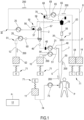
- Figure 1 shows the fluid circulation directions (indicated with reference 200) during normal operation of the apparatus 1.
- the dialysis fluid may be on-line prepared or pre-packaged in sterile bags.
- Dialysate is the spent dialysis fluid, comprising the uremic toxins removed from the blood and may include ultrafiltrate fluid.
- regional anticoagulant as a substance which, once mixed with extracorporeal blood, substantially prevents blood coagulation in the extracorporeal blood circuit and which is quickly metabolized by the patient, thus avoiding systemic anticoagulation.
- net buffer load during the extracorporeal blood treatment (e.g., CRRT) the combination of bicarbonate generated from the metabolism of bicarbonate precursors, such as citrate and/or lactate infused into the patient (J met_cit ; J met_act ), bicarbonate balance from the extracorporeal blood therapy (J HCO3_bal ) which may match with net loss or net gain for the patient, and acid infusion, e.g., from citric acid content of the anticoagulant solution, when relevant.
- net buffer load J met _ cit + J HCO 3 _ bal + J met _ lact ⁇ J H +
- calcium compensation or calcium compensation parameter
- K 0 A is the mass transfer-area coefficient of a filtration unit, wherein K 0 is the clearance at infinite blood and dialysis fluid flow rates and A is the filtration unit surface area. "K 0 A” is specific of a given solute and thereby changes according to the solute which is specifically considered.
- citrate means that the component is in form of a salt of citric acid, such as sodium, magnesium, calcium, or potassium salt thereof.
- the citric acid (denoted C 6 H 8 O 7 ) is deprotonated stepwise, therefore the “citrate” include all the different forms, citrate (denoted C 6 H 5 O 7 3- ), hydrogen citrate (denoted C 6 H 6 O 7 2- ) , and dihydrogen citrate (denoted C 6 H 7 O 7- ).
- citrate or “total citrate” means the total amount of citric acid and any salts thereof, such as its sodium, magnesium, calcium, or potassium salt thereof. In other terms, “total citrate” is the sum of free citrate ions and citrate containing complexes and ion pairs.
- buffer agent means bicarbonate or bicarbonate precursors such as lactate, citrate or acetate.
- the numeral 1 globally refers to the extracorporeal blood treatment apparatus, in particular for intensive care therapies.
- the apparatus according to figure 1 is particularly designed for continuous renal replacement therapies (CRRT).
- CRRT systems are configured for delivering very specific treatments designed for patients versing in acute states of illness and who have temporarily lost their kidney function in its entirety.
- CRRT systems may be structurally and/or operationally different from extracorporeal blood treatment systems designed for chronic patient care.
- acute patients temporarily experience complete loss of their kidney function typically due to a contemporaneous state of severe injury or during recovery from surgery.
- CRRT systems are designed to individually treat a patient exhibiting very poor health, without inducing further stress to the patient body, in particular without allowing vital parameters pertaining to the patient's blood to deviate from ideal or near-ideal values.
- CRRT systems are, thus, inherently characterized by one or more of the following features.
- CRRT involves renal replacement therapy, meaning an adjuvant therapy aimed firstly at facilitating continuous fluid removal in diuretic-resistant or acute renal failure patients. Therefore, CRRT systems inherently require a continuous net fluid removal from the patient.
- a CRRT system requires a fluid balance control system, such as a weight loss control system, configured to generate a continuous net weight loss rate (as opposed to merely controlling parameters to enable achieving a desired target weight loss as typically found in chronic patient care).
- a fluid balance control system such as a weight loss control system
- a weight loss control system configured to generate a continuous net weight loss rate (as opposed to merely controlling parameters to enable achieving a desired target weight loss as typically found in chronic patient care).
- acute patients experience extravascular fluid overload, which cannot be safely removed within a short period of time (e.g. within a few hours of chronic treatment) without causing potentially severe consequences (e.g. hypovolemic shock, arrhythmia, hypoxemia, hypoventilation, etc.).
- a CRRT system must inherently include a much more accurate control over system parameters, in particular flow rates, in order to ensure that the required low flow rates of both blood circulating extra-corporeally and of treatment fluid (infused in the extracorporeal circuit or diffused through the dialyzer) are used.
- CRRT treatment is performed continuously (e.g. for days or even weeks, without interruption/with minimal interruptions). Therefore, treatment settings in CRRT are based on flow rate settings, rather than settings pertaining to some specified treatment time (which would be unknown as acute patients may require treatment for an unknown time).
- CRRT renal replacement therapy involves therapy substituting kidney functions for a relatively long time period and, thus, a CRRT system further requires at least either fresh dialysis liquid exchange in the dialyzer (in order to remove unwanted substances from blood and to add desired substances to the blood by diffusion) and/or fresh infusion fluid in combination with ultrafiltration (in order to remove unwanted substances from blood and to add desired substances to the blood by convection).
- CRRT systems need to exhibit specific technical features enabling the system to:
- the apparatus 1 of figure 1 has an extracorporeal blood circuit 17, which takes blood from a patient P, for instance by means of a catheter introduced into a vein or artery of said patient, and through the blood withdrawal line 6 takes said blood, for instance continuously, to the filtration unit 2.
- the blood passes through the primary chamber of the filtration unit 2 and, through the blood return line 7, the treated blood is carried back to the patient.
- the connection with an anticoagulant line 51 is provided immediately downstream from the blood collecting zone on the blood withdrawal line 6.
- the machine is equipped with source of regional anticoagulant 10, such as at least a secondary fluid container or bag for supplying the anticoagulant line 51; by using corresponding means for conveying fluid, in the example shown comprising an anticoagulant pump 54, for instance a peristaltic pump, it is possible to control the fluid flow within said line by introducing the regional anticoagulant directly into the blood by means of a direct connection to the blood withdrawal line 6.
- a known blood pressure sensor 48 is placed immediately downstream the anticoagulant line 51.
- the blood circuit 17 comprises means for conveying fluid, i.e. in this particular case at least a blood pump 21 for controlling and managing the suitable blood flow Q b in the circuit. Also the blood pump 21 is generally a peristaltic pump.
- a gas exchanger 46 for removing CO 2 from circulating blood may be connected to the blood circuit.
- the gas exchanger 46 is in fluid communication with the blood circuit 17 to receive extracorporeal blood, allow CO 2 removal from blood and returning blood to the blood circuit at a downstream point.
- Figure 1 shows a gas exchanger 46 placed upstream the filtration unit 2; however, the gas exchanger may be alternatively positioned downstream the filtration unit along blood circulation direction.
- the gas exchanger 46 is connected in series with the filtration unit 2 and is placed downstream the injection point 50 where the regional anticoagulation solution is delivered to extracorporeal blood.
- the gas exchanger 46 has a blood chamber and a gas chamber separated by a membrane permeable to gases, in particular CO 2 ; the gas exchanger comprise a gas inlet, which can be connected to a gas source, such as the medical gas supply system in a hospital to receive pressurized air or oxygen for example, and a gas outlet in fluid communication with the gas chamber to discharge exhausted gas having removed CO 2 from extracorporeal blood.
- the blood inlet and the blood outlet put the extracorporeal blood circuit 17 in fluid communication with the gas exchanger blood chamber.
- the blood passes through another pressure sensor 49 controlling the correct flow within the blood circuit.
- the treated blood After passing through the primary chamber of the filtration unit 2, where the suitable exchanges of substances, molecules and fluids occur by means of a semipermeable membrane, the treated blood enters the blood return line 7, first passing through the air separator 19, commonly known as "bubble trap", designed so as to ensure the detection and removal of air bubbles present in the blood.
- the treated blood getting out of the air separator 19 then passes through an air bubble sensor 55 verifying the absence of said dangerous formations within the treated blood that has to be re-introduced in the patient's blood circulation.
- the safety valve 20 or venous clamp
- the extracorporeal blood treatment apparatus of figure 1 is equipped with a dialysis fluid circuit 32, which is also provided with at least a dialysis supply line 8 leading into the filtration unit 2 and with a dialysate line 13 from the filtration unit.
- a primary fluid container, defining said dialysis liquid source 14 is designed to supply the supply line 8 of the dialysis fluid circuit 32 (generally the primary fluid container shall consist of one or more bags containing a suitable dialysis liquid).
- the supply line 8 includes means for conveying fluid such as at least a dialysis fluid pump 25 (in the embodiment of figure 1 a peristaltic pump) for controlling the flow rate Q d of dialysis liquid from the bag and for defining a direction 200 of dialysis fluid circulation. Downstream from the dialysis fluid pump 25 in the direction of circulation 200 there is a branching 56 splitting the dialysis supply line 8 up into an intake branch 57 and an infusion branch 58. In particular, the infusion branch 58 is connected to the blood return line 7 of the blood circuit 17. In other words, by means of said infusion branch 58 it is possible to obtain a post-infusion directly in the blood line 17 using the content of the primary fluid container.
- a dialysis fluid pump 25 in the embodiment of figure 1 a peristaltic pump
- the dialysis fluid circuit 32 is further equipped with selecting means 59 for determining the percentages of fluid flow within the infusion branch 58 and the intake branch 57.
- said selecting means 59 usually placed near the branching 56, can be positioned at least between a first operating condition in which they allow the passage of fluid in the intake branch 57 and block the passage in the infusion branch 58, and a second operating condition in which they allow the passage of fluid in the infusion branch 58 and block the passage in the intake branch 57.
- said selecting means 59 may consist of a valve element operating on the dialysis fluid circuit 32 by alternatively blocking the passage of fluid in either branch.
- Suitable selectors may be alternatively provided, which are able to establish a priori the amount of liquid that has to pass through both branches simultaneously. It will also be possible to vary the percentages of fluid in either branch as a function of time and of the pre-established therapies.
- the dialysis liquid through the intake branch 57 gets into the secondary chamber of the filtration unit 2.
- the primary chamber through which the blood flow passes is separated from the secondary chamber through which the dialysis liquid passes by means of the semipermeable membrane ensuring the suitable passage of the dangerous substances/molecules and of fluid from the blood towards the dialysis liquid mainly by means of convection and diffusion processes, and also ensuring through the same principles the passage of substances/molecules from the dialysis liquid towards the blood.
- the dialysis fluid then gets into the dialysate line 13 and passes through a suitable dialysate pressure sensor 60.
- Means is provided for conveying fluid, for instance a dialysate pump 26 controlling the flow rate Q dial in the dialysate line 13 within the fluid circuit 32. Also said pump will generally be a peristaltic pump.
- the fluid to be eliminated then passes through a blood detector 61 and is conveyed into a collection container or bag 62.
- the hydraulic circuit of the apparatus according to figure 1 includes at least another infusion line 63 for feeding fluid into the blood return line 7 of the blood circuit 17.
- the infusion fluid is taken from at least an auxiliary container 64 and is sent directly to the blood return line 7 of the blood circuit 17 through means for conveying fluid, generally an infusion pump 65 (in the example a peristaltic pump) controlling its flow rate Q rep - total replacement flow rate.
- the infusion liquid can be introduced directly into the air separator 19.
- the infusion branch 58 of the dialysis fluid circuit 32 and the infusion line 63 are equipped with a common end length 66 letting fluid to enter into the blood circuit 17. Said intake end length 66 is placed downstream from the infusion pump 65 with respect to a direction of infusion and carries the fluid directly into the air separator 19.
- the infusion line 63 comprises at least a pre-infusion branch 67 connected to the blood withdrawal line 6 of the blood circuit 17.
- a pre-infusion branch 67 downstream from the infusion pump 65 with respect to the direction of infusion, there is an infusion branching 68 splitting the infusion line 63 up into the pre-infusion branch 67 and post-infusion branch 69.
- the pre-infusion branch 67 in particular, carries the fluid taken from the bag 64 into the blood withdrawal line 6 of the blood circuit 17 downstream from the blood pump 21 and downstream the gas exchanger 46 with respect to the direction of blood circulation.
- the post-infusion branch 69 is connected directly to the common end length 66.
- the infusion line 63 further comprises selecting means 70 for determining the percentage of liquid flow to be sent to the post-infusion branch 69 and to the pre-infusion branch 67.
- the selecting means 70 placed near the branching 68 may be switched between at least a first operating condition in which they allow the passage of fluid in the pre-infusion branch 67 and block the passage in the post-infusion branch 69, and at least a second operating condition in which they allow the passage of fluid in the post-infusion branch 69 and block the passage in the pre-infusion branch 67.
- the other selecting means 70 will be able to determine the percentage of fluid that has to pass in each of the two branches and to possibly vary it in time in accordance with the planned therapies.
- the selecting means 59 and the other selecting means 70 will generally, though not necessarily, be of the same nature.
- the apparatus is equipped with means 71 for determining at least the weight of the primary fluid container 14 and/or of the auxiliary fluid container 64 and/or of the regional anticoagulant container 10 and/or of the collection container 62.
- said means 71 comprises weight sensors, for instance respective scales A, B, C, D and E (for example at least an independent sensor for each fluid bag associated to the machine).
- control unit or CPU 12 active (at least) on the blood circuit 17 and in particular active on the pressure sensor 48 for reading pressure values, on the blood pump 21, on the gas exchanger 46, on the other pressure sensor 49, and on the device for detecting the presence of air bubbles 55 and on its respective safety valve 20.
- the control unit 12 has also to control the dialysis fluid circuit 32 and, in particular, shall be input with the data detected by the scales A, B, C, D and (possibly) E and, concerning the weight of the bag 14, and shall act on the pump 25, on the selecting means 59, on the pressure sensor 60, then on the dialysate pump 26 and shall eventually receive the data detected by the scale A whose function is to determine the weight of the collection container 62.
- the control unit 12 shall also act on the infusion line 63 checking the weight of the auxiliary container 64 (checked by the scale C) and will be able to control both the infusion pump 65 and the other selecting means 70.
- the control unit 12 shall also act on the anticoagulant line 51 detecting the weight of the anticoagulant fluid container 10 by means of the scale B and suitably controlling the anticoagulant pump 54 according to the treatments to be carried out as below detailed and explained.
- a regional anticoagulation system is implemented in the apparatus 1 of figure 1 to provide anticoagulation restricted to the extracorporeal blood circuit 17. The regional anticoagulation system is described in detail in the respective description paragraph.
- the apparatus of figure 1 may be alternatively (or additionally) provided with a systemic anticoagulation system, such as a syringe pump for injecting heparin downstream the blood pump 21.
- a systemic anticoagulation system such as a syringe pump for injecting heparin downstream the blood pump 21.
- a regional anticoagulation system comprises a source of regional anticoagulant 10, e.g., a container or a bag containing at least a substance having an anticoagulant effect.
- a source of regional anticoagulant 10 e.g., a container or a bag containing at least a substance having an anticoagulant effect.
- a substance having an anticoagulant effect for example, citrate, in the form of pure sodium citrate (Na 3 citrate) or mixture of sodium citrate and citric acid are used for blood anticoagulation purpose.
- pure citric acid may be used as anticoagulant.
- citrate has a high affinity for calcium in creating complexes and several steps of the coagulation cascade are dependent on blood (ionized) calcium. A proper decrease of ionized calcium concentration in the presence of citrate inactivates the coagulation cascade.
- Normal plasma includes about 1.1 to 1.3 mmol/l of ionized calcium, 0.1-0.2 mmol/l of complexed calcium and 0.9 to 1.2 mmol/l of protein-bound calcium.
- general guidelines are to adjust citrate amount/dose as to reach an ionized calcium concentration of 0.20 to 0.35 mmol/l in the extracorporeal blood circuit after citrate infusion.
- Plasma with citrate addition for anticoagulation purposes would include (as an average) about 0.3 mmol/l of ionized calcium, 1.8 mmol/l of complexed calcium (mainly Ca 3 citrate 2 ) and 0.2 mmol/l of protein-bound calcium.
- intensity of anticoagulation can be adjusted via the amount of infused citrate.
- Post-filtration unit ionized calcium concentration is commonly used as key parameter (target in the 0.20-0.35 mmol/l range) and is measured e.g., with blood gas analyzer.
- the regional anticoagulation system is arranged to deliver the regional anticoagulant at a delivery point 50 in the extracorporeal blood circuit 17.
- Citrate infusion is preferably administered close to an access end of the blood withdrawal line 6 to get full anticoagulation of the extracorporeal blood circuit 17.
- the delivery point 50 is located upstream the blood pump 21; however, it is not excluded that the delivery point 50 is located in the blood withdrawal line 6 downstream the blood pump.
- the delivery point 50 for citrate may be the inlet of the filtration unit 2.
- the dialysis fluid contains citrate in an amount sufficient to achieve ionized calcium level around 0.25-0.35 mmol/l in blood circuit downstream the dialyzer.
- Citrate may be added to the treatment fluid flowing along the supply line 8 using a corresponding concentrate bag/container in case the dialysis fluid is on-line prepared as in current apparatuses for chronic treatment.
- the source 14 for dialysis fluid is a container/bag including the proper citrate concentration or content.
- Physiologic citrate solutions are solutions having sodium concentration about 140 mmol/l, such as Baxter PrismoCitrate 10/2 (with 10 mmol/l Nacitrate and 2 mmol/l citric acid) and Baxter RegioCit 18/0 (with 18 mmol/l Nacitrate).
- Concentrated citrate solutions are for example, ACD-A (Anticoagulant Citrate Dextrose Solution) from Biomet: mix of sodium citrate (75 mmol/l), citric acid (38 mmol/l) and glucose; and Citrate 4% from Fresenius: citrate 136 mmol/l.
- Citrate amount is prescribed through the 'Citrate Dose' parameter (D citrate ) which is the amount of citrate per liter of blood treated (mmol/l blood). Notably, citrate dose does not match with citrate concentration in the diluted blood reaching the filtration unit. The concept is rather to provide for an amount of citrate in proportion to the amount of calcium to be chelated.
- Citrate infusion is delivered with a dosage aimed to maintain ionized calcium level around 0.25-0.35 mmol/l in blood circuit downstream the dialyzer.
- citrate dose is included in the range 1.5 to 6.0 mmol/L-of-blood. The most common range is 2 to 4 mmol/L-of-blood.
- Citrate dose guideline of 3.0 mmol/L-of-blood is globally followed.
- Ionized calcium and citrate complexes are rather small molecules which are easily transferred through the filtration unit 2. Loss rates are basically dependent on flow rates, filter efficiency with respect to small molecules and solute concentrations. While about half of the total calcium is not available to mass transfer during standard anticoagulation (since it is protein-bound), about 90% of total calcium becomes available during citrate anticoagulation. Therefore, citrate regional anticoagulation combined with the use of calcium free dialysis and/or replacement fluids implies significant calcium losses to dialysate. In extracorporeal blood treatments with RCA, calcium infusion is required to balance calcium losses to dialysate. During RCA, calcium infusion is adjusted to keep patient systemic ionized calcium in the normal range (e.g., 1.0 - 1.2 mmol/l).
- the regional anticoagulation system of the apparatus 1 includes a source of ion balancing solution 11, which is reinfused in the blood, either in the return line 7, in particular close to the venous vascular access, or directly into the patient P (infusion into central catheter, which is recommended).
- the ion balancing solution 11, e.g., a syringe, a container or a bag, comprises a ion replacement infusion line 74 and a corresponding ion replacement pump 75 to drive delivery of a proper ion replacement infusion rate Q ca .
- Figure 1 shows a line 74 directly infusing into the patient P.
- line 74 may alternatively directly infuse in the blood return line 7, possibly close to the venous access.
- the auxiliary container 64 of figure 1 may (alternatively or in combination) be used for ion balancing in the blood return line 7.
- pre-infusion branch 67 remains closed and unused to avoid calcium infusion upstream the filtration unit 2.
- the syringe pump (not shown) usually used to deliver heparin may be alternatively used to deliver the ion balancing solution either directly into the patient or alternatively in the blood return line.
- the ion balancing solution includes ionized (concentrated) calcium and its infusion is performed to restore patient systemic ionized calcium at normal level.
- ion balancing solution may include also ionized magnesium and its infusion is performed to restore patient systemic ionized magnesium at normal level since also magnesium removal in dialysate is increased during RCA.
- the ion replacement infusion rate Q ca may be adjusted based on the revealed patient ionized calcium concentration in blood or an automatic control may be implemented, such as the one described in patent publication US8668825B2 .
- CaComp is a calcium compensation parameter
- Q ca is the ion balancing solution flow rate (ml/h)
- Jca is the estimated calcium loss rate in the dialysate (mmol/h)
- [Ca] is calcium concentration of the ion balancing solution (mmol/l)
- Q rep is the replacement flow rate (ml/h)
- [Ca rep ] is calcium concentration of the replacement solution in post-dilution (mmol/l).
- Calcium compensation is the user-controllable setting, which might be set by the operator generally in a range between 5% and 200%.
- the above equation takes into account a post replacement solution including calcium.
- the second term of the equation should be disregarded (equal to zero).
- dialysis fluid and replacement solution
- they are generally calcium free to prevent transferring ionized calcium to blood.
- the dialysis and/or replacement fluids have adapted buffer content due to citrate metabolism and adapted sodium if concentrated citrate solution (hypertonic) is used.
- the dialysis fluid may contain no buffer agent, e.g., no bicarbonate.
- a buffer agent from a source/container/bag 64 may be infused into the blood return line 7 via a suitable buffer agent supply line 63, 69, 66 and the corresponding buffer agent pump 65.
- the apparatus 1 might also be designed to vary buffer balance of the extracorporeal blood circuit in an easy and controlled way via the possibility to set dialysis fluid (low) buffer concentration and/or to use source bags 14, 64 with different buffer concentration, e.g., in the range 15 to 25 mmol/l (and up to 40 mmol/l and/or down to 0 mmol/l) for bicarbonate.
- citrate accumulation in the patient may correlate with hypocalcemia, metabolic acidosis (low bicarbonate production due to poor metabolism) or metabolic alkalosis (excessive bicarbonate production subsequent to high citrate load).
- ratio of total calcium to ionized calcium is used as indicator, namely values below 2.5 are considered as normal (normal value below 2.0) and values above 2.5 indicate low ionized calcium concentration with respect to total calcium, possibly due to the presence of a significant systemic concentration of citrate.
- this monitoring is considered an insufficient measure, particularly in treatment involving relevant risks of acid/base unbalance, such as in RCA with 'large' flow rates, such as RCA+ECCO 2 R, or certain SCUF treatments.
- RCM risk control mitigations
- the risk control mitigations (RCMs) procedures specifically operate on the net buffer load monitoring. Control of net buffer load will be implemented in a generic way for all prescriptions in CRRT and particularly in respect to RCA and in respect to combined CRRT + ECCO 2 R prescriptions. Though these new RCMs are not expected to be activated in the known and conventional CRRT prescriptions, this may not be true for the case of SCUF where they may (relevantly) warn about or prevent inadequate prescription (e.g., due to an excessive blood flow).
- the following embodiment consists in making available a parameter which characterizes the CRRT prescription (e.g., with RCA) with respect to acid-base (or buffer) balance.
- the prescriber gets a quantitative information on the intensity of the therapy with respect to the net patient buffer (bicarbonate) gain or loss.
- this parameter is of special interest in the complex case of citrate anticoagulation, it remains also relevant to any extracorporeal dialysis therapy (run with systemic or no anticoagulation).
- the therapy system can trigger alerts in case the prescription matches with a risk of alkalosis (excessive buffer gain) or acidosis (insufficient buffer gain or net loss). Absolute limits preventing implementation of excessive prescriptions can also be considered.
- J buffer_load Net buffer load during extracorporeal therapies
- J buffer _ load J met _ cit + J HCO 3 bal + J met _ lact ⁇ J H +
- net buffer load is positive in the case extracorporeal blood therapy provides for a net gain in buffer/bicarbonate to the patient, and negative in the case of loss in buffer.
- the extracorporeal blood therapy is expected to provide for a net buffer gain to the patient, as to balance the metabolic production of protons (proteins metabolism).
- a net buffer loss may be desirable in the scenario where the patient initiates the therapy in the situation of (severe) metabolic alkalosis.
- Buffer balance parameter is derived from a modelling of one or more of:
- Calculated buffer balance does not match with the current buffer balance of the CRRT running therapy (which would require specific knowledge of current patient levels for citrate and bicarbonate), but with the (normalized) Net Buffer Load expected at a steady state where patient bicarbonate would stabilize at e.g., 25 mM.
- Acid-base steady state is established slowly and measurable changes are commonly present after 24 hours; two days appear as a reasonable minimum to consider that acid-base status is reaching steady state in the context of CRRT.
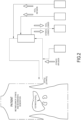
- Citrate load is defined as the net infusion rate of citrate to the patient and it matches with the difference between the citrate infusion rate from the pre-blood-pump (PBP) circuit (J cit_PBP ) and the citrate removal rate into dialysate (J cit_dial ). See figure 2 citrate infusion in the blood circuit and citrate losses through dialyzer/dialysate.
- J citrate _ load J cit _ PBP ⁇ J cit _ dial
- Citric acid and citrate forms are considered in the same way in this approach.
- the hypotheses for modelling the citrate mass transfer in the extracorporeal blood circuit includes the assumptions that citrate is distributed in plasma (and not in red blood cells), that CRRT filter citrate clearance is computed also based on citrate concentration in plasma water for mass transfer computations, that consideration is taken of patient citrate metabolism and non-zero steady state citrate concentration at blood access and that patient citrate clearance is proportional to body weight.
- citrate mass transfer parameters used for computation of above removal rate are known and constant values depending on the selected dialyzer.
- citrate concentration at the blood access is never zero as some citrate accumulates in the patient. This accumulation should be taken into consideration to avoid bias of about 10% (in case of neglecting). It requires the knowledge of the citrate metabolism rate (K cit_met ) in liver and muscles of the patient that can vary in a wide range and significantly biased the final estimation. However it could be relevant to consider a 'minimum' accumulation that occurs for a patient having a 'normal' citrate metabolism.
- patient citrate concentration is computed at steady state, assuming a typical metabolic clearance value of 700 ml/min (from literature). Although not described in literature, patient citrate clearance is assumed as proportional to body weight.
- Cp cit _ pat J citrate _ load K cit _ met
- K cit _ met 700 ⁇ BW 72
- Equation 2 D cit ⁇ Q b ⁇ 1 ⁇ K cit Qpw inlet ⁇ 1 ⁇ 1 1 + K cit _ met K cit ⁇ Qpw inlet Qp
- Bicarbonate balance is defined as the net infusion or loss rate of bicarbonate in the extracorporeal blood treatment; it matches with the difference between the infusion rate from the dialysis and/or replacement fluids (J HCO3_inf ) and the bicarbonate removal rate into dialysate (J HCO3_dial ); see figure 2 .
- the hypotheses for modelling the bicarbonate mass transfer in the extracorporeal blood circuit includes the assumptions that bicarbonate is distributed in plasma and red blood cells, that bicarbonate concentration at blood access Cp HCO3_pat is fixed (e.g., equal to 25 mM); of course, a different (fixed) value for bicarbonate concentration at blood access may be used.
- Fluid composition i.e., bicarbonate concentration and/or replacement fluid prescription
- physician upon request from the dialysis apparatus
- read through e.g., a reader of the dialysis apparatus for example by associating a product name with its bicarbonate content/concentration.
- Equations of bicarbonate removal to dialysate are very similar to those of citrate; however, they differ for the fact that bicarbonate is present in the dialysis fluid, that the value of mass transfer parameter (K 0 A) is different and that a fixed value is considered for patient systemic bicarbonate.
- K 0 A mass transfer parameter
- the corresponding citrate load/balance may take into consideration such dialysis fluid citrate concentration in the corresponding equations for citrate and in the same way as below indicated for bicarbonate.
- J HCO 3 _ dial Q d ⁇ C HCO 3 d + K HCO 3 ⁇ Cpw HCO 3 _ inlet ⁇ C HCO 3 _ d + Q fil ⁇ C HCO 3 _ d
- bicarbonate Opposite to citrate, bicarbonate is easily transferred between red blood cells and plasma; whole blood water is thus considered for the computation of mass transfer to dialysate.
- CRRT filter diffusive mass transfer coefficient of bicarbonate is taken identical to urea on the basis of their respective molecular weight (61 vs 60 g/mole). Sieving coefficient is taken as 1.
- bicarbonate mass transfer parameters used for computation of above removal rate are known and constant values depending on the selected dialyzer.
- Cpw HCO 3 _ inlet Q bw ⁇ Cp HCO 3 pat Fp + Q rep _ pre ⁇ C HCO 3 _ rep Qbw inlet
- Lactate balance is defined as the net infusion or loss rate of lactate in the extracorporeal blood treatment; it matches with the difference between the infusion rate from the dialysate and/or replacement fluids (J lact_inf ) and the lactate removal rate into dialysate (J lact_dial ).
- Lactate can be used as an alternative buffer to bicarbonate with the benefit of getting more stable solutions.
- Lactate based dialysis fluid is well known in dialysis; for example, it is used in the home dialysis version of the System One device from NxStage.
- lactate is also present in a certain number of bicarbonate solutions in the form of lactic acid as to control pH and solution stability. This is the case for the Baxter Hemosol/PrismaSol CRRT solutions range having 3 mM lactic acid.
- lactate is quickly metabolized into bicarbonate when infused to the patient, with a mole per mole conversion rate. Lactate may be modelled in the very same way as bicarbonate, assuming the patient steady state plasma lactate concentration is about 1.5 mM.
- Lactate clearance may be assumed identical to urea clearance, even though lactate molecular weight is about double of urea (112 vs 60 g/mole).
- clearance estimate error is minimal in the CRRT context where flow rates are the primary limiting factor.
- a more accurate estimate might be used, e.g. using the power dependence of K 0 A on solute molecular weight (meaning possible to derive K 0 A_lactate from known K 0 A on Urea, creatinine, vitamin B12, inulin).
- the hypotheses for modelling of lactate mass transfer in the extracorporeal blood circuit include the assumptions that lactate is distributed in plasma and red blood cells and that CRRT filtration unit lactate clearance is identical to urea clearance.
- Lactate mass balance in the extracorporeal blood circuit is computed with similar equations to bicarbonate considering metabolism of lactate load leading to 1 mole of bicarbonate per mole of lactate.
- Fluid composition i.e., lactate concentration and/or replacement fluid prescription
- Lactate is easily transferred between red blood cells and plasma; whole blood water is thus considered for the computation of mass transfer to dialysate.
- CRRT filter diffusive mass transfer coefficient of bicarbonate is taken identical to urea. Sieving coefficient is taken as 1.
- Lactate clearance ( K lact ) is considered equal to bicarbonate clearance ( K HCO 3 ) and therefore the control unit calculates it in the same way with same equations previously presented.
- Equation 17 the expression of J citrate_load is given in Equation 17, while full expression of J HCO3_bal is to be derived from Equation 5, Equation 6, Equation 7, Equation 19 and Equation 21.
- net buffer load should be positive as to neutralize the proton (H + ) generation rate G H+ from metabolism.
- the control unit of the apparatus for extracorporeal blood treatment calculates and monitors a parameter ( J buffer_load / BW ) indicative of a steady state acid-base (or buffer) balance in the blood of the patient who has to undergo the CRRT blood treatment.
- a parameter indicative of a steady state acid-base (or buffer) balance in the blood of the patient who has to undergo the CRRT blood treatment.
- prescriber gets a quantitative information on the intensity of the therapy with respect to the net patient buffer (bicarbonate) gain or loss.
- This parameter is of high interest in the complex cases of citrate anticoagulation and citrate anticoagulation combined with ECCO 2 R, it remains also relevant to any extracorporeal dialysis therapy (run with systemic or no anticoagulation).
- control unit 12 determines the net buffer load, particularly at the apparatus setting (i.e., before the CRRT treatment is started). In even more detail, the control unit controls the normalized net buffer load (nNBL) as to prevent prescriptions likely to induce patient alkalosis and/or acidosis.
- nNBL normalized net buffer load
- nNBL J buffer _ load BW
- nNBL is chosen as the indicative parameter of acid-base balance level at steady state, and is expressed as amount of buffer infused per unit of time and per patient kg (mmol/h/kg).
- the buffer balance parameter could be expressed as the steady state bicarbonate concentration, once assuming a 'default' value for the normalized net buffer load (nNBL).
- G protons generation rate
- Patient bicarbonate concentration ( Cp HCO 3_ pat ) could be taken as the indicative parameter of steady state acid-base equilibrium, providing that the (desirable/targeted) nNBL level has been chosen.
- Cp HCO 3 _ pat Fp Qbw ⁇ Cpw HCO 3 inlet ⁇ Qbw inlet ⁇ Q rep _ pre ⁇ C HCO 3 rep
- Cpw HCO 3 inlet C HCO 3 _ d + J HCO 3 _ dial ⁇ Q d ⁇ C HCO 3 d ⁇ Q fill ⁇ C HCO 3 _ d K HCO 3
- J buffer _ load nNBL 0 ⁇ BW
- J buffer_load from equation 30, J H+ from equation 9, J met_cit from equation 8 and equation 17 or 17' and J HCO 3 _inf from equation 6 are input to equation 29; the latter is then combined with equation 28 so that all terms of the this combined expression are known.
- Cpw HCO 3_ inlet is finally introduced in equation 27 to derive an expression of known/measured variables allowing the control unit 12 to determine the value of steady state patient bicarbonate which is the parameter to be controlled vs proper thresholds.
- this solution provides an alternative parameter, namely the steady state patient bicarbonate concentration (which is again a parameter indicative of the steady state acid-base balance in the blood of the patient who has to undergo to a CRRT blood treatment), with respect to the normalized buffer load parameter, allowing the control unit 12 to verify that a proper acid-base balance is maintained during the CRRT treatment.
- the steady state patient bicarbonate concentration which is again a parameter indicative of the steady state acid-base balance in the blood of the patient who has to undergo to a CRRT blood treatment
- the normalized net buffer load is (optionally) monitored with respect to two different thresholds nNBL1 and nNBL2, namely a first level (1 st threshold) that triggers an alert with reminders about a risk for metabolic alkalosis and a second level (2 nd threshold) beyond which prescription becomes impossible.
- a first level (1 st threshold) that triggers an alert with reminders about a risk for metabolic alkalosis
- new RCMs should not generate unnecessary alerts in the context of the current daily CRRT-RCA prescriptions, while must prevent unsafe drifts.
- the normalized net buffer load is included between the 1 st and the 2 nd nNBL thresholds (nNBL1 ⁇ nNBL ⁇ nNBL2), a high buffer load alarm or alert is provided to the user.
- the control unit initiate two actions, namely the alert/alarm message is provided (e.g., displayed) to inform about the high citrate/buffer load and risk for patient alkalosis and a periodic anticoagulation checkpoint reminder of a sentence about the current prescription risk for alkalosis is provided so that the user is periodically reminded about the potential alkalosis issue.
- the control unit of the apparatus blocks settings in 'real time', by adding above criterion to the other prescription boundaries which already exist. In case, it is acceptable to manage this situation with an alarm (e.g., a message) indicating that the prescription is rejected due to an excessive buffer/citrate load. While the last (confirmed) settings are rejected, there may be a need to restore a valid prescription when closing the alarm.
- an alarm e.g., a message
- Net buffer load quantifies the balance between citrate load matching with a buffer gain and buffer losses (primarily bicarbonate, secondarily lactate) associated to the CRRT process.
- H + generation rate is about 1 mmol/day/kg, or 0.04 mmol/h/kg, and is strongly dependent on the catabolism of proteins. This means that, during CRRT, patient bicarbonate / acid-base balance is expected to stabilize at a point where net buffer load equals H + generation rate.
- An ideal RCA protocol could thus be defined as providing a normalized net buffer load of +0.04 mmol/h/kg in order to reach a 25 mM plasma bicarbonate at steady state.
- the first normalized net buffer load threshold should be between 0.25 and 0.35 mmol/h/kg. Particularly, the first threshold should be about 0.3 mmol/h/kg.
- Normalized net buffer load values below 0.3 mmol/h/kg include all recommended protocols and most of reviewed RCA studies. This threshold matches with patient acid-base steady state values at the upper limit of 'normal' range according to observed correlation between nNBL and patient bicarbonate or base excess.
- the second alarm threshold (nNBL2) is intended to block any prescription above this value. Selection of the proper value is thus more critical than for nNBL1 threshold.
- the second normalized net buffer load threshold should be between 0.35 and 0.5 mmol/h/kg. Particularly, the second threshold should be about between 0.4 and 0.45 mmol/h/kg. Preferably, the selected value is about 0.4 mmol/h/kg.
- nNBL2 threshold At a normalized NBL of 0.40 mmol/h/kg, expected steady state for bicarbonate and base excess are respectively about 33 mM and +6.5 mM, which is already considered excessive. However, it could be considered that higher nNBL prescriptions are not at critical risks if applied for a limited time period, for example to quickly correct a strong acidosis state. For this reason, it may not be wise to set nNBL2 threshold too low.
- nNBL high nNBL
- the time period for allowing high nNBL (i.e., over the 2 nd threshold) prescriptions may be correlated to the difference between the normalized buffer load and the 2 nd threshold, the higher the distance the lower the allowable time.
- the normalized NBL may also be monitored in order to avoid prescription possibly leading to metabolic acidosis.
- a threshold may be set between 0 and -0,2 mmol/h/kg. Specifically, the threshold may be about -0,1 mmol/h/kg.
Landscapes
- Health & Medical Sciences (AREA)
- Heart & Thoracic Surgery (AREA)
- Vascular Medicine (AREA)
- Animal Behavior & Ethology (AREA)
- Anesthesiology (AREA)
- Biomedical Technology (AREA)
- Hematology (AREA)
- Life Sciences & Earth Sciences (AREA)
- Engineering & Computer Science (AREA)
- General Health & Medical Sciences (AREA)
- Public Health (AREA)
- Veterinary Medicine (AREA)
- Cardiology (AREA)
- Urology & Nephrology (AREA)
- Emergency Medicine (AREA)
- External Artificial Organs (AREA)
Claims (17)
- Vorrichtung zur kontinuierlichen Nierenersatztherapie (CRRT), umfassend:- eine Filtrationseinheit (2) mit einer Primärkammer (3) und einer Sekundärkammer (4), die durch eine semipermeable Membran (5) getrennt sind;- einen Blutkreislauf (17) mit einer Blutentnahmeleitung (6), die mit einem Einlass der Primärkammer (3) verbunden ist, und einer Blutrückführleitung (7), die mit einem Auslass der Primärkammer (3) verbunden ist, wobei der Blutkreislauf zur Verbindung mit einem kardiovaskulären System eines Patienten konfiguriert ist;- eine Blutpumpe (21) zum Zirkulieren von Blut im Blutkreislauf (17);- eine Dialysatleitung (13), die mit einem Auslass der Sekundärkammer (4) verbunden ist;- eine oder mehrere Leitungen (8; 51; 57; 58; 63; 69; 67; 74), um eine jeweilige Lösung in Blut zu transferieren;- mindestens eine Fluidquelle einer Lösung für jede der einen oder mehreren Leitungen, wobei die Lösung mindestens ein Puffermittel in Form von Bicarbonat oder Bicarbonatvorläufer umfasst;- eine Steuereinheit (12), die konfiguriert ist, um eine Patientenverordnung zu empfangen, die Parameter zum Festlegen einer CRRT-Blutbehandlung umfasst,dadurch gekennzeichnet, dass die Steuereinheit (12) ferner konfiguriert ist zu einem von• Bestimmen eines Parameters, der ein Säure-Base-Gleichgewicht im stationären Zustand im Blut des Patienten angibt, der einer CRRT-Blutbehandlung unterzogen werden muss, wobei der Parameter die bei einem stationären Zustand erwartete Nettopufferlast in dem Patienten oder die bei einem stationären Zustand erwartete normalisierte Nettopufferlast in dem Patienten ist, und als eine Funktion der Konzentration des Puffermittels in der Fluidquelle und als eine Funktion der geschätzten oder berechneten systemischen Konzentration von Bicarbonat- und/oder Bicarbonatvorläufern im stationären Zustand des Patienten bestimmt wird; oder• Bestimmen eines Parameters, der eine Bicarbonatkonzentration im stationären Zustand im Blut des Patienten angibt, der sich der CRRT-Blutbehandlung unterziehen muss, wobei der Parameter die Bicarbonatkonzentration im stationären Zustand des Patienten ist, nachdem ein Standardwert für die normalisierte Nettopufferlast angenommen wurde, und als eine Funktion der Konzentration des Puffermittels in der Fluidquelle und als eine Funktion der geschätzten oder berechneten Nettopufferlast bestimmt wird, die ein Säure-Base-Gleichgewicht im stationären Zustand im Blut des Patienten angibt,wobei die Nettopufferlast während einer extrakorporalen Blutbehandlung die Summe aus Bicarbonat, das aus dem Metabolismus von Bicarbonatvorläufern erzeugt wird, und Bicarbonatausgleich aus der extrakorporalen Bluttherapie (JHCO3_Ausgleich) ist, wobei die normalisierte Nettopufferlast über ein Patientenkörpergewicht (BW) normalisiert wird.
- CRRT-Vorrichtung nach dem vorhergehenden Anspruch, wobei die eine oder mehreren Leitungen (8; 51; 58; 63; 74) zum Infundieren einer jeweiligen Lösung in Blut eine Infusionsleitung (63) zum Infundieren einer Substitutionslösung, die Bicarbonat oder Bicarbonatvorläufer einschließt, in das Blut umfasst/umfassen, insbesondere zum direkten Infundieren der Substitutionslösung in den Blutkreislauf (17), wobei die Vorrichtung ferner eine Infusionspumpe (65), die an der Infusionsleitung (63) arbeitet, um eine Ersatzinfusionsrate (QErsatz) zu bestimmen, und einen Ersatzlösungsbeutel (64) umfasst, der mit einem Ende der Infusionsleitung (63) verbunden ist, um eine Lösung einschließlich Bicarbonat in Blut zu infundieren, wobei insbesondere die Infusionsleitung (63) mit der Blutrückführleitung (7) verbunden ist, um die Lösung einschließlich Bicarbonat nachzuinfundieren, wobei die Infusionsleitung (63) gegebenenfalls einen Vorinfusionszweig (67) und einen Nachinfusionszweig (69) umfasst, um Infundieren sowohl stromaufwärts als auch stromabwärts der Filtrationseinheit (2) zu ermöglichen.
- CRRT-Vorrichtung nach einem der vorhergehenden Ansprüche, wobei die eine oder die mehreren Leitungen (8; 51; 58; 63; 74) zum Infundieren einer jeweiligen Lösung in Blut eine Antikoagulansleitung (51) zum direkten Infundieren einer Antikoagulanslösung in den Blutkreislauf (17) umfasst/umfassen, wobei die Vorrichtung ferner eine Antikoagulanspumpe (54), die an der Antikoagulansleitung (51) arbeitet, um eine Antikoagulansinfusionsrate (Qcit) zu bestimmen, und einen Antikoagulanslösungsbeutel (10) umfasst, der mit einem Ende der Antikoagulansleitung (51) verbunden ist, um eine Lösung, die Citrat und gegebenenfalls Citronensäure einschließt, in den Blutkreislauf (17) zu infundieren, wobei die Antikoagulansleitung (51) mit der Blutentnahmeleitung (6) verbunden ist.
- CRRT-Vorrichtung nach einem der vorhergehenden Ansprüche, wobei die Steuereinheit (12) den Parameter (JPuffer_Last /BW) bestimmt, der ein Säure-Base-Gleichgewicht im stationären Zustand im Blut des Patienten angibt, basierend auf einem oder mehreren und insbesondere drei der Folgenden:• einer Schätzung einer Menge an Bicarbonat pro Zeiteinheit, die aus dem Metabolismus des dem Patienten infundierten Bicarbonatvorläufers erzeugt wird, insbesondere von Citrat (JMet_cit ) und/oder Lactat (JMet_lact );• einem Bicarbonatausgleich (JHCO3_Ausgleich ) aus der CRRT-Blutbehandlung, die in Form einer Menge pro Zeiteinheit zu verabreichen ist;• einem Laktatausgleich (Jlact_Ausgleich ) aus der CRRT-Blutbehandlung, der in Form einer Menge pro Zeiteinheit zu verabreichen ist;• einer Säureinfusion (J H+) aus Citronensäure, die in der Fluidquelle enthalten ist, in Form einer Menge pro Zeiteinheit.
- CRRT-Vorrichtung nach dem vorhergehenden Anspruch, wobei die Steuereinheit (12) den Parameter (JPuffer_Last /BW), der ein Säure-Base-Gleichgewicht im stationären Zustand im Blut des Patienten angibt, wie folgt bestimmt:


- CRRT-Vorrichtung nach einem der vorhergehenden Ansprüche, wobei die Steuereinheit (12) den Parameter (JBuffer_Last /BW), der ein Säure-Base-Gleichgewicht im stationären Zustand im Blut des Patienten angibt, basierend auf einer Säureinfusion (J H+), z. B. aus Citronensäure, die in der Fluidquelle enthalten ist, in Form einer Menge pro Zeiteinheit bestimmt, wobei die Säureinfusion (J H+) eine Funktion einer Säurekonzentration (CCitronensäure_pbp ) und einer Infusionsrate (Qcit ) von Säure ist, wobei insbesondere die Säureinfusion (J H+) gleich dem 3-fachen der Citronensäurekonzentration (CCitronensäure_pbp ), multipliziert mit der Infusionsrate (Qcit ) der Citronensäure, ist.
- CRRT-Vorrichtung nach einem der vorhergehenden Ansprüche, wobei die Steuereinheit (12) den Parameter (JPuffer_Last /BW) , der ein Säure-Base-Gleichgewicht im stationären Zustand im Blut des Patienten angibt, basierend auf einer Schätzung einer Menge an Bicarbonat pro Zeiteinheit bestimmt, die aus dem Metabolismus von Citrat (JMet_cit ) erzeugt wird, das dem Patienten infundiert wird, wobei insbesondere der Metabolismus der Citratlast zu 3 Mol Bicarbonat pro Mol Citrat im stationären Zustand führt, nämlich J met_ cit = 3 · Jcit_Last.
- CRRT-Vorrichtung nach dem vorhergehenden Anspruch, wobei die Steuereinheit (12) die Menge an Bicarbonat pro Zeiteinheit berechnet, die aus dem Metabolismus von Citrat erzeugt wird, wobei die Steuereinheit insbesondere die Citratlast (Jcit_Last ) als eine Funktion der metabolischen Citrat-Clearance (Kcit_Met ) des Patienten berechnet, wobei die metabolische Clearance insbesondere auf einem Körpergewicht (BW) des Patienten basiert, z. B. direkt proportional zu diesem ist, beispielsweise wie folgt bestimmt wird:

- CRRT-Vorrichtung nach einem der vorhergehenden Ansprüche 7 und 8, wobei die Menge an Bicarbonat pro Zeiteinheit, die aus dem Metabolismus von Citrat erzeugt wird, wobei die Steuereinheit insbesondere die Citratlast (Jcit_Last ) berechnet, eine Funktion der Citrat-Clearance (Kcit ) ist, wobei die Steuereinheit (12) insbesondere die Citrat-Clearance (Kcit ) als Funktion von einer oder mehreren Flussraten bestimmt, insbesondere einschließlich einer oder mehrerer von Dialyseflussrate (QD), Plasmawasserflussrate (QpwEinlass ), Ultrafiltrationsrate (QFil) in der Filtrationseinheit (2), und wobei gegebenenfalls die Steuereinheit (12) die Citrat-Clearance (Kcit ) als Funktion der zur CRRT-Behandlung vorgesehenen Filtrationseinheit (2) bestimmt, insbesondere als Funktion von einem Siebkoeffizienten (SCcit) für Citrat und/oder einem Verhältnis von Oberfläche der Filtrationseinheit zu Diffusionswiderstand des Massentransfers (K0ACit) für Citrat.
- CRRT-Vorrichtung nach einem der vorhergehenden Ansprüche 4 bis 9, wobei die Steuereinheit (12) die Menge an Bicarbonat pro Zeiteinheit berechnet, die aus dem Metabolismus von Citrat erzeugt wird, wobei insbesondere die Steuereinheit die Citratlast (Jcit_Last ) alternativ als Funktion von Citratdosis (Dcit ) und Blutfluss (Qb) berechnet, nämlich gemäß Dcit · QB, oder als Funktion der Citratflussrate (Qcit) in einer Antikoagulansleitung (51) und der Gesamtcitratkonzentration (Ccit_pbp), nämlich gemäß Qcit · CcitPBP.
- CRRT-Vorrichtung nach einem der vorhergehenden Ansprüche 4 bis 10, wobei die Steuereinheit (12) die Menge an Bicarbonat pro Zeiteinheit berechnet, die aus dem Metabolismus von Citrat erzeugt wird, wobei insbesondere die Steuereinheit die Citratlast (J_Last ) gemäß der folgenden Formel berechnet:


- CRRT-Vorrichtung nach einem der vorhergehenden Ansprüche, wobei die Steuereinheit (12) den Parameter (JPuffer_Last /BW), der ein Säure-Base-Gleichgewicht im stationären Zustand im Blut des Patienten angibt, basierend auf einem Bicarbonatausgleich (JHCO3_Ausgleich ) aus der CRRT-Blutbehandlung bestimmt, der in Form einer Menge pro Zeiteinheit abgegeben werden soll, wobei insbesondere der Bicarbonatausgleich (JHCO3_Ausgleich ) die Differenz zwischen einer Infusionsrate aus dem Dialysefluid und/oder den Ersatzfluiden (JHCO3_inf ) und der Bicarbonatentfernung in das Dialysat hinein (JHCO3_Dial ) ist.
- CRRT-Vorrichtung nach dem vorhergehenden Anspruch, wobei die Steuereinheit (12) den Bicarbonatausgleich (JHCO3_Ausgleich ) als eine Funktion von einem oder mehreren von Folgenden berechnet:o einer Ersatzflussrate (QErsatz) und Bicarbonatkonzentration in der Ersatzlösung (CHCO3_Ersatz ), nämlich als Funktion von QErsatz · CHCO3_Ersatz ;o einer Bicarbonatplasmawasserkonzentration am Filtereinlass (CpwHCO3_Einlass ), insbesondere als Funktion einer Differenz zwischen Bicarbonatplasmawasserkonzentration am Filtereinlass (CpwHCO3_Einlass ) und Bicarbonatkonzentration in dem Dialysefluid (CHCO3_D );o einer Ultrafiltrationsrate (QFil) in der Filtrationseinheit (2) und einer Bicarbonatkonzentration in dem Dialysefluid (C HCO3_D);o einer Bicarbonat-Clearance (KHCO3 ), wobei insbesondere die Steuereinheit (12) die Bicarbonat-Clearance (KHCO3 ) als Funktion von einer oder mehreren Flussraten bestimmt, insbesondere einschließlich einer oder mehreren von Dialyseflussrate (QD), Blutwasserflussrate (QbwEinlass ), Ultrafiltrationsrate (QFil) in Filtrationseinheit (2), und wobei gegebenenfalls die Steuereinheit (12) die Bicarbonat-Clearance (KHCO3 ) als Funktion der zur CRRT-Behandlung vorgesehenen Filtrationseinheit (2) berechnet, insbesondere als Funktion von einem Siebkoeffizienten (SCHCO3) für Bicarbonat und/oder einem Verhältnis von Oberfläche der Filtrationseinheit zu Diffusionswiderstand des Massentransfers (K0AHCO3) für Bicarbonat.
- CRRT-Vorrichtung nach einem der vorhergehenden Ansprüche, wobei die Steuereinheit (12) konfiguriert ist, um den Parameter, der ein Säure-Base-Gleichgewicht im stationären Zustand im Blut des Patienten angibt, mit einem Schwellenwert zu vergleichen, wobei die Steuereinheit (12), falls der Schwellenwert ein oberer Schwellenwert ist, eine Warnung erzeugt, wenn der Parameter höher als der obere Schwellenwert ist, die Steuereinheit (12), falls der Schwellenwert ein unterer Schwellenwert ist, eine Warnung erzeugt, wenn der Parameter niedriger als der untere Schwellenwert ist, wobei, falls der Parameter den Schwellenwert überschreitet, die Steuereinheit (12) konfiguriert ist, um entweder die Warnung auszugeben und eine eingegebene Patientenverordnung beizubehalten, oder die Warnung auszugeben und die eingegebene Patientenverordnung abzulehnen,
wobei insbesondere, falls die eingegebene Verordnung abgelehnt wird, die Steuereinheit (12) ferner konfiguriert ist zum:- Wiederherstellen einer vorherigen gültigen Patientenverordnung; oder- automatischen Verschieben von einem oder mehreren Parametern der Patientenverordnung, z. B. einer Blutflussrate und/oder einer Citratdosis, auf einen vorgeschlagenen Wert, der eine neue gültige Patientenverordnung definiert. - CRRT-Vorrichtung nach Anspruch 14, wobei unter der Annahme eines Ziels, das für eine Bicarbonatkonzentration des Patienten im stationären Zustand festgelegt ist und insbesondere zwischen 24 mmol/l und 26 mmol/l liegt, der Schwellenwert einen oberen Schwellenwert einschließt, der zwischen 0,25 und 0,5 mmol/h/kg liegt, wobei insbesondere:- ein erster oberer Schwellenwert zwischen 0,25 und 0,35 mmol/h/kg liegt, wobei beispielsweise der erste Schwellenwert etwa 0,3 mmol/h/kg beträgt; und/oder- ein zweiter oberer Schwellenwert zwischen 0,35 und 0,5 mmol/h/kg, genauer zwischen 0,4 und 0,45 mmol/h/kg liegt, wobei beispielsweise der zweite Schwellenwert etwa 0,4 mmol/h/kg beträgt,und wobei der Schwellenwert einen unteren Schwellenwert einschließt, der zwischen 0 und -0,2 mmol/h/kg liegt, wobei insbesondere der untere Schwellenwert etwa -0,1 mmol/h/kg beträgt, wobei die Steuereinheit (12) ferner konfiguriert ist, eine Warnung auszugeben und/oder eine eingegebene Verordnung zu blockieren, falls der Parameter niedriger als der untere Schwellenwert ist.
- CRRT-Vorrichtung nach einem der vorhergehenden Ansprüche, wobei die Vorrichtung umfasst:eine Quelle für Dialysefluid zum Bereitstellen von Fluid an die Dialysezufuhrleitung, wobei das Dialysefluid im Wesentlichen frei von einem Puffermittel ist;einen Ersatzlösungsbeutel (64), der eine Substitutionslösung mit einem Puffermittel enthält, wobei eine Puffermittelkonzentration in der Substitutionslösung zwischen 0 und 1000 mmol/l liegt,insbesondere zwischen 100 mmol/l und 200 mmol/l, gegebenenfalls in Kombination mit pufferfreiem Dialysat und/oder pufferfreien anderen Ersatzfluiden, oderinsbesondere zwischen 50 mmol/l und 100 mmol/l, gegebenenfalls in Kombination mit niedrigem Puffergehalt in Dialysat, z. B. weniger als 25 mmol/l, und/oder niedrigem Puffergehalt in anderen Ersatzflüssigkeiten, z. B. weniger als 25 mmol/l),die eine oder mehreren Leitungen (8; 51; 58; 63; 74) zum Infundieren einer jeweiligen Lösung in Blut eine Infusionsleitung (63) umfasst/umfassen, die mit dem Ersatzlösungsbeutel (64) zum Infundieren der Substitutionslösung in das Blut verbunden ist,wobei insbesondere die Infusionsleitung (63) eine Nachinfusionsleitung ist, die das Puffermittel in den Blutkreislauf (17) stromabwärts der Filtrationseinheit (2) infundiert, und wobei gegebenenfalls das Puffermittel Bicarbonat umfasst oder ist.
- CRRT-Vorrichtung nach einem der vorhergehenden Ansprüche, wobei die Steuereinheit (12) konfiguriert ist, um die Patientenverordnungsparameter zu empfangen und den Parameter, der ein Säure-Base-Gleichgewicht im stationären Zustand im Blut des Patienten angibt, basierend auf einem oder mehreren der Verordnungsparameter oder basierend auf Parametern, die direkt von den Verordnungsparametern abgeleitet sind, zu bestimmen, wobei die Steuereinheit (12) die Patientenverordnung empfängt, die eine oder mehrere von einer Blutflussrate (QB) in dem Blutkreislauf (17), einer Dialyseflussrate (QD) von Dialysefluid in einer Dialysezufuhrleitung (8), einer Patientenfluidentfernungsrate (Qwl), die von dem Patienten zu entfernen ist, und einer Dialysatflussrate (QDial) einschließt, wobei insbesondere die Steuereinheit (12) konfiguriert ist, um Patientenverordnungsparameter zu empfangen, die die Blutflussrate (QB) in dem Blutkreislauf (17), die Dialyseflussrate (QD) von Dialysefluid in der Dialysezufuhrleitung (8) und die Patientenfluidentfernungsrate (Qwl) umfassen, die von dem Patienten zu entfernen ist, wobei die Steuereinheit (12) gegebenenfalls konfiguriert ist, um Patientenverordnungsparameter zu empfangen, umfassend:• eine Fluidflussrate eines Ersatzfluids (QErsatz), d. h. eine Gesamtflussrate der mit Ersatzfluid infundierten Vor- und Nachfiltrationseinheit (2), und ein Vor- oder Nachinfusionsverhältnis (PRE%) des Ersatzfluids; oder• eine Nachinfusionsflussrate eines Substitutionsfluids (Qpost) und/oder eine Vorinfusionsflussrate eines Substitutionsfluids (Qpre).
Priority Applications (8)
| Application Number | Priority Date | Filing Date | Title |
|---|---|---|---|
| EP19219245.8A EP3842084B1 (de) | 2019-12-23 | 2019-12-23 | Vorrichtung zur extrakorporalen blutbehandlung |
| ES19219245T ES3026213T3 (en) | 2019-12-23 | 2019-12-23 | Apparatus for extracorporeal blood treatment |
| PCT/IB2020/062407 WO2021130701A1 (en) | 2019-12-23 | 2020-12-23 | Apparatus for extracorporeal blood treatment |
| BR112022012505A BR112022012505A2 (pt) | 2019-12-23 | 2020-12-23 | Aparelho para tratamento de sangue extracorpóreo |
| KR1020227025487A KR20220121250A (ko) | 2019-12-23 | 2020-12-23 | 체외 혈액 치료를 위한 장치 |
| US17/785,192 US11951240B2 (en) | 2019-12-23 | 2020-12-23 | Apparatus for extracorporeal blood treatment |
| JP2022535219A JP7657218B2 (ja) | 2019-12-23 | 2020-12-23 | 体外血液治療装置 |
| CN202080090085.0A CN114867506B (zh) | 2019-12-23 | 2020-12-23 | 用于体外血液处理的设备 |
Applications Claiming Priority (1)
| Application Number | Priority Date | Filing Date | Title |
|---|---|---|---|
| EP19219245.8A EP3842084B1 (de) | 2019-12-23 | 2019-12-23 | Vorrichtung zur extrakorporalen blutbehandlung |
Publications (2)
| Publication Number | Publication Date |
|---|---|
| EP3842084A1 EP3842084A1 (de) | 2021-06-30 |
| EP3842084B1 true EP3842084B1 (de) | 2025-02-12 |
Family
ID=69005533
Family Applications (1)
| Application Number | Title | Priority Date | Filing Date |
|---|---|---|---|
| EP19219245.8A Active EP3842084B1 (de) | 2019-12-23 | 2019-12-23 | Vorrichtung zur extrakorporalen blutbehandlung |
Country Status (8)
| Country | Link |
|---|---|
| US (1) | US11951240B2 (de) |
| EP (1) | EP3842084B1 (de) |
| JP (1) | JP7657218B2 (de) |
| KR (1) | KR20220121250A (de) |
| CN (1) | CN114867506B (de) |
| BR (1) | BR112022012505A2 (de) |
| ES (1) | ES3026213T3 (de) |
| WO (1) | WO2021130701A1 (de) |
Families Citing this family (3)
| Publication number | Priority date | Publication date | Assignee | Title |
|---|---|---|---|---|
| US12230403B2 (en) | 2019-03-11 | 2025-02-18 | Fresenius Medical Care Holdings, Inc. | Techniques for determining acid-base homeostasis |
| IT202000026212A1 (it) * | 2020-11-03 | 2022-05-03 | Gambro Lundia Ab | Apparecchio per il trattamento extracorporeo del sangue e processo di calcolo delle portate impostate in un apparecchio medico per il trattamento extracorporeo del sangue |
| EP4533470A1 (de) * | 2022-05-24 | 2025-04-09 | Fresenius Medical Care Holdings, Inc. | Verfahren zur bestimmung von säure-base-homöostase |
Citations (2)
| Publication number | Priority date | Publication date | Assignee | Title |
|---|---|---|---|---|
| US5578223A (en) | 1991-09-10 | 1996-11-26 | Hospal Industrie | Artificial kidney and method for adjusting a concentration of substance in blood using thereof |
| US8211048B2 (en) | 2006-02-22 | 2012-07-03 | Henry Ford Health System | System and method for delivery of regional citrate anticoagulation to extracorporeal blood circuits |
Family Cites Families (6)
| Publication number | Priority date | Publication date | Assignee | Title |
|---|---|---|---|---|
| US8372025B2 (en) | 2005-09-22 | 2013-02-12 | Baxter International Inc. | Automation and optimization of CRRT treatment using regional citrate anticoagulation |
| US8133194B2 (en) * | 2006-02-22 | 2012-03-13 | Henry Ford Health System | System and method for delivery of regional citrate anticoagulation to extracorporeal blood circuits |
| WO2010029401A2 (en) | 2008-09-09 | 2010-03-18 | Gambro Lundia Ab | A procedure and a device for extracorporeal blood treatment using citrate anticoagulation |
| CN102378631B (zh) * | 2009-03-31 | 2015-08-19 | 甘布罗伦迪亚股份公司 | 多部分式流体系统和用于在体外血液回路中局部柠檬酸盐抗凝的系统 |
| EP2653178A1 (de) * | 2012-04-16 | 2013-10-23 | Zentrum für biomedizinische Technologie der Donau- Universität Krems | Sicherheitseinrichtung für eine extrakorporale Blutbehandlung |
| EP3302606B1 (de) * | 2015-05-25 | 2021-06-16 | Gambro Lundia AB | Vorrichtung zur extrakorporalen blutbehandlung ii |
-
2019
- 2019-12-23 EP EP19219245.8A patent/EP3842084B1/de active Active
- 2019-12-23 ES ES19219245T patent/ES3026213T3/es active Active
-
2020
- 2020-12-23 BR BR112022012505A patent/BR112022012505A2/pt unknown
- 2020-12-23 US US17/785,192 patent/US11951240B2/en active Active
- 2020-12-23 JP JP2022535219A patent/JP7657218B2/ja active Active
- 2020-12-23 WO PCT/IB2020/062407 patent/WO2021130701A1/en not_active Ceased
- 2020-12-23 KR KR1020227025487A patent/KR20220121250A/ko active Pending
- 2020-12-23 CN CN202080090085.0A patent/CN114867506B/zh active Active
Patent Citations (2)
| Publication number | Priority date | Publication date | Assignee | Title |
|---|---|---|---|---|
| US5578223A (en) | 1991-09-10 | 1996-11-26 | Hospal Industrie | Artificial kidney and method for adjusting a concentration of substance in blood using thereof |
| US8211048B2 (en) | 2006-02-22 | 2012-07-03 | Henry Ford Health System | System and method for delivery of regional citrate anticoagulation to extracorporeal blood circuits |
Non-Patent Citations (17)
| Title |
|---|
| "Dialyse für Einsteiger", 1 January 2007, URBAN UND FISCHER, ISBN: 978-3-437-27790-0, article GERD BREUCH; WILLI SERVOS: "2 Anatomie und Physiologie der Niere", pages: 4 - 14, XP009564134 |
| "Dissertation", 1 January 2013, UNIVERSITÄT ULM, MEDIZINISCHE FAKULTÄT, article BRUCKE MARKUS: "Untersuchung zur Sicherheit und Prozessqualität der kontinuierlichen veno-venösen Hämodialyse mit regionaler Citratantikoagulation", pages: 1 - 81, XP093338384 |
| ANONYMOUS: "multi Version: multiFiltratePRO Gebrauchsanweisung; Software-Version: 3.1 Auflage: 3A-2014", GEBRAUCHSANWEISUNG, FRESENIUS MEDICAL CARE DEUTSCHLAND GMBH, 1 January 2014 (2014-01-01), pages 1 - 246, XP093338378, Retrieved from the Internet <URL:http://www.fmc-deutschland.com> |
| ANONYMOUS: "multiFiltratePRO Die optimale Unterstützung für jedes Team", AKUT-THERAPIE-SYSTEME BROCHURE, FRESENIUS MEDICAL CARE DEUTSCHLAND GMBH, 1 June 2015 (2015-06-01), pages 1 - 20, XP093338380, Retrieved from the Internet <URL:https://freseniusmedicalcare.com/content/dam/fresenius-medical-care/austria/pdf/multiFiltratePRO.pdf> |
| D5a - Eidesstattliche Aussage von Hr. Dirk Etzdorf |
| D5b - Scan des Lieferscheins Nr. 3502534754 vom 16.02.2015 |
| D5c - Scan einer Bestätigung zum Gebrauch der multiFiltratePRO |
| D5d - Foto vom Symposium in Bremen, 18.02.2015 |
| DAVENPORT A., TOLWANI A.: "Citrate anticoagulation for continuous renal replacement therapy (CRRT) in patients with acute kidney injury admitted to the intensive care unit", CLINICAL KIDNEY JOURNAL, vol. 2, no. 6, 1 December 2009 (2009-12-01), pages 439 - 447, XP093338351, ISSN: 2048-8505, DOI: 10.1093/ndtplus/sfp136 |
| FIACCADORI ENRICO, PISTOLESI VALENTINA, MARIANO FILIPPO, MANCINI ELENA, CANEPARI GIORGIO, INGUAGGIATO PAOLA, POZZATO MARCO, MORABI: "Regional citrate anticoagulation for renal replacement therapies in patients with acute kidney injury: a position statement of the Work Group âRenal Replacement Therapies in Critically Ill Patientsâ of the Italian Society of Nephrology", JOURNAL OF NEPHROLOGY : JN, SPRINGER, WICHTIG, IT, vol. 28, no. 2, 1 April 2015 (2015-04-01), IT , pages 151 - 164, XP093338338, ISSN: 1121-8428, DOI: 10.1007/s40620-014-0160-2 |
| GERD BREUCH: "Fachpflege Nephrologie und Dialyse", 1 January 2000, URBAN UND FISCHER, ISBN: 3-437-26250-5, article ALEXANDER, HEIDEMARIE ; BROSINSKY, WILFRIED: "Physiologische Grundlagen, Möglichkeiten und Grenzen der Nierenersatztherapie", pages: 99 - 105, XP009564135 |
| HANS EDUARD FRANZ: "Blutreinigungsverfahren : Technik und Klinik", 1 January 1997, THIEME VERLAG, ISBN: 3-13-497705-2, article F.F. BECKER, D. BUNDSCHU: "11 Technik der Hämodialyse und Antikoagulation", pages: 125 - 140, XP009564136 |
| SANTO MORABITO; VALENTINA PISTOLESI; LUIGI TRITAPEPE; LAURA ZEPPILLI; FRANCESCA POLISTENA; ENRICO FIACCADORI; ALESSANDRO PIERUCCI: "Regional citrate anticoagulation in CVVH: A new protocol combining citrate solution with a phosphateâcontaining replacement fluid", HEMODIALYSIS INTERNATIONAL, WILEY-BLACKWELL PUBLISHING, INC., US, vol. 17, no. 2, 7 August 2012 (2012-08-07), US , pages 313 - 320, XP072251189, ISSN: 1492-7535, DOI: 10.1111/j.1542-4758.2012.00730.x |
| WALTER H. HöRL , KARL-MARTIN KOCH , ROBERT M. LINDSAY, C. RONCO: "Replacement of renal function by dialysis", 28 October 2004, KLUWER ACADEMIC PUBL. , NL , ISBN: 978-1-4020-0083-6, article FERIANI MARIANO, FABRIS ALDO, GRECA GIUSEPPE LA: "28 Acid-base in dialysis", pages: 829 - 841, XP093338362, DOI: 10.1007/978-1-4020-2275-3_33 |
| YESSAYAN LENAR, YEE JERRY, FRINAK STAN, KWON DAVID, SZAMOSFALVI BALAZS: "Treatment of Severe Metabolic Alkalosis with Continuous Renal Replacement Therapy : Bicarbonate Kinetic Equations of Clinical Value", ASAIO JOURNAL., LIPPINCOTT WILLIAMS & WILKINS / ASAIO, HAGERSTOWN, MD., US, vol. 61, no. 4, 1 July 2015 (2015-07-01), US , pages e20 - e25, XP093338348, ISSN: 1058-2916, DOI: 10.1097/MAT.0000000000000216 |
| ZHENG YIN, XU ZHONGYE, ZHU QIUYU, LIU JUNFENG, QIAN JING, YOU HUAIZHOU, GU YONG, HAO CHUANMING, JIAO ZHENG, DING FENG: "Citrate Pharmacokinetics in Critically Ill Patients with Acute Kidney Injury", PLOS ONE, PUBLIC LIBRARY OF SCIENCE, US, vol. 8, no. 6, 1 June 2013 (2013-06-01), US , pages e65992 - 7, XP093338340, ISSN: 1932-6203, DOI: 10.1371/journal.pone.0065992 |
| ZICK G, C. WILMS, L. RENDERS, J. SCHULZ, A. FRERICHS, I. FRERICHS, N. WEILER: "Kontinuierliche venovenöse Hämodialyse mit regionaler Citratantikoagulation bei Patienten mit Leberinsuffizienz – Eine vergleichende prospektive Observationsstudie [Continuous renal replacement therapy with regional citrate anticoagulation in patients with liver failure â A prospective observation", ANAESTHESIOLOGIE UND INTENSIVMEDIZIN., PERIMED VERLAG STRAUBE, ERLANGEN., DE, vol. 50, no. 10, 1 October 2009 (2009-10-01), DE , pages 580 - 591, XP093338344, ISSN: 0170-5334 |
Also Published As
| Publication number | Publication date |
|---|---|
| CN114867506B (zh) | 2025-09-16 |
| JP7657218B2 (ja) | 2025-04-04 |
| US11951240B2 (en) | 2024-04-09 |
| EP3842084A1 (de) | 2021-06-30 |
| BR112022012505A2 (pt) | 2022-09-06 |
| JP2023507306A (ja) | 2023-02-22 |
| WO2021130701A1 (en) | 2021-07-01 |
| ES3026213T3 (en) | 2025-06-10 |
| KR20220121250A (ko) | 2022-08-31 |
| US20230017204A1 (en) | 2023-01-19 |
| CN114867506A (zh) | 2022-08-05 |
Similar Documents
| Publication | Publication Date | Title |
|---|---|---|
| CA2796566C (en) | Dialysis apparatus and method for controlling a dialysis apparatus | |
| EP2001532B1 (de) | Citrat-antikoagulationssystem für extrakorporale blutbehandlungen | |
| US10709833B2 (en) | Multipart fluid system and a system for regional citrate anticoagulation in an extracorporeal blood circuit | |
| US11951240B2 (en) | Apparatus for extracorporeal blood treatment | |
| Brandl et al. | A target-orientated algorithm for regional citrate-calcium anticoagulation in extracorporeal therapies | |
| EP3544652B1 (de) | Vorrichtung zur extrakorporalen blutbehandlung | |
| US20150374897A1 (en) | Apparatus for blood purification by extracorporeal circulation | |
| EP4240439B1 (de) | Vorrichtung zur extrakorporalen behandlung von blut und verfahren zur berechnung von eingestellten durchflussraten in einer medizinischen vorrichtung zur extrakorporalen behandlung von blut | |
| EP4240440B1 (de) | Vorrichtung zur extrakorporalen behandlung von blut und zur berechnung von durchflussraten | |
| JP6482529B2 (ja) | クエン酸塩およびリン酸塩を含む抗凝固液 | |
| WO2022096388A1 (en) | Apparatus for extracorporeal treatment of blood and process of calculating set flow rates in a medical apparatus for extracorporeal treatment of blood | |
| EP4360667A1 (de) | Extrakorporale blutbehandlungsvorrichtung | |
| EP2991623B1 (de) | Mehrteiliges fluidsystem und system für regionale citrat-gerinnungsverhinderung mit einem phosphat mit einem gerinnungsverhindernden fluid | |
| Baldwin et al. | Terminology and nomenclature |
Legal Events
| Date | Code | Title | Description |
|---|---|---|---|
| PUAI | Public reference made under article 153(3) epc to a published international application that has entered the european phase |
Free format text: ORIGINAL CODE: 0009012 |
|
| STAA | Information on the status of an ep patent application or granted ep patent |
Free format text: STATUS: THE APPLICATION HAS BEEN PUBLISHED |
|
| AK | Designated contracting states |
Kind code of ref document: A1 Designated state(s): AL AT BE BG CH CY CZ DE DK EE ES FI FR GB GR HR HU IE IS IT LI LT LU LV MC MK MT NL NO PL PT RO RS SE SI SK SM TR |
|
| STAA | Information on the status of an ep patent application or granted ep patent |
Free format text: STATUS: REQUEST FOR EXAMINATION WAS MADE |
|
| 17P | Request for examination filed |
Effective date: 20211230 |
|
| RBV | Designated contracting states (corrected) |
Designated state(s): AL AT BE BG CH CY CZ DE DK EE ES FI FR GB GR HR HU IE IS IT LI LT LU LV MC MK MT NL NO PL PT RO RS SE SI SK SM TR |
|
| GRAP | Despatch of communication of intention to grant a patent |
Free format text: ORIGINAL CODE: EPIDOSNIGR1 |
|
| STAA | Information on the status of an ep patent application or granted ep patent |
Free format text: STATUS: GRANT OF PATENT IS INTENDED |
|
| INTG | Intention to grant announced |
Effective date: 20241122 |
|
| RIN1 | Information on inventor provided before grant (corrected) |
Inventor name: POUCHOULIN, DOMINIQUE |
|
| GRAS | Grant fee paid |
Free format text: ORIGINAL CODE: EPIDOSNIGR3 |
|
| GRAA | (expected) grant |
Free format text: ORIGINAL CODE: 0009210 |
|
| STAA | Information on the status of an ep patent application or granted ep patent |
Free format text: STATUS: THE PATENT HAS BEEN GRANTED |
|
| AK | Designated contracting states |
Kind code of ref document: B1 Designated state(s): AL AT BE BG CH CY CZ DE DK EE ES FI FR GB GR HR HU IE IS IT LI LT LU LV MC MK MT NL NO PL PT RO RS SE SI SK SM TR |
|
| REG | Reference to a national code |
Ref country code: GB Ref legal event code: FG4D |
|
| REG | Reference to a national code |
Ref country code: CH Ref legal event code: EP |
|
| REG | Reference to a national code |
Ref country code: DE Ref legal event code: R096 Ref document number: 602019065721 Country of ref document: DE |
|
| REG | Reference to a national code |
Ref country code: IE Ref legal event code: FG4D |
|
| REG | Reference to a national code |
Ref country code: ES Ref legal event code: FG2A Ref document number: 3026213 Country of ref document: ES Kind code of ref document: T3 Effective date: 20250610 |
|
| REG | Reference to a national code |
Ref country code: NL Ref legal event code: MP Effective date: 20250212 |
|
| PG25 | Lapsed in a contracting state [announced via postgrant information from national office to epo] |
Ref country code: RS Free format text: LAPSE BECAUSE OF FAILURE TO SUBMIT A TRANSLATION OF THE DESCRIPTION OR TO PAY THE FEE WITHIN THE PRESCRIBED TIME-LIMIT Effective date: 20250512 |
|
| PG25 | Lapsed in a contracting state [announced via postgrant information from national office to epo] |
Ref country code: FI Free format text: LAPSE BECAUSE OF FAILURE TO SUBMIT A TRANSLATION OF THE DESCRIPTION OR TO PAY THE FEE WITHIN THE PRESCRIBED TIME-LIMIT Effective date: 20250212 |
|
| PG25 | Lapsed in a contracting state [announced via postgrant information from national office to epo] |
Ref country code: PL Free format text: LAPSE BECAUSE OF FAILURE TO SUBMIT A TRANSLATION OF THE DESCRIPTION OR TO PAY THE FEE WITHIN THE PRESCRIBED TIME-LIMIT Effective date: 20250212 |
|
| REG | Reference to a national code |
Ref country code: LT Ref legal event code: MG9D |
|
| PG25 | Lapsed in a contracting state [announced via postgrant information from national office to epo] |
Ref country code: IS Free format text: LAPSE BECAUSE OF FAILURE TO SUBMIT A TRANSLATION OF THE DESCRIPTION OR TO PAY THE FEE WITHIN THE PRESCRIBED TIME-LIMIT Effective date: 20250612 Ref country code: NO Free format text: LAPSE BECAUSE OF FAILURE TO SUBMIT A TRANSLATION OF THE DESCRIPTION OR TO PAY THE FEE WITHIN THE PRESCRIBED TIME-LIMIT Effective date: 20250512 |
|
| PG25 | Lapsed in a contracting state [announced via postgrant information from national office to epo] |
Ref country code: NL Free format text: LAPSE BECAUSE OF FAILURE TO SUBMIT A TRANSLATION OF THE DESCRIPTION OR TO PAY THE FEE WITHIN THE PRESCRIBED TIME-LIMIT Effective date: 20250212 |
|
| PG25 | Lapsed in a contracting state [announced via postgrant information from national office to epo] |
Ref country code: HR Free format text: LAPSE BECAUSE OF FAILURE TO SUBMIT A TRANSLATION OF THE DESCRIPTION OR TO PAY THE FEE WITHIN THE PRESCRIBED TIME-LIMIT Effective date: 20250212 |
|
| PG25 | Lapsed in a contracting state [announced via postgrant information from national office to epo] |
Ref country code: LV Free format text: LAPSE BECAUSE OF FAILURE TO SUBMIT A TRANSLATION OF THE DESCRIPTION OR TO PAY THE FEE WITHIN THE PRESCRIBED TIME-LIMIT Effective date: 20250212 Ref country code: PT Free format text: LAPSE BECAUSE OF FAILURE TO SUBMIT A TRANSLATION OF THE DESCRIPTION OR TO PAY THE FEE WITHIN THE PRESCRIBED TIME-LIMIT Effective date: 20250612 |
|
| PG25 | Lapsed in a contracting state [announced via postgrant information from national office to epo] |
Ref country code: GR Free format text: LAPSE BECAUSE OF FAILURE TO SUBMIT A TRANSLATION OF THE DESCRIPTION OR TO PAY THE FEE WITHIN THE PRESCRIBED TIME-LIMIT Effective date: 20250513 Ref country code: BG Free format text: LAPSE BECAUSE OF FAILURE TO SUBMIT A TRANSLATION OF THE DESCRIPTION OR TO PAY THE FEE WITHIN THE PRESCRIBED TIME-LIMIT Effective date: 20250212 |
|
| REG | Reference to a national code |
Ref country code: AT Ref legal event code: MK05 Ref document number: 1765485 Country of ref document: AT Kind code of ref document: T Effective date: 20250212 |
|
| PG25 | Lapsed in a contracting state [announced via postgrant information from national office to epo] |
Ref country code: SE Free format text: LAPSE BECAUSE OF FAILURE TO SUBMIT A TRANSLATION OF THE DESCRIPTION OR TO PAY THE FEE WITHIN THE PRESCRIBED TIME-LIMIT Effective date: 20250212 |
|
| PG25 | Lapsed in a contracting state [announced via postgrant information from national office to epo] |
Ref country code: SM Free format text: LAPSE BECAUSE OF FAILURE TO SUBMIT A TRANSLATION OF THE DESCRIPTION OR TO PAY THE FEE WITHIN THE PRESCRIBED TIME-LIMIT Effective date: 20250212 |
|
| PG25 | Lapsed in a contracting state [announced via postgrant information from national office to epo] |
Ref country code: DK Free format text: LAPSE BECAUSE OF FAILURE TO SUBMIT A TRANSLATION OF THE DESCRIPTION OR TO PAY THE FEE WITHIN THE PRESCRIBED TIME-LIMIT Effective date: 20250212 |
|
| PG25 | Lapsed in a contracting state [announced via postgrant information from national office to epo] |
Ref country code: AT Free format text: LAPSE BECAUSE OF FAILURE TO SUBMIT A TRANSLATION OF THE DESCRIPTION OR TO PAY THE FEE WITHIN THE PRESCRIBED TIME-LIMIT Effective date: 20250212 |
|
| PG25 | Lapsed in a contracting state [announced via postgrant information from national office to epo] |
Ref country code: CZ Free format text: LAPSE BECAUSE OF FAILURE TO SUBMIT A TRANSLATION OF THE DESCRIPTION OR TO PAY THE FEE WITHIN THE PRESCRIBED TIME-LIMIT Effective date: 20250212 Ref country code: EE Free format text: LAPSE BECAUSE OF FAILURE TO SUBMIT A TRANSLATION OF THE DESCRIPTION OR TO PAY THE FEE WITHIN THE PRESCRIBED TIME-LIMIT Effective date: 20250212 |
|
| PG25 | Lapsed in a contracting state [announced via postgrant information from national office to epo] |
Ref country code: RO Free format text: LAPSE BECAUSE OF FAILURE TO SUBMIT A TRANSLATION OF THE DESCRIPTION OR TO PAY THE FEE WITHIN THE PRESCRIBED TIME-LIMIT Effective date: 20250212 |
|
| PG25 | Lapsed in a contracting state [announced via postgrant information from national office to epo] |
Ref country code: SK Free format text: LAPSE BECAUSE OF FAILURE TO SUBMIT A TRANSLATION OF THE DESCRIPTION OR TO PAY THE FEE WITHIN THE PRESCRIBED TIME-LIMIT Effective date: 20250212 |
|
| REG | Reference to a national code |
Ref country code: DE Ref legal event code: R026 Ref document number: 602019065721 Country of ref document: DE |
|
| PLBI | Opposition filed |
Free format text: ORIGINAL CODE: 0009260 |
|
| PLAX | Notice of opposition and request to file observation + time limit sent |
Free format text: ORIGINAL CODE: EPIDOSNOBS2 |
|
| 26 | Opposition filed |
Opponent name: FRESENIUS MEDICAL CARE AG Effective date: 20251112 |
|
| PGFP | Annual fee paid to national office [announced via postgrant information from national office to epo] |
Ref country code: DE Payment date: 20251126 Year of fee payment: 7 |
|
| PGFP | Annual fee paid to national office [announced via postgrant information from national office to epo] |
Ref country code: GB Payment date: 20251120 Year of fee payment: 7 |
|
| PGFP | Annual fee paid to national office [announced via postgrant information from national office to epo] |
Ref country code: IT Payment date: 20251119 Year of fee payment: 7 |
|
| PGFP | Annual fee paid to national office [announced via postgrant information from national office to epo] |
Ref country code: FR Payment date: 20251119 Year of fee payment: 7 |
|
| PLBB | Reply of patent proprietor to notice(s) of opposition received |
Free format text: ORIGINAL CODE: EPIDOSNOBS3 |
|
| PGFP | Annual fee paid to national office [announced via postgrant information from national office to epo] |
Ref country code: ES Payment date: 20260102 Year of fee payment: 7 |