EP3843418B1 - Verfahren und vorrichtung zur erzeugung von videozusammenfassungen, rechnervorrichtung und speichermedium - Google Patents
Verfahren und vorrichtung zur erzeugung von videozusammenfassungen, rechnervorrichtung und speichermedium Download PDFInfo
- Publication number
- EP3843418B1 EP3843418B1 EP19852152.8A EP19852152A EP3843418B1 EP 3843418 B1 EP3843418 B1 EP 3843418B1 EP 19852152 A EP19852152 A EP 19852152A EP 3843418 B1 EP3843418 B1 EP 3843418B1
- Authority
- EP
- European Patent Office
- Prior art keywords
- image
- video
- processed
- target
- target tracking
- Prior art date
- Legal status (The legal status is an assumption and is not a legal conclusion. Google has not performed a legal analysis and makes no representation as to the accuracy of the status listed.)
- Active
Links
Images




Classifications
-
- G—PHYSICS
- G06—COMPUTING OR CALCULATING; COUNTING
- G06F—ELECTRIC DIGITAL DATA PROCESSING
- G06F16/00—Information retrieval; Database structures therefor; File system structures therefor
- G06F16/70—Information retrieval; Database structures therefor; File system structures therefor of video data
- G06F16/73—Querying
- G06F16/738—Presentation of query results
- G06F16/739—Presentation of query results in form of a video summary, e.g. the video summary being a video sequence, a composite still image or having synthesized frames
-
- G—PHYSICS
- G06—COMPUTING OR CALCULATING; COUNTING
- G06F—ELECTRIC DIGITAL DATA PROCESSING
- G06F16/00—Information retrieval; Database structures therefor; File system structures therefor
- G06F16/70—Information retrieval; Database structures therefor; File system structures therefor of video data
- G06F16/75—Clustering; Classification
-
- G—PHYSICS
- G06—COMPUTING OR CALCULATING; COUNTING
- G06F—ELECTRIC DIGITAL DATA PROCESSING
- G06F16/00—Information retrieval; Database structures therefor; File system structures therefor
- G06F16/70—Information retrieval; Database structures therefor; File system structures therefor of video data
- G06F16/78—Retrieval characterised by using metadata, e.g. metadata not derived from the content or metadata generated manually
- G06F16/783—Retrieval characterised by using metadata, e.g. metadata not derived from the content or metadata generated manually using metadata automatically derived from the content
- G06F16/7847—Retrieval characterised by using metadata, e.g. metadata not derived from the content or metadata generated manually using metadata automatically derived from the content using low-level visual features of the video content
- G06F16/785—Retrieval characterised by using metadata, e.g. metadata not derived from the content or metadata generated manually using metadata automatically derived from the content using low-level visual features of the video content using colour or luminescence
-
- G—PHYSICS
- G06—COMPUTING OR CALCULATING; COUNTING
- G06N—COMPUTING ARRANGEMENTS BASED ON SPECIFIC COMPUTATIONAL MODELS
- G06N3/00—Computing arrangements based on biological models
- G06N3/02—Neural networks
- G06N3/04—Architecture, e.g. interconnection topology
- G06N3/0499—Feedforward networks
-
- G—PHYSICS
- G06—COMPUTING OR CALCULATING; COUNTING
- G06V—IMAGE OR VIDEO RECOGNITION OR UNDERSTANDING
- G06V10/00—Arrangements for image or video recognition or understanding
- G06V10/70—Arrangements for image or video recognition or understanding using pattern recognition or machine learning
- G06V10/82—Arrangements for image or video recognition or understanding using pattern recognition or machine learning using neural networks
-
- G—PHYSICS
- G06—COMPUTING OR CALCULATING; COUNTING
- G06V—IMAGE OR VIDEO RECOGNITION OR UNDERSTANDING
- G06V20/00—Scenes; Scene-specific elements
- G06V20/40—Scenes; Scene-specific elements in video content
- G06V20/46—Extracting features or characteristics from the video content, e.g. video fingerprints, representative shots or key frames
-
- G—PHYSICS
- G06—COMPUTING OR CALCULATING; COUNTING
- G06V—IMAGE OR VIDEO RECOGNITION OR UNDERSTANDING
- G06V20/00—Scenes; Scene-specific elements
- G06V20/40—Scenes; Scene-specific elements in video content
- G06V20/46—Extracting features or characteristics from the video content, e.g. video fingerprints, representative shots or key frames
- G06V20/47—Detecting features for summarising video content
-
- H—ELECTRICITY
- H04—ELECTRIC COMMUNICATION TECHNIQUE
- H04N—PICTORIAL COMMUNICATION, e.g. TELEVISION
- H04N21/00—Selective content distribution, e.g. interactive television or video on demand [VOD]
- H04N21/80—Generation or processing of content or additional data by content creator independently of the distribution process; Content per se
- H04N21/85—Assembly of content; Generation of multimedia applications
- H04N21/854—Content authoring
- H04N21/8549—Creating video summaries, e.g. movie trailer
-
- G—PHYSICS
- G06—COMPUTING OR CALCULATING; COUNTING
- G06F—ELECTRIC DIGITAL DATA PROCESSING
- G06F18/00—Pattern recognition
- G06F18/20—Analysing
- G06F18/23—Clustering techniques
- G06F18/232—Non-hierarchical techniques
- G06F18/2321—Non-hierarchical techniques using statistics or function optimisation, e.g. modelling of probability density functions
-
- G—PHYSICS
- G06—COMPUTING OR CALCULATING; COUNTING
- G06N—COMPUTING ARRANGEMENTS BASED ON SPECIFIC COMPUTATIONAL MODELS
- G06N3/00—Computing arrangements based on biological models
- G06N3/02—Neural networks
- G06N3/08—Learning methods
-
- G—PHYSICS
- G06—COMPUTING OR CALCULATING; COUNTING
- G06N—COMPUTING ARRANGEMENTS BASED ON SPECIFIC COMPUTATIONAL MODELS
- G06N7/00—Computing arrangements based on specific mathematical models
- G06N7/01—Probabilistic graphical models, e.g. probabilistic networks
Definitions
- This disclosure relates to the field of communications technologies, and in particular, to a video abstract generation method and apparatus, a computing device, and a storage medium.
- a video abstract is a technology that can summarize main content of an original video.
- users need to create an abstract for a long video to allow for quick browsing of the video.
- the video abstract technology aims to effectively represent and quickly access video data, and reduce costs of video storage, classification, and indexing by using analysis for video content, to improve use efficiency, availability, and accessibility of a video.
- the video abstract technology is based on the development of content-based video analysis technologies.
- Embodiments of this disclosure provide a video abstract generation method and apparatus, a computing device, and a storage medium.
- FIG. 1 is a schematic diagram of a video abstract generation system according to an embodiment of this disclosure.
- the video abstract generation system includes a server device 101, and the server device 101 may be a server, or a server cluster formed by a plurality of servers, or a cloud computing service center.
- the video abstract generation system may further include a memory 104, configured to store a video database.
- the video database stores video data
- the video data may be video data shot by the one or more first terminal devices 103, for example, surveillance video data shot by one or more surveillance cameras or other film and television video data
- the video data includes structured image data using a target tracking sequence as a unit, for a user to retrieve video content to generate a video abstract.
- the schematic scenario diagram of the video abstract generation system shown in FIG. 1 is merely an example.
- the video abstract generation system and the scenario described in the embodiments of this disclosure are intended to more clearly describe the technical solutions in the embodiments of this disclosure, and do not constitute a limitation on the technical solutions provided in the embodiments of this disclosure.
- a person of ordinary skill in the art would understand that, with evolution of the video abstract generation system and appearance of a new service scenario, the technical solutions provided in the embodiments of this disclosure also apply to a similar technical problem.
- This disclosure provides a video abstract generation method.
- the method includes: obtaining a target screening condition for generating a video abstract, searching a video database for structured image data according to the target screening condition, to obtain structured image data meeting the target screening condition, the structured image data being image data stored in a structured manner, and performing video synthesis on the structured image data meeting the target screening condition, to generate the video abstract.
- the video abstract generation method is performed by a server device, and includes the following operations S101-S103.
- a target screening condition (or target searching condition) for generating a video abstract is obtained.
- the user when a user needs to perform video content screening (or searching) in a preset video database, the user may select a screening condition from preset screening options to obtain a target screening condition.
- the screening options may be specifically set according to an actual application requirement, for example, a color option (for example, red, black, or any color unlimited), an object class option (for example, a person or a vehicle, and specifically, a male or a female, or a car or a bicycle), and a target track direction option (for example, a target track direction is from south to north).
- the target screening condition is a default screening condition. For example, if the user does not select from the screening options, the screening options are selected by default.
- the target screening condition may further include some other setting conditions for generating a video abstract, and may be specifically set according to an actual application requirement.
- the target screening condition includes a target synthesis density, and the target synthesis density represents a quantity of targets in each frame of image in the generated video abstract.
- a high level, a medium level, and a low level of the target synthesis density may be further set, and each level corresponds to a level of a target synthesis density.
- the video database stores the structured image data using a target tracking sequence as a unit.
- the target tracking sequence is to track a target in a video to be processed. After tracking ends or a preset quantity of frames are tracked, the video to be processed includes a frame sequence of the tracked target.
- data of the target tracking sequence includes identification information of the target tracking sequence, attribute information of the target tracking sequence, and each foreground image in the target tracking sequence.
- the selected target tracking sequences are target tracking sequences having attribute information the same as that of a keyword in the target screening condition in the video database.
- the video database stores the structured image data using a target tracking sequence as a unit, and structured data is also referred to as row data, is data that is logically expressed and implemented by using a two-dimensional table structure, strictly follows a data format and length specification, and is stored and managed mainly through a relational database.
- image data is stored in a structured data format, that is, the structured image data.
- a video database is set separately.
- the video data stored in the video database in this embodiment of this disclosure may be surveillance video data shot by one or more surveillance cameras, that is, the video database in this embodiment of this disclosure may be a surveillance video database such as a community surveillance video database, an intersection surveillance video database, a garage surveillance video database, or a shopping mall surveillance video database.
- the video database may alternatively be another film and television video database. Therefore, the video database in this embodiment of this disclosure may be any video database on which video content retrieval needs to be performed. The disclosure is not specifically limited herein.
- the method before the obtaining a target screening condition for generating a video abstract, the method further includes an operation of processing a video to be processed and storing a processing result in the video database.
- FIG. 2C is a flowchart of processing a video to be processed and storing a processing result in a video database. As shown in FIG. 2C , the method further includes the following operation s.
- S121 Perform attribute analysis on the video to be processed, to determine target tracking sequences in the video to be processed, and obtain structured image data of the target tracking sequences in the video to be processed.
- the video to be processed may be video data to be stored in the video database.
- the video database is a surveillance video database
- the video to be processed may be video data newly added within a time period, for example, video data newly added within one day, or video data newly added within one hour, or video data newly added within half a day, and may be specifically set according to an actual scenario requirement.
- FIG. 2D is a flowchart of operation S121. As shown in FIG. 2D , operation S121 includes the following operations.
- a target box in a current frame in the image to be processed is compared with a target box of a previous frame, a target having a strongest feature response (that is, a highest matching degree between an image in the target box in the current frame and an image in the target box of the previous frame) is selected as a target to be tracked, and the target is tracked.
- a target having a strongest feature response that is, a highest matching degree between an image in the target box in the current frame and an image in the target box of the previous frame
- tracking of the target is completed.
- a frame sequence including the tracked target in an obtained image to be processed is a target tracking sequence.
- target tracking sequences in an image to be processed are obtained, that is, attribute analysis is performed on each target tracking sequence, an attribute analysis result is obtained, and the attribute analysis result may include attribute information of each target tracking sequence.
- the obtaining an image to be processed in the video to be processed may be obtaining each frame of an image in the video to be processed.
- the obtaining an image to be processed in the video to be processed may alternatively be obtaining a key frame image in the video to be processed.
- the obtaining an image to be processed in the video to be processed may specifically include: performing key frame detection on the video to be processed, to obtain a key frame in the video to be processed, and using the key frame as the image to be processed.
- an existing key frame extraction algorithm may be adopted. Only one key frame may be selected from, for example, a large quantity of repeated images with little change in the video to be processed by using the key frame detection, or no key frame is selected (for example, there is no any object in a surveillance image).
- background modeling may be performed in advance, to perform foreground extraction on the image to be processed, to obtain a foreground image of each frame of the image to be processed.
- the process of performing foreground extraction on the image to be processed, to obtain a foreground image of each frame of the image to be processed may be rapidly implemented. Operation s of the process may include: converting each frame of the image to be processed into a single-channel grayscale map, extracting a local feature map of a preset type in each frame of the image to be processed, and determining the foreground image of each frame of the image to be processed according to the single-channel grayscale map of each frame of image and the local feature map of each frame of image.
- the determining the foreground image of each frame of the image to be processed according to the single-channel grayscale map of each frame of image and the local feature map of each frame of image may include: synthesizing the single-channel grayscale map of each frame of image and the local feature map of each frame of image into an effective image of each frame of image, and matching the effective image of each frame of image with a preset Gaussian mixture model, to obtain the foreground image of each frame of the image to be processed.
- an input of the Gaussian mixture model is a multi-channel image (d), and different channels of the image correspond to different data sources (b) and (c).
- a video frame (a) in an image to be processed may be a color image, that is, a red green blue (RGB) three-channel image (the color is obtained by mixing red, green, and blue according to different ratios, and therefore, the color image includes three monochrome images representing a red channel, a green channel, and a blue channel respectively).
- RGB red green blue
- an RGB three-channel image (a) of each frame of image is compressed and synthesized as a single-channel grayscale map (b) of each frame of image and used as a channel of the multi-channel image (d) inputted into the Gaussian mixture model
- a local feature (features such as a texture and a shape) image (c) extracted from the RGB three-channel image (a) based on each frame of image is used as another channel of the multi-channel image (d) inputted into the Gaussian mixture model
- the single-channel grayscale map (b) and the local feature map (c) are jointly synthesized as a multi-channel image (d) (that is, an effective image of each frame of image) and used as an input of the Gaussian mixture model.
- the Gaussian mixture model In the process of matching the effective image of each frame of image with a preset Gaussian mixture model, to obtain the foreground image of each frame of the image to be processed, the Gaussian mixture model separates foreground information and background information from the effective image and updates itself slowly and gradually, so that the stored and maintained background information maintains consistent with the latest background information. Specifically, the Gaussian mixture model is updated after a frame of foreground image is obtained by using the Gaussian mixture model (in this case, a corresponding background image is determined). Because updating the Gaussian mixture model in the process of obtaining the foreground image and the background image by separating an image is known in the art, specific details are not described herein again.
- the foreground image of each frame of the image to be processed is obtained through background modeling, further processing may be performed on the obtained foreground image. For example, through a technical means of extracting an outline and then filling after a foreground segmentation image is expanded, holes and defects of the foreground image may be further reduced, so that the extracted foreground image has a better effect.
- the background image of the frame of image may be determined, and the background image may be correspondingly stored, to facilitate subsequent use.
- the video to be processed is a surveillance video
- a shooting angle may be fixed because a surveillance camera is generally fixed.
- a background image of the shot image is relatively fixed.
- the surveillance camera always faces an intersection, and a shot video background is always a background image of the intersection.
- the background image may be stored according to a preset duration, or stored according to a ratio of a preset quantity of frames of the foreground image (that is, each background image corresponds to a foreground image of a preset quantity of frames in each target tracking sequence).
- a background image is stored every 30 minutes in a video to be processed, a foreground image of the target tracking sequence at the time period corresponds to the background image, or each time 1000 frames of foreground image are stored, one frame of background image is stored, that is, one frame of background image corresponds to 1000 frames of foreground image.
- the corresponding background image may be stored for each target tracking sequence.
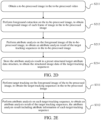
- FIG. 2E is a flowchart of operation S213 according to an embodiment. As shown in FIG. 2E , operation S213 may include the following operations.
- S311 Perform target tracking on the foreground image of the image to be processed, to obtain the target tracking sequences in the image to be processed.
- the performing attribute analysis by using the foreground image of the image to be processed, to obtain an attribute analysis result of each target tracking sequence may adopt a preset target tracking algorithm, for example, a high-speed tracking with kernelized correlation filters (KCF) algorithm and a KCF algorithm improved algorithm.
- KCF kernelized correlation filters
- the KCF algorithm improved algorithm globally detects a current frame by using a target detection technology (a foreground extraction technology of background modeling in an embodiment may be used, or another detection technology may be used) to obtain a target box, the target box and a target box locally detected by using the KCF algorithm are compared with a target box of a previous frame, a target having a strongest feature response (that is, a highest matching degree between an image in the target box and an image in the target box of the previous frame) is selected as a target to be tracked, the target is tracked, and a target tracking sequence in the image to be processed may be obtained.
- a target detection technology a foreground extraction technology of background modeling in an embodiment may be used, or another detection technology may be used
- an attribute analysis result is obtained, which may include attribute information of each target tracking sequence, and the attribute information of the target tracking sequence may be extracted according to actual requirements.
- the attribute information of the target tracking sequence may include color attribute information of the target tracking sequence, object class attribute information of the target tracking sequence, or target tracking direction attribute information of the target tracking sequence.
- FIG. 2F is a flowchart of operation S312 according to an embodiment. As shown in FIG. 2F , operation S312 includes the following operations.
- the preset mapping relationship between the pixel value and the color may be an RGB color model, a hue saturation value (HSV) color model, a YUV color model, a cyan magenta yellow black (CMYK) color model, or the like.
- HSV hue saturation value
- CMYK cyan magenta yellow black
- the preset mapping relationship between the pixel value and the color may adopt the HSV color model.
- FIG. 2G is a flowchart of operation S413 according to an embodiment. As shown in FIG. 2G , S413 may include the following operations.
- For each target tracking sequence determine, in a case that a quantity of pixel points corresponding to a target color in a target foreground image reaches a first preset ratio of a total quantity of pixel points in the target foreground image, that the target foreground image has a color attribute of the target color.
- the first preset ratio and the second preset ratio may be set according to actual requirements, for example, the first preset ratio is 30%, and the second preset ratio is 90%.
- the red and the black are determined as attribute colors of the target foreground image. After the attribute colors of all the foreground images in the target tracking sequence are determined, if 90% of foreground images in the target tracking sequence have a red attribute, it is determined that the target tracking sequence has the red attribute.
- FIG. 2F is a specific flowchart of operation S312 according to an embodiment. As shown in FIG. 2F , operation S312 may include the following operations.
- the object classification neural network model may be an existing object classification neural network model, or may be obtained by training a constructed object classification neural network through a preset quantity of foreground images and object class information in corresponding foreground images.
- the technology of the object classification neural network model is relatively mature at present. Details are not described herein again.
- Object class classification may be performed on each foreground image in each target tracking sequence by using the preset object classification neural network model to obtain the object class attribute information in each foreground image, for example, a person (may be further classified in detail, for example, male or female, adult or child), a bus, a car, or a non-motor vehicle.
- the classification corresponding to the object class attribute information may be specifically set according to actual requirements, for example, a person may be divided into male or female, or adult or child, or may have two classifications simultaneously, that is, male and adult. This is not specifically limited herein.
- attribute information of several target tracking sequences that may be included in the attribute analysis result by using examples, for example, the color attribute information of the target tracking sequence and the object class attribute information of the target tracking sequence.
- the attribute analysis result may further include other types of attribute information of the target tracking sequence and may be specifically set according to actual requirements, for example, the attribute analysis result may further include target tracking direction attribute information of each target tracking sequence.
- the operation of performing attribute analysis on each target tracking sequence, to obtain an attribute analysis result of the target tracking sequences may further include: determining a tracking direction angle of a target according to location information of the target in each foreground image in each target tracking sequence, for example, the target moves from south to north while being tracked.
- FIG. 2H is a flowchart of operation S214 after the attribute analysis result is obtained.
- the process of storing the attribute analysis result in a preset structured target attribute data structure, to obtain the structured image data of the target tracking sequences may include the following operations.
- identification information may be allocated according to a preset rule, for example, identification information is allocated according to a numerical number or an alphabetical number, for example, an identity (ID) of a target tracking sequence, specifically, a target tracking sequence 1 or a target tracking sequence A, where 1 or A is the ID of the target tracking sequence.
- ID of the target tracking sequence may be a time corresponding to the target tracking sequence.
- the storing the data of each target tracking sequence in the preset structured target attribute data structure, to obtain the structured image data of each target tracking sequence may include: invoking a preset structured data storage interface to store the data of each target tracking sequence in the preset structured target attribute data structure.
- An example of the target attribute data structure is specifically shown in the following Table 1: Table 1 Target tracking sequence ID Attribute information of target tracking sequence Foreground frame of target tracking sequence Background frame corresponding to target tracking sequence
- each target tracking sequence is stored in the preset structured target attribute data structure, and the obtained structured image data of each target tracking sequence may further include a background image corresponding to each target tracking sequence.
- each foreground frame in the target tracking sequence includes time information of the foreground frame.
- the structured image data of each target tracking sequence may be stored in a video database.
- structured storage of the video may be implemented according to the foregoing operation steps, and corresponding video content may be screened (or searched) in the video database according to a screening condition (or searching condition).
- the selected target tracking sequences may be determined in the video database according to the target screening condition.
- FIG. 2I is a flowchart of operation S123 in an embodiment. As shown in FIG. 2I , the determining selected target tracking sequences in the video database according to the target screening condition may include:
- the selected target tracking sequences are target tracking sequences having attribute information the same as that of the keyword in the target screening condition in the video database.
- the target screening condition includes keywords of "red” and “male”
- a screening time range is March 1, 2018 to March 2, 2018
- the video database is searched for, according to the keywords of "red” and “male”
- target tracking sequences having a time period of March 1, 2018 to March 2, 2018 and attribute information of "red” and "male”, that is, the selected target tracking sequences are obtained.
- Structured image data of the selected target tracking sequences is obtained from the video database, to obtain the structured image data meeting the target screening condition.
- structured image data of the selected target tracking sequences may be obtained, to obtain the structured image data meeting the target screening condition.
- Video synthesis is performed on the structured image data meeting the target screening condition, to generate the video abstract.
- each of the plurality of background images may correspond to a foreground image of a preset quantity of frames in each target tracking sequence.
- the performing video synthesis on the structured image data meeting the target screening condition, to generate the video abstract may include:
- the target synthesis density represents a quantity of targets in each frame of image in the generated video abstract. For example, if the target synthesis density is three, each frame of image in the generated video abstract includes three targets.
- target tracking sequences in a video to be processed include 30 target tracking sequences
- the 30 target tracking sequences are allocated according to the target synthesis density of three, that is, 10 target tracking sequences are allocated to each synthesis queue.
- every m foreground images in each synthesis queue are attached to one of the plurality of background images correspondingly, and m is a quantity of foreground images corresponding to one background image, for example, 1000.
- One background image may correspond to a background at each time of synthesizing every 1000 foreground images in each synthesis queue , and after the number of foreground images that are synthesized exceeds 1000, the background image is switched.
- a specific synthesizing method may be as follows: The first foreground images of N synthesis queues are all attached to a corresponding background image to synthesize the first frame of a result video, the new first foreground images of the N synthesis queues are attached to a corresponding background image to synthesize the second frame of the result video, and so on. When an (m+1) th synthesis image is synthesized, all synthesized images of the final video abstract are obtained.
- the video abstract may be generated according to all the synthesized images of the video abstract.
- the method in this embodiment of this disclosure may further include: obtaining a new screening condition for generating a video abstract, determining a new selected target tracking sequence from a video database according to the new screening condition, obtaining structured image data of the new selected target tracking sequence from the video database, to obtain new structured image data, and performing video synthesis on the new structured image data, to generate a new video abstract.
- obtaining a new screening condition for generating a video abstract determining a new selected target tracking sequence from a video database according to the new screening condition, obtaining structured image data of the new selected target tracking sequence from the video database, to obtain new structured image data, and performing video synthesis on the new structured image data, to generate a new video abstract.
- a target screening condition for generating a video abstract is obtained, a video database is searched for structured image data according to the target screening condition, to obtain structured image data meeting the target screening condition, and video synthesis is performed on the structured image data meeting the target screening condition, to generate the video abstract.
- structured image data of a video image is stored in a video database, when searching for a video, a user may quickly obtain information of the video from the structured image data, to generate a video abstract.
- FIG. 4 is another schematic flowchart of a video abstract generation method according to an embodiment of this disclosure. The method is performed by a server device and a procedure of the method may include the following operations 201-204.
- a server device obtains a target screening condition for generating a video ab stract.
- the user when a user needs to perform video content screening in a preset video database, the user may select a screening condition from preset screening options to obtain the target screening condition.
- FIG. 5 is an example diagram of an example scenario according to an embodiment of this disclosure.
- the screening options include a color option 501, a target synthesis density option 502, and a target type option 503.
- “Unlimited” is selected in the color option (that is, a target color is not limited)
- a "low” level is selected in the target synthesis density option (indicating that there are three targets in each frame of image in the generated video abstract)
- "person" is selected in the target type option.
- Content selected in the screening options forms the target screening condition.
- the server device determines selected target tracking sequences in the video database according to the target screening condition.
- the server device searches, according to the target screening condition, the video database for target tracking sequences having attribute information of "not limit color” and "person", that is, the selected target tracking sequences are obtained. It is assumed that there are 30 selected target tracking sequences.
- the server device obtains structured image data of the selected target tracking sequences from the video database, to obtain structured image data meeting the target screening condition.
- the server device may obtain the structured image data of the selected target tracking sequences, to obtain the structured image data, the structured image data being image data stored in a structured manner.
- the server device performs video synthesis on the structured image data meeting the target screening condition, to generate the video abstract.
- the target screening condition is a "low" level target synthesis density
- a specific synthesizing method may be as follows: The new first foreground images of the three synthesis queues are attached to a corresponding background image to synthesize the second frame of the result video, and so on. When the 1001 st synthesized image is synthesized, a next background image is switched to be attached, and all synthesized images of a final video abstract are obtained.
- the video abstract may be generated according to all the synthesized image of the video abstract. As shown in FIG. 5 , each frame of image in the generated video abstract includes three target characters, and time information corresponding to each target character is marked in each frame of image.
- an original video may be displayed in an interface displaying a video abstract, or an original video may not be displayed, and may be specifically set according to actual requirements.
- the server device obtains a target screening condition for generating a video abstract, determines selected target tracking sequences from a video database according to the target screening condition, the video database storing structured image data using a target tracking sequence as a unit, obtains structured image data of the selected target tracking sequences from the video database, to obtain structured image data meeting the target screening condition, and performs video synthesis on the structured image data, to generate the new video abstract.
- a server device may quickly screen related video information from the structured image data, to generate a video abstract. It is greatly convenient for the user to locate video target content, and an application scenario of the video abstract is greatly expanded.
- the embodiments of this disclosure further provide an apparatus that is based on the foregoing video abstract generation method.
- the same elements have meanings the same as those in the foregoing video abstract generation method, and for specific implementation details, reference may be made to the descriptions in the method embodiments.
- FIG. 6A is a schematic structural diagram of a video abstract generation apparatus according to an embodiment of this disclosure.
- the video abstract generation apparatus includes a first obtaining unit 601, a search unit 602, and a generation unit 603. Details are as follows:
- FIG. 6B is a schematic structural diagram of a search unit 602 according to an embodiment of this disclosure.
- the search unit 602 includes a determining subunit 6021 and an obtaining subunit 6022. Details are as follows:
- the apparatus further includes a second obtaining unit 604, an attribute analysis unit 605, and a storage unit 606. Details are as follows:
- FIG. 6C is a schematic structural diagram of an attribute analysis unit 605 according to this disclosure.
- the attribute analysis unit 605 includes an obtaining subunit 6051, a foreground extraction subunit 6052, and an attribute analysis subunit 6053. Details are as follows:
- the attribute analysis subunit 6053 is configured to:
- the attribute analysis result includes color attribute information of each target tracking sequence, and the attribute analysis subunit 6053 is specifically configured to:
- the attribute analysis subunit 6053 is configured to:
- the attribute analysis result includes object class attribute information of each foreground image in each target tracking sequence
- the attribute analysis subunit 6053 is configured to: perform object class classification on each foreground image in each target tracking sequence by using a preset object classification neural network model, to obtain the object class attribute information of each target tracking sequence.
- the foreground extraction subunit 6052 is specifically configured to:
- the foreground extraction subunit 6052 is configured to:
- the storage unit 606 is configured to:
- the obtaining subunit 6051 is configured to:
- the determining subunit 6021 is configured to:
- the video database further includes a plurality of background images corresponding to each target tracking sequence, each of the plurality of background images corresponds to a foreground image of a preset quantity of frames in each target tracking sequence, and the generation unit 603 is configured to:
- the foregoing units may be implemented as independent entities, or may be randomly combined, or may be implemented as one entity or several entities.
- the foregoing method embodiments Details are not described herein again.
- the first obtaining unit 601 obtains a target screening condition for generating a video abstract
- the determining unit 602 searches a video database for structured image data according to the target screening condition, to obtain structured image data, the structured image data being image data stored in a structured manner
- the generation unit 603 performs video synthesis on the structured image data meeting the target screening condition, to generate the video abstract.
- structured image data of a video image is stored in a video database
- related video information may be rapidly screened from the structured image data, to generate a video abstract. It is greatly convenient for the user to locate video target content, and an application scenario of the video abstract is greatly expanded.
- FIG. 7 is a schematic structural diagram of a server device according to an embodiment of this disclosure. Specifically:
- the server device may include components such as a processor 701 including one or more processing cores, a memory 702 including one or more computer-readable storage mediums, a power supply 703, and an input unit 704.
- a processor 701 including one or more processing cores
- a memory 702 including one or more computer-readable storage mediums
- a power supply 703 including one or more computer-readable storage mediums
- the server device structure shown in FIG. 7 does not constitute a limitation to the server device.
- the server device may include more or fewer parts than those shown in the figure, may combine some parts, or may have different part arrangements.
- the processor 701 controls an overall operation of the server device, and is connected to various parts of the entire server device by using various interfaces and lines. By running or executing a software program and/or module stored in the memory 702, and invoking data stored in the memory 702, the processor 701 executes various functions of the server device and performs data processing, thereby monitoring the entire server device.
- the processor 701 may include the one or more processing cores; the processor 701 may integrate an application processor and a modem processor.
- the application processor mainly processes an operating storage medium, a user interface, an application program, and the like.
- the modem processor mainly processes wireless communication. It may be understood that the foregoing modem processor may not be integrated into the processor 701.
- the memory 702 may be configured to store a software program and a module.
- the processor 701 runs the software program and the module stored in the memory 702, to perform various functional applications and data processing.
- the memory 702 may mainly include a program storage region and a data storage region.
- the program storage region may store an operating storage medium, an application program required by at least one function (such as a sound playing function and an image display function), and the like.
- the data storage region may store data created according to use of the server device, and the like.
- the memory 702 may include a high-speed random access memory, and may also include a non-volatile memory such as at least one disk storage device, a flash memory device, or another volatile solid-state storage device.
- the memory 702 may further include a memory controller, so that the processor 701 can access the memory 702.
- the server device further includes the power supply 703 for supplying power to the components.
- the power supply 703 may be logically connected to the processor 701 by using a power management storage medium, thereby implementing functions such as charging, discharging, and power consumption management by using the power management storage medium.
- the power supply 703 may further include one or more direct current or alternate current power supplies, one or more re-charging storage mediums, one or more power supply fault detection circuits, one or more power supply converters or inverters, one or more power supply state indicators, or any other components.
- the server device may include the input unit 704 configured to receive input digit or character information, and generate a keyboard, mouse, joystick, optical, or track ball signal input related to the user setting and function control.
- the server device may further include a display unit. Details are not further described herein.
- the processor 701 in the server device may load executable files corresponding processes of the one or more application programs to the memory 702 according to the following instructions, and runs the application programs stored in the memory 702, so as to implement various functions:
- obtaining a target screening condition for generating a video abstract searching a video database for structured image data according to the target screening condition, to obtain structured image data meeting the target screening condition, the structured image data being image data stored in a structured manner, and performing video synthesis on the structured image data meeting the target screening condition, to generate the video abstract.
- an embodiment of this disclosure provides a storage medium, storing a plurality of instructions, the instructions can be loaded by a processor, to perform the operations in any video abstract generation method according to the embodiments of this disclosure.
- the instructions may perform the following operations:
- obtaining a target screening condition for generating a video abstract searching a video database for structured image data according to the target screening condition, to obtain structured image data, the structured image data being image data stored in a structured manner, and performing video synthesis on the structured image data meeting the target screening condition, to generate the video abstract.
- the storage medium may include: a read-only memory (ROM), a random access memory (RAM), a magnetic disk, an optical disc, or the like.
Landscapes
- Engineering & Computer Science (AREA)
- Theoretical Computer Science (AREA)
- Multimedia (AREA)
- Physics & Mathematics (AREA)
- General Physics & Mathematics (AREA)
- Databases & Information Systems (AREA)
- General Engineering & Computer Science (AREA)
- Data Mining & Analysis (AREA)
- Evolutionary Computation (AREA)
- Computational Linguistics (AREA)
- Artificial Intelligence (AREA)
- Software Systems (AREA)
- Computing Systems (AREA)
- General Health & Medical Sciences (AREA)
- Health & Medical Sciences (AREA)
- Library & Information Science (AREA)
- Mathematical Physics (AREA)
- Life Sciences & Earth Sciences (AREA)
- Biomedical Technology (AREA)
- Biophysics (AREA)
- Molecular Biology (AREA)
- Computer Vision & Pattern Recognition (AREA)
- Medical Informatics (AREA)
- Computer Security & Cryptography (AREA)
- Signal Processing (AREA)
- Image Analysis (AREA)
- Television Signal Processing For Recording (AREA)
- Information Retrieval, Db Structures And Fs Structures Therefor (AREA)
Claims (11)
- Verfahren zum Erzeugen einer Videozusammenfassung, das von einer Servervorrichtung ausgeführt wird, wobei das Verfahren Folgendes umfasst:Erhalten (S120) eines zu verarbeitenden Videos;Ausführen (S121) einer Attributanalyse an dem zu verarbeitenden Video, um Zielverfolgungssequenzen in dem zu verarbeitenden Video zu bestimmen, und Erhalten von strukturierten Bilddaten der Zielverfolgungssequenzen in dem zu verarbeitenden Video, wobei jede der Zielverfolgungssequenzen konfiguriert ist, um ein entsprechendes Ziel in dem zu verarbeitenden Video zu verfolgen;Speichern (S122) der strukturierten Bilddaten der Zielverfolgungssequenzen in einer Videodatenbank;wobei die Ausführung einer Attributanalyse (S121) an dem zu verarbeitenden Video, um Zielverfolgungssequenzen in dem zu verarbeitenden Video zu bestimmen, und das Erhalten von strukturierten Bilddaten der Zielverfolgungssequenzen in dem zu verarbeitenden Video Folgendes umfasst:Erhalten (S211) eines zu verarbeitenden Bildes in dem zu verarbeitenden Video;Ausführen (S212) einer Vordergrundextraktion an dem zu verarbeitenden Bild, um ein Vordergrundbild von jedem Frame des zu verarbeitenden Bildes zu erhalten;Ausführen (S213) einer Attributanalyse an dem Vordergrundbild des zu verarbeitenden Bildes, um ein Ergebnis der Attributanalyse der Zielverfolgungssequenzen in dem zu verarbeitenden Bild zu erhalten; undSpeichern (S214) des Ergebnisses der Attributanalyse in einer voreingestellten strukturierten Zielattributdatenstruktur, um strukturierte Bilddaten der Zielverfolgungssequenzen zu erhalten;Erhalten (S101) einer Zielsuchbedingung zum Erzeugen einer Videozusammenfassung;Bestimmen (S123) ausgewählter Zielverfolgungssequenzen in der Videodatenbank gemäß der Zielsuchbedingung, wobei die Videodatenbank die strukturierten Bilddaten unter Verwendung einer Zielverfolgungssequenz als eine Einheit speichert;Erhalten (S124) von strukturierten Bilddaten, die die Zielsuchbedingung erfüllen, aus strukturierten Bilddaten, die den ausgewählten Zielverfolgungssequenzen in der Videodatenbank entsprechen, wobei die strukturierten Bilddaten auf eine strukturierte Weise gespeicherte Bilddaten sind; undAusführen (S103) einer Videosynthese an den strukturierten Bilddaten, die die Zielsuchbedingung erfüllen, um die Videozusammenfassung zu erzeugen;wobei die Videodatenbank ferner eine Vielzahl von Hintergrundbildern umfasst, die jeder Zielverfolgungssequenz entsprechen, wobei jedes der Vielzahl von Hintergrundbildern einem Vordergrundbild einer voreingestellten Menge von Frames in jeder Zielverfolgungssequenz entspricht, und die Ausführung (S103) der Videosynthese an den strukturierten Bilddaten, die die Zielsuchbedingung erfüllen, um die Videozusammenfassung zu erzeugen, Folgendes umfasst:Erhalten einer Zielsynthesedichte in der Zielsuchbedingung, wobei die Zielsynthesedichte eine Menge von Zielen in jedem Bild-Frame in der erzeugten Videozusammenfassung darstellt;Erzeugen von N Synthesewarteschlangen entsprechend der Zielsynthesedichte, wobei N eine positive ganze Zahl ist, wobei die Synthesewarteschlangen konfiguriert sind, um die ausgewählten Zielverfolgungssequenzen zu speichern;gleichmäßiges Zuordnen von Zielverfolgungssequenzen in den ausgewählten Zielverfolgungssequenzen zu den N Synthesewarteschlangen; undsequentielles Anhängen eines Vordergrundbildes einer entsprechenden Zielverfolgungssequenz in den N Synthesewarteschlangen an ein entsprechendes Hintergrundbild, um die Videozusammenfassung zu erzeugen;wobeidie Ausführung einer Attributanalyse (S213) an dem Vordergrundbild des zu verarbeitenden Bildes, um ein Ergebnis der Attributanalyse der Zielverfolgungssequenzen in dem zu verarbeitenden Bild zu erhalten, Folgendes umfasst:Ausführen (S311) einer Zielverfolgung an dem Vordergrundbild des zu verarbeitenden Bildes, um die Zielverfolgungssequenzen in dem zu verarbeitenden Bild zu erhalten; undAusführen (S312) einer Attributanalyse an jeder Zielverfolgungssequenz, um das Ergebnis der Attributanalyse zu erhalten, wobei das Ergebnis der Attributanalyse Attributinformationen der Zielverfolgungssequenz umfasst;wobei das Ergebnis der Attributanalyse Farbattributinformationen jeder Zielverfolgungssequenz umfasst, und die Ausführung der Attributanalyse an jeder Zielverfolgungssequenz Folgendes umfasst:Bestimmen (S411) einer Farbe, die einem Pixelpunkt jedes Vordergrundbildes in jeder Zielverfolgungssequenz entspricht, gemäß einer voreingestellten Abbildungsbeziehung zwischen einem Pixelwert und einer Farbe;Zählen (S413) einer Menge von Pixelpunkten, die jeder Farbe in jedem Vordergrundbild entsprechen, gemäß der Farbe, die dem Pixelpunkt jedes Vordergrundbildes entspricht; undBestimmen (S413) der Farbattributinformationen jeder Zielverfolgungssequenz gemäß der Menge der Pixelpunkte, die jeder Farbe in jedem Vordergrundbild entsprechen.
- Verfahren zum Erzeugen einer Videozusammenfassung nach Anspruch 1, wobei das Bestimmen der Farbattributinformationen jeder Zielverfolgungssequenz gemäß der Menge der Pixelpunkte, die jeder Farbe in jedem Vordergrundbild entsprechen, Folgendes umfasst:für jede Zielverfolgungssequenz,Bestimmen (S511), basierend auf einer Menge von Pixelpunkten, die einer Zielfarbe in einem Zielvordergrundbild entsprechen, das ein erstes voreingestelltes Verhältnis einer Gesamtmenge von Pixelpunkten in dem Zielvordergrundbild erreicht, dass das Zielvordergrundbild ein Farbattribut der Zielfarbe aufweist; undBestimmen (S512), basierend auf einem Vordergrundbild eines zweiten voreingestellten Verhältnisses in einer Zielverfolgungssequenz, die das Farbattribut der Zielfarbe aufweist, dass die Zielverfolgungssequenz das Farbattribut der Zielfarbe aufweist.
- Verfahren zum Erzeugen einer Videozusammenfassung nach Anspruch 1, wobei das Ergebnis der Attributanalyse Objektklassen-Attributinformationen jedes Vordergrundbildes in jeder Zielverfolgungssequenz umfasst und die Ausführung der Attributanalyse an jeder Zielverfolgungssequenz Folgendes umfasst:
Ausführen (S414) einer Objektklassenklassifizierung an jedem Vordergrundbild in jeder Zielverfolgungssequenz unter Verwendung eines voreingestellten neuronalen Objektklassifizierungsnetzmodells, um die Objektklassen-Attributinformationen jeder Zielverfolgungssequenz zu erhalten. - Verfahren zum Erzeugen einer Videozusammenfassung nach Anspruch 1, wobei das Ergebnis der Attributanalyse Zielrichtungsverfolgungs-Attributinformationen jedes Vordergrundbildes in jeder Zielverfolgungssequenz umfasst und die Ausführung der Attributanalyse an jeder Zielverfolgungssequenz, um das Ergebnis der Attributanalyse zu erhalten, Folgendes umfasst:
Bestimmen eines Verfolgungsrichtungswinkels eines Ziels entsprechend den Positionsinformationen des Ziels in jedem Vordergrundbild in jeder Zielverfolgungssequenz. - Verfahren nach Anspruch 1, wobei das Speichern des Ergebnisses der Attributanalyse in der voreingestellten strukturierten Zielattributdatenstruktur, um die strukturierten Bilddaten der Zielverfolgungssequenzen zu erhalten, Folgendes umfasst:Zuordnen (S611) von Identifikationsinformationen zu jeder Zielverfolgungssequenz in dem zu verarbeitenden Bild;Erhalten (S612) von Daten jeder Zielverfolgungssequenz in dem zu verarbeitenden Bild gemäß den Identifikationsinformationen jeder Zielverfolgungssequenz, den Attributinformationen jeder Zielverfolgungssequenz und jedem Vordergrundbild in jeder Zielverfolgungssequenz; undSpeichern (S613) der Daten jeder Zielverfolgungssequenz in der voreingestellten strukturierten Zielattributdatenstruktur, um die strukturierten Bilddaten der Zielverfolgungssequenzen in dem zu verarbeitenden Bild zu erhalten.
- Verfahren zum Erzeugen einer Videozusammenfassung nach Anspruch 1, wobei die Ausführung der Vordergrundextraktion an dem zu verarbeitenden Bild, um das Vordergrundbild jedes Bild-Frames in dem zu verarbeitenden Bild zu erhalten, Folgendes umfasst:Umwandeln jedes Frames des zu verarbeitenden Bildes in eine Einkanal-Graustufenkarte;Extrahieren einer lokalen Merkmalskarte eines voreingestellten Typs aus jedem Frame des zu verarbeitenden Bildes; undBestimmen des Vordergrundbildes jedes Frames des zu verarbeitenden Bildes gemäß der Einkanal-Graustufenkarte jedes Frames des zu verarbeitenden Bildes und der lokalen Merkmalskarte in jedem Frame des zu verarbeitenden Bildes.
- Verfahren zum Erzeugen einer Videozusammenfassung nach Anspruch 6, wobei das Bestimmen des Vordergrundbildes jedes Frames des zu verarbeitenden Bildes gemäß der Einkanal-Graustufenkarte jedes Frames des zu verarbeitenden Bildes und der lokalen Merkmalskarte in jedem Frame des zu verarbeitenden Bildes Folgendes umfasst:Synthetisieren der Einkanal-Graustufenkarte jedes Frames des zu verarbeitenden Bildes und der lokalen Merkmalskarte in jedem Frame des zu verarbeitenden Bildes in ein effektives Bild jedes Frames des zu verarbeitenden Bildes; undAbgleichen des effektiven Bildes jedes Frames des zu verarbeitenden Bildes mit einem voreingestellten Gaußschen Mischungsmodell, um das Vordergrundbild jedes Frames des zu verarbeitenden Bildes zu erhalten.
- Verfahren zum Erzeugen einer Videozusammenfassung, das von einer Servervorrichtung ausgeführt wird, wobei das Verfahren Folgendes umfasst:Erhalten (S120) eines zu verarbeitenden Videos;Ausführen (S121) einer Attributanalyse an dem zu verarbeitenden Video, um Zielverfolgungssequenzen in dem zu verarbeitenden Video zu bestimmen, und Erhalten von strukturierten Bilddaten der Zielverfolgungssequenzen in dem zu verarbeitenden Video, wobei jede der Zielverfolgungssequenzen konfiguriert ist, um ein entsprechendes Ziel in dem zu verarbeitenden Video zu verfolgen;Speichern (S122) der strukturierten Bilddaten der Zielverfolgungssequenzen in einer Videodatenbank;wobei das Ausführen einer Attributanalyse an dem zu verarbeitenden Video, um Zielverfolgungssequenzen in dem zu verarbeitenden Video zu bestimmen, und das Erhalten von strukturierten Bilddaten der Zielverfolgungssequenzen in dem zu verarbeitenden Video Folgendes umfasst:Erhalten (S211) eines zu verarbeitenden Bildes in dem zu verarbeitenden Video;Ausführen (S212) einer Vordergrundextraktion an dem zu verarbeitenden Bild, um ein Vordergrundbild von jedem Frame des zu verarbeitenden Bildes zu erhalten;Ausführen (S213) einer Attributanalyse an dem Vordergrundbild des zu verarbeitenden Bildes, um ein Ergebnis der Attributanalyse der Zielverfolgungssequenzen in dem zu verarbeitenden Bild zu erhalten; undSpeichern (S214) des Ergebnisses der Attributanalyse in einer voreingestellten strukturierten Zielattributdatenstruktur, um strukturierte Bilddaten der Zielverfolgungssequenzen zu erhalten;Erhalten (S101) einer Zielsuchbedingung zum Erzeugen einer Videozusammenfassung;Bestimmen (S123) ausgewählter Zielverfolgungssequenzen in der Videodatenbank gemäß der Zielsuchbedingung, wobei die Videodatenbank die strukturierten Bilddaten unter Verwendung einer Zielverfolgungssequenz als eine Einheit speichert;Erhalten (S124) von strukturierten Bilddaten, die die Zielsuchbedingung erfüllen, aus strukturierten Bilddaten, die den ausgewählten Zielverfolgungssequenzen in der Videodatenbank entsprechen, wobei die strukturierten Bilddaten auf eine strukturierte Weise gespeicherte Bilddaten sind; undAusführen (S103) einer Videosynthese an den strukturierten Bilddaten, die die Zielsuchbedingung erfüllen, um die Videozusammenfassung zu erzeugen;wobei die Videodatenbank ferner eine Vielzahl von Hintergrundbildern umfasst, die jeder Zielverfolgungssequenz entsprechen, wobei jedes der Vielzahl von Hintergrundbildern einem Vordergrundbild einer voreingestellten Menge von Frames in jeder Zielverfolgungssequenz entspricht, und die Ausführung (S103) der Videosynthese an den strukturierten Bilddaten, die die Zielsuchbedingung erfüllen, um die Videozusammenfassung zu erzeugen, Folgendes umfasstErhalten einer Zielsynthesedichte in der Zielsuchbedingung, wobei die Zielsynthesedichte eine Menge von Zielen in jedem Bild-Frame in der erzeugten Videozusammenfassung darstellt;Erzeugen von N Synthesewarteschlangen entsprechend der Zielsynthesedichte, wobei N eine positive ganze Zahl ist, wobei die Synthesewarteschlangen konfiguriert sind, um die ausgewählten Zielverfolgungssequenzen zu speichern;gleichmäßiges Zuordnen von Zielverfolgungssequenzen in den ausgewählten Zielverfolgungssequenzen zu den N Synthesewarteschlangen; undsequentielles Anhängen eines Vordergrundbildes einer entsprechenden Zielverfolgungssequenz in den N Synthesewarteschlangen an ein entsprechendes Hintergrundbild, um die Videozusammenfassung zu erzeugen;wobei die Ausführung der Vordergrundextraktion (S212) an dem zu verarbeitenden Bild, um das Vordergrundbild von jedem Bild-Frame des zu verarbeitenden Bildes zu erhalten, Folgendes umfasst:Umwandeln jedes Frames des zu verarbeitenden Bildes in eine Einkanal-Graustufenkarte;Extrahieren einer lokalen Merkmalskarte eines voreingestellten Typs aus jedem Frame des zu verarbeitenden Bildes; undBestimmen des Vordergrundbildes jedes Frames des zu verarbeitenden Bildes gemäß der Einkanal-Graustufenkarte jedes Frames des zu verarbeitenden Bildes und der lokalen Merkmalskarte in jedem Frame des zu verarbeitenden Bildes.
- Verfahren zum Erzeugen einer Videozusammenfassung nach Anspruch 8, wobei das Bestimmen des Vordergrundbildes jedes Frames des zu verarbeitenden Bildes gemäß der Einkanal-Graustufenkarte jedes Frames des zu verarbeitenden Bildes und der lokalen Merkmalskarte in jedem Frame des zu verarbeitenden Bildes Folgendes umfasst:Synthetisieren der Einkanal-Graustufenkarte jedes Frames des zu verarbeitenden Bildes und der lokalen Merkmalskarte in jedem Frame des zu verarbeitenden Bildes in ein effektives Bild jedes Frames des zu verarbeitenden Bildes; undAbgleichen des effektiven Bildes jedes Frames des zu verarbeitenden Bildes mit einem voreingestellten Gaußschen Mischungsmodell, um das Vordergrundbild jedes Frames des zu verarbeitenden Bildes zu erhalten.
- Computervorrichtung, umfassend einen Prozessor; undeinen Speicher, der so konfiguriert ist, dass er Befehle speichert, die von dem Prozessor durchgeführt werden können,wobei der Prozessor so konfiguriert ist, dass er das Verfahren zum Erzeugen einer Videozusammenfassung nach einem der Ansprüche 1 bis 9 ausführt.
- Speichermedium, das eine Vielzahl von Befehlen speichert, wobei die Befehle so konfiguriert sind, dass sie von einem Prozessor geladen werden können, um das Verfahren zum Erzeugen einer Videozusammenfassung nach einem der Ansprüche 1 bis 9 auszuführen.
Applications Claiming Priority (2)
| Application Number | Priority Date | Filing Date | Title |
|---|---|---|---|
| CN201810955587.XA CN110166851B (zh) | 2018-08-21 | 2018-08-21 | 一种视频摘要生成方法、装置和存储介质 |
| PCT/CN2019/100051 WO2020038243A1 (zh) | 2018-08-21 | 2019-08-09 | 一种视频摘要生成方法、装置、计算设备和存储介质 |
Publications (3)
| Publication Number | Publication Date |
|---|---|
| EP3843418A1 EP3843418A1 (de) | 2021-06-30 |
| EP3843418A4 EP3843418A4 (de) | 2021-10-13 |
| EP3843418B1 true EP3843418B1 (de) | 2024-06-05 |
Family
ID=67645152
Family Applications (1)
| Application Number | Title | Priority Date | Filing Date |
|---|---|---|---|
| EP19852152.8A Active EP3843418B1 (de) | 2018-08-21 | 2019-08-09 | Verfahren und vorrichtung zur erzeugung von videozusammenfassungen, rechnervorrichtung und speichermedium |
Country Status (4)
| Country | Link |
|---|---|
| US (1) | US11347792B2 (de) |
| EP (1) | EP3843418B1 (de) |
| CN (1) | CN110166851B (de) |
| WO (1) | WO2020038243A1 (de) |
Families Citing this family (13)
| Publication number | Priority date | Publication date | Assignee | Title |
|---|---|---|---|---|
| US12093414B1 (en) * | 2019-12-09 | 2024-09-17 | Amazon Technologies, Inc. | Efficient detection of in-memory data accesses and context information |
| EP4086848B1 (de) | 2020-12-04 | 2025-04-09 | Samsung Electronics Co., Ltd. | Verfahren und vorrichtung zur objektverfolgung unter verwendung von dynamischem sichtfeld |
| CN114596516B (zh) * | 2020-12-04 | 2026-03-27 | 北京三星通信技术研究有限公司 | 目标跟踪方法、装置、电子设备及计算机可读存储介质 |
| CN113569605B (zh) * | 2021-01-17 | 2024-07-16 | 南京大学 | 视频信息处理方法、装置、电子设备及存储介质 |
| US12432362B2 (en) | 2021-09-02 | 2025-09-30 | Samsung Electronics Co., Ltd. | Encoding and decoding video data |
| CN114394100B (zh) * | 2022-01-12 | 2024-04-05 | 深圳力维智联技术有限公司 | 一种无人巡逻车控制系统及无人车 |
| CN114613355B (zh) * | 2022-04-07 | 2023-07-14 | 抖音视界有限公司 | 视频处理方法、装置、可读介质及电子设备 |
| CN114973072B (zh) * | 2022-05-12 | 2025-09-02 | 桂林电子科技大学 | 一种基于cnn的视频关键帧提取方法及系统 |
| CN115633222B (zh) * | 2022-09-30 | 2025-02-11 | 北京达佳互联信息技术有限公司 | 视频生成方法、装置、电子设备及存储介质 |
| CN116244364A (zh) * | 2023-02-24 | 2023-06-09 | 浪潮软件集团有限公司 | 一种信创平台的视频图像数据动态转换数据结构的方法 |
| CN116994176B (zh) * | 2023-07-18 | 2025-07-15 | 西北工业大学 | 一种基于多维语义信息的视频关键数据提取方法 |
| CN116701707B (zh) * | 2023-08-08 | 2023-11-10 | 成都市青羊大数据有限责任公司 | 一种教育大数据管理系统 |
| CN117061189B (zh) * | 2023-08-26 | 2024-01-30 | 上海六坊信息科技有限公司 | 一种基于数据加密的数据包传输方法及系统 |
Family Cites Families (25)
| Publication number | Priority date | Publication date | Assignee | Title |
|---|---|---|---|---|
| US6965379B2 (en) * | 2001-05-08 | 2005-11-15 | Koninklijke Philips Electronics N.V. | N-view synthesis from monocular video of certain broadcast and stored mass media content |
| US7113185B2 (en) * | 2002-11-14 | 2006-09-26 | Microsoft Corporation | System and method for automatically learning flexible sprites in video layers |
| JP4965257B2 (ja) * | 2003-05-26 | 2012-07-04 | コーニンクレッカ フィリップス エレクトロニクス エヌ ヴィ | 視聴覚番組コンテンツの視聴覚要約を生成するシステム及び方法 |
| CN101561932B (zh) * | 2009-05-12 | 2012-01-11 | 北京交通大学 | 一种动态复杂背景下的实时运动目标检测方法和装置 |
| US20120173577A1 (en) * | 2010-12-30 | 2012-07-05 | Pelco Inc. | Searching recorded video |
| CN102708182B (zh) * | 2012-05-08 | 2014-07-02 | 浙江捷尚视觉科技有限公司 | 一种快速视频浓缩摘要方法 |
| CN102930061B (zh) * | 2012-11-28 | 2016-01-06 | 安徽水天信息科技有限公司 | 一种基于运动目标检测的视频摘要方法 |
| US20150104149A1 (en) * | 2013-10-15 | 2015-04-16 | Electronics And Telecommunications Research Institute | Video summary apparatus and method |
| CN103617234B (zh) * | 2013-11-26 | 2017-10-24 | 公安部第三研究所 | 主动式视频浓缩装置及方法 |
| CN104754248B (zh) * | 2013-12-30 | 2018-05-01 | 浙江大华技术股份有限公司 | 一种获取目标快照的方法及装置 |
| CN208027742U (zh) * | 2014-07-28 | 2018-10-30 | 菲力尔洛莱施公司 | 视频浓缩系统 |
| CN104244113B (zh) * | 2014-10-08 | 2017-09-22 | 中国科学院自动化研究所 | 一种基于深度学习技术的视频摘要生成方法 |
| CN104394353B (zh) * | 2014-10-14 | 2018-03-09 | 浙江宇视科技有限公司 | 视频浓缩方法及装置 |
| CN104581437B (zh) * | 2014-12-26 | 2018-11-06 | 中通服公众信息产业股份有限公司 | 一种视频摘要生成及视频回溯的方法及系统 |
| CN104717573B (zh) * | 2015-03-05 | 2018-04-13 | 广州市维安电子技术有限公司 | 一种视频摘要的生成方法 |
| CN105187801B (zh) * | 2015-09-17 | 2021-07-27 | 桂林远望智能通信科技有限公司 | 一种摘要视频的生成系统及方法 |
| CN105262932B (zh) * | 2015-10-20 | 2018-06-29 | 深圳市华尊科技股份有限公司 | 一种视频处理的方法及终端 |
| US10728194B2 (en) * | 2015-12-28 | 2020-07-28 | Facebook, Inc. | Systems and methods to selectively combine video streams |
| CN106937120B (zh) * | 2015-12-29 | 2019-11-12 | 北京大唐高鸿数据网络技术有限公司 | 基于对象的监控视频浓缩方法 |
| CN106101578B (zh) * | 2016-06-27 | 2019-08-16 | 上海小蚁科技有限公司 | 图像合成方法和设备 |
| KR102588524B1 (ko) * | 2016-08-01 | 2023-10-13 | 삼성전자주식회사 | 전자 장치 및 그의 동작 방법 |
| CN106354816B (zh) * | 2016-08-30 | 2019-12-13 | 东软集团股份有限公司 | 一种视频图像处理方法及装置 |
| US10720182B2 (en) * | 2017-03-02 | 2020-07-21 | Ricoh Company, Ltd. | Decomposition of a video stream into salient fragments |
| CN107291910A (zh) * | 2017-06-26 | 2017-10-24 | 图麟信息科技(深圳)有限公司 | 一种视频片段结构化查询方法、装置及电子设备 |
| CN107943837B (zh) * | 2017-10-27 | 2022-09-30 | 江苏理工学院 | 一种前景目标关键帧化的视频摘要生成方法 |
-
2018
- 2018-08-21 CN CN201810955587.XA patent/CN110166851B/zh active Active
-
2019
- 2019-08-09 WO PCT/CN2019/100051 patent/WO2020038243A1/zh not_active Ceased
- 2019-08-09 EP EP19852152.8A patent/EP3843418B1/de active Active
-
2020
- 2020-09-10 US US17/016,638 patent/US11347792B2/en active Active
Also Published As
| Publication number | Publication date |
|---|---|
| WO2020038243A1 (zh) | 2020-02-27 |
| EP3843418A4 (de) | 2021-10-13 |
| CN110166851B (zh) | 2022-01-04 |
| CN110166851A (zh) | 2019-08-23 |
| US11347792B2 (en) | 2022-05-31 |
| US20200409996A1 (en) | 2020-12-31 |
| EP3843418A1 (de) | 2021-06-30 |
Similar Documents
| Publication | Publication Date | Title |
|---|---|---|
| US11347792B2 (en) | Video abstract generating method, apparatus, and storage medium | |
| JP5463415B2 (ja) | 準複製画像検索のための方法およびシステム | |
| US10831819B2 (en) | Hue-based color naming for an image | |
| US9633448B1 (en) | Hue-based color naming for an image | |
| CN110188217A (zh) | 图像查重方法、装置、设备和计算机可读储存介质 | |
| CN112163577B (zh) | 游戏画面中的文字识别方法、装置、电子设备和存储介质 | |
| US20130222696A1 (en) | Selecting between clustering techniques for displaying images | |
| WO2021143624A1 (zh) | 视频标签确定方法、装置、终端及存储介质 | |
| CN112069341A (zh) | 背景图片生成及搜索结果展示方法、装置、设备和介质 | |
| JP2009110460A (ja) | 人物画像検索装置 | |
| WO2023168998A1 (zh) | 视频片段的识别方法、装置、设备以及存储介质 | |
| CN110909817B (zh) | 分布式聚类方法及系统、处理器、电子设备及存储介质 | |
| US10964288B2 (en) | Automatically adapt user interface color scheme for digital images and video | |
| CN113766296A (zh) | 直播画面的展示方法和装置 | |
| WO2014145929A1 (en) | Systems and methods for addressing a media database using distance associative hashing | |
| WO2022073516A1 (zh) | 生成图像的方法、装置、电子设备及介质 | |
| CN113762058B (zh) | 一种视频合成方法、装置、计算机设备和存储介质 | |
| CN114968009B (zh) | 显示模式切换方法、装置、电子设备和介质 | |
| CN110019877A (zh) | 图像搜索方法、装置及系统、终端 | |
| CN114827706B (zh) | 图像处理的方法、计算机程序产品、电子设备及存储介质 | |
| CN114022931B (zh) | 一种图像处理方法、装置、电子设备及存储介质 | |
| CN117112090A (zh) | 业务页面主题生成方法、装置、计算机设备、介质和产品 | |
| CN117745991A (zh) | 一种三维模型的配色调整方法、装置、设备及介质 | |
| JP2798283B2 (ja) | 画像検索装置 | |
| CN114640869A (zh) | 视频处理方法、装置、电子设备及计算机可读存储介质 |
Legal Events
| Date | Code | Title | Description |
|---|---|---|---|
| STAA | Information on the status of an ep patent application or granted ep patent |
Free format text: STATUS: THE INTERNATIONAL PUBLICATION HAS BEEN MADE |
|
| PUAI | Public reference made under article 153(3) epc to a published international application that has entered the european phase |
Free format text: ORIGINAL CODE: 0009012 |
|
| STAA | Information on the status of an ep patent application or granted ep patent |
Free format text: STATUS: REQUEST FOR EXAMINATION WAS MADE |
|
| 17P | Request for examination filed |
Effective date: 20200921 |
|
| AK | Designated contracting states |
Kind code of ref document: A1 Designated state(s): AL AT BE BG CH CY CZ DE DK EE ES FI FR GB GR HR HU IE IS IT LI LT LU LV MC MK MT NL NO PL PT RO RS SE SI SK SM TR |
|
| REG | Reference to a national code |
Ref legal event code: R079 Free format text: PREVIOUS MAIN CLASS: H04N0021854900 Ref country code: DE Ref document number: 602019053358 Country of ref document: DE Ipc: G06F0016738000 |
|
| A4 | Supplementary search report drawn up and despatched |
Effective date: 20210910 |
|
| RIC1 | Information provided on ipc code assigned before grant |
Ipc: G06F 16/738 20190101AFI20210906BHEP |
|
| DAV | Request for validation of the european patent (deleted) | ||
| DAX | Request for extension of the european patent (deleted) | ||
| RAP3 | Party data changed (applicant data changed or rights of an application transferred) |
Owner name: TENCENT TECHNOLOGY (SHENZHEN) COMPANY LIMITED |
|
| STAA | Information on the status of an ep patent application or granted ep patent |
Free format text: STATUS: EXAMINATION IS IN PROGRESS |
|
| 17Q | First examination report despatched |
Effective date: 20221212 |
|
| GRAP | Despatch of communication of intention to grant a patent |
Free format text: ORIGINAL CODE: EPIDOSNIGR1 |
|
| STAA | Information on the status of an ep patent application or granted ep patent |
Free format text: STATUS: GRANT OF PATENT IS INTENDED |
|
| INTG | Intention to grant announced |
Effective date: 20240320 |
|
| GRAS | Grant fee paid |
Free format text: ORIGINAL CODE: EPIDOSNIGR3 |
|
| GRAA | (expected) grant |
Free format text: ORIGINAL CODE: 0009210 |
|
| STAA | Information on the status of an ep patent application or granted ep patent |
Free format text: STATUS: THE PATENT HAS BEEN GRANTED |
|
| AK | Designated contracting states |
Kind code of ref document: B1 Designated state(s): AL AT BE BG CH CY CZ DE DK EE ES FI FR GB GR HR HU IE IS IT LI LT LU LV MC MK MT NL NO PL PT RO RS SE SI SK SM TR |
|
| REG | Reference to a national code |
Ref country code: CH Ref legal event code: EP |
|
| REG | Reference to a national code |
Ref country code: DE Ref legal event code: R096 Ref document number: 602019053358 Country of ref document: DE |
|
| REG | Reference to a national code |
Ref country code: IE Ref legal event code: FG4D |
|
| REG | Reference to a national code |
Ref country code: LT Ref legal event code: MG9D |
|
| PG25 | Lapsed in a contracting state [announced via postgrant information from national office to epo] |
Ref country code: BG Free format text: LAPSE BECAUSE OF FAILURE TO SUBMIT A TRANSLATION OF THE DESCRIPTION OR TO PAY THE FEE WITHIN THE PRESCRIBED TIME-LIMIT Effective date: 20240605 |
|
| REG | Reference to a national code |
Ref country code: NL Ref legal event code: MP Effective date: 20240605 |
|
| PG25 | Lapsed in a contracting state [announced via postgrant information from national office to epo] |
Ref country code: FI Free format text: LAPSE BECAUSE OF FAILURE TO SUBMIT A TRANSLATION OF THE DESCRIPTION OR TO PAY THE FEE WITHIN THE PRESCRIBED TIME-LIMIT Effective date: 20240605 Ref country code: HR Free format text: LAPSE BECAUSE OF FAILURE TO SUBMIT A TRANSLATION OF THE DESCRIPTION OR TO PAY THE FEE WITHIN THE PRESCRIBED TIME-LIMIT Effective date: 20240605 |
|
| PG25 | Lapsed in a contracting state [announced via postgrant information from national office to epo] |
Ref country code: GR Free format text: LAPSE BECAUSE OF FAILURE TO SUBMIT A TRANSLATION OF THE DESCRIPTION OR TO PAY THE FEE WITHIN THE PRESCRIBED TIME-LIMIT Effective date: 20240906 |
|
| PG25 | Lapsed in a contracting state [announced via postgrant information from national office to epo] |
Ref country code: ES Free format text: LAPSE BECAUSE OF FAILURE TO SUBMIT A TRANSLATION OF THE DESCRIPTION OR TO PAY THE FEE WITHIN THE PRESCRIBED TIME-LIMIT Effective date: 20240605 |
|
| PG25 | Lapsed in a contracting state [announced via postgrant information from national office to epo] |
Ref country code: LV Free format text: LAPSE BECAUSE OF FAILURE TO SUBMIT A TRANSLATION OF THE DESCRIPTION OR TO PAY THE FEE WITHIN THE PRESCRIBED TIME-LIMIT Effective date: 20240605 |
|
| PG25 | Lapsed in a contracting state [announced via postgrant information from national office to epo] |
Ref country code: NO Free format text: LAPSE BECAUSE OF FAILURE TO SUBMIT A TRANSLATION OF THE DESCRIPTION OR TO PAY THE FEE WITHIN THE PRESCRIBED TIME-LIMIT Effective date: 20240905 Ref country code: LV Free format text: LAPSE BECAUSE OF FAILURE TO SUBMIT A TRANSLATION OF THE DESCRIPTION OR TO PAY THE FEE WITHIN THE PRESCRIBED TIME-LIMIT Effective date: 20240605 Ref country code: HR Free format text: LAPSE BECAUSE OF FAILURE TO SUBMIT A TRANSLATION OF THE DESCRIPTION OR TO PAY THE FEE WITHIN THE PRESCRIBED TIME-LIMIT Effective date: 20240605 Ref country code: GR Free format text: LAPSE BECAUSE OF FAILURE TO SUBMIT A TRANSLATION OF THE DESCRIPTION OR TO PAY THE FEE WITHIN THE PRESCRIBED TIME-LIMIT Effective date: 20240906 Ref country code: FI Free format text: LAPSE BECAUSE OF FAILURE TO SUBMIT A TRANSLATION OF THE DESCRIPTION OR TO PAY THE FEE WITHIN THE PRESCRIBED TIME-LIMIT Effective date: 20240605 Ref country code: ES Free format text: LAPSE BECAUSE OF FAILURE TO SUBMIT A TRANSLATION OF THE DESCRIPTION OR TO PAY THE FEE WITHIN THE PRESCRIBED TIME-LIMIT Effective date: 20240605 Ref country code: BG Free format text: LAPSE BECAUSE OF FAILURE TO SUBMIT A TRANSLATION OF THE DESCRIPTION OR TO PAY THE FEE WITHIN THE PRESCRIBED TIME-LIMIT Effective date: 20240605 Ref country code: RS Free format text: LAPSE BECAUSE OF FAILURE TO SUBMIT A TRANSLATION OF THE DESCRIPTION OR TO PAY THE FEE WITHIN THE PRESCRIBED TIME-LIMIT Effective date: 20240905 |
|
| PG25 | Lapsed in a contracting state [announced via postgrant information from national office to epo] |
Ref country code: NL Free format text: LAPSE BECAUSE OF FAILURE TO SUBMIT A TRANSLATION OF THE DESCRIPTION OR TO PAY THE FEE WITHIN THE PRESCRIBED TIME-LIMIT Effective date: 20240605 |
|
| REG | Reference to a national code |
Ref country code: AT Ref legal event code: MK05 Ref document number: 1692981 Country of ref document: AT Kind code of ref document: T Effective date: 20240605 |
|
| PG25 | Lapsed in a contracting state [announced via postgrant information from national office to epo] |
Ref country code: NL Free format text: LAPSE BECAUSE OF FAILURE TO SUBMIT A TRANSLATION OF THE DESCRIPTION OR TO PAY THE FEE WITHIN THE PRESCRIBED TIME-LIMIT Effective date: 20240605 |
|
| PG25 | Lapsed in a contracting state [announced via postgrant information from national office to epo] |
Ref country code: PT Free format text: LAPSE BECAUSE OF FAILURE TO SUBMIT A TRANSLATION OF THE DESCRIPTION OR TO PAY THE FEE WITHIN THE PRESCRIBED TIME-LIMIT Effective date: 20241007 |
|
| PG25 | Lapsed in a contracting state [announced via postgrant information from national office to epo] |
Ref country code: PT Free format text: LAPSE BECAUSE OF FAILURE TO SUBMIT A TRANSLATION OF THE DESCRIPTION OR TO PAY THE FEE WITHIN THE PRESCRIBED TIME-LIMIT Effective date: 20241007 |
|
| PG25 | Lapsed in a contracting state [announced via postgrant information from national office to epo] |
Ref country code: PL Free format text: LAPSE BECAUSE OF FAILURE TO SUBMIT A TRANSLATION OF THE DESCRIPTION OR TO PAY THE FEE WITHIN THE PRESCRIBED TIME-LIMIT Effective date: 20240605 |
|
| PG25 | Lapsed in a contracting state [announced via postgrant information from national office to epo] |
Ref country code: EE Free format text: LAPSE BECAUSE OF FAILURE TO SUBMIT A TRANSLATION OF THE DESCRIPTION OR TO PAY THE FEE WITHIN THE PRESCRIBED TIME-LIMIT Effective date: 20240605 |
|
| PG25 | Lapsed in a contracting state [announced via postgrant information from national office to epo] |
Ref country code: AT Free format text: LAPSE BECAUSE OF FAILURE TO SUBMIT A TRANSLATION OF THE DESCRIPTION OR TO PAY THE FEE WITHIN THE PRESCRIBED TIME-LIMIT Effective date: 20240605 Ref country code: IS Free format text: LAPSE BECAUSE OF FAILURE TO SUBMIT A TRANSLATION OF THE DESCRIPTION OR TO PAY THE FEE WITHIN THE PRESCRIBED TIME-LIMIT Effective date: 20241005 |
|
| PG25 | Lapsed in a contracting state [announced via postgrant information from national office to epo] |
Ref country code: CZ Free format text: LAPSE BECAUSE OF FAILURE TO SUBMIT A TRANSLATION OF THE DESCRIPTION OR TO PAY THE FEE WITHIN THE PRESCRIBED TIME-LIMIT Effective date: 20240605 |
|
| PG25 | Lapsed in a contracting state [announced via postgrant information from national office to epo] |
Ref country code: RO Free format text: LAPSE BECAUSE OF FAILURE TO SUBMIT A TRANSLATION OF THE DESCRIPTION OR TO PAY THE FEE WITHIN THE PRESCRIBED TIME-LIMIT Effective date: 20240605 Ref country code: SK Free format text: LAPSE BECAUSE OF FAILURE TO SUBMIT A TRANSLATION OF THE DESCRIPTION OR TO PAY THE FEE WITHIN THE PRESCRIBED TIME-LIMIT Effective date: 20240605 |
|
| PG25 | Lapsed in a contracting state [announced via postgrant information from national office to epo] |
Ref country code: SM Free format text: LAPSE BECAUSE OF FAILURE TO SUBMIT A TRANSLATION OF THE DESCRIPTION OR TO PAY THE FEE WITHIN THE PRESCRIBED TIME-LIMIT Effective date: 20240605 |
|
| PG25 | Lapsed in a contracting state [announced via postgrant information from national office to epo] |
Ref country code: SM Free format text: LAPSE BECAUSE OF FAILURE TO SUBMIT A TRANSLATION OF THE DESCRIPTION OR TO PAY THE FEE WITHIN THE PRESCRIBED TIME-LIMIT Effective date: 20240605 Ref country code: SK Free format text: LAPSE BECAUSE OF FAILURE TO SUBMIT A TRANSLATION OF THE DESCRIPTION OR TO PAY THE FEE WITHIN THE PRESCRIBED TIME-LIMIT Effective date: 20240605 Ref country code: RO Free format text: LAPSE BECAUSE OF FAILURE TO SUBMIT A TRANSLATION OF THE DESCRIPTION OR TO PAY THE FEE WITHIN THE PRESCRIBED TIME-LIMIT Effective date: 20240605 Ref country code: PL Free format text: LAPSE BECAUSE OF FAILURE TO SUBMIT A TRANSLATION OF THE DESCRIPTION OR TO PAY THE FEE WITHIN THE PRESCRIBED TIME-LIMIT Effective date: 20240605 Ref country code: IS Free format text: LAPSE BECAUSE OF FAILURE TO SUBMIT A TRANSLATION OF THE DESCRIPTION OR TO PAY THE FEE WITHIN THE PRESCRIBED TIME-LIMIT Effective date: 20241005 Ref country code: EE Free format text: LAPSE BECAUSE OF FAILURE TO SUBMIT A TRANSLATION OF THE DESCRIPTION OR TO PAY THE FEE WITHIN THE PRESCRIBED TIME-LIMIT Effective date: 20240605 Ref country code: CZ Free format text: LAPSE BECAUSE OF FAILURE TO SUBMIT A TRANSLATION OF THE DESCRIPTION OR TO PAY THE FEE WITHIN THE PRESCRIBED TIME-LIMIT Effective date: 20240605 Ref country code: AT Free format text: LAPSE BECAUSE OF FAILURE TO SUBMIT A TRANSLATION OF THE DESCRIPTION OR TO PAY THE FEE WITHIN THE PRESCRIBED TIME-LIMIT Effective date: 20240605 |
|
| PG25 | Lapsed in a contracting state [announced via postgrant information from national office to epo] |
Ref country code: IT Free format text: LAPSE BECAUSE OF FAILURE TO SUBMIT A TRANSLATION OF THE DESCRIPTION OR TO PAY THE FEE WITHIN THE PRESCRIBED TIME-LIMIT Effective date: 20240605 |
|
| REG | Reference to a national code |
Ref country code: DE Ref legal event code: R097 Ref document number: 602019053358 Country of ref document: DE |
|
| REG | Reference to a national code |
Ref country code: CH Ref legal event code: PL |
|
| PLBE | No opposition filed within time limit |
Free format text: ORIGINAL CODE: 0009261 |
|
| STAA | Information on the status of an ep patent application or granted ep patent |
Free format text: STATUS: NO OPPOSITION FILED WITHIN TIME LIMIT |
|
| PG25 | Lapsed in a contracting state [announced via postgrant information from national office to epo] |
Ref country code: DK Free format text: LAPSE BECAUSE OF FAILURE TO SUBMIT A TRANSLATION OF THE DESCRIPTION OR TO PAY THE FEE WITHIN THE PRESCRIBED TIME-LIMIT Effective date: 20240605 |
|
| PG25 | Lapsed in a contracting state [announced via postgrant information from national office to epo] |
Ref country code: LU Free format text: LAPSE BECAUSE OF NON-PAYMENT OF DUE FEES Effective date: 20240809 |
|
| PG25 | Lapsed in a contracting state [announced via postgrant information from national office to epo] |
Ref country code: MC Free format text: LAPSE BECAUSE OF FAILURE TO SUBMIT A TRANSLATION OF THE DESCRIPTION OR TO PAY THE FEE WITHIN THE PRESCRIBED TIME-LIMIT Effective date: 20240605 Ref country code: CH Free format text: LAPSE BECAUSE OF NON-PAYMENT OF DUE FEES Effective date: 20240831 |
|
| 26N | No opposition filed |
Effective date: 20250306 |
|
| REG | Reference to a national code |
Ref country code: BE Ref legal event code: MM Effective date: 20240831 |
|
| PG25 | Lapsed in a contracting state [announced via postgrant information from national office to epo] |
Ref country code: BE Free format text: LAPSE BECAUSE OF NON-PAYMENT OF DUE FEES Effective date: 20240831 |
|
| PG25 | Lapsed in a contracting state [announced via postgrant information from national office to epo] |
Ref country code: IE Free format text: LAPSE BECAUSE OF NON-PAYMENT OF DUE FEES Effective date: 20240809 |
|
| PG25 | Lapsed in a contracting state [announced via postgrant information from national office to epo] |
Ref country code: SE Free format text: LAPSE BECAUSE OF FAILURE TO SUBMIT A TRANSLATION OF THE DESCRIPTION OR TO PAY THE FEE WITHIN THE PRESCRIBED TIME-LIMIT Effective date: 20240605 |
|
| PGFP | Annual fee paid to national office [announced via postgrant information from national office to epo] |
Ref country code: DE Payment date: 20250819 Year of fee payment: 7 |
|
| PGFP | Annual fee paid to national office [announced via postgrant information from national office to epo] |
Ref country code: GB Payment date: 20250822 Year of fee payment: 7 |
|
| PGFP | Annual fee paid to national office [announced via postgrant information from national office to epo] |
Ref country code: FR Payment date: 20250818 Year of fee payment: 7 |
|
| PG25 | Lapsed in a contracting state [announced via postgrant information from national office to epo] |
Ref country code: CY Free format text: LAPSE BECAUSE OF FAILURE TO SUBMIT A TRANSLATION OF THE DESCRIPTION OR TO PAY THE FEE WITHIN THE PRESCRIBED TIME-LIMIT; INVALID AB INITIO Effective date: 20190809 |
|
| PG25 | Lapsed in a contracting state [announced via postgrant information from national office to epo] |
Ref country code: HU Free format text: LAPSE BECAUSE OF FAILURE TO SUBMIT A TRANSLATION OF THE DESCRIPTION OR TO PAY THE FEE WITHIN THE PRESCRIBED TIME-LIMIT; INVALID AB INITIO Effective date: 20190809 |