EP3843629B1 - Erkennung der wirbelsäulenform von optischem scan - Google Patents
Erkennung der wirbelsäulenform von optischem scan Download PDFInfo
- Publication number
- EP3843629B1 EP3843629B1 EP19856033.6A EP19856033A EP3843629B1 EP 3843629 B1 EP3843629 B1 EP 3843629B1 EP 19856033 A EP19856033 A EP 19856033A EP 3843629 B1 EP3843629 B1 EP 3843629B1
- Authority
- EP
- European Patent Office
- Prior art keywords
- target
- scans
- skeletal
- body surface
- surface model
- Prior art date
- Legal status (The legal status is an assumption and is not a legal conclusion. Google has not performed a legal analysis and makes no representation as to the accuracy of the status listed.)
- Active
Links
Images




Classifications
-
- G—PHYSICS
- G06—COMPUTING OR CALCULATING; COUNTING
- G06T—IMAGE DATA PROCESSING OR GENERATION, IN GENERAL
- G06T7/00—Image analysis
- G06T7/10—Segmentation; Edge detection
- G06T7/11—Region-based segmentation
-
- A—HUMAN NECESSITIES
- A61—MEDICAL OR VETERINARY SCIENCE; HYGIENE
- A61B—DIAGNOSIS; SURGERY; IDENTIFICATION
- A61B5/00—Measuring for diagnostic purposes; Identification of persons
- A61B5/45—For evaluating or diagnosing the musculoskeletal system or teeth
- A61B5/4538—Evaluating a particular part of the muscoloskeletal system or a particular medical condition
- A61B5/4566—Evaluating the spine
-
- G—PHYSICS
- G06—COMPUTING OR CALCULATING; COUNTING
- G06T—IMAGE DATA PROCESSING OR GENERATION, IN GENERAL
- G06T17/00—Three-dimensional [3D] modelling for computer graphics
-
- G—PHYSICS
- G06—COMPUTING OR CALCULATING; COUNTING
- G06T—IMAGE DATA PROCESSING OR GENERATION, IN GENERAL
- G06T17/00—Three-dimensional [3D] modelling for computer graphics
- G06T17/20—Finite element generation, e.g. wire-frame surface description, tesselation
-
- G—PHYSICS
- G06—COMPUTING OR CALCULATING; COUNTING
- G06T—IMAGE DATA PROCESSING OR GENERATION, IN GENERAL
- G06T7/00—Image analysis
- G06T7/0002—Inspection of images, e.g. flaw detection
- G06T7/0012—Biomedical image inspection
-
- G—PHYSICS
- G06—COMPUTING OR CALCULATING; COUNTING
- G06T—IMAGE DATA PROCESSING OR GENERATION, IN GENERAL
- G06T2200/00—Indexing scheme for image data processing or generation, in general
- G06T2200/04—Indexing scheme for image data processing or generation, in general involving 3D image data
-
- G—PHYSICS
- G06—COMPUTING OR CALCULATING; COUNTING
- G06T—IMAGE DATA PROCESSING OR GENERATION, IN GENERAL
- G06T2200/00—Indexing scheme for image data processing or generation, in general
- G06T2200/08—Indexing scheme for image data processing or generation, in general involving all processing steps from image acquisition to 3D model generation
-
- G—PHYSICS
- G06—COMPUTING OR CALCULATING; COUNTING
- G06T—IMAGE DATA PROCESSING OR GENERATION, IN GENERAL
- G06T2207/00—Indexing scheme for image analysis or image enhancement
- G06T2207/10—Image acquisition modality
- G06T2207/10028—Range image; Depth image; 3D point clouds
-
- G—PHYSICS
- G06—COMPUTING OR CALCULATING; COUNTING
- G06T—IMAGE DATA PROCESSING OR GENERATION, IN GENERAL
- G06T2207/00—Indexing scheme for image analysis or image enhancement
- G06T2207/10—Image acquisition modality
- G06T2207/10072—Tomographic images
- G06T2207/10081—Computed x-ray tomography [CT]
-
- G—PHYSICS
- G06—COMPUTING OR CALCULATING; COUNTING
- G06T—IMAGE DATA PROCESSING OR GENERATION, IN GENERAL
- G06T2207/00—Indexing scheme for image analysis or image enhancement
- G06T2207/10—Image acquisition modality
- G06T2207/10072—Tomographic images
- G06T2207/10088—Magnetic resonance imaging [MRI]
-
- G—PHYSICS
- G06—COMPUTING OR CALCULATING; COUNTING
- G06T—IMAGE DATA PROCESSING OR GENERATION, IN GENERAL
- G06T2207/00—Indexing scheme for image analysis or image enhancement
- G06T2207/10—Image acquisition modality
- G06T2207/10116—X-ray image
-
- G—PHYSICS
- G06—COMPUTING OR CALCULATING; COUNTING
- G06T—IMAGE DATA PROCESSING OR GENERATION, IN GENERAL
- G06T2207/00—Indexing scheme for image analysis or image enhancement
- G06T2207/20—Special algorithmic details
- G06T2207/20081—Training; Learning
-
- G—PHYSICS
- G06—COMPUTING OR CALCULATING; COUNTING
- G06T—IMAGE DATA PROCESSING OR GENERATION, IN GENERAL
- G06T2207/00—Indexing scheme for image analysis or image enhancement
- G06T2207/20—Special algorithmic details
- G06T2207/20084—Artificial neural networks [ANN]
-
- G—PHYSICS
- G06—COMPUTING OR CALCULATING; COUNTING
- G06T—IMAGE DATA PROCESSING OR GENERATION, IN GENERAL
- G06T2207/00—Indexing scheme for image analysis or image enhancement
- G06T2207/20—Special algorithmic details
- G06T2207/20092—Interactive image processing based on input by user
- G06T2207/20101—Interactive definition of point of interest, landmark or seed
-
- G—PHYSICS
- G06—COMPUTING OR CALCULATING; COUNTING
- G06T—IMAGE DATA PROCESSING OR GENERATION, IN GENERAL
- G06T2207/00—Indexing scheme for image analysis or image enhancement
- G06T2207/30—Subject of image; Context of image processing
- G06T2207/30004—Biomedical image processing
- G06T2207/30008—Bone
- G06T2207/30012—Spine; Backbone
-
- G—PHYSICS
- G06—COMPUTING OR CALCULATING; COUNTING
- G06T—IMAGE DATA PROCESSING OR GENERATION, IN GENERAL
- G06T2210/00—Indexing scheme for image generation or computer graphics
- G06T2210/41—Medical
Definitions
- the invention relates to the field of image processing and deep learning.
- EP 3417776 discloses a spinal-column arrangement estimation-apparatus, capable of estimating at least one of a Cobb angle and a rotation angle of spinal-column arrangement present inside a human body from an image representing a three-dimensional shape of a human body surface, thus facilitating diagnosis of scoliosis by a doctor, confirmation of a spinal-column by a determiner, etc., and reducing medical exposure by unnecessary X-ray inspection.
- Adolescent Idiopathic Scoliosis is a prevalent disease that currently requires radiographic imaging for accurate diagnosis and treatment planning.
- said encoding is a low-dimensional encoding.
- said 3D body scan comprises at least one of: a point cloud, triangulated meshes, and splined surfaces.
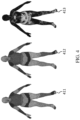
- the present disclosure provides for generating a computerized parametrized three-dimensional (3D) body surface model which encodes various body type parameters, such as, e.g., those reflecting various skeletal and/or spinal deformities, such as scoliosis.
- the 3D model is trained, based, at least in part, on a training set comprising a plurality of 3D scans of subjects, wherein at least some of the 3D scans are of subjects having a skeletal deformity.
- the results may be used by clinicians to visualize skeletal body shape in 3D, for a fast, accurate, and safe diagnosis and treatment planning.
- the full analysis process for predicting the spine shape of a human subject may require a two-step process which involves, first, calculating a model of a parametrized three-dimensional body surface by applying the optimized and personalized neural network algorithm to a three-dimensional scan of a human subject. Then, applying the skeletal estimation model to the calculated three-dimensional body surface model, to predict the spine shape of that subject.
- the three-dimensional scan of a human subject utilized in the two-step process mentioned above can be produced by an optical scanning system which requires no ionizing radiation, e.g., by depth cameras.
- generating such a training set can be based on a computer animation-based model utilized to generate sets of three-dimensional images depicting human subjects in arbitrary poses.
- graphics applications can utilize publicly available databases of three-dimensional human shapes for generating such a wide variety of human bodies in a variety of shapes at arbitrary poses.
- the training set and/or training sets with the images can be used to build input data comprising body type parameters for artificial neural network algorithm.
- diverse techniques and neural network algorithms can be utilized as elaborated here below.
- the vertices of the surface representation are defined in a unified coordinate system.
- the unified coordinate system can provide the positions of the vertices for generating a vector representation of the human subjects.
- the specific technology used to collect surface scans is not important, and several viable options exist.
- the CAESAR training set was collected using laser scanners, while other systems employ stereo photogrammetry.
- the Temporal 3dMDBodyTM scanner may be employed. Such a scanner provides full-body surface scans captured in about 1.5ms.
- additional, or alternative categories may be utilized for labeling the training set.
- a registration process can align the surface scans within a unified coordinate system. For example, point clouds from depth cameras or from a CT scanning can be brought into a unified coordinate system. Such a unified coordinate system can be utilized for comparing and measuring body poses of scanned bodies with a body surface models. In some embodiments, the scanned bodies may be labeled according to the poses of the human subjects.
- this optimization can be performed with gradient descent algorithms.
- Body parameters ⁇ are those which best describe the subject, including pathologic deformations across all scans. For example, a scoliotic patient could be scanned both standing upright but also in the Adams forward bend posture; solving Eq. (7) would provide the parameters that best fit both scans, thereby providing a holistic model of the patient.
- Cameras are first calibrated to transform point clouds into a unified coordinate system. This can be accomplished by recording a calibration target (e.g. sphere) in many mutually visible locations. Rigid transformation between coordinate systems can be computed with SVD. Novel subjects can then be scanned in multiple poses and their body parameters found as described above.
- a calibration target e.g. sphere
- the present disclosure now proposes, in some embodiments, a statistical model that can determine the relationship between these two surface body shape and skeletal (e.g., spinal) shapes.
- utilizing a unified coordinate system and techniques which are based on surface mesh can allow expressing areas on the body surface and the spine models on one coordinate system.
- utilizing one unified coordinate system can allow determining the geometric relationship between the spine model and the surface of a human subject .
- the neural network module 718 can be configured to communicate with the skeletal pose evaluating module 719 for the purpose of estimating the spine deformities from a scan of a human subject. In some embodiments, the neural network module 718 can applied to a three-dimensional scan of a human subject residing in the skeletal pose evaluating module 719 for predicting the spine shape. In some embodiments, such a three-dimensional scan may be an optically scanned human subject.
- a computer readable storage medium is not to be construed as being transitory signals per se, such as radio waves or other freely propagating electromagnetic waves, electromagnetic waves propagating through a waveguide or other transmission media (e.g., light pulses passing through a fiber-optic cable), or electrical signals transmitted through a wire. Rather, the computer readable storage medium is a non-transient (i.e., not-volatile) medium.
Landscapes
- Engineering & Computer Science (AREA)
- Health & Medical Sciences (AREA)
- Physics & Mathematics (AREA)
- Life Sciences & Earth Sciences (AREA)
- General Physics & Mathematics (AREA)
- Theoretical Computer Science (AREA)
- Medical Informatics (AREA)
- General Health & Medical Sciences (AREA)
- Computer Vision & Pattern Recognition (AREA)
- Physical Education & Sports Medicine (AREA)
- Biophysics (AREA)
- Radiology & Medical Imaging (AREA)
- Quality & Reliability (AREA)
- Software Systems (AREA)
- Geometry (AREA)
- Dentistry (AREA)
- Oral & Maxillofacial Surgery (AREA)
- Orthopedic Medicine & Surgery (AREA)
- Rheumatology (AREA)
- Computer Graphics (AREA)
- Nuclear Medicine, Radiotherapy & Molecular Imaging (AREA)
- Pathology (AREA)
- Biomedical Technology (AREA)
- Heart & Thoracic Surgery (AREA)
- Molecular Biology (AREA)
- Surgery (AREA)
- Animal Behavior & Ethology (AREA)
- Public Health (AREA)
- Veterinary Medicine (AREA)
- Image Analysis (AREA)
- Image Processing (AREA)
Claims (12)
- Verfahren mit den Schritten:Erzeugen (200) eines parametrisierten dreidimensionalen (3D) Körperoberflächenmodells, das mindestens einen Körpertyp-Parameter codiert, der eine Skelettdeformität darstellt;Empfangen eines oder mehrerer 3D-Zielscans eines Zielsubjekts;Optimieren (202) des Körperoberflächenmodells in Bezug auf die ein oder mehreren 3D-Zielscans, zumindest teilweise basierend auf der Minimierung einer Verlustfunktion, die das Körperoberflächenmodell mit den 3D-Zielscans abgleicht, um ein Zielkörperoberflächenmodell des Zielsubjekts zu berechnen;Trainieren (204) eines Skelettschätzungsmodells, das zumindest teilweise auf einem Trainingssatz basiert, welcher umfasst:(i) Körperoberflächenmodelle einer Mehrzahl von Subjekten und(ii) Sätze von Skelettorientierungspunkten der Mehrzahl von Subjekten; undAnwenden (206) des trainierten Skelettschätzungsmodells auf das berechnete Zielkörperoberflächenmodell des Zielsubjekts, um eine Skelettform des Zielsubjekts zu schätzen,wobei mindestens einige der ein oder mehreren 3D-Zielscans mit einer Körperhaltung des Subjekts gekennzeichnet sind, die einem jeweiligen 3D-Zielscan zugeordnet ist,wobei das Erzeugen des parametrisierten 3D-Körperoberflächenmodells das Trainieren des 3D-Körperoberflächenmodells auf der Grundlage eines Trainingssatzes umfasst, der eine Mehrzahl von 3D-Scans von Subjekten umfasst,wobei mindestens einige der 3D-Scans von Subjekten stammen, die die Skelettdeformität aufweisen, undwobei mindestens einige der Mehrzahl von 3D-Scans mit der Skelettdeformität gekennzeichnet sind.
- Verfahren nach Anspruch 1, bei dem die Kennzeichnung einer Skelettdeformität eine Skoliose-Klassifizierungskategorie umfasst, die aus der Gruppe ausgewählt ist, die aus Haupt-Thorakal, Doppel-Thorakal, Doppel-/Dreifach-Haupt, und Thorakolumbal/ Lumbal besteht.
- Verfahren nach Anspruch 1, bei dem die Codierung eine niedrigdimensionale Codierung ist, die aus einer Liste ausgewählt wird, die aus Koeffizienten der Hauptkomponentenanalyse (Principal Component Analysis, PCA) (303), Koeffizienten der Hauptformkomponenten (Principal Shape Components, PSC), Koeffizienten der linearen Diskriminanzanalyse (Linear Discriminant Analysis, LDA) und einer beliebigen Kombination davon besteht.
- Verfahren nach einem der Ansprüche 1-3, bei dem die 3D-Scans mindestens eines von einer Punktwolke, triangulierten Maschen und Spline-Flächen umfassen.
- System, umfassend:mindestens einen Hardware-Prozessor (710); undein nichtflüchtiges computerlesbares Speichermedium (714), auf dem ein Programmcode gespeichert ist, wobei der Programmcode von dem mindestens einen Hardware-Prozessor ausführbar ist zum:Erzeugen (200) eines parametrisierten dreidimensionalen (3D) Körperoberflächenmodells, das mindestens einen Körpertyp-Parameter codiert, der eine Skelettdeformität darstellt;Empfangen eines oder mehrerer 3D-Zielscans eines Zielsubjekts,Optimieren (202) des Körperoberflächenmodells in Bezug auf die ein oder mehreren 3D-Zielscans, zumindest teilweise basierend auf der Minimierung einer Verlustfunktion, die das Körperoberflächenmodell mit den 3D-Zielscans abgleicht, um ein Zielkörperoberflächenmodell des Zielsubjekts zu berechnen,Trainieren (204) eines Skelettschätzungsmodells, zumindest teilweise basierend auf einem Trainingssatz, welcher umfasst:(i) Körperoberflächenmodelle einer Mehrzahl von Subjekten und(ii) Sätze von Skelettorientierungspunkten der Mehrzahl von Subjekten, undAnwenden (206) des trainierten Skelettschätzungsmodells auf das berechnete Zielkörperoberflächenmodell des Zielsubjekts, um eine Skelettform des Zielsubjekts zu schätzen,wobei mindestens einige der ein oder mehreren 3D-Zielscans mit einer Körperhaltung des Subjekts gekennzeichnet sind, die einem jeweiligen 3D-Zielscan zugeordnet ist,und wobei das Erzeugen des parametrisierten 3D-Körperoberflächenmodells das Trainieren des 3D-Körperoberflächenmodells auf der Grundlage eines Trainingssatzes umfasst, der eine Mehrzahl von 3D-Scans von Subjekten umfasst, wobei mindestens einige der 3D-Scans von Subjekten mit der Skelettdeformität stammen,und wobei mindestens einige der Mehrzahl von 3D-Scans mit der Skelettdeformität gekennzeichnet sind.
- System nach Anspruch 5, bei dem die Kennzeichnung einer Skelettdeformität eine Skoliose-Klassifizierungskategorie umfasst, die aus der Gruppe ausgewählt ist, die aus Haupt-Thorakal, Doppel-Thorakal, Doppel-/Dreifach-Haupt, und Thorakolumbal/ Lumbal besteht.
- System nach Anspruch 5, bei dem die Codierung eine niedrigdimensionale Codierung ist, die aus einer Liste ausgewählt ist, die aus PCA-Koeffizienten (303), PSC-Koeffizienten, LDA-Koeffizienten und einer beliebigen Kombination davon besteht.
- System nach einem der Ansprüche 5 bis 7, bei dem die 3D-Scans mindestens eines von einer Punktwolke, triangulierten Maschen und Spline-Flächen umfassen.
- Computerprogrammprodukt, das ein nichtflüchtiges computerlesbares Speichermedium (714) mit einem darin enthaltenen Programmcode umfasst, wobei der Programmcode von mindestens einem Hardware-Prozessor (710) ausführbar ist zum:Erzeugen (200) eines parametrisierten dreidimensionalen (3D) Körperoberflächenmodells, das mindestens einen Körpertyp-Parameter codiert, der eine Skelettdeformität darstellt;Empfangen eines oder mehrerer 3D-Zielscans eines Zielsubjekts;Optimieren (202) des Körperoberflächenmodells in Bezug auf die ein oder mehreren 3D-Zielscans, zumindest teilweise basierend auf der Minimierung einer Verlustfunktion, die das Körperoberflächenmodell mit den 3D-Zielscans abgleicht, um ein Zielkörperoberflächenmodell des Zielsubjekts zu berechnen;Trainieren (204) eines Skelettschätzungsmodells, zumindest teilweise basierend auf einem Trainingssatz, welcher umfasst:(i) Körperoberflächenmodelle einer Mehrzahl von Subjekten und(ii) Sätze von Skelettorientierungspunkten der Mehrzahl von Subjekten; undAnwenden (206) des trainierten Skelettschätzungsmodells auf das berechnete Zielkörperoberflächenmodell des Zielsubjekts, um eine Skelettform des Zielsubjekts zu schätzen, wobei mindestens einige der ein oder mehreren 3D-Zielscans mit einer Körperhaltung des Subjekts gekennzeichnet sind, die einem jeweiligen 3D-Zielscan zugeordnet ist,wobei das Erzeugen des parametrisierten 3D-Körperoberflächenmodells das Trainieren des 3D-Körperoberflächenmodells auf der Grundlage eines Trainingssatzes umfasst, der eine Mehrzahl von 3D-Scans von Subjekten umfasst,wobei mindestens einige der 3D-Scans von Subjekten mit der Skelettdeformität stammen, undwobei mindestens einige der Mehrzahl von 3D-Scans mit der Skelettdeformität gekennzeichnet sind.
- Computerprogrammprodukt nach Anspruch 9, bei dem die Kennzeichnung einer Skelettdeformität eine Skoliose-Klassifizierungskategorie umfasst, die aus der Gruppe ausgewählt ist, die aus Haupt-Thorakal, Doppel-Thorakal, Doppel-/Dreifach-Haupt, und Thorakolumbal/Lumbal besteht.
- Computerprogrammprodukt nach Anspruch 10, bei dem die Codierung eine niedrigdimensionale Codierung ist, die aus einer Liste ausgewählt ist, die aus PCA(303)-Koeffizienten, PSC-Koeffizienten, LDA-Koeffizienten und beliebigen Kombinationen davon besteht.
- Computerprogrammprodukt nach einem der Ansprüche 9 bis 11, bei dem die 3D-Scans mindestens eines von einer Punktwolke, triangulierten Maschen und Spline-Flächen umfassen.
Applications Claiming Priority (2)
| Application Number | Priority Date | Filing Date | Title |
|---|---|---|---|
| US201862723598P | 2018-08-28 | 2018-08-28 | |
| PCT/IL2019/050969 WO2020044346A1 (en) | 2018-08-28 | 2019-08-28 | Detecting spinal shape from optical scan |
Publications (3)
| Publication Number | Publication Date |
|---|---|
| EP3843629A1 EP3843629A1 (de) | 2021-07-07 |
| EP3843629A4 EP3843629A4 (de) | 2022-06-01 |
| EP3843629B1 true EP3843629B1 (de) | 2025-04-09 |
Family
ID=69643458
Family Applications (1)
| Application Number | Title | Priority Date | Filing Date |
|---|---|---|---|
| EP19856033.6A Active EP3843629B1 (de) | 2018-08-28 | 2019-08-28 | Erkennung der wirbelsäulenform von optischem scan |
Country Status (3)
| Country | Link |
|---|---|
| US (2) | US12016697B2 (de) |
| EP (1) | EP3843629B1 (de) |
| WO (1) | WO2020044346A1 (de) |
Families Citing this family (6)
| Publication number | Priority date | Publication date | Assignee | Title |
|---|---|---|---|---|
| US20240023809A1 (en) * | 2020-01-31 | 2024-01-25 | The Board Of Trustees Of The Leland Stanford Junior University | Systems and Methods for Detection of Musculoskeletal Anomalies |
| JP7483405B2 (ja) * | 2020-02-25 | 2024-05-15 | キヤノン株式会社 | 学習装置、電子機器、学習方法、電子機器の制御方法およびプログラム |
| CN113781453B (zh) * | 2021-09-15 | 2024-04-02 | 南京大学 | 一种基于x线片的脊柱侧凸进展预测及方法和装置 |
| CN115640714B (zh) * | 2022-09-22 | 2026-03-17 | 湖南大学 | 一种人体有限元模型生成方法 |
| CN116168013B (zh) * | 2023-03-16 | 2025-09-23 | 清华大学 | 一种脊柱椎体检测方法、装置及电子设备 |
| CN117814775B (zh) * | 2023-12-29 | 2024-06-21 | 深圳仙库智能有限公司 | 一种三维人体体征数据管理方法及系统 |
Family Cites Families (3)
| Publication number | Priority date | Publication date | Assignee | Title |
|---|---|---|---|---|
| WO2010019925A1 (en) | 2008-08-15 | 2010-02-18 | Brown Technology Partnerships | Method and apparatus for estimating body shape |
| JP6132354B2 (ja) | 2011-11-29 | 2017-05-24 | 学校法人 東洋大学 | 脊椎側弯症の評価システムおよび同システムに適用される評価用器具 |
| WO2017141958A1 (ja) | 2016-02-15 | 2017-08-24 | 学校法人慶應義塾 | 脊柱配列推定装置、脊柱配列推定方法及び脊柱配列推定プログラム |
-
2019
- 2019-08-28 WO PCT/IL2019/050969 patent/WO2020044346A1/en not_active Ceased
- 2019-08-28 EP EP19856033.6A patent/EP3843629B1/de active Active
- 2019-08-28 US US17/271,687 patent/US12016697B2/en active Active
-
2024
- 2024-05-01 US US18/652,432 patent/US12220246B2/en active Active
Also Published As
| Publication number | Publication date |
|---|---|
| US12220246B2 (en) | 2025-02-11 |
| US20240277283A1 (en) | 2024-08-22 |
| EP3843629A4 (de) | 2022-06-01 |
| WO2020044346A1 (en) | 2020-03-05 |
| EP3843629A1 (de) | 2021-07-07 |
| US20210345945A1 (en) | 2021-11-11 |
| US12016697B2 (en) | 2024-06-25 |
Similar Documents
| Publication | Publication Date | Title |
|---|---|---|
| US12220246B2 (en) | Detecting spinal shape from optical scan | |
| EP3726467B1 (de) | Systeme und verfahren zur rekonstruktion von anatomischen 3d-bildern aus anatomischen 2d-bildern | |
| Aubert et al. | Toward automated 3D spine reconstruction from biplanar radiographs using CNN for statistical spine model fitting | |
| Reyneke et al. | Review of 2-D/3-D reconstruction using statistical shape and intensity models and X-ray image synthesis: toward a unified framework | |
| US9561004B2 (en) | Automated 3-D orthopedic assessments | |
| Benameur et al. | 3D/2D registration and segmentation of scoliotic vertebrae using statistical models | |
| US9251585B2 (en) | Coregistration and analysis of multi-modal images obtained in different geometries | |
| US7929745B2 (en) | Method and system for characterization of knee joint morphology | |
| US20090297012A1 (en) | Methods of and System for Detection and Tracking of Osteoporosis | |
| Aubert et al. | X-ray to DRR images translation for efficient multiple objects similarity measures in deformable model 3D/2D registration | |
| US20250281065A1 (en) | Methods and systems for precise quantification of human sensory cortical areas | |
| Boisvert et al. | Articulated spine models for 3-D reconstruction from partial radiographic data | |
| US20120249551A1 (en) | alignment of shapes of body parts from images | |
| EP2742483B1 (de) | Bildverarbeitungsverfahren | |
| Wen et al. | Enhanced coronary calcium visualization and detection from dual energy chest x-rays with sliding organ registration | |
| Giannoglou et al. | Review of advances in Cobb angle calculation and image-based modelling techniques for spinal deformities | |
| EP3391332B1 (de) | Bestimmung der registriergenauigkeit | |
| Doerr et al. | Automatic analysis of global spinal alignment from simple annotation of vertebral bodies | |
| Kadoury | Three-dimensional spine reconstruction from radiographs | |
| Förner et al. | Anatomy-Guided Semi-Supervised Registration with Combined Rigid and Label Supervision for Improved Rib Deformation Consistency | |
| Ju et al. | The Establishment of Static Digital Humans and Integration with Spinal Models | |
| Zheng et al. | Reconstruction of 3D vertebral models from a single 2D lateral fluoroscopic image | |
| US20250025123A1 (en) | Method for a positioning control of an object under investigation before acquiring a projective x-ray image | |
| Kumar et al. | Validation of modified feature-based 3D modeling of scoliotic spine | |
| Tajdari | Bio-Informed Image-Based Deep Learning Frameworks for Prognosis of Pediatric Spinal Deformities |
Legal Events
| Date | Code | Title | Description |
|---|---|---|---|
| STAA | Information on the status of an ep patent application or granted ep patent |
Free format text: STATUS: THE INTERNATIONAL PUBLICATION HAS BEEN MADE |
|
| STAA | Information on the status of an ep patent application or granted ep patent |
Free format text: STATUS: REQUEST FOR EXAMINATION WAS MADE |
|
| PUAI | Public reference made under article 153(3) epc to a published international application that has entered the european phase |
Free format text: ORIGINAL CODE: 0009012 |
|
| 17P | Request for examination filed |
Effective date: 20210303 |
|
| AK | Designated contracting states |
Kind code of ref document: A1 Designated state(s): AL AT BE BG CH CY CZ DE DK EE ES FI FR GB GR HR HU IE IS IT LI LT LU LV MC MK MT NL NO PL PT RO RS SE SI SK SM TR |
|
| DAV | Request for validation of the european patent (deleted) | ||
| DAX | Request for extension of the european patent (deleted) | ||
| A4 | Supplementary search report drawn up and despatched |
Effective date: 20220429 |
|
| RIC1 | Information provided on ipc code assigned before grant |
Ipc: G06T 7/11 20170101ALI20220422BHEP Ipc: A61B 5/055 20060101ALI20220422BHEP Ipc: G06T 17/00 20060101ALI20220422BHEP Ipc: G06T 7/30 20170101ALI20220422BHEP Ipc: G06T 7/00 20170101ALI20220422BHEP Ipc: A61B 5/00 20060101ALI20220422BHEP Ipc: A61B 5/103 20060101AFI20220422BHEP |
|
| GRAP | Despatch of communication of intention to grant a patent |
Free format text: ORIGINAL CODE: EPIDOSNIGR1 |
|
| STAA | Information on the status of an ep patent application or granted ep patent |
Free format text: STATUS: GRANT OF PATENT IS INTENDED |
|
| INTG | Intention to grant announced |
Effective date: 20241113 |
|
| GRAS | Grant fee paid |
Free format text: ORIGINAL CODE: EPIDOSNIGR3 |
|
| GRAA | (expected) grant |
Free format text: ORIGINAL CODE: 0009210 |
|
| STAA | Information on the status of an ep patent application or granted ep patent |
Free format text: STATUS: THE PATENT HAS BEEN GRANTED |
|
| AK | Designated contracting states |
Kind code of ref document: B1 Designated state(s): AL AT BE BG CH CY CZ DE DK EE ES FI FR GB GR HR HU IE IS IT LI LT LU LV MC MK MT NL NO PL PT RO RS SE SI SK SM TR |
|
| REG | Reference to a national code |
Ref country code: GB Ref legal event code: FG4D |
|
| REG | Reference to a national code |
Ref country code: CH Ref legal event code: EP |
|
| REG | Reference to a national code |
Ref country code: DE Ref legal event code: R096 Ref document number: 602019068532 Country of ref document: DE |
|
| REG | Reference to a national code |
Ref country code: IE Ref legal event code: FG4D |
|
| P01 | Opt-out of the competence of the unified patent court (upc) registered |
Free format text: CASE NUMBER: APP_23903/2025 Effective date: 20250520 |
|
| REG | Reference to a national code |
Ref country code: NL Ref legal event code: MP Effective date: 20250409 |
|
| PG25 | Lapsed in a contracting state [announced via postgrant information from national office to epo] |
Ref country code: NL Free format text: LAPSE BECAUSE OF FAILURE TO SUBMIT A TRANSLATION OF THE DESCRIPTION OR TO PAY THE FEE WITHIN THE PRESCRIBED TIME-LIMIT Effective date: 20250409 |
|
| REG | Reference to a national code |
Ref country code: AT Ref legal event code: MK05 Ref document number: 1782765 Country of ref document: AT Kind code of ref document: T Effective date: 20250409 |
|
| PG25 | Lapsed in a contracting state [announced via postgrant information from national office to epo] |
Ref country code: FI Free format text: LAPSE BECAUSE OF FAILURE TO SUBMIT A TRANSLATION OF THE DESCRIPTION OR TO PAY THE FEE WITHIN THE PRESCRIBED TIME-LIMIT Effective date: 20250409 Ref country code: PT Free format text: LAPSE BECAUSE OF FAILURE TO SUBMIT A TRANSLATION OF THE DESCRIPTION OR TO PAY THE FEE WITHIN THE PRESCRIBED TIME-LIMIT Effective date: 20250811 Ref country code: ES Free format text: LAPSE BECAUSE OF FAILURE TO SUBMIT A TRANSLATION OF THE DESCRIPTION OR TO PAY THE FEE WITHIN THE PRESCRIBED TIME-LIMIT Effective date: 20250409 |
|
| PGFP | Annual fee paid to national office [announced via postgrant information from national office to epo] |
Ref country code: DE Payment date: 20250819 Year of fee payment: 7 |
|
| REG | Reference to a national code |
Ref country code: LT Ref legal event code: MG9D |
|
| PG25 | Lapsed in a contracting state [announced via postgrant information from national office to epo] |
Ref country code: GR Free format text: LAPSE BECAUSE OF FAILURE TO SUBMIT A TRANSLATION OF THE DESCRIPTION OR TO PAY THE FEE WITHIN THE PRESCRIBED TIME-LIMIT Effective date: 20250710 Ref country code: NO Free format text: LAPSE BECAUSE OF FAILURE TO SUBMIT A TRANSLATION OF THE DESCRIPTION OR TO PAY THE FEE WITHIN THE PRESCRIBED TIME-LIMIT Effective date: 20250709 |
|
| PG25 | Lapsed in a contracting state [announced via postgrant information from national office to epo] |
Ref country code: PL Free format text: LAPSE BECAUSE OF FAILURE TO SUBMIT A TRANSLATION OF THE DESCRIPTION OR TO PAY THE FEE WITHIN THE PRESCRIBED TIME-LIMIT Effective date: 20250409 |
|
| PG25 | Lapsed in a contracting state [announced via postgrant information from national office to epo] |
Ref country code: BG Free format text: LAPSE BECAUSE OF FAILURE TO SUBMIT A TRANSLATION OF THE DESCRIPTION OR TO PAY THE FEE WITHIN THE PRESCRIBED TIME-LIMIT Effective date: 20250409 |
|
| PGFP | Annual fee paid to national office [announced via postgrant information from national office to epo] |
Ref country code: GB Payment date: 20250822 Year of fee payment: 7 |
|
| PG25 | Lapsed in a contracting state [announced via postgrant information from national office to epo] |
Ref country code: HR Free format text: LAPSE BECAUSE OF FAILURE TO SUBMIT A TRANSLATION OF THE DESCRIPTION OR TO PAY THE FEE WITHIN THE PRESCRIBED TIME-LIMIT Effective date: 20250409 |
|
| PG25 | Lapsed in a contracting state [announced via postgrant information from national office to epo] |
Ref country code: AT Free format text: LAPSE BECAUSE OF FAILURE TO SUBMIT A TRANSLATION OF THE DESCRIPTION OR TO PAY THE FEE WITHIN THE PRESCRIBED TIME-LIMIT Effective date: 20250409 |
|
| PGFP | Annual fee paid to national office [announced via postgrant information from national office to epo] |
Ref country code: FR Payment date: 20250821 Year of fee payment: 7 |
|
| PG25 | Lapsed in a contracting state [announced via postgrant information from national office to epo] |
Ref country code: RS Free format text: LAPSE BECAUSE OF FAILURE TO SUBMIT A TRANSLATION OF THE DESCRIPTION OR TO PAY THE FEE WITHIN THE PRESCRIBED TIME-LIMIT Effective date: 20250709 |
|
| PG25 | Lapsed in a contracting state [announced via postgrant information from national office to epo] |
Ref country code: IS Free format text: LAPSE BECAUSE OF FAILURE TO SUBMIT A TRANSLATION OF THE DESCRIPTION OR TO PAY THE FEE WITHIN THE PRESCRIBED TIME-LIMIT Effective date: 20250809 |
|
| PG25 | Lapsed in a contracting state [announced via postgrant information from national office to epo] |
Ref country code: LV Free format text: LAPSE BECAUSE OF FAILURE TO SUBMIT A TRANSLATION OF THE DESCRIPTION OR TO PAY THE FEE WITHIN THE PRESCRIBED TIME-LIMIT Effective date: 20250409 |
|
| REG | Reference to a national code |
Ref country code: DE Ref legal event code: R097 Ref document number: 602019068532 Country of ref document: DE |
|
| PG25 | Lapsed in a contracting state [announced via postgrant information from national office to epo] |
Ref country code: DK Free format text: LAPSE BECAUSE OF FAILURE TO SUBMIT A TRANSLATION OF THE DESCRIPTION OR TO PAY THE FEE WITHIN THE PRESCRIBED TIME-LIMIT Effective date: 20250409 Ref country code: SM Free format text: LAPSE BECAUSE OF FAILURE TO SUBMIT A TRANSLATION OF THE DESCRIPTION OR TO PAY THE FEE WITHIN THE PRESCRIBED TIME-LIMIT Effective date: 20250409 |
|
| PG25 | Lapsed in a contracting state [announced via postgrant information from national office to epo] |
Ref country code: CZ Free format text: LAPSE BECAUSE OF FAILURE TO SUBMIT A TRANSLATION OF THE DESCRIPTION OR TO PAY THE FEE WITHIN THE PRESCRIBED TIME-LIMIT Effective date: 20250409 |
|
| PG25 | Lapsed in a contracting state [announced via postgrant information from national office to epo] |
Ref country code: EE Free format text: LAPSE BECAUSE OF FAILURE TO SUBMIT A TRANSLATION OF THE DESCRIPTION OR TO PAY THE FEE WITHIN THE PRESCRIBED TIME-LIMIT Effective date: 20250409 |
|
| PG25 | Lapsed in a contracting state [announced via postgrant information from national office to epo] |
Ref country code: SK Free format text: LAPSE BECAUSE OF FAILURE TO SUBMIT A TRANSLATION OF THE DESCRIPTION OR TO PAY THE FEE WITHIN THE PRESCRIBED TIME-LIMIT Effective date: 20250409 Ref country code: RO Free format text: LAPSE BECAUSE OF FAILURE TO SUBMIT A TRANSLATION OF THE DESCRIPTION OR TO PAY THE FEE WITHIN THE PRESCRIBED TIME-LIMIT Effective date: 20250409 |
|
| PG25 | Lapsed in a contracting state [announced via postgrant information from national office to epo] |
Ref country code: IT Free format text: LAPSE BECAUSE OF FAILURE TO SUBMIT A TRANSLATION OF THE DESCRIPTION OR TO PAY THE FEE WITHIN THE PRESCRIBED TIME-LIMIT Effective date: 20250409 |
|
| PLBE | No opposition filed within time limit |
Free format text: ORIGINAL CODE: 0009261 |
|
| STAA | Information on the status of an ep patent application or granted ep patent |
Free format text: STATUS: NO OPPOSITION FILED WITHIN TIME LIMIT |
|
| REG | Reference to a national code |
Ref country code: CH Ref legal event code: L10 Free format text: ST27 STATUS EVENT CODE: U-0-0-L10-L00 (AS PROVIDED BY THE NATIONAL OFFICE) Effective date: 20260218 |
|
| 26N | No opposition filed |
Effective date: 20260112 |
|
| REG | Reference to a national code |
Ref country code: CH Ref legal event code: H13 Free format text: ST27 STATUS EVENT CODE: U-0-0-H10-H13 (AS PROVIDED BY THE NATIONAL OFFICE) Effective date: 20260324 |
|
| PG25 | Lapsed in a contracting state [announced via postgrant information from national office to epo] |
Ref country code: MC Free format text: LAPSE BECAUSE OF FAILURE TO SUBMIT A TRANSLATION OF THE DESCRIPTION OR TO PAY THE FEE WITHIN THE PRESCRIBED TIME-LIMIT Effective date: 20250409 |
|
| PG25 | Lapsed in a contracting state [announced via postgrant information from national office to epo] |
Ref country code: LU Free format text: LAPSE BECAUSE OF NON-PAYMENT OF DUE FEES Effective date: 20250828 |
|
| PG25 | Lapsed in a contracting state [announced via postgrant information from national office to epo] |
Ref country code: CH Free format text: LAPSE BECAUSE OF NON-PAYMENT OF DUE FEES Effective date: 20250831 |