EP3843797B1 - Feste suspension - Google Patents
Feste suspension Download PDFInfo
- Publication number
- EP3843797B1 EP3843797B1 EP19759722.2A EP19759722A EP3843797B1 EP 3843797 B1 EP3843797 B1 EP 3843797B1 EP 19759722 A EP19759722 A EP 19759722A EP 3843797 B1 EP3843797 B1 EP 3843797B1
- Authority
- EP
- European Patent Office
- Prior art keywords
- strontium
- solid suspension
- calcium
- use according
- hydroxyapatite
- Prior art date
- Legal status (The legal status is an assumption and is not a legal conclusion. Google has not performed a legal analysis and makes no representation as to the accuracy of the status listed.)
- Active
Links
Images



Classifications
-
- A—HUMAN NECESSITIES
- A61—MEDICAL OR VETERINARY SCIENCE; HYGIENE
- A61L—METHODS OR APPARATUS FOR STERILISING MATERIALS OR OBJECTS IN GENERAL; DISINFECTION, STERILISATION OR DEODORISATION OF AIR; CHEMICAL ASPECTS OF BANDAGES, DRESSINGS, ABSORBENT PADS OR SURGICAL ARTICLES; MATERIALS FOR BANDAGES, DRESSINGS, ABSORBENT PADS OR SURGICAL ARTICLES
- A61L24/00—Surgical adhesives or cements; Adhesives for colostomy devices
- A61L24/001—Use of materials characterised by their function or physical properties
- A61L24/0015—Medicaments; Biocides
-
- A—HUMAN NECESSITIES
- A61—MEDICAL OR VETERINARY SCIENCE; HYGIENE
- A61L—METHODS OR APPARATUS FOR STERILISING MATERIALS OR OBJECTS IN GENERAL; DISINFECTION, STERILISATION OR DEODORISATION OF AIR; CHEMICAL ASPECTS OF BANDAGES, DRESSINGS, ABSORBENT PADS OR SURGICAL ARTICLES; MATERIALS FOR BANDAGES, DRESSINGS, ABSORBENT PADS OR SURGICAL ARTICLES
- A61L27/00—Materials for grafts or prostheses or for coating grafts or prostheses
- A61L27/02—Inorganic materials
- A61L27/04—Metals or alloys
- A61L27/047—Other specific metals or alloys not covered by A61L27/042 - A61L27/045 or A61L27/06
-
- A—HUMAN NECESSITIES
- A61—MEDICAL OR VETERINARY SCIENCE; HYGIENE
- A61L—METHODS OR APPARATUS FOR STERILISING MATERIALS OR OBJECTS IN GENERAL; DISINFECTION, STERILISATION OR DEODORISATION OF AIR; CHEMICAL ASPECTS OF BANDAGES, DRESSINGS, ABSORBENT PADS OR SURGICAL ARTICLES; MATERIALS FOR BANDAGES, DRESSINGS, ABSORBENT PADS OR SURGICAL ARTICLES
- A61L24/00—Surgical adhesives or cements; Adhesives for colostomy devices
- A61L24/02—Surgical adhesives or cements; Adhesives for colostomy devices containing inorganic materials
-
- A—HUMAN NECESSITIES
- A61—MEDICAL OR VETERINARY SCIENCE; HYGIENE
- A61L—METHODS OR APPARATUS FOR STERILISING MATERIALS OR OBJECTS IN GENERAL; DISINFECTION, STERILISATION OR DEODORISATION OF AIR; CHEMICAL ASPECTS OF BANDAGES, DRESSINGS, ABSORBENT PADS OR SURGICAL ARTICLES; MATERIALS FOR BANDAGES, DRESSINGS, ABSORBENT PADS OR SURGICAL ARTICLES
- A61L27/00—Materials for grafts or prostheses or for coating grafts or prostheses
- A61L27/02—Inorganic materials
- A61L27/10—Ceramics or glasses
-
- A—HUMAN NECESSITIES
- A61—MEDICAL OR VETERINARY SCIENCE; HYGIENE
- A61L—METHODS OR APPARATUS FOR STERILISING MATERIALS OR OBJECTS IN GENERAL; DISINFECTION, STERILISATION OR DEODORISATION OF AIR; CHEMICAL ASPECTS OF BANDAGES, DRESSINGS, ABSORBENT PADS OR SURGICAL ARTICLES; MATERIALS FOR BANDAGES, DRESSINGS, ABSORBENT PADS OR SURGICAL ARTICLES
- A61L27/00—Materials for grafts or prostheses or for coating grafts or prostheses
- A61L27/02—Inorganic materials
- A61L27/12—Phosphorus-containing materials, e.g. apatite
-
- A—HUMAN NECESSITIES
- A61—MEDICAL OR VETERINARY SCIENCE; HYGIENE
- A61L—METHODS OR APPARATUS FOR STERILISING MATERIALS OR OBJECTS IN GENERAL; DISINFECTION, STERILISATION OR DEODORISATION OF AIR; CHEMICAL ASPECTS OF BANDAGES, DRESSINGS, ABSORBENT PADS OR SURGICAL ARTICLES; MATERIALS FOR BANDAGES, DRESSINGS, ABSORBENT PADS OR SURGICAL ARTICLES
- A61L27/00—Materials for grafts or prostheses or for coating grafts or prostheses
- A61L27/50—Materials characterised by their function or physical properties, e.g. injectable or lubricating compositions, shape-memory materials, surface modified materials
- A61L27/58—Materials at least partially resorbable by the body
-
- A—HUMAN NECESSITIES
- A61—MEDICAL OR VETERINARY SCIENCE; HYGIENE
- A61L—METHODS OR APPARATUS FOR STERILISING MATERIALS OR OBJECTS IN GENERAL; DISINFECTION, STERILISATION OR DEODORISATION OF AIR; CHEMICAL ASPECTS OF BANDAGES, DRESSINGS, ABSORBENT PADS OR SURGICAL ARTICLES; MATERIALS FOR BANDAGES, DRESSINGS, ABSORBENT PADS OR SURGICAL ARTICLES
- A61L2400/00—Materials characterised by their function or physical properties
- A61L2400/06—Flowable or injectable implant compositions
-
- A—HUMAN NECESSITIES
- A61—MEDICAL OR VETERINARY SCIENCE; HYGIENE
- A61L—METHODS OR APPARATUS FOR STERILISING MATERIALS OR OBJECTS IN GENERAL; DISINFECTION, STERILISATION OR DEODORISATION OF AIR; CHEMICAL ASPECTS OF BANDAGES, DRESSINGS, ABSORBENT PADS OR SURGICAL ARTICLES; MATERIALS FOR BANDAGES, DRESSINGS, ABSORBENT PADS OR SURGICAL ARTICLES
- A61L2400/00—Materials characterised by their function or physical properties
- A61L2400/12—Nanosized materials, e.g. nanofibres, nanoparticles, nanowires, nanotubes; Nanostructured surfaces
-
- A—HUMAN NECESSITIES
- A61—MEDICAL OR VETERINARY SCIENCE; HYGIENE
- A61L—METHODS OR APPARATUS FOR STERILISING MATERIALS OR OBJECTS IN GENERAL; DISINFECTION, STERILISATION OR DEODORISATION OF AIR; CHEMICAL ASPECTS OF BANDAGES, DRESSINGS, ABSORBENT PADS OR SURGICAL ARTICLES; MATERIALS FOR BANDAGES, DRESSINGS, ABSORBENT PADS OR SURGICAL ARTICLES
- A61L2430/00—Materials or treatment for tissue regeneration
- A61L2430/02—Materials or treatment for tissue regeneration for reconstruction of bones; weight-bearing implants
-
- A—HUMAN NECESSITIES
- A61—MEDICAL OR VETERINARY SCIENCE; HYGIENE
- A61L—METHODS OR APPARATUS FOR STERILISING MATERIALS OR OBJECTS IN GENERAL; DISINFECTION, STERILISATION OR DEODORISATION OF AIR; CHEMICAL ASPECTS OF BANDAGES, DRESSINGS, ABSORBENT PADS OR SURGICAL ARTICLES; MATERIALS FOR BANDAGES, DRESSINGS, ABSORBENT PADS OR SURGICAL ARTICLES
- A61L2430/00—Materials or treatment for tissue regeneration
- A61L2430/12—Materials or treatment for tissue regeneration for dental implants or prostheses
-
- A—HUMAN NECESSITIES
- A61—MEDICAL OR VETERINARY SCIENCE; HYGIENE
- A61L—METHODS OR APPARATUS FOR STERILISING MATERIALS OR OBJECTS IN GENERAL; DISINFECTION, STERILISATION OR DEODORISATION OF AIR; CHEMICAL ASPECTS OF BANDAGES, DRESSINGS, ABSORBENT PADS OR SURGICAL ARTICLES; MATERIALS FOR BANDAGES, DRESSINGS, ABSORBENT PADS OR SURGICAL ARTICLES
- A61L2430/00—Materials or treatment for tissue regeneration
- A61L2430/38—Materials or treatment for tissue regeneration for reconstruction of the spine, vertebrae or intervertebral discs
Definitions
- the invention relates to a solid suspension for use in bone regeneration and/or the repair of bone defects, in particular to a solid suspension comprising a source of at least one group II metal cation and a source of zinc cations, wherein the source of zinc cations comprises zinc oxide; and wherein the solid suspension is suitable for injection.
- the invention further relates to a bone graft, and to a method of preparing the suspension.
- osteogenesis bone regeneration
- WO 98/18719 describes a hydroxyapatite paste with excellent homogeneity
- US 7,387,785 describes nano-sized crystalline hydroxyapatite synthesis.
- a solid solution for use in bone tissue regeneration is described in WO 2017/137005 , which discloses a bone regeneration solid solution with an optimised rate of calcium release.
- the solid solution is intended for use in the treatment of osteoporosis and comprises a combination of cations, including calcium, magnesium, strontium, barium and/or zinc.
- US 2010/278902 discloses a material, characterized in that it results from a sol-gel process and that its composition is characterized by the presence of the following elements in the proportions stated: SiO 2 : from 40 to 75%, CaO: from 15 to 30%, SrO: from 0.1 to 10%, P 2 O 5 : from 0 to 10%, Na 2 O: from 0 to 20%, MgO: from 0 to 10%, ZnO: from 0 to 10%, CaF 2 : from 0 to 5%, B 2 O 3 : from 0 to 10%, Ag 2 O: from 0 to 10%, Al 2 O 3 : from 0 to 3%, MnO: from 0 to 10%, Others: from 0 to 10%, the percentages being percentages by weight relative to the total weight of the material.
- the composition is used for bone regeneration.
- CN101695584 describes an injectable bone repair material comprising hydroxyapatite doped with strontium ions and comprising zinc oxide.
- Silver-doped hydroxyapatite pastes have been found to offer one solution to this problem ( Wilcock CJ, Stafford GP, Miller CA, Ryabenkova Y, Fatima M, Gentile P, Möbus G & Hatton PV (2017) Preparation and Antibacterial Properties of Silver-Doped Nanoscale Hydroxyapatite Pastes for Bone Repair and Augmentation. Journal of Biomedical Nanotechnology, 13(9), 1168-1176 ).
- the invention is intended to overcome or ameliorate at least some aspects of this problem.
- a solid suspension for use in bone regeneration, and/or the repair of bone defects comprising a source of strontium cations and a source of zinc cations, wherein the source of zinc cations comprises zinc oxide; and wherein the solid suspension is suitable for injection.
- the solid suspension (“paste") described herein has been found to have excellent antimicrobial properties. Without being bound by theory, this is believed to be as a result of the presence of both zinc and group II metal cations. It will often be the case that the group II metal cations are selected from calcium, strontium, magnesium and combinations thereof. Very often the group II metal cations will include, strontium or a mixture of strontium and calcium. The presence of strontium has been found to be particularly beneficial in enhancing the antimicrobial properties of the suspension.
- solid suspension is intended to mean a homogenous mixture or suspension of a solid in a liquid, such as a sol or paste. Whether the solid suspension is a sol or a paste is dependent upon the relative amount of liquid and solid in the suspension.
- the group II cations may be provided as sulfates, phosphates, carbonates, oxides, silicates, peroxides, sulfides and/or halides. Often they will be provided as phosphates, often hydroxyapatites. It is generally the case that where more than one group II cation is present, the sources of these are independent, such that each cation will be provided from a different source (although the counter-ion for each source will sometimes be the same such that calcium phosphate and strontium phosphate may be independently provided).
- dicationic compounds such as ion-exchanged dicationic calcium-strontium hydroxyapatite
- dicationic compounds such as ion-exchanged dicationic calcium-strontium hydroxyapatite
- this will be provided as a calcium compound and a separate strontium compound.
- the calcium cations in the solid suspension may be provided as a calcium compound selected from calcium sulfate anhydrite (CaSO 4 ), calcium sulfate hemihydrate (CaSO 4 ⁇ 0.5H 2 O), calcium sulfate dihydrate (CaSO 4 ⁇ 2H 2 O), monocalcium phosphate (Ca(H 2 PO 4 ) 2 ), anhydrous dicalcium phosphate (CaHPO 4 ), tricalcium phosphate (Ca 3 (PO 4 ) 2 ), tetracalcium phosphate (Ca 4 (PO 4 ) 2 O), octacalcium phosphate (Ca 8 H 2 (PO 4 ) 6 ⁇ 5H 2 O), hydroxyapatite (Ca 3 (PO 4 ) 3 (OH)), calcium carbonate (CaCO 3 ), calcium oxide (CaO) and calcium silicate (CaSiO 3 ) or combinations thereof.
- CaSO 4 calcium sulfate anhydrite
- the calcium compound comprise a phosphate, which may be selected from monocalcium phosphate, anhydrous dicalcium phosphate, tricalcium phosphate, tetracalcium phosphate, octacalcium phosphate, hydroxyapatite or combinations thereof, most often the calcium compound will comprise hydroxyapatite, often the calcium compound will consist of or consist essentially of hydroxyapatite. This is for biocompatibility reasons.
- the solid suspension may comprise a calcium compound which may be hydroxyapatite.
- the group II cation compound such as the calcium compound
- the group II cation compound may be present as a nano-compound.
- nano is intended to denote particles of a mean particle diameter (widest point) in the range 1 nm - 100 nm, often 5 nm - 75 nm, 25 nm - 50 nm or 50 nm - 100 nm. Within these ranges the nano-compound, often nano-hydroxyapatite, closely resembles the scale found in natural human bone.
- the strontium cations are provided as a strontium compound selected from strontium sulfate (SrSO 4 ), strontium phosphate (Sr 3 (PO 4 ) 2 ), strontium carbonate (SrCO 3 ), strontium oxide (SrO), strontium peroxide (SrO 2 ), strontium phosphide (Sr 3 P 2 ), strontium sulfide (SrS), strontium chloride (SrCl 2 ), strontium-substituted hydroxyapatite (Sr 5 (PO 4 ) 3 (OH)) and strontium ranelate (C 12 H 6 N 2 O 8 SSr 2 ) or combinations thereof.
- the strontium compound comprises strontium-substituted hydroxyapatite.
- the solid suspension may comprise a strontium compound which may be strontium-substituted hydroxyapatite.
- the ratio of calcium:strontium cations in the suspension is in the range 0:100 - 99:1, or 1:99 - 70:30. As such, where the ratio is 0:100 calcium:strontium, the calcium cations may be absent.
- strontium has been found to enhance the antimicrobial and osteogenic properties of the solid suspension. Accordingly, a source of group II cations is strontium, often strontium-substituted hydroxyapatite, often the group II cations will be entirely supplied by the provision of strontium-substituted hydroxyapatite (100% strontium-substituted hydroxyapatite or a ratio of calcium:strontium of 0:100).
- strontium there may be as little as 1% strontium, which may be provided as strontium-substituted hydroxyapatite, the remaining group II cation optionally being provided in the form of a group II cation substituted-hydroxyapatite. Often this will comprise calcium hydroxyapatite. Often the ratio of calcium:strontium is greater than or equal to 70:30 (30% or more strontium). Even where the group II cation is only 30% strontium, the suspensions have been found to offer excellent antimicrobial and osteogenic properties.
- the solid suspension will comprise zinc oxide, often the zinc oxide will be of mean particle size in the range 0.01 ⁇ m - 100 ⁇ m, often in the range 0.1 ⁇ m - 50 ⁇ m or 0.2 ⁇ m to 10 ⁇ m. At sizes in this range the zinc oxide has been found to mix well with the solid suspension forming good homogeneous pastes.
- the solid suspension will comprise in the range 20 - 60 wt% solid, often 30 - 45 wt% solid, or 35 - 45 wt% solid; the remaining 40 - 80 wt% being a liquid component.
- the solid suspension will comprise in the range 55 - 70 wt% or 55 - 65 wt% liquid component.
- the solid suspension will be in the form of a paste, namely a semi-fluid composition. This ensures that the solid suspension is easily to manipulate, in particular being injectable to an implantation location, without being unduly fluid such that it will remain at the implantation location after application and without flowing away.
- the liquid component comprises water, for its ready accessibility and biocompatibility, often deionised water.
- zinc oxide can be beneficial as zinc oxide can generate reactive oxygen species, which contribute to the antimicrobial effect of the suspension.
- the zinc oxide will be present in the range 0.25 wt% - 5.0 wt% of the solid suspension, often in the range 0.5 wt% to 3.0 wt%, often 1.0 wt% - 2.0 wt%. At these ranges good antimicrobial activity is observed.
- the solid suspension for a use selected from bone regeneration and/or in the repair of bone defects; the treatment of bone defects arising from osteoporosis, wherein the solid suspension is to be administered to the bone defect site by injection; and/or the treatment of bone defects arising from osteoarthritis, wherein the solid suspension is to be administered to the bone defect site by injection.
- the solid suspension may be at least partially bioresorbable, allowing for dissolution of any bone graft formed from the solid suspension as bone regrowth occurs. Often it will be the case that the solid suspension is for use in bone regeneration, often the solid suspension will be used in dental applications, or in orthopaedic or spinal bone regeneration.
- a bone graft which may be bioresorbable, comprising the solid suspension of the first aspect of the invention.
- a method of preparing a solid suspension for use in bone regeneration and/or the repair of bone defects comprising: mixing a source of strontium cations with zinc oxide.
- the group II cations are calcium and strontium cations
- the source of calcium cations may be a calcium compound such as hydroxyapatite
- the source of strontium ions may be a strontium compound such as strontium-substituted hydroxyapatite.
- a method of forming a bone graft comprising delivering a solid suspension of the first aspect of the invention to an implantation location.
- the bone graft may be bioresorbable.
- the implantation location is in the human or animal body, often the implantation location is orthopaedic, spinal or dental.
- the solid suspension of the first aspect of the invention for use in bone regeneration and/or the repair of bone defects.
- the bone regeneration will be cosmetic, although solid suspensions for use in the treatment of conditions such as osteoporosis and osteoarthritis are also envisaged. This is particularly the case where the bone regeneration is dental.
- an at least partially resorbable solid suspension for use in bone regeneration comprising in the range 35 - 45 wt% solid, the solid comprising: calcium cations provided as a calcium compound comprising nano-hydroxyapatite, strontium cations provided as a strontium compound comprising strontium-substituted hydroxyapatite, and zinc cations, provided as zinc oxide of particle size in the range 0.2 ⁇ m to 10 ⁇ m wherein the zinc oxide may be present in the range 0.25 to 5.0 wt% of the solid suspension.
- a ratio of calcium:strontium cations may be in the range 0:100 - 70:30.
- Pastes were prepared by mixing zinc oxide powder with hydroxyapatite (HA) slurries.
- HA hydroxyapatite
- the hydroxyapatite slurries may be calcium, strontium or combinations thereof in the cationic ratios discussed.
- a portion of the water content was then evaporated in a drying oven resulting in a paste consistency.
- the amount of zinc oxide was calculated as a percentage of the final HA paste (HA solids + water) with the residual solid content of the HA paste being in the region of 38 - 40 wt%.
- the ability of the pastes to prevent bacterial colonisation on the paste surface was assessed using a biofilm initialisation model.
- the pastes were tested for antibacterial activity against clinical isolates of Staphylococcus aureus (S235).
- S235 Staphylococcus aureus
- the attachment and survival of bacteria to the surface of the pastes was assessed after a 24 h incubation.
- the pastes were suspended and serial dilutions were plated on agar plates to allow for colonies to be counted.
- the washed pastes were suspended in 1 ml PBS using a vortex. Two serial dilutions were then performed per sample in PBS and the following dilutions were plated up by placing 10 ⁇ L sample onto BHI agar plates: 1 in 10 0 , 10 1 , 10 2 , 10 3 and 10 4 . The plates were incubated overnight at 37 °C, 5 % CO 2 and the colonies were counted at an appropriate dilution where single colonies could easily be identified.
- the biocompatibility of the pastes was investigated by seeding 50,000 MG63 cells per well with 1 mL basal media (made up of the following v/v %: ⁇ -MEM supplemented with 10 % foetal calf serum, 1 % I-alanyl-I-glutamine, 1 % penicillin-streptomycin, 1 % non-essential amino acids) in a 24 well plate.
- the cells were incubated at 37 °C, 5 % CO 2 for 24 h after which the media was removed and 0.9 mL media was added.
- Permeable Millicell ® hanging inserts (0.4 ⁇ m pore size, Merck Millipore) were then placed in each well and 0.2 mL complete media was added inside each insert.
- 0.1 mL paste was then added to each insert in triplicate and the plates were incubated at 37 °C, 5 % CO 2 for an additional 24 h. After the incubation the inserts were removed and the cells were imaged using light microscopy. The media was removed from the cells and 0.5 mL of a 10 % (v/v) PrestoBlue ® solution in complete media was added to each well. PrestoBlue ® solution was also added in triplicate to empty wells as a control to subtract from the fluorescence values obtained. The samples were incubated at 37 °C, 5 % CO 2 until appropriate colour change was observed. At each time point 0.2 mL solution was placed into a 96 well plate. The fluorescence of the solutions was measured using a plate reader with an excitation wavelength of 535 nm and an emission wavelength of 590 nm. The same statistical approach was used as described above for the antibacterial testing.
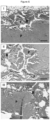
- Figure 2 shows the excellent biocompatibility of the suspensions. Specifically it shows good cell viability (MG63 cells) with calcium hydroxyapatite pastes containing 0, 1, 2 and 3 wt% zinc oxide, with strontium-substituted hydroxyapatite paste and in the absence of paste. It is clear that cell viability is not significantly affected by the presence of the suspensions.
- Figures 3 and 4 show the antibacterial activity of hydroxyapatite pastes containing zinc oxide in a range of concentrations. It can be seen that the presence of zinc oxide enhances the antibacterial properties of the hydroxyapatite, this enhancement becoming significant when the zinc oxide is present at a level above 0.25 wt% of the solid.
Landscapes
- Health & Medical Sciences (AREA)
- Chemical & Material Sciences (AREA)
- Animal Behavior & Ethology (AREA)
- Veterinary Medicine (AREA)
- Public Health (AREA)
- General Health & Medical Sciences (AREA)
- Epidemiology (AREA)
- Life Sciences & Earth Sciences (AREA)
- Oral & Maxillofacial Surgery (AREA)
- Transplantation (AREA)
- Medicinal Chemistry (AREA)
- Dermatology (AREA)
- Inorganic Chemistry (AREA)
- Engineering & Computer Science (AREA)
- Surgery (AREA)
- Ceramic Engineering (AREA)
- Materials Engineering (AREA)
- Pharmaceuticals Containing Other Organic And Inorganic Compounds (AREA)
- Materials For Medical Uses (AREA)
Claims (15)
- Feste Suspension zur Verwendung bei der Knochenregeneration und/oder der Reparatur von Knochendefekten, umfassend eine Quelle für Strontium-Kationen und eine Quelle für Zink-Kationen, wobei die Quelle für Zink-Kationen Zinkoxid umfasst, und wobei die feste Suspension zur Injektion geeignet ist.
- Feste Suspension zur Verwendung nach Anspruch 1, ferner umfassend Kationen von Metallen der Gruppe II, ausgewählt aus Calcium, Magnesium oder Kombinationen davon.
- Feste Suspension zur Verwendung nach Anspruch 2, wobei die Calcium-Kationen als Calciumverbindung bereitgestellt sind, ausgewählt aus Calciumsulfatanhydrit (CaSO4), Calciumsulfathemihydrat (CaSO4·0,5H,0), Calciumsulfatdihydrat (CaSO4·2H,0), Monocalciumphosphat (Ca(H2PO4)2), wasserfreiem Dicalciumphosphat (CaHPO4), Tricalciumphosphat (Ca3(PO4)2), Tetracalciumphosphat (Ca4(PO4)2O), Octacalciumphosphat (Ca8H2(PO4)6· 5H20), Hydroxylapatit (Ca5(PO4)3(OH)), Calciumcarbonat (CaCO3), Calciumoxid (CaO) und Calciumsilikat (CaSiO3) oder Kombinationen davon, wobei die Calciumverbindung optional ein Phosphat umfasst, wobei die Calciumverbindung optional Hydroxylapatit umfasst.
- Feste Suspension zur Verwendung nach einem der vorhergehenden Ansprüche, wobei die Strontium-Kationen als Strontiumverbindung bereitgestellt sind, ausgewählt aus Strontiumsulfat (SrSO4), Strontiumphosphat (Sr3(PO4)2), Strontiumcarbonat (SrCO3), Strontiumoxid (SrO), Strontiumperoxid (SrO2), Strontiumphosphid (Sr3P2), Strontiumsulfid (SrS), Strontiumchlorid (SrCl2), mit Strontium substituiertes Hydroxylapatit (Sr5(PO4)3(OH)) und Strontiumranelat (C12H6N2O8SSr2) oder Kombinationen davon, wobei die Strontiumverbindung optional mit Strontium substituiertes Hydroxylapatit umfasst.
- Feste Suspension zur Verwendung nach Anspruch 4, wobei das Hydroxylapatit Nano-Hydroxylapatit umfasst.
- Feste Suspension zur Verwendung nach Anspruch 4 oder Anspruch 5, umfassend ein Verhältnis von Calcium- zu Strontium-Kationen im Bereich von 0:100 bis 99:1.
- Feste Suspension zur Verwendung nach einem der vorhergehenden Ansprüche, wobei das Zinkoxid eine mittlere Partikelgröße im Bereich von 0,01 µm bis 100 µm aufweist.
- Feste Suspension zur Verwendung nach einem der vorhergehenden Ansprüche, umfassend Feststoffe im Bereich von 20 bis 60 Gewichtsprozent.
- Feste Suspension zur Verwendung nach einem der vorhergehenden Ansprüche, umfassend Zinkoxid im Bereich von 0,25 bis 5,0 Gewichtsprozent der festen Suspension.
- Feste Suspension zur Verwendung nach einem der vorhergehenden Ansprüche, wobei die feste Suspension zumindest teilweise bioresorbierbar ist.
- Feste Suspension zur Verwendung nach einem der vorhergehenden Ansprüche, für eine Verwendung ausgewählt aus Knochenregeneration und/oder bei der Reparatur von Knochendefekten, der Behandlung von Knochendefekten, die durch Osteoporose entstehen, wobei die feste Suspension durch Injektion an die Knochendefektstelle verabreicht werden soll, und/oder der Behandlung von Knochendefekten, die durch Osteoarthritis entstehen, wobei die feste Suspension durch Injektion an die Knochendefektstelle verabreicht werden soll.
- Feste Suspension zur Verwendung nach einem der vorhergehenden Ansprüche, für eine Verwendung ausgewählt aus orthopädischer oder spinaler Knochenregeneration, zahnmedizinischen Anwendungen und/oder bei der Reparatur von Knochendefekten, die durch Osteoporose oder Osteoarthritis entstehen.
- Knochentransplantat, umfassend die feste Suspension zur Verwendung nach einem der vorhergehenden Ansprüche.
- Verfahren zur Herstellung einer festen Suspension nach einem der Ansprüche 1 bis 12, umfassend: Mischen einer Quelle von Strontium-Kationen mit Zinkoxid.
- Feste Suspension zur Verwendung nach einem der Ansprüche 1 bis 12 zur kosmetischen Knochenregeneration, wobei die kosmetische Knochenregeneration optional dental ist.
Applications Claiming Priority (2)
| Application Number | Priority Date | Filing Date | Title |
|---|---|---|---|
| GBGB1813928.7A GB201813928D0 (en) | 2018-08-28 | 2018-08-28 | Solid suspension |
| PCT/GB2019/052385 WO2020044028A1 (en) | 2018-08-28 | 2019-08-27 | Solid suspension |
Publications (2)
| Publication Number | Publication Date |
|---|---|
| EP3843797A1 EP3843797A1 (de) | 2021-07-07 |
| EP3843797B1 true EP3843797B1 (de) | 2025-02-12 |
Family
ID=63715235
Family Applications (1)
| Application Number | Title | Priority Date | Filing Date |
|---|---|---|---|
| EP19759722.2A Active EP3843797B1 (de) | 2018-08-28 | 2019-08-27 | Feste suspension |
Country Status (8)
| Country | Link |
|---|---|
| US (1) | US20210244848A1 (de) |
| EP (1) | EP3843797B1 (de) |
| AU (1) | AU2019333008B2 (de) |
| ES (1) | ES3009769T3 (de) |
| GB (1) | GB201813928D0 (de) |
| PL (1) | PL3843797T3 (de) |
| PT (1) | PT3843797T (de) |
| WO (1) | WO2020044028A1 (de) |
Family Cites Families (8)
| Publication number | Priority date | Publication date | Assignee | Title |
|---|---|---|---|---|
| RU2122520C1 (ru) | 1996-10-31 | 1998-11-27 | Акционерное общество закрытого типа "ОСТИМ" | Способ получения суспензии гидроксиапатита |
| EP1317261B1 (de) | 2000-09-12 | 2006-04-05 | Zakrytoe Aktsionernoe Obschestvo OSTIM | Arzneimittel enthaltend hydroxyapatite zur behandlung von knochengewebserkrankungen |
| US20080208340A1 (en) * | 2007-02-26 | 2008-08-28 | Daniel Boyd | Synthetic bone graft |
| FR2918658B1 (fr) * | 2007-07-09 | 2010-12-03 | Centre Nat Rech Scient | Verres bioactifs dopes en strontium. |
| EP2313027A1 (de) * | 2008-05-27 | 2011-04-27 | Imperial Innovations Limited | Hypoxie-auslösender-faktor-(hif-) stabilisierende brille |
| CN101695584B (zh) * | 2009-10-15 | 2013-04-24 | 浙江大学 | 一种促骨再生修复的可注射复合材料及其制备方法 |
| IE20100196A1 (en) * | 2010-04-01 | 2012-02-29 | Cork Inst Technology | A glass ceramical biomaterial |
| US20170232151A1 (en) | 2016-02-13 | 2017-08-17 | National Taiwan University | Bioresorbable synthetic bone graft |
-
2018
- 2018-08-28 GB GBGB1813928.7A patent/GB201813928D0/en not_active Ceased
-
2019
- 2019-08-27 EP EP19759722.2A patent/EP3843797B1/de active Active
- 2019-08-27 US US17/271,107 patent/US20210244848A1/en active Pending
- 2019-08-27 WO PCT/GB2019/052385 patent/WO2020044028A1/en not_active Ceased
- 2019-08-27 PL PL19759722.2T patent/PL3843797T3/pl unknown
- 2019-08-27 AU AU2019333008A patent/AU2019333008B2/en active Active
- 2019-08-27 PT PT197597222T patent/PT3843797T/pt unknown
- 2019-08-27 ES ES19759722T patent/ES3009769T3/es active Active
Also Published As
| Publication number | Publication date |
|---|---|
| PL3843797T3 (pl) | 2025-06-09 |
| AU2019333008A1 (en) | 2021-02-18 |
| EP3843797A1 (de) | 2021-07-07 |
| US20210244848A1 (en) | 2021-08-12 |
| GB201813928D0 (en) | 2018-10-10 |
| AU2019333008B2 (en) | 2024-09-19 |
| ES3009769T3 (en) | 2025-03-31 |
| PT3843797T (pt) | 2025-03-11 |
| WO2020044028A1 (en) | 2020-03-05 |
Similar Documents
| Publication | Publication Date | Title |
|---|---|---|
| Kanter et al. | Control of in vivo mineral bone cement degradation | |
| Driessens et al. | Osteotransductive bone cements | |
| EP2421543B1 (de) | Zweiphasen-calciumphosphatzementzusammensetzung | |
| US9125966B2 (en) | Bone repair material | |
| DE60116098T2 (de) | Zusammensetzung für einen injizierbaren knochenmineral ersatz | |
| DE60220949T2 (de) | Neuer knochenmineralien-ersatzstoff | |
| Tulyaganov et al. | Synthesis, processing and characterization of a bioactive glass composition for bone regeneration | |
| US9913931B2 (en) | Cement-forming compositions, monetite cements, implants and methods for correcting bone defects | |
| EP2353619A1 (de) | Herstellung von Knochenzementzusammensetzungen | |
| Demirel et al. | Effect of strontium-containing compounds on bone grafts | |
| Shih et al. | In vivo evaluation of resorbable bone graft substitutes in beagles: histological properties | |
| EP3843797B1 (de) | Feste suspension | |
| EP3231453B1 (de) | Bone-sialopreotein(bsp)-funktionalisierte knochenersatzkörper | |
| CN103945875A (zh) | 包含可注射生物材料水泥和射线不透性改善剂的组合物 | |
| Yang et al. | Preparation and characterization of trace elements‐multidoped injectable biomimetic materials for minimally invasive treatment of osteoporotic bone trauma | |
| Padilla et al. | Novel nanostructured Zn-substituted monetite based biomaterial for bone regeneration | |
| Hung et al. | In vivo graft performance of an improved bone substitute composed of poor crystalline hydroxyapatite based biphasic calcium phosphate | |
| Fei et al. | Injectable Bone Cements: A Generational Framework for Bioactivity, Porosity, and Mechanobiological Design at the Nanoscale | |
| Späth | Cu2+-doped brushite cements for bone replacement: From fundamental research to applicaton relevant properties | |
| Gonçalves | Substitutos Ósseos injectáveis prontos a usar | |
| Karataş | Investigation of biocompatibility of calcium phosphate based materials and cements | |
| 박오주 | Effect of high local concentrations of antibiotics on early bone formation of tooth ash and plaster of Paris in ovariectomized rat | |
| Mestres Bea | Novel phosphate-based cements for clinical applications |
Legal Events
| Date | Code | Title | Description |
|---|---|---|---|
| STAA | Information on the status of an ep patent application or granted ep patent |
Free format text: STATUS: UNKNOWN |
|
| STAA | Information on the status of an ep patent application or granted ep patent |
Free format text: STATUS: THE INTERNATIONAL PUBLICATION HAS BEEN MADE |
|
| STAA | Information on the status of an ep patent application or granted ep patent |
Free format text: STATUS: REQUEST FOR EXAMINATION WAS MADE |
|
| PUAI | Public reference made under article 153(3) epc to a published international application that has entered the european phase |
Free format text: ORIGINAL CODE: 0009012 |
|
| 17P | Request for examination filed |
Effective date: 20210208 |
|
| AK | Designated contracting states |
Kind code of ref document: A1 Designated state(s): AL AT BE BG CH CY CZ DE DK EE ES FI FR GB GR HR HU IE IS IT LI LT LU LV MC MK MT NL NO PL PT RO RS SE SI SK SM TR |
|
| DAV | Request for validation of the european patent (deleted) | ||
| DAX | Request for extension of the european patent (deleted) | ||
| STAA | Information on the status of an ep patent application or granted ep patent |
Free format text: STATUS: EXAMINATION IS IN PROGRESS |
|
| 17Q | First examination report despatched |
Effective date: 20230309 |
|
| GRAP | Despatch of communication of intention to grant a patent |
Free format text: ORIGINAL CODE: EPIDOSNIGR1 |
|
| STAA | Information on the status of an ep patent application or granted ep patent |
Free format text: STATUS: GRANT OF PATENT IS INTENDED |
|
| INTG | Intention to grant announced |
Effective date: 20241011 |
|
| GRAJ | Information related to disapproval of communication of intention to grant by the applicant or resumption of examination proceedings by the epo deleted |
Free format text: ORIGINAL CODE: EPIDOSDIGR1 |
|
| STAA | Information on the status of an ep patent application or granted ep patent |
Free format text: STATUS: EXAMINATION IS IN PROGRESS |
|
| GRAP | Despatch of communication of intention to grant a patent |
Free format text: ORIGINAL CODE: EPIDOSNIGR1 |
|
| STAA | Information on the status of an ep patent application or granted ep patent |
Free format text: STATUS: GRANT OF PATENT IS INTENDED |
|
| INTC | Intention to grant announced (deleted) | ||
| GRAS | Grant fee paid |
Free format text: ORIGINAL CODE: EPIDOSNIGR3 |
|
| GRAA | (expected) grant |
Free format text: ORIGINAL CODE: 0009210 |
|
| STAA | Information on the status of an ep patent application or granted ep patent |
Free format text: STATUS: THE PATENT HAS BEEN GRANTED |
|
| INTG | Intention to grant announced |
Effective date: 20241212 |
|
| AK | Designated contracting states |
Kind code of ref document: B1 Designated state(s): AL AT BE BG CH CY CZ DE DK EE ES FI FR GB GR HR HU IE IS IT LI LT LU LV MC MK MT NL NO PL PT RO RS SE SI SK SM TR |
|
| P01 | Opt-out of the competence of the unified patent court (upc) registered |
Free format text: CASE NUMBER: APP_305/2025 Effective date: 20250106 |
|
| REG | Reference to a national code |
Ref country code: GB Ref legal event code: FG4D |
|
| REG | Reference to a national code |
Ref country code: CH Ref legal event code: EP |
|
| REG | Reference to a national code |
Ref country code: DE Ref legal event code: R096 Ref document number: 602019065794 Country of ref document: DE |
|
| REG | Reference to a national code |
Ref country code: PT Ref legal event code: SC4A Ref document number: 3843797 Country of ref document: PT Date of ref document: 20250311 Kind code of ref document: T Free format text: AVAILABILITY OF NATIONAL TRANSLATION Effective date: 20250305 |
|
| REG | Reference to a national code |
Ref country code: IE Ref legal event code: FG4D |
|
| REG | Reference to a national code |
Ref country code: SE Ref legal event code: TRGR |
|
| REG | Reference to a national code |
Ref country code: NL Ref legal event code: FP |
|
| REG | Reference to a national code |
Ref country code: ES Ref legal event code: FG2A Ref document number: 3009769 Country of ref document: ES Kind code of ref document: T3 Effective date: 20250331 |
|
| PG25 | Lapsed in a contracting state [announced via postgrant information from national office to epo] |
Ref country code: RS Free format text: LAPSE BECAUSE OF FAILURE TO SUBMIT A TRANSLATION OF THE DESCRIPTION OR TO PAY THE FEE WITHIN THE PRESCRIBED TIME-LIMIT Effective date: 20250512 |
|
| PG25 | Lapsed in a contracting state [announced via postgrant information from national office to epo] |
Ref country code: FI Free format text: LAPSE BECAUSE OF FAILURE TO SUBMIT A TRANSLATION OF THE DESCRIPTION OR TO PAY THE FEE WITHIN THE PRESCRIBED TIME-LIMIT Effective date: 20250212 |
|
| REG | Reference to a national code |
Ref country code: LT Ref legal event code: MG9D |
|
| PG25 | Lapsed in a contracting state [announced via postgrant information from national office to epo] |
Ref country code: NO Free format text: LAPSE BECAUSE OF FAILURE TO SUBMIT A TRANSLATION OF THE DESCRIPTION OR TO PAY THE FEE WITHIN THE PRESCRIBED TIME-LIMIT Effective date: 20250512 Ref country code: IS Free format text: LAPSE BECAUSE OF FAILURE TO SUBMIT A TRANSLATION OF THE DESCRIPTION OR TO PAY THE FEE WITHIN THE PRESCRIBED TIME-LIMIT Effective date: 20250612 |
|
| PG25 | Lapsed in a contracting state [announced via postgrant information from national office to epo] |
Ref country code: HR Free format text: LAPSE BECAUSE OF FAILURE TO SUBMIT A TRANSLATION OF THE DESCRIPTION OR TO PAY THE FEE WITHIN THE PRESCRIBED TIME-LIMIT Effective date: 20250212 |
|
| PG25 | Lapsed in a contracting state [announced via postgrant information from national office to epo] |
Ref country code: LV Free format text: LAPSE BECAUSE OF FAILURE TO SUBMIT A TRANSLATION OF THE DESCRIPTION OR TO PAY THE FEE WITHIN THE PRESCRIBED TIME-LIMIT Effective date: 20250212 |
|
| PG25 | Lapsed in a contracting state [announced via postgrant information from national office to epo] |
Ref country code: BG Free format text: LAPSE BECAUSE OF FAILURE TO SUBMIT A TRANSLATION OF THE DESCRIPTION OR TO PAY THE FEE WITHIN THE PRESCRIBED TIME-LIMIT Effective date: 20250212 Ref country code: GR Free format text: LAPSE BECAUSE OF FAILURE TO SUBMIT A TRANSLATION OF THE DESCRIPTION OR TO PAY THE FEE WITHIN THE PRESCRIBED TIME-LIMIT Effective date: 20250513 |
|
| REG | Reference to a national code |
Ref country code: AT Ref legal event code: MK05 Ref document number: 1765475 Country of ref document: AT Kind code of ref document: T Effective date: 20250212 |
|
| PGFP | Annual fee paid to national office [announced via postgrant information from national office to epo] |
Ref country code: NL Payment date: 20250821 Year of fee payment: 7 |
|
| PG25 | Lapsed in a contracting state [announced via postgrant information from national office to epo] |
Ref country code: SM Free format text: LAPSE BECAUSE OF FAILURE TO SUBMIT A TRANSLATION OF THE DESCRIPTION OR TO PAY THE FEE WITHIN THE PRESCRIBED TIME-LIMIT Effective date: 20250212 |
|
| PGFP | Annual fee paid to national office [announced via postgrant information from national office to epo] |
Ref country code: ES Payment date: 20250926 Year of fee payment: 7 Ref country code: PT Payment date: 20250821 Year of fee payment: 7 |
|
| PG25 | Lapsed in a contracting state [announced via postgrant information from national office to epo] |
Ref country code: DK Free format text: LAPSE BECAUSE OF FAILURE TO SUBMIT A TRANSLATION OF THE DESCRIPTION OR TO PAY THE FEE WITHIN THE PRESCRIBED TIME-LIMIT Effective date: 20250212 |
|
| PGFP | Annual fee paid to national office [announced via postgrant information from national office to epo] |
Ref country code: DE Payment date: 20250820 Year of fee payment: 7 |
|
| PGFP | Annual fee paid to national office [announced via postgrant information from national office to epo] |
Ref country code: PL Payment date: 20250821 Year of fee payment: 7 Ref country code: TR Payment date: 20250825 Year of fee payment: 7 Ref country code: IT Payment date: 20250820 Year of fee payment: 7 |
|
| PGFP | Annual fee paid to national office [announced via postgrant information from national office to epo] |
Ref country code: BE Payment date: 20250820 Year of fee payment: 7 Ref country code: GB Payment date: 20250815 Year of fee payment: 7 |
|
| PG25 | Lapsed in a contracting state [announced via postgrant information from national office to epo] |
Ref country code: AT Free format text: LAPSE BECAUSE OF FAILURE TO SUBMIT A TRANSLATION OF THE DESCRIPTION OR TO PAY THE FEE WITHIN THE PRESCRIBED TIME-LIMIT Effective date: 20250212 |
|
| PGFP | Annual fee paid to national office [announced via postgrant information from national office to epo] |
Ref country code: FR Payment date: 20250828 Year of fee payment: 7 |
|
| PGFP | Annual fee paid to national office [announced via postgrant information from national office to epo] |
Ref country code: SE Payment date: 20250820 Year of fee payment: 7 Ref country code: CH Payment date: 20250901 Year of fee payment: 7 |
|
| PG25 | Lapsed in a contracting state [announced via postgrant information from national office to epo] |
Ref country code: CZ Free format text: LAPSE BECAUSE OF FAILURE TO SUBMIT A TRANSLATION OF THE DESCRIPTION OR TO PAY THE FEE WITHIN THE PRESCRIBED TIME-LIMIT Effective date: 20250212 Ref country code: EE Free format text: LAPSE BECAUSE OF FAILURE TO SUBMIT A TRANSLATION OF THE DESCRIPTION OR TO PAY THE FEE WITHIN THE PRESCRIBED TIME-LIMIT Effective date: 20250212 |
|
| PG25 | Lapsed in a contracting state [announced via postgrant information from national office to epo] |
Ref country code: RO Free format text: LAPSE BECAUSE OF FAILURE TO SUBMIT A TRANSLATION OF THE DESCRIPTION OR TO PAY THE FEE WITHIN THE PRESCRIBED TIME-LIMIT Effective date: 20250212 |
|
| PG25 | Lapsed in a contracting state [announced via postgrant information from national office to epo] |
Ref country code: SK Free format text: LAPSE BECAUSE OF FAILURE TO SUBMIT A TRANSLATION OF THE DESCRIPTION OR TO PAY THE FEE WITHIN THE PRESCRIBED TIME-LIMIT Effective date: 20250212 |
|
| REG | Reference to a national code |
Ref country code: DE Ref legal event code: R097 Ref document number: 602019065794 Country of ref document: DE |
|
| PLBE | No opposition filed within time limit |
Free format text: ORIGINAL CODE: 0009261 |
|
| STAA | Information on the status of an ep patent application or granted ep patent |
Free format text: STATUS: NO OPPOSITION FILED WITHIN TIME LIMIT |
|
| 26N | No opposition filed |
Effective date: 20251113 |
|
| PG25 | Lapsed in a contracting state [announced via postgrant information from national office to epo] |
Ref country code: MC Free format text: LAPSE BECAUSE OF FAILURE TO SUBMIT A TRANSLATION OF THE DESCRIPTION OR TO PAY THE FEE WITHIN THE PRESCRIBED TIME-LIMIT Effective date: 20250212 |
|
| PG25 | Lapsed in a contracting state [announced via postgrant information from national office to epo] |
Ref country code: LU Free format text: LAPSE BECAUSE OF NON-PAYMENT OF DUE FEES Effective date: 20250827 |