EP3846018B1 - System und verfahren zum drucken von etiketten - Google Patents
System und verfahren zum drucken von etiketten Download PDFInfo
- Publication number
- EP3846018B1 EP3846018B1 EP19397534.9A EP19397534A EP3846018B1 EP 3846018 B1 EP3846018 B1 EP 3846018B1 EP 19397534 A EP19397534 A EP 19397534A EP 3846018 B1 EP3846018 B1 EP 3846018B1
- Authority
- EP
- European Patent Office
- Prior art keywords
- printing
- code
- file
- user
- labels
- Prior art date
- Legal status (The legal status is an assumption and is not a legal conclusion. Google has not performed a legal analysis and makes no representation as to the accuracy of the status listed.)
- Active
Links
Images




Classifications
-
- G—PHYSICS
- G06—COMPUTING OR CALCULATING; COUNTING
- G06F—ELECTRIC DIGITAL DATA PROCESSING
- G06F3/00—Input arrangements for transferring data to be processed into a form capable of being handled by the computer; Output arrangements for transferring data from processing unit to output unit, e.g. interface arrangements
- G06F3/12—Digital output to print unit, e.g. line printer, chain printer
- G06F3/1201—Dedicated interfaces to print systems
- G06F3/1278—Dedicated interfaces to print systems specifically adapted to adopt a particular infrastructure
- G06F3/1285—Remote printer device, e.g. being remote from client or server
- G06F3/1287—Remote printer device, e.g. being remote from client or server via internet
-
- G—PHYSICS
- G06—COMPUTING OR CALCULATING; COUNTING
- G06F—ELECTRIC DIGITAL DATA PROCESSING
- G06F3/00—Input arrangements for transferring data to be processed into a form capable of being handled by the computer; Output arrangements for transferring data from processing unit to output unit, e.g. interface arrangements
- G06F3/12—Digital output to print unit, e.g. line printer, chain printer
- G06F3/1201—Dedicated interfaces to print systems
- G06F3/1202—Dedicated interfaces to print systems specifically adapted to achieve a particular effect
- G06F3/1203—Improving or facilitating administration, e.g. print management
-
- G—PHYSICS
- G06—COMPUTING OR CALCULATING; COUNTING
- G06F—ELECTRIC DIGITAL DATA PROCESSING
- G06F3/00—Input arrangements for transferring data to be processed into a form capable of being handled by the computer; Output arrangements for transferring data from processing unit to output unit, e.g. interface arrangements
- G06F3/12—Digital output to print unit, e.g. line printer, chain printer
- G06F3/1201—Dedicated interfaces to print systems
- G06F3/1223—Dedicated interfaces to print systems specifically adapted to use a particular technique
- G06F3/1237—Print job management
- G06F3/1238—Secure printing, e.g. user identification, user rights for device usage, unallowed content, blanking portions or fields of a page, releasing held jobs
-
- G—PHYSICS
- G06—COMPUTING OR CALCULATING; COUNTING
- G06F—ELECTRIC DIGITAL DATA PROCESSING
- G06F3/00—Input arrangements for transferring data to be processed into a form capable of being handled by the computer; Output arrangements for transferring data from processing unit to output unit, e.g. interface arrangements
- G06F3/12—Digital output to print unit, e.g. line printer, chain printer
- G06F3/1201—Dedicated interfaces to print systems
- G06F3/1223—Dedicated interfaces to print systems specifically adapted to use a particular technique
- G06F3/1237—Print job management
- G06F3/1242—Image or content composition onto a page
- G06F3/1243—Variable data printing, e.g. document forms, templates, labels, coupons, advertisements, logos, watermarks, transactional printing, fixed content versioning
-
- G—PHYSICS
- G06—COMPUTING OR CALCULATING; COUNTING
- G06F—ELECTRIC DIGITAL DATA PROCESSING
- G06F3/00—Input arrangements for transferring data to be processed into a form capable of being handled by the computer; Output arrangements for transferring data from processing unit to output unit, e.g. interface arrangements
- G06F3/12—Digital output to print unit, e.g. line printer, chain printer
- G06F3/1201—Dedicated interfaces to print systems
- G06F3/1223—Dedicated interfaces to print systems specifically adapted to use a particular technique
- G06F3/1237—Print job management
- G06F3/1267—Job repository, e.g. non-scheduled jobs, delay printing
-
- G—PHYSICS
- G06—COMPUTING OR CALCULATING; COUNTING
- G06F—ELECTRIC DIGITAL DATA PROCESSING
- G06F3/00—Input arrangements for transferring data to be processed into a form capable of being handled by the computer; Output arrangements for transferring data from processing unit to output unit, e.g. interface arrangements
- G06F3/12—Digital output to print unit, e.g. line printer, chain printer
- G06F3/1201—Dedicated interfaces to print systems
- G06F3/1278—Dedicated interfaces to print systems specifically adapted to adopt a particular infrastructure
- G06F3/1282—High volume printer device
-
- B—PERFORMING OPERATIONS; TRANSPORTING
- B41—PRINTING; LINING MACHINES; TYPEWRITERS; STAMPS
- B41J—TYPEWRITERS; SELECTIVE PRINTING MECHANISMS, i.e. MECHANISMS PRINTING OTHERWISE THAN FROM A FORME; CORRECTION OF TYPOGRAPHICAL ERRORS
- B41J3/00—Typewriters or selective printing or marking mechanisms characterised by the purpose for which they are constructed
- B41J3/407—Typewriters or selective printing or marking mechanisms characterised by the purpose for which they are constructed for marking on special material
- B41J3/4075—Tape printers; Label printers
Definitions
- ⁇ Physical products such as bottles of drinks, packages of fragrancies, packages of tissue papers, sweets and other packaged items have labels designed by manufactures or brand owners of the items.
- lemonade bottles may have different kinds of labels depending on the manufacturer of the lemonade and the quality of the lemonade so that consumers can more easily distinguish the product from other products.
- Such labels may be printed by a printing machine on an appropriate printable face material attached via pressure sensitive adhesive on a liner which works as a backing material for the labels.
- liner may also be called as a release liner indicating that the pressure sensitive labels can be released from the liner at a labelling phase and attached with the products.
- Linerless label material can be self-wound on roll without need of a separate removable liner to protect the adhesive layer.
- shrinkable filmic materials where the shrinkable labels can be attached, for example, on a bottle by shrinking the label material formed as a sleeve or tube to remain on the labelled product without or minimal use of pressure sensitive adhesive.
- the selection of the printable label face material as well as the label type in any of the above mentioned cases to be selected depends on, for example, ink used for the printing, material on which the labels will be attached with in the end use in question, label dispensing technique, desired visual appearance of the label and labelled product etc.
- Conversion of the label material into printed individual labels ready to be dispensed on the labelled item involves several phases typically performed by different parties in different physical locations.
- a typical value chain might include, for example, label laminate manufacturer providing non-printed label material as customer rolls, printing house, printing brand and other information on the labels rolls, die cutter who die-cuts the printed face material into individual labels carried by the continuous liner ready for dispensing.
- These individual phases naturally differ in their details depending on the label type being pressure sensitive adhesive label (with liner), linerless label or shrinkable label.
- the main phases can be understood as printable label material manufacturing in high volumes and then the conversion of such label materials into printed individual labels on narrow customer rolls ready for dispensing.
- the latter conversion phase includes the printing of the labels as its subphase.
- Each of the aforementioned phases or subphases during the preparation of label may be performed by separate parties (typically in different locations) or it is also possible that a single party may perform all of the phases in a single location as an online process. All variations in between are also possible.
- the brand related value chain being responsible for preparing the information and artwork to be printed on the labels. This involves creating and selecting the printable content as well as selection of the label material for suitable visual appearance as well as technical performance for the given end use. Later in this text the activities related to this brand related value chain and partly overlapping with the physical label preparation value chain are called "printing material management".
- the package of the item in its label may also comprise a visual and machine readable, unique code (unique ID), such as a bar code or a so-called QR code (quick response code).
- unique ID such as a bar code or a so-called QR code (quick response code).
- QR code quick response code
- the code itself may include some details of the product and/or may contain a link to a database from which more information about the product can be obtained.
- a consumer may capture an image of the code by a communication device such as a smart phone, wherein an application in the communication device interprets the image to find the code and to interpret it so that an address of the link embedded in the code can be revealed and information may be retrieved from the indicated address.
- the patent application US 2006/023238 A1 discloses a method and system for selective reprint of individual records in a variable data printing operation in which a variable data print job defined by an original digital document having a plurality of records to be printed is provided to the printing device.
- the variable data print job is run on the printing device and the printed documents are examined to select records to reprint.
- a parameter that identifies the records to reprint is determined and applied to the original digital document, wherein the original digital document is transformed into a new or revised digital document including the records to reprint.
- the print job defined by the new or revised digital document is provided to the printing device for selective reprint.
- the international patent application WO 2018/162797 A1 discloses a method of using a central computer that is communicatively connectable to a first control computer, wherein the first control computer controls a first printing machine having a first rate of printing, and configured to dynamically allocate and transmit unique codes from a server to the first control computer.
- a first request for a first patch of unique codes is received from the first control computer, wherein a first time interval between the first request to the server and the unique code being available to be used by the first printing machine is determined as well as a first communication speed between the server and the first printing machine.
- the following parameters are dynamically calculated: a first optimum patch size of the first patch of unique codes to be delivered to the first printing machine based on the first request from the first control computer of the first printing machine; a file size of a unique code; a printing speed of the first printing machine; the first time interval and the first communication speed. Then, a first patch of unique codes having a patch size equal to the first optimum patch size is communicated to the first control computer of the first printing machine.
- One aim of the present invention is to solve the problem of printing material management utilizing two application programming interfaces and user identifications. This will streamline the communications between involved parties and make possible to economically and reliably manufacture labels in production runs where the information content on individual labels is more varying and individual.
- a printing material management system is a system which has a web-based user interface, cloud storage and one or more application programming interfaces (APIs). These application programming interfaces can be integrated with a digital printing machine and content management platforms. With the integrations, a user of the user interface is capable of adding information related to e.g. printing material artwork, dimensions, roll direction, core size and give needed information to choose the right printing material for the printing job. All the information can be uploaded to a temporary cloud storage from where it can be downloaded into a workflow of the printing machine.
- APIs application programming interfaces
- logistic delivery information and settings of the application programming interfaces can be setup using the printing material management system. Needed information is delivered to the content management platform and to the printing machine and/or other systems managing such content over the application programming interfaces.
- the user may create a user account for her-/himself.
- the system knows to which customer account in the printing house's system or in the content management system the given information belongs to.
- the user account can also hold secure API keys to the printing machine system and/or content management system to validate the right of the printing house to create unique IDs from the content management system.
- the user can make printing requests directly from the user interface by downloading artwork and giving needed information of the printing job. Once the user has given all the needed information, the system will send over the information to the printing machine and to the content management platform over the application programming interfaces.
- one interface is related to physical properties of a printing job (paper quality, printing powder, selection of a printing machine, etc.) and another interface is related to provision of digital data (e.g. unique codes, artwork, etc.) for a printing job.
- digital data e.g. unique codes, artwork, etc.
- the printing material (artwork) files are usually quite large.
- the system has a cloud storage where the printing material files can be uploaded and stored temporarily.
- the printing machine operator can choose when to download the printing material file and needed information on to the printing machine system to avoid any delay in the printing information delivery.
- the application programming interfaces can be highly secured to protect the information which may make the system more secure than email based systems.
- Fig. 1a illustrates an example of a process flow from label material selection, label preparation and printing to attachment to a product
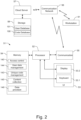
- Fig. 2 illustrates an example of a digital printing material management system 50 as a simplified block diagram.
- solid lines illustrate flows of physical subject matter and dotted lines illustrate data flows.
- Label material 1 is fed to a printing machine 2 for printing.
- the label material may have been selected so that it is appropriate for the product to which the label will be attached and also for the printing method and substances therein (e.g. printing technique incl. powder or ink and print curing method).
- the information may have been prepared and provided to the code management entity 4 by e.g. a brand owner 17, based on an artwork 16.
- the brand owner 17 may have sent the printing information to a printing management entity 18 which may have forwarded the information to the code management entity 4.
- the printing management entity 18 may also send the label information 3 to a cloud storage 58.
- the printing machine 2 retrieves the information to be printed on the labels from the cloud storage 58 by a first application programming interface 19 and also fetches unique codes 5 for each label from a code management entity 4 by a second application programming interface 20.
- Products 7 are also packaged 8 to a package suitable for the products.
- liquid substances may be inserted into bottles or cartons.
- the labels are forwarded to for example a separation phase 6, where individual labels are separated (die-cut) from the label material by a cutting machine.
- the individual labels may then be attached with packages of the products by a labelling machine 9.
- a label is attached with the package, information related to the product and the unique code is stored 12 to a database, which may be called as a code database 100.
- This may be implemented so that the labelling machine 9 reads the unique code from the label and sends this information to a database manager 14 in which the information of the unique code and information of the product of that particular package are linked together and stored into the code database 100.
- the code management entity 4 have provided information of the generated/selected unique code when it was sent to be attached with a label.
- the code database 100 already comprises the unique code and the product information can be attached with the unique code in the code database 100 after the label have been attached to the product.
- Information of the product may vary depending on the nature of the product.
- the information may comprise an indication when the product was produced, indication of the machine which produced the product, the manufacturer of the product, nutrition details of the product, etc.
- the information may provide access to a further service not directly related to the product.
- Such service may be a video, game, lottery or something else used to promote the product for consumers and/or reward the consumer of purchasing the product.
- the products having the unique code are delivered 10 to retail dealers, malls, warehouses or other locations for purchasing 11 by consumers.
- Information on the location may be provided 15 to the database manager 14 wherein the database manager 14 can link the product, unique code and the retail location together.
- information of the purchased product may be transmitted 13 to the database manager 14 so that it can update the database to include information that the product attached with the unique code has been purchased.
- the information may also include location where the product was purchased, indication of the purchaser, etc.
- Fig. 1b illustrates another example of a process flow from label material selection, label preparation and printing to attachment to a product.
- the printing machine 2 has less control over the preparation of the labels but needs to receive more complete information for the printing of labels.
- the unique codes are already included in the printing file, which the printing machine 2 retrieves from the cloud storage 58 via the first application programming interface 19.
- the code management entity 4 provides information of the unique codes 5 for each label and stores the unique code information to the printing file in the cloud storage 58.
- the printing material management system 50 of Fig. 2 has a control device 51, such as a computer, in which some operational elements for printing material management are provided. Such elements may be implemented as a computer code, using logic circuitry, a combination of computer code and logic circuitry, or by some other appropriate way.
- the control device 51 has, inter alia, a controller 52 (e.g. a processor), a user interface 53, which comprises at least input means 53.1 for inputting information to the printing material management system by management personnel of the printing material management system 50, and a display 53.2 for displaying information to the management personnel.
- the control device 51 has also a memory 54 for storing computer code and information related to the operation of the printing management system 50.
- the control device 51 further has a communication interface 55 for sending information to a communication network 56 and for receiving information from the communication network 56.
- the communication network 56 has a communication connection with at least some elements of the printing material management system 50, such as the control device 51, a code management entity 4, and a cloud server 57.
- the cloud server 57 has a data storage 58 which can be used as a so-called cloud storage as will be described later in this specification.
- the printing material management system 50 has also a user database 101, which may be located in the data storage 58 of the cloud server 57 or in the memory 54 of the control device 51 or in another appropriate place.
- the user database 101 has data records related to registered users. These data records may also be called as user accounts and each registered user has unique user account dedicated to her/him.
- the code management entity 4 takes care of unique code preparation and bookkeeping of already used unique codes and information of the products to which the used unique codes have been assigned. Such information may be stored into a code database 100.
- the unique code may be, for example, a bar code, a QR code, a Datamatrix code, a Digital Watermark or other visual code, or may be in another non-printable form which may not be visual but another kind of a machine readable code, such as a code encoded in an RFID tag (Radio Frequency Identification) or as an NFC (Near Field Communication) code or as a three-dimensional code, for example.
- the machine readable code may also be in a form of a combination of two or more different kinds of codes, such as a QR code implemented with an RFID tag.
- a non-limiting example of the three-dimensional code to be mentioned here is a 3D bar code having protrusions or colours as the third dimension.
- the visual code may also be called as a human recognizable code and the code which can be read by a device may be called as a machine readable code, which can be visual or non-visual.
- the actual code may become visible or machine readable only in a certain lighting, such as in UV light or infrared light. For the purpose of this text the latter type of code is still considered to be a visual and/or machine readable code.
- the code management entity 4 may reserve certain ranges of unique codes for different users, wherein when a user requests unique codes for labels of products provided by the user, the code management entity 4 may select one unique code for each product from the range reserved for that particular user and send the codes to the printing machine 2.
- the printing material management system 50 also has a workstation 31 which a user, e.g. an employee of a brand owner, can use to define printing tasks.
- the workstation 31 has a controller 32 ( Fig. 3 ), such as a computer, with which some operational elements for printing material management are provided. Such elements may be implemented as a computer code, using logic circuitry, a combination of computer code and logic circuitry, or by some other appropriate way.
- the workstation 31 has a user interface 33, which comprises at least input means 33.1 for inputting information to the printing material management system by a user, and a display 33.2 for displaying information to the user.
- the input means 33.1 may comprise a keyboard, a fingerprint sensor, a pointer device and/or some other appropriate input device, In addition or alternatively, the input means 33.1 may be implemented as a so-called touch screen, wherein a touch panel is attached above a display device.
- the workstation 31 has also a memory 34 for storing computer code and information related to the operation of the workstation 31.
- the workstation 31 further has a communication interface 35 for sending information to a communication network 56 and receiving information from the communication network 56. This kind of workstation 31 may be at a premises of a brand owner and is illustrated with the brand management block 17 in Figs. 1a and 1b .
- the printing manager 18 may keep record of registered users, brand owners etc.
- the printing manager 18 also prepares and sends information related to the printing job, which the user has entered by a printing job managing application 37, as will be described later.
- a user When a user wishes to register her/himself as a user of the printing material management system 50 to create a so-called user account, s/he can start a corresponding application 36 by the controller 32 of the workstation 31.
- the application causes the controller 32 to display a registration form by the display 33.2.
- the user may then enter some user specific information (e.g. name, company, etc.) so that s/he can be distinguished from other users of the printing material management system 50.
- the user may also select a user ID and password to be used later when logging in to the printing material management system 50.
- the user database 101 may use the user ID as an index to the details of the user.
- the system 50 may also store information related to some kind of preferences of the user to the user database 101.
- the preferences may comprise information of rights of the user to print, information of unique codes assigned for that particular user etc.
- the user information stored for each registered user in the user database 101 can also be called as a data record containing user information, or shortly a user information record.
- Such a user information record may comprise several fields for storing different user related information e.g. the user ID, name, preferences etc.
- the printing management system knows to which customer account in the printing house's system or in the content management system the given information belongs to.
- the user account can also hold secure API keys to the printing machine system and/or content management system to validate the right of the printing house to create unique IDs from the content management system.
- the user data management may be performed by a user data management entity 144 in the printing material management system 50.
- the printing job managing application may comprise computer code for displaying a log-in window for entering user's credentials (user id, password) for example by a keyboard 33.1 of the workstation 31.
- the user credentials are delivered to the control device 51, in which e.g. an access control entity 140 uses the credentials and examines the user database 101 to find out whether the user database 101 has user information corresponding with the credentials entered by the user. If such information is found, the control device 51 retrieves information related to the user from the user database 101, i.e. the user information record, and sends it to the workstation 31. If user information is not found, the control device 51 may initiate a user registration procedure to register the user to the printing material management system 50. Hence, the user enters her/his personal data by the workstation 31, which delivers the data to the printing material management system 50 as was described above.
- the workstation 31 executes the printing job managing application comprising computer code for requesting user's credentials (block 501 in Fig. 5a ) to identify the user, and displaying a printing job management window.
- the printing job management window has several fields for defining different properties of the printing job.
- the printing job managing application may also cause the workstation 31 and the control device 51 to exchange information for retrieving from the user information record some user specific information (user preferences, if any) on the basis of user identification and fill in corresponding fields accordingly, wherein such prefilled data is displayed in the printing job management window.
- the user may change any of the prefilled fields unless modification of a field is prevented or restricted, and also fill other fields to determine details of the printing job.
- a brand owner may have defined that only certain kind(s) of printing material are allowed to be used to print certain labels. Therefore, the user is restricted to select the printing material from those materials specified by the brand owner. Also one or more other properties of a printing job (e.g. quality of a printing powder, details of finishing printed labels, etc.) may have restrictions defined by e.g. a brand owner.
- Fig. 4 illustrates an example of the printing job management window 41 shown on the display 33.2 of the workstation 31.
- a field 42 which the user can use to select 502 an artwork (layout) for the printing job.
- Different artworks may have been generated and stored into a cloud storage to be downloaded when needed.
- the user may not have right to access any of the stored artworks but the user information record may comprise information of artworks the user can or cannot have access.
- the user may use a pointing device to point and select the Upload button 43 to download details of the artwork from the cloud storage 58 to the printing material management application. Then the user can modify the artwork if the user wishes to change it somehow and upload the modified artwork to the cloud storage 58 as a new version of the downloaded artwork or as a new artwork.
- customer name e.g. the number of labels to print
- delivery address e.g. the number of labels to print
- city and country of the customer e.g. the number of labels to print
- Some selections may affect available options of other fields. For example, if the user first selects the printing machine, selectable printing materials, roll directions, roll sizes etc. may be different compared to a situation in which another printing machine were selected. Information of details of, for example, printing machines and available options may be downloaded 504 from a control element of the printing machine, for example, or such information may be stored in another place of the printing material management system 50.
- the selected printing machine may require that all printing job related data need to be provided as a printing file and the printing machine is not able to fetch any additional data for printing.
- some printing machines may have more sophisticated features which enable them to fetch some control data which need not be included in the printing file.
- control data is the unique codes, which may or may not be included in the printing file. Therefore, the selection of the printing machine 2 may also define whether unique codes shall be included in the printing file or whether the unique codes shall be fetched by the printing machine 2.
- the user may use a pointing device to point and select the Send request button 44 to initiate storage of information of the printing job.
- the printing job management application 37 of the workstation 31 can create a message on the basis of information of the printing job management window 41 and send the message to the printing material management system 50.
- the printing material management system 50 may calculate the cost of the printing job and send this information to the workstation 31 to be displayed in the printing job management window 41.
- information defined for the printing job will be transmitted to the printing material management system 50.
- This may be utilized by downloading a third application programming interface to the workstation 31 by selecting the Download API button.
- the workstation 31 receives a software package which provides conversion instructions from the data entered via the printing job management window 41 to a format applicable for transmission to the printing management entity 18.
- the third application programming interface 21 may convert the user defined details of the printing job to a certain kind of a message which the printing management entity 18 is able to handle and process. Details of the printing job may be stored 507 in the cloud storage 58.
- the selection of the printing machine 2 may also affect the selection of the third application programming interface. In other words, the selected third application programming interface is able to convert user defined data to a format appropriate for the selected printing machine 2.
- a printing data file (also called as a printing file in this specification) is formed 506 by collecting 145 details of the printing job and arrange these details so that the printing file comprises one data record for each label to be printed 505. Each such data record comprises details of one label to be printed.
- the printing file may be provided 146 to the selected printing machine for printing.
- the user ID of the definer of the printing job may also be used to determine which unique IDs are allowed to be provided to labels to be printed for that particular user.
- the user ID may be provided to the code management entity 4, which examines the range of unique codes allowed to be used 505 for that user to be printed on the labels of the printing job and assigns 509 a unique code from that range to each label of the printing job.
- the unique code management entity 143 creates or fetches a unique code for each label and sends the unique codes to a selected printing machine via the second application programming interface 20 when the printing machine 2 requests such code(s).
- the printing machine 2 then examines the printing data file, fetches information from the data records, attaches the unique codes to the label information and prints the labels accordingly. Also the other phases of the label printing operation described above in the specification can be performed until the whole printing job has been performed.
- the unique code management entity 143 creates or fetches a unique code among those unique IDs which are allowed to be provided to labels to be printed for that particular user.
- the selected unique codes are assigned 511 for each label by including them in corresponding data records of labels in the printing file.
- the printing data file is formed 512 by collecting details of the printing job and arrange these details so that the printing file comprises one data record for each label to be printed.
- the printing file may be stored 507 to the cloud storage 58.
- the printing file may be fetched 508 later from the cloud storage or the printing file may be provided directly to the selected printing machine for printing 510 without temporarily storing the printing file to the cloud storage 58.
- the printing file is linked with the identified user in an appropriate manner.
- a user id may be linked with the printing file so that when the printing machine 2 starts a printing job, the user id is requested or the user who controls the printing job by the printing machine 2, enters the user id or user credentials, wherein the printing machine 2 may send a request to a cloud server via the first application programming interface 19 and indicate the user id in the request. Then the cloud server may retrieve the printing file linked with the indicated user and send the printing file via the first application programming interface 19 to the printing machine 2.
- the printing machine 2 can start printing the labels either when it has received enough information of the printing file or when it has received the whole printing file.
- the user of the printing machine 2 may control the start of the printing job by using some control equipment of the printing machine 2.
- the printing file includes information of at least the selected artwork and printing material selected for the printing job. However, also other information may be stored in the printing file and the information to be stored may also vary in different embodiments and with different printing machines.
- the digital data of the artwork is not stored into the printing file but information of an address of a storage location from where the digital data of the artwork can be downloaded by the printing machine when it is starting to perform the printing job.
- the printing operation may not always follow immediately after defining details of the printing job but may be initiated later.
- the printing data file can be stored e.g. to the cloud storage 58 and fetched 508 from there when the printing job shall be started.
- logistic delivery information and settings of the application programming interfaces can be setup using the printing material management system. Such information may then be delivered to the content management platform and to the printing machine and/or other systems managing such content over the application programming interfaces.
- printing job related information is delivered between different entities using at least partly application programming interfaces which take care of, for example, data conversion from one format to another format.
- No email transmission of printing job related information is needed, which makes the system more flexible and easier to use and faster than currently existing printing job management systems.
Landscapes
- Engineering & Computer Science (AREA)
- Theoretical Computer Science (AREA)
- Human Computer Interaction (AREA)
- Physics & Mathematics (AREA)
- General Engineering & Computer Science (AREA)
- General Physics & Mathematics (AREA)
- Accessory Devices And Overall Control Thereof (AREA)
Claims (14)
- Verfahren zur Verwaltung von Druckaufträgen, wobei das Verfahren Folgendes umfasst:Auswählen eines Layouts (16) für Etiketten;Abrufen von Daten zum ausgewählten Layout (16) aus einem Datenspeicher;Definieren von Druckeigenschaften für das ausgewählte Layout (16);Erstellen einer Druckdatei, die Informationen enthält, die sich zumindest auf Folgendes beziehen:das ausgewählte Layout (16), unddas für den Druckauftrag ausgewählte Druckmaterial (1), wobei das Verfahren weiterhin Folgendes umfasst:Speichern der Druckdatei in einem Cloud-Speicher (58), der mit dem identifizierten Benutzer verknüpft ist;Zuweisen eines eindeutigen Codes für jedes Etikett;Anfordern einer Benutzeridentifikation;Bestimmen eines Satzes verfügbarer eindeutiger Codes für die Etiketten auf der Grundlage der Benutzeridentifikation;wobei der eindeutige Code aus dem Satz verfügbarer eindeutiger Codes (100) in der Druckdatei zugewiesen wird; wobei das Verfahren weiterhin Folgendes umfasst:Abrufen der Druckdatei aus dem Cloud-Speicher (58);Bereitstellen der Druckdatei für eine Druckmaschine (2), um den Druckauftrag zu initiieren; undVerwenden der Druckdatei zum Drucken der Etiketten, sodass jedes Etikett den eindeutigen Code aufweist.
- Verfahren nach Anspruch 1, wobei das Verfahren Folgendes umfasst:
Verwenden der Benutzeridentifikation zum Bestimmen von für den Benutzer auswählbaren Layouts. - Verfahren nach Anspruch 1 oder 2, wobei das Verfahren Folgendes umfasst:Einfügen eines Datensatzes für jedes Etikett in die Druckdatei; undEinfügen eines eindeutigen Codes aus der Menge der verfügbaren eindeutigen Codes (100) in jeden Datensatz.
- Verfahren nach einem der Ansprüche 1 bis 3, wobei das Verfahren das Definieren von mindestens einer der folgenden Eigenschaften für das ausgewählte Layout (16) Folgendes umfasst:Auswahl der Druckmaschine (2);zu verwendendes Material (1);Layout auf dem Druckmaterial (1),Rollrichtung,Kerngröße.
- Verfahren nach Anspruch 4, wobei das Verfahren weiterhin Folgendes umfasst:Verwenden der definierten mindestens einen Eigenschaft zum Auswählen einer Anwendungsprogrammierschnittstelle;Herunterladen der ausgewählten Anwendungsprogrammierschnittstelle (19, 20, 21); undVerwenden der heruntergeladenen Anwendungsprogrammierschnittstelle (19, 20, 21) zum Konvertieren von Details des Druckauftrags in ein für die ausgewählte Druckmaschine (2) anwendbares Format.
- Vorrichtung (31) zur Verwaltung von Druckaufträgen, umfassend:Mittel (33, 41) zum Auswählen eines Layouts für Etiketten;Mittel (35) zum Abrufen von Daten bezüglich des ausgewählten Layouts (16) aus einem Datenspeicher (58);Mittel (42) zum Definieren von Druckeigenschaften für das ausgewählte Layout (16);Mittel (37) zum Erstellen einer Druckdatei, die Informationen enthält, die sich zumindest auf Folgendes beziehen:das ausgewählte Layout (16), unddas für den Druckauftrag ausgewählte Druckmaterial (1), wobei die Vorrichtung (31) ferner Folgendes umfasst:Mittel (35) zum Speichern der Druckdatei in einem Cloud-Speicher (58), der mit dem identifizierten Benutzer verknüpft ist; undMittel (33, 36) zum Anfordern der Benutzeridentifikation;Mittel (101, 144) zum Bestimmen eines Satzes verfügbarer eindeutiger Codes für die Etiketten auf der Grundlage der Benutzeridentifikation;Mittel (4) zum Zuweisen eines eindeutigen Codes aus dem Satz verfügbarer eindeutiger Codes in der Druckdatei;Mittel (3) zum Abrufen der Druckdatei aus dem Cloud-Speicher;Mittel (19) zum Bereitstellen der Druckdatei für eine Druckmaschine (2), um den Druckauftrag zu initiieren; undMittel (2) zum Verwenden der Druckdatei zum Drucken der Etiketten, sodass jedes Etikett den eindeutigen Code aufweist.
- Vorrichtung (31) nach Anspruch 6, wobei die Vorrichtung (31) Folgendes umfasst:
Mittel (143, 144) zum Verwenden der Benutzeridentifikation zum Bestimmen von für den Benutzer auswählbaren Layouts. - Vorrichtung (31) nach Anspruch 6 oder 7, wobei die Vorrichtung (31) Folgendes umfasst:Mittel (145) zum Einfügen eines Datensatzes für jedes Etikett in die Druckdatei; undMittel (4) zum Einfügen eines eindeutigen Codes aus der Menge der verfügbaren eindeutigen Codes in jeden Datensatz.
- Vorrichtung (31) nach einem der Ansprüche 6 bis 8, wobei die Vorrichtung (31) Mittel (41) zum Definieren von mindestens einer der folgenden Eigenschaften für das ausgewählte Layout umfasst:Auswahl der Druckmaschine (2);zu verwendendes Material (1);Layout (16) auf dem Druckmaterial,Rollenrichtung,Kerngröße.
- Vorrichtung (31) nach einem der Ansprüche 6 bis 9, umfassend einen Prozessor (32) und einen Speicher (34), wobei der Speicher (34) Computercode umfasst, der, wenn er vom Prozessor ausgeführt wird, die Vorrichtung (31) veranlasst, mindestens Folgendes auszuführen:Auswählen (502) eines Layouts (16) für die Etiketten;Abrufen von Daten bezüglich des ausgewählten Layouts (16) aus einem Datenspeicher (58);Definieren (504) von Druckeigenschaften für das ausgewählte Layout (16);Erstellen (506) einer Druckdatei, die Informationen enthält, die sich auf mindestens Folgendes beziehen:das ausgewählte Layout (16), undfür den Druckauftrag ausgewähltes Druckmaterial (1), wobei der Speicher (34) außerdem Computercode umfasst, der bei Ausführung durch den Prozessor (32) die Vorrichtung (31) veranlasst, mindestens Folgendes auszuführen:die Druckdatei in einem mit dem identifizierten Benutzer verknüpften Cloud-Speicher zu speichern (507);wobei der Speicher (34) außerdem Computercode umfasst, der, wenn er vom Prozessor (32) ausgeführt wird, die Vorrichtung (31) veranlasst, zumindest Folgendes auszuführen:Anfordern der Benutzeridentifikation;Bestimmen einer Menge verfügbarer eindeutiger Codes für die Etiketten auf der Grundlage der Benutzeridentifikation;Zuweisen (511) eines eindeutigen Codes aus der Menge verfügbarer eindeutiger Codes in der Druckdatei;Abrufen (508) der Druckdatei aus dem Cloud-Speicher;Bereitstellen der Druckdatei einer Druckmaschine (2), um den Druckauftrag zu initiieren; undVerwenden (510) der Druckdatei, um die Etiketten zu drucken, sodass jedes Etikett den eindeutigen Code hat.
- Computerprogrammprodukt für die Verwaltung und Freigabe digitaler Inhalte, das Computercode umfasst, der bei Ausführung durch einen Prozessor (32) eine Vorrichtung (31) veranlasst, mindestens Folgendes auszuführen:Auswählen (502) eines Layouts (16) für Etiketten;Abrufen von Daten bezüglich des ausgewählten Layouts (16) aus einem Datenspeicher (58);Definieren (504) von Druckeigenschaften für das ausgewählte Layout (16);Erstellen (506) einer Druckdatei, die Informationen enthält, die sich mindestens auf Folgendes beziehen:das ausgewählte Layout (16), undfür den Druckauftrag ausgewähltes Druckmaterial (1),wobei das Computerprogrammprodukt ferner Computercode umfasst, der bei Ausführung durch den Prozessor (32) die Vorrichtung (31) veranlasst, mindestens Folgendes auszuführen:Speichern (507) der Druckdatei in einem Cloud-Speicher (58), der mit dem identifizierten Benutzer verknüpft ist; undwobei der Speicher (34) ferner Computercode umfasst, der bei Ausführung durch den Prozessor (32) die Vorrichtung (31) veranlasst, mindestens Folgendes auszuführen:Anfordern einer Benutzeridentifikation;Bestimmen auf der Grundlage der Benutzeridentifikation eines Satzes verfügbarer eindeutiger Codes für die Etiketten;Zuweisen (511) der Druckdatei einen eindeutigen Code aus dem Satz verfügbarer eindeutiger Codes zu;Abrufen (508) der Druckdatei aus dem Cloud-Speicher;Bereitstellen der Druckdatei einer Druckmaschine (2), um den Druckauftrag zu initiieren; undVerwenden (510) der Druckdatei, um die Etiketten zu drucken, sodass jedes Etikett den eindeutigen Code hat.
- System (50) zur Verwaltung von Druckaufträgen, das die Vorrichtung (31) nach einem der Ansprüche 6 bis 9 umfasst, umfassend:eine oder mehrere Druckmaschinen (2);eine Codeverwaltungseinheit (4);ein Steuergerät (51);einen Cloud-Server (57), der den Datenspeicher (58) umfasst;eine Benutzerdatenbank (100);eine Arbeitsstation (31).
- System (50) nach Anspruch 12, wobei das System (50) Mittel (9) zum Anbringen des Etiketts an einer Verpackung eines Produkts umfasst.
- System nach Anspruch 13, wobei die Vorrichtung (31) Mittel zum Überprüfen umfasst, ob der mit dem Produkt verbundene eindeutige Code ein von der Codeverwaltungseinheit bereitgestellter Code ist.
Priority Applications (4)
| Application Number | Priority Date | Filing Date | Title |
|---|---|---|---|
| EP19397534.9A EP3846018B1 (de) | 2019-12-31 | 2019-12-31 | System und verfahren zum drucken von etiketten |
| PL19397534.9T PL3846018T3 (pl) | 2019-12-31 | 2019-12-31 | System i sposób drukowania etykiet |
| ES19397534T ES3009566T3 (en) | 2019-12-31 | 2019-12-31 | A system and method for printing labels |
| US17/126,388 US11507334B2 (en) | 2019-12-31 | 2020-12-18 | System and method for management of printing jobs |
Applications Claiming Priority (1)
| Application Number | Priority Date | Filing Date | Title |
|---|---|---|---|
| EP19397534.9A EP3846018B1 (de) | 2019-12-31 | 2019-12-31 | System und verfahren zum drucken von etiketten |
Publications (3)
| Publication Number | Publication Date |
|---|---|
| EP3846018A1 EP3846018A1 (de) | 2021-07-07 |
| EP3846018C0 EP3846018C0 (de) | 2024-12-11 |
| EP3846018B1 true EP3846018B1 (de) | 2024-12-11 |
Family
ID=69326337
Family Applications (1)
| Application Number | Title | Priority Date | Filing Date |
|---|---|---|---|
| EP19397534.9A Active EP3846018B1 (de) | 2019-12-31 | 2019-12-31 | System und verfahren zum drucken von etiketten |
Country Status (4)
| Country | Link |
|---|---|
| US (1) | US11507334B2 (de) |
| EP (1) | EP3846018B1 (de) |
| ES (1) | ES3009566T3 (de) |
| PL (1) | PL3846018T3 (de) |
Families Citing this family (2)
| Publication number | Priority date | Publication date | Assignee | Title |
|---|---|---|---|---|
| US20230020205A1 (en) * | 2021-07-19 | 2023-01-19 | Rayford Hull | In-Kitchen Label System |
| CN117422076B (zh) * | 2023-10-19 | 2025-08-12 | 浙江翌星包装科技有限公司 | 一种在线检测可变二维码印刷质量等级平台及方法 |
Citations (1)
| Publication number | Priority date | Publication date | Assignee | Title |
|---|---|---|---|---|
| US20180025185A1 (en) * | 2011-03-10 | 2018-01-25 | Fastechnology Group, LLC | On-the-fly marking systems for consumer packaged goods |
Family Cites Families (5)
| Publication number | Priority date | Publication date | Assignee | Title |
|---|---|---|---|---|
| US20060023238A1 (en) * | 2004-07-30 | 2006-02-02 | Eastman Kodak Company | Select reprint of records in variable data printing |
| US10839332B1 (en) * | 2006-06-26 | 2020-11-17 | Stamps.Com | Image-customized labels adapted for bearing computer-based, generic, value-bearing items, and systems and methods for providing image-customized labels |
| US8462371B1 (en) * | 2007-12-28 | 2013-06-11 | Uhlig Llc | Specifying, producing, and delivering variable-content documents |
| KR20140023674A (ko) * | 2012-08-17 | 2014-02-27 | 삼성전자주식회사 | 클라우드 서비스 기반의 컨텐츠 바로 가기 객체 생성 및 사용 방법 그리고 이를 지원하는 장치 |
| US10807384B2 (en) * | 2017-03-07 | 2020-10-20 | Magic Add Oy | Method for dynamically allocating and transmitting unique codes to a printing machine |
-
2019
- 2019-12-31 ES ES19397534T patent/ES3009566T3/es active Active
- 2019-12-31 PL PL19397534.9T patent/PL3846018T3/pl unknown
- 2019-12-31 EP EP19397534.9A patent/EP3846018B1/de active Active
-
2020
- 2020-12-18 US US17/126,388 patent/US11507334B2/en active Active
Patent Citations (1)
| Publication number | Priority date | Publication date | Assignee | Title |
|---|---|---|---|---|
| US20180025185A1 (en) * | 2011-03-10 | 2018-01-25 | Fastechnology Group, LLC | On-the-fly marking systems for consumer packaged goods |
Also Published As
| Publication number | Publication date |
|---|---|
| EP3846018C0 (de) | 2024-12-11 |
| US20210200487A1 (en) | 2021-07-01 |
| PL3846018T3 (pl) | 2025-04-07 |
| US11507334B2 (en) | 2022-11-22 |
| EP3846018A1 (de) | 2021-07-07 |
| ES3009566T3 (en) | 2025-03-27 |
Similar Documents
| Publication | Publication Date | Title |
|---|---|---|
| US8887992B2 (en) | Receipt printing processing method and receipt printing processing system | |
| CN108038697A (zh) | 基于区块链的商品溯源数据服务平台节点数据管理系统 | |
| US11507334B2 (en) | System and method for management of printing jobs | |
| US8825741B2 (en) | Method for the creation of an intelligent document, and device for carrying out said method | |
| US10827098B2 (en) | Custom product imaging method | |
| US20050137937A1 (en) | Method and apparatus for web-based label printing | |
| JP4897515B2 (ja) | 商品受注受付配送システムおよび配送システム | |
| JP2009286121A (ja) | ラベルプリンタ | |
| JP2024000374A (ja) | プログラム、生産拠点システム、梱包処理方法、情報処理システム | |
| JP6079168B2 (ja) | 記録制御システム、記録制御システムの制御方法、及び、記録装置 | |
| KR100985202B1 (ko) | 알에프단말기를 이용한 자동납입카드 발행시스템 및 방법 | |
| JP2013196286A (ja) | 情報処理システム及び進捗状況管理方法 | |
| JP5502428B2 (ja) | 帳票用紙、宅配サービスシステム及びポータブルプリンタ | |
| JP7844917B2 (ja) | 処理システム、処理方法、プログラム | |
| JP7666467B2 (ja) | 包材発注管理装置、及び、包材発注管理方法 | |
| KR102880675B1 (ko) | 상품 배송 관리 시스템 | |
| JP2003085417A (ja) | 包装体製造方法および包装体受注システム | |
| KR20140104722A (ko) | 기업 자체 명함 주문 및 발급 방법 및 그 시스템 | |
| JP2014200919A (ja) | 印刷装置、印刷システム、及び印刷方法 | |
| JP4473159B2 (ja) | 原材料履歴提供システム、および原材料履歴管理方法 | |
| JP2024000373A (ja) | プログラム、生産拠点システム、検品方法、情報処理システム | |
| US20050171912A1 (en) | Multi-part to multi-box consolidation graphic user interface | |
| KR101655015B1 (ko) | 보험증권 제본 시스템 | |
| JP2009110067A (ja) | 荷物配達システム及び管理サーバ | |
| KR20020025270A (ko) | 인터넷 원격주문 시스템 및 방법 |
Legal Events
| Date | Code | Title | Description |
|---|---|---|---|
| PUAI | Public reference made under article 153(3) epc to a published international application that has entered the european phase |
Free format text: ORIGINAL CODE: 0009012 |
|
| STAA | Information on the status of an ep patent application or granted ep patent |
Free format text: STATUS: THE APPLICATION HAS BEEN PUBLISHED |
|
| AK | Designated contracting states |
Kind code of ref document: A1 Designated state(s): AL AT BE BG CH CY CZ DE DK EE ES FI FR GB GR HR HU IE IS IT LI LT LU LV MC MK MT NL NO PL PT RO RS SE SI SK SM TR |
|
| STAA | Information on the status of an ep patent application or granted ep patent |
Free format text: STATUS: REQUEST FOR EXAMINATION WAS MADE |
|
| 17P | Request for examination filed |
Effective date: 20220105 |
|
| RBV | Designated contracting states (corrected) |
Designated state(s): AL AT BE BG CH CY CZ DE DK EE ES FI FR GB GR HR HU IE IS IT LI LT LU LV MC MK MT NL NO PL PT RO RS SE SI SK SM TR |
|
| STAA | Information on the status of an ep patent application or granted ep patent |
Free format text: STATUS: EXAMINATION IS IN PROGRESS |
|
| 17Q | First examination report despatched |
Effective date: 20240315 |
|
| GRAP | Despatch of communication of intention to grant a patent |
Free format text: ORIGINAL CODE: EPIDOSNIGR1 |
|
| STAA | Information on the status of an ep patent application or granted ep patent |
Free format text: STATUS: GRANT OF PATENT IS INTENDED |
|
| RIC1 | Information provided on ipc code assigned before grant |
Ipc: B65C 9/00 20060101ALN20240627BHEP Ipc: B41J 3/407 20060101ALN20240627BHEP Ipc: G06F 3/12 20060101AFI20240627BHEP |
|
| INTG | Intention to grant announced |
Effective date: 20240710 |
|
| GRAS | Grant fee paid |
Free format text: ORIGINAL CODE: EPIDOSNIGR3 |
|
| GRAA | (expected) grant |
Free format text: ORIGINAL CODE: 0009210 |
|
| STAA | Information on the status of an ep patent application or granted ep patent |
Free format text: STATUS: THE PATENT HAS BEEN GRANTED |
|
| AK | Designated contracting states |
Kind code of ref document: B1 Designated state(s): AL AT BE BG CH CY CZ DE DK EE ES FI FR GB GR HR HU IE IS IT LI LT LU LV MC MK MT NL NO PL PT RO RS SE SI SK SM TR |
|
| REG | Reference to a national code |
Ref country code: GB Ref legal event code: FG4D |
|
| REG | Reference to a national code |
Ref country code: CH Ref legal event code: EP |
|
| REG | Reference to a national code |
Ref country code: DE Ref legal event code: R096 Ref document number: 602019063321 Country of ref document: DE |
|
| REG | Reference to a national code |
Ref country code: IE Ref legal event code: FG4D |
|
| U01 | Request for unitary effect filed |
Effective date: 20250103 |
|
| U07 | Unitary effect registered |
Designated state(s): AT BE BG DE DK EE FI FR IT LT LU LV MT NL PT RO SE SI Effective date: 20250114 |
|
| U20 | Renewal fee for the european patent with unitary effect paid |
Year of fee payment: 6 Effective date: 20250103 |
|
| REG | Reference to a national code |
Ref country code: ES Ref legal event code: FG2A Ref document number: 3009566 Country of ref document: ES Kind code of ref document: T3 Effective date: 20250327 |
|
| PG25 | Lapsed in a contracting state [announced via postgrant information from national office to epo] |
Ref country code: HR Free format text: LAPSE BECAUSE OF FAILURE TO SUBMIT A TRANSLATION OF THE DESCRIPTION OR TO PAY THE FEE WITHIN THE PRESCRIBED TIME-LIMIT Effective date: 20241211 |
|
| PG25 | Lapsed in a contracting state [announced via postgrant information from national office to epo] |
Ref country code: NO Free format text: LAPSE BECAUSE OF FAILURE TO SUBMIT A TRANSLATION OF THE DESCRIPTION OR TO PAY THE FEE WITHIN THE PRESCRIBED TIME-LIMIT Effective date: 20250311 |
|
| PG25 | Lapsed in a contracting state [announced via postgrant information from national office to epo] |
Ref country code: GR Free format text: LAPSE BECAUSE OF FAILURE TO SUBMIT A TRANSLATION OF THE DESCRIPTION OR TO PAY THE FEE WITHIN THE PRESCRIBED TIME-LIMIT Effective date: 20250312 |
|
| PG25 | Lapsed in a contracting state [announced via postgrant information from national office to epo] |
Ref country code: RS Free format text: LAPSE BECAUSE OF FAILURE TO SUBMIT A TRANSLATION OF THE DESCRIPTION OR TO PAY THE FEE WITHIN THE PRESCRIBED TIME-LIMIT Effective date: 20250311 |
|
| PG25 | Lapsed in a contracting state [announced via postgrant information from national office to epo] |
Ref country code: SM Free format text: LAPSE BECAUSE OF FAILURE TO SUBMIT A TRANSLATION OF THE DESCRIPTION OR TO PAY THE FEE WITHIN THE PRESCRIBED TIME-LIMIT Effective date: 20241211 |
|
| PG25 | Lapsed in a contracting state [announced via postgrant information from national office to epo] |
Ref country code: IS Free format text: LAPSE BECAUSE OF FAILURE TO SUBMIT A TRANSLATION OF THE DESCRIPTION OR TO PAY THE FEE WITHIN THE PRESCRIBED TIME-LIMIT Effective date: 20250411 |
|
| PG25 | Lapsed in a contracting state [announced via postgrant information from national office to epo] |
Ref country code: SK Free format text: LAPSE BECAUSE OF FAILURE TO SUBMIT A TRANSLATION OF THE DESCRIPTION OR TO PAY THE FEE WITHIN THE PRESCRIBED TIME-LIMIT Effective date: 20241211 |
|
| PG25 | Lapsed in a contracting state [announced via postgrant information from national office to epo] |
Ref country code: CZ Free format text: LAPSE BECAUSE OF FAILURE TO SUBMIT A TRANSLATION OF THE DESCRIPTION OR TO PAY THE FEE WITHIN THE PRESCRIBED TIME-LIMIT Effective date: 20241211 |
|
| REG | Reference to a national code |
Ref country code: CH Ref legal event code: PL |
|
| PG25 | Lapsed in a contracting state [announced via postgrant information from national office to epo] |
Ref country code: MC Free format text: LAPSE BECAUSE OF FAILURE TO SUBMIT A TRANSLATION OF THE DESCRIPTION OR TO PAY THE FEE WITHIN THE PRESCRIBED TIME-LIMIT Effective date: 20241211 |
|
| PLBE | No opposition filed within time limit |
Free format text: ORIGINAL CODE: 0009261 |
|
| STAA | Information on the status of an ep patent application or granted ep patent |
Free format text: STATUS: NO OPPOSITION FILED WITHIN TIME LIMIT |
|
| PG25 | Lapsed in a contracting state [announced via postgrant information from national office to epo] |
Ref country code: CH Free format text: LAPSE BECAUSE OF NON-PAYMENT OF DUE FEES Effective date: 20241231 |
|
| PG25 | Lapsed in a contracting state [announced via postgrant information from national office to epo] |
Ref country code: IE Free format text: LAPSE BECAUSE OF NON-PAYMENT OF DUE FEES Effective date: 20241231 |
|
| 26N | No opposition filed |
Effective date: 20250912 |
|
| PGFP | Annual fee paid to national office [announced via postgrant information from national office to epo] |
Ref country code: GB Payment date: 20251229 Year of fee payment: 7 |
|
| PGFP | Annual fee paid to national office [announced via postgrant information from national office to epo] |
Ref country code: PL Payment date: 20251204 Year of fee payment: 7 |
|
| U20 | Renewal fee for the european patent with unitary effect paid |
Year of fee payment: 7 Effective date: 20251229 |
|
| PGFP | Annual fee paid to national office [announced via postgrant information from national office to epo] |
Ref country code: ES Payment date: 20260102 Year of fee payment: 7 |