EP3846079A1 - Bildverarbeitungsverfahren und aufgabendatenverarbeitungsverfahren und -vorrichtung - Google Patents
Bildverarbeitungsverfahren und aufgabendatenverarbeitungsverfahren und -vorrichtung Download PDFInfo
- Publication number
- EP3846079A1 EP3846079A1 EP19854472.8A EP19854472A EP3846079A1 EP 3846079 A1 EP3846079 A1 EP 3846079A1 EP 19854472 A EP19854472 A EP 19854472A EP 3846079 A1 EP3846079 A1 EP 3846079A1
- Authority
- EP
- European Patent Office
- Prior art keywords
- processing
- task data
- text
- text box
- task
- Prior art date
- Legal status (The legal status is an assumption and is not a legal conclusion. Google has not performed a legal analysis and makes no representation as to the accuracy of the status listed.)
- Pending
Links
Images





Classifications
-
- G—PHYSICS
- G06—COMPUTING OR CALCULATING; COUNTING
- G06F—ELECTRIC DIGITAL DATA PROCESSING
- G06F9/00—Arrangements for program control, e.g. control units
- G06F9/06—Arrangements for program control, e.g. control units using stored programs, i.e. using an internal store of processing equipment to receive or retain programs
- G06F9/46—Multiprogramming arrangements
- G06F9/50—Allocation of resources, e.g. of the central processing unit [CPU]
- G06F9/5005—Allocation of resources, e.g. of the central processing unit [CPU] to service a request
- G06F9/5027—Allocation of resources, e.g. of the central processing unit [CPU] to service a request the resource being a machine, e.g. CPUs, Servers, Terminals
-
- G—PHYSICS
- G06—COMPUTING OR CALCULATING; COUNTING
- G06F—ELECTRIC DIGITAL DATA PROCESSING
- G06F18/00—Pattern recognition
- G06F18/20—Analysing
- G06F18/21—Design or setup of recognition systems or techniques; Extraction of features in feature space; Blind source separation
- G06F18/2163—Partitioning the feature space
-
- G—PHYSICS
- G06—COMPUTING OR CALCULATING; COUNTING
- G06F—ELECTRIC DIGITAL DATA PROCESSING
- G06F18/00—Pattern recognition
- G06F18/20—Analysing
- G06F18/24—Classification techniques
- G06F18/241—Classification techniques relating to the classification model, e.g. parametric or non-parametric approaches
- G06F18/2415—Classification techniques relating to the classification model, e.g. parametric or non-parametric approaches based on parametric or probabilistic models, e.g. based on likelihood ratio or false acceptance rate versus a false rejection rate
-
- G—PHYSICS
- G06—COMPUTING OR CALCULATING; COUNTING
- G06F—ELECTRIC DIGITAL DATA PROCESSING
- G06F9/00—Arrangements for program control, e.g. control units
- G06F9/06—Arrangements for program control, e.g. control units using stored programs, i.e. using an internal store of processing equipment to receive or retain programs
- G06F9/30—Arrangements for executing machine instructions, e.g. instruction decode
- G06F9/38—Concurrent instruction execution, e.g. pipeline or look ahead
- G06F9/3818—Decoding for concurrent execution
-
- G—PHYSICS
- G06—COMPUTING OR CALCULATING; COUNTING
- G06F—ELECTRIC DIGITAL DATA PROCESSING
- G06F9/00—Arrangements for program control, e.g. control units
- G06F9/06—Arrangements for program control, e.g. control units using stored programs, i.e. using an internal store of processing equipment to receive or retain programs
- G06F9/46—Multiprogramming arrangements
- G06F9/48—Program initiating; Program switching, e.g. by interrupt
- G06F9/4806—Task transfer initiation or dispatching
- G06F9/4843—Task transfer initiation or dispatching by program, e.g. task dispatcher, supervisor, operating system
- G06F9/4881—Scheduling strategies for dispatcher, e.g. round robin, multi-level priority queues
-
- G—PHYSICS
- G06—COMPUTING OR CALCULATING; COUNTING
- G06N—COMPUTING ARRANGEMENTS BASED ON SPECIFIC COMPUTATIONAL MODELS
- G06N3/00—Computing arrangements based on biological models
- G06N3/02—Neural networks
- G06N3/04—Architecture, e.g. interconnection topology
- G06N3/045—Combinations of networks
-
- G—PHYSICS
- G06—COMPUTING OR CALCULATING; COUNTING
- G06N—COMPUTING ARRANGEMENTS BASED ON SPECIFIC COMPUTATIONAL MODELS
- G06N3/00—Computing arrangements based on biological models
- G06N3/02—Neural networks
- G06N3/04—Architecture, e.g. interconnection topology
- G06N3/0464—Convolutional networks [CNN, ConvNet]
-
- G—PHYSICS
- G06—COMPUTING OR CALCULATING; COUNTING
- G06N—COMPUTING ARRANGEMENTS BASED ON SPECIFIC COMPUTATIONAL MODELS
- G06N3/00—Computing arrangements based on biological models
- G06N3/02—Neural networks
- G06N3/06—Physical realisation, i.e. hardware implementation of neural networks, neurons or parts of neurons
- G06N3/063—Physical realisation, i.e. hardware implementation of neural networks, neurons or parts of neurons using electronic means
-
- G—PHYSICS
- G06—COMPUTING OR CALCULATING; COUNTING
- G06V—IMAGE OR VIDEO RECOGNITION OR UNDERSTANDING
- G06V10/00—Arrangements for image or video recognition or understanding
- G06V10/20—Image preprocessing
- G06V10/24—Aligning, centring, orientation detection or correction of the image
- G06V10/242—Aligning, centring, orientation detection or correction of the image by image rotation, e.g. by 90 degrees
-
- G—PHYSICS
- G06—COMPUTING OR CALCULATING; COUNTING
- G06V—IMAGE OR VIDEO RECOGNITION OR UNDERSTANDING
- G06V10/00—Arrangements for image or video recognition or understanding
- G06V10/40—Extraction of image or video features
- G06V10/42—Global feature extraction by analysis of the whole pattern, e.g. using frequency domain transformations or autocorrelation
- G06V10/422—Global feature extraction by analysis of the whole pattern, e.g. using frequency domain transformations or autocorrelation for representing the structure of the pattern or shape of an object therefor
- G06V10/426—Graphical representations
-
- G—PHYSICS
- G06—COMPUTING OR CALCULATING; COUNTING
- G06V—IMAGE OR VIDEO RECOGNITION OR UNDERSTANDING
- G06V10/00—Arrangements for image or video recognition or understanding
- G06V10/70—Arrangements for image or video recognition or understanding using pattern recognition or machine learning
- G06V10/82—Arrangements for image or video recognition or understanding using pattern recognition or machine learning using neural networks
-
- G—PHYSICS
- G06—COMPUTING OR CALCULATING; COUNTING
- G06V—IMAGE OR VIDEO RECOGNITION OR UNDERSTANDING
- G06V10/00—Arrangements for image or video recognition or understanding
- G06V10/94—Hardware or software architectures specially adapted for image or video understanding
- G06V10/955—Hardware or software architectures specially adapted for image or video understanding using specific electronic processors
-
- G—PHYSICS
- G06—COMPUTING OR CALCULATING; COUNTING
- G06V—IMAGE OR VIDEO RECOGNITION OR UNDERSTANDING
- G06V20/00—Scenes; Scene-specific elements
- G06V20/60—Type of objects
- G06V20/62—Text, e.g. of license plates, overlay texts or captions on TV images
- G06V20/63—Scene text, e.g. street names
-
- G—PHYSICS
- G06—COMPUTING OR CALCULATING; COUNTING
- G06V—IMAGE OR VIDEO RECOGNITION OR UNDERSTANDING
- G06V30/00—Character recognition; Recognising digital ink; Document-oriented image-based pattern recognition
- G06V30/10—Character recognition
- G06V30/14—Image acquisition
- G06V30/148—Segmentation of character regions
- G06V30/153—Segmentation of character regions using recognition of characters or words
-
- G—PHYSICS
- G06—COMPUTING OR CALCULATING; COUNTING
- G06V—IMAGE OR VIDEO RECOGNITION OR UNDERSTANDING
- G06V30/00—Character recognition; Recognising digital ink; Document-oriented image-based pattern recognition
- G06V30/10—Character recognition
- G06V30/19—Recognition using electronic means
- G06V30/191—Design or setup of recognition systems or techniques; Extraction of features in feature space; Clustering techniques; Blind source separation
- G06V30/19153—Design or setup of recognition systems or techniques; Extraction of features in feature space; Clustering techniques; Blind source separation using rules for classification or partitioning the feature space
-
- G—PHYSICS
- G06—COMPUTING OR CALCULATING; COUNTING
- G06F—ELECTRIC DIGITAL DATA PROCESSING
- G06F2209/00—Indexing scheme relating to G06F9/00
- G06F2209/48—Indexing scheme relating to G06F9/48
- G06F2209/486—Scheduler internals
-
- G—PHYSICS
- G06—COMPUTING OR CALCULATING; COUNTING
- G06F—ELECTRIC DIGITAL DATA PROCESSING
- G06F2209/00—Indexing scheme relating to G06F9/00
- G06F2209/50—Indexing scheme relating to G06F9/50
- G06F2209/5018—Thread allocation
-
- G—PHYSICS
- G06—COMPUTING OR CALCULATING; COUNTING
- G06N—COMPUTING ARRANGEMENTS BASED ON SPECIFIC COMPUTATIONAL MODELS
- G06N20/00—Machine learning
-
- Y—GENERAL TAGGING OF NEW TECHNOLOGICAL DEVELOPMENTS; GENERAL TAGGING OF CROSS-SECTIONAL TECHNOLOGIES SPANNING OVER SEVERAL SECTIONS OF THE IPC; TECHNICAL SUBJECTS COVERED BY FORMER USPC CROSS-REFERENCE ART COLLECTIONS [XRACs] AND DIGESTS
- Y02—TECHNOLOGIES OR APPLICATIONS FOR MITIGATION OR ADAPTATION AGAINST CLIMATE CHANGE
- Y02D—CLIMATE CHANGE MITIGATION TECHNOLOGIES IN INFORMATION AND COMMUNICATION TECHNOLOGIES [ICT], I.E. INFORMATION AND COMMUNICATION TECHNOLOGIES AIMING AT THE REDUCTION OF THEIR OWN ENERGY USE
- Y02D10/00—Energy efficient computing, e.g. low power processors, power management or thermal management
Definitions
- the present disclosure relates to the field of data processing, and in particular, to an image processing method and a task data processing method and apparatus.
- image data processing and text detection are usually performed by using a CPU (Central Processing Unit) or a GPU (Graphics Processing Unit).
- the CPU uses serial processing. That is, during processing, the CPU needs to complete the processing of a piece of task data and obtain an execution result corresponding to the piece of task data before the CPU can continue to execute a next piece of task data, which causes a low efficiency in processing the task data, especially in a case of a large amount of task data.
- GPU processing requires high costs and has huge power consumption.
- an image processing method, a task data processing method and a task data processing apparatus are provided.
- An image processing method is implemented by performing relevant subtasks by using processing units corresponding to substructures in a machine learning model, at least part of the processing units including a field-programmable gate array (FPGA) unit, and includes:
- text box proposals at any angles in a to-be-processed image are determined according to a text feature in the to-be-processed image, so that text box proposals at different angles can be recognized.
- Pooling processing is performed on each of the text box proposals, and each of the text box proposals of different sizes are projected to a feature graph of a fixed size, to obtain a text box feature graph of each of the text box proposals, thereby improving the adaptability of processing a text box proposal.
- Text box proposals of different sizes and at different angles may be processed, and a text recognition result of each of the text box proposals can be obtained by recognizing text in the text box feature graph.
- data may be processed in parallel by using an FPGA architecture to implement the foregoing image processing method, thereby improving the accuracy and efficiency of text recognition in a to-be-processed image while reducing costs and power consumption.
- a task data processing method includes:
- a task data processing method is applied to a distributed server host and includes:
- a task data processing method is applied to a distributed server slave and includes:
- a task data processing apparatus includes a task scheduling unit and an FPGA unit, the task scheduling unit being connected to the FPGA unit; and the task scheduling unit being configured to: obtain multiple pieces of task data; and successively perform, for each of the multiple piece of task data in an order of substructures in a machine learning model, subtasks of the substructures by using processing units respectively corresponding to the substructures, where at least part of the processing units includes an FPGA unit; and each of the processing units, when in an idle state, performs a subtask corresponding to a next piece of task data during processing of the processing unit
- some of subtasks corresponding to substructures in a machine learning model are performed by FPGA units, and when multiple pieces of task data are obtained, the FPGA units perform subtasks corresponding to the pieces of task data in parallel, so that the subtasks corresponding to the pieces of task data may be processed in parallel, thereby improving the efficiency of processing multiple pieces of task data.
- a computer-readable storage medium stores at least one instruction, at least one program, a code set or an instruction set, the instruction, the program, the code set or the instruction set being loaded and executed by a processor to implement operations performed in the foregoing image processing method.
- a computer-readable storage medium stores at least one instruction, at least one program, a code set or an instruction set, the instruction, the program, the code set or the instruction set being loaded and executed by a processor to implement operations performed in the foregoing task data processing method.
- a computer-readable storage medium stores at least one instruction, at least one program, a code set or an instruction set, the instruction, the program, the code set or the instruction set being loaded and executed by a processor to implement operations performed in the foregoing task data processing method.
- a computer-readable storage medium stores at least one instruction, at least one program, a code set or an instruction set, the instruction, the program, the code set or the instruction set being loaded and executed by a processor to implement operations performed in the foregoing task data processing method.
- a computer device includes a processor and a memory, the memory storing at least one instruction, at least one program, a code set or an instruction set, the at least one instruction, the at least one program, the code set or the instruction set being loaded and executed by the processor to implement the foregoing image processing method.
- a computer device includes a processor and a memory, the memory storing at least one instruction, at least one program, a code set or an instruction set, the at least one instruction, the at least one program, the code set or the instruction set being loaded and executed by the processor to implement the foregoing task data processing method.
- a distributed server host includes a processor and a memory, the memory storing at least one instruction, at least one program, a code set or an instruction set, the at least one instruction, the at least one program, the code set or the instruction set being loaded and executed by the processor to implement the foregoing task data processing method.
- a distributed server slave includes a processor and a memory, the memory storing at least one instruction, at least one program, a code set or an instruction set, the at least one instruction, the at least one program, the code set or the instruction set being loaded and executed by the processor to implement the foregoing task data processing method.
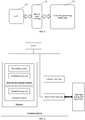
- FIG. 1 is a schematic diagram of an application scenario of a task data processing method according to an embodiment.
- the application scenario includes a CPU 110, a board card interface 120, and a task data processing apparatus 130.
- the CPU 110 communicates with the task data processing apparatus 130 through the board card interface 120.
- the board card interface 120 and the CPU 110 are integrated on a mainboard of a computer device.
- the board card interface 120 may be a board card slot on the mainboard.
- the task data processing apparatus 130 may communicate with the CPU 110 after being inserted into the board card slot.
- the task data processing apparatus 130 is integrated with at least one FPGA (Field-Programmable Gate Array) unit.
- FPGA Field-Programmable Gate Array
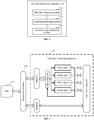
- FIG. 2 is a schematic diagram of an internal structure of a computer device integrated with the CPU 110 and the board card interface 120 shown in FIG. 1 .
- the computer device includes a CPU 110, a memory, a network interface, and a board card interface 120 that are connected by a system bus, the board card interface 120 being connected to the task data processing apparatus 130.
- the memory includes a non-volatile storage medium and an internal memory.
- the non-volatile storage medium of the computer device may store an operating system and a computer program. When the computer program is executed, the CPU 110 may be caused to perform the following task data processing method.
- the task data processing apparatus 130 and the CPU 110 of the computer device are configured to provide computation and control capabilities, to support the running of the entire computer device and task data processing apparatus 130.
- the internal memory may store a computer program.
- the computer program when being executed by the CPU 110, may cause the CPU 110 to perform the following task data processing method.
- the network interface of the computer device is configured to perform network communication.
- the computer device may be a distributed server slave.
- the board card interface 120 may be a PCIE gen3x8 interface.
- FIG. 2 is only a block diagram of a part of a structure related to the solution of the present disclosure and does not limit the computer device to which the solution of the present disclosure is applied.
- the computer device may include more or fewer members than those in FIG. 2 , or include a combination of some members, or include different member layouts.
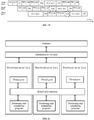
- a task data processing apparatus 130 includes a task data obtaining module 132, a task data processing module 134, and an execution result obtaining module 136.
- the task data obtaining module 132 is configured to obtain multiple pieces of task data.
- the task data processing module 134 is configured to: successively perform, for each of the multiple pieces of task data in an order of substructures in a machine learning model, subtasks of the substructures by using processing units respectively corresponding to the substructures. At least part of the processing units includes an FPGA unit. Each of the processing units, when in an idle state, performs a subtask corresponding to a next piece of task data during processing of the processing unit.
- the execution result obtaining module 136 is configured to obtain, when the subtasks of the substructures for each of the multiple pieces of task data are completed, a corresponding task execution result.
- the task data processing apparatus 130 may be implemented in the form of a computer program, and the computer program may be run on the computer device shown in FIG. 2 .
- the memory of the computer device may store program modules forming the task data processing apparatus 130, for example, the task data obtaining module 132, the task data processing module 134, and the execution result obtaining module 136 shown in FIG. 3 .
- the computer program formed by the program modules causes the CPU 110 to perform the steps in the task data processing method in the embodiments of the present disclosure described in this specification.
- the computer device shown in FIG. 2 may obtain multiple pieces of task data by using the task data obtaining module 132 in the task data processing apparatus 130 shown in FIG. 3 .
- the computer device may successively perform, for each of the multiple pieces of task data in an order of substructures in a machine learning model, subtasks of the substructures by using processing units respectively corresponding to the substructures by using the task data processing module 134.
- At least part of the processing units includes an FPGA unit.
- Each of the processing units when in an idle state, performs a subtask corresponding to a next piece of task data during processing of the processing unit.
- the computer device may obtain, by using the execution result obtaining module 136, a corresponding task execution result after the subtasks of each piece of task data at the substructures are completed.
- the task data processing apparatus 130 includes a task scheduling unit and one or more FPGA units, the task scheduling unit being connected to each of the FPGA units.
- the task data processing apparatus 130 includes the task scheduling unit and four FPGA units is used for description.
- the task scheduling unit is configured to: obtain multiple pieces of task data; and successively schedule, for each of the multiple pieces of task data in an order of substructures in a machine learning model, processing units respectively corresponding to substructures in the machine learning model to perform subtasks of the substructures, at least part of the processing units including one or more FPGA units.
- the FPGA unit is configured to: when in an idle state, perform a subtask corresponding to a next piece of task data during processing; and obtain and output a corresponding task execution result after a subtask of each piece of task data at each substructure is completed.
- the task data processing apparatus 130 further includes a register and a memory, the memory being connected to the FPGA units, and the register being connected to the task scheduling unit.
- the task scheduling unit is further configured to read processing unit call data from the register, to successively schedule, for each of the multiple pieces of task data based on the processing unit processing data in an order of substructures in a machine learning model, processing units respectively corresponding to the substructures in the machine learning model to perform subtasks of the substructures.
- the FPGA unit is further configured to: read task data written by the CPU 110 from the memory; perform, when in an idle state, a subtask corresponding to a next piece of task data during processing; obtain a corresponding task execution result after a subtask of each piece of task data at each substructure is completed; and store the task execution result in the memory.
- the task data processing apparatus 130 further includes a bus controller, the bus controller being connected to the memory and each of the FPGA units.
- the bus controller being connected to the memory and each of the FPGA units.
- Each of the FPGA units stores the task execution result in the memory through the bus controller.
- the memory may be a DDR4 memory.
- the task data processing apparatus 130 is connected to the CPU 110 by the board card interface 120, and the processing units further include the CPU 110.
- a task data processing method is provided.
- the task data processing method may be applied to the task data processing apparatus 130 in FIG. 1 .
- This embodiment is described by using an example in which the method is applied to the task data processing apparatus 130 in FIG. 1 .
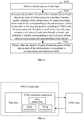
- the task data processing method specifically includes the following steps S502 to S506.
- step S502 multiple pieces of task data are obtained.
- the task data is data of a to-be-processed task.
- the CPU 110 obtains the task data and transmits the task data to the task data processing apparatus 130, and the task data processing apparatus 130 stores the received task data.
- the task data processing apparatus 130 reads multiple pieces of task data from the stored task data.
- the CPU 110 reads the task data from a memory of a computer device and transmits the read task data to the task data processing apparatus 130.
- the task data processing apparatus 130 receives the task data transmitted by the CPU 110 and stores the task data in the memory.
- the CPU 110 transmits a task execution instruction to the task data processing apparatus 130.
- the task data processing apparatus 130 receives the task execution instruction transmitted by the CPU 110, determines to process the task data, and reads multiple pieces of task data from the memory according to the task execution instruction.
- the task data processing apparatus 130 adopts a double cache ping-pong operation, and data reading and computation are performed simultaneously to reduce the latency of two parts waiting for each other, thereby improving the processing efficiency.
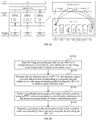
- FIG. 6 is a schematic diagram of an encapsulation of task data according to an embodiment.
- the CPU 110 After obtaining the task data, the CPU 110 encapsulates the task data into an FPGA thread task.
- the FPGA thread task includes the task data and an FPGA execution instruction, the FPGA execution instruction including a write instruction, a read instruction, and a start instruction.
- the FPGA execution instruction is used for calling an FPGA unit to process the task data.
- the CPU 110 puts the encapsulated FPGA thread task into a thread pool, and the task data processing apparatus 130 obtains the FPGA thread task from the thread pool, and reads the task data from the FPGA thread task.
- the task data processing apparatus 130 may also read the FPGA execution instruction from the FPGA thread task.
- subtasks of the substructures are successively performed for each of the multiple pieces of task data in an order of the substructures in a machine learning model by using processing units respectively corresponding to the substructures.
- At least part of the processing units includes an FPGA unit.
- the processing unit that detects itself to be in an idle state extracts a next piece of task data through a thread, and performs a subtask corresponding to the next piece of task data in a processing unit corresponding to the thread.
- the task data processing apparatus 130 includes multiple processing units.
- the multiple processing units include the FPGA unit and a CPU.
- the machine learning model is a pre-trained data model that processes the task data.
- the processing unit is configured to perform the subtask corresponding to the substructure in the machine learning model.
- the task data processing apparatus 130 inputs the multiple pieces of task data into the processing units corresponding to the machine learning model, and processes the task data by using the processing units corresponding to the machine learning model.
- the task data processing apparatus 130 performs subtasks corresponding to the task data by using the processing units in an order of substructures in the machine learning model; and during the processing of each processing unit, detects whether a subtask of a previous piece of task data at a current substructure is completed, and detects whether a subtask of a current piece of task data at a previous substructure is completed; and starts to perform, in a case that it is detected that the subtask of the previous piece of task data at the current substructure is completed and it is detected at the same time that the subtask of the current piece of task data at the previous substructure is completed, that is, a processing unit corresponding to the current substructure is in an idle state, a subtask of the current piece of task data at the current substructure.
- the task data processing apparatus 130 inputs the task data into a processing unit corresponding to a first substructure in the machine learning model, and performs a subtask corresponding to the first substructure by using the processing unit corresponding to the first substructure according to the task data, to obtain first subtask data.
- the task data processing apparatus 130 further inputs the first subtask data into a processing unit corresponding to a second substructure in the machine learning model, and performs a subtask corresponding to the second substructure by using the processing unit corresponding to the second substructure according to the first subtask data, to obtain second subtask data.
- the task data processing apparatus further inputs the second subtask data into a third substructure in the machine learning model, until a task execution result outputted by the last substructure in the machine learning model is obtained.
- the task data processing apparatus 130 inputs a previous piece of task data into the processing unit corresponding to the first substructure in the machine learning model, and performs the subtask corresponding to the first substructure by using the processing unit corresponding to the first substructure according to the previous piece of task data, to obtain first subtask data corresponding to the previous piece of task data.
- the task data processing apparatus 130 inputs the current piece of task data into the processing unit corresponding to the first substructure in the machine learning model, and performs the subtask corresponding to the first substructure by using the processing unit corresponding to the first substructure according to the current piece of task data, and at the same time, the task data processing apparatus inputs the first subtask data corresponding to the previous piece of task data into the processing unit corresponding to the second substructure in the machine learning model, and performs the subtask corresponding to the second substructure by using the processing unit corresponding to the second substructure according to the first subtask data corresponding to the previous piece of task data, to obtain second subtask data corresponding to the previous piece of task data.
- the task data processing apparatus 130 inputs the first subtask data corresponding to the current piece of task data into the processing unit corresponding to the second substructure in the machine learning model, and performs the subtask corresponding to the second substructure by using the processing unit corresponding to the second substructure according to the first subtask data corresponding to the current piece of task data to obtain the second subtask data corresponding to the current piece of task data.
- the task data processing apparatus 130 inputs the second subtask data corresponding to the previous piece of task data into the processing unit corresponding to the third substructure in the machine learning model, until a task execution result corresponding to the previous piece of task data and a task execution result corresponding to the current piece of task data outputted by the last substructure in the machine learning model are obtained.
- steps of S504 include: for each piece of task data, reading, by the task data processing apparatus 130, processing unit call data from a register, the processing unit call data being written by the CPU 110 into the register; and successively calling, based on the processing unit call data in an order of substructures in the machine learning model, processing units respectively corresponding to the substructures to perform subtasks of respective substructures.
- the processing unit call data is data required for the task data processing apparatus 130 to call the processing unit.
- the processing unit call data may include a processing unit identifier, and may further include an instruction used for calling the processing unit.
- the instruction used for calling the processing unit may include at least one of a unit write instruction, a unit read instruction, and a unit execution instruction.
- the CPU 110 writes processing unit call data corresponding to each of the multiple pieces of task data into the register.
- the task data processing apparatus 130 reads the processing unit call data corresponding to each of the multiple pieces of task data from the register, extracts the processing unit identifiers in the processing unit call data, and successively calls, in an order of substructures in a machine learning model, processing units respectively corresponding to the substructures to perform subtasks of the substructures, based on the extracted processing unit identifiers corresponding to the processing units.
- steps of S504 further include: waiting for, in a case that all the processing units are not in an idle state, a processing unit corresponding to the subtask of the current substructure to be released, for example, waiting for, in a case that a subtask of a previous piece of task data at a current substructure is not completed and a subtask of a current piece of task data at a previous substructure is completed during the processing of each processing unit, the processing unit corresponding to the subtask of the current substructure to be released; and calling, in a case that the processing unit corresponding to the subtask of the current substructure is released, the processing unit corresponding to the subtask of the current substructure to perform a subtask of the current piece of task data at the current substructure.
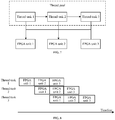
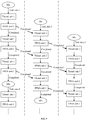
- FIG. 7 is a schematic diagram of a parallel execution of multiple thread tasks according to an embodiment.
- the task data processing apparatus 130 reads a thread task 1, a thread task 2, and a thread task 3 from a thread pool.
- the thread task 1, the thread task 2, and the thread task 3 are connected in sequence.
- an output of an FPGA unit 1 is used as an input of an FPGA unit 2
- an output of the FPGA unit 2 is used as an input of an FPGA unit 3. That is, the FPGA unit 1, the FPGA unit 2, and the FPGA unit 3 perform processing in a pipelining manner, and subtasks performed by the FPGA units are different.
- the thread tasks may call the FPGA units independently, so that different FPAG units may run different thread tasks at the same time, thereby improving the throughput.
- FIG. 8 and FIG. 9 is a schematic diagram of a timing sequence of a parallel execution of multiple thread tasks according to an embodiment.
- the thread task corresponding to the task data needs to successively perform subtasks corresponding to the FPGA unit 1, the FPGA unit 2, and the FPGA unit 3 by using the FPGA unit 1, the FPGA unit 2, and the FPGA unit 3 to obtain a task execution result of the task data.
- the thread task 1 obtains task data 1, and calls the FPGA unit 1 to perform a subtask 1 of the task data 1.
- the thread task 1 When the FPGA unit 1 completes the subtask 1 of the thread task 1, the thread task 1 calls the FPGA unit 2 to perform a subtask 2. At the same time, the thread task 2 obtains task data 2, and calls the FPGA unit 1 to perform a subtask 1 of the thread task 2.
- the thread task 1 calls an FPGA unit 3 to perform a subtask 3
- the thread task 2 calls the FPGA unit 2 to perform the subtask 2 at the same time
- the thread task 3 obtains task data 3 and calls the FPGA unit 1 to perform the subtask 1 at the same time.
- the thread task 2 calls the FPGA unit 3 to perform the subtask 3.
- the thread task 3 calls the FPGA unit 2 to perform the subtask 2
- the thread task 1 may also obtain task data 4 and call the FPGA unit 1 to perform the subtask 1, until task execution results corresponding to the task data are obtained by calling the FPGA units through the thread tasks.
- the number of the thread tasks may be set to n, n being a positive integer.
- the multiple processing units may include the CPU 110 and the FPGA units.
- FIG. 10 is a schematic diagram of a CPU 110 and FPGA units processing tasks in parallel according to an embodiment.
- the thread task 1, the thread task 2, and the thread task 3 call the processing units in the same order.
- the thread task 1 calls the FPGA unit 1, and after the thread task 1 releases the FPGA unit 1, the thread task 1 calls the CPU 110, and the thread task 2 calls the FPGA unit 1.
- the thread task 1 releases the CPU, the thread task 1 calls the FPGA unit 2.
- the thread task 1 releases the CPU 110 and the thread task 2 releases the FPGA unit 1 the thread task 2 calls the CPU 110, and the thread task 3 calls the FPGA unit 1.
- the thread task 1 After the thread task 1 releases the FPGA unit 2, the thread task 1 calls the FPGA unit 3. After the thread task 1 releases the FPGA unit 2 and the thread task 2 releases the CPU 110, the thread task 2 calls the FPGA unit 2. After the thread task 2 releases the CPU 110 and the thread task 3 releases the FPGA unit 1, the thread task 3 calls the CPU 110. After the thread task 1 releases the FPGA unit 3, wait for the thread task 3 to release the FPAG unit 1. After the FPGA unit 1 is released, the thread task 3 calls the FPGA unit 1 again. Therefore, it is ensured that the thread tasks are processed in parallel, until task execution results corresponding to the thread tasks processed in parallel are obtained.
- step S506 after the subtasks of each of multiple pieces of task data at the substructures are completed, a corresponding task execution result is obtained.
- the task data processing apparatus 130 For each of the multiple pieces of task data, after detecting that the subtasks of the substructures in the machine learning model are completed, the task data processing apparatus 130 obtains a task execution result outputted by the processing unit corresponding to the last substructure in the machine learning model, so as to obtain a task execution result corresponding to each of the multiple pieces of task data.
- subtasks of substructures are performed successively by using processing units respectively corresponding to the substructures in an order of the substructures in the machine learning model respectively, each of the processing units corresponding to one of the substructures of the machine learning model, and at least part of the processing units including an FPGA unit.
- processing units process the subtasks of the multiple pieces of task data in parallel, so that the machine learning model may process multiple pieces of task data in parallel in a structure with low costs and low power consumption, thereby improving the efficiency of processing task data.
- FIG. 11 is a schematic diagram of an application environment of a task data processing method according to an embodiment.
- the application environment shown in FIG. 11 includes a terminal, a distributed server host, and a distributed server slave.
- the terminal is connected to the distributed server host by a network.
- the distributed server host is connected to the distributed server slave by a network.
- the distributed server slave is provided with a thread pool and a processing unit scheduling program.
- a board card interface of the distributed server slave is connected to the task data processing apparatus 130.
- the task data processing apparatus 130 is provided with an FPGA unit.
- the distributed server slave implements the task data processing method by executing the processing unit scheduling program. When executing the processing scheduling program, the distributed server slave reads task data from a thread task of the thread pool, and performs the thread task according to the task data.
- FIG. 12 is a schematic diagram of an inner environment of a distributed server slave according to an embodiment.
- the distributed server slave is provided with a thread pool and a processing unit scheduling program.
- the distributed server slave implements the task data processing method by executing the processing unit scheduling program, obtains task data from a thread task of the thread pool when executing the processing unit scheduling program, and schedules the FPGA units and the CPU 110 to perform corresponding subtasks based on the task data in an order of subtasks in the unit scheduling program.
- the processing unit scheduling program may process multiple thread tasks in parallel, obtain task execution results of the multiple thread tasks through processing of the processing unit scheduling program, and return the task execution results to corresponding thread tasks.
- the distributed server slave then returns the task execution results to the distributed server host.
- the processing unit scheduling program includes n subtasks, n being a positive integer.
- a task data processing method applied to a distributed server host includes the following steps S1302 to S1308.
- a distributed server host receives task data transmitted by a terminal, determines a distributed server slave address allocated to the task data, and transmits the task data to a distributed server slave according to the allocated distributed server slave address.
- the task data may be image processing task data.
- the distributed server host may allocate a distributed slave to the task data according to working states of distributed server slaves.
- the distributed server host determining the distributed server slave addresse allocated to the task data includes: selecting, by the distributed server host according to the working states of the distributed server slaves, a distributed server slave that is in an idle state from the distributed server slaves, and determining an address of the selected distributed server slave.
- the distributed server host may allocate the distributed server slave to the task data according to a type of the task data.
- the distributed server host determining the distributed server slave address allocated to the task data may include: selecting, by the distributed server host according to the type of the task data, a distributed server slave that is configured to process the type of the task data from the distributed server slaves, and determining an address of the selected distributed server slave.
- step S1304 the distributed server slave puts the task data into a thread pool, and obtains multiple pieces of task data from the thread pool; and successively performs, for each of the multiple pieces of task data in an order of substructures in a machine learning model, subtasks of the substructures by using processing units respectively corresponding to the substructures.
- processing units including an FPGA unit.
- Each of the processing units when in an idle state, performs a subtask corresponding to a next piece of task data during processing of the processing unit.
- the machine learning model may be an image processing model.
- image processing subtasks of substructures are successively performed by using the processing units corresponding to the substructures in an order of the substructures in the image processing model.
- the distributed server slave On reception of the task data transmitted by the distributed server host, the distributed server slave puts the task data into the thread pool. When processing the task data, the distributed server slave obtains multiple pieces of task data from the thread pool.
- the distributed server host may instruct the distributed server slave to process the task data.
- the distributed server slave obtains the multiple pieces of task data from the thread pool.
- the FPGA units may perform the subtasks of the corresponding substructures.
- the distributed server slave successively performs, for each of the multiple pieces of task data in an order of substructures in the machine learning model, the subtasks of the substructures through FPGA units respectively corresponding to the substructures, .
- an FPGA unit among the FPGA units that is in an idle state performs a subtask corresponding to a next piece of task data.
- the subtask corresponding to the next piece of task data is performed by using the processing unit when the processing unit is released.
- another processing unit is called to perform the subtask corresponding to the next piece of task data.
- step S1306 after the subtasks of each of the multiple pieces of task data at the substructures are completed, the distributed server slave obtains a corresponding task execution result, and returns the obtained task execution result to the distributed server host.
- the FPGA unit When obtaining the corresponding task execution result, the FPGA unit stores the task execution result into a memory.
- the CPU 110 reads the task execution result from the memory, and returns the task execution result to the distributed server host.
- step S1308 the distributed server host receives the task execution result returned from the distributed server slave, and transmits the returned task execution result to the terminal.
- the task data processing apparatus 130 obtains multiple pieces of image processing task data, and successively performs, for each of the multiple pieces of image processing task data in an order of substructures in the image processing model, image processing subtasks of the substructure by using processing units respectively corresponding to the substructures. During the processing of each of the processing units, after an image processing subtask of a previous piece of image processing task data at a current substructure is completed and an image processing subtask of a current piece of image processing task data at a previous substructure is completed, an image processing subtask of the current piece of image processing task data at the current substructure is performed.
- the processing units process the image processing subtasks of the multiple pieces of image processing task data in parallel, so that the multiple pieces of image processing task data may be processed in parallel by using the image processing model in a structure with low costs and low power consumption, thereby improving the efficiency of processing the image processing task data.
- the task data is the image processing task data
- the machine learning model is the image processing model
- the task execution result is the image processing result.
- the image processing result may be an image recognition result
- the image recognition result may be text or the like recognized from the image.
- an image data processing system includes an access layer connected to a terminal, a distributed server host, one or more distributed server slaves located at a system layer, and an algorithm layer.
- the distributed server slave is connected to the algorithm layer by an interface (for example, an API (Application Programming Interface)).
- a thread pool is disposed in the distributed server slave.
- the algorithm layer is provided with a machine learning model.
- the processing units include a CPU and an FPGA unit.
- the terminal accesses the distributed server host through the access layer.
- the distributed server host exchanges data with the distributed server slaves at the system layer.
- the distributed server slave calls an algorithm in a caffe-FPGA.so file at the algorithm layer through the API (a board card interface), and calls the FPGA unit and the CPU configuration to process the task data according to the algorithm in the caffe-FPGA.so file.
- the thread pool of the distributed server slave includes multiple thread tasks. Each thread task calls the FPGA and the CPU to process the thread tasks in parallel according to the caffe-FPGA.so.
- a software architecture of an OCR (Optical Character Recognition) scene character detection FPGA accelerator based on caffe is adopted, where caffe is improved and is additionally provided with a class that supports calling the FPGA unit and calling of multiple FPGA units in parallel, so as to enable caffe to support a multi-thread concurrent mechanism.
- caffe is encapsulated into the caffe-FPGA.so file to support the algorithm by adding APIs, the caffe-FPGA.so is loaded in a distributed server architecture to schedule the FPGA units, so as to ensure that the FPGA units process the thread tasks in parallel.
- the machine learning model includes a convolutional layer, a RPN (Region Proposal Network), a pooling layer, a fully-connected layer, a first classification layer, and the like. Moreover, an output end of the convolutional layer is connected to an input end of the RPN, an output end of the RPN is connected to an input end of the pooling layer, an output end of the pooling layer is connected to an input end of the fully-connected layer, and an output end of the fully-connected layer is connected to an input end of the first classification layer.
- the first classification layer is configured to output the image processing result.
- the RPN further includes an RPN convolutional layer, a second classification layer, a region proposal determination layer, and a NMS (non-maximum suppression) layer.
- the output end of the convolutional layer is connected to an input end of the RPN convolutional layer
- an output end of the RPN convolutional layer is connected to an input end of the second classification layer
- an output end of the second classification layer is connected to an input end of the region proposal determination layer
- an output end of the region proposal determination layer is connected to an input end of the NMS layer
- an output end of the NMS layer is connected to the input end of the pooling layer.
- the successively performing, for each of the multiple pieces of image processing task data in an order of substructures in the image processing model, image processing subtasks of the substructures by using the processing units respectively corresponding to the substructures includes a step of processing the image processing task data by using the substructures.
- the step includes the following steps S1502 to S1508.
- step S1502 the image processing task data is inputted into an FPGA unit corresponding to a convolutional layer substructure in the image processing model, to obtain a convolution result.
- the image processing model is a data model that processes the image processing task data and that is pre-trained based on image data.
- the image processing model includes the convolutional layer substructure.
- the convolutional layer substructure may be a first substructure in the image processing model.
- a processing unit corresponding to the convolutional layer substructure is the FPGA unit.
- the task data processing apparatus 130 reads processing unit call data from a register, extracts a processing unit identifier in the processing unit call data, determines an FPGA unit corresponding to the convolutional layer substructure in the image processing model according to the processing unit identifier, and transmits a task execution notification to the FPGA unit corresponding to the convolutional layer substructure.
- the FPGA unit corresponding to the convolutional layer substructure reads image processing task data from a memory, and performs convolution processing corresponding to the convolutional layer substructure on the image processing task data, to obtain a convolution result of the image processing task data.
- the FPGA unit corresponding to the convolutional layer substructure reads a model parameter of the image processing model from the memory, and performs configuration according to the read model parameter, to enable the FPGA unit corresponding to the convolutional layer substructure to perform convolution processing on the image processing task data according to the model parameter, to obtain the convolution result of the image processing task data.
- the FPGA unit corresponding to the convolutional layer substructure when the convolution result of the image processing task is obtained by the FPGA unit corresponding to the convolutional layer substructure, stores the convolution result in the memory.
- the CPU 110 writes the model parameter in the memory by means of a PCIE (Peripheral Component Interconnect Express) DMA write operation.
- PCIE Peripheral Component Interconnect Express
- step S1504 the convolution result is transmitted to the CPU 110, and a region proposal selection task corresponding to a proposal network substructure in the image processing model is performed by using the CPU 110, to obtain a region selection result.
- the image processing model includes the convolutional layer substructure.
- the proposal network substructure may be a second substructure in the image processing model.
- a processing unit corresponding to the proposal network substructure is a CPU.
- a subtask corresponding to the proposal network substructure is a region proposal selection task. The region proposal selection task is used for selecting a to-be-processed region proposal in an image corresponding to the image processing task data.
- the to-be-processed region proposal may be a region including text.
- the task data processing apparatus 130 After detecting that the FPGA unit corresponding to the convolutional layer substructure stores the convolution result in the memory, the task data processing apparatus 130 transmits a region proposal selection task execution notification to the CPU 110.
- the CPU 110 On reception of the region proposal selection task execution notification, the CPU 110 reads the convolution result from the memory, performs the region proposal selection task corresponding to the proposal network substructure according to the convolution result, to obtain a region selection result, and stores the region selection result in the memory.
- the CPU 110 reads the model parameter of the image processing model from the memory, configures the proposal network substructure according to the model parameter, and performs the region proposal selection task according to the convolution result by using the configured proposal network substructure, to obtain the region selection result.
- step S1506 classification processing is performed on the region selection result by using an FPGA unit corresponding to a classification substructure in the image processing model, to obtain a classification result.
- the image data processing model includes the classification substructure.
- the classification substructure may be a third substructure in the image processing model.
- the task data processing apparatus 130 After detecting that the CPU 110 stores the region selection result in the memory, the task data processing apparatus 130 transmits a task execution notification to an FPGA unit corresponding to the classification substructure.
- the FPGA unit corresponding to the classification substructure reads the region selection result from the memory, performs classification processing on the read region selection result, to obtain a classification result, and stores the classification result in the memory.
- the FPGA unit corresponding to the classification substructure reads the model parameter of the image processing model from the memory, configures the classification substructure according to the model parameter, and performs classification processing on the region selection result by using the classification substructure, to obtain the classification result.
- step S1508 a task execution result corresponding to the image processing task data is determined according to the classification result by using the CPU 110.
- the task data processing apparatus 130 When detecting that the FPGA unit corresponding to the classification substructure stores the classification result in the memory, the task data processing apparatus 130 transmits a task result determination notification to the CPU 110.
- the CPU 110 On reception of the task result determination notification, the CPU 110 reads the classification result from the memory, and extracts a task execution result corresponding to the image processing task data from the classification result.
- the task execution result corresponding to the image processing task data may be the image recognition result.
- step S1506 further includes a step of obtaining the classification result, and the step includes the following steps S1602 to S1606.
- step S1602 non-maximum suppression processing is performed on the region selection result by calling an FPGA unit corresponding to a non-maximum suppression substructure in the image processing model, to obtain a non-maximum suppression result.
- the image processing model further includes the non-maximum suppression substructure.
- a processing unit corresponding to the non-maximum suppression substructure is the FPGA unit.
- a subtask corresponding to the non-maximum suppression substructure is a non-maximum suppression processing task, and a processing result corresponding to the non-maximum suppression processing task is a non-maximum suppression result.
- the task data processing apparatus 130 When detecting that the CPU 110 stores the region selection result in the memory, the task data processing apparatus 130 transmits a task execution notification to the FPGA unit corresponding to the non-maximum suppression substructure.
- the FPGA unit corresponding to the non-maximum suppression substructure reads the region selection result from the memory, performs non-maximum suppression processing on the read region selection result, to obtain the non-maximum suppression result, and stores the non-maximum suppression result in the memory.
- the FPGA unit corresponding to the non-maximum suppression substructure reads the model parameter of the image processing model from the memory, configures the non-maximum suppression substructure according to the model parameter, and performs non-maximum suppression processing on the region selection result by using the non-maximum suppression substructure, to obtain the non-maximum suppression result.
- step S1604 pooling processing is performed on the non-maximum suppression result by using an FPGA unit corresponding to a pooling layer substructure in the image processing model, to obtain a pooling result.
- the image processing model further includes the pooling layer substructure, and a processing unit corresponding to the pooling layer substructure is the FPGA unit.
- a subtask corresponding to the pooling layer substructure is a pooling layer subtask, and a processing result corresponding to the pooling layer subtask is the pooling result.
- the task data processing apparatus 110 transmits a task execution notification to the FPGA unit corresponding to the pooling layer substructure.
- the FPGA unit corresponding to the pooling layer substructure reads the non-maximum suppression result from the memory, performs the pooling layer subtask according to the non-maximum suppression result, that is, performs pooling processing on the non-maximum suppression result, to obtain the pooling result, and stores the pooling result in the memory.
- the FPGA unit corresponding to the pooling layer substructure reads the model parameter of the image processing model from the memory, configures the pooling layer substructure according to the model parameter, and performs pooling processing on the non-maximum suppression result by using the pooling layer substructure, to obtain the pooling result.
- step S1606 the pooling result is inputted into an FPGA unit corresponding to a fully-connected layer substructure in the image processing model, to obtain a classification result.
- the image processing model further includes the fully-connected layer substructure, and a processing unit corresponding to the fully-connected layer substructure is the FPGA unit.
- a subtask corresponding to the fully-connected layer substructure is a fully-connected processing task, and a processing result corresponding to the fully-connected processing task is the classification result.
- the task data processing apparatus 130 When detecting that the FPGA unit corresponding to the pooling layer substructure stores the pooling result in the memory, the task data processing apparatus 130 transmits a task execution notification to the FPGA unit corresponding to the fully-connected layer substructure. On reception of the task execution notification, the FPGA unit corresponding to the fully-connected layer substructure reads the pooling result from the memory, performs the fully-connected processing task according to the pooling result, to obtain the classification result, and stores the classification result in the memory.
- the FPGA unit corresponding to the fully-connected layer substructure reads the model parameter of the image processing model from the memory, configures the fully-connected layer substructure according to the read model parameter, and performs fully-connected processing on the pooling result by using the fully-connected layer substructure, to obtain the classification result.
- the image processing result may be an image recognition result.
- the image recognition result may be an OCR result or may be an image target recognition result.
- the distributed server slave when text recognition, for example, OCR, needs to be performed, the distributed server slave obtains a to-be-processed image, and encapsulates the to-be-processed image as a thread task.
- the thread task calls an FPGA unit corresponding to a basic convolutional layer to perform convolution processing on the to-be-processed image, to obtain a text feature.
- the thread task inputs the text feature into the region proposal network.
- the thread task calls an FPGA unit corresponding to the RPN convolution to perform RPN convolution processing on the text feature, to obtain a convolution result corresponding to the text feature.
- the thread task calls the FPGA unit corresponding to the classification to perform classification processing on the convolution result corresponding to the text feature to obtain the classification result.
- the thread task calls the CPU 110 to determine the text box proposal according to the classification result, calls the CPU 110 to perform a regression adjustment on the determined text box proposal, to obtain text box proposals at different angles, and calls the FPGA unit corresponding to the non-maximum suppression to process the overlapping text box proposals among the text box proposals, to obtain text box proposals at any angles that do not overlap.
- the thread task calls an FPGA unit corresponding to the rotation region of interest pooling to perform pooling processing on text box proposals at different angles outputted by the region proposal network, performs rotation adjustment on the text box proposals at different angles, and projects the text box proposals after the rotation adjustment to feature graphs of a fixed size, to obtain a text box feature graph corresponding to each of the text box proposals.
- the thread task calls an FPGA unit corresponding to a recognition result output to recognize text in the text box feature graph, to output a text recognition result.
- the FPGA unit corresponding to the convolutional layer adopts a degree of parallelism of 32 inputs and 32 outputs.
- the FPGA unit corresponding to the classification adopts a degree of parallelism of 16 inputs and 64 outputs.
- the FPGA unit corresponding to the RPN convolution adopts a degree of parallelism of 8 inputs and 8 outputs. Therefore, the processing efficiency is improved.
- an image processing method is provided to implement the foregoing OCR.
- the method includes the following steps S1802 to S1810.
- step S1802 a to-be-processed image is obtained.
- the to-be-processed image is an image to be processed for text recognition.
- the text recognition may be recognizing the text in the image by using the OCR technology.
- the terminal transmits a text recognition request to the CPU 110.
- the CPU 110 receives the text recognition request, and obtains the to-be-processed image according to the text recognition request.
- the text recognition request carries the to-be-processed image.
- a step that the CPU 110 obtains the to-be-processed image according to the text recognition request may include: obtaining, by the CPU 110, the to-be-processed image from the text recognition request.
- the text recognition request carries an image identifier of the to-be-processed image.
- a step that the text recognition request carries the to-be-processed image may include: the CPU 110 parsing the text recognition request, extracting the image identifier in the text recognition request through parsing, and reading the to-be-processed image from the memory according to the image identifier.
- the image identifier may be a storage address of the image in the memory.
- the size of the to-be-processed image may be any size. Therefore, the image processing method according to the present disclosure supports to-be-processed images of different sizes and can adapt to images of different sizes, and supports a to-be-processed image having a maximum size of 1024 ⁇ 1024.
- step S1804 a text feature in the to-be-processed image is extracted.
- the text feature is a feature representing text in the to-be-processed image.
- the CPU 110 performs convolution processing on the to-be-processed image, and extracts the text feature in the to-be-processed image through the convolution processing.
- step S1804 includes: the CPU 110 inputting the to-be-processed image into the convolutional layer, and performing convolution processing on the to-be-processed image according to a convolution kernel of the convolutional layer, to obtain the text feature in the to-be-processed image.
- the CPU 110 inputs the to-be-processed image into the convolutional layer of a machine learning model, performs convolution processing on the to-be-processed image by using the convolution kernel of the convolutional layer, and obtains the text feature in the to-be-processed image through convolution processing.
- the machine learning model may be an image processing model that is configured to perform text recognition processing on the to-be-processed image.
- step S1806 text box proposals at any angles in the to-be-processed image are determined according to the text feature.
- the text box proposal may be a region box including text in the to-be-processed image.
- the CPU 110 determines a text box proposal including the text in the to-be-processed image according to the text feature.
- the text box proposal may be a text box proposal at any angle.
- the text box proposal at any angle may be a text box proposal at any one of a horizontal angle, a vertical angle, an inclined angle or the like.
- the CPU 110 when the text features are extracted from the to-be-processed image by the CPU 110, the CPU 110 inputs the text feature into the region proposal network (RPN) of the machine learning model, and determines the text box proposals at any angles in the to-be-processed image by using the region proposal network according to the text feature.
- the region proposal network may be a rotation RPN (RRPN).
- the RRPN algorithm can improve the accuracy. Because the RRPN algorithm has a complex process and is run at the CPU 110 at a relatively slow speed, in the embodiments of the present disclosure, an accelerator architecture covers the most time-consuming part of the algorithm, thereby greatly improving the overall running efficiency. Compared with a software version of the CPU 110, the running efficiency is increased by more than 10 times, the throughput is 1.4 times that of the GPU, and the costs are reduced to 30%.
- step S1808 pooling processing is performed on each of the text box proposals, and each of the text box proposals is projected to a feature graph of a fixed size, to obtain a text box feature graph corresponding to each of the text box proposals.
- the CPU 110 performs pooling processing on each of the text box proposals at any angles, and projects each of the text box proposals at any angles to the feature graph of a fixed size through pooling processing, to obtain text box feature graphs respectively corresponding to the text box proposals and having the same size.
- the CPU 110 inputs the text box proposals at any angles into the pooling layer of the machine learning model, and projects the text box proposals to the feature graphs of a fixed size through pooling layer, to obtain the text box feature graphs respectively corresponding to the text box proposals and having the fixed size.
- the pooling layer may be a rotation ROI (RROI) pooling layer.
- step S1808 further includes: inputting each of the text box proposals into the pooling layer; determining a projection parameter of each of the text box proposals according to a fixed size of a preset feature graph; and projecting each of the text box proposals to the feature graph of the fixed size according to the projection parameter, to obtain the text box feature graph corresponding to each of the text box proposals.
- step S1810 text in the text box feature graph is recognized, to obtain a text recognition result.
- the CPU 110 recognizes text in each text box feature graph, and obtains a text recognition result corresponding to the text box feature graph through recognition.
- the CPU 110 inputs each text box feature graph into an output layer of the machine learning model, and performs OCR on the text box feature graph through the output layer, to obtain the text recognition result corresponding to the text box feature graph.
- text box proposals at any angles in a to-be-processed image are determined according to a text feature in the to-be-processed image, so that text box proposals at different angles can be recognized.
- Pooling processing is performed on each of the text box proposals, and each of the text box proposals is projected to a feature graph of a fixed size, to obtain a text box feature graph of each of the text box proposals, thereby improving the adaptability of processing a text box proposal.
- Text box proposals of different sizes and at different angles may be processed, and a text recognition result of each of the text box proposals can be obtained by recognizing text in the text box feature graph, thereby improving the accuracy and efficiency of text recognition in the to-be-processed image.
- the image processing method further includes: inputting the to-be-processed image into the machine learning model by using at least one thread, and successively performing, in an order of substructures in the machine learning model, subtasks of the substructures by using the processing units respectively corresponding to the substructures, at least part of the processing units including the FPGA unit.
- one of the following steps is performed: extracting a text feature in the to-be-processed image; determining text box proposals at any angles in the to-be-processed image according to the text feature; performing pooling processing on each of the text box proposals, and projecting each of the text box proposal to a feature graph of a fixed size, to obtain a text box feature graph corresponding to each of the text box proposals; and recognizing text in the text box feature graph to obtain a text recognition result.
- the processing units implement the subtasks of the image processing method, so that the subtasks of multiple to-be-processed images may be processed in parallel, and some subtasks are implemented by using the FPGA units in the processing units, thereby improving the efficiency of recognizing text in the to-be-processed image.
- step S1806 includes: inputting the text feature into the region proposal network; performing convolution processing on the text feature through a region proposal convolutional layer in the region proposal network, to obtain a text feature convolution result; determining location information of text box proposals in the to-be-processed image according to the text feature convolution result; and performing non-maximum suppression processing on the location information of the text box proposals, to obtain the text box proposals at any angles.
- the CPU 110 inputs the text feature into the RPN; performs convolution processing on the text feature through a region proposal convolutional layer in the region proposal network, to obtain a text feature convolution result through convolution processing; and determines the text box proposals in the to-be-processed image according to the text feature convolution result, and obtains location information of the determined text box proposals.
- the CPU 110 performs non-maximum suppression processing on the location information of the text box proposals, to obtain the text box proposals at any angles.
- the performing non-maximum suppression processing on the location information of the text box proposals to obtain the text box proposals at any angles includes: determining text box proposals at any angles in the to-be-processed image according to the location information of the text box proposals; determining overlapping text box proposals; and performing non-maximum suppression processing on the overlapping text box proposals to obtain text box proposals at any angles that do not overlap.
- the CPU 110 determines text box proposals at any angles in the to-be-processed image according to the location information of the text box proposals, selects overlapping text box proposals from the text box proposals, and performs non-maximum suppression processing on the overlapping text box proposals to obtain text box proposals at any angles that do not overlap.
- the text box proposals at any angles in the to-be-processed image may be determined by using the region proposal network, the text box proposals at any angles that do not overlap are obtained by performing non-maximum suppression processing on the text box proposals at any angles, thereby improving the accuracy of determining the text box proposal.
- the machine learning model includes a fully-connected layer connected to the pooling layer
- step S1610 includes: inputting the text box feature graph into the fully-connected layer; determining a probability value corresponding to each of text classes based on the text feature graph; and selecting one of the text classes corresponding to the greatest probability value as the text recognition result of the text feature graph.
- the CPU 110 After the text box feature graph corresponding to each of the text box proposals is obtained by the CPU 110, the CPU 110 inputs the text box feature graph into the fully-connected layer of the machine learning model, processes the text box feature graph by using the fully-connected layer to obtain a probability value corresponding to each of text classes corresponding to the text box feature graph, determines the greatest probability value among the probability values, and selects one of the text classes corresponding to the greatest probability value as the text recognition result of the text box feature graph.
- the multiple processing units include the FPGA unit and the CPU.
- the current to-be-processed image is inputted into an FPGA unit corresponding to the convolutional layer for processing, to obtain a text feature in the to-be-processed image.
- the text feature is inputted into the CPU corresponding to the region proposal network for processing, to determine text box proposals at any angles.
- a text box feature graph corresponding to each of the text box proposals is determined according to the text box proposals at any angles by using an FPGA unit corresponding to the pooling layer; and text in the text box feature graph is recognized according to an FPGA unit corresponding to a recognition result layer, to obtain the text recognition result.
- Each of the processing units when in an idle state, performs a subtask corresponding to a next piece of task data during processing of the processing unit.
- some FPGA units and the CPU perform subtasks corresponding to substructures in a machine learning model, and when multiple to-be-processed images are obtained, the FPGA units and the CPU perform subtasks corresponding to the to-be-processed images in parallel, so that the subtasks corresponding to the to-be-processed images may be processed in parallel, thereby improving the efficiency of processing multiple to-be-processed images.
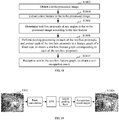
- FIG. 19 is a flowchart of text recognition according to an embodiment.
- a text feature in a to-be-processed image 1902 is obtained by performing basic convolution processing on a to-be-processed image 1802.
- Text box proposals at any angles in the to-be-processed image 1902 are obtained by processing the text feature in the to-be-processed image 1902 by using the region proposal network (RPN).
- a text box feature graph of a fixed size corresponding to each of the text box proposals is obtained by adjusting the text box proposals at any angles through the rotation region of interest pooling layer, and a text recognition result 1904 is outputted by recognizing the text box feature graph through a recognition result output. Recognized text is shown in a white box in the text recognition result 1904.
- FIG. 20 to FIG. 24 are schematic diagrams of text recognition results corresponding to application scenarios.
- FIG. 20 shows a text recognition result obtained by recognizing text in an advertisement image and recognized text is shown in a black box.
- FIG. 21 shows a text recognition result obtained by recognizing text in a natural scene image and recognized text is shown in a white box.
- FIG. 22 and FIG. 23 show text recognition results obtained by recognizing text in game images, and recognized text is shown in a black box.
- FIG. 24 shows a text recognition result obtained by recognizing text in a bank card image and recognized text is numbers in a gray box.
- FPGA units perform some of subtasks corresponding to substructures in a machine learning model, and when multiple pieces of task data are obtained, the FPGA units perform subtasks corresponding to the pieces of task data in parallel, so that the subtasks corresponding to the pieces of task data may be processed in parallel, thereby improving the efficiency of processing multiple pieces of task data.
- the computer program may be stored in a non-volatile computer-readable storage medium. When the program is executed, the procedures of the foregoing method embodiments may be performed. Any reference to a memory, storage, database, or another medium used in the embodiments provided in the present disclosure may include a non-volatile and/or volatile memory.
- the non-volatile memory may include a read-only memory (ROM), a programmable ROM (PROM), an electrically programmable ROM (EPROM), an electrically erasable programmable ROM (EEPROM), or a flash memory.
- the volatile memory may include a random access memory (RAM) or an external high-speed cache.
- the RAM is available in various forms, such as a static RAM (SRAM), a dynamic RAM (DRAM), a synchronous DRAM (SDRAM), a double data rate SDRAM (DDRSDRAM), an enhanced SDRAM (ESDRAM). Synchronous link (Synchlink) DRAM (SLDRAM), a rambus direct RAM (RDRAM), a direct rambus dynamic RAM (DRDRAM), and a rambus dynamic RAM (DRAM).
Landscapes
- Engineering & Computer Science (AREA)
- Theoretical Computer Science (AREA)
- Physics & Mathematics (AREA)
- General Physics & Mathematics (AREA)
- Software Systems (AREA)
- Multimedia (AREA)
- Computer Vision & Pattern Recognition (AREA)
- General Engineering & Computer Science (AREA)
- Evolutionary Computation (AREA)
- Data Mining & Analysis (AREA)
- Artificial Intelligence (AREA)
- Life Sciences & Earth Sciences (AREA)
- Health & Medical Sciences (AREA)
- Computing Systems (AREA)
- General Health & Medical Sciences (AREA)
- Biophysics (AREA)
- Biomedical Technology (AREA)
- Mathematical Physics (AREA)
- Molecular Biology (AREA)
- Computational Linguistics (AREA)
- Evolutionary Biology (AREA)
- Medical Informatics (AREA)
- Bioinformatics & Computational Biology (AREA)
- Bioinformatics & Cheminformatics (AREA)
- Databases & Information Systems (AREA)
- Probability & Statistics with Applications (AREA)
- Neurology (AREA)
- Image Analysis (AREA)
- Management, Administration, Business Operations System, And Electronic Commerce (AREA)
- Advance Control (AREA)
- Stored Programmes (AREA)
Applications Claiming Priority (2)
| Application Number | Priority Date | Filing Date | Title |
|---|---|---|---|
| CN201810980841.1A CN109325494B (zh) | 2018-08-27 | 2018-08-27 | 图片处理方法、任务数据处理方法和装置 |
| PCT/CN2019/102587 WO2020043057A1 (zh) | 2018-08-27 | 2019-08-26 | 图片处理方法、任务数据处理方法和装置 |
Publications (2)
| Publication Number | Publication Date |
|---|---|
| EP3846079A1 true EP3846079A1 (de) | 2021-07-07 |
| EP3846079A4 EP3846079A4 (de) | 2021-10-27 |
Family
ID=65264635
Family Applications (1)
| Application Number | Title | Priority Date | Filing Date |
|---|---|---|---|
| EP19854472.8A Pending EP3846079A4 (de) | 2018-08-27 | 2019-08-26 | Bildverarbeitungsverfahren und aufgabendatenverarbeitungsverfahren und -vorrichtung |
Country Status (4)
| Country | Link |
|---|---|
| US (1) | US12079662B2 (de) |
| EP (1) | EP3846079A4 (de) |
| CN (1) | CN109325494B (de) |
| WO (1) | WO2020043057A1 (de) |
Families Citing this family (18)
| Publication number | Priority date | Publication date | Assignee | Title |
|---|---|---|---|---|
| CN109325494B (zh) * | 2018-08-27 | 2021-09-17 | 腾讯科技(深圳)有限公司 | 图片处理方法、任务数据处理方法和装置 |
| CN110084240A (zh) * | 2019-04-24 | 2019-08-02 | 网易(杭州)网络有限公司 | 一种文字提取系统、方法、介质和计算设备 |
| CN110458164A (zh) * | 2019-08-07 | 2019-11-15 | 深圳市商汤科技有限公司 | 图像处理方法、装置、设备及计算机可读存储介质 |
| CN110689475A (zh) * | 2019-09-10 | 2020-01-14 | 浪潮电子信息产业股份有限公司 | 一种图像数据处理方法、系统、电子设备及存储介质 |
| US12198031B2 (en) * | 2020-04-13 | 2025-01-14 | Motorola Mobility Llc | Subtask assignment for an artificial intelligence task |
| CN111881778B (zh) * | 2020-07-08 | 2023-12-05 | 泰康保险集团股份有限公司 | 文本检测的方法、装置、设备和计算机可读介质 |
| CN111860506B (zh) * | 2020-07-24 | 2024-03-29 | 北京百度网讯科技有限公司 | 识别文字的方法和装置 |
| CN111985465B (zh) * | 2020-08-17 | 2024-09-06 | 中移(杭州)信息技术有限公司 | 文本识别方法、装置、设备及存储介质 |
| US12229592B2 (en) | 2020-10-06 | 2025-02-18 | Samsung Electronics Co., Ltd. | Method of executing task and scheduling layer tasks using neural network and electronic device using the same |
| CN112819684B (zh) * | 2021-03-02 | 2022-07-26 | 成都视海芯图微电子有限公司 | 一种面向图像文本识别的加速装置 |
| CN113010469B (zh) * | 2021-03-18 | 2023-05-26 | 恒睿(重庆)人工智能技术研究院有限公司 | 图像特征提取方法、装置以及计算机可读存储介质 |
| CN112990182B (zh) * | 2021-05-10 | 2021-09-21 | 北京轻松筹信息技术有限公司 | 筹款信息审核方法、系统及电子设备 |
| CN113128492A (zh) * | 2021-05-17 | 2021-07-16 | 中国银行股份有限公司 | 一种票据文本定位方法和装置 |
| CN113902096B (zh) * | 2021-09-29 | 2025-12-12 | Oppo广东移动通信有限公司 | 一种数据处理方法及装置、存储介质 |
| US11961317B2 (en) * | 2021-11-24 | 2024-04-16 | Oracle Financial Services Software Limited | Extracting textual information from image documents |
| CN114169533A (zh) * | 2021-12-07 | 2022-03-11 | 上海徐毓智能科技有限公司 | 机器学习框架的构建方法、系统、电子设备及介质 |
| CN118277064B (zh) * | 2024-05-29 | 2024-08-06 | 飞狐信息技术(天津)有限公司 | 图片处理方法及装置、存储介质及电子设备 |
| CN118332568B (zh) * | 2024-06-13 | 2024-08-27 | 天云融创数据科技(北京)有限公司 | 基于大数据和云计算的多源数据安全管理方法及系统 |
Family Cites Families (39)
| Publication number | Priority date | Publication date | Assignee | Title |
|---|---|---|---|---|
| CN102122964B (zh) * | 2011-03-31 | 2014-07-02 | 西安电子科技大学 | 一种基于fpga的高速rs编译码器实现方法 |
| CN102497411B (zh) * | 2011-12-08 | 2014-01-15 | 南京大学 | 面向密集运算的层次化异构多核片上网络架构 |
| CN102594891A (zh) * | 2012-02-17 | 2012-07-18 | 中国科学院计算技术研究所 | 用于处理远程过程调用请求的方法及系统 |
| CN103279390B (zh) * | 2012-08-21 | 2016-09-28 | 中国科学院信息工程研究所 | 一种面向小作业优化的并行处理系统 |
| CN102903115B (zh) * | 2012-10-12 | 2016-01-20 | 中国科学院深圳先进技术研究院 | 一种管状物体中心线的提取方法 |
| WO2015033317A2 (en) * | 2013-09-08 | 2015-03-12 | Shlomo Ben-Haim | Detection of reduced-control cardiac zones |
| CN103593323A (zh) * | 2013-11-07 | 2014-02-19 | 浪潮电子信息产业股份有限公司 | 一种MapReduce任务资源配置参数的机器学习方法 |
| CN103996186B (zh) * | 2014-04-29 | 2017-03-15 | 小米科技有限责任公司 | 图像裁剪方法及装置 |
| CN104299168B (zh) * | 2014-09-16 | 2019-04-02 | 华北电力大学 | 一种架空输电线路巡检飞行机器人的视点优选方法 |
| CN104866460B (zh) * | 2015-06-04 | 2017-10-10 | 电子科技大学 | 一种基于SoC的容错自适应可重构系统与方法 |
| CN106326909A (zh) * | 2015-07-01 | 2017-01-11 | 株式会社日立制作所 | 图像识别方法和图像识别装置 |
| CN105956608A (zh) * | 2016-04-21 | 2016-09-21 | 恩泊泰(天津)科技有限公司 | 一种基于深度学习的目标定位、分类算法 |
| US20170315812A1 (en) * | 2016-04-28 | 2017-11-02 | Microsoft Technology Licensing, Llc | Parallel instruction scheduler for block isa processor |
| CN107463990A (zh) | 2016-06-02 | 2017-12-12 | 国家计算机网络与信息安全管理中心 | 一种卷积神经网络的fpga并行加速方法 |
| US10032072B1 (en) * | 2016-06-21 | 2018-07-24 | A9.Com, Inc. | Text recognition and localization with deep learning |
| US20180150256A1 (en) * | 2016-11-29 | 2018-05-31 | Intel Corporation | Technologies for data deduplication in disaggregated architectures |
| CN106845530B (zh) * | 2016-12-30 | 2018-09-11 | 百度在线网络技术(北京)有限公司 | 字符检测方法和装置 |
| US11853244B2 (en) * | 2017-01-26 | 2023-12-26 | Wisconsin Alumni Research Foundation | Reconfigurable computer accelerator providing stream processor and dataflow processor |
| CN107133616B (zh) * | 2017-04-02 | 2020-08-28 | 南京汇川图像视觉技术有限公司 | 一种基于深度学习的无分割字符定位与识别方法 |
| EP3607492A4 (de) * | 2017-04-07 | 2021-01-06 | INTEL Corporation | Verfahren und systeme zum fortschrittlichen und erweiterte training von tiefen neuronalen netzen unter verwendung von synthetischen daten und innovativen generativen netzwerken |
| CN107832123A (zh) * | 2017-07-13 | 2018-03-23 | 华中科技大学 | 基于人工智能的技术预见方法 |
| CN107391429A (zh) * | 2017-08-07 | 2017-11-24 | 胡明建 | 一种cpu+gpu+fpga的设计方法 |
| US20190044809A1 (en) * | 2017-08-30 | 2019-02-07 | Intel Corporation | Technologies for managing a flexible host interface of a network interface controller |
| CN107392309A (zh) | 2017-09-11 | 2017-11-24 | 东南大学—无锡集成电路技术研究所 | 一种基于fpga的通用定点数神经网络卷积加速器硬件结构 |
| CN108229299B (zh) * | 2017-10-31 | 2021-02-26 | 北京市商汤科技开发有限公司 | 证件的识别方法和装置、电子设备、计算机存储介质 |
| CN108229303B (zh) * | 2017-11-14 | 2021-05-04 | 北京市商汤科技开发有限公司 | 检测识别和检测识别网络的训练方法及装置、设备、介质 |
| KR102458338B1 (ko) * | 2017-11-30 | 2022-10-25 | 삼성전자주식회사 | 컴퓨팅 장치의 정보 입력 방법 및 그 컴퓨팅 장치 |
| DE102018206720A1 (de) * | 2018-05-02 | 2019-11-07 | Audi Ag | Verfahren zum Durchführen eines Softwareupdates in einem Steuergerät eines Kraftfahrzeugs sowie entsprechend eingerichtetes Kraftfahrzeug |
| CN109325494B (zh) * | 2018-08-27 | 2021-09-17 | 腾讯科技(深圳)有限公司 | 图片处理方法、任务数据处理方法和装置 |
| JP7287823B2 (ja) * | 2018-09-07 | 2023-06-06 | パナソニック インテレクチュアル プロパティ コーポレーション オブ アメリカ | 情報処理方法及び情報処理システム |
| US10970599B2 (en) * | 2018-11-15 | 2021-04-06 | Adobe Inc. | Learning copy space using regression and segmentation neural networks |
| US11106495B2 (en) * | 2019-06-13 | 2021-08-31 | Intel Corporation | Techniques to dynamically partition tasks |
| US11327793B2 (en) * | 2020-02-18 | 2022-05-10 | International Business Machines Corporation | Garbage collection work stealing mechanism |
| US11531565B2 (en) * | 2020-05-08 | 2022-12-20 | Intel Corporation | Techniques to generate execution schedules from neural network computation graphs |
| CN114443263B (zh) * | 2020-11-03 | 2025-06-06 | 阿里巴巴集团控股有限公司 | 显存管理方法、装置、设备及系统 |
| US11501477B2 (en) * | 2021-03-22 | 2022-11-15 | Adobe Inc. | Customizing font bounding boxes for variable fonts |
| US11615634B2 (en) * | 2021-07-01 | 2023-03-28 | International Business Machines Corporation | Character recognition of license plate under complex background |
| WO2023018477A1 (en) * | 2021-08-12 | 2023-02-16 | Ascenium, Inc. | Parallel processing architecture using distributed register files |
| US12363358B2 (en) * | 2022-06-17 | 2025-07-15 | Microsoft Technology Licensing, Llc | Processing of video operations as subtasks for video fragments |
-
2018
- 2018-08-27 CN CN201810980841.1A patent/CN109325494B/zh active Active
-
2019
- 2019-08-26 EP EP19854472.8A patent/EP3846079A4/de active Pending
- 2019-08-26 WO PCT/CN2019/102587 patent/WO2020043057A1/zh not_active Ceased
-
2020
- 2020-09-02 US US17/010,812 patent/US12079662B2/en active Active
Also Published As
| Publication number | Publication date |
|---|---|
| US20200401829A1 (en) | 2020-12-24 |
| WO2020043057A1 (zh) | 2020-03-05 |
| CN109325494B (zh) | 2021-09-17 |
| CN109325494A (zh) | 2019-02-12 |
| EP3846079A4 (de) | 2021-10-27 |
| US12079662B2 (en) | 2024-09-03 |
Similar Documents
| Publication | Publication Date | Title |
|---|---|---|
| EP3846079A1 (de) | Bildverarbeitungsverfahren und aufgabendatenverarbeitungsverfahren und -vorrichtung | |
| US12182688B2 (en) | Hierarchical partitioning of operators | |
| US11003429B1 (en) | Compile-time scheduling | |
| US11853767B2 (en) | Inter-core data processing method, system on chip and electronic device | |
| US10338976B2 (en) | Method and apparatus for providing screenshot service on terminal device and storage medium and device | |
| US11269796B2 (en) | Acceleration control system based on binarization algorithm, chip, and robot | |
| US10761822B1 (en) | Synchronization of computation engines with non-blocking instructions | |
| WO2018077295A1 (zh) | 一种卷积神经网络的数据处理方法和装置 | |
| US20260119429A1 (en) | Server, task execution method and device, and nonvolatile readable storage medium | |
| US9274831B2 (en) | Information processing apparatus, information processing method, and storage medium | |
| US11175919B1 (en) | Synchronization of concurrent computation engines | |
| US20230085718A1 (en) | Neural network scheduling method and apparatus | |
| US11467946B1 (en) | Breakpoints in neural network accelerator | |
| CN110209472B (zh) | 任务数据处理方法和板卡 | |
| JP2023542935A (ja) | 早期解放を伴うレジスタ圧縮 | |
| US9715356B2 (en) | Method, apparatus and system for determining a merged intermediate representation of a page | |
| US7793012B2 (en) | Information processing unit, system and method, and processor | |
| US8368704B2 (en) | Graphic processor and information processing device | |
| CN109426529B (zh) | 基于x窗口系统图形绘制的方法、装置及终端 | |
| US12380321B1 (en) | Flexible array data loading | |
| US20250335202A1 (en) | Graph task scheduling method, execution-end device, storage medium, and program product | |
| JP5778983B2 (ja) | データ処理装置、データ処理装置の制御方法、およびプログラム | |
| US11061654B1 (en) | Synchronization of concurrent computation engines | |
| CN111831405B (zh) | 一种数据处理方法、逻辑芯片及其设备 | |
| WO2026061332A2 (en) | Heterogeneous computing processing method and electronic device |
Legal Events
| Date | Code | Title | Description |
|---|---|---|---|
| STAA | Information on the status of an ep patent application or granted ep patent |
Free format text: STATUS: THE INTERNATIONAL PUBLICATION HAS BEEN MADE |
|
| STAA | Information on the status of an ep patent application or granted ep patent |
Free format text: STATUS: REQUEST FOR EXAMINATION WAS MADE |
|
| PUAI | Public reference made under article 153(3) epc to a published international application that has entered the european phase |
Free format text: ORIGINAL CODE: 0009012 |
|
| 17P | Request for examination filed |
Effective date: 20210329 |
|
| AK | Designated contracting states |
Kind code of ref document: A1 Designated state(s): AL AT BE BG CH CY CZ DE DK EE ES FI FR GB GR HR HU IE IS IT LI LT LU LV MC MK MT NL NO PL PT RO RS SE SI SK SM TR |
|
| A4 | Supplementary search report drawn up and despatched |
Effective date: 20210927 |
|
| RIC1 | Information provided on ipc code assigned before grant |
Ipc: G06N 3/00 20060101ALN20210921BHEP Ipc: G06F 15/78 20060101ALI20210921BHEP Ipc: H04L 29/08 20060101ALI20210921BHEP Ipc: G06K 9/34 20060101AFI20210921BHEP |
|
| DAV | Request for validation of the european patent (deleted) | ||
| DAX | Request for extension of the european patent (deleted) | ||
| RAP3 | Party data changed (applicant data changed or rights of an application transferred) |
Owner name: TENCENT TECHNOLOGY (SHENZHEN) COMPANY LIMITED |
|
| STAA | Information on the status of an ep patent application or granted ep patent |
Free format text: STATUS: EXAMINATION IS IN PROGRESS |
|
| 17Q | First examination report despatched |
Effective date: 20231016 |
|
| REG | Reference to a national code |
Ref country code: DE Ref legal event code: R079 Free format text: PREVIOUS MAIN CLASS: G06K0009340000 Ipc: G06F0015780000 Ref country code: DE Ref legal event code: R079 Ref document number: 602019085079 Country of ref document: DE Free format text: PREVIOUS MAIN CLASS: G06K0009340000 Ipc: G06F0015780000 |
|
| GRAP | Despatch of communication of intention to grant a patent |
Free format text: ORIGINAL CODE: EPIDOSNIGR1 |
|
| STAA | Information on the status of an ep patent application or granted ep patent |
Free format text: STATUS: GRANT OF PATENT IS INTENDED |
|
| GRAJ | Information related to disapproval of communication of intention to grant by the applicant or resumption of examination proceedings by the epo deleted |
Free format text: ORIGINAL CODE: EPIDOSDIGR1 |
|
| STAA | Information on the status of an ep patent application or granted ep patent |
Free format text: STATUS: EXAMINATION IS IN PROGRESS |
|
| RIC1 | Information provided on ipc code assigned before grant |
Ipc: G06F 15/78 20060101AFI20260129BHEP Ipc: G06V 10/82 20220101ALI20260129BHEP Ipc: G06V 10/94 20220101ALI20260129BHEP Ipc: G06N 3/00 20060101ALN20260129BHEP |
|
| GRAP | Despatch of communication of intention to grant a patent |
Free format text: ORIGINAL CODE: EPIDOSNIGR1 |
|
| STAA | Information on the status of an ep patent application or granted ep patent |
Free format text: STATUS: GRANT OF PATENT IS INTENDED |
|
| GRAS | Grant fee paid |
Free format text: ORIGINAL CODE: EPIDOSNIGR3 |
|
| RIC1 | Information provided on ipc code assigned before grant |
Ipc: G06F 15/78 20060101AFI20260220BHEP Ipc: G06V 10/82 20220101ALI20260220BHEP Ipc: G06V 10/94 20220101ALI20260220BHEP Ipc: G06N 3/00 20060101ALN20260220BHEP |
|
| INTG | Intention to grant announced |
Effective date: 20260312 |
|
| GRAA | (expected) grant |
Free format text: ORIGINAL CODE: 0009210 |
|
| STAA | Information on the status of an ep patent application or granted ep patent |
Free format text: STATUS: THE PATENT HAS BEEN GRANTED |