EP3846482A1 - Systèmes et procédés pour désactiver un contenu secondaire problématique - Google Patents
Systèmes et procédés pour désactiver un contenu secondaire problématique Download PDFInfo
- Publication number
- EP3846482A1 EP3846482A1 EP20210806.4A EP20210806A EP3846482A1 EP 3846482 A1 EP3846482 A1 EP 3846482A1 EP 20210806 A EP20210806 A EP 20210806A EP 3846482 A1 EP3846482 A1 EP 3846482A1
- Authority
- EP
- European Patent Office
- Prior art keywords
- secondary content
- problematic
- deactivator
- content
- data
- Prior art date
- Legal status (The legal status is an assumption and is not a legal conclusion. Google has not performed a legal analysis and makes no representation as to the accuracy of the status listed.)
- Withdrawn
Links
Images




Classifications
-
- H—ELECTRICITY
- H04—ELECTRIC COMMUNICATION TECHNIQUE
- H04N—PICTORIAL COMMUNICATION, e.g. TELEVISION
- H04N21/00—Selective content distribution, e.g. interactive television or video on demand [VOD]
- H04N21/40—Client devices specifically adapted for the reception of or interaction with content, e.g. set-top-box [STB]; Operations thereof
- H04N21/43—Processing of content or additional data, e.g. demultiplexing additional data from a digital video stream; Elementary client operations, e.g. monitoring of home network or synchronising decoder's clock; Client middleware
- H04N21/442—Monitoring of processes or resources, e.g. detecting the failure of a recording device, monitoring the downstream bandwidth, the number of times a movie has been viewed, the storage space available from the internal hard disk
- H04N21/44204—Monitoring of content usage, e.g. the number of times a movie has been viewed, copied or the amount which has been watched
-
- H—ELECTRICITY
- H04—ELECTRIC COMMUNICATION TECHNIQUE
- H04N—PICTORIAL COMMUNICATION, e.g. TELEVISION
- H04N21/00—Selective content distribution, e.g. interactive television or video on demand [VOD]
- H04N21/20—Servers specifically adapted for the distribution of content, e.g. VOD servers; Operations thereof
- H04N21/23—Processing of content or additional data; Elementary server operations; Server middleware
- H04N21/24—Monitoring of processes or resources, e.g. monitoring of server load, available bandwidth, upstream requests
- H04N21/2402—Monitoring of the downstream path of the transmission network, e.g. bandwidth available
-
- H—ELECTRICITY
- H04—ELECTRIC COMMUNICATION TECHNIQUE
- H04N—PICTORIAL COMMUNICATION, e.g. TELEVISION
- H04N21/00—Selective content distribution, e.g. interactive television or video on demand [VOD]
- H04N21/20—Servers specifically adapted for the distribution of content, e.g. VOD servers; Operations thereof
- H04N21/23—Processing of content or additional data; Elementary server operations; Server middleware
- H04N21/24—Monitoring of processes or resources, e.g. monitoring of server load, available bandwidth, upstream requests
- H04N21/2407—Monitoring of transmitted content, e.g. distribution time, number of downloads
-
- H—ELECTRICITY
- H04—ELECTRIC COMMUNICATION TECHNIQUE
- H04N—PICTORIAL COMMUNICATION, e.g. TELEVISION
- H04N21/00—Selective content distribution, e.g. interactive television or video on demand [VOD]
- H04N21/20—Servers specifically adapted for the distribution of content, e.g. VOD servers; Operations thereof
- H04N21/25—Management operations performed by the server for facilitating the content distribution or administrating data related to end-users or client devices, e.g. end-user or client device authentication, learning user preferences for recommending movies
- H04N21/266—Channel or content management, e.g. generation and management of keys and entitlement messages in a conditional access system, merging a VOD unicast channel into a multicast channel
- H04N21/2668—Creating a channel for a dedicated end-user group, e.g. insertion of targeted commercials based on end-user profiles
-
- H—ELECTRICITY
- H04—ELECTRIC COMMUNICATION TECHNIQUE
- H04N—PICTORIAL COMMUNICATION, e.g. TELEVISION
- H04N21/00—Selective content distribution, e.g. interactive television or video on demand [VOD]
- H04N21/80—Generation or processing of content or additional data by content creator independently of the distribution process; Content per se
- H04N21/81—Monomedia components thereof
- H04N21/812—Monomedia components thereof involving advertisement data
Definitions
- the present disclosure relates generally to content provision. More particularly, the present disclosure relates to systems and method for deactivating problematic secondary content.
- Secondary content providers often use quality control systems to monitor properties of secondary content (e.g., advertisements or any other secondary media content) before and after being deployed via secondary content presentation services.
- Present quality control systems may deactivate problematic secondary content via manual intervention when the problematic secondary content does not meet certain thresholds or requirements of the secondary content presentation services.
- deactivating the problematic secondary content via manual intervention or without a centralized component that assesses problematic data requests automatic deactivation of the problematic secondary content, and provides valuable feedback when the secondary content may be problematic or blocked by the secondary content presentations may result in a loss of time, resources, and revenue for the secondary content providers.
- the secondary content presentation services may not provide useful feedback when blocking certain secondary content, causing the secondary content providers to lose advertising opportunities.
- manual intervention used to deactivate and replace the problematic secondary content may interrupt user experience when viewing content (e.g., T.V. shows, movies, or any other media content) and secondary content.
- a deactivator component stored on a tangible, non-transitory, machine-readable medium, with the deactivator component comprising code configured to receive data via one or more data sources.
- the data comprises one or more of an indication of one or more changes to a secondary content, a secondary content playback report; and a secondary content quality of experience (QoE) indication.
- the deactivator component code is configured to identify a problematic secondary content based on the data and, in response to identifying the problematic secondary content, the deactivator component code is configured to provide a request to a secondary content provider to deactivate the problematic secondary content.
- the deactivator component comprises a deactivator component application programming interface (API).
- API application programming interface
- the data comprises the indication of the one or more changes to the secondary content
- the indication of changes to the secondary content is generated by a confidence tool configured to determine changes to the secondary content.
- the one or more changes may comprise bit rate changes, resolution changes, or both.
- the deactivator component may be configured to request the confidence tool to pause determining changes to the problematic secondary content upon providing the request to deactivate the problematic secondary content.
- the data comprises the secondary content playback report, generated by a prefetch reporting service, and the secondary content playback report comprises a ratio associated with an amount of secondary content expected to play and an amount of secondary content actually played.
- the data comprises the secondary content quality of experience (QoE) indication
- the QoE indication is based upon one or more video start times, buffering ratios, video start failures, or any combination thereof associated with the secondary content.
- the deactivator component is configured to deactivate the problematic secondary content based on a target resource defined by an identifier of: the problematic secondary content, a placement associated with the problematic secondary content, a secondary content unit associated with the problematic secondary content, a particular instance of playback of the problematic secondary content, or any combination thereof.
- the target resource may be defined by one or more of the identifier of the placement, the placement comprising an order associated with one or more secondary content in a content stream; or the identifier of the secondary content unit, the secondary content unit comprising the one or more secondary content with a specified order in the placement.
- the code to deactivate the problematic secondary content further comprises code to: attempt to deactivate the problematic secondary content based on a secondary content identifier or on a secondary content unit identifier; and if the attempt is unsuccessful, deactivate a placement associated with the problematic secondary content based on a placement identifier.
- a system comprises one or more data sources that generate data associated with secondary content.
- the data comprises one or more of an indication of one or more changes to a secondary content, a secondary content playback report, a secondary content QoE indication, or any combination thereof.
- the system comprises a deactivator service computer configured to receive the generated data associated with the secondary content and to identify problematic secondary content from the secondary content based upon the receiver data. In response to identifying the problematic secondary content, the deactivator service computer is configured to provide a request to a secondary content provider to deactivate the problematic secondary content.
- the system further comprises a confidence service configured to: determine whether the changes to the one or more secondary content meet criteria of one or more content presentation services; and when the changes do not meet the criteria of the one or more content presentation services, identify the one or more secondary content as problematic secondary content.
- the system may comprise one or more computers, separate from the deactivator service computer, configured to provide the confidence service and the one or more content presentation services. Further in such embodiments, the deactivator service computer may be configured to request the confidence service to pause pulsing of the problematic secondary content until an indication that problems with the secondary content have been resolved has been received.
- system further comprises the secondary content provider, wherein the secondary content provider is configured to schedule the secondary content to be presented via one or more content presentation services.
- a computer-implemented method for deactivating problematic secondary content receives data associated with secondary content.
- the data comprises one or more of an indication of a problematic change to the secondary content; a secondary content playback report, indicating a problematic playback of the secondary content; a secondary content QoE indication, indicating a problematic QoE associated with the secondary content; or any combination thereof.
- the computer-implemented method further comprises identifying, via the deactivator service, problematic secondary content of the secondary content based on the data received.
- the computer implemented method additionally comprises requesting, via the deactivator service, a secondary content provider to deactivate the problematic secondary content.
- requesting the secondary content provider to deactivate the problematic secondary content further comprises accessing a particular endpoint of a set of endpoints of an application programming interface (API) of the secondary content provider, wherein the particular endpoint is determined based upon a particular granularity indicated by the deactivator service.
- API application programming interface
- the deactivator service is configured to generate and provide feedback indicating why the problematic secondary content is problematic, based at least in part upon the data.
- the present embodiments described herein improve efficiencies in deactivating problematic secondary content.
- secondary content e.g., advertisements, commercial notices, marketing content, or another suitable secondary media content
- monitoring secondary content in an efficient manner such that it meets the specifications of content presentation services continues to pose problems despite manual intervention efforts to deactivate the problematic secondary content.
- a system that automatically deactivates problematic secondary content and provides a secondary content provider useful feedback when the problematic secondary content is blocked may improve user experience in relation to viewing secondary content and enhance revenue gains for the secondary content provider.
- the system may include data sources, such as a confidence tool, a prefetch reporting service, a secondary content QoE, and any combination thereof to identify the problematic secondary content.
- the confidence tool may identify problematic changes to secondary content via a pulsing mechanism, in which secondary content is identified for deactivation until changes to the secondary content meet the specification of the content presentation services.
- Other ways to identify problematic secondary content are also available.
- the prefetch reporting service may identify problematic changes to secondary content based on determining whether a ratio of the number of secondary content expected to play and the number of secondary content actually played is within a threshold range.
- the secondary content QoE may identify problematic changes to secondary content based on determining whether secondary content QoE statistics, which may also be referred to video QoE statistics (e.g., video start time(s), buffering ratio(s), and /or video start failure(s)), meet the specifications of the content presentation services.
- the data sources may send indications of problematic secondary content as trigger deactivations to a deactivator component.
- the deactivator component may determine which particular secondary content may be problematic, when the particular secondary content became problematic, and why the particular secondary content may be problematic.
- a deactivator API application program interface
- the deactivator API also receives a reason or cause for invoking it. Based on such data, the deactivator component may request the secondary content provider to deactivate the identified problematic secondary content by deactivating a target resource associated with the problematic secondary content.
- the secondary content itself may be deactivated to remove the problematic secondary content.
- the placement that contains the problematic secondary content may be deactivated to remove the problematic secondary content.
- Another attempt of deactivation involves deactivating target resources associated with the secondary content or the placement.
- the system 50 may include a deactivator component 2 that may be an application program interface (API) designed to automatically deactivate problematic secondary content and provide a notification (e.g., to a sales team of a secondary content provider 12) by providing useful feedback regarding the problematic secondary content.
- API application program interface
- the term API may be defined as a communication protocol between a client and a server or in other words an interface implemented by an application, which allows other applications to communicate with it.
- An API may include a set of functions, methods, classes, or protocols that an operating system, library, or service provides to support requests made by computer programs.
- the deactivator component 2 may trigger deactivations based on an indication of a modification or problems with the secondary content that is provided via one or more data sources.
- the data sources may include a confidence tool 4, a prefetch reporting service 6, a secondary content QoE 8, and/or any combination thereof. It is to be appreciated that references to the deactivator component 2 may equivalently be referred to as a deactivator service running on a computer or equivalently a deactivator service computer.
- the deactivator component 2 may receive an indication of problematic changes to secondary content via the confidence tool 4.
- the confidence tool 4 may receive secondary content from third party servers 10 that provide secondary content to content presentation services 14.
- the secondary content provider 12 may have employed the third-party servers 10 to create secondary content based on the needs of the secondary content provider 12.
- the secondary content provider 12 controls which secondary content is deployed and when the secondary content is deployed to the content presentation services 14, or in other words regulates scheduling information (e.g., duration of secondary content, tracking beacons associated with the secondary content, media type associated with the secondary content) provided to the secondary content presentation services 14.
- the third-party servers 10 may be associated with creative or ad agencies that create marketing campaigns, ads, secondary video content, or secondary audio content tailored to meet client needs.
- the secondary content received by the confidence tool 4 from the third-party servers 10 may not be live yet, or in other words has not been presented by content presentation services 14.
- the confidence tool 4 may serve as a quality control mechanism for such pre-live secondary content as well as for content that is already live.
- the confidence tool 4 performs pulsing 30, a mechanism that programmatically determines any changes made to received secondary content. Pulsing 30 may be performed on a continuous or periodic basis (every 100 milliseconds, 1 second, 5 seconds, or any suitable time period). The pulsing 30 operation may check to determine whether various attributes of the secondary content abide by certain quality criteria (e.g., criteria of the secondary content provider 12 and/or an entity commissioning the creation/editing of the secondary content).
- certain quality criteria e.g., criteria of the secondary content provider 12 and/or an entity commissioning the creation/editing
- the confidence tool 4 may provide an indication to the deactivator component 2, triggering deactivation of the secondary content that does not meet the quality criteria.
- different types of deactivation triggers may be provided to the deactivator component 2.
- different trigger levels may be implemented to indicate a severity or other characteristics of the problematic secondary content.
- the confidence tool 4 may invoke the deactivator component 2 via a first trigger deactivation 22 or a second trigger deactivation 24.
- the first trigger deactivation 22 is based on problematic secondary content related to a severe fail 16 that, while may still allow playback of the secondary content, may eventually lead to a fatal failure where playback is blocked.
- problematic secondary content associated with the severe fail 16 may include severe pixilation issues or spikes in audio.
- problematic secondary content associated with the severe fail 16 may involve manual intervention 20. For instance, if a problematic secondary content may be susceptible to spikes in audio, a person may be assigned to listen to and investigate particular regions of the secondary content for any spikes in audio.
- the second trigger deactivation 24 is based on problematic secondary content related to a fatal fail 18.
- the fatal fail 18 may include bit rate issues with the problematic secondary content or broken uniform resource locator (URL) associated with the problematic secondary content. For example, after selecting a URL, information regarding the secondary content is absent due to a domain or vendor issue. As a result, the secondary content may be identified as problematic and be an example of the fatal fail 18.
- URL uniform resource locator
- the prefetch reporting service 6 generates or updates a secondary content playback report based on data issued by the secondary content provider 12 on a periodic basis (e.g., daily or any suitable time period).
- the secondary content playback report may contain data associated with the previous 32 hours or any suitable time period of secondary content playback.
- the secondary content playback report may include information related to the number of requests associated with the secondary content (e.g., the amount of secondary content expected to play) and the number of refreshes associated with the secondary content (e.g., the amount of secondary content actually played).
- the prefetch reporting service 6 may invoke the deactivator component 2 via a third deactivation trigger 26.
- a third deactivation trigger 26 For example, in some embodiments, if the ratio of an expected amount of a piece of secondary content to be played to the amount of the piece of secondary content that is actually played exceeds a prescribed threshold, this may indicate that the piece of secondary content should be deactivated, as there is a discrepancy between the expected and actual playback (e.g., which may be caused by refusal of playback by the secondary content provider 12).
- the ratio can be inversed as well (amount of secondary content actually played compared to the amount of secondary content expected to be played) in which case the secondary content may be deactivated if the ratio is below a predetermined threshold.
- a fourth deactivation trigger 28 may invoke the deactivator component 2.
- the fourth deactivation trigger 28 may be generated by a secondary content QoE 8.
- the secondary content QoE 8 may be referred to as video QoE.
- the statistics associated the secondary content QoE 8 may help the deactivator component 2 identify and request deactivation of the problematic secondary content.
- the secondary content received by the secondary content QoE 8 as well as by the prefetch reporting service 6 has been live, or in other words has been presented by content presentation services 14. Like the confidence tool 4, further details on how the prefetch reporting service 6 and the secondary content QoE 8 may enable the deactivator component 2 to deactivate problematic secondary content will be discussed below.
- the deactivator component 2 may request to the secondary content provider 12 to deactivate the problematic secondary content based on the trigger deactivations 22, 24, 26, 28, and any combination thereof.
- the deactivator component 2 may request to deactivate problematic secondary content based on target resources, which may include a secondary content instance, a secondary content, a secondary content unit, a placement, or any combination thereof.
- target resources may include a secondary content instance, a secondary content, a secondary content unit, a placement, or any combination thereof.
- the deactivator component 2 may request to deactivate the problematic secondary content by deactivating the secondary content itself.
- the deactivator component 2 may request to deactivate either the secondary content instance, the secondary content, the secondary content unit or the placement.
- secondary levels of deactivation may be implemented as a failover. In such embodiments, if deactivation at one level of granularity fails for some reason, one or more other deactivations specifying a different level of granularity may be attempted.
- problematic secondary content may be unnecessary to check the secondary content for problems again until the problems with the content have been fixed.
- the deactivator component 2 may request the confidence tool 4 to pause pulsing of the now deactivated problematic secondary content as indicated by arrow 32. Subsequently, prior to re-activation of the content (e.g., after fixing the problems with the content), the pulsing may be re-activated.
- target resources are the items to be deactivated by the deactivator component 2.
- the target resources may be defined at varying levels of granularity, which may help the deactivator component 2 with flexible deactivation of content.
- the varying levels of granularity in defining the target resources are discussed in detail with reference to FIG. 2.
- FIG. 2 is a schematic diagram 70 illustrating possible levels of granularity in defining the one or more target resources.
- the depicted embodiment illustrates secondary content instances 78, 80, 82, 84, and 86; secondary contents 88, 90, 92, and 94; secondary content units 74 and 76; and placement 72, each of which could be a level of granularity with which to define the target resources for deactivation.
- the deactivator component 2 may deactivate content globally (e.g., via deactivation of the secondary content 88, 90, 92, and/or 94), a particular instance of the secondary content (e.g., via the secondary content instance 78,80, 82, 84, and/or 86), for a particular secondary content unit (e.g., via the secondary content unit 74 and/or 76), and/or for an entire campaign (e.g., via the placement 72).
- a particular instance of the secondary content e.g., via the secondary content instance 78,80, 82, 84, and/or 86
- an entire campaign e.g., via the placement 72.
- the placement 72 may be defined as scheduling (e.g., flight dates) or targeting parameters associated with secondary contents 88, 90, 92, and 94 within a secondary content campaign, which may be a series of secondary content for a particular theme or marketing platform. Each placement may be associated with a unique ID such as ID "1000" associated with the placement 72.
- a target resource may be defined by the placement 72, thereby deactivating the entire placement to deactivate the problematic secondary content.
- the target resource, when associated with the placement 72 may be associated with the lowest level of granularity in comparison to target resources associated with the secondary content instances 78, 80, 82, 84, and 86; the secondary contents 88, 90, 92, and 94; and the secondary content units 74 and 76.
- Each placement such as the placement 72 may contain one or more secondary content units (e.g., the secondary content units 74 and 76).
- the secondary content units 74 and 76 may be a particular unit within the placement 72 that may be associated with a type of secondary content product.
- the secondary content units 74 and 76 may be associated with different types of secondary content product.
- the secondary content unit 74 may define content to serve within a first position at the placement 72 (e.g., pre-roll position), and the other secondary content unit 76 may define content to serve within a second position (e.g., mid-roll position or a post-roll position).
- Each secondary content unit may be associated with a unique ID such as ID "1100" associated with the secondary content unit 74.
- a target resource associated with the secondary content units 74 and 76 may be deactivated to remove the problematic secondary content.
- the secondary content units may be associated with multiple secondary content instances, multiple secondary content instances may be deactivated when defining the target resources as the secondary content unit 74 and/or 76.
- defining target resources by the secondary content unit 74 and/or 76 is somewhat more granular than defining the target resources based upon the placement 72.
- the target resources may be defined based upon the secondary content 88, 90, 92, and/or 94, using the secondary content identifier. At this level of granularity, a specific piece of secondary content 88, 90, 92, and/or 94 may be deactivated based upon the secondary content identifier.
- the secondary contents 88, 90, 92, and 94 may include secondary media content such as audio content (e.g., music), video content (e.g., advertisements, commercials), and/or other forms of media content.
- Each secondary content 88, 90, 92, and 94 may be associated with a unique ID, which may be designated by the secondary content provider 12. For example, secondary content 88 may be associated with ID "0001" or any suitable type of ID.
- a target resource associated with the secondary contents 88, 90, 92, and 94 may be deactivated to remove the problematic secondary content.
- the target resources may be defined with respect to a particular secondary content instances 78, 80, 82, 84, and 86.
- Each secondary content instance specifies a particular instance of use of a secondary content.
- the secondary content instances may be associated with a unique ID, which, in some instances, may be designated by the secondary content provider 12.
- secondary content instance 78 may be associated with ID "1101" or any suitable type of ID.
- the unique ID associated with the secondary content instance may be generated based on the combination of the unique ID associated with the secondary contents 88, 90, 92, and 94 and the unique ID associated with the secondary content units 74 and 76.
- a target resource associated with the secondary content instances 78, 80, 82, 84, and 86 may be deactivated to remove the problematic secondary content.
- the problematic secondary content may be deactivated based on a particular target resource with a particular level of granularity. In another embodiment, the problematic secondary content may be deactivated via a failover based on an attempt to deactivate one or more target resources associated with varying levels of granularity. More details on deactivating problematic secondary content based on target resources associated with varying levels of granularity will be provided below.
- the deactivator component 2 may request to deactivate problematic secondary content based on deactivating a target resource associated with the secondary content instance, the secondary content, the secondary content unit, the placement, or a combination thereof.
- Table 1 Deactivation Signaling Parameters Parameter Description SecondaryContentID (creativeID) Secondary content is a presentation of media, particularly ads. SecondaryContentID is a unique ID from secondary content provider representing unique secondary content placementID Placement is combination of sold offerings (e.g., ad offerings) with flight dates & targeting parameters.
- placementID is a unique ID from secondary content provider representing a placement in a campaign (e.g., ad campaign) SecondaryContentUnitID (AdUnitID) SecondaryContentUnitID describes the type of product. SecondaryContentUnitID is a unique ID from secondary content provider tied to a specific unit (e.g., an ad unit) within a placement SecondaryInstanceID (CreativeInstanceID) SecondaryInstanceID is a unique ID generated when a unique SecondaryContentID is associated to a unique SecondaryContentUnitID
- Table 1 above summarizes the deactivation parameters that may be utilized in a trigger deactivation message (e.g., the trigger deactivation 22, the trigger deactivation 24, the trigger deactivation 26, and/or the trigger deactivation 28).
- the API call from the confidence tool 4 will be send to the deactivator component 2 and contain a header and a body.
- the header may be an API key, such as x-api-key: someAPIKeyabc123, identify the API from which the message originated.
- the body may include one or more of the parameters from Table 1.
- the body may provide one or more IDs that can be used to identify the secondary content for deactivation along with a reason for deactivation.
- the body may include the following information: SecondaryContentID: "2460781", placementID: “35281782”, SecondaryContentUnitID: "35281825”, cause:"Failed Pulsing” ⁇ . While these parameters are discussed with respect to the trigger deactivation message originating from the data sources such as the confidence tool 4, the prefetch reporting services 6, the secondary content QoE 8, one or more of the parameters may also be provided in the messaging from the deactivator component 2 to the secondary content provider 12 in FIG. 1 . The message from the deactivator component 2 may similar content the reason for the deactivation as provided by the data sources.
- FIG. 3 a flowchart that illustrates the process 110 associated with deactivating problematic secondary content begins with the deactivator component 2 receiving data from one or more data sources.
- the deactivator component 2 may receive an indication of problematic changes to the secondary content (block 120) via the confidence tool 4.
- the indication may include, for example, bit rate changes, resolution changes, etc., which may not abide by requirements set by the secondary content provider 12 and/or the content presentation services 14.
- the deactivator component 2 may receive a secondary content playback report (block 122) via the prefetch reporting service 6.
- the secondary content playback report may include an indication of an expected number of playbacks of the secondary content and an actual number of playback of the secondary content.
- the deactivator component 2 may receive secondary content playback quality of experience QoE data (block 124) via the secondary content QoE 8.
- the QoE data may include, but are not limited to, video start time(s), buffering ratio(s), and video start failure(s).
- the deactivator component 2 may identify and request deactivation of problematic secondary content based on data received from the confidence tool 4, the prefetch reporting service 6, the secondary content QoE, and any combination thereof (block 126).
- the deactivator component 2 may request the secondary content provider 12 to deactivate the problematic secondary content (block 128). Sending a request to deactivate the problematic secondary content may include providing the secondary content provider 12 with information regarding which particular secondary content to deactivate. The process of deactivation may involve more than one attempt.
- the deactivator component 2 may request to deactivate the problematic secondary content by deactivating the secondary content itself. This may be an example of deactivating a target resource associated with the secondary content.
- the deactivator component 2 may request to deactivate the problematic secondary content by deactivating the placement that contains the problematic secondary content. This may be an example of deactivating a target resource associated with the placement.
- the deactivator component may request to deactivate the problematic secondary content by either deactivating the secondary content or the placement. This may be an example of deactivating a target resource associated with either the secondary content or the placement.
- the deactivator component 2 may display the target resource(s) (e.g. secondary content, secondary content ID, placement ID, secondary content unit ID, secondary content instance ID) associated with the problematic secondary content, status of deactivation and corresponding feedback related to cause for requesting deactivation, and any errors for further analysis if applicable.
- the deactivator component 2 may optionally request the confidence tool 4 to pause pulsing of the secondary content (block 130). The confidence tool 4 may pause pulsing since monitoring changes to the secondary content and determining whether the changes meet specifications of the content presentation services 14 may no longer be a concern as the problematic secondary content has been deactivated.
- the deactivator component 2 may request the confidence tool 4 to pulse the secondary content again before re-activating the secondary content and after the secondary content presentation provider 12 confirms any new changes or updates to the secondary content that may not meet the specifications of the content presentation services 14.
- FIG. 4 is a flowchart 170 associated with deactivating secondary content based on the confidence tool 4 identifying problematic changes to secondary content.
- the confidence tool 4 may pulse to identify changes in secondary content (block 180).
- requirements of secondary content presentation services 14 include but are not limited to minimum bit rate, aspect ratio, resolution, frame rate, color space, and format specifications.
- the threshold requirements may be set by modeling or simulation techniques based on analyzing a history or record of data collected from the secondary content presentation services 14.
- the threshold requirements may be set by requirements or other criteria of the secondary content provider 12 or an entity commissioning the secondary content.
- the confidence tool 4 may simply continue pulsing for any other changes (block 180). However, if the confidence tool 4 determines that the changes do not meet the threshold requirements of the secondary content presentation services 14, then the deactivator component 2 may request to deactivate the secondary content that is problematic (block 184), by providing the first trigger deactivation 22 or the second trigger deactivation 24 to the deactivator component 2.
- the first trigger deactivation 22 is based on problematic secondary content related to the severe fail 16 that may involve manual intervention.
- problematic secondary content associated with the severe fail 16 may include severe pixilation issues or in spikes of audio.
- the second trigger deactivation 24 is based on problematic secondary content related to the fatal fail 18. Examples of the fatal fail 18 may include bit rate issues with the problematic secondary content or a broken URL associated with the problematic secondary content.
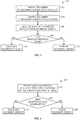
- FIG. 5 is a flow chart 200 associated with identifying problematic secondary content based on a secondary content playback report.
- the secondary content playback report may be updated or generated by the prefetch reporting service 6 on a periodic basis (daily, or any suitable time period).
- the process 200 may include identifying the number of secondary content expected to play (block 202). For example, the number of secondary content expected to play may be identified based upon expected playback within a time interval (such as within an hour, a day, or any other suitable time period). The number of secondary content expected to play may be identified from statistics provided by the prefetch reporting service 6 (e.g., provided in a secondary content playback report).
- the process 200 may include identifying the number of secondary content actually played (block 204). This number may be identified based upon a playback time interval that is the same as that used in block 202 (such as within an hour, a day, or any other suitable time period). This number may also be provided as statistics information from the prefetch reporting service 6 (e.g., provided in the secondary content playback report).
- the number of secondary content expected to play may be referred to as the number of requests associated with the secondary content while the number of secondary content actually played may be referred to as the number of refreshes associated with the secondary content.
- Such data may be collected by the secondary content provider 12 periodically (every second, every minute, or any other suitable time period) or real-time. After collecting such information, the secondary content provider 12 may send this information to the prefetch reporting service 6.
- a ratio between the number of secondary content expected to play and the number of secondary content actually played may be calculated (block 206). If the ratio breaches a threshold range (block 208), then the prefetch reporting service 6 may transmit the third deactivation trigger 26 to cause the deactivator component 2 to request deactivation of the secondary content (block 210) deemed to be problematic. However, if the ratio does not breach the threshold range (block 208), then the secondary content placement may be maintained, thus, not transmitting the third deactivation trigger 26, and thereby not invoking the deactivator component 2 (block 212).
- the threshold range may be determined based on a history of data related to the number of refreshes and requests associated with one or more secondary content, which may be collected by the secondary content provider 12.
- FIG. 6 is a flow chart 250 associated with identifying problematic secondary content based on secondary content QoE data or statistics.
- the secondary content QoE 8 may receive video statistics (block 260) from the secondary content provider 12.
- the video statistics may include, but are not limited to, video start time(s), buffering ratio(s), and video start failure(s). When these video statistics do not meet certain requirements, this may indicate problematic secondary content that should be deactivated.
- the requirements may be set by modeling or simulation techniques based on analyzing a history or record of data collected from the secondary content presentation services 14 and/or secondary content provider 12.
- the secondary content QoE 8 may issue the fourth deactivation trigger 28 such that the deactivator component 2 may request to deactivate the secondary content, which is deemed problematic (block 264).
- the deactivator component 2 may not be activated via the fourth deactivation trigger 28 (block 266).
- FIG. 7 a system 300 is depicted, in which the problematic secondary content is deactivated by the deactivator component requesting to deactivate a particular target resource (e.g., secondary content instance, secondary content, secondary content unit, and placement).
- the deactivator component 2 which may be an API gateway connecting to APIs of one or more secondary content providers 12 to deactivate secondary content at the secondary content providers 12, may also be referred to as the deactivator API 2.
- the process of deactivation involves the deactivator API 2 determining which target resource to deactivate.
- the deactivator component 2 may request the secondary content provider to deactivate the problematic secondary content by deactivating the target resource associated with the secondary content. Deactivating the secondary content may be useful in situations when a placement may contain multiple secondary contents. If one of the multiple secondary contents is determined to be problematic, then the deactivator component may request to deactivate the secondary content that is problematic. The remaining problem free secondary content contained within the placement may continue to play and remain untouched by the deactivator API 2.
- the deactivator API 2 may invoke a functional endpoint 304 associated with deactivating the secondary content, specifying an identifier of the secondary content (e.g., a secondary content identifier).
- An example of this functional endpoint may be / deactivate / secondary content, / deactivate / creative, or any other endpoint utilized by an API to deactivate secondary content.
- the secondary content provider 12 may send the deactivator API 2 code 307 containing data about the secondary content, indicating a status of the secondary content after a deactivation attempt.
- the code 307 may be an XML string.
- the deactivator API 2 may validate the status of the secondary content. If the deactivator API 2 receives an inactive status tag such as "IN ACTIVE" associated with the secondary content, then the deactivator API 2 was successful in deactivating the secondary content that was identified as problematic. However, if the deactivator API 2 receives an active status tag such as "ACTIVE" associated with the secondary content, then the deactivator API 2 was not successful in deactivating the secondary content that was identified as problematic. Additionally, if the deactivator API 2 is unsuccessful in deactivating the secondary content that was identified as problematic, it may also provide information regarding any errors found in the process of deactivating the secondary content. At this point the deactivation completes, as indicated by block 308.
- the deactivator API 2 may request to deactivate the problematic secondary content by deactivating the placement in which the problematic secondary content resides. Based on receiving an indication of the problematic secondary content via one or more data sources 302, the deactivator API 2, may request the secondary content provider to deactivate the problematic secondary content by deactivating the target resource associated with the placement. Deactivating the placement may be useful in situations when a placement may contain a single secondary content. If the single secondary content is determined to be problematic, then the deactivator component may request to deactivate the placement that contains the problematic secondary content. Since no other secondary content is problematic because the placement contains one piece of secondary content, it may be useful to simply deactivate the placement that contains the secondary content.
- the deactivator API 2 may invoke a functional endpoint 304 associated with deactivating the placement, providing a placement identifier.
- An example of this functional endpoint may be/ deactivate / placement or any other API endpoints for deactivating placements.
- an API associated with the secondary content provider 12 sends the deactivator API 2 code 307 containing data indicative of the placement status after a deactivation attempt.
- the code 307 may be an XML string.
- the deactivator API 2 may validate the status of the placement.
- the deactivator API 2 receives an inactive status tag such as "IN ACTIVE" associated with the placement, then the deactivator API 2 was successful in deactivating the placement that contains the problematic secondary content. However, if the deactivator API 2 receives an active status tag such as "ACTIVE" associated with the placement, then the deactivator API 2 was not successful in deactivating the placement that contains the problematic secondary content. Additionally, if the deactivator API 2 is unsuccessful in deactivating the placement that contains the secondary problematic content, it may also provide information regarding any errors found in the process of deactivating the secondary content. At this point the deactivation is complete, as indicated by block 308.
- the deactivator API 2 may request to deactivate the problematic secondary content by deactivating the secondary content instance. Based on receiving an indication of the problematic secondary content via one or more data sources 302, the deactivator API 2, may request the secondary content provider to deactivate the problematic secondary content by deactivating the target resource associated with the secondary content instance. Deactivating the secondary content instance may be useful in situations associated with high levels of granularity.
- the deactivator API 2 may invoke a functional endpoint 304 associated with deactivating the placement, providing a placement identifier.
- An example of this functional endpoint may be / deactivate / secondary content instance, / deactivate / creative instance, or any other API endpoints for deactivating secondary content instances.
- an API associated with the secondary content provider 12 sends the deactivator API 2 code 307 containing data indicative of the secondary content instance status after a deactivation attempt.
- the code 307 may be an XML string.
- the deactivator API 2 may validate the status of the secondary content instance. If the deactivator API 2 receives an inactive status tag such as "IN ACTIVE" associated with the secondary content instance, then the deactivator API 2 was successful in deactivating the secondary content instance that is associated with the problematic secondary content. However, if the deactivator API 2 receives an active status tag such as "ACTIVE" associated with the secondary content instance, then the deactivator API 2 was not successful in deactivating the secondary content instance that contains the problematic secondary content. Additionally, if the deactivator API 2 is unsuccessful in deactivating the secondary content instance that contains the secondary problematic content, it may also provide information regarding any errors found in the process of deactivating the secondary content. At this point the deactivation is complete, as indicated by block 308.
- any particular target resource with a particular level of granularity may be deactivated in order to deactivate the problematic secondary content.
- the deactivator API 2 may request to deactivate the problematic secondary content based on a combination of granularity levels. For example, deactivating via two or more levels (e.g., the secondary content instance, secondary content, secondary content unit, or the placement). In such an embodiment, the deactivator API 2 may request to deactivate either the secondary content instance, the secondary content, the secondary content unit or, alternatively, the placement as a failover.
- the order in which a target resource is deactivated may vary when attempting deactivation of a particular target resource with a varying level of granularity as a failover. For example, in some instances, the order may be determined based upon rules set by an administrator of the system 400. The order may be from the highest level of granularity to the lowest level of granularity or may be any other order that suits the particular target resources to be deactivated.
- system 400 depicts a failover example, in which the problematic secondary content is deactivated by deactivating a target resource via deactivation of a secondary content or, as an alternative, a placement as a failover.
- the deactivator API 2 may request the secondary content provider to deactivate the problematic secondary content.
- the deactivator API 2 may invoke a functional endpoint 402 associated with deactivating either the secondary content or, alternatively, the placement as a failover, when the secondary content deactivation fails.
- An example of this functional endpoint may be / deactivate.
- the deactivator API 2 may attempt to deactivate the secondary content first, as indicated by block 404.
- an API associated with the secondary content provider 12 sends the deactivator API 2 code 307A containing data indicating a status of the secondary content.
- the code 307A may be an XML string. A determination is made as to whether the secondary content was deactivated (decision block 408).
- the deactivator API 2 receives an inactive status tag such as "IN ACTIVE" associated with the secondary content, then the deactivator API 2 was successful in deactivating the secondary content that was identified as problematic (block 410). However, if the deactivator API 2 receives an active status tag such as "ACTIVE" associated with the secondary content, then the deactivator API 2 was not successful in deactivating the secondary content that was identified as problematic and may provide information regarding any errors found in the process of deactivating the secondary content.
- an API associated with the secondary content provider 12 sends the deactivator API 2 a code 307B containing data indicative of the placement status.
- the code 307B may be an XML string.
- the deactivator API 2 may validate the status of the placement (block 414).
- the deactivator API 2 may send this information regarding errors and the invalid placement via a notification such as an email (block 418).
- the API associated with the secondary content provider 12 may not send the deactivator API 2 code containing data about either the secondary content or the placement the first time, preventing the deactivator API 2 from validating the status of the secondary content or the placement.
- the deactivator API 2 may call the API associated with the secondary content provider 12 again to validate the status of the secondary content or the placement.
- the deactivator API 2 (or a separate API) may replace the problematic secondary content with another secondary content after being prompted from the API associated with the secondary content provider 12.
- an activator component may be incorporated within the system 50.
- the activator component may be responsible for activating certain problematic secondary content that had been deactivated based on being prompted from the API associated with the secondary content provider 12.
- the confidence tool 4 may be requested to pulse the secondary content again before re-activating the secondary content.
- the activator component may activate problematic secondary content on a periodic basis (hourly, daily, or any other suitable time period) after the confidence tool 4 has pulsed the secondary content.
Landscapes
- Engineering & Computer Science (AREA)
- Multimedia (AREA)
- Signal Processing (AREA)
- Databases & Information Systems (AREA)
- Business, Economics & Management (AREA)
- Marketing (AREA)
- Computer Networks & Wireless Communication (AREA)
- Information Transfer Between Computers (AREA)
- Two-Way Televisions, Distribution Of Moving Picture Or The Like (AREA)
Priority Applications (1)
| Application Number | Priority Date | Filing Date | Title |
|---|---|---|---|
| EP25176211.8A EP4611375A3 (fr) | 2019-12-30 | 2020-11-30 | Systèmes et procédés pour désactiver un contenu secondaire problématique |
Applications Claiming Priority (1)
| Application Number | Priority Date | Filing Date | Title |
|---|---|---|---|
| US16/730,460 US11122309B2 (en) | 2019-12-30 | 2019-12-30 | Systems and methods for deactivating problematic content |
Related Child Applications (1)
| Application Number | Title | Priority Date | Filing Date |
|---|---|---|---|
| EP25176211.8A Division EP4611375A3 (fr) | 2019-12-30 | 2020-11-30 | Systèmes et procédés pour désactiver un contenu secondaire problématique |
Publications (1)
| Publication Number | Publication Date |
|---|---|
| EP3846482A1 true EP3846482A1 (fr) | 2021-07-07 |
Family
ID=73646282
Family Applications (2)
| Application Number | Title | Priority Date | Filing Date |
|---|---|---|---|
| EP20210806.4A Withdrawn EP3846482A1 (fr) | 2019-12-30 | 2020-11-30 | Systèmes et procédés pour désactiver un contenu secondaire problématique |
| EP25176211.8A Pending EP4611375A3 (fr) | 2019-12-30 | 2020-11-30 | Systèmes et procédés pour désactiver un contenu secondaire problématique |
Family Applications After (1)
| Application Number | Title | Priority Date | Filing Date |
|---|---|---|---|
| EP25176211.8A Pending EP4611375A3 (fr) | 2019-12-30 | 2020-11-30 | Systèmes et procédés pour désactiver un contenu secondaire problématique |
Country Status (2)
| Country | Link |
|---|---|
| US (1) | US11122309B2 (fr) |
| EP (2) | EP3846482A1 (fr) |
Families Citing this family (3)
| Publication number | Priority date | Publication date | Assignee | Title |
|---|---|---|---|---|
| US11887114B2 (en) * | 2020-04-03 | 2024-01-30 | Nbcuniversal Media, Llc | Systems and methods for pulsing content |
| US11943504B2 (en) | 2022-02-23 | 2024-03-26 | Iheartmedia Management Services, Inc. | Media broadcast content distribution system |
| US11757960B1 (en) | 2022-02-23 | 2023-09-12 | Iheartmedia Management Services, Inc. | Disaster recovery in media broadcast system |
Citations (6)
| Publication number | Priority date | Publication date | Assignee | Title |
|---|---|---|---|---|
| US20060149623A1 (en) * | 2004-12-30 | 2006-07-06 | Badros Gregory J | Advertisement approval |
| US20080263673A1 (en) * | 2006-09-29 | 2008-10-23 | Viewpoint Corporation | System and method for delivering promotional and information content during a computer-based application and collecting impression metrics |
| US20120158954A1 (en) * | 2010-09-22 | 2012-06-21 | Ronan Heffernan | Methods and apparatus to determine impressions using distributed demographic information |
| US20140164093A1 (en) * | 2012-09-26 | 2014-06-12 | My Savvy Way, Inc. | System and method to manage and publish promotions electronically |
| US9009834B1 (en) * | 2009-09-24 | 2015-04-14 | Google Inc. | System policy violation detection |
| US20150128162A1 (en) * | 2013-11-01 | 2015-05-07 | Adobe Systems Incorporated | Real-time tracking collection for video experiences |
Family Cites Families (6)
| Publication number | Priority date | Publication date | Assignee | Title |
|---|---|---|---|---|
| US7266726B1 (en) * | 2003-11-24 | 2007-09-04 | Time Warner Cable Inc. | Methods and apparatus for event logging in an information network |
| US20160162125A1 (en) * | 2014-12-05 | 2016-06-09 | Verizon Patent And Licensing Inc. | System and method for providing media preview for playlists |
| US11778014B2 (en) * | 2014-12-12 | 2023-10-03 | Arris Enterprises Llc | Throttling content download in adaptive HTTP live streaming |
| CN107295359B (zh) * | 2016-04-11 | 2020-05-01 | 腾讯科技(北京)有限公司 | 一种视频播放方法、装置、计算设备和存储介质 |
| US10129593B2 (en) * | 2017-03-14 | 2018-11-13 | Charter Communications Operating, Llc | Time-based dynamic secondary content placement calls in time-shifted content |
| US10491723B2 (en) * | 2017-12-19 | 2019-11-26 | Verizon Patent And Licensing Inc. | Content stream integrity and redundancy system |
-
2019
- 2019-12-30 US US16/730,460 patent/US11122309B2/en active Active
-
2020
- 2020-11-30 EP EP20210806.4A patent/EP3846482A1/fr not_active Withdrawn
- 2020-11-30 EP EP25176211.8A patent/EP4611375A3/fr active Pending
Patent Citations (6)
| Publication number | Priority date | Publication date | Assignee | Title |
|---|---|---|---|---|
| US20060149623A1 (en) * | 2004-12-30 | 2006-07-06 | Badros Gregory J | Advertisement approval |
| US20080263673A1 (en) * | 2006-09-29 | 2008-10-23 | Viewpoint Corporation | System and method for delivering promotional and information content during a computer-based application and collecting impression metrics |
| US9009834B1 (en) * | 2009-09-24 | 2015-04-14 | Google Inc. | System policy violation detection |
| US20120158954A1 (en) * | 2010-09-22 | 2012-06-21 | Ronan Heffernan | Methods and apparatus to determine impressions using distributed demographic information |
| US20140164093A1 (en) * | 2012-09-26 | 2014-06-12 | My Savvy Way, Inc. | System and method to manage and publish promotions electronically |
| US20150128162A1 (en) * | 2013-11-01 | 2015-05-07 | Adobe Systems Incorporated | Real-time tracking collection for video experiences |
Also Published As
| Publication number | Publication date |
|---|---|
| US11122309B2 (en) | 2021-09-14 |
| EP4611375A3 (fr) | 2025-10-22 |
| EP4611375A2 (fr) | 2025-09-03 |
| US20210204009A1 (en) | 2021-07-01 |
Similar Documents
| Publication | Publication Date | Title |
|---|---|---|
| JP6046726B2 (ja) | 災害復旧システム及び方法 | |
| EP3846482A1 (fr) | Systèmes et procédés pour désactiver un contenu secondaire problématique | |
| US8966039B1 (en) | End-to-end communication service monitoring and reporting | |
| US7308487B1 (en) | System and method for providing fault-tolerant remote controlled computing devices | |
| US9070113B2 (en) | Stock keeping units for content processing | |
| US7962604B1 (en) | Displaying advertisements in a computer network environment | |
| US20210084670A1 (en) | Optimal scheduling of access events on mobile devices | |
| US10855782B2 (en) | Attributing users to audience segments | |
| US8326941B2 (en) | Method for autonomic detection and repair of broken links in web environments | |
| US20110285542A1 (en) | Filtering method and system | |
| WO2016109573A1 (fr) | Procédés et appareil de correction de mauvaise attribution d'âge dans des impressions médiatiques | |
| WO2018031500A1 (fr) | Diagnostics de lecture en temps réel | |
| US11887114B2 (en) | Systems and methods for pulsing content | |
| US20210044842A1 (en) | Client side behavior self-determination | |
| US20050138633A1 (en) | Method and system for confirming the launch of interstitial content on an end user computer | |
| US20180204248A1 (en) | Web page viewership prediction | |
| CA3071478C (fr) | Service de contenu mobile juste-a-temps en fonction de regles | |
| CN109286671A (zh) | 物联网环境下订阅通知处理方法、装置、存储介质及设备 | |
| US11546212B2 (en) | Intelligent content server handling of client receipt disruptions | |
| US20180121886A1 (en) | Theater control system and method | |
| US20230300212A1 (en) | Generating media stream including contextual markers | |
| JP2019522292A (ja) | データ処理方法及びデバイス | |
| US20170068988A1 (en) | Device integrity based assessment of indication of user action associated with an advertisement | |
| CN112351293B (zh) | 一种检测状态信令丢失的方法、装置及介质 | |
| US11928711B1 (en) | Methods, systems, and media for setting and using an advertisement frequency cap based on causal conversions |
Legal Events
| Date | Code | Title | Description |
|---|---|---|---|
| PUAI | Public reference made under article 153(3) epc to a published international application that has entered the european phase |
Free format text: ORIGINAL CODE: 0009012 |
|
| STAA | Information on the status of an ep patent application or granted ep patent |
Free format text: STATUS: THE APPLICATION HAS BEEN PUBLISHED |
|
| AK | Designated contracting states |
Kind code of ref document: A1 Designated state(s): AL AT BE BG CH CY CZ DE DK EE ES FI FR GB GR HR HU IE IS IT LI LT LU LV MC MK MT NL NO PL PT RO RS SE SI SK SM TR |
|
| STAA | Information on the status of an ep patent application or granted ep patent |
Free format text: STATUS: REQUEST FOR EXAMINATION WAS MADE |
|
| 17P | Request for examination filed |
Effective date: 20220106 |
|
| RBV | Designated contracting states (corrected) |
Designated state(s): AL AT BE BG CH CY CZ DE DK EE ES FI FR GB GR HR HU IE IS IT LI LT LU LV MC MK MT NL NO PL PT RO RS SE SI SK SM TR |
|
| STAA | Information on the status of an ep patent application or granted ep patent |
Free format text: STATUS: EXAMINATION IS IN PROGRESS |
|
| 17Q | First examination report despatched |
Effective date: 20230515 |
|
| STAA | Information on the status of an ep patent application or granted ep patent |
Free format text: STATUS: THE APPLICATION HAS BEEN WITHDRAWN |
|
| 18W | Application withdrawn |
Effective date: 20250513 |