EP3848352A1 - Benzonitrilderivat, lichtemittierendes material und lichtemittierendes element damit - Google Patents
Benzonitrilderivat, lichtemittierendes material und lichtemittierendes element damit Download PDFInfo
- Publication number
- EP3848352A1 EP3848352A1 EP19857043.4A EP19857043A EP3848352A1 EP 3848352 A1 EP3848352 A1 EP 3848352A1 EP 19857043 A EP19857043 A EP 19857043A EP 3848352 A1 EP3848352 A1 EP 3848352A1
- Authority
- EP
- European Patent Office
- Prior art keywords
- group
- substituted
- unsubstituted
- mmol
- carbazol
- Prior art date
- Legal status (The legal status is an assumption and is not a legal conclusion. Google has not performed a legal analysis and makes no representation as to the accuracy of the status listed.)
- Pending
Links
- 0 Cc(c(*)c1*)c(C)c(C2CCC2)c1C#N Chemical compound Cc(c(*)c1*)c(C)c(C2CCC2)c1C#N 0.000 description 7
- WROGGJUZQHYULO-UHFFFAOYSA-N CC(C(F)(F)F)(c(cc1)ccc1Oc(cc1)ccc1-c1nc(-c2ccccc2)nc(-c2ccccc2)n1)c(cc1)ccc1Oc(cc1)ccc1-c1nc(-c2ccccc2)nc(-c2ccccc2)n1 Chemical compound CC(C(F)(F)F)(c(cc1)ccc1Oc(cc1)ccc1-c1nc(-c2ccccc2)nc(-c2ccccc2)n1)c(cc1)ccc1Oc(cc1)ccc1-c1nc(-c2ccccc2)nc(-c2ccccc2)n1 WROGGJUZQHYULO-UHFFFAOYSA-N 0.000 description 1
- FNZKSBOEKARWIN-UHFFFAOYSA-N N#Cc(c(F)c(c(-c1ccccc1)c1F)F)c1F Chemical compound N#Cc(c(F)c(c(-c1ccccc1)c1F)F)c1F FNZKSBOEKARWIN-UHFFFAOYSA-N 0.000 description 1
- IOQMWOBRUDNEOA-UHFFFAOYSA-N N#Cc(c(F)c(cc1F)F)c1F Chemical compound N#Cc(c(F)c(cc1F)F)c1F IOQMWOBRUDNEOA-UHFFFAOYSA-N 0.000 description 1
Images





Classifications
-
- C—CHEMISTRY; METALLURGY
- C09—DYES; PAINTS; POLISHES; NATURAL RESINS; ADHESIVES; COMPOSITIONS NOT OTHERWISE PROVIDED FOR; APPLICATIONS OF MATERIALS NOT OTHERWISE PROVIDED FOR
- C09K—MATERIALS FOR MISCELLANEOUS APPLICATIONS, NOT PROVIDED FOR ELSEWHERE
- C09K11/00—Luminescent materials, e.g. electroluminescent or chemiluminescent
- C09K11/06—Luminescent materials, e.g. electroluminescent or chemiluminescent containing organic luminescent materials
-
- C—CHEMISTRY; METALLURGY
- C07—ORGANIC CHEMISTRY
- C07D—HETEROCYCLIC COMPOUNDS
- C07D403/00—Heterocyclic compounds containing two or more hetero rings, having nitrogen atoms as the only ring hetero atoms, not provided for by group C07D401/00
- C07D403/14—Heterocyclic compounds containing two or more hetero rings, having nitrogen atoms as the only ring hetero atoms, not provided for by group C07D401/00 containing three or more hetero rings
-
- C—CHEMISTRY; METALLURGY
- C07—ORGANIC CHEMISTRY
- C07D—HETEROCYCLIC COMPOUNDS
- C07D209/00—Heterocyclic compounds containing five-membered rings, condensed with other rings, with one nitrogen atom as the only ring hetero atom
- C07D209/56—Ring systems containing three or more rings
- C07D209/80—[b, c]- or [b, d]-condensed
- C07D209/82—Carbazoles; Hydrogenated carbazoles
-
- C—CHEMISTRY; METALLURGY
- C07—ORGANIC CHEMISTRY
- C07D—HETEROCYCLIC COMPOUNDS
- C07D209/00—Heterocyclic compounds containing five-membered rings, condensed with other rings, with one nitrogen atom as the only ring hetero atom
- C07D209/56—Ring systems containing three or more rings
- C07D209/80—[b, c]- or [b, d]-condensed
- C07D209/82—Carbazoles; Hydrogenated carbazoles
- C07D209/86—Carbazoles; Hydrogenated carbazoles with only hydrogen atoms, hydrocarbon or substituted hydrocarbon radicals, directly attached to carbon atoms of the ring system
-
- C—CHEMISTRY; METALLURGY
- C07—ORGANIC CHEMISTRY
- C07D—HETEROCYCLIC COMPOUNDS
- C07D401/00—Heterocyclic compounds containing two or more hetero rings, having nitrogen atoms as the only ring hetero atoms, at least one ring being a six-membered ring with only one nitrogen atom
- C07D401/14—Heterocyclic compounds containing two or more hetero rings, having nitrogen atoms as the only ring hetero atoms, at least one ring being a six-membered ring with only one nitrogen atom containing three or more hetero rings
-
- H—ELECTRICITY
- H10—SEMICONDUCTOR DEVICES; ELECTRIC SOLID-STATE DEVICES NOT OTHERWISE PROVIDED FOR
- H10K—ORGANIC ELECTRIC SOLID-STATE DEVICES
- H10K85/00—Organic materials used in the body or electrodes of devices covered by this subclass
- H10K85/60—Organic compounds having low molecular weight
- H10K85/649—Aromatic compounds comprising a hetero atom
- H10K85/654—Aromatic compounds comprising a hetero atom comprising only nitrogen as heteroatom
-
- H—ELECTRICITY
- H10—SEMICONDUCTOR DEVICES; ELECTRIC SOLID-STATE DEVICES NOT OTHERWISE PROVIDED FOR
- H10K—ORGANIC ELECTRIC SOLID-STATE DEVICES
- H10K85/00—Organic materials used in the body or electrodes of devices covered by this subclass
- H10K85/60—Organic compounds having low molecular weight
- H10K85/649—Aromatic compounds comprising a hetero atom
- H10K85/657—Polycyclic condensed heteroaromatic hydrocarbons
- H10K85/6572—Polycyclic condensed heteroaromatic hydrocarbons comprising only nitrogen in the heteroaromatic polycondensed ring system, e.g. phenanthroline or carbazole
-
- H—ELECTRICITY
- H10—SEMICONDUCTOR DEVICES; ELECTRIC SOLID-STATE DEVICES NOT OTHERWISE PROVIDED FOR
- H10K—ORGANIC ELECTRIC SOLID-STATE DEVICES
- H10K50/00—Organic light-emitting devices
- H10K50/10—OLEDs or polymer light-emitting diodes [PLED]
- H10K50/11—OLEDs or polymer light-emitting diodes [PLED] characterised by the electroluminescent [EL] layers
Definitions
- the present invention relates to a 2,3,4,5,6-pentasubstituted benzonitrile compound that exhibits excellent light emission characteristics, a light-emitting material, and a light-emitting element using the same.
- Patent Document 1 discloses compounds such as 3,5-di(3,6-diphenyl-9H-carbazol-9-yl)-2,4,6-tri(4-cyanophenyl)-benzonitrile.
- Patent Document 2 discloses compounds such as 2,3,5,6-tetra(3,6-diphenyl-9H-carbazol-9-yl)-4-(4-cyanophenyl)-benzonitrile.
- Patent Document 3 discloses compounds such as 2,3,5,6-tetra(9H-carbazol-9-yl)-4-phenyl-benzonitrile.
- Objects of the present invention are to provide a 2,3,4,5,6-pentasubstituted benzonitrile compound (hereafter sometimes referred to as "the compound of the present invention") that exhibits excellent light emission characteristics, a light-emitting material, and a light-emitting element using the same.
- the compound of the present invention is useful as a light-emitting material.
- the light-emitting materials according to the present invention are compounds which emit delayed fluorescence.
- a light-emitting element containing the light-emitting material according to the present invention is able to realize excellent luminous efficiency.
- the 2,3,4,5,6-pentasubstituted benzonitrile compound of the present invention is a compound represented by formula (I).
- formula (I) 2,3,4,5,6-pentasubstituted benzonitrile compound of the present invention is a compound represented by formula (I).
- the 2,3,4,5,6-pentasubstituted benzonitrile compound of the present invention is preferably a compound represented by formula (IIa), formula (IIb), formula (IIc), formula (IIIa), formula (IIIb), formula (IIIc) or formula (IVa), and is more preferably a compound represented by formula (IIa).
- the 2,3,4,5,6-pentasubstituted benzonitrile compound of the present invention may also be a compound represented by formula (IIId) or formula (IIIe).
- L represents a substituted or unsubstituted aryl group, and each Q independently represents a substituted or unsubstituted 3,6-di-t-butyl-9H-carbazol-9-yl group.
- L represents a substituted or unsubstituted aryl group, and each Q independently represents a substituted or unsubstituted 3,6-di-t-butyl-9H-carbazol-9-yl group.
- L represents a substituted or unsubstituted aryl group, and each Q independently represents a substituted or unsubstituted 3,6-di-t-butyl-9H-carbazol-9-yl group.
- each L independently represents a substituted or unsubstituted aryl group
- each Q independently represents a substituted or unsubstituted 3,6-di-t-butyl-9H-carbazol-9-yl group, or a substituted or unsubstituted 3,6-diphenyl-9H-carbazol-9-yl group.
- each L independently represents a substituted or unsubstituted aryl group
- each Q independently represents a substituted or unsubstituted 3,6-di-t-butyl-9H-carbazol-9-yl group, or a substituted or unsubstituted 3,6-diphenyl-9H-carbazol-9-yl group.
- each L independently represents a substituted or unsubstituted aryl group
- each Q independently represents a substituted or unsubstituted 3,6-di-t-butyl-9H-carbazol-9-yl group, or a substituted or unsubstituted 3,6-diphenyl-9H-carbazol-9-yl group.
- each L independently represents a substituted or unsubstituted aryl group
- each Q independently represents a substituted or unsubstituted 3,6-di-t-butyl-9H-carbazol-9-yl group, or a substituted or unsubstituted 3,6-diphenyl-9H-carbazol-9-yl group.
- each L independently represents a substituted or unsubstituted aryl group
- each Q independently represents a substituted or unsubstituted 3,6-di-t-butyl-9H-carbazol-9-yl group, or a substituted or unsubstituted 3,6-diphenyl-9H-carbazol-9-yl group.
- each L independently represents a substituted or unsubstituted aryl group
- each Q independently represents a substituted or unsubstituted 3,6-di-t-butyl-9H-carbazol-9-yl group, or a substituted or unsubstituted 3,6-diphenyl-9H-carbazol-9-yl group.
- the substituted or unsubstituted 3,6-di-t-butyl-9H-carbazol-9-yl group is preferably a group represented by formula (A).
- the substituted or unsubstituted 3,6-diphenyl-9H-carbazol-9-yl group is preferably a group represented by formula (B).
- the substituted or unsubstituted 3-phenyl-6-t-butyl-9H-carbazol-9-yl group is preferably a group represented by formula (C).
- each of R 1 , R 2 , R 3 , R 4 , R 5 and R 6 independently represents a hydrogen atom or a substituent, and * represents a bonding site.
- unsubstituted means only the core group.
- a group is described using only the name of the core group, this means the unsubstituted group unless specifically stated otherwise.
- substituted means a hydrogen atom of the core group has been substituted with a group having the same structure as the core group, or a different structure from the core group. Accordingly, a “substituent” is another group that is bonded to the core group. There may be one substituent, or two or more substituents. In the case of two or more substituents, the substituents may be the same or different.
- any hydrogen atom in any of these "substituents" may be substituted with a group of a different structure.
- C1 to C6 indicate that the number of carbon atoms in the core group is within a range from 1 to 6. This number of carbon atoms does not include carbon atoms that exist in any substituents.
- an ethoxybutyl group has a butyl group as the core group and an ethoxy group as a substituent, and is therefore classified as a C2 alkoxy C4 alkyl group.
- substituents include a hydroxy group, halogeno groups, a cyano group, alkyl groups of 1 to 20 carbon atoms, alkoxy groups of 1 to 20 carbon atoms, alkylthio groups of 1 to 20 carbon atoms, alkyl-substituted amino groups of 1 to 20 carbon atoms, acyl groups of 2 to 20 carbon atoms, aryl groups of 6 to 40 carbon atoms, heteroaryl groups of 3 to 40 carbon atoms, diarylamino groups of 12 to 40 carbon atoms, substituted or unsubstituted carbazolyl groups of 12 to 40 carbon atoms, alkenyl groups of 2 to 10 carbon atoms, alkynyl groups of 2 to 10 carbon atoms, alkoxycarbonyl groups of 2 to 10 carbon atoms, alkylsulfonyl groups of 1 to 10 carbon atoms, haloalkyl groups of 1 to 10 carbon atoms, an amido group, alkylamido groups of
- substituents examples include halogeno groups, a cyano group, alkyl groups of 1 to 20 carbon atoms, alkoxy groups of 1 to 20 carbon atoms, aryl groups of 6 to 40 carbon atoms, heteroaryl groups of 3 to 40 carbon atoms, diarylamino groups of 12 to 40 carbon atoms, and carbazolyl groups of 12 to 40 carbon atoms.
- substituents examples include a fluoro group, chloro group, cyano group, alkyl groups of 1 to 10 carbon atoms, alkoxy groups of 1 to 10 carbon atoms, dialkylamino groups of 1 to 10 carbon atoms, aryl groups of 6 to 15 carbon atoms, and heteroaryl groups of 3 to 12 carbon atoms.
- substituents which are capable of being further substituted may themselves be substituted with an aforementioned substituent.
- the substituted or unsubstituted aryl group for L is preferably a substituted or unsubstituted phenyl group, substituted or unsubstituted biphenyl group, substituted or unsubstituted naphthyl group, substituted or unsubstituted anthryl group, or substituted or unsubstituted phenanthryl group.
- a substituted or unsubstituted phenyl group is particularly preferred.
- the compound of the present invention is not particularly limited in terms of production method, and for example, can be obtained by applying the methods disclosed in Patent Document 1 or Patent Document 2, or the methods described in the examples, using compounds corresponding with the pertinent substituents as starting materials.
- Purification of the synthesized compound of the present invention may be conducted by purification by column chromatography, adsorption purification using silica gel, activated carbon, or activated clay or the like, or recrystallization or crystallization using solvents. Identification of the compound may be conducted by NMR analysis or the like.
- the compound of the present invention can be used as a light-emitting material.
- a light-emitting element such as an organic photoluminescent element or an organic electroluminescent element can be provided.
- the compound of the present invention has a function of assisting light emission from another light-emitting material (a host material), and can therefore be used to dope the other light-emitting material.
- An organic photoluminescent element that represents one light-emitting element of the present invention has a light-emitting layer containing the light-emitting material of the present invention provided on a substrate.
- the light-emitting layer can be obtained by a coating method such as spin coating, a printing method such as inkjet printing, or a vapor deposition method or the like.
- organic electroluminescent element of the present invention is prepared by providing an organic layer between an anode and a cathode.
- organic layer means a layer composed substantially of organic matter which is positioned between an anode and a cathode, although this type of layer may also contain inorganic material provided the performance of the light-emitting element of the present invention is not impaired.
- Examples of the structure in one embodiment of an organic electroluminescent element of the present invention include structures having an anode, a hole injection layer, a hole transport layer, an electron-blocking layer, a light-emitting layer, a hole-blocking layer, an electron transport layer and a cathode formed sequentially on a substrate, as well as structures having an additional electron injection layer between the electron transport layer and the cathode.
- one or more of the organic layers may be omitted, and for example, structures having an anode, a hole transport layer, a light-emitting layer, an electron transport layer, an electron injection layer and a cathode formed sequentially on a substrate, or structures having an anode, a hole transport layer, a light-emitting layer, an electron transport layer and a cathode formed sequentially on a substrate may also be formed.
- the light-emitting material of the present invention may be used to dope not only the light-emitting layer, but also the hole injection layer, hole transport layer, electron-blocking layer, hole-blocking layer, electron transport layer or electron injection layer.
- the substrate acts as a support body for the light-emitting element, and a silicon plate, quartz plate, glass plate, metal plate, metal foil, resin film, or resin sheet or the like can be used as the substrate.
- a silicon plate, quartz plate, glass plate, metal plate, metal foil, resin film, or resin sheet or the like can be used as the substrate.
- Glass plates and plates of transparent synthetic resins such as polyesters, polymethacrylates, polycarbonates and polysulfones are particularly preferred.
- the gas barrier properties must also be considered. If the gas barrier properties of the substrate are insufficient, then the light-emitting element may sometimes deteriorate due to external gas that has passed through the substrate. Accordingly, a dense silicon oxide film or the like is preferably provided on either one or both surfaces of the synthetic resin substrate to ensure favorable gas barrier properties.
- An anode is provided on the substrate.
- a material having a large work function is generally used for the anode.
- the material for the anode include metals such as aluminum, gold, silver, nickel, palladium and platinum, metal oxides such as indium oxide, tin oxide, ITO, zinc oxide, In 2 O 3 -ZnO and IGZO, halogenated metals such as copper iodide, carbon black, and conductive polymers such as poly(3-methylthiophene), polypyrrole and polyaniline.
- Formation of the anode is typically conducted by a sputtering method or vacuum vapor deposition method or the like.
- the anode in the case of fine particles of metals such as silver, fine particles of copper iodide or the like, carbon black, fine particles of conductive metal oxides, or fine powders of conductive polymers, can also be formed by dispersion in a suitable binder resin solution, and then application of the dispersion to the substrate.
- the anode in the case of conductive polymers, can also be formed by forming a thin film directly on the substrate by electrolytic polymerization, or by applying the conductive polymer to the substrate.
- the anode may also be formed by stacking two or more different types of materials.
- the thickness of the anode varies depending on the level of transparency required. In those cases where transparency is required, it is desirable that the transmittance of visible light is typically at least 60%, and preferably 80% or greater, and in such cases, the thickness of the anode is typically within a range from 10 to 1,000 nm, and preferably from 10 to 200 nm. In the case of a non-transparent anode, the anode may be of a similar thickness to the substrate.
- the sheet resistance of the anode is preferably at least several hundred ⁇ /square.
- the optionally provided hole injection layer may be formed using a porphyrin compound typified by copper phthalocyanine, or a naphthalenediamine derivative, starburst-type triphenylamine derivative, a triphenylamine trimer or tetramer such as an arylamine compound having a structure in which three or more triphenylamine structures are connected via single bonds or divalent groups containing no hetero atoms, an acceptor heterocyclic compound such as hexacyanoazatriphenylene, or a coating-type polymer material.
- a porphyrin compound typified by copper phthalocyanine, or a naphthalenediamine derivative, starburst-type triphenylamine derivative, a triphenylamine trimer or tetramer such as an arylamine compound having a structure in which three or more triphenylamine structures are connected via single bonds or divalent groups containing no hetero atoms, an acceptor heterocyclic compound such as hexacyan
- the hole transport material used for the optionally provided hole transport layer preferably exhibits high hole injection efficiency from the anode and is capable of efficiently transporting the injected holes. Accordingly, the material preferably has a small ionization potential and high transparency relative to visible light, and also exhibits large hole mobility, has superior stability, and is unlikely to form impurities that may act as traps during production or use. In addition to these general requirements, if application to vehicle displays is also taken into consideration, then the element preferably also has high heat resistance. Accordingly, a material having a Tg value of at least 70°C is desirable.
- Examples of the material for the optionally provided hole transport layer include triazole derivatives, oxadiazole derivatives, imidazole derivatives, carbazole derivatives, indolocarbazole derivatives, polyarylalkane derivatives, pyrazoline derivatives, pyrazolone derivatives, phenylenediamine derivatives, arylamine derivatives, amin-substituted chalcone derivatives, oxazole derivatives, styrylanthracene derivatives, fluorenone derivatives, hydrazone derivatives, stilbene derivatives, silazane derivatives, aniline-based copolymers, and conductive polymer oligomers.
- More specific examples include compounds containing an m-carbazolylphenyl group, benzidine derivatives such as N,N'-diphenyl-N,N'-di(m-tolyl)-benzidine (hereafter abbreviated as TPD), N,N'-diphenyl-N,N'-di( ⁇ -naphthyl)-benzidine (hereafter abbreviated as NPD) and N,N,N',N'-tetrabiphenylylbenzidine, 1,1-bis[(di-4-tolylamino)phenyl]cyclohexane (hereafter abbreviated as TAPC), various triphenylamine trimers and tetramers, and carbazole derivatives.
- TPD N,N'-diphenyl-N,N'-di(m-tolyl)-benzidine
- NPD N,N'-diphenyl-N,N'-di( ⁇ -naphth
- the hole transport layer may be a film with a single-layer structure, or a film with a layered structure.
- a coating-type polymer material such as poly(3,4-ethylenedioxythiophene) (hereafter abbreviated as PEDOT) / poly(styrene sulfonate) (hereafter abbreviated as PSS) may be used for a hole injection-transport layer.
- PEDOT poly(3,4-ethylenedioxythiophene)
- PSS poly(styrene sulfonate)
- a material obtained by P-doping of a material typically used for these layers with trisbromophenylamine hexachloroantimony, or a polymer compound having a PD structure as a partial structure may also be used.
- materials that can be used as the host material for the hole injection-transport layer include carbazole derivatives such as PPF, PPT, CBP, TCTA and mCP.
- Examples of compounds that can be used favorably as the hole injection material include compounds (hi1) to (hi7) shown below.
- Examples of compounds that can be used favorably as the hole transport material include compounds (ht1) to (ht38) shown below.
- Examples of compounds that can be used as the optionally provided electron-blocking layer include compounds having an electron-blocking action, including carbazole derivatives such as 4,4',4"-tri(N-carbazolyl)triphenylamine (hereafter abbreviated as TCTA), 9,9-bis[4-(carbazol-9-yl)phenyl]fluorene, 1,3-bis(carbazol-9-yl)benzene (hereafter abbreviated as mCP), 2,2-bis(4-carbazol-9-ylphenyl)adamantane (hereafter abbreviated as Ad-Cz), and compounds having a triphenylsilyl group and a triarylamine structure typified by 9-[4-carbazol-9-yl]phenyl]-9-[4-(triphenylsilyl)phenyl]-9H-fluorene.
- carbazole derivatives such as 4,4',4"-tri(N-carbazolyl)triphen
- the electron-blocking layer may be a film with a single-layer structure, or a film with a layered structure. These materials may be used to form a thin film by a vapor deposition method or other known methods such as a spin coating method or inkjet method.
- Examples of compounds that can be used favorably as the electron-blocking material include compounds (es1) to (es5) shown below.
- the light-emitting layer is a layer that has the function of producing excitons and emitting light through the recombination of holes and electrons injected from the anode and cathode respectively.
- the light-emitting layer may be formed solely from the light-emitting material of the present invention, or may be formed by doping a host material with the light-emitting material of the present invention.
- Examples of the host material include PPF, PPT, metal complexes of quinolinol derivatives such as tris(8-hydroxyquinoline)aluminum (hereafter abbreviated as Alq3), anthracene derivatives, bisstyrylbenzene derivatives, pyrene derivatives, oxazole derivatives, polyparaphenylenevinylene derivatives, compounds having a bipyridyl group and an ortho-terphenyl structure, mCP, thiazole derivatives, benzimidazole derivatives, and polydialkylfluorene derivatives.
- the light-emitting layer may also contain a conventional dopant.
- Examples of such dopants include quinacridone, coumarin, rubrene, anthracene, perylene, and derivatives of these compounds, as well as benzopyran derivatives, rhodamine derivatives and aminostyryl derivatives.
- phosphorescent light emitters including green phosphorescent emitters such as Ir(ppy)3, blue phosphorescent emitters such as FIRpic and FIr6, and red phosphorescent emitters such as Btp2Ir(acac) may also be used. These compounds may be used individually, or a combination of two or more compounds may be used.
- the light-emitting layer may be a film with a single-layer structure, or a film with a layered structure. These materials may be used to form a thin film by a vapor deposition method or other known methods such as a spin coating method or inkjet method.
- the amount of the light-emitting material of the present invention that may be included in the light-emitting layer has a lower limit that is preferably 0.1% by mass, and more preferably 1% by mass, and an upper limit that is preferably 50% by mass, more preferably 20% by mass, and even more preferably 10% by mass.
- Examples of compounds that can be used favorably as the host material of the light-emitting layer include compounds (el1) to (el42) shown below.
- Examples of compounds that can be used as the optionally provided hole-blocking layer include compounds having a hole-blocking action, including compounds having a bipyridyl group and an ortho-terphenyl structure, phenanthroline derivatives such as bathocuproine (hereafter abbreviated as BCP), metal complexes of quinolinol derivatives such as aluminum (III) bis(2-methyl-8-quinolinate)-4-phenylphenolate (hereafter abbreviated as BAlq), various rare earth complexes, oxazole derivatives, triazole derivatives and triazine derivatives. These materials may also function as an electron transport material. These compounds may be used individually, or a combination of two or more compounds may be used.
- BCP bathocuproine
- BAlq metal complexes of quinolinol derivatives
- BAlq aluminum (III) bis(2-methyl-8-quinolinate)-4-phenylphenolate
- BAlq aluminum (III) bis(2-methyl-8-quinolinate)
- the hole-blocking layer may be a film with a single-layer structure, or a film with a layered structure. These materials may be used to form a thin film by a vapor deposition method or other known methods such as a spin coating method or inkjet method.
- Examples of compounds that can be used favorably as the hole-blocking material include compounds (hs1) to (hs11) shown below.
- Examples of compounds that can be used as the optionally provided electron transport layer include metal complexes of quinolinol derivatives such as Alq3 and BAlq, as well as various metal complexes, triazole derivatives, triazine derivatives, oxadiazole derivatives, thiadiazole derivatives, carbodiimide derivatives, quinoxaline derivatives, phenanthroline derivatives and silole derivatives. These compounds may be used individually, or a combination of two or more compounds may be used.
- the electron transport layer may be a film with a single-layer structure, or a film with a multilayered structure. These materials may be used to form a thin film by a vapor deposition method or other known methods such as a spin coating method or inkjet method.
- Examples of compounds that can be used as the optionally provided electron injection layer include alkali metal salts such as lithium fluoride and cesium fluoride, alkaline earth metal salts such as magnesium fluoride, and metal oxides (or simply metal oxides) such as aluminum oxide, but in the case of preferred selections for the electron transport layer and the cathode, this layer may be omitted.
- a material obtained by subjecting a material typically used for the layer to N-doping with a metal such as cesium may also be used.
- Examples of compounds that can be used favorably as the electron transport material include compounds (et1) to (et30) shown below.
- Examples of compounds that can be used favorably as the electron injection material include compounds (ei1) to (ei4) shown below.
- Examples of compounds that can be used favorably as stabilizing materials include compounds (st1) to (st5) shown below.
- a material having a small work function is generally used for the cathode.
- the material for the cathode include sodium, sodium-potassium alloys, lithium, tin, magnesium, magnesium/copper mixtures, magnesium/aluminum mixtures, magnesium/indium mixtures, aluminum/aluminum oxide mixtures, indium, calcium, aluminum, silver, lithium/aluminum mixtures, magnesium-silver alloys, magnesium-indium alloys, and aluminum-magnesium alloys.
- a transparent conductive material By using a transparent conductive material, a transparent or semi-transparent cathode can be obtained.
- the thickness of the cathode is typically within a range from 10 to 5,000 nm, and is preferably from 50 to 200 nm.
- the sheet resistance of the cathode is preferably at least several hundred ⁇ /square.
- a cathode composed of a low-work function metal is preferably protected by coating with an additional layer of a metal that has a high work function and is stable relative to the external atmosphere such as aluminum, silver, nickel, chromium, gold or platinum, thereby increasing the stability of the element.
- a cathode interface layer may be provided therebetween. Examples of materials that can be used for the cathode interface layer include aromatic diamine compounds, quinacridone compounds, naphthacene compounds, organic silicon compounds, organic phosphorus compounds, compounds having an N-phenylcarbazole skeleton, and N-vinylcarbazole polymers.
- the light-emitting element of the present invention may be applied to single elements, structures having elements arranged in an array, and structures having the anode and cathode arranged in an X-Y matrix.
- a glass substrate on which an anode composed of indium-tin oxide (ITO) had been formed with a thickness of 50 nm were sequentially stacked a HAT-CN layer of thickness 10 nm, a TAPC layer of thickness 40 nm, a CCP layer of thickness 10 nm, an mCP layer of thickness 10 nm and a light-emitting layer of thickness 20 nm using vacuum vapor deposition methods (at not more than 5.0 ⁇ 10 -4 Pa).
- ITO indium-tin oxide
- PPF was used as a host material for the light-emitting layer, and 2,4,6-tri(9H-carbazol-9-yl)-3,5-diphenyl-benzonitrile (3Cz-2PBN-A) was used as a dopant.
- the dopant concentration was set to 12.0% by weight.
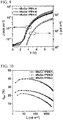
- Example 1 Example 2 and Example 3 which had the same 2,3-phenyl-substituted skeleton were compared, it was evident that the compounds of the present invention (Example 2 and Example 3) exhibited a relatively higher EQEmax, and were useful as light-emitting materials.
- the reaction mixture was then returned to room temperature, water and ethyl acetate were added, and the organic layer was separated.
- the water layer was extracted twice with ethyl acetate, and the combined organic layer was washed three times with water, and then twice with a saturated saline solution.
- the organic layer was dried over magnesium sulfate and filtered, and the filtrate was then concentrated to obtain a crude product.
- the crude product was purified by silica gel column chromatography (eluent: n-hexane/ethyl acetate) to obtain a crudely purified product. Acetone/n-hexane were then added to this crudely purified product, and the mixture was subjected to ultrasonic irradiation.
- the reaction mixture was then returned to room temperature, water and ethyl acetate were added, and the organic layer was separated.
- the water layer was extracted twice with ethyl acetate, and the combined organic layer was washed three times with water, and then twice with a saturated saline solution.
- the organic layer was dried over magnesium sulfate and filtered, and the filtrate was then concentrated to obtain a crude product.
- the crude product was purified by silica gel column chromatography (eluent: n-hexane/dichloromethane) to obtain a crudely purified product.
- the reaction mixture was then returned to room temperature, water and ethyl acetate were added, and the organic layer was separated.
- the water layer was extracted twice with ethyl acetate, and the combined organic layer was washed three times with water, and then twice with a saturated saline solution.
- the organic layer was dried over magnesium sulfate and filtered, and the filtrate was then concentrated to obtain a crude product.
- the crude product was purified by silica gel column chromatography (eluent: n-hexane/dichloromethane) to obtain a crudely purified product. Subsequently, n-hexane was added to this crudely purified product, and the mixture was subjected to ultrasonic irradiation.
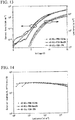
- Example 5 and Example 6 which had the same 1,4-phenyl-substituted skeleton were compared, it was evident that the compounds of the present invention (Example 5 and Example 6) exhibited a relatively higher EQEmax, and were useful as light-emitting materials.
- reaction mixture was stirred at 80°C for 10 hours.
- the reaction mixture was then returned to room temperature, water (20 mL) was added, and after 30 minutes had elapsed, the mixture was extracted into chloroform.
- reaction mixture was then returned to room temperature, water (20 mL) was added, and after 30 minutes had elapsed, the mixture was extracted into chloroform.
- Example 7 When Example 7 and Example 8 which had the same 4-phenyl-substituted skeleton were compared, it was evident that the compound of the present invention (Example 7) exhibited a relatively higher EQEmax, and was useful as a light-emitting material.
- the organic layer was dried over magnesium sulfate and filtered, and the filtrate was then concentrated to obtain a crude product.
- the crude product was purified by silica gel column chromatography (eluent: n-hexane/dichloromethane) to obtain a crudely purified product.
- This crudely purified product was then once again purified by silica gel column chromatography (eluent: n-hexane/toluene) to obtain 0.93 g of the target product (3PCz-2PBN-D) (yield: 56.7%).
- the organic layer was dried over magnesium sulfate and filtered, and the filtrate was then concentrated to obtain a crude product.
- the crude product was purified by silica gel column chromatography (eluent: n-hexane/dichloromethane, n-hexane/toluene) to obtain 1.73g of the target product (3BuCz-2PBN-D) (yield: 49.2%).
- reaction mixture was stirred at 80°C for 10 hours.
- the reaction mixture was then returned to room temperature, water (20 mL) was added, and after 30 minutes had elapsed, the mixture was extracted into chloroform.
- the target product (4BuCz-1PBN-A) was obtained using the same method as Example 7.
- the flask was degassed and flushed with argon, tricyclohexylphosphine (0.45 ml of a 20% toluene solution, 0.25 mmol) and palladium acetate (19.2 mg, 0.09 mmol) were then added, and the resulting mixture was stirred at 140°C for 16 hours.
- the reaction liquid was then returned to room temperature, ethyl acetate was added, and the insoluble matter was removed by filtration.
- the filtrate was washed with water, dried over magnesium sulfate, and then concentrated using a rotary evaporator.
- the flask was degassed and flushed with argon, tricyclohexylphosphine (0.72 ml of a 20% toluene solution, 0.41 mmol) and palladium acetate (31.0 mg, 0.14 mmol) were then added, and the resulting mixture was stirred at 140°C for 17.5 hours.
- the reaction liquid was then returned to room temperature, ethyl acetate was added, and the insoluble matter was removed by filtration.
- the filtrate was washed with water, dried over magnesium sulfate, and then concentrated using a rotary evaporator.
- the reaction liquid was then poured into ice water, and the precipitated crystals were collected by filtration.
- the crystals were then dissolved in ether, washed with water, dried over magnesium sulfate, and concentrated.
- the flask was degassed and flushed with argon, tricyclohexylphosphine (0.72 ml of a 20% toluene solution, 0.41 mmol) and palladium acetate (31.0 mg, 0.14 mmol) were then added, and the resulting mixture was stirred at 140°C for 17.5 hours.
- the reaction liquid was then returned to room temperature, ethyl acetate was added, and the insoluble matter was removed by filtration.
- the filtrate was washed with water, dried over magnesium sulfate, and then concentrated using a rotary evaporator.
- the flask was degassed and flushed with argon, tricyclohexylphosphine (0.72 ml of a 20% toluene solution, 0.41 mmol) and palladium acetate (31.0 mg, 0.14 mmol) were then added, and the resulting mixture was stirred at 140°C for 18 hours.
- the reaction liquid was then returned to room temperature, ethyl acetate was added, and the insoluble matter was removed by filtration.
- the filtrate was washed with water, dried over magnesium sulfate, and then concentrated using a rotary evaporator.
- the reaction liquid was then poured into ice water, and the precipitated crystals were collected by filtration.
- the crystals were then dissolved in ether, washed with water, dried over magnesium sulfate, and concentrated.
- the flask was degassed and flushed with argon, tricyclohexylphosphine (0.90 ml of a 20% toluene solution, 0.51 mmol) and palladium acetate (38.5 mg, 0.17 mmol) were then added, and the resulting mixture was stirred at 140°C for 18 hours.
- the reaction liquid was then returned to room temperature, ethyl acetate was added, and the insoluble matter was removed by filtration.
- the filtrate was washed with water, dried over magnesium sulfate, and then concentrated using a rotary evaporator.
- the reaction liquid was then cooled in an ice bath, cold water was added to the flask, and the precipitated solid was collected by filtration. This solid was dissolved in dichloromethane, dried over magnesium sulfate, and then concentrated. The residue was purified by silica gel column chromatography (n-hexane/benzene) to obtain a crudely purified product. Subsequently, n-hexane was added to this crudely purified product, the mixture was subjected to ultrasonic irradiation, the precipitated solid was collected by filtration, and the solvent was removed by distillation to obtain 1.24 g of a yellow solid of the target product (yield: 62.0%).
- the flask was then degassed and flushed with argon, tricyclohexylphosphine (0.45 ml of a 20% toluene solution, 0.25 mmol) and palladium acetate (19.2 mg, 0.09 mmol) were then added, and the resulting mixture was stirred at 140°C for 18 hours.
- the reaction liquid was then returned to room temperature, ethyl acetate was added, and the insoluble matter was removed by filtration.
- the filtrate was then washed with water, dried over magnesium sulfate and then concentrated using a rotary evaporator.
- the flask was then degassed and flushed with argon, tricyclohexylphosphine (1.04 ml of a 20% toluene solution, 0.59 mmol) and palladium acetate (44.0 mg, 0.18 mmol) were then added, and the resulting mixture was stirred at 140°C for 18 hours.
- the reaction liquid was then returned to room temperature, ethyl acetate was added, and the insoluble matter was removed by filtration.
- the filtrate was then washed with water, dried over magnesium sulfate and then concentrated using a rotary evaporator.
- the flask was then degassed and flushed with argon, tricyclohexylphosphine (0.72 ml of a 20% toluene solution, 0.41 mmol) and palladium acetate (31.0 mg, 0.14 mmol) were then added, and the resulting mixture was stirred at 140°C for 17 hours.
- the reaction liquid was then returned to room temperature, ethyl acetate was added, and the insoluble matter was removed by filtration.
- the filtrate was then washed with water, dried over magnesium sulfate and then concentrated using a rotary evaporator.
- the flask was then degassed and flushed with argon, tricyclohexylphosphine (0.90 ml of a 20% toluene solution, 0.50 mmol) and palladium acetate (38.52 mg, 0.18 mmol) were then added, and the resulting mixture was stirred at 140°C for 18 hours.
- the reaction liquid was then returned to room temperature, ethyl acetate was added, and the insoluble matter was removed by filtration.
- the filtrate was then washed with water, dried over magnesium sulfate and then concentrated using a rotary evaporator.
- the flask was degassed and flushed with nitrogen, tricyclohexylphosphine (1.6 ml of a 20% toluene solution, 0.95 mmol) and palladium acetate (72.6 mg, 0.32 mmol) were then added, and the resulting mixture was stirred at 140°C for 24 hours.
- the reaction liquid was then returned to room temperature, ethyl acetate was added, and the insoluble matter was removed by filtration using celite. The filtrate was washed with water, dried over magnesium sulfate, and then concentrated.
- the reaction liquid was then cooled in an ice bath, cold water was added to the flask, and the precipitated solid was collected by filtration. This solid was dissolved in dichloromethane, dried over magnesium sulfate, and then concentrated. The residue was purified by silica gel column chromatography (n-hexane/ethyl acetate) to obtain 0.81 g of crude crystals of the target product. Ethyl acetate was added to 3.28 g of the crude crystals prepared using the same method, the mixture was subjected to ultrasonic irradiation, the precipitated crystals were collected by filtration, and the solvent was removed by distillation to obtain 2.25 g of a light yellow-green solid of the target product (yield: 57.7%).
- reaction liquid was then cooled in an ice bath, cold water was added to the flask, and the precipitated solid was collected by filtration. This solid was dissolved in dichloromethane, dried over magnesium sulfate, and then concentrated. The residue was purified by silica gel column chromatography (n-hexane/benzene) to obtain 1.63 g of a crudely purified product of the target product.
- n-hexane/ethyl acetate was added to 3.33 g of the crudely purified product prepared using the same method, the mixture was subjected to ultrasonic irradiation, the precipitated crystals were collected by filtration, and the solvent was removed by distillation to obtain 2.37 g of the target product as a very light yellow white solid (yield: 74.1%).
- the reaction liquid was then cooled in an ice bath, cold water was added to the flask, and the precipitated solid was collected by filtration. This solid was dissolved in dichloromethane, dried over magnesium sulfate, and then concentrated. The residue was purified by silica gel column chromatography (n-hexane/benzene) to obtain 2.25 g of a crudely purified product of the target product. Subsequently, n-hexane was added to the crudely purified product, the mixture was subjected to ultrasonic irradiation, the precipitated crystals were collected by filtration, and the solvent was removed by distillation to obtain 1.52 g of a light yellow white solid of the target product (yield: 64.7%).
- the reaction liquid was then cooled in an ice bath, cold water was added to the flask, and the precipitated solid was collected by filtration. This solid was dissolved in dichloromethane, dried over magnesium sulfate, and then concentrated. The residue was purified by silica gel column chromatography (n-hexane/ethyl acetate) to obtain 0.76 g of a crudely purified product. Next, 1.44 g of the crudely purified product prepared using the same method was dissolved in ethyl acetate, and the solvent was removed by distillation to obtain 1.41 g of a light yellow-green-white solid of the target product (yield: 49.5%).
- reaction liquid was then cooled in an ice bath, cold water was added to the flask, and the precipitated solid was collected by filtration. This solid was dissolved in ethyl acetate, dried over magnesium sulfate, and then concentrated. The residue was purified by silica gel column chromatography (n-hexane/benzene) to obtain 0.80 g of a crudely purified product.
- n-hexane/ethyl acetate was added to 2.07 g of the crudely purified product prepared using the same method, the mixture was subjected to ultrasonic irradiation, the precipitated crystals were collected by filtration, and the solvent was removed by distillation to obtain 1.82 g of the target product as a light yellow white solid (yield: 64.7%).
- the flask was degassed and flushed with nitrogen, tricyclohexylphosphine (1.6 ml of a 20% toluene solution, 0.95 mmol) and palladium acetate (73.0 mg, 0.33 mmol) were then added, and the resulting mixture was stirred at 140°C for 21 hours.
- the reaction liquid was then returned to room temperature, ethyl acetate was added, and the insoluble matter was removed by filtration using celite. The filtrate was washed with water, dried over magnesium sulfate, and then concentrated.
- the reaction liquid was then cooled in an ice bath, cold water was added to the flask, and the precipitated solid was collected by filtration. This solid was dissolved in dichloromethane, dried over magnesium sulfate, and then concentrated. The residue was purified by silica gel column chromatography (n-hexane/dichloromethane) to obtain a crudely purified product. Subsequently, n-hexane/diethyl ether was added to the crudely purified product, the mixture was subjected to ultrasonic irradiation, the precipitated crystals were collected by filtration, and the solvent was removed by distillation to obtain 1.85 g of the target product as a light yellow solid (yield: 78.7%).
- the present invention is able to provide a 2,3,4,5,6-pentasubstituted benzonitrile compound having excellent light emission characteristics, a light-emitting material, and a light-emitting element using the same.
Landscapes
- Chemical & Material Sciences (AREA)
- Organic Chemistry (AREA)
- Engineering & Computer Science (AREA)
- Materials Engineering (AREA)
- Physics & Mathematics (AREA)
- Spectroscopy & Molecular Physics (AREA)
- Electroluminescent Light Sources (AREA)
- Plural Heterocyclic Compounds (AREA)
- Indole Compounds (AREA)
Applications Claiming Priority (3)
| Application Number | Priority Date | Filing Date | Title |
|---|---|---|---|
| JP2018165955 | 2018-09-05 | ||
| JP2019017156 | 2019-02-01 | ||
| PCT/JP2019/033913 WO2020050127A1 (ja) | 2018-09-05 | 2019-08-29 | ベンゾニトリル誘導体、発光材料およびそれを用いた発光素子 |
Publications (2)
| Publication Number | Publication Date |
|---|---|
| EP3848352A1 true EP3848352A1 (de) | 2021-07-14 |
| EP3848352A4 EP3848352A4 (de) | 2022-06-01 |
Family
ID=69723167
Family Applications (1)
| Application Number | Title | Priority Date | Filing Date |
|---|---|---|---|
| EP19857043.4A Pending EP3848352A4 (de) | 2018-09-05 | 2019-08-29 | Benzonitrilderivat, lichtemittierendes material und lichtemittierendes element damit |
Country Status (7)
| Country | Link |
|---|---|
| US (1) | US12122768B2 (de) |
| EP (1) | EP3848352A4 (de) |
| JP (1) | JP7184263B2 (de) |
| KR (1) | KR102533313B1 (de) |
| CN (1) | CN112638874A (de) |
| TW (1) | TWI719618B (de) |
| WO (1) | WO2020050127A1 (de) |
Families Citing this family (5)
| Publication number | Priority date | Publication date | Assignee | Title |
|---|---|---|---|---|
| CN110914378A (zh) * | 2017-06-23 | 2020-03-24 | 九州有机光材股份有限公司 | 用于有机发光二极管中的组合物 |
| CN112409240A (zh) * | 2020-11-20 | 2021-02-26 | 清华大学 | 一种有机化合物及其应用及采用该化合物的有机电致发光器 |
| CN112409241B (zh) * | 2020-11-27 | 2023-04-25 | 清华大学 | 一种有机化合物及其应用及采用该化合物的有机电致发光器 |
| CN114685353B (zh) * | 2020-12-28 | 2025-04-08 | 北京鼎材科技有限公司 | 用于有机发光器件的有机化合物、有机电致发光器件 |
| CN115745869B (zh) * | 2022-10-28 | 2025-05-13 | 清华大学 | 一种有机化合物及采用该化合物的有机电致发光器 |
Family Cites Families (24)
| Publication number | Priority date | Publication date | Assignee | Title |
|---|---|---|---|---|
| JP5624270B2 (ja) * | 2007-09-18 | 2014-11-12 | ユー・ディー・シー アイルランド リミテッド | 有機電界発光素子 |
| JP2014135466A (ja) * | 2012-04-09 | 2014-07-24 | Kyushu Univ | 有機発光素子ならびにそれに用いる発光材料および化合物 |
| JP2016526025A (ja) * | 2013-05-09 | 2016-09-01 | 日東電工株式会社 | 発光装置用の発光性化合物 |
| WO2015066354A1 (en) | 2013-10-30 | 2015-05-07 | Nitto Denko Corporation | Light-emitting compounds for light-emitting devices |
| TWI637944B (zh) * | 2013-11-28 | 2018-10-11 | 九州有機光材股份有限公司 | 發光材料、有機發光元件及化合物 |
| WO2016138077A1 (en) | 2015-02-24 | 2016-09-01 | Nitto Denko Corporation | Gas sensor element |
| WO2016152605A1 (ja) * | 2015-03-23 | 2016-09-29 | 保土谷化学工業株式会社 | 有機エレクトロルミネッセンス素子用材料、発光材料および有機エレクトロルミネッセンス素子 |
| CN106328816B (zh) * | 2015-06-16 | 2018-11-13 | 昆山国显光电有限公司 | 一种有机电致发光器件及其制备方法 |
| CN106316924B (zh) * | 2015-06-16 | 2020-01-24 | 清华大学 | 一种热活化延迟荧光材料 |
| JP6668152B2 (ja) * | 2015-12-28 | 2020-03-18 | 株式会社Kyulux | 化合物、発光材料および有機発光素子 |
| WO2017115834A1 (ja) * | 2015-12-28 | 2017-07-06 | 株式会社Kyulux | 化合物、発光材料および有機発光素子 |
| JP6829547B2 (ja) | 2015-12-28 | 2021-02-10 | 株式会社Kyulux | 化合物、発光材料および有機発光素子 |
| CN110225906A (zh) * | 2016-09-09 | 2019-09-10 | 东洋纺株式会社 | 有机发光元件、用于该有机发光元件的发光材料及化合物 |
| EP4492949A3 (de) * | 2017-02-24 | 2025-10-15 | Kyulux, Inc. | Verbindung, lichtemittierendes material und lichtemittierendes element |
| JP6858614B2 (ja) | 2017-03-28 | 2021-04-14 | 大阪瓦斯株式会社 | 火災警報器 |
| CN110914378A (zh) * | 2017-06-23 | 2020-03-24 | 九州有机光材股份有限公司 | 用于有机发光二极管中的组合物 |
| JP2019017156A (ja) | 2017-07-05 | 2019-01-31 | Solネットワーク株式会社 | 太陽電池パネル配置 |
| US11069860B2 (en) * | 2017-08-21 | 2021-07-20 | Kyulux, Inc. | Composition of matter for use in organic light-emitting diodes |
| CN109422674B (zh) * | 2017-08-25 | 2024-03-22 | 三星显示有限公司 | 有机分子,特别是用于光电子器件的有机分子 |
| CN109994628B (zh) * | 2017-12-29 | 2021-05-04 | 昆山国显光电有限公司 | 有机电致发光器件及有机电致发光器件的制备方法 |
| US11104669B2 (en) * | 2018-02-02 | 2021-08-31 | Kyulux, Inc. | Composition of matter for use in organic light-emitting diodes |
| JP7325731B2 (ja) * | 2018-08-23 | 2023-08-15 | 国立大学法人九州大学 | 有機エレクトロルミネッセンス素子 |
| WO2020050217A1 (ja) * | 2018-09-07 | 2020-03-12 | 出光興産株式会社 | 化合物、有機エレクトロルミネッセンス素子用材料、有機エレクトロルミネッセンス素子、及び、電子機器 |
| WO2020250851A1 (ja) * | 2019-06-14 | 2020-12-17 | 国立大学法人九州大学 | イソフタロニトリル化合物、発光材料およびそれを用いた発光素子 |
-
2019
- 2019-08-29 KR KR1020217005954A patent/KR102533313B1/ko active Active
- 2019-08-29 JP JP2020541162A patent/JP7184263B2/ja active Active
- 2019-08-29 WO PCT/JP2019/033913 patent/WO2020050127A1/ja not_active Ceased
- 2019-08-29 CN CN201980057047.2A patent/CN112638874A/zh active Pending
- 2019-08-29 EP EP19857043.4A patent/EP3848352A4/de active Pending
- 2019-08-29 US US17/272,550 patent/US12122768B2/en active Active
- 2019-09-03 TW TW108131600A patent/TWI719618B/zh active
Also Published As
| Publication number | Publication date |
|---|---|
| JPWO2020050127A1 (ja) | 2021-08-26 |
| KR20210039418A (ko) | 2021-04-09 |
| US20210332032A1 (en) | 2021-10-28 |
| WO2020050127A1 (ja) | 2020-03-12 |
| TWI719618B (zh) | 2021-02-21 |
| CN112638874A (zh) | 2021-04-09 |
| JP7184263B2 (ja) | 2022-12-06 |
| KR102533313B1 (ko) | 2023-05-16 |
| US12122768B2 (en) | 2024-10-22 |
| TW202033502A (zh) | 2020-09-16 |
| EP3848352A4 (de) | 2022-06-01 |
Similar Documents
| Publication | Publication Date | Title |
|---|---|---|
| JP6994724B2 (ja) | ジシアノピラジン化合物、発光材料、およびそれを用いた発光素子 | |
| EP3848352A1 (de) | Benzonitrilderivat, lichtemittierendes material und lichtemittierendes element damit | |
| JP6760616B2 (ja) | ジシアノn−ヘテロ環化合物、発光材料およびそれを用いた発光素子 | |
| JP7672656B2 (ja) | ホウ素含有化合物、発光材料およびそれを用いた発光素子 | |
| KR102671951B1 (ko) | 이소프탈로니트릴 화합물, 발광 재료 및 그것을 사용한 발광 소자 | |
| JP6948644B2 (ja) | ジシアノペンタヘリセン化合物、発光材料およびそれを用いた発光素子 |
Legal Events
| Date | Code | Title | Description |
|---|---|---|---|
| STAA | Information on the status of an ep patent application or granted ep patent |
Free format text: STATUS: THE INTERNATIONAL PUBLICATION HAS BEEN MADE |
|
| PUAI | Public reference made under article 153(3) epc to a published international application that has entered the european phase |
Free format text: ORIGINAL CODE: 0009012 |
|
| STAA | Information on the status of an ep patent application or granted ep patent |
Free format text: STATUS: REQUEST FOR EXAMINATION WAS MADE |
|
| 17P | Request for examination filed |
Effective date: 20210226 |
|
| AK | Designated contracting states |
Kind code of ref document: A1 Designated state(s): AL AT BE BG CH CY CZ DE DK EE ES FI FR GB GR HR HU IE IS IT LI LT LU LV MC MK MT NL NO PL PT RO RS SE SI SK SM TR |
|
| DAV | Request for validation of the european patent (deleted) | ||
| DAX | Request for extension of the european patent (deleted) | ||
| A4 | Supplementary search report drawn up and despatched |
Effective date: 20220503 |
|
| RIC1 | Information provided on ipc code assigned before grant |
Ipc: H01L 51/50 20060101ALI20220427BHEP Ipc: C09K 11/06 20060101ALI20220427BHEP Ipc: C07D 403/14 20060101ALI20220427BHEP Ipc: C07D 401/14 20060101ALI20220427BHEP Ipc: C07D 209/82 20060101ALI20220427BHEP Ipc: C07D 209/86 20060101AFI20220427BHEP |
|
| STAA | Information on the status of an ep patent application or granted ep patent |
Free format text: STATUS: EXAMINATION IS IN PROGRESS |
|
| 17Q | First examination report despatched |
Effective date: 20230911 |
|
| RAP3 | Party data changed (applicant data changed or rights of an application transferred) |
Owner name: NIPPON SODA CO., LTD. Owner name: KYUSHU UNIVERSITY, NATIONAL UNIVERSITY CORPORATION |
|
| RIC1 | Information provided on ipc code assigned before grant |
Ipc: C07D 209/86 20060101AFI20251220BHEP Ipc: C07D 209/82 20060101ALI20251220BHEP Ipc: C09K 11/06 20060101ALI20251220BHEP Ipc: C07D 403/14 20060101ALI20251220BHEP Ipc: C07D 401/14 20060101ALI20251220BHEP |
|
| GRAP | Despatch of communication of intention to grant a patent |
Free format text: ORIGINAL CODE: EPIDOSNIGR1 |
|
| STAA | Information on the status of an ep patent application or granted ep patent |
Free format text: STATUS: GRANT OF PATENT IS INTENDED |
|
| INTG | Intention to grant announced |
Effective date: 20260218 |