EP3848809A1 - Procédé et site de reprise de données après sinistre - Google Patents
Procédé et site de reprise de données après sinistre Download PDFInfo
- Publication number
- EP3848809A1 EP3848809A1 EP19865699.3A EP19865699A EP3848809A1 EP 3848809 A1 EP3848809 A1 EP 3848809A1 EP 19865699 A EP19865699 A EP 19865699A EP 3848809 A1 EP3848809 A1 EP 3848809A1
- Authority
- EP
- European Patent Office
- Prior art keywords
- disaster recovery
- site
- cbt
- snapshots
- recovery site
- Prior art date
- Legal status (The legal status is an assumption and is not a legal conclusion. Google has not performed a legal analysis and makes no representation as to the accuracy of the status listed.)
- Pending
Links
Images


Classifications
-
- G—PHYSICS
- G06—COMPUTING OR CALCULATING; COUNTING
- G06F—ELECTRIC DIGITAL DATA PROCESSING
- G06F11/00—Error detection; Error correction; Monitoring
- G06F11/07—Responding to the occurrence of a fault, e.g. fault tolerance
- G06F11/14—Error detection or correction of the data by redundancy in operations
- G06F11/1446—Point-in-time backing up or restoration of persistent data
-
- G—PHYSICS
- G06—COMPUTING OR CALCULATING; COUNTING
- G06F—ELECTRIC DIGITAL DATA PROCESSING
- G06F11/00—Error detection; Error correction; Monitoring
- G06F11/07—Responding to the occurrence of a fault, e.g. fault tolerance
- G06F11/14—Error detection or correction of the data by redundancy in operations
- G06F11/1446—Point-in-time backing up or restoration of persistent data
- G06F11/1458—Management of the backup or restore process
- G06F11/1469—Backup restoration techniques
-
- G—PHYSICS
- G06—COMPUTING OR CALCULATING; COUNTING
- G06F—ELECTRIC DIGITAL DATA PROCESSING
- G06F11/00—Error detection; Error correction; Monitoring
- G06F11/07—Responding to the occurrence of a fault, e.g. fault tolerance
- G06F11/16—Error detection or correction of the data by redundancy in hardware
- G06F11/20—Error detection or correction of the data by redundancy in hardware using active fault-masking, e.g. by switching out faulty elements or by switching in spare elements
- G06F11/202—Error detection or correction of the data by redundancy in hardware using active fault-masking, e.g. by switching out faulty elements or by switching in spare elements where processing functionality is redundant
- G06F11/2048—Error detection or correction of the data by redundancy in hardware using active fault-masking, e.g. by switching out faulty elements or by switching in spare elements where processing functionality is redundant where the redundant components share neither address space nor persistent storage
-
- G—PHYSICS
- G06—COMPUTING OR CALCULATING; COUNTING
- G06F—ELECTRIC DIGITAL DATA PROCESSING
- G06F11/00—Error detection; Error correction; Monitoring
- G06F11/07—Responding to the occurrence of a fault, e.g. fault tolerance
- G06F11/14—Error detection or correction of the data by redundancy in operations
- G06F11/1446—Point-in-time backing up or restoration of persistent data
- G06F11/1448—Management of the data involved in backup or backup restore
- G06F11/1451—Management of the data involved in backup or backup restore by selection of backup contents
-
- G—PHYSICS
- G06—COMPUTING OR CALCULATING; COUNTING
- G06F—ELECTRIC DIGITAL DATA PROCESSING
- G06F11/00—Error detection; Error correction; Monitoring
- G06F11/07—Responding to the occurrence of a fault, e.g. fault tolerance
- G06F11/14—Error detection or correction of the data by redundancy in operations
- G06F11/1446—Point-in-time backing up or restoration of persistent data
- G06F11/1458—Management of the backup or restore process
- G06F11/1464—Management of the backup or restore process for networked environments
-
- G—PHYSICS
- G06—COMPUTING OR CALCULATING; COUNTING
- G06F—ELECTRIC DIGITAL DATA PROCESSING
- G06F11/00—Error detection; Error correction; Monitoring
- G06F11/07—Responding to the occurrence of a fault, e.g. fault tolerance
- G06F11/14—Error detection or correction of the data by redundancy in operations
- G06F11/1479—Generic software techniques for error detection or fault masking
- G06F11/1482—Generic software techniques for error detection or fault masking using middleware or operating system [OS] functionalities
- G06F11/1484—Generic software techniques for error detection or fault masking using middleware or operating system [OS] functionalities involving virtual machines
-
- G—PHYSICS
- G06—COMPUTING OR CALCULATING; COUNTING
- G06F—ELECTRIC DIGITAL DATA PROCESSING
- G06F11/00—Error detection; Error correction; Monitoring
- G06F11/07—Responding to the occurrence of a fault, e.g. fault tolerance
- G06F11/16—Error detection or correction of the data by redundancy in hardware
- G06F11/1658—Data re-synchronization of a redundant component, or initial sync of replacement, additional or spare unit
- G06F11/1662—Data re-synchronization of a redundant component, or initial sync of replacement, additional or spare unit the resynchronized component or unit being a persistent storage device
-
- G—PHYSICS
- G06—COMPUTING OR CALCULATING; COUNTING
- G06F—ELECTRIC DIGITAL DATA PROCESSING
- G06F11/00—Error detection; Error correction; Monitoring
- G06F11/07—Responding to the occurrence of a fault, e.g. fault tolerance
- G06F11/16—Error detection or correction of the data by redundancy in hardware
- G06F11/20—Error detection or correction of the data by redundancy in hardware using active fault-masking, e.g. by switching out faulty elements or by switching in spare elements
- G06F11/202—Error detection or correction of the data by redundancy in hardware using active fault-masking, e.g. by switching out faulty elements or by switching in spare elements where processing functionality is redundant
- G06F11/2023—Failover techniques
-
- G—PHYSICS
- G06—COMPUTING OR CALCULATING; COUNTING
- G06F—ELECTRIC DIGITAL DATA PROCESSING
- G06F11/00—Error detection; Error correction; Monitoring
- G06F11/07—Responding to the occurrence of a fault, e.g. fault tolerance
- G06F11/16—Error detection or correction of the data by redundancy in hardware
- G06F11/20—Error detection or correction of the data by redundancy in hardware using active fault-masking, e.g. by switching out faulty elements or by switching in spare elements
- G06F11/202—Error detection or correction of the data by redundancy in hardware using active fault-masking, e.g. by switching out faulty elements or by switching in spare elements where processing functionality is redundant
- G06F11/2038—Error detection or correction of the data by redundancy in hardware using active fault-masking, e.g. by switching out faulty elements or by switching in spare elements where processing functionality is redundant with a single idle spare processing component
-
- G—PHYSICS
- G06—COMPUTING OR CALCULATING; COUNTING
- G06F—ELECTRIC DIGITAL DATA PROCESSING
- G06F11/00—Error detection; Error correction; Monitoring
- G06F11/07—Responding to the occurrence of a fault, e.g. fault tolerance
- G06F11/16—Error detection or correction of the data by redundancy in hardware
- G06F11/20—Error detection or correction of the data by redundancy in hardware using active fault-masking, e.g. by switching out faulty elements or by switching in spare elements
- G06F11/2097—Error detection or correction of the data by redundancy in hardware using active fault-masking, e.g. by switching out faulty elements or by switching in spare elements maintaining the standby controller/processing unit updated
-
- G—PHYSICS
- G06—COMPUTING OR CALCULATING; COUNTING
- G06F—ELECTRIC DIGITAL DATA PROCESSING
- G06F2201/00—Indexing scheme relating to error detection, to error correction, and to monitoring
- G06F2201/84—Using snapshots, i.e. a logical point-in-time copy of the data
Definitions
- This application relates to the field of information processing, and in particular, to a data disaster recovery method and a site.
- Data disaster recovery is one of hot topics in construction of an information data center.
- a production site needs to send a data backup to a disaster recovery site when the production site runs normally.
- the disaster recovery site can take over a service of the production site when the production site is faulty.
- data is synchronized from the disaster recovery site to the production site to restore the service.
- a full data synchronization solution is usually used for data synchronization from the disaster recovery site to the production site.
- full data synchronization causes transmission of a large amount of data between the disaster recovery site and the production site. This occupies a relatively large amount of bandwidth and affects a recovery time objective (recovery time object, RTO).
- This application provides a data disaster recovery method and a site, to reduce an amount of data to be synchronized from a disaster recovery site to a production site in a disaster recovery process.
- a data disaster recovery method includes a production site and a disaster recovery site, and the method includes: selecting, by the disaster recovery site, a first backup copy when taking over a service of the production site; receiving, by the disaster recovery site, service data through a virtual machine; obtaining, by the disaster recovery site, changed block tracking CBT information based on a CBT technology and the received service data, where the CBT information includes incremental information generated after the disaster recovery site receives the first backup copy; and sending, by the disaster recovery site, a first message to the production site, where the first message includes the CBT information.
- a storage server in the disaster recovery site and a storage server in the production site are heterogeneous devices.
- the disaster recovery site During a disaster recovery process, the disaster recovery site generates the incremental information generated since the disaster recovery site takes over the service of the production site based on the CBT technology. Compared with a full backup manner, this method can decrease a data amount, reduce occupied transmission bandwidth, reduce an RTO, and improve user experience.
- the disaster recovery site may include a plurality of servers.
- the plurality of servers include the storage server of the disaster recovery site, a backup server, a server of another type, and the like.
- the production site may include a production host, a backup server, and the storage server. This is not specifically limited in this application.
- the disaster recovery site may take over the service of the production site when the entire production site is faulty, or may take over the service of the production site when the host of the production site is faulty. This is not specifically limited in this embodiment of this application.
- the obtaining, by the disaster recovery site, CBT information based on a changed block tracking CBT technology and the received service data includes: generating, by the disaster recovery site, N snapshots, where N is greater than or equal to 2; and obtaining, by the disaster recovery site, difference information between each of the N snapshots and a previous snapshot of each of the N snapshots, where the CBT information includes the difference information.
- the snapshot is generated quickly and occupies small space.
- a snapshot-based CBT technology can improve a backup speed and further reduce the RTO.
- the CBT information includes CBT corresponding to each of the N snapshots
- the N th snapshot corresponds to N th CBT
- the N th CBT includes difference information between each of the first N-1 snapshots and a previous snapshot of each of the first N-1 snapshots.
- a corresponding CBT format in the foregoing technical solution can increase a proportion of a useful data block in CBT, and further reduce an amount of data to be synchronized from the disaster recovery site to the production site.
- the method further includes: deleting, by the disaster recovery site, the first N-1 snapshots, and retaining the N th snapshot.
- the disaster recovery site after completing backup, delete the snapshots, to save specific storage space and optimize service performance of the disaster recovery site.
- the last retained snapshot can be directly used as a basis for subsequent backup. This reduces time for generating a snapshot.
- a data disaster recovery method including: sending, by a production site, a first backup copy to a disaster recovery site, so that the disaster recovery site takes over a service of the production site; receiving, by the production site, a first message sent by the disaster recovery site, where the first message includes CBT information, and the CBT information includes incremental information generated since the disaster recovery site takes over the service of the production site; and recovering, by the production site, the service based on the first backup copy and the CBT information.
- the production site generates a plurality of backup copies, and stores the plurality of backup copies in a local storage server.
- the plurality of backup copies are stored in the local server, and the plurality of backup copies are sent to the disaster recovery site, so that the disaster recovery site and the production site have a same backup data link. This facilitates incremental backup. A disaster recovery process can be completed when the production host in the production site is faulty.
- the CBT information includes N CBT, where N is greater than or equal to 2, and the method further includes: determining, by the production site, a difference between the CBT; and recovering, by the production site, the service based on the first backup copy and the difference between the CBT.
- the production site can quickly restore the service based on a difference between different CBT.
- a disaster recovery site including: a selection module, configured to select a first backup copy when taking over a service of a production site; a receiving module, configured to receive service data through a virtual machine; an obtaining module, configured to obtain changed block tracking CBT information based on a CBT technology and the received service data, where the CBT information includes incremental information generated after the disaster recovery site receives the first backup copy; and a sending module, configured to send a first message to the production site, where the first message includes the CBT information.
- a storage server in the disaster recovery site and a storage server in the production site are heterogeneous devices.
- the disaster recovery site further includes a generation module, configured to generate N snapshots, where N is greater than or equal to 2; and the obtaining module is configured to obtain difference information between each of the N snapshots and a previous snapshot of each of the N snapshots, where the CBT information includes the difference information.
- the CBT information includes CBT corresponding to each of the N snapshots
- the N th snapshot corresponds to N th CBT
- the N th CBT includes difference information between each of the first N-1 snapshots and a previous snapshot of each of the first N-1 snapshots.
- the obtaining module is further configured to delete the first N-1 snapshots and retain the N th snapshot.
- a production site including: a sending module, configured to send a first backup copy to a disaster recovery site, so that the disaster recovery site takes over a service of the production site; a receiving module, configured to receive a first message sent by the disaster recovery site, where the first message includes CBT information, and the CBT information includes incremental information generated since the disaster recovery site takes over the service of the production site; and a recovery module, configured to restore the service based on the first backup copy and the CBT information.
- the CBT information includes N CBT, N is greater than or equal to 1.
- the production site further includes an obtaining module, and the obtaining module is further configured to obtain a difference between the CBT.
- the recovery module is further configured to restore the service based on the first backup copy and the difference between CBT backups.
- a computer-readable medium is provided and is configured to store a computer program.
- the computer program includes an instruction for performing the method according to any possible implementation of any one of the foregoing aspects.
- a chip is provided.
- the chip stores an instruction, and when the instruction is run on a computer device, the communications chip is enabled to perform the method according to any possible implementation of any one of the foregoing aspects.
- Data disaster recovery is one of hot topics in construction of an information data center.
- a production site needs to send a data backup to a disaster recovery site when the production site runs normally. In this way, the disaster recovery site can take over a service of the production site when the production site is faulty.
- a storage server in the production site and a storage server in the disaster recovery site are from a same vendor. Therefore, an array-based replication technology may be used to synchronize incremental data generated since the disaster recovery site takes over the service of the production site.
- an array-based replication technology may be used to synchronize incremental data generated since the disaster recovery site takes over the service of the production site.
- a small amount of data is to be transmitted, a small amount of transmission bandwidth is occupied, and a corresponding RTO is relatively short.
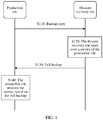
- FIG. 1 is a schematic diagram of a data disaster recovery method in a heterogeneous scenario according to an embodiment of this application.
- a data disaster recovery method in which a disaster recovery site synchronizes full data to a production site in a heterogeneous scenario is described by using an example in which the production site is a user IDC, and the disaster recovery site is a site including a plurality of servers.
- the production site may include a production host, a backup server, a storage server, and the like.
- the production host is configured to process a service of the production site.
- the storage server is configured to provide a storage service for the production site.
- Backup software is installed on the backup server, and the backup server is configured to back up data of the production host and synchronize the data to the disaster recovery site.
- the backup server reads data from the storage server and sends the data to the disaster recovery site.
- the plurality of servers constituting the disaster recovery site may be logically divided into a first set and a second set.
- the first set is used to provide a computing resource
- the second set is used to provide a storage resource.
- the storage server in the production site and a storage server in the disaster recovery site are heterogeneous.
- step S110 the production site sends a backup copy to the disaster recovery site when the production site runs normally, and the disaster recovery site stores the backup copy in the storage server.
- the production host in the production site processes a user-related service.
- the backup server further needs to back up the data of the production host, and send the backup data to the disaster recovery site.
- the disaster recovery site stores the backup copy in a storage server in the second set used to provide the storage resource.
- step S120 when the production site is faulty, the disaster recovery site resumes a virtual machine based on the backup copy received in step S110, and takes over the service of the production site through the recovered virtual machine.
- step 130 when a fault of the production site is rectified, the disaster recovery site sends a data backup to the production site, where the data backup is a full backup, and the full backup not only includes data newly generated after the disaster recovery site takes over the service of the production site, but also includes the original data of the production site.
- the production site performs disaster recovery based on the received full backup.
- the storage server in the production site and the storage device in the disaster recovery site are heterogeneous. Therefore, the disaster recovery site needs to send the full backup to the production host in the production site, so that the production host can resume production based on the full backup.
- full data transmission increases an amount of data to be synchronized to the production site, and increases occupied transmission bandwidth and an RTO.
- an embodiment of this application provides a data disaster recovery method in a heterogeneous scenario.
- a disaster recovery site transmits, in a disaster recovery process, full data to a production site in a heterogeneous scenario to restore a service of the production site
- incremental data is transmitted. This reduces an amount of data to be synchronized from the disaster recovery site to the production site in the disaster recovery process, reduces occupied transmission bandwidth, and reduces an RTO.
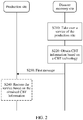
- FIG. 2 is a schematic flowchart of a data disaster recovery method according to an embodiment of this application.
- a disaster recovery site takes over a service of a production site.
- the disaster recovery site and production site each may be a site including a plurality of servers.
- the disaster recovery site includes a plurality of servers, and the production site is a user IDC.
- the disaster recovery site may be a user IDC, and the production site may be a server of an enterprise. This is not specifically limited in this embodiment of this application.
- the disaster recovery site selects a first backup copy when taking over the service of the production site.
- the first backup copy may be any backup copy sent to the disaster recovery site before the production site is faulty.
- the first backup copy may be a last backup copy generated by the production site before the production site is faulty.
- the first backup copy may be generated by the production site through backup software, and stored in a storage server in the production site.
- the production site may send the first backup copy to the disaster recovery site, so that the disaster recovery site and the production site have a same backup data link. This facilitates incremental backup in a disaster recovery process.
- the disaster recovery site may resume an operation of a virtual machine based on the first backup copy, and take over the service of the production site through the virtual machine, so that the service of the production site is not affected when the production site is faulty.
- the disaster recovery site may sense whether the production site is faulty.
- a production host in the production site is faulty
- another server of the production site notifies the disaster recovery site that the production site is faulty.
- a third-party site notifies the disaster recovery site when detecting that the production site is faulty or requires scheduled switchover.
- the disaster recovery site may directly perform a disaster recovery operation when detecting that the production site is faulty. This is not specifically limited in this embodiment of this application.
- step S220 the disaster recovery site obtains CBT information based on a CBT technology and received service data, where the CBT information includes incremental information generated after the disaster recovery site receives the first backup copy.
- the disaster recovery site When resuming the operation of the virtual machine based on the first backup copy, the disaster recovery site takes over the service of the production site through the virtual machine, and generates new service data, namely, the incremental information.
- the incremental information may also be understood as incremental information relative to the first backup copy.
- the disaster recovery site may obtain the CBT information based on the CBT technology, and the CBT information includes the incremental information generated since the disaster recovery site takes over the service. In other words, the disaster recovery site implements incremental backup based on the CBT technology.
- the disaster recovery site obtains the CBT information based on the CBT technology includes: generating, by the disaster recovery site, N snapshots (snapshot), where N is greater than or equal to 2; obtaining, by the disaster recovery site, difference information between each of the N snapshots and a previous snapshot of each of the N snapshots, or difference information between two versions at different times of the production site; and storing the difference information in the CBT information.
- the snapshot (also referred to as a storage snapshot) is an image of data at a time point. By comparing snapshots, a change of data may be obtained at a time point relative to another time point. Whether a data block is changed within a time period is determined through snapshot comparison based on the CBT technology, and the changed data block is marked or recorded.
- a frequency and a time point at which the disaster recovery site generates a snapshot are not specifically limited in this embodiment of this application.
- a first snapshot may be generated before the disaster recovery site resumes the operation of the virtual machine based on the first backup copy and the disaster recovery site takes over the service of the production site through the virtual machine.
- the first snapshot is generated at a time point before new data is generated relative to a version corresponding to the first backup copy.
- a snapshot may be generated at a fixed frequency.
- a user may decide to back up the disaster recovery site, and make the disaster recovery site generate a snapshot based on a user requirement.
- the snapshot may be a split mirror (split mirror) snapshot, a copy-on-write (copy-on-write) snapshot, a redirect-on-write (redirect-on-write) snapshot, or the like.
- the CBT information generated based on the snapshot based on the CBT technology may further be in a plurality of formats.
- the CBT information may include CBT corresponding to each of the N snapshots, and the N th snapshot corresponds to N th CBT.
- the N th CBT includes difference information between each of the first N-1 snapshots and the first N-1 snapshots.
- the CBT information may include CBT corresponding to each of the N snapshots, and the N th snapshot corresponds to N th CBT.
- the N th CBT includes difference information between the N th snapshot and an (N-1) th snapshot. This is not specifically limited in this embodiment of this application.
- CBT information In a structure of the CBT information, newly added information of current CBT is recorded based on previous CBT. This reduces used CBT block resources, increases a proportion of useful information in the CBT information, and reduces occupied bandwidth resources and storage resources.
- the disaster recovery site may delete the first N-1 snapshots and retain the N th snapshot.
- the production site and the disaster recovery site delete the snapshots, to save specific storage space and optimize service performance of the disaster recovery site.
- the last retained snapshot can be directly used as a basis for subsequent backup. This reduces time for generating a snapshot.
- step S230 the disaster recovery site sends a first message to the production site, where the first message includes the CBT information.
- the production site may restore the service based on the existing first backup copy and the CBT information in the received first message.
- the CBT information is the incremental information generated after the service is transferred to the disaster recovery site.
- the production site may restore the service based on the first backup copy and the CBT information.
- the production site may recover, based on the backup obtained before the fault and the incremental data generated after the disaster recovery site takes over the service, the service after the fault.
- FIG. 3 is a schematic flowchart of synchronizing incremental data from a disaster recovery site to a production site in a heterogeneous scenario.
- the disaster recovery site and the production site in FIG. 3 constitute a heterogeneous system.
- the production site in FIG. 3 is a user IDC, and the disaster recovery site includes a plurality of servers.
- the production site may include: a production host, configured to process a user-related service, a storage server, configured to provide a storage service for the production site, and a backup server, where backup software is installed on the backup server, and the backup server is configured to back up data of the production host.
- the backup server reads data from the storage server and sends the data to the disaster recovery site.
- the plurality of servers include a first set and a second set. The first set is used to provide a computing resource, and the second set is used to provide a storage resource.
- a storage device in the disaster recovery site and a storage device in the production site are heterogeneous devices.
- the server in this embodiment of this application may be a server having an independent physical structure, or may be a software-based instance on the server. This is not specifically limited in this embodiment of this application.
- step S310 the production site synchronizes a backup copy to the disaster recovery site.
- the production site synchronizes the backup copy in the storage server to the disaster recovery site, and the disaster recovery site may store the received backup copy in any storage server in the second set.
- the storage server may be a cloud object storage service (object storage service, OBS).
- the backup copy may be a backup copy generated by the production site in a normal running status.
- the production site may store the backup copy in the storage server of the production site.
- step 320 the production site sends a first request message to the disaster recovery site, to request the disaster recovery site to perform a disaster recovery switchover operation.
- the production host of the production site when the production host of the production site is faulty, another server of the production site sends the first request message to the disaster recovery site, to request the disaster recovery site to perform the disaster recovery operation.
- a third-party site when the entire production site is faulty, a third-party site notifies the disaster recovery site when detecting that the production site is faulty or requires scheduled switchover.
- the disaster recovery site may directly perform the disaster recovery operation when detecting that the production site is faulty. This is not specifically limited in this embodiment of this application.
- step 330 the disaster recovery site selects a first backup copy when taking over a service of the production site.
- the first backup copy may be any one of backup copies related to the production site and the disaster recovery site, and different versions may be recovered based on different backup copies.
- the disaster recovery site generates a virtual machine based on any one of the plurality of servers of the disaster recovery site.
- the virtual machine may be a virtual machine generated based on a cloud server.
- the disaster recovery site takes over a service related to the production site through the virtual machine.
- the disaster recovery site may run based on the first backup copy to take over the service related to the production site through the virtual machine.
- the disaster recovery site may generate a snapshot for the first time, that is, print the snapshot for the disaster recovery site for the first time.
- the snapshot generated at this time is referred to as a zero th snapshot.
- the disaster recovery site may generate snapshots, that is, generate a plurality of snapshots corresponding to different time. Content related to the snapshot has been described above, and details are not described herein again.
- the production site sends a second request message to the disaster recovery site.
- the second request message is used to notify the disaster recovery site that a fault of the production site is rectified, and request the disaster recovery site to perform a disaster recovery failback operation.
- the second request message may be sent by the production site after the fault of the production site is rectified, or may be sent by another third-party site after the another third-party site detects that the fault of the production site is rectified.
- the disaster recovery site obtains CBT information based on a CBT technology.
- the CBT message is incremental information. Specifically, the disaster recovery site compares snapshots printed for N times after step 330 to obtain the CBT information.
- the disaster recovery site prints snapshots for four times in total.
- the snapshots printed for four times are respectively referred to as the zero th snapshot to a third snapshot, where the zero th snapshot is a snapshot printed for the first time, and corresponds to the first backup copy.
- a first snapshot is a snapshot printed for the second time, and this method is also applied to a second snapshot and the third snapshot. Details are not described herein.
- First CBT may be obtained by comparing the zero th snapshot with the first snapshot.
- FIG. 4 shows a structure of CBT information.
- a block 410 indicates a data block that changes during generation of the first snapshot relative to generation of the zero th snapshot.
- "1" on the block 410 indicates an identifier of a backup copy corresponding to the first CBT.
- the backup copy herein may also be understood as a backup copy corresponding to the first snapshot.
- "1" may indicate a version number corresponding to a version based on which the disaster recovery site runs when generating the first snapshot.
- the block 410 may further include a recording unit, configured to record the identifier of the backup copy corresponding to the first CBT.
- a size of the recording unit is not specifically limited in this embodiment of this application. In an example, the recording unit may occupy four bytes or the like.
- a block 440 indicates a data block that does not change.
- the disaster recovery site may delete the snapshot, to save memory space.
- the last snapshot may be retained, for example, the third snapshot in this embodiment of this application. This is not specifically limited in this embodiment of this application.
- second CBT and third CBT are also obtained via a similar method.
- a block 420 records a data block that changes during generation of the second snapshot relative to generation of the first snapshot.
- the second CBT records the data block that changes during generation of the second snapshot relative to generation of the first snapshot.
- a block 430 in the third CBT records a data block that changes during generation of the third snapshot relative to generation of the first snapshot.
- the third CBT records the data block that changes during generation of the third snapshot relative to generation of the second snapshot.
- "2" on the block 420 and "3" on the block 430 may be respectively used to indicate a version number corresponding to the second snapshot and a version number corresponding to the third snapshot.
- a format of the CBT information shown in FIG. 4 is merely an example.
- the format of the CBT information may further have a plurality of variations. This is not specifically limited in this embodiment of this application.
- step 360 the disaster recovery site sends a first message to the production site, and sends the generated CBT information to the production site.
- the production site resumes running based on the received CBT information and the first backup copy.
- the first backup copy may be a backup copy in the local storage server, or may be a backup copy obtained from another third-party device.
- the production site needs to calculate a difference between the CBT to obtain difference information between the CBT.
- the production site may resume production based on the obtained difference information and the first backup copy.
- the first CBT is difference information between a version corresponding to the first snapshot and a version corresponding to the zero th snapshot
- the difference information does not need to be calculated for the first CBT.
- the first CBT is denoted as a first difference.
- the production site may recover, based on the first difference, the version corresponding to the first snapshot, that is, recover new data generated when the disaster recovery site generates the first snapshot.
- a second difference shown in FIG. 5 is a difference between the second CBT and the first CBT, and is actually a difference between a version corresponding to the second snapshot and the version corresponding to the first snapshot.
- the production site may recover, based on the second difference, new data generated when the second snapshot is generated.
- a third difference shown in FIG. 4 is a difference between the third CBT and the first CBT, and is actually a difference between a version corresponding to the third snapshot and the version corresponding to the first snapshot.
- a fourth difference shown in FIG. 5 is a difference between the third CBT and the second CBT, and is actually a difference between the version corresponding to the third snapshot and the version corresponding to the second snapshot. Therefore, the version corresponding to the third snapshot may be recovered based on the version corresponding to the first snapshot and the third difference or the version corresponding to the second snapshot and the fourth difference. This is not specifically limited in this embodiment of this application.
- the disaster recovery site in the heterogeneous system can transmit the incremental data to the production site, so that the production site restores the service.
- the methods shown in FIG. 2 to FIG. 5 are merely examples, and should not be construed as a limitation on this application.
- the foregoing describes the disaster recovery method provided in the embodiments of this application.
- the following describes a production site and a disaster recovery site provided in embodiments of this application.
- FIG. 6 is a schematic block diagram of a disaster recovery site 600 according to an embodiment of this application.
- the disaster recovery site 600 includes: a selection module 610, configured to select a first backup copy when taking over a service of a production site; a receiving module 620, configured to receive service data through a virtual machine; an obtaining module 630, configured to obtain changed block tracking CBT information based on a CBT technology and the received service data, where the CBT information includes incremental information generated after the disaster recovery site receives the first backup copy; and a sending module 640, configured to send a first message to the production site, where the first message includes the CBT information.
- a storage server in the disaster recovery site and a storage server in the production site are heterogeneous devices.
- the disaster recovery device 600 may further include a generation module 650, configured to generate N snapshots, where N is greater than or equal to 2.
- the obtaining module is further configured to obtain difference information between each of the N snapshots and a previous snapshot of each of the N snapshots, where the CBT information includes the difference information.
- the CBT information includes CBT corresponding to each of the N snapshots
- the N th snapshot corresponds to N th CBT
- the obtaining module is further configured to delete the first N-1 snapshots and retain the N th snapshot.
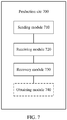
- FIG. 7 is a schematic block diagram of a production site 700 according to an embodiment of this application.
- the production site 700 includes: a sending module 710, configured to send a first backup copy to a disaster recovery site, so that the disaster recovery site takes over a service of the production site 700; a receiving module 720, configured to receive a first message sent by the disaster recovery site, where the first message includes CBT information, and the CBT information includes incremental information generated since the disaster recovery site takes over the service of the production site; and a recovery module 730, configured to restore the service based on the first backup copy and the CBT information.
- the CBT information includes N CBT, where N is greater than or equal to 1.
- the production site 700 further includes an obtaining module 740, configured to obtain a difference between the CBT.
- the recovery module is further configured to restore the service based on the first backup copy and the difference between CBT backups.
- the production site or the disaster recovery site provided in this embodiment of this application may be a set of a plurality of physical devices, or may be an independent physical device. This is not specifically limited in this embodiment of this application.
- a terminal site or a network site includes a hardware layer, an operating system layer running on the hardware layer, and an application layer running on the operating system layer.
- the hardware layer includes hardware such as a central processing unit (central processing unit, CPU), a memory management unit (memory management unit, MMU), and a memory (also referred to as a main memory).
- the operating system may be any one or more computer operating systems that implement service processing through a process (process), for example, a Linux operating system, a Unix operating system, an Android operating system, an iOS operating system, or a Windows operating system.
- the application layer includes applications such as a browser, an address book, word processing software, and instant communications software.
- an execution body of the method provided in the embodiment of this application is not specifically limited in the embodiments of this application, provided that a program that records code of the method provided in the embodiment of this application can be run to perform communication according to the method provided in the embodiment of this application.
- the execution body of the method provided in the embodiment of this application may be the terminal site or the network site, or a functional module that can invoke and execute the program in the terminal site or the network site.
- aspects or features of this application may be implemented as a method, an apparatus or a product that uses standard programming and/or engineering technologies.
- the term "product" used in this application covers a computer program that can be accessed from any computer-readable component, carrier or medium.
- the computer-readable medium may include but is not limited to: a magnetic storage component (for example, a hard disk, a floppy disk or a magnetic tape), an optical disc (for example, a compact disc (compact disc, CD) or a digital versatile disc (digital versatile disc, DVD), a smart card and a flash memory component (for example, erasable programmable read-only memory (erasable programmable read-only memory, EPROM), a card, a stick, or a key drive).
- a magnetic storage component for example, a hard disk, a floppy disk or a magnetic tape
- an optical disc for example, a compact disc (compact disc, CD) or a digital versatile disc (digital versatile disc, DVD)
- various storage media described in this specification may indicate one or more sites and/or other machine-readable media that are configured to store information.
- machine-readable media may include but is not limited to a radio channel, and various other media that can store, contain, and/or carry an instruction and/or data.
- the disclosed system, apparatus, and method may be implemented in another manner.
- the described apparatus embodiment is merely an example.
- division into the units is merely logical function division and may be other division in actual implementation.
- a plurality of units or components may be combined or integrated into another system, or some features may be ignored or not performed.
- the displayed or discussed mutual couplings or direct couplings or communication connections may be implemented through some interfaces.
- the indirect couplings or communication connections between the apparatuses or the units may be implemented in electronic, mechanical, or other forms.
- the units described as separate parts may or may not be physically separate, and parts displayed as units may or may not be physical units, may be located in one position, or may be distributed to a plurality of network units. Some or all of the units may be selected based on actual requirements to achieve the objectives of the solutions of the embodiments.
- the functions When the functions are implemented in the form of a software functional unit and sold or used as an independent product, the functions may be stored in a computer-readable storage medium. Based on such an understanding, the technical solutions of this application essentially, or the part contributing to the prior art, or some of the technical solutions may be implemented in a form of a software product.
- the computer software product is stored in a storage medium, and includes several instructions for instructing a computer site (which may be a personal computer, a server, or a network site) to perform all or some of the steps of the methods described in the embodiments of this application.
- the foregoing storage medium includes: any medium that can store program code, such as a USB flash drive, a removable hard disk, a read-only memory (read-only memory, ROM), a random access memory (random access memory, RAM), a magnetic disk, or an optical disc.
- program code such as a USB flash drive, a removable hard disk, a read-only memory (read-only memory, ROM), a random access memory (random access memory, RAM), a magnetic disk, or an optical disc.
Landscapes
- Engineering & Computer Science (AREA)
- Theoretical Computer Science (AREA)
- Quality & Reliability (AREA)
- Physics & Mathematics (AREA)
- General Engineering & Computer Science (AREA)
- General Physics & Mathematics (AREA)
- Retry When Errors Occur (AREA)
- Information Retrieval, Db Structures And Fs Structures Therefor (AREA)
Applications Claiming Priority (2)
| Application Number | Priority Date | Filing Date | Title |
|---|---|---|---|
| CN201811125060.0A CN109491832A (zh) | 2018-09-26 | 2018-09-26 | 数据容灾方法与站点 |
| PCT/CN2019/107620 WO2020063600A1 (fr) | 2018-09-26 | 2019-09-25 | Procédé et site de reprise de données après sinistre |
Publications (2)
| Publication Number | Publication Date |
|---|---|
| EP3848809A1 true EP3848809A1 (fr) | 2021-07-14 |
| EP3848809A4 EP3848809A4 (fr) | 2022-05-18 |
Family
ID=65689990
Family Applications (1)
| Application Number | Title | Priority Date | Filing Date |
|---|---|---|---|
| EP19865699.3A Pending EP3848809A4 (fr) | 2018-09-26 | 2019-09-25 | Procédé et site de reprise de données après sinistre |
Country Status (4)
| Country | Link |
|---|---|
| US (1) | US11947429B2 (fr) |
| EP (1) | EP3848809A4 (fr) |
| CN (1) | CN109491832A (fr) |
| WO (1) | WO2020063600A1 (fr) |
Cited By (1)
| Publication number | Priority date | Publication date | Assignee | Title |
|---|---|---|---|---|
| US12536074B2 (en) | 2023-05-09 | 2026-01-27 | Saudi Arabian Oil Company | System and method for secure proactive activation of a disaster recovery system |
Families Citing this family (7)
| Publication number | Priority date | Publication date | Assignee | Title |
|---|---|---|---|---|
| CN109491832A (zh) | 2018-09-26 | 2019-03-19 | 华为技术有限公司 | 数据容灾方法与站点 |
| CN110677469B (zh) * | 2019-09-23 | 2022-07-15 | 上交所技术有限责任公司 | 一种证券灾备系统及灾备实现方法 |
| CN111190771B (zh) * | 2019-12-27 | 2023-02-28 | 柏科数据技术(深圳)股份有限公司 | 一种用于灾备的block追踪技术 |
| CN114416703B (zh) * | 2020-10-28 | 2025-03-28 | 北京中祥英科技有限公司 | 数据完整性自动监控方法、装置、设备及介质 |
| CN112882859A (zh) * | 2021-02-07 | 2021-06-01 | 上海英方软件股份有限公司 | 一种虚拟机合成备份方法及系统 |
| CN113672350B (zh) * | 2021-08-20 | 2023-12-29 | 深信服科技股份有限公司 | 一种应用处理方法、装置及相关设备 |
| CN115277376B (zh) * | 2022-09-29 | 2022-12-23 | 深圳华锐分布式技术股份有限公司 | 灾备切换方法、装置、设备及介质 |
Family Cites Families (19)
| Publication number | Priority date | Publication date | Assignee | Title |
|---|---|---|---|---|
| JP4668763B2 (ja) * | 2005-10-20 | 2011-04-13 | 株式会社日立製作所 | ストレージ装置のリストア方法及びストレージ装置 |
| CN101635638B (zh) * | 2008-07-25 | 2012-10-17 | 中兴通讯股份有限公司 | 一种容灾系统及其容灾方法 |
| CN103222220B (zh) * | 2012-10-31 | 2015-09-09 | 华为技术有限公司 | 网络数据的回退方法及设备 |
| CN103810058B (zh) * | 2012-11-12 | 2017-02-22 | 华为技术有限公司 | 虚拟机备份方法、设备及系统 |
| ES2669274T3 (es) * | 2013-12-12 | 2018-05-24 | Huawei Technologies Co., Ltd. | Método de réplica de datos y sistema de almacenamiento |
| US20160048408A1 (en) * | 2014-08-13 | 2016-02-18 | OneCloud Labs, Inc. | Replication of virtualized infrastructure within distributed computing environments |
| US9619172B1 (en) * | 2014-09-22 | 2017-04-11 | EMC IP Holding Company LLC | Method and system for managing changed block tracking and continuous data protection replication |
| US20160125059A1 (en) * | 2014-11-04 | 2016-05-05 | Rubrik, Inc. | Hybrid cloud data management system |
| US9575849B2 (en) * | 2014-11-25 | 2017-02-21 | Sap Se | Synchronized backup and recovery of database systems |
| US10496487B1 (en) * | 2014-12-03 | 2019-12-03 | EMC IP Holding Company LLC | Storing snapshot changes with snapshots |
| CN104484480B (zh) * | 2014-12-31 | 2018-06-05 | 华为技术有限公司 | 基于重复数据删除的远程复制方法及装置 |
| US10705917B2 (en) * | 2015-06-30 | 2020-07-07 | Veritas Technologies Llc | Consolidated full backup of a restored virtual machine |
| CN109783277B (zh) * | 2015-11-18 | 2023-12-29 | 华为技术有限公司 | 灾备端、生产端及两者之间的数据恢复方法 |
| EP3223158B1 (fr) * | 2016-02-01 | 2020-04-22 | Huawei Technologies Co., Ltd. | Procédé de récupération de données et système de stockage |
| CN107688584A (zh) * | 2016-08-05 | 2018-02-13 | 华为技术有限公司 | 一种容灾切换的方法、节点及系统 |
| CN106445735A (zh) * | 2016-08-31 | 2017-02-22 | 上海爱数信息技术股份有限公司 | VMware虚拟机的数据恢复方法、系统 |
| CN108255641B (zh) * | 2017-12-25 | 2020-08-18 | 南京壹进制信息科技有限公司 | 一种基于云平台的cdp容灾方法 |
| CN108512693A (zh) * | 2018-02-24 | 2018-09-07 | 国家计算机网络与信息安全管理中心 | 一种跨区域容灾方法和装置 |
| CN109491832A (zh) * | 2018-09-26 | 2019-03-19 | 华为技术有限公司 | 数据容灾方法与站点 |
-
2018
- 2018-09-26 CN CN201811125060.0A patent/CN109491832A/zh active Pending
-
2019
- 2019-09-25 WO PCT/CN2019/107620 patent/WO2020063600A1/fr not_active Ceased
- 2019-09-25 EP EP19865699.3A patent/EP3848809A4/fr active Pending
-
2021
- 2021-03-25 US US17/211,906 patent/US11947429B2/en active Active
Cited By (1)
| Publication number | Priority date | Publication date | Assignee | Title |
|---|---|---|---|---|
| US12536074B2 (en) | 2023-05-09 | 2026-01-27 | Saudi Arabian Oil Company | System and method for secure proactive activation of a disaster recovery system |
Also Published As
| Publication number | Publication date |
|---|---|
| US11947429B2 (en) | 2024-04-02 |
| US20210208982A1 (en) | 2021-07-08 |
| EP3848809A4 (fr) | 2022-05-18 |
| CN109491832A (zh) | 2019-03-19 |
| WO2020063600A1 (fr) | 2020-04-02 |
Similar Documents
| Publication | Publication Date | Title |
|---|---|---|
| US11947429B2 (en) | Data disaster recovery method and site | |
| US11429305B2 (en) | Performing backup operations using replicas | |
| US11397648B2 (en) | Virtual machine recovery method and virtual machine management device | |
| US9563517B1 (en) | Cloud snapshots | |
| US9557925B1 (en) | Thin replication | |
| US9535907B1 (en) | System and method for managing backup operations of virtual machines | |
| US9875042B1 (en) | Asynchronous replication | |
| US9563684B1 (en) | Replication cookie | |
| US9940205B2 (en) | Virtual point in time access between snapshots | |
| US10067694B1 (en) | Replication ordering | |
| US8060714B1 (en) | Initializing volumes in a replication system | |
| US9672117B1 (en) | Method and system for star replication using multiple replication technologies | |
| US10140303B1 (en) | Application aware snapshots | |
| EP3179359B1 (fr) | Procédé d'envoi de données, procédé de réception de données et dispositif de stockage | |
| US8099391B1 (en) | Incremental and differential backups of virtual machine files | |
| US10042579B1 (en) | Crash consistent snapshot | |
| US9690504B1 (en) | Cloud agnostic replication | |
| US11080148B2 (en) | Method and system for star replication using multiple replication technologies | |
| US9619172B1 (en) | Method and system for managing changed block tracking and continuous data protection replication | |
| JP2008171387A (ja) | 継続的データ保護を備えたバックアップシステム | |
| CN105389230A (zh) | 一种结合快照技术的持续数据保护系统及方法 | |
| CN106802840A (zh) | 一种虚拟机备份、恢复方法及装置 | |
| US10725967B1 (en) | Continuous data protection snapshots | |
| US20100049932A1 (en) | Method and apparatus for automatic snapshot | |
| CN114518973A (zh) | 分布式集群节点宕机重启恢复方法 |
Legal Events
| Date | Code | Title | Description |
|---|---|---|---|
| STAA | Information on the status of an ep patent application or granted ep patent |
Free format text: STATUS: THE INTERNATIONAL PUBLICATION HAS BEEN MADE |
|
| PUAI | Public reference made under article 153(3) epc to a published international application that has entered the european phase |
Free format text: ORIGINAL CODE: 0009012 |
|
| STAA | Information on the status of an ep patent application or granted ep patent |
Free format text: STATUS: REQUEST FOR EXAMINATION WAS MADE |
|
| 17P | Request for examination filed |
Effective date: 20210406 |
|
| AK | Designated contracting states |
Kind code of ref document: A1 Designated state(s): AL AT BE BG CH CY CZ DE DK EE ES FI FR GB GR HR HU IE IS IT LI LT LU LV MC MK MT NL NO PL PT RO RS SE SI SK SM TR |
|
| DAV | Request for validation of the european patent (deleted) | ||
| DAX | Request for extension of the european patent (deleted) | ||
| A4 | Supplementary search report drawn up and despatched |
Effective date: 20220414 |
|
| RIC1 | Information provided on ipc code assigned before grant |
Ipc: G06F 11/20 20060101ALI20220408BHEP Ipc: G06F 11/16 20060101ALI20220408BHEP Ipc: G06F 11/14 20060101AFI20220408BHEP |
|
| STAA | Information on the status of an ep patent application or granted ep patent |
Free format text: STATUS: EXAMINATION IS IN PROGRESS |
|
| 17Q | First examination report despatched |
Effective date: 20250217 |