EP3848882A2 - Qos-basiertes mobiles auftragsverarbeitungsverfahren unter verwendung von ladenankunftsidentifikation - Google Patents
Qos-basiertes mobiles auftragsverarbeitungsverfahren unter verwendung von ladenankunftsidentifikation Download PDFInfo
- Publication number
- EP3848882A2 EP3848882A2 EP19858124.1A EP19858124A EP3848882A2 EP 3848882 A2 EP3848882 A2 EP 3848882A2 EP 19858124 A EP19858124 A EP 19858124A EP 3848882 A2 EP3848882 A2 EP 3848882A2
- Authority
- EP
- European Patent Office
- Prior art keywords
- shop
- mobile
- order
- mobile order
- customer
- Prior art date
- Legal status (The legal status is an assumption and is not a legal conclusion. Google has not performed a legal analysis and makes no representation as to the accuracy of the status listed.)
- Withdrawn
Links
Images




Classifications
-
- G—PHYSICS
- G06—COMPUTING OR CALCULATING; COUNTING
- G06Q—INFORMATION AND COMMUNICATION TECHNOLOGY [ICT] SPECIALLY ADAPTED FOR ADMINISTRATIVE, COMMERCIAL, FINANCIAL, MANAGERIAL OR SUPERVISORY PURPOSES; SYSTEMS OR METHODS SPECIALLY ADAPTED FOR ADMINISTRATIVE, COMMERCIAL, FINANCIAL, MANAGERIAL OR SUPERVISORY PURPOSES, NOT OTHERWISE PROVIDED FOR
- G06Q30/00—Commerce
- G06Q30/06—Buying, selling or leasing transactions
- G06Q30/0601—Electronic shopping [e-shopping]
- G06Q30/0633—Managing shopping lists, e.g. compiling or processing purchase lists
- G06Q30/0635—Managing shopping lists, e.g. compiling or processing purchase lists replenishment orders; recurring orders
-
- G—PHYSICS
- G06—COMPUTING OR CALCULATING; COUNTING
- G06Q—INFORMATION AND COMMUNICATION TECHNOLOGY [ICT] SPECIALLY ADAPTED FOR ADMINISTRATIVE, COMMERCIAL, FINANCIAL, MANAGERIAL OR SUPERVISORY PURPOSES; SYSTEMS OR METHODS SPECIALLY ADAPTED FOR ADMINISTRATIVE, COMMERCIAL, FINANCIAL, MANAGERIAL OR SUPERVISORY PURPOSES, NOT OTHERWISE PROVIDED FOR
- G06Q30/00—Commerce
- G06Q30/06—Buying, selling or leasing transactions
- G06Q30/0601—Electronic shopping [e-shopping]
-
- G—PHYSICS
- G06—COMPUTING OR CALCULATING; COUNTING
- G06Q—INFORMATION AND COMMUNICATION TECHNOLOGY [ICT] SPECIALLY ADAPTED FOR ADMINISTRATIVE, COMMERCIAL, FINANCIAL, MANAGERIAL OR SUPERVISORY PURPOSES; SYSTEMS OR METHODS SPECIALLY ADAPTED FOR ADMINISTRATIVE, COMMERCIAL, FINANCIAL, MANAGERIAL OR SUPERVISORY PURPOSES, NOT OTHERWISE PROVIDED FOR
- G06Q10/00—Administration; Management
- G06Q10/02—Reservations, e.g. for tickets, services or events
- G06Q10/028—Reservations, e.g. for tickets, services or events for seating or spaces in a venue
-
- G—PHYSICS
- G06—COMPUTING OR CALCULATING; COUNTING
- G06Q—INFORMATION AND COMMUNICATION TECHNOLOGY [ICT] SPECIALLY ADAPTED FOR ADMINISTRATIVE, COMMERCIAL, FINANCIAL, MANAGERIAL OR SUPERVISORY PURPOSES; SYSTEMS OR METHODS SPECIALLY ADAPTED FOR ADMINISTRATIVE, COMMERCIAL, FINANCIAL, MANAGERIAL OR SUPERVISORY PURPOSES, NOT OTHERWISE PROVIDED FOR
- G06Q20/00—Payment architectures, schemes or protocols
- G06Q20/02—Payment architectures, schemes or protocols involving a neutral party, e.g. certification authority, notary or trusted third party [TTP]
-
- G—PHYSICS
- G06—COMPUTING OR CALCULATING; COUNTING
- G06Q—INFORMATION AND COMMUNICATION TECHNOLOGY [ICT] SPECIALLY ADAPTED FOR ADMINISTRATIVE, COMMERCIAL, FINANCIAL, MANAGERIAL OR SUPERVISORY PURPOSES; SYSTEMS OR METHODS SPECIALLY ADAPTED FOR ADMINISTRATIVE, COMMERCIAL, FINANCIAL, MANAGERIAL OR SUPERVISORY PURPOSES, NOT OTHERWISE PROVIDED FOR
- G06Q20/00—Payment architectures, schemes or protocols
- G06Q20/08—Payment architectures
- G06Q20/20—Point-of-sale [POS] network systems
-
- G—PHYSICS
- G06—COMPUTING OR CALCULATING; COUNTING
- G06Q—INFORMATION AND COMMUNICATION TECHNOLOGY [ICT] SPECIALLY ADAPTED FOR ADMINISTRATIVE, COMMERCIAL, FINANCIAL, MANAGERIAL OR SUPERVISORY PURPOSES; SYSTEMS OR METHODS SPECIALLY ADAPTED FOR ADMINISTRATIVE, COMMERCIAL, FINANCIAL, MANAGERIAL OR SUPERVISORY PURPOSES, NOT OTHERWISE PROVIDED FOR
- G06Q20/00—Payment architectures, schemes or protocols
- G06Q20/30—Payment architectures, schemes or protocols characterised by the use of specific devices or networks
- G06Q20/32—Payment architectures, schemes or protocols characterised by the use of specific devices or networks using wireless devices
- G06Q20/322—Aspects of commerce using mobile devices [M-devices]
-
- G—PHYSICS
- G06—COMPUTING OR CALCULATING; COUNTING
- G06Q—INFORMATION AND COMMUNICATION TECHNOLOGY [ICT] SPECIALLY ADAPTED FOR ADMINISTRATIVE, COMMERCIAL, FINANCIAL, MANAGERIAL OR SUPERVISORY PURPOSES; SYSTEMS OR METHODS SPECIALLY ADAPTED FOR ADMINISTRATIVE, COMMERCIAL, FINANCIAL, MANAGERIAL OR SUPERVISORY PURPOSES, NOT OTHERWISE PROVIDED FOR
- G06Q20/00—Payment architectures, schemes or protocols
- G06Q20/30—Payment architectures, schemes or protocols characterised by the use of specific devices or networks
- G06Q20/32—Payment architectures, schemes or protocols characterised by the use of specific devices or networks using wireless devices
- G06Q20/322—Aspects of commerce using mobile devices [M-devices]
- G06Q20/3224—Transactions dependent on location of M-devices
-
- G—PHYSICS
- G06—COMPUTING OR CALCULATING; COUNTING
- G06Q—INFORMATION AND COMMUNICATION TECHNOLOGY [ICT] SPECIALLY ADAPTED FOR ADMINISTRATIVE, COMMERCIAL, FINANCIAL, MANAGERIAL OR SUPERVISORY PURPOSES; SYSTEMS OR METHODS SPECIALLY ADAPTED FOR ADMINISTRATIVE, COMMERCIAL, FINANCIAL, MANAGERIAL OR SUPERVISORY PURPOSES, NOT OTHERWISE PROVIDED FOR
- G06Q20/00—Payment architectures, schemes or protocols
- G06Q20/30—Payment architectures, schemes or protocols characterised by the use of specific devices or networks
- G06Q20/32—Payment architectures, schemes or protocols characterised by the use of specific devices or networks using wireless devices
- G06Q20/325—Payment architectures, schemes or protocols characterised by the use of specific devices or networks using wireless devices using wireless networks
-
- G—PHYSICS
- G06—COMPUTING OR CALCULATING; COUNTING
- G06Q—INFORMATION AND COMMUNICATION TECHNOLOGY [ICT] SPECIALLY ADAPTED FOR ADMINISTRATIVE, COMMERCIAL, FINANCIAL, MANAGERIAL OR SUPERVISORY PURPOSES; SYSTEMS OR METHODS SPECIALLY ADAPTED FOR ADMINISTRATIVE, COMMERCIAL, FINANCIAL, MANAGERIAL OR SUPERVISORY PURPOSES, NOT OTHERWISE PROVIDED FOR
- G06Q20/00—Payment architectures, schemes or protocols
- G06Q20/38—Payment protocols; Details thereof
- G06Q20/40—Authorisation, e.g. identification of payer or payee, verification of customer or shop credentials; Review and approval of payers, e.g. check credit lines or negative lists
- G06Q20/401—Transaction verification
- G06Q20/4015—Transaction verification using location information
- G06Q20/40155—Transaction verification using location information for triggering transactions
-
- G—PHYSICS
- G06—COMPUTING OR CALCULATING; COUNTING
- G06Q—INFORMATION AND COMMUNICATION TECHNOLOGY [ICT] SPECIALLY ADAPTED FOR ADMINISTRATIVE, COMMERCIAL, FINANCIAL, MANAGERIAL OR SUPERVISORY PURPOSES; SYSTEMS OR METHODS SPECIALLY ADAPTED FOR ADMINISTRATIVE, COMMERCIAL, FINANCIAL, MANAGERIAL OR SUPERVISORY PURPOSES, NOT OTHERWISE PROVIDED FOR
- G06Q30/00—Commerce
- G06Q30/06—Buying, selling or leasing transactions
- G06Q30/0601—Electronic shopping [e-shopping]
- G06Q30/0639—Locating goods or services, e.g. based on physical position of the goods or services within a shopping facility
-
- G—PHYSICS
- G06—COMPUTING OR CALCULATING; COUNTING
- G06Q—INFORMATION AND COMMUNICATION TECHNOLOGY [ICT] SPECIALLY ADAPTED FOR ADMINISTRATIVE, COMMERCIAL, FINANCIAL, MANAGERIAL OR SUPERVISORY PURPOSES; SYSTEMS OR METHODS SPECIALLY ADAPTED FOR ADMINISTRATIVE, COMMERCIAL, FINANCIAL, MANAGERIAL OR SUPERVISORY PURPOSES, NOT OTHERWISE PROVIDED FOR
- G06Q30/00—Commerce
- G06Q30/06—Buying, selling or leasing transactions
- G06Q30/0601—Electronic shopping [e-shopping]
- G06Q30/0641—Electronic shopping [e-shopping] utilising user interfaces specially adapted for shopping
-
- G—PHYSICS
- G06—COMPUTING OR CALCULATING; COUNTING
- G06Q—INFORMATION AND COMMUNICATION TECHNOLOGY [ICT] SPECIALLY ADAPTED FOR ADMINISTRATIVE, COMMERCIAL, FINANCIAL, MANAGERIAL OR SUPERVISORY PURPOSES; SYSTEMS OR METHODS SPECIALLY ADAPTED FOR ADMINISTRATIVE, COMMERCIAL, FINANCIAL, MANAGERIAL OR SUPERVISORY PURPOSES, NOT OTHERWISE PROVIDED FOR
- G06Q50/00—Information and communication technology [ICT] specially adapted for implementation of business processes of specific business sectors, e.g. utilities or tourism
- G06Q50/10—Services
- G06Q50/12—Hotels or restaurants
-
- H—ELECTRICITY
- H04—ELECTRIC COMMUNICATION TECHNIQUE
- H04W—WIRELESS COMMUNICATION NETWORKS
- H04W4/00—Services specially adapted for wireless communication networks; Facilities therefor
- H04W4/80—Services using short range communication, e.g. near-field communication [NFC], radio-frequency identification [RFID] or low energy communication
Definitions
- the present invention generally relates to a technology for processing a transaction so that a mobile order (i.e., an order for goods or reservation) which is entered on a customer's smart terminal on the go can be forwarded to the shop so as to be appropriately responded to.
- a mobile order i.e., an order for goods or reservation
- the present invention relates to a QoS-based mobile order processing technology which can improve mobile ordering procedure of customers and guarantee Quality of Service (QoS) above a certain level to customers in processing the mobile order which is entered on a customer's smart terminal on the go, by accurately identifying the event of customer's arrival at the shop so as to supplement the contents of the mobile order and to determine when to forward the mobile order to the shop in response to the customer's arrival.
- QoS Quality of Service
- the recently proposed 'mobile ordering' technology is an attempt to change the action sequence of a customer in using the shop.
- the mobile ordering conceptually means that a customer places an order using his smart terminal while on the go or at a remote location. For example, after ordering a goods (e.g., coffee) from the outside with a smart phone app, the customer can visit the shop later to pick up the goods. In addition, after making a reservation for a shop space, e.g., restaurant or conference room, the customer can visit the shop later to use the reserved space.
- the mobile ordering is to suggest a completely new usage pattern differentiated from the conventional ones. Although the usage ratio is still relatively low compared to the conventional ordering method, the technology development and process optimization is being actively performed with the spread of smart phones.
- FIG. 1 is a diagram conceptually showing an example of conventional mobile order processing method, and also shows the problem which the inventors of the present invention found while using the conventional mobile order processing method.
- the mobile order management server (200) when a customer enters a mobile order for a specific goods on his smart terminal (100) on the go, the corresponding order information is transmitted to the order management server (200).
- the mobile order identification and the order information transmission are performed by the mobile agent unit (110) which is installed in the smart terminal (100).
- the mobile agent unit (110) is implemented in a form of a dedicated program or an app.
- the mobile ordering procedure follows the menu structure of the mobile agent unit (110).
- a customer selects a specific goods of a specific brand to order, and designates a shop to pick up the goods.
- the order management server (200) forwards the mobile order data to a shop terminal (300) installed in the shop which is designated by the customer.
- a shop terminal (300) is installed in each shop in order to receive and process orders for the shop.
- the order management server (200) forwards the mobile order data to a shop terminal (300) installed in the shop which is designated by the customer in the mobile ordering procedure.
- the shop terminal (300) When the shop terminal (300) receives the mobile order, the shop prepares the ordered goods according to the order specified in the business regulation. Although there are slight variations depending on the number of visitors to the shop, it usually takes about 1 to 2 minutes for the goods to be prepared, for example, a cup of hot coffee. Meanwhile, after entering the mobile order, the customer moves to the shop by car or on foot. When the customer arrives at the shop, he may directly inform to the shop counter or may be automatically identified at the shop counter by a beacon or the like. Then, the customer is called so that he can receive the goods which is prepared in the shop.
- the design purpose of the conventional mobile ordering is to allow the customer to be served the ordered goods as soon as possible when the customer arrives at the shop, preferably immediately when the customer arrives at the shop. Such a purpose has been successfully achieved by the conventional mobile ordering scheme.
- the conventional scheme has overlooked the fact that the time interval varies greatly between placement of a mobile order and arrival at the shop.
- the customer may arrive at the shop 10 to 20 minutes later than his original intention due to his circumstances, such as when the road is blocked, he meets acquaintance on the go, or he cannot find a parking place. This situation is commonly experienced in daily life, which may cause a problem in the conventional scheme.
- a mobile order When a mobile order is passed to a shop, it is assumed as a normal order so that the goods starts to be prepared as ordered. However, when a customer arrives at the shop 10 to 20 minutes later than his intention, the quality of the goods is lowered. For example, coffee becomes cooled or rancid so that its taste and aroma become degraded. Further, food is cooled so that its taste, aroma, and texture of chewing become degraded. In this case, the customer shall be dissatisfied because he has received unsatisfactory service, and the shop shall be worry about the degradation of customer satisfaction. Accordingly, some shops set up a business regulation such that, in the case of mobile order, goods shall be discarded and re-prepared again when a predetermined time elapses after preparing the goods.
- the procedure which the customer must go through on the mobile agent unit (110), i.e., the order sequence was also inconvenient. Due to the nature of mobile ordering, customers are often separated from the shop, which causes the inconvenience of requesting the customers to manually input much information in the mobile ordering procedure. Changing action sequence (culture) in using a shop itself is an obstacle to spread the mobile ordering. If ordering sequence is also complex, it becomes more difficult to spread the mobile ordering.
- a mobile order i.e., an order for goods or reservation
- QoS Quality of Service
- the present invention provides a technology for processing a customer's mobile order on QoS by cooperative operation of a mobile agent unit (120) installed in a customer's smart terminal (100), an order management server (200) of managing mobile orders, a shop terminal (300) installed in each shop, and a shop identifier (310) for setting an effective coverage of each shop.
- the mobile order processing method may comprises: a first step of broadcasting, in the shop identifier (310), a shop identification signal, wherein a shop identification code for the corresponding shop is inserted into the shop identification signal; a second step of generating, in the mobile agent unit (120), a mobile order data, wherein the mobile order data includes ordered-goods information and customer identification information, the ordered-goods information is set according to user operation on mobile ordering menu, the customer identification information is preset in the mobile agent unit; a third step of waiting, in the mobile agent unit (120), for a shop arrival event of the customer with respect to the mobile order data; a fourth step of identifying, in the mobile agent unit (120), the shop arrival event of the customer for a specific shop by recognizing the shop identification signal; a fifth step of obtaining, in the mobile agent unit (120), an arrival-shop identification information based on a shop identification code in the shop identification signal, wherein the arrival-shop identification information corresponds to the specific shop where the customer has arrived; a sixth step of
- the shop identification signal may be configured in combination of inaudible high-frequency sound signal of predetermined signal pattern and Bluetooth signal.
- the first step may comprise: a step of outputting, in the shop identifier (310), inaudible high-frequency sound signal to a speaker, wherein the inaudible high-frequency sound signal has a predetermined signal pattern; and a step of wireless broadcasting, in the shop identifier (310), Bluetooth signal which is encoded with a shop identification code for the corresponding shop.
- the third step may comprise: a step of analyzing, in the mobile agent unit (120), a sound signal which is inputted through a microphone of the smart terminal (100); a step of identifying, in the mobile agent unit (120), a shop arrival event of a customer by detecting the inaudible high-frequency sound signal of the predetermined signal pattern through the sound signal analysis; and a step of obtaining, in the mobile agent unit (120), a shop identification code from the Bluetooth signal, wherein the shop identification code corresponds to a shop where the customer has arrived.
- the tenth step may comprise: a step of receiving, in the shop terminal (300), the mobile order data from the order management server (200); a step of identifying, in the shop terminal (300), when the shop terminal (300) receives the mobile order data (hereinafter, "mobile order arrival time"); a step of obtaining, in the shop terminal (300), the customer identification information and the ordered-goods information with respect to the mobile order from the mobile order data; and a step of accepting, in the shop terminal (300), the mobile order by inserting the mobile order into a shop order list based on the mobile order arrival time between a series of offline orders which are accepted at the shop counter.
- the tenth step may comprise: a step of receiving, in the shop terminal (300), the mobile order data from the order management server (200); a step of obtaining, in the shop terminal (300), the customer identification information and the ordered-goods information with respect to the mobile order from the mobile order data; and a step of accepting, in the shop terminal (300), the mobile order by placing the mobile order in the front end of a shop order list so that the mobile order has higher priority than a series of offline orders on pending which are accepted at the shop counter.
- the mobile agent unit (120) identifies when the mobile agent unit (120) generates the mobile order data (hereinafter, "mobile order generation time") and then inserts the mobile order generation time into the mobile order data in the second step.
- the tenth step may comprise: a step of receiving, in the shop terminal (300), the mobile order data from the order management server (200); a step of obtaining, in the shop terminal (300), the customer identification information, the ordered-goods information, and the mobile order generation time with respect to the mobile order from the mobile order data; and a step of accepting, in the shop terminal (300), the mobile order by inserting the mobile order into a shop order list based on the mobile order generation time between a series of offline orders which are accepted at the shop counter.
- the computer program according to the present invention is stored in a medium in order to execute a QoS-based mobile order processing method using shop arrival identification as set forth above in combination with a hardware.
- the quality of service can be guaranteed through technical configuration by transacting a mobile order which is entered on the go by a customer by use of shop arrival identification.
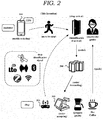
- FIG. 2 is a diagram conceptually showing the QoS-based mobile order processing method according to the present invention
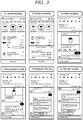
- FIG. 3 is a diagram showing an example of app screens which are displayed on customer's smart terminal in a mobile ordering procedure according to the present invention.
- the mobile ordering may be applied to goods pickup and shop reservation. However, in this specification, for convenience of explanation, it is described based on the case of goods pickup.
- the conventional mobile ordering system is centered on the on-time service processing. Focusing on fast food, it has been an important interest to provide services to customers as quickly as possible. Being an extension of that, the mobile ordering is configured with the intention of serving goods immediately when customers enter the shop.
- the present invention has processing configuration which can always guarantee Quality of Service (QoS) above a certain level to customers, while keeping the advantage of the mobile ordering system that customers can place orders in advance using their smart terminal without having to communicate face-to-face with shop staffs. Accordingly, the mobile ordering can be utilized to some service fields, such as restaurants, hospitals, financial institutions, etc. where the conventional mobile ordering has been difficult to adopt.
- QoS Quality of Service
- the QoS-based mobile order processing method according to the present invention is conceptually described with reference to FIG. 2 .
- FIG. 3 ( 1 ) and (2) show that a customer performs goods selection and payment on an app menu screen which is provided by the mobile agent unit (120).
- FIG. 3 (3) shows that the mobile order has been normally received.
- the mobile agent unit (120) does not immediately forward the mobile order but temporarily stores the mobile order.
- the mobile ordering procedure can be configured by excluding the step of selecting a shop (e.g., Gangnam station branch) where the customer is going to pick up the goods.
- the mobile agent unit (120) When the customer arrives at a shop by a vehicle or on foot, the mobile agent unit (120) identifies the shop arrival event.
- a shop identifier (310) is installed in each shop.
- the shop identifier (310) wirelessly transmits a shop identification signal which contains unique information of the shop in which the shop identifier (310) is installed.
- the mobile agent unit (120) installed in the smart terminal (100) recognizes the shop identification signal. Accordingly, the mobile agent unit (120) recognizes that the customer has arrived at the specific shop.
- a shop identifier (310) is provided.
- the shop identifier (310) cooperates with the mobile agent unit (120) which is installed in the user's smart terminal (100) so as to enable the mobile agent unit (120) to identify that the customer has arrived the specific shop.
- the mobile agent unit (120) may identify the shop where the shop has arrived at.
- the shop identifier (310) wireless broadcasts a shop identification signal in order to distinguish an effective coverage of each shop and further preferably to identify each of shops.
- the mobile agent unit (120) recognizes the shop identification signal, the mobile agent unit (120) identifies that the corresponding customer has arrived at a shop to which the technology of the present invention is applied.
- the mobile agent unit (120) may be configured to recognize the shop identification signal is valid only when its signal strength is greater than a predetermined threshold.
- the shop identification signal may be implemented with any technology as long as the signal is suitable for distinguishing an effective coverage of each shop and for identifying each of shops.
- the shop identification signal may be implemented with any one or a combination of wireless LAN, GPS, LTE, Bluetooth, Zigbee, and Geo-Fencing, etc.
- the shop identification signal is configured by utilizing inaudible high-frequency sound signal.
- the shop identification signal can be provided through a microphone of the smart terminal (100) without disturbing people in the shop.
- the sound signal is also suitable for the purpose of the present invention in that it can accurately distinguish the interior and exterior of the shop.
- the shop identification signal may be implemented by tuning signal strength of Bluetooth, Zigbee, wireless LAN signal, etc. or may be implemented by precisely matching the boundaries of Geo-Fencing.
- the shop identification signal may be configured in combination of a plurality of these signal formats, rather than using only one.
- a shop identification signal may be configured in combination of the inaudible high-frequency sound signal and Bluetooth signal.
- the inaudible high-frequency sound signal is utilized in order to identify whether the customer has entered the shop
- the Bluetooth signal is utilized in order to identify where the shop is. Meanwhile, other signal combinations are not excluded.
- the mobile agent unit (120) When the mobile agent unit (120) recognizes the shop arrival event, the mobile agent unit (120) immediately executes the mobile order with respect to the corresponding shop. That is, the mobile agent unit (120) supplements items of the mobile order by designating the shop where the customer has arrived as a pickup shop, and then transmits the mobile order to the order management server (200).
- the order management server (200) forwards mobile order data to the shop terminal (300) of the corresponding branch of shop. In the shop, the shop terminal (300) receives the mobile order data from the order management server (200), and then accepts the mobile order according to order handling rule of the business regulation. Then, the ordered goods shall be prepared and provided to the customer.
- FIG. 3 (4) shows that the mobile order is forwarded to the pickup shop as the customer arrives at the specific shop.
- FIG. 3 (5) shows a screen in which the shop terminal (300) guides the goods pickup to the mobile agent unit (120) when the goods has been prepared in the shop for the mobile order.
- FIG. 3 (6) shows that the goods pickup for the mobile order has been completed.
- the time interval from preparation to reception of goods is lower than a predetermined range. Accordingly, the quality of the goods which is provided to the customer can be consistently managed.
- the management of quality of service does not depend on the ability of the shop manager or the effort of staffs working on the shop. Rather, the management of quality of service can be structurally achieved by the cooperative operation of the mobile agent unit (120), the order management server (200), the shop terminal (300), and the shop identifier (310).
- the step of selecting a shop to pick up the goods is unnecessary in the mobile ordering procedure. This simplifies the mobile ordering procedure which the customer experiences, thereby helping to spread mobile orders. This simplification of the order procedure is achieved by the cooperative operation of the mobile agent unit (120), the order management server (200), the shop terminal (300), and the shop identifier (310).
- FIG. 4 is a flowchart showing the overall process of QoS-based mobile order processing according to the present invention.
- the mobile order processing method of FIG. 4 is a technology of processing the customer's mobile order on QoS by cooperative operation of a mobile agent unit (120) installed in a customer's smart terminal (100), an order management server (200) of managing the mobile orders, the shop terminal (300) installed in each shop, and the shop identifier (310).
- a shop identifier (310) is installed in each shop.
- the shop identifier (310) wirelessly transmits a shop identification signal which contains unique information of the shop in which the shop identifier (310) is installed.
- the shop identification signal is preferably configured in combination of inaudible high-frequency sound signal and Bluetooth signal.
- the ordered-goods information is set according to user operation on mobile ordering menu, and the customer identification information is preset in the mobile agent unit (120).
- the ordered-goods information is an item selected by the customer on the mobile ordering menu of the mobile ordering app, for example, a cup of Americano.
- the customer identification information is for distinguishing who the customer is currently entering a mobile order, and is generally set when a mobile ordering app is installed on the smart terminal (100) and activated.
- the mobile agent unit (120) installed in the smart terminal (100) recognizes the shop identification signal which is wirelessly transmitted by the shop identifier (310) installed in the shop. Accordingly, the mobile agent unit (120) identifies that the customer has arrived at the shop. In this way, the mobile agent unit (120) identifies the shop arrival event of the customer for a specific shop by the shop identification signal.
- the mobile agent unit (120) obtains an arrival-shop identification information corresponding to the specific shop where the customer has arrived, based on a shop identification code in the shop identification signal.
- the shop identification code may be used as it is for the arrival-shop identification information.
- the arrival-shop identification information may be generated by a separate encoding rule.
- the mobile agent unit (120) associates the arrival-shop identification information with the mobile order data.
- the mobile order data which is generated by the mobile agent unit (120) in step (S110) contains the ordered-goods information and the customer identification information with leaving the shop information as unspecified. Therefore, the mobile agent unit (120) associates the arrival-shop identification information with the mobile order data, wherein the arrival-shop identification information is obtained from the shop identification signal.
- the mobile agent unit (120) transmits the mobile order data to the order management server (200) for letting a mobile order be executed.
- the order management server (200) receives the mobile order data from the mobile agent unit (120), and then obtains the ordered-goods information and the arrival-shop identification information with respect to the mobile order from the mobile order data. That is, the order management server (200) identifies which shop and which goods are directed by the mobile order.
- the order management server (200) manages a plurality of shops, and therefore is connected with a plurality of shop terminals. Among the plurality of shop terminals, the order management server (200) forwards the mobile order data to a shop terminal (300) corresponding to the arrival-shop identification information.
- steps (S130) to (S190) can be quickly performed through computer processing and network transmission. Therefore, the mobile order can be automatically forwarded from the mobile agent unit (120) to the shop terminal (300) immediately when the customer arrives at the shop.
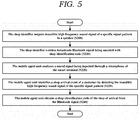
- FIG. 5 is a flowchart showing a process of executing a mobile order in a smart terminal (100) immediately after a customer arrives at a shop in the present invention.
- a shop identification signal is configured in combination of inaudible high-frequency sound signal and Bluetooth signal.
- the shop identification signal has a predetermined signal pattern so that shop identification signal can be distinguished as the inaudible high-frequency sound signal which is outputted by the shop identifier (310) for the present invention. Even in the absence of the shop identifier (310), there exists some level of inaudible high-frequency sounds in the band of approximately 18 kHz or higher. Therefore, the predetermined signal pattern is required as a kind of identification code or a preamble signal for distinguishing the shop identification signal which is outputted by a shop identifier (310).
- the shop identifier (310) makes the shop identification signal so as to include a shop identification code, i.e., an unique information for distinguishing the shop in which the shop identifier (310) is installed. It is possible to transmit the shop identification code through inaudible high-frequency sound signal using an encoding technology such as Frequency-Shift-Keying (FSK). However, the amount of information in this manner is limited. Therefore, it is preferable to use a combination of digital wireless communication signals.
- a shop identification code i.e., an unique information for distinguishing the shop in which the shop identifier (310) is installed.
- FSK Frequency-Shift-Keying
- the mobile agent unit (120) analyzes a sound signal which is inputted through a microphone of the smart terminal (100) in real time.
- the mobile agent unit (120) detects the inaudible high-frequency sound signal of the predetermined signal pattern through the sound signal analysis, the mobile agent unit (120) identifies a shop arrival event of a customer. If the inaudible high-frequency sound signal which is outputted by the shop identifier (310) is received in an effective strength by the microphone of the smart terminal (100), this means that the customer who is carrying the smart terminal (100) enters the shop or arrives at just before the door which is open.
- the mobile agent unit (120) obtains from the Bluetooth signal a shop identification code which corresponds to the shop where the customer has arrived.
- FIGs. 6 to 8 show three embodiments of receiving and processing a mobile order in a shop in the present invention.
- the shop needs to effectively merge the mobile and offline orders.
- the customer of mobile order thinks that he placed the order long before he arrives at the shop, which is differ from the time when the shop receives the mobile order data.
- FIG. 6 is a flowchart showing a first embodiment of receiving and processing a mobile order in a shop in the present invention.
- the shop terminal (300) accepts the mobile order by inserting the mobile order into a shop order list based on the mobile order arrival time between a series of offline orders which are accepted at the shop counter. That is, the shop terminal (300) sets the serving order of the mobile order as if the mobile order is placed as an offline order at the shop counter at the time when the mobile order data is received from the order management server (200). This is advantageous in that the customer of the mobile order can feel that he is relatively quickly serviced when a waiting line is long at the shop counter.
- FIG. 7 is a flowchart showing a second embodiment of receiving and processing a mobile order in a shop in the present invention.
- Step (S321) As the order management server (200) forwards the mobile order data in step (SI80), the shop terminal (300) installed in the shop where the customer arrives receives the mobile order data in step (S321).
- Step (S322) The shop terminal (300) obtains the customer identification information and the ordered-goods information with respect to the mobile order from the mobile order data. That is, the shop terminal (300) identifies who has ordered which goods.
- Step (S323) The shop terminal (300) accepts the mobile order by placing the mobile order in the front end of a shop order list so that the mobile order has higher priority than a series of offline orders on pending which are accepted at the shop counter.
- the shop terminal (300) allows the mobile order to be serviced with the highest priority by arranging the mobile order in the front end of a shop order list, even if there exist offline orders which are still pending when receiving the mobile order data.
- the customer of mobile order placed the order much before he arrives at the shop, which is reflected in the order processing.
- FIG. 8 is a flowchart showing a third embodiment of receiving and processing a mobile order in a shop in the present invention.
- Step (S331) The mobile agent unit (120) receives a mobile order from a customer and then generates the mobile order data in step (S110), at which the mobile agent unit (120) identifies the time when the mobile agent unit (120) generates the mobile order data (hereinafter, "mobile order generation time"). Then, the mobile agent unit (120) inserts the mobile order generation time into the mobile order data.
- the mobile order generation time corresponds to a time point when the customer performs the mobile order operation on his smart terminal (100).
- Step (S332) As the order management server (200) forwards the mobile order data in step (SI80), the shop terminal (300) installed in the shop where the customer arrives receives the mobile order data in step (S332).
- the shop terminal (300) sets the serving order of the mobile order as if the mobile order is placed as an offline order at the shop counter at the time when the mobile order data is entered on customer's smart terminal (100).
- the customer of mobile order has placed the order much before he arrives at the shop, which is reflected in the order processing.
- This is advantageous in that the order data which are generated from the mobile order customers as well as from the offline order customers can be handled in a balanced way, thereby making it appropriate the response time which are treated in computer software engineering.
- the present invention can also be embodied as computer readable codes on a computer readable non-volatile recording medium.
- This non-volatile recording medium includes various types of storage device, e.g., hard disks, SSD, CD-ROM, NAS, magnetic tapes, web disks, and cloud disks.
- the non-volatile recording medium can also be implemented such that the codes are distributed, stored, and executed in a plurality of storage devices connected each other via network.
- the present invention may be implemented in the form of a computer program stored in a medium in order to execute a specific procedure by being combined with hardware.
Landscapes
- Business, Economics & Management (AREA)
- Engineering & Computer Science (AREA)
- Accounting & Taxation (AREA)
- Strategic Management (AREA)
- Physics & Mathematics (AREA)
- General Business, Economics & Management (AREA)
- General Physics & Mathematics (AREA)
- Theoretical Computer Science (AREA)
- Finance (AREA)
- Marketing (AREA)
- Economics (AREA)
- Tourism & Hospitality (AREA)
- Development Economics (AREA)
- Computer Networks & Wireless Communication (AREA)
- Human Resources & Organizations (AREA)
- Health & Medical Sciences (AREA)
- General Health & Medical Sciences (AREA)
- Primary Health Care (AREA)
- Computer Security & Cryptography (AREA)
- Signal Processing (AREA)
- Entrepreneurship & Innovation (AREA)
- Operations Research (AREA)
- Quality & Reliability (AREA)
- Management, Administration, Business Operations System, And Electronic Commerce (AREA)
Applications Claiming Priority (2)
| Application Number | Priority Date | Filing Date | Title |
|---|---|---|---|
| KR1020180107158A KR102245215B1 (ko) | 2018-09-07 | 2018-09-07 | 매장 도착 식별을 통한 QoS 기반의 모바일 주문 처리 방법 |
| PCT/KR2019/011229 WO2020050560A2 (ko) | 2018-09-07 | 2019-08-31 | 매장 도착 식별을 통한 qos 기반의 모바일 주문 처리 방법 |
Publications (2)
| Publication Number | Publication Date |
|---|---|
| EP3848882A2 true EP3848882A2 (de) | 2021-07-14 |
| EP3848882A4 EP3848882A4 (de) | 2022-06-01 |
Family
ID=69722673
Family Applications (1)
| Application Number | Title | Priority Date | Filing Date |
|---|---|---|---|
| EP19858124.1A Withdrawn EP3848882A4 (de) | 2018-09-07 | 2019-08-31 | Qos-basiertes mobiles auftragsverarbeitungsverfahren unter verwendung von ladenankunftsidentifikation |
Country Status (7)
| Country | Link |
|---|---|
| US (1) | US20210319497A1 (de) |
| EP (1) | EP3848882A4 (de) |
| JP (1) | JP7104388B2 (de) |
| KR (1) | KR102245215B1 (de) |
| CN (1) | CN112970042A (de) |
| CA (1) | CA3152943A1 (de) |
| WO (1) | WO2020050560A2 (de) |
Families Citing this family (6)
| Publication number | Priority date | Publication date | Assignee | Title |
|---|---|---|---|---|
| KR20210141079A (ko) | 2020-05-15 | 2021-11-23 | 주식회사 스마트올리브 | 이용자 그룹의 의견조율이 가능한 주문 예약 시스템 및 그 방법 |
| KR20210141078A (ko) | 2020-05-15 | 2021-11-23 | 주식회사 스마트올리브 | 스마트 디바이스의 위치정보를 이용한 주문 예약 시스템 및 그 방법 |
| JP7587972B2 (ja) * | 2020-12-04 | 2024-11-21 | 東芝テック株式会社 | プログラム、注文方法、および注文システム |
| CN113191831B (zh) * | 2021-07-02 | 2021-11-19 | 北京药联健康科技有限公司 | 线下短距交易管理方法、系统及其存储介质 |
| US20240005382A1 (en) * | 2022-07-01 | 2024-01-04 | Radius Networks, Inc. | Systems and methods for relocating pickup orders among chain stores |
| KR102592361B1 (ko) * | 2023-02-16 | 2023-10-20 | 주식회사 얍컴퍼니 | 비가청 고주파 비콘을 이용한 현장 인증 기반의 모바일 주문 처리 방법 |
Family Cites Families (15)
| Publication number | Priority date | Publication date | Assignee | Title |
|---|---|---|---|---|
| JP2006259831A (ja) * | 2005-03-15 | 2006-09-28 | Mitsubishi Electric Corp | 受注システム、配信サーバおよび受注方法 |
| US9129289B2 (en) * | 2005-10-03 | 2015-09-08 | Drew Vaughn | Systems and methods for providing remote ordering capabilities |
| JP2007172383A (ja) * | 2005-12-22 | 2007-07-05 | Dainippon Printing Co Ltd | 商品注文システムおよび方法 |
| JP4555853B2 (ja) * | 2007-10-29 | 2010-10-06 | 株式会社ケンウッド | オーダシステム |
| JP5729769B2 (ja) * | 2012-06-20 | 2015-06-03 | Necプラットフォームズ株式会社 | 注文管理システム、注文管理プログラム及び携帯端末 |
| KR20150025139A (ko) * | 2013-08-28 | 2015-03-10 | 이민오 | 자동응답 주문 결제 시스템 |
| KR101447501B1 (ko) * | 2014-06-12 | 2014-10-08 | 휴텍 주식회사 | 고주파 사운드 신호 기반의 매장연계 정보 제공 방법 및 이를 위한 컴퓨터로 판독가능한 기록매체 |
| US9904903B1 (en) * | 2014-10-31 | 2018-02-27 | Walgreen Co. | Drive-thru system implementing location tracking |
| JP2016129324A (ja) * | 2015-01-05 | 2016-07-14 | 帝人株式会社 | 信号伝達システム及び信号伝達装置 |
| CA2993787C (en) * | 2015-07-27 | 2023-09-05 | Nourish Technology, Inc. | A system and process for managing preparation and packaging of food and/or beverage products for a precise delivery time |
| WO2017047844A1 (ko) * | 2015-09-18 | 2017-03-23 | 주식회사 얍컴퍼니 | 서비스 제공장소 정보를 기반으로 한 서비스 제공방법 |
| KR102505965B1 (ko) * | 2015-10-23 | 2023-03-03 | 에스케이플래닛 주식회사 | 오프라인 결제 처리 시스템, 결제 영역 기반의 2차 인증을 이용한 오프라인 결제 처리 방법 및 이를 이용한 장치 |
| JP6817572B2 (ja) * | 2016-07-01 | 2021-01-20 | 株式会社ジャストプランニング | サーバ及び注文システム |
| KR20180012370A (ko) * | 2016-07-26 | 2018-02-06 | 주식회사 오윈 | 선주문의 효과적 대응을 위한 주문 정렬 방법 |
| KR20180064235A (ko) * | 2016-12-05 | 2018-06-14 | (주)오케이포스 | 비가청 음파를 이용한 사전 주문 처리 시스템, 그를 수행하기 위한 서버 및 사전 주문 처리 방법 |
-
2018
- 2018-09-07 KR KR1020180107158A patent/KR102245215B1/ko active Active
-
2019
- 2019-08-31 JP JP2021512849A patent/JP7104388B2/ja not_active Expired - Fee Related
- 2019-08-31 US US17/274,247 patent/US20210319497A1/en not_active Abandoned
- 2019-08-31 WO PCT/KR2019/011229 patent/WO2020050560A2/ko not_active Ceased
- 2019-08-31 EP EP19858124.1A patent/EP3848882A4/de not_active Withdrawn
- 2019-08-31 CA CA3152943A patent/CA3152943A1/en active Pending
- 2019-08-31 CN CN201980073473.5A patent/CN112970042A/zh active Pending
Also Published As
| Publication number | Publication date |
|---|---|
| US20210319497A1 (en) | 2021-10-14 |
| JP7104388B2 (ja) | 2022-07-21 |
| WO2020050560A3 (ko) | 2020-04-30 |
| WO2020050560A2 (ko) | 2020-03-12 |
| CA3152943A1 (en) | 2020-03-12 |
| KR20200028709A (ko) | 2020-03-17 |
| JP2021536065A (ja) | 2021-12-23 |
| KR102245215B1 (ko) | 2021-04-27 |
| CN112970042A (zh) | 2021-06-15 |
| EP3848882A4 (de) | 2022-06-01 |
Similar Documents
| Publication | Publication Date | Title |
|---|---|---|
| US20210319497A1 (en) | Qos-based mobile order processing method using shop arrival identification | |
| US11829933B2 (en) | Beacon tracking | |
| CN108604342B (zh) | 基于nfc进行数据传输的方法及移动设备 | |
| US20190166470A1 (en) | Method and system for processing of beacon signals | |
| US11164227B2 (en) | Augmented reality devices, systems and methods for purchasing | |
| US20250272656A1 (en) | Systems and methods for beverage order dispatching | |
| WO2005076964A2 (en) | Wireless point-of-sale transaction system and method | |
| US11494749B2 (en) | Location-based automatic compilation of charges accrued for venue provided goods/services | |
| CN105550895A (zh) | 商铺会员服务提供方法、系统、电子会员卡以及控制中心 | |
| KR101778556B1 (ko) | 회식 장소 예약 서비스 방법 및 시스템 | |
| KR20150138869A (ko) | 주문 정보 처리 방법, 그를 이용한 모바일 단말 장치 및 서버 장치 | |
| JP2018190375A (ja) | サービス提供システム | |
| US20210192531A1 (en) | Method for automatically associating a user of an application with an order made at a retail location | |
| US20180268450A1 (en) | Service providing place information based service providing method | |
| WO2016025604A1 (en) | System and method for interacting with patrons | |
| CN110211587A (zh) | 排号信息获取方法、装置、设备及介质 | |
| US20210367909A1 (en) | Intelligent message processing system | |
| JP2017191500A (ja) | 携帯端末に対して地点情報を提供する装置、方法、およびプログラム | |
| HK40054341A (en) | Qos-based mobile order processing method using shop arrival identification | |
| RU2772834C1 (ru) | Способ обработки мобильных заказов на основе обеспечения качества обслуживания с использованием идентификации прибытия в заведение | |
| KR20120134320A (ko) | 주방의 실시간 위생 상태 확인을 통한 음식점 광고 서비스 제공 방법 | |
| JP5783777B2 (ja) | 情報配信装置、方法およびプログラム | |
| JP2016009309A (ja) | サービス支援装置、サービス支援方法及びプログラム | |
| US20230100369A1 (en) | Information processing apparatus, non-transitory computer readable medium, and information processing method | |
| KR20230029273A (ko) | 하이브리드 매장좌석 확인 및 예약 시스템, 그리고 그 방법 |
Legal Events
| Date | Code | Title | Description |
|---|---|---|---|
| STAA | Information on the status of an ep patent application or granted ep patent |
Free format text: STATUS: THE INTERNATIONAL PUBLICATION HAS BEEN MADE |
|
| PUAI | Public reference made under article 153(3) epc to a published international application that has entered the european phase |
Free format text: ORIGINAL CODE: 0009012 |
|
| STAA | Information on the status of an ep patent application or granted ep patent |
Free format text: STATUS: REQUEST FOR EXAMINATION WAS MADE |
|
| 17P | Request for examination filed |
Effective date: 20210406 |
|
| AK | Designated contracting states |
Kind code of ref document: A2 Designated state(s): AL AT BE BG CH CY CZ DE DK EE ES FI FR GB GR HR HU IE IS IT LI LT LU LV MC MK MT NL NO PL PT RO RS SE SI SK SM TR |
|
| DAV | Request for validation of the european patent (deleted) | ||
| DAX | Request for extension of the european patent (deleted) | ||
| REG | Reference to a national code |
Ref country code: DE Ref legal event code: R079 Free format text: PREVIOUS MAIN CLASS: G06Q0030060000 Ipc: G06Q0010020000 |
|
| A4 | Supplementary search report drawn up and despatched |
Effective date: 20220502 |
|
| RIC1 | Information provided on ipc code assigned before grant |
Ipc: G06Q 50/12 20120101ALI20220425BHEP Ipc: G06Q 30/06 20120101ALI20220425BHEP Ipc: G06Q 10/02 20120101AFI20220425BHEP |
|
| STAA | Information on the status of an ep patent application or granted ep patent |
Free format text: STATUS: THE APPLICATION IS DEEMED TO BE WITHDRAWN |
|
| 18D | Application deemed to be withdrawn |
Effective date: 20221130 |