EP3849214B1 - Procédé pour garantir la qualité audio symétrique d'appels mains libres - Google Patents
Procédé pour garantir la qualité audio symétrique d'appels mains libres Download PDFInfo
- Publication number
- EP3849214B1 EP3849214B1 EP20212804.7A EP20212804A EP3849214B1 EP 3849214 B1 EP3849214 B1 EP 3849214B1 EP 20212804 A EP20212804 A EP 20212804A EP 3849214 B1 EP3849214 B1 EP 3849214B1
- Authority
- EP
- European Patent Office
- Prior art keywords
- hearing
- audio
- hearing device
- error rate
- packet error
- Prior art date
- Legal status (The legal status is an assumption and is not a legal conclusion. Google has not performed a legal analysis and makes no representation as to the accuracy of the status listed.)
- Active
Links
Images




Classifications
-
- H—ELECTRICITY
- H04—ELECTRIC COMMUNICATION TECHNIQUE
- H04R—LOUDSPEAKERS, MICROPHONES, GRAMOPHONE PICK-UPS OR LIKE ACOUSTIC ELECTROMECHANICAL TRANSDUCERS; ELECTRIC HEARING AIDS; PUBLIC ADDRESS SYSTEMS
- H04R25/00—Electric hearing aids
- H04R25/55—Electric hearing aids using an external connection, either wireless or wired
- H04R25/554—Electric hearing aids using an external connection, either wireless or wired using a wireless connection, e.g. between microphone and amplifier or using Tcoils
-
- H—ELECTRICITY
- H04—ELECTRIC COMMUNICATION TECHNIQUE
- H04M—TELEPHONIC COMMUNICATION
- H04M1/00—Substation equipment, e.g. for use by subscribers
- H04M1/60—Substation equipment, e.g. for use by subscribers including speech amplifiers
- H04M1/6033—Substation equipment, e.g. for use by subscribers including speech amplifiers for providing handsfree use or a loudspeaker mode in telephone sets
- H04M1/6041—Portable telephones adapted for handsfree use
- H04M1/6058—Portable telephones adapted for handsfree use involving the use of a headset accessory device connected to the portable telephone
- H04M1/6066—Portable telephones adapted for handsfree use involving the use of a headset accessory device connected to the portable telephone including a wireless connection
-
- H—ELECTRICITY
- H04—ELECTRIC COMMUNICATION TECHNIQUE
- H04R—LOUDSPEAKERS, MICROPHONES, GRAMOPHONE PICK-UPS OR LIKE ACOUSTIC ELECTROMECHANICAL TRANSDUCERS; ELECTRIC HEARING AIDS; PUBLIC ADDRESS SYSTEMS
- H04R25/00—Electric hearing aids
- H04R25/50—Customised settings for obtaining desired overall acoustical characteristics
- H04R25/502—Customised settings for obtaining desired overall acoustical characteristics using analog signal processing
-
- H—ELECTRICITY
- H04—ELECTRIC COMMUNICATION TECHNIQUE
- H04R—LOUDSPEAKERS, MICROPHONES, GRAMOPHONE PICK-UPS OR LIKE ACOUSTIC ELECTROMECHANICAL TRANSDUCERS; ELECTRIC HEARING AIDS; PUBLIC ADDRESS SYSTEMS
- H04R25/00—Electric hearing aids
- H04R25/50—Customised settings for obtaining desired overall acoustical characteristics
- H04R25/505—Customised settings for obtaining desired overall acoustical characteristics using digital signal processing
-
- H—ELECTRICITY
- H04—ELECTRIC COMMUNICATION TECHNIQUE
- H04R—LOUDSPEAKERS, MICROPHONES, GRAMOPHONE PICK-UPS OR LIKE ACOUSTIC ELECTROMECHANICAL TRANSDUCERS; ELECTRIC HEARING AIDS; PUBLIC ADDRESS SYSTEMS
- H04R25/00—Electric hearing aids
- H04R25/55—Electric hearing aids using an external connection, either wireless or wired
- H04R25/558—Remote control, e.g. of amplification, frequency
-
- H—ELECTRICITY
- H04—ELECTRIC COMMUNICATION TECHNIQUE
- H04W—WIRELESS COMMUNICATION NETWORKS
- H04W4/00—Services specially adapted for wireless communication networks; Facilities therefor
- H04W4/80—Services using short range communication, e.g. near-field communication [NFC], radio-frequency identification [RFID] or low energy communication
-
- H—ELECTRICITY
- H04—ELECTRIC COMMUNICATION TECHNIQUE
- H04M—TELEPHONIC COMMUNICATION
- H04M2250/00—Details of telephonic subscriber devices
- H04M2250/02—Details of telephonic subscriber devices including a Bluetooth® interface
-
- H—ELECTRICITY
- H04—ELECTRIC COMMUNICATION TECHNIQUE
- H04R—LOUDSPEAKERS, MICROPHONES, GRAMOPHONE PICK-UPS OR LIKE ACOUSTIC ELECTROMECHANICAL TRANSDUCERS; ELECTRIC HEARING AIDS; PUBLIC ADDRESS SYSTEMS
- H04R2201/00—Details of transducers, loudspeakers or microphones covered by H04R1/00 but not provided for in any of its subgroups
- H04R2201/10—Details of earpieces, attachments therefor, earphones or monophonic headphones covered by H04R1/10 but not provided for in any of its subgroups
- H04R2201/107—Monophonic and stereophonic headphones with microphone for two-way hands free communication
-
- H—ELECTRICITY
- H04—ELECTRIC COMMUNICATION TECHNIQUE
- H04R—LOUDSPEAKERS, MICROPHONES, GRAMOPHONE PICK-UPS OR LIKE ACOUSTIC ELECTROMECHANICAL TRANSDUCERS; ELECTRIC HEARING AIDS; PUBLIC ADDRESS SYSTEMS
- H04R2225/00—Details of deaf aids covered by H04R25/00, not provided for in any of its subgroups
- H04R2225/43—Signal processing in hearing aids to enhance the speech intelligibility
-
- H—ELECTRICITY
- H04—ELECTRIC COMMUNICATION TECHNIQUE
- H04R—LOUDSPEAKERS, MICROPHONES, GRAMOPHONE PICK-UPS OR LIKE ACOUSTIC ELECTROMECHANICAL TRANSDUCERS; ELECTRIC HEARING AIDS; PUBLIC ADDRESS SYSTEMS
- H04R2420/00—Details of connection covered by H04R, not provided for in its groups
- H04R2420/07—Applications of wireless loudspeakers or wireless microphones
-
- H—ELECTRICITY
- H04—ELECTRIC COMMUNICATION TECHNIQUE
- H04R—LOUDSPEAKERS, MICROPHONES, GRAMOPHONE PICK-UPS OR LIKE ACOUSTIC ELECTROMECHANICAL TRANSDUCERS; ELECTRIC HEARING AIDS; PUBLIC ADDRESS SYSTEMS
- H04R25/00—Electric hearing aids
- H04R25/30—Monitoring or testing of hearing aids, e.g. functioning, settings, battery power
- H04R25/305—Self-monitoring or self-testing
Definitions
- the following description relates generally to a hearing system and a method for operating a hearing system. More specifically, the following description relates to transmit power control that ensures symmetric audio link quality between a hearing device and a remote device connected wirelessly to the hearing device.
- At least one remote device such as a mobile phone, for example, transmits audio packets, which are received by the hearing device.
- a mobile phone typically radiate wireless signals with a significantly smaller strength than typical audio sources (e.g., a smartphone).
- a hearing device usually transmits at a power of 0 dBm.
- mobile phones transmit at a power of up to 20 dBm.
- the transmit powers of the hearing device and the mobile phone are substantially different (i.e., asymmetric)
- the distance between the hearing device and the mobile phone exceeds a certain range
- the quality of the wireless link from the hearing device to the mobile phone deteriorates and the quality of the transmitted audio deteriorates as a result.
- Such situations where the audio quality is asymmetric are referred to herein as asymmetric situations.
- US 2017/171046 A1 relates to a system comprising a hearing instrument with a transceiver and a link quality matrix (LQM) monitor and a mobile device connected via a bidirectional wireless audio link, wherein the LQM monitor may determine a packet error rate (PER) The mobile device may initiate an alert to the end user once the LQM(s) indicate that the link quality is degraded.
- LQM link quality matrix
- PER packet error rate
- US 2015/281985 A1 relates to a wireless personal area network (WPAN) comprising a headset and a mobile phone
- the hearing instrument includes a notification controller which monitors WPAN link status information from the WPAN interface to identify when a WPAN link is established and thereafter to identify whether a link degradation or termination event has occurred for the WPAN link.
- WPAN wireless personal area network
- link degradation may be identified when a weak signal is detected, that is, when a path loss, signal strength, or other indicator of link quality of the WPAN link falls below a specified threshold.
- the notification controller determines whether to issue an alert trigger that activates one or more user notification components of the hearing instrument to issue one or more user alerts.
- Link quality may be described by a quality value between 0.0 and 10.0, and a link termination event may be detected already when the notification controller determines that the link quality has fallen below a specified threshold.
- US 2019/075408 A1 relates to a hearing aid system comprising a first hearing aid device and a second device, which may be another hearing aid or a mobile device connected via a bidirectional wireless link.
- the first hearing aid device comprises a first link quality estimator which determines a phase error of an information packet received from the other device and a second link quality estimator which determines whether one or more information packets are lost
- a power controller of the hearing device may adjust the transmission power of the transmitter unit according to the link quality estimated by the first link quality estimator 8 and/or the second link quality estimator, namely to increase the transmit power when decreasing link quality is determined, and vice versa.
- the present invention provides a hearing system that includes a hearing device and a remote device connected via a wireless link as defined in claim 1 and a method for controlling an audio quality in a hearing device as defined in claim 10.
- the present invention proposes solutions to implement notifications to the user and automatic transmit power control to ensure symmetric audio link quality when the transmit power of the remote device is larger than the transmit power of the hearing device.
- the processor may be part of the wireless transceiver.
- the notification may include at least one of a single beep, a beep sequence, artificially degrading an incoming audio quality, or muting incoming audio.
- the wireless link may follow the Bluetooth specification.
- the wireless link may follow the Hands-Free Profile ("HFP") of the Bluetooth specification.
- HFP Hands-Free Profile
- the wireless link may be configured to use the Enhanced Synchronous connection-oriented ("eSCO") transport option of the Bluetooth specification or the isochronous transport option of the Bluetooth specification.
- eSCO Enhanced Synchronous connection-oriented
- the audio link packet error rate may be estimated by monitoring a number of necessary retransmissions from the hearing device towards the remote device.
- the remote device may be at least one of a mobile phone, a Digital Enhanced Cordless Telecommunications ("DECT”) phone, a landline phone, a tablet, or a computer.
- DECT Digital Enhanced Cordless Telecommunications
- Example embodiments that incorporate one or more aspects of the apparatus and methodology are described and illustrated in the drawings. These illustrated examples are not intended to be a limitation on the present disclosure. For example, one or more aspects of the disclosed embodiments can be utilized in other embodiments and even other types of devices. Moreover, certain terminology is used herein for convenience only and is not to be taken as a limitation.
- hearing devices such as hearing aids, hearing prostheses, cochlear implants, earphones, etc.
- hearing devices are specifically utilized by individuals to hear audio from another device or from the user's surroundings and may be used, for example in order to compensate hearing loss and/or improve hearing ability.
- a pair of hearing devices, one intended to be worn at the left and the other at the right ear of the user, which are linked to one another is referred to as a binaural hearing system.
- BTE behind-the-ear
- ITE in-the-ear
- CIC completely-in-canal
- IIC Invisible-in-the-Canal
- hybrid designs consisting of an outside-the-ear part and an in-the-ear part, the latter typically including a receiver (i.e., a miniature loudspeaker), therefore commonly termed receiver-in-the-ear (RITE), receiver-in-canal (RIC), or canal-receiver-technology (CRT) hearing devices.
- RITE receiver-in-the-ear
- RIC receiver-in-canal
- CRT canal-receiver-technology
- a direct acoustic cochlear simulator (DACS) or cochlear implant (CI) can be employed instead of a receiver.
- DAS direct acoustic cochlear simulator
- CI cochlear implant
- Other uses of hearing devices pertain to augmenting the hearing of normal hearing persons, for instance by means of noise suppression, to the provision of audio signals originating from remote sources, e.g., within the context of audio communication, and for hearing protection.
- Hearing devices with multiple separate units such as one intended to be worn at the left and the other at the right ear of the user, for example, allow communication between the two hearing device units, as well as communication with other devices, such as a mobile phone or a portable audio player.
- This communication may take place via a remote auxiliary unit, such as a hub, that acts as a communication relay.
- Advances in wireless technology allow direct wireless communications between a hearing device and remote devices, such as mobile phones (e.g., smartphone, such as iPhone, Android, Blackberry, etc.), Digital Enhanced Cordless Telecommunications ("DECT") phones, landline phones, tablets, media players (e.g., iPod, MP3 player, etc.), computers (e.g., desktop or laptop, PC, Apple computer, etc.), audio/video (A/V) receivers that can be part of a home entertainment or home theater system, for example, a car audio system or circuitry within the car, remote control, an accessory electronic device, a wireless speaker, or a smart watch.
- mobile phones e.g., smartphone, such as iPhone, Android, Blackberry, etc.
- DECT Digital Enhanced Cordless Telecommunications
- landline phones tablets
- media players e.g., iPod, MP3 player, etc.
- computers e.g., desktop or laptop, PC, Apple computer, etc.
- A/V audio/video
- the wireless communications system 10 can include a remote device 12 (illustrated as a mobile phone in FIG. 1 , but not limited thereto), a first hearing device 14, and a second hearing device 16. However, embodiments are not limited thereto and other configurations are contemplated.
- the wireless communications system 10 can include a remote device 12 and only one hearing device. In operation, the remote device 12 can wirelessly transmit audio packets, which can be received by the first hearing device 14 and the second hearing device 16.
- the audio packets can be transmitted and received through wireless links using wireless communication protocols, such as Bluetooth or Wi-Fi ® (based on the IEEE 802.11 family of standards of the Institute of Electrical and Electronics Engineers), or the like, as well as other radio frequency (RF) communication protocols, for example.
- wireless communication protocols such as Bluetooth or Wi-Fi ® (based on the IEEE 802.11 family of standards of the Institute of Electrical and Electronics Engineers), or the like, as well as other radio frequency (RF) communication protocols, for example.
- RF radio frequency
- point-to-point wireless communications are protocols that conform to the Bluetooth specification promulgated by the Bluetooth Special Interest Group of Bellevue, Washington.
- the Bluetooth Core Specification specifies both the Bluetooth Classic variant of Bluetooth, also known as Bluetooth Basic Rate/Enhanced Data Rate TM (Bluetooth BR/EDR TM ), as well as Bluetooth Low Energy variant of Bluetooth, also known as Bluetooth LE, or BLE.
- Bluetooth BR/EDR TM is generally a point-to-point communication
- a primary hearing device may establish a wireless connection with a remote device and begin streaming music, and a secondary audio device can eavesdrop the audio stream (e.g., without a wireless connection to the remote device).
- the primary hearing device can receive audio packets for the left stereo channel and the secondary hearing device can eavesdrop audio packets for the right stereo channel (or vice versa). Accordingly, A2DP eavesdropping allows the hearing device user to listen to an audio stream in stereo despite Bluetooth BR/EDR TM being a point-to-point connection.
- the Bluetooth system when a hearing device is connected to a mobile phone, it is up to the mobile phone to control the transmit power of the hearing device. If the reception power is too low, the mobile phone asks, via the Bluetooth protocol, to increase the transmit power of the hearing device. If the reception power is too high, the mobile phone asks, via the Bluetooth protocol, to decrease the transmit power of the hearing device.
- the Bluetooth system uses a closed loop power control. Each side can ask the other side to increase or decrease the transmitted power, with the goal to receive the radio signal in the best power zone (e.g., not to weak and not too strong).
- the first hearing device 14 and the second hearing device 16 can be electroacoustic transducers configured to convert audio information into sound.
- electroacoustic transducers can include but are not limited to earphones, ear buds, hearing aids, speakers, headphones, etc., for example.
- the first hearing device 14 may be configured as a left channel speaker for a stereo channel and the second hearing device 16 may be configured as a right channel speaker for a stereo channel, or vice-versa.
- each of the first hearing device 14 and the second hearing device 16 can include an input microphone system 18', 18" configured to capture an audio signal and convert the audio signal into an electrical input signal.
- the microphone system shown in FIG. 1 includes only one input microphone 18', 18", the microphone system can include more than one input microphone.
- the microphone 18', 18" may be directional, i.e., may pick up most sounds in front a person wearing the microphone, or omnidirectional, i.e., may pick up sounds from all directions.
- further receiving means for receiving signals may be present, such as a telecoil receiver, a receiving unit including an antenna for receiving wirelessly transmitted signals, etc.
- a streamed audio input signal (such as a phone call or music) can be received from a streaming input source, such as the remote device 12, for example, by a wireless connection, such as wireless point-to-point link 20, for example.
- the electrical input signals obtained from the input microphone 18', 18" can be processed by a signal processor 22', 22" that can convert the electrical input signals into digital signals that can be processed further to obtain an electrical output signal.
- a desired electrical input signal can be the electrical input signal obtained by the input microphone 18', 18", the streamed audio input signal, or a mix of both input signals.
- the electrical output signal can be converted into an acoustic output signal by a receiver 24', 24" (also known as a "speaker”) and can be emitted into the remaining volume between the user's eardrum and the earpiece or the in-the-ear-canal-component of the hearing device.
- the signal processor 22', 22" may be a single digital signal processor or may be made up of different, potentially distributed processor units, preferably including at least one digital signal processor unit.
- the signal processor 22', 22" can include one or more of a microprocessor, a microcontroller, a digital signal processor (DSP), an application specific integrated circuit (ASIC), a field-programmable gate array (FPGA), discrete logic circuitry, or the like, appropriately programmed with software and/or computer code, or a combination of special purpose hardware and programmable circuitry.
- the signal processor 22', 22" may be further adapted to differentiate sounds, such as speech and background noise, and process the sounds differently for a seamless hearing experience.
- the signal processor 22', 22" can further support cancellation of feedback or noise from wind, ambient disturbances, etc.
- the signal processor 22', 22" can further include memory (not shown in FIG. 1 ) and may store tables with pre-determined values, ranges, and thresholds, as well as program instructions that may cause the signal processor 22', 22" to access the memory, execute the program instructions, and provide the functionality ascribed to it herein.
- the memory may include one or more volatile, non-volatile, magnetic, optical, or electrical media, such as read-only memory (ROM), random access memory (RAM), electricallyerasable programmable ROM (EEPROM), flash memory, or the like.
- the signal processor 22', 22" can further include one or more analog-to-digital (A/D) and digital-to-analog (D/A) converters for converting various analog inputs to the signal processor 22', 22", such as analog input from the microphone 18', 18", for example, in digital signals and for converting various digital outputs from the signal processor 22', 22" to analog signals representing audible sound data which can be applied to the speaker 24', 24", for example.
- A/D analog-to-digital
- D/A digital-to-analog
- Each of the first hearing device 14 and the second hearing device 16 can be configured to wirelessly receive audio or other signals from each other, from the remote device 12, or from another device, component or system, such as a remote hearing device controller, a hearing loop system, an audio link device, or a streaming device, for example.
- Each of the first hearing device 14 and the second hearing device 16 can include a wireless communication unit, such as a transceiver 26', 26" configured to receive and optionally to transmit wireless signals to other devices.
- each of the first hearing device 14 and the second hearing device 16 may receive wireless audio signals and/or control signals from a remote device via an antenna 25', 25", and convey them to the signal processor 22', 22" or to each other.
- the transceiver 26' can also include a power amplifier 31 that may be configured to amplify the signal from the microphone 18'.
- the transceiver 26' can further include a controller 32 that can receive the respective counts from the transmit counter (txCnt) and the receive counter (rxCnt), send a control signal to the amplifier to amplify an audio signal, or send notifications to the first hearing device 14 and the second hearing device 16 regarding the quality of the wireless link 20 based on the counts from the transmit counter (txCnt) and the receive counter (rxCnt), as described below.
- the controller 32 may be a single digital signal processor or may include one or more of a microprocessor, a microcontroller, a digital signal processor (DSP), an application specific integrated circuit (ASIC), a field-programmable gate array (FPGA), discrete logic circuitry, a memory, or the like.
- the transceiver 26" can have a similar configuration, particularly if the roles of the hearings devices 14 and 16 are reversed, and the second hearing device 16 performs the functions of a participant/eavesdropper enabler.
- Modern hearing devices can be used to make and receive telephone calls and stream audio using a remote device, such as mobile phone, via a wireless link, using a bidirectional hands-free profile. This link can also be used for voice communication with a digital assistant on the mobile phone.
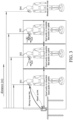
- the mobile phone can be worn by the user on-body (e.g., in a front pocket, back-pocket, or in a bag), or off-body (e.g., on a table or desk), as illustrated in FIG. 2 .
- a hearing device usually transmits at a power of 0 dBm.
- current mobile phones may transmit at a power of up to 20 dBm and the power level increases with each new generation of mobile phones.
- certain range zones can result in good audio for both the uplink (e.g., the wireless link from the hearing device to the mobile phone) and downlink (e.g., the wireless link from the mobile phone to the hearing device) (user 301), in good audio on the downlink only and bad audio on the uplink (user 302), and with bad audio on both the uplink and downlink (user 303).
- uplink e.g., the wireless link from the hearing device to the mobile phone
- downlink e.g., the wireless link from the mobile phone to the hearing device
- the location of the mobile phone can still affect the wireless link, as illustrated in FIGs. 4A-4C .
- the link quality remains acceptable ( FIG. 4A ).
- the link quality depends on the position of the user's arms. Specifically, when the mobile phone is worn by the user in the back pocket and the user's arms are up or away from the user's body, the link quality remains acceptable ( FIG. 4B ). However, when the mobile phone is worn by the user in the back pocket and the user's arms are down or close to the user's body, the link quality deteriorates ( FIG. 4C ).
- Some hearing devices are susceptible to wireless link asymmetry due to the different (e.g., asymmetric) transmit powers of the hearing device and the mobile phone, when the distance between the hearing device and the mobile phone exceeds a certain range.
- the wireless link asymmetry is illustrated in FIG. 5 .
- the hearing system described herein can control automatically (e.g., without manual intervention by the user) any asymmetry of the wireless links between the hearing device and the remote device, thereby improving the audio quality.
- the first (e.g., left) hearing device 14 can be connected to the remote device 12 via the wireless point-to-point link 20, which can conform to the Bluetooth protocol.
- a separate Bluetooth or a proprietary wireless link 28 may be formed between the first hearing device 14 and the second hearing device 16 for network management purposes and/or to coordinate actions between the first hearing device 14 and the second hearing device 16 concerning audio received from the remote device 12, for example.
- the first hearing device 14 can receive audio packets directly from the remote device 12 via the wireless link 20.
- the second (e.g., right) hearing device 16 can be configured to eavesdrop on (that is, can listen in on or observe) the Bluetooth link 20 between the mobile phone 12 and the first hearing device 14 to also receive the audio packets sent from the remote device 12 by picking up the audio sent by the mobile phone 12 to the first hearing device 14 and playing back this sound.
- the second hearing device 16 can be configured to eavesdrop on the Bluetooth link 20 between the mobile phone 12 and the first hearing device 14 via a communication link 30.
- the first hearing device 14 can be configured as a participant or an eavesdropper enabler (EDE) and the second hearing device 16 can be configured as an eavesdropper (ED).
- the eavesdropper and participant roles are not necessarily limited to the second hearing device 16 and the first hearing device 14, as illustrated in FIG. 1 , and can be reversed.
- the first (left) hearing device 14 could be the eavesdropper and the second (right) hearing device 16 could be the participant.
- the wireless link 20 may also be configured for bi-directional communications allowing transmission and receipt of audio packets, as well as transmission and receipt of acknowledgements (ACK) by the hearing devices 14, 16 that an audio packet was successfully received, for example.
- the wireless link 20 may further be configured for bidirectional communications between the first hearing device 14 and the mobile phone 12, allowing not only transmission and receipt of audio packets between the first hearing device 14 and the remote device 12, but also acknowledgements by the mobile phone 12 that an audio packet from the first hearing device 14 was successfully received.
- the bi-directional link 20 can minimize the number of audio packet re-transmissions when an audio packet has been received and no retransmission is necessary.
- the first hearing device 14 can transmit an error signal across the wireless link 20 to the remote device 12 to request retransmission of the audio packet.
- Such an error signal is called a negative acknowledge (NAK) in the Bluetooth specification, in opposition to the positive acknowledge (ACK).
- NAK negative acknowledge
- ACK positive acknowledge
- the remote device 12 can transmit an error signal across the wireless link 20 to the first hearing device 14 to request retransmission of the audio packet.
- the second hearing device 16 can transmit an error signal via the separate wireless link 28 to the first hearing device 14 to be forwarded to the remote device across the wireless link 20 requesting retransmission of the audio packet.
- the mobile phone 12 can transmit an error signal across the wireless link 20 to the first hearing device 14 to request retransmission of the audio packet.
- a packet In a point-to-point protocol, a packet is formatted in 8-bit bytes, and can include control information and data, which is also known as the payload. Control information can provide data for delivering the payload, such as source and destination network addresses, error detection codes, and sequencing information, for example. Typically, control information can be found in the packet header. An audio packet can be considered corrupted if at least one bit is erroneous. In digital transmission, the number of bit errors is the number of received bits of a data stream over a communication channel that has been altered due to noise, interference, distortion, or bit synchronization errors.
- a packet error rate (PER) (also known as packet error rate) of a transmission via the point-to-point protocol (e.g., the wireless link) is the number of incorrectly received data packets divided by the total number of received packets.
- the packet error rate (PER) is used to test and measure the performance of a receiver.
- the hearing system 10 is configured to notify the user about wireless link asymmetry when a bad audio state is detected.
- the transceiver 26', 26" of the first hearing device 14 and the second hearing device 16, respectively, may include its own Bluetooth on-board signal processor 23.
- the processor 23 of the transceiver 26' of the first hearing device 14 can be configured to measure or estimate the outgoing packet error rate (PerTx) on the wireless link 20 between the first hearing device 14 and the mobile phone 12.
- the processor 22' of the first hearing device 14 can be configured to measure or estimate the outgoing packet error rate (PerTx).
- the outgoing packet error rate (PerTx) on the wireless link 20 can be estimated by a processor of the mobile phone 12. The PerTx measurement is performed on the hearing device that is connected bi-directionally with the mobile phone 12.
- the hearing device that is connected bi-directionally with the mobile phone 12 is the first hearing device 14.
- the processor 23 of the transceiver 26' can be configured to compute the outgoing packet error rate PerTx by monitoring the number of the retransmissions from the first hearing device 14 towards the mobile phone 12. Retransmissions from the first hearing device 14 towards the mobile phone 12 are performed when an audio packet from the first hearing device 14 is not received or is received corrupted by the remote device 12. In this situation, the remote device 12 can transmit an error signal across the wireless link 20 to the first hearing device 14 to request retransmission of the audio packet.
- Step 1 the processor 23 of the transceiver 26' measures the outgoing packet error rate PerTx.
- Step 2 the processor 23 of the transceiver 26' checks whether the outgoing packet error rate PerTx is above a threshold T4 ("bad threshold").
- T4 a threshold
- the audio error rate above which audio is not understandable is typically around 20%, but may vary depending on context.
- a Bluetooth Hands-Free Profile (“HFP”) audio link may be configured to use two or three transmit attempts N T . Sometimes, even if a wireless link is negotiated by the mobile phone to use three transmits attempts, the third transmit attempt may not be listened to by the mobile phone. Therefore, typically only two transmit attempts are available even if the link allows for a third transmit.
- HFP Bluetooth Hands-Free Profile
- mSBC Modified SBC Codec
- PER Average Frame Error Rate
- Step 3 if the outgoing packet error rate PerTx is above the threshold T4, the processor 22' starts generating a bad audio warning to the user.
- the bad audio warning may be generated by the processor 23 of the transceiver 26'.
- the bad audio warning may be generated by the processor of the mobile phone 12.
- Step 4 if the outgoing packet error rate PerTx is not above the threshold T4, the processor 23 of the transceiver 26' measures again the outgoing packet error rate PerTx in Step 1.
- the bad audio warning can be a notification to the user of the bad outgoing audio link by playing one or more warning beeps (e.g., a beep sequence), artificially degrading the incoming audio link quality, or muting the incoming audio. Degrading the incoming audio link quality may be achieved for example via dropping a certain percentage (such as 20%, for example) of incoming audio packet.
- the goal of all of these warnings is to notify the user that the wireless link 20 is weak, which should prompt the user to bring the mobile phone 12 closer to the hearing device 14.
- the beep notification can be explicit, while the degrading and/or muting the incoming audio link quality can be intuitive.
- the notification about bad audio state can be made on both hearing devices, for example, by using a message transmitted via the wireless link 28 between the first and the second hearing devices that triggers the notification (as shown in FIG. 1 ).
- the bad audio notification is preferably applied during the entire time when the outgoing audio link is assumed to be in the bad audio state.
- the warning especially if it is a beep sequence, may be generated only when entering the bad audio state.
- Step 5 during bad audio state, the processor 23 of the transceiver 26' measures again the outgoing packet error rate PerTx, and in Step 6, the processor 23 of the transceiver 26' checks whether the outgoing packet error rate PerTx is below another threshold T3 (the "good threshold"), which is lower than the threshold T4. If the outgoing packet error rate PerTx is below the good audio threshold T3, in Step 7 the processor 23 of the transceiver 26' resumes normal audio playback.
- T3 the "good threshold”
- the value of the good audio threshold T3 can be chosen sufficiently below the bad audio threshold T4 to avoid rapid toggling between good and bad audio.
- the audio is understandable and a good audio state can be entered. Accordingly, the present example can select T3 to be 20%.
- Step 8 when the outgoing packet error rate PerTx is not below the threshold T3, the process continues with the processor 23 of the transceiver 26' measuring again the outgoing packet error rate PerTx in Step 5.
- the hearing system 10 is configured to automatically adapt the transmitted power of the hearing device as a function of the outgoing audio link packet error rate.
- the conducted transmit power is the transmit power that a radio frequency (RF) transmitter (e.g., radio chip) produces at its output or the transmit power of the radio chip measured when a power meter is connected to the radio chip in place of the antenna.
- RF radio frequency
- the effective radiated power (ERP) or the effective isotropic radiated power (EIRP), also known as a radiated power is the effective power produced at the output of the radio chip including the ability of the antenna to direct that power in a certain direction or in the direction of the antenna's strongest beam, respectively.
- the conducted transmit power is relevant for link asymmetry, since the effect of the antenna is symmetric on both the transmit and receive paths.
- the hearing device can decide autonomously whether to use a higher or a lower transmit power.
- This embodiment has the advantage of minimizing the power consumption in the hearing device via using a lower transmit power whenever possible.
- Step 1 the processor 23 of the transceiver 26' measures the outgoing packet error rate PerTx.
- Step 2 the processor 23 of the transceiver 26' checks whether the outgoing packet error rate PerTx is above a threshold T2.
- Step 3 if the outgoing packet error rate PerTx is above the threshold T2, the processor 23 of the transceiver 26' enters a high RF output power state.
- Step 4 if the outgoing packet error rate PerTx is not above the threshold T2, the processor 23 of the transceiver 26' measures again the outgoing packet error rate PerTx in Step 1.
- Step 5 during the high RF output power state, the processor 23 of the transceiver 26' measures again the outgoing packet error rate PerTx, and in Step 6, the processor 23 of the transceiver 26'checks whether the outgoing packet error rate PerTx is below another threshold T1, which is lower than the threshold T2. If the outgoing packet error rate PerTx is below the threshold T1, in Step 7 the processor 23 of the transceiver 26' enters the low RF output power state.
- Step 8 when the outgoing packet error rate PerTx is not below the threshold T1. the process continues with the processor 23 of the transceiver 26' measuring again the outgoing packet error rate PerTx in Step 5.
- the process illustrated in FIG. 7 can be seen as a two-step regulation loop.
- the thresholds T1 and T2 can determine the usage or non-usage of the high transmit power mode.
- T1 and T2 can preferably be selected such that the audio quality stays good. Accordingly, T2 can be preferably selected to be smaller than T3, with a value for T2 of 15%, for example.
- T1 can be selected to be smaller than T2, preferably with a value for T1 of 5%.
- a variation of the example illustrated in FIG. 7 could be for the processor 23 of the transceiver 26' to select a transmit power that is computed using a fine grain regulation loop algorithm that increases or decreases the transmit power, such as to reach a target value for the link quality metric.
- the invention includes a combination of the two examples described above and illustrated in FIGs. 6 and 7 .
- Step 1 the transceiver 26' measures the outgoing packet error rate PerTx.
- Step 2 the transceiver 26' checks whether the outgoing packet error rate PerTx is above a threshold T2.
- Step 3 if the outgoing packet error rate PerTx is above the threshold T2, the processor 23 of the transceiver 26' enters a high RF output power state.
- Step 4 if the outgoing packet error rate PerTx is not above the threshold T2, the processor 23 of the transceiver 26' measures again the outgoing packet error rate PerTx in Step 1.
- Step 5 during the high RF output power state, the processor 23 of the transceiver 26' measures again the outgoing packet error rate PerTx, and in Step 6, the processor 23 of the transceiver 26' checks whether the outgoing packet error rate PerTx is below a threshold T1, which is lower than the threshold T2. If the outgoing packet error rate PerTx is below the threshold T1, in Step 7 the processor 23 of the transceiver 26' enters the low RF output power state.
- Step 8 when the outgoing packet error rate PerTx is not below the threshold T1, the process continues in Step 9 with the processor 23 of the transceiver 26' checking whether the outgoing packet error rate PerTx is above T4.
- Step 11 if the outgoing packet error rate PerTx is not above the threshold T4 (e.g., if the outgoing packet error rate PerTx is below or equal to the threshold T4), the process continues with the processor 23 of the transceiver 26' measuring again the outgoing packet error rate PerTx in Step 5 and follows the same steps described above.
- Step 10 if the outgoing packet error rate PerTx is above threshold T4, the processor 22' starts generating a bad audio warning to the user.
- the bad audio warning may be generated by the processor 23 of the transceiver 26'.
- the processor 23 of the transceiver 26' measures again the outgoing packet error rate PerTx in Step 12 and in Step 13, checks whether the outgoing packet error rate PerTx is below another threshold T3 (good audio threshold), which is lower than the bad audio threshold T4. If the outgoing packet error rate PerTx is below the good audio threshold T3, in Step 14 the processor 23 of the transceiver 26' resumes normal audio playback. Because in Step 14, the RF power is still high the process continues with the processor 23 of the transceiver 26' measuring again the outgoing packet error rate PerTx in Step 5 and follows the same steps described above.
- Step 15 when the outgoing packet error rate PerTx is not below the threshold T3, the process continues with the processor 23 of the transceiver 26' measuring again the outgoing packet error rate PerTx in Step 12.
- the bad audio warning can be either a notification to the user of the bad outgoing audio link by playing one or more warning beeps (e.g., a beep sequence), or artificially degrading the incoming audio link quality, or muting the incoming audio.
- the goal of all of these warnings is to notify the user that the wireless link 20 is weak, which should prompt the user to bring the mobile phone 12 closer to the hearing device 14.
- the beep notification can be explicit, while the degrading and/or muting the incoming audio link quality can be intuitive.
- the notification about bad audio state can be made on both hearing devices, for example, by using a message transmitted via the wireless link 28 between the first and the second hearing devices that triggers the notification (as shown in FIG. 1 ).
- the thresholds T1, T2, T3, and T4 can be selected in the same manner described above with reference to the examples illustrated in FIGs. 6 and 7 , with preferably the following values respectively, 5%, 15%, 20% and 32%.
- eSCO Enhanced Synchronous connection-oriented
- SCO Synchronous connection-oriented
- eSCO Enhanced Synchronous connection-oriented
- the PerTx estimation can be based only on the first transmit attempt of every eSCO frame, and can include the following steps:
- the processor 23 of the transceiver 26' can retrieve transmit count (txCnt) and receive count (rxCnt), which indicate how many attempts have occurred to transmit and receive an audio frame, respectively.
- the processor 23 of the transceiver 26' can then check whether no header has been received or both rxCnt and txCnt are > 1 (i.e., whether neither the first reception nor the first transmit attempt was successful):
- the processor 23 of the transceiver 26' can set the value for the transmit error txError to 1.
- the processor 23 of the transceiver 26' can set txError to 1 if txCnt > 1 (i.e., the first transmit attempt was not successful) or to 0 otherwise.
- the value PerTx can be saturated at the threshold value T4 via the function min(X; T4), such that the time needed to reach the good audio state when the link is good again is fixed.
- the methods of the embodiments described above can apply to a wireless link that uses the isochronous transport option of the Bluetooth specification.
- a wireless link that uses the isochronous transport option of the Bluetooth specification.
- For certain communication links only a limited amount of delay is allowed and retransmissions are allowed up to a certain limit at which the current payload must be disregarded and the next payload must be considered. This data transfer is known as isochronous traffic.
- the retransmit process must be overruled in order to continue with the next data payload. Aborting the retransmit scheme can be accomplished by flushing the old data and forcing the Bluetooth controller to take the next data instead.
- the variable "a” sets the moving average speed. This parameter can be chosen as a trade-off between speed of bad link detection and accuracy of measurement.
- the audio link quality may be estimated via Received Signal Strength Indicator ("RSSI"). Specifically, instead of keeping statistics of the effective errors on the outgoing audio link, the signal strength of the incoming audio link can be measured and the expected audio link quality can be deduced on the outgoing link.
- RSSI Received Signal Strength Indicator
- the incoming audio quality may be monitored via packet error statistics.
- a notification can be transmitted to the user when the audio quality is bad in either or in both the incoming and outgoing directions.
Landscapes
- Engineering & Computer Science (AREA)
- Signal Processing (AREA)
- Computer Networks & Wireless Communication (AREA)
- Health & Medical Sciences (AREA)
- General Health & Medical Sciences (AREA)
- Neurosurgery (AREA)
- Otolaryngology (AREA)
- Physics & Mathematics (AREA)
- Acoustics & Sound (AREA)
- Mobile Radio Communication Systems (AREA)
- Telephone Function (AREA)
Claims (10)
- Système auditif (10) comprenant un dispositif distant (12) et un appareil auditif (14, 16), l'appareil auditif comprenant :un processeur (22', 22", 23', 23") ; etun émetteur-récepteur sans fil (26', 26") connecté de manière opérationnelle au processeur, l'émetteur-récepteur sans fil étant configuré pour se connecter par le biais d'une liaison sans fil (20) au dispositif distant, et étant configuré pour échanger des paquets audio bidirectionnels avec le dispositif distant, dans lequel :une puissance d'émission du dispositif distant est supérieure à une puissance d'émission de l'appareil auditif, etle processeur est configuré pour :estimer un premier taux d'erreur de paquets de liaison audio sortante d'une émission depuis l'appareil auditif par le biais de la liaison sans fil,adapter la puissance d'émission de l'appareil auditif en fonction du premier taux d'erreur de paquets de liaison audio sortante en entrant dans un état de puissance de sortie radiofréquence, RF, lorsque ledit premier taux d'erreur de paquets de liaison audio sortante dépasse un premier seuil prédéterminé (T2) ;estimer, dans l'état de puissance de sortie RF élevée, un second taux d'erreur de paquets de liaison audio sortante d'une émission depuis l'appareil auditif par le biais de la liaison sans fil,adapter une puissance d'émission de l'appareil auditif en fonction du second taux d'erreur de paquets de liaison audio sortante en entrant dans un état de puissance de sortie RF faible lorsque ledit second taux d'erreur de paquets de liaison audio sortante est inférieur à un deuxième seuil prédéterminé (T1) qui est inférieur au premier seuil, etgénérer une notification vers l'utilisateur de l'appareil auditif lorsque ledit second taux d'erreur de paquets de liaison audio sortante n'est pas inférieur au deuxième seuil prédéterminé et dépasse un troisième seuil prédéterminé (T4) qui est supérieur au premier seuil prédéterminé.
- Système auditif selon la revendication 1, dans lequel la notification comprend au moins l'un d'un bip unique, d'une séquence de bips, d'une dégradation artificielle d'une qualité d'audio entrant et d'une mise en sourdine d'audio entrant.
- Système auditif selon la revendication 1, dans lequel la liaison sans fil (20) est conforme à la spécification Bluetooth.
- Système auditif selon la revendication 3, dans lequel la liaison sans fil (20) est conforme à un profil mains libres (« HFP »») de la spécification Bluetooth.
- Système auditif selon la revendication 3, dans lequel la liaison sans fil (20) est configurée pour utiliser une option de transport synchrone amélioré orienté connexion (« eSCO ») de la spécification Bluetooth ou une option de transport isochrone de la spécification Bluetooth.
- Système auditif selon la revendication 1, dans lequel les premier et second taux d'erreur de paquets de liaison audio sortante sont estimés en surveillant un nombre de réémissions nécessaires depuis l'appareil auditif (14, 16) vers le dispositif distant (12).
- Système auditif selon la revendication 1, dans lequel les premier et second taux d'erreur de paquets de liaison audio sortante sont estimés en surveillant les accusés de réception émis par le dispositif distant (12) en rapport avec les paquets audio reçus par le dispositif distant.
- Système auditif selon la revendication 1, dans lequel le processeur fait partie de l'émetteur-récepteur sans fil.
- Système auditif selon la revendication 1, dans lequel le dispositif distant (12) est au moins l'un d'un téléphone mobile, d'un téléphone de téléphonie sans fil améliorée, DECT, d'un téléphone fixe, d'une tablette ou d'un ordinateur.
- Procédé de commande de la qualité audio dans un appareil auditif (14, 16) comprenant un processeur (22', 22", 23', 23") et un émetteur-récepteur sans fil (26', 26") connecté de manière opérationnelle au processeur, l'émetteur-récepteur sans fil étant configuré pour se connecter par le biais d'une liaison sans fil (20) à un dispositif distant et pour échanger des paquets audio bidirectionnels avec le dispositif distant, le procédé comprenant :l'estimation d'un premier taux d'erreur de paquets de liaison audio sortante d'une émission depuis l'appareil auditif par le biais de la liaison sans fil,l'adaptation d'une puissance d'émission de l'appareil auditif en fonction du premier taux d'erreur de paquets de liaison audio sortante en entrant dans un état de puissance de sortie radiofréquence, RF, lorsque ledit premier taux d'erreur de paquets de liaison audio sortante dépasse un premier seuil prédéterminé (T2) ;l'estimation, dans l'état de puissance de sortie RF élevée, d'un second taux d'erreur de paquets de liaison audio sortante d'une émission depuis l'appareil auditif par le biais de la liaison sans fil,l'adaptation d'une puissance d'émission de l'appareil auditif en fonction du second taux d'erreur de paquets de liaison audio sortante en entrant dans un état de puissance de sortie RF faible lorsque ledit second taux d'erreur de paquets de liaison audio sortante est inférieur à un deuxième seuil prédéterminé (T1) qui est inférieur au premier seuil ; etla génération et l'envoi d'une notification vers l'utilisateur de l'appareil auditif lorsque le second taux d'erreur de paquets de liaison audio sortante n'est pas inférieur au deuxième seuil prédéterminé et dépasse un troisième seuil prédéterminé (T4) qui est supérieur au premier seuil prédéterminé.
Applications Claiming Priority (1)
| Application Number | Priority Date | Filing Date | Title |
|---|---|---|---|
| US16/739,593 US11438714B2 (en) | 2020-01-10 | 2020-01-10 | Method for ensuring symmetric audio quality for hands-free phoning |
Publications (2)
| Publication Number | Publication Date |
|---|---|
| EP3849214A1 EP3849214A1 (fr) | 2021-07-14 |
| EP3849214B1 true EP3849214B1 (fr) | 2024-11-27 |
Family
ID=73789963
Family Applications (1)
| Application Number | Title | Priority Date | Filing Date |
|---|---|---|---|
| EP20212804.7A Active EP3849214B1 (fr) | 2020-01-10 | 2020-12-09 | Procédé pour garantir la qualité audio symétrique d'appels mains libres |
Country Status (2)
| Country | Link |
|---|---|
| US (3) | US11438714B2 (fr) |
| EP (1) | EP3849214B1 (fr) |
Families Citing this family (5)
| Publication number | Priority date | Publication date | Assignee | Title |
|---|---|---|---|---|
| US11438714B2 (en) * | 2020-01-10 | 2022-09-06 | Sonova Ag | Method for ensuring symmetric audio quality for hands-free phoning |
| CN113259917B (zh) * | 2021-04-23 | 2022-09-20 | 南京矽力微电子技术有限公司 | 蓝牙自适应速率选择方法和蓝牙通讯模块 |
| US11870595B2 (en) * | 2021-08-24 | 2024-01-09 | Rohde & Schwarz Gmbh & Co. Kg | Method and test device for performing packet error rate measurement |
| CN113852446B (zh) | 2021-09-24 | 2023-05-30 | 上海物骐微电子有限公司 | 无线通信系统及方法 |
| CN114430528B (zh) * | 2021-12-17 | 2023-08-11 | 珠海格力电器股份有限公司 | 声音数据的播放方法、装置、电子设备及存储介质 |
Citations (6)
| Publication number | Priority date | Publication date | Assignee | Title |
|---|---|---|---|---|
| US20050097409A1 (en) | 2003-10-30 | 2005-05-05 | Cheol-Ho Shin | Method for controlling power level based on packet error rate in wireless personal area network system |
| US7082107B1 (en) | 2001-11-26 | 2006-07-25 | Intel Corporation | Power control in wireless communications based on estimations of packet error rate |
| US20130251180A1 (en) | 2008-09-03 | 2013-09-26 | Starkey Laboratories, Inc. | Systems and methods for managing wireless communication links for hearing assistance devices |
| US20160066267A1 (en) | 2014-09-02 | 2016-03-03 | Apple Inc. | Power adaptation during communication for improved margin |
| EP3182621A1 (fr) | 2015-12-15 | 2017-06-21 | Starkey Laboratories, Inc. | Application de diagnostic de qualité de liaison |
| US20190075408A1 (en) | 2017-09-07 | 2019-03-07 | Oticon A/S | Power management in low power wireless link in a hearing aid system |
Family Cites Families (11)
| Publication number | Priority date | Publication date | Assignee | Title |
|---|---|---|---|---|
| US7937118B2 (en) * | 2001-10-30 | 2011-05-03 | Unwired Technology Llc | Wireless audio distribution system with range based slow muting |
| CN101809826B (zh) * | 2007-01-06 | 2014-06-04 | 苹果公司 | 依照确定的啮合连接器的方向选择性路由信号的耳机连接器 |
| US9238144B2 (en) | 2013-03-14 | 2016-01-19 | Neuropace, Inc. | Optimizing data retrieval from an active implantable medical device |
| US20140270288A1 (en) | 2013-03-15 | 2014-09-18 | Starkey Laboratories, Inc. | Method and apparatus to display interference for a wireless hearing assistance device programmer |
| US9307429B2 (en) | 2014-03-27 | 2016-04-05 | Google Technology Holdings LLC | Selective user notification for link termination events in wireless personal area network |
| WO2018141789A1 (fr) * | 2017-02-03 | 2018-08-09 | Widex A/S | Canaux de communication entre un dispositif de communication personnel et au moins un dispositif porté sur la tête |
| TWI668972B (zh) * | 2018-02-13 | 2019-08-11 | 絡達科技股份有限公司 | 無線音訊輸出裝置 |
| US10785818B2 (en) * | 2018-09-20 | 2020-09-22 | Qualcomm Incorporated | Coordination between wireless audio devices |
| US10506361B1 (en) * | 2018-11-29 | 2019-12-10 | Qualcomm Incorporated | Immersive sound effects based on tracked position |
| US11013062B2 (en) * | 2019-01-31 | 2021-05-18 | Qualcomm Incorporated | Fast role switch between bluetooth true wireless stereo (TWS) earbuds |
| US11438714B2 (en) * | 2020-01-10 | 2022-09-06 | Sonova Ag | Method for ensuring symmetric audio quality for hands-free phoning |
-
2020
- 2020-01-10 US US16/739,593 patent/US11438714B2/en active Active
- 2020-12-09 EP EP20212804.7A patent/EP3849214B1/fr active Active
-
2022
- 2022-08-05 US US17/817,787 patent/US20220377474A1/en not_active Abandoned
-
2023
- 2023-12-01 US US18/526,552 patent/US12457460B2/en active Active
Patent Citations (6)
| Publication number | Priority date | Publication date | Assignee | Title |
|---|---|---|---|---|
| US7082107B1 (en) | 2001-11-26 | 2006-07-25 | Intel Corporation | Power control in wireless communications based on estimations of packet error rate |
| US20050097409A1 (en) | 2003-10-30 | 2005-05-05 | Cheol-Ho Shin | Method for controlling power level based on packet error rate in wireless personal area network system |
| US20130251180A1 (en) | 2008-09-03 | 2013-09-26 | Starkey Laboratories, Inc. | Systems and methods for managing wireless communication links for hearing assistance devices |
| US20160066267A1 (en) | 2014-09-02 | 2016-03-03 | Apple Inc. | Power adaptation during communication for improved margin |
| EP3182621A1 (fr) | 2015-12-15 | 2017-06-21 | Starkey Laboratories, Inc. | Application de diagnostic de qualité de liaison |
| US20190075408A1 (en) | 2017-09-07 | 2019-03-07 | Oticon A/S | Power management in low power wireless link in a hearing aid system |
Also Published As
| Publication number | Publication date |
|---|---|
| US20210219075A1 (en) | 2021-07-15 |
| US20240107241A1 (en) | 2024-03-28 |
| US20220377474A1 (en) | 2022-11-24 |
| EP3849214A1 (fr) | 2021-07-14 |
| US11438714B2 (en) | 2022-09-06 |
| US12457460B2 (en) | 2025-10-28 |
Similar Documents
| Publication | Publication Date | Title |
|---|---|---|
| EP3849214B1 (fr) | Procédé pour garantir la qualité audio symétrique d'appels mains libres | |
| US11083031B1 (en) | Bluetooth audio exchange with transmission diversity | |
| CN104640043B (zh) | 包括两个无线接口的双耳助听系统 | |
| AU2009245803B2 (en) | A short range, uni-directional wireless link | |
| EP3849215B1 (fr) | Transmission de deux flux audio sans fil permettant la diversité spatiale ou la capture de sa propre voix (ovpu) | |
| CN105101010B (zh) | 数字音频无线发送的方法 | |
| CN107258058A (zh) | 天线分集切换的系统及方法 | |
| US12193089B2 (en) | Link margin improvements using a variable physical layer symbol rate | |
| US10993052B2 (en) | Selecting audio input from a hearing device and a mobile device | |
| EP3890356B1 (fr) | Échange audio bluetooth avec diversité de transmission | |
| CN109587616B (zh) | 一种助听器系统 | |
| US11006226B2 (en) | Binaural hearing aid system and a method of operating a binaural hearing aid system | |
| US9900839B2 (en) | Method and device for using token count for managing power consumption in a wireless network | |
| US20210400688A1 (en) | Operating more than one Wireless Communication Protocol with a Coexistence Window | |
| US11012798B2 (en) | Calibration for self fitting and hearing devices | |
| US10979104B1 (en) | Diverse eavesdropping for a hearing device | |
| WO2024102599A1 (fr) | Améliorations de marge de liaison au moyen d'un débit de symbole de couche physique variable | |
| WO2024220850A1 (fr) | Correction d'erreurs de liaison orientée connexion asynchrone bluetooth |
Legal Events
| Date | Code | Title | Description |
|---|---|---|---|
| PUAI | Public reference made under article 153(3) epc to a published international application that has entered the european phase |
Free format text: ORIGINAL CODE: 0009012 |
|
| STAA | Information on the status of an ep patent application or granted ep patent |
Free format text: STATUS: THE APPLICATION HAS BEEN PUBLISHED |
|
| AK | Designated contracting states |
Kind code of ref document: A1 Designated state(s): AL AT BE BG CH CY CZ DE DK EE ES FI FR GB GR HR HU IE IS IT LI LT LU LV MC MK MT NL NO PL PT RO RS SE SI SK SM TR |
|
| STAA | Information on the status of an ep patent application or granted ep patent |
Free format text: STATUS: REQUEST FOR EXAMINATION WAS MADE |
|
| 17P | Request for examination filed |
Effective date: 20220110 |
|
| RBV | Designated contracting states (corrected) |
Designated state(s): AL AT BE BG CH CY CZ DE DK EE ES FI FR GB GR HR HU IE IS IT LI LT LU LV MC MK MT NL NO PL PT RO RS SE SI SK SM TR |
|
| STAA | Information on the status of an ep patent application or granted ep patent |
Free format text: STATUS: EXAMINATION IS IN PROGRESS |
|
| 17Q | First examination report despatched |
Effective date: 20230613 |
|
| GRAP | Despatch of communication of intention to grant a patent |
Free format text: ORIGINAL CODE: EPIDOSNIGR1 |
|
| STAA | Information on the status of an ep patent application or granted ep patent |
Free format text: STATUS: GRANT OF PATENT IS INTENDED |
|
| GRAJ | Information related to disapproval of communication of intention to grant by the applicant or resumption of examination proceedings by the epo deleted |
Free format text: ORIGINAL CODE: EPIDOSDIGR1 |
|
| STAA | Information on the status of an ep patent application or granted ep patent |
Free format text: STATUS: EXAMINATION IS IN PROGRESS |
|
| GRAP | Despatch of communication of intention to grant a patent |
Free format text: ORIGINAL CODE: EPIDOSNIGR1 |
|
| STAA | Information on the status of an ep patent application or granted ep patent |
Free format text: STATUS: GRANT OF PATENT IS INTENDED |
|
| INTG | Intention to grant announced |
Effective date: 20240612 |
|
| INTC | Intention to grant announced (deleted) | ||
| INTG | Intention to grant announced |
Effective date: 20240701 |
|
| GRAS | Grant fee paid |
Free format text: ORIGINAL CODE: EPIDOSNIGR3 |
|
| GRAA | (expected) grant |
Free format text: ORIGINAL CODE: 0009210 |
|
| STAA | Information on the status of an ep patent application or granted ep patent |
Free format text: STATUS: THE PATENT HAS BEEN GRANTED |
|
| AK | Designated contracting states |
Kind code of ref document: B1 Designated state(s): AL AT BE BG CH CY CZ DE DK EE ES FI FR GB GR HR HU IE IS IT LI LT LU LV MC MK MT NL NO PL PT RO RS SE SI SK SM TR |
|
| REG | Reference to a national code |
Ref country code: GB Ref legal event code: FG4D |
|
| REG | Reference to a national code |
Ref country code: CH Ref legal event code: EP |
|
| P01 | Opt-out of the competence of the unified patent court (upc) registered |
Free format text: CASE NUMBER: APP_60184/2024 Effective date: 20241107 |
|
| REG | Reference to a national code |
Ref country code: IE Ref legal event code: FG4D |
|
| REG | Reference to a national code |
Ref country code: DE Ref legal event code: R096 Ref document number: 602020041979 Country of ref document: DE |
|
| REG | Reference to a national code |
Ref country code: LT Ref legal event code: MG9D |
|
| REG | Reference to a national code |
Ref country code: NL Ref legal event code: MP Effective date: 20241127 |
|
| PG25 | Lapsed in a contracting state [announced via postgrant information from national office to epo] |
Ref country code: PT Free format text: LAPSE BECAUSE OF FAILURE TO SUBMIT A TRANSLATION OF THE DESCRIPTION OR TO PAY THE FEE WITHIN THE PRESCRIBED TIME-LIMIT Effective date: 20250327 Ref country code: HR Free format text: LAPSE BECAUSE OF FAILURE TO SUBMIT A TRANSLATION OF THE DESCRIPTION OR TO PAY THE FEE WITHIN THE PRESCRIBED TIME-LIMIT Effective date: 20241127 Ref country code: IS Free format text: LAPSE BECAUSE OF FAILURE TO SUBMIT A TRANSLATION OF THE DESCRIPTION OR TO PAY THE FEE WITHIN THE PRESCRIBED TIME-LIMIT Effective date: 20250327 |
|
| PG25 | Lapsed in a contracting state [announced via postgrant information from national office to epo] |
Ref country code: FI Free format text: LAPSE BECAUSE OF FAILURE TO SUBMIT A TRANSLATION OF THE DESCRIPTION OR TO PAY THE FEE WITHIN THE PRESCRIBED TIME-LIMIT Effective date: 20241127 Ref country code: NL Free format text: LAPSE BECAUSE OF FAILURE TO SUBMIT A TRANSLATION OF THE DESCRIPTION OR TO PAY THE FEE WITHIN THE PRESCRIBED TIME-LIMIT Effective date: 20241127 |
|
| REG | Reference to a national code |
Ref country code: AT Ref legal event code: MK05 Ref document number: 1746918 Country of ref document: AT Kind code of ref document: T Effective date: 20241127 |
|
| PG25 | Lapsed in a contracting state [announced via postgrant information from national office to epo] |
Ref country code: BG Free format text: LAPSE BECAUSE OF FAILURE TO SUBMIT A TRANSLATION OF THE DESCRIPTION OR TO PAY THE FEE WITHIN THE PRESCRIBED TIME-LIMIT Effective date: 20241127 |
|
| PG25 | Lapsed in a contracting state [announced via postgrant information from national office to epo] |
Ref country code: ES Free format text: LAPSE BECAUSE OF FAILURE TO SUBMIT A TRANSLATION OF THE DESCRIPTION OR TO PAY THE FEE WITHIN THE PRESCRIBED TIME-LIMIT Effective date: 20241127 |
|
| PG25 | Lapsed in a contracting state [announced via postgrant information from national office to epo] |
Ref country code: NO Free format text: LAPSE BECAUSE OF FAILURE TO SUBMIT A TRANSLATION OF THE DESCRIPTION OR TO PAY THE FEE WITHIN THE PRESCRIBED TIME-LIMIT Effective date: 20250227 |
|
| PG25 | Lapsed in a contracting state [announced via postgrant information from national office to epo] |
Ref country code: LV Free format text: LAPSE BECAUSE OF FAILURE TO SUBMIT A TRANSLATION OF THE DESCRIPTION OR TO PAY THE FEE WITHIN THE PRESCRIBED TIME-LIMIT Effective date: 20241127 Ref country code: GR Free format text: LAPSE BECAUSE OF FAILURE TO SUBMIT A TRANSLATION OF THE DESCRIPTION OR TO PAY THE FEE WITHIN THE PRESCRIBED TIME-LIMIT Effective date: 20250228 Ref country code: AT Free format text: LAPSE BECAUSE OF FAILURE TO SUBMIT A TRANSLATION OF THE DESCRIPTION OR TO PAY THE FEE WITHIN THE PRESCRIBED TIME-LIMIT Effective date: 20241127 |
|
| PG25 | Lapsed in a contracting state [announced via postgrant information from national office to epo] |
Ref country code: PL Free format text: LAPSE BECAUSE OF FAILURE TO SUBMIT A TRANSLATION OF THE DESCRIPTION OR TO PAY THE FEE WITHIN THE PRESCRIBED TIME-LIMIT Effective date: 20241127 |
|
| PG25 | Lapsed in a contracting state [announced via postgrant information from national office to epo] |
Ref country code: RS Free format text: LAPSE BECAUSE OF FAILURE TO SUBMIT A TRANSLATION OF THE DESCRIPTION OR TO PAY THE FEE WITHIN THE PRESCRIBED TIME-LIMIT Effective date: 20250227 |
|
| PG25 | Lapsed in a contracting state [announced via postgrant information from national office to epo] |
Ref country code: SM Free format text: LAPSE BECAUSE OF FAILURE TO SUBMIT A TRANSLATION OF THE DESCRIPTION OR TO PAY THE FEE WITHIN THE PRESCRIBED TIME-LIMIT Effective date: 20241127 |
|
| PG25 | Lapsed in a contracting state [announced via postgrant information from national office to epo] |
Ref country code: DK Free format text: LAPSE BECAUSE OF FAILURE TO SUBMIT A TRANSLATION OF THE DESCRIPTION OR TO PAY THE FEE WITHIN THE PRESCRIBED TIME-LIMIT Effective date: 20241127 |
|
| PG25 | Lapsed in a contracting state [announced via postgrant information from national office to epo] |
Ref country code: EE Free format text: LAPSE BECAUSE OF FAILURE TO SUBMIT A TRANSLATION OF THE DESCRIPTION OR TO PAY THE FEE WITHIN THE PRESCRIBED TIME-LIMIT Effective date: 20241127 |
|
| PG25 | Lapsed in a contracting state [announced via postgrant information from national office to epo] |
Ref country code: RO Free format text: LAPSE BECAUSE OF FAILURE TO SUBMIT A TRANSLATION OF THE DESCRIPTION OR TO PAY THE FEE WITHIN THE PRESCRIBED TIME-LIMIT Effective date: 20241127 |
|
| PG25 | Lapsed in a contracting state [announced via postgrant information from national office to epo] |
Ref country code: SK Free format text: LAPSE BECAUSE OF FAILURE TO SUBMIT A TRANSLATION OF THE DESCRIPTION OR TO PAY THE FEE WITHIN THE PRESCRIBED TIME-LIMIT Effective date: 20241127 |
|
| PG25 | Lapsed in a contracting state [announced via postgrant information from national office to epo] |
Ref country code: CZ Free format text: LAPSE BECAUSE OF FAILURE TO SUBMIT A TRANSLATION OF THE DESCRIPTION OR TO PAY THE FEE WITHIN THE PRESCRIBED TIME-LIMIT Effective date: 20241127 |
|
| PG25 | Lapsed in a contracting state [announced via postgrant information from national office to epo] |
Ref country code: IT Free format text: LAPSE BECAUSE OF FAILURE TO SUBMIT A TRANSLATION OF THE DESCRIPTION OR TO PAY THE FEE WITHIN THE PRESCRIBED TIME-LIMIT Effective date: 20241127 |
|
| REG | Reference to a national code |
Ref country code: CH Ref legal event code: PL |
|
| PG25 | Lapsed in a contracting state [announced via postgrant information from national office to epo] |
Ref country code: LU Free format text: LAPSE BECAUSE OF NON-PAYMENT OF DUE FEES Effective date: 20241209 |
|
| REG | Reference to a national code |
Ref country code: DE Ref legal event code: R026 Ref document number: 602020041979 Country of ref document: DE |
|
| PLBI | Opposition filed |
Free format text: ORIGINAL CODE: 0009260 |
|
| PLAX | Notice of opposition and request to file observation + time limit sent |
Free format text: ORIGINAL CODE: EPIDOSNOBS2 |
|
| PG25 | Lapsed in a contracting state [announced via postgrant information from national office to epo] |
Ref country code: SE Free format text: LAPSE BECAUSE OF FAILURE TO SUBMIT A TRANSLATION OF THE DESCRIPTION OR TO PAY THE FEE WITHIN THE PRESCRIBED TIME-LIMIT Effective date: 20241127 |
|
| PG25 | Lapsed in a contracting state [announced via postgrant information from national office to epo] |
Ref country code: MC Free format text: LAPSE BECAUSE OF FAILURE TO SUBMIT A TRANSLATION OF THE DESCRIPTION OR TO PAY THE FEE WITHIN THE PRESCRIBED TIME-LIMIT Effective date: 20241127 |
|
| 26 | Opposition filed |
Opponent name: OTICON A/S Effective date: 20250827 |
|
| REG | Reference to a national code |
Ref country code: BE Ref legal event code: MM Effective date: 20241231 |
|
| PG25 | Lapsed in a contracting state [announced via postgrant information from national office to epo] |
Ref country code: BE Free format text: LAPSE BECAUSE OF NON-PAYMENT OF DUE FEES Effective date: 20241231 |
|
| PG25 | Lapsed in a contracting state [announced via postgrant information from national office to epo] |
Ref country code: CH Free format text: LAPSE BECAUSE OF NON-PAYMENT OF DUE FEES Effective date: 20241231 |
|
| PG25 | Lapsed in a contracting state [announced via postgrant information from national office to epo] |
Ref country code: IE Free format text: LAPSE BECAUSE OF NON-PAYMENT OF DUE FEES Effective date: 20241209 |
|
| PGFP | Annual fee paid to national office [announced via postgrant information from national office to epo] |
Ref country code: GB Payment date: 20251229 Year of fee payment: 6 |
|
| PLBB | Reply of patent proprietor to notice(s) of opposition received |
Free format text: ORIGINAL CODE: EPIDOSNOBS3 |
|
| PGFP | Annual fee paid to national office [announced via postgrant information from national office to epo] |
Ref country code: FR Payment date: 20251226 Year of fee payment: 6 |
|
| PGFP | Annual fee paid to national office [announced via postgrant information from national office to epo] |
Ref country code: DE Payment date: 20251229 Year of fee payment: 6 |