EP3849271B1 - Procédé et appareil de communication - Google Patents
Procédé et appareil de communication Download PDFInfo
- Publication number
- EP3849271B1 EP3849271B1 EP18935796.5A EP18935796A EP3849271B1 EP 3849271 B1 EP3849271 B1 EP 3849271B1 EP 18935796 A EP18935796 A EP 18935796A EP 3849271 B1 EP3849271 B1 EP 3849271B1
- Authority
- EP
- European Patent Office
- Prior art keywords
- indicate
- uplink data
- indication information
- terminal device
- demodulated
- Prior art date
- Legal status (The legal status is an assumption and is not a legal conclusion. Google has not performed a legal analysis and makes no representation as to the accuracy of the status listed.)
- Active
Links
Images


Classifications
-
- H—ELECTRICITY
- H04—ELECTRIC COMMUNICATION TECHNIQUE
- H04W—WIRELESS COMMUNICATION NETWORKS
- H04W74/00—Wireless channel access
- H04W74/002—Transmission of channel access control information
- H04W74/006—Transmission of channel access control information in the downlink, i.e. towards the terminal
-
- H—ELECTRICITY
- H04—ELECTRIC COMMUNICATION TECHNIQUE
- H04W—WIRELESS COMMUNICATION NETWORKS
- H04W72/00—Local resource management
- H04W72/50—Allocation or scheduling criteria for wireless resources
- H04W72/53—Allocation or scheduling criteria for wireless resources based on regulatory allocation policies
-
- H—ELECTRICITY
- H04—ELECTRIC COMMUNICATION TECHNIQUE
- H04L—TRANSMISSION OF DIGITAL INFORMATION, e.g. TELEGRAPHIC COMMUNICATION
- H04L1/00—Arrangements for detecting or preventing errors in the information received
- H04L1/12—Arrangements for detecting or preventing errors in the information received by using return channel
- H04L1/16—Arrangements for detecting or preventing errors in the information received by using return channel in which the return channel carries supervisory signals, e.g. repetition request signals
- H04L1/1607—Details of the supervisory signal
- H04L1/1671—Details of the supervisory signal the supervisory signal being transmitted together with control information
-
- H—ELECTRICITY
- H04—ELECTRIC COMMUNICATION TECHNIQUE
- H04L—TRANSMISSION OF DIGITAL INFORMATION, e.g. TELEGRAPHIC COMMUNICATION
- H04L1/00—Arrangements for detecting or preventing errors in the information received
- H04L1/12—Arrangements for detecting or preventing errors in the information received by using return channel
- H04L1/16—Arrangements for detecting or preventing errors in the information received by using return channel in which the return channel carries supervisory signals, e.g. repetition request signals
- H04L1/18—Automatic repetition systems, e.g. Van Duuren systems
- H04L1/1829—Arrangements specially adapted for the receiver end
- H04L1/1864—ARQ related signaling
-
- H—ELECTRICITY
- H04—ELECTRIC COMMUNICATION TECHNIQUE
- H04W—WIRELESS COMMUNICATION NETWORKS
- H04W72/00—Local resource management
- H04W72/20—Control channels or signalling for resource management
- H04W72/23—Control channels or signalling for resource management in the downlink direction of a wireless link, i.e. towards a terminal
-
- H—ELECTRICITY
- H04—ELECTRIC COMMUNICATION TECHNIQUE
- H04W—WIRELESS COMMUNICATION NETWORKS
- H04W76/00—Connection management
- H04W76/30—Connection release
- H04W76/34—Selective release of ongoing connections
- H04W76/36—Selective release of ongoing connections for reassigning the resources associated with the released connections
-
- H—ELECTRICITY
- H04—ELECTRIC COMMUNICATION TECHNIQUE
- H04W—WIRELESS COMMUNICATION NETWORKS
- H04W74/00—Wireless channel access
- H04W74/08—Non-scheduled access, e.g. ALOHA
- H04W74/0833—Random access procedures, e.g. with 4-step access
-
- H—ELECTRICITY
- H04—ELECTRIC COMMUNICATION TECHNIQUE
- H04W—WIRELESS COMMUNICATION NETWORKS
- H04W76/00—Connection management
- H04W76/20—Manipulation of established connections
- H04W76/27—Transitions between radio resource control [RRC] states
-
- Y—GENERAL TAGGING OF NEW TECHNOLOGICAL DEVELOPMENTS; GENERAL TAGGING OF CROSS-SECTIONAL TECHNOLOGIES SPANNING OVER SEVERAL SECTIONS OF THE IPC; TECHNICAL SUBJECTS COVERED BY FORMER USPC CROSS-REFERENCE ART COLLECTIONS [XRACs] AND DIGESTS
- Y02—TECHNOLOGIES OR APPLICATIONS FOR MITIGATION OR ADAPTATION AGAINST CLIMATE CHANGE
- Y02D—CLIMATE CHANGE MITIGATION TECHNOLOGIES IN INFORMATION AND COMMUNICATION TECHNOLOGIES [ICT], I.E. INFORMATION AND COMMUNICATION TECHNOLOGIES AIMING AT THE REDUCTION OF THEIR OWN ENERGY USE
- Y02D30/00—Reducing energy consumption in communication networks
- Y02D30/70—Reducing energy consumption in communication networks in wireless communication networks
Definitions
- This application relates to the field of wireless communications technologies, and in particular, to a communication method and a communications apparatus.
- a narrowband internet of things is a network oriented towards machine type communication (machine type communication, MTC), and is an important network in the future communications field.
- Internet-of-things communication is mainly applied to scenarios such as smart metering, medical detection and monitoring, logistics detection, industrial detection and monitoring, an internet of vehicles, intelligent communities, and wearable-device communication.
- the terminal device when a terminal device needs to transmit uplink data, the terminal device needs to request an uplink resource from a base station. Then, the base station delivers uplink transmission scheduling information based on a request of the terminal device. The terminal device transmits the uplink data based on an uplink resource scheduled based on the uplink transmission scheduling information.
- the base station sends downlink control information (downlink control information, DCI) of a corresponding format (format) based on a demodulation status of the uplink data.
- DCI downlink control information
- the format of the DCI includes DCI format N0, DCI format N1, and the like.
- Uplink scheduling-free transmission may also be referred to as grant-free transmission, uplink transmission in preconfigured resources, transmission in preconfigured UL resources, or the like, and is referred to as uplink scheduling-free transmission hereinafter.
- a base station preconfigures an uplink scheduling-free resource for a terminal device.
- the terminal device When the terminal device needs to transmit uplink data, the terminal device directly transmits the uplink data on the preconfigured resource in a pre-specified sending manner.
- the base station sends feedback information based on a demodulation status of the uplink data.
- the UE may either (i) perform a HARQ retransmission using the same resources and DMRS sequence as the first time, (ii) receive a new dedicated grant for retransmission, (iii) perform a (UE initiated or eNB initiated) fallback to legacy PRACH-based random access or to the Early Data Transmission (EDT) mode introduced in Release 15.
- EDT Early Data Transmission
- the response message from the eNB may also contain additional information, such as timing advance refinements and power control updates.
- 3GPP DRAFT R1-1808431 discloses that the TA command can be provided by the eNodeB in a RAR and that the DCI can indicate ACK/NACK.
- US 2018/099359 A1 provides a method for a user equipment for grant free transmissions, the method involving receiving, from a network equipment, a radio resource control (RRC) signaling indicating an uplink grant free transmission resource configuration for the transmission and re-transmission of uplink data, the uplink grant free transmission resource configuration including a time resource, a frequency resource, reference signal resource information, and an interval between two grant free transmission opportunities.
- RRC radio resource control
- the method further involves obtaining uplink grant free transmission resources based on the RRC signaling, without receiving DCI for an initial transmission of the uplink data.
- the method further involves transmitting, to the network equipment, the uplink data using the uplink grant free transmission resource.
- An objective of implementations of this application is to provide a communication method and a communications apparatus, to resolve a problem of how a network device sends feedback information in an uplink scheduling-free transmission technology.
- an embodiment of this application provides a communication method according to claim 1.
- the network device indicates, by using the DCI, a result of demodulating the uplink data, and may indicate to the terminal device to perform a corresponding action, for example, to initiate the random access or the early data transmission when the demodulation fails; to release or deactivate the preconfigured resource when the demodulation succeeds. Therefore, the terminal device can determine whether the sent uplink data is successfully demodulated, so that in scheduling-free transmission, feedback to the data transmitted by the terminal device can be provided and the terminal device may be flexibly and effectively scheduled to perform data transmission.
- the first indication information is further used to indicate the terminal device to release or deactivate the preconfigured resource.
- the terminal device when the uplink data fails to be demodulated, the terminal device is indicated to release or deactivate the preconfigured resource. This can avoid a data demodulation failure caused when the terminal device transmits the uplink data by using the preconfigured resource again, thereby improving data transmission efficiency and resource utilization.
- the DCI includes a first field, and the first field is used to carry the first indication information; and when an idle state of the first field is a first preset state, the first indication information is used to: indicate the terminal device to initiate the random access and retransmit the uplink data, or indicate that the uplink data fails to be demodulated; or when an idle state of the first field is a second preset state, the first indication information is used to: indicate the terminal device to initiate the random access and retransmit the uplink data, or indicate that the uplink data fails to be demodulated, and indicate to deactivate the preconfigured resource; or when an idle state of the first field is a third preset state, the first indication information is used to: indicate the terminal device to initiate the random access and retransmit the uplink data, or indicate that the uplink data fails to be demodulated, and indicate to release the preconfigured resource; or when an idle state of the first field is a fourth preset state, the first indication information is used to: indicate the terminal device to initiate
- a format of the DCI is DCI format N0, and the first field is a subcarrier indication field.
- the DCI includes a second field and preamble indication information
- the second field is used to carry the first indication information
- the preamble indication information is used to indicate a preamble
- the first indication information is used to: indicate the terminal device to initiate the random access or the EDT based on the preamble and retransmit the uplink data, or indicate that the uplink data fails to be demodulated
- the first indication information is used to: indicate the terminal device to initiate the random access or the EDT based on the preamble and retransmit the uplink data, or indicate that the uplink data fails to be demodulated, and indicate to deactivate the preconfigured resource
- the first indication information is used to: indicate the terminal device to initiate the random access or the EDT based on the preamble and retransmit the uplink data
- the DCI includes M idle bits and preamble indication information, N idle bits in the M idle bits are used to carry the first indication information, and the preamble indication information is used to indicate a preamble, where N is an integer greater than 0 and less than or equal to M, and M is an integer greater than 0; and when a value of the N idle bits is a first preset value, the first indication information is used to: indicate the terminal device to initiate the random access or the EDT based on the preamble and retransmit the uplink data, or indicate that the uplink data fails to be demodulated; or when a value of the N idle bits is a second preset value, the first indication information is used to: indicate the terminal device to initiate the random access or the EDT based on the preamble and retransmit the uplink data, or indicate that the uplink data fails to be demodulated, and indicate to deactivate the preconfigured resource; or when a value of the N idle bits is a third preset value, the first indication information
- a format of the DCI is DCI format N1
- the second field is a subcarrier indication of narrowband physical random access channel NPRACH field.
- the DCI further includes second indication information, and the second indication information is used to indicate a timing advance TA of the terminal device.
- the TA is indicated, so that the terminal device can update the TA in time, thereby avoiding a data transmission failure caused by an excessively large TA error.
- the DCI further includes third indication information, and the third indication information is used to indicate a carrier used when the terminal device initiates the random access or the EDT.
- a format of the DCI is a format other than DCI format N0 and DCI format N1.
- the DCI is scrambled by using an RNTI other than a C-RNTI.
- an embodiment of this application provides a network device according to claim 14.
- the network device is configured to implement the method according to the first aspect or the possible designs of the first aspect.
- the network device includes corresponding function modules, for example, a processing unit and a transceiver unit, that are separately configured to implement the steps in the foregoing method.
- an embodiment of this application provides a communication method according to claim 7.
- the terminal device receives the DCI sent by the network device, and may determine whether the uplink data sent on the preconfigured resource is successfully demodulated, to determine whether the uplink data needs to be retransmitted. Therefore, data transmission is flexibly and effectively performed in scheduling-free transmission.
- the method before the terminal device receives the downlink control information DCI sent by the network device, the method further includes:
- the terminal device receives a preamble index sent by the network device.
- the method further includes: If the uplink data fails to be demodulated, or it is determined, based on the result of the data demodulation, that the terminal device needs to retransmit the uplink data, the terminal device initiates the random access or the EDT to the network device based on the preamble index.
- the first indication information is further used to indicate the terminal device to release or deactivate the preconfigured resource.
- the DCI includes a first field, and the first field is used to carry the first indication information; and when an idle state of the first field is a first preset state, the first indication information is used to: indicate the terminal device to initiate the random access and retransmit the uplink data, or indicate that the uplink data fails to be demodulated; or when an idle state of the first field is a second preset state, the first indication information is used to: indicate the terminal device to initiate the random access and retransmit the uplink data, or indicate that the uplink data fails to be demodulated, and indicate to deactivate the preconfigured resource; or when an idle state of the first field is a third preset state, the first indication information is used to: indicate the terminal device to initiate the random access and retransmit the uplink data, or indicate that the uplink data fails to be demodulated, and indicate to release the preconfigured resource; or when an idle state of the first field is a fourth preset state, the first indication information is used to: indicate the terminal device to initiate
- a format of the DCI is DCI format N0, and the first field is a subcarrier indication field.
- the DCI includes a second field and preamble indication information
- the second field is used to carry the first indication information
- the preamble indication information is used to indicate a preamble
- the first indication information is used to: indicate the terminal device to initiate the random access or the EDT based on the preamble and retransmit the uplink data, or indicate that the uplink data fails to be demodulated
- the first indication information is used to: indicate the terminal device to initiate the random access or the EDT based on the preamble and retransmit the uplink data, or indicate that the uplink data fails to be demodulated, and indicate to deactivate the preconfigured resource
- the first indication information is used to: indicate the terminal device to initiate the random access or the EDT based on the preamble and retransmit the uplink data
- the DCI includes M idle bits and preamble indication information, N idle bits in the M idle bits are used to carry the first indication information, and the preamble indication information is used to indicate a preamble, where N is an integer greater than 0 and less than or equal to M, and M is an integer greater than 0; and when a value of the N idle bits is a first preset value, the first indication information is used to: indicate the terminal device to initiate the random access or the EDT based on the preamble and retransmit the uplink data, or indicate that the uplink data fails to be demodulated; or when a value of the N idle bits is a second preset value, the first indication information is used to: indicate the terminal device to initiate the random access or the EDT based on the preamble and retransmit the uplink data, or indicate that the uplink data fails to be demodulated, and indicate to deactivate the preconfigured resource; or when a value of the N idle bits is a third preset value, the first indication information
- a format of the DCI is DCI format N1
- the second field is a subcarrier indication of narrowband physical random access channel NPRACH field.
- the DCI further includes second indication information, and the second indication information is used to indicate a timing advance TA of the terminal device.
- the DCI further includes third indication information, and the third indication information is used to indicate a carrier used when the terminal device initiates the random access or the EDT.
- a format of the DCI is a format other than DCI format N0 and DCI format N1.
- the DCI is scrambled by using an RNTI other than a C-RNTI.
- an embodiment of this application provides a communications system according to claim 15.
- the embodiments of this application may be applied to various mobile communications systems, for example, a new radio (new radio, NR) system, a global system for mobile communications (global system of mobile communication, GSM) system, a code division multiple access (code division multiple access, CDMA) system, a wideband code division multiple access (wideband code division multiple access, WCDMA) system, a long term evolution (long term evolution, LTE) system, an advanced long term evolution (advanced long term evolution, LTE-A) system, and another communications system.
- a new radio new radio
- GSM global system for mobile communication
- CDMA code division multiple access
- WCDMA wideband code division multiple access
- LTE long term evolution
- LTE-A advanced long term evolution
- LTE-A advanced long term evolution
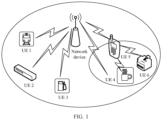
- FIG. 1 is a schematic diagram of a communications system to which a communication method according to an embodiment of this application is applicable.
- a network device and UE 1 to UE 6 form a communications system.
- the UE 1 to the UE 6 may send uplink data to the network device, and the network device may also send downlink data to the UE 1 to the UE 6.
- the UE 4 to the UE 6 may also form a communications system.
- the network device may send downlink data of the UE 4 and the UE 6 to the UE 5, and the UE 5 forwards the downlink data to the UE 4 and the UE 6.
- a terminal device is a device that provides a user with voice and/or data connectivity and that has a wireless transceiver function or a chip that can be disposed in the device.
- the terminal device may communicate with one or more core networks through a radio access network (radio access network, RAN).
- radio access network radio access network
- the terminal device may be a mobile phone (mobile phone), a tablet computer (Pad), a computer with a wireless transceiver function, a personal digital assistant (personal digital assistant, PDA), a virtual reality (virtual reality, VR) terminal, an augmented reality (augmented reality, AR) terminal, a wireless terminal in industrial control (industrial control), a wireless terminal in self-driving (self-driving), a wireless terminal in telemedicine (remote medical), a wireless terminal in a smart grid (smart grid), a wireless terminal in transportation safety (transportation safety), a wireless terminal in a smart city (smart city), a wireless terminal in a smart home (smart home), or the like.
- An application scenario is not limited in the embodiments of this application.
- the foregoing terminal device and the chip that can be disposed in the foregoing terminal device are collectively referred to as a terminal device.
- the terminal device in the embodiments of this application may also be referred to as user equipment (user equipment, UE), a user terminal (user terminal), an access terminal (access terminal), a subscriber unit, a subscriber station, a mobile station (mobile station), a mobile (mobile), a remote station (remote station), a remote terminal (remote terminal), a mobile device, a wireless communications device, a user agent, or a user apparatus.
- a network device is a device having a wireless transceiver function or a chip that can be disposed in the device.
- the network device may be configured to mutually convert a received over-the-air frame and an IP packet, and serve as a router between a terminal device and a remaining part of an access network, and may be further configured to coordinate attribute management of an air interface.
- the device includes but is not limited to an evolved NodeB (evolved NodeB, eNB), a radio network controller (radio network controller, RNC), a NodeB (NodeB, NB), a base station controller (base station controller, BSC), a base transceiver station (base transceiver station, BTS), a home base station (for example, a home evolved NodeB or a home NodeB, HNB), a baseband unit (baseband unit, BBU), an access point (access point, AP) in a wireless fidelity (wireless fidelity, Wi-Fi) system, a wireless relay node, a wireless backhaul node, a transmission point (a transmission reception point, TRP or a transmission point, TP), or the like.
- eNB evolved NodeB
- RNC radio network controller
- NodeB NodeB
- BSC base station controller
- BTS base transceiver station
- BTS home base station
- a baseband unit baseband unit
- the device may be a gNB or a transmission point (a TRP or a TP) in a 5G (NR) system, or may be an antenna panel or a group of antenna panels (including a plurality of antenna panels) of a base station in a 5G system.
- a TRP or a TP transmission point
- NR 5G
- the device may be a gNB or a transmission point (a TRP or a TP) in a 5G (NR) system, or may be an antenna panel or a group of antenna panels (including a plurality of antenna panels) of a base station in a 5G system.
- a network architecture and a service scenario described in the embodiments of this application are intended to describe the technical solutions in the embodiments of this application more clearly, and do not constitute a limitation on the technical solutions provided in the embodiments of this application.
- a person of ordinary skill in the art may know that: With evolution of the network architecture and emergence of new service scenarios, the technical solutions provided in the embodiments of this application are also applicable to similar technical problems.
- the embodiments of this application may be applied to networks such as an NB-IoT and enhanced machine type communication (enhanced machine type communication, eMTC). Some scenarios of the embodiments of this application are described by using a scenario of the NB-IoT in a wireless communications network as an example. It should be noted that the solutions in the embodiments of this application may be further applied to another wireless communications network, and a corresponding name may also be replaced with a name of a corresponding function in the another wireless communications network.
- networks such as an NB-IoT and enhanced machine type communication (enhanced machine type communication, eMTC).
- FIG. 2 is a schematic flowchart of a communication method according to an embodiment of this application. Referring to FIG. 2 , the method includes the following steps.
- Step 201 A terminal device sends uplink data on a preconfigured resource.
- the preconfigured resource is configured by a network device for the terminal device before the terminal device transmits the uplink data.
- a specific configuration method is not limited in this embodiment of this application.
- the terminal device Before sending the uplink data on the preconfigured resource, the terminal device does not need to apply, to the network device, to use the preconfigured resource.
- the network device configures the preconfigured resource, whether the terminal device uses the preconfigured resource and how the terminal device uses the preconfigured resource are not limited by the network device.
- the preconfigured resource may be considered as a scheduling-free resource.
- Step 202 The network device performs, on the preconfigured resource, data demodulation on the uplink data sent by the terminal device.
- Step 203 The network device sends DCI to the terminal device.
- the DCI includes first indication information; and if the uplink data fails to be demodulated, or it is determined, based on a result of the data demodulation, that the terminal device needs to retransmit the uplink data, the first indication information is used to: indicate the terminal device to initiate random access or early data transmission (early data transmission, EDT) and retransmit the uplink data, or indicate that the uplink data fails to be demodulated; or if the uplink data is successfully demodulated, or it is determined, based on a result of the data demodulation, that the terminal device does not need to retransmit the uplink data, the first indication information is used to indicate the terminal device to release (release) or deactivate (deactive) the preconfigured resource. It should be noted that “deactivate” may also be referred to as “disable (disable)” or the like, and is referred to as “deactivate” in the embodiments of this application.
- the first indication information may be further used to indicate the terminal device to release or deactivate the preconfigured resource.
- deactivating the preconfigured resource may mean that the terminal device cannot use the preconfigured resource currently; and the terminal device can use the preconfigured resource again only when receiving an activation instruction sent by the network device.
- Releasing the preconfigured resource may mean that the terminal device deletes information related to the preconfigured resource, the terminal device cannot use the preconfigured resource, and the network device cannot indicate, by using an activation instruction, the terminal device to use the preconfigured resource again.
- Step 204 The terminal device receives the DCI sent by the network device.
- the network device may preconfigure at least one resource for the terminal device.
- the resource preconfigured by the network device is a scheduling-free resource.
- the terminal device When sending the uplink data, the terminal device directly selects one resource from the at least one preconfigured resource to send the uplink data, and does not need to apply, to the network device, for a resource. Therefore, data transmission efficiency can be improved, and signaling resource overheads can be reduced.
- the network device preconfigures the at least one resource for the terminal device and how the terminal device selects a resource are not limited in this embodiment of this application. Details are not described herein.
- the first indication information may be implemented in a plurality of manners.
- the DCI includes a first field, and the first field may be used to carry the first indication information.
- the first indication information is used to: indicate the terminal device to initiate the random access and retransmit the uplink data, or indicate that the uplink data fails to be demodulated; or
- which field in the DCI is specifically the first field may be determined based on an actual situation.
- a format of the DCI is DCI format N0
- content included in the DCI refer to Table 1.
- Table 1 Content (content) included in the DCI Number of included bits Flag for format N0/format N1 differentiation
- Subcarrier indication (subcarrier indication) 6 Resource assignment (resource assignment) 3 Scheduling delay (scheduling delay) 2
- Modulation and coding scheme modulation and coding scheme
- Redundancy version redundancy version
- Repetition number Repetition number
- New data indicator new data indicator
- DCI subframe repetition number DCI subframe repetition number 2
- the subcarrier indication field in the DCI includes six bits, and there are a plurality of idle states that are not used. Therefore, the subcarrier indication field may be used to carry the first indication information, in other words, the first field may be the subcarrier indication field.
- the subcarrier indication field in existing DCI format N0 is used to carry the first indication information, so that on a premise that the DCI is not changed, compatibility with an existing protocol can be implemented, and complexity of blindly detecting the DCI by the terminal device is not increased.
- the network device may further send a preamble index (preamble index) to the terminal device.
- the preamble index may be a contention-free (contention-free) preamble index.
- the terminal device may initiate the random access or the EDT to the network device based on a preamble indicated by the preamble index.
- the DCI includes a second field and preamble indication information
- the second field is used to carry the first indication information
- the preamble indication information is used to indicate a preamble.
- the first indication information is used to: indicate the terminal device to initiate the random access or the EDT based on the preamble and retransmit the uplink data, or indicate that the uplink data fails to be demodulated; or
- which field in the DCI is specifically the second field may be determined based on an actual situation.
- a format of the DCI is DCI format N1
- for content included in the DCI refer to Table 2.
- Table 2 Content included in the DCI Number of included bits Flag for format N0/format N1 differentiation 1 NPDCCH order indicator (NPDCCH order indicator) 1 Starting number of NPRACH repetitions (starting number of NPRACH repetitions) 2 Subcarrier indication of NPRACH (subcarrier indication of NPRACH) 6 Carrier indication of NPRACH (carrier indication of NPRACH) 4 Idle bit 9
- the NPDCCH is a narrowband physical downlink control channel (narrowband physical downlink control channel).
- the NPRACH is a narrowband physical random access channel (narrowband physical random access channel).
- the subcarrier indication of NPRACH field in the DCI includes six bits, and there are a plurality of idle states that are not used. Therefore, the subcarrier indication of NPRACH field may be used to carry the first indication information, in other words, the second field may be the subcarrier indication of NPRACH field.
- the subcarrier indication of NPRACH field in existing DCI format N1 is used to carry the first indication information, so that on a premise that the DCI is not changed, compatibility with an existing protocol can be implemented, and complexity of blindly detecting the DCI by the terminal device is not increased.
- the preamble indication information may be jointly indicated by using the following three fields in the DCI: the starting number of NPRACH repetitions field, the subcarrier indication of NPRACH field, and the carrier indication of NPRACH field.
- the carrier indication of NPRACH field indicates an index of a carrier on which the preamble is located
- the subcarrier indication of NPRACH field indicates an index of a subcarrier on which the preamble is located
- the starting number of NPRACH repetitions field is used to indicate a quantity of transmission repetitions of the preamble.
- the terminal device may determine, by using the foregoing three fields, information such as the carrier for sending the preamble, the subcarrier for sending the preamble, and the quantity of repetitions for sending the preamble.
- preambles there are a plurality of preambles that can be used. These preambles may be divided into two orthogonal sets, and the two sets are separately a set 1 used to initiate random access and a set 2 used to initiate EDT.
- the terminal device may determine to initiate the random access based on the preamble indicated by the preamble indication information. If the preamble indicated by the preamble indication information in DCI format N1 is from the set 2, the terminal device may determine to initiate the EDT based on the preamble indicated by the preamble indication information.
- the DCI includes M idle bits and preamble indication information, N idle bits in the M idle bits are used to carry the first indication information, and the preamble indication information is used to indicate a preamble, where N is an integer greater than 0 and less than or equal to M, and M is an integer greater than 0.
- the first indication information is used to: indicate the terminal device to initiate the random access or the EDT based on the preamble and retransmit the uplink data, or indicate that the uplink data fails to be demodulated; or
- M may be equal to 9, that is, the DCI includes nine idle bits, so that N idle bits in the nine idle bits may be used to carry the first indication information.
- a format of the DCI is a format other than DCI format N0 and DCI format N1, for example, may be a customized DCI format.
- DCI with the customized DCI format includes 23 bits, the same as DCI with DCI format N0 or DCI format N1.
- the DCI with the customized DCI format may alternatively include another quantity of bits. Details are not described herein.
- At least one bit in the DCI may be used to carry the first indication information.
- a value of the at least one bit and the carried first indication information refer to descriptions in the first to the third possible implementations. Details are not described herein again.
- the second indication information indicates an increment of the TA, that is, an adjustment amount of a current TA of the terminal device relative to a previous TA.
- a relatively small quantity of bits may be used to carry the second indication information. For example, six bits may be used to carry the second indication information.
- the second indication information may directly indicate the TA, that is, a current TA of the terminal device.
- the terminal device may directly obtain the TA based on the second indication information, and a relatively large quantity of bits are required for carrying the second indication information, for example, 11 bits may be used to carry the second indication information.
- the DCI may further include third indication information.
- the third indication information is used to indicate a carrier used when the terminal device initiates the random access or the EDT.
- the third indication information may be carried in the carrier indication of NPRACH field in the DCI.
- the terminal device after receiving the DCI, performs a corresponding action based on the first indication information in the DCI.
- the terminal device may initiate the random access, and retransmit the uplink data to the network device after accessing the network device through the random access.
- the terminal device may initiate the random access, and retransmit the uplink data to the network device and release the preconfigured resource after accessing the network device through the random access.
- the terminal device may initiate the EDT, and retransmit the uplink data to the network device in an EDT process.
- the terminal device may initiate the EDT, and retransmit the uplink data to the network device and deactivate the preconfigured resource in an EDT process.
- the terminal device may initiate the EDT, and retransmit the uplink data to the network device and release the preconfigured resource in an EDT process.
- a preamble used by the terminal device to initiate the random access or the EDT may be determined based on a preamble index sent by the network device, or may be determined based on preamble indication information in the DCI.
- the terminal device may alternatively determine, based on an actual situation, whether to initiate the random access or the EDT. In other words, the terminal device may alternatively initiate no random access or no EDT. Details are not described herein.
- this embodiment of this application may alternatively be applied to an eMTC system.
- a format of the DCI may be 6-0A, 6-0B, 6-1A, or the like, and the first indication information may be carried in an idle bit in the DCI, or is carried in a field in which there is an idle state.
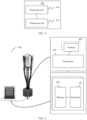
- FIG. 3 is a schematic structural diagram of a communications apparatus according to this application.
- the communications apparatus may be configured to perform actions of the network device in the foregoing method embodiment, and the communications apparatus 300 includes a processing unit 301 and a transceiver unit 302.
- the processing unit 301 is configured to perform, on a preconfigured resource, data demodulation on uplink data sent by a terminal device.
- the transceiver unit 302 is configured to send downlink control information DCI to the terminal device, where the DCI includes first indication information, and if the uplink data fails to be demodulated, or it is determined, based on a result of the data demodulation, that the terminal device needs to retransmit the uplink data, the first indication information is used to: indicate the terminal device to initiate random access or early data transmission EDT and retransmit the uplink data, or indicate that the uplink data fails to be demodulated; or if the uplink data is successfully demodulated, or it is determined, based on a result of the data demodulation, that the terminal device does not need to retransmit the uplink data, the first indication information is used to indicate the terminal device to release or deactivate the preconfigured resource.
- the first indication information is further used to indicate the terminal device to release or deactivate the preconfigured resource.
- the DCI includes a first field, and the first field is used to carry the first indication information; and when an idle state of the first field is a first preset state, the first indication information is used to: indicate the terminal device to initiate the random access and retransmit the uplink data, or indicate that the uplink data fails to be demodulated; or when an idle state of the first field is a second preset state, the first indication information is used to: indicate the terminal device to initiate the random access and retransmit the uplink data, or indicate that the uplink data fails to be demodulated, and indicate to deactivate the preconfigured resource; or when an idle state of the first field is a third preset state, the first indication information is used to: indicate the terminal device to initiate the random access and retransmit the uplink data, or indicate that the uplink data fails to be demodulated, and indicate to release the preconfigured resource; or when an idle state of the first field is a fourth preset state, the first indication information is used to: indicate the terminal device to initiate
- a format of the DCI is DCI format N0, and the first field is a subcarrier indication field.
- the processing unit 501 is configured to receive downlink control information DCI sent by a network device, where the DCI includes first indication information, and if the uplink data fails to be demodulated, or it is determined, based on a result of data demodulation, that the terminal device needs to retransmit the uplink data, the first indication information is used to: indicate the terminal device to initiate random access or early data transmission EDT and retransmit the uplink data, or indicate that the uplink data fails to be demodulated; or if the uplink data is successfully demodulated, or it is determined, based on a result of data demodulation, that the terminal device does not need to retransmit the uplink data, the first indication information is used to indicate the terminal device to release or deactivate the preconfigured resource.
- the DCI includes first indication information
- the first indication information is further used to indicate the terminal device to release or deactivate the preconfigured resource.
- a format of the DCI is DCI format N0, and the first field is a subcarrier indication field.
- the DCI includes a second field and preamble indication information
- the second field is used to carry the first indication information
- the preamble indication information is used to indicate a preamble
- the first indication information is used to: indicate the terminal device to initiate the random access or the EDT based on the preamble and retransmit the uplink data, or indicate that the uplink data fails to be demodulated
- the first indication information is used to: indicate the terminal device to initiate the random access or the EDT based on the preamble and retransmit the uplink data, or indicate that the uplink data fails to be demodulated, and indicate to deactivate the preconfigured resource
- the first indication information is used to: indicate the terminal device to initiate the random access or the EDT based on the preamble and retransmit the uplink data
- the DCI includes M idle bits and preamble indication information, N idle bits in the M idle bits are used to carry the first indication information, and the preamble indication information is used to indicate a preamble, where N is an integer greater than 0 and less than or equal to M, and M is an integer greater than 0; and when a value of the N idle bits is a first preset value, the first indication information is used to: indicate the terminal device to initiate the random access or the EDT based on the preamble and retransmit the uplink data, or indicate that the uplink data fails to be demodulated; or when a value of the N idle bits is a second preset value, the first indication information is used to: indicate the terminal device to initiate the random access or the EDT based on the preamble and retransmit the uplink data, or indicate that the uplink data fails to be demodulated, and indicate to deactivate the preconfigured resource; or when a value of the N idle bits is a third preset value, the first indication information
- a format of the DCI is DCI format N1
- the second field is a subcarrier indication of narrowband physical random access channel NPRACH field.
- the DCI further includes second indication information, and the second indication information is used to indicate a timing advance TA of the terminal device.
- the DCI further includes third indication information, and the third indication information is used to indicate a carrier used when the terminal device initiates the random access or the EDT.
- a format of the DCI is a format other than DCI format N0 and DCI format N1.
- the DCI is scrambled by using an RNTI other than a C-RNTI.
- FIG. 6 is a schematic structural diagram of a communications apparatus according to this application.
- the communications apparatus shown in FIG. 6 may be an implementation of a hardware circuit of the communications apparatus shown in FIG. 5 .
- the communications apparatus may be applicable to the flowchart shown in FIG. 2 , and the communications apparatus performs functions of the terminal device in the foregoing method embodiment.
- FIG. 6 shows only main components of the communications apparatus.
- the communications apparatus may be a terminal device, or may be an apparatus, for example, a chip or a chip system, in a terminal device.
- the chip system includes at least one chip, and the chip system may further include another circuit structure and/or discrete component.
- that the communications apparatus is the terminal device is used as an example. As shown in FIG.
- the communications apparatus 600 includes a processor 601, a memory 602, a transceiver 603, an antenna 604, and an input/output apparatus 605.
- the processor 601 is mainly configured to: process a communication protocol and communication data; control the entire wireless communications apparatus; execute a software program; and process data of the software program.
- the processor 601 is configured to support the wireless communications apparatus in performing actions described in the foregoing method embodiment.
- the memory 602 is mainly configured to store the software program and data.
- the transceiver 603 is mainly configured to: perform conversion between a baseband signal and a radio frequency signal and processing of the radio frequency signal.
- the antenna 604 is mainly configured to receive and send a radio frequency signal in a form of an electromagnetic wave.
- the input/output apparatus 605, such as a touchscreen, a display screen, or a keyboard, is mainly configured to receive data input by a user and output data to the user.
- the transceiver 603 is configured to send uplink data on a preconfigured resource.
Landscapes
- Engineering & Computer Science (AREA)
- Computer Networks & Wireless Communication (AREA)
- Signal Processing (AREA)
- Mobile Radio Communication Systems (AREA)
Claims (15)
- Procédé de communication, comprenant :la réalisation (202), par un dispositif de réseau (400) sur une ressource préconfigurée, d'une démodulation de données sur des données de liaison montante envoyées par un dispositif terminal (600) ; etl'envoi (203), par le dispositif de réseau, d'informations de commande de liaison descendante DCI au dispositif terminal, dans lequel les DCI comprennent des premières informations d'indication, et si les données de liaison montante ne parviennent pas à être démodulées, les premières informations d'indication sont utilisées pour indiquer que les données de liaison montante ne parviennent pas à être démodulées, et caractérisé en ce queles DCI comprennent également des secondes informations d'indication, et les secondes informations d'indication sont utilisées pour indiquer une avance temporelle TA du dispositif terminal.
- Procédé selon la revendication 1, dans lequel les DCI comprennent un premier champ, et le premier champ est utilisé pour transporter les premières informations d'indication ; et lorsque le premier champ est dans un premier état prédéfini, les premières informations d'indication sont utilisées pour :indiquer au dispositif terminal d'initier l'accès aléatoire et de retransmettre les données de liaison montante, ou indiquer que les données de liaison montante ne parviennent pas à être démodulées ; oulorsque le premier champ est dans un deuxième état prédéfini, les premières informations d'indication sont utilisées pour : indiquer au dispositif terminal d'initier l'accès aléatoire et de retransmettre les données de liaison montante, ou indiquer que les données de liaison montante ne parviennent pas à être démodulées, et indiquer de désactiver la ressource préconfigurée ; oulorsque le premier champ est dans un troisième état prédéfini, les premières informations d'indication sont utilisées pour : indiquer au dispositif terminal d'initier l'accès aléatoire et de retransmettre les données de liaison montante, ou indiquer que les données de liaison montante ne parviennent pas à être démodulées, et indiquer de libérer la ressource préconfigurée ; oulorsque le premier champ est dans un quatrième état prédéfini, les premières informations d'indication sont utilisées pour : indiquer au dispositif terminal d'initier l'EDT et de retransmettre les données de liaison montante, ou indiquer que les données de liaison montante ne parviennent pas à être démodulées ; oulorsque le premier champ est dans un cinquième état prédéfini, les premières informations d'indication sont utilisées pour : indiquer au dispositif terminal d'initier l'EDT et de retransmettre les données de liaison montante, ou indiquer que les données de liaison montante ne parviennent pas à être démodulées, et indiquer de désactiver la ressource préconfigurée ; oulorsque le premier champ est dans un sixième état prédéfini, les premières informations d'indication sont utilisées pour : indiquer au dispositif terminal d'initier l'EDT et de retransmettre les données de liaison montante, ou indiquer que les données de liaison montante ne parviennent pas à être démodulées, et indiquer de libérer la ressource préconfigurée.
- Procédé selon la revendication 1, dans lequel les DCI comprennent un second champ et des informations d'indication de préambule, le second champ est utilisé pour transporter les premières informations d'indication, et les informations d'indication de préambule sont utilisées pour indiquer un préambule ; etlorsque le second champ est dans un premier état prédéfini, les premières informations d'indication sont utilisées pour : indiquer au dispositif terminal d'initier l'accès aléatoire ou l'EDT sur la base du préambule et de retransmettre les données de liaison montante, ou indiquer que les données de liaison montante ne parviennent pas à être démodulées ; oulorsque le second champ est dans un deuxième état prédéfini, les premières informations d'indication sont utilisées pour : indiquer au dispositif terminal d'initier l'accès aléatoire ou l'EDT sur la base du préambule et de retransmettre les données de liaison montante, ou indiquer que les données de liaison montante ne parviennent pas à être démodulées, et indiquer de désactiver la ressource préconfigurée ; oulorsque le second champ est dans un troisième état prédéfini, les premières informations d'indication sont utilisées pour : indiquer au dispositif terminal d'initier l'accès aléatoire ou l'EDT sur la base du préambule et de retransmettre les données de liaison montante, ou indiquer que les données de liaison montante ne parviennent pas à être démodulées, et indiquer de libérer la ressource préconfigurée.
- Procédé selon la revendication 1, dans lequel les DCI comprennent M bits et des informations d'indication de préambule, N bits dans les M bits sont utilisés pour transporter les premières informations d'indication, et les informations d'indication de préambule sont utilisées pour indiquer un préambule, dans lequel N est un entier supérieur à 0 et inférieur ou égal à M, et M est un entier supérieur à 0 ; etlorsqu'une valeur des N bits est une première valeur prédéfinie, les premières informations d'indication sont utilisées pour : indiquer au dispositif terminal d'initier l'accès aléatoire ou l'EDT sur la base du préambule et de retransmettre les données de liaison montante, ou indiquer que les données de liaison montante ne parviennent pas à être démodulées ; oulorsqu'une valeur des N bits est une seconde valeur prédéfinie, les premières informations d'indication sont utilisées pour : indiquer au dispositif terminal d'initier l'accès aléatoire ou l'EDT sur la base du préambule et de retransmettre les données de liaison montante, ou indiquer que les données de liaison montante ne parviennent pas à être démodulées, et indiquer de désactiver la ressource préconfigurée ; oulorsqu'une valeur des N bits est une troisième valeur prédéfinie, les premières informations d'indication sont utilisées pour : indiquer au dispositif terminal d'initier l'accès aléatoire ou l'EDT sur la base du préambule et de retransmettre les données de liaison montante, ou indiquer que les données de liaison montante ne parviennent pas à être démodulées, et indiquer de libérer la ressource préconfigurée.
- Procédé selon la revendication 2, dans lequel si les données de liaison montante ne parviennent pas à être démodulées, ou s'il est déterminé, sur la base du résultat de la démodulation de données, que le dispositif terminal doit retransmettre les données de liaison montante, les premières informations d'indication sont également utilisées pour indiquer au dispositif terminal de libérer ou de désactiver la ressource préconfigurée.
- Procédé selon l'une quelconque des revendications 1 à 5, dans lequel les DCI comprennent également des troisièmes informations d'indication, et les troisièmes informations d'indication sont utilisées pour indiquer une porteuse utilisée lorsque le dispositif terminal initie l'accès aléatoire ou l'EDT.
- Procédé de communication, comprenant :l'envoi (201), par un dispositif terminal (600), de données de liaison montante sur une ressource préconfigurée ;la réalisation (202), par un dispositif de réseau (400) sur la ressource préconfigurée, d'une démodulation de données sur les données de liaison montante ;la réception (204), par le dispositif terminal, d'informations de commande de liaison descendante DCI envoyées par un dispositif de réseau, dans lequel les DCI comprennent des premières informations d'indication, et si les données de liaison montante ne parviennent pas à être démodulées, les premières informations d'indication sont utilisées pour indiquer que les données de liaison montante ne parviennent pas à être démodulées, et caractérisé en ce queles DCI comprennent également des secondes informations d'indication, et les secondes informations d'indication sont utilisées pour indiquer une avance temporelle TA du dispositif terminal ; etla réalisation d'un processus, par le dispositif terminal, conformément aux DCI.
- Procédé selon la revendication 7, dans lequel avant la réception, par le dispositif terminal, d'informations de commande de liaison descendante DCI envoyées par un dispositif de réseau, le procédé comprend également :la réception, par le dispositif terminal, d'un indice de préambule envoyé par le dispositif de réseau ; etaprès la réception, par le dispositif terminal, d'informations de commande de liaison descendante DCI envoyées par un dispositif de réseau, le procédé comprend également :
si les données de liaison montante ne parviennent pas à être démodulées, ou s'il est déterminé, sur la base du résultat de la démodulation de données, que le dispositif terminal doit retransmettre les données de liaison montante, l'initiation, par le dispositif terminal, de l'accès aléatoire ou de l'EDT au dispositif de réseau sur la base de l'indice de préambule. - Procédé selon l'une quelconque des revendications 7 ou 8, dans lequel les DCI comprennent un premier champ, et le premier champ est utilisé pour transporter les premières informations d'indication ; etlorsque le premier champ est dans un premier état prédéfini, les premières informations d'indication sont utilisées pour : indiquer au dispositif terminal d'initier l'accès aléatoire et de retransmettre les données de liaison montante, ou indiquer que les données de liaison montante ne parviennent pas à être démodulées ; oulorsque le premier champ est dans un deuxième état prédéfini, les premières informations d'indication sont utilisées pour : indiquer au dispositif terminal d'initier l'accès aléatoire et de retransmettre les données de liaison montante, ou indiquer que les données de liaison montante ne parviennent pas à être démodulées, et indiquer de désactiver la ressource préconfigurée ; oulorsque le premier champ est dans un troisième état prédéfini, les premières informations d'indication sont utilisées pour : indiquer au dispositif terminal d'initier l'accès aléatoire et de retransmettre les données de liaison montante, ou indiquer que les données de liaison montante ne parviennent pas à être démodulées, et indiquer de libérer la ressource préconfigurée ; oulorsque le premier champ est dans un quatrième état prédéfini, les premières informations d'indication sont utilisées pour : indiquer au dispositif terminal d'initier l'EDT et de retransmettre les données de liaison montante, ou indiquer que les données de liaison montante ne parviennent pas à être démodulées ; oulorsque le premier champ est dans un cinquième état prédéfini, les premières informations d'indication sont utilisées pour : indiquer au dispositif terminal d'initier l'EDT et de retransmettre les données de liaison montante, ou indiquer que les données de liaison montante ne parviennent pas à être démodulées, et indiquer de désactiver la ressource préconfigurée ; oulorsque le premier champ est dans un sixième état prédéfini, les premières informations d'indication sont utilisées pour : indiquer au dispositif terminal d'initier l'EDT et de retransmettre les données de liaison montante, ou indiquer que les données de liaison montante ne parviennent pas à être démodulées, et indiquer de libérer la ressource préconfigurée.
- Procédé selon l'une quelconque des revendications 7 à 9, dans lequel les DCI comprennent un second champ et des informations d'indication de préambule, le second champ est utilisé pour transporter les premières informations d'indication, et les informations d'indication de préambule sont utilisées pour indiquer un préambule ; etlorsque le second champ est dans un premier état prédéfini, les premières informations d'indication sont utilisées pour : indiquer au dispositif terminal d'initier l'accès aléatoire ou l'EDT sur la base du préambule et de retransmettre les données de liaison montante, ou indiquer que les données de liaison montante ne parviennent pas à être démodulées ; oulorsque le second champ est dans un deuxième état prédéfini, les premières informations d'indication sont utilisées pour : indiquer au dispositif terminal d'initier l'accès aléatoire ou l'EDT sur la base du préambule et de retransmettre les données de liaison montante, ou indiquer que les données de liaison montante ne parviennent pas à être démodulées, et indiquer de désactiver la ressource préconfigurée ; oulorsque le second champ est dans un troisième état prédéfini, les premières informations d'indication sont utilisées pour : indiquer au dispositif terminal d'initier l'accès aléatoire ou l'EDT sur la base du préambule et de retransmettre les données de liaison montante, ou indiquer que les données de liaison montante ne parviennent pas à être démodulées, et indiquer de libérer la ressource préconfigurée.
- Procédé selon l'une quelconque des revendications 7 à 9, dans lequel les DCI comprennent M bits et des informations d'indication de préambule, N bits dans les M bits sont utilisés pour transporter les premières informations d'indication, et les informations d'indication de préambule sont utilisées pour indiquer un préambule, dans lequel N est un entier supérieur à 0 et inférieur ou égal à M, et M est un entier supérieur à 0 ; etlorsqu'une valeur des N bits est une première valeur prédéfinie, les premières informations d'indication sont utilisées pour : indiquer au dispositif terminal d'initier l'accès aléatoire ou l'EDT sur la base du préambule et de retransmettre les données de liaison montante, ou indiquer que les données de liaison montante ne parviennent pas à être démodulées ; oulorsqu'une valeur des N bits est une seconde valeur prédéfinie, les premières informations d'indication sont utilisées pour : indiquer au dispositif terminal d'initier l'accès aléatoire ou l'EDT sur la base du préambule et de retransmettre les données de liaison montante, ou indiquer que les données de liaison montante ne parviennent pas à être démodulées, et indiquer de désactiver la ressource préconfigurée ; oulorsqu'une valeur des N bits est une troisième valeur prédéfinie, les premières informations d'indication sont utilisées pour : indiquer au dispositif terminal d'initier l'accès aléatoire ou l'EDT sur la base du préambule et de retransmettre les données de liaison montante, ou indiquer que les données de liaison montante ne parviennent pas à être démodulées, et indiquer de libérer la ressource préconfigurée.
- Procédé selon l'une quelconque des revendications 7 à 11, dans lequel si les données de liaison montante ne parviennent pas à être démodulées, ou s'il est déterminé, sur la base du résultat de la démodulation de données, que le dispositif terminal doit retransmettre les données de liaison montante, les premières informations d'indication sont également utilisées pour indiquer au dispositif terminal de libérer ou de désactiver la ressource préconfigurée.
- Procédé selon l'une quelconque des revendications 7 à 12, dans lequel un format des DCI est le format DCI N0, et le premier champ est un champ d'indication de sous-porteuse.
- Dispositif de réseau (400) configuré pour réaliser les étapes de l'une quelconque des revendications 1 à 6.
- Système comprenant un dispositif de réseau (400) et un dispositif terminal (600) ;dans lequel le dispositif terminal est configuré pour envoyer des données de liaison montante sur une ressource préconfigurée ; etdans lequel le dispositif de réseau est configuré pour réaliser (202) sur la ressource préconfigurée, une démodulation de données sur les données de liaison montante ;dans lequel le dispositif terminal est également configuré pour :
recevoir (204) des informations de commande de liaison descendante DCI envoyées par un dispositif de réseau, dans lequel les DCI comprennent des premières informations d'indication, et si les données de liaison montante ne parviennent pas à être démodulées, les premières informations d'indication sont utilisées pour indiquer que les données de liaison montante ne parviennent pas à être démodulées, et caractérisé en ce que les DCI comprennent également des secondes informations d'indication, et les secondes informations d'indication sont utilisées pour indiquer une avance temporelle TA du dispositif terminal ; et réaliser un processus, conformément aux DCI.
Priority Applications (1)
| Application Number | Priority Date | Filing Date | Title |
|---|---|---|---|
| EP25179918.5A EP4633073A3 (fr) | 2018-09-28 | 2018-09-28 | Procédé de communication et appareil de communication |
Applications Claiming Priority (1)
| Application Number | Priority Date | Filing Date | Title |
|---|---|---|---|
| PCT/CN2018/108410 WO2020062058A1 (fr) | 2018-09-28 | 2018-09-28 | Procédé et appareil de communication |
Related Child Applications (1)
| Application Number | Title | Priority Date | Filing Date |
|---|---|---|---|
| EP25179918.5A Division EP4633073A3 (fr) | 2018-09-28 | 2018-09-28 | Procédé de communication et appareil de communication |
Publications (3)
| Publication Number | Publication Date |
|---|---|
| EP3849271A1 EP3849271A1 (fr) | 2021-07-14 |
| EP3849271A4 EP3849271A4 (fr) | 2021-10-27 |
| EP3849271B1 true EP3849271B1 (fr) | 2025-06-25 |
Family
ID=69949547
Family Applications (2)
| Application Number | Title | Priority Date | Filing Date |
|---|---|---|---|
| EP18935796.5A Active EP3849271B1 (fr) | 2018-09-28 | 2018-09-28 | Procédé et appareil de communication |
| EP25179918.5A Pending EP4633073A3 (fr) | 2018-09-28 | 2018-09-28 | Procédé de communication et appareil de communication |
Family Applications After (1)
| Application Number | Title | Priority Date | Filing Date |
|---|---|---|---|
| EP25179918.5A Pending EP4633073A3 (fr) | 2018-09-28 | 2018-09-28 | Procédé de communication et appareil de communication |
Country Status (4)
| Country | Link |
|---|---|
| US (1) | US12200740B2 (fr) |
| EP (2) | EP3849271B1 (fr) |
| CN (1) | CN112740813B (fr) |
| WO (1) | WO2020062058A1 (fr) |
Families Citing this family (5)
| Publication number | Priority date | Publication date | Assignee | Title |
|---|---|---|---|---|
| CN112470546B (zh) * | 2018-09-28 | 2023-08-29 | Lg 电子株式会社 | 无线通信系统中确定是在随机接入还是配置的许可上执行传输的方法和装置 |
| CN113412659B (zh) * | 2019-02-14 | 2024-04-16 | 株式会社Ntt都科摩 | 用户装置和通信方法 |
| EP4017167A4 (fr) * | 2019-08-16 | 2022-08-24 | Beijing Xiaomi Mobile Software Co., Ltd. | Procédé et appareil de commande de ressource préconfigurée, procédé et appareil de transmission de données, et support de stockage |
| EP3799493B1 (fr) * | 2019-09-30 | 2021-07-28 | Deutsche Telekom AG | Procédé d'amélioration de l'efficacité et/ou de la flexibilité dans la transmission de données de charge utile et/ou de commande en liaison descendante et/ou liaison montante entre une entité de station de base et un équipement utilisateur d'un réseau de communication mobile, système, équipement utilisateur et entité de station de base, programme et support lisible par ordinateur |
| CN115988530B (zh) * | 2020-04-08 | 2025-05-30 | Oppo广东移动通信有限公司 | 一种数据传输方法及装置、终端设备 |
Family Cites Families (8)
| Publication number | Priority date | Publication date | Assignee | Title |
|---|---|---|---|---|
| US10498513B2 (en) * | 2015-12-31 | 2019-12-03 | Idac Holdings, Inc. | Methods for dynamic management of reference signals |
| CN106993332B (zh) * | 2016-01-20 | 2019-07-02 | 中兴通讯股份有限公司 | 上行调度的方法及装置 |
| US10630410B2 (en) * | 2016-05-13 | 2020-04-21 | Telefonaktiebolaget Lm Ericsson (Publ) | Network architecture, methods, and devices for a wireless communications network |
| CN106788912B (zh) * | 2016-11-04 | 2019-06-07 | 北京展讯高科通信技术有限公司 | 基站、用户设备及上行数据传输方法 |
| CN108282247B (zh) * | 2017-01-05 | 2021-11-19 | 华为技术有限公司 | 一种控制信息传输方法及装置 |
| US11546929B2 (en) * | 2017-01-09 | 2023-01-03 | Huawei Technologies Co., Ltd. | Systems and methods for signaling for semi-static configuration in grant-free uplink transmissions |
| WO2018146834A1 (fr) * | 2017-02-10 | 2018-08-16 | Nec Corporation | Procédés et systèmes permettant une transmission sans autorisation dans des systèmes de communication sans fil avancés |
| EP3846568B1 (fr) * | 2018-09-27 | 2023-06-21 | LG Electronics Inc. | Transmission et réception de données dans un système de communication sans fil à bande étroite |
-
2018
- 2018-09-28 EP EP18935796.5A patent/EP3849271B1/fr active Active
- 2018-09-28 CN CN201880097831.1A patent/CN112740813B/zh active Active
- 2018-09-28 WO PCT/CN2018/108410 patent/WO2020062058A1/fr not_active Ceased
- 2018-09-28 EP EP25179918.5A patent/EP4633073A3/fr active Pending
-
2021
- 2021-03-26 US US17/214,187 patent/US12200740B2/en active Active
Also Published As
| Publication number | Publication date |
|---|---|
| WO2020062058A1 (fr) | 2020-04-02 |
| CN112740813B (zh) | 2023-07-18 |
| EP3849271A1 (fr) | 2021-07-14 |
| US12200740B2 (en) | 2025-01-14 |
| EP4633073A2 (fr) | 2025-10-15 |
| EP4633073A3 (fr) | 2025-11-26 |
| CN112740813A (zh) | 2021-04-30 |
| EP3849271A4 (fr) | 2021-10-27 |
| US20210219297A1 (en) | 2021-07-15 |
Similar Documents
| Publication | Publication Date | Title |
|---|---|---|
| CN114071776B (zh) | 通信方法、用户设备、网络设备及电子设备 | |
| US11032778B2 (en) | Uplink channel power allocation method and apparatus | |
| US10931334B2 (en) | Beam recovery method and apparatus | |
| EP3849271B1 (fr) | Procédé et appareil de communication | |
| EP3648389A1 (fr) | Procédé de communication, dispositif de réseau et dispositif relais | |
| EP3553983B1 (fr) | Procédé et dispositif de commutation de mode de transmission | |
| CN116614897A (zh) | 终端设备、基站设备、方法和记录介质 | |
| US12133196B2 (en) | Communications method and apparatus | |
| US11050516B2 (en) | Method, network device and terminal device for transmitting feedback information | |
| EP4266808A1 (fr) | Procédé et appareil de communication applicables à un réseau non terrestre (ntn) | |
| EP3849270A1 (fr) | Procédé de transmission de signal et appareil de communication | |
| CN112703791B (zh) | 一种通信方法及装置 | |
| US12301507B2 (en) | Data feedback method and apparatus | |
| US20220086804A1 (en) | Data Transmission Method And Communication Apparatus | |
| EP3742780A1 (fr) | Procédé de communication et dispositif de communication | |
| EP3780854B1 (fr) | Procédé et appareil d'accès aléatoire | |
| CN112087810B (zh) | 一种随机接入方法及装置 | |
| US12096416B2 (en) | Method and apparatus for control information monitoring | |
| WO2020252633A1 (fr) | Procédé, dispositif, et système de temporisation destinés à un préambule d'accès aléatoire | |
| CN110831228B (zh) | 一种通信方法及装置 | |
| JPWO2017169825A1 (ja) | ユーザ装置及び通信方法 | |
| WO2017208768A1 (fr) | Dispositif terminal, dispositif de station de base, procédé de communication et circuit intégré | |
| WO2019158096A1 (fr) | Procédé et dispositif de transmission de données lors d'un accès aléatoire |
Legal Events
| Date | Code | Title | Description |
|---|---|---|---|
| STAA | Information on the status of an ep patent application or granted ep patent |
Free format text: STATUS: THE INTERNATIONAL PUBLICATION HAS BEEN MADE |
|
| PUAI | Public reference made under article 153(3) epc to a published international application that has entered the european phase |
Free format text: ORIGINAL CODE: 0009012 |
|
| STAA | Information on the status of an ep patent application or granted ep patent |
Free format text: STATUS: REQUEST FOR EXAMINATION WAS MADE |
|
| 17P | Request for examination filed |
Effective date: 20210409 |
|
| AK | Designated contracting states |
Kind code of ref document: A1 Designated state(s): AL AT BE BG CH CY CZ DE DK EE ES FI FR GB GR HR HU IE IS IT LI LT LU LV MC MK MT NL NO PL PT RO RS SE SI SK SM TR |
|
| REG | Reference to a national code |
Ref country code: DE Ref legal event code: R079 Free format text: PREVIOUS MAIN CLASS: H04W0074080000 Ipc: H04W0074000000 Ref document number: 602018083063 Country of ref document: DE |
|
| A4 | Supplementary search report drawn up and despatched |
Effective date: 20210929 |
|
| RIC1 | Information provided on ipc code assigned before grant |
Ipc: H04L 1/00 20060101ALN20210923BHEP Ipc: H04W 76/27 20180101ALN20210923BHEP Ipc: H04W 74/08 20090101ALN20210923BHEP Ipc: H04W 74/00 20090101AFI20210923BHEP |
|
| DAV | Request for validation of the european patent (deleted) | ||
| DAX | Request for extension of the european patent (deleted) | ||
| STAA | Information on the status of an ep patent application or granted ep patent |
Free format text: STATUS: EXAMINATION IS IN PROGRESS |
|
| 17Q | First examination report despatched |
Effective date: 20230606 |
|
| GRAP | Despatch of communication of intention to grant a patent |
Free format text: ORIGINAL CODE: EPIDOSNIGR1 |
|
| STAA | Information on the status of an ep patent application or granted ep patent |
Free format text: STATUS: GRANT OF PATENT IS INTENDED |
|
| INTG | Intention to grant announced |
Effective date: 20250211 |
|
| RIC1 | Information provided on ipc code assigned before grant |
Ipc: H04W 76/27 20180101ALN20250203BHEP Ipc: H04W 74/0833 20240101ALN20250203BHEP Ipc: H04L 1/1829 20230101ALI20250203BHEP Ipc: H04L 1/1607 20230101ALI20250203BHEP Ipc: H04W 74/00 20090101AFI20250203BHEP |
|
| GRAS | Grant fee paid |
Free format text: ORIGINAL CODE: EPIDOSNIGR3 |
|
| GRAA | (expected) grant |
Free format text: ORIGINAL CODE: 0009210 |
|
| STAA | Information on the status of an ep patent application or granted ep patent |
Free format text: STATUS: THE PATENT HAS BEEN GRANTED |
|
| AK | Designated contracting states |
Kind code of ref document: B1 Designated state(s): AL AT BE BG CH CY CZ DE DK EE ES FI FR GB GR HR HU IE IS IT LI LT LU LV MC MK MT NL NO PL PT RO RS SE SI SK SM TR |
|
| REG | Reference to a national code |
Ref country code: GB Ref legal event code: FG4D |
|
| REG | Reference to a national code |
Ref country code: CH Ref legal event code: EP |
|
| REG | Reference to a national code |
Ref country code: DE Ref legal event code: R096 Ref document number: 602018083063 Country of ref document: DE |
|
| REG | Reference to a national code |
Ref country code: CH Ref legal event code: EP |
|
| REG | Reference to a national code |
Ref country code: IE Ref legal event code: FG4D |
|
| PG25 | Lapsed in a contracting state [announced via postgrant information from national office to epo] |
Ref country code: FI Free format text: LAPSE BECAUSE OF FAILURE TO SUBMIT A TRANSLATION OF THE DESCRIPTION OR TO PAY THE FEE WITHIN THE PRESCRIBED TIME-LIMIT Effective date: 20250625 |
|
| PGFP | Annual fee paid to national office [announced via postgrant information from national office to epo] |
Ref country code: DE Payment date: 20250805 Year of fee payment: 8 |
|
| REG | Reference to a national code |
Ref country code: LT Ref legal event code: MG9D |
|
| PG25 | Lapsed in a contracting state [announced via postgrant information from national office to epo] |
Ref country code: NO Free format text: LAPSE BECAUSE OF FAILURE TO SUBMIT A TRANSLATION OF THE DESCRIPTION OR TO PAY THE FEE WITHIN THE PRESCRIBED TIME-LIMIT Effective date: 20250925 Ref country code: GR Free format text: LAPSE BECAUSE OF FAILURE TO SUBMIT A TRANSLATION OF THE DESCRIPTION OR TO PAY THE FEE WITHIN THE PRESCRIBED TIME-LIMIT Effective date: 20250926 |
|
| PGFP | Annual fee paid to national office [announced via postgrant information from national office to epo] |
Ref country code: LU Payment date: 20250912 Year of fee payment: 8 |
|
| PG25 | Lapsed in a contracting state [announced via postgrant information from national office to epo] |
Ref country code: BG Free format text: LAPSE BECAUSE OF FAILURE TO SUBMIT A TRANSLATION OF THE DESCRIPTION OR TO PAY THE FEE WITHIN THE PRESCRIBED TIME-LIMIT Effective date: 20250625 |
|
| PGFP | Annual fee paid to national office [announced via postgrant information from national office to epo] |
Ref country code: GB Payment date: 20250807 Year of fee payment: 8 |
|
| PG25 | Lapsed in a contracting state [announced via postgrant information from national office to epo] |
Ref country code: HR Free format text: LAPSE BECAUSE OF FAILURE TO SUBMIT A TRANSLATION OF THE DESCRIPTION OR TO PAY THE FEE WITHIN THE PRESCRIBED TIME-LIMIT Effective date: 20250625 |
|
| PG25 | Lapsed in a contracting state [announced via postgrant information from national office to epo] |
Ref country code: RS Free format text: LAPSE BECAUSE OF FAILURE TO SUBMIT A TRANSLATION OF THE DESCRIPTION OR TO PAY THE FEE WITHIN THE PRESCRIBED TIME-LIMIT Effective date: 20250925 |
|
| PG25 | Lapsed in a contracting state [announced via postgrant information from national office to epo] |
Ref country code: LV Free format text: LAPSE BECAUSE OF FAILURE TO SUBMIT A TRANSLATION OF THE DESCRIPTION OR TO PAY THE FEE WITHIN THE PRESCRIBED TIME-LIMIT Effective date: 20250625 |
|
| REG | Reference to a national code |
Ref country code: NL Ref legal event code: MP Effective date: 20250625 |
|
| PG25 | Lapsed in a contracting state [announced via postgrant information from national office to epo] |
Ref country code: NL Free format text: LAPSE BECAUSE OF FAILURE TO SUBMIT A TRANSLATION OF THE DESCRIPTION OR TO PAY THE FEE WITHIN THE PRESCRIBED TIME-LIMIT Effective date: 20250625 |
|
| PG25 | Lapsed in a contracting state [announced via postgrant information from national office to epo] |
Ref country code: PT Free format text: LAPSE BECAUSE OF FAILURE TO SUBMIT A TRANSLATION OF THE DESCRIPTION OR TO PAY THE FEE WITHIN THE PRESCRIBED TIME-LIMIT Effective date: 20251027 |
|
| REG | Reference to a national code |
Ref country code: AT Ref legal event code: MK05 Ref document number: 1808010 Country of ref document: AT Kind code of ref document: T Effective date: 20250625 |
|
| PG25 | Lapsed in a contracting state [announced via postgrant information from national office to epo] |
Ref country code: IS Free format text: LAPSE BECAUSE OF FAILURE TO SUBMIT A TRANSLATION OF THE DESCRIPTION OR TO PAY THE FEE WITHIN THE PRESCRIBED TIME-LIMIT Effective date: 20251025 |
|
| PG25 | Lapsed in a contracting state [announced via postgrant information from national office to epo] |
Ref country code: AT Free format text: LAPSE BECAUSE OF FAILURE TO SUBMIT A TRANSLATION OF THE DESCRIPTION OR TO PAY THE FEE WITHIN THE PRESCRIBED TIME-LIMIT Effective date: 20250625 Ref country code: SM Free format text: LAPSE BECAUSE OF FAILURE TO SUBMIT A TRANSLATION OF THE DESCRIPTION OR TO PAY THE FEE WITHIN THE PRESCRIBED TIME-LIMIT Effective date: 20250625 |
|
| PG25 | Lapsed in a contracting state [announced via postgrant information from national office to epo] |
Ref country code: CZ Free format text: LAPSE BECAUSE OF FAILURE TO SUBMIT A TRANSLATION OF THE DESCRIPTION OR TO PAY THE FEE WITHIN THE PRESCRIBED TIME-LIMIT Effective date: 20250625 |
|
| PG25 | Lapsed in a contracting state [announced via postgrant information from national office to epo] |
Ref country code: PL Free format text: LAPSE BECAUSE OF FAILURE TO SUBMIT A TRANSLATION OF THE DESCRIPTION OR TO PAY THE FEE WITHIN THE PRESCRIBED TIME-LIMIT Effective date: 20250625 |
|
| PG25 | Lapsed in a contracting state [announced via postgrant information from national office to epo] |
Ref country code: EE Free format text: LAPSE BECAUSE OF FAILURE TO SUBMIT A TRANSLATION OF THE DESCRIPTION OR TO PAY THE FEE WITHIN THE PRESCRIBED TIME-LIMIT Effective date: 20250625 |
|
| PG25 | Lapsed in a contracting state [announced via postgrant information from national office to epo] |
Ref country code: SK Free format text: LAPSE BECAUSE OF FAILURE TO SUBMIT A TRANSLATION OF THE DESCRIPTION OR TO PAY THE FEE WITHIN THE PRESCRIBED TIME-LIMIT Effective date: 20250625 |
|
| PG25 | Lapsed in a contracting state [announced via postgrant information from national office to epo] |
Ref country code: ES Free format text: LAPSE BECAUSE OF FAILURE TO SUBMIT A TRANSLATION OF THE DESCRIPTION OR TO PAY THE FEE WITHIN THE PRESCRIBED TIME-LIMIT Effective date: 20250625 |
|
| PG25 | Lapsed in a contracting state [announced via postgrant information from national office to epo] |
Ref country code: RO Free format text: LAPSE BECAUSE OF FAILURE TO SUBMIT A TRANSLATION OF THE DESCRIPTION OR TO PAY THE FEE WITHIN THE PRESCRIBED TIME-LIMIT Effective date: 20250625 |
|
| PG25 | Lapsed in a contracting state [announced via postgrant information from national office to epo] |
Ref country code: DK Free format text: LAPSE BECAUSE OF FAILURE TO SUBMIT A TRANSLATION OF THE DESCRIPTION OR TO PAY THE FEE WITHIN THE PRESCRIBED TIME-LIMIT Effective date: 20250625 |
|
| PG25 | Lapsed in a contracting state [announced via postgrant information from national office to epo] |
Ref country code: IT Free format text: LAPSE BECAUSE OF FAILURE TO SUBMIT A TRANSLATION OF THE DESCRIPTION OR TO PAY THE FEE WITHIN THE PRESCRIBED TIME-LIMIT Effective date: 20250625 |
|
| PLBE | No opposition filed within time limit |
Free format text: ORIGINAL CODE: 0009261 |
|
| STAA | Information on the status of an ep patent application or granted ep patent |
Free format text: STATUS: NO OPPOSITION FILED WITHIN TIME LIMIT |